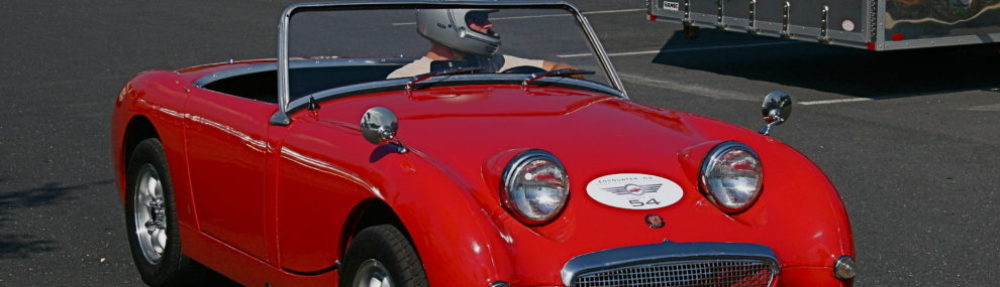
Interior Installation

We will be using two types of insulation in the Bugeye. Dynamite Extreme will be applied directly to the metal surfaces in the interior. Then an aluminum duct insulation material sourced from Lowes will be applied on top of the Dynamite. Aluminum tape will be used to seal any seams in the materials.

We began this process with the installation of the Dynamite Extreme on the interior of the firewall. This is a little tedious because one first needs to make a template to account for all of the holes in the firewall. The matching holes in the dynamat need to be of a larger diameter than the corresponding firewall holes to account for the rubber grommet that will fit in each hole.
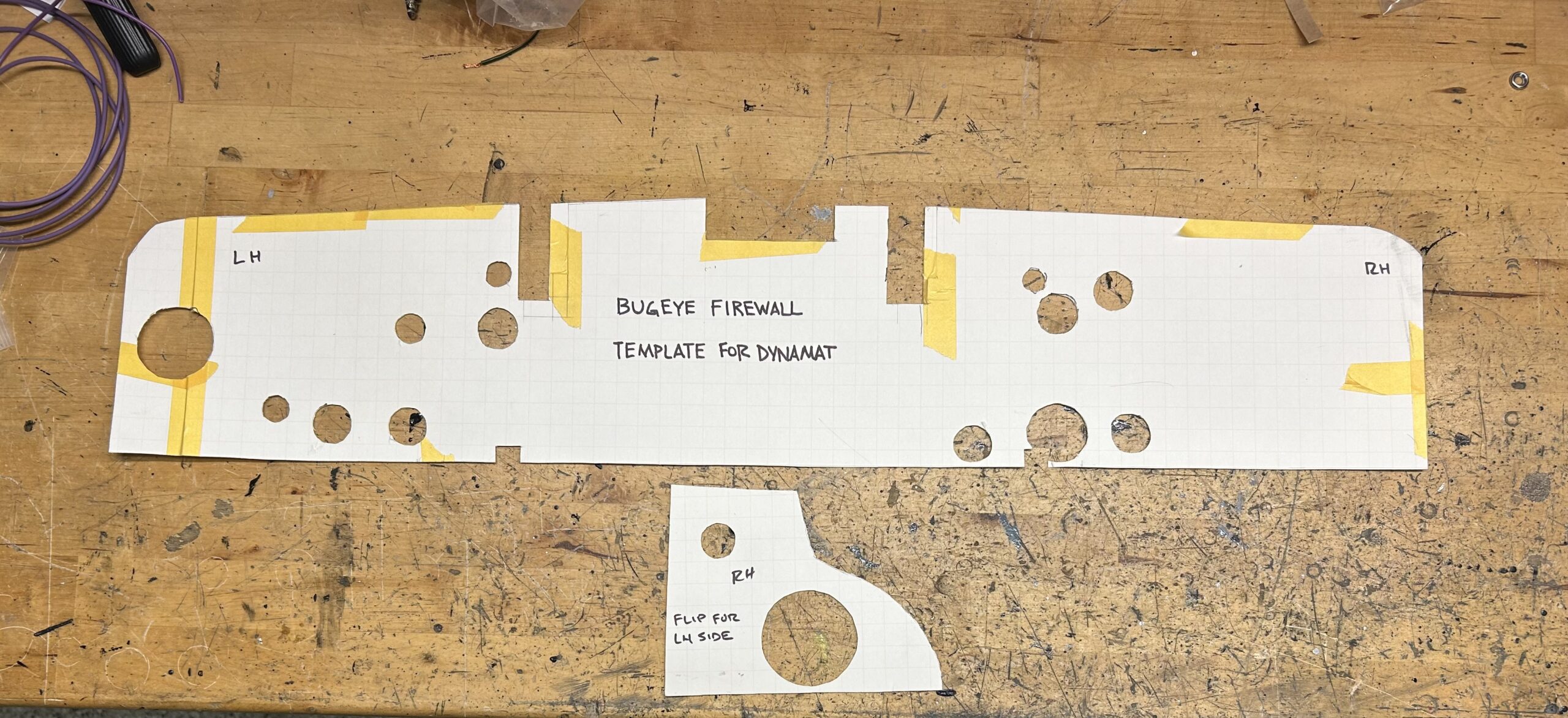
Firewall Dynamite Extreme Template

A small applicator wheel was used to press and smooth the Dynamat material against the metal surface. A Gorilla Glue spray contact cement was used to glue the aluminum insulation to the Dynamat. 

We then began the installation of the Dynamat Extreme and aluminum insulation throughout the interior. The first location was the driveshaft tunnel after we installed the handbrake.
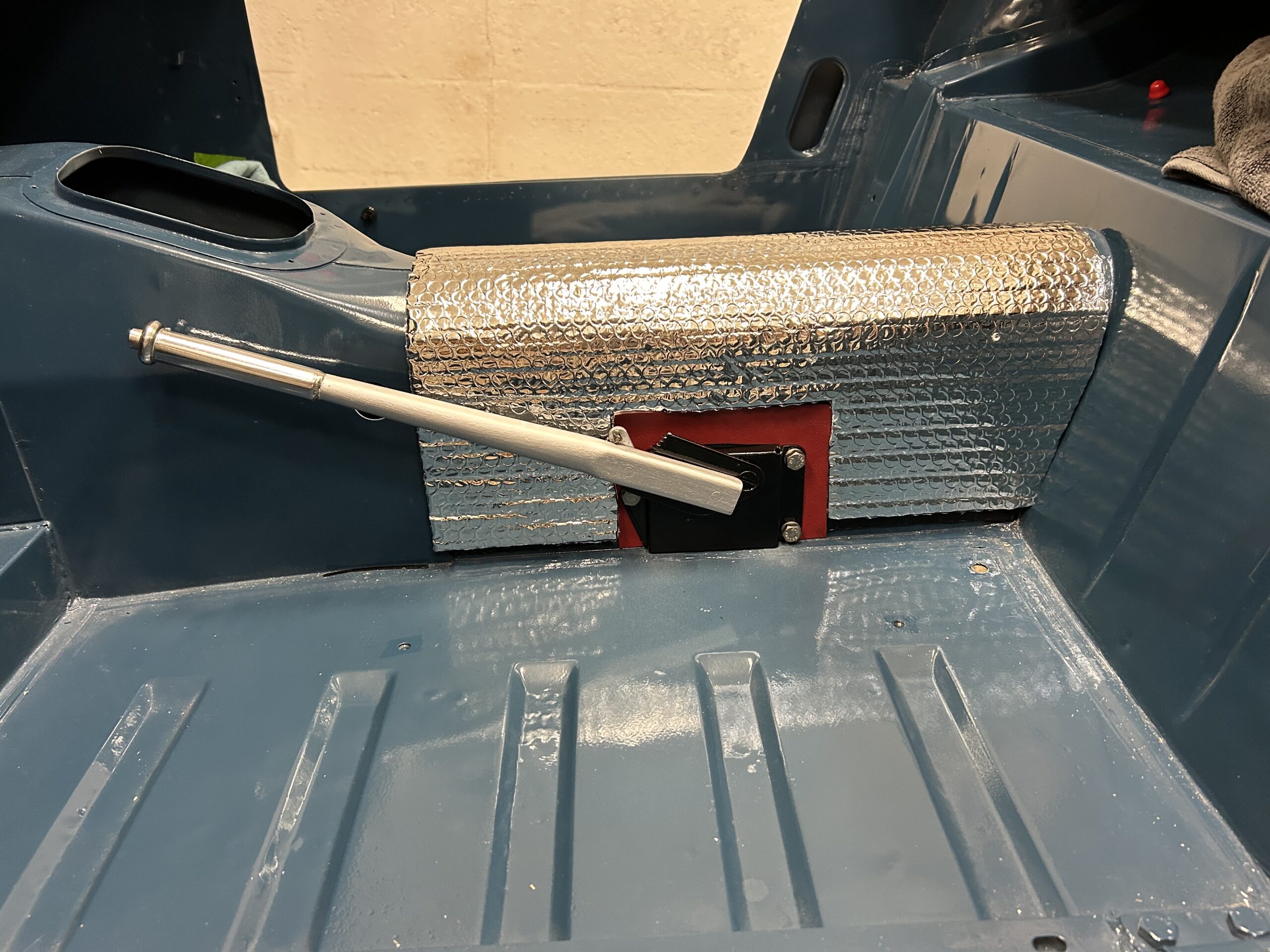
Dynamat Extreme and aluminum insulation on propshaft tunnel

Then we moved to the floorboards in the footbox.
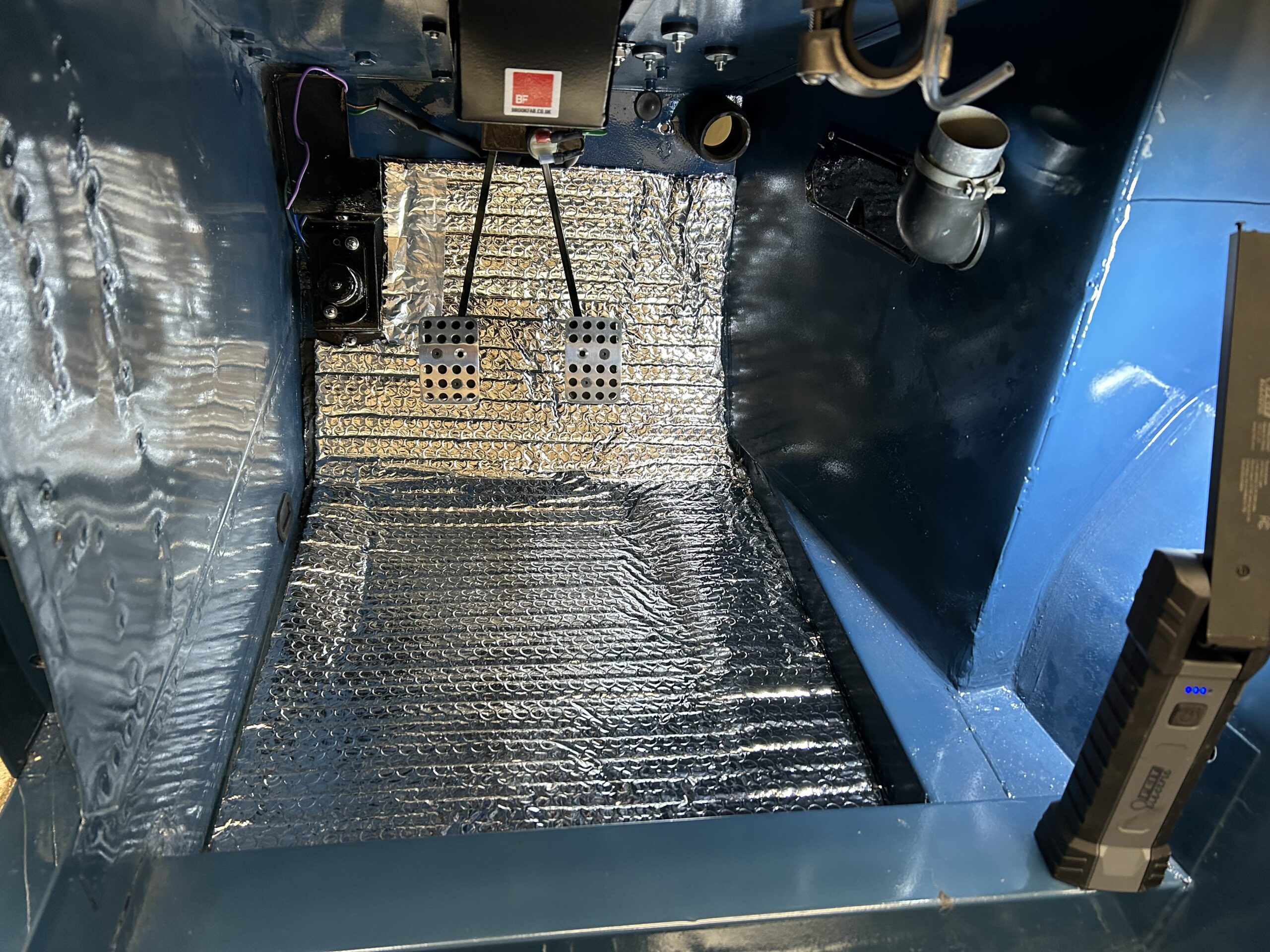
LH footbox insulation
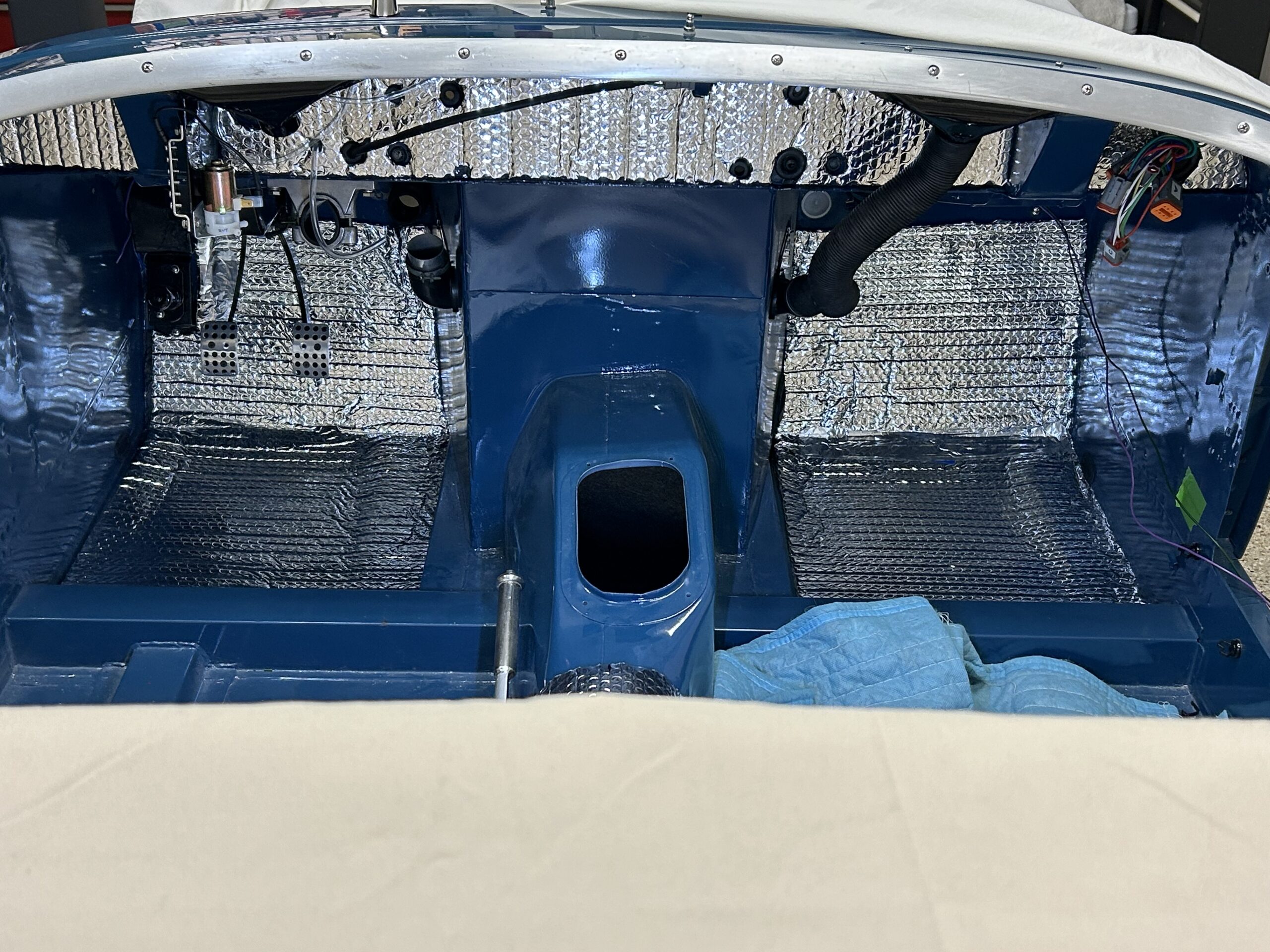
Both sides

We tackled the gearbox tunnel next. It isn’t very large but lots of angles and curves so it took a while to complete.
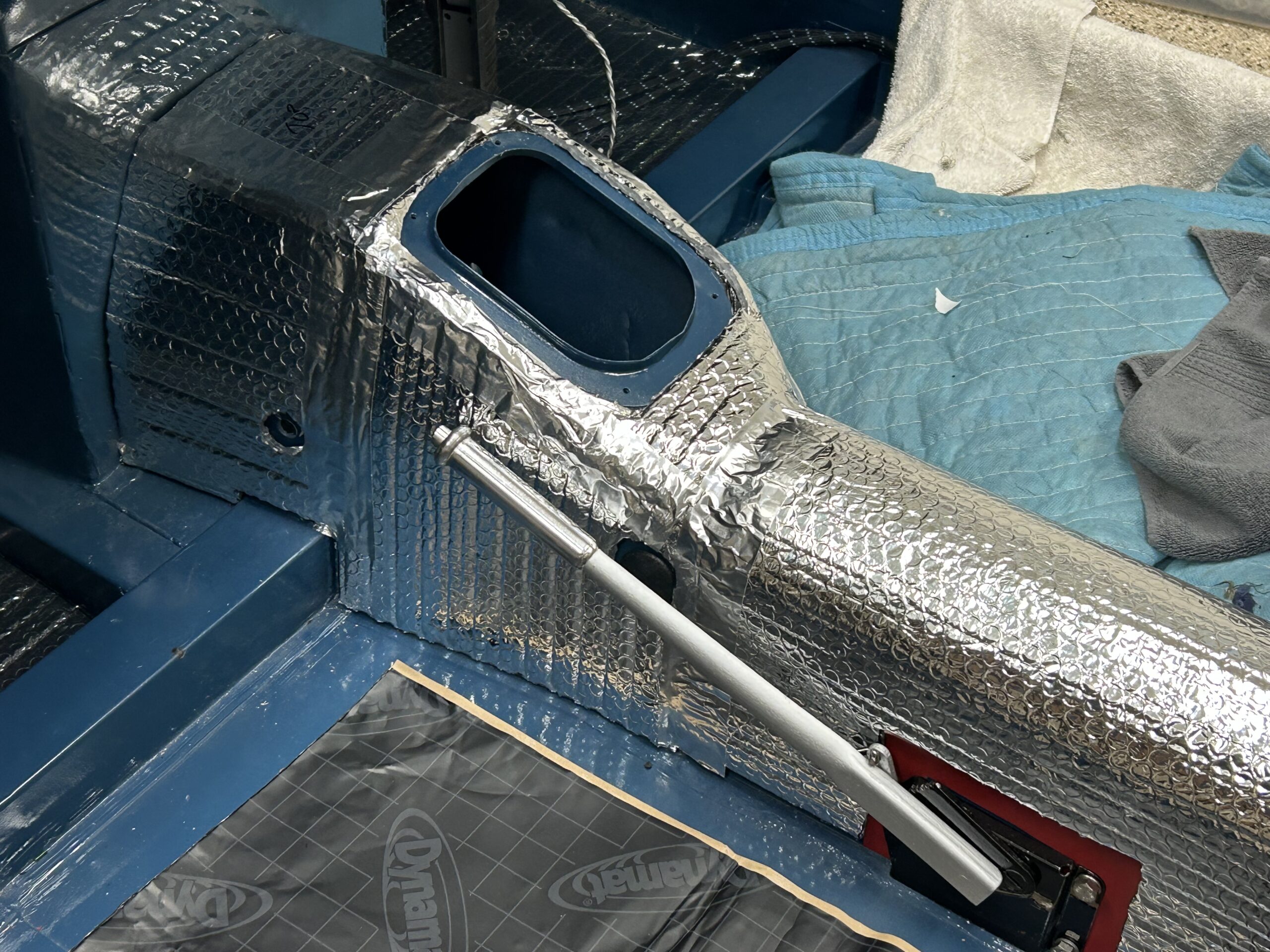
Gearbox Tunnel with Dynamat and Aluminum Insulation
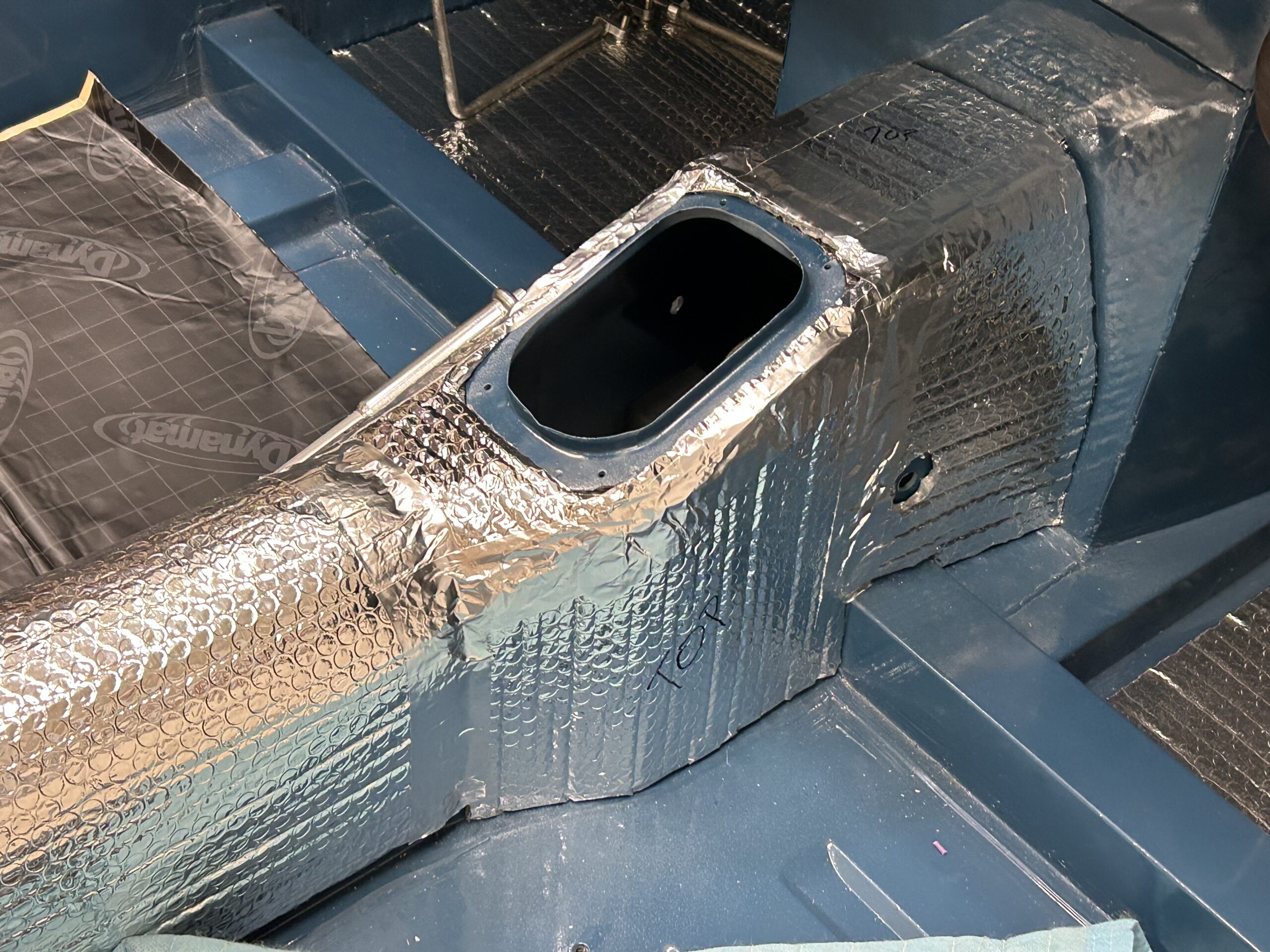
Gearbox Tunnel with Dynamat and Aluminum Insulation

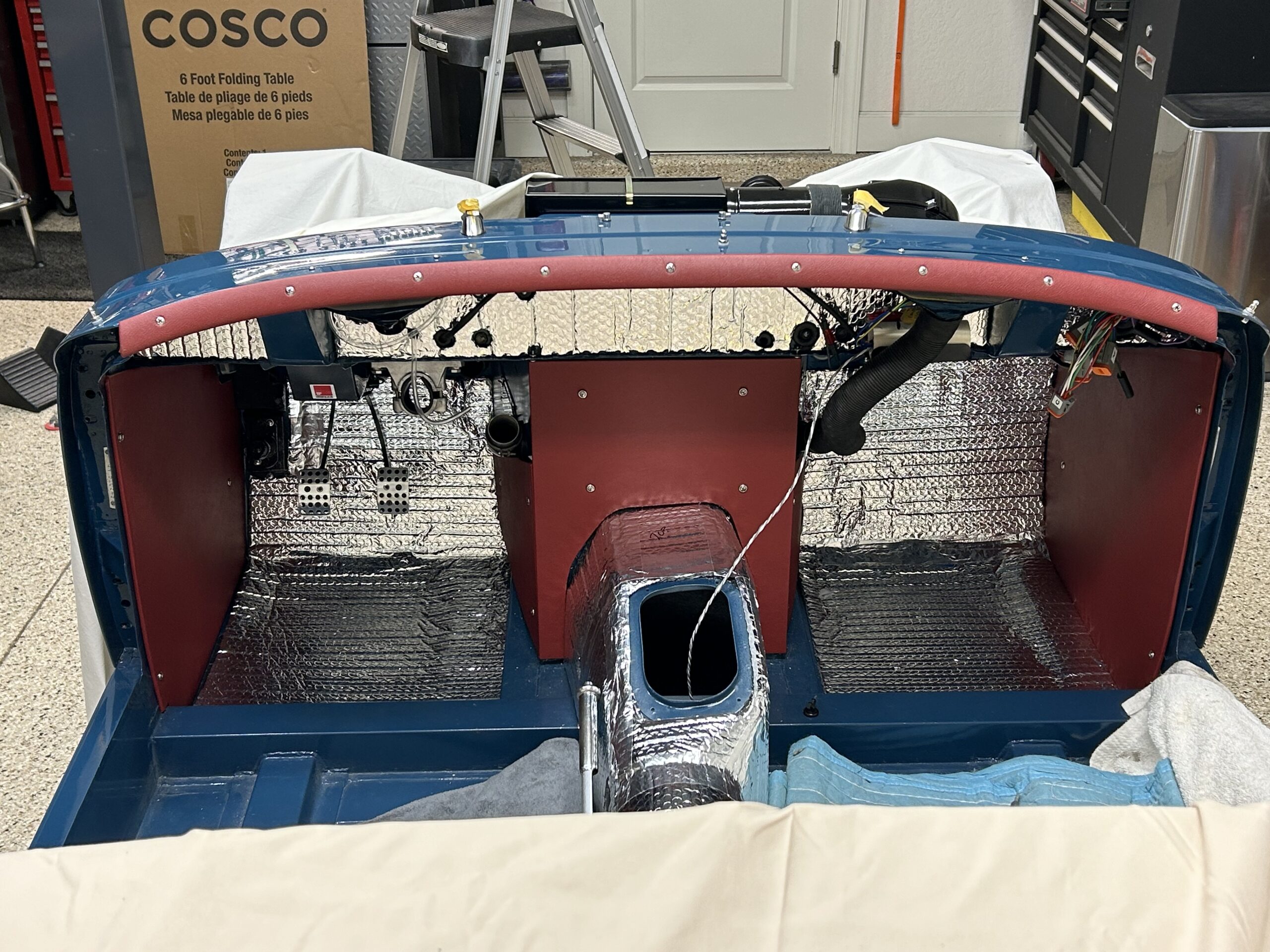
The next area to address was the box around the gearbox bell housing and the rear of the engine. This consists of three surfaces that are covered with upholstered panels. On these three surfaces we chose to use only Dynamat Extreme and to forgo the aluminum insulation. The concern was that we would not be able to get a tight fit with the intersection of the panels. The stainless steel finishing screws and trim cup washers were supplied by Bugeyeguys.com.

We installed the Dynamat and the upholstered panel on the front central face of the box first. The upholstered panels were sourced from BugeyeGuys.com. With the exception of the center panel over the gearbox cover, we had to remove vinyl, trim the plywood and re-glue the vinyl to obtain a proper panel fit.The door sill panels and the rear quarter panels required the most adjustment. The image below, although in black, not red, illustrates the components that come with the BugeyeGuys upholstered panel kit. Panels numbered 3,4,7 and 8 as stated required quite a bit of trimming.
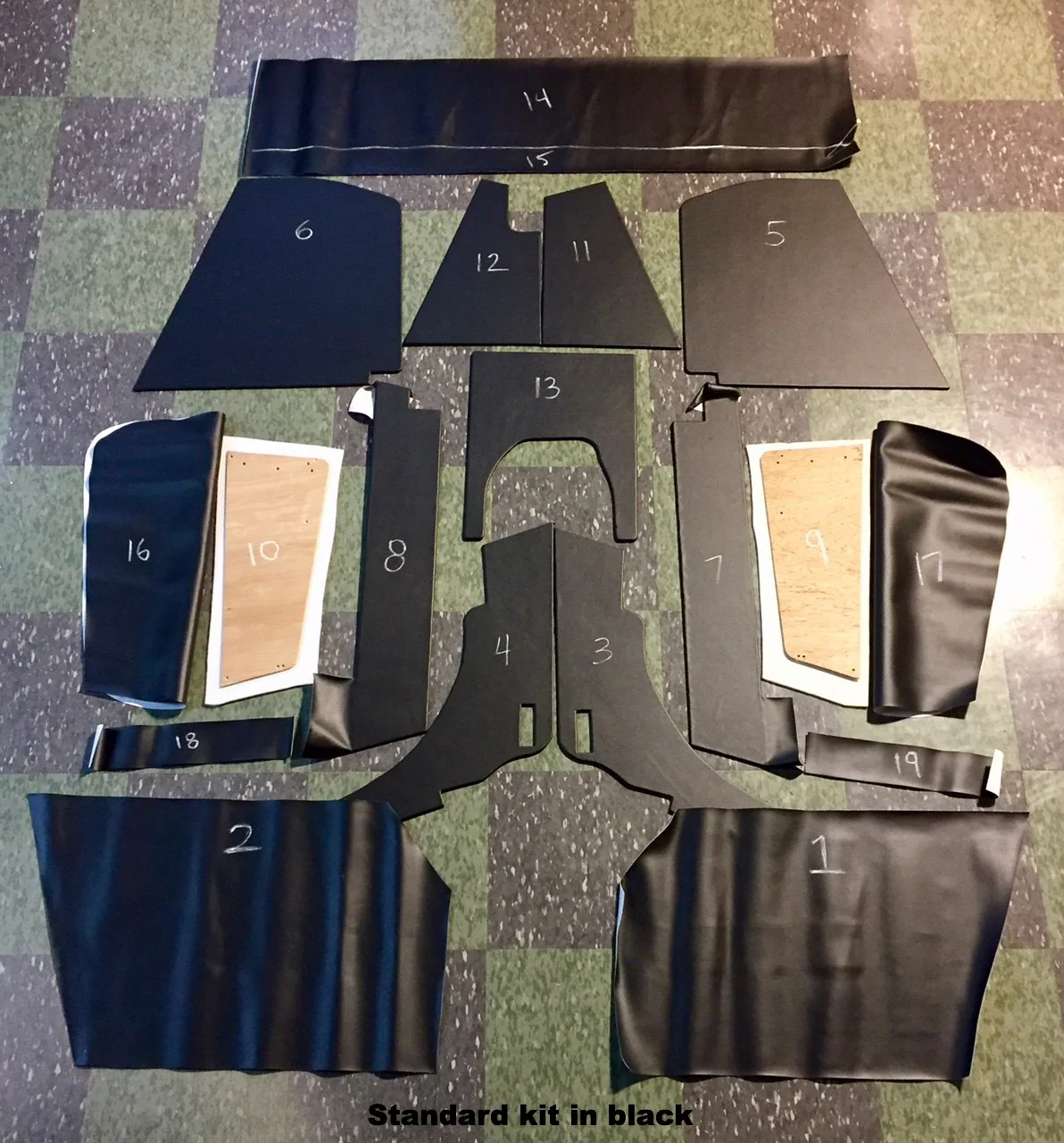
BugeyeGuys upholstered Panel kit
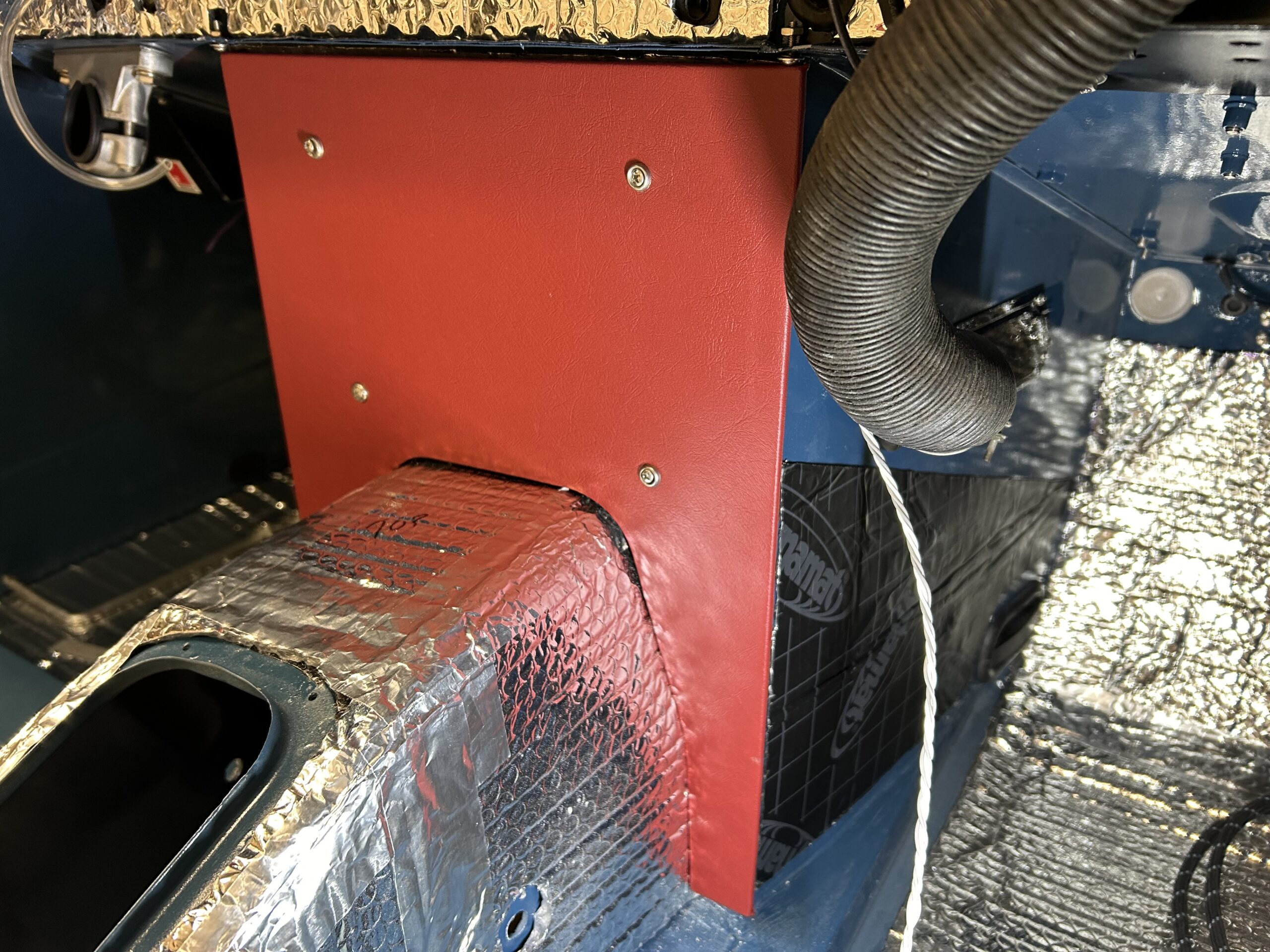
Center Panel Install

Then we worked on the RH passenger side:
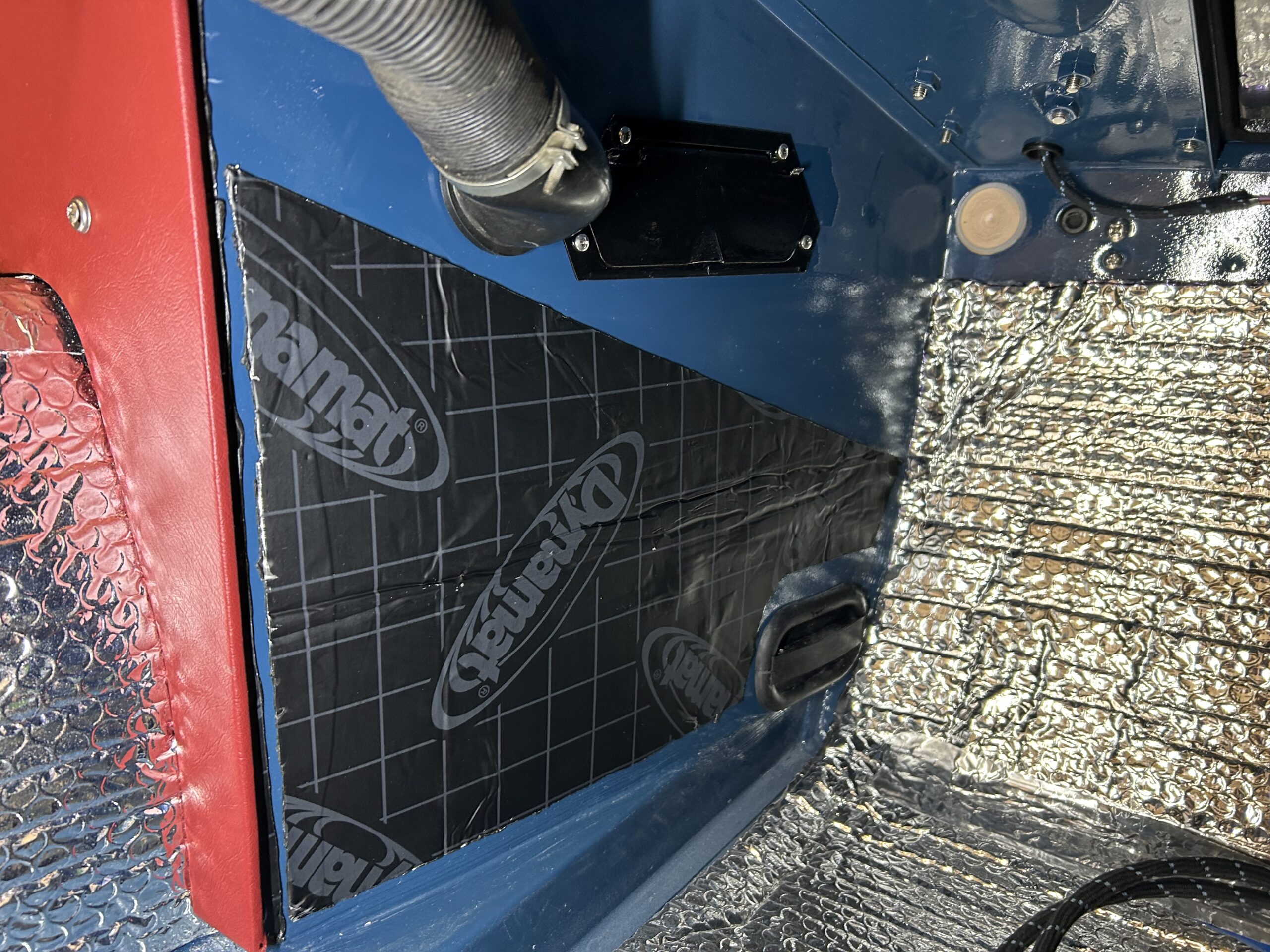
RH Dynamat Install
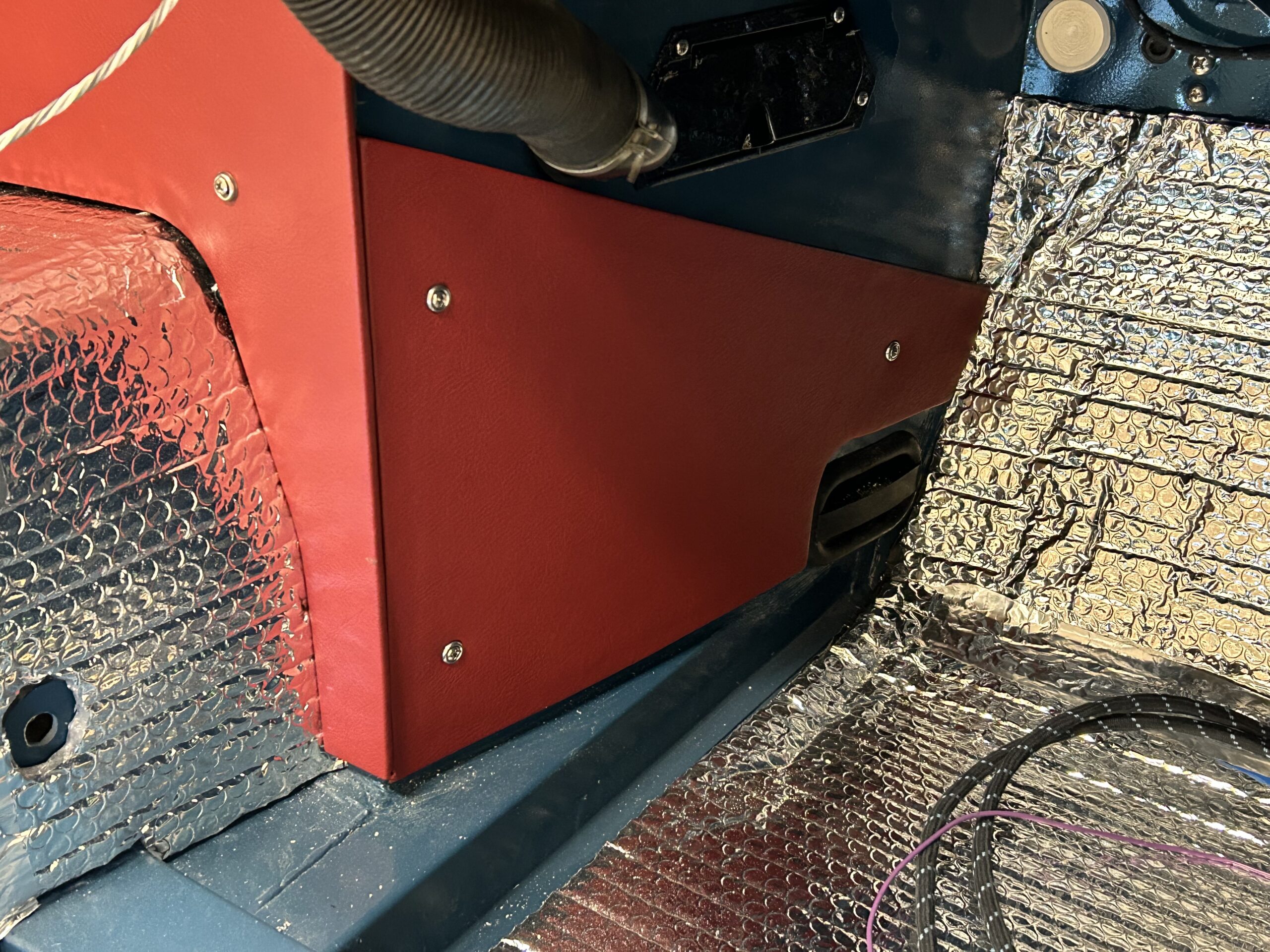
RH Upholstered Panel Install

The we moved to the LH driver’s side insulation and panel install:
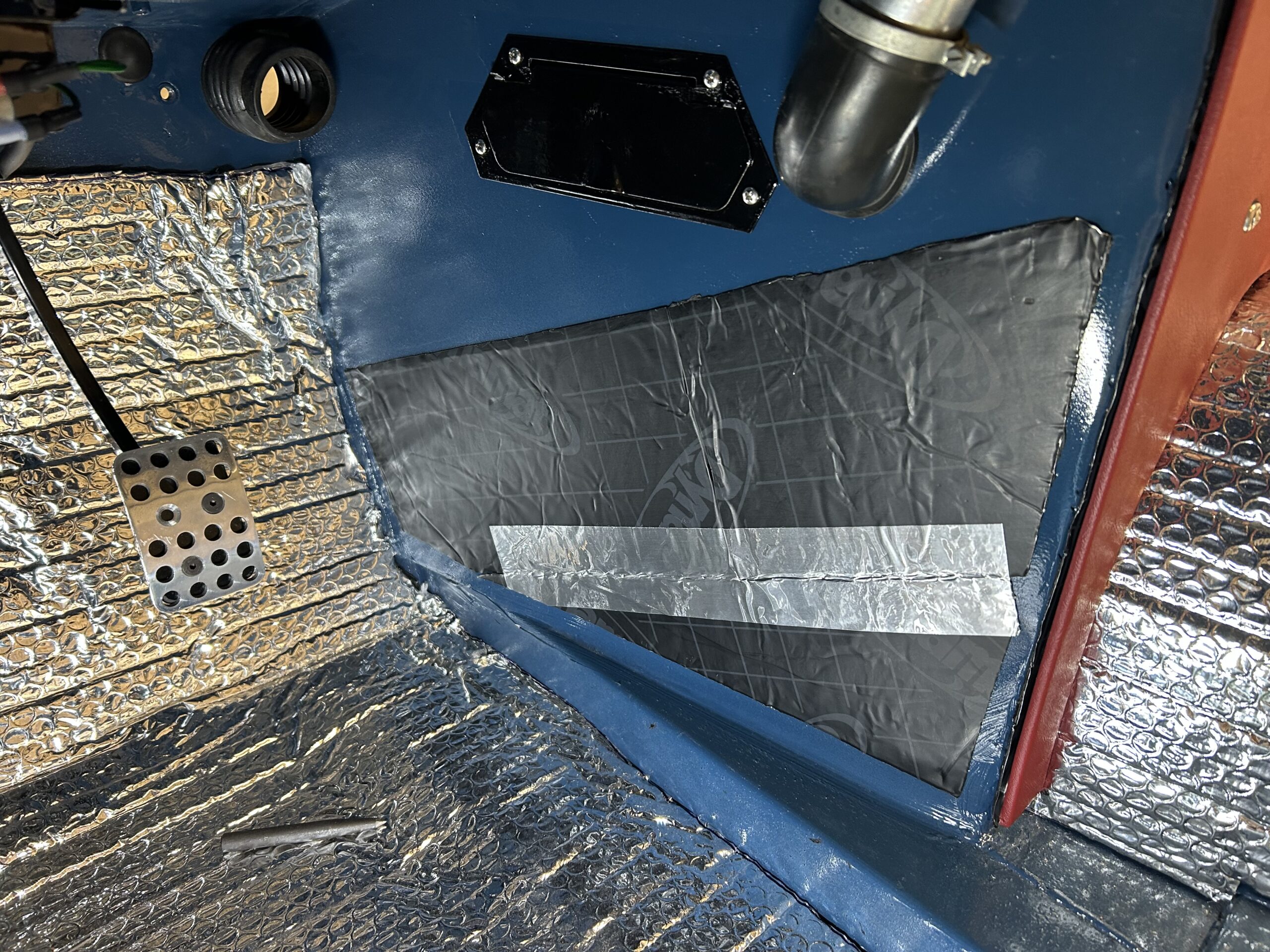
LH driver’s side insulation install
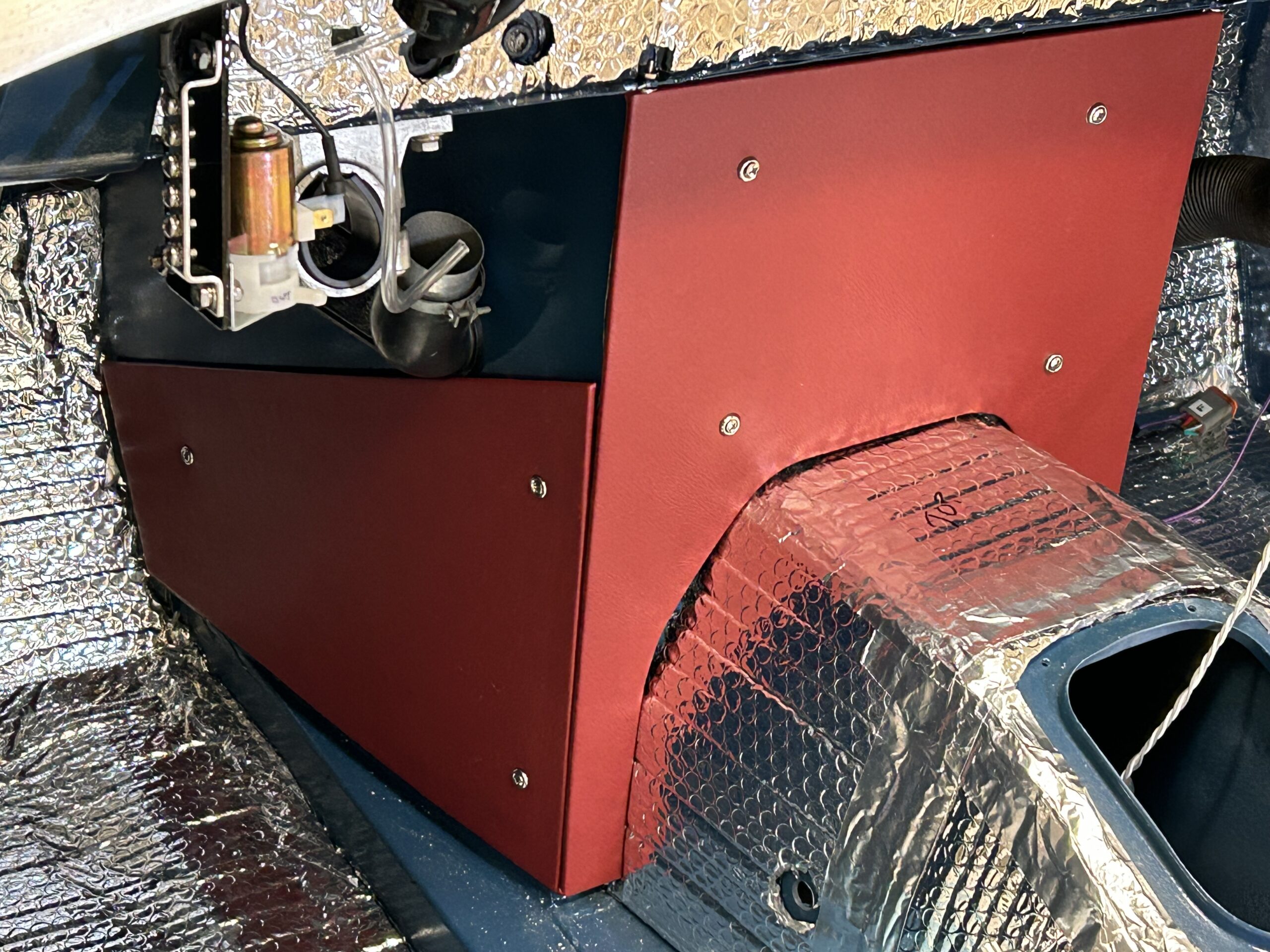
LH driver’s side upholstered panel Install

On both of the outside kick panels in the footwells we had to do some trimming to get a nice fit to the bristleflex seal. This involves pulling back the vinyl, trimming the board and re-glueing the vinyl.
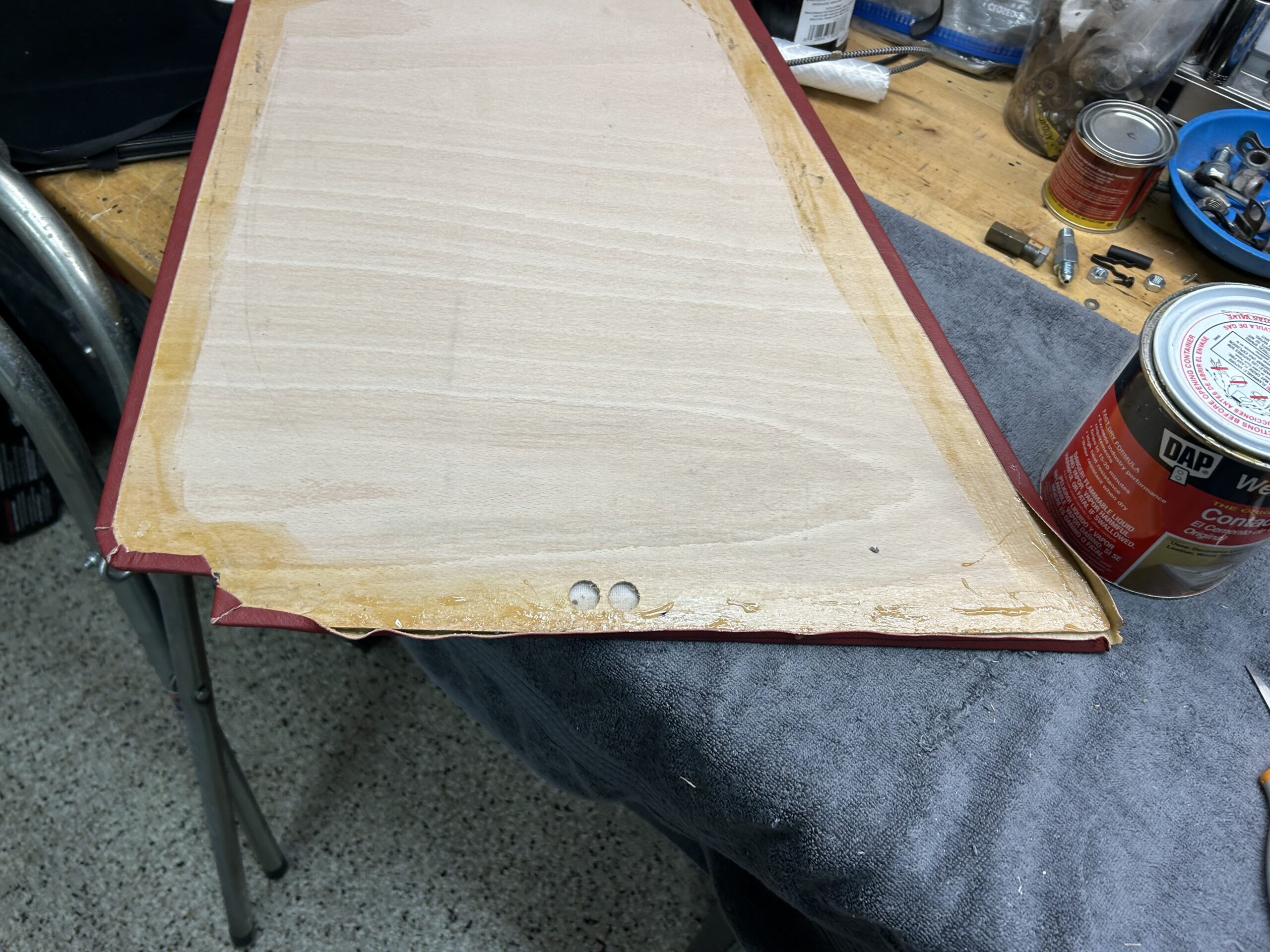
Footbox panel modification

This is a photo of the modified panel installed. Very nice abutment to the bristleflex. The upper mounting screw is a #10 machine screw mounted to a rivnut that was previously installed.This was done on both sides of the car to prevent a sharp pointed self-tapping screw from protruding into the door cavity.
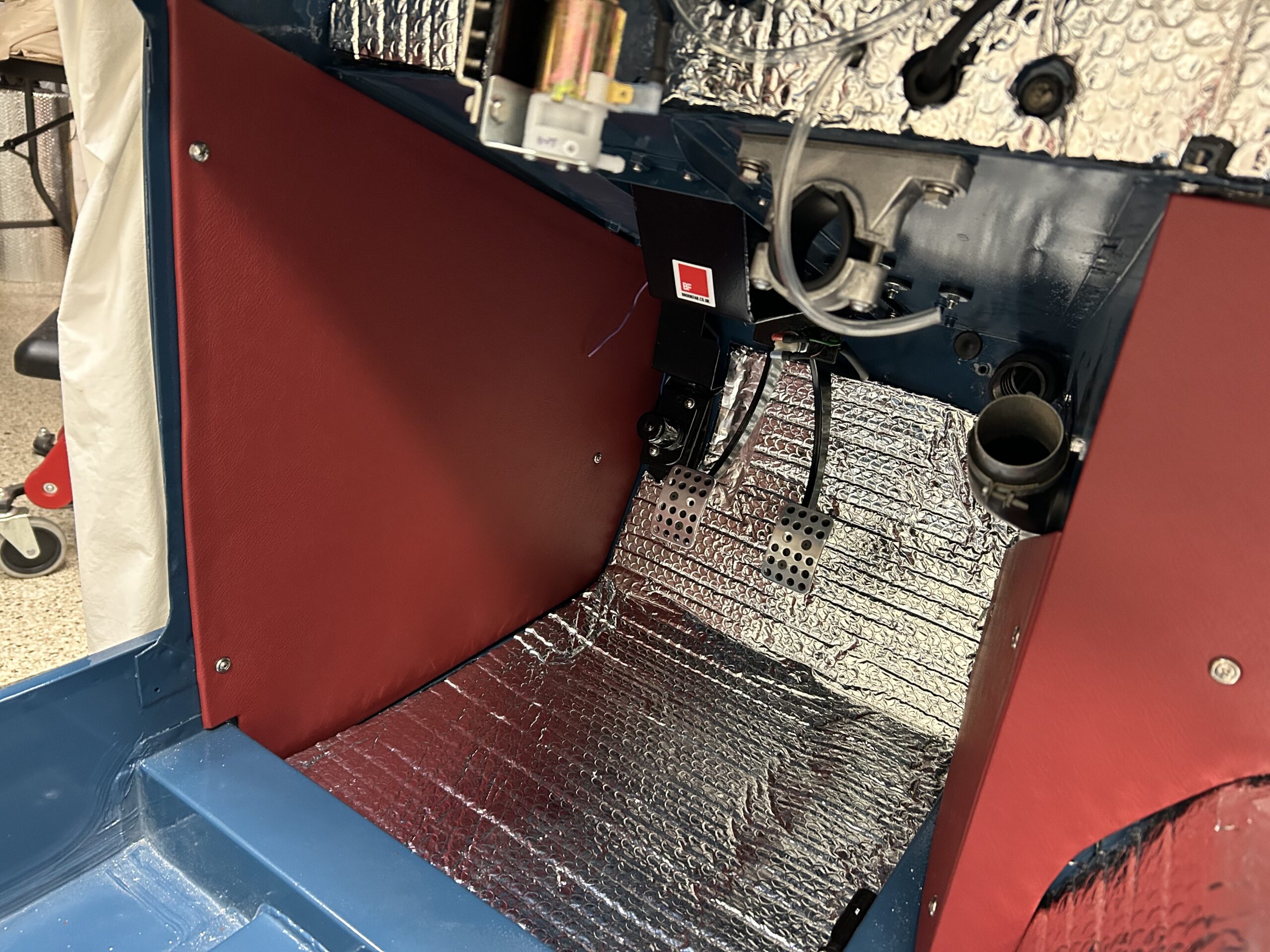
LH Footbox panel installed
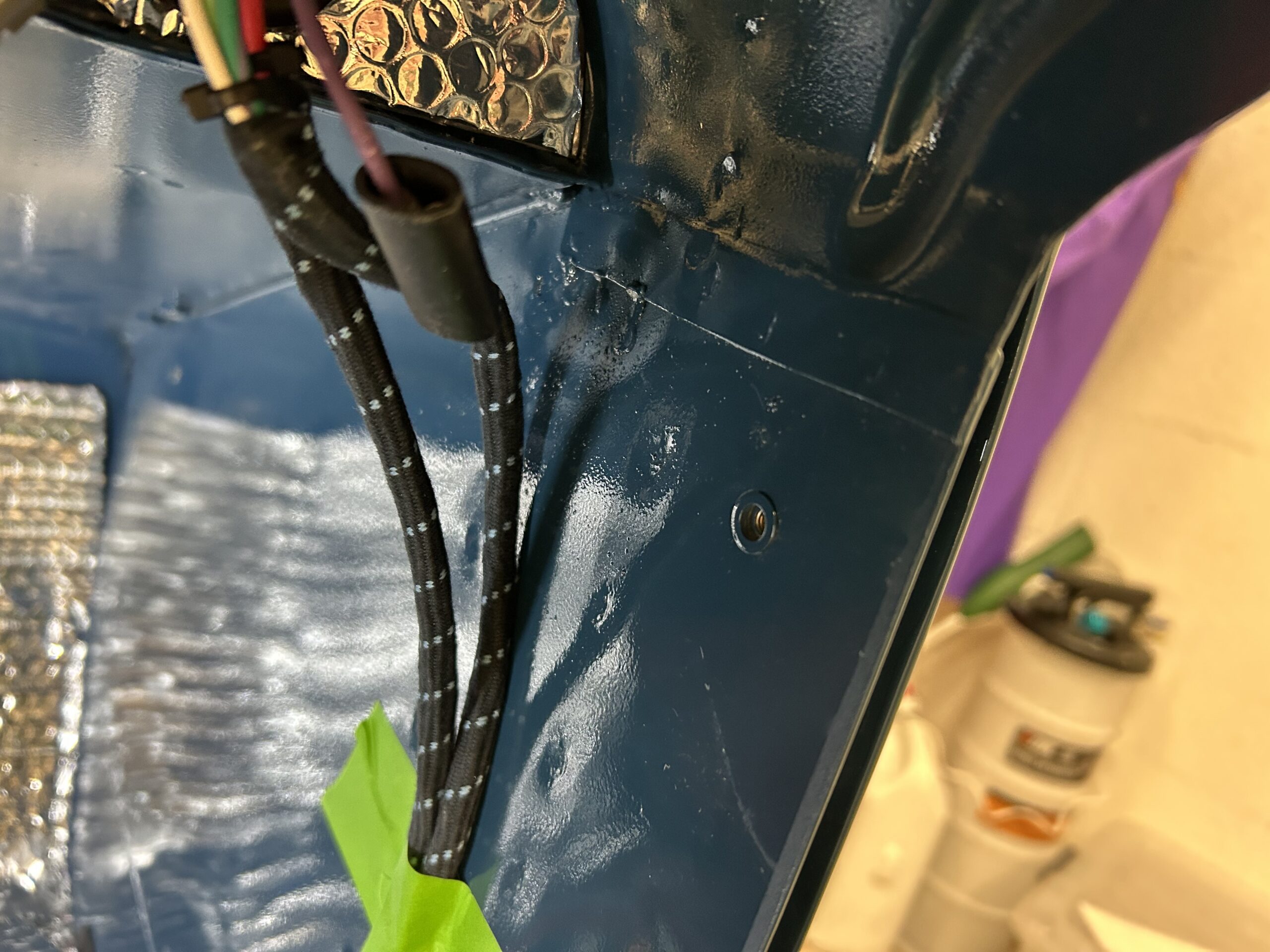
Rivnut for upper mount of the kick panel

Installing the RH kick panel was next. The wiring made this one a bit of a challenge but we got it in place.
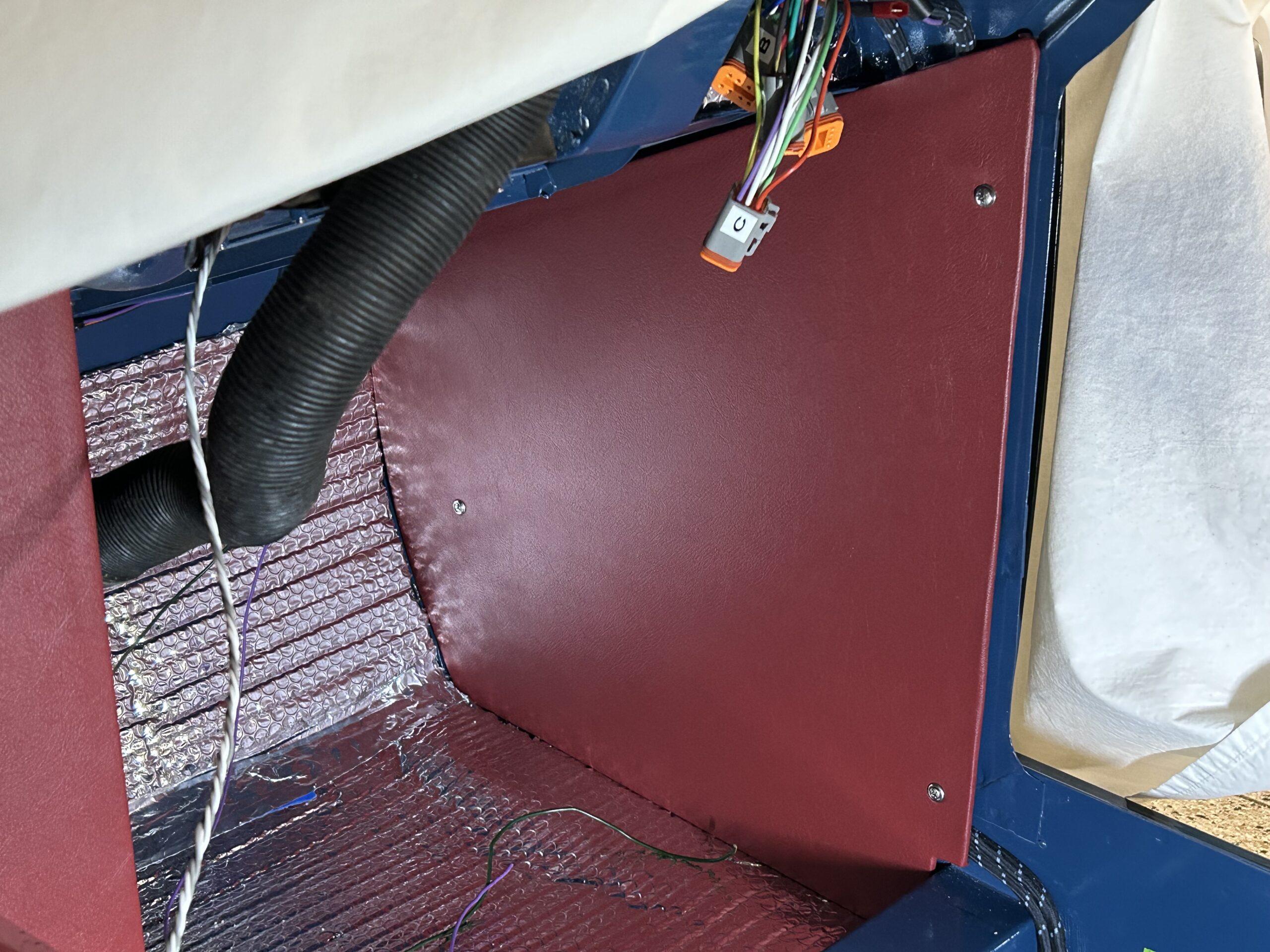
RH kickpanel installed

Following the installation of the front panels we turned our attention to the installation of the carpet. A number of vendors sell carpet kits for the Bugeye. We ordered sample material from several before deciding to go with the kit provided by Prestige Autotrim Products LTD. in the U.K. Their kit provides vinyl binding on most carpet pieces and where jute pads are used under the carpet they are sewn to the carpet. We opted for the high end carpet called Premium Feintuft Velour. We were pleased with the fit, color and carpet quality. Their kit DOES NOT include carpeting for the trunk or boot space in the car.

The first task was to glue the small carpet sections that cover the chassis cross bars in front of the seats.
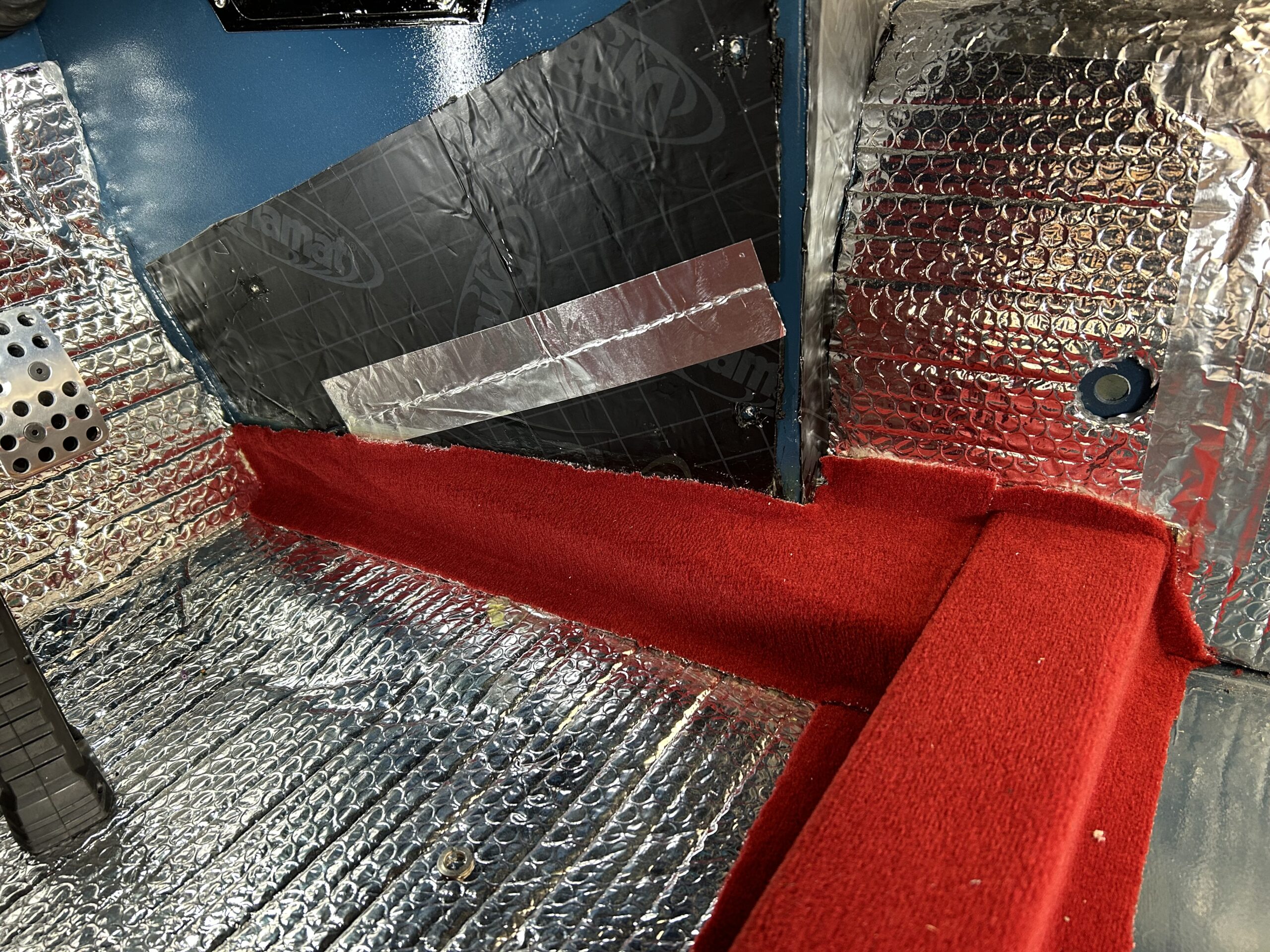
Carpet glued to chassis box rails

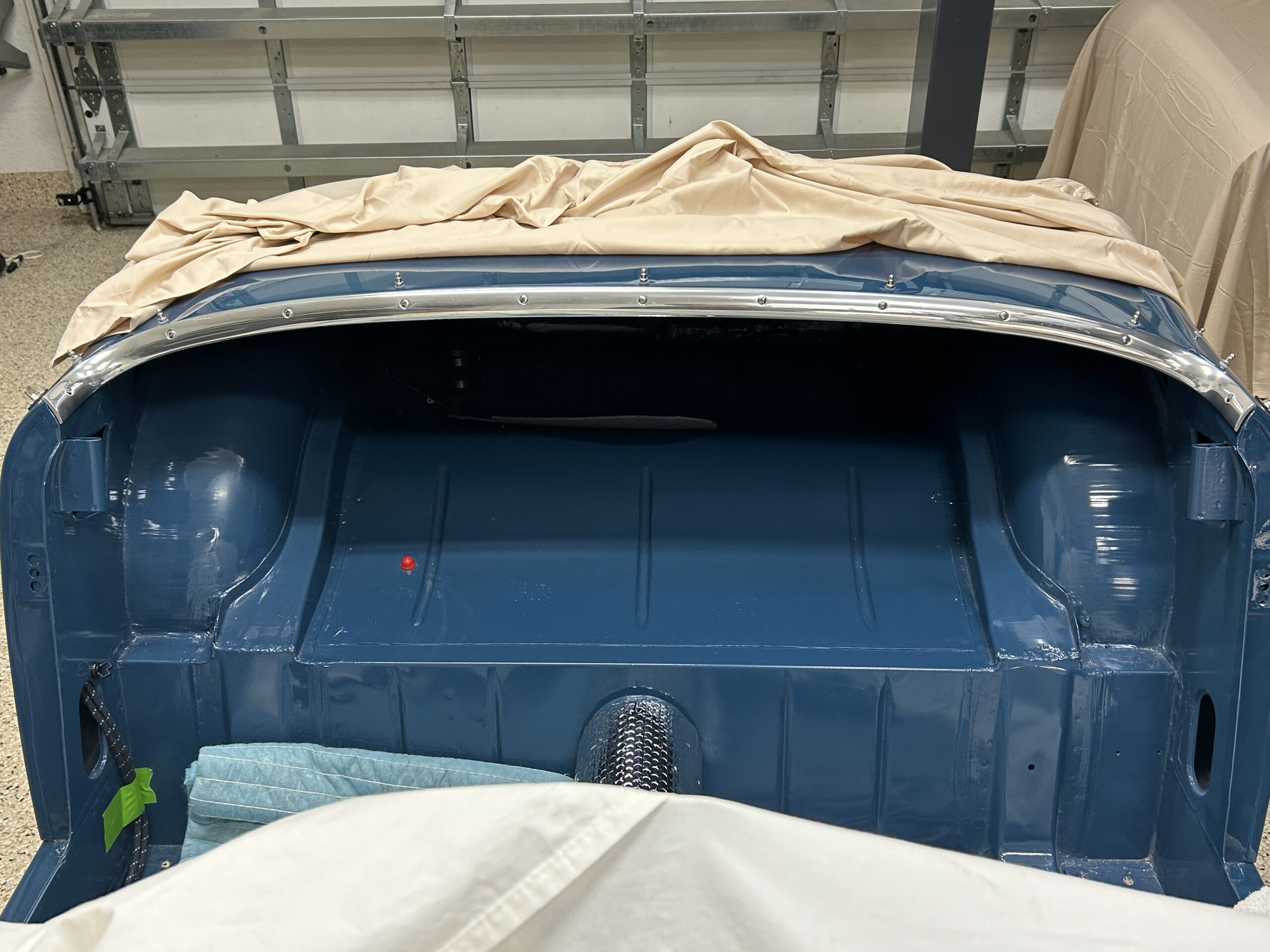
We then moved to the rear of the car. We ordered a trunk kit from Moss Motors. Their kit includes an Armacord floor mat and the two heavy cardboard side panels. We didn’t need the side panels but we could not find a vendor who sold the Hardura floor mat alone. We wanted Hardura, rather than carpet, because we believed that it would hold up better – particularly with a spare tire resting on it. The Hardura material does have a shallow jute backing. The leading front edge of the mat was glued to the floor. The hole for the fuel filler pipe was enlarged and the chalk marks locating the floor staples for the spare tire straps were cut. The mat proved to be a near perfect fit and did not require trimming. Installation of the mat is shown in the video associated with this post.
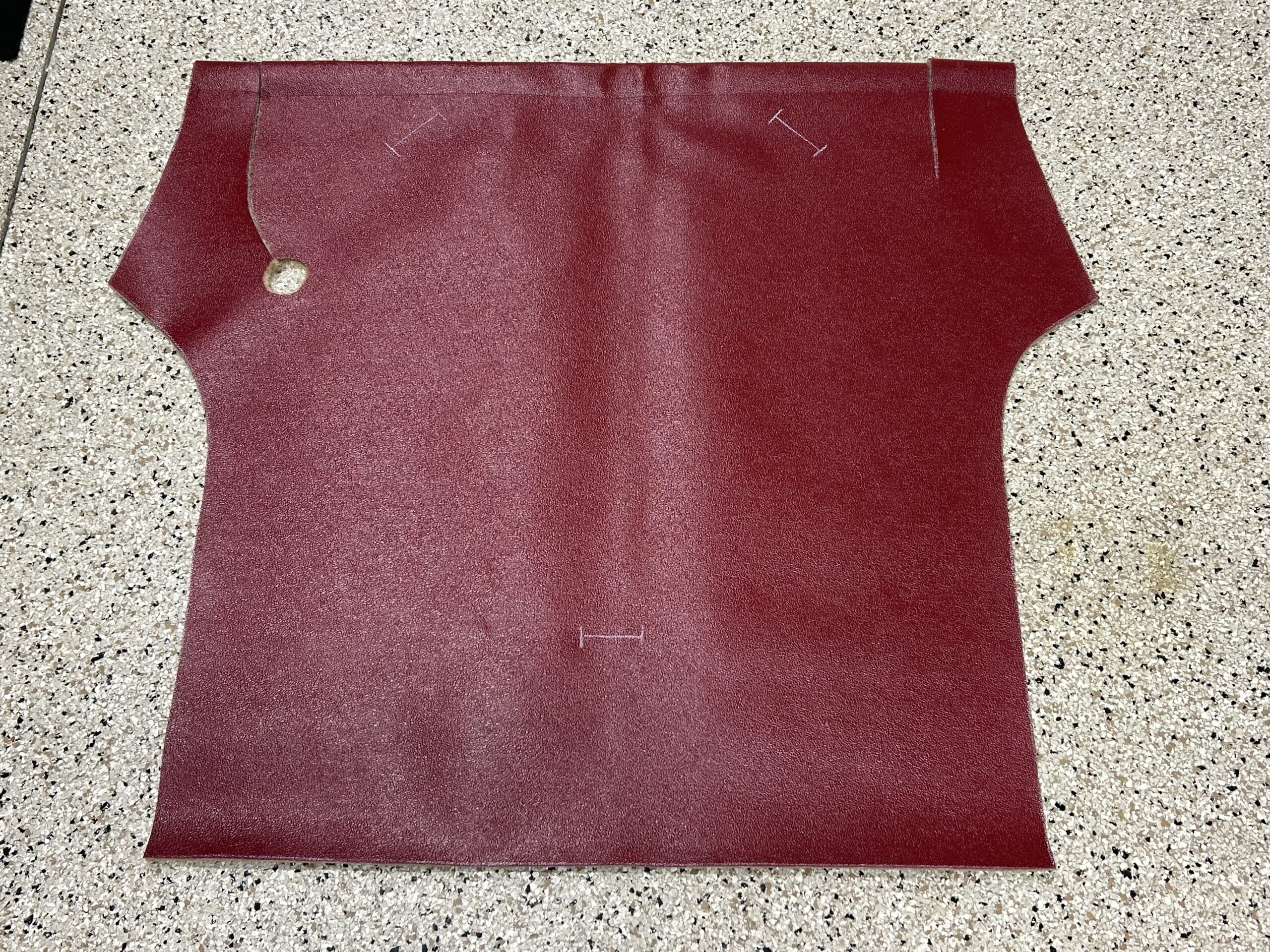
Trunk Floor Mat

Next we glued several of the rear carpet pieces in place. Carpet pieces #1 and #2 were glued first, followed by pieces #3 and #4. Carpet section #5 has a 2″ piece of vinyl along its top edge that is glued to the floor. All of this is shown in the video. We will add some floor snaps to the carpet sections #5 and #6 to keep them in position. The two pieces of carpet that cover the gearbox cover or tunnel will also be held in place with snaps.

Rear carpet installation

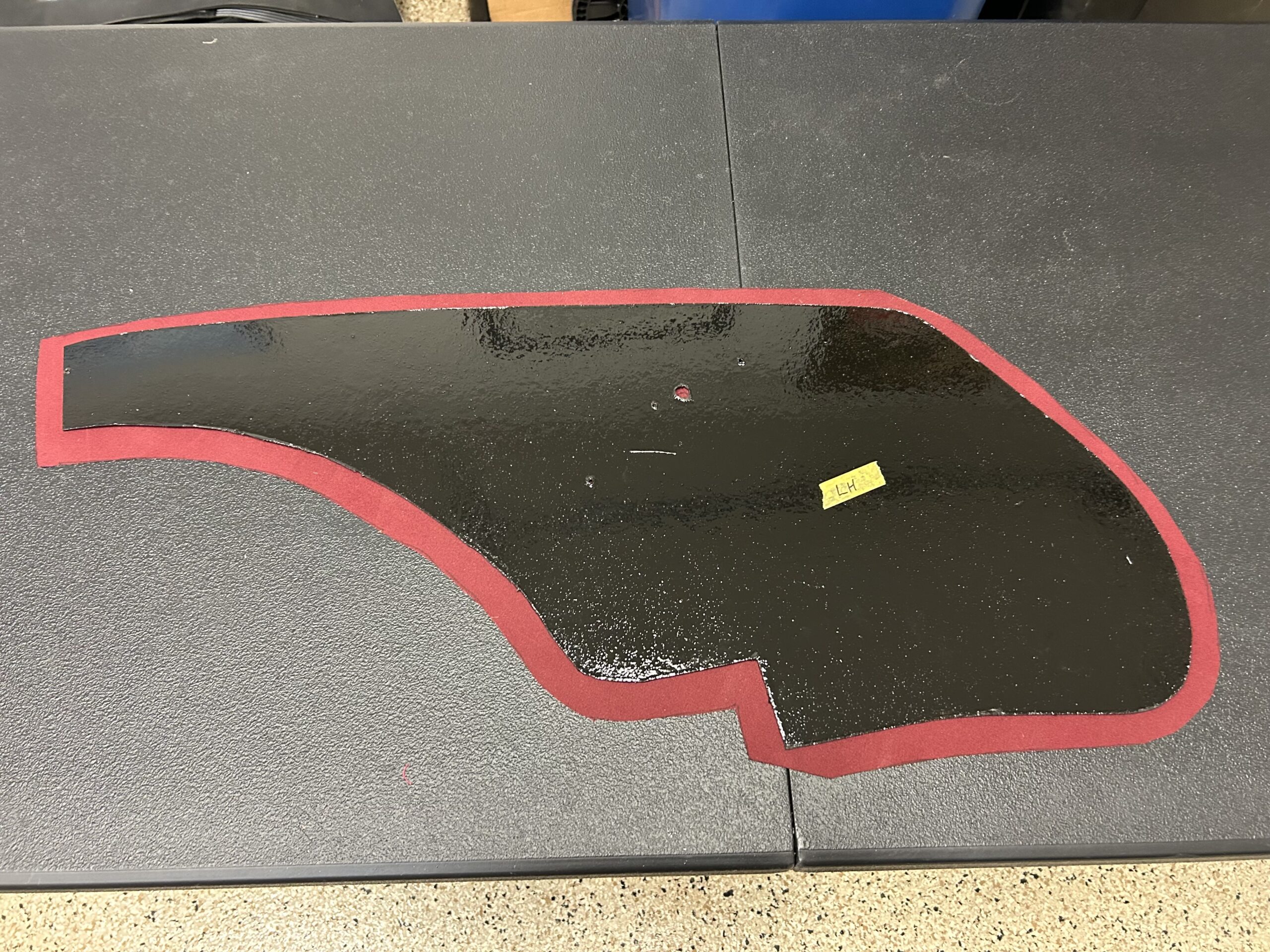
We then returned to fitting the upholstered door sill panels and the rear quarter panels. Again, details of this procedure are best described in the video. The rear quarter panels fit too tightly around the tube for the soft top frame, so those holes needed to be enlarged. As best we can tell, both quarter panels are also too short and consequently did not butt up against the sill panels. A half inch gap was left between the two panels. So, we decided to make our own door sill panels and included a raised portion to permit a nice fit between the quarter panel and the sill panel. In the image below, the section of the panel to the right of the blue line was added.

Modified door sill panel

We ordered a product called cowl board, which is a waterproof fiberboard material, from Automotive Interiors and Accessories. Just to add a little stiffness and additional waterproofing, we painted the material with POR-15 before glueing on the new vinyl. The vinyl was purchased from Geoff Chrysler at Rightway Heritage Trim and while it is not a perfect match to the vinyl used on the panels purchased from Bugeyeguys, it is damn close.

The photo below shows how the sill panel and the rear quarter panel now fit. Much, much better! The panels will look better once screwed into place.
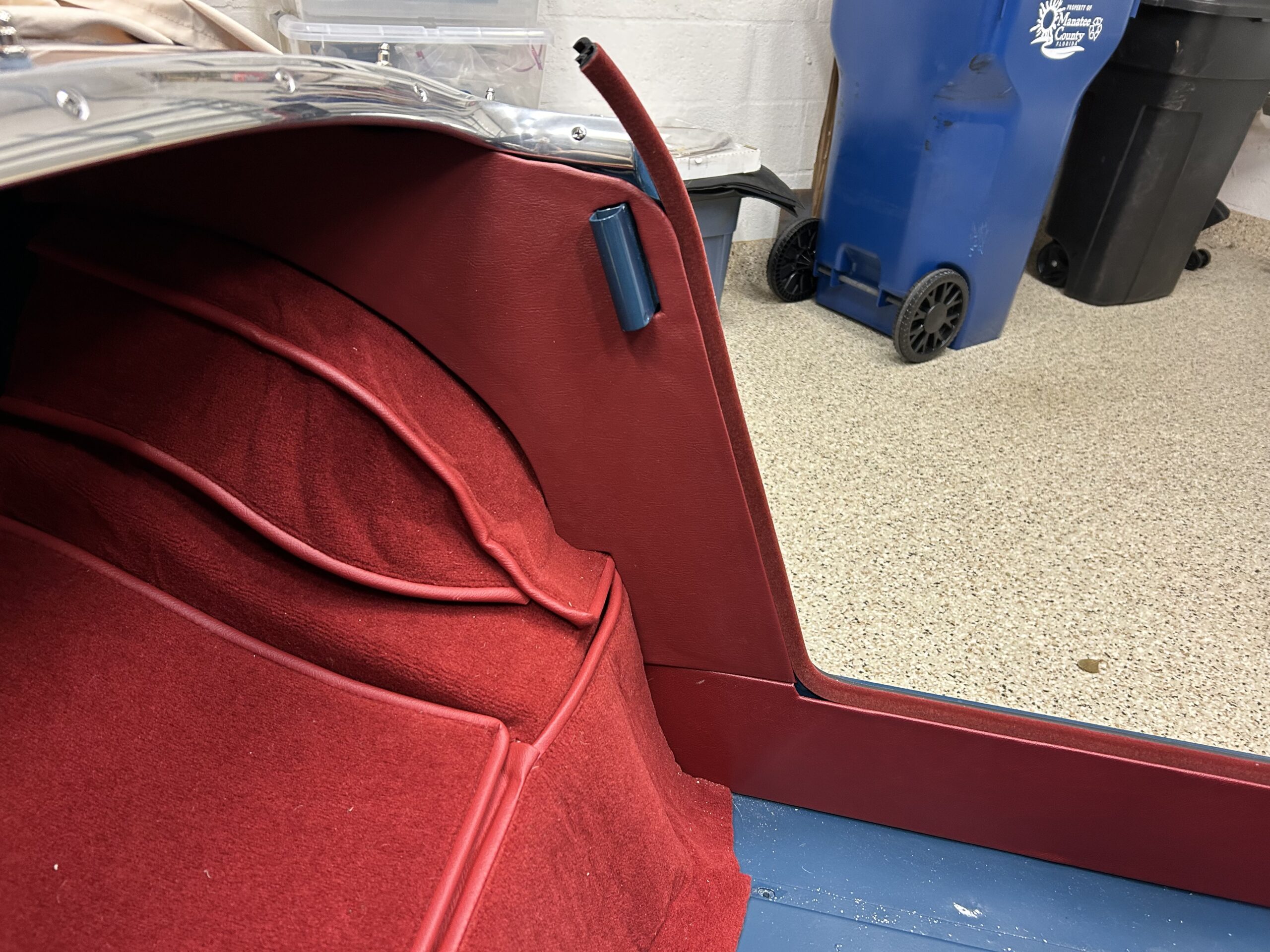
Quarter Panel and Sill Panel Fit

As can be seen in the photo above, there is a door seal that is part rubber and part fabric that serves as a trim finisher as well as a weather seal for the interior. The fabric portion of the seal has “U” shaped steel-braided  “jaws” that grab the door sill lip to fit tightly in place.  The quality of available door seals has diminished over the years. In many cases the steel “jaws” have been replaced with aluminum that is not effective in gripping the door lip. Martin MacGregor, owner of MacGregor British Car Parts, has sold a product called Bristleflex that maintains the steel grip and has a beautiful fabric finish. We think we may have purchased the last set of seals in the color red that he has manufactured and he is currently ((as of October 2024) attempting to sell his business. 

At the front of the car the Bristleflex terminates behind the aluminum cowl trim with an aluminum “P” clip.
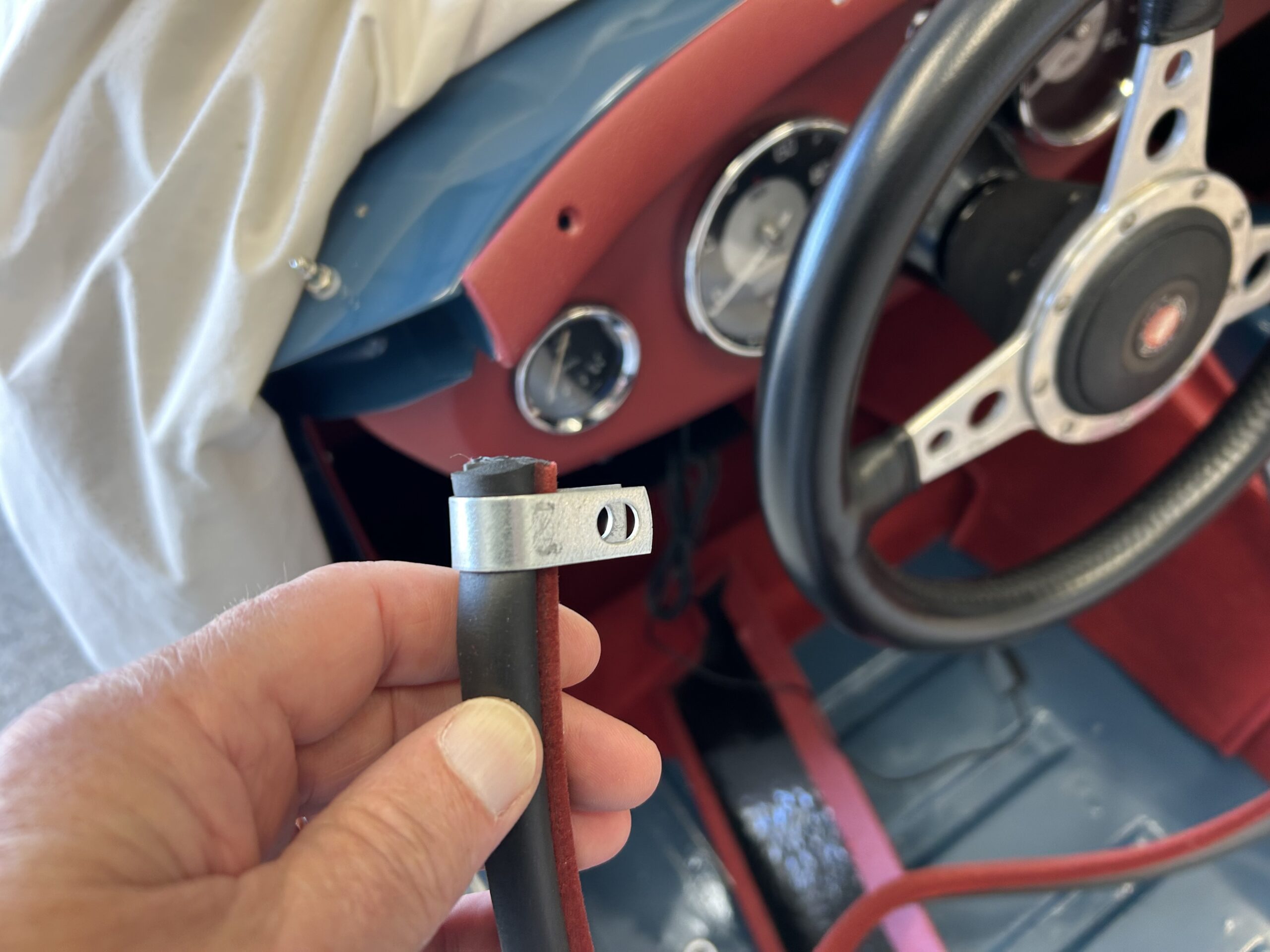
Bristleflex “P” clip attachment behind the Cowl Trim
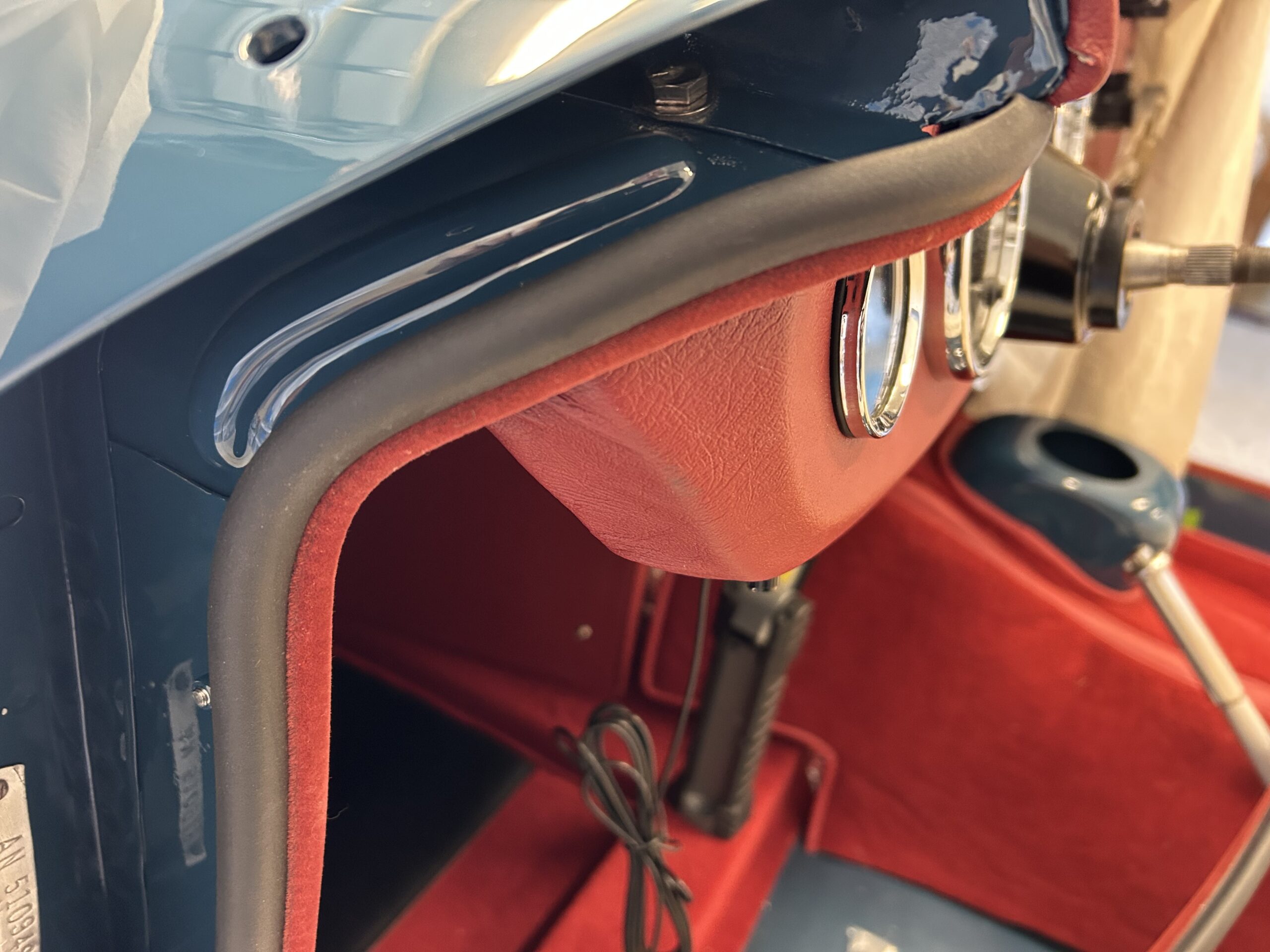
Front Bristleflex Installation


At the rear, the Bristleflex door seal terminates behind the rear quarter panel. We installed the Bristleflex and secured both ends before the sill panel and rear quarter panel were attached with screws. This was done to ensure a tight meeting of the bristle flex with the edge of the panels.
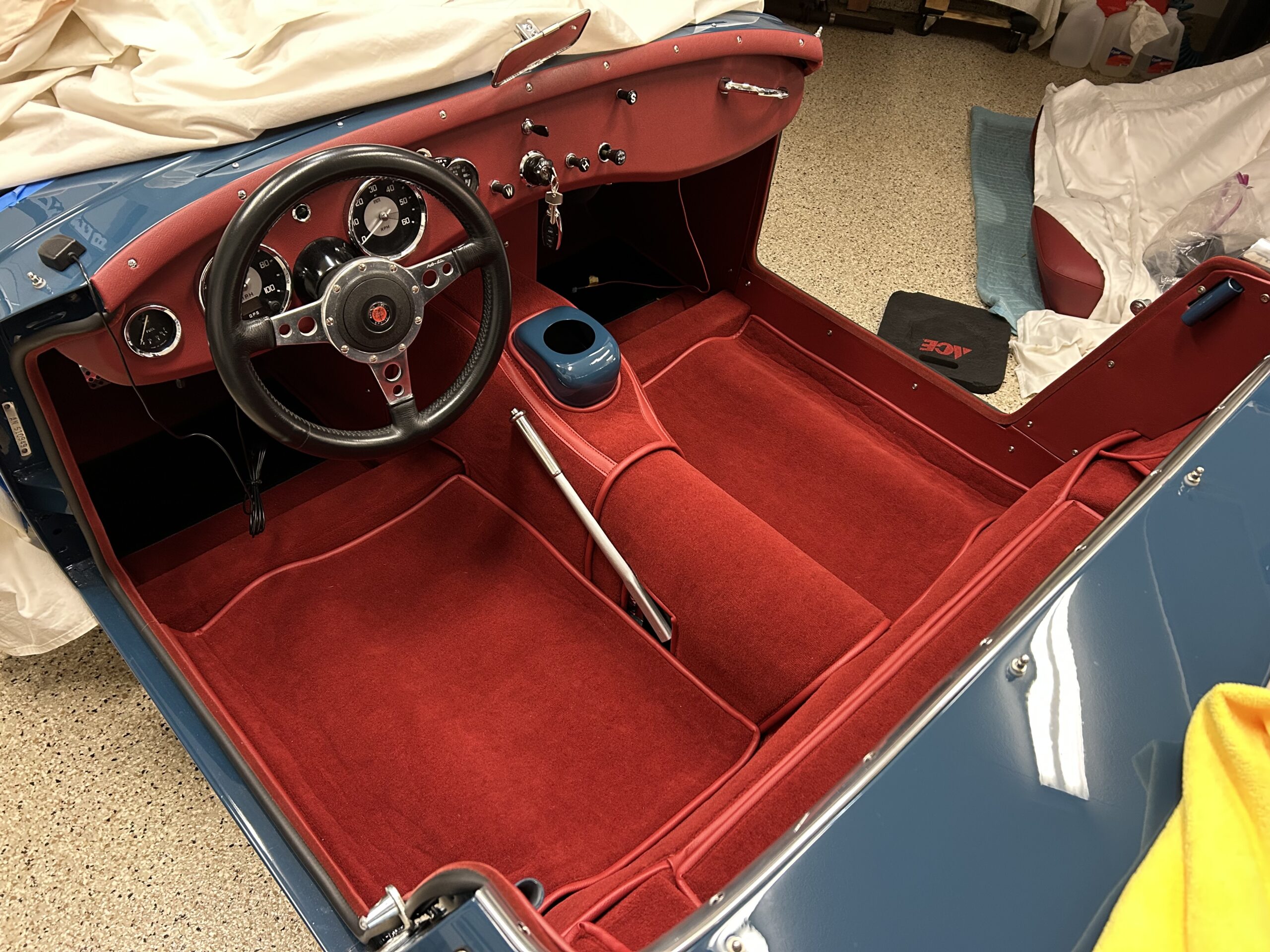
Door sill panel and rear quarter panel installed
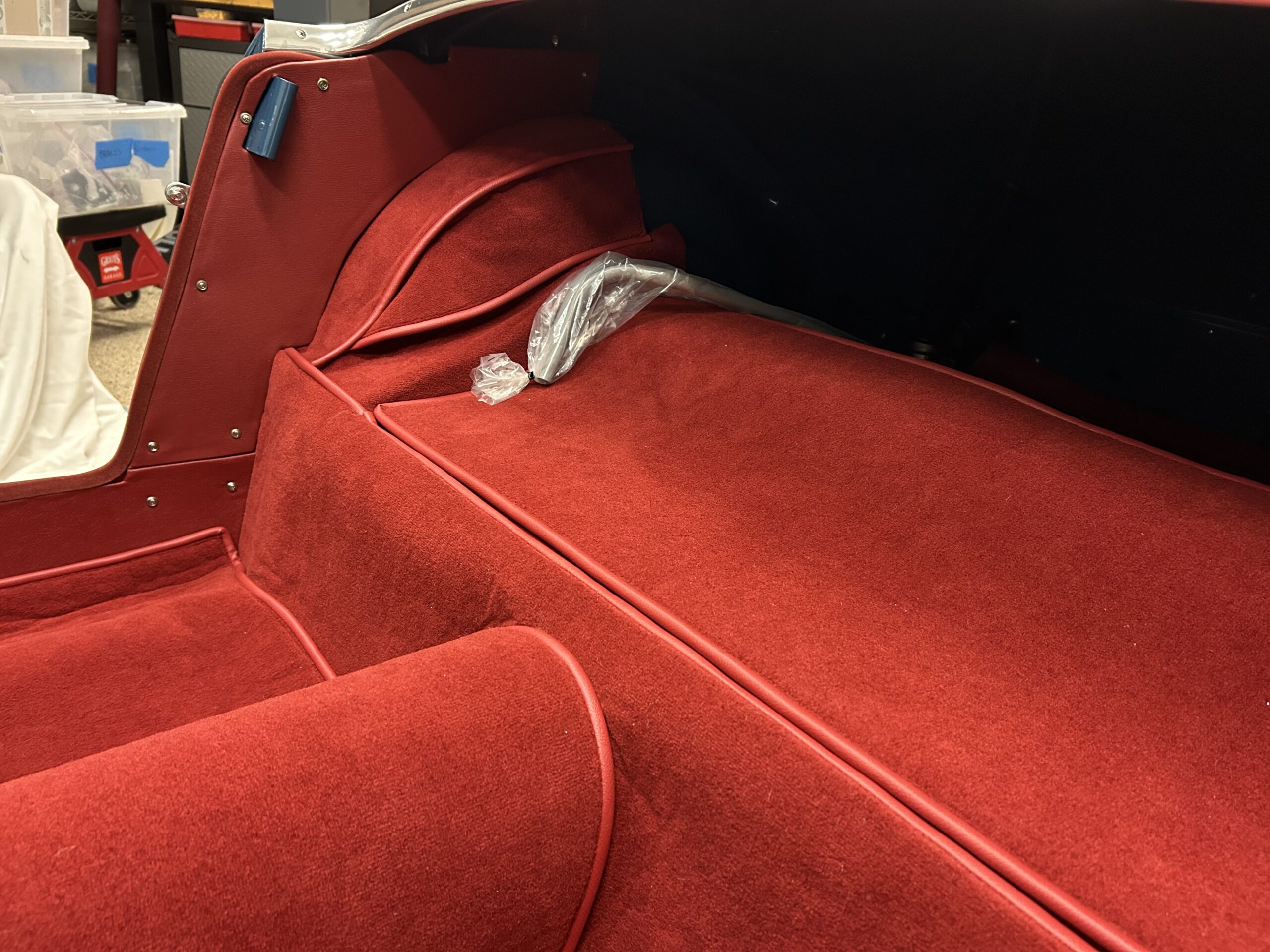
Rear Quarter Panel Installed

The last panels to cut, upholster and install were the boot side panels. We again painted the panels with POR 15 to enhance water protection and to add stiffness to the board. Each of these panels are mounted with two #6 sheet metal screws with trim cup washers. The courtesy lights we reinstalled in the panels and both were them mounted to the car.
Boot trim panels
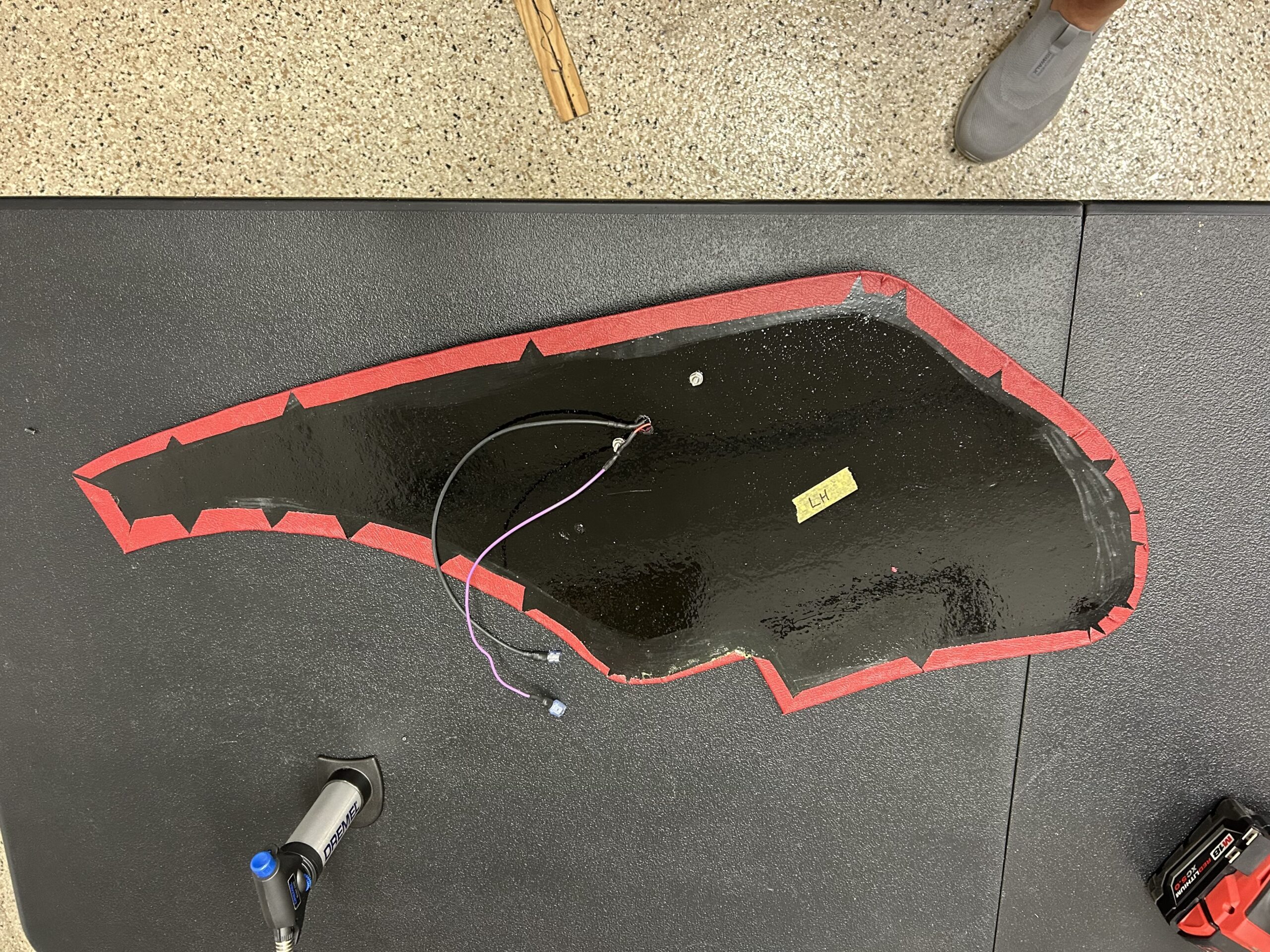
Boot trim panel with courtesy lamp installed

Installing the carpet snaps in the car and carpet was our next step in the completion of the interior. The snap consists of three pieces, the fastening ring with three tabs, the female side of the snap and the male side of the snap as seen in the photo below:

Carpet Snap installation

Installing the snaps was complicated because we already had dynamat and aluminum heat insulation in the car. We cut away and removed the insulation where the snaps were located and we added couple of savers behind the male end of the snaps.

Insulation removal

This is what the finished product looks like:

Carpet Snaps Installed

Bugeye Restoration Video Episode Eighty-three covers the work done with the interior insulation and panel installation to this point and it’s content is listed below:

https://vimeo.com/1028961169/ae3206c6d1?share=copy

0:00 – Cleaning floorboards

0:20 – RH side blanking screws

0:39 – Dynamat Extreme installed

1:01 – Aluminum insulation installed

1:30 – Insulation on gearbox tunnel installed

1:35 – Dynamat Extreme insulation on gearbox tunnel

1:52 – Aluminum insulation on gearbox tunnel

2:22 – Engine surround insulation and panel install

3:53 – Outside footbox panels installed

5:46 – Carpet installation begins

7:10 – Boot mat installed

8:49 – Rear bulkhead carpet installed

10:19 – Rear Wheel Arch carpet 

10:47 – Rear carpet installed

11:15 – Door sill panels

14:28 – Rear Quarter Panels

15:27 – Bristleflex installation

17:37 – Door Striker Installation

18:16 – Door Sill and rear quarter panel final installation

19:28 – Boot Trim panels

20:36 – Installing carpet snaps

26:36 – Adjusting the door seal to fit the soft top frame
 

Custom Wiring Harness Installation – Part One

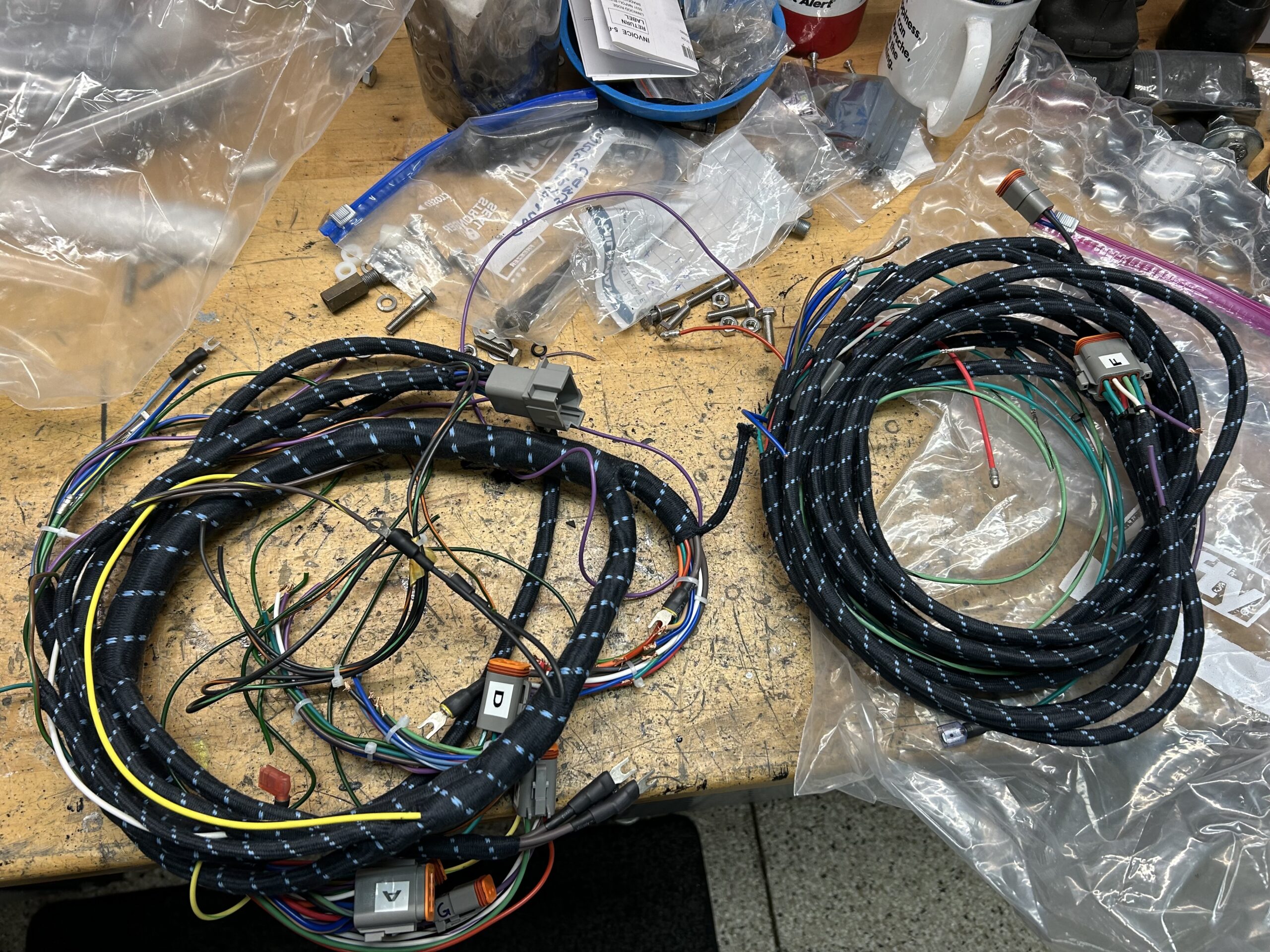
We sent our custom made wiring harness to Rhode Island Wiring Services to have the harness covered with a cloth braid using a royal blue double tracer. The cost was $5.25 per foot with an $8.00 machine set-up fee. We were very pleased with the results. Pardon the messy work bench – it gets that way from time to time!

Cloth Braided Wiring Harness

Previous posts cover the creation and circuit testing of the harness:

A new electrical systemhttps://valvechatter.com/?p=13986

Building and Testing the New Wiring Harness – https://valvechatter.com/?p=14061

JWR Bugeye Wiring Diagrams: https://valvechatter.com/?p=14067

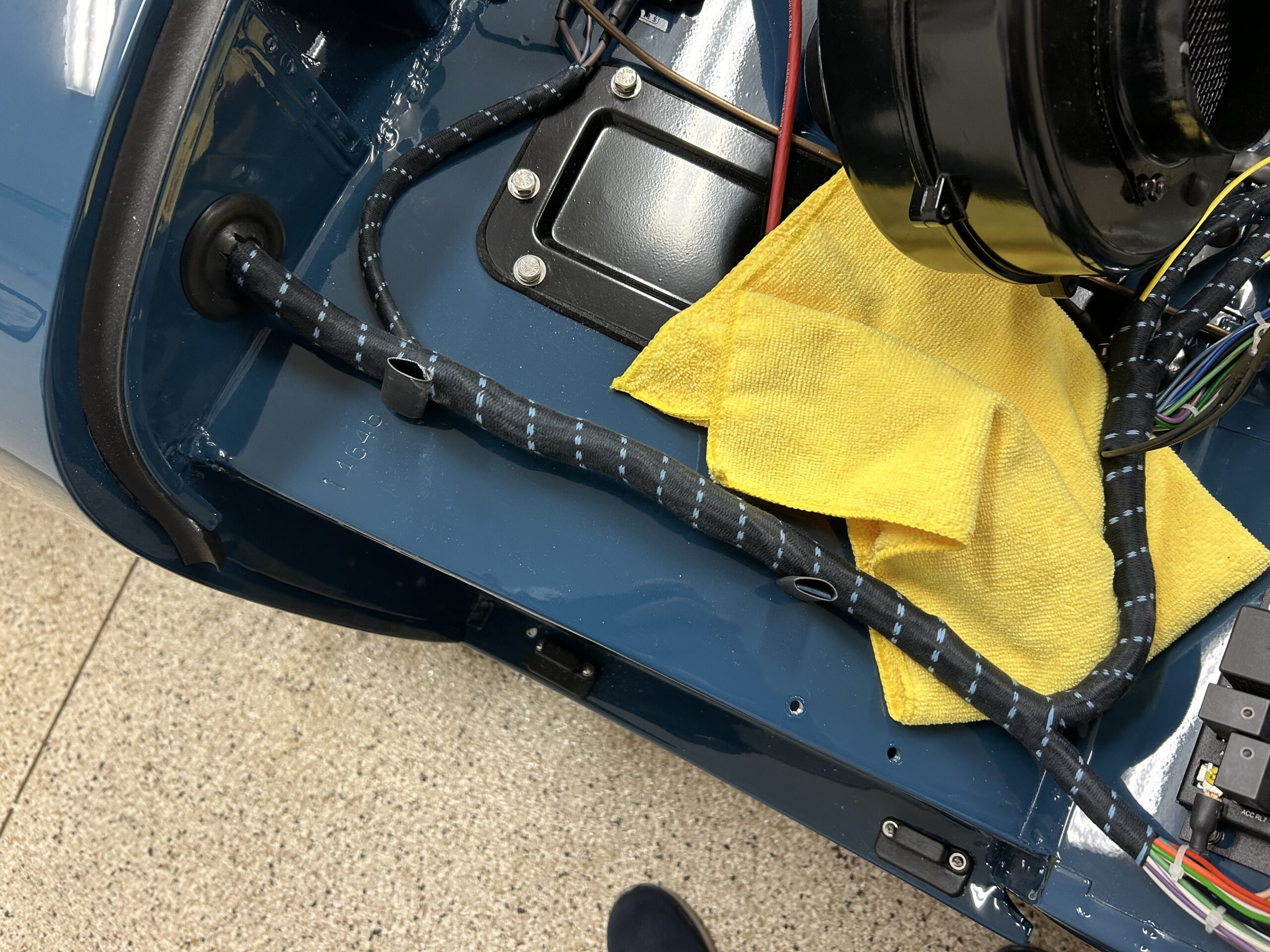
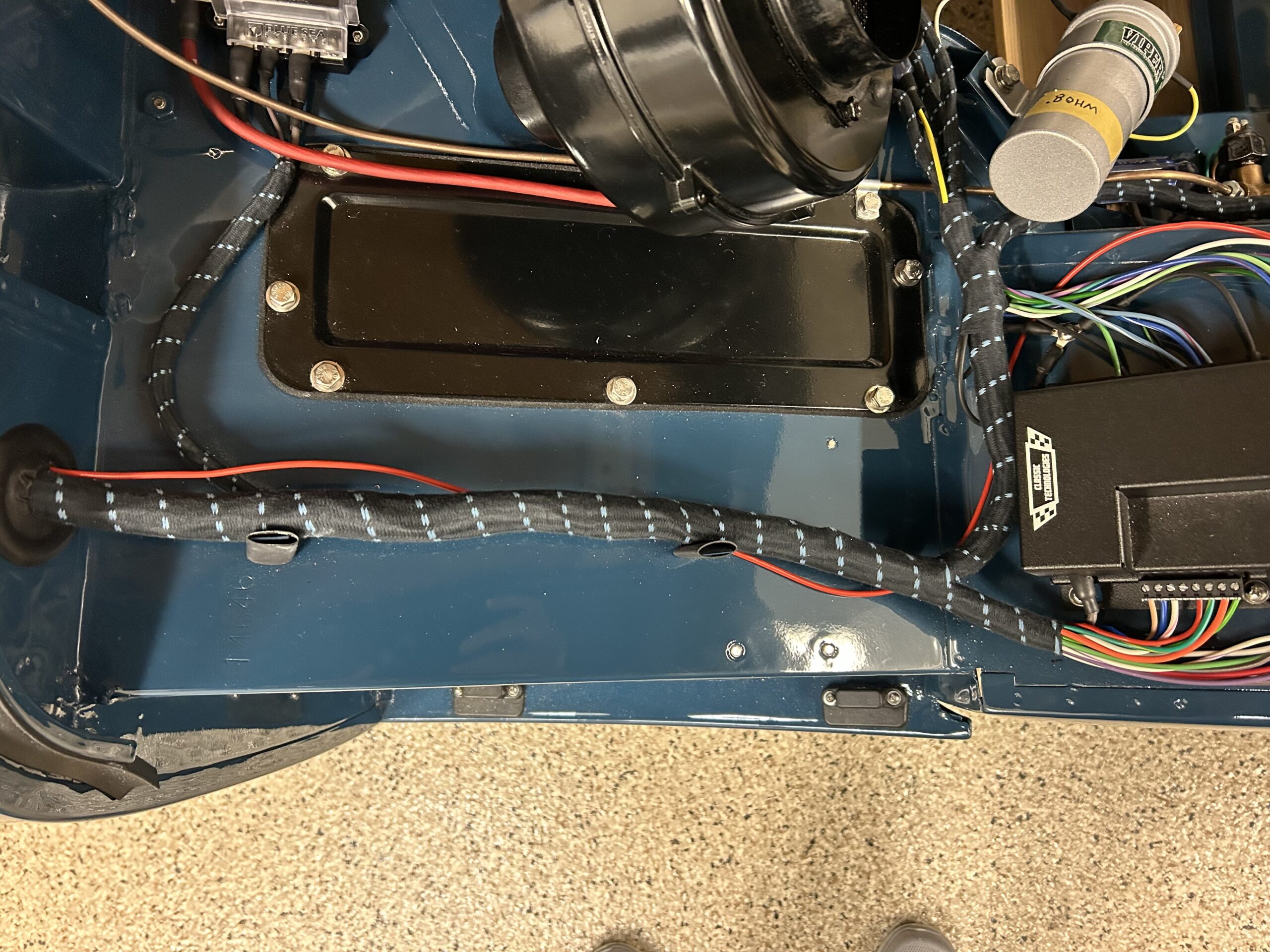
Finally, the time has arrived to install the harness in the car. The first step was to get the end of the harness though the firewall grommet. Not easy with the Deutsch connectors attached, but we got them through.

Harness through the firewall grommet

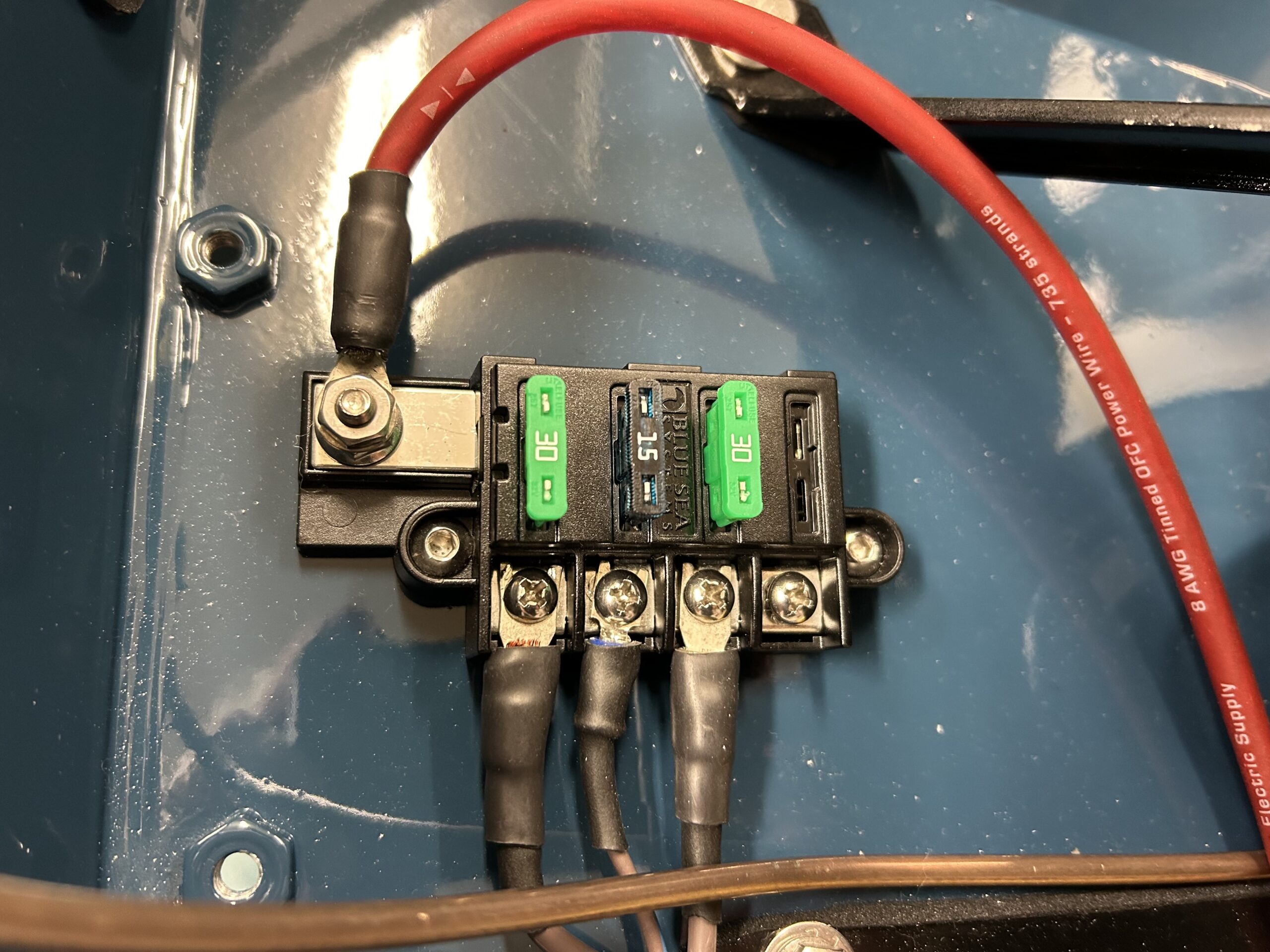
The next step was to connect the three wires in the harness to the small power supply fuse box. One thirty amp wire feeds the Ignition bank in the fuse box, the other thirty amp wire feeds the accessory bank in the fuse box and the fifteen amp wire feeds the lights bank in the fuse box.

Power supply fuse box

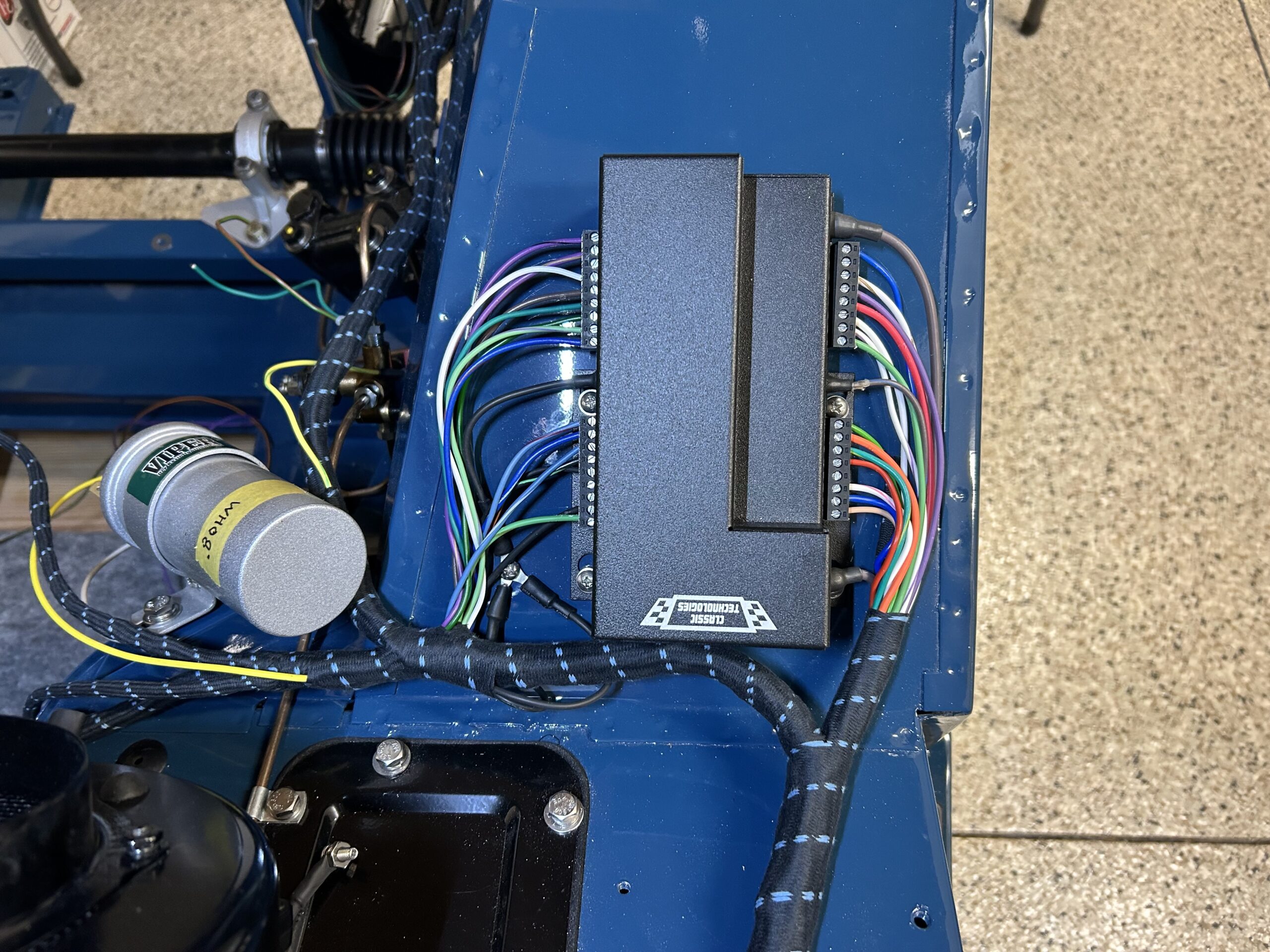
Then it was a matter of connecting the wires to the four banks of fused terminal positions in the Classic Technologies relay/fuse box.

Fuse Box Wiring

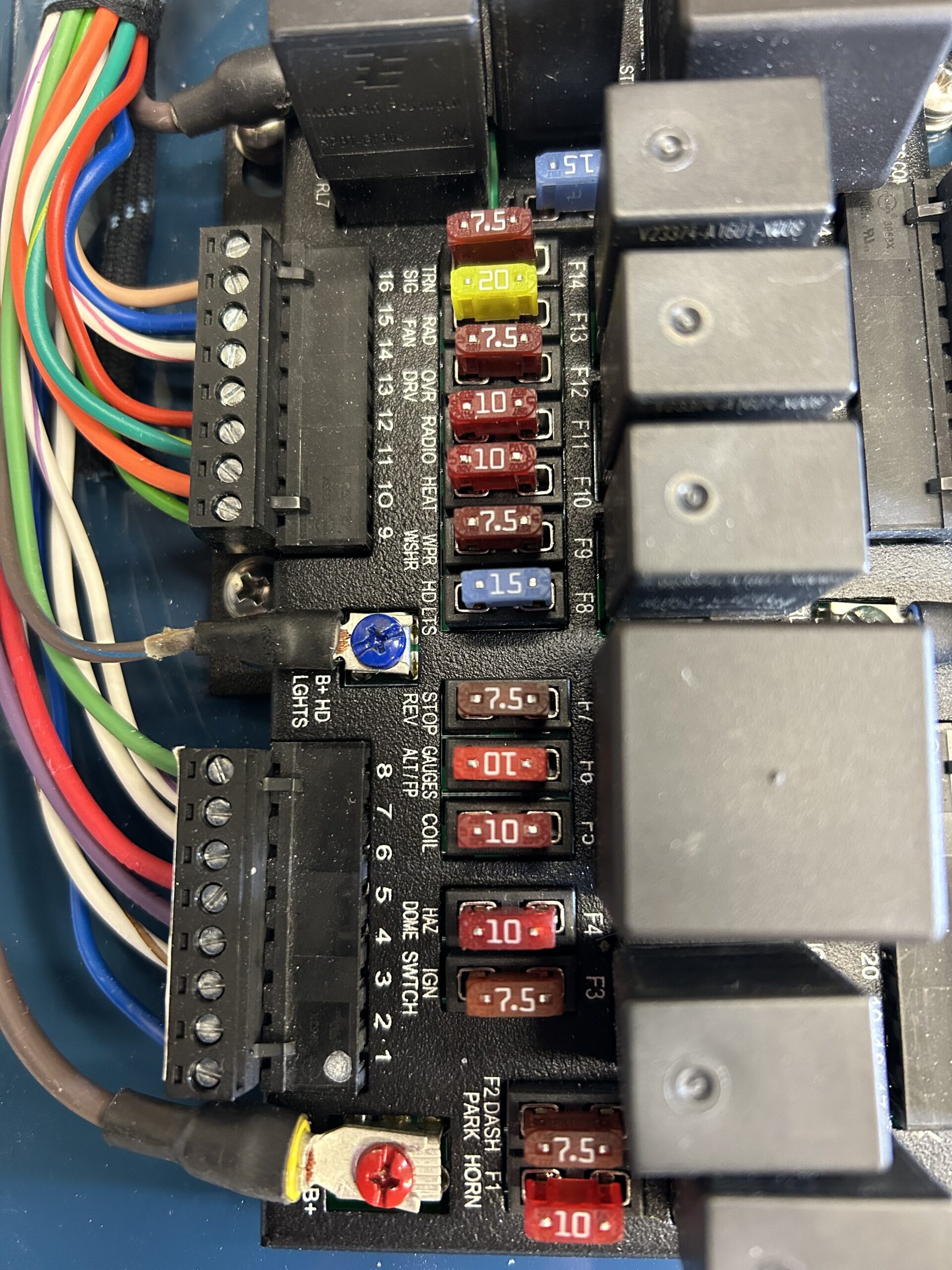
We pulled all of the fuses in the two fuse boxes and will add them back one at a time as we test the circuits upon final installation.

fuse installation with ratings

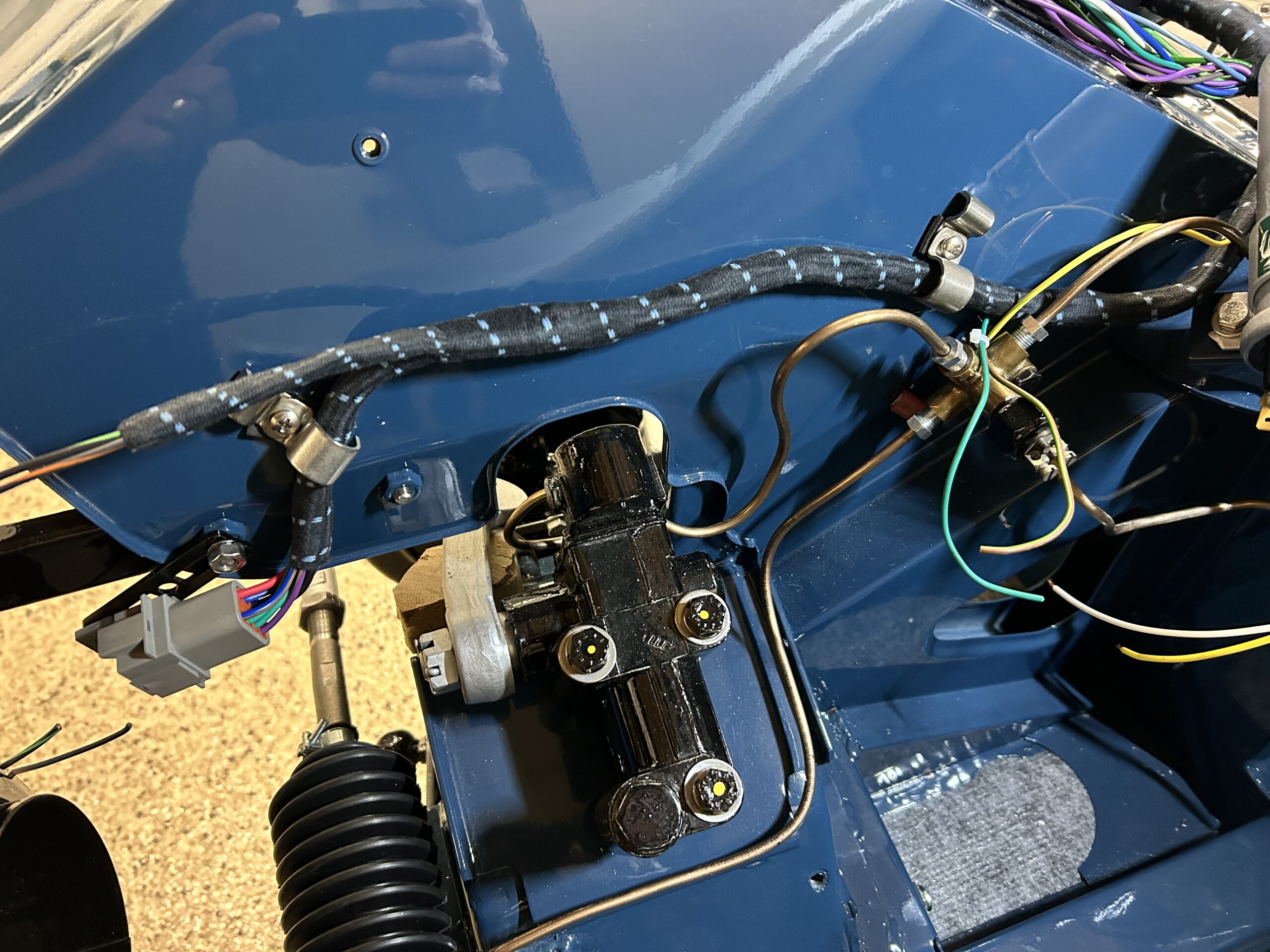
Next, we turned to the group of wires that run to the front of the car along the RH valance. Wiring for the coil, the hydraulic brake switch, the radiator fan, the radiator fan thermostat, the horns and the lights are in this bundle.

Wiring harness on RH Valance

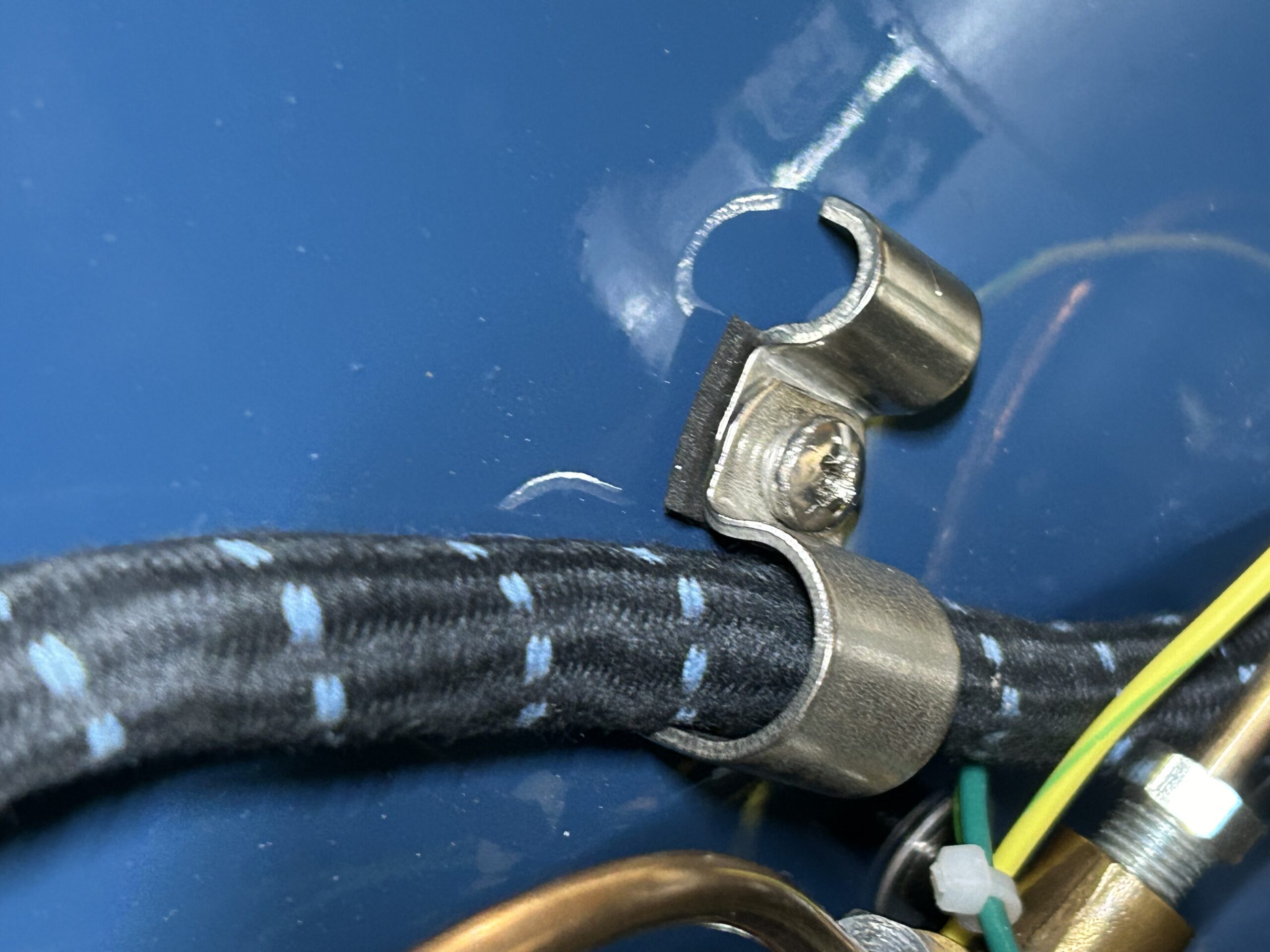
We used stainless steel clips to secure the wires to the valance. A smaller 3/8″ clip will be used to route the capillary tube for the water temperature gauge and sensor.

Stainless steel wiring clips

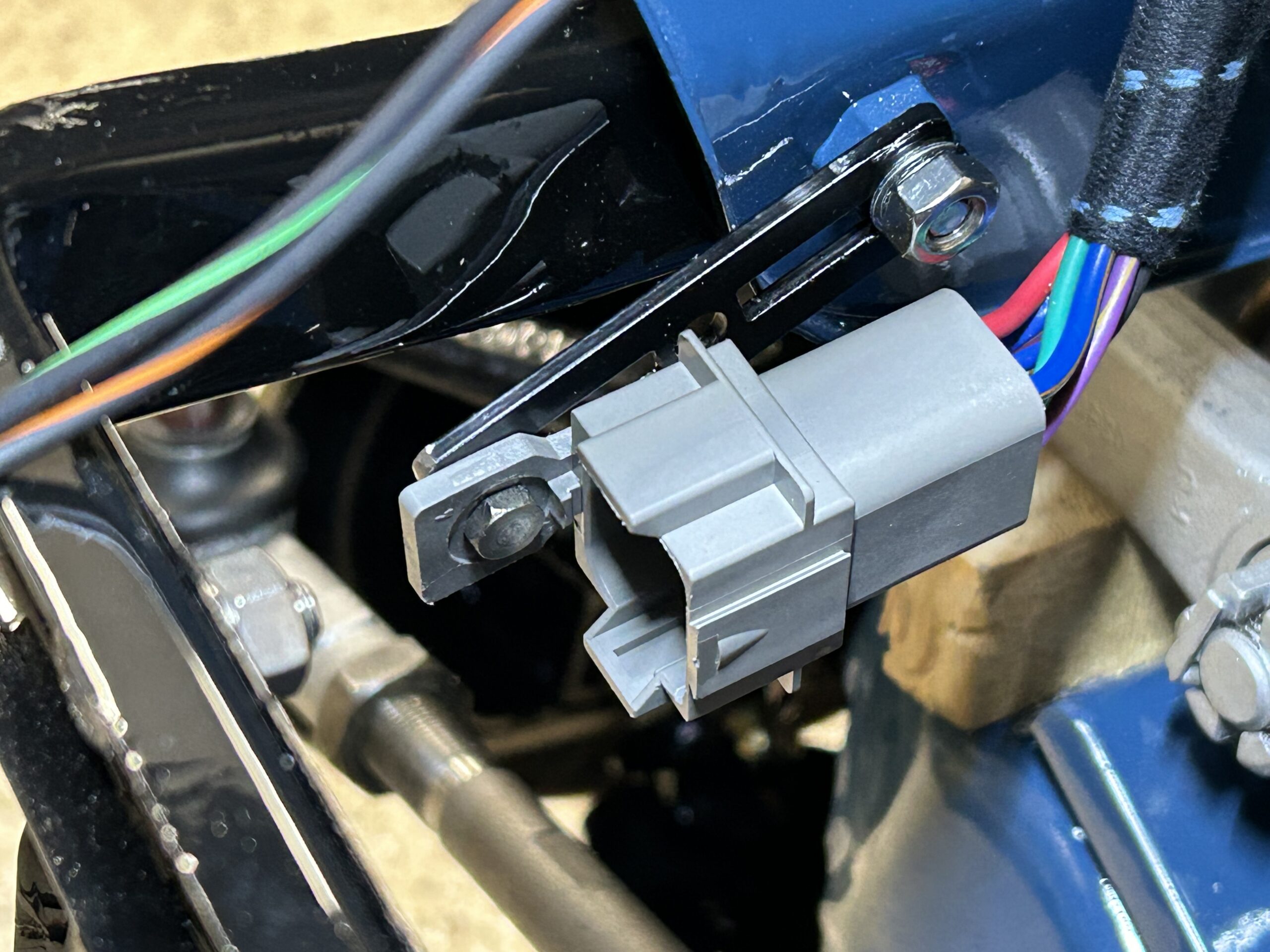
We made a little bracket to support an 8-pin Deutsch connector at the front of the valance. This connector will mate with an 8-pin bonnet connector to deliver power to the headlights, flashers, running lights and auxiliary driving lights if we decide to mount them.

8 pin Deutsch Connector

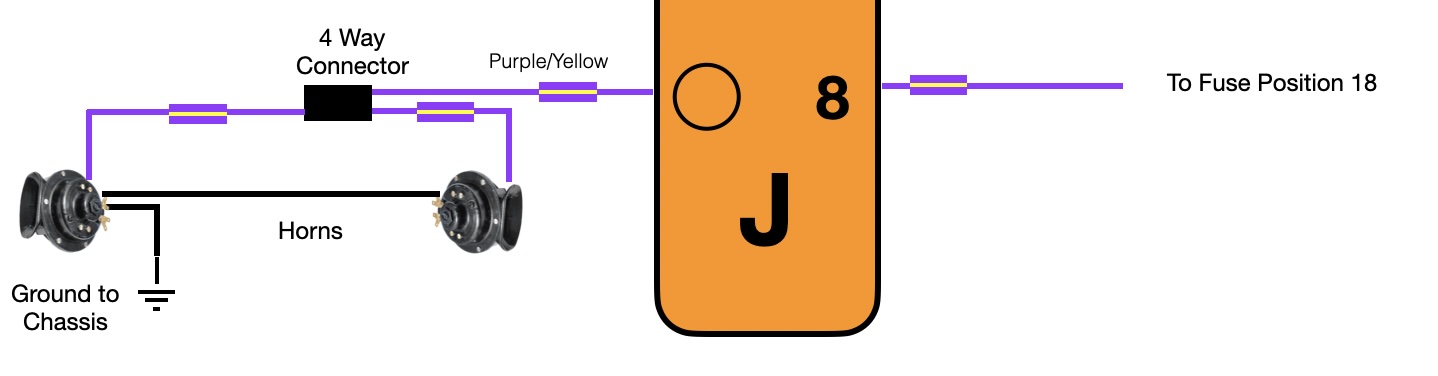
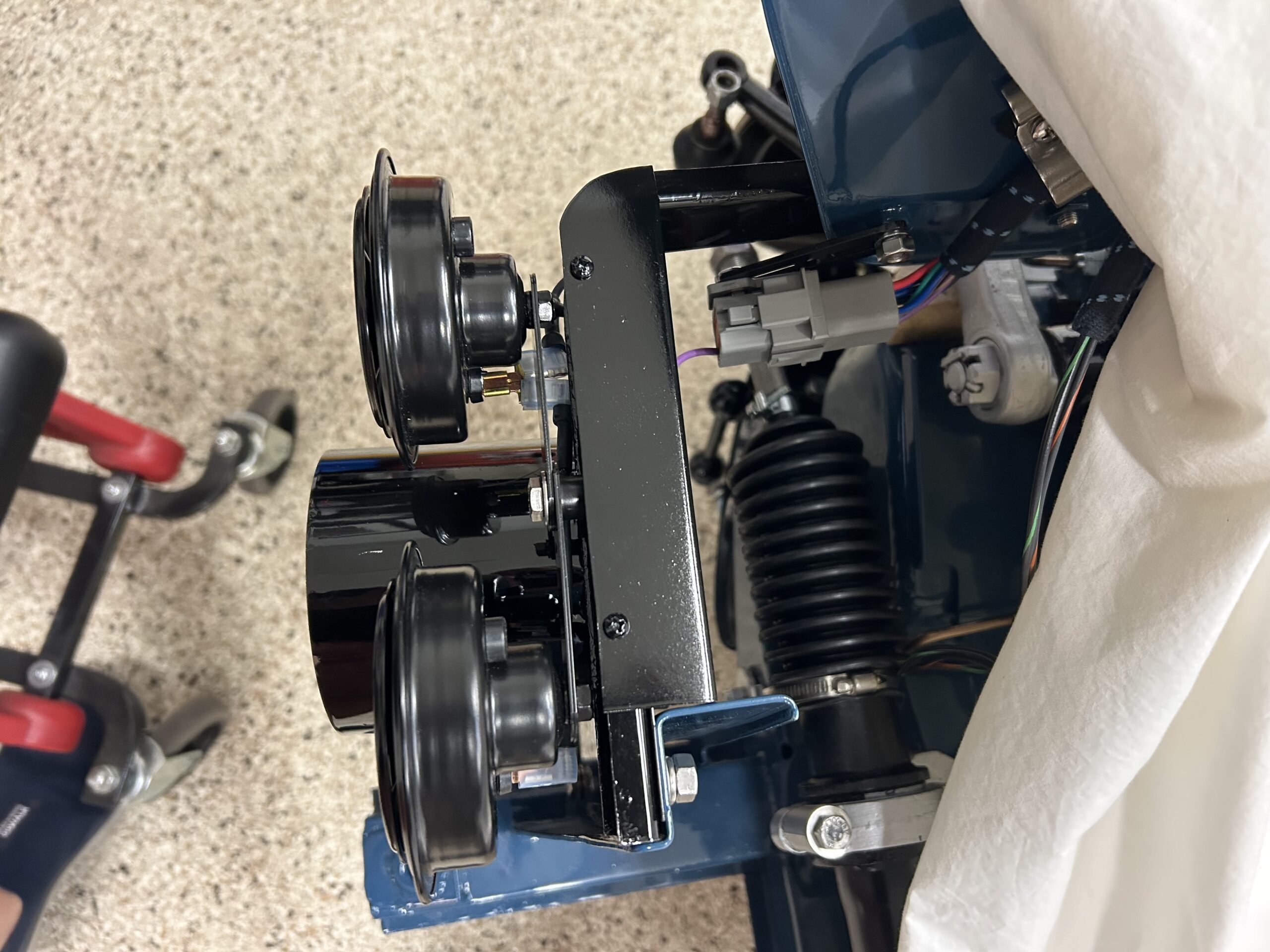
We then installed the twin Hella horns and made the wiring connections. This did involve using a four way bullet connector to receive and supply power to both horns. A double spade connector was used to facilitate the wiring connections for the ground wires.

Horns Wiring

Hella horns installed with wiring and custom cover

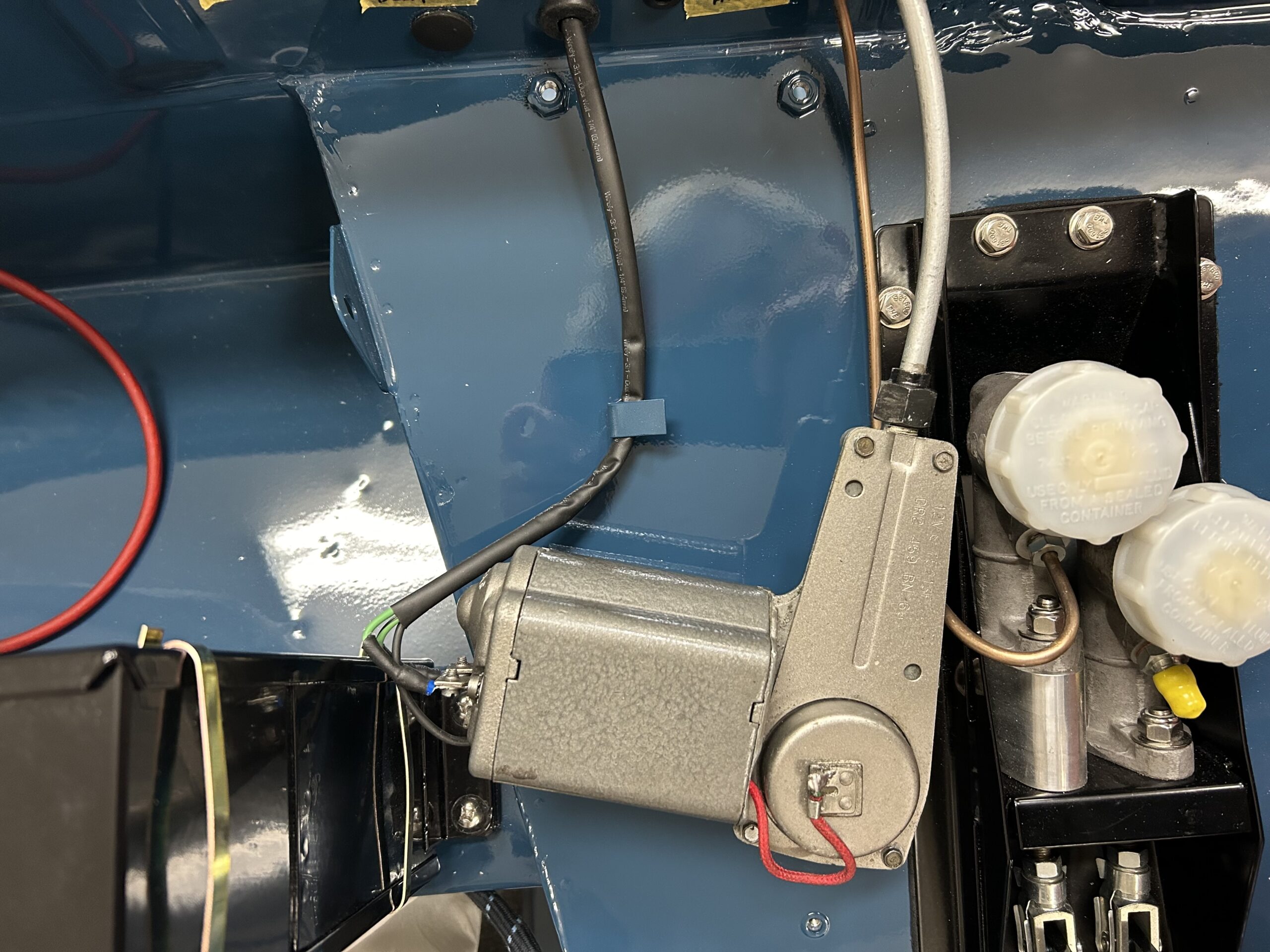
The next wiring connections to be made were for the wiper motor. Duestch connector “H” is used to connect the wires from the wiper motor to the Wiper Controller mounted behind the dash. The three wires, encased in shrink tubing, come through the firewall. The green wire connects to wiper motor terminal #2 and the green/black wire connects to terminal #1. A black ground wire connects to terminal #3.

Wiper Motor Wiring Connections

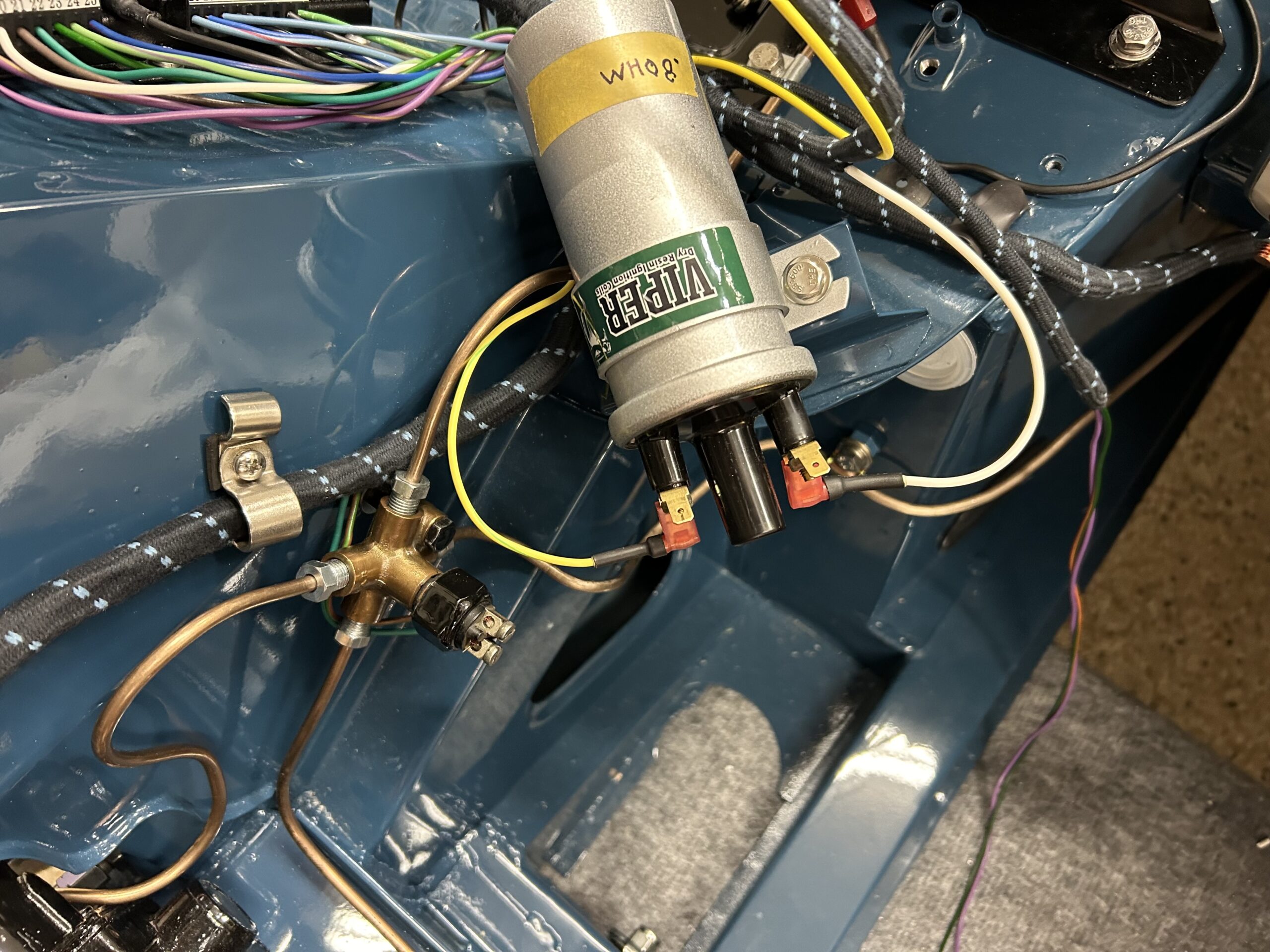
The next item to wire was the ignition coil. The yellow/green wire from the harness connects to the (-) terminal of the coil. The white wire from the harness connects to the (+) terminal of the coil.

Ignition Coil Wiring

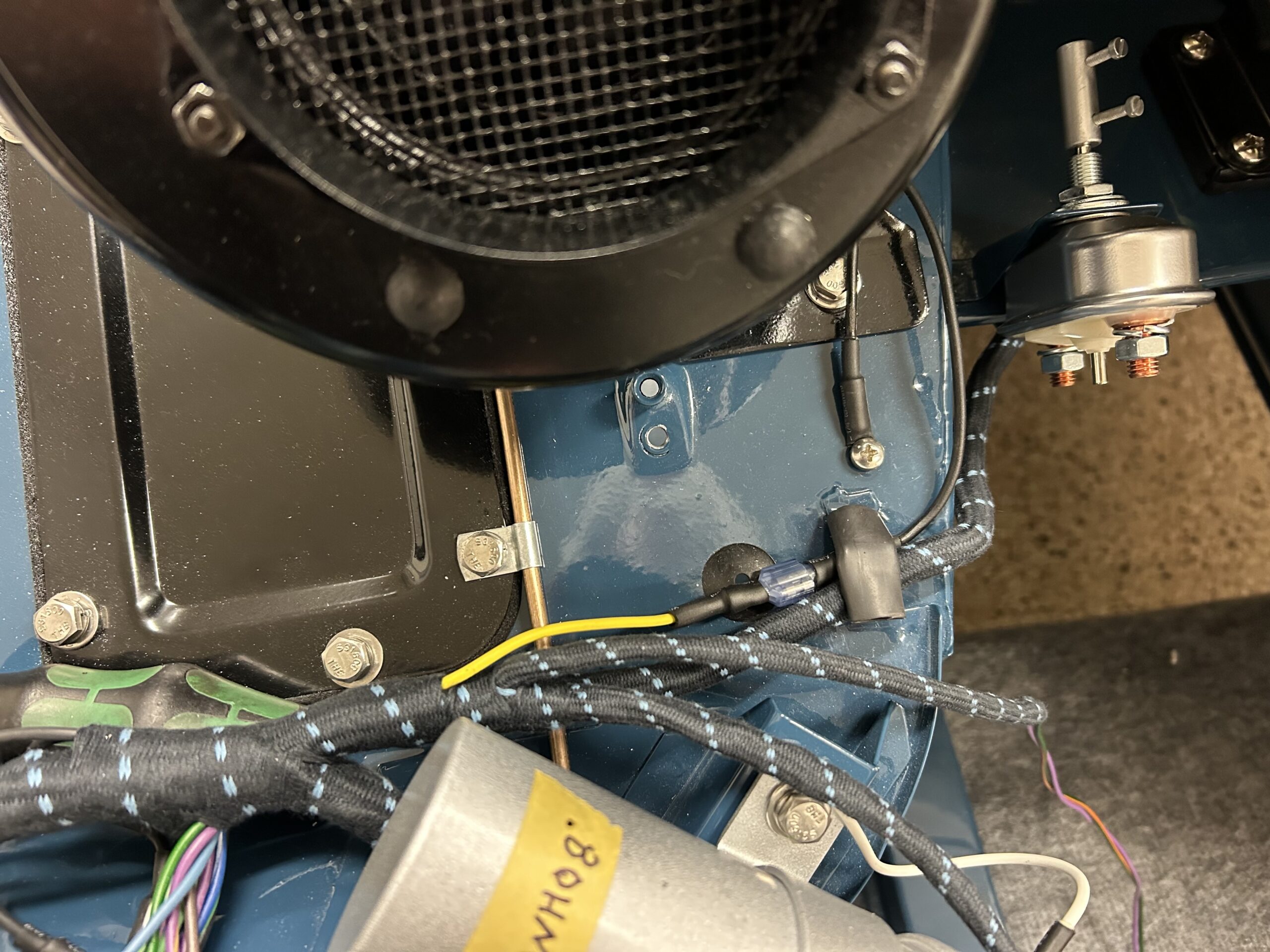
The heater blower has two black wires from the fan motor. One of those wires is connected to a yellow wire from the harness with a spade connector. The other black wire is ground and is screwed to the chassis.

Heater blower wiring

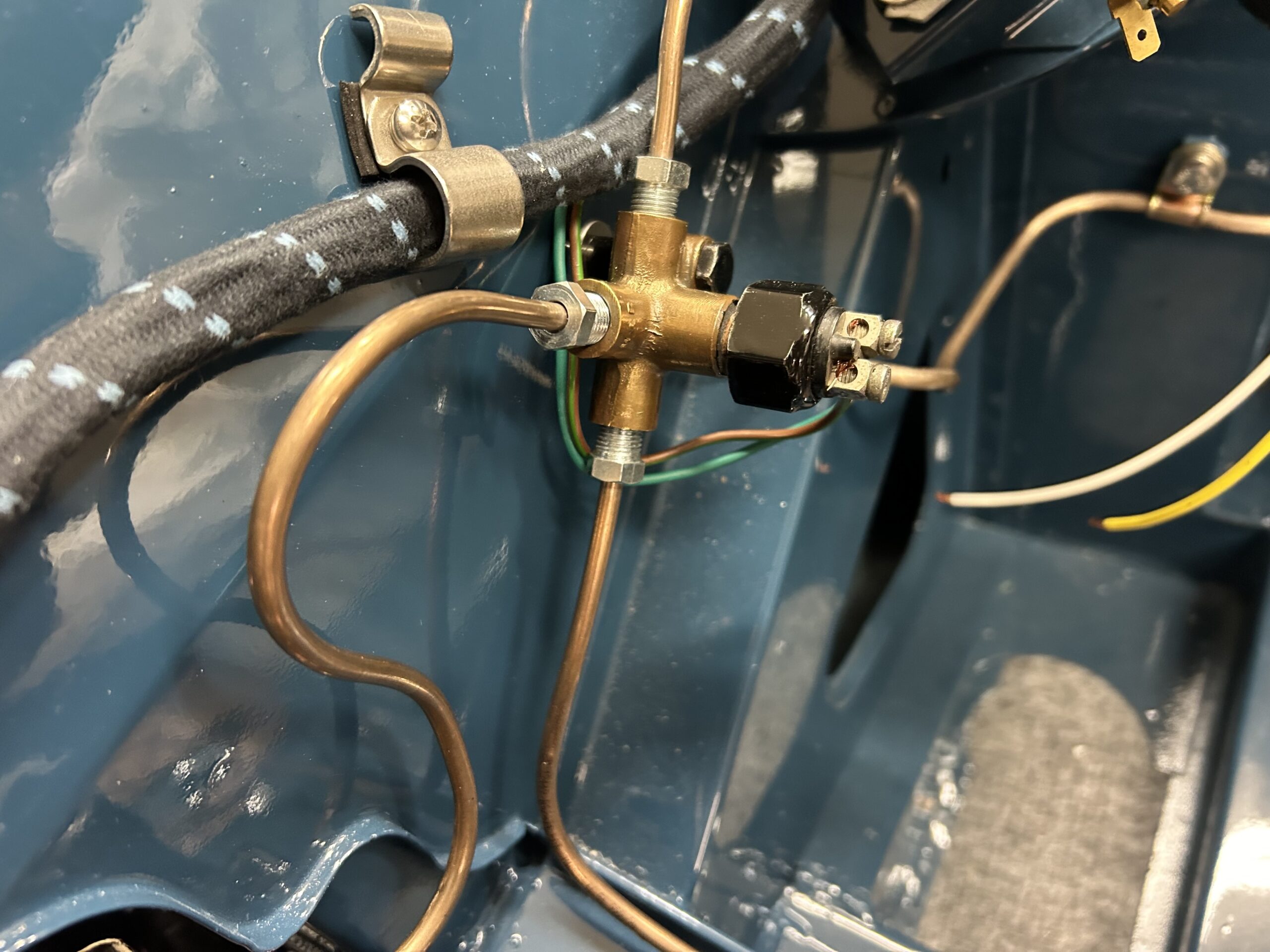
The hydraulic brake switch is mounted on the RH engine bay valance. A teal green wire and a brown/green wire from the harness connect to the two screw terminals on the switch.

Hydraulic brake switch wiring

The brake pedal brake switch is a custom addition to the Bugeye. Details on the switch and its mounting bracket are highlighted in another post: https://valvechatter.com/?p=14351

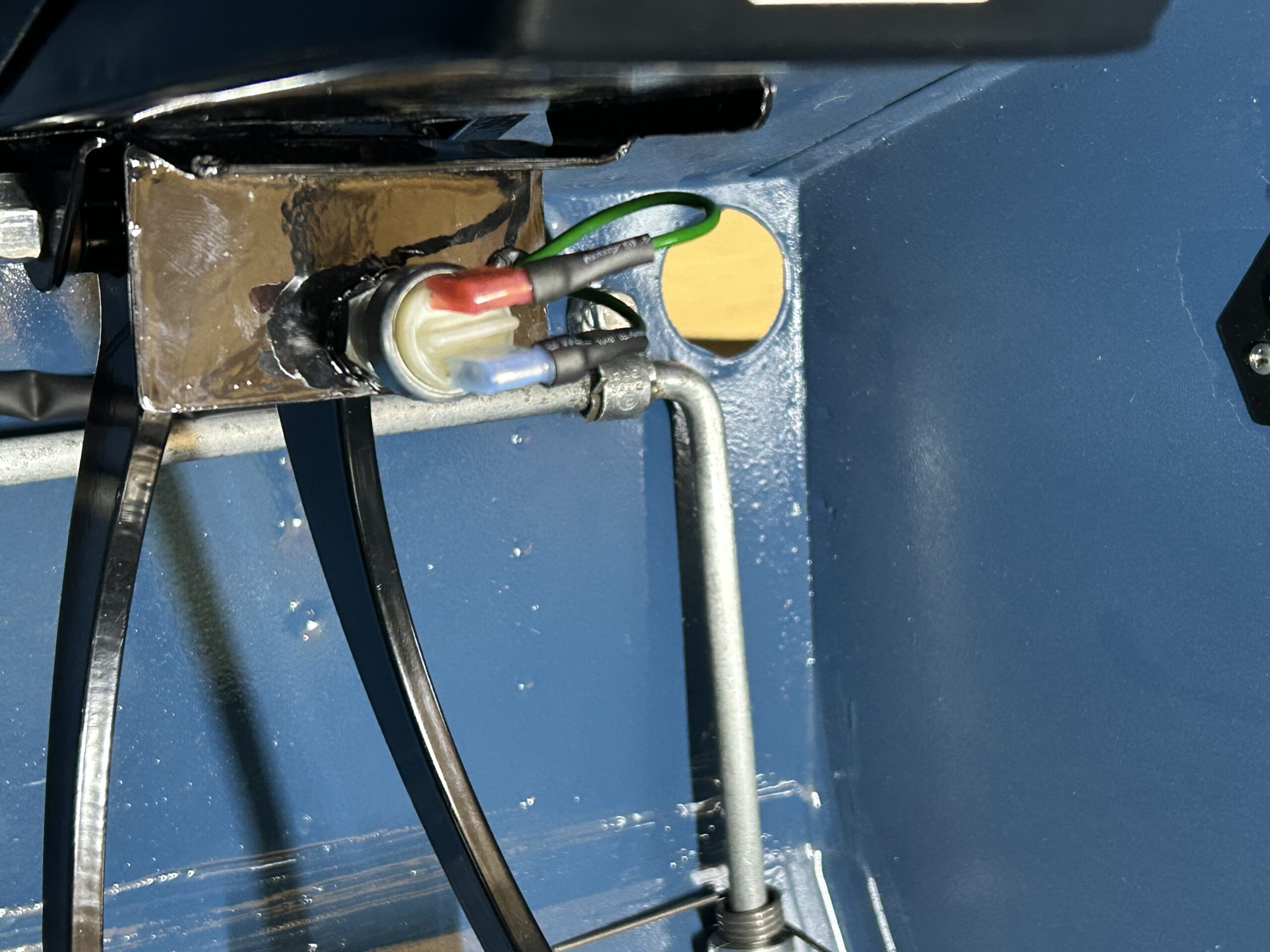
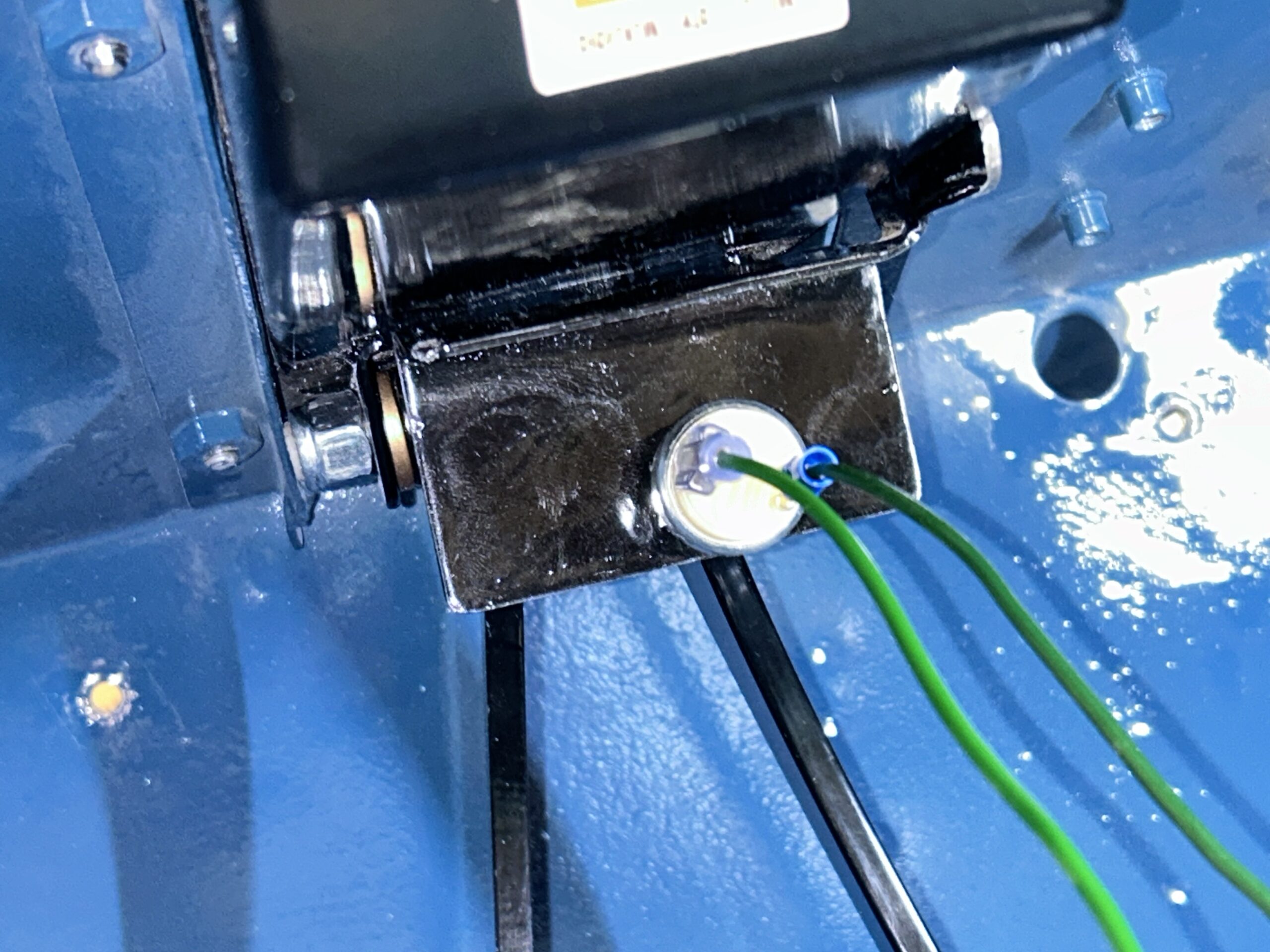
Two wires from the harness, a green wire and a dark green/orange wire, come through the grommet in the LH footbox near the dipper switch and connect to the switch at the pedal.

Brake Pedal brake switch wiring

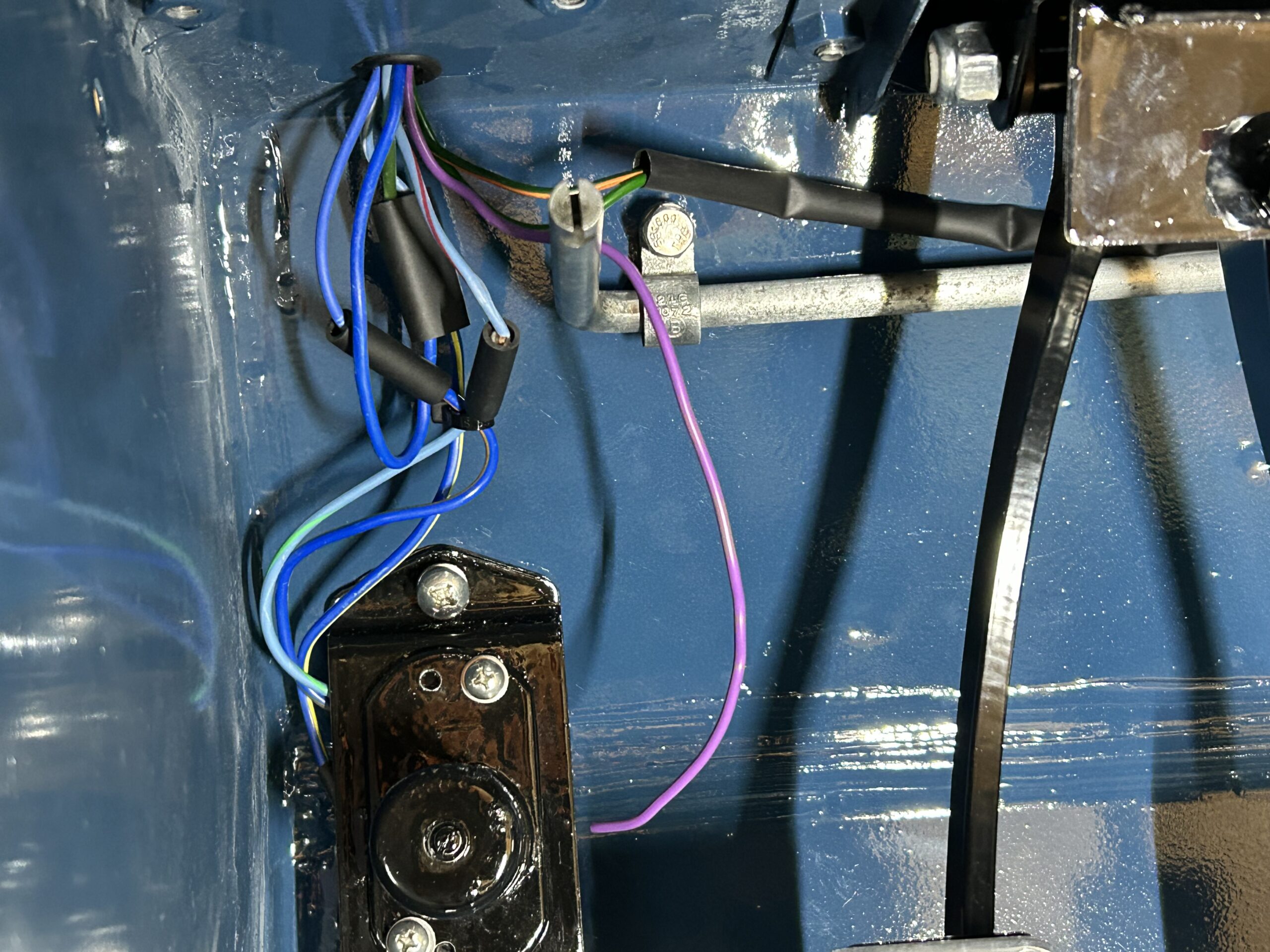
The Dipper switch wiring was completed next. We had a little issue on this because we cut two of the wires a little too short requiring the use of bullet connectors to add length to the wiring to the switch. However, while space was tight, we were able to make all of the necessary connections.

There are three terminals on the dipper switch. A power-in terminal, a low-beam terminal, and a high-beam terminal. One has to look closely to find it but the power-in terminal is marked with an arrow on the switch molding. The blue wire from the harness connects to this terminal via a bullet connector.

The blue/red wire is connected via a bullet connector to a blue/green wire (ran out of blue/red) and then to one of the remaining switch terminals – it doesn’t matter which one.

Three wires connect to the remaining terminal on the switch. The blue/white wire is for high beam operation, the green wire is for the high beam warning light in the speedometer, and the blue/yellow wire is routed to the toggle switch under the dash for the driving lights. These three wires connect together via a four way bullet connector, with one blue/yellow wire then connecting to the terminal on the switch. A bit confusing, but the photo helps.

Dipper switch wiring

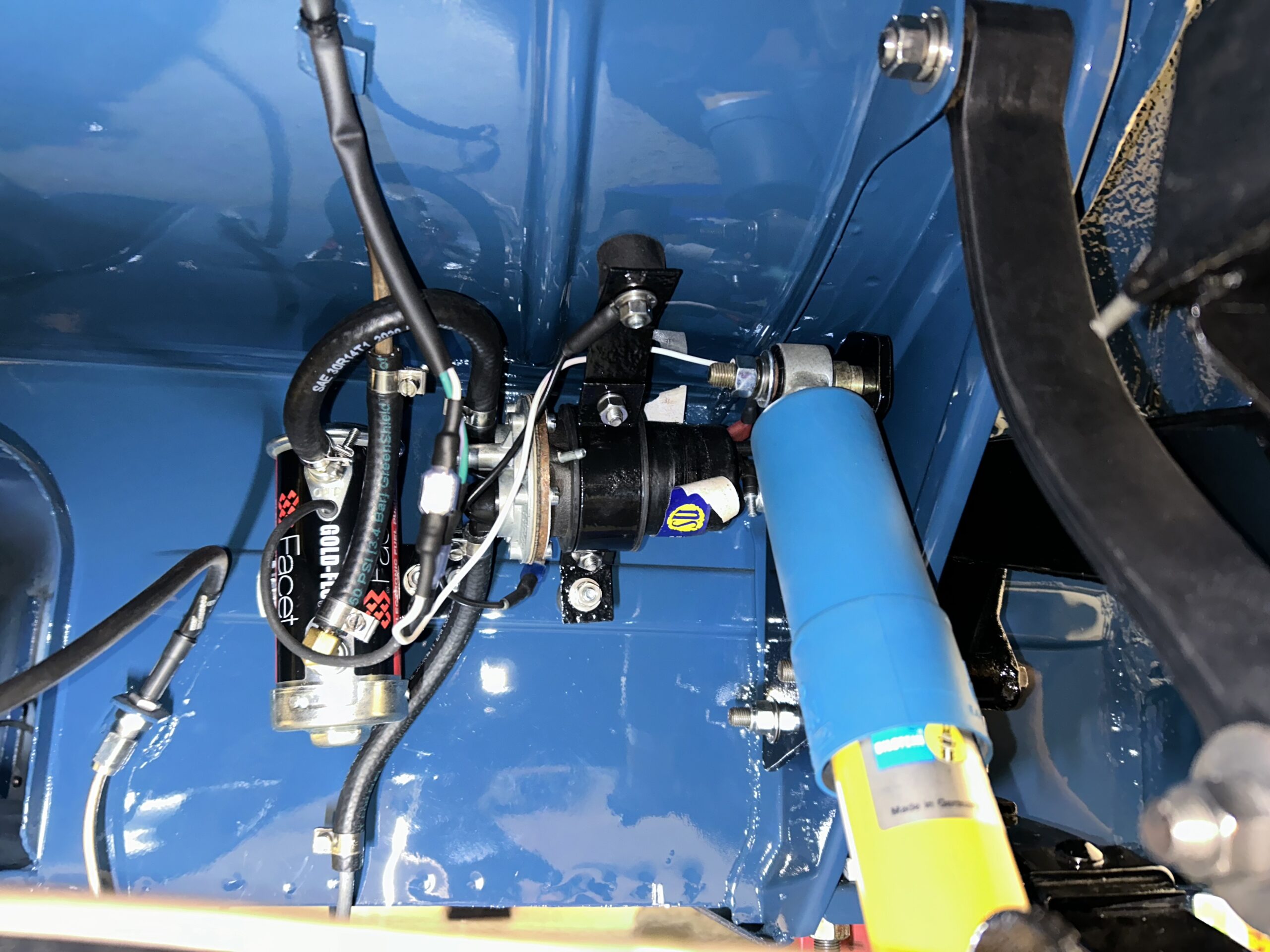
The fuel pump wiring connections were then made. The teal/purple wire from the harness was connected to the black wire at the Facet pump with a spade connector, and the white/purple wire from the harness was connected to the SU pump with a spade connector 

Dual fuel pumps wiring connections

Bugeye Restoration Video Episode Eighty shows the installation of the front and rear harnesses: https://vimeo.com/998221034/30174c4eea?share=copy

The contents of this episode include the following:

0:00 – Braided wiring harness received

0:30 – Begin wiring harness installation

0:58 – Power distribution fuse box

1:48 – Fuse ratings

1:58 – Wiring to Classic Technologies fuse box

2:33 – Wiring clips on the RH engine bay valance

2:40 – Deutsch connector for wiring the bonnet

3:30 – Wiring connections to the horns

5:08 – Horns wiring cover

5:30 – Hydraulic brake switch wiring connected

5:45 – Ignition coil wiring connections

6:05 – Heater blower wiring connections

6:26 – Alternator wires to be connected later

6:32 – Connector “F” wiring to the RH courtesy lights and brake lights

7:30 – Brake pedal brake switch wiring connections

7:55 – Dipper Switch wiring bracket

8:54 – Brake pedal switch wiring tested

9:02 – Accelerator pedal assembly temporary installation

9:20 – Wiper controller installation

9:30 – RH demister elbow and tubing installation

10:30 – Wiring harness to the rear of the car installed

11:18 – Fuel pumps wiring connections


Wiring to the Bonnet

The wiring for the lights in the bonnet is routed through the “J” Deutsch connector that is located in the chassis next to the horns. The individual wires are connected to the bonnet harness using bullet connectors. These are seen in the Bugeye Restoration Video Episode Sixty-six

https://vimeo.com/997550566/c57d5ae6dc?share=copy


Odds and Ends

Odds and Ends

This post covers a number of different and varied topics and they are presented in no particular order. 

The Bugeye Restoration Video Episode Seventy-nine covers the full range of items addressed in this post: https://vimeo.com/996056168/94d2be9bab?share=copy

The long list of subjects covered by this video is detailed below:

0:00 – Bonnet rubber buffer installation

0:12 – Firewall rubber grommet installation

0:17 – Jacking point rubber plug

0:24 – RH footbox steering shaft blanking grommet

0:45 – Brake pipes installation completed

2:25 – Power distribution fuse box installation

2:50 – Slave cylinder access rubber plug installation

3:18 – Interior footbox sill rubber plugs installation

3:40 – Windscreen spray jets installation

4:15 – Windscreen washer reservoir and holder installation

4:40 – Windscreen washer hose installation

5:30 – Wiper rack installation

5:48 – Wiper motor installed

6:18 – Firewall aluminum heat insulation installation

6:52 – Anti-rattle rubber pad for wiper rack

8:03 – Wiper motor installed again

9:40 – Fuel filler pipe seal installation

10:28 – Viper ignition coil installation

10:40 – Fan blower and heater box installation

12:59 – RH radiator brace and air duct  installation

13:25 – LH radiator brace installation

13:40 – Demister vents installation

14:18 – Heater vent hinged doors installation

14:47 – Lift-a-dot fastener installation

15:55 – Tenax and turnbuckle fastener installation

18:06 – Self-tapping lift-a-dot fastener installation 

Bits and Bobs

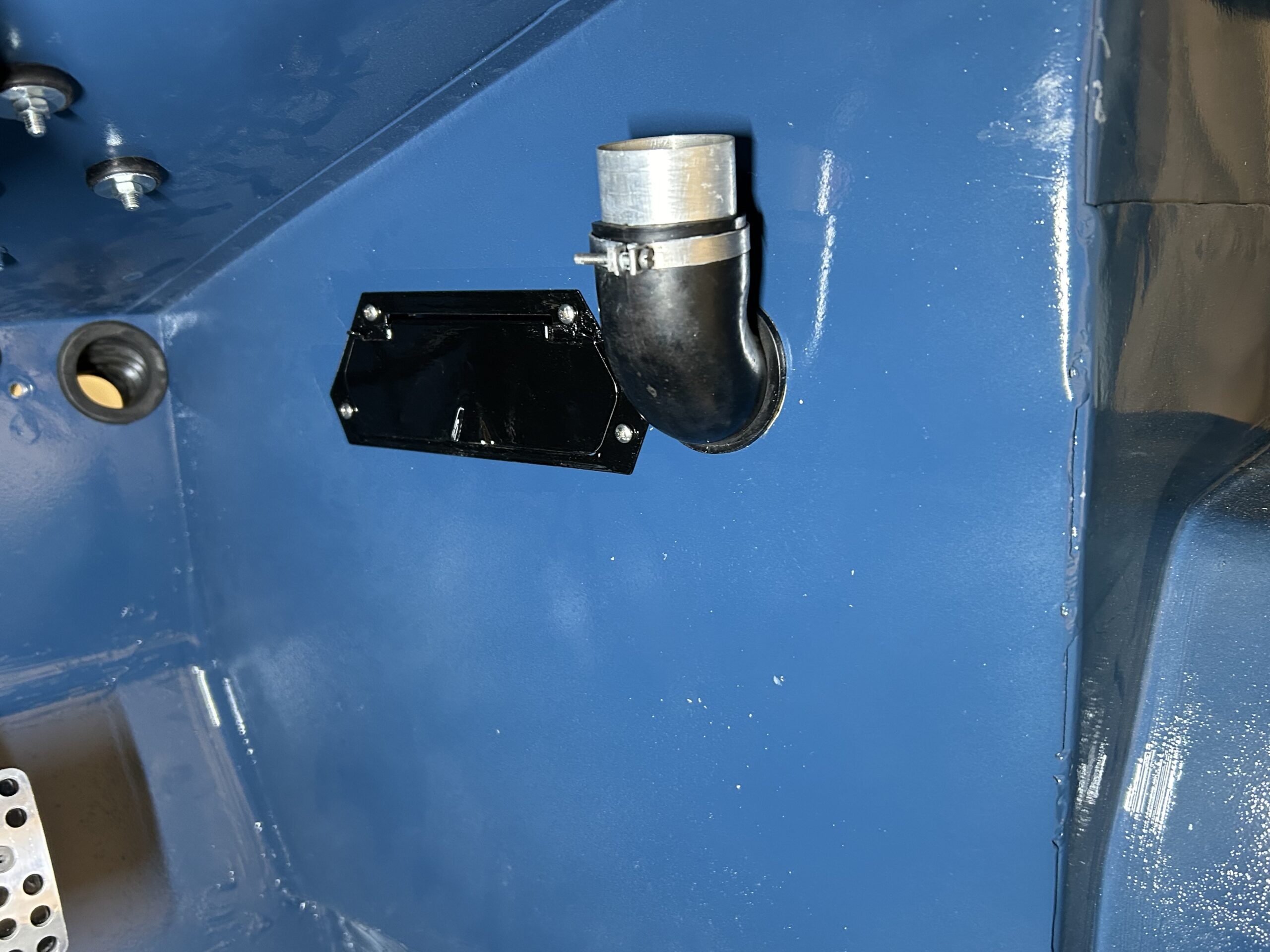
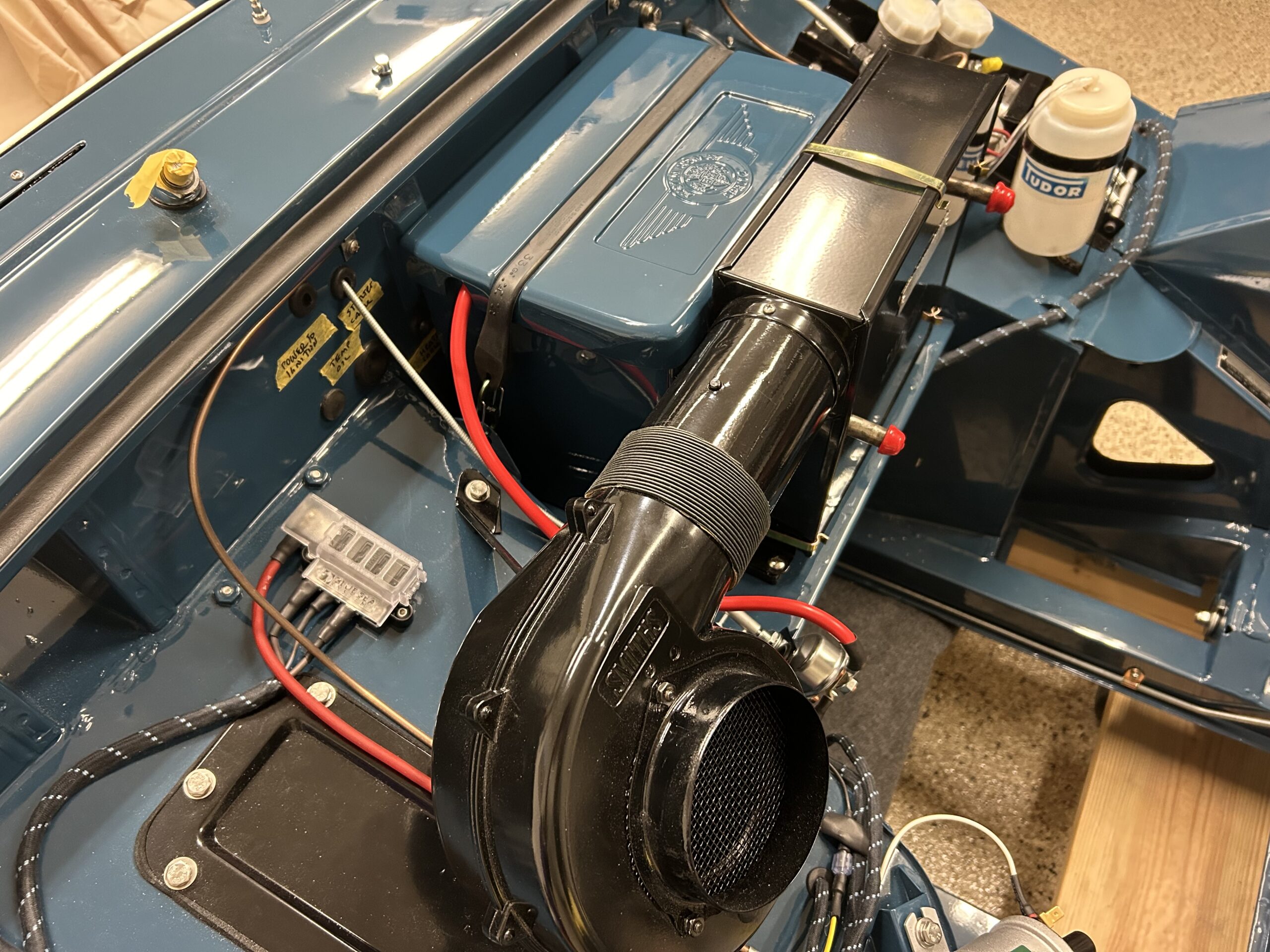
Demister Elbows. We installed a few more items on the car. The demister elbows were a couple of easy items to install.We also installed the demister hose on the RH passenger side of the car just to check fit with the windscreen wiper controller.

Demister elbow

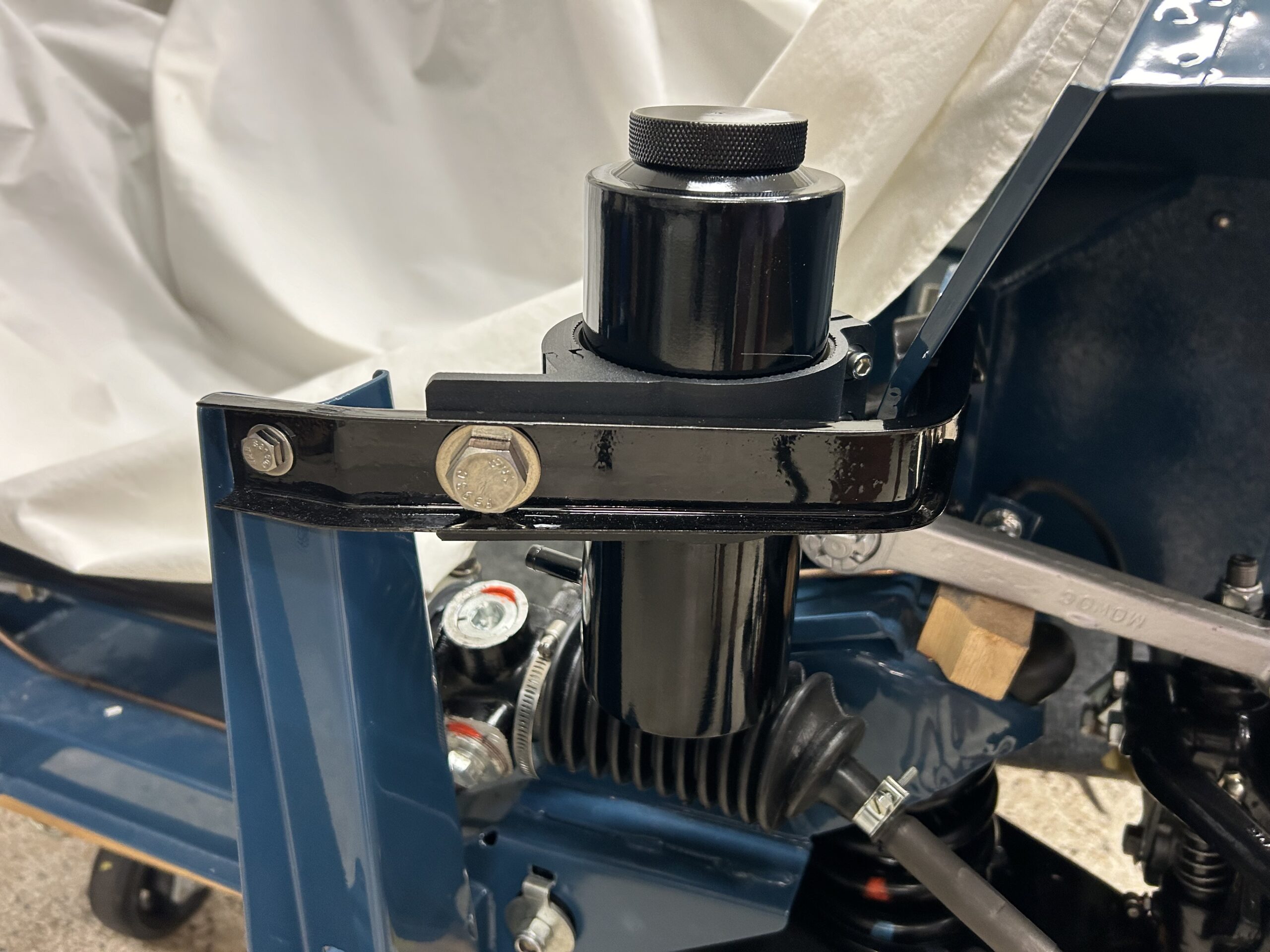
The coolant overflow tank was the next item to mount on the car. It is located on the LH radiator brace. 

Coolant Overflow Tank

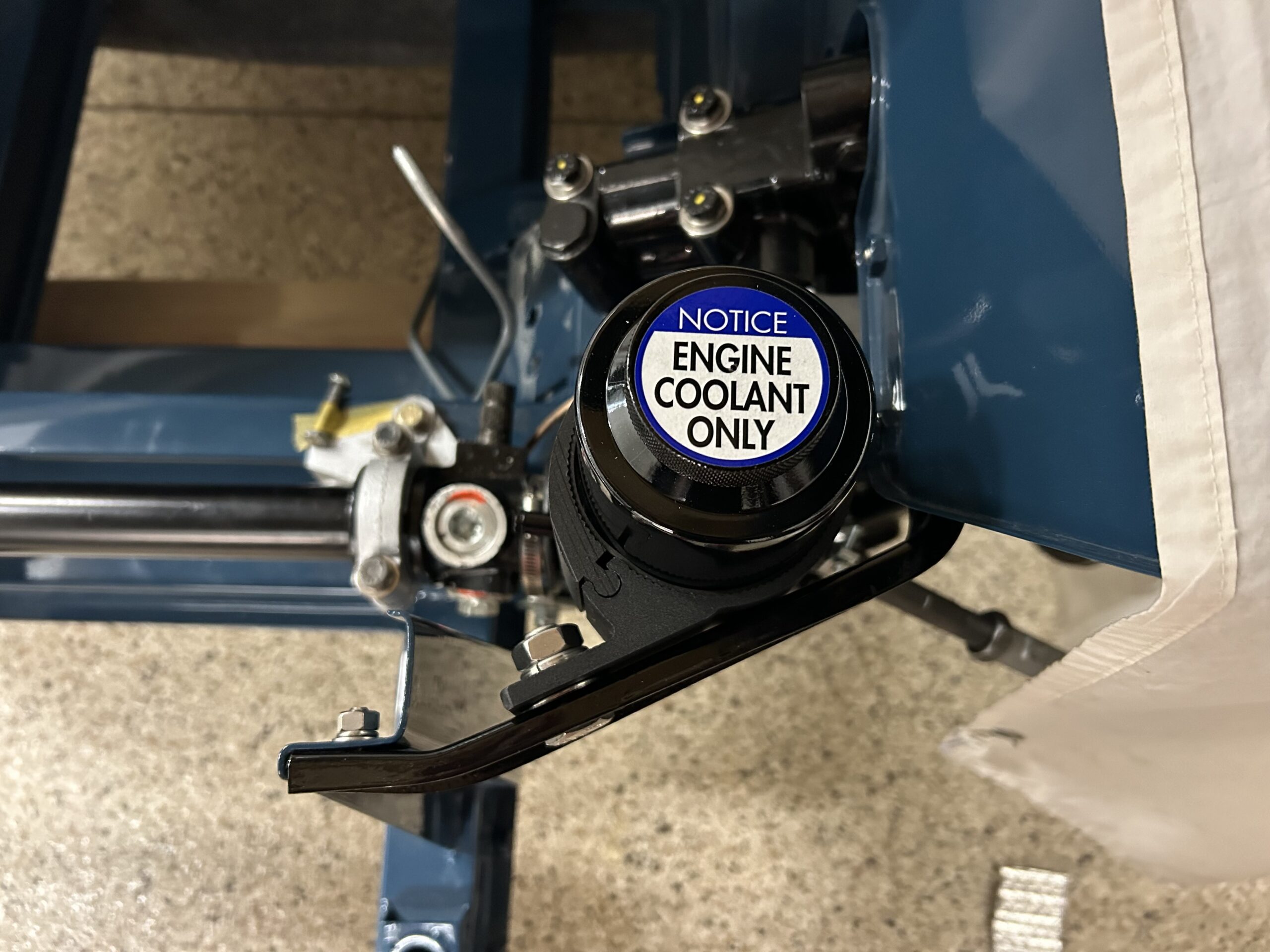
We were going to paint the bottle cap a color to signify that the container was for coolant and not a oil catch can, but we found this little sticker to go on the cap that will work just fine.

Coolant cap decal

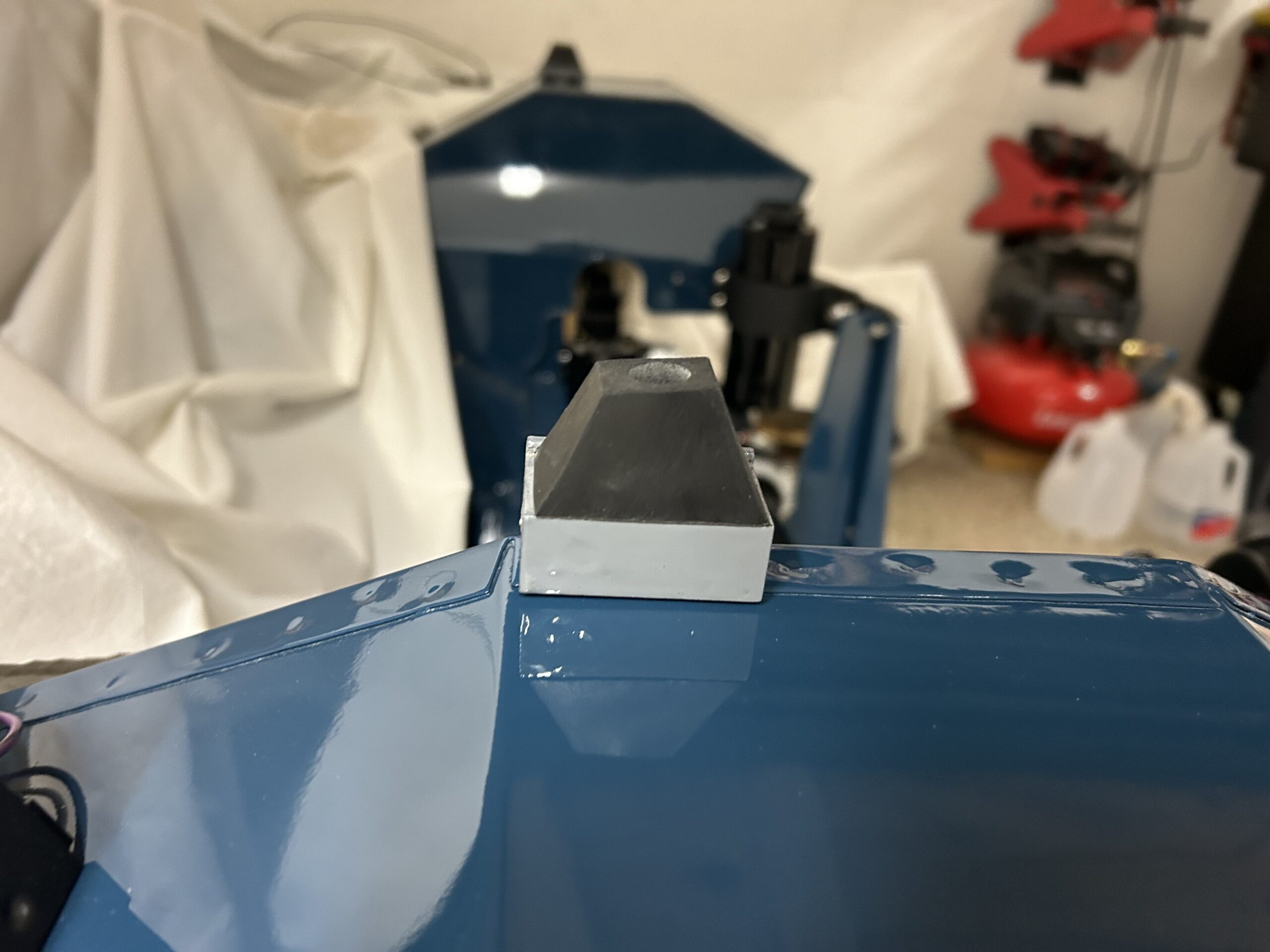
Then we added the bonnet rubber buffers. These buffers sit on aluminum blocks and are secured to the car with one #10 -32 x 1/2″ machine screws with washers. There is also a steel bushing or spacer inside the rubber buffer to keep it from compressing too much.

Bonnet Rubber Buffers

We then installed our fancy battery box sourced from Speedwell Engineering. A further explanation of the box and the installation process may be seen in a post made under the “Personalizations” category: https://valvechatter.com/?p=14483.

Fancy Box with Positive Cable

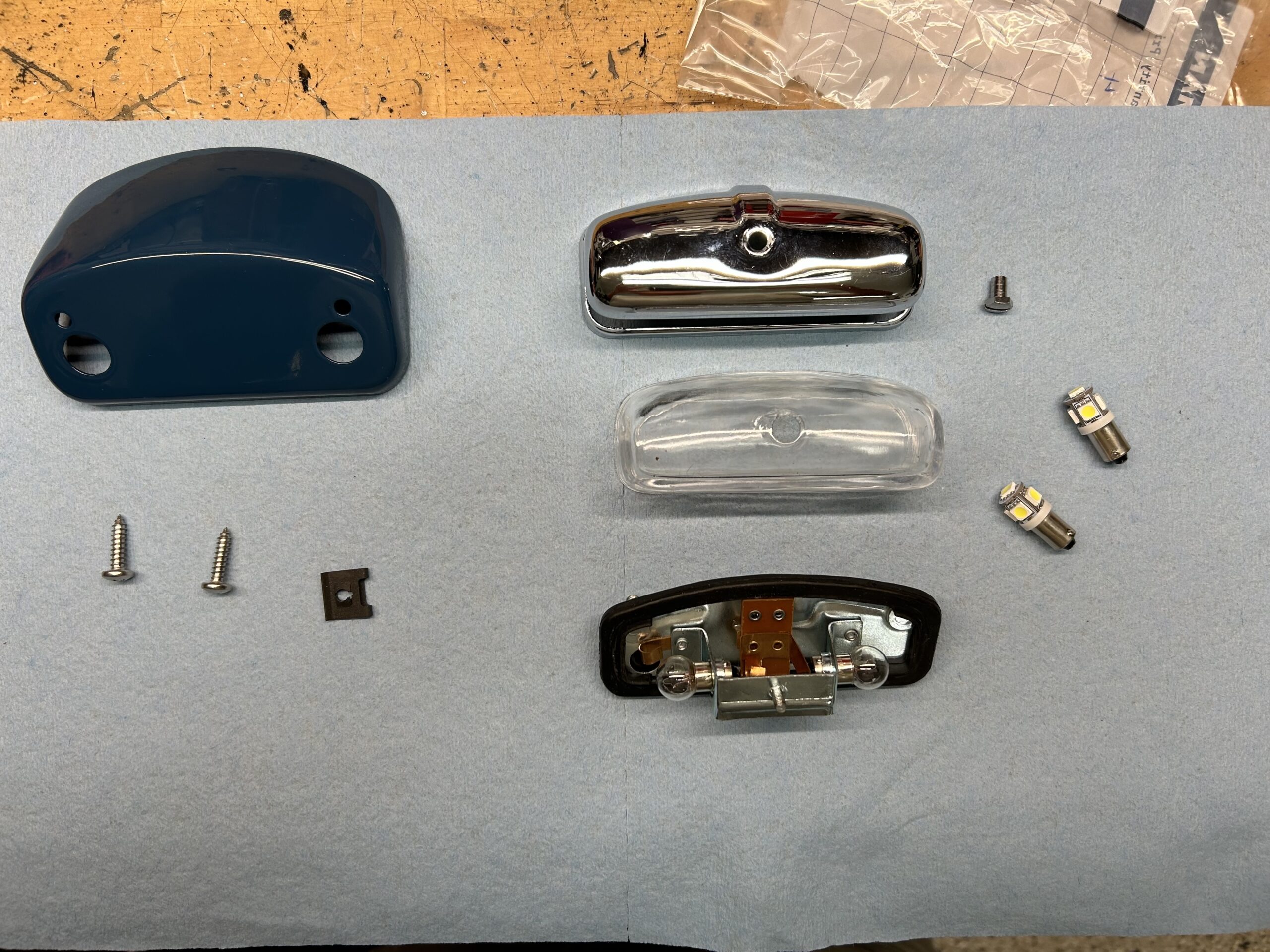
It was then time to install the rear license plate body plinth and light. This was a pretty straight forward job with little difficulty with satisfying results. These are the components involved:

Plinth and Lamp

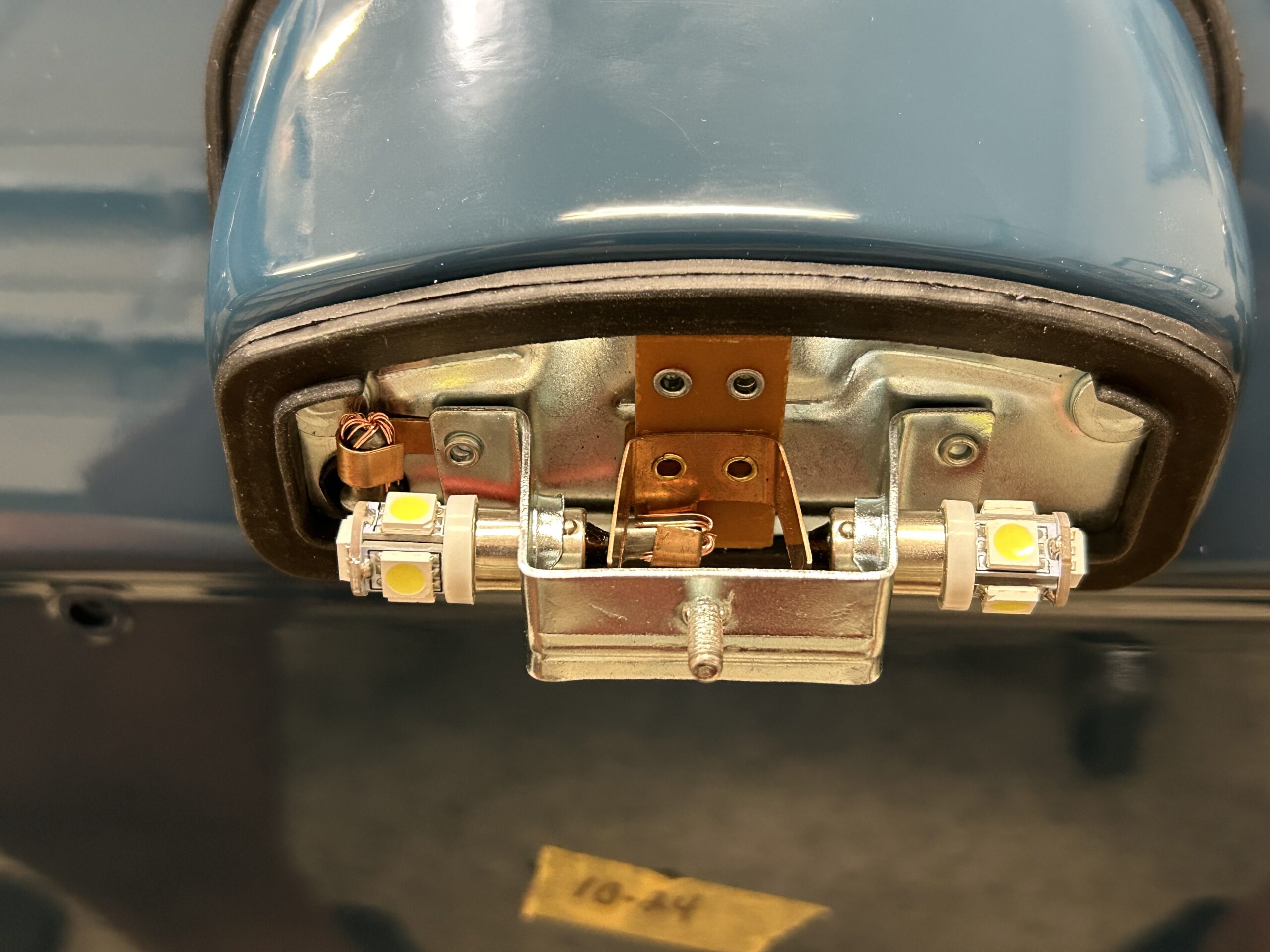
Partial assembly with LED lights:

License Plate Light with LEDs

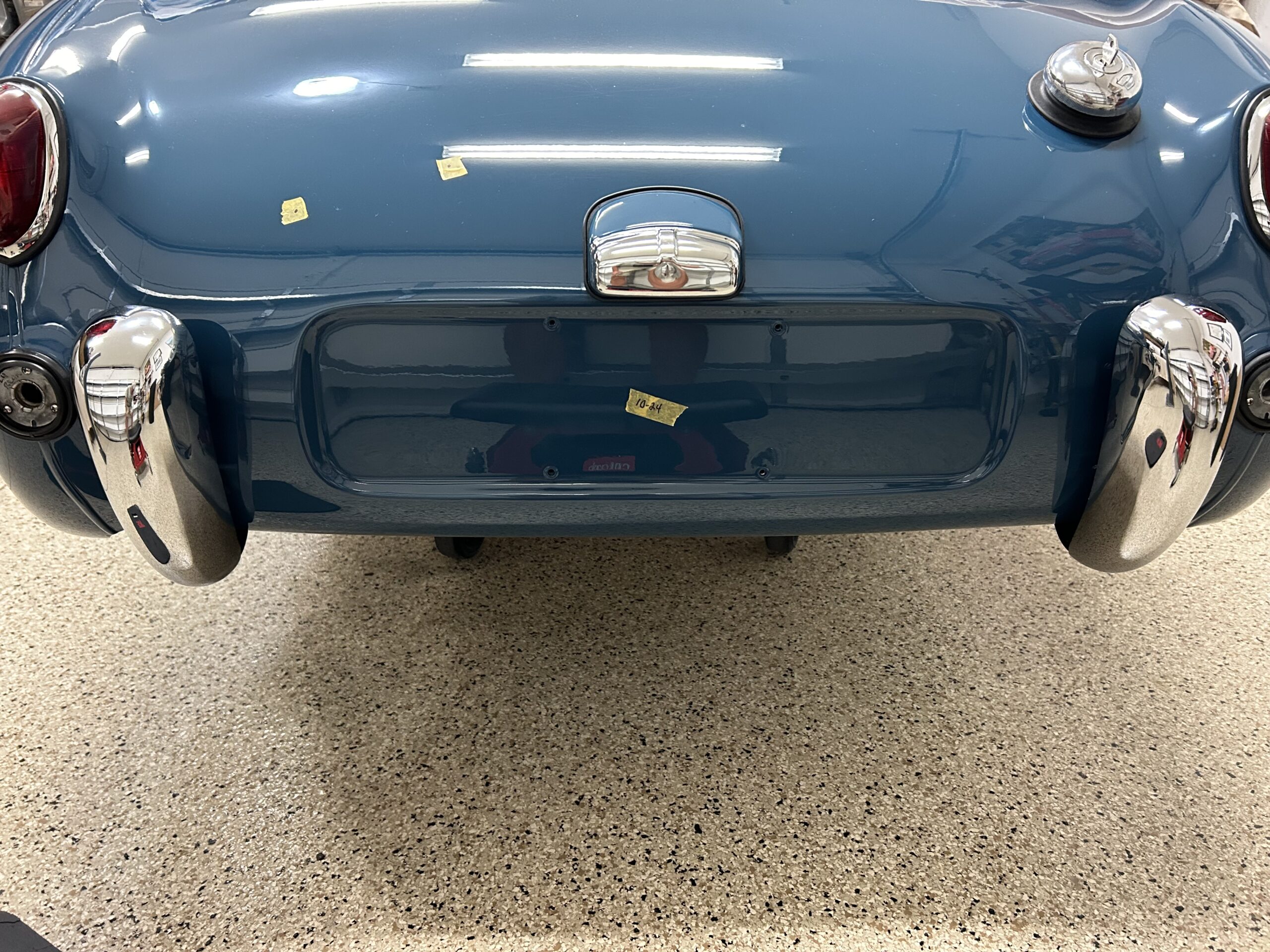
Final Installation:

Final Installation

Bugeye Restoration Video Episode Eighty-five shows the installation process:

https://vimeo.com/1002052489/b28c484815?share=copy

Our next project was the installation of the front cockpit aluminum trim. In our case the trimis not polished or anodized but instead is covered with vinyl matching the interior. We used contact cement to secure the trim piece to the vinyl and mounted the finished product to the body shell with nine oval head #10-32 x 3/4″ machine screws. The two outside screws will ultimately be used along with a “P” clip to secure the bristle flex trim for the doors openings. 

Vinyl Covered Aluminum Cockpit Trim

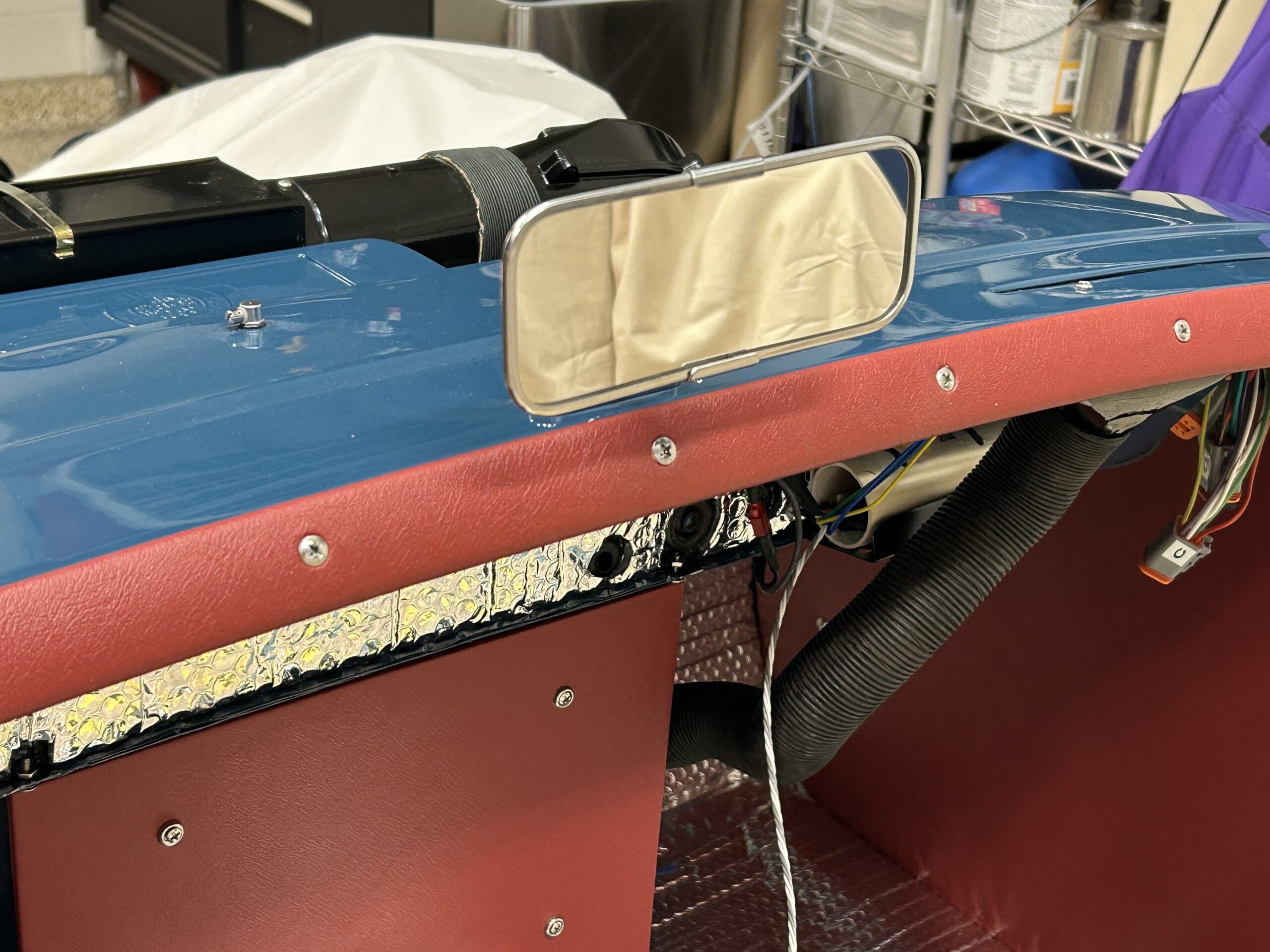
Sometimes adding a little chrome bling just needs to be done, so we added our chrome rear view mirror purchased from Bugeye guys. It is fastened to the body with two stainless oval head #10-32 x 1/2″ machine screws.

Rear View Mirror Installed

Continuing the theme of attaching more shiny parts to the car, we mounted the rear cockpit molding. We used chrome oval head #10-32 x 3/4″ and 5/8″ to fasten the strip of aluminum to the body. Unlock nuts were used to keep things tight and in place.

Rear cockpit molding

We want to use our AFR gauge to help with initial tuning after we get the car on the road so we added a temporary red wire parallel to the main harness from fuse position #19 in the Classic technologies relay/fuse box. We will pull out the wire once we have the car running the way we like!

Temporary Red Wire for AFR Gauge


Rear Suspension, Axle and Fuel Tank Install

The Bugeye’s rear springs as originally configured had 15 leaves. the only commonly available leaf spring for the bugeye now is a 10 leaf “Rally Spec” spring. This spring is stiffer and causes the car body to ride higher. The solution to that issue is to use five or six degree wedges or shims under the spring at the spring perch. Tom Colby of Speedwell Engineering also recommends removing three of the leaves in the Rally Spec spring to give an improved ride. We decided to give Tom’s suggestion a try and details of the modification are included in the Bugeye Restoration Video Sixty-four below. We also installed some stainless steel dust shields at the opening of the spring perch to prevent the area from becoming a dirt trap and rust promoter. After the installation of the rear leaf springs, the rear shock brackets were mounted to the chassis.

https://vimeo.com/989814778/55abef9a4c?share=copy


Leaf Springs and Brakes

We are using Bilstein tube shocks in the rear. These were available as a kit from Udo Putzke, but are now offered by Steve Kirby. http://www.fahrspassforhealey.com The kit is fairly easy to install but one does need to be sure to get all of the required spacers in the proper place. The instructions supplied with the kit are not well detailed but they sufficed.Bugey Bilstien shock installation

We then secured the radius arms at their upper mounting point on the chassis.

Before things got crowded, we installed the exhaust hanger that bolts to the rear bulkhead. Two 5/16″ – 24 x 5/8″ hex head bolts with split washers secure the hanger.

We then moved to mounting the rear axle assembly to the chassis. The rear axle assembly was addressed in a previous post: https://valvechatter.com/?p=13569 Several videos referenced in this post describe all that was involved in restoring the axle including a switch to a 3.99 rear differential and the addition of larger rear drum brakes.

Rear Axle assembly

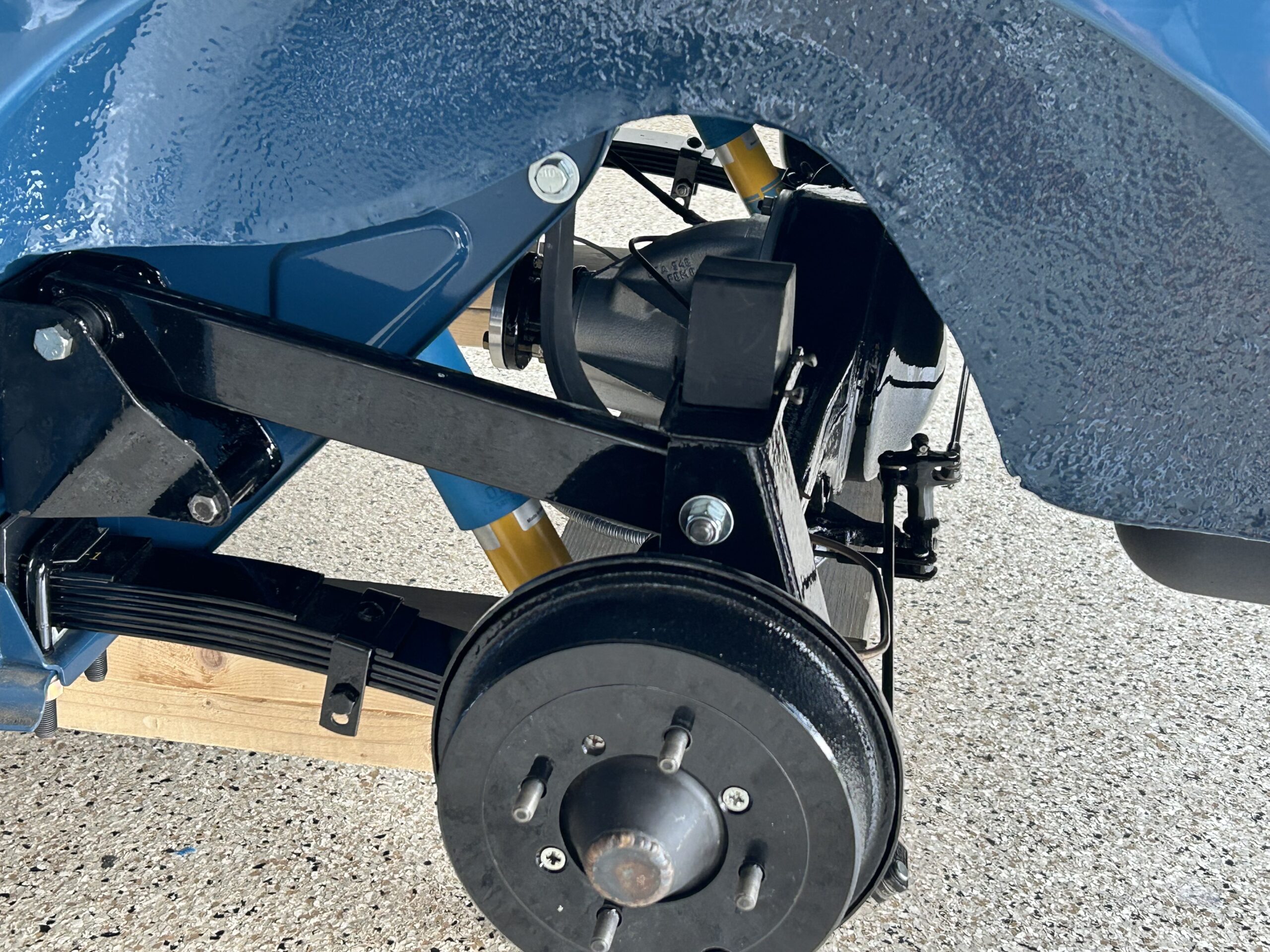
We placed the axle assembly on a floor jack and rolled it under the car and then carefully raised it into position. The axle is linked to the chassis by first connecting the lower mounts of the radius arms. A bushing must be used on the inside of the arm and a special bolt is used to secure the arm to the axle. An extension magnet is helpful in positioning the spacer. Once the radius arms are attached, the axle can be pushed over the eyes of the leaf springs and another special bolt is then used to attach the spring and the axle. That’s it – four bolts attach the axle to the car!

Rear Axle Installed


It will need to be adjusted later, but we went ahead an attached the handbrake cable to its fittings mounted on the axle.

Handbrake and Cable

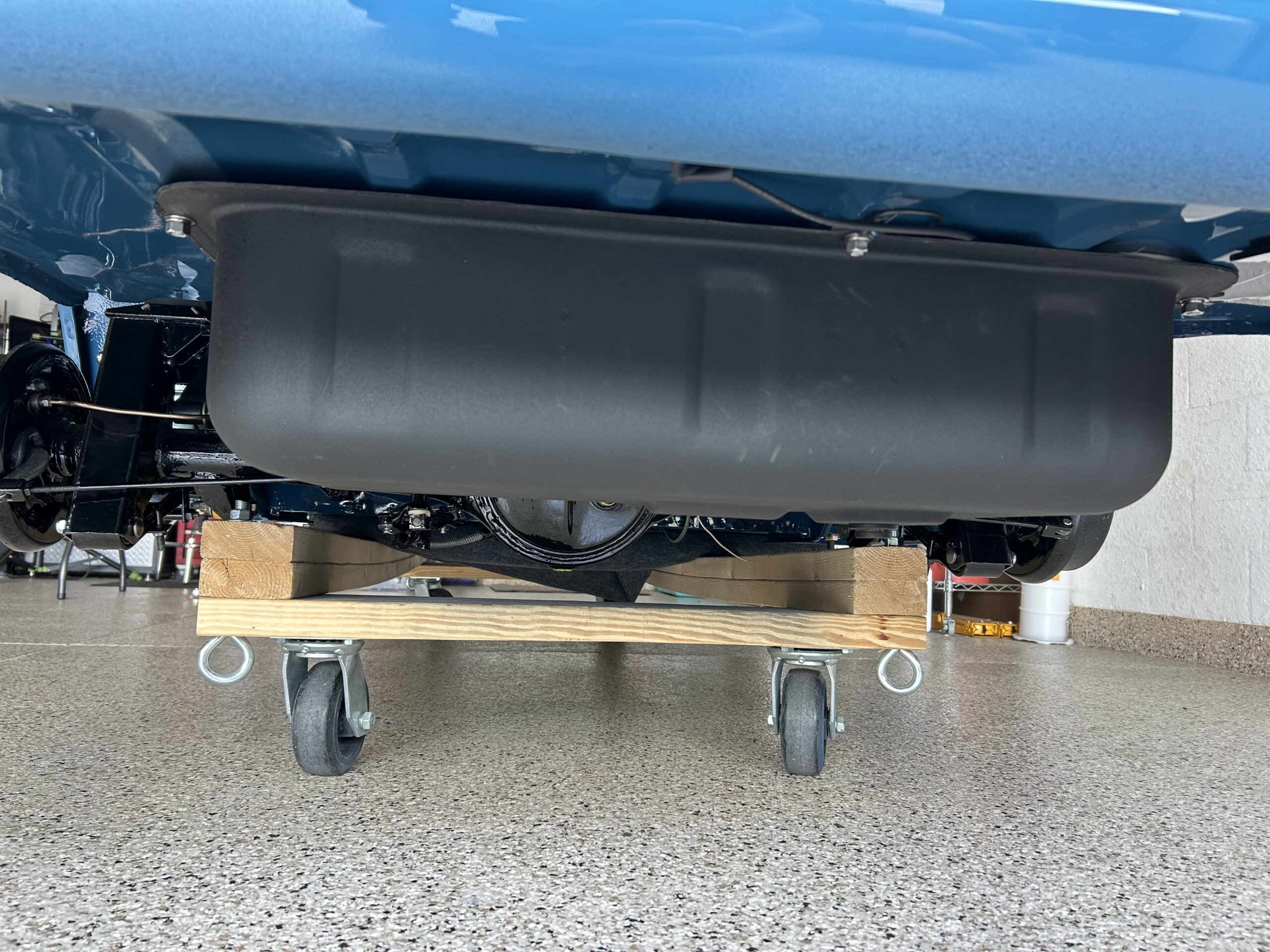
With the axle in place we were then able to mount the fuel tank to the underside of the car. Six 5/16″-24 studs are located on the underside of the car and these line up with six holes on the tank. Once in position flat washers, split washers and hex nuts were put in place to mount the tank. Care must be taken to route the wire (with heat shrink tubing around it) that connects to the fuel tank sender, between the tank and the bottom of the car. The wire then goes through a rubber grommet in the floor to the boot where it will connect with a wire that travels to the fuel gauge. We also added as an extra precaution a black ground wire from one of the screws on the sender body to a ground connection on one of the tank mounting studs.

Fuel Tank Installed

Finally, we attached the fuel pipe from the fuel pump to the fuel tank at the tank, and installed the Goodridge Stainless Steel flexible brake hose linking the rear axle brake pipe union to the brake hard pipe running to the front of the car.

All of these assembly and mounting steps may be viewed in the Bugeye Restoration Video Episode Seventy-five: https://vimeo.com/989702527/e946c7dc29?share=copy

0:00 – Rear shock brackets and tube shocks are installed

1:45 – The LH rear spring dust shield and the U bolt are installed

3:00 – The rear axle is mounted under the car

4:45 – The exhaust hanger is installed

5:37 – The fuel tank is installed

6:50 – the Goodridge stainless steel brake hose is installed


Handbrake Installation

We had previously refurbished the handbrake assembly. This was detailed 24:23 minutes into the Bugeye Restoration Video Episode Forty-two. https://vimeo.com/832369002/c87fd61c10?share=copy..  Further handbrake restoration was highlighted at the very beginning of Bugeye Restoration Video Episode Forty-fourhttps://vimeo.com/842617175/d7a040b143?share=copy

Before we could actually install the handbrake we applied Dynamat Extreme sound insulation to the propshaft tunnel and then glued aluminum duct insulation to the Dynamat Extreme for added heat insulation. We then glued some red vinyl to the area around the handbrake bracket.

Bugeye Restoration Video Episode Forty-eight shows the application of the insulation and the mountng of the handbrake assembly to the tunnel. Once the Rear axle is installed we will connect the handbrake cable to the brake cross rods. https://vimeo.com/986085408/43c579f77a?share=copy


Three Point Retractable Harnesses

We had three point harnesses in the Bugeye before restoration; however, the belts were always getting caught in the doors and could cause paint damage. This time around, we decided to install three point retractable belts. We purchased these from Bugeyeguys. https://bugeyeguyparts.com/products/3-point-inertia-seat-belts They are a little on the burgundy side but we think this color will go better with the red in the car than a bright red would.

We fit them before paint because installation required drilling a number of holes in the chassis. The Bugeye Restoration Shoulder Harness Video shows the installation process. https://vimeo.com/985658212/a3227b71de?share=copy

Under-car Fuel and Brake pipe Install

We had previously shaped and fit the under-car fuel and brake pipes so this was an easy one. The fuel pipe is steel and is affixed to the car with two hairpin-type clips into the chassis rail as well as two “P” clips along the chassis rails in the engine bay. We had previously fit two 10-32 nutserts to the chassis for the fastening of the “P” clips. After installation we fit a rubber fuel hose between the SU fuel pump and the fuel pipe. The end of the fuel pipe in the engine bay will need to be reformed once we see how the steering column and engine sit in the car.

The brake pipe is a cunifer alloy line and it runs from the brake pipe union in the engine bay to the fitting on the back of the bulkhead adjacent to the axle. The pipe will eventually attach to a rubber brake hose that connects to the brake union fitting on the rear axle. The brake pipe is affixed to the car with two hairpin-type clips into the chassis rail, and a “P” clip is used under the car where the pipe turns upward into the engine bay. Another final “P” clip secures the pipe to the outside of the RH footwell vertical wall before the pipe curls to the brake pipe union.

All of the clips and fasteners are shown in Bugeye Restoration Video Episode Seventy-six. 

https://vimeo.com/985217750/d90983ed4d?share=copy

Custom Brake Switch

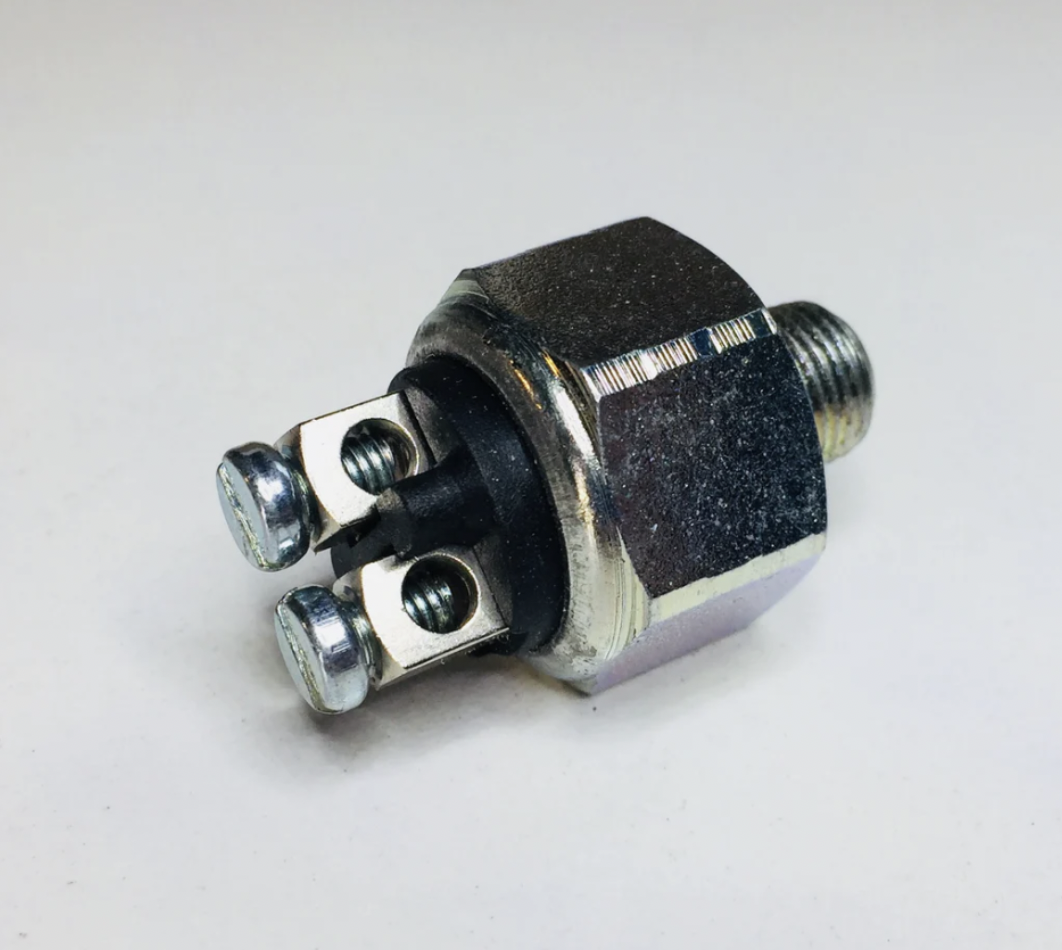
Recently produced hydraulic pressure switches for brake light activation are often faulty and/or don’t last long.

Hydraulic Brake Light Switch

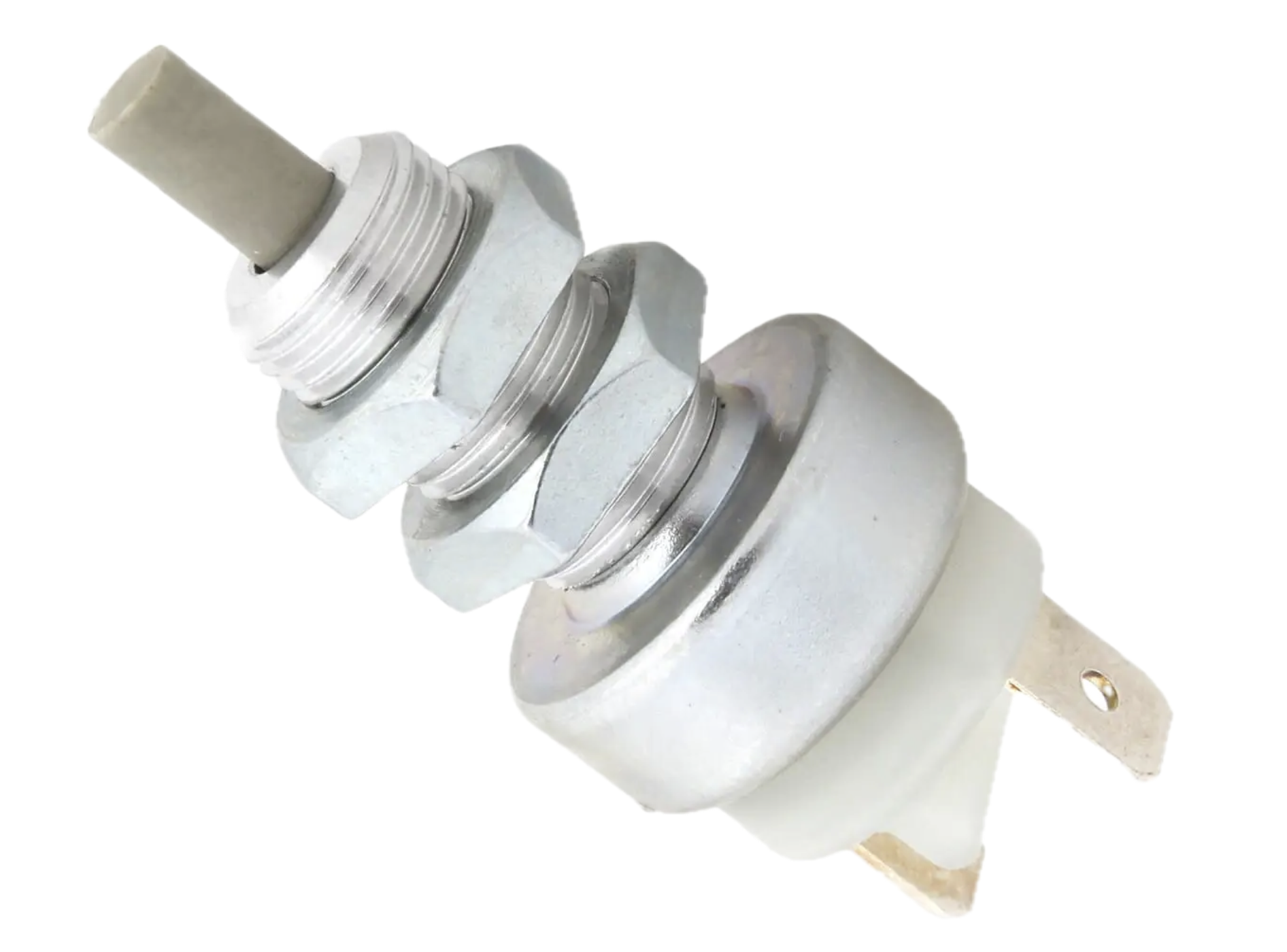
We decided to use an electronic pedal activated pressure switch as a complement to the hydraulic switch. We sourced the switch from Moss Motors, part number 542-371.

Lucas-type Brake Light Switch

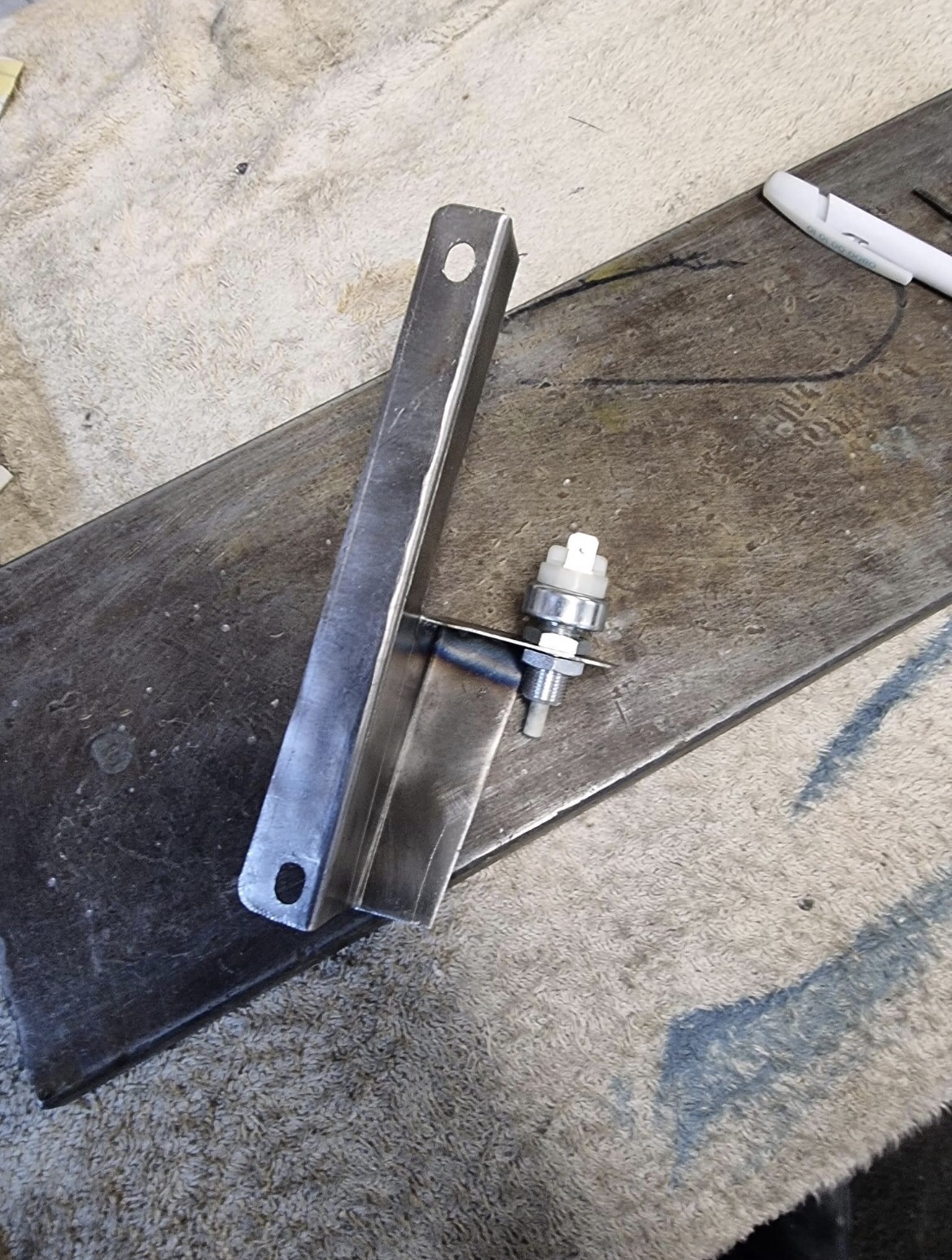
We have modified the wiring harness to accommodate both switches. Trevor Fawcett, in the U.K., fabricated a simple bracket to hold a Lucas pedal switch and we used that as a model for our own bracket – similar, but not the same.

Trevor’s Brake Switch and Bracket

Trevor’s Brake Switch and Bracket Mock-up

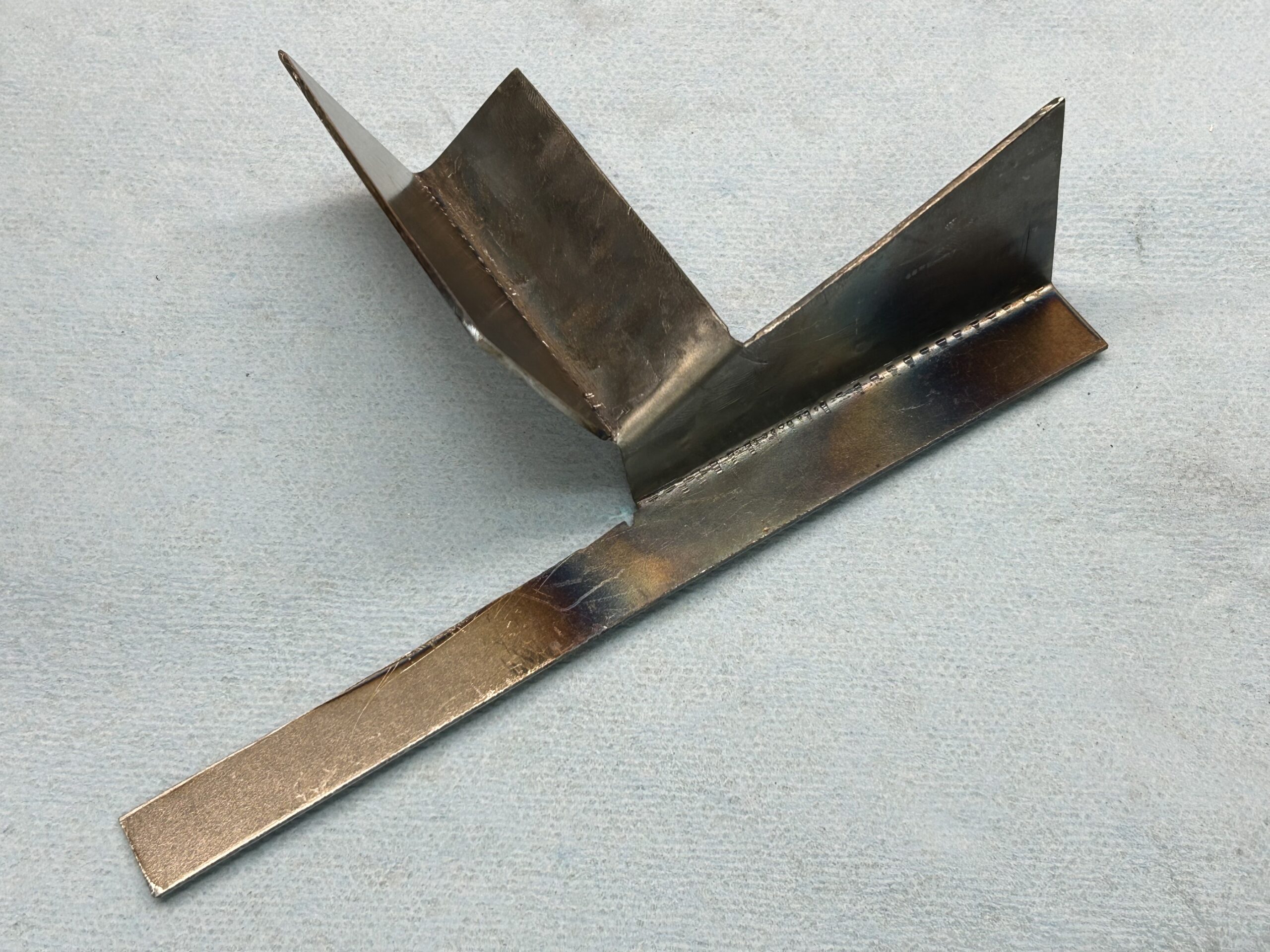
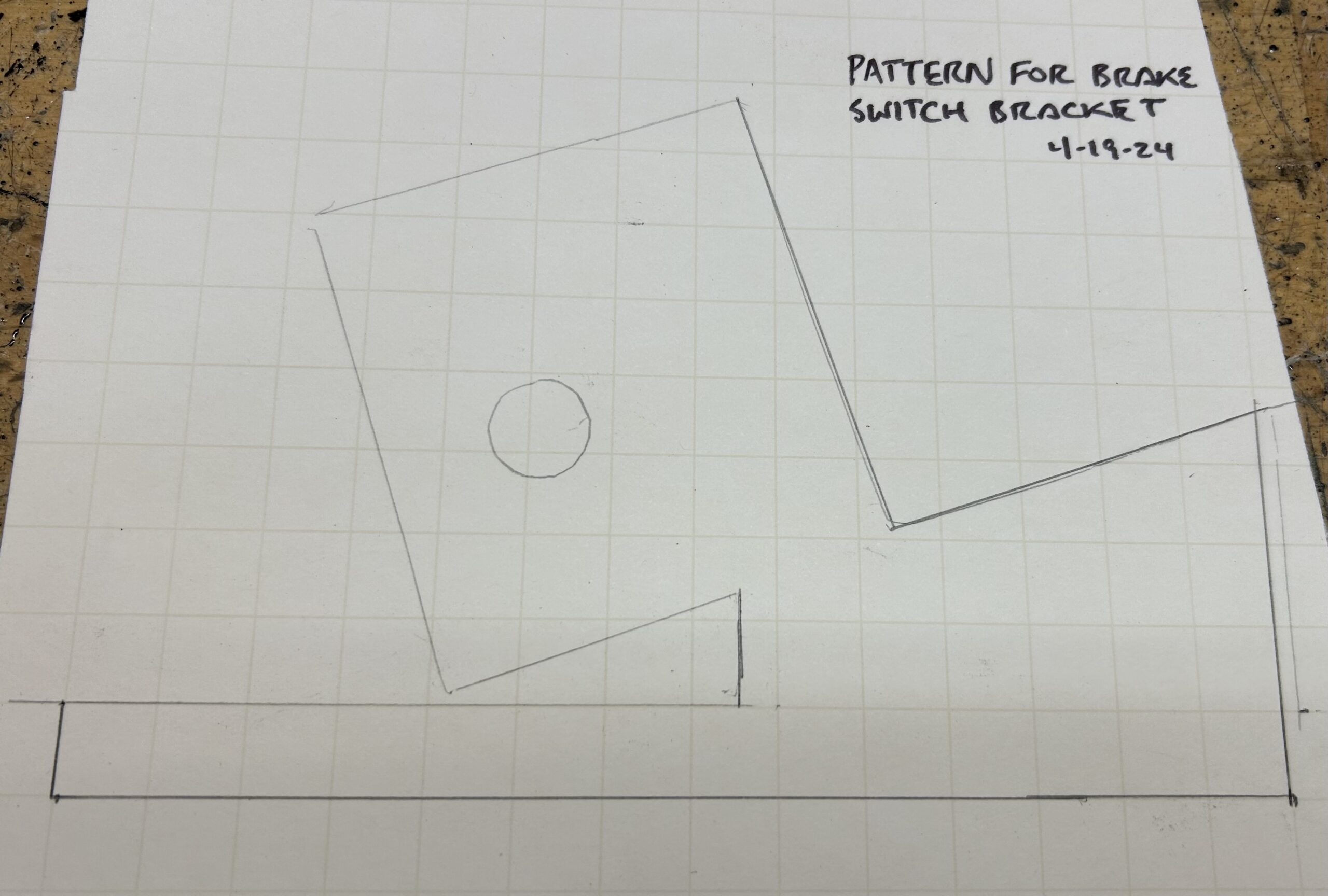
This was our starting pattern (it was slightly modified later), and our bracket after a little bending of a single flat piece of steel in the vice.

Brake Switch Bracket Pattern

Brake Switch Bracket Fabricated

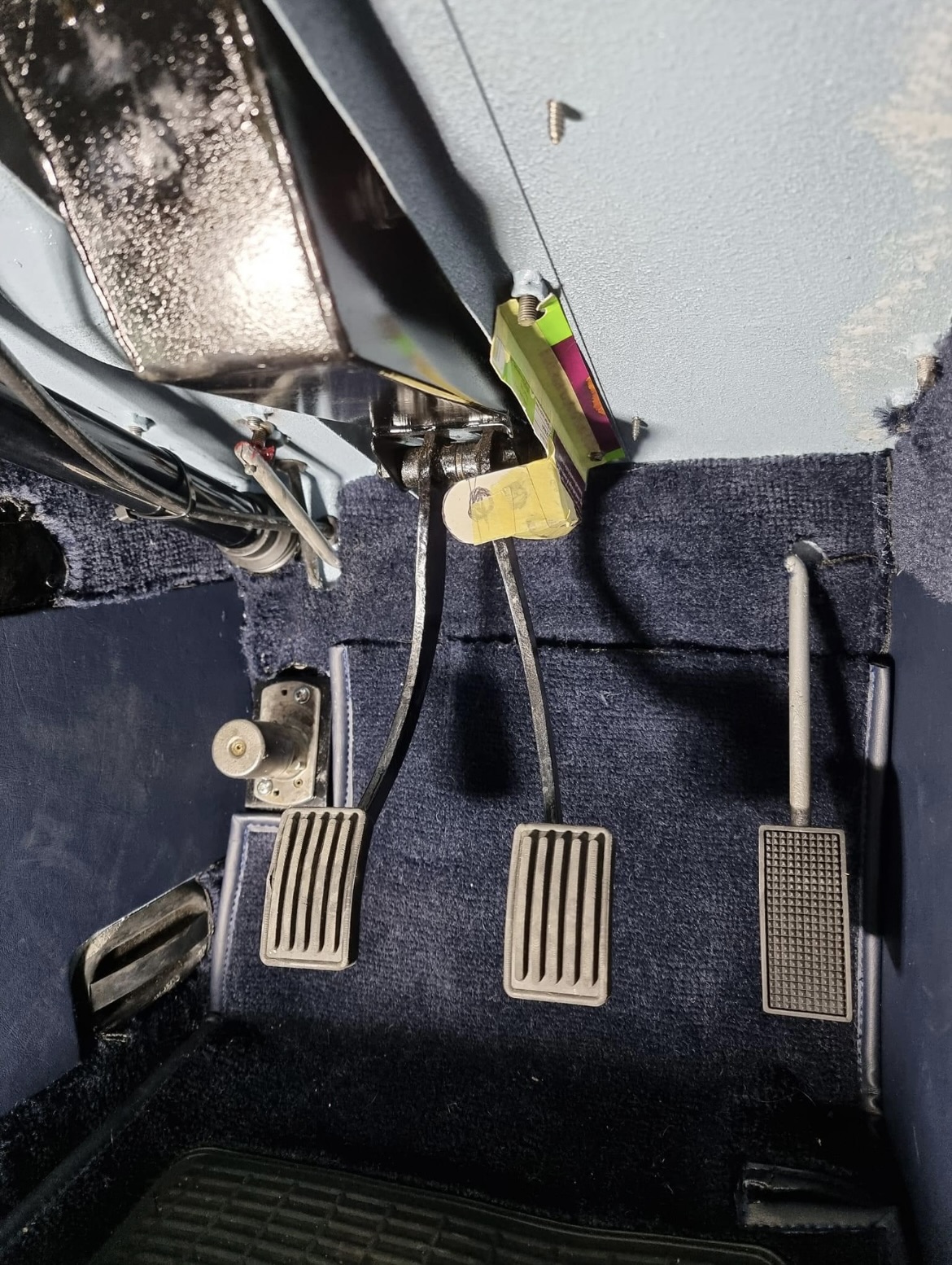
After drilling holes for mounting the bracket to two of the 1/4″ – 28 x 1″ bolts holding the pedal box to the chassis and drilling a 1/2″ hole for the switch we we ready to mount the assembly to the car. Following trial fitting we trimmed a bit here and there, rounded the sharp corners and painted it black.

Pedal Brake Bracket & Switch Mounted to the Pedal Box

Finally, we connected two trial wires to the switch’s spade connectors and tested the sensitivity of the switch with a test light. The results are depicted in the short Bugeye Restoration Video Episode Seventy-three below:

https://vimeo.com/982091053/002655f0fb?share=copy


Front Hub Assemblies Installed

We had previously built-up the front hub assemblies including the “A” arms, stub axles, king pins, bearings, hubs, rotors, calipers and etc. This process is covered in “Front Hub Assemblies and Brakes” https://valvechatter.com/?p=13792

The “Front hub Assemblies and Brakes” post also includes a video depicting the process.

“Rebuilt Front Suspension Installed in the Car” https://valvechatter.com/?p=13828 is another post made earlier in the restoration process that is helpful to review before installing the front hub assemblies.

Installing these components can be approached two ways. One can assemble everything on the bench and then mount the entire assembly to the chassis as we did. Alternatively, one can mount the “A” arm and the shock absorber to the chassis and then build-out the assembly on the car. This method is the one explained in the owner’s manual.

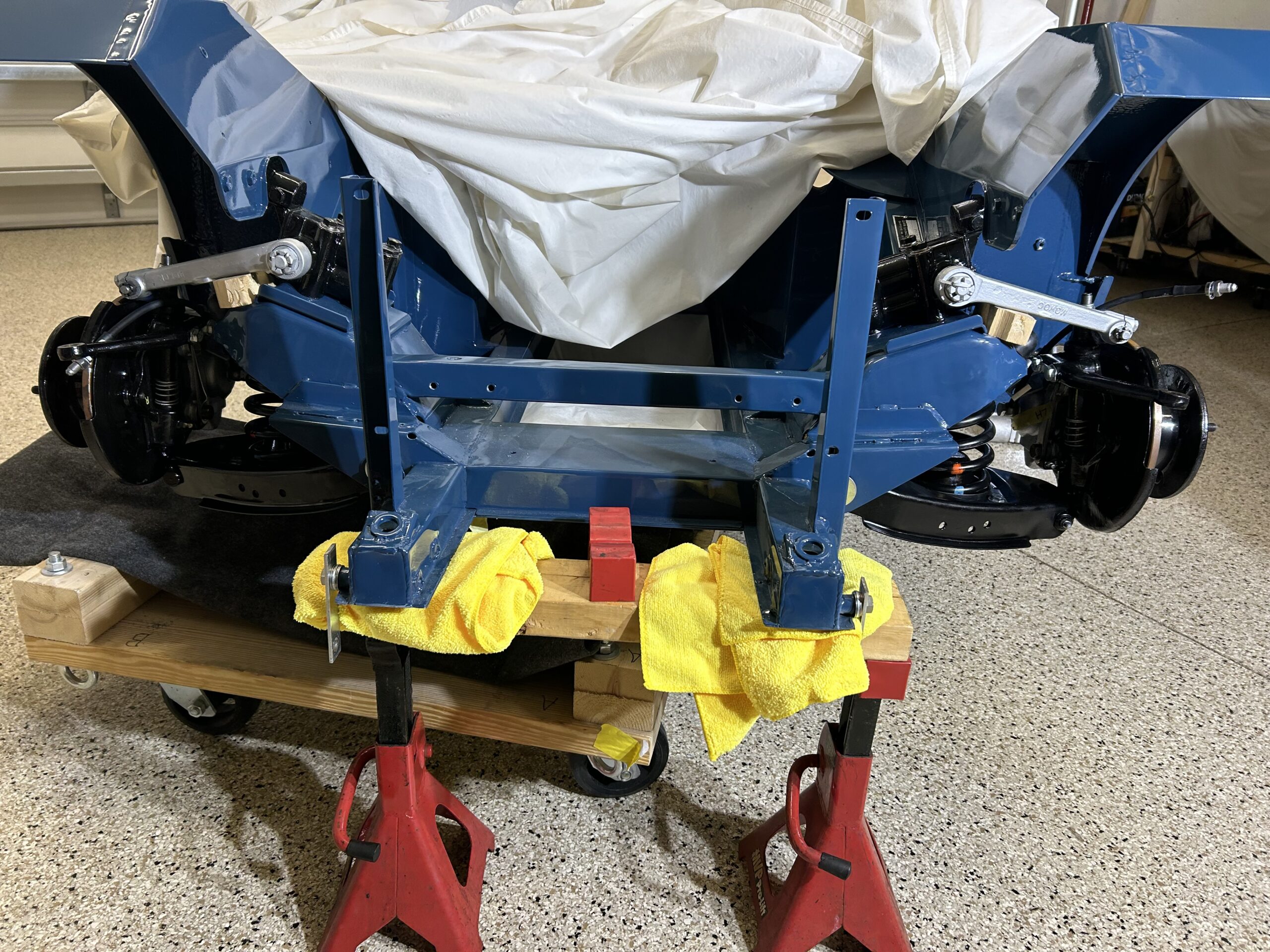
Choosing the approach we did certainly made it easier to put the various pieces together, but you end up with a pretty heavy unit that can be a bit of a struggle to mount to the chassis. Resting everything on a floor jack helps, but it is still difficult to get the holes and lower fulcrum pins lined up perfectly. At any rate the job is done.

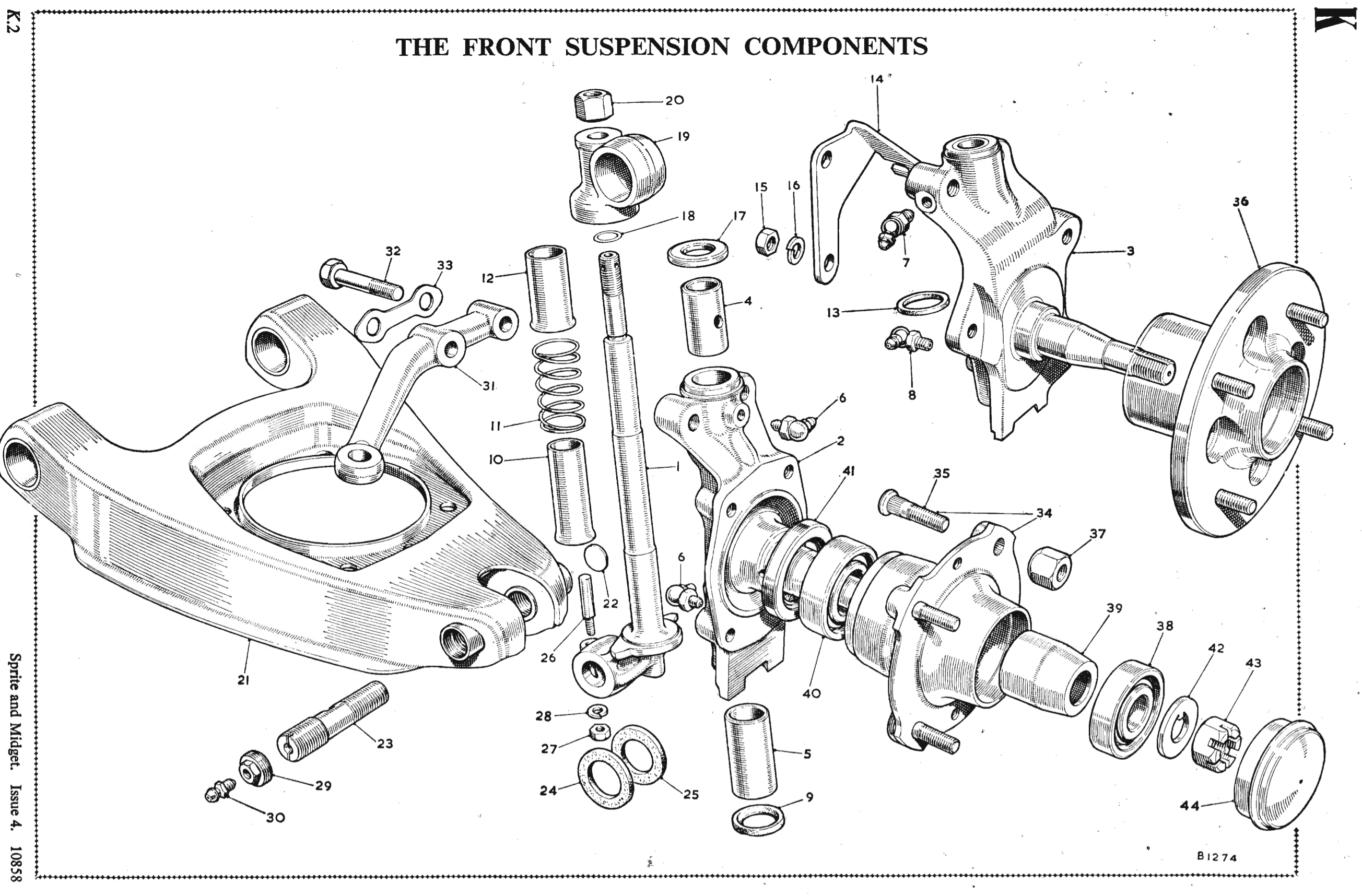
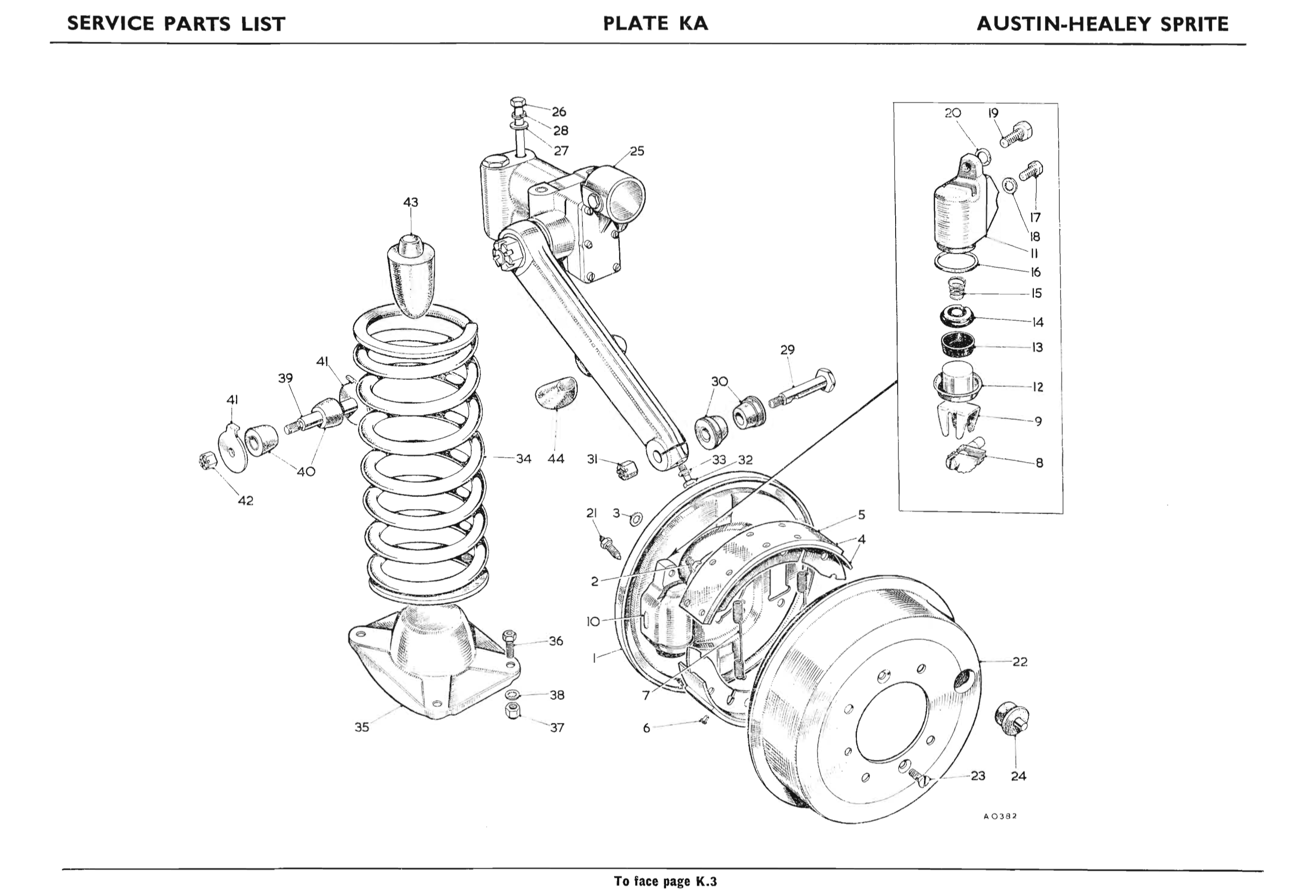
The two plates below show the various parts that are used to comprise the assemblies. Note that the lower fulcrum pins are inserted from the inside of the chassis cavity with the special washers toward the front and rear of the car. The second plate shows the earlier drum brakes while we are using later front disc brakes.

Front Suspension Components

Front Suspension Components 2


Bugeye Restoration Video Episode Seventy-two shows the process of installing the completed front hub assembly to the chassis. https://vimeo.com/981964234/b1aa7a5a24?share=copy

0:00 – Front suspension hub assembly

1:07 – Installing rubber rebound buffers

1:35 – Cleaning paint from chassis mounting area to “A” arms

2:09 – Poly lubricant on fulcrum pins and bushings

2:44 – Moving the hub assembly into position

3:11 – Fulcrum pins and special washers installed

4:26 – Wood spacer blocks installed

4:56 – Upper fulcrum pin locking bolt into shock

5:50 – Coil spring installation

6:30 – Coil spring installation tool

6:54 – Compressing the coil spring


The split pin on the upper fulcrum pin was then installed. All bolts and nuts were checked for tightness with the exception of the lower fulcrum pins and nuts to be tightened when the car is on the ground. A little paint touch up on a few scratches completed the process.

Front Hub Assemblies Installed

FRONT SUSPENSION UPDATE – FEBRUARY 20, 2025

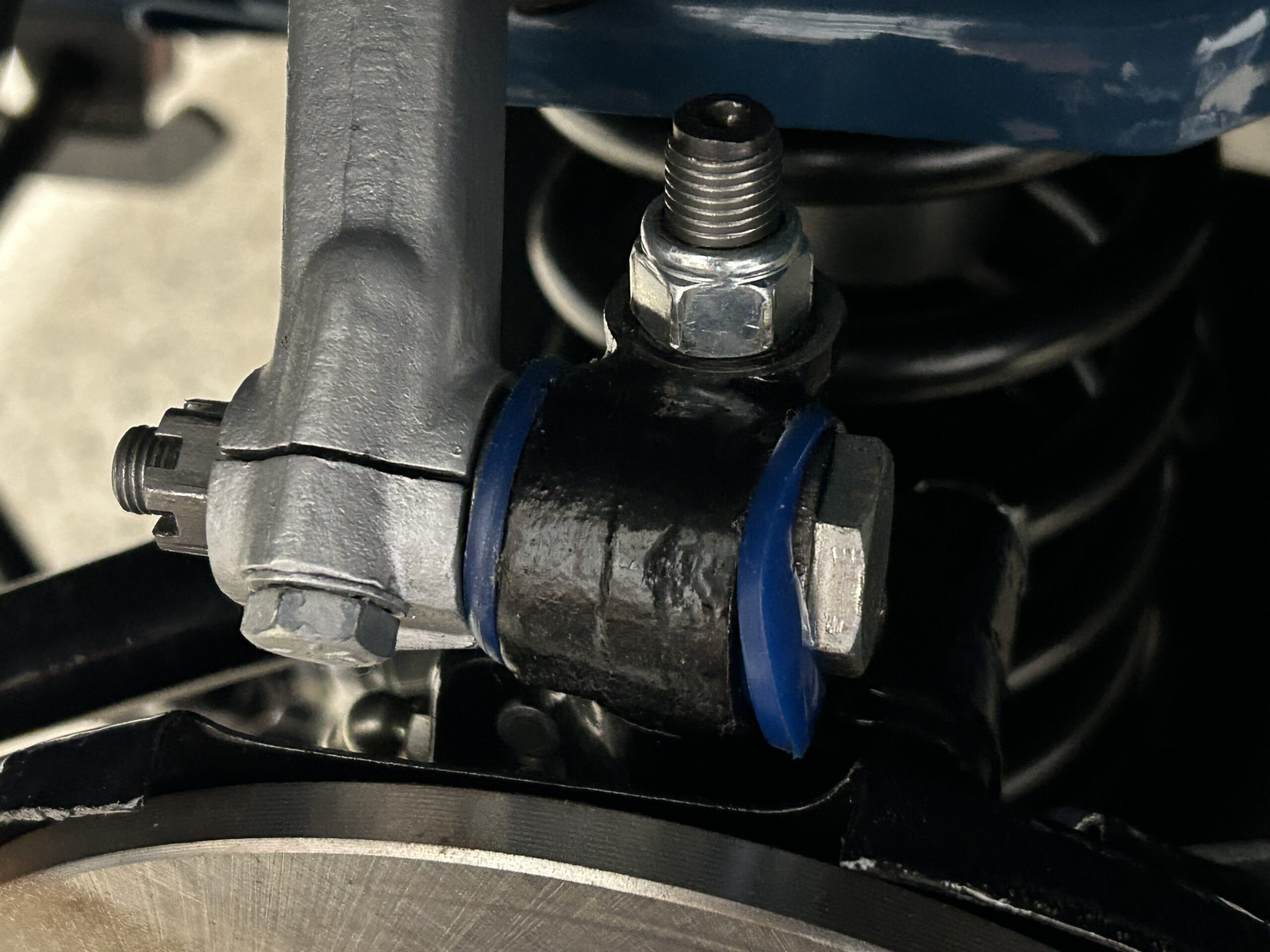
We cannot explain why it wasn’t noticed before February 2025, but on this date we discovered that one of the poly bushings on the front hub assemblies was deformed.

Trunnion Bushing Deformed

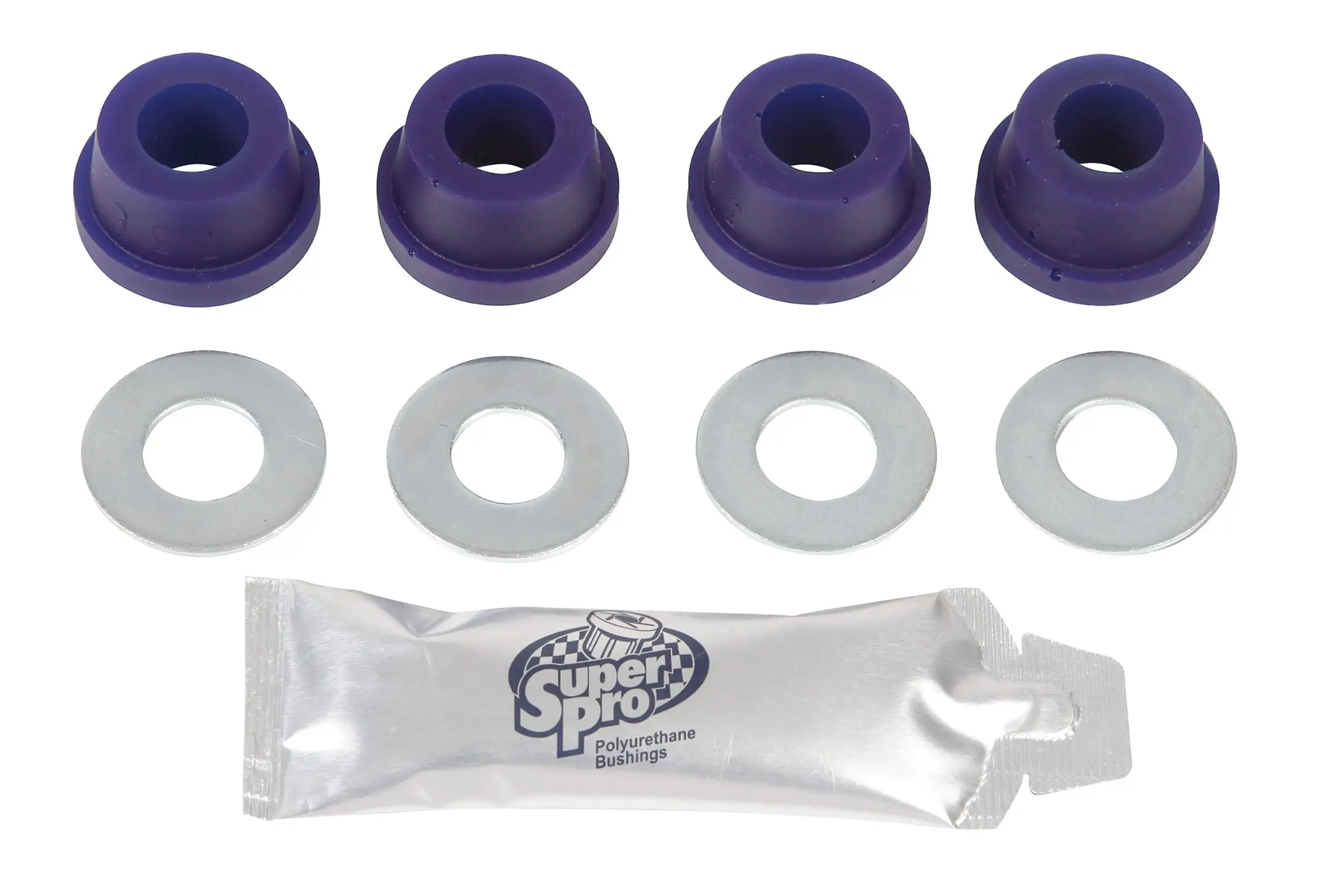
Not wanting to leave things in that state, we decided to replace the bushings. Truth be told, we are not even sure where the blue bushings came from – they may have been part of the king pin replacement kit? We ordered a set of new poly bushings made by SuperPro from Moss Motors.
Upper Trunnion Poly Bushes

To do the replacement job safely required disconnecting the steering rod ends, and the anti-sway bar, dropping the coil springs and pulling the upper fulcrum pins. Not a particularly difficult job but one that takes a while to complete. Bugeye Restoration Video Episode Ninety-eight covers the process of replacing the bushings.

https://vimeo.com/1060562103/673c74a540?ts=0&share=copy