The First Post-restoration Car Show

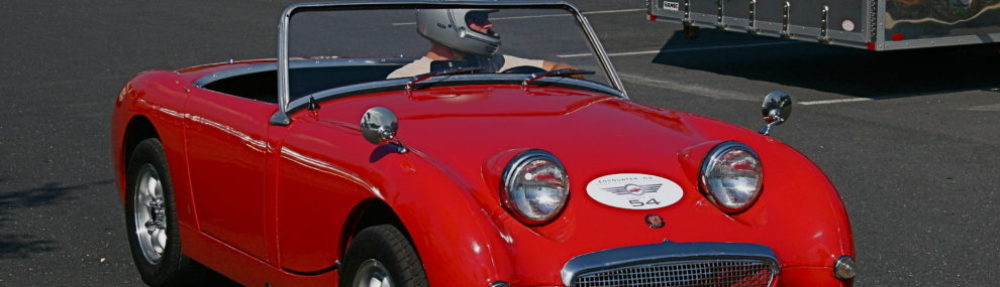
On Saturday, October 25, 2025 the Tampa Bay Austin-Healey Club hosted the 38th Annual All British Field Meet and Autojumble. The event attracts approximately 200 British cars and is held on Main Street in Safety Harbor, FL.

Event Placard

Father entered his 1960 AH 3000 BT7 and son entered his AH Sprite AN5.

BT7 & AN5

Both boys took home first place in their respective judging classes.

1st Place!

This is a shot video about getting to the event and heading home:

38th All British Field Meet

The “Traveling Garage” Car Cover

We purchased a “Traveling Garage” car cover from AutoFarm, a Healey parts supplier and shop in Canada, for the AH 3000 years ago and thought it would be nice to have one for the Bugeye. They didn’t show one on their website catalog so I called them and asked if they would make one for the Bugeye. Amanda Rule was VERY accommodating! They had a couple of Bugeyes in their shop at the time that could be used as a “form” so they agreed to make one for us. 

The cover is very light weight and comes with a handy storage bag. The purchase (about $200 all in) includes two tenax fasteners that the owner installs to fit their car. The front of the cover is held in place with ties that go around the windscreen wiper shafts/bezels.

Traveling Garage Cover

Wiper Tie-Downs

Tenax Fasteners

As the name implies, this top is perfect for traveling. It covers the areas susceptible to leaks when the car is parked in the rain, dries quickly and folds up taking little storage space in the car. A nice alternative to having to carry around a full car cover. We are very pleased with the acquisition and appreciate the responsiveness of Amanda at AutoFarm.

Bugeye Restoration Video Episode One Hundred-Twenty One shows the installation of the “Traveling Garage” car cover on the Bugeye:

https://vimeo.com/1128464713/a30764c290?share=copy&fl=sv&fe=ci

Preparing the Bugeye Boot

There is a lot to cram into the little cavern, called a boot, in the rear of the Bugeye! As with the rest of the car we tried to dress things up here too. So, what goes back in the hole? There is the spare tire, the soft top, the side curtains, the soft top frame, the “all weather” cover, the jack bag (with the breaker bar and lug nut socket), and a small tool bag.

First in is the spare tire. We had some plastic left over from the interior cross member cover project so we used it as a liner between the red hardura floor mat and the tire – just to prevent rubber oils or dirt from staining the hardura. We had Mike Ruckman from British Car Interiors in Tampa make a carpet cover for the spare tire. He did a great job. We had the same carpet that matched the interior.

Spare Tire Cover

We purchased storage bags for the top, the top frame and the side curtains from Bugeyeguys. While they don’t match our red theme (they are black with white piping) they are nicely made and of high vinyl quality.

Soft Top Storage Bag

Soft Top Frame “Taco” Bag

Side Curtain Storage Bag

We purchased a couple of black storage bags from Amazon. One for the jack, an extendable breaker bar and a 17mm socket for the wheel lug nuts and the other for some tools or spare parts.

Jack Storage Bag

Bugeye Restoration Video Episode One Hundred-Nineteen shows the loading of the boot with the items mentioned in this post:

https://vimeo.com/1123287575/9ed6b9a99c?share=copy


Returning to the 4.22 Rear Differential

The Bugeye originally had a 4.22 rear differential and we replaced it with a later MG Midget  3.99 differential. Though it performed quite well (smooth and quiet) and it did a nice job of reducing engine rpms at cruising speeds, it did result in a sacrifice of low end pick up. So, we determined to switch the diffs again and revert to the 4.22.

This would be an easier task if we still had drum brakes because one can pull the axle half shafts without disturbing the brakes. Unfortunately, with the disc brakes in place, pulling the axle half shafts requires removing the calipers and disc rotors. No big deal, just a little extra work!

This job requires getting the car up on jack stands which has become a rather complicated process. We began by using the original (restored) Sprite jack to lift one side of the car. This enables you to get the floor jack under the fuel tank and under the rear differential. Otherwise the fuel tank is too low to permit jack access. Once the rear of the car is raised with floor jack, jack stands can be inserted under the spring perches. One can then move the floor jack to the front of the car and with a 22″ wide piece of 2 x 4 lumber located behind the sway bar, lift the front of the car and place it on jack stands.

Front of car on Jack Stands with 22″ 2×4

We then returned to the rear of the car with the floor jack and lifted the car a bit higher and replaced the smaller jack stands with larger and taller stands. After all that effort we were then ready to get to work.

Bugeye Restoration Video Episode One Hundred-Eighteen covers the process of getting the car up in the air and switching out the differentials.

Once again we used Permatex Gear Oil Gasket Maker to seal the differential pumpkin to the axle housing along with a new paper gasket.

Permatex Gear Oil Gasket Maker

We used Blue Hylomar Universal sealant between the hubs and the axle half shafts along with new paper gaskets. We reused the rubber “O”ring seals that had been on the car. This sealant remains pliable and never hardens.

Blue Hylomar Universal Sealant

With everything buttoned up, the wheels mounted on the car, and the car back on the garage floor we took her out for a test drive and the increased low end did put a smile on the face!

Bugeye Restoration Video Episode One Hundred-Eighteen:

https://vimeo.com/1122986589/dc684501de?share=copy

The timeline for the video contents:

0:00 – Putting the car on jack stands

0:15 – Using the original Sprite jack to lift one side of the car

0:24 – Using the floor jack to place the rear jack stands

0:55 – Jacking up the front of the car

1:52 – Disconnecting the handbrake rods

2:35 – Removing the calipers

3:18 – Remove brake pad spring clips

3:30 – Remove rotor disc

3:45 – Remove axle half shaft

4:35 – Clean axle hub

4:42 – Caliper piston retracted

5:18 – Remove 3.99 rear differential

5:45 – 4.22 differential installed

6:12 – Propshaft reinstalled

6:25 – Axle brake union reattached to the differential flange

6:35 – Axle hub/half shaft gaskets and sealant

6:50 – Half shaft installed

7:07 – Brake Rotor installed

7:32 – Brake pad spring clips installed

7:47 – Brake pads installed

7:55 – Brake caliper piston retracted

8:57 – Caliper installed and handbrake rods re-connected

9:01 – Differential filled with GL4 80W-90 gear oil

Oil Leak!!

Unfortunately, the next morning we discovered differential oil on the garage floor. Upon further investigation we determined that the pinion seal was leaking. Before we mounted the 4.22 diff, We had added oil to the 4.22 differential on the workbench to see if the pinion seal leaked and even after leaving it overnight we had no leaks. However, driving the car must have warmed the oil and resulted in a leak.

We had a new pinion seal on hand so we set about the process of pulling the old seal and replacing it with the new. The following is a checklist we put together summarizing the work required:

Drain the oil from the diff housing

Put wheel chocks behind the wheels and apply the handbrake. 

Disconnect the prop shaft.

Mark the propeller shaft and the pinion driving flanges so that they may be replaced in the same relative position. Use a chisel or scribe.

Count the number of exposed screw threads beyond the nut on the pinion.

Unscrew the nut in the centre of the driving flange. It is typically on very tight so expect to use a long extension on a breaking bar or an air gun. Remove the nut and washer and withdraw the flange and pressed-on end cover from the pinion shaft. The flange may need to be tapped with a soft hammer to remove it from the splines.

Extract the oil seal from the casing. Drive a self tapping screw into the seal and then use the claw of a hammer to retract the old seal.

Press a new oil seal into the casing with the edge of the sealing ring facing inwards (flat to the outside). Smear the outside edge of the seal with grease or oil.

Replace the driving flange end cover, taking care not to damage the edge of the oil seal. Tighten the nut with a torque wrench to a reading of 140 lb. ft. (19·36 kg. m.) . Instead of the 140 ft. lbs., we tightened the nut sufficiently to align our marks scribed on the pinion and the nut.

Reconnect the propeller shaft, taking care to fit the two flanges with the locating marks in alignment.

Refill the axle with gear oil.

Holding the differential flange in a stationary position to either loosen or tighten the pinion nut proved to be the only really challenging part of the job. To remove the nut, locking down the flange with two ratchet straps worked well enough.

Ratchet straps holding the pinion flange

However, to torque the nut we had to turn to friend Randy Forbes who fabricated a tool for us that worked exceptionally well.

Randy Forbes Custom Tool

The tool and the entire process is shown in Bugeye Restoration Video Episode One Hundred-Twenty.

This is the old and leaking pinion seal:

Pinion Seal Exposed

After completing reassembly, we took the Bugeye for another test drive and let the car sit overnight. We were pleased to discover no oil leaks! Another job complete.

Bugeye Restoration Video Episode One Hundred-Twenty:

https://vimeo.com/1124639344/1c4220d11c?share=copy


Soft Top and Side Curtains

Unfortunately, our options were limited in sourcing a soft top and tonneau for the Bugeye. We had a Robbins top on the car previously and we would’ve liked to have used the Robbins top for this restoration. However, Robbins does not make a red top and we definitely wanted to use red. We like the Robbins material and the excellent fit, but we ended up going with a top from bugeyeguys.com. Their top did fit reasonably well.

As we approached the installation of the top, we began to think about the potential for the top scratching the painted surface of the Bugeye. Although we had just completed polishing and ceramic coating the car we determined that it was best to use a paint protection film (PPT) on the portion of the rear shroud covered by the soft top. This meant we had to remove the ceramic coating before we could install the PPT, but that is the subject of another post.

To get on with the installation of the soft top while the PPT was on order, we purchased a clear vinyl shower curtain liner to place between the body and the top. The placement of the clear liner and the complete installation of the top and side curtains is shown in Bugeye Restoration Video Episode One Hundred-Seventeen. A new two piece soft top frame also purchased from bugeyeguys.com was used.

Two Piece Soft Top Frame

The steel bars used to provide rigidity for the top for mounting at the windshield, and on the rear shroud were removed from the old top and used in the new one.

Soft Top Support Bars

The soft top requires three different types of fasteners: four Tenax fasteners, two “common sense” fasteners, and two lift-a-dot fasteners. all of these fasteners were provided with the soft top by Bugeyeguys.

Our first step in the process was to install the two chrome “teardrop” fasteners that secure the top’s rear bar.

Rear Top Fastener

We made a pair of rubber gaskets to fit between the painted surface and the fastener. The process is shown in the accompanying video. The installed fasteners are shown in the image below.

Rear Top Fasteners Mounted to the Car

There were no instructions provided with the top; however, Rimmer Bros. in England does have an installation instruction document on their web site. We followed their guidance and found it to be helpful.Sprite Soft Top Installation Instructions

The side curtains we already had were in fairly good shape. We polished the metal surfaces and the plexiglass, lubricated the sliding tracks and installed them on the car.

Soft Top Installed

Finally, we purchased storage bags for the soft top, the soft top frame and the side curtains from Bugeyeguys.com. These bags are quite nice. They are made from a high grade vinyl and should work very well to protect the components.

Soft Top Bag with Envelope for Bar

Side Curtain Storage Bag

Soft Top Frame Storage Bag

The entire process is shown in Bugeye Restoration Video Episode One Hundred-Seventeen:

https://vimeo.com/1121702983/5849373995?share=copy

The timeline for the video contents:

0:00 – Soft top rear retaining clips

1:20 – Soft top installation temporary paint protection

3:28 – Front and rear body center lines

4:13 – Soft top frame installation

5:09 – Soft top’s center lines

5:59 – Securing the top’s front mounting bar

6:18 – Securing the top’s rear mounting bar

6:22 – Adjusting the top’s frame

6:39 – Tenax fasteners installed

8:28 – “Common sense” fasteners installed

8:55 – Soft top installation complete

9:36 – Side curtains cleaned, polished and installed

10:49 – Side curtain thumb screws

11:36 – Storage bags for the soft top, side curtains and soft top frame

11:45 – Soft top frame storage bag

12:06 – Soft top storage bag

13:00 – Side curtain storage bag


Spark Plugs and Ignition Leads

The aluminum cylinder head uses 12mm spark plugs. We are currently using NGK BPR6ES plugs as the non-resistor plugs are very hard to find.

NGK Plugs

The high tension leads were sourced from Powerspark. These are 8mm wires and to fit the Powerspark 45D distributor with the top entry cap the ignition leads are intended for the Classic Mini but fit our set up. These are referred to as CORE_L022.

Powerspark HT Leads

Cleaning, Polishing and Ceramic Coating

This process took a while to complete. We started it by cleaning and polishing the rear of the car and then we took it to Ceramic Pro in Sarasota to have a Paint Protection Film (PPF) installed on the front of the bonnet. We finished the washing, polishing and ceramic coating once the PPF was installed.

We used a polishing compound and polishing pads supplied by Pan the Organizer. We also used his 3 year ceramic coating product. We were quite pleased with how easy these products were to apply and remove.

Pan the Organizer Polish and Pads.

Pan the Organizer 3 year Ceramic Coating

The Bugeye is now nice and shiny and more importantly, the paint is now protected.

Shiney!

Bugeye Restoration Video Episode One Hundred-Sixteen briefly demonstrates the steps involved in cleaning and protecting the Bugeye:

https://vimeo.com/1117543912/93e2960b82?share=copy

Always Something More to Do

Our to do list is getting shorter, but we still have a few items that need our attention. First, we need to install the heater/fresh air ducting or “trunk.” This was an easy job because the duct that we had previously used was almost new and pre-bent. A large black “P” clip is used to secure the duct to the right hand engine bay valance. We wanted to make sure that the ducting would not come in contact with the underside of the bonnet so we used a piece of paper and some adhesive tape to check that we had clearance. We did. This process is outlined in the Bugeye Restoration Video Episode One Hundred-fifteen.

Heater/Fresh Air Duct Installed

Given the size and low height of the Bugeye front-end, it is an excellent candidate for road debris and rock chip damage. So, we decided to have a paper protection film (PPT) applied to the front nose. Paint Protection Film is a high-performance aliphatic polyurethane film. It is specifically designed to protect painted surfaces and other materials from abrasion, corrosion, chemicals, and other types of physical damage. The installation was done in Sarasota by Ceramic Pro. https://ceramicprosarasota.com

Ceramic Pro claims that their film is the only true ceramic-infused paint protection film on the market. It arrives from the factory pre-coated with Ceramic Pro’s proprietary PPF & Vinyl formula. This allows one to have all the benefits of self-healing paint protection film with the added hydrophobic and self-cleaning action of a Ceramic Pro ceramic coating.

It is difficult to see the time in the image below, but that is the point isn’t it? The film runs from just below the headlight dishes to the bottom edge of the bonnet front.

Paint Protection Film Applied

With the PPT installed, we were finally in a position to put the signature Bugeye chrome grille in place! That smiling chrome mouth makes the Bugeye or Frogeye, if you prefer. We had the grille chromed by Dallas Plating in Georgia and were very pleased with their work. The grill is held in place with 12 small speed, or spire, nuts. We found that using a small socket driver to push the nuts in place worked quite well.

We also installed the round Sprite badge in the center of the bonnet and that little bit of color really pops on the bonnet. These badges are notorious for coming loose and getting lost on the road. We drilled a small hole on each side of the badge and ran a wire horizontally through the back of the badge to hopefully prevent a loss if the badge were to become loose.

Bugeye Grille Installed

Next up was the front sidelights/turn indicators. As we previously discussed when installing the rear beehive glass bowls and chrome trim rings, these can be a challenge to install. As with the rear, we taped a rubber protection shield we made from an inner tube to the area around each one of the lights before attempting to install the glass and chrome. This worked quite well and the front lights actually went in pretty easily.

Body protection for sidelight glass and trim installation

Since acquiring the Bugeye years ago, we had always used one of the original steel wheels as a spare tire. However, the steel wheel will not fit around the rear disc brake calipers. Unfortunately, Panasport no longer makes a 13 inch wheel for the Sprite so we ordered a VTO wheel that looks very similar. We had one of the Pirelli tires mounted to the VTO wheel and will install it in the boot and secure it with a two piece strap similar to the original. The strap was purchased from Sports and Classics.

VTO Wheel

Finally, we adjusted the headlights. There are several good instructional videos available on YouTube to show how this is done. The early Sprites have three adjustment screws on each light and these are used to focus the light either left or right, up or down. Once the headlights were properly focused, we installed the chrome trim rings. This was easy given that we chose to use spring clips like those used on an MGB rather than the single self-tapping screw inserted through the lower point of the trim ring. Detail about the spring clips is covered in Bugeye Restoration Video Episode Fifty-eight: https://vimeo.com/916270590/1a203247b5?share=copy  

One more bit of chrome on the front of the Bugeye really dresses it up!

Bugeye Headlight Trim Rings Installed

Bugeye Restoration Video Episode One Hundred-Fifteen may be viewed by clicking this link: https://vimeo.com/1117237383/2d360a8fd0?share=copy

0:00 – Heater/fresh air ducting installation

1:29 – Paint Protection Film (PPT)

2:00 – Sidelight/Turn Indicator installation

2:20 – Chrome Bonnet Grille Installation

2:45 – Bonnet Badge


John’s Initial Drive and Performance Debrief

John came over on Sunday July 20, 2025 to check out the progress on the Bugeye restoration and take the car for its first real drive on public streets. We had a wonderful visit and John and I got to experience Donald Healey’s little car on the open road. Of course, this also gave us the opportunity to assess what was working well and what needed improvement.

First drive on the open road

The car performed without incident – always good! The engine ran very smoothly and sounded great but did not have the acceleration we expected. The suspension offered a plush ride compared to what John had been used to pre-restoration. New springs, rebuilt shocks, new bushings everywhere, a new steering rack, new Pirellis and reupholstered seats with new foams all contributed to the improved ride. The 3.9 differential that replaced the 4.2 may have had some effect on low end torque.

After John returned to his home on the other side of Florida I spent some time trying to analyze how we lost some performance. I discovered that the butterfly in the carburetor was not fully opening when the accelerator pedal was depressed. This was due to the addition of the Speedwell Engineering hanging accelerator pedal assembly, combined with layers of dynamat insulation, aluminum insulation, plush carpet, and a rubber Matthau all combined to prevent the accelerator pedal from completing its natural travel. As the attache video shows we removed the aluminum duct insulation and cut away the offending carpet and rubber mat thereby freeing up the pedal to full open the carb butterfly. 

We also substituted a fast-drop carb piston damper LZX 2085 for the original. We are hoping that these improvements and substitutions will give us the performance we are looking for. All of the spark plugs look great with a tan burn residue. Timing and fueling appear to be spot-on.

Bugeye Restoration Video Episode One Hundred-Fourteen shows some of the initial drive of John’s Bugeye:

https://vimeo.com/1105259492/319edbc3f6?share=copy


Interior Cross-member Cover

The frame cross-members that are located in front of each of the interior seats are covered with carpet. Getting in and out of the car would create significant wear and tear on that carpet. Someone on the Austin Healey Experience Forum made plastic covers for the crossmembers using plastic that was originally intended as a receptacle for yard waste. We thought we would give the idea a try and ordered one from Home Depot through Amazon.

Lawson Easy Bagger

It turned out that the plastic material was easy to cut and bend into shape. We made a couple of variations and installed a pair in the car. Bugeye Restoration Video Episode One Hundred-Thirteen shows the creation and installation of the carpet covers.

https://vimeo.com/1105240596/3778f4f161?share=copy

Early indications are that the cover is going to work quite nicely!