About valv8988

Welcome to my website covering the history, restoration and “personalizations” to my small collection of classic cars. Feel free to email me with questions, suggestions and/or comments. I would love to have your feedback! Cheers, Lin Rose linwoodrose@me.com

Interior

Rear View Mirror

The parts manual does not provide much information on the rear view mirror. The assembly apparently came from Lucas and was installed as an assembly. Perhaps there is Lucas documentation available someplace, but I did not find it. My original mirror was pretty dirty and the height adjustment post would not tighten properly. A new mirror assembly is available from SNG Barratt, but I decided to use my original. I did purchase a new “Interior Mirror Mounting Clamp/Boss – C20697/1”, that addressed my sliding adjustment problem:

Mirror Mounting Clamp/Boss

Mirror Mounting Clamp/Boss

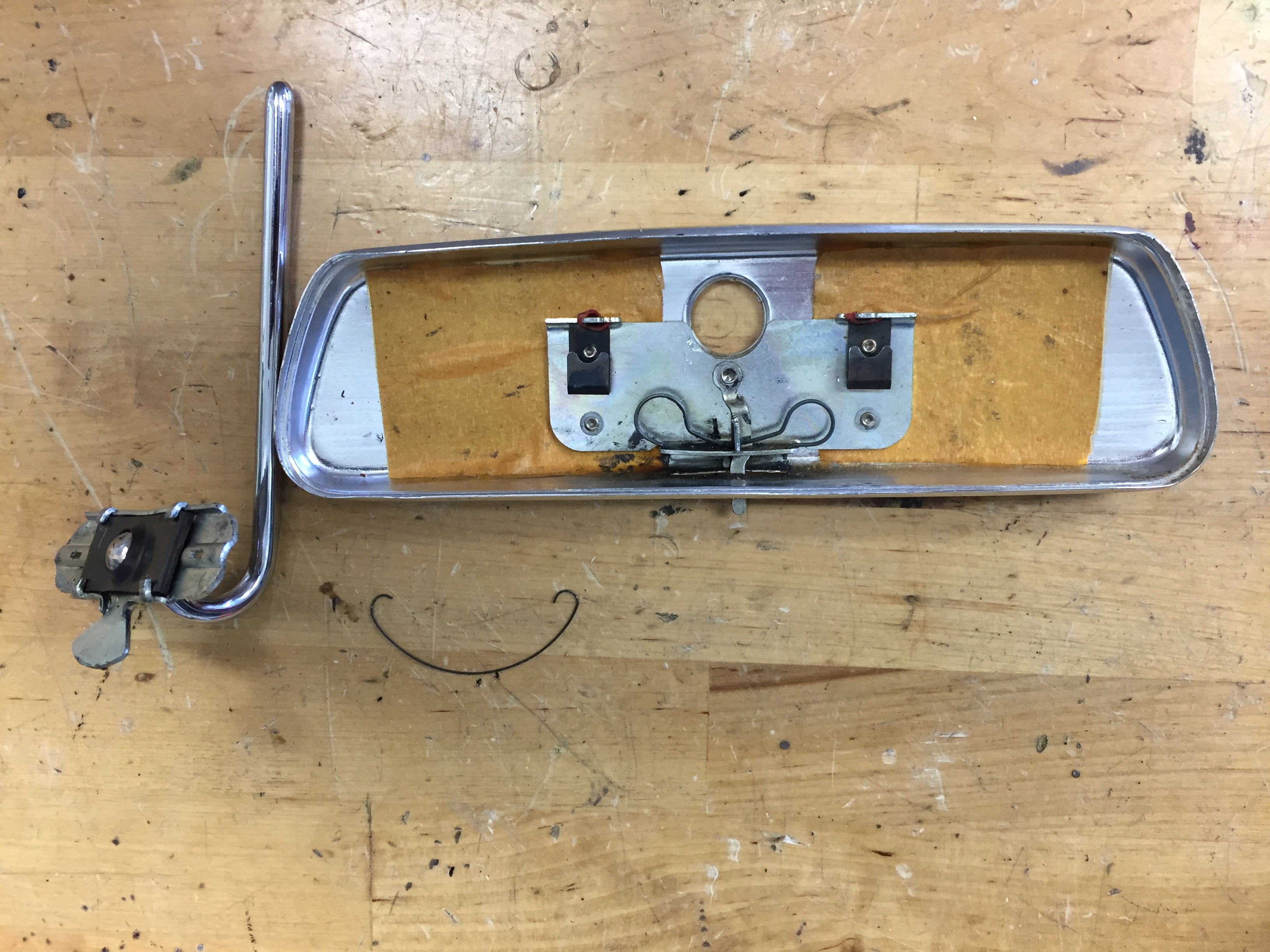
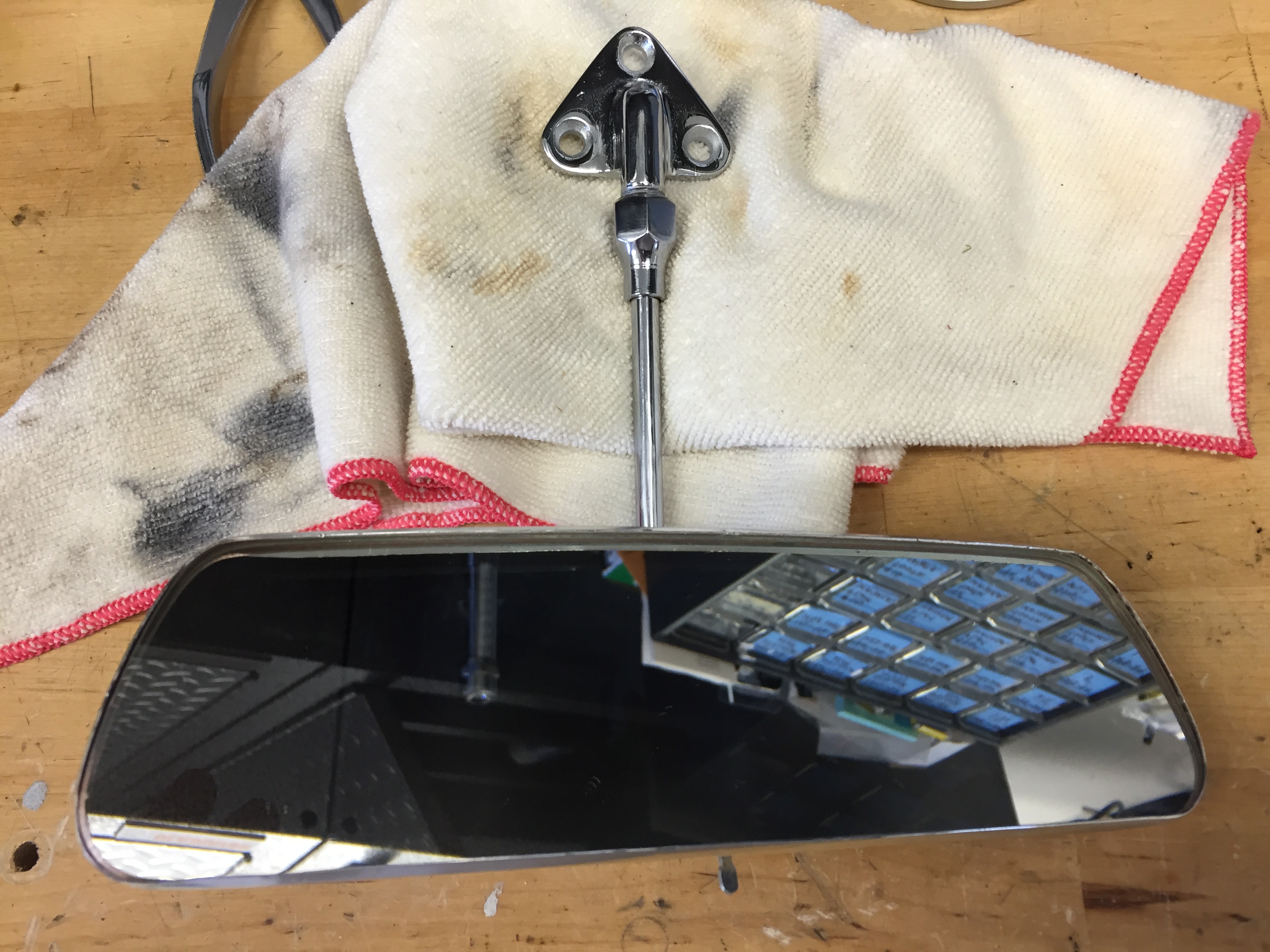
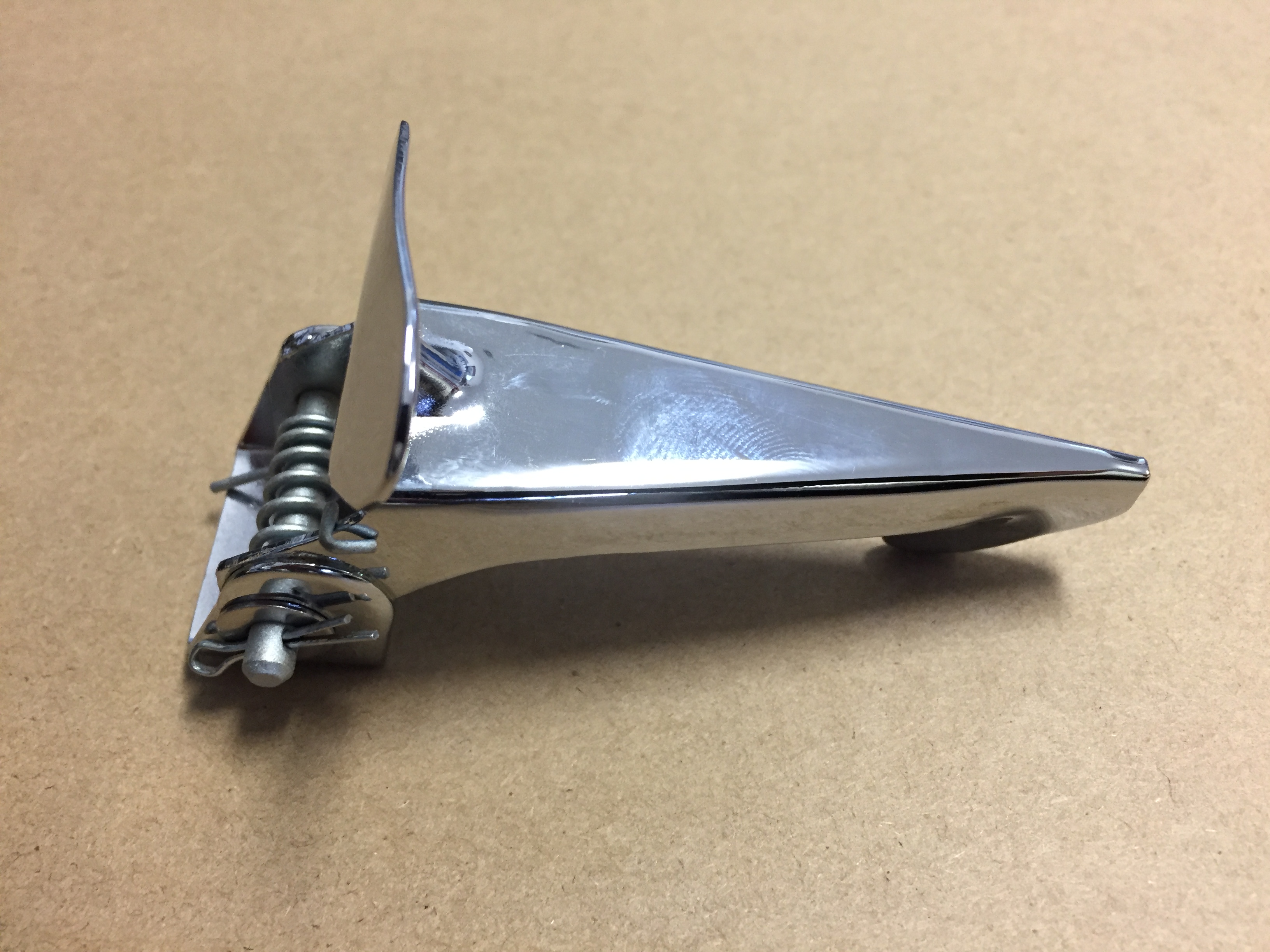
I also had my original mirror re-silvered by Tim Inman at Inman Historic Interiors www.historicinteriors.com/Resilvering.html The resilvering costs about $65 including shipping. The finished product looked like new. Reassembly is pretty easy but it does require carefully bending four tabs that secure the tensioning spring for the mirror ball joint. The image below shows the mirror casing and the spring assembly with adjustable post.

Rearview Mirror Before Assembly

Rearview Mirror Before Assembly

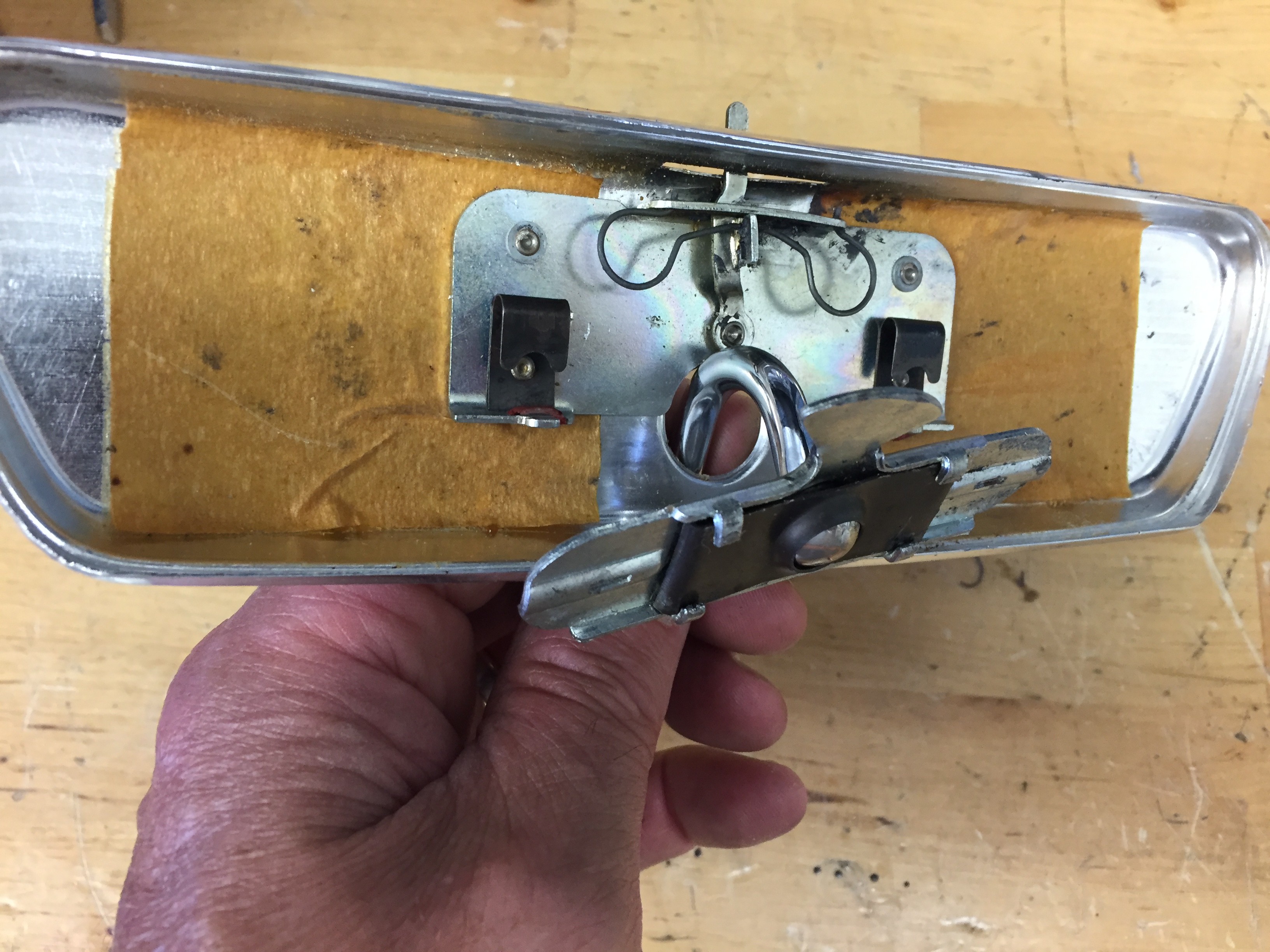
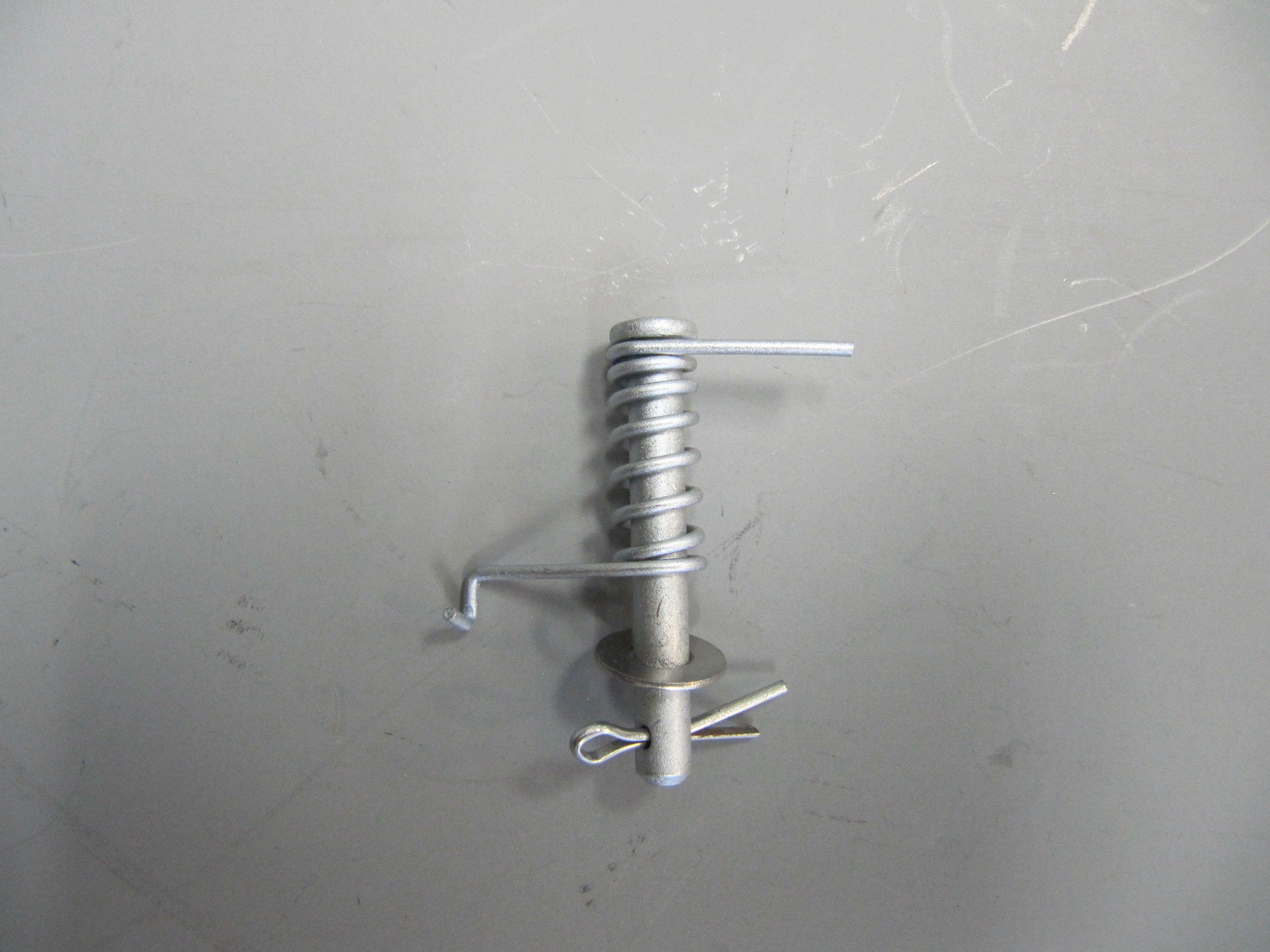
The image below show the installation of the post and tensioner spring with mounting plate:

Installing Rearview Mirror Components

Installing Rearview Mirror Components

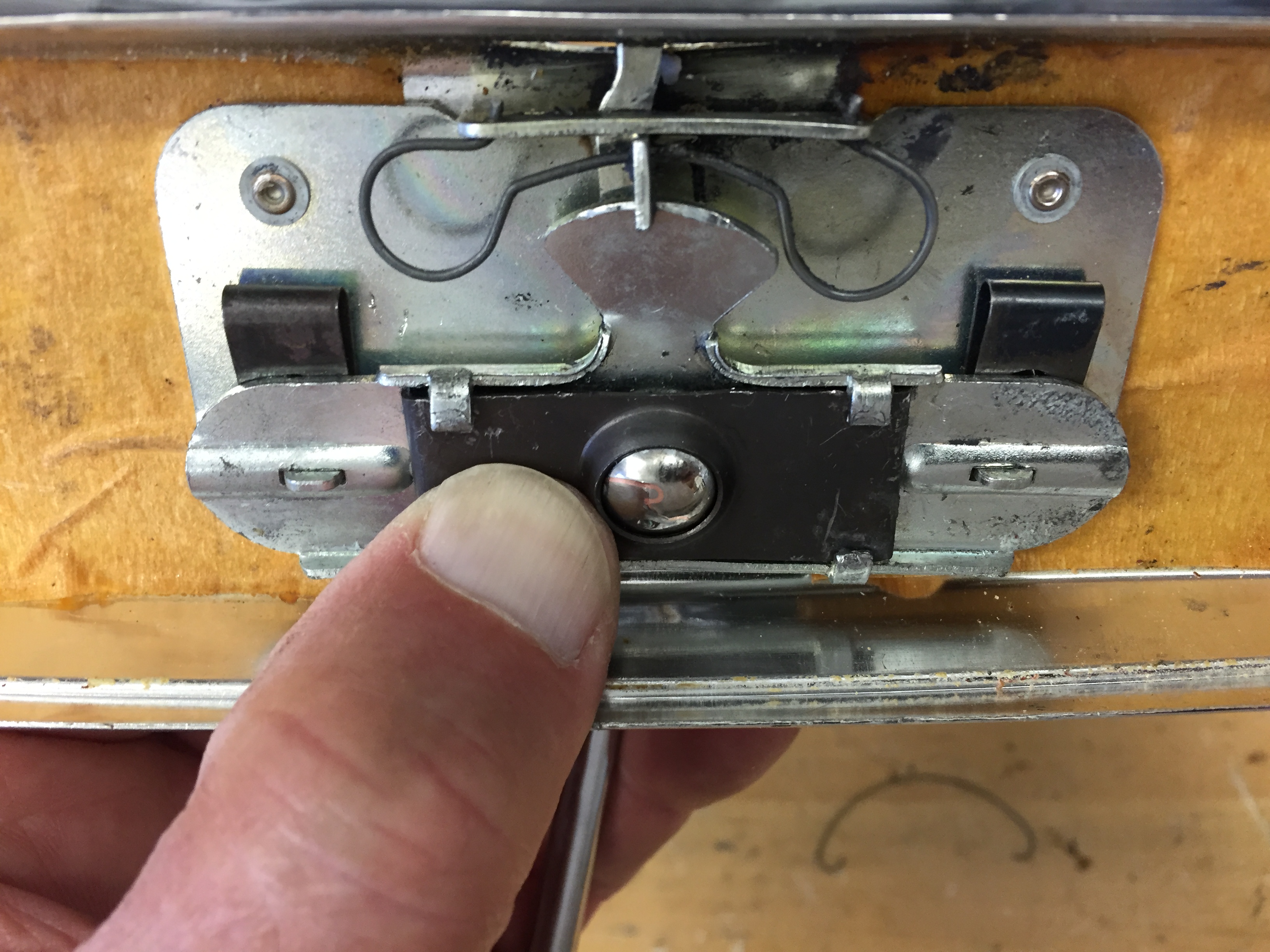
The image below shows the tensioner spring plate tabs bent back to secure the spring plate:

Tensioner Spring Tabs bent into Position

Tensioner Spring Tabs bent into Position

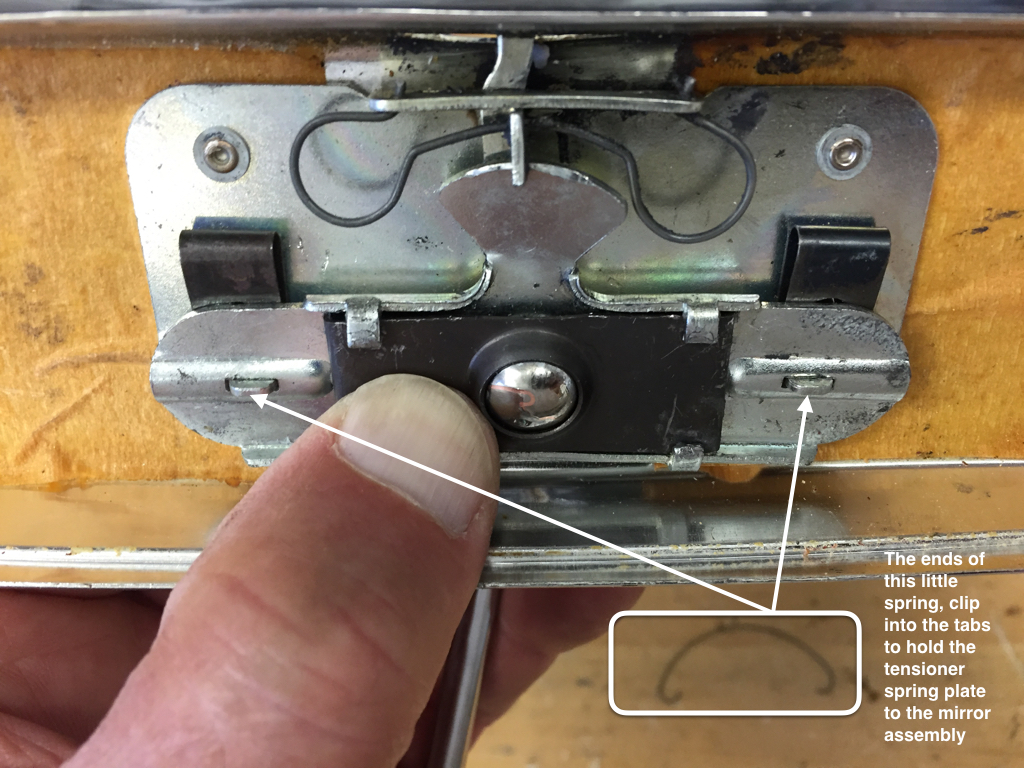
A very fine sprung wire holds the tensioner plate to the mirror assembly as seen in this image:

Rear View Mirror Retaining Spring

Rear View Mirror Retaining Spring

The mirror casing cleaned up with some polish and hand buffing:

Polished Mirror Casing

Polished Mirror Casing

The final step was popping the mirror back into the casing to complete the job!

Resilvered Mirror Installed

Resilvered Mirror Installed

Of course, the generous use of Walnut veneered wood and supple leather hides make a Jaguar!

Wood Trim

I will have all of the wood professionally refinished. possible vendors include:

http://www.classicdashboards.com/gallery-jaguar-restoration-photos.html

Classic Dashboards is operated by Simon Lorkin who is located in France.

British Autowood operated by Saul Chaplin is in Altamonte Springs, Florida: http://www.britishautowood.com/index.htm


Leather Trim

I have not yet decided if I will have the leather and vinyl work custom stitched or if I will go with one of the primary suppliers:

John Skinner at: http://www.jaguar-trim.co.uk

or,

BAS Ltd. at: http://www.basjaguartrim.com/mk2daimler250.htm

or,

Aldridge Trimming at: http://www.aldridge.co.uk


Engine Mounting

Engine Mounting

Rear Engine Stabiliser

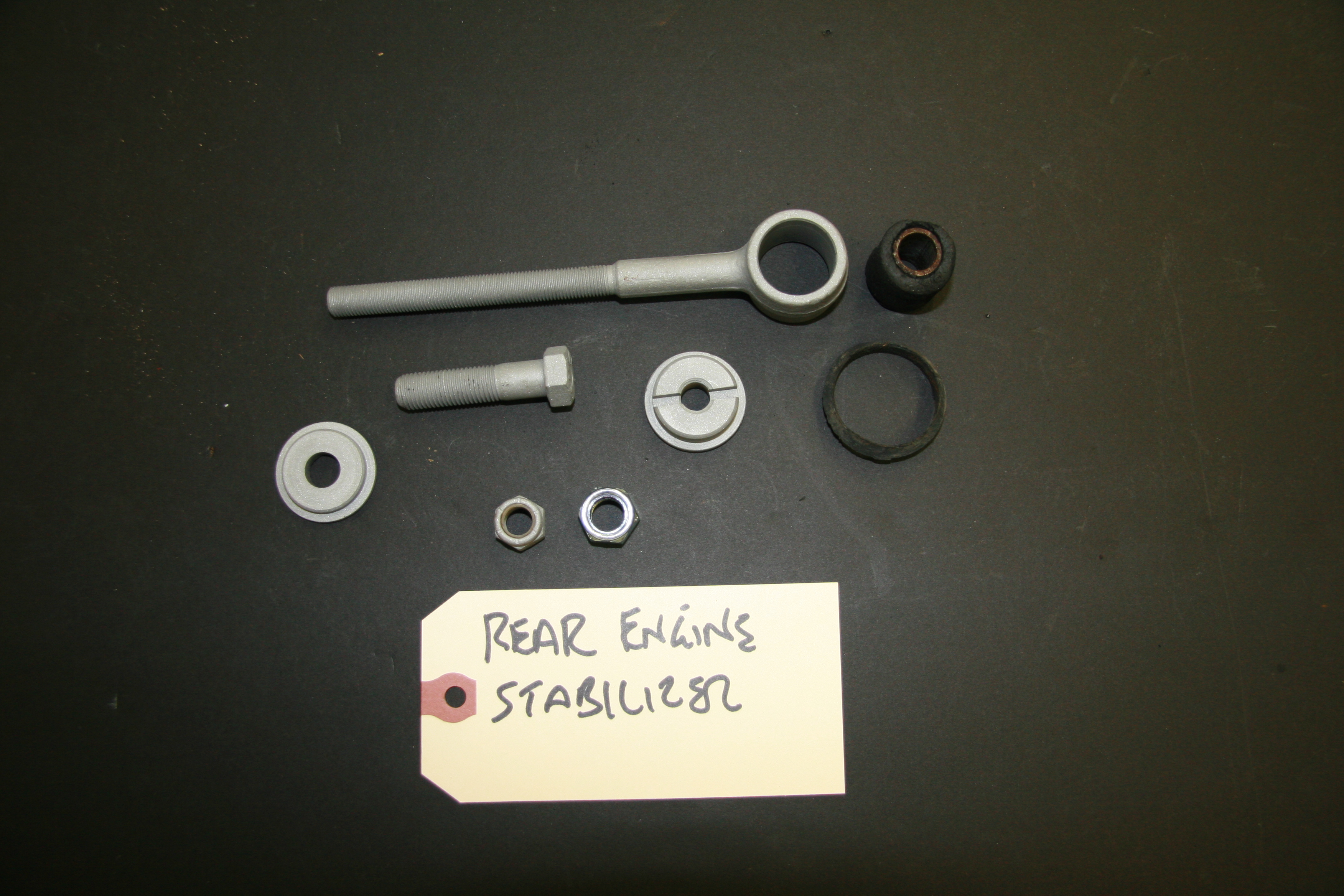
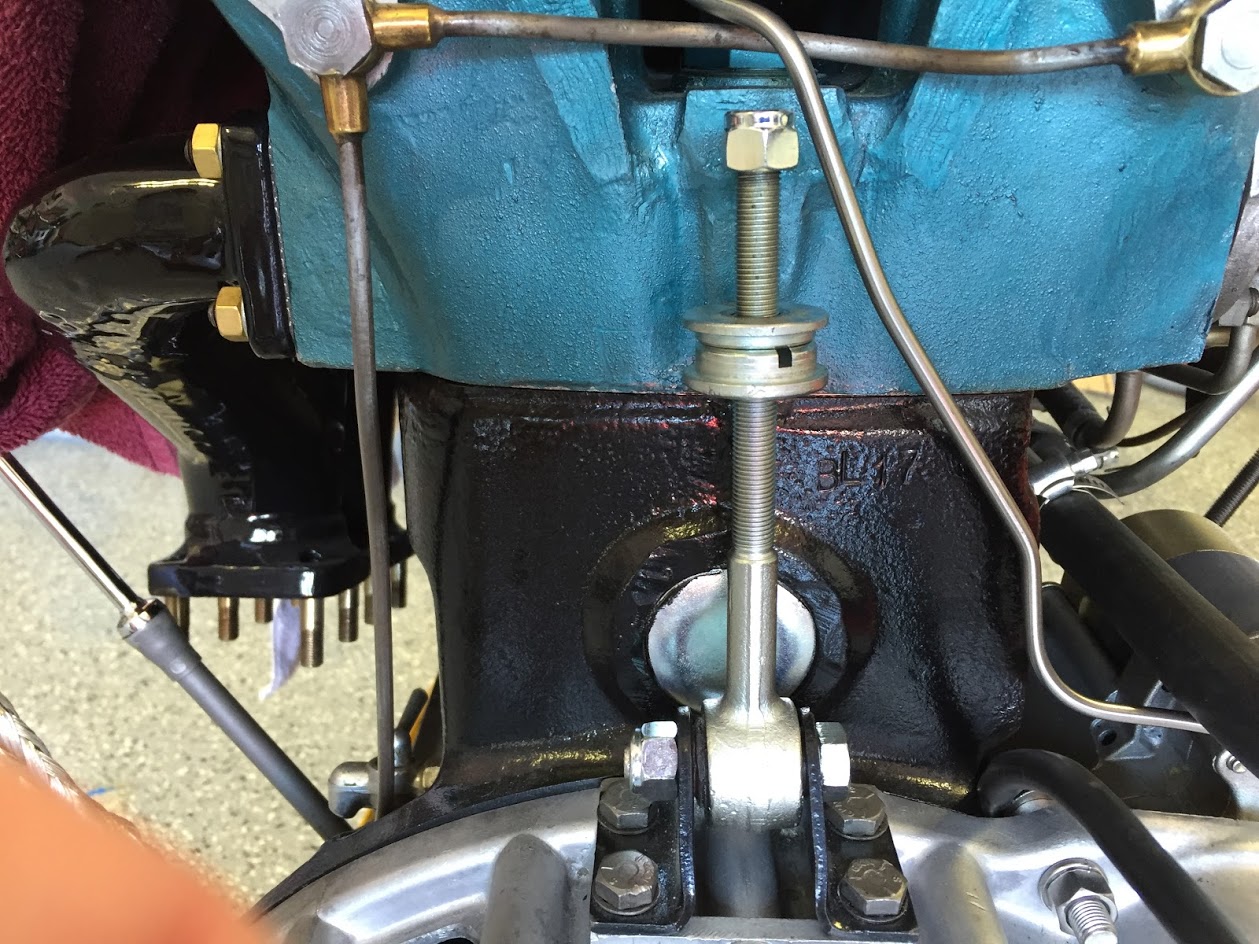
The rear of the engine is attached to the firewall (dash) of the car via a stabilising link with a rubber bushing and a rear mount on the firewall with a rubber bushing. I cleaned both components and installed new bushings.

Stabilising Link at Rear of Cylinder Block, Bush, Stepped Washer, Stepped Bush, Nut

Stabilising Link at Rear of Cylinder Block, Bush, Stepped Washer, Stepped Bush, Nut

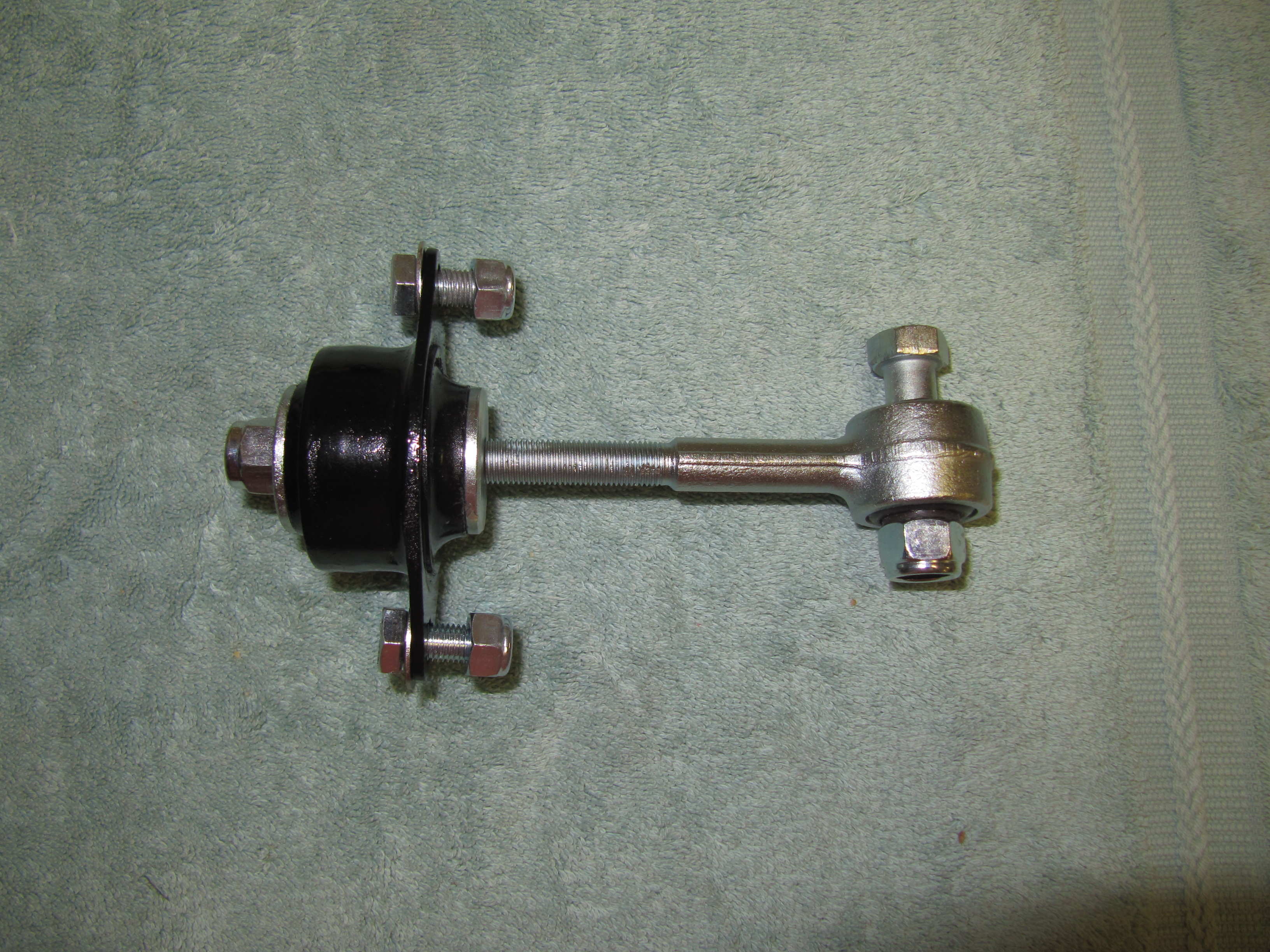
The rubber mounting for the stabiliser link needed to be replaced. I purchased a new one and had the link zink plated. This image shows the mounting and the link as an assembly.

Rear Engine Stabiliser Assembly

Rear Engine Stabiliser Assembly

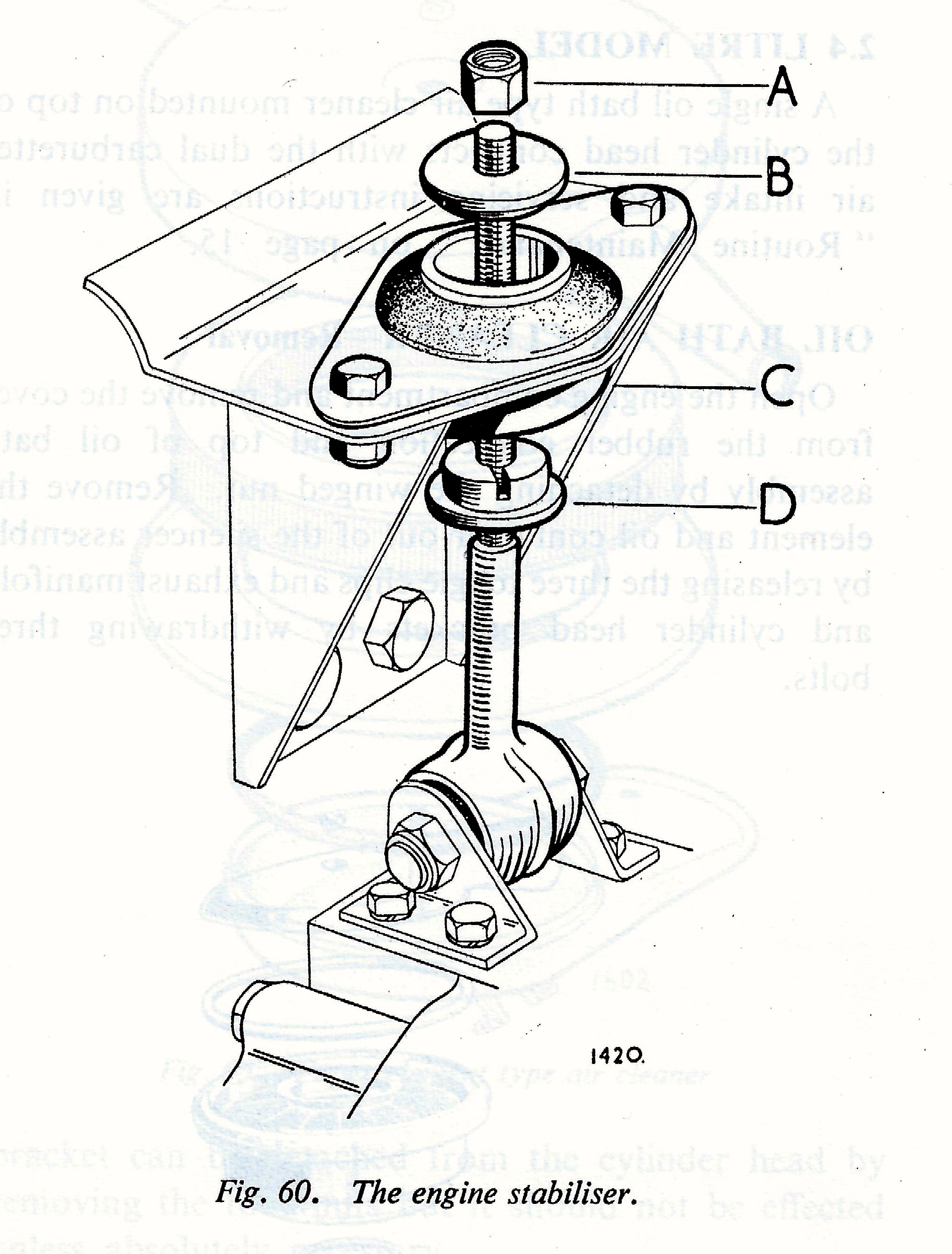
Engine Stabiliser

Engine Stabiliser

As can be seen in the illustration above, the stabiliser link is secured to the bell housing via two brackets, the LH and RH bearing brackets, mounting the stabilizing links at the bottom. The brackets are fastened to the bell housing with four 5/16 – 18 x 3/4″ hex bolts with lock washers. The link is fastened to the bracket with a single 7/16″ – 20 x 1-3/4″ hex head bolt with a nylock nut. The link is fastened to the firewall bracket using a stepped bush and stepped washer with a 3/8″ – 24 nylock nut.

Rear Engine Stabiliser Mounted

Rear Engine Stabiliser Mounted


Rear Engine Mount – The Channel Support Assembly

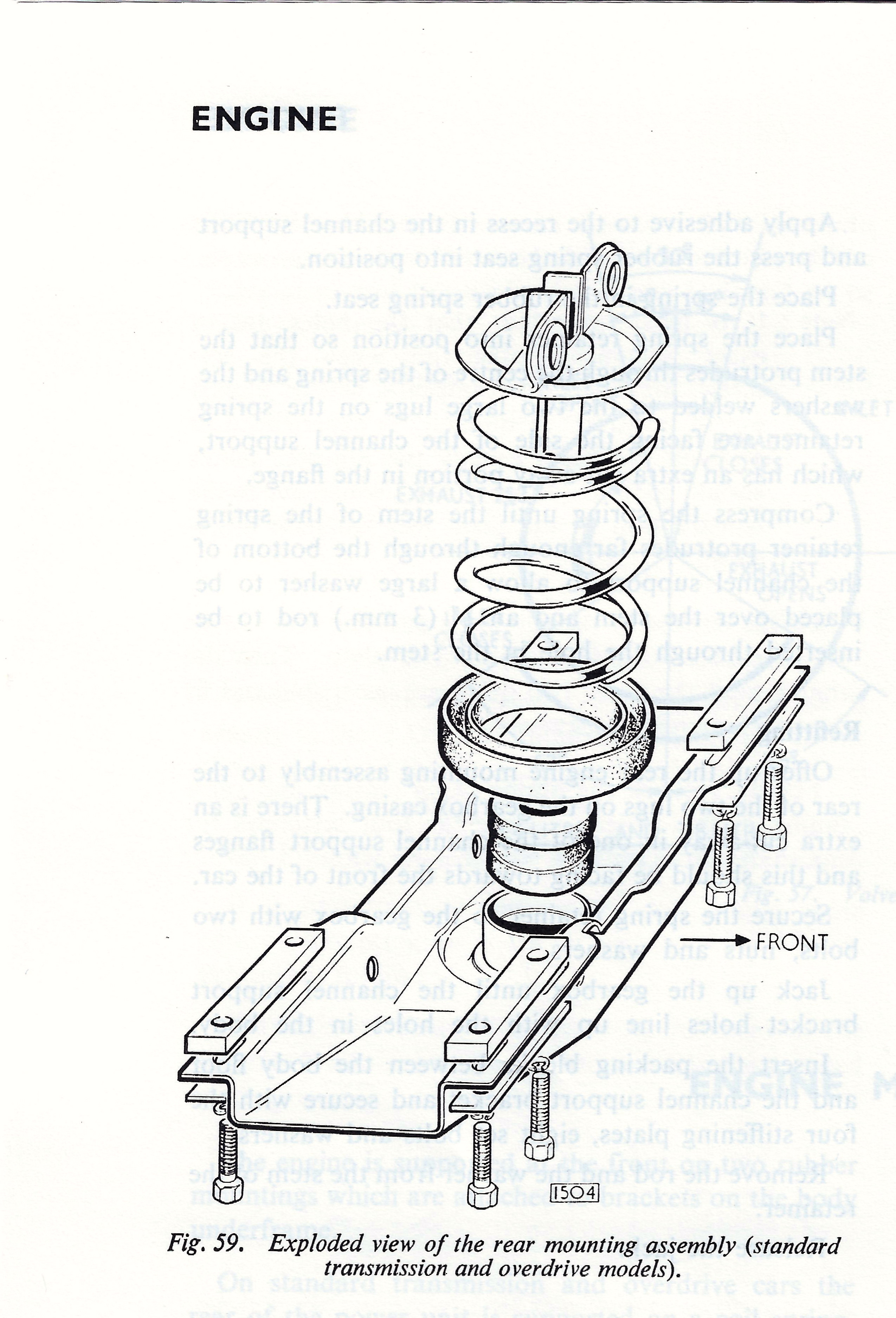
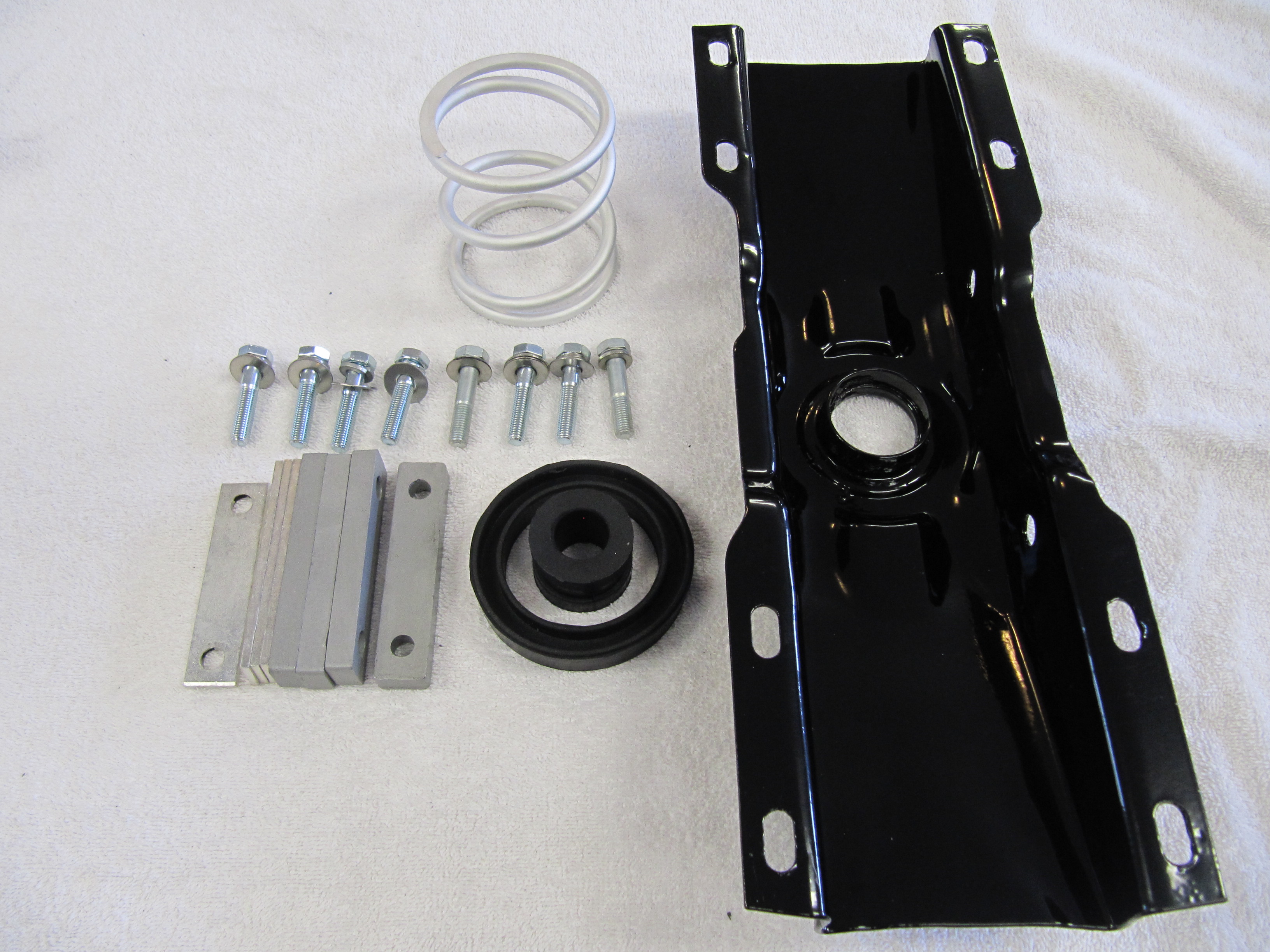
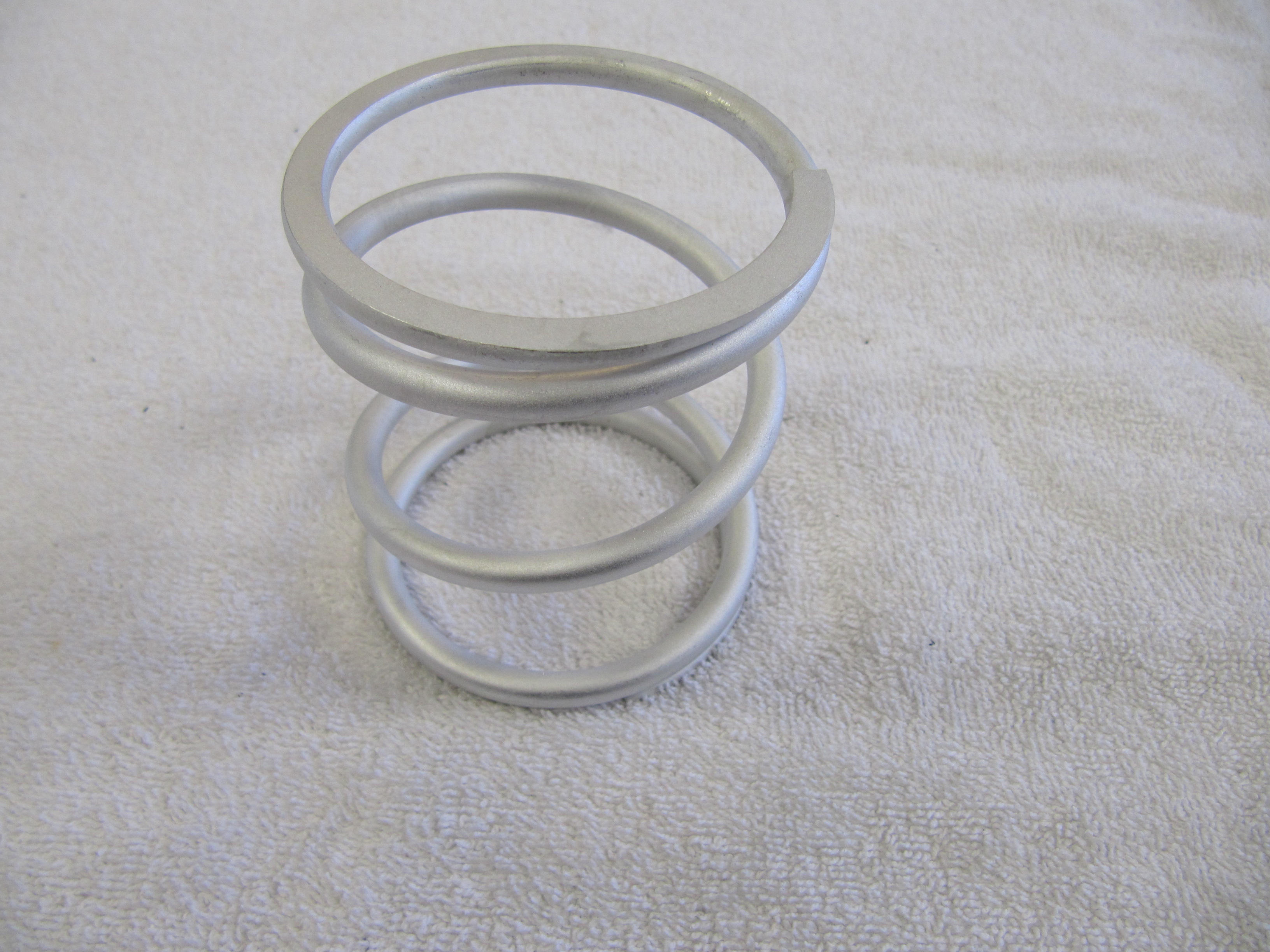
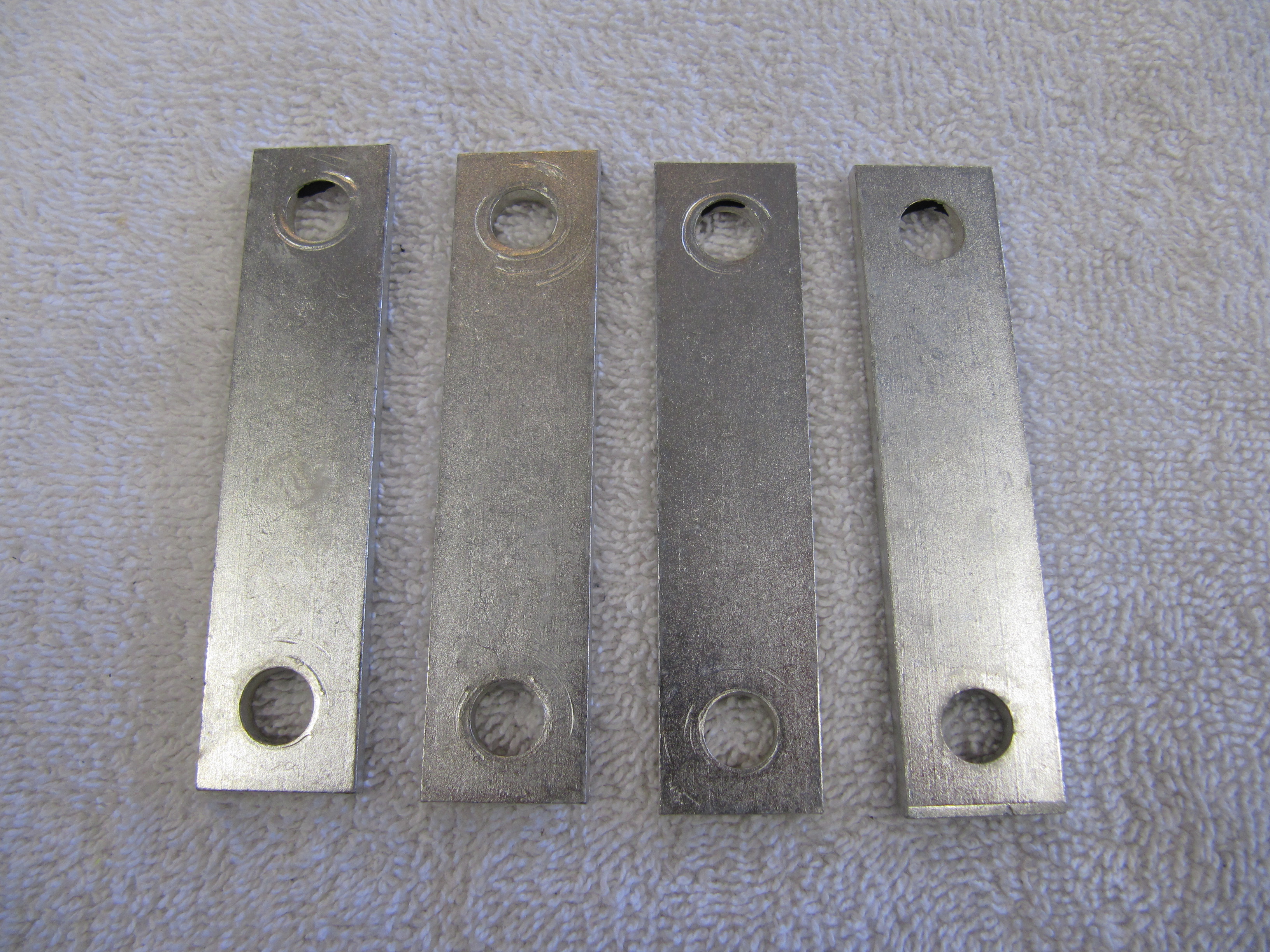
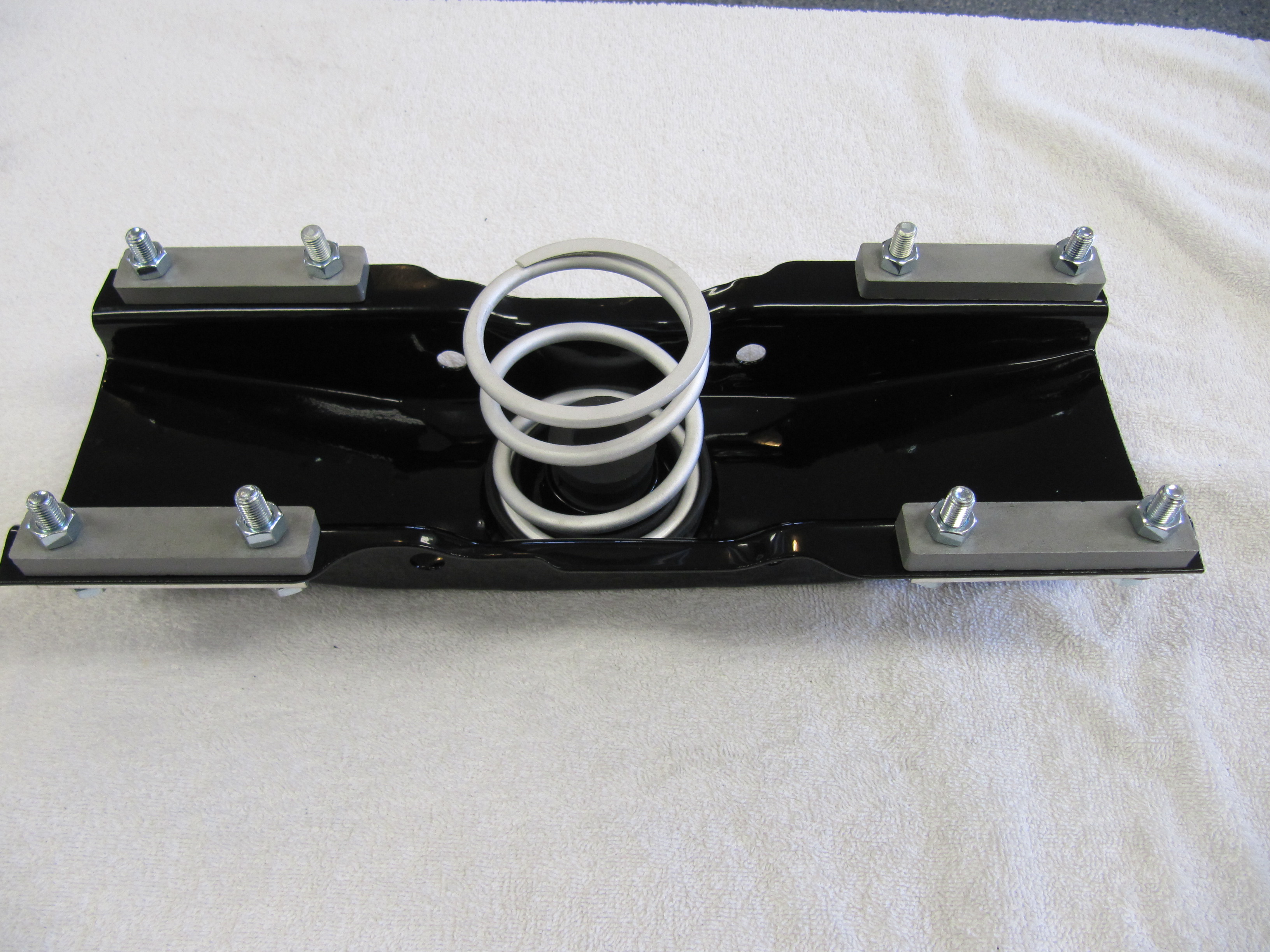
The assembly includes: The channel support, a rubber spring seat, a center rubber busing, the coil spring for rear engine mounting, four aluminum packing blocks between the flange of the channel support and the underside of the floor, eight bolts (5/16″ -24 x 1 3/8″), eight flat washers, eight split locking washers, and four stiffening plates. The Spring Retainer Assembly for Rear Engine Mounting is attached to the gearbox.

Rear Engine Mount

Rear Engine Mount


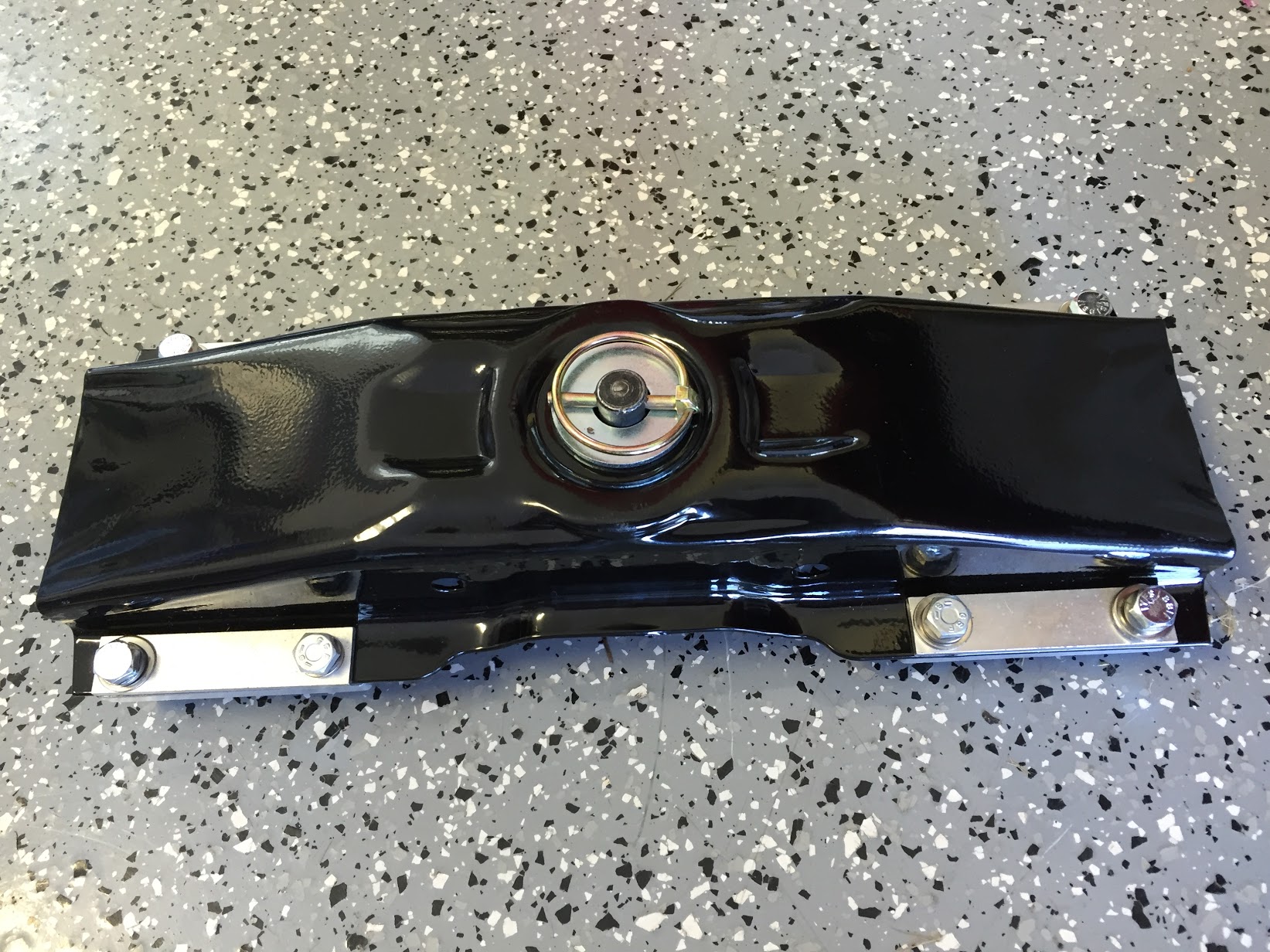
Engine Rear Mounting Assembly

Engine Rear Mounting Assembly

The rear engine mounting plate actually supports the tail of the gearbox and it bolts to the superstructure of the car. I cleaned and media blasted the Channel Support component of the assembly and powder coated it. The Assembly includes the channel support as well as its rubber spring seat, the rubber center bush, the spring retainer, the coil spring, the pin assembly, the bolt securing the rear engine mounting to the gearbox, a self-locking nut, four packing blocks and four stiffening plates. I replaced the rubber spring seat and the rubber center bush and the mounting fasteners with new components. The coil spring and stiffening plates were clear cad plated and the aluminum spacers were cleaned and clear-coated.

Support Assembly

Support Assembly

Coil Spring

Coil Spring

Support Stiffening Plates

Support Stiffening Plates

Channel Support Assembly Components for Rear Engine Mounting Assembled

Channel Support Assembly Components for Rear Engine Mounting Assembled

Reassembling and Installing the rear engine mount
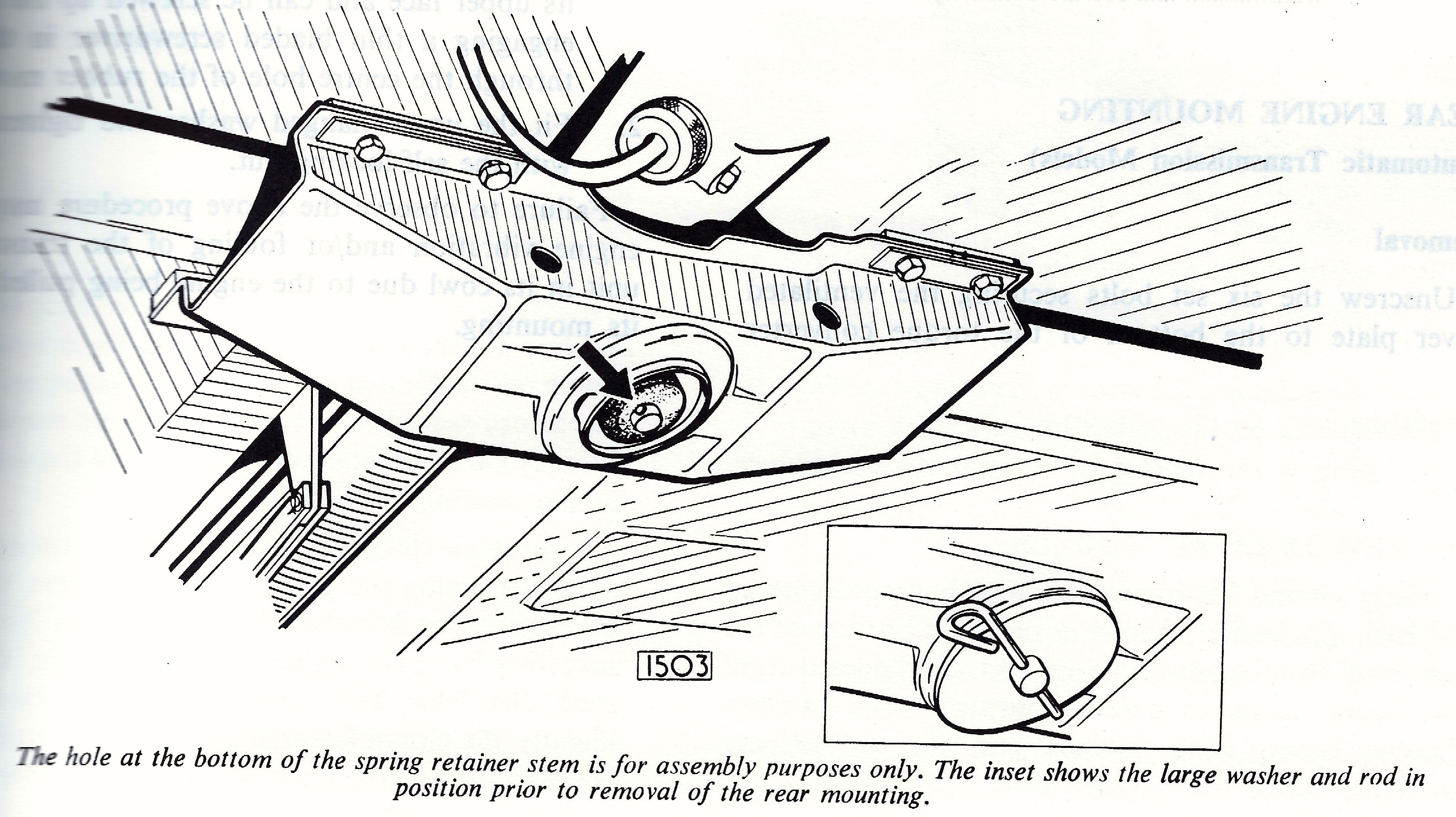
The Jaguar Service Manual provides instruction for installing the rear mount. Place the spring retainer into position so that the stem protrudes through the centre of the spring and the washers welded to the two large lugs on the spring retainer are facing the side of the channel support, which has an extra cut-away portion in the flange. Compress the spring until the stem of the spring retainer protrudes far enough through the bottom of the channel support to allow a large washer to be placed over the stem and an 1/8” (3 mm) rod to be inserted through the hole in the stem.” Of course, nothing is said about HOW to compress the spring. I found that I needed a press to do the job and it makes the task quite easy.

Rear Engine Mount with Pin Installed

Rear Engine Mount with Pin Installed

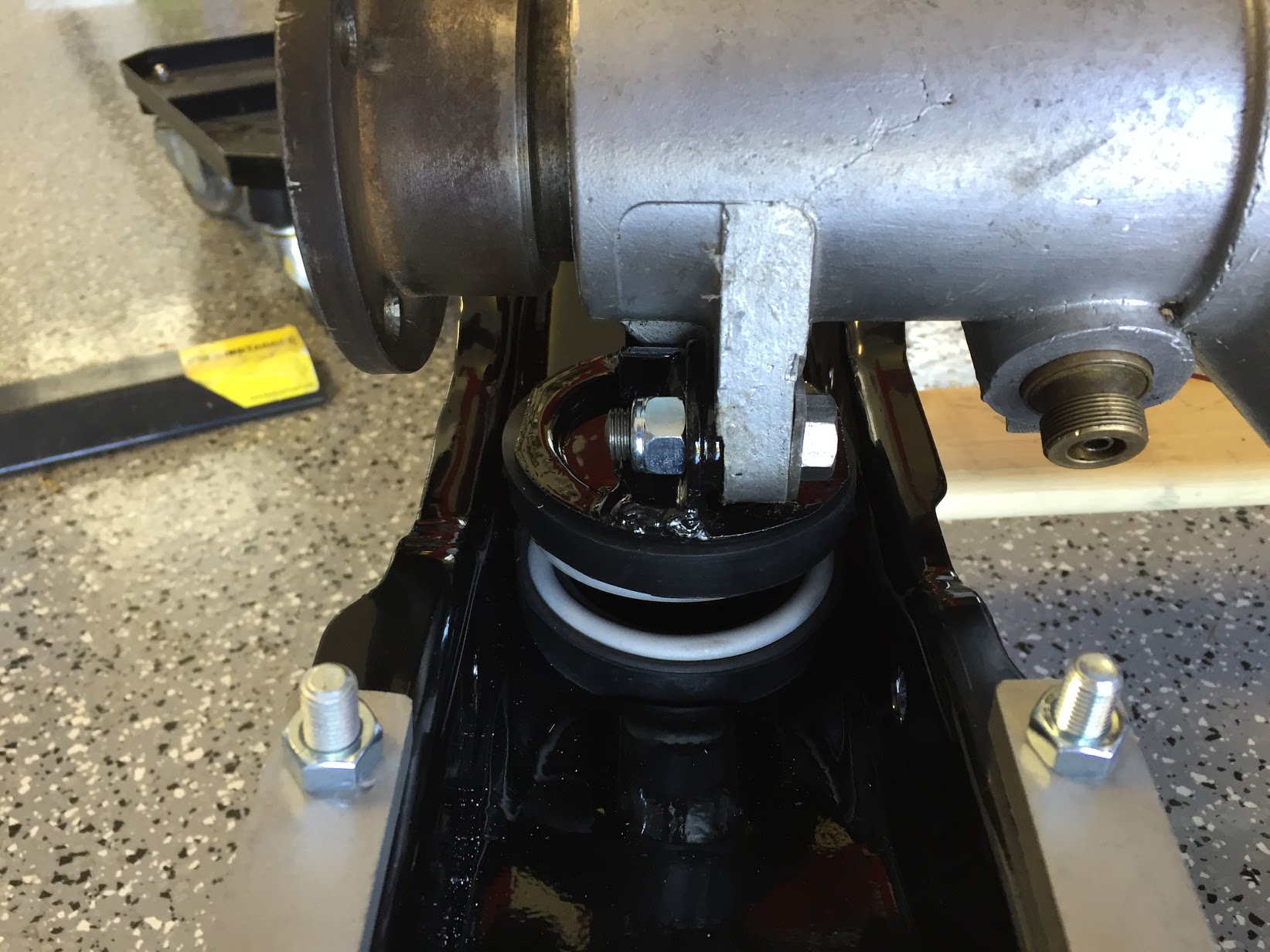
Rear Engine Mount Fixed to Gearbox

Rear Engine Mount Fixed to Gearbox

Spring Retainer

Spring Retainer

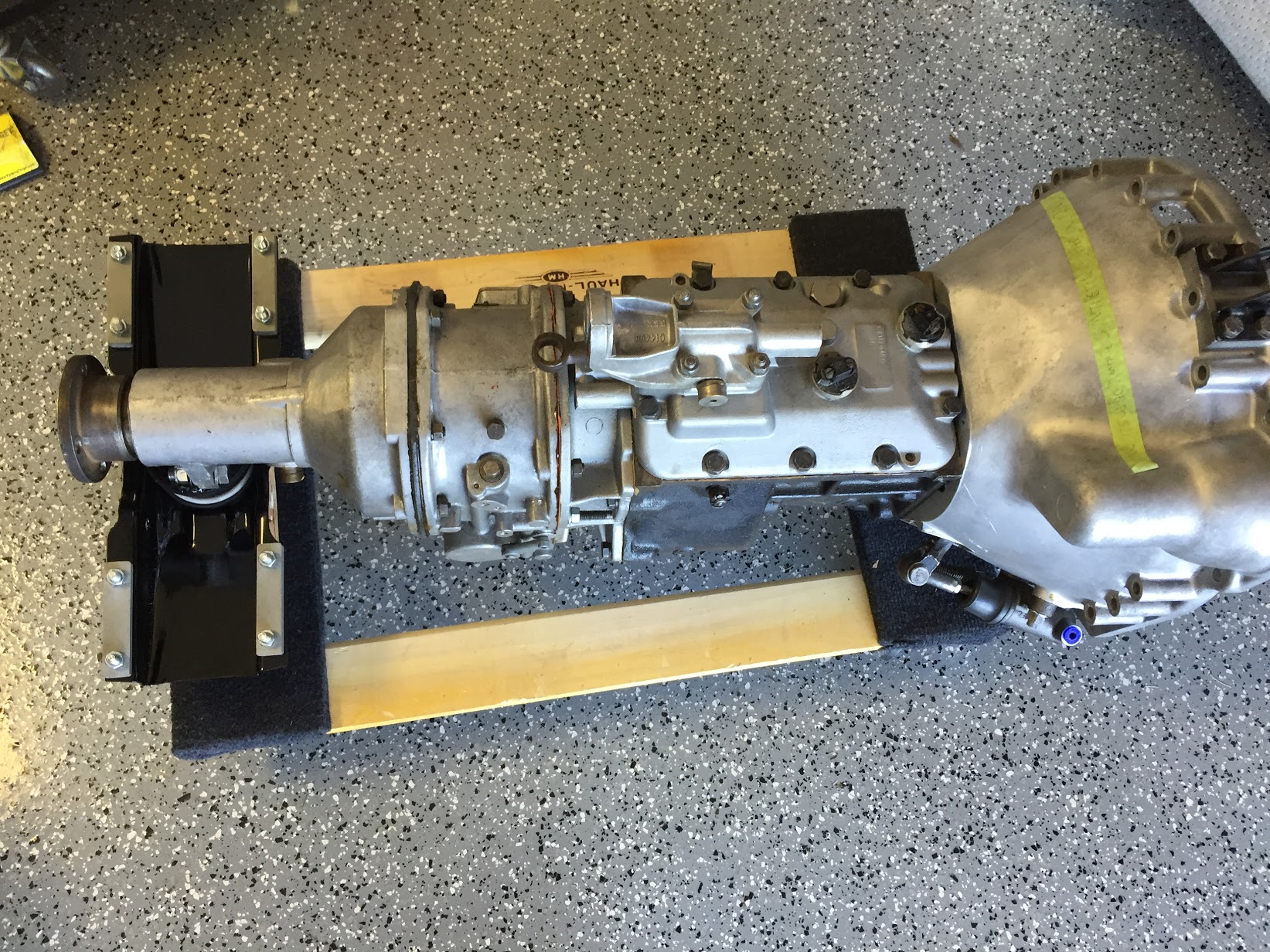
Two 7/16″-20 x 1-1/2″ hex head bolts with nylock nuts are used to secure the rear channel support (rear engine mount) to the gearbox. Note that the spring retainer needs to face the proper way as seen in the diagram and photos with the bolt heads to the front of the gearbox. The rear engine mount is now ready to old to the chassis with the eight (8) hex head mounting bolts.

Rear Engine Mount Attached to Gearbox

Rear Engine Mount Attached to Gearbox

Front Engine Mounts

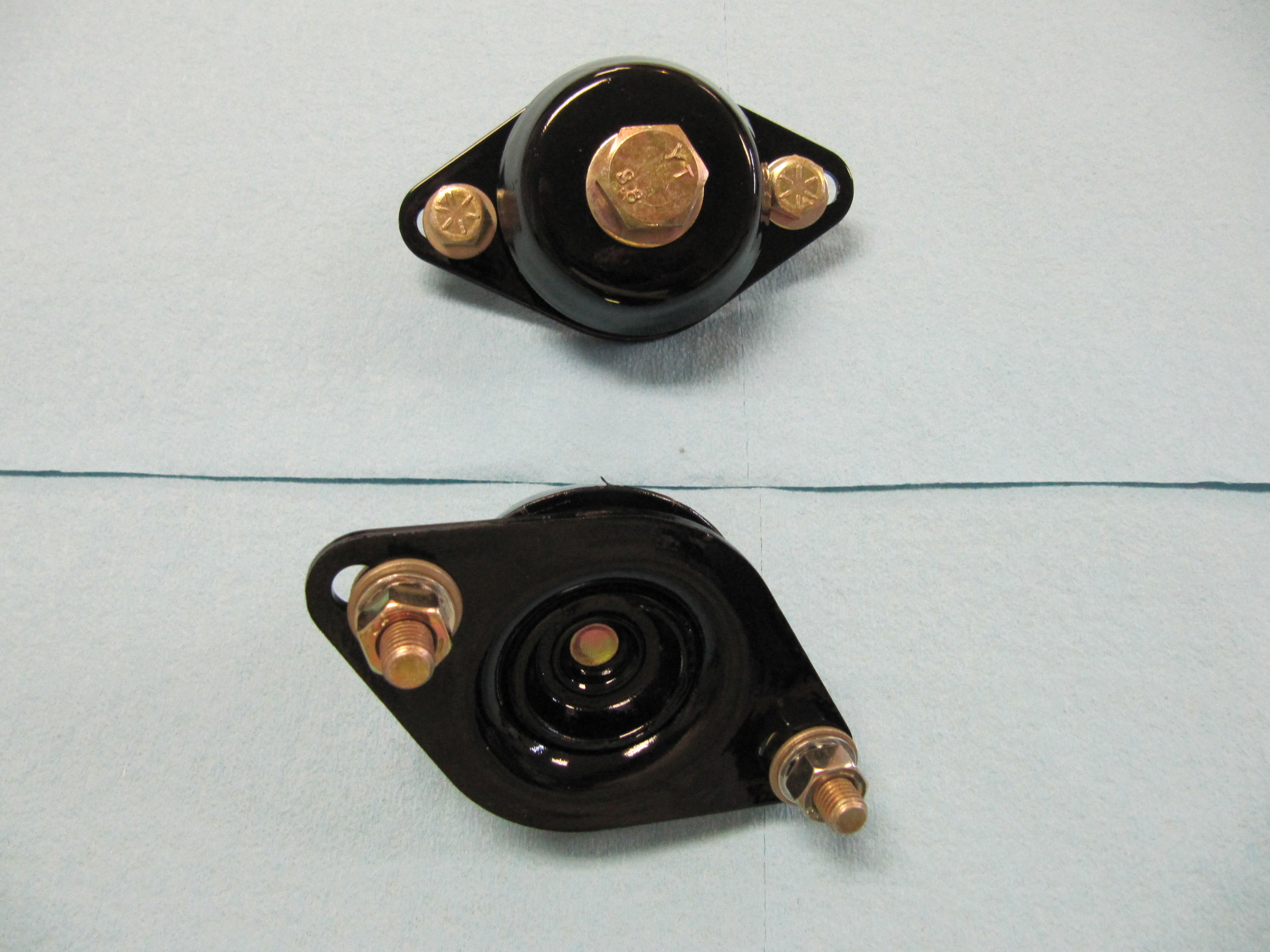
Upgraded engine mounts were ordered from SNG Barratt and were painted once received.

Upgraded Engine Mounts Painted

Upgraded Engine Mounts Painted

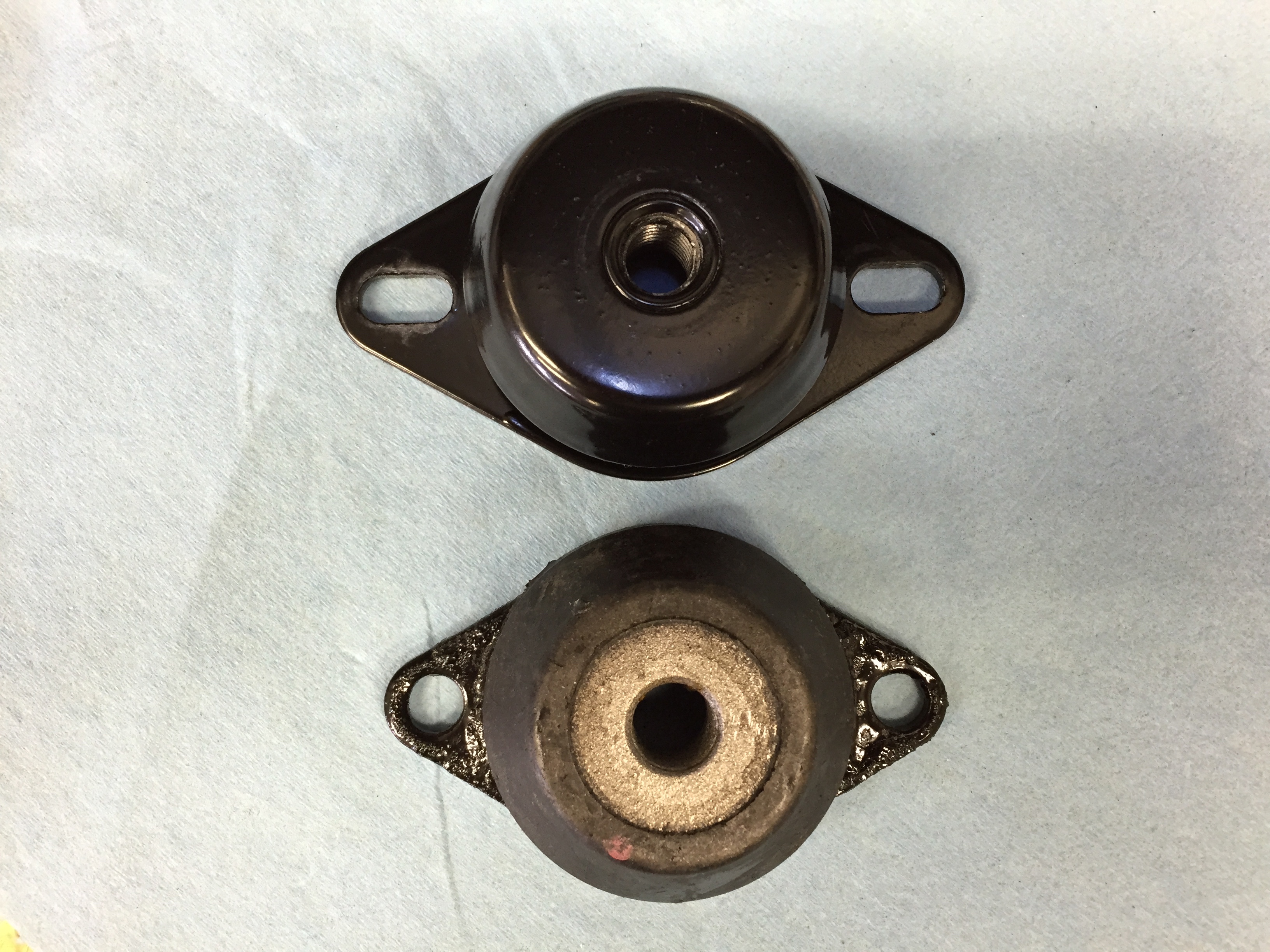
I wondered if the upgraded mounts were the same size as the original spec (but new) rubber mounts so I ordered a couple to see:

Upgrade Mount top and Original Spec Mount bottom

Upgrade Mount top and Original Spec Mount bottom

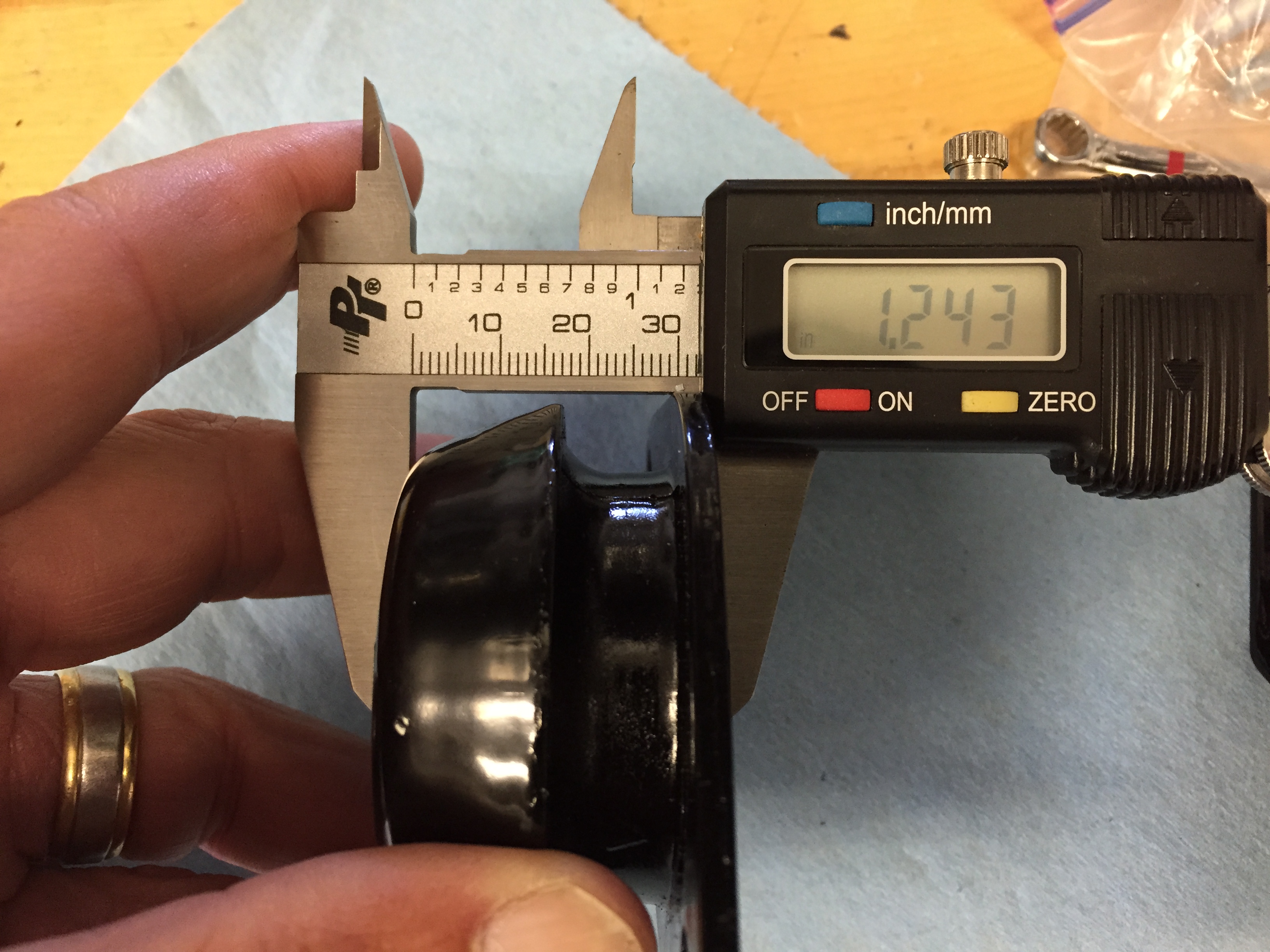
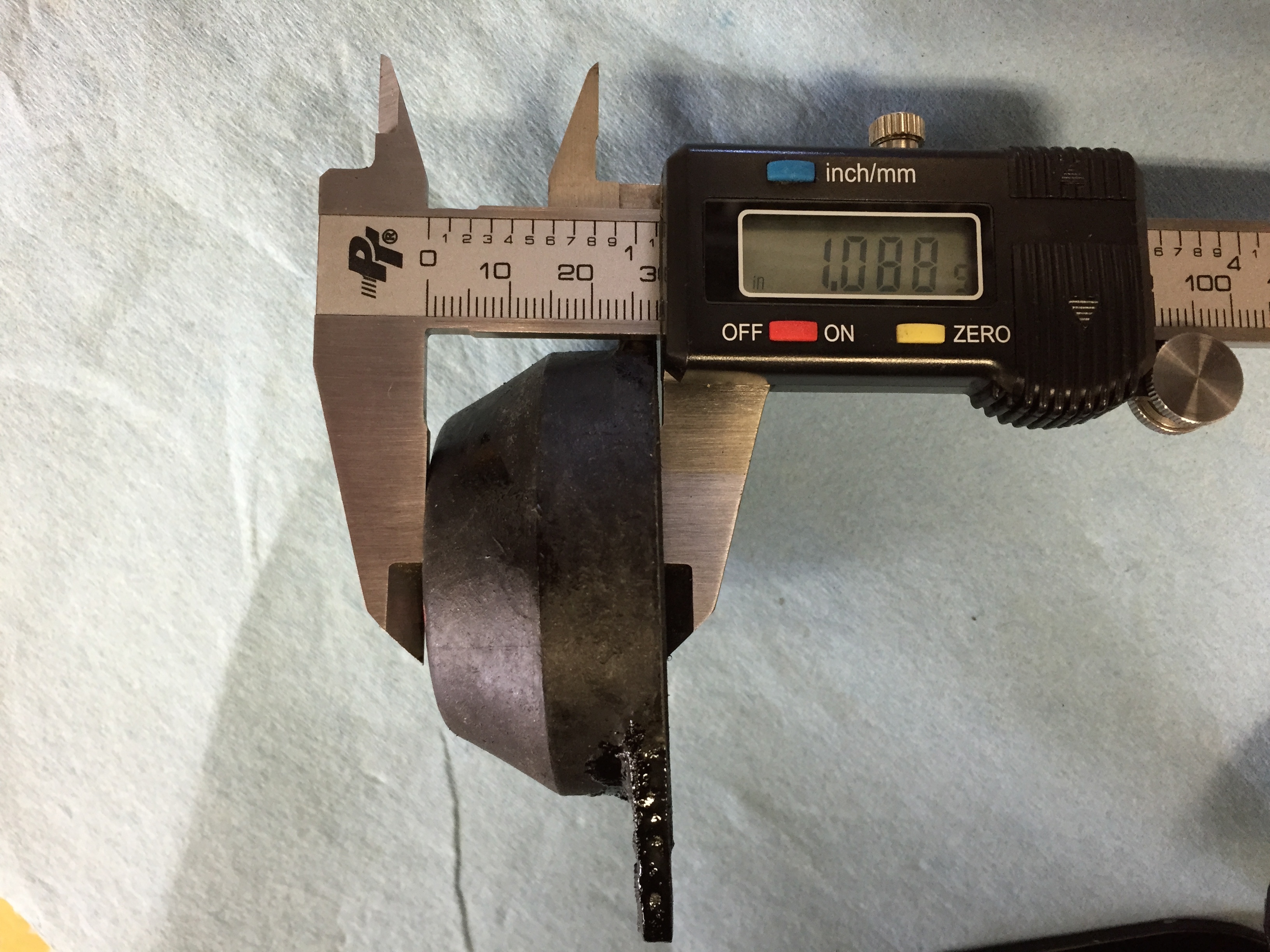
One can immediately see that the flange used to mount the rubber to the bracket is of a different shape and slightly wider, but it fits. Then to measure the height:

Upgraded Engine mount 1.243 inches High

Upgraded Engine mount 1.243 inches High

Original Spec Engine Mount 1.088 inches High

Original Spec Engine Mount 1.088 inches High

Hopefully this is not great enough difference to create a mounting problem. When I install the engine I will try the upgraded mounts first and see if they fit, but I have a fall-back if they do not.

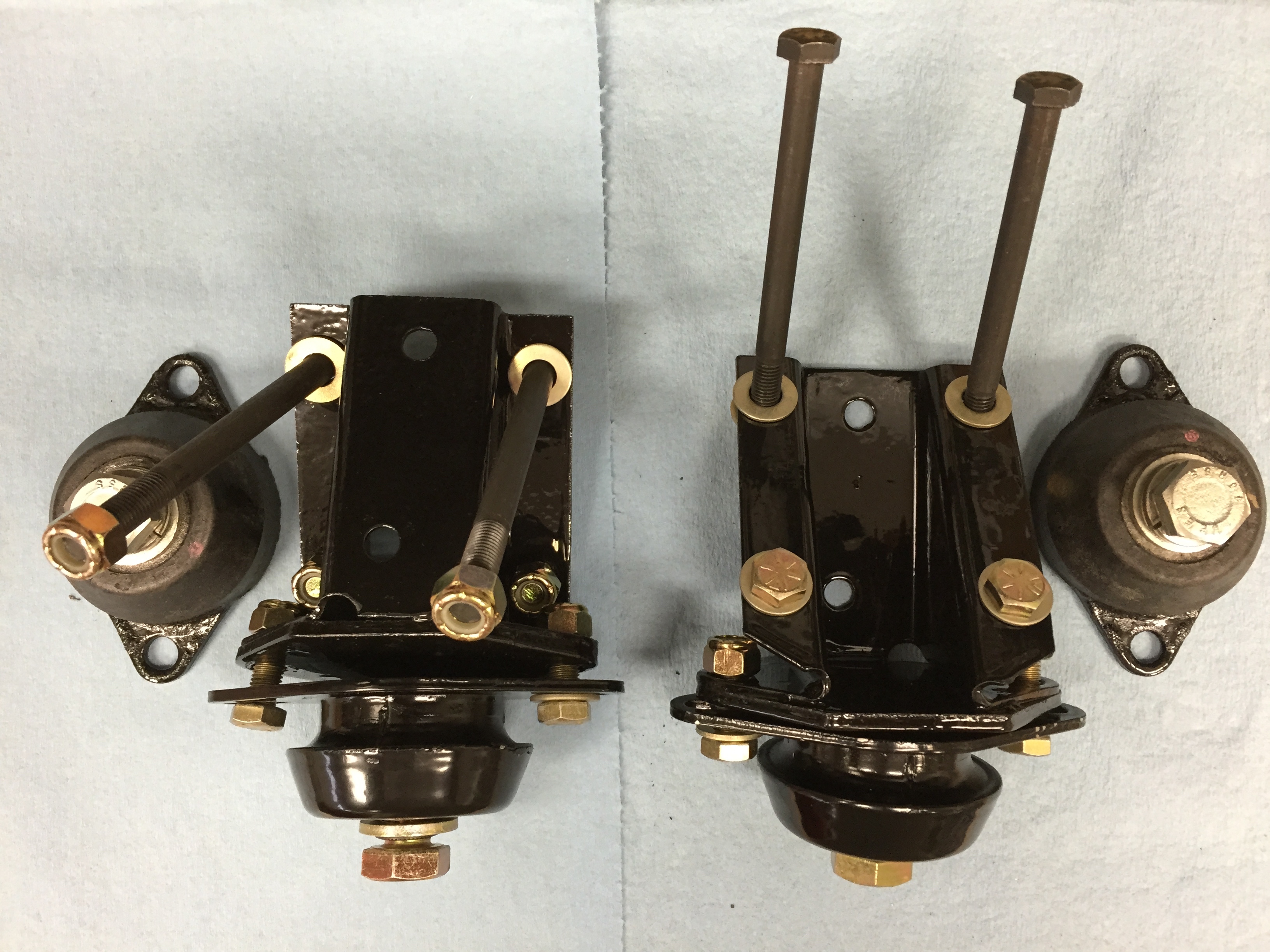
This is an image of the both brackets and rubber mounts ready to go on the car. I have used Grade 8 fasteners throughout. The rubber mounts attach to the flange brackets with 5/16″-24 x 1″ hex bolts and I have used nylock nuts. The bolts used in the rubber mount are 1/2″-20 x 7/8″ with split and flat washers. The two long bolts in each flange assembly are 5/16″-24 x 3 3/4″ while the shorter bolts are 5/16″-24 x 3/4″ and each is secured with a nylock nut and flat washer. The assemblies were blasted and painted with POR-15.

Bracket Assemblies with mounting rubbers and hardware

Bracket Assemblies with mounting rubbers and hardware

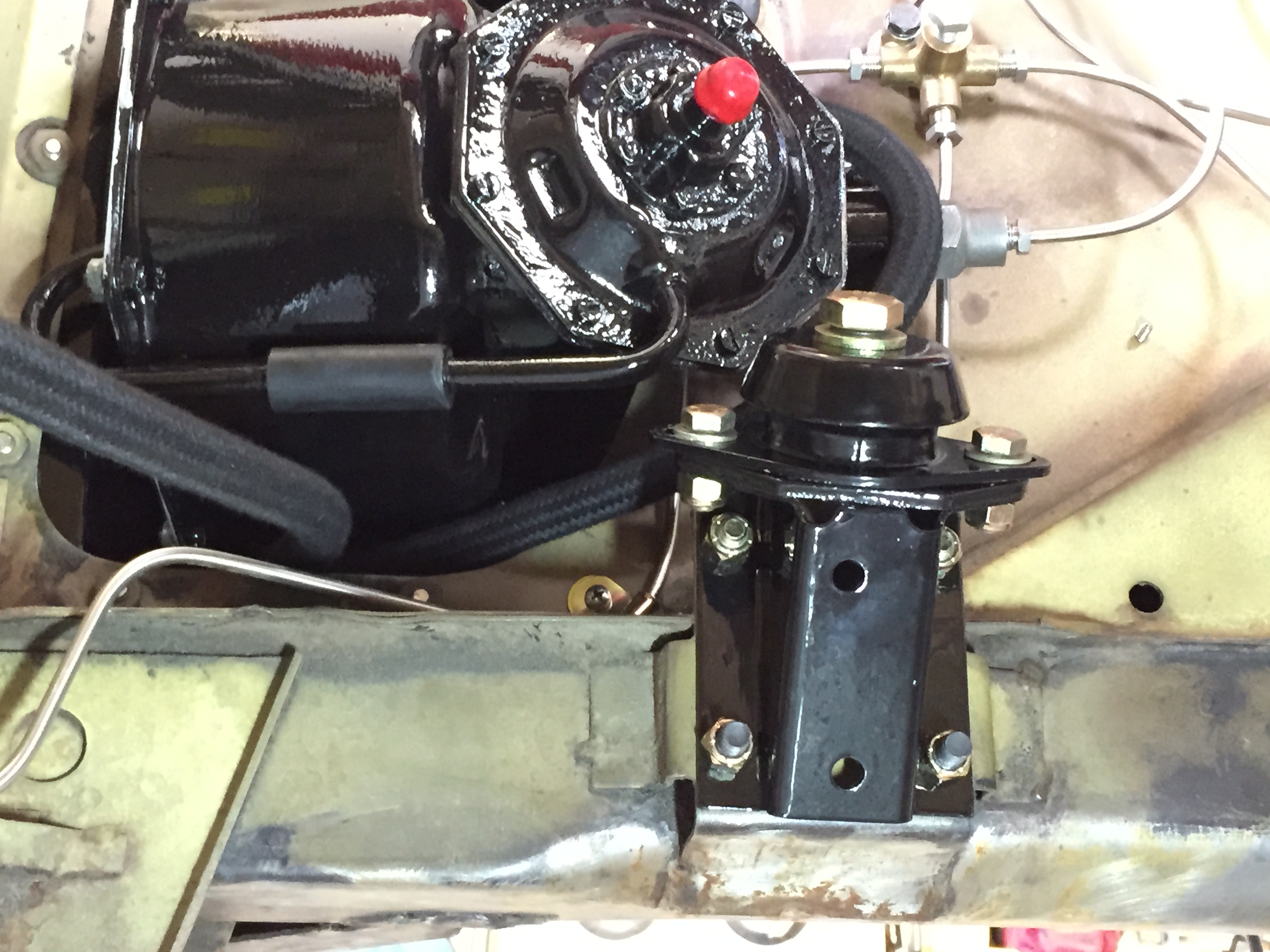
I am going to be installing the engine and gearbox before I complete bodywork and paint so I went ahead and installed the mounts to the car. I left the rubber mounts slightly loose as there is a little adjustability for mating with the engine. I will tighten after the engine is installed.

RH Motor Mounts Installed

RH Motor Mounts Installed

LH Motor Mounts Installed

LH Motor Mounts Installed

The Trial Engine Install

As mentioned in other posts under the “Restoration” heading of this site, my plan is to install the engine/gearbox, electrical system, front and rear suspension and etc.  so that I can test and run the major systems before I paint the car. So…. after getting everything in and tested I will then pull it all out, do the bodywork and paint and then reassemble. Crazy I know, but then no surprises after the car is painted.

Here is a short video I made of the install of the rebuilt engine. I used my lift to lower the car over the engine. You will note that I removed the LH engine mount and the exhaust manifolds – just to protect them since they have an expensive new porcelain coating now. On the RH side of the engine I removed the carburetors and their linkage, but left the oil filter and starter.

In a separate entry “Engine Post-Installation Check List” I will detail all of the connections and other items that must be tended to prior to starting the installed engine.

When I do this the final time and at the suggestion of a buddy and advisor, John Stefanik, I will leave the LH mount as well as the alternator and air conditioner compressor/mount and remove the RH mount and the oil filter. The alternator and compressor are not easy to mount once the engine is in the car. We will see. Anyway, here is my install video. Thanks to my wife and grandson for their assistance!

Accelerator Controls

Accelerator Pedal Assembly

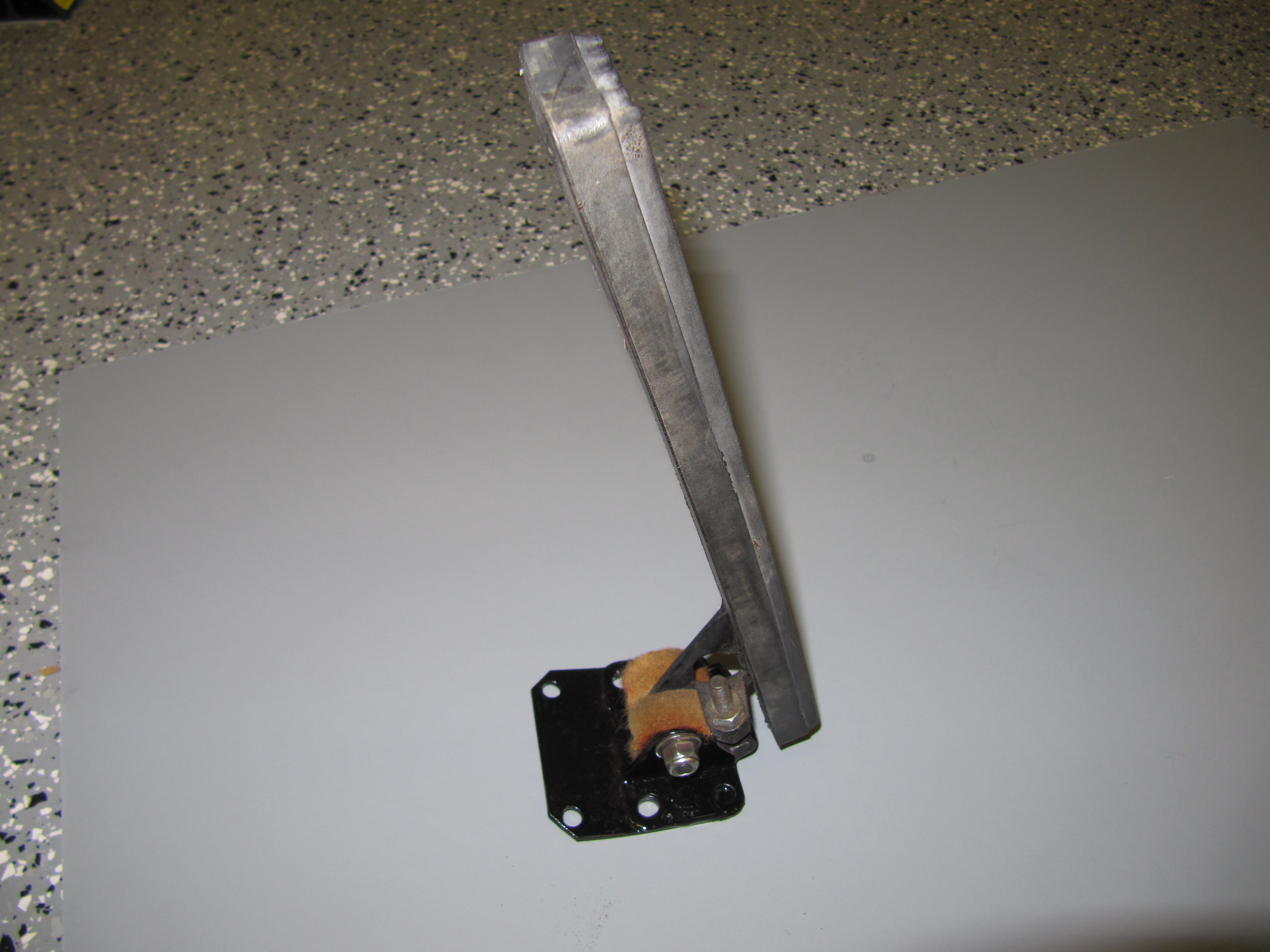
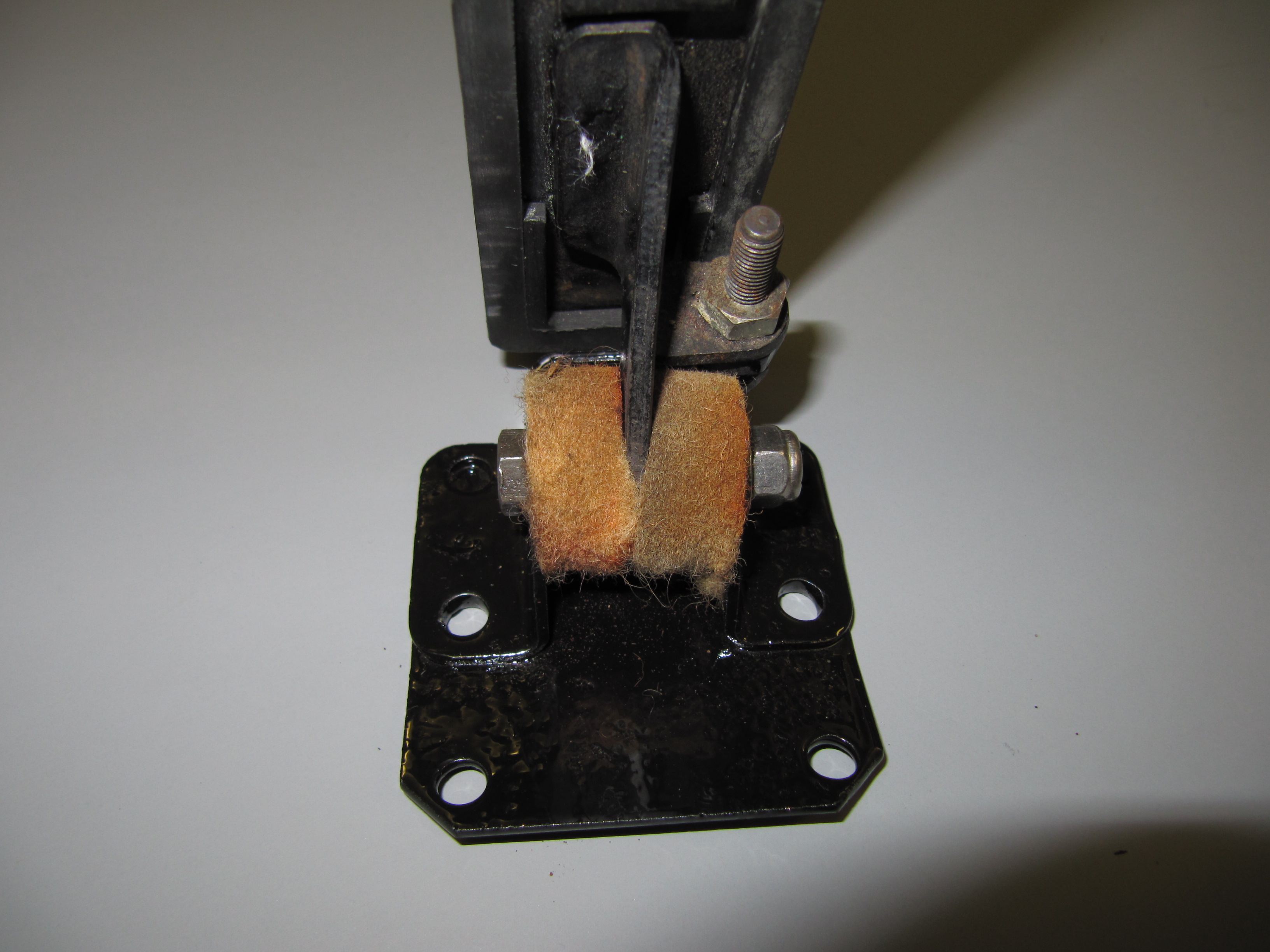
The accelerator pedal assembly was in good shape. I replaced the rubber pad on the accelerator pedal with a new one. I left the set screw restricting the pedal travel as it was found, as well as the two felt washers located at each side of the pedal boss.

The bracket assembly was cleaned and painted with POR 15. It is secured to the floor with four pointed 1/4″ – 28 x 5/8″ hex head bolts with split washers. The pedal is connected to the bracket with a 1/4″ fulcrum pin, flat washer and 1/4″ – 28 nylock nut.

Accelerator Pedal Assembly

Accelerator Pedal Assembly

Bracket Assembly, Mounting Accelerator Pedal to Floor

Bracket Assembly, Mounting Accelerator Pedal to Floor

Accelerator Shaft Assembly

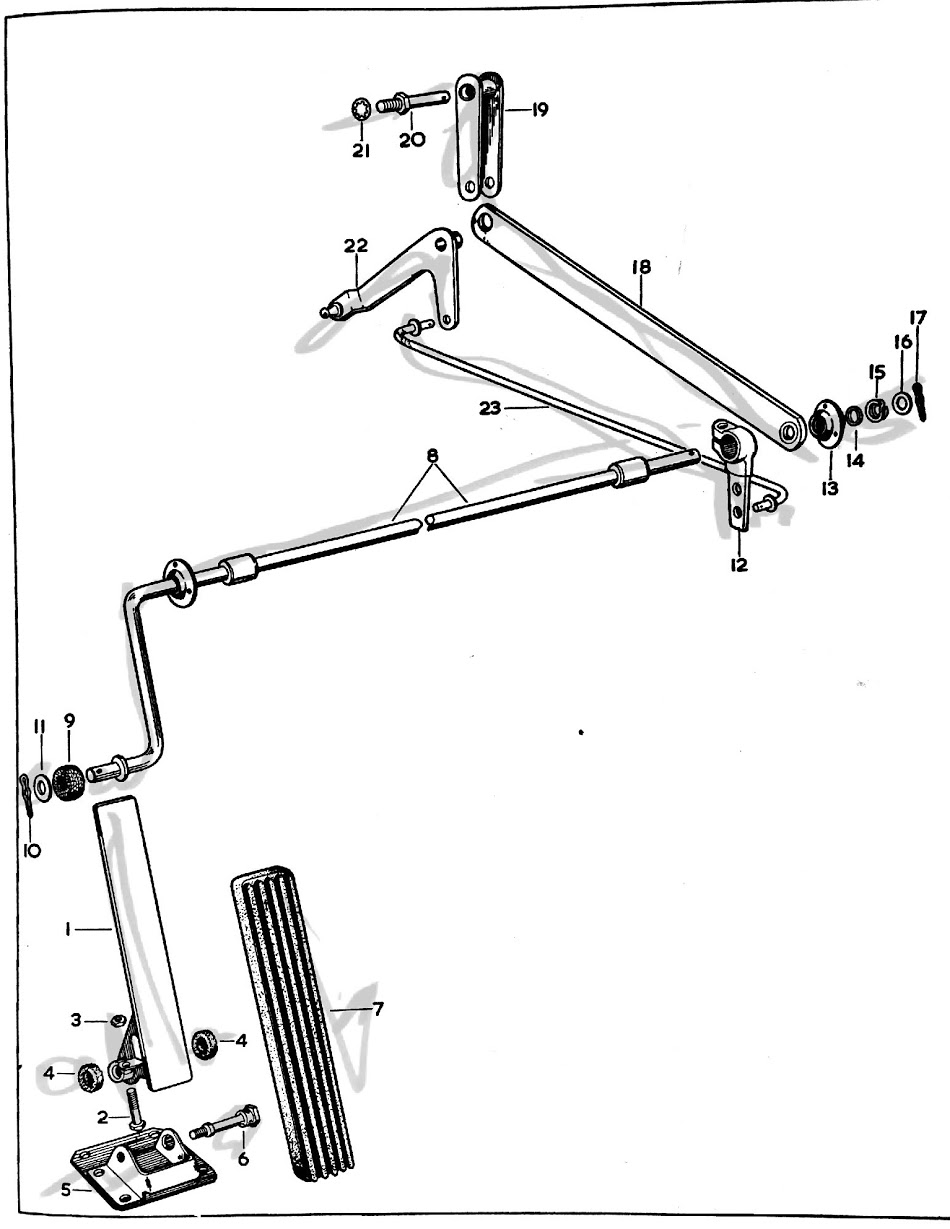
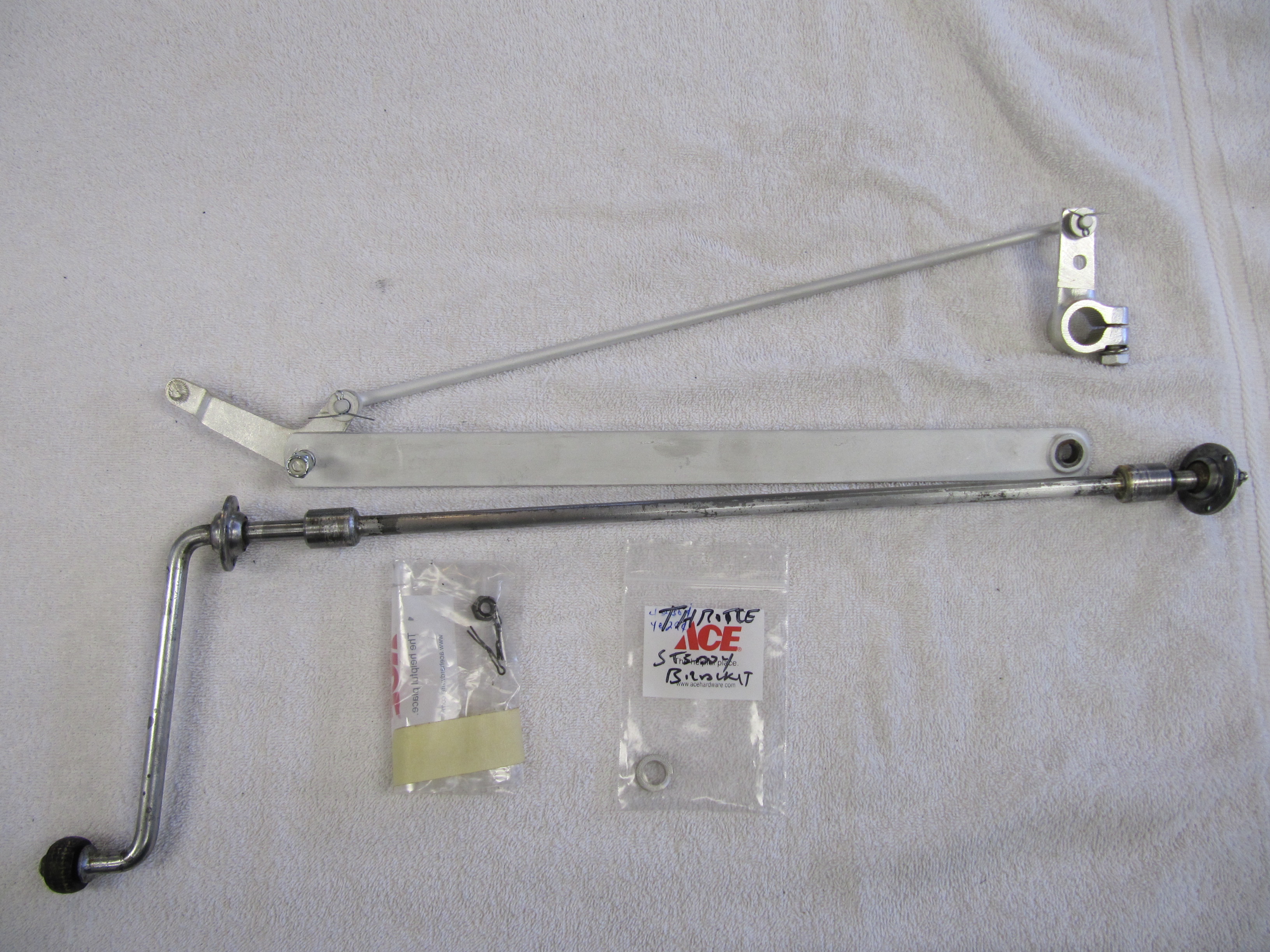
The image below depicts the components of the accelerator shaft assembly:

Accelerator Pedal Shaft Assembly Graphic

Accelerator Pedal Shaft Assembly Graphic

The shaft was slightly bent so I straightened, cleaned and polished it. The spherical bearing assemblies will be lubricated and reused and will be installed with new pop rivets to the body. The throttle lever, screws, spring washers and flat washers; the steady bar between the cross shaft housing and the connecting link; the bell crank lever assembly; and the control rod assembly were all cleaned and clear cad plated.

Accelerator Controls

Accelerator Controls

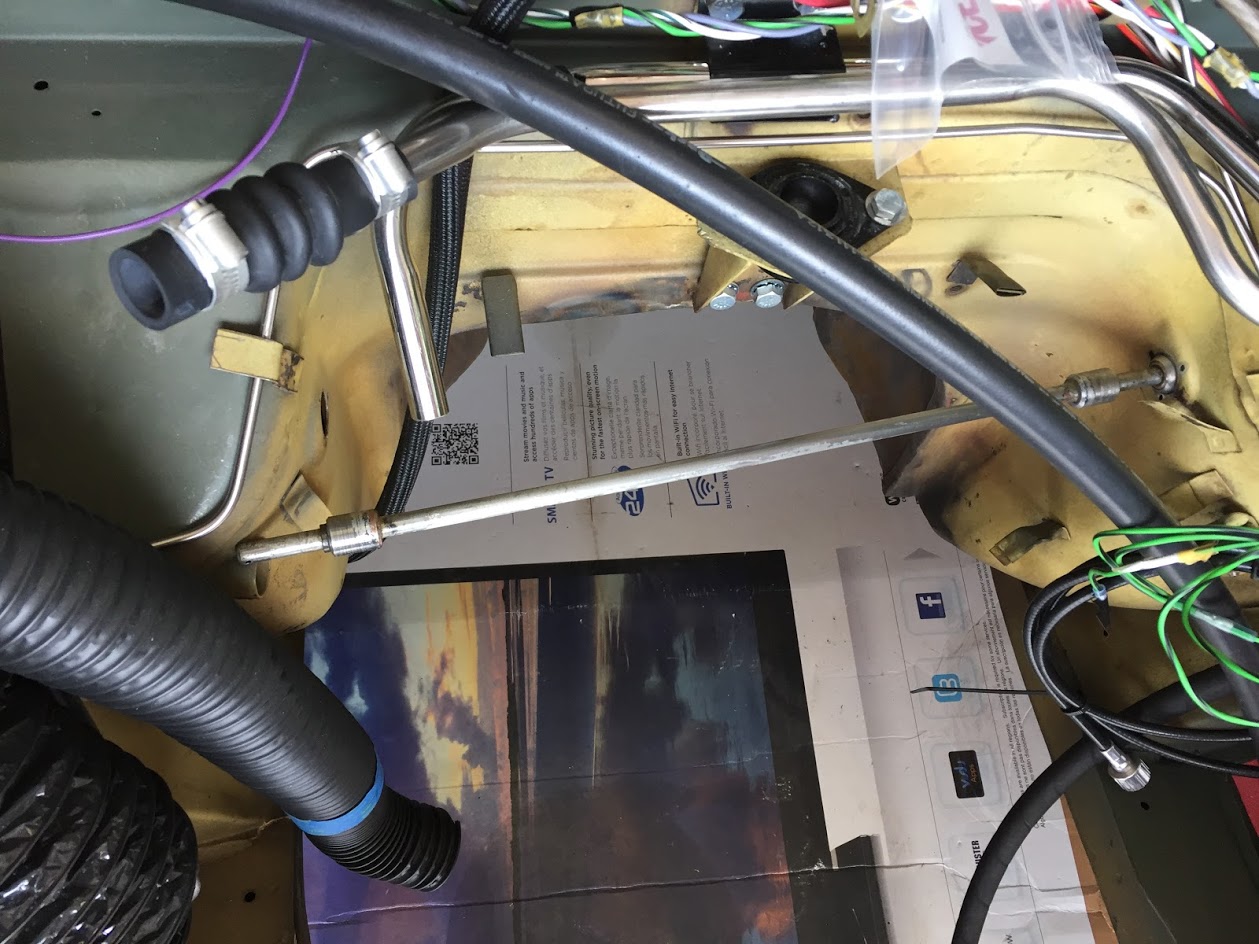
In anticipation of installing the engine into the car for testing, I installed the accelerator shaft assembly into the car. This would be more easily done prior to the installation of the steering column, but I was able to successfully work around it.

Having removed the split pin, flat washer, spring washer and the RH spherical bearing from the shaft, I inserted the accelerator shaft from the driver side into the engine compartment.

Installing the Throttle Shaft Assembly

Installing the Throttle Shaft Assembly

I then installed the throttle lever, the steady bar (with the bell crank lever, and the control rod assembly, linking the cross shaft lever and the bell crank lever), the RH spherical bushing onto the shaft and and slipped the shaft into the mounting hole on the RH side of the car.

Pedal Shaft Assembly

Pedal Shaft Assembly

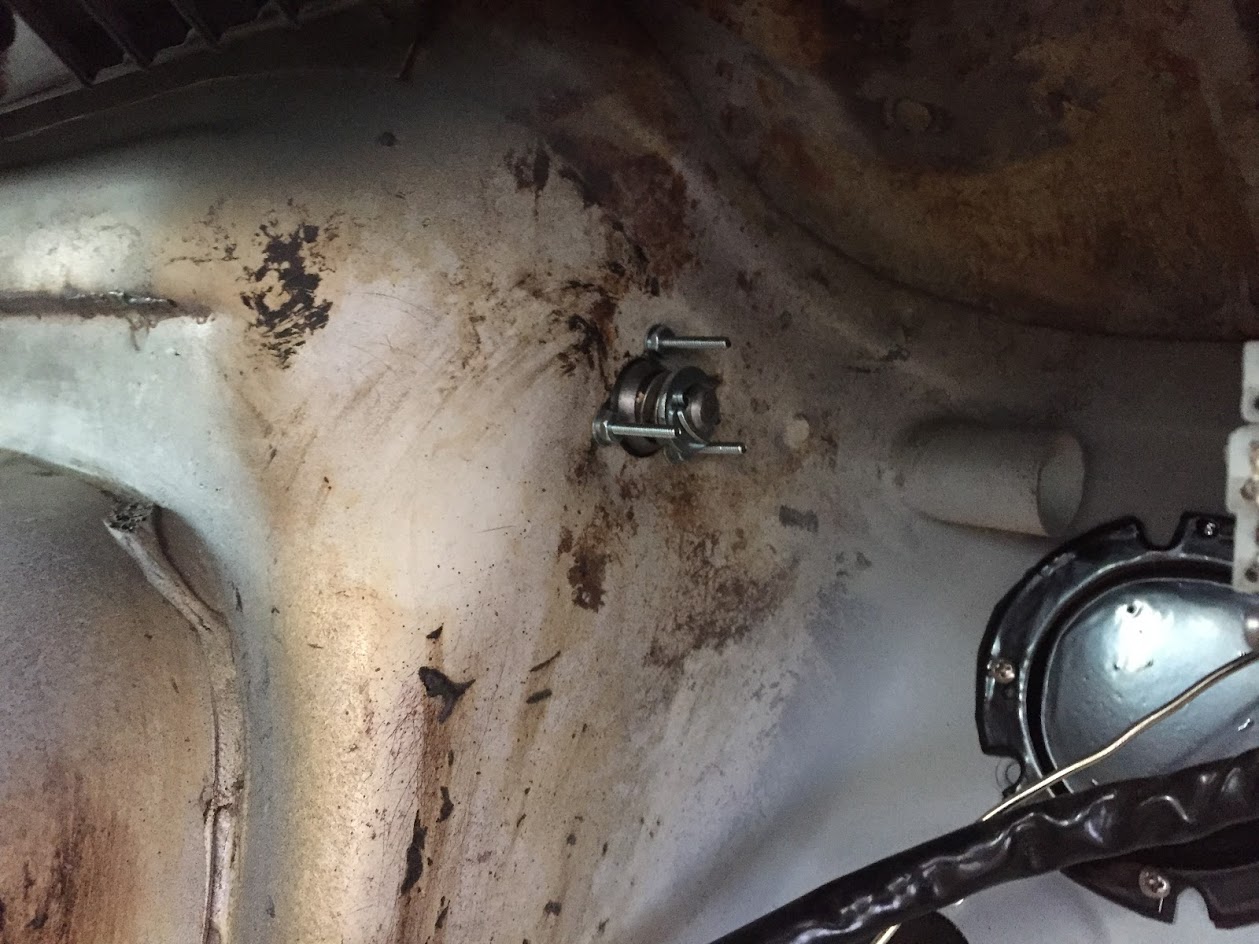
Because I am only temporarily installing the throttle assembly in the car, I used #4 machine screws with flat washers, lock washers and nuts to hold the spherical bearings in place at both mounting points. Upon final assembly, pop rivets will be used.

RH Spherical Bearing in Place

RH Spherical Bearing in Place

In the passenger side (RH) footwell, I then slid the distance piece, spring washer, and flat washer onto the shaft followed by a split pin to secure the shaft assembly.

The assembly was then zip tied out of the way for engine install.

Accelerator Shaft Assembly

Accelerator Shaft Assembly

This is the LH side of the assembly prior to installing the accelerator pedal.

Accelerator Pedal Shaft Assembly and LH Spherical Bearing and Pedal Shaft Roller

Accelerator Pedal Shaft Assembly and LH Spherical Bearing and Pedal Shaft Roller

Finally, the pedal assembly described earlier was mounted to the driver’s side floor with four 1/4″ – 28 x 1/2″ hex head bolts with lock washers. These bolts are fastened into captive nuts welded to the floor underside.

Accelerator Pedal Assembly Mounted to Floor

Accelerator Pedal Assembly Mounted to Floor


Scuttle Ventilator

 Scuttle Ventilator Assembly

Ventilator Concept

My fellow MK2 restorer Eric Kriss has a very nice diagram and explanation of its workings on his Blog. With all credit to Eric, this is an excerpt from his post on the topic:

Jag Scuttle ventilator

Jag Scuttle ventilator


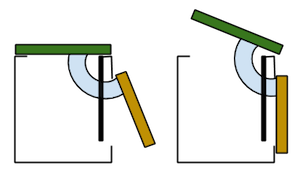
“The beloved Jaguar scuttle ventilator, probably designed by Rube Goldberg himself, works in a somewhat counter-intuitive way. The vent lever operates a dual lid system.

When the top (horizontal, colored green) vent lid is closed, no fresh air enters the passenger compartment, but the vertical lid (colored tan) is open! When the top lid is open, the vertical lid closes, forcing fresh air into the scuttle plenum and out through the air distributor box.

Note that if the top vent lid is closed and the heater is running, hot air entering the plenum from the heater will also pass into the center instrument panel area. A rear ventilator shield (colored black) forces most of the hot air into the air distributor box, but this still warms the instruments … probably not a really great idea. Rain water can leak in the same way.”

Assembly Sequence

I did a trial installation of the Scuttle Ventilator Assembly in July 2014. The following sequence was used to install components:

  • Two door hinges
  • Weather shield
  • Torsion bar assembly, vertical race first
  • Operating arm
  • Scuttle lid
  • Lid mesh grille to lid

Scuttle Plenum

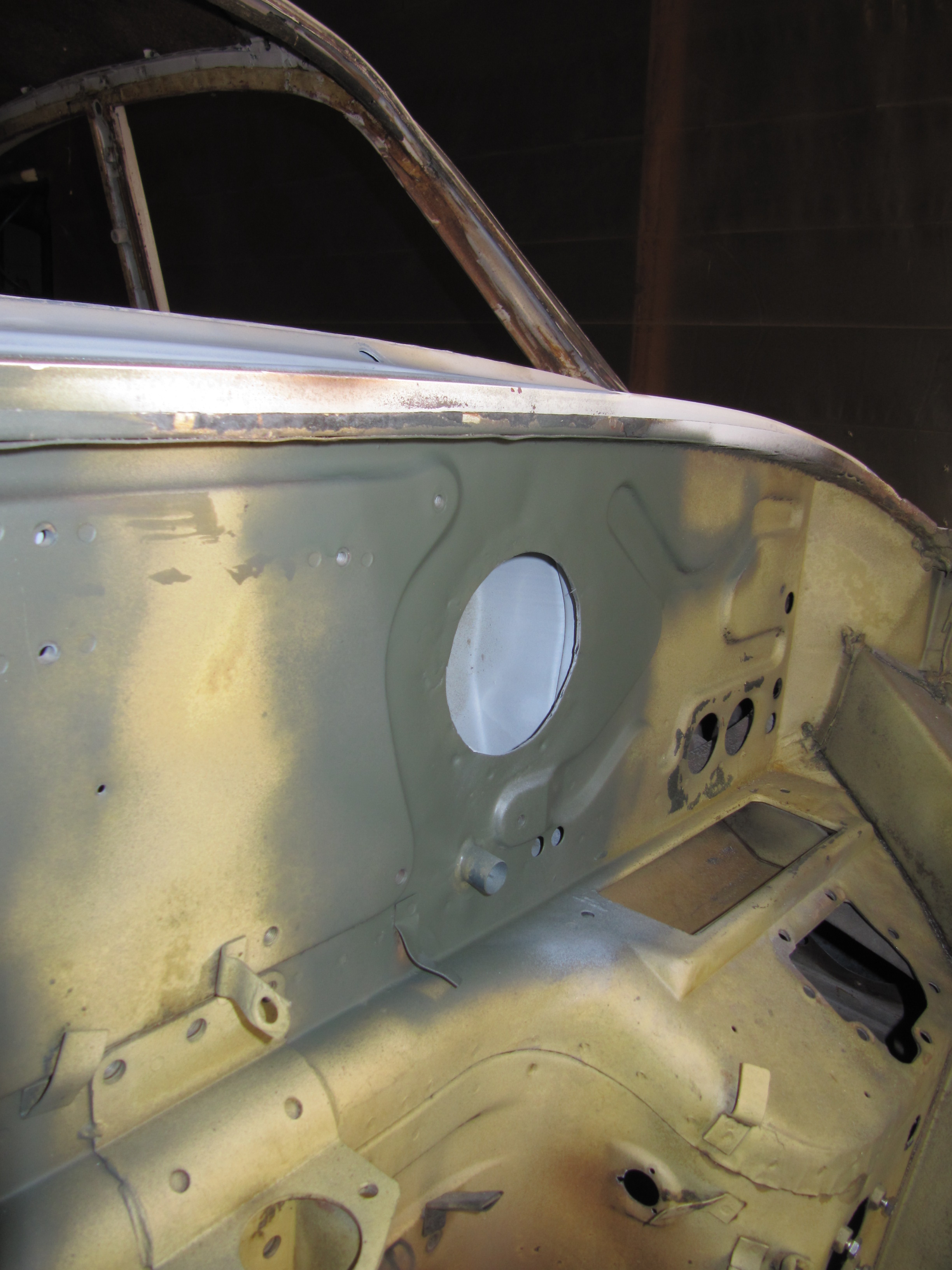
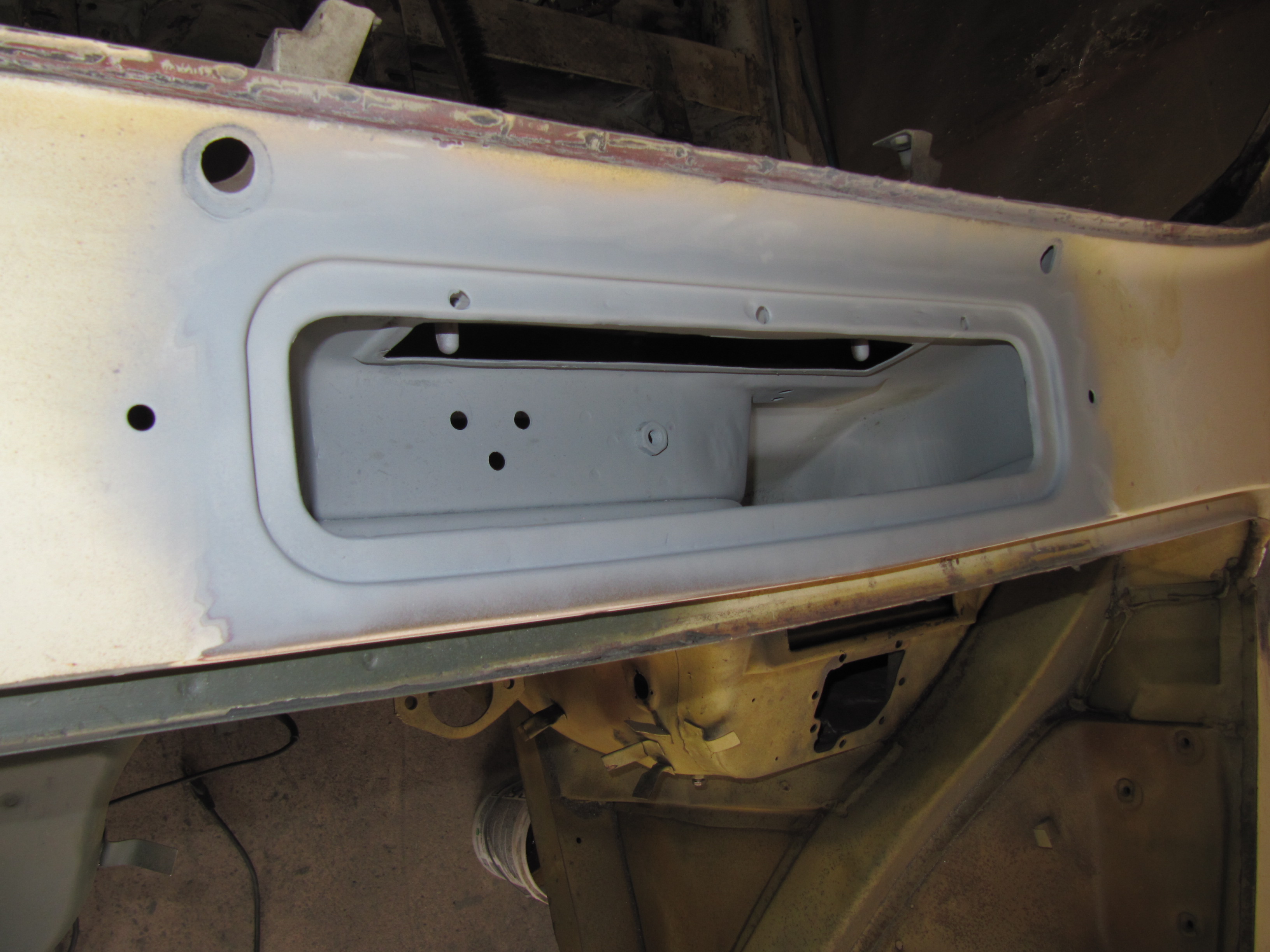
The plenum on my car was very rusty and given the location of the plenum it cannot be repaired in place. I was fortunate to locate a good used plenum and John Stefanik installed it for me. This effort also required some repairs to the firewall, and John accomplished all beautifully.

Plenum Firewall Repairs

Plenum Firewall Repairs

New "Used" Plenum Installed

New “Used” Plenum Installed

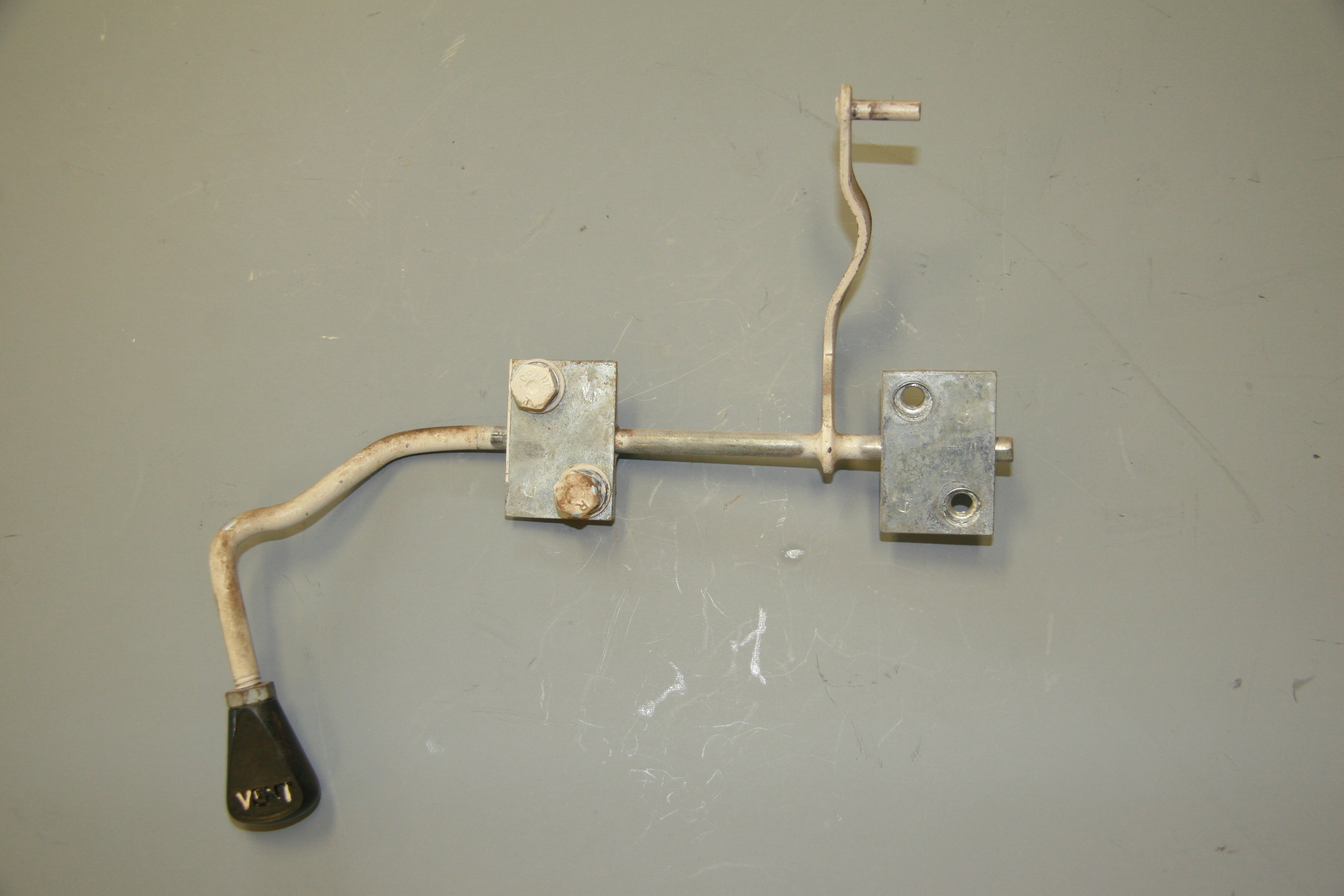
Operating Arm Assembly, for Scuttle Ventilator

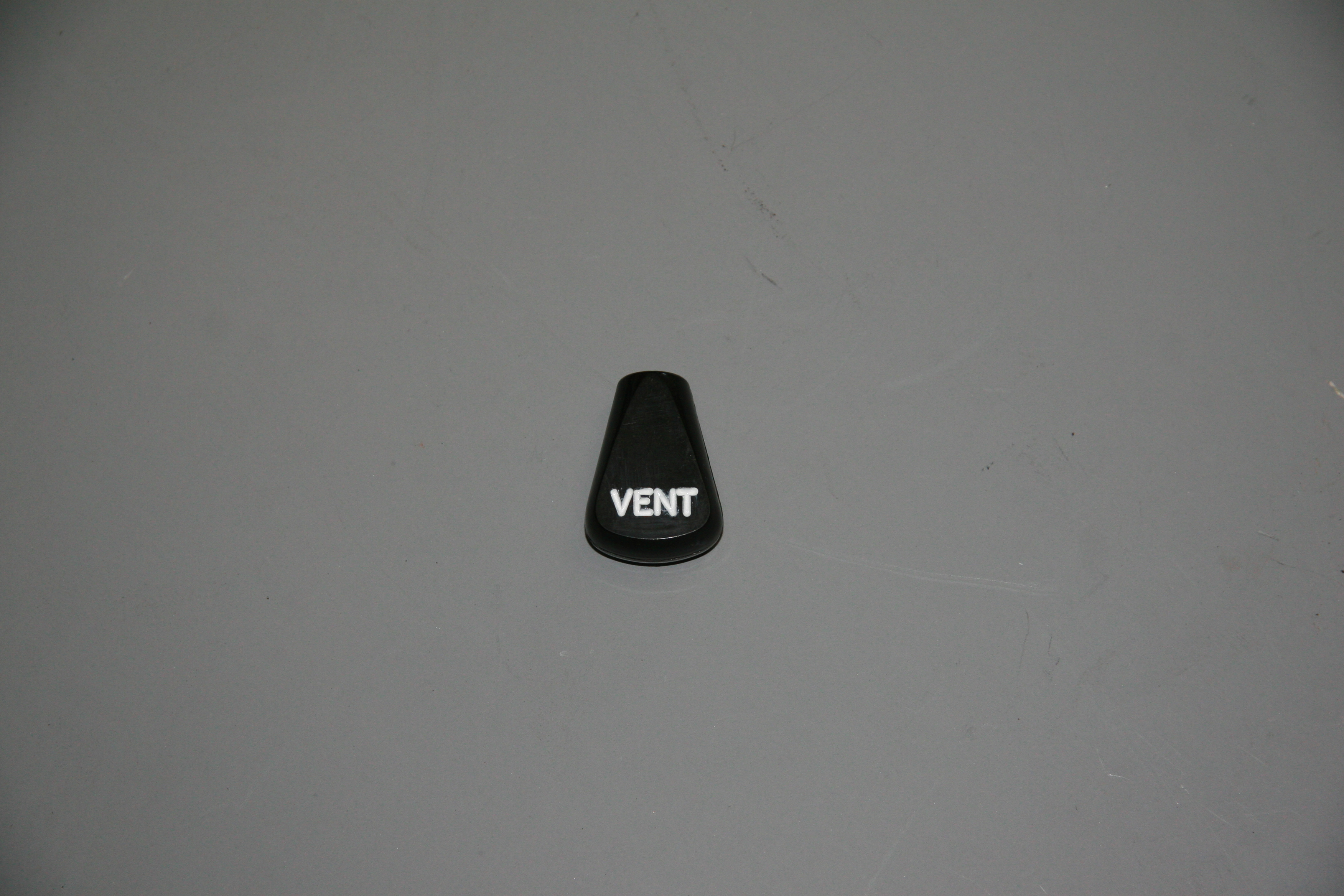
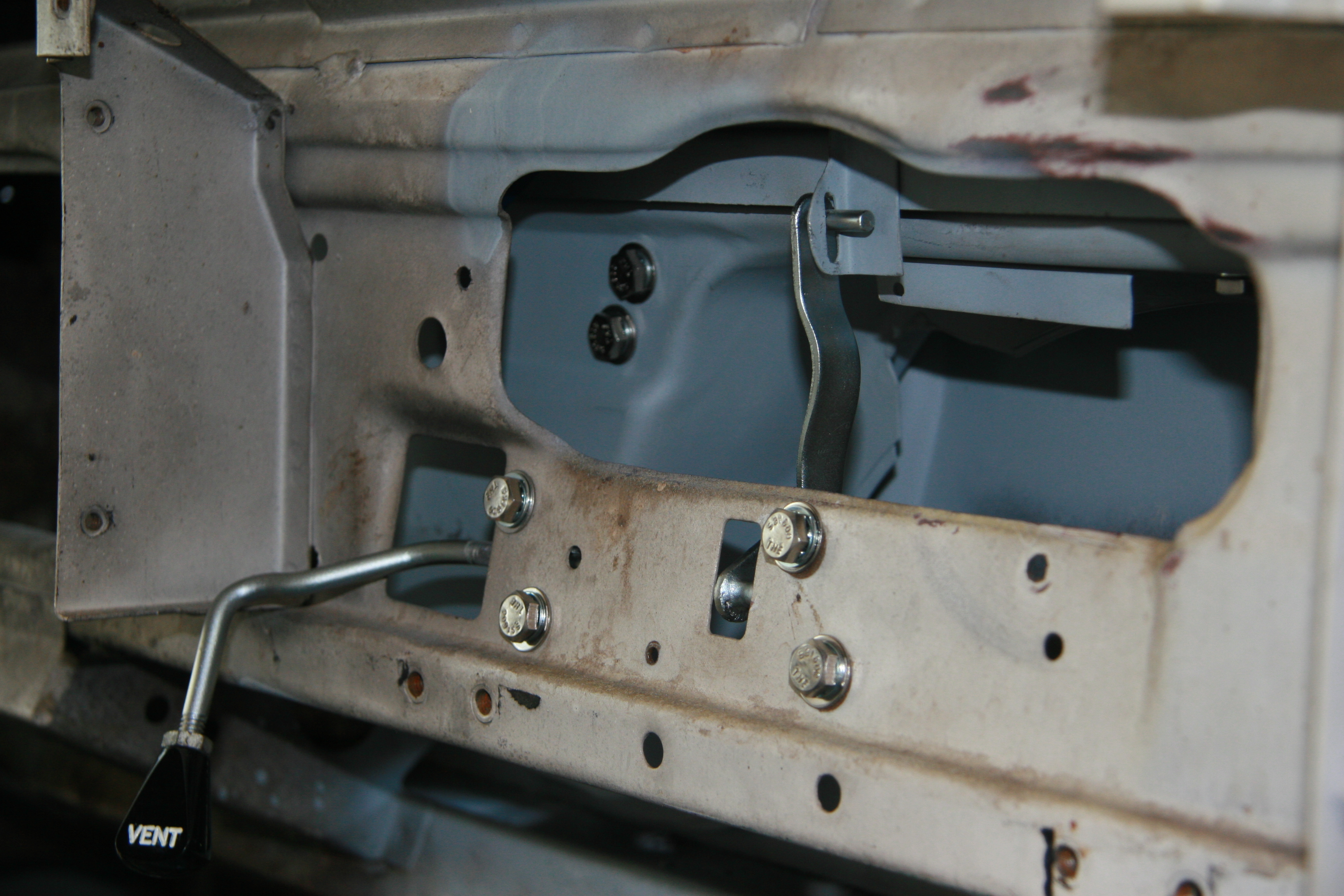
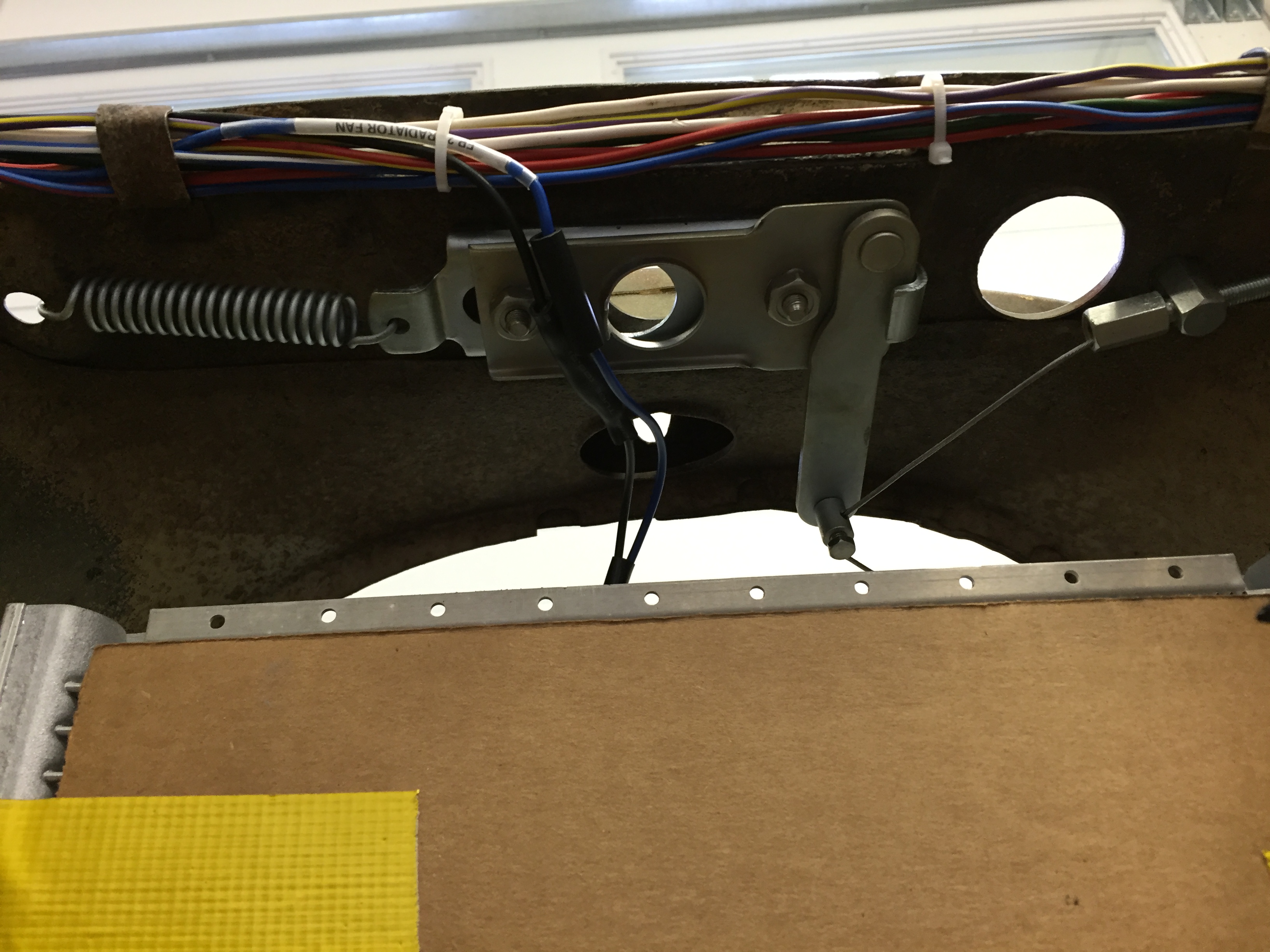
The Operating Arm Lever and knob were in great shape. It appeared that the car was painted at the factory after the Lever was mounted as the exposed parts of lever were body white, while the rest of it was zinc. The Lever cleaned-up nicely and was zinc plated. The Arm assembly mounts to the body shell with four 1/4″ – 28 x 1/2″ hex head bolts with split washers. The knob polished well and I repainted the “VENT” lettering. It’s position is adjusted using a 1/4″ – 28 lock nut.

I assembled the Scuttle Ventilator and installed it as a trial for fit and operation. Everything worked beautifully.

Operating Arm Assembly, for Scuttle Ventilator Lid

Operating Arm Assembly, for Scuttle Ventilator Lid

After a little polishing and a lettering “touch up” with some white modeling paint, the knob for the operating arm assembly looked as good as new.

Scuttle Vent Operating Arm Knob

Scuttle Vent Operating Arm Knob

Operating Arm Assembly, for Scuttle Ventilator Lid Trial Fitting

Operating Arm Assembly, for Scuttle Ventilator Lid Trial Fitting


Torsion Bar Assembly for Ventilator Lid 

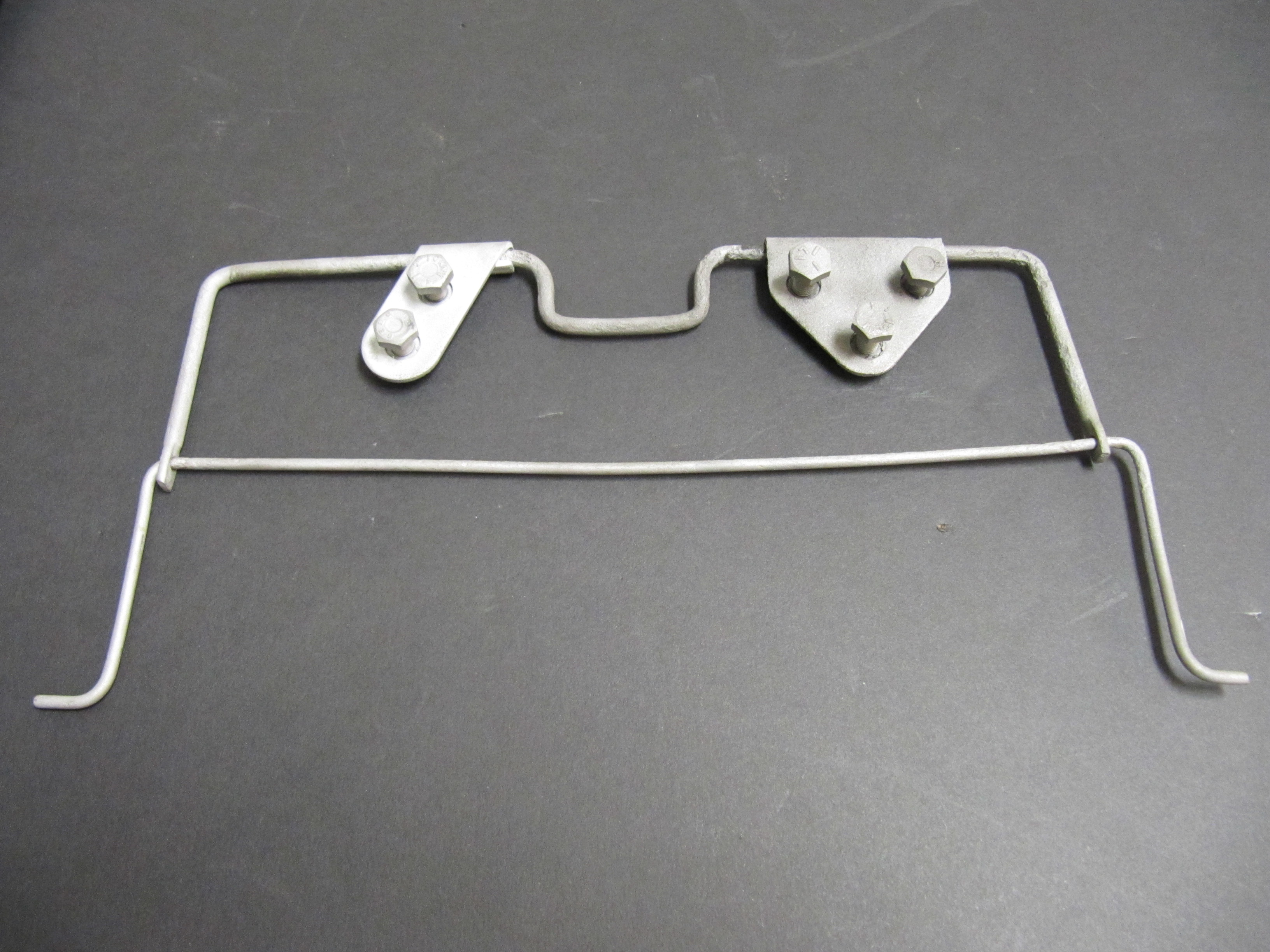
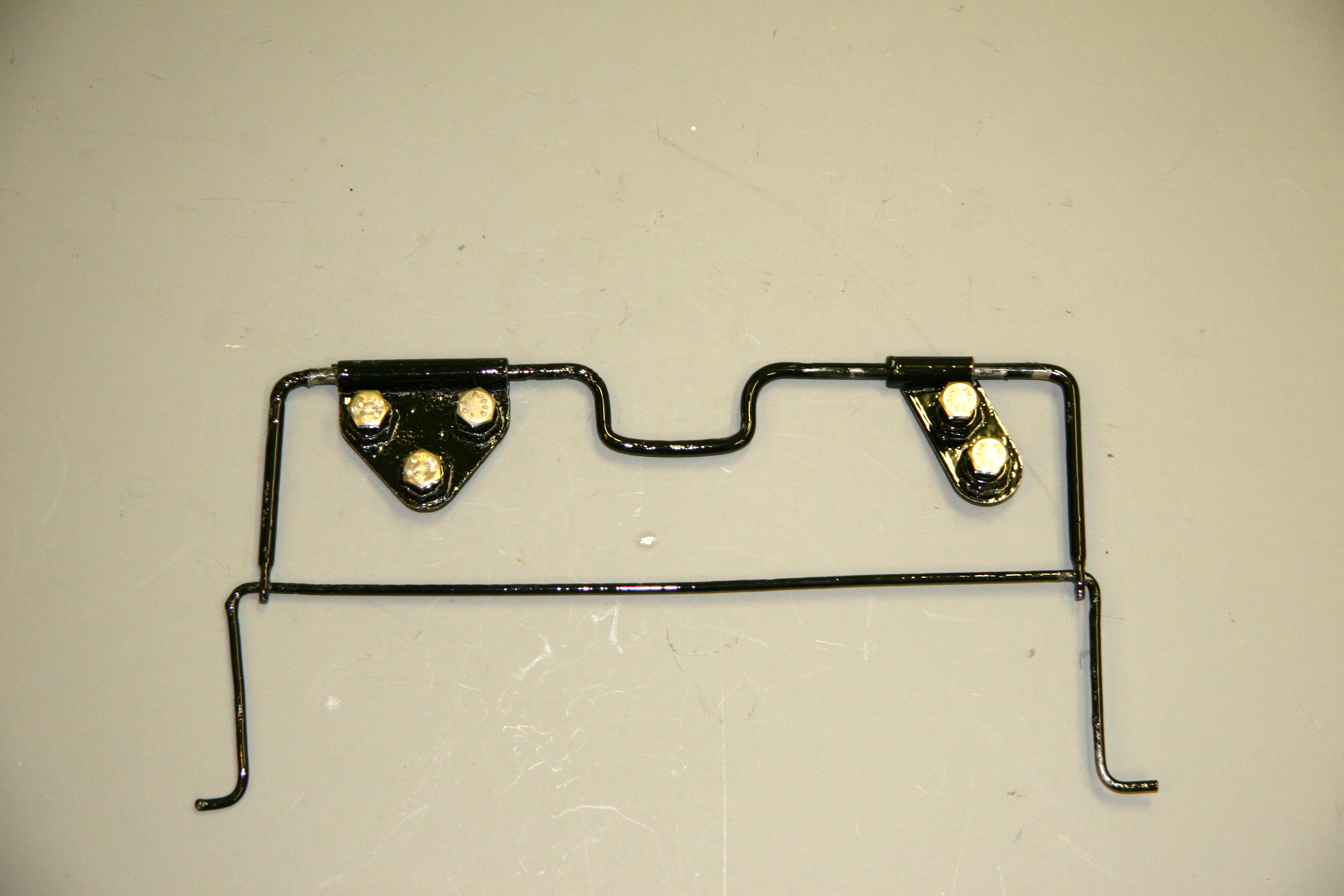
This piece was very rusty but after soaking in a rust treatment, blasting with aluminum oxide, and the application of heat with a torch to the pivot points, I got it operational and I believe that it is strong enough to be used as is. I painted it with POR-15 and will hope for the best. The part is not available from the usual vendors.

I installed it as part of the trial fitting of the scuttle ventilator assembly and while it is not visually pretty, it appears that this part has been successfully saved. The Assembly mounted with five 1/4″-28 x 1/2″ hex head bolts, shake proof and flat washers. It is easiest to mount the vertical brace (to the left in the image below) first and then the piece with the three bolts.

Torsion Bar Assembly for Ventilator Lid

Torsion Bar Assembly for Ventilator Lid

Torsion Bar Assembly for Ventilator Lid

Torsion Bar Assembly for Ventilator Lid

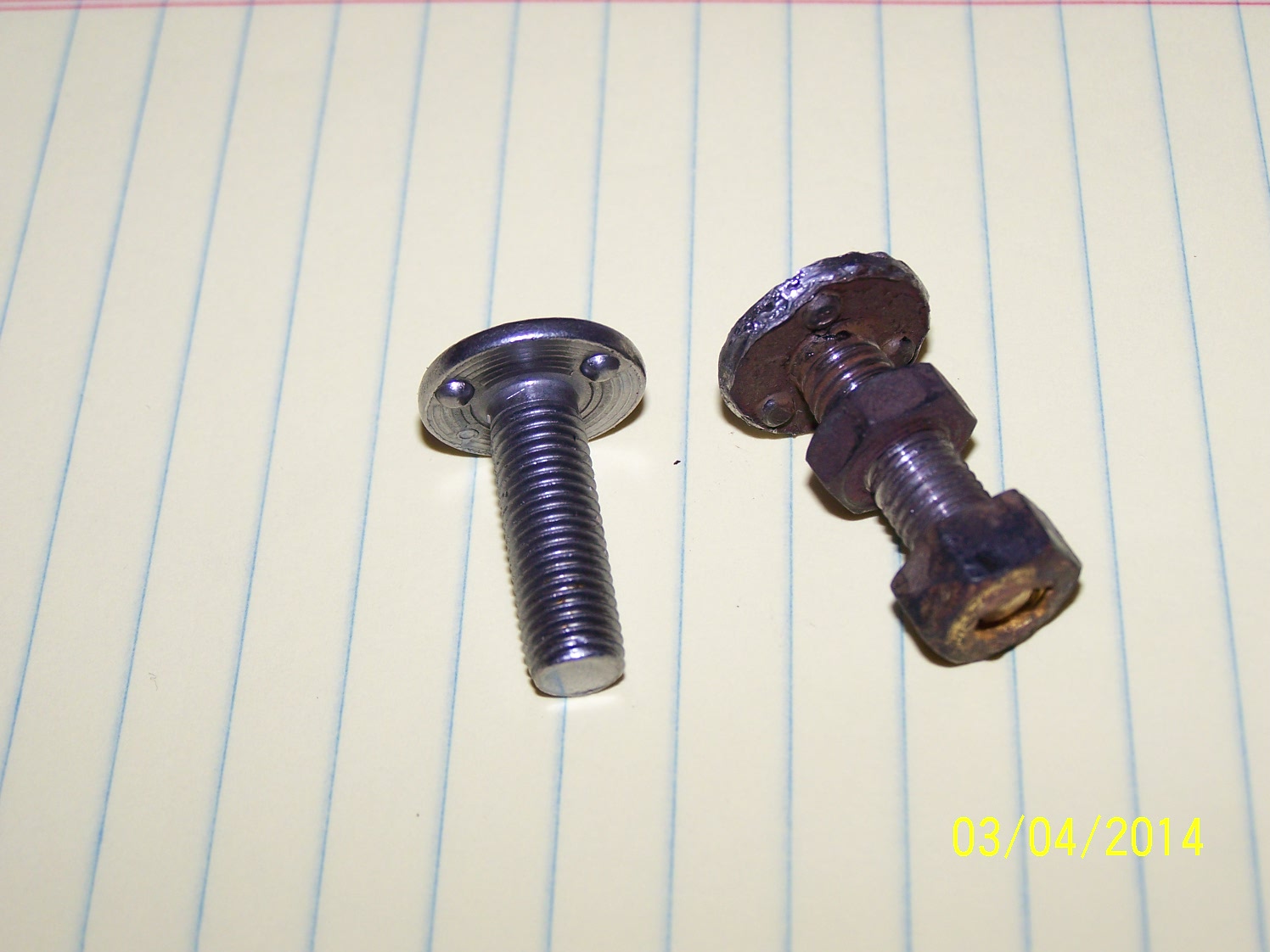
In the photo below, the weld stud that screws into the nut at the bottom of the plenum has not yet been installed. My fellow MK2 restorer and part hunter extraordinaire, Robert Seligman, somehow tracked down a source for the weld stud. http://www.jhpfasteners.com/5/16-weld-stud-with-projections-under-head-p-5614-l-en.html

Apparently the stud was screwed in an upward direction to create more pressure if it was needed on the torsion bar assembly. Oddly, the stud is double-nutted with the lower nut welded so as not to loosen.

New and Original Weld Stud

New and Original Weld Stud

Plenum Weld Stud

Plenum Weld Stud

Adjusting nuts on bottom of Plenum

Adjusting nuts on bottom of Plenum

Weld Stud Installed in Plenum to adjust Torsion Spring

Weld Stud Installed in Plenum to adjust Torsion Spring

Torsion Bar Assembly for Ventilator Lid Trial Fitting - Mounting Bolts

Torsion Bar Assembly for Ventilator Lid Trial Fitting – Mounting Bolts

Rubber Seal on Recirculating Door on Scuttle Face Panel

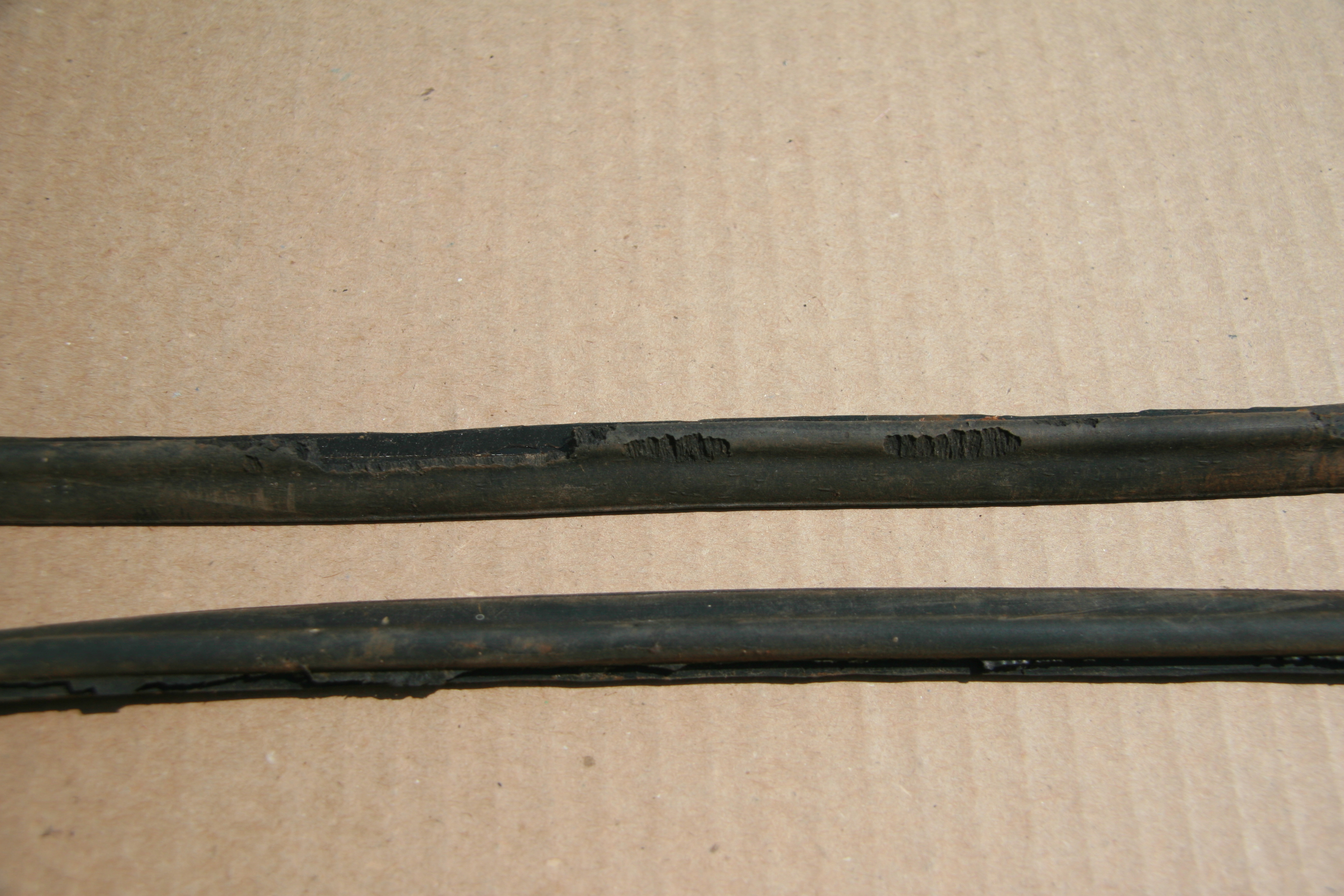
I was going to install a new rubber seal, but discovered that new stock is not obtainable. So I took a look at my original to see if it could be saved. I recalled that there were some tears in the rubber but I was hopeful. Upon close inspection I found not tears, but several places where mice had chewed and eaten the rubber. Those bastards eat anything – rubber seals and wire insulation have great nutritional value I am sure!

Rubber Seal on Recirculating Door on Scuttle Face Panel Rounded Side

Rubber Seal on Recirculating Door on Scuttle Face Panel Rounded Side

Mice Teeth Marks

Mice Teeth Marks

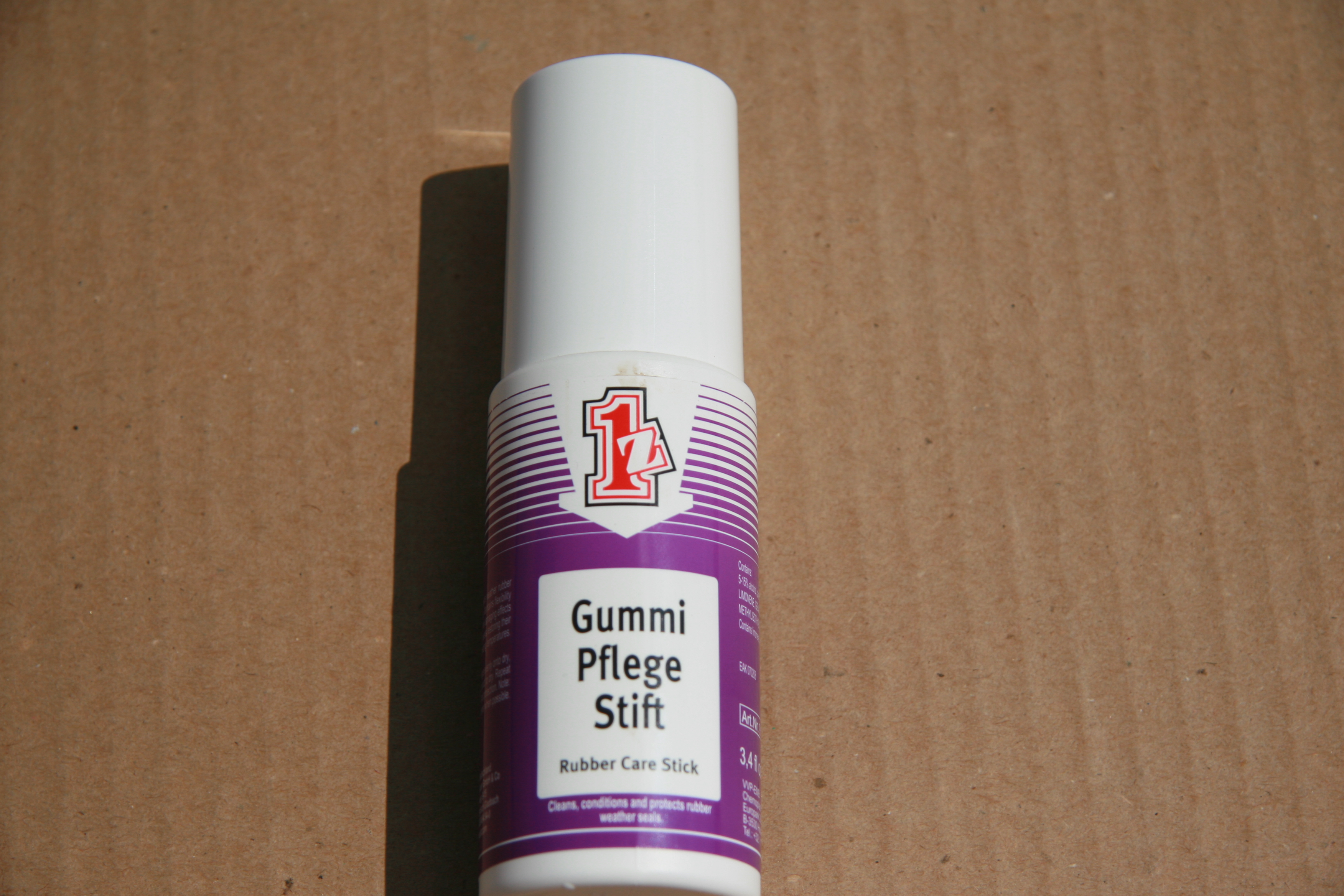
I checked into rubber rejuvenation and a German product called Gummy Pflege Stift was recommended.I ordered and tried it and found it to be quite good. The seal is now clean soft and pliable. The surface that mates with the door is in good shape so I think I will be able to use this seal.

Gummi Pflege Stift

Gummi Pflege Stift

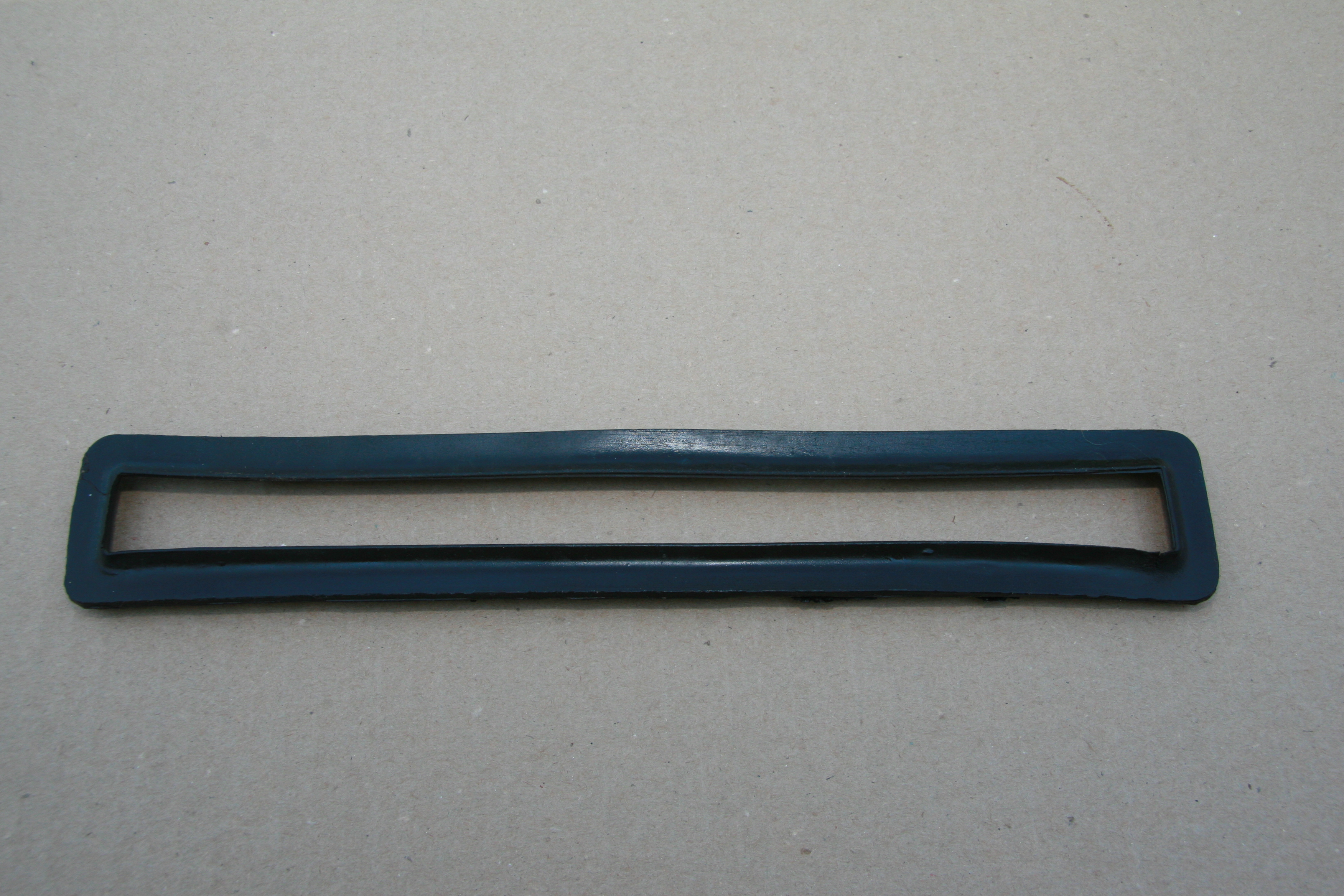
Rejuvinated Plenum Seal

Rejuvinated Plenum Seal

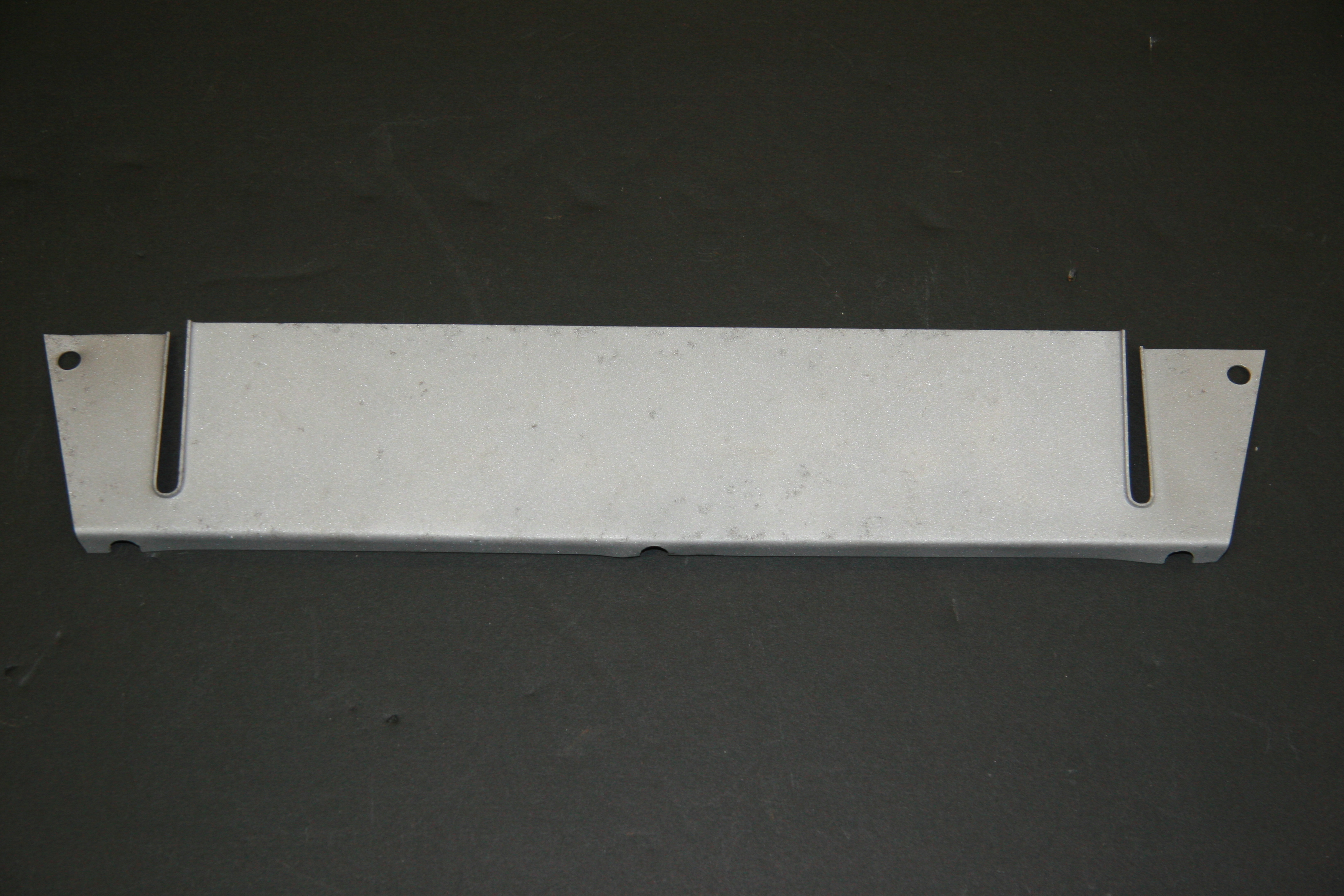
Rear Shield for Scuttle Ventilator Assembly

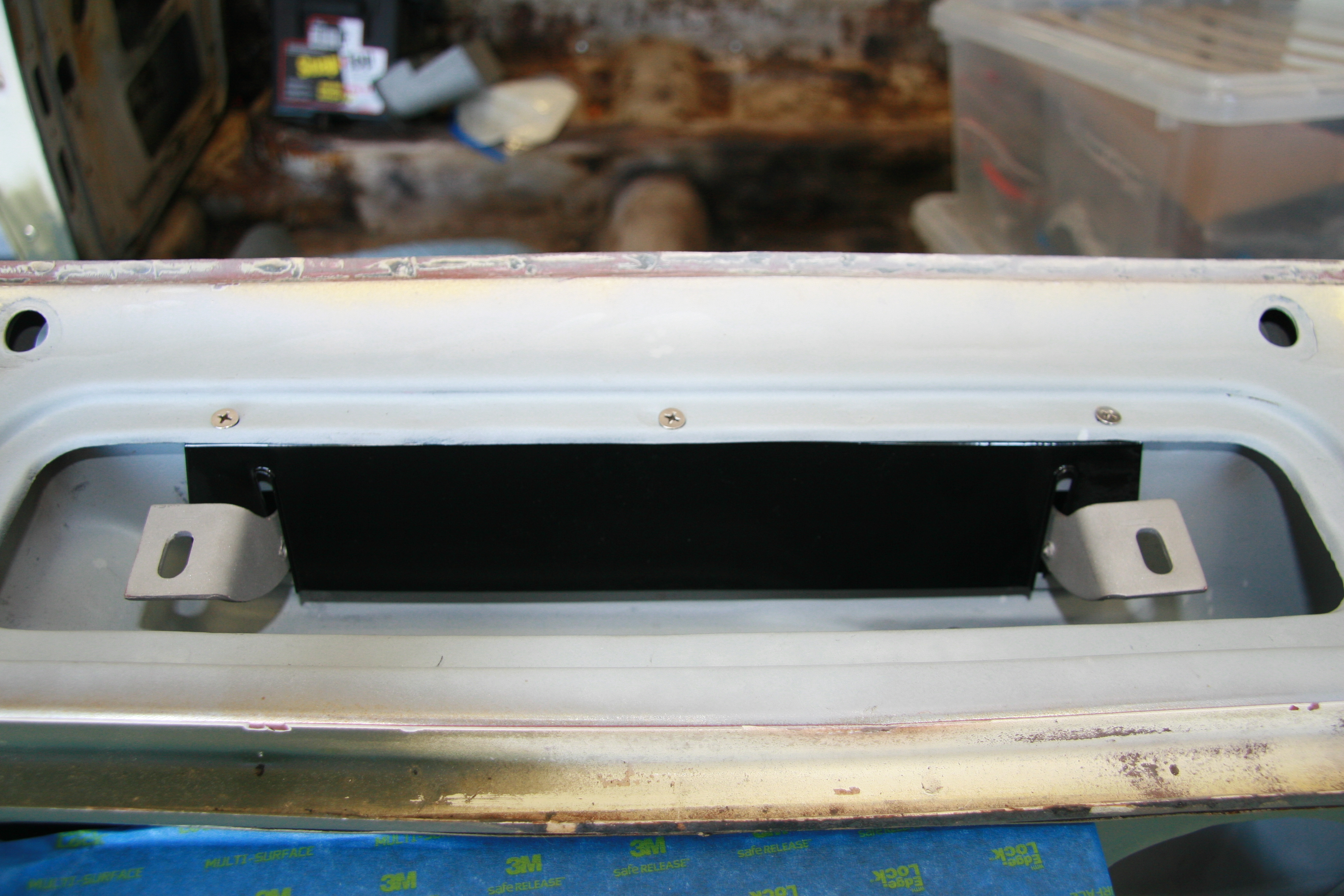
I don’t know the proper name for this component of the assembly. But, I  media blasted it and had it powder coated. This piece is a little tricky (not hard) to install. It used three flat head 2BA 3/8# screws and square nuts originally. Square nuts are used because the flange on the piece is used to tighten the screws. I found it easiest the start the nut on each screw, push the piece under the scuttle but above the nut, and then tighten each screw.

Rear Shield for Scuttle Ventilator Assembly

Rear Shield for Scuttle Ventilator Assembly

Powder Coated Rear Shield for Scuttle Ventilator Assembly

Powder Coated Rear Shield for Scuttle Ventilator Assembly

Scuttle Assembly Shield Mounted to Scuttle

Scuttle Assembly Shield Mounted to Scuttle

Scuttle Ventilator Lid and Wire Mesh Grille

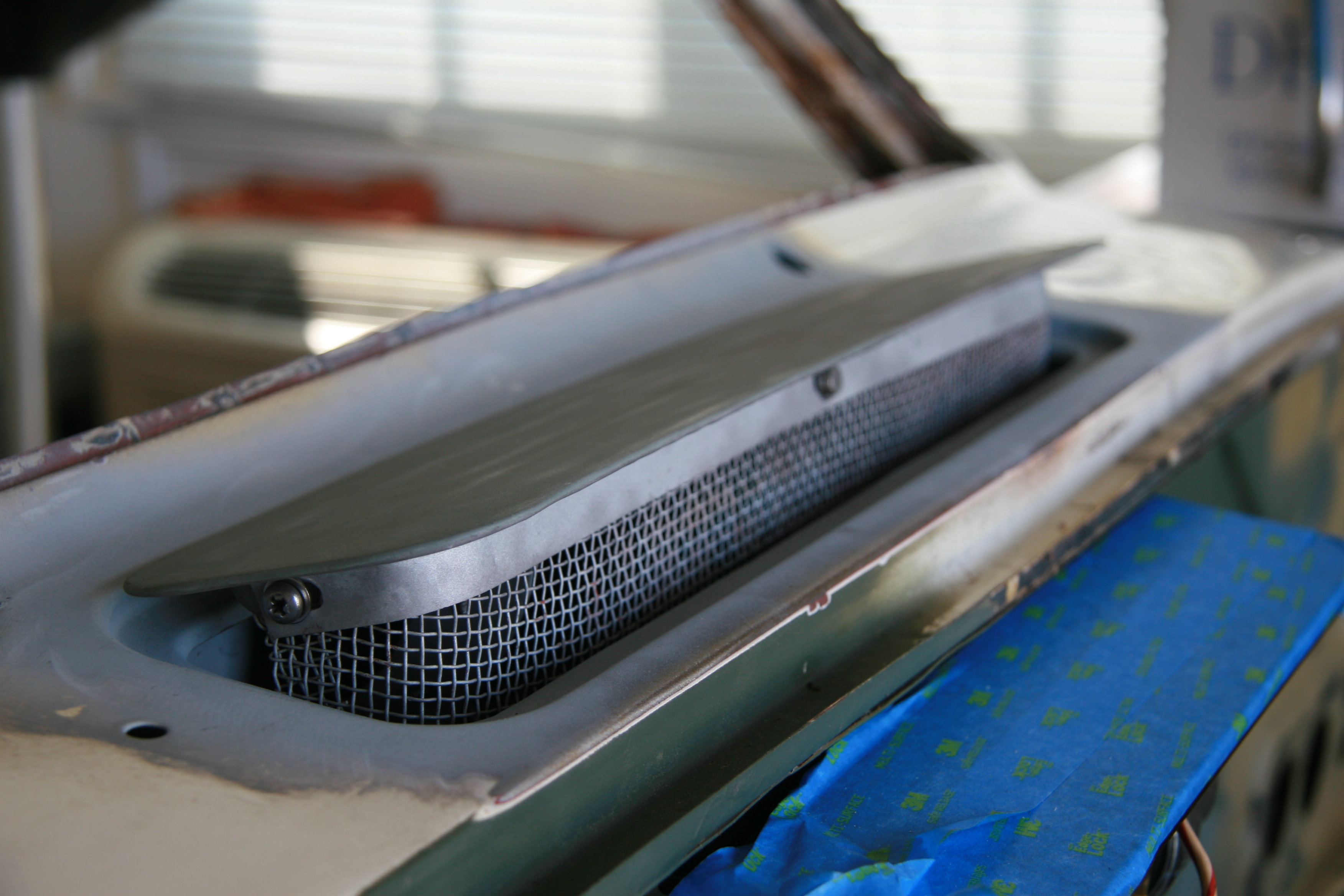
A couple of the mounting screws for my original lid broke when I tried to remove it from the car. Fortunately, I was able to locate another lid which worked fine with my original wire mesh grille. The lid is installed first then the grille is added. The lid attaches to the hinges with captive #10-32 machine screws which are quite long, perhaps 1 inch. The length is to facilitate the mounting process. As one can see in the image above, there is adjustment for and aft for the lid. I suppose washers could be used to raise the height of the lid if needed.

The wire mesh grille is mounted to the lid with three phillips head #10-32 x 1/2″screws. I found it easiest to insert the front center screw first followed by the side screws. The mesh grill is properly painted the color of the car.

Scuttle Ventilator Assembly Lid and Wire Mesh Grille - Trial Fitting

Scuttle Ventilator Assembly Lid and Wire Mesh Grille – Trial Fitting

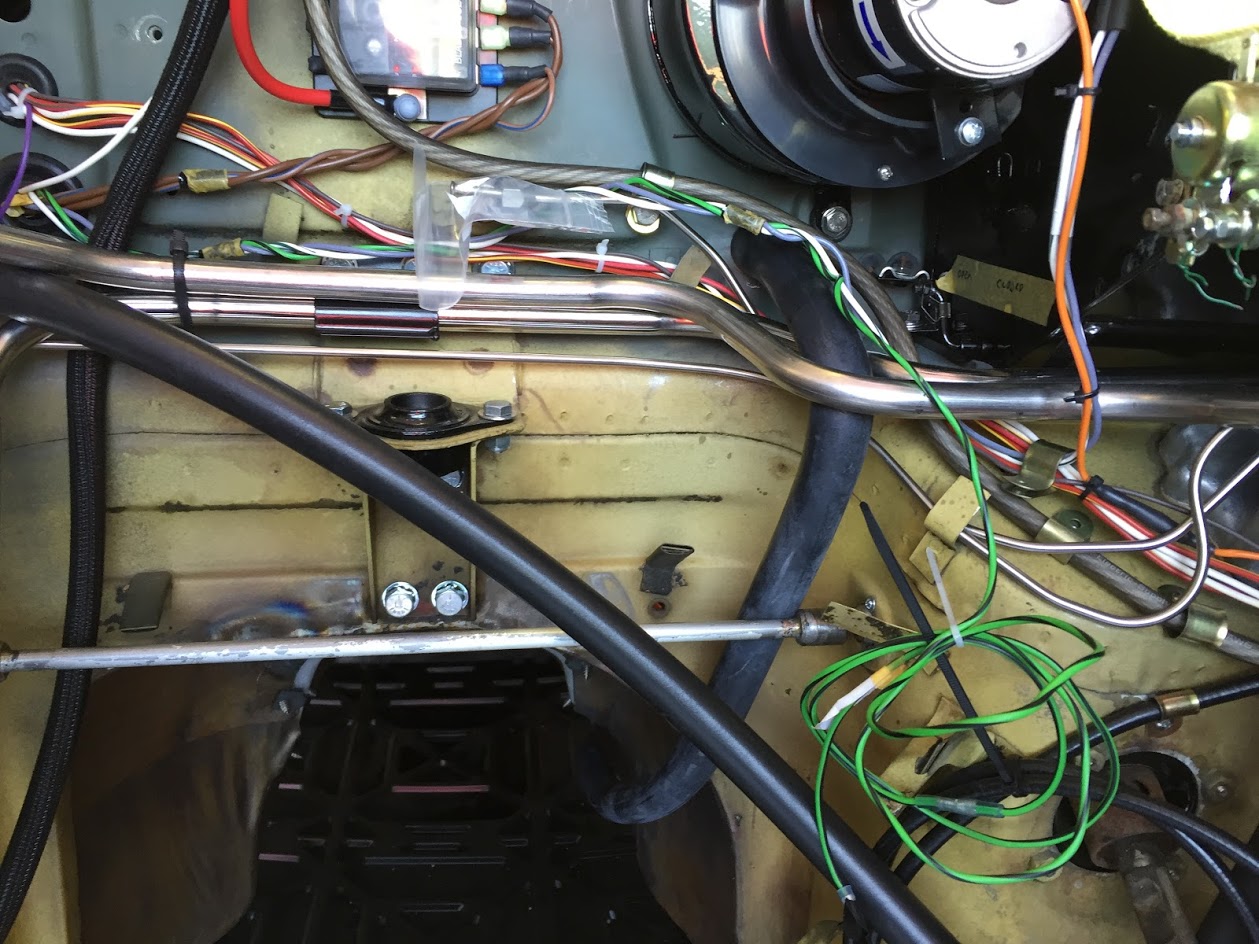
The Scuttle Plenum has a drain tube at its bottom and a rubber drain hose is mounted to the tube. The drain hose simply drains to the ground below the car. The image below shows a trial fitting of the hose. Unfortunately, it is a bit difficult to make out in the photo. It is the large hose that exits to the transmission tunnel.Plenum Drain Hose


New Wiring Harness Planning & Prep

Wiring harness Installation Disclaimer

After selecting the fuse/relay panel from Classic Technologies to be the heart of my new electrical system, the next issue was to decide about the wiring harness to be used. I could either select a pre-assembled harness from one of a number of vendors, knowing that I would have to modify it given the “personalizations” I would be incorporating, or I could build my own.

I decided to build my own. I must give credit where credit is due. I don’t know if I would have made the decision I did had I not known that Eric Kriss would also be concurrently (almost) building a new harness for his MK2. Eric’s knowledge of automotive electrical systems far surpasses my own, but I have courage and a desire to learn! Eric willingly shared his design work and I put his schematics to good use.

Marc Goldblatt from Classic Technologies who provided the relay/fuse box I am using provides a wonderful color wiring diagram that is also extremely helpful. Between Eric and Marc I felt pretty positive about venturing into the wiring world!

Undertaking this project is a big task that requires significant planning and advance preparation.

Advance Preparation – Out with the Old

I spent days “deconstructing” my MK2’s wiring harness and taking copious notes about the various gauges, switches, components, wire sources and terminations. While this step may not have been necessary, I learned volumes about the principles of wiring. Having a good wiring schematic is particularly helpful. There are a number of “after-market” exploded wiring charts available. The best one I found was by jagschemes@live.com.auWhat is really nice about his schematic is that a vertical and horizontal legend is incorporated making it much, much easier to locate a component on the schematic than otherwise.

Tools and Materials

There are some “tools of the trade” that are really needed to do a good job with electrical connections. Using the proper tool also generally makes the job easier!

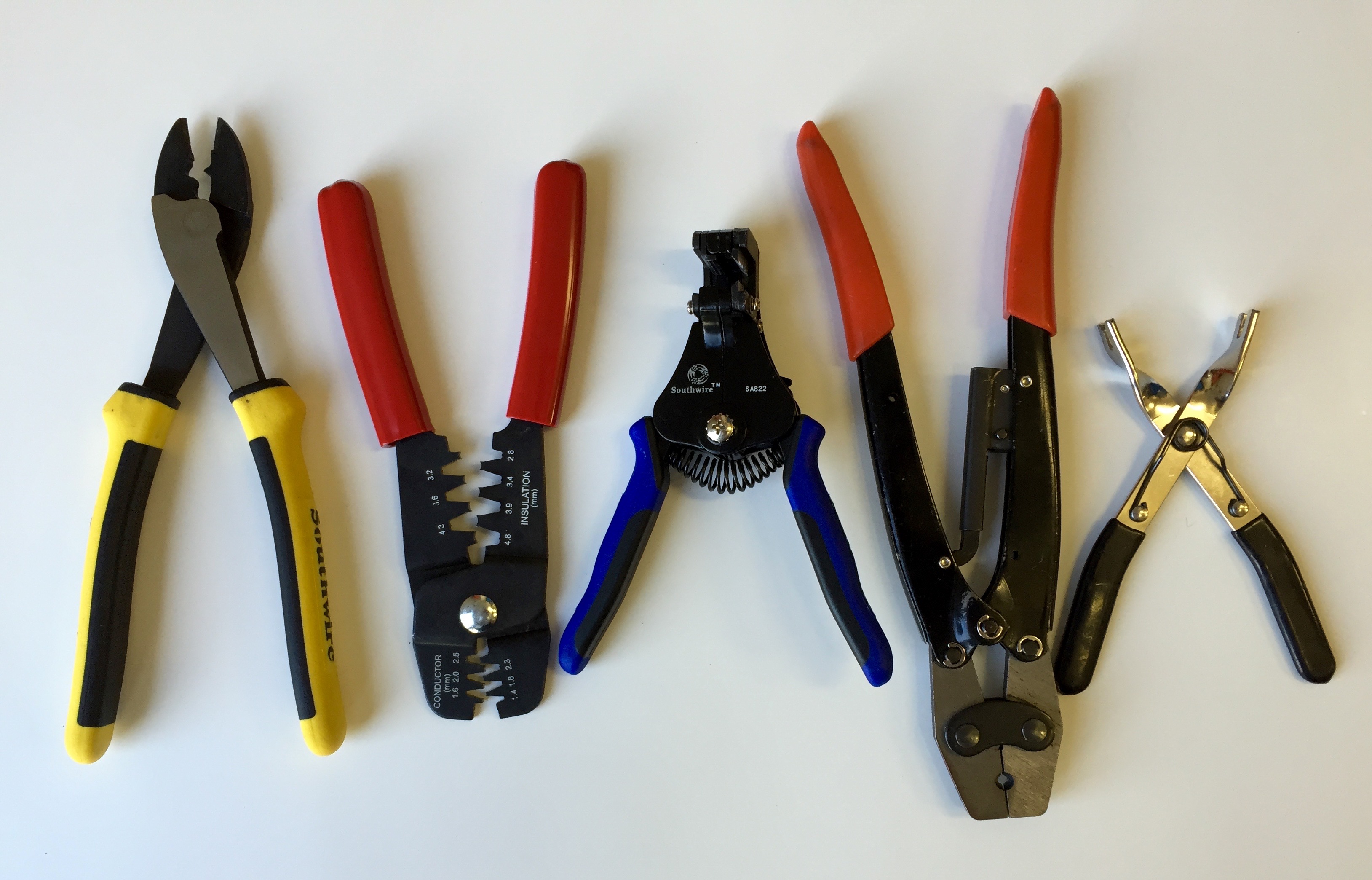
The crimper on the left makes easy work of crimping wire in insulated terminals. I used these extensively on my 14 and 18AWG wire. The next set of crimpers from the left side of the image are for pin and socket terminals used in Molex Connectors. Something like these are essential for a good job. Third from the left is a wire stripper and I could not imagine taking on a wiring job without these. Fourth from the left is a ratchet style crimper used for bullet terminals. Finally, snap connector pliers to push together 2-4 bullet terminals in snap connectors. Of course, one can always find and use more tools, but I regard these as the necessary for rewiring my Jaguar MK2.

Crimpers & Strippers

Crimpers & Strippers

Terminals and Connectors

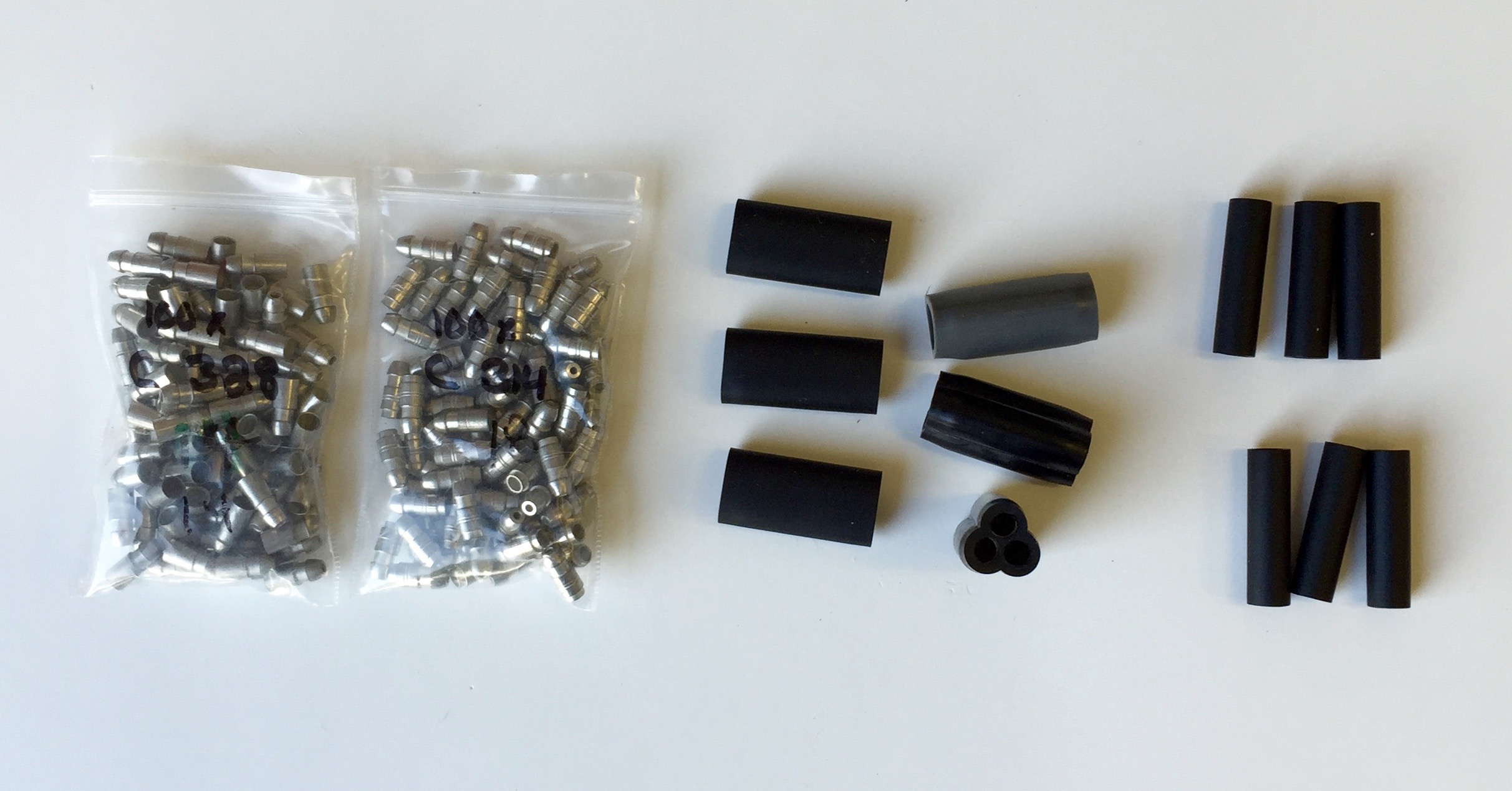
Most of my wiring is 18 and 14 gauge wire. I used a combination of bullet connectors and insulated spade terminals (male and female) to connect wires. Bullet connectors for the two sizes of wire are shown to the left below. Various sizes of snap connectors are also shown. These are available from British Wiring in Bally, PA. This company is very responsive and helpful.

Bullet Terminals and Various Size Snap Connectors

Bullet Terminals and Various Size Snap Connectors

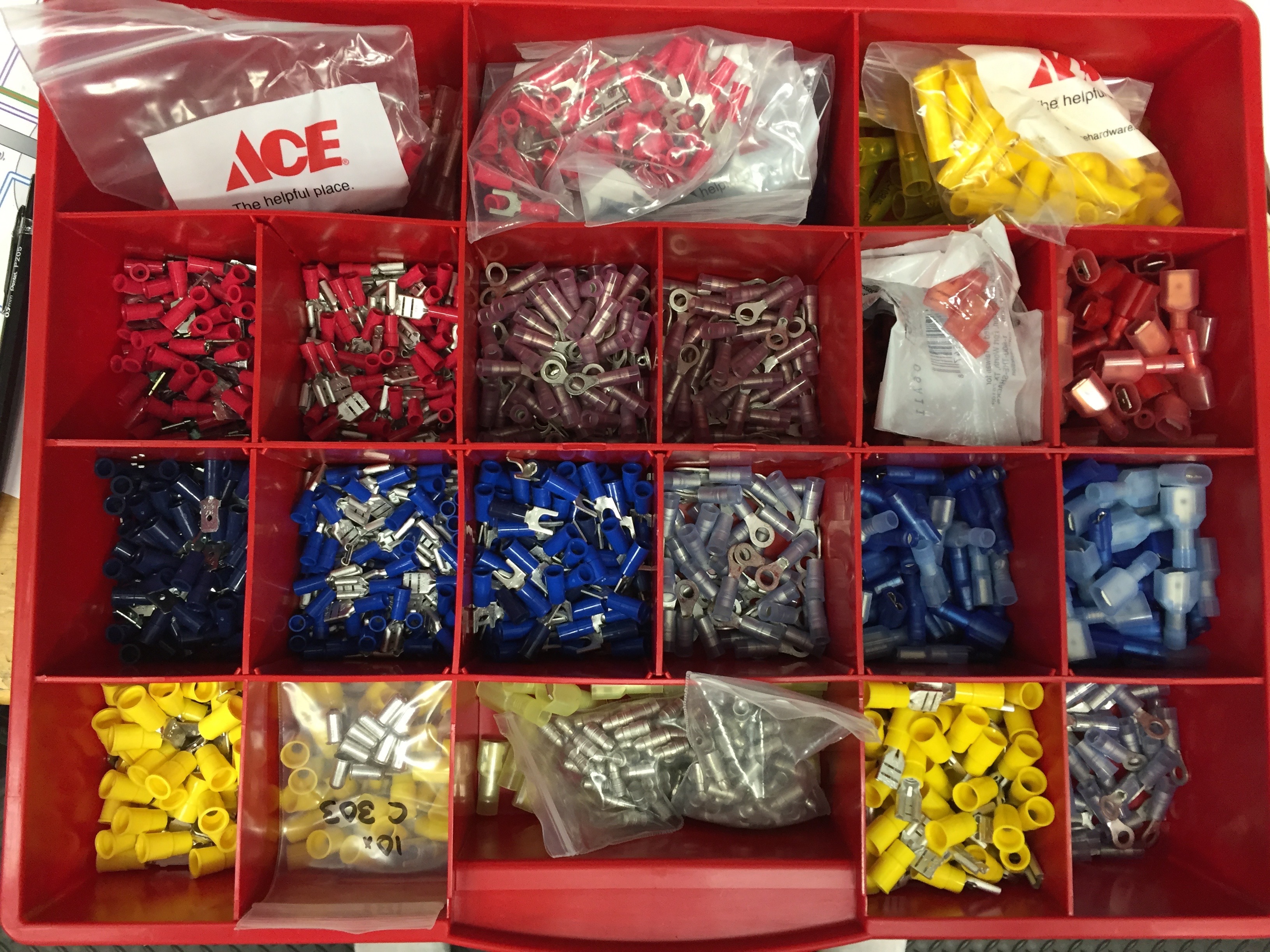
I put together a storage kit of various types and sizes of vinyl terminals to use on this and other projects:Wiring Connector Terminals

I ordered most of my connectors and terminals from Waytek, Inc., similar products are available from other suppliers but I was pleased with Waytek’s comprehensive inventory and selection. The one downside to Waytek is that for many parts you may have to order more of a particular item than you want or need – that is when the local ACE Hardware store comes in handy.

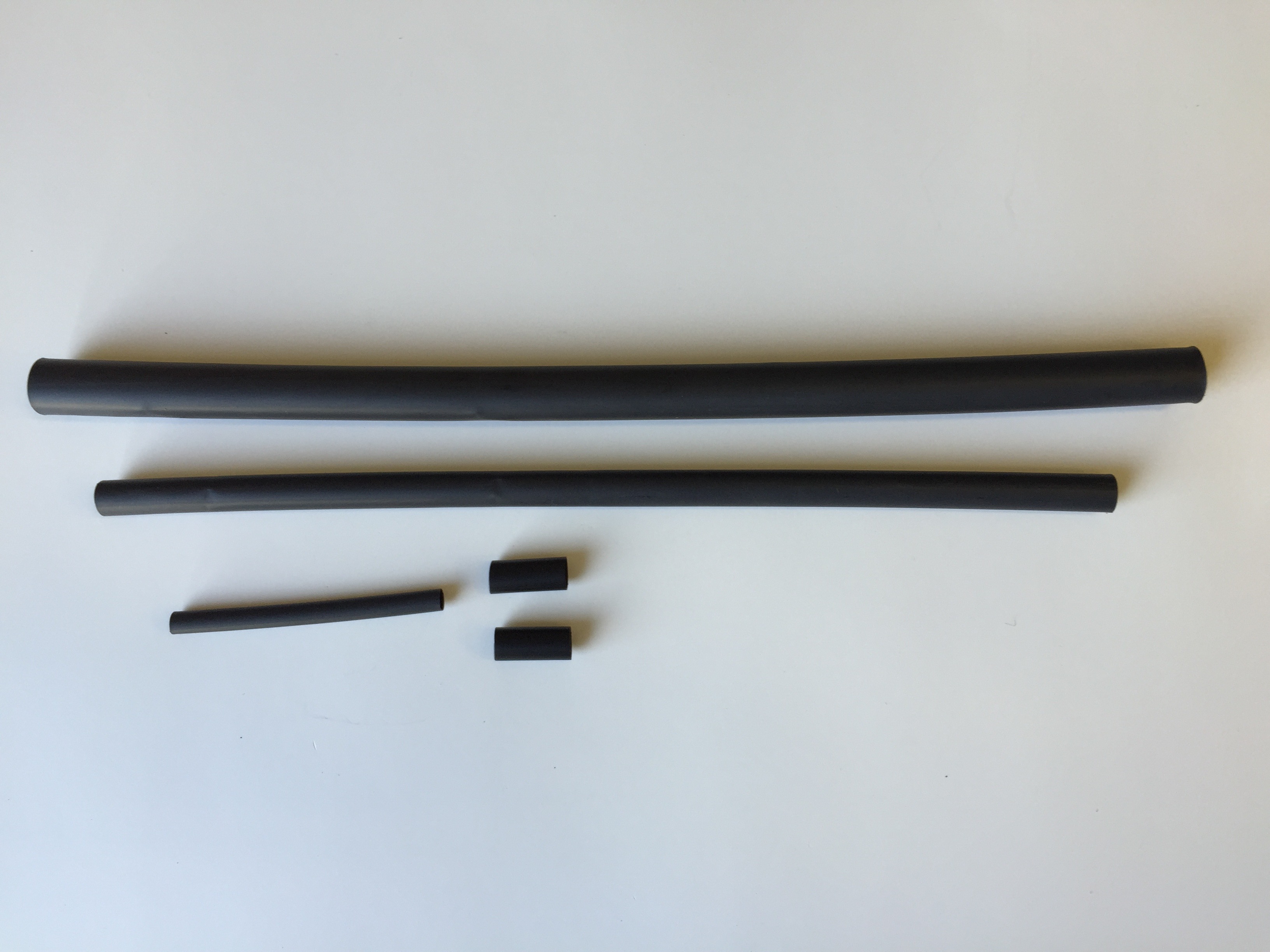
I suppose that it is not essential, but for many of my wiring connections I like to use shrink tubing to create a safe and good looking joint. A little heat from a heat gun or a flame and in seconds you have a very professional looking connection. British Wiring has many sizes of shrink tubing but it is also available from many other vendors.

Shrink Tubing

Shrink Tubing

Wire Labeling

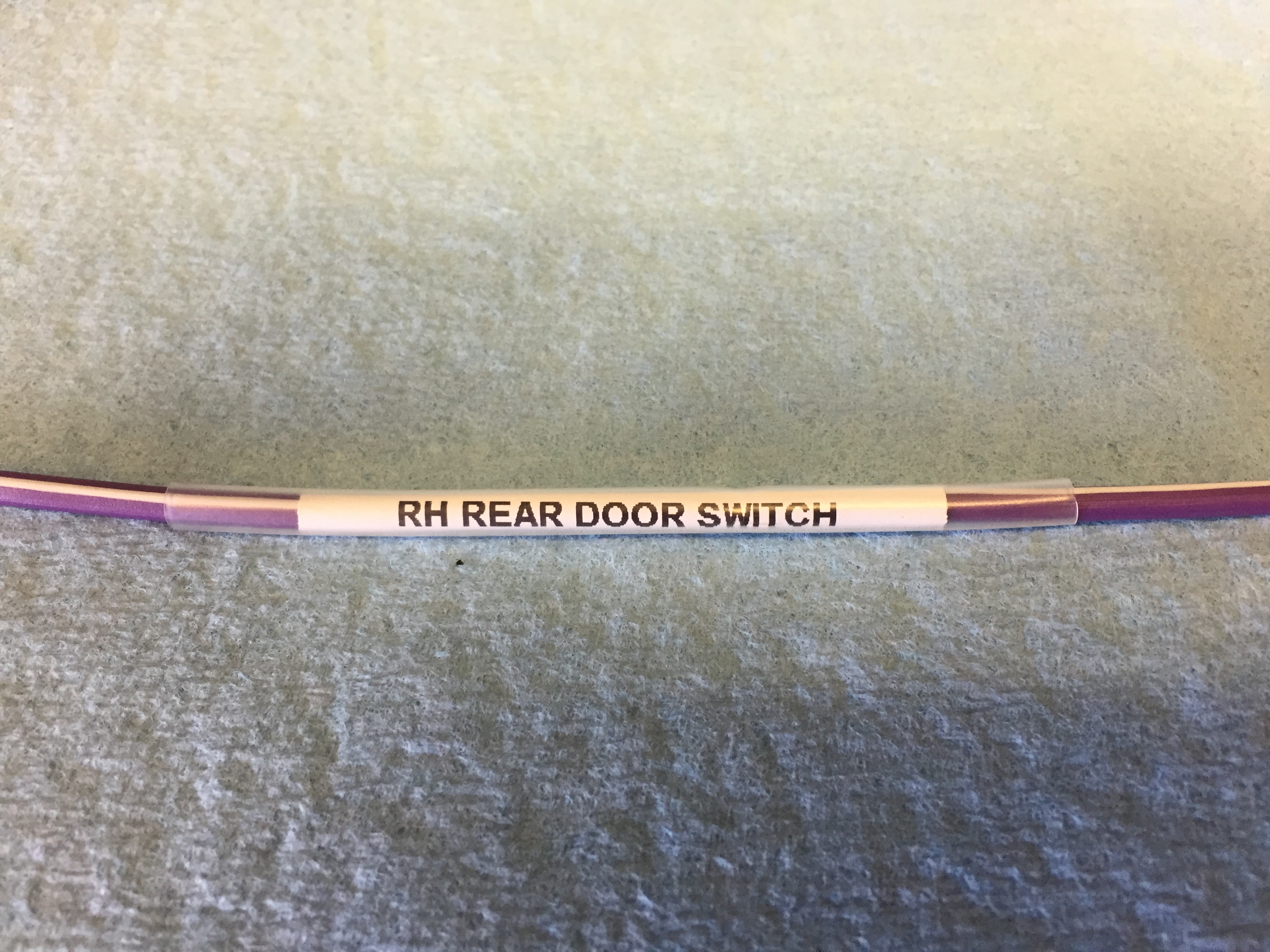
Not in every case, but in most, I have labeled wires for future troubleshooting and as a reference guide. I used a DYMO LetraTag LT-100H Electronic Label Maker to make my labels and covered them with clear shrink tubing sourced from Pegasus Racing. A little heat on each of the label and it is sealed from the elements.

Wire Labeling

Wire Labeling

DYMO LetraTag LT-100H Electronic Label Maker

DYMO LetraTag LT-100H Electronic Label Maker

Barrier Terminal Blocks

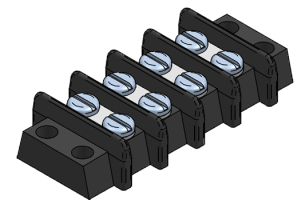
Eric Kriss’s wiring plan, where possible, eliminates both long wiring runs and the use of the original snap “bullet connectors” by utilizing modern barrier terminal blocks as intermediate wiring connection points. This approach makes testing and chasing wiring problems considerably more straightforward and accessible when contrasted with the original wiring harness. Further modifications are also more easily accommodated. The trade-off is a bit more complexity in designing the harness.

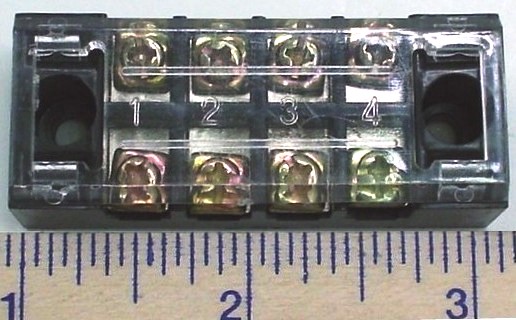
The barrier blocks come in various sizes, some with clear plastic caps and others without.

Typical 4-gang Barrier Block

Typical 4-gang Barrier Block

In my design I used one 12 gang barrier block and one 6 gang barrier block under the dash, below the steering wheel on the left side of the car. Under the dash on the RH side a single 6 gang barrier block was used.

In the engine bay (and inspired by Eric Kriss’s work), hidden by the original fuse assembly cover, are three 4 gang barrier blocks with clear plastic covers.

Barrier Block with cover

Barrier Block with cover

Finally one, small 4 gang barrier block, secured with velcro, was used in the central instrument panel assembly wiring.

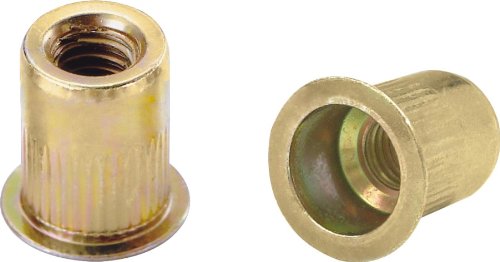
Only time will tell if I made a good decision or not, but rather than mounting the under dash barrier blocks with self-tapping or machine screws, I epoxied strong magnets to the back side of the blocks making it possible to easily remove them from their location to ease access to connections. Rivet nuts and machine screws were used to fasten the barrier blocks in the engine bay.

Barrier Blocks with Magnets

Barrier Blocks with Magnets

Rivet-Nuts

Rivet-Nuts

Wire 

I ordered my wire from British Wiring. I began with the good intention of following British standard wiring codes, but to minimize waste I admit to ending up using wire colors that did not follow convention. However, all was well documented.

Lucas Wiring Color Codes

Mike McPhail, the president of the South Texas Austin-Healey Club, published an article in the July, 2010 issue of Regional Rumblings, the Club’s newsletter that provided an excellent color coded summary of Lucas wiring that  proved helpful with the Jaguar as well. I didn’t always follow convention (for economy) but it is useful to know what you are supposed to be doing!

Lucas Wiring Color Codes

Testing Equipment

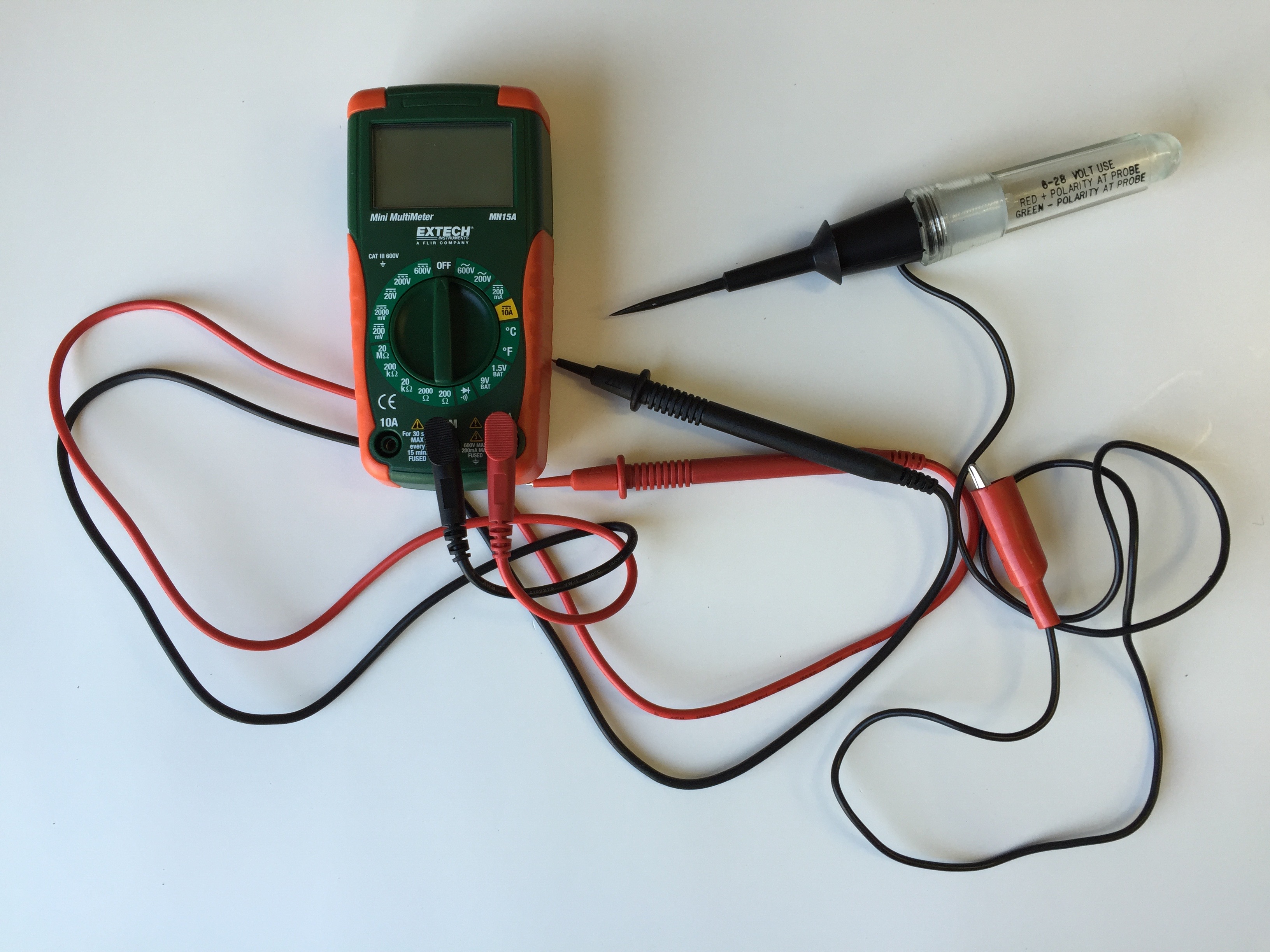
Testing connections and trouble shooting is always necessary. Whether simply checking for continuity or determining voltage or amperage a few appropriate tools are needed. I would suggest these two at a minimum:

Multimeter and Circuit Tester

Multimeter and Circuit Tester

New Wiring for Switches and Gauges

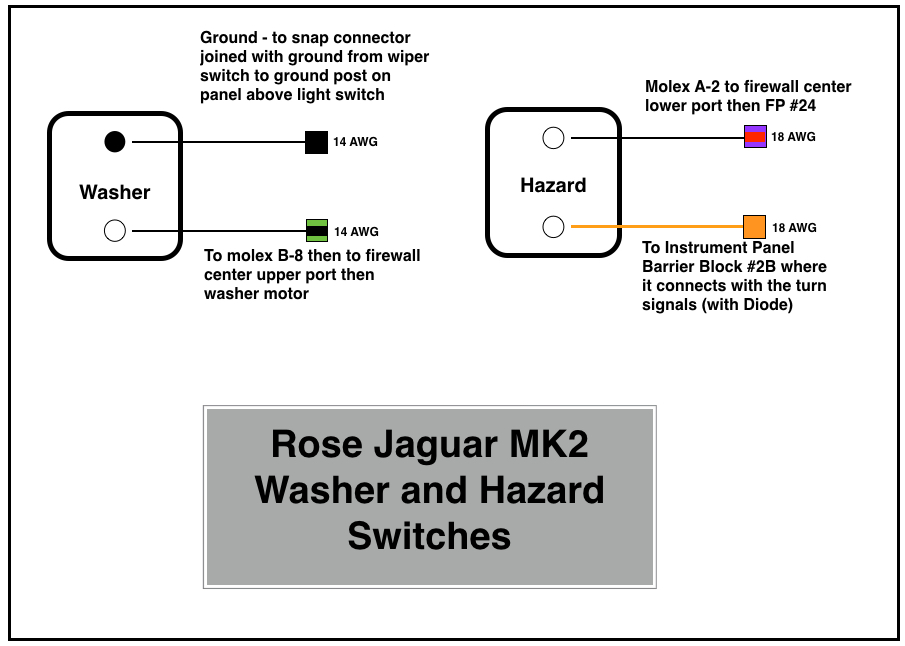
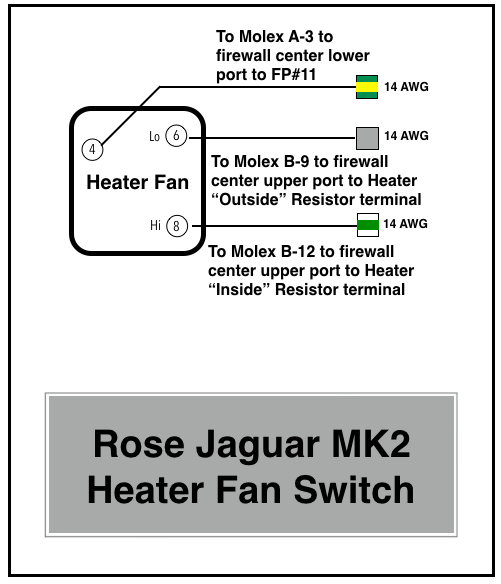
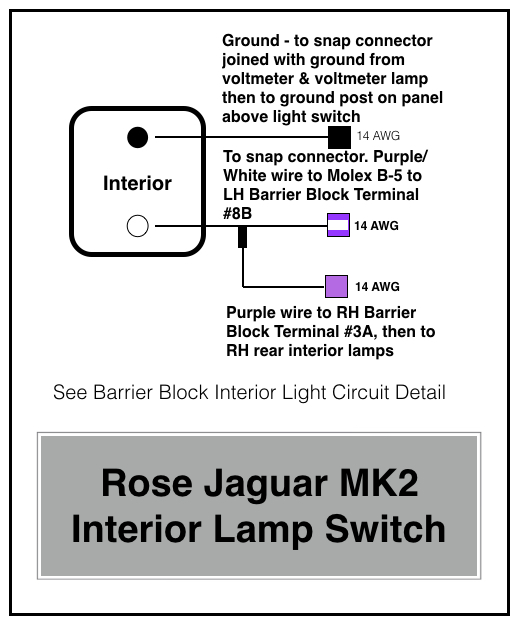
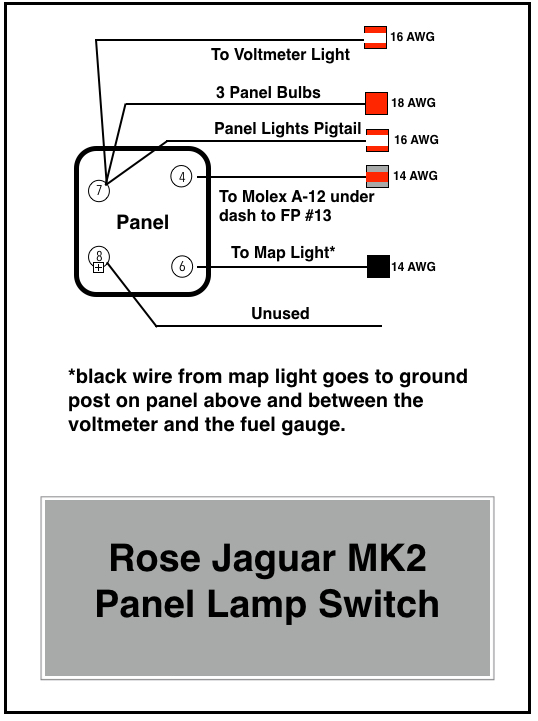
The diagrams provided below depict the wiring to/from each of the switches in the panel. The purpose, operation and in some cases repurposing of the switches is described in a previous post “Gauges, Instruments and Switches.” One addition to the panel is a small chime that is activated if the headlamps are left on when the ignition is off, but the driver’s door is opened.

Rose Jaguar MK2 Washer and Hazard Switches

Rose Jaguar MK2 Washer and Hazard Switches

Rose Jaguar MK2 Wiper Switch

Rose Jaguar MK2 Wiper Switch

Rose Jaguar MK2 Starter, Cigar, Ignition, & Chime Switches

Rose Jaguar MK2 Starter, Cigar, Ignition, & Chime Switches

Rose Jaguar MK2 Heater Fan Switch

Rose Jaguar MK2 Heater Fan Switch

Rose Jaguar MK2 Interior Lamp Switch

Rose Jaguar MK2 Interior Lamp Switch

Rose Jaguar MK2 Panel Lamp Switch

Rose Jaguar MK2 Panel Lamp Switch

Rose Jaguar MK2 Lucas 3 Position Light Switch

Rose Jaguar MK2 Lucas 3 Position Light Switch

Instrument Panel Assembly Gauge Wiring

There are four gauges located in the central instrument panel assembly: from left to right when looking at the face of the panel, the water temperature gauge, the oil pressure gauge, the fuel gauge, and the voltmeter which is substituted for the original ammeter. As with the switches, the gauges are explained more fully in the “Gauges, Instruments and Switches” post.

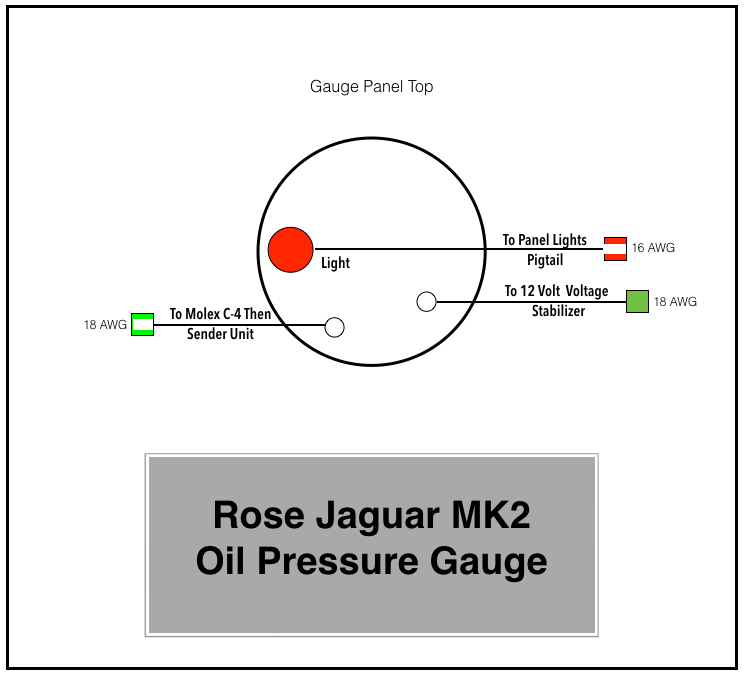
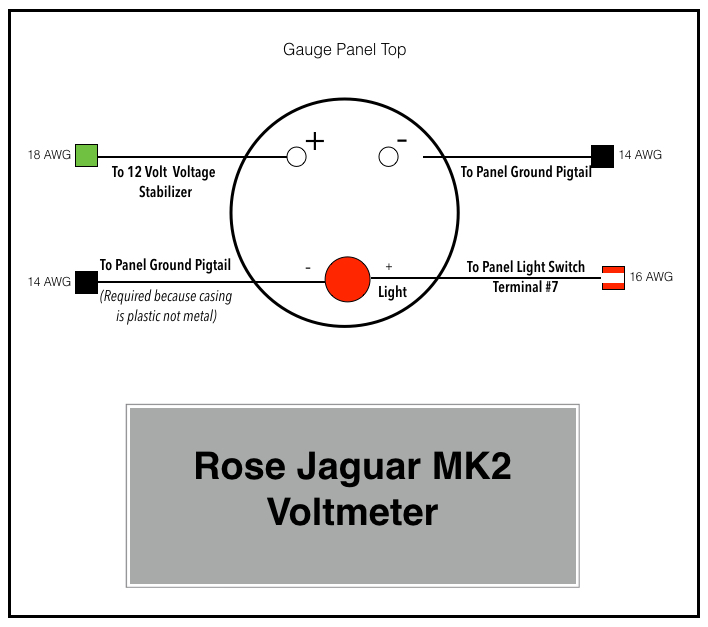
The following images depict the wiring for each of the four gauges:

Rose Jaguar MK2 Water Temperature Gauge

Rose Jaguar MK2 Water Temperature Gauge

Rose Jaguar MK2 Oil Pressure Gauge

Rose Jaguar MK2 Oil Pressure Gauge

Rose Jaguar MK2 Fuel Gauge

Rose Jaguar MK2 Fuel Gauge

Rose Jaguar MK2 Voltmeter

Rose Jaguar MK2 Voltmeter


Interior Lights

Conversion to LED lights

The Jaguar Mk2 and all other cars of the period used incandescent bulbs in the interior fixtures and gauges. In my restoration I intend to replace most if not all incandescent lights with light emitting diodes or as they are more commonly referred to: LEDs.  LEDs live longer, use considerably less power, and are brighter than the incandescent bulbs they replace. Specific light model numbers and quantities are listed with the various installations below. The LED lights were sourced from 4 Sight Automotive, www.bettercarlighting.co.uk

Interior Courtesy Lights

I will collectively refer to the interior lamp in rear quarters, the interior lamp at top of center pillars, and the headrest lamps as courtesy lamps. The MK2 did not have seat headrests, much less headrest lights, but I am using front seats from what I believe was a 1990 jaguar XJ 40. In 1990 the headrest lamps were connected to a central computer, but obviously, there is no computer in a 1964 Jaguar.

The rear quarter and the center pillar lights were designed to be activated by opening any one of the four doors in which case a door switch would illuminate the lights and extinguish them when the door was closed. Alternatively,  flipping the “INTERIOR” toggle switch on the central gauge panel to the “on” position also illuminates the lights. In my wiring methodology this pattern is retained.

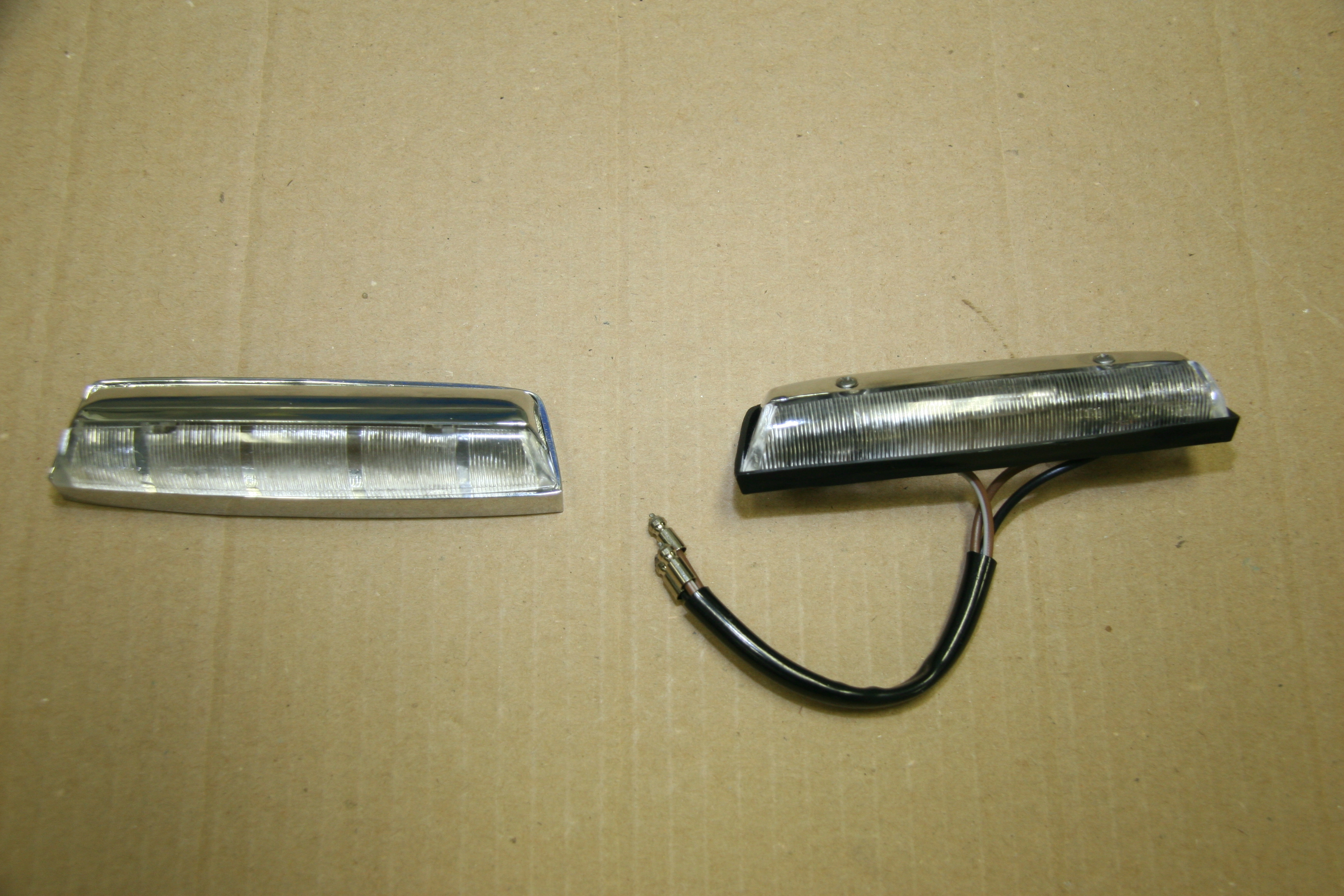
Both of my center pillar lights were broken. They are held together by two metal pins with balls on the ends that snap into the plastic lens. After fifty years the plastic is fragile and very susceptible to breaking. The chrome “shields” are secured to the assembly with two folding tabs that are also fragile and easily broken.

A modern replacement is available and I sourced them from SNG Barratt. The new units solve the design problems of the earlier model but unfortunately have visible screws through the shields and the backplate is black plastic rather than chrome metal. All disappointing!

The new units do have an on/off switch on the bezel of the lamp.The on/off switch on the lamp acts exactly like the toggle switch on the central gauge panel. That is, when the on/off switch is turned on, all four lights illuminate.

B/C Pillar Interior Lights

B/C Pillar Interior Lights

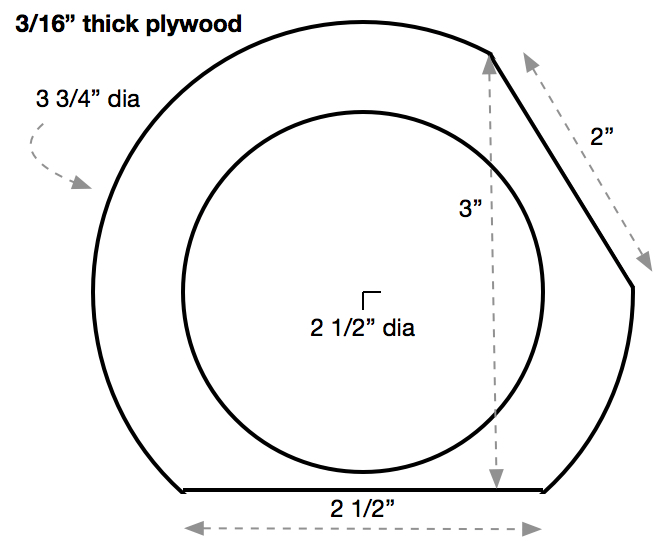
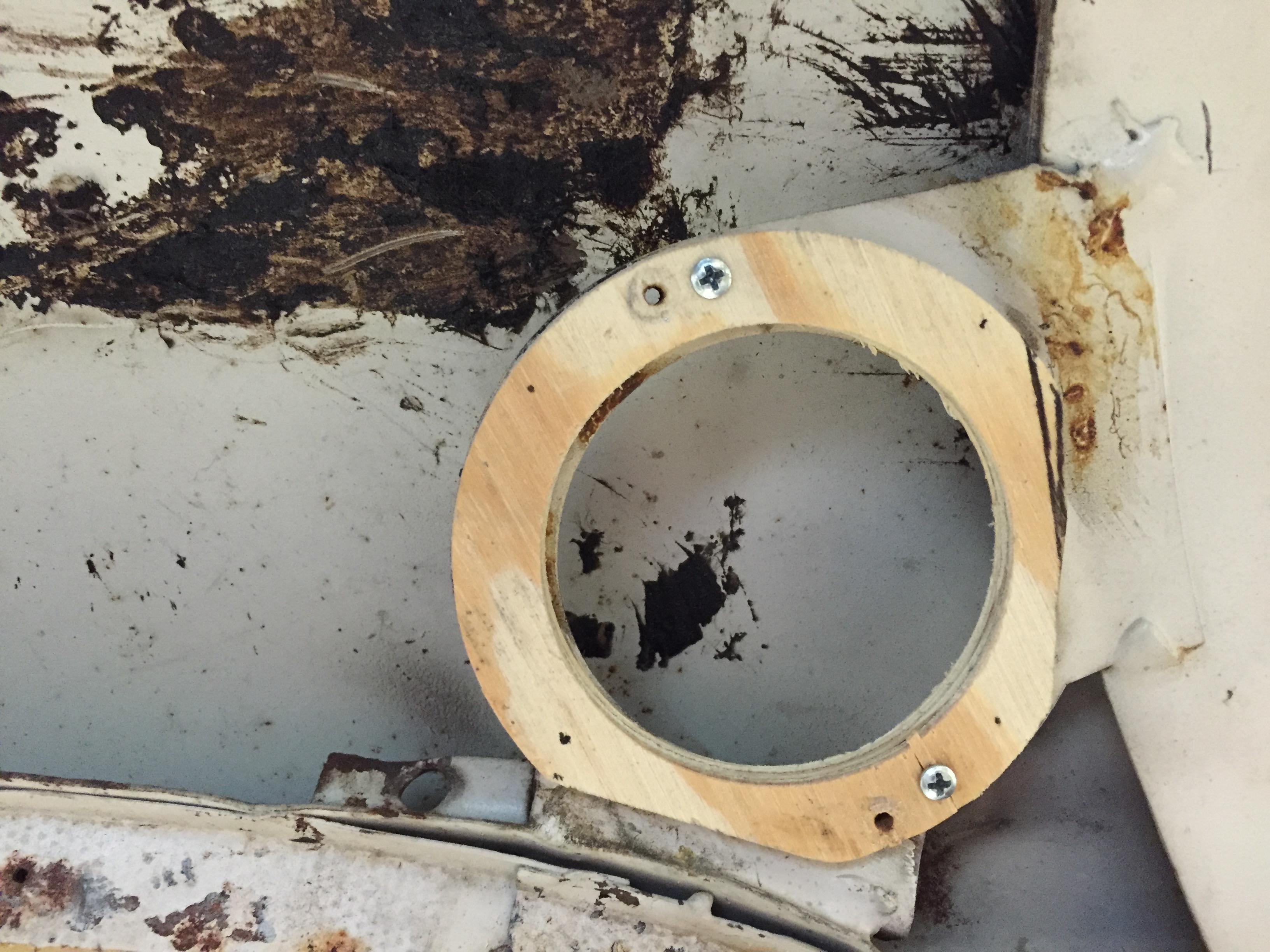
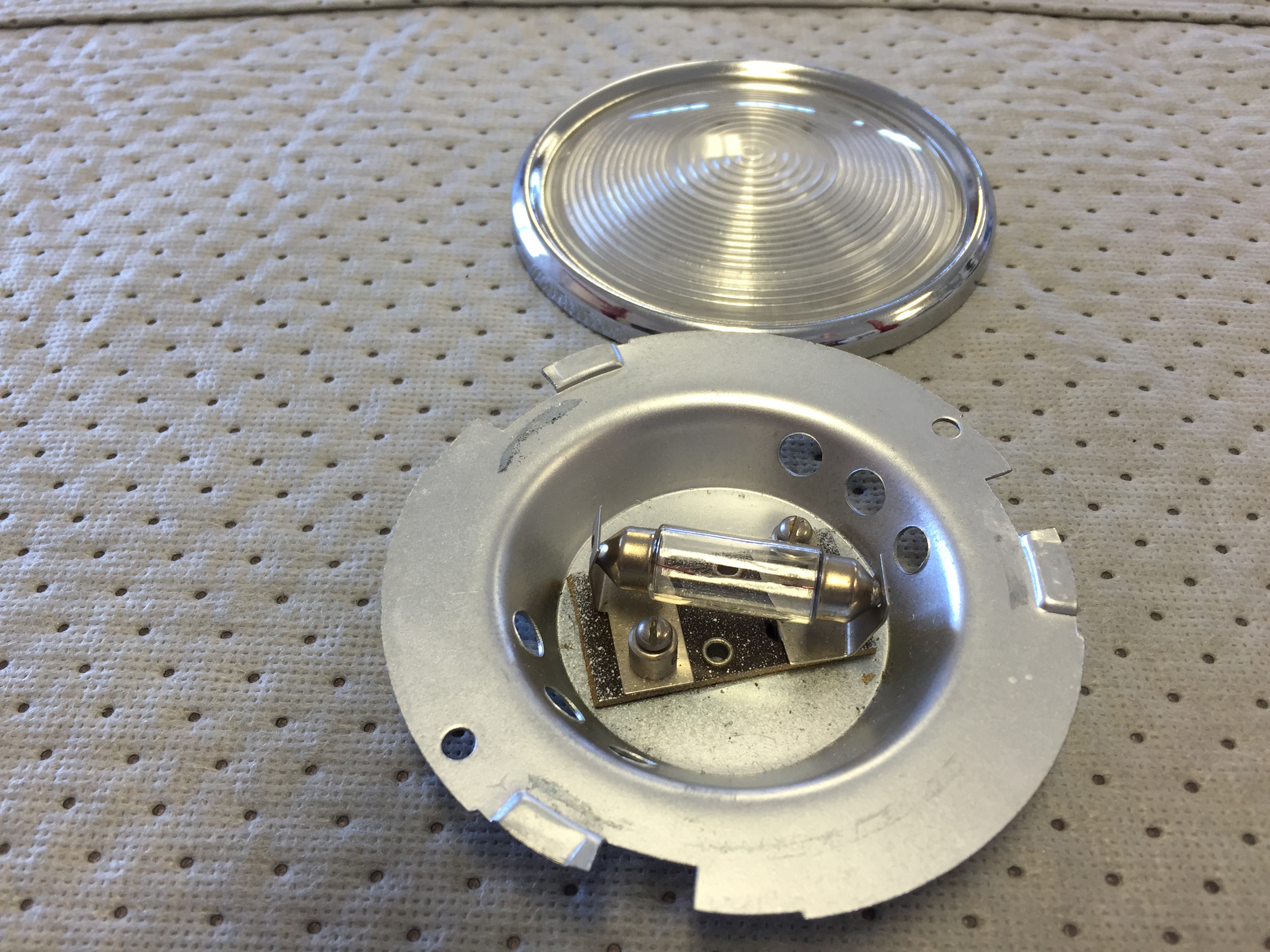
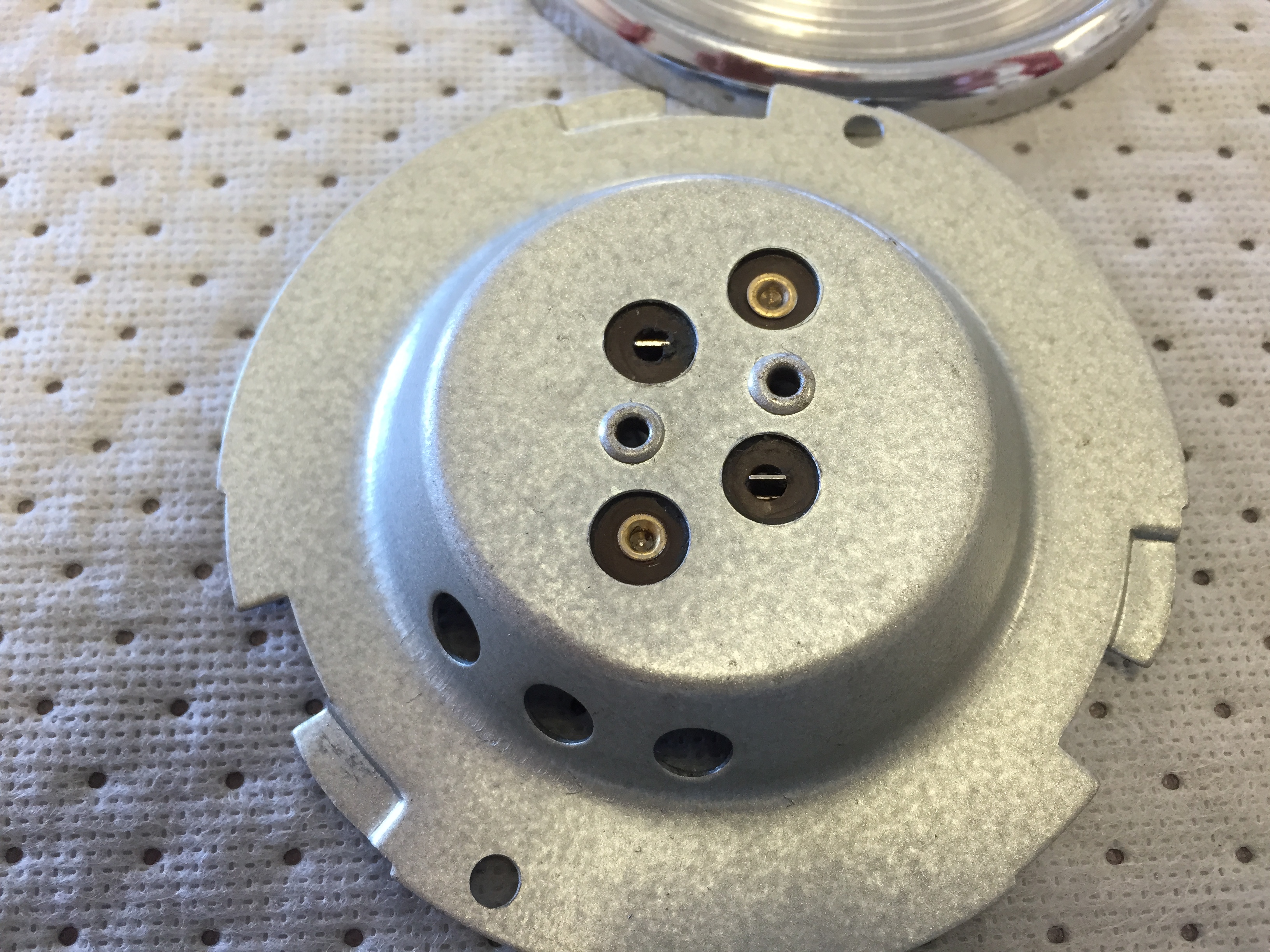
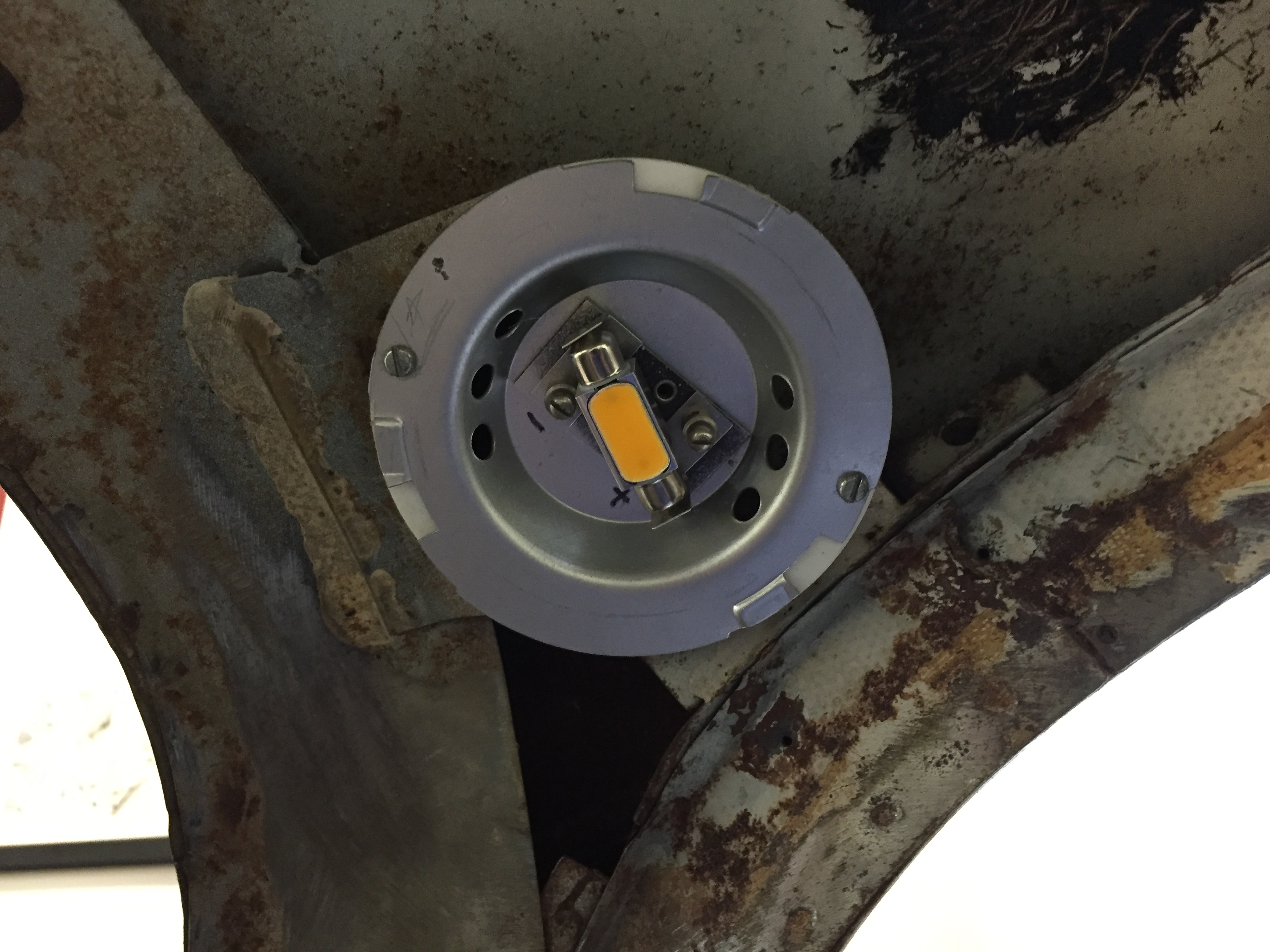
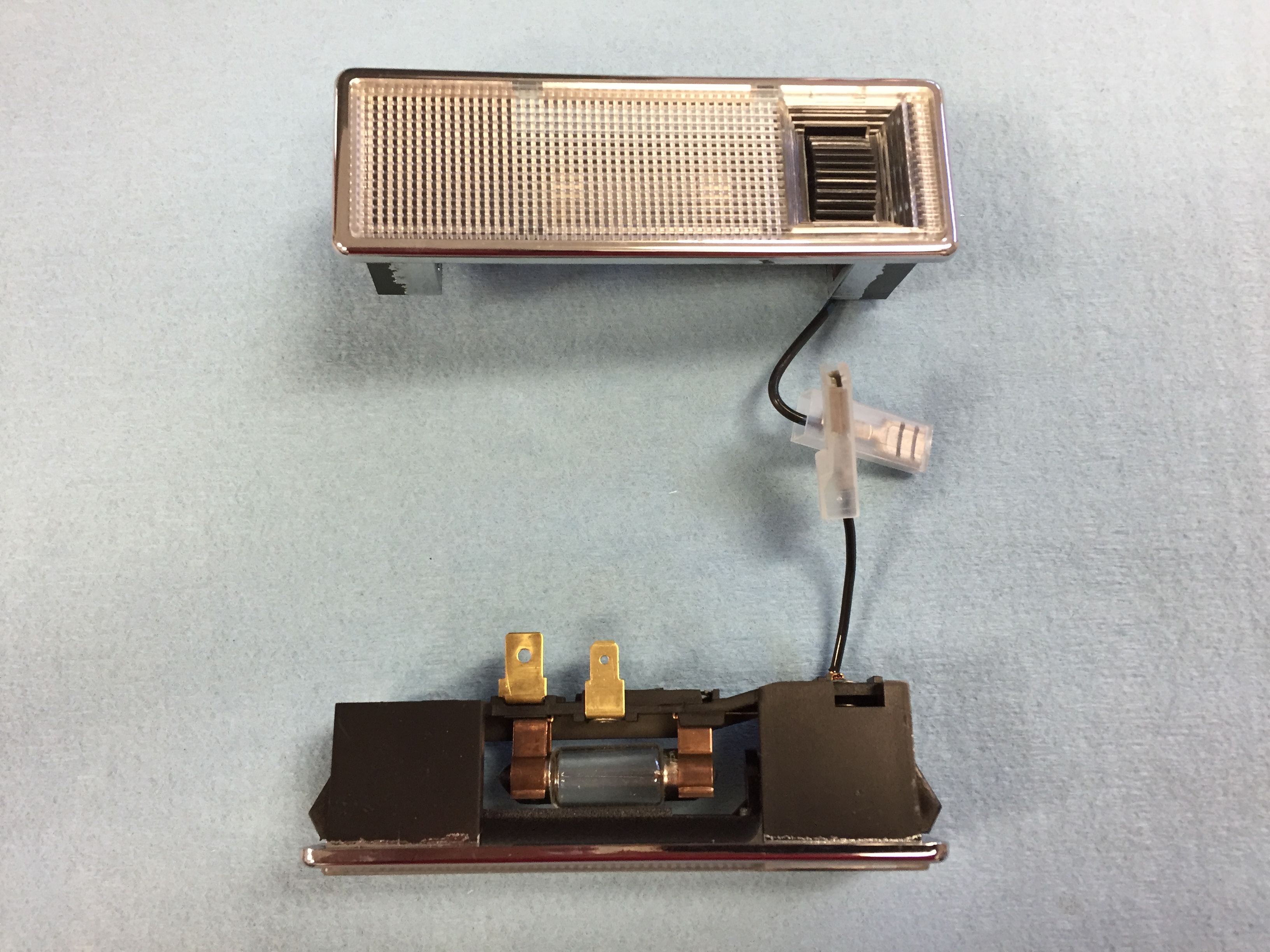
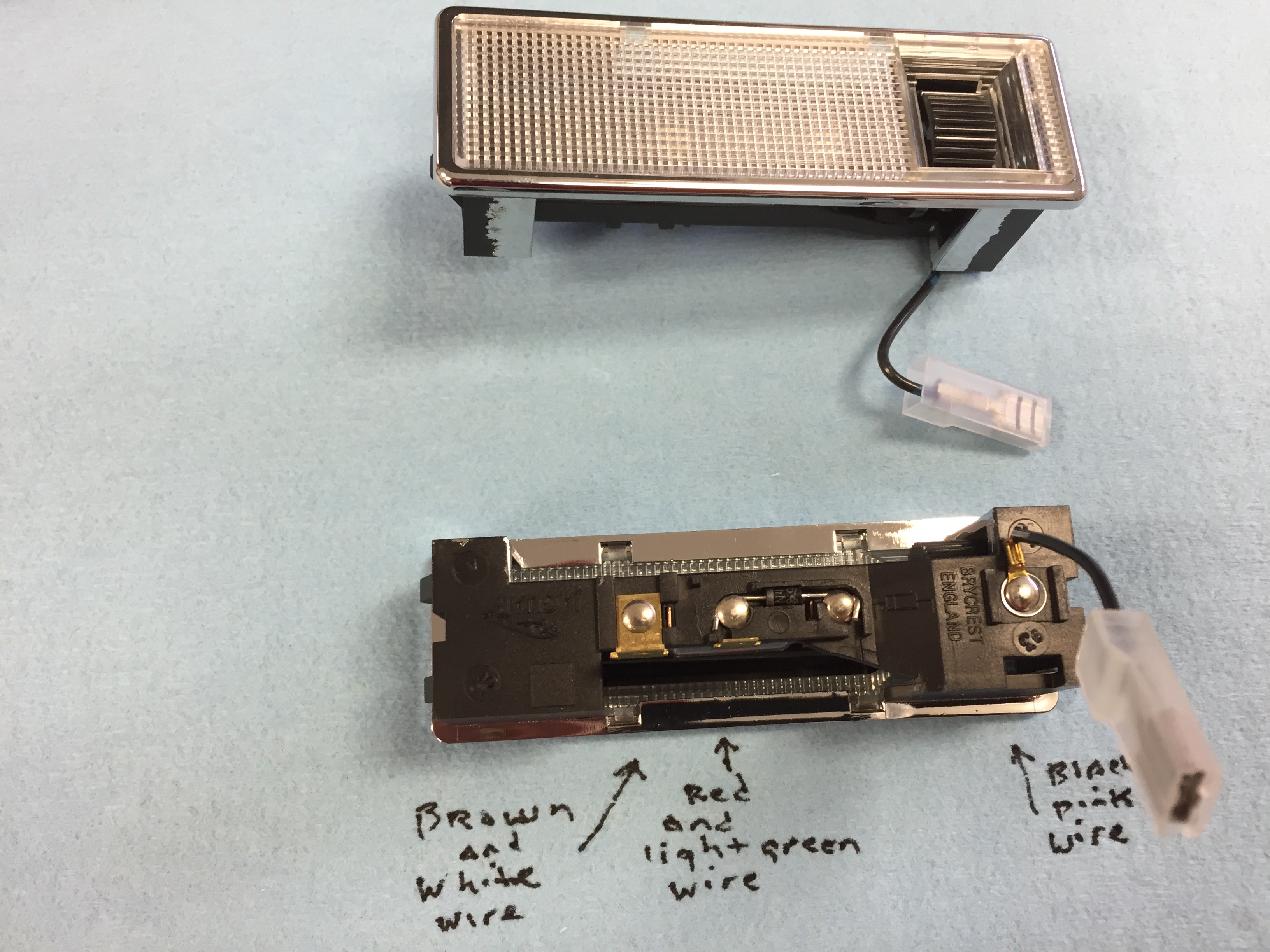
Unlike the Center Pillar lights, the new stock replacements for the rear lights appear identical to the originals. I substituted 36MM LED festoon bulbs in warm white from 4Sight Automotive for the original incandescent bulbs. Each of these lamps mount to a plywood frame and then to the body of the car. My original plywood pieces simply fell apart when I disassembled the car. New wood frames were made per the pattern supplied by Eric Kriss on his web site. I then trial fit the plywood frame and lamp fixture. The plywood is held to the metal body with two #4 X 1/2″ flat head self tapping screws, and then the lamp body is secured through the plywood to the metal body with two #4 x 3/4″ self tapping screws.

Rear Quarter Interior Lamps Plywood Mounting Frame

Rear Quarter Interior Lamps Plywood Mounting Frame

New Plywood Frame for rear quarter interior lamp

New Plywood Frame for rear quarter interior lamp

New Rear Interior Lights

New Rear Interior Lights

New Rear Interior Lights

New Rear Interior Lights

rear quarter interior lamp with LED inserted

rear quarter interior lamp with LED inserted

LH rear quarter interior lamp

The seat headrest lights were originally wired in such a way that they too illuminated when the car’s doors were opened. These lights also have an integral on/off rotary or dial switch. Without the central processor of a more modern car it would be all too easy to leave these lights on and eventually drain the battery. Therefore, I elected to wire these lamps to a switched power source rather than a constant power source like the other lamps. I did not use the terminal on the headrest light that would normally have a red/green wire to the door switches.

XJ40 Headrest Lamp

XJ40 Headrest Lamp

XJ40 Headrest Lamp 1

Once the ignition is turned on the front seat headrest lights behave like the other courtesy lamps, but if the ignition is off, unlike the other lights, the  headrest lights cannot illuminate. Consequently no drain on the battery.

While not the same as the original Jaguar MK2, nor the Jaguar XJ40, I believe this wiring approach produces a very satisfactory result.

Instrument/Gauge Panel Lights

The lights on the gauges and the illumination of the switch markings is controlled by the switch lever marked”Panel” on the gauge panel. The switch has two positions “DIM” and “BRIGHT” to suit the driver’s requirements. The panel lights will only operate when the sidelights are switched “ON.”

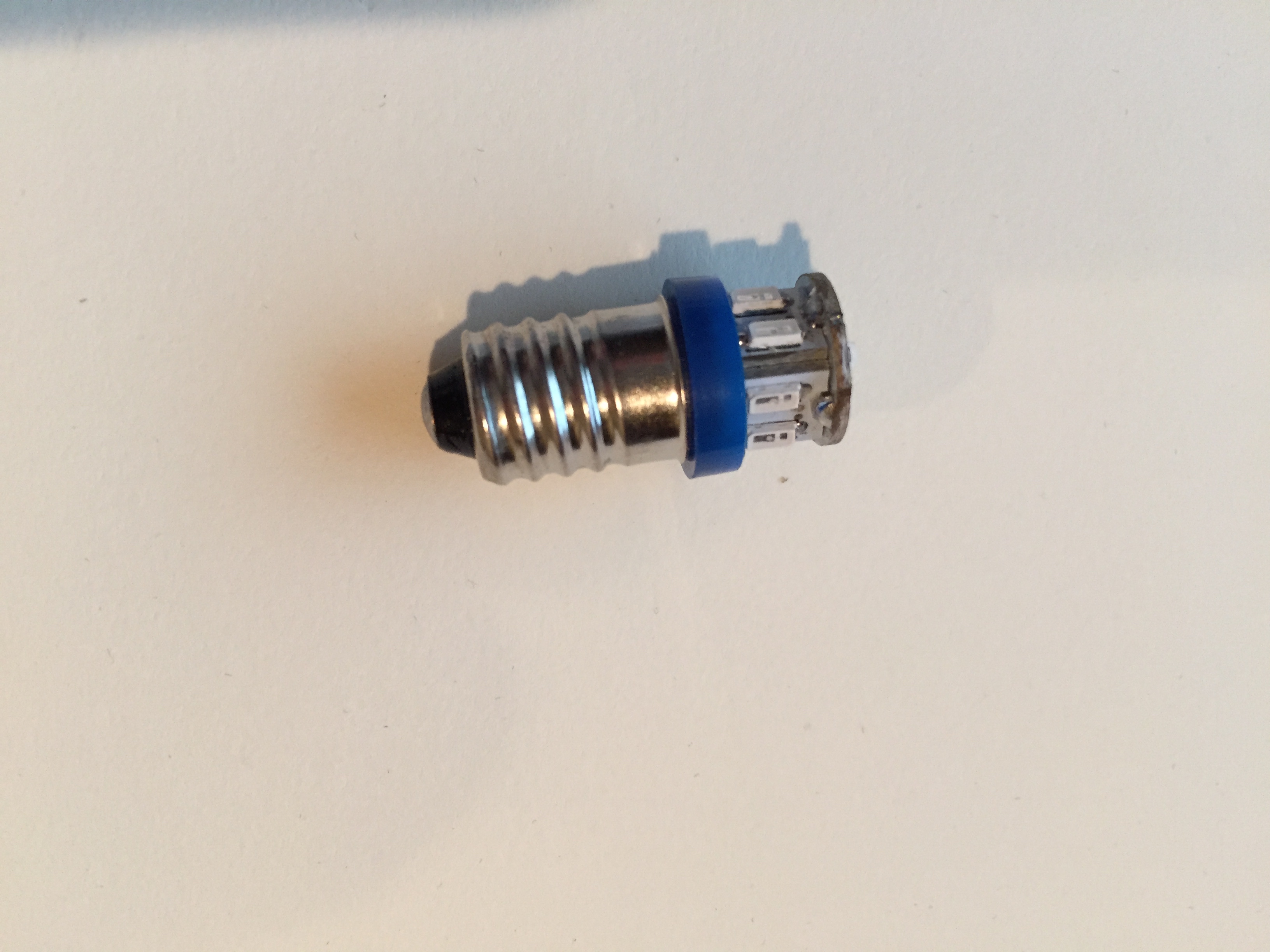
All of the original 987 incandescent bulbs in the eight panel lights will be replaced with BA9 ES Neg. (screw base) LEDs (The image below shows a blue bulb, but I actually used white).  Two each in the speedometer and tachometer, and one each in the fuel, water temperature, oil pressure, and voltmeter gauges.

BA9ES Blue Neg LED

BA9ES Blue Neg LED

Warning Lights

There are four warning lights on my MK2. Three are located in the speedometer for fuel level, ignition, and high beam headlights. An additional light on the dash warns for low brake fluid or the handbrake application. These incandescent lights are replaced with BA9ES white Neg LEDS.

Map Light

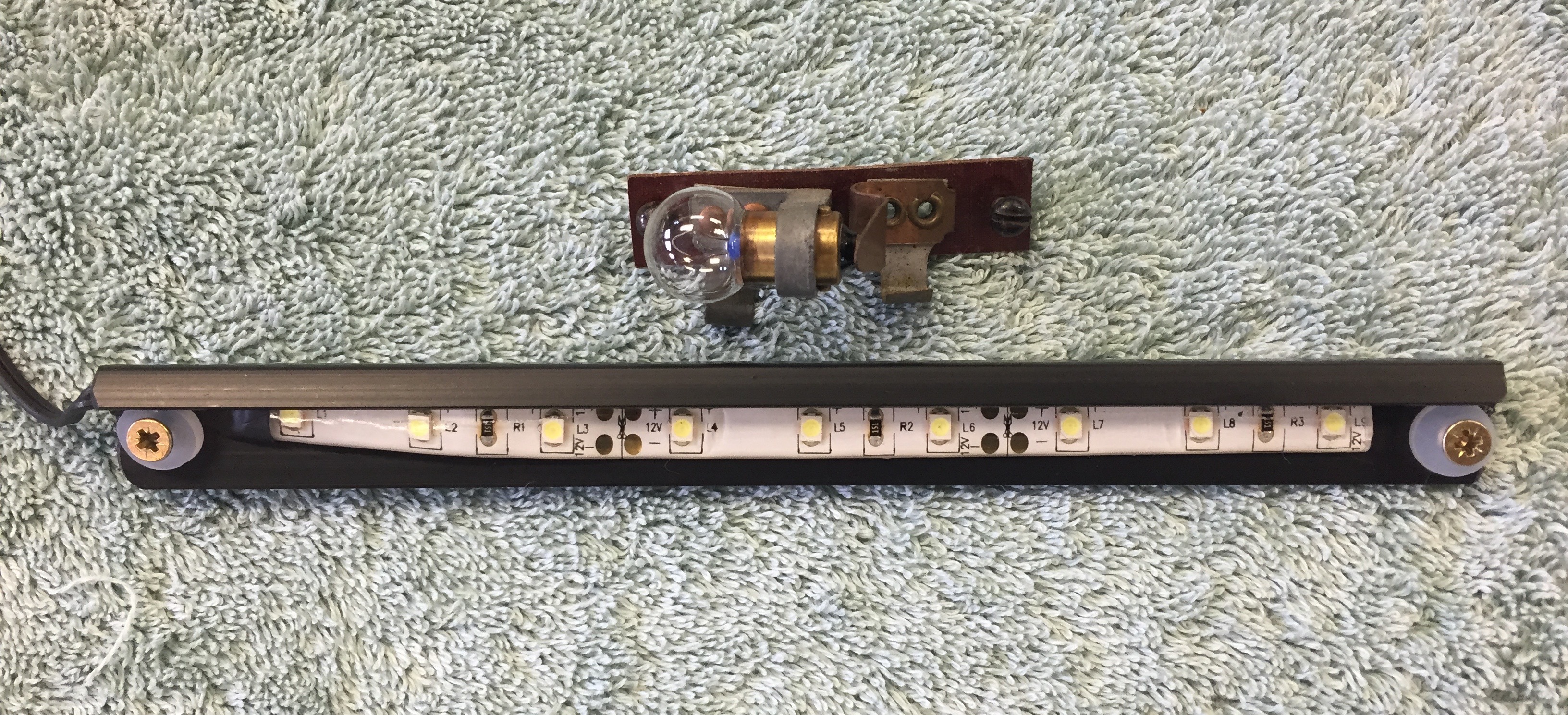
There is a lamp located above the instrument panel, mounted to the wood screen rail capping. As designed, to illuminate the lamp, the switch marked “MAP” is lifted. The light will only operate when the sidelights are switched “ON.” However, following the lead of Eric Kriss I have repurposed the map light toggle switch to control the hazard light function. The map light in my wiring scheme is controlled by the panel lamp switch. I also substituted an LED strip in place of the original incandescent bulb. Details about the wiring are available at the “building a new wiring harness” post and at the “Gauges, Instruments and Switches” post.

Map Light

Map Light – Original and New Replacement

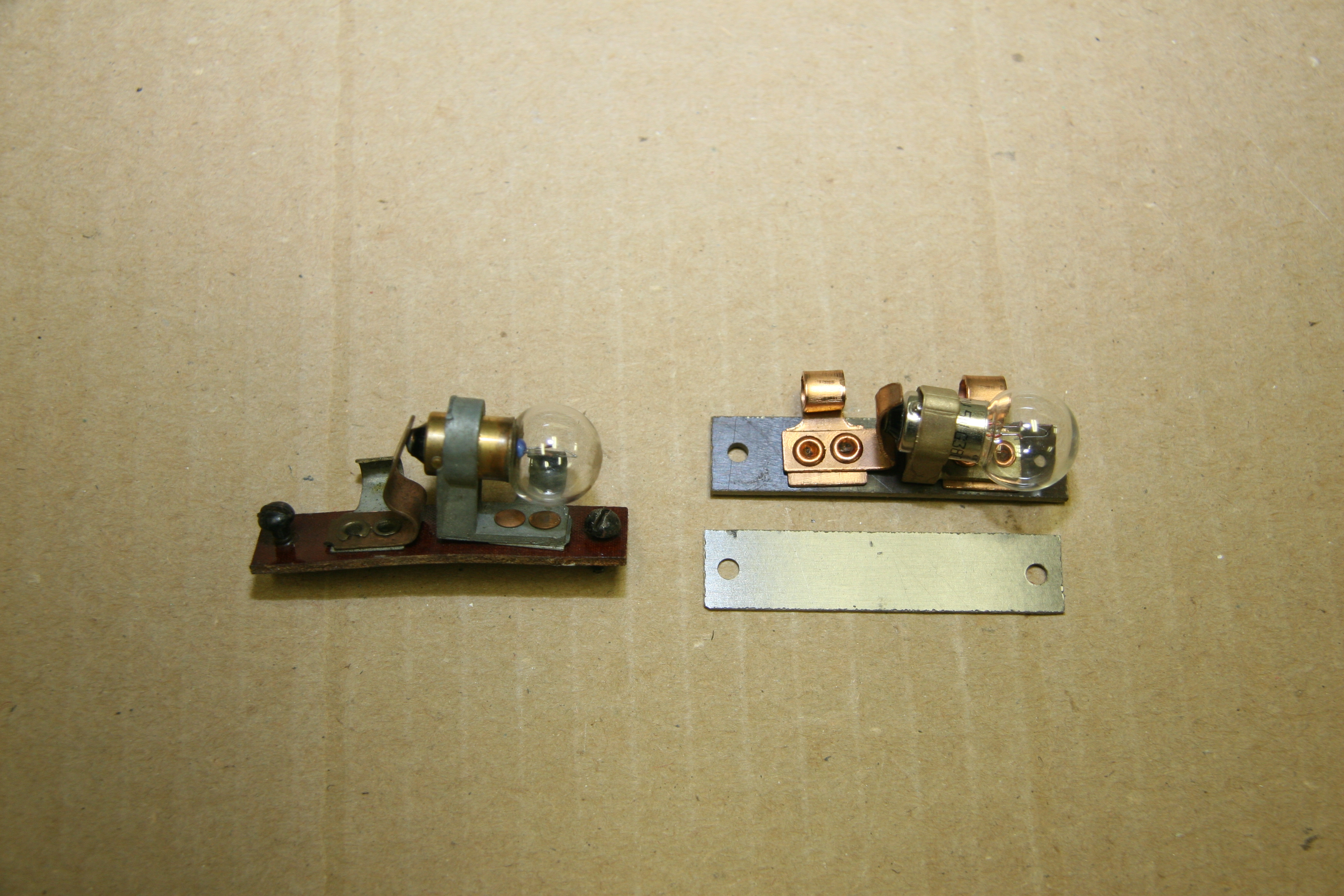
Original Incandescent map light and LED Map Light

Original Incandescent map light and LED Map Light

“Cubby” Glove Box Light

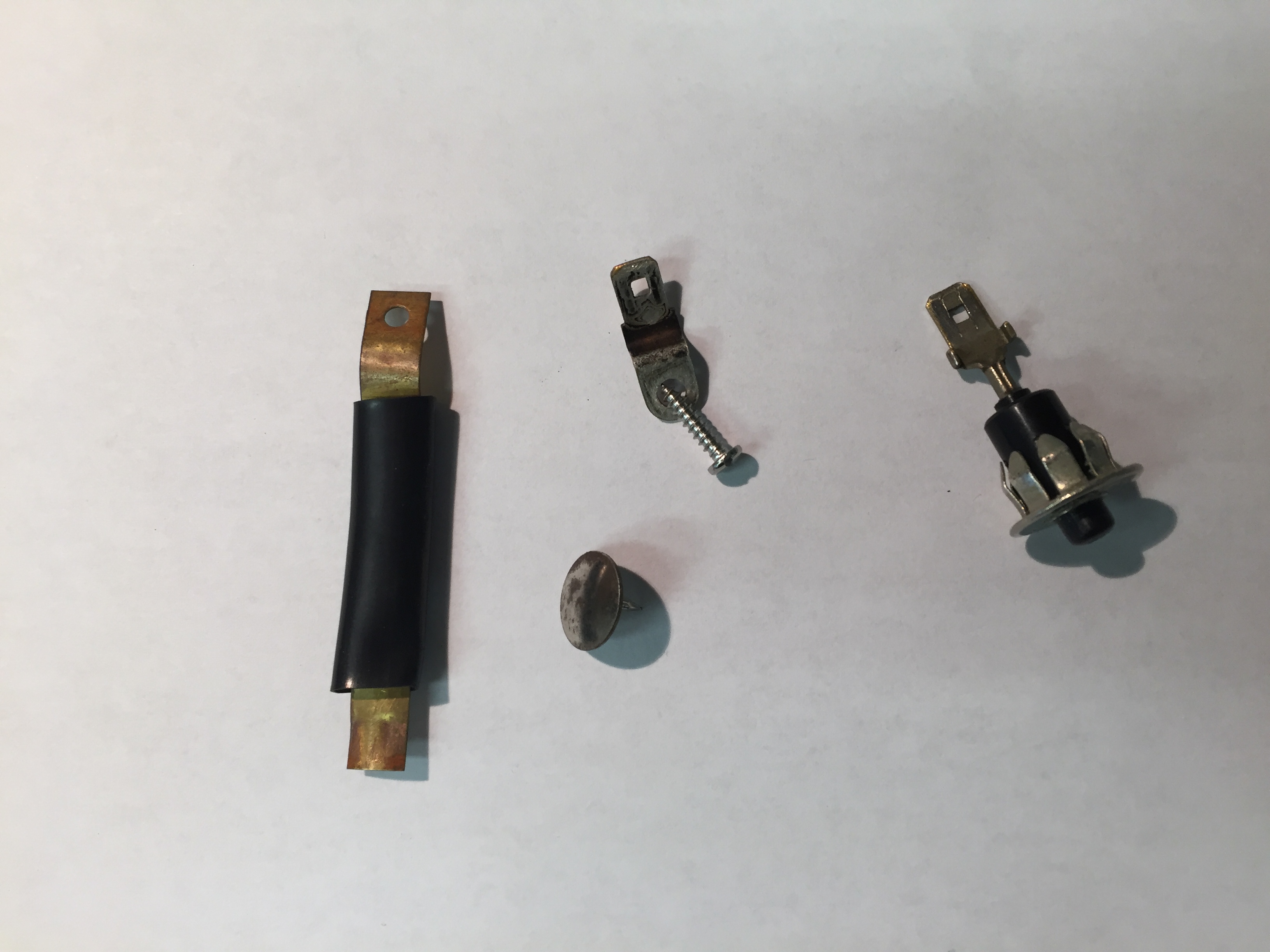
As designed, the lamp in the glove box is automatically illuminated when the door is open and the side lights are “ON.” However, following the lead of Eric Kriss, I have wired the cubby lamp and the luggage lamp in the boot so they will illuminate when the cubby door is opened or the boot lid is opened without the necessity of turning on the lights at the light switch first. As with the other lamps the incandescent bulb has been replaced by an LED lamp. the following image shows the components of the lamp.

Cubby Box Lamp

Cubby Box Lamp

Cubby Box Lamp installed in Box

Cubby Box Lamp installed in Box

The following image shows the components of the cubby lamp switch.

Cubby Box Switch

Cubby Box Switch

Luggage Compartment Light

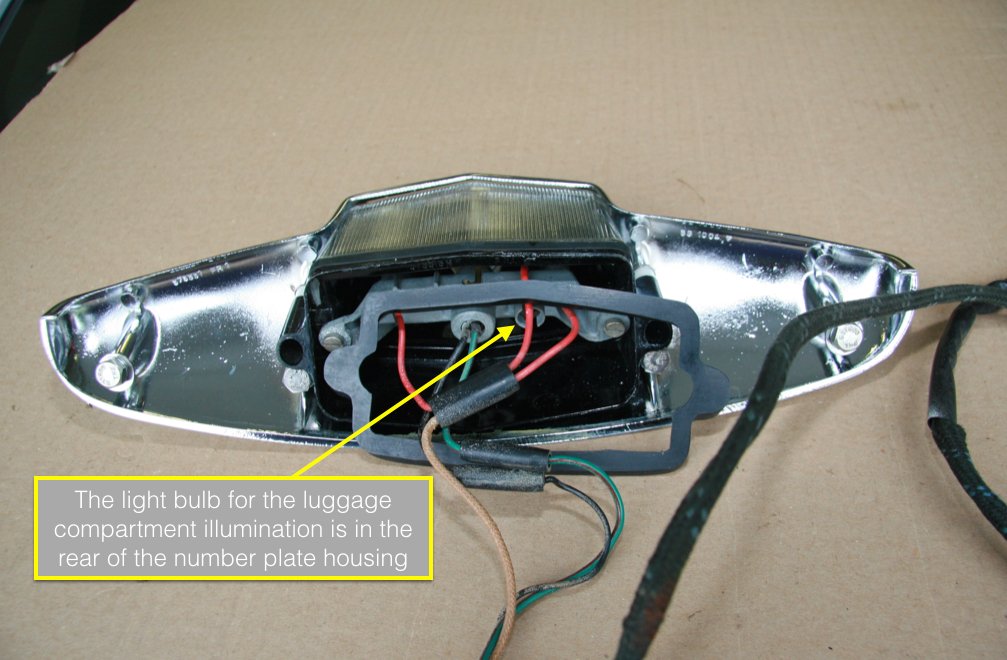
The Boot is illuminated when the lid is opened. The lamp only operates when the side lights are switched “ON.”

Luggage Compartment Illumination

Luggage Compartment Illumination

Exterior Lights

Headlamps

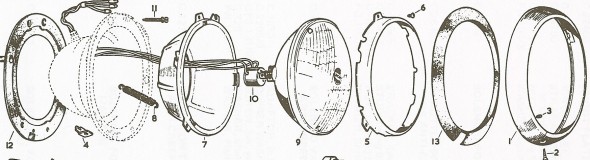
Headlamp Schematic

Headlamp Schematic

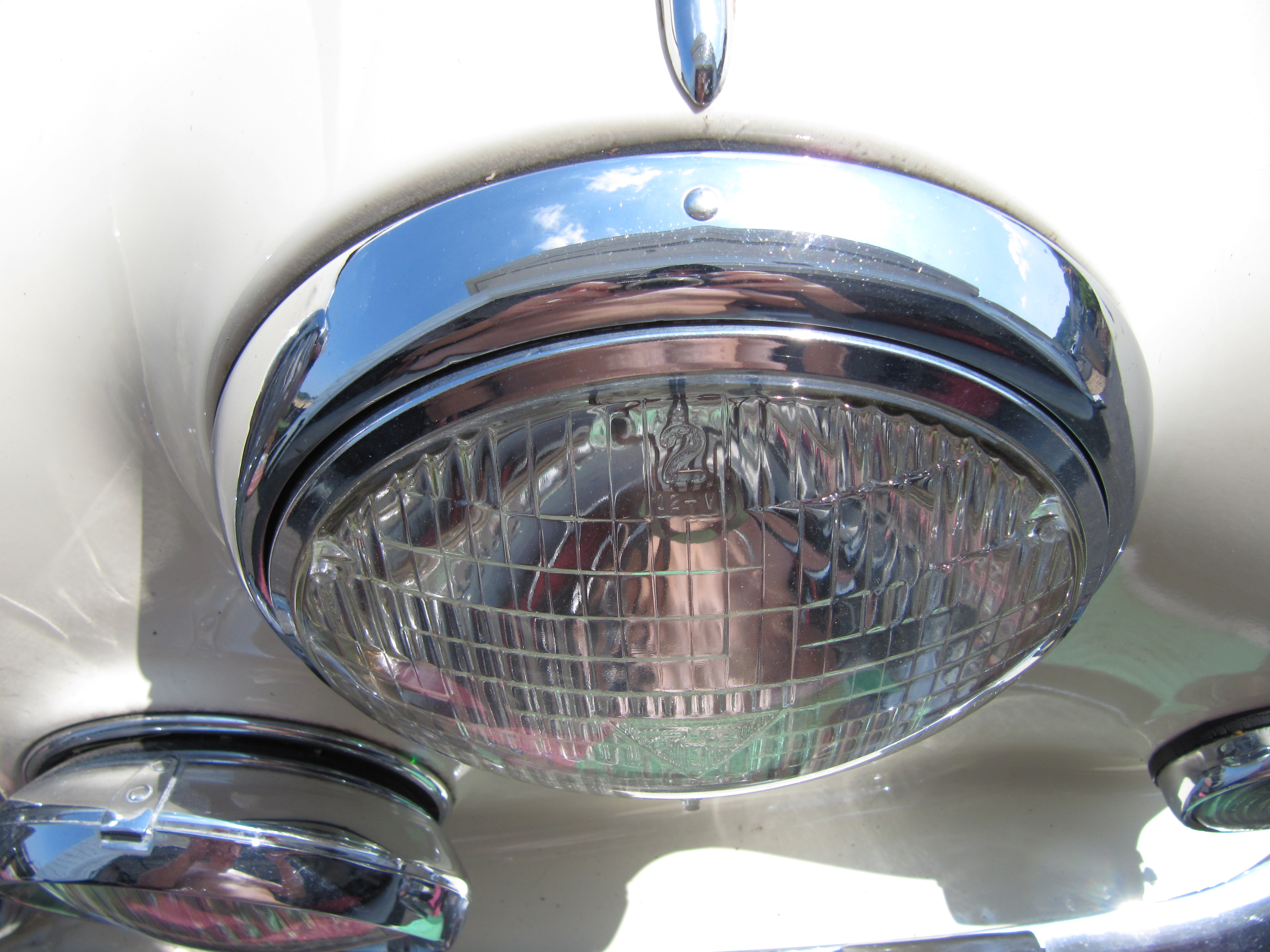
Cars exported to the USA all had sealed beam headlights.
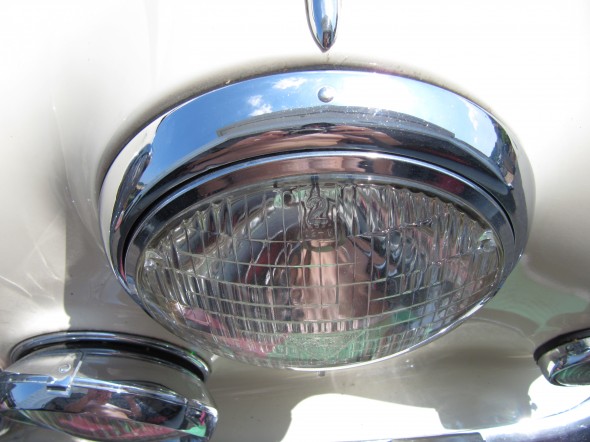
Headlamp

Headlamp

Mounting and Adjusting Screws

Four #10 – 32 x 1/2″ slotted cheese head screws with flat and shakeproof washers fasten the lamp assembly to the car’s body. The rubber seal is located between the body and the lamp bowl. Their location is shown in the Lamp Diagram.
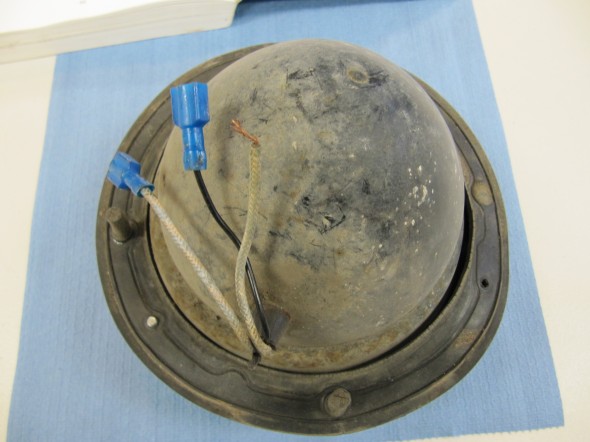
Headlamp Complete
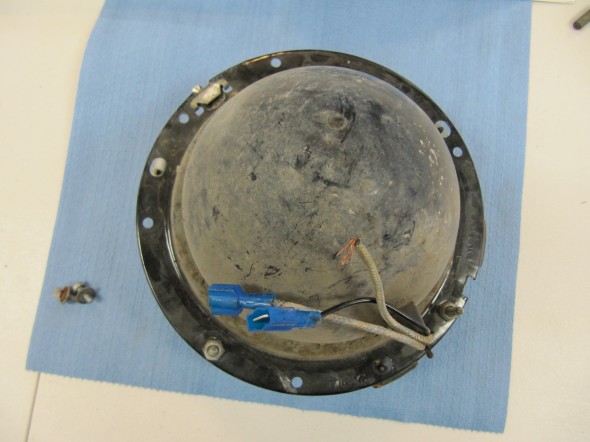
Headlamp Complete

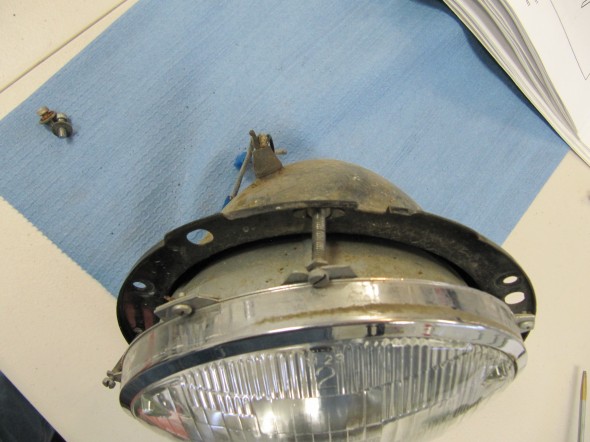
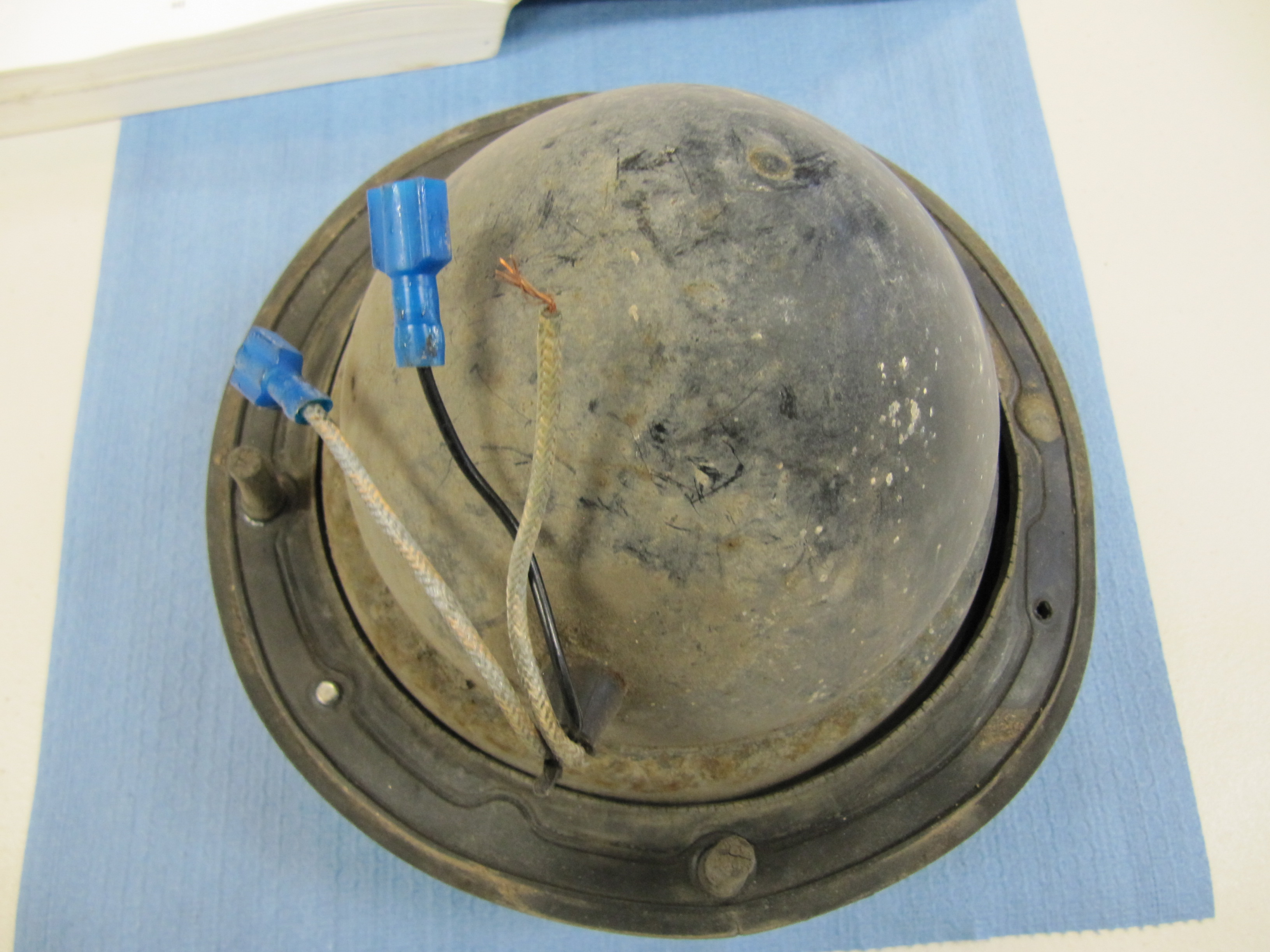
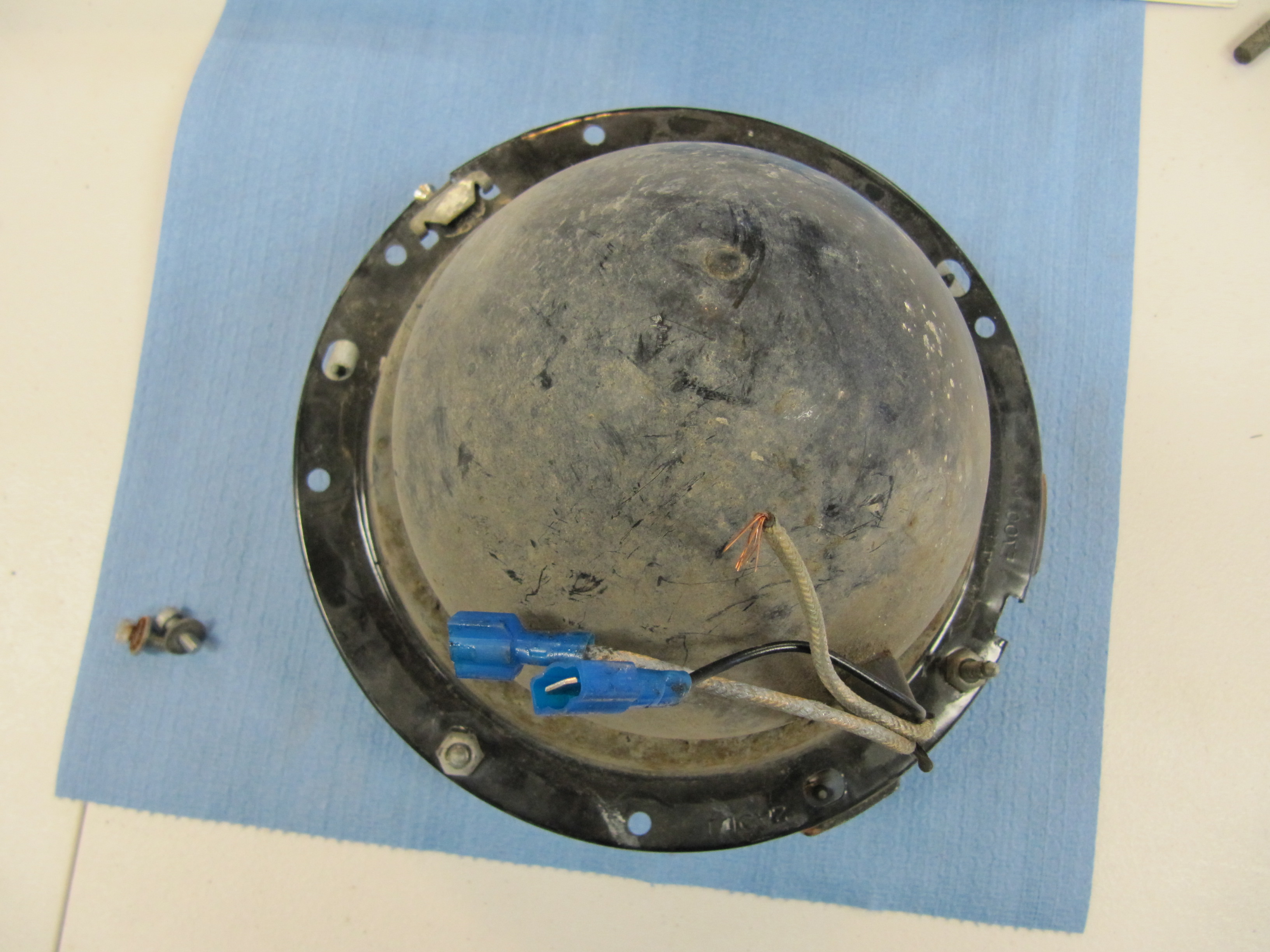
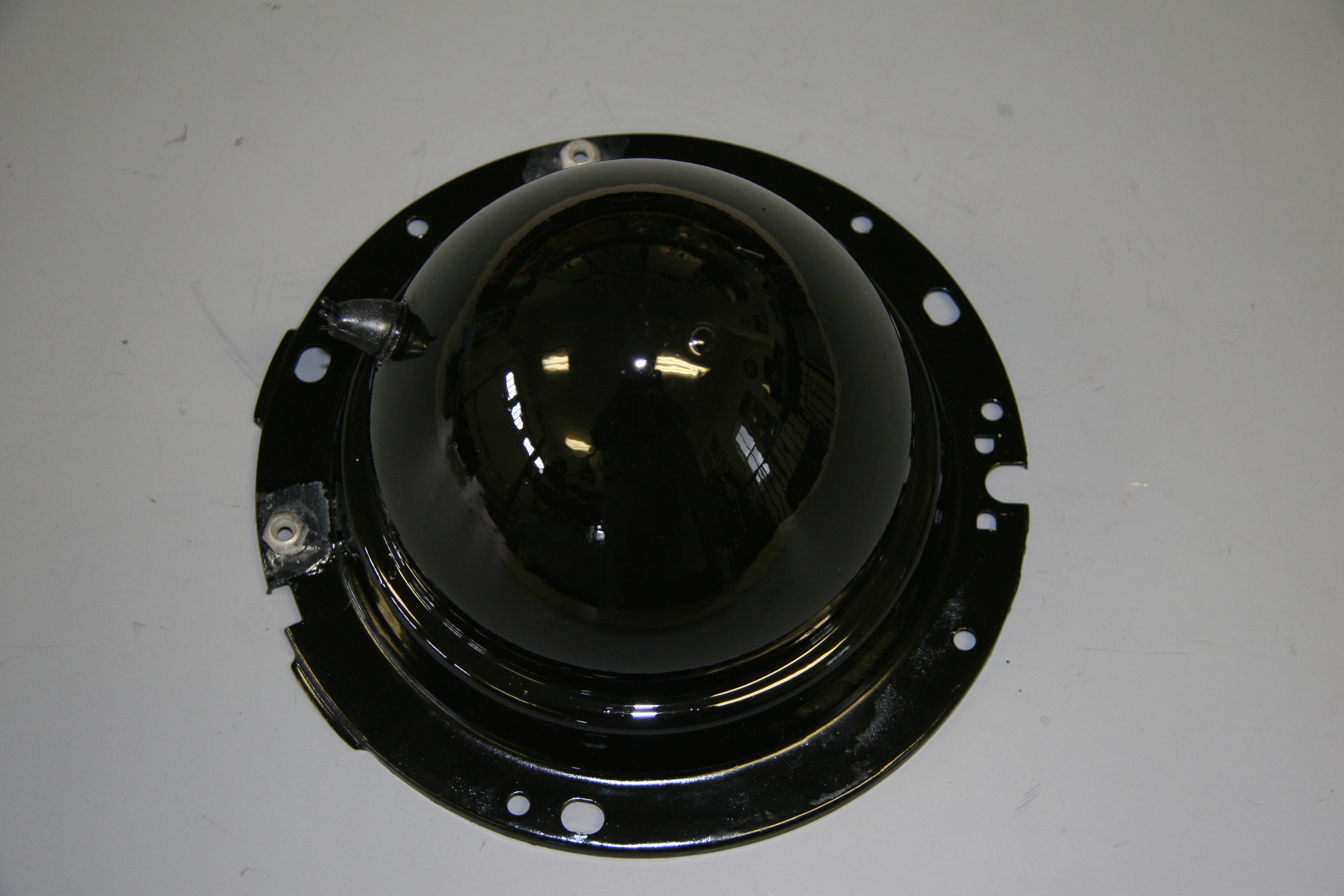
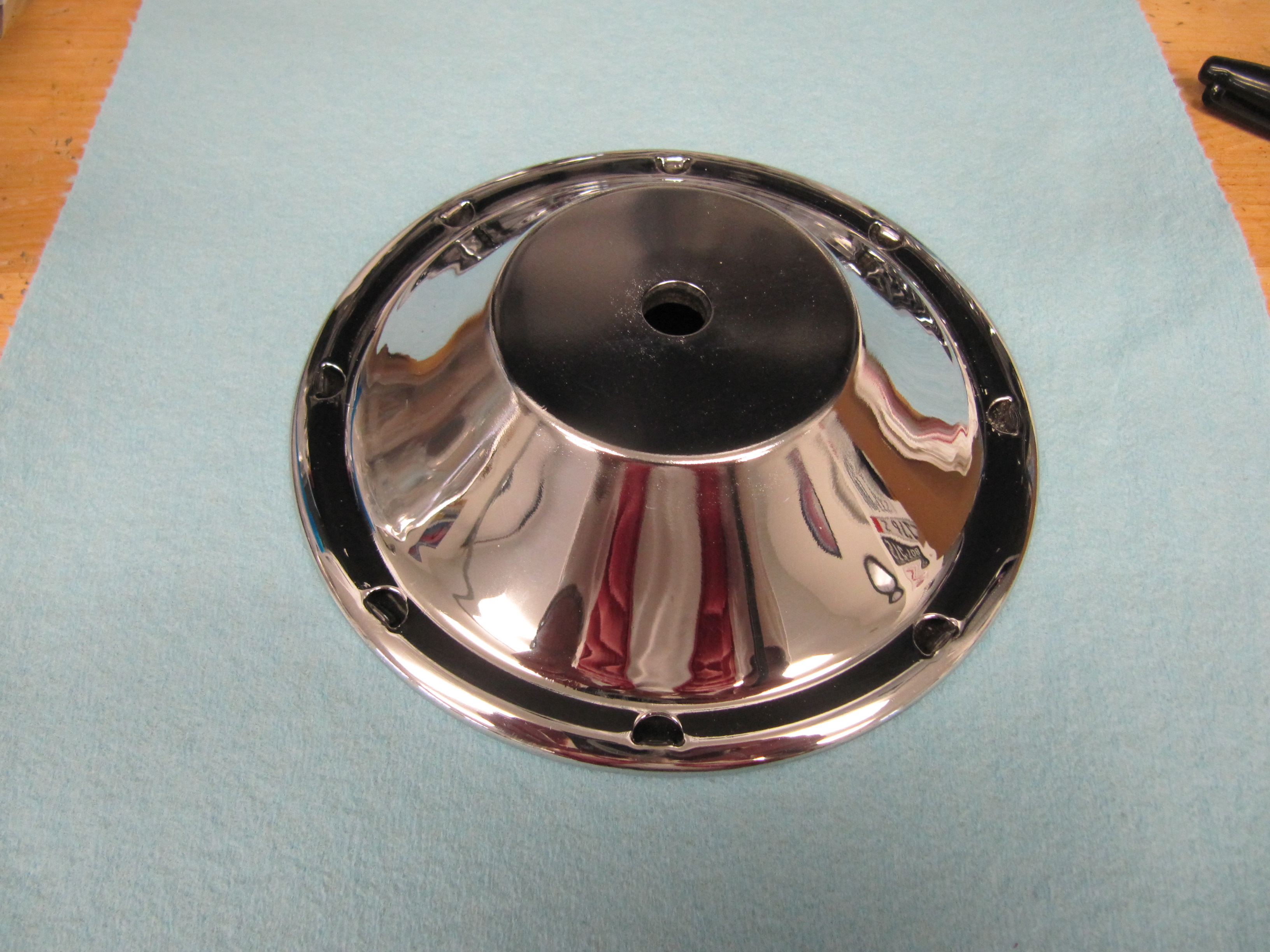
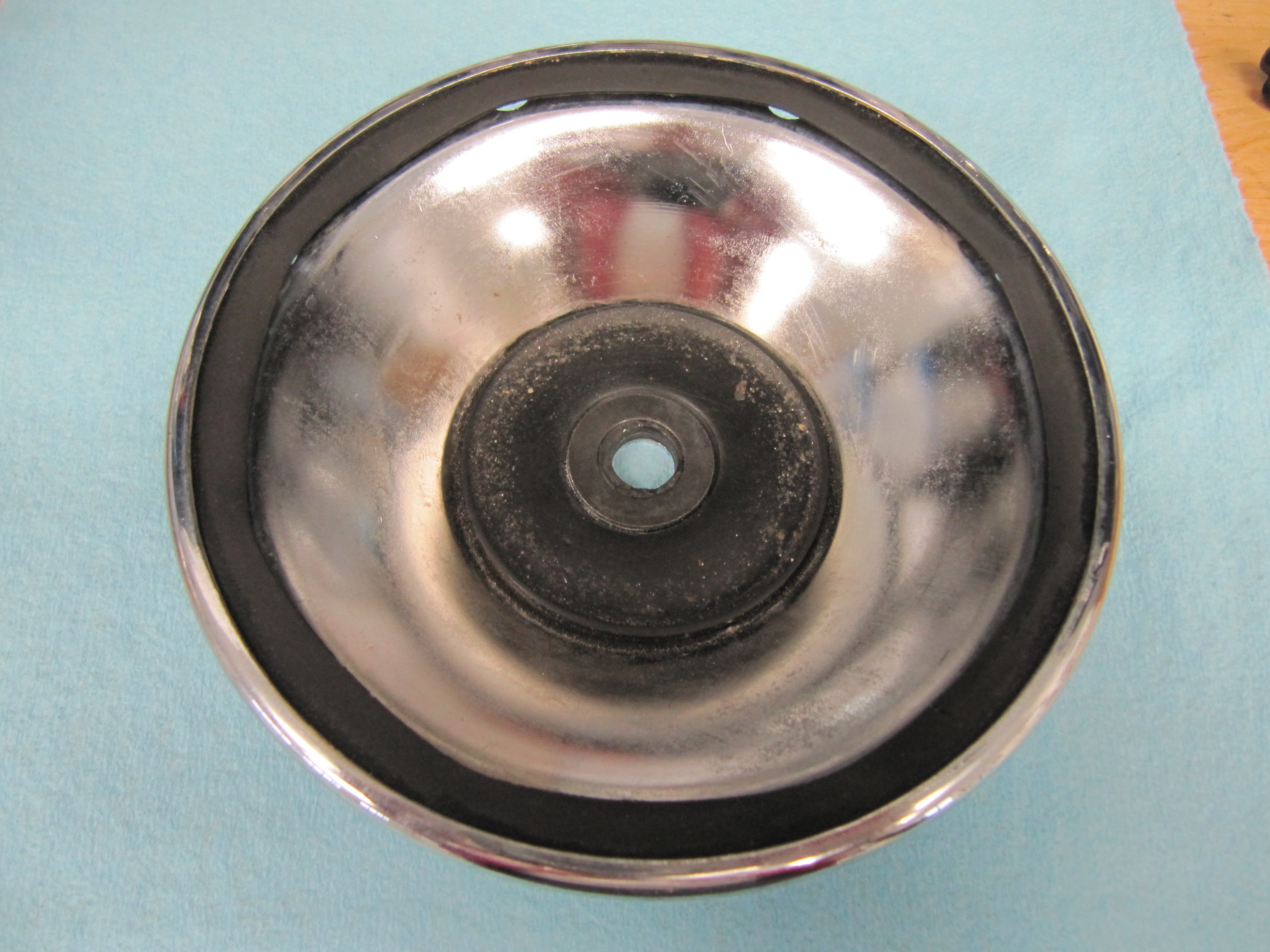
Headlamp Bowl

Headlamp Bowl

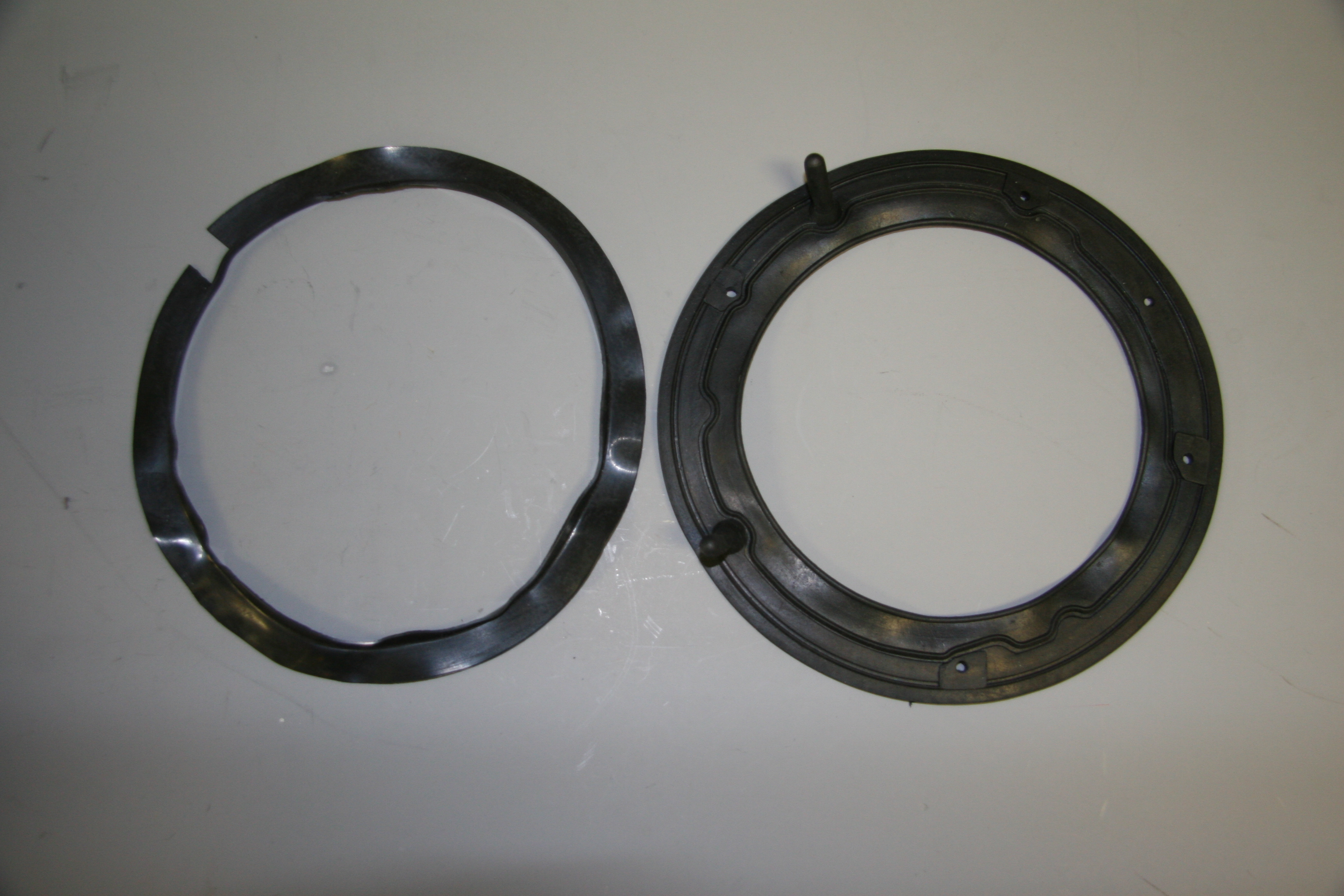
Headlamp Seal

Headlamp Seal

Two special trimmer screws are used to adjust the bulb setting. These are located at roughly 9 o’clock and 1 o’clock as seen in the diagram.
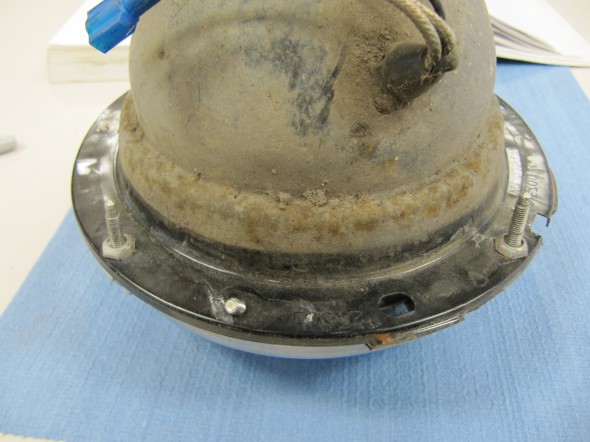
Trimmer Screws

Trimmer Screws

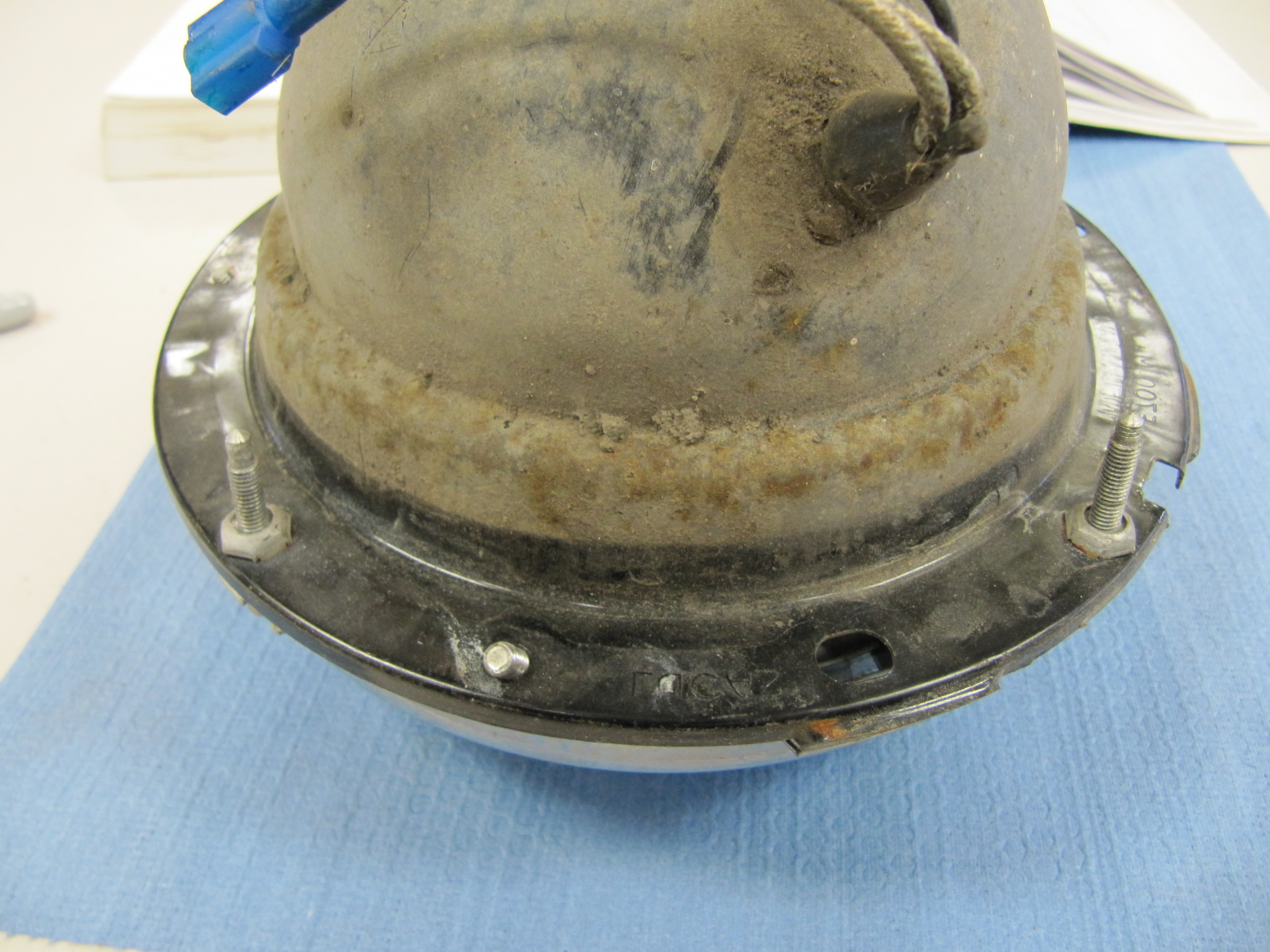
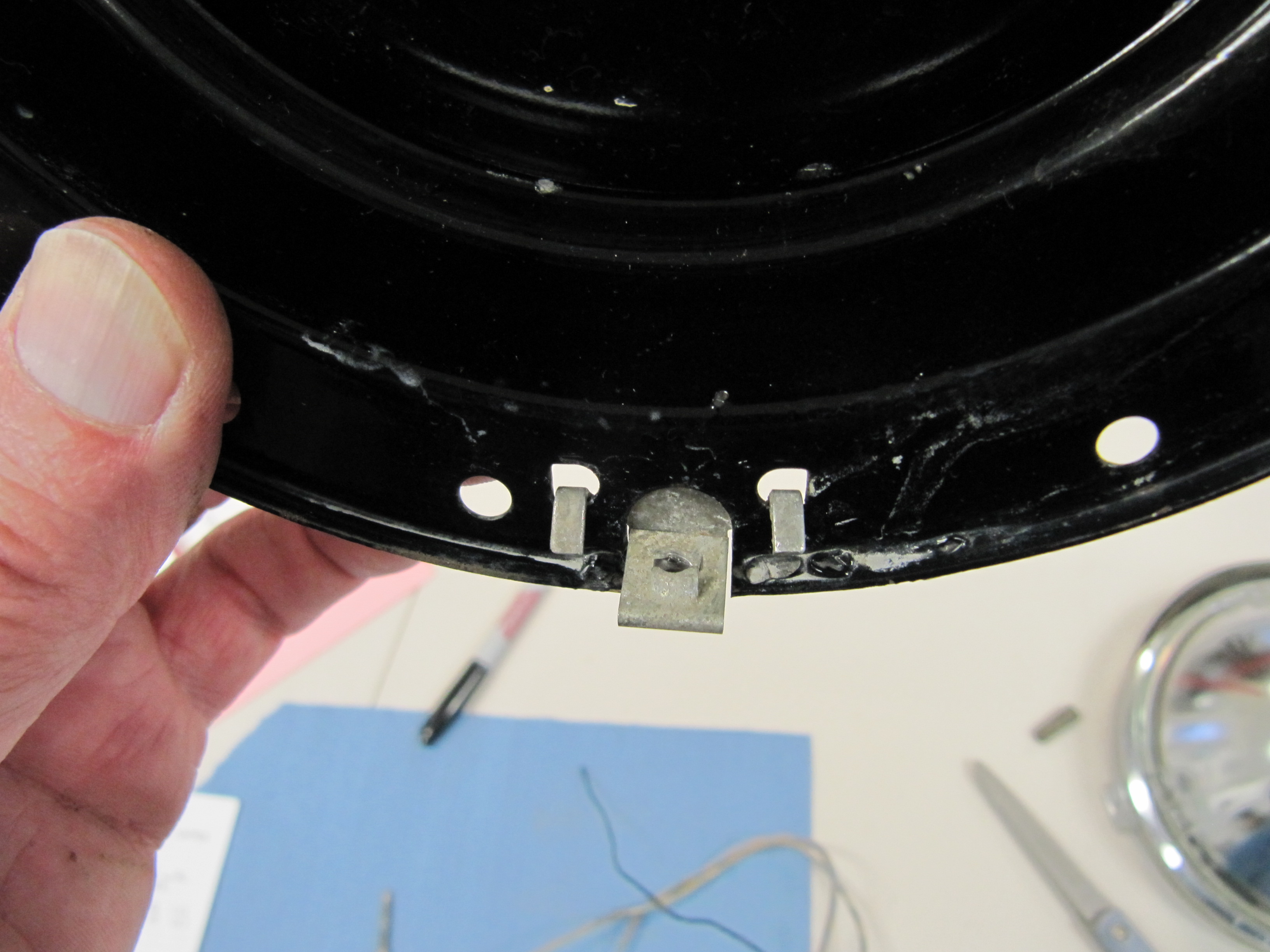
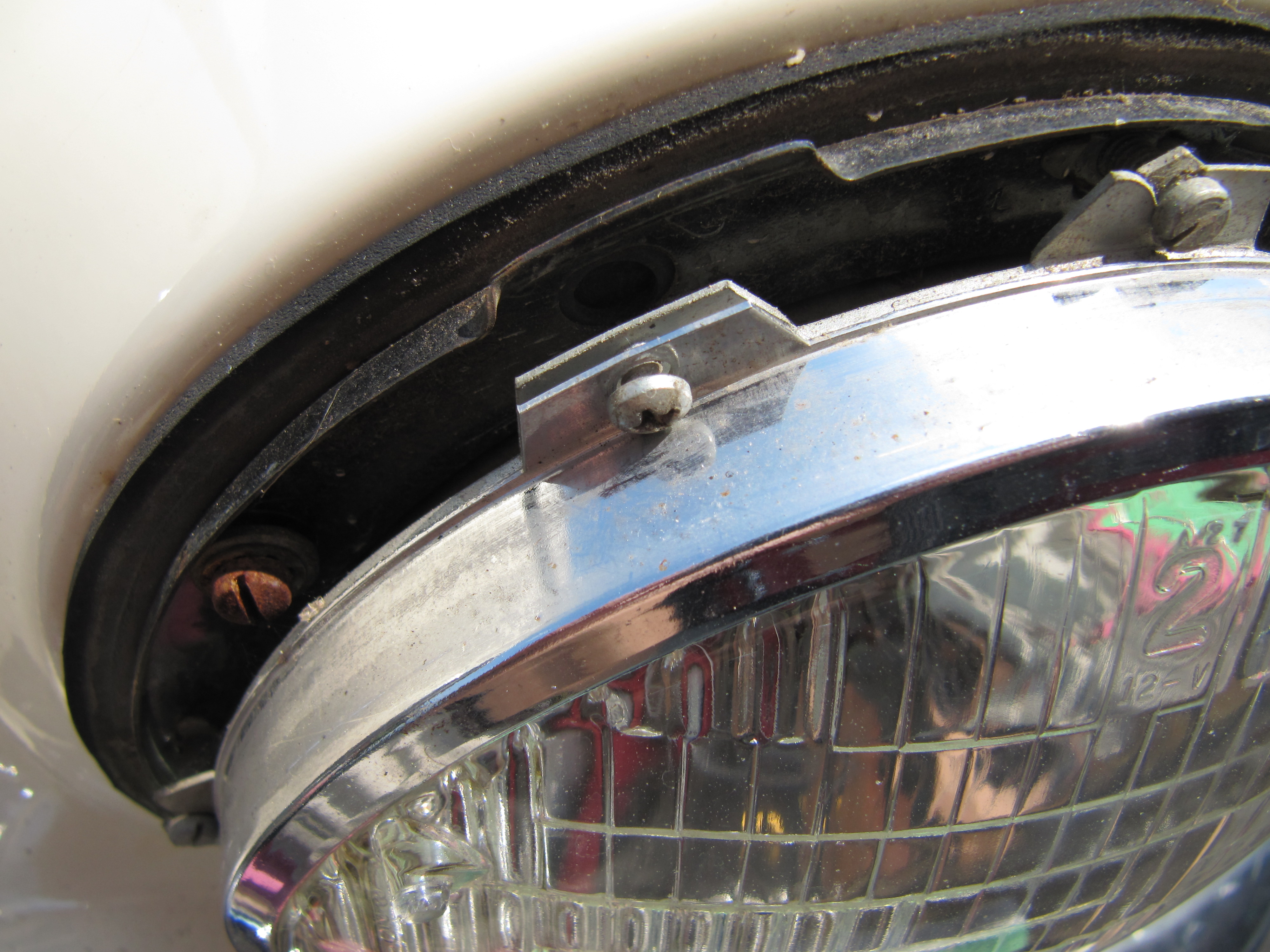
A chrome #8 slotted self tapping screw is removed from the spire nut at the bottom of the lamp to free the outer chrome trim ring.
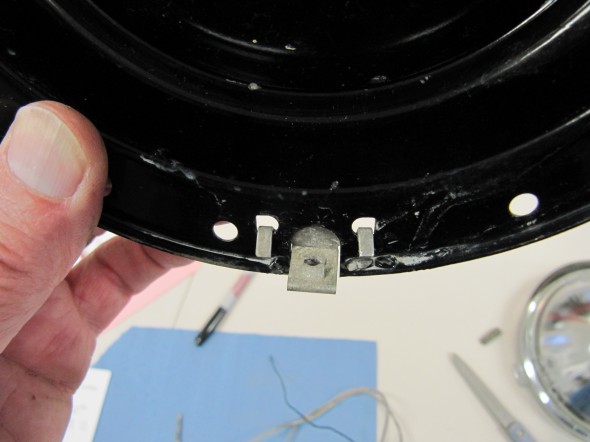
Spire Nut

Spire Nut

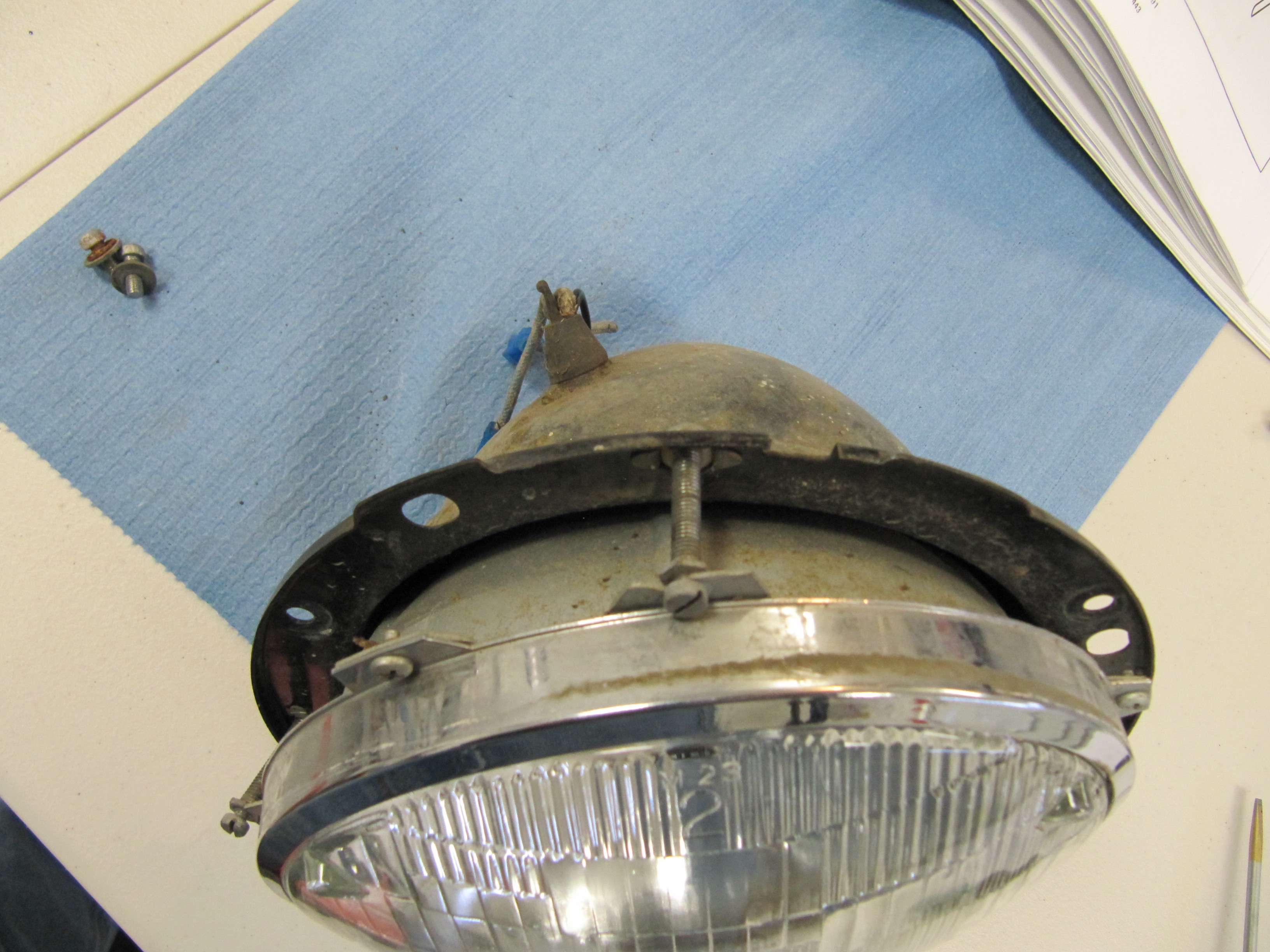
Three #6 phillips head screws fasten together the chrome retaining ring and the galvanized unit seating rim . These  screws are located at 11, 7, and 2 o’clock. They align with the oblong holes in the lamp bowl.
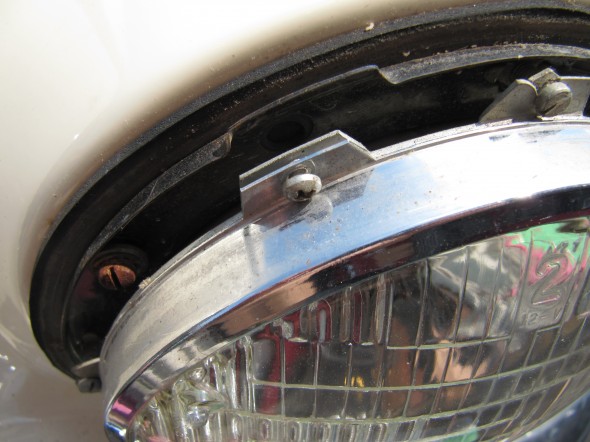
Headlamp Rims

Headlamp Rims

The seating rim is held to the bowl with a Spring, Fixing Unit Seating Rim.

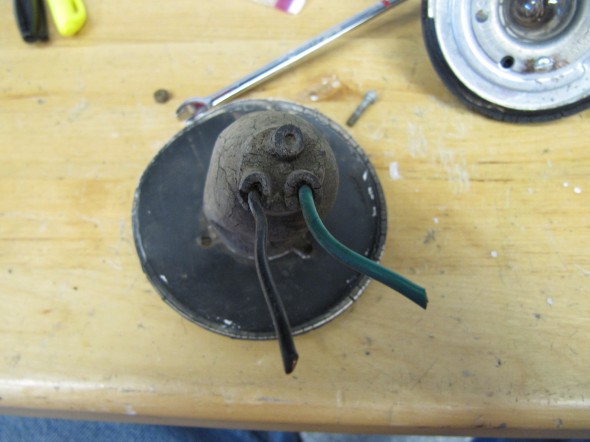
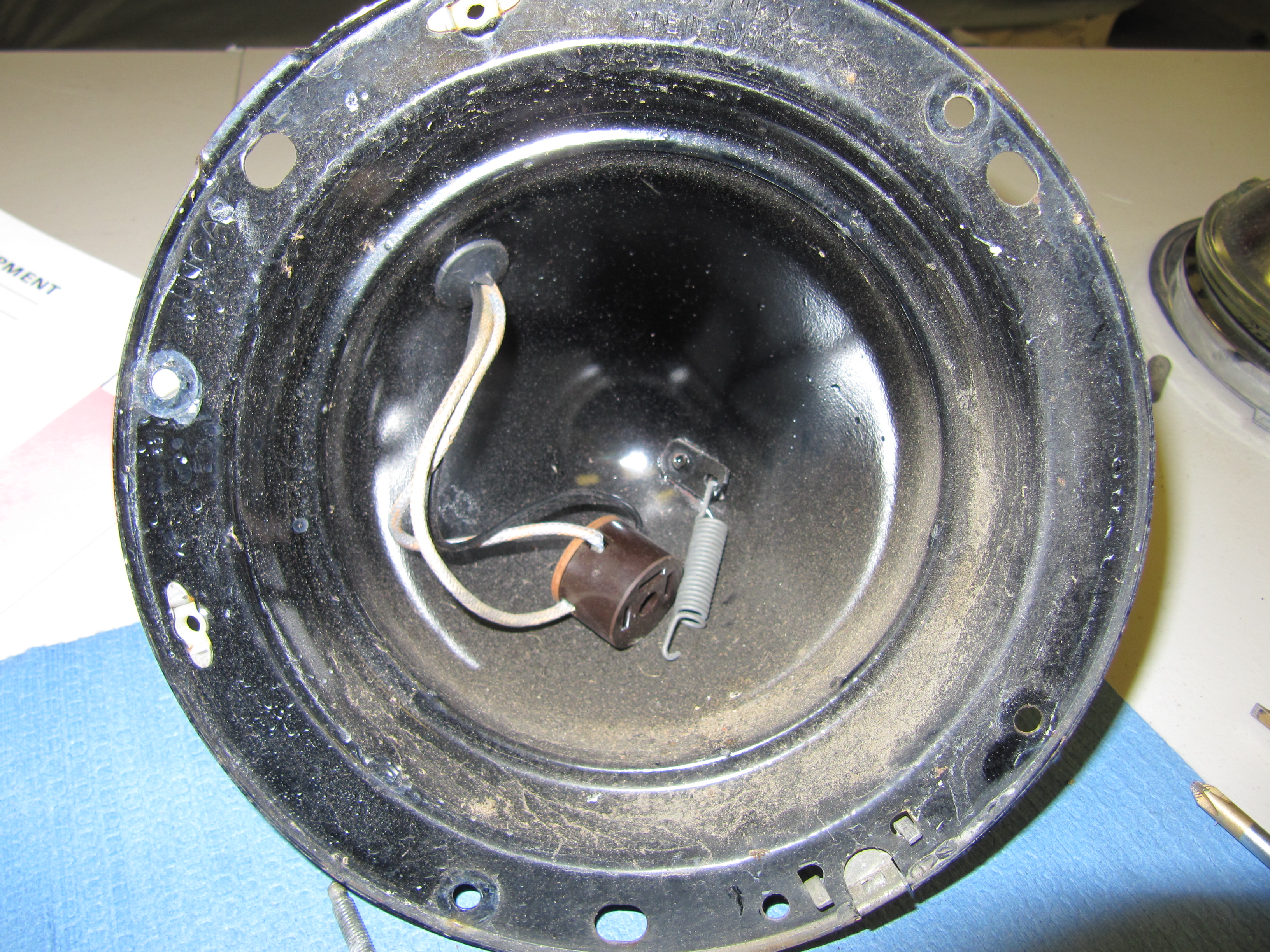
The bulb adaptor wiring sits behind the bulb and its wiring feeds through the rubber seal in the back of the bucket. New plug adapters were sourced from British Wiring and all the wiring was replaced with new.
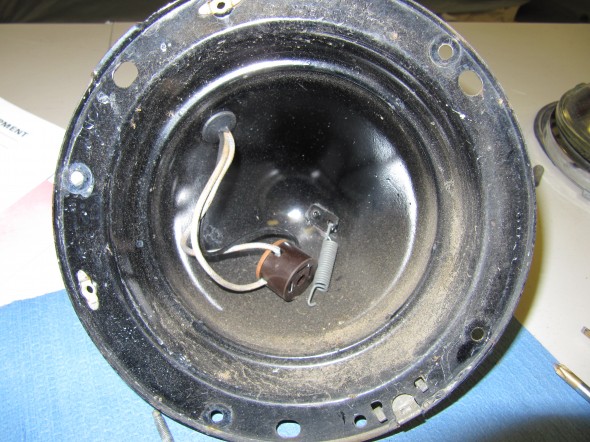
Sealed Beam Unit Adaptor and Bulb Retaining Spring
Sealed Beam Unit Adaptor and Bulb Retaining Spring


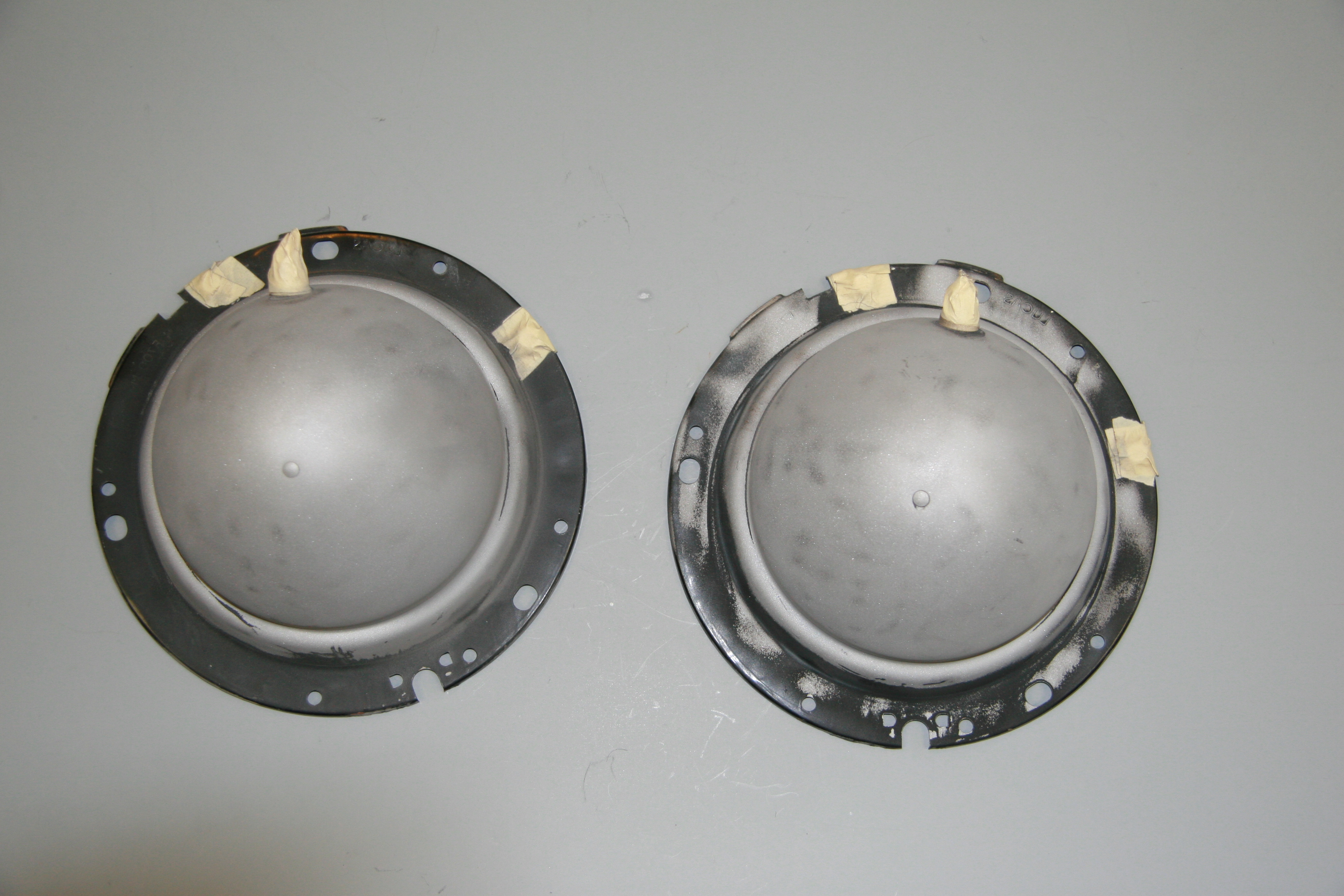
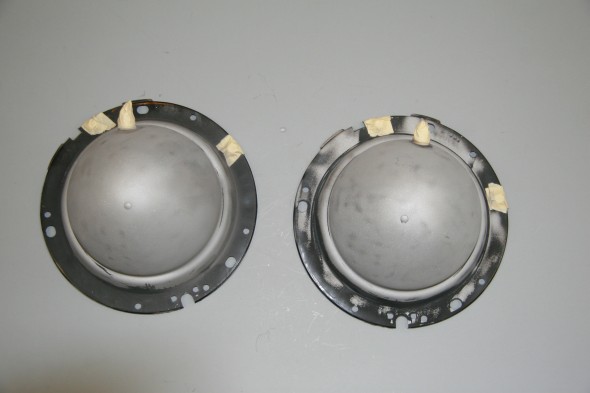
Headlamp Buckets Ready to Paint
Headlamp Buckets Ready to Paint

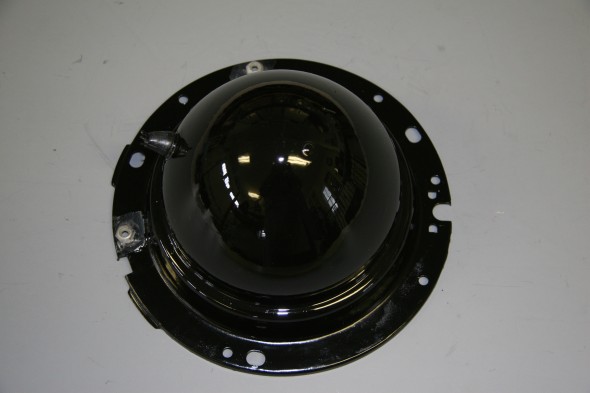
Painted Headlamp Bucket
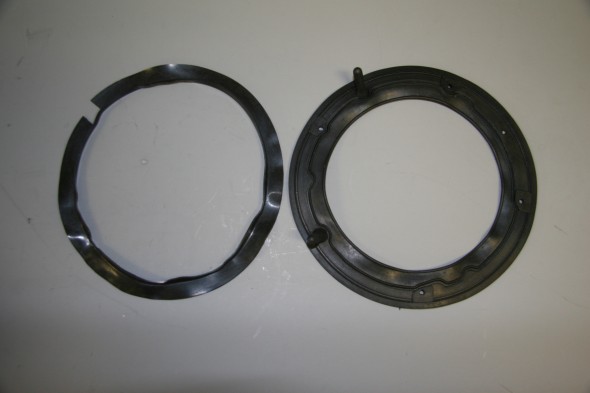
Painted Headlamp Bucket

Dust Excluder behind headlight Outer Rim and Headlamp Body Gasket

Dust Excluder behind headlight Outer Rim and Headlamp Body Gasket

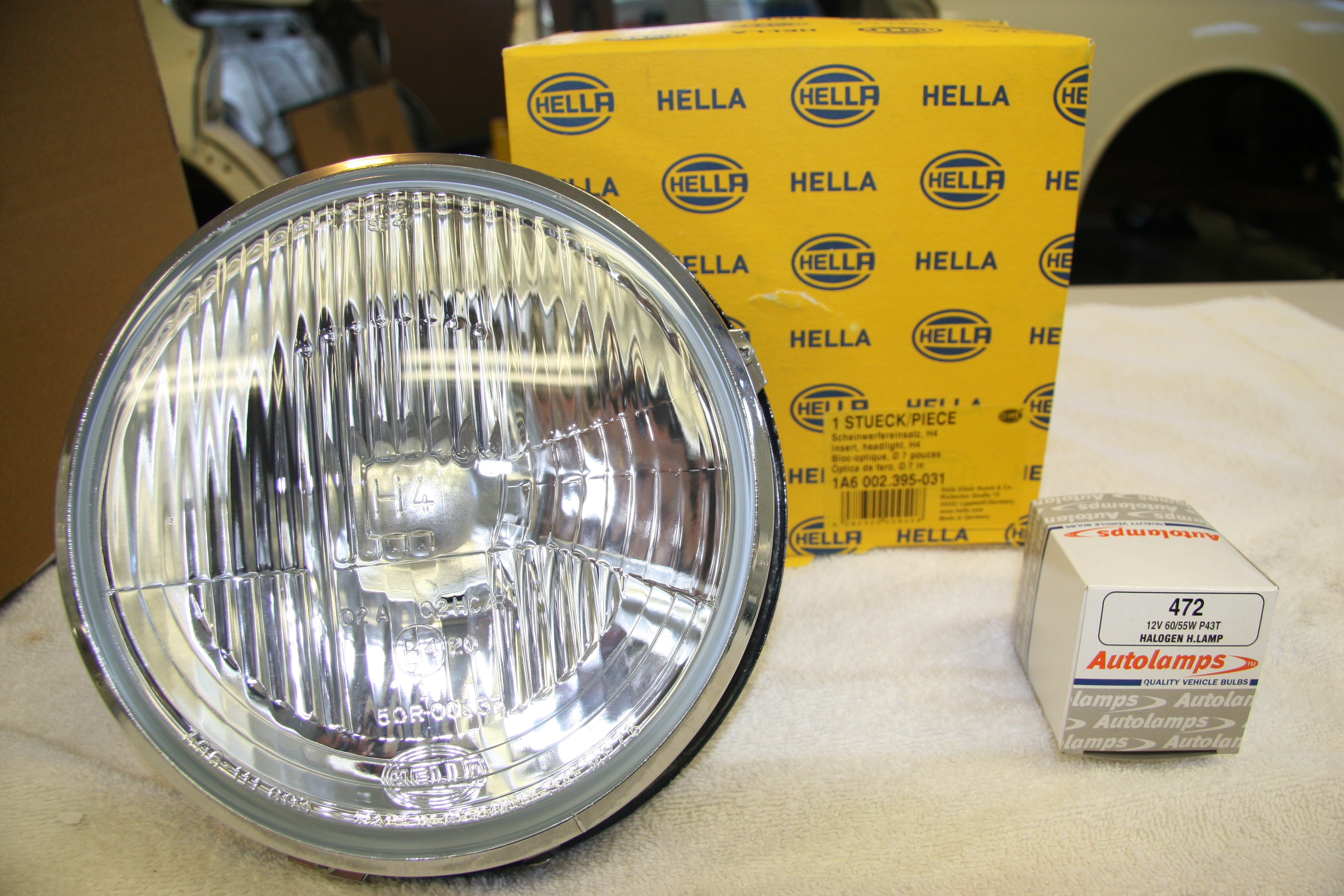
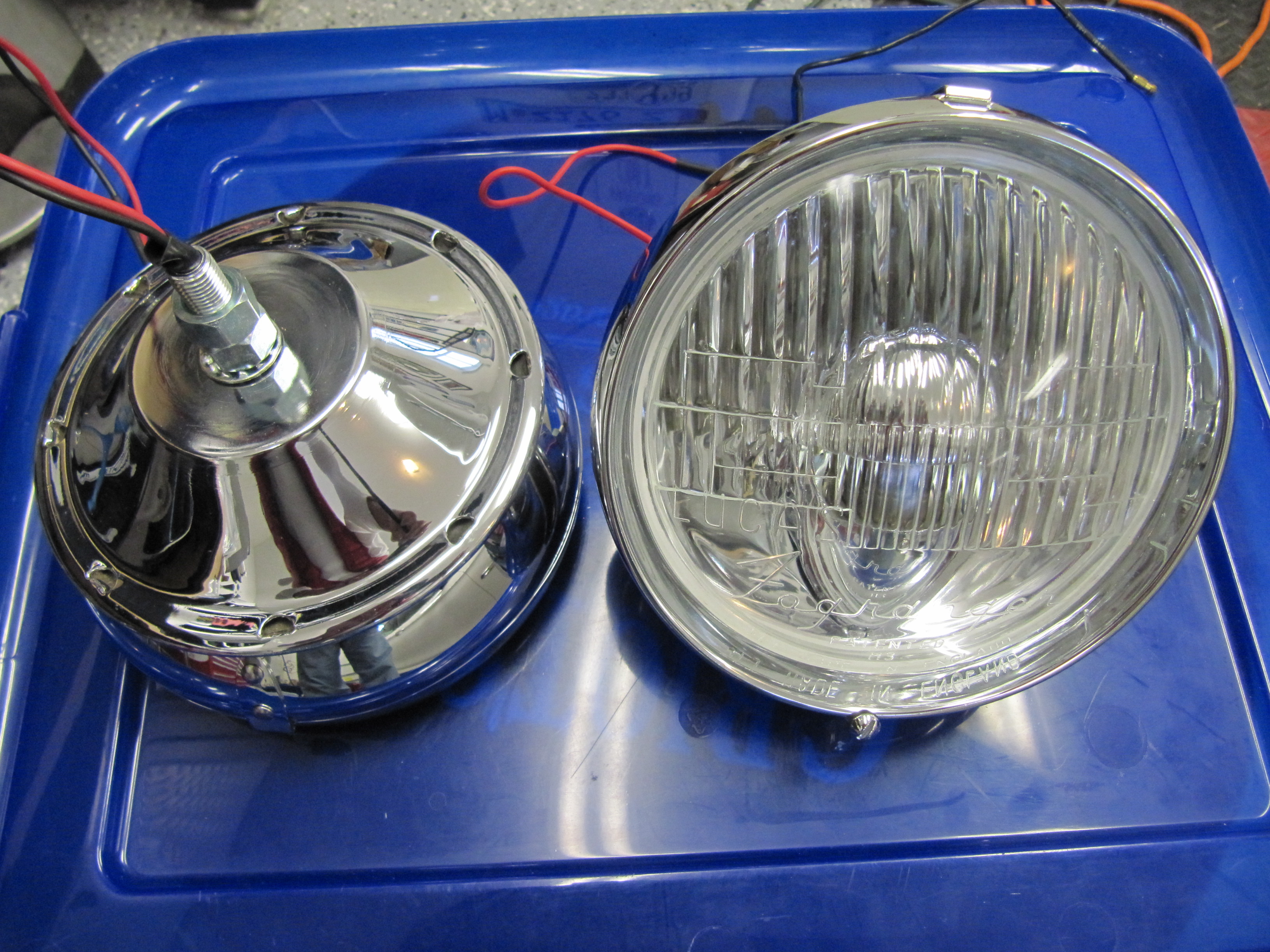
I decided to upgrade the lighting from the original sealed beams and ordered the halogen kit available from SNG Barratt. The Hella lamp number is 1A6 002.395-031 and the bulb is Autolamps Halogen, 472 12V 60/55W P43T. Generating a 5amp requirement per bulb.
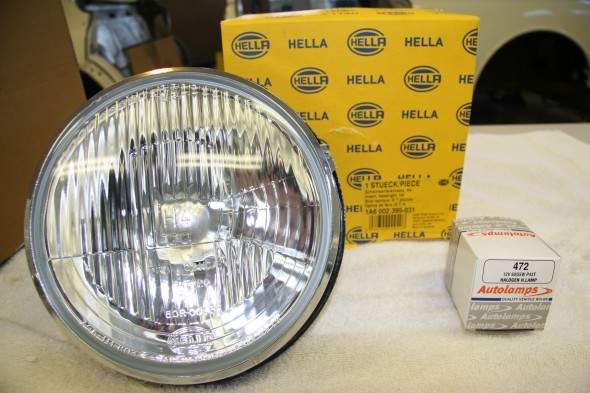
Hella Halogen Headlamps
Hella Halogen Headlamps

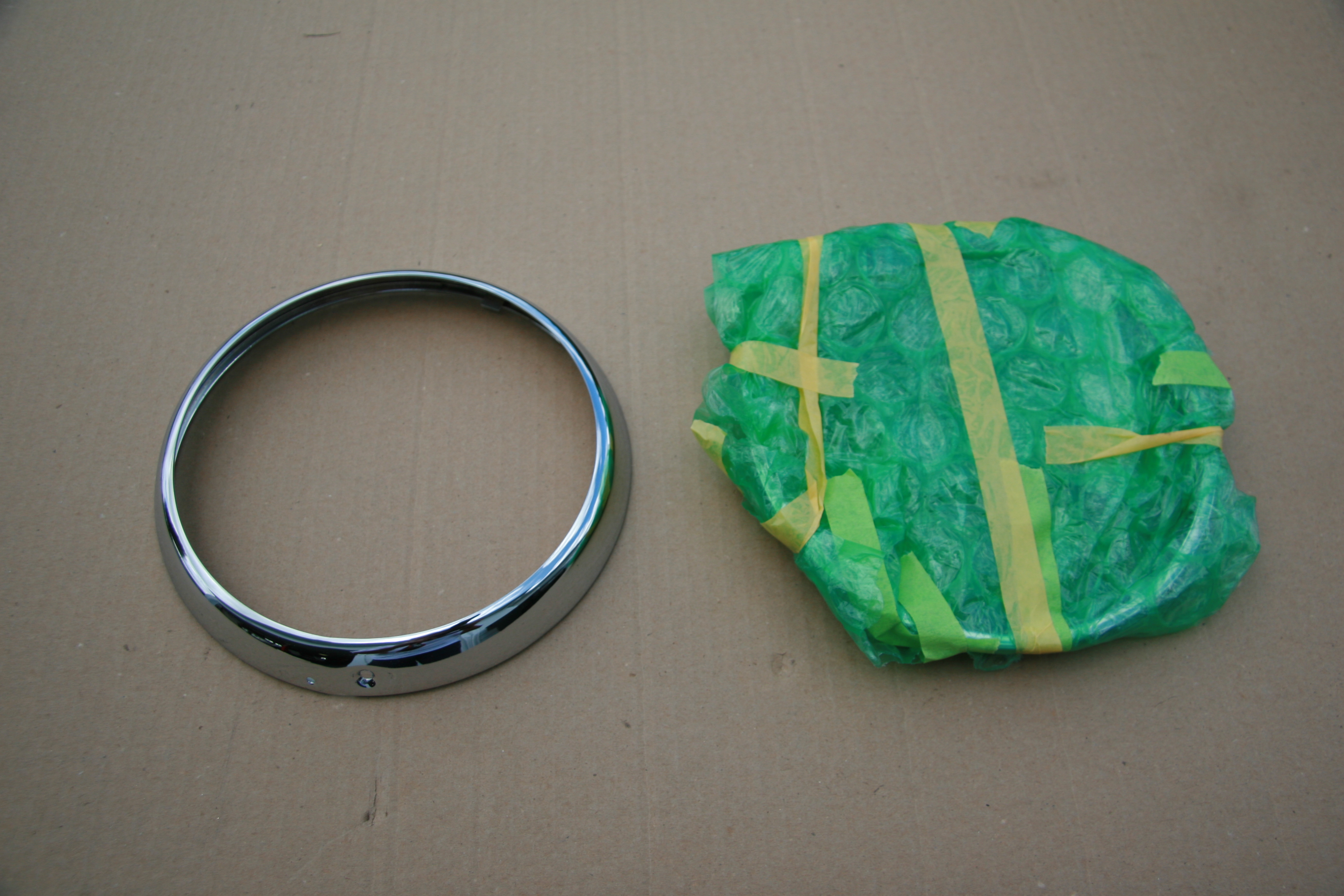
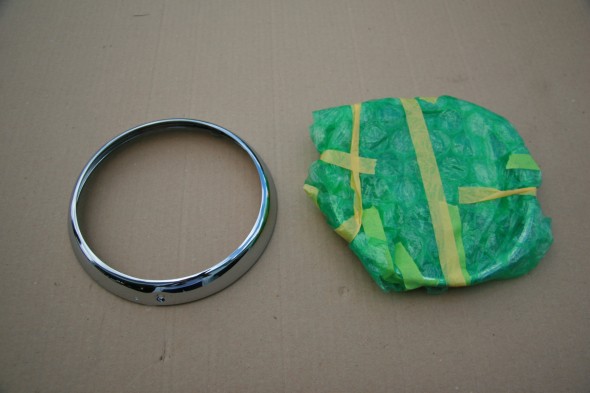
Headlamp Outer Rim

Headlamp Outer Rim

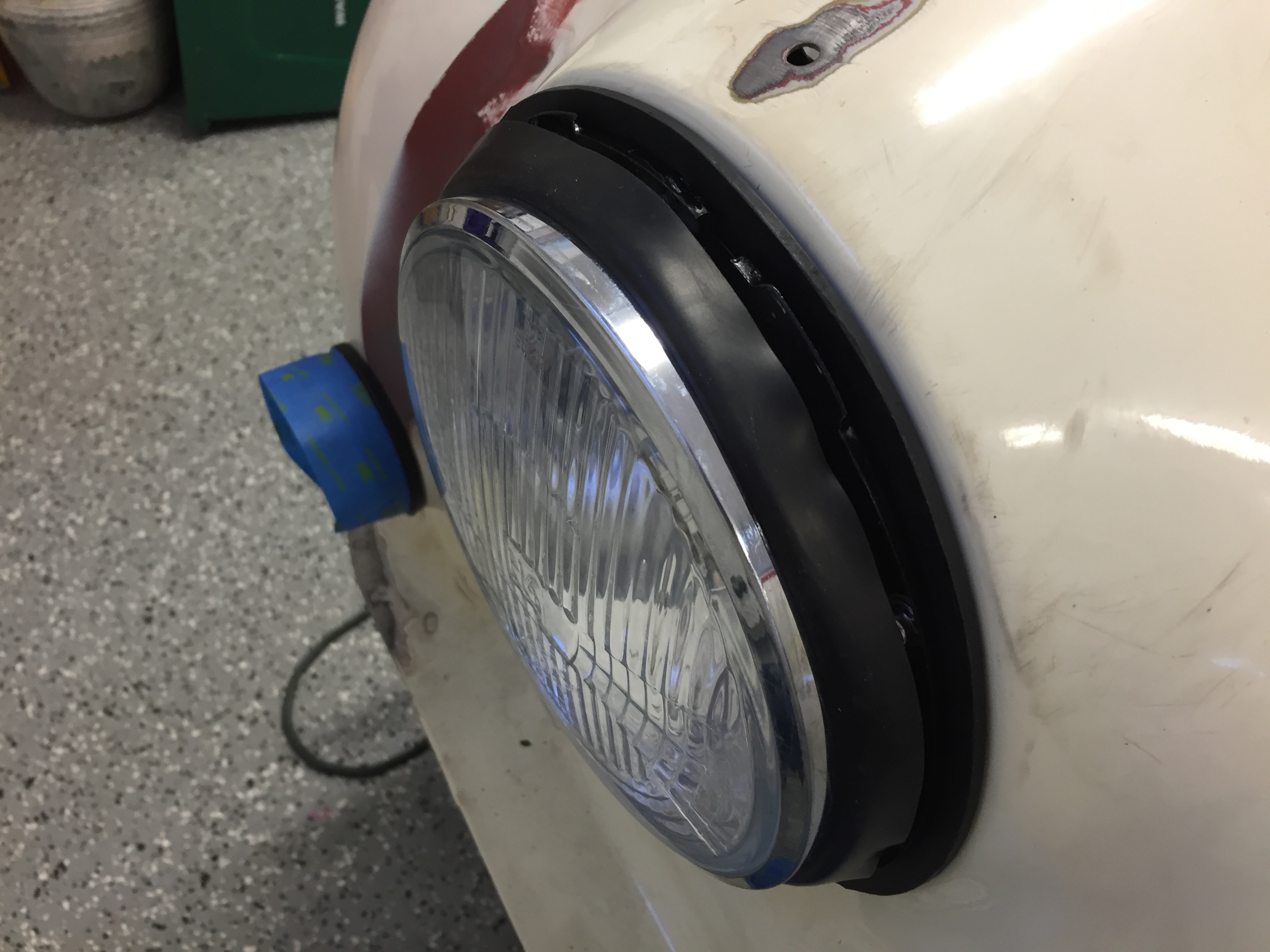
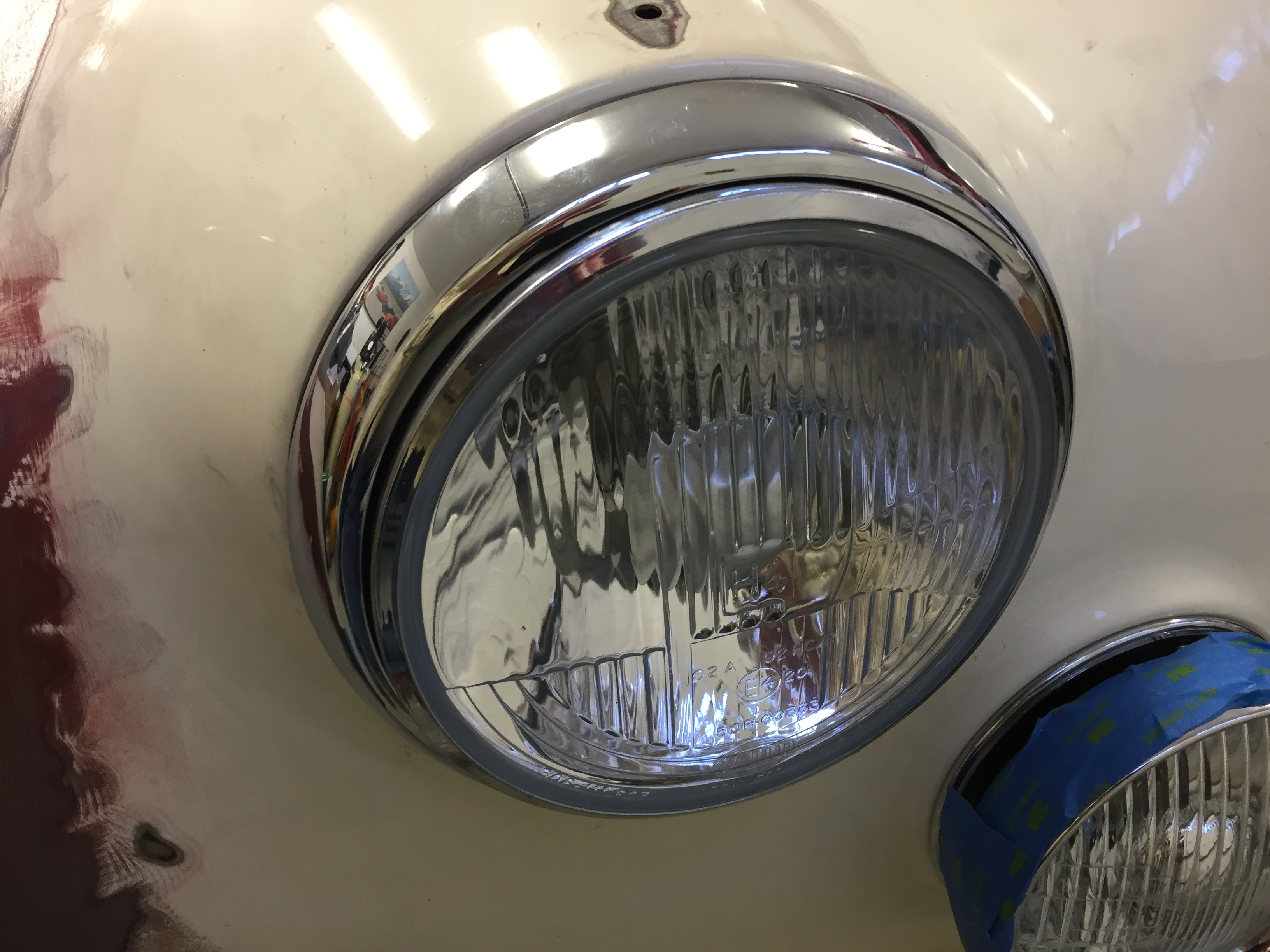
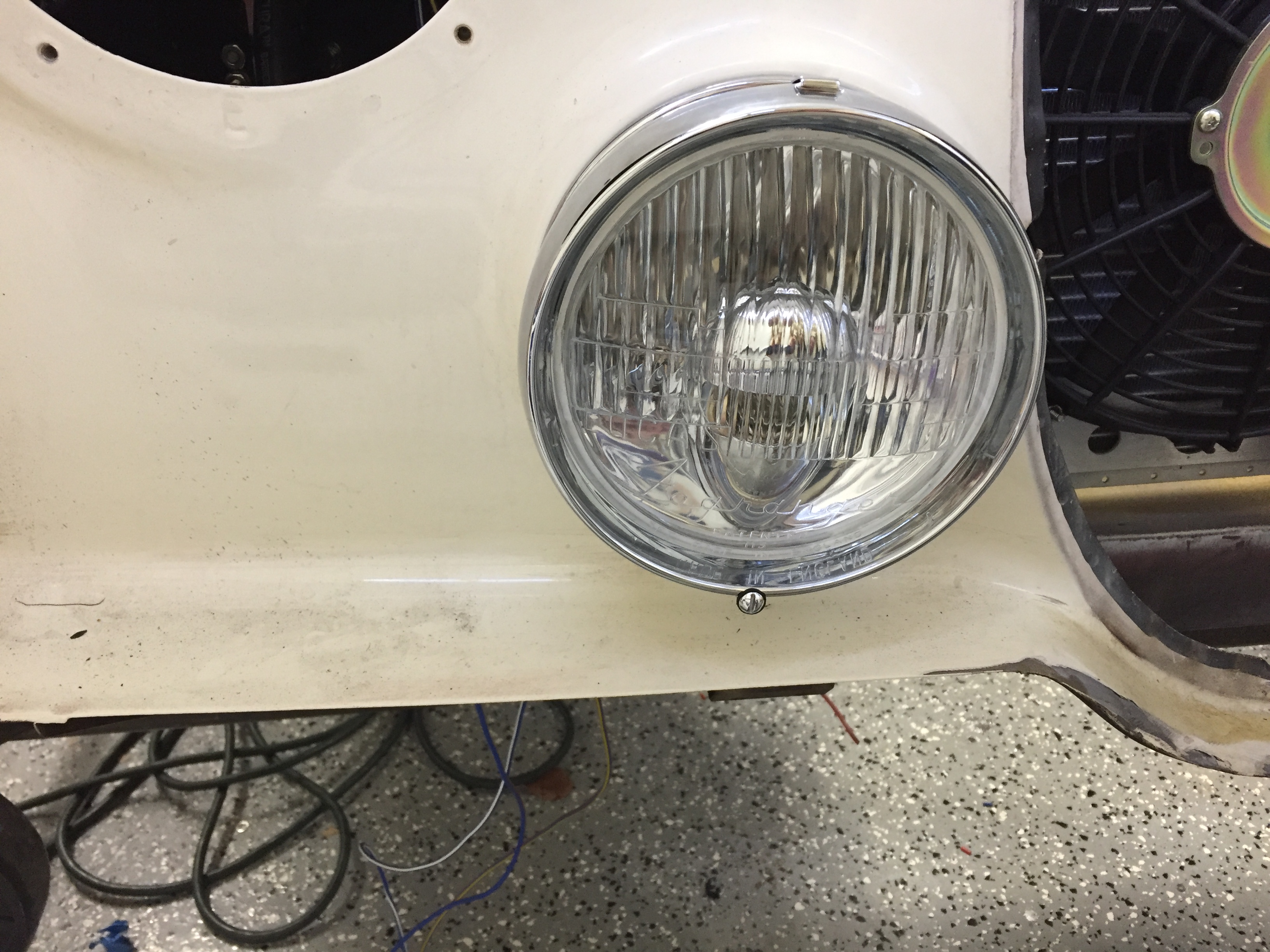
I had the original headlamp rims rechromed and they look great! These images show the headlights installed temporarily for electric circuit testing. They are not adjusted for focal point.
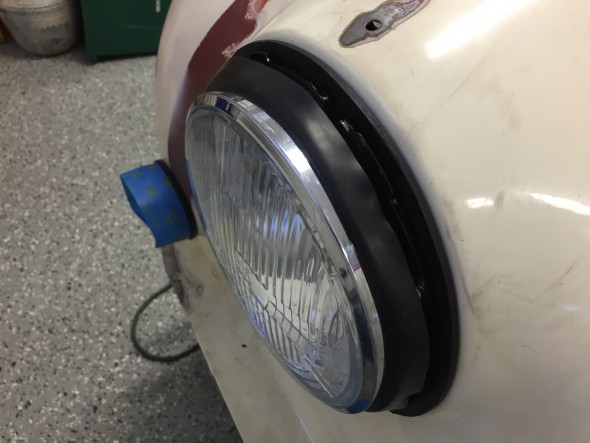
Headlight Dust Excluder in Place
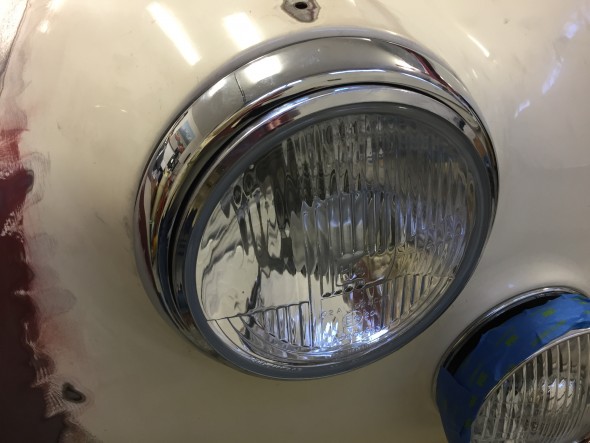
Headlight Dust Excluder in Place

Headlight Installed with Newly Chromed Trim Ring

Headlight Installed with Newly Chromed Trim Ring

Front Flasher Lamp

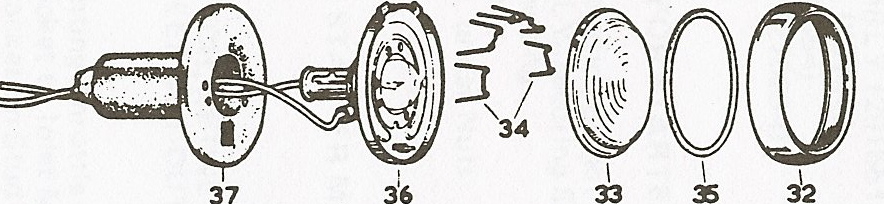
The front flasher lamps consist of a chrome rim, a clear lens, lens retaining wires, a lens seating gasket, a bulb holder and seating plate, the terminal sleeve, a 21 watt bulb (C.9126), and a rubber body.
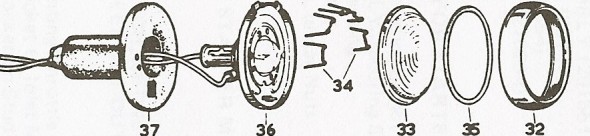
Front Flasher Lamp

Front Flasher Lamp

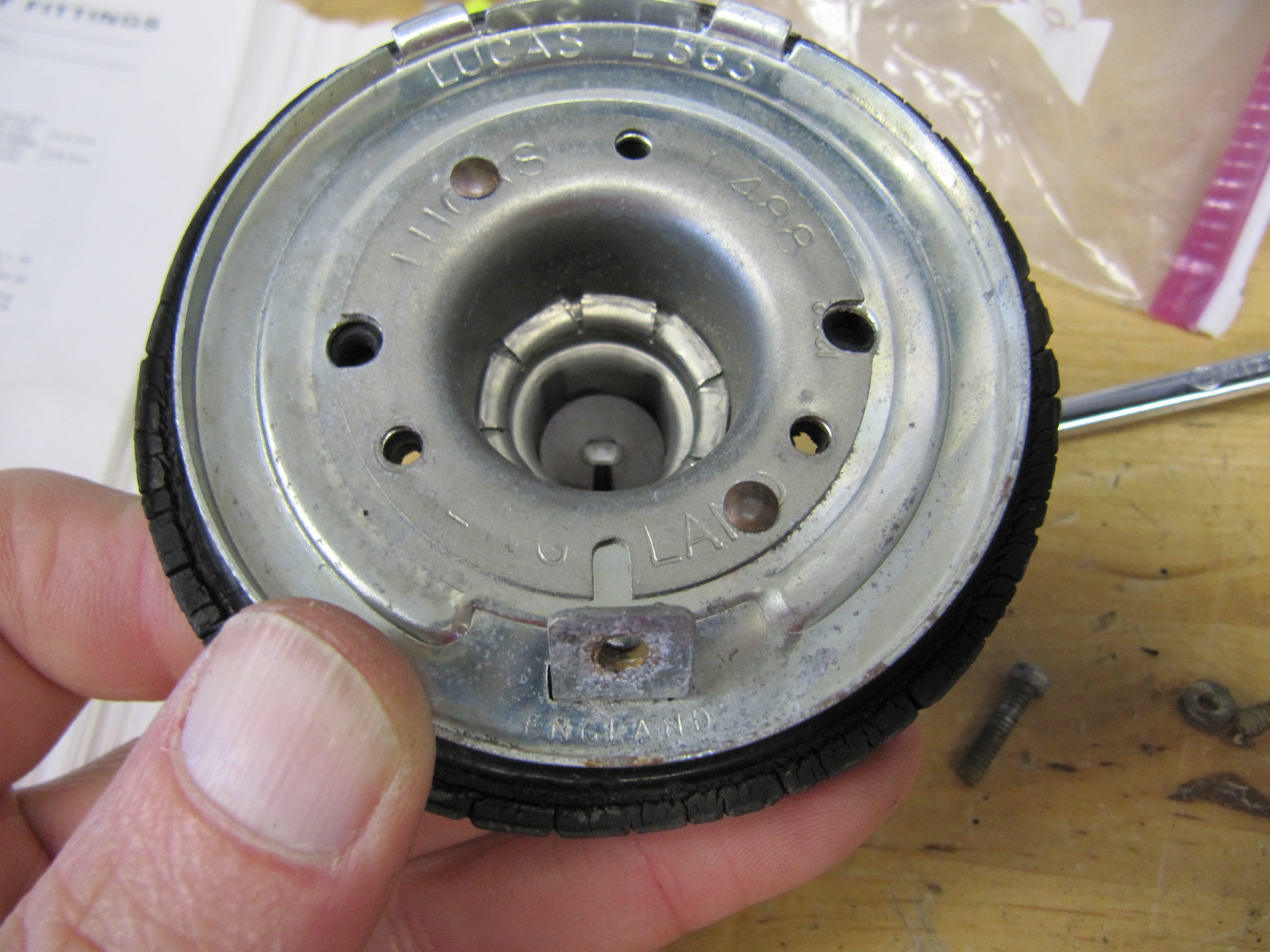
My original seating plates were in good shape; however, I replaced the lens, retaining wires, lens seating gasket, chrome rim, and rubber body with new items.
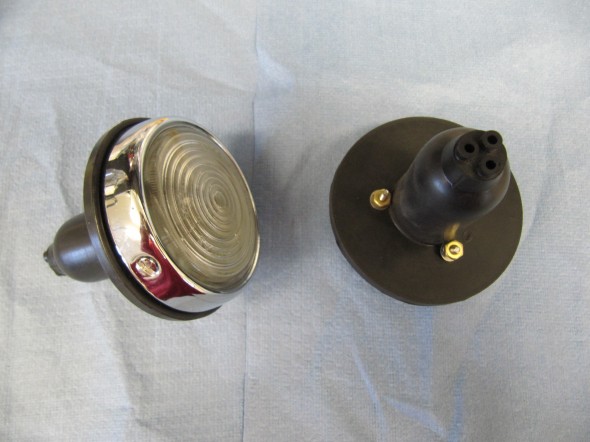
New Assembled Front Flashers
New Assembled Front Flashers

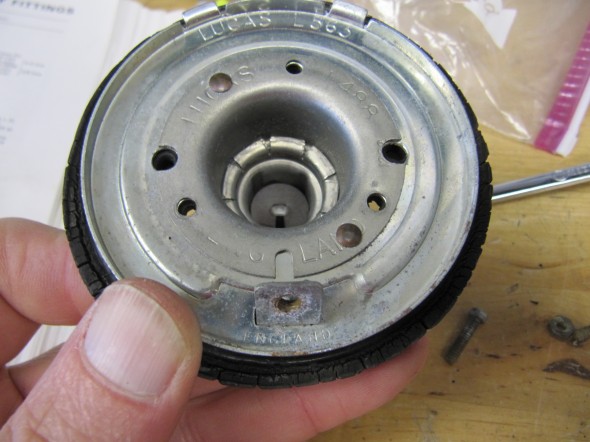
Seating Plate
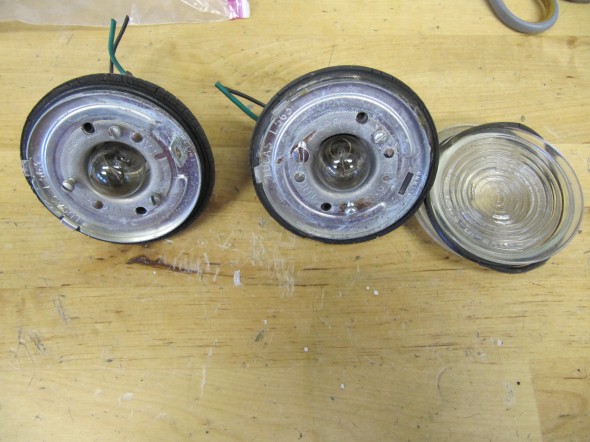
Seating Plate

Seating Plates

Seating Plates

Rubber Boot

Rubber Boot

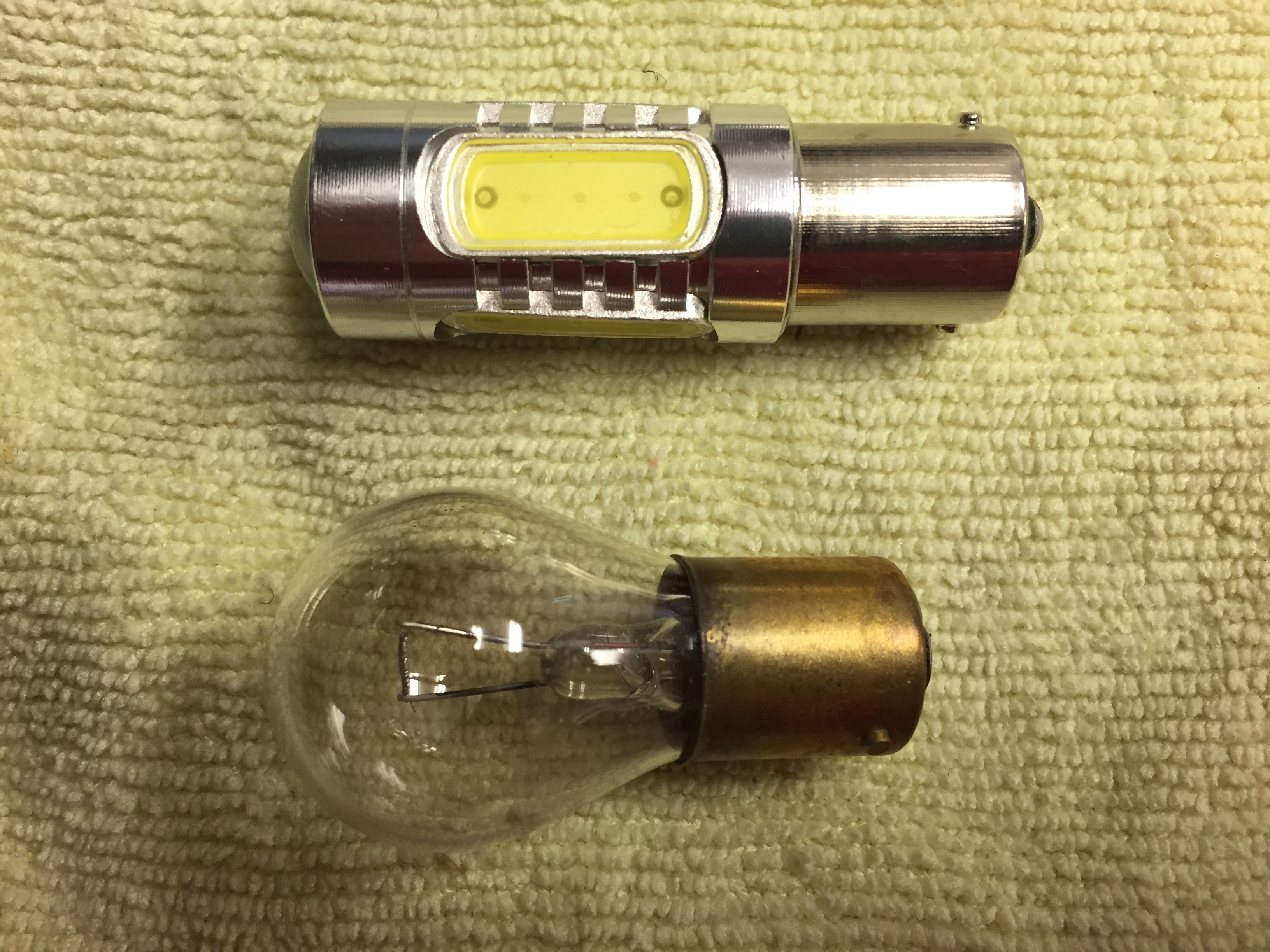
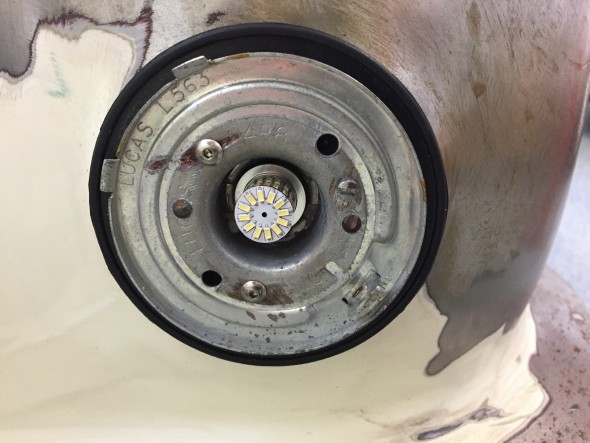
I also disassembled the wiring terminal in the fixture and installed new wiring in the lamp. When assembled to the car, the three machine screws securing the rubber boot to the car body should not be over-tightened as this makes snapping on the chrome lens surround almost impossible! New LED flasher bulbs “382Flashers” were sourced from 4Sight Automotive and installed as substitutes for the original incandescent bulbs.
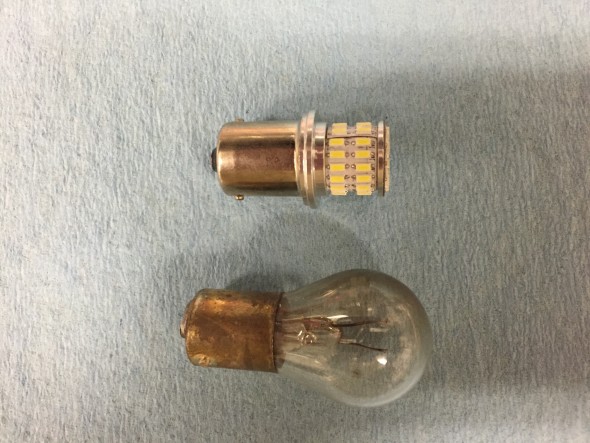
Original 21 Watt Bulb with New LED
Original 21 Watt Bulb with New LED

Turn Signal Flasher with LED Installed

Turn Signal Flasher with LED Installed

I added all new sleeving for the wiring of all of the lamps in the car.
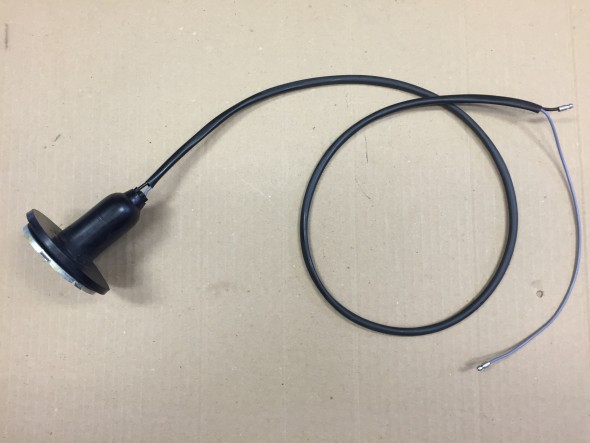
Turn Signal Flasher Wiring

More information about the wiring for the flasher lamps may be found at the Building a New Wiring Harness post.
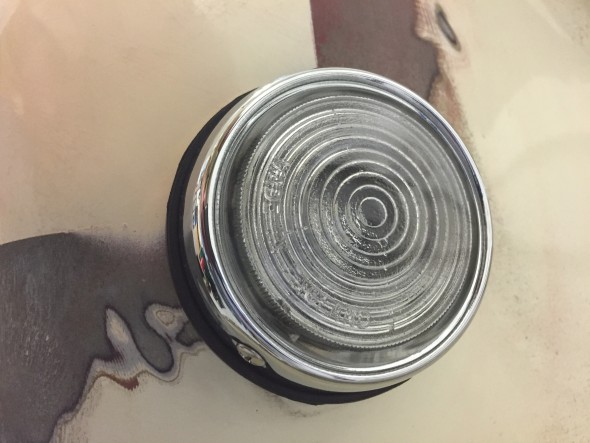
Front Flasher Turn signal

Front Flasher Turn signal

Tail Lights
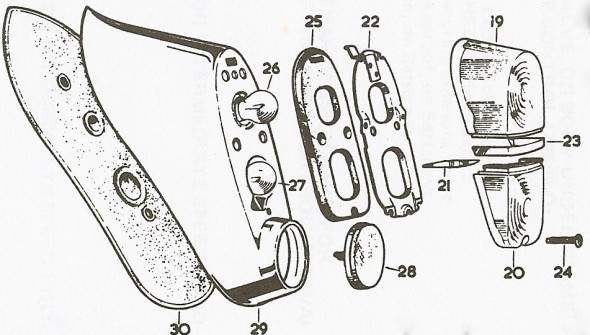
MK2 Tail Light

MK2 Tail Light

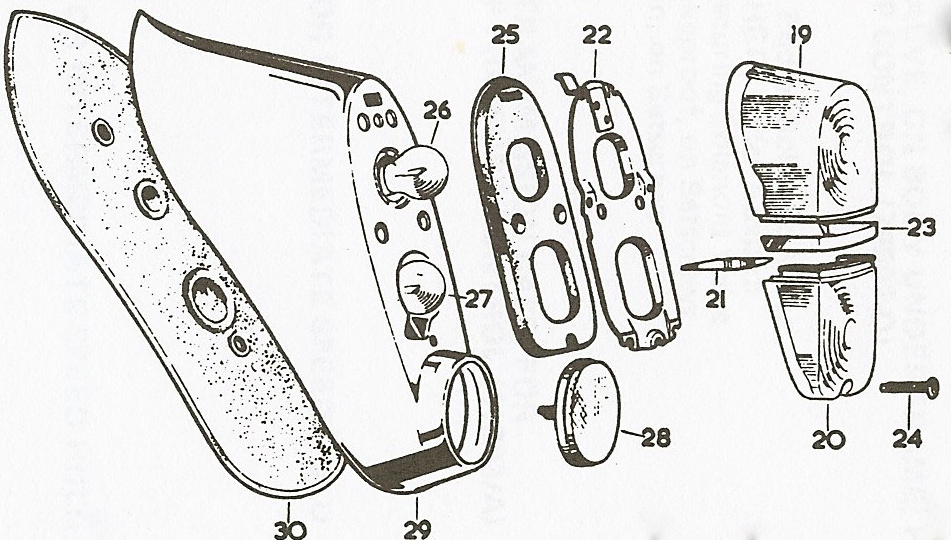
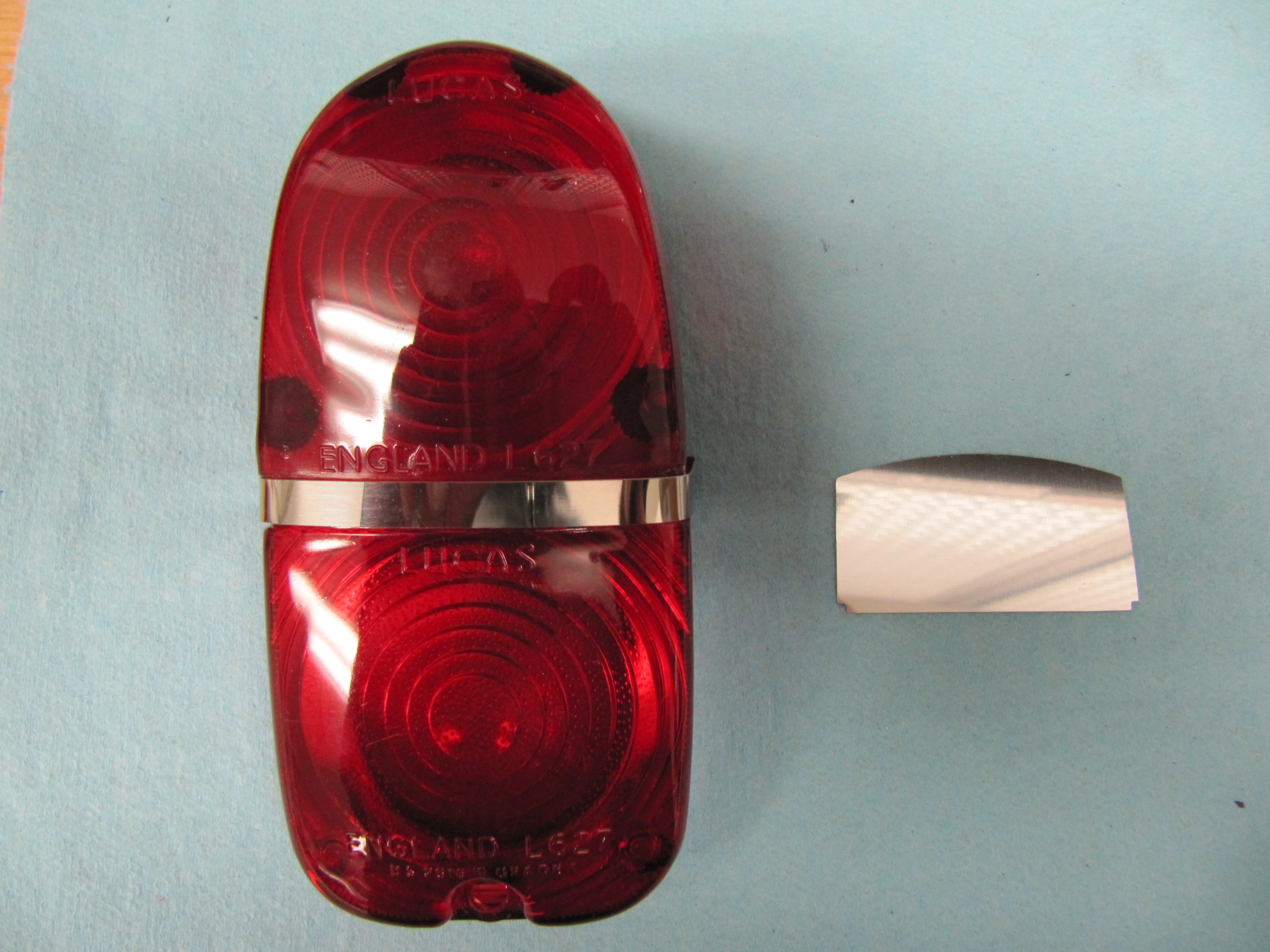
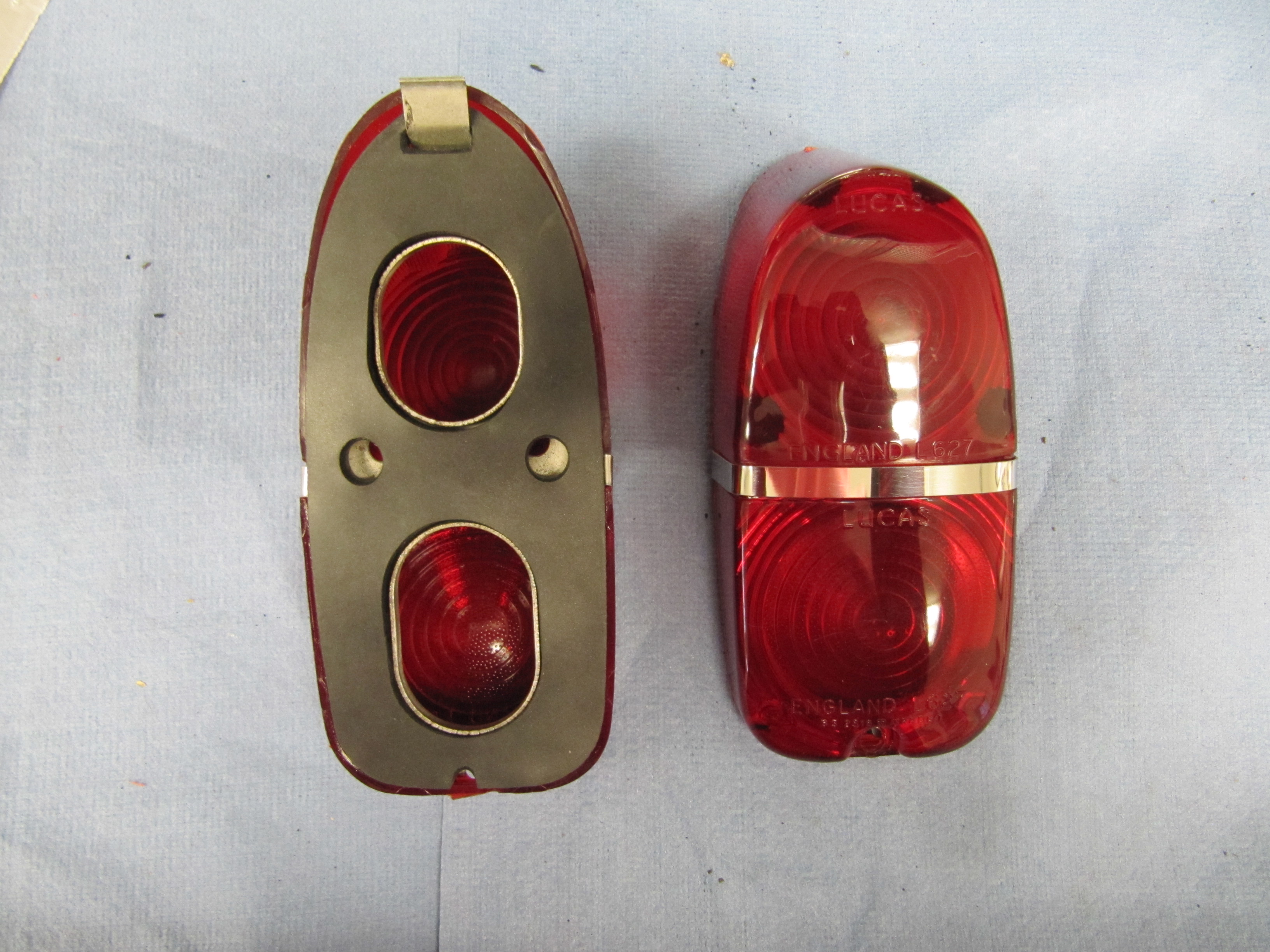
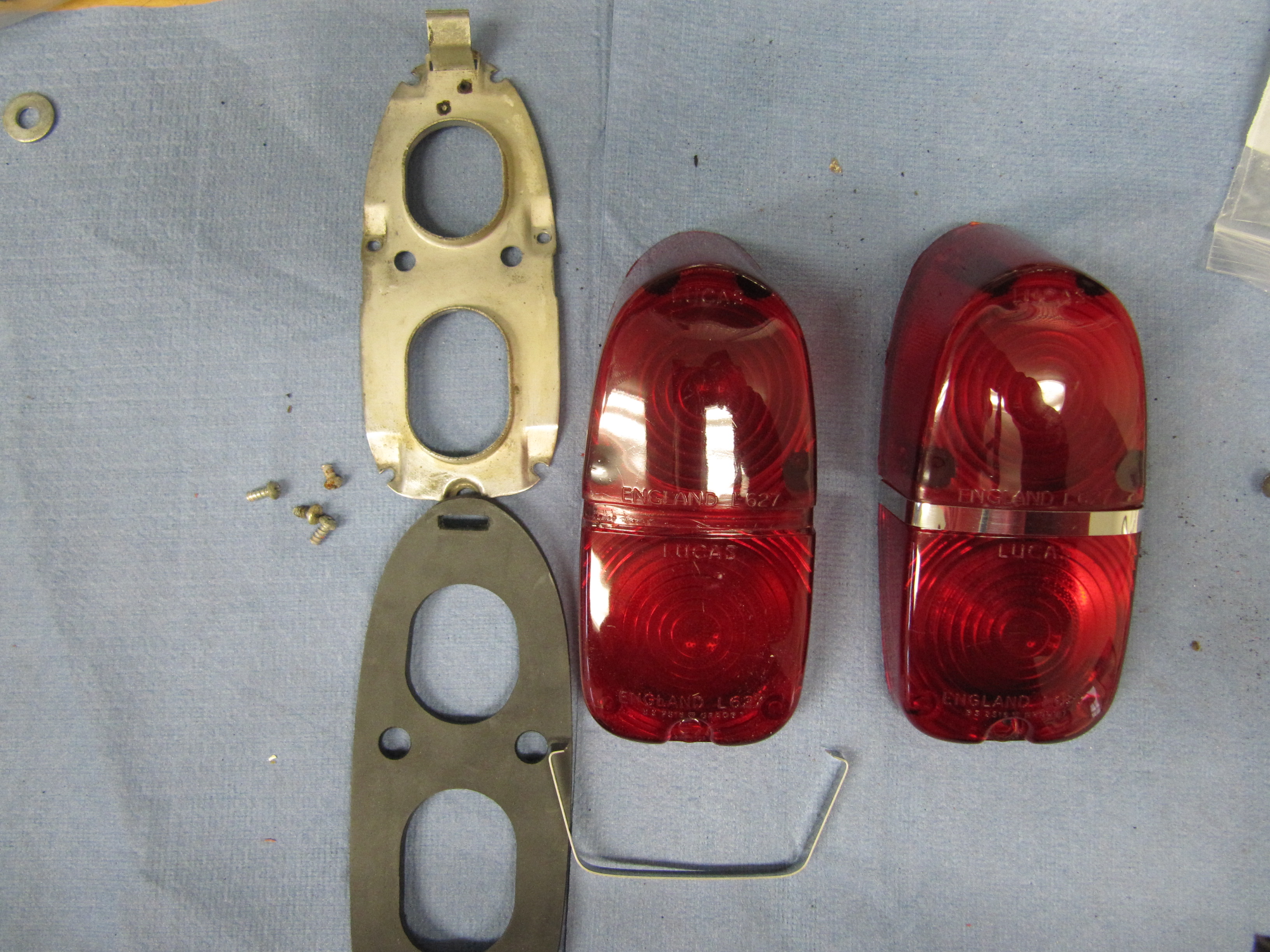
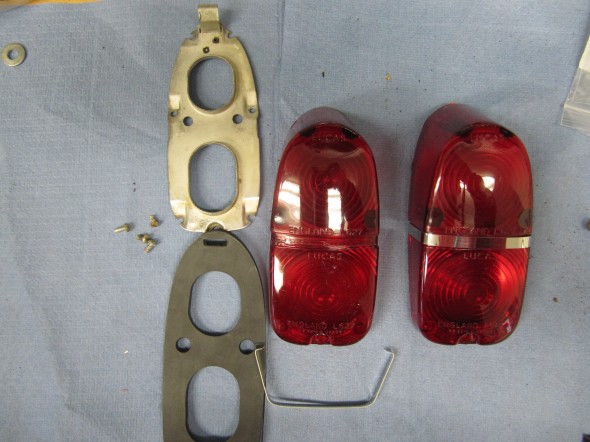
The tail light is comprised of two lens halves. These halves are held together by a chrome clip, between the flasher and the stop/tail lens. A chrome shield also separates the two halves to prevent light bleed from one lens to the other. A metal mounting plate also holds the halves together and serves as the base for the assembly to the chrome plinth. The mounting plate is secured to the plastic lens with six 3/8″ self-tapping screws. A rubber gasket then seals the unit to the plinth. The lens assembly is secured to the plinth with a top clip on the metal mounting plate and with a chrome machine screw at the bottom.

I was able to use the original metal mounting plates and screws, but purchased new lenses, the chrome clips, the shields, and rubber gaskets.
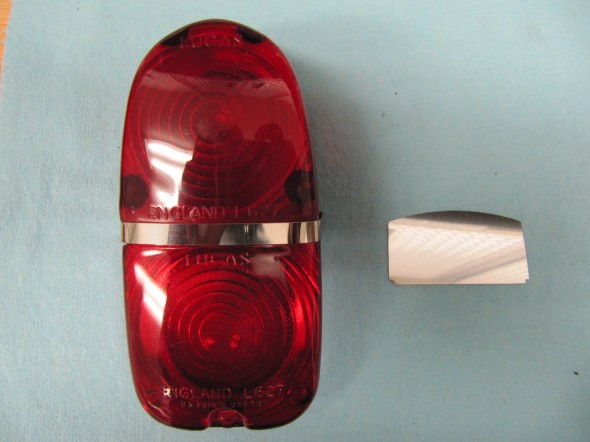
Taillight with Shield
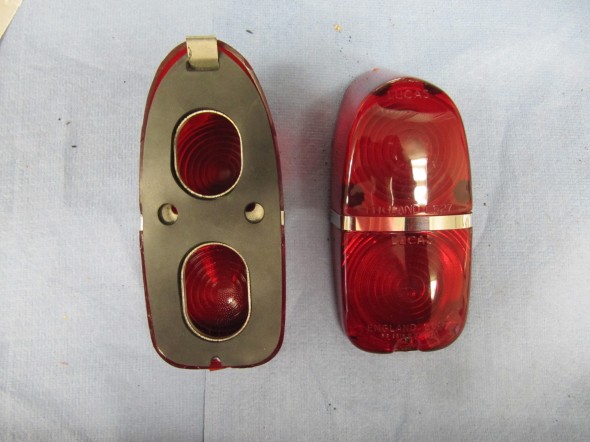
Taillight with Shield

Tail Light Assembled
Tail Light Assembled

Tail Light Parts

Tail Light Parts

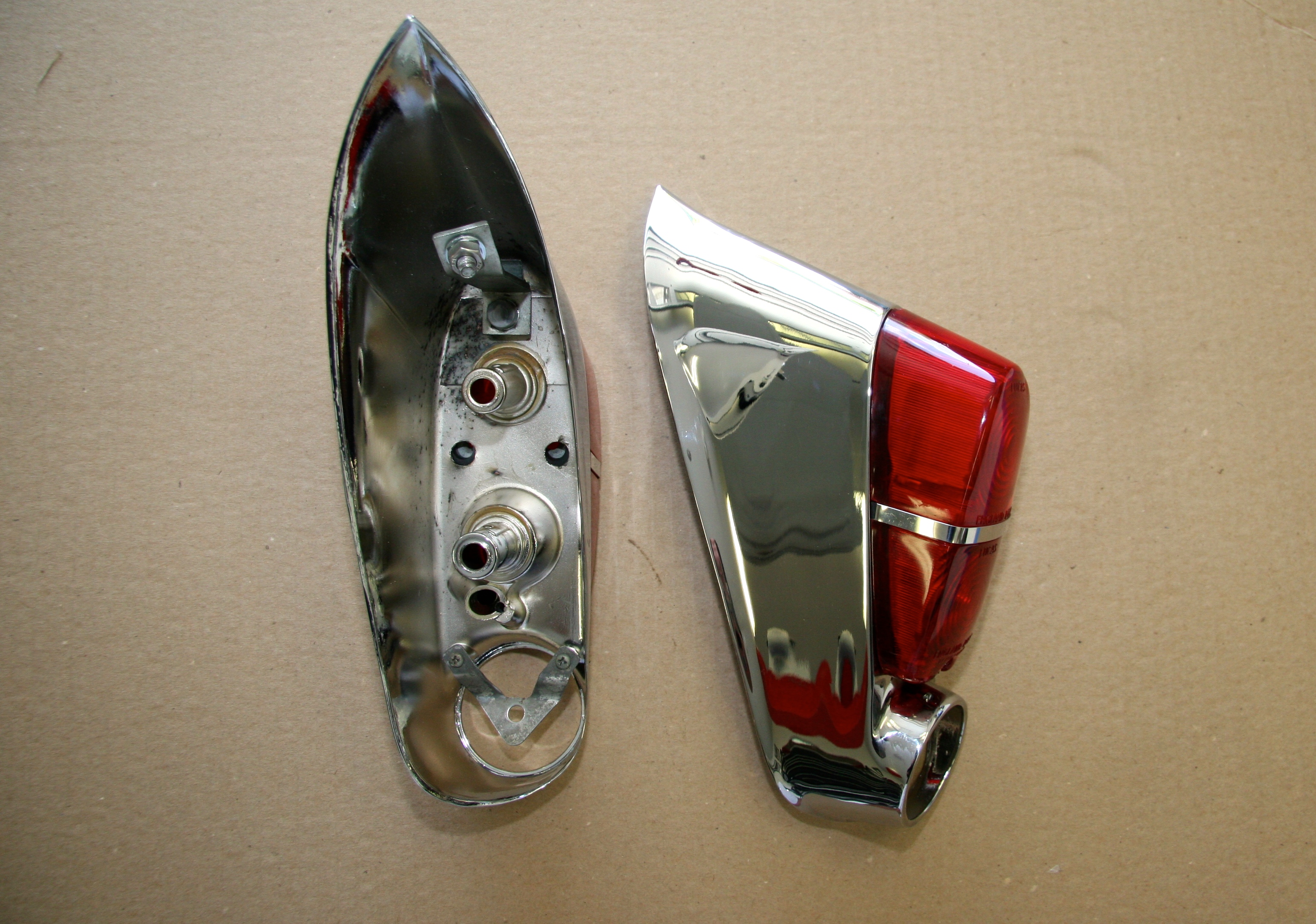
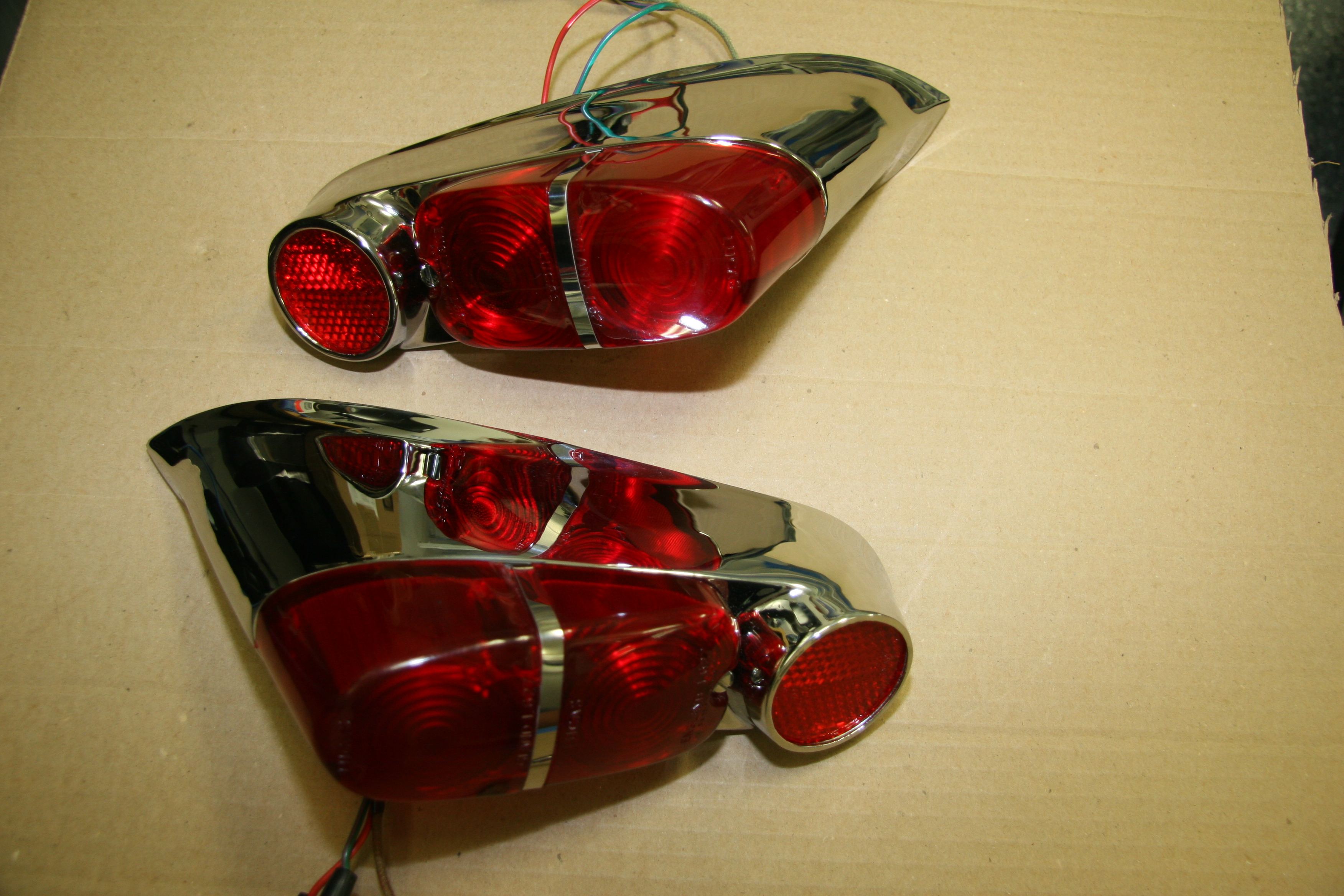
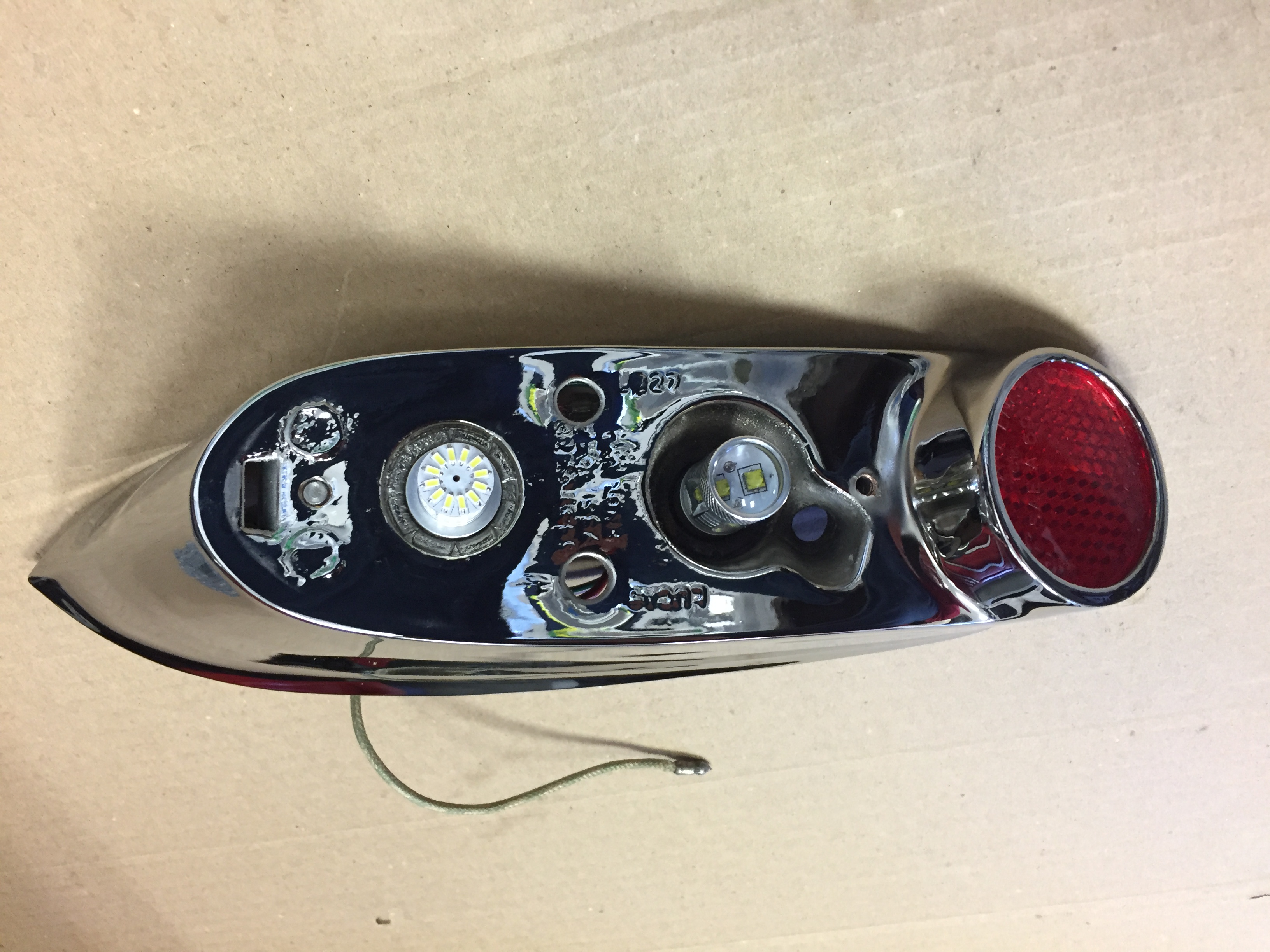
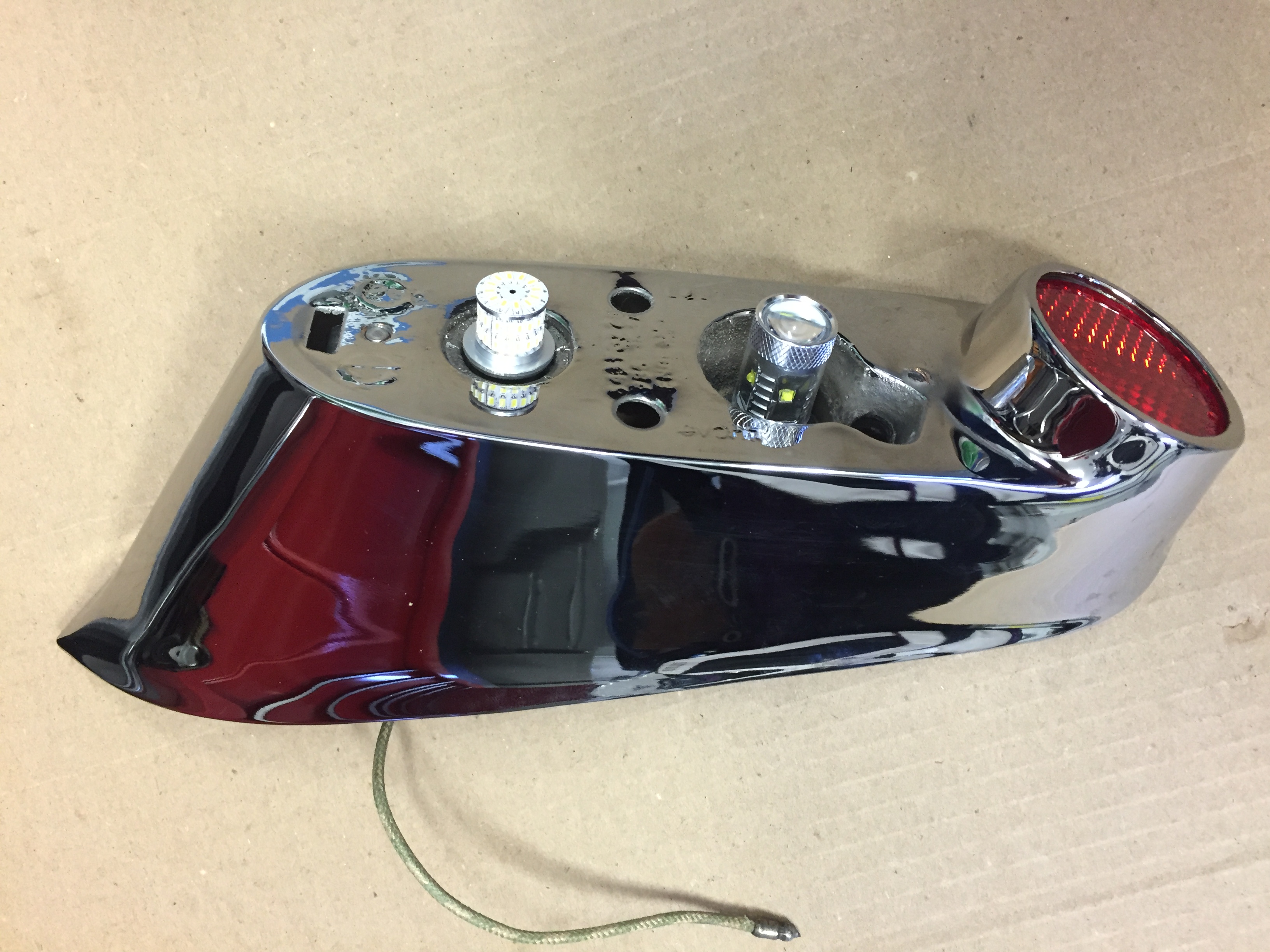
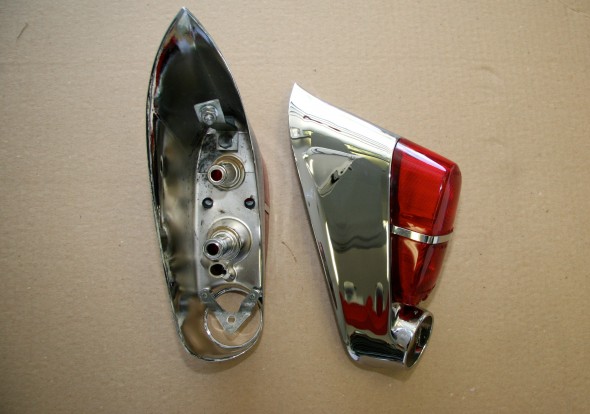
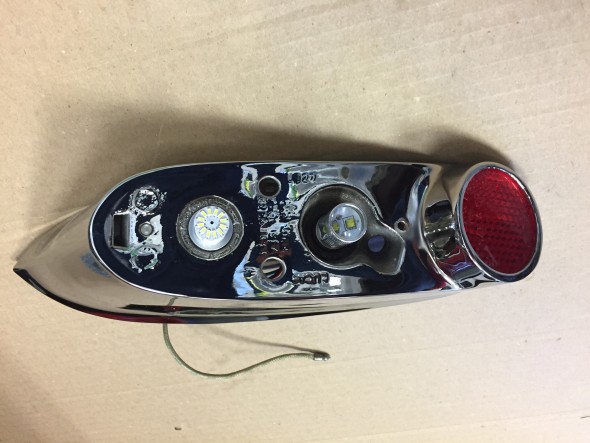
I had the two rear tail light plinths rechromed as they were pitted badly. I still need to install the reflectors and then the lights will look quite good. Each light assembly fastens to the body with two screws. The lower is a Whitworth fillister screw 1 1/4″ long and it fastens to a captive nut in the body. The upper mount is a stud in the assembly that goes through a mounting hole in the body and then has a washer and nut on the interior side. The original upper bulb is an 1156 and the lower bulb is an 1157. However, as with the other exterior lights, these bulbs were replaced with LED flasher bulbs “382Flashers” and “380HP LED stop & tail light bulbs” sourced from 4Sight Automotive . I was able to use the original wiring leads.
Tail Light Assemblies New Chrome Missing Reflectors
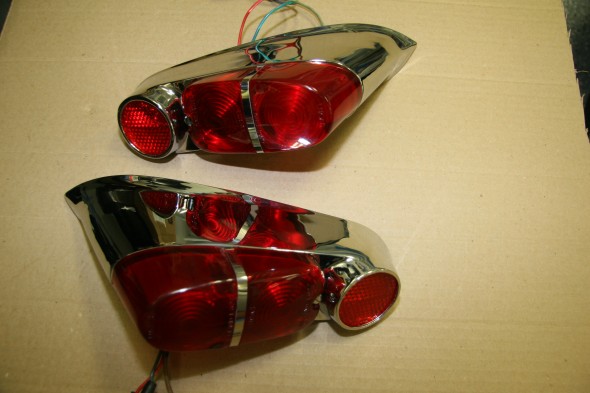
Tail Light Assemblies New Chrome Missing Reflectors

Tail Lights Assembled with Lucas Reflectors
Tail Lights Assembled with Lucas Reflectors

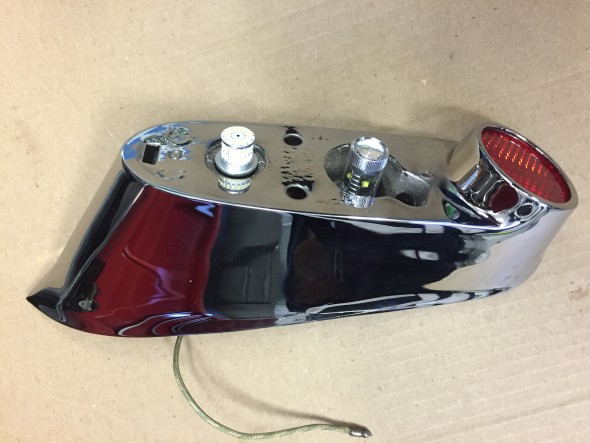
Tail Light LED Bulbs
Tail Light LED Bulbs

Tail Light LED Bulbs 2

Lucas FogRanger Fog Lamps

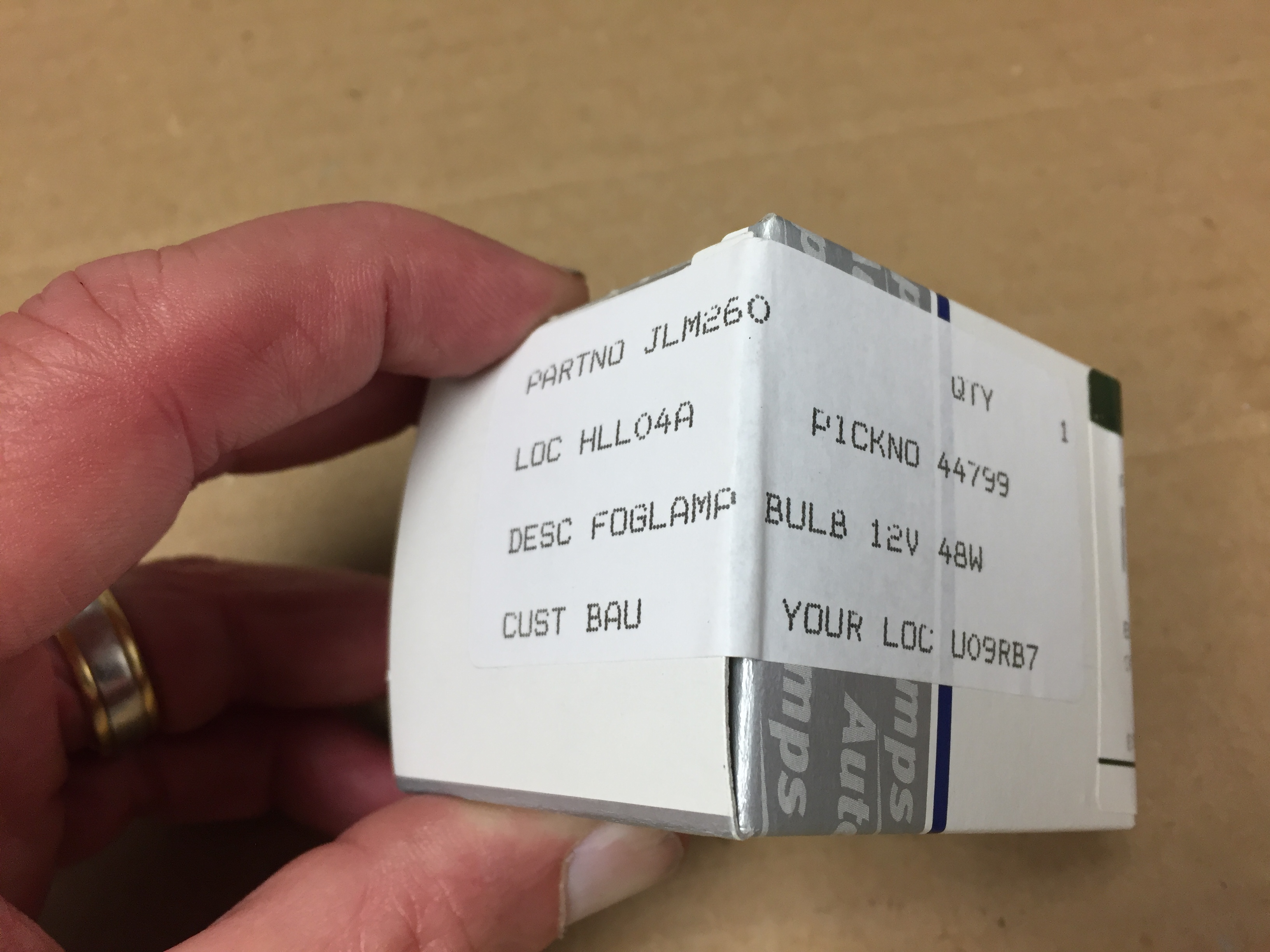
The original FogRanger lamps were functional and certainly reusable, but they are such a visible component of the front-end appearance of the MK2, that I decided to purchase new lamps. The embellishers were in good shape, so I was able to clean, polish and assemble with the new lamps. All new wiring was used and while I did not use LED bulbs for the Fograngers, I did install new Autolamps 12 volt, 48 Watt bulbs in both lamps, sourced from SNG Barratt.
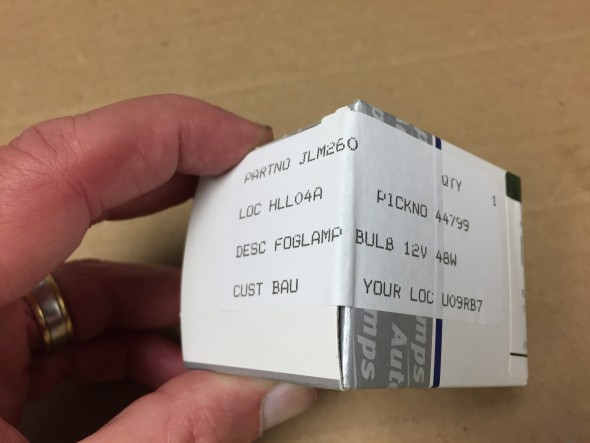
Fogranger Bulb 12V 48W SNG Barratt
Fogranger Bulb 12V 48W SNG Barratt

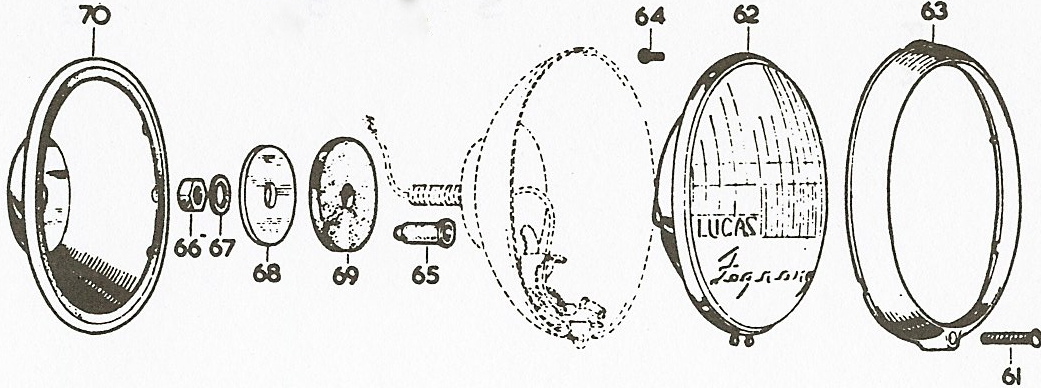
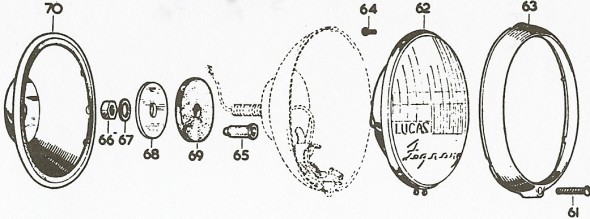
Fogranger Fog Lamp
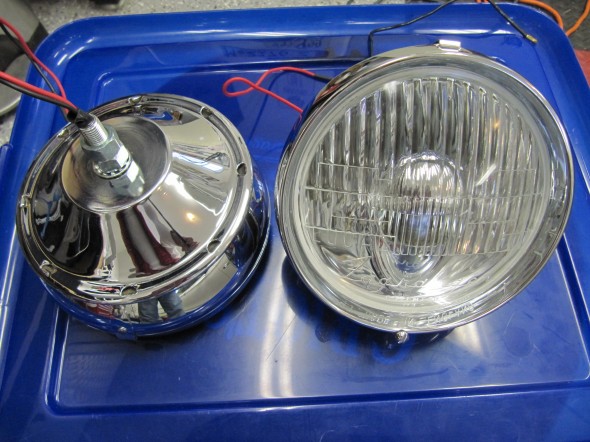
Fogranger Fog Lamp

FogRanger Lamp Assemblies
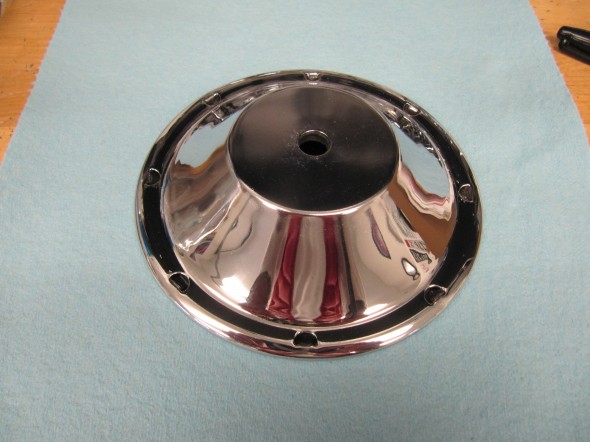
FogRanger Lamp Assemblies

Fog Lamp Embellisher
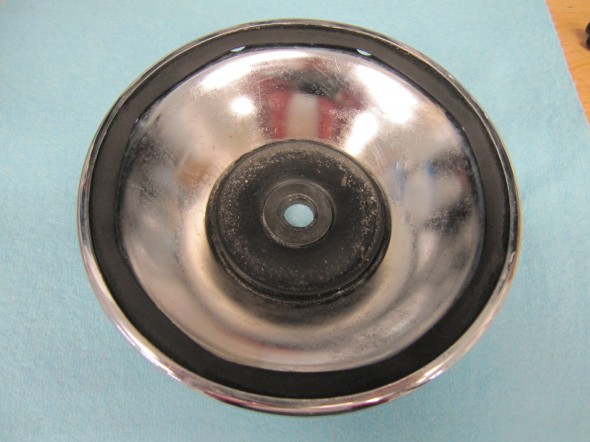
Fog Lamp Embellisher

Fog Lamp Embellisher

Fog Lamp Embellisher

This is an image of the RH Fogranger lamp temporarily installed on the car. As with the headlights, the fograngers are not adjusted for proper angles at this point. This installations was merely to test electric circuits and switches.
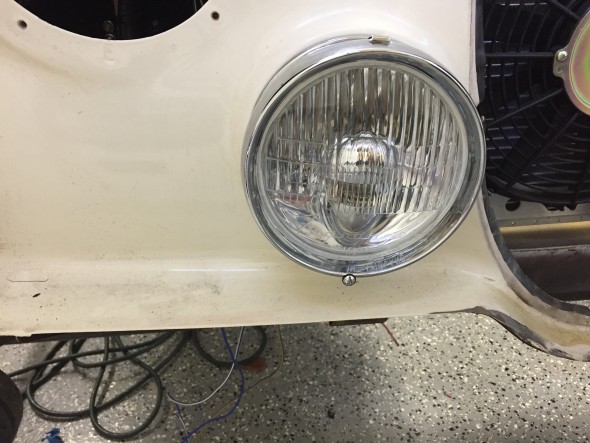
RH Fogranger Installed

RH Fogranger Installed

Side Lamps

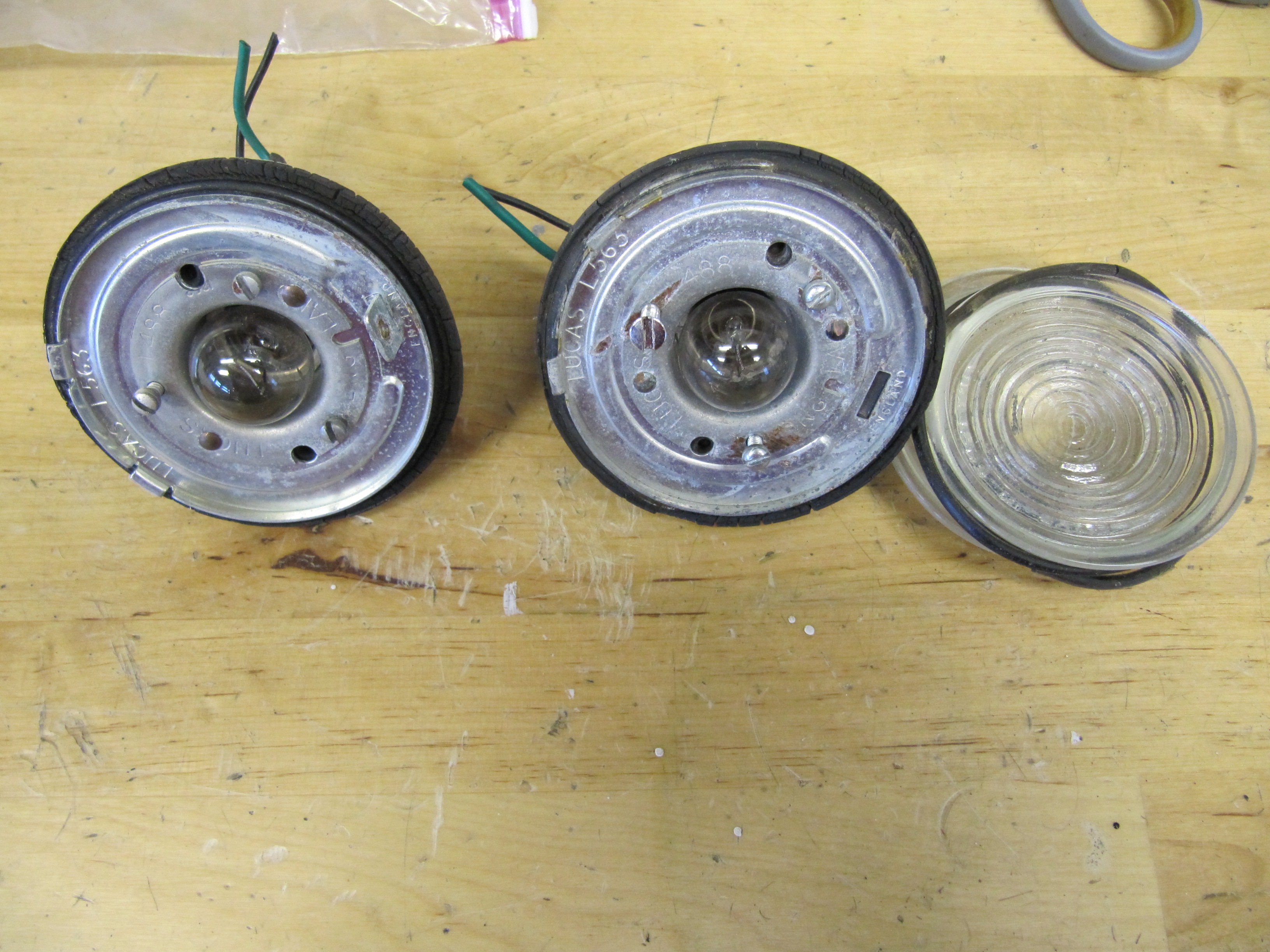
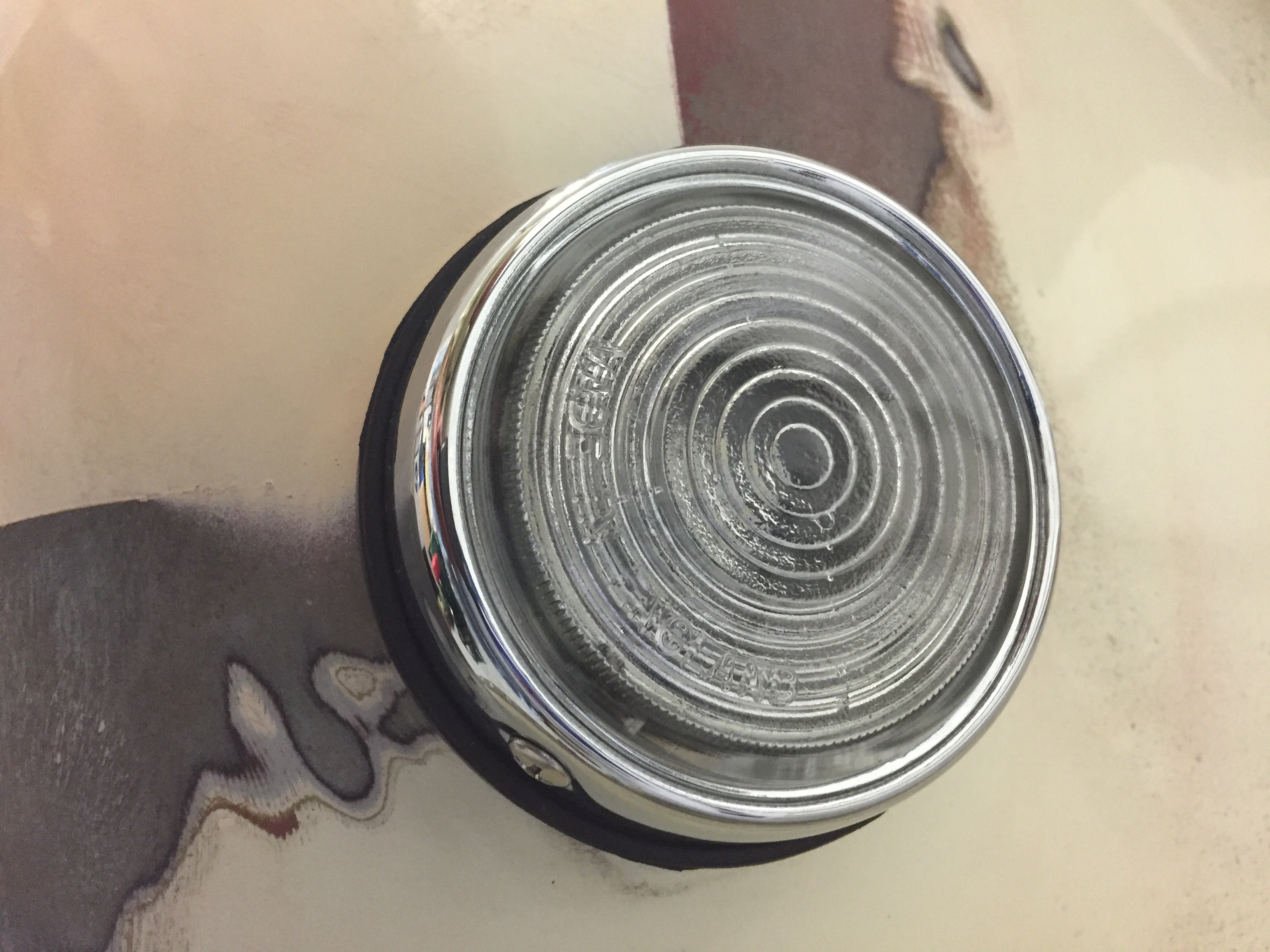
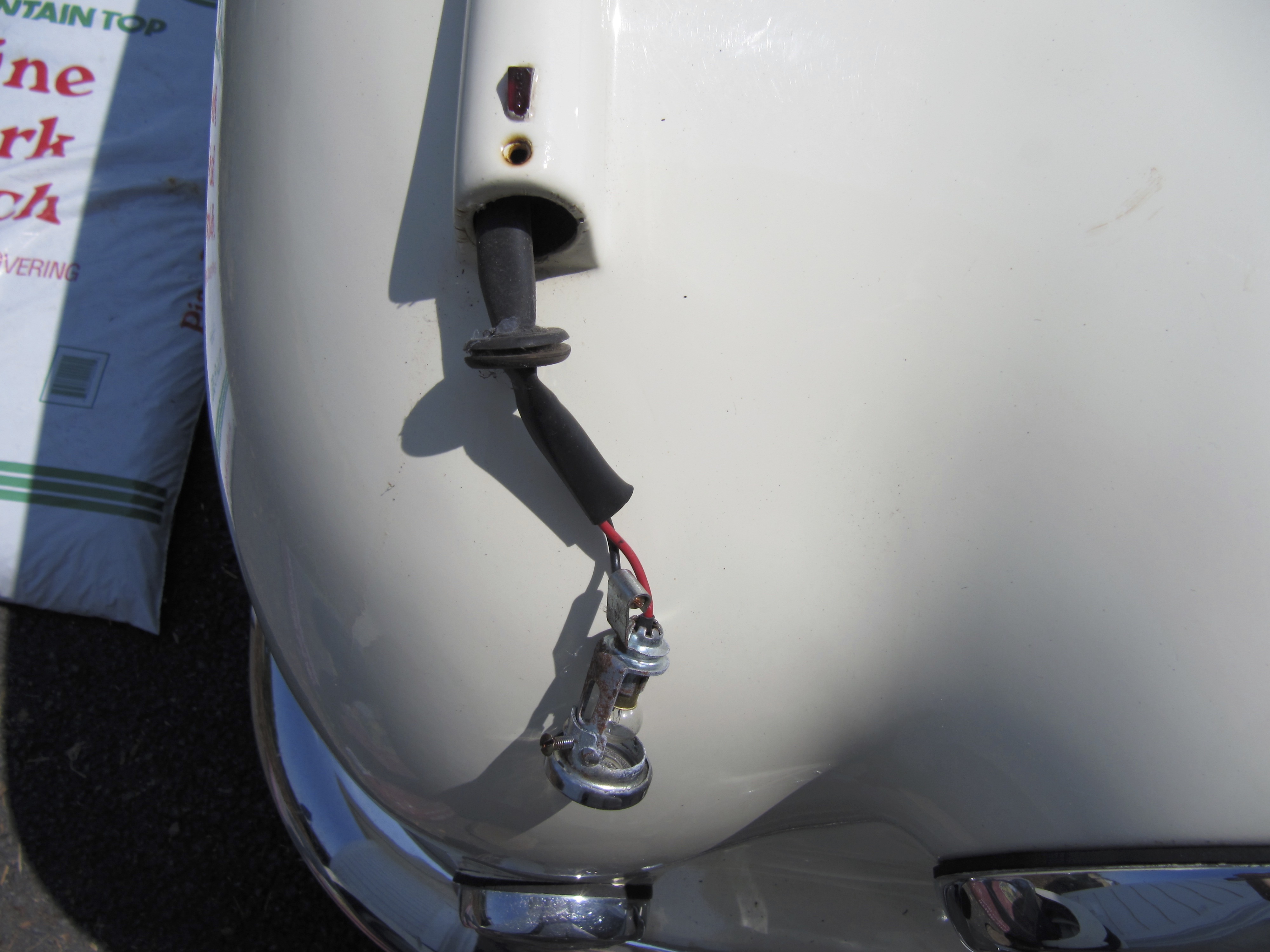
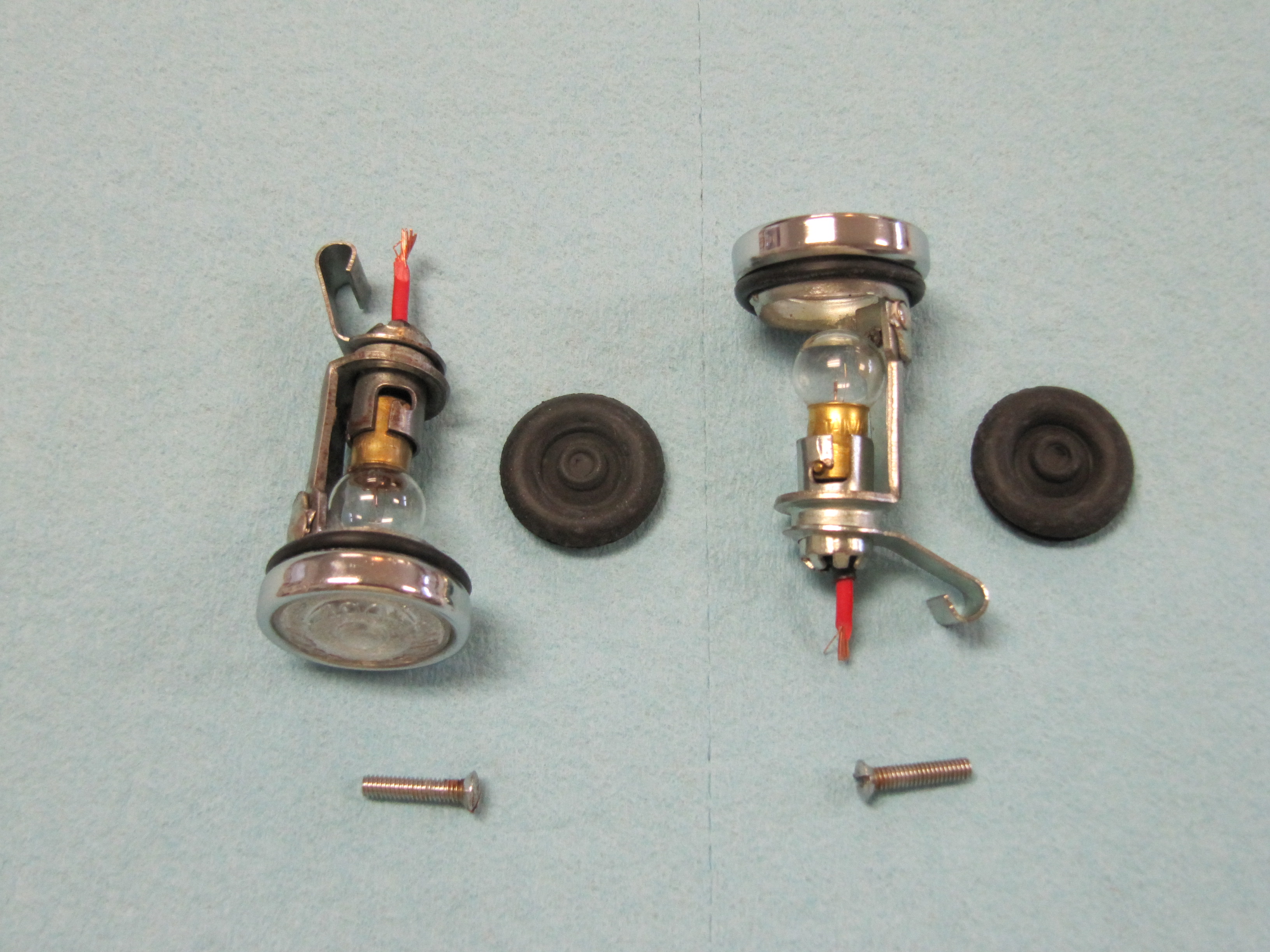
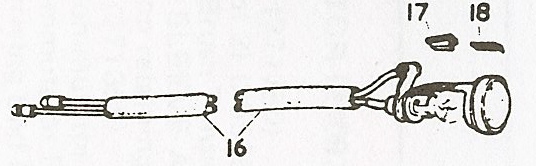
The MK2 has small side lamps on the top of each front wing. Each lamp has a rubber “O” Ring Gasket between the chrome trim ring and the body of the car, and the lamps are secured to the body with a chrome machine screw. The lamps use 4 watt bulbs C. 12249.
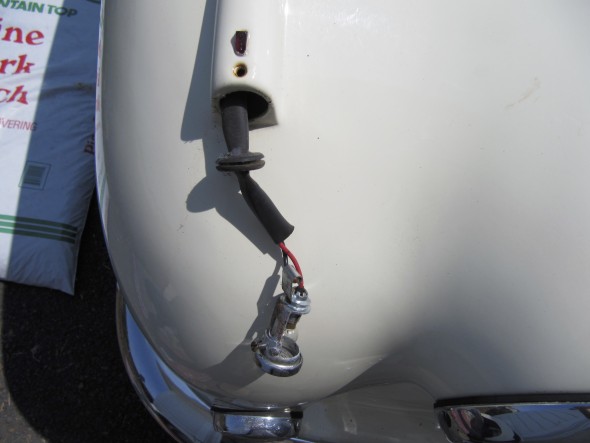
RH Turn Indicator

RH Turn Indicator

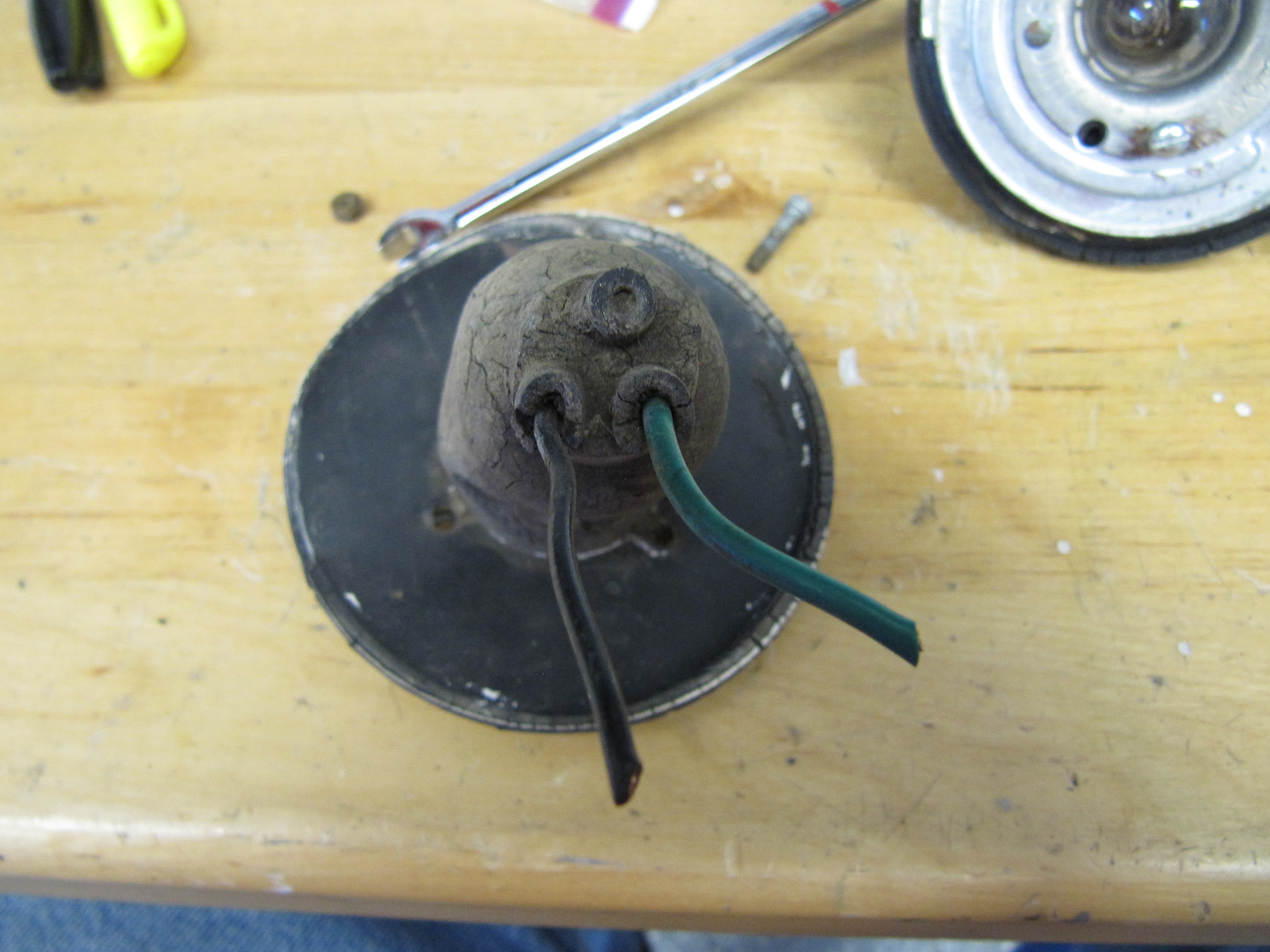
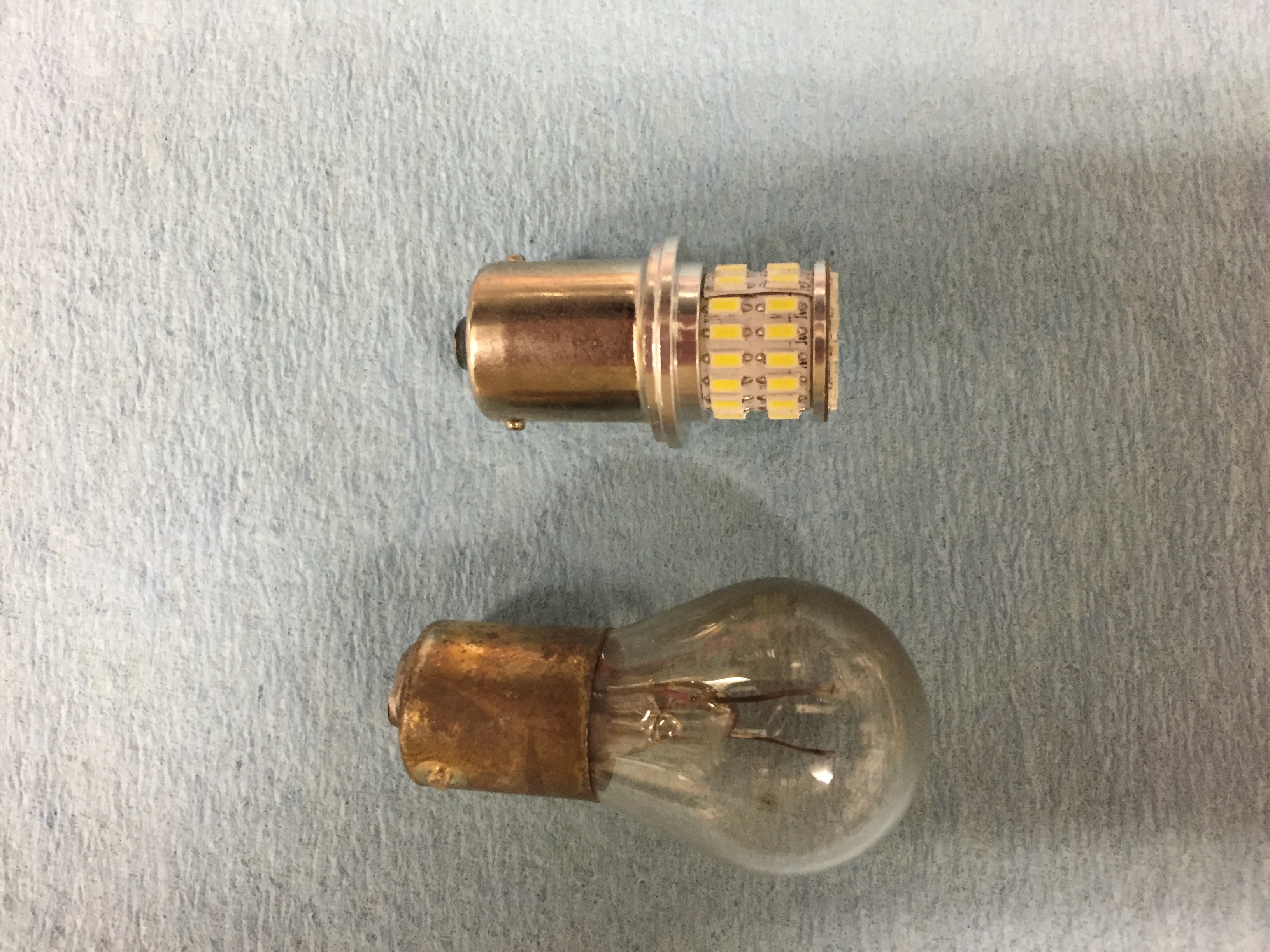
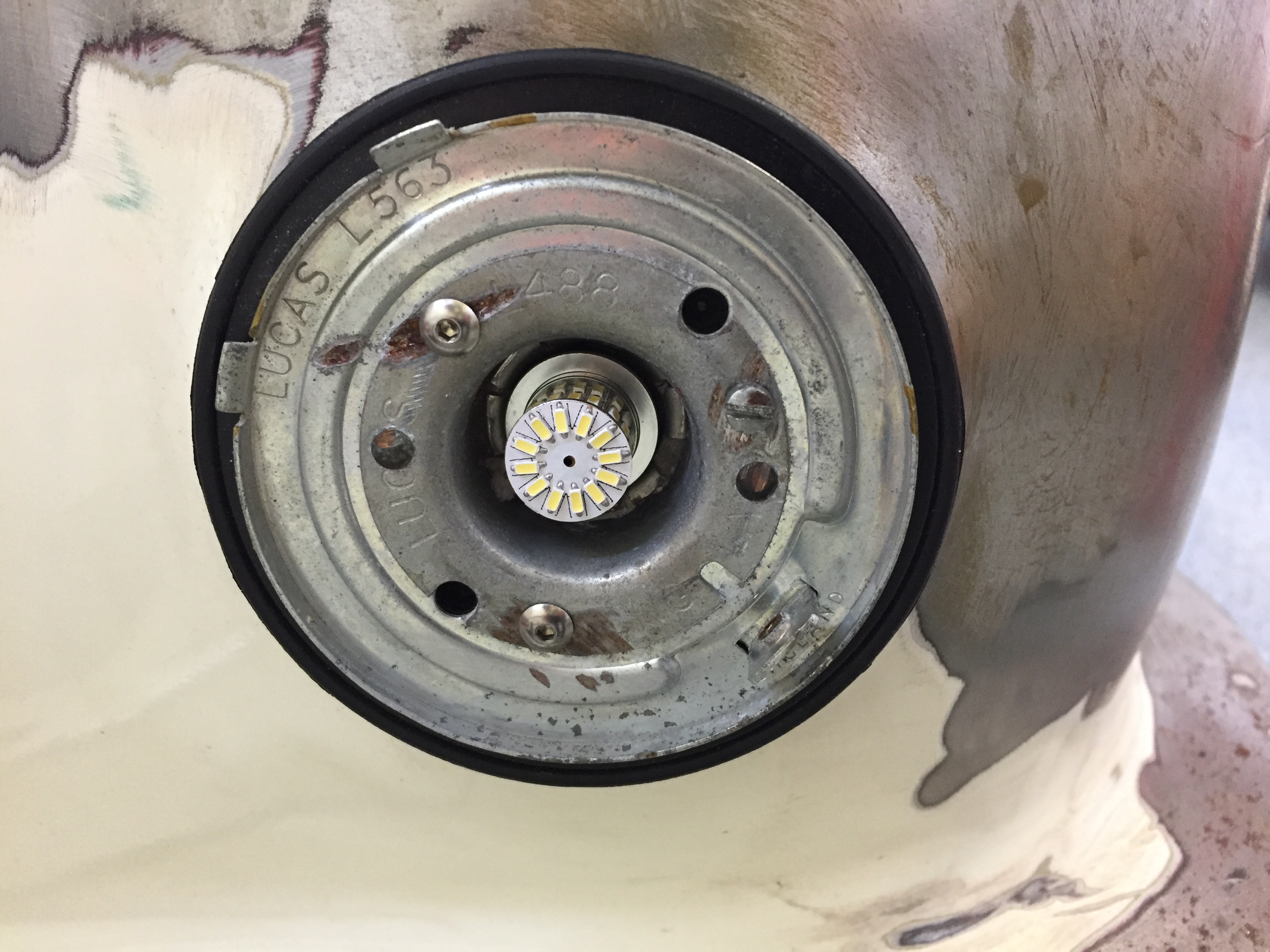
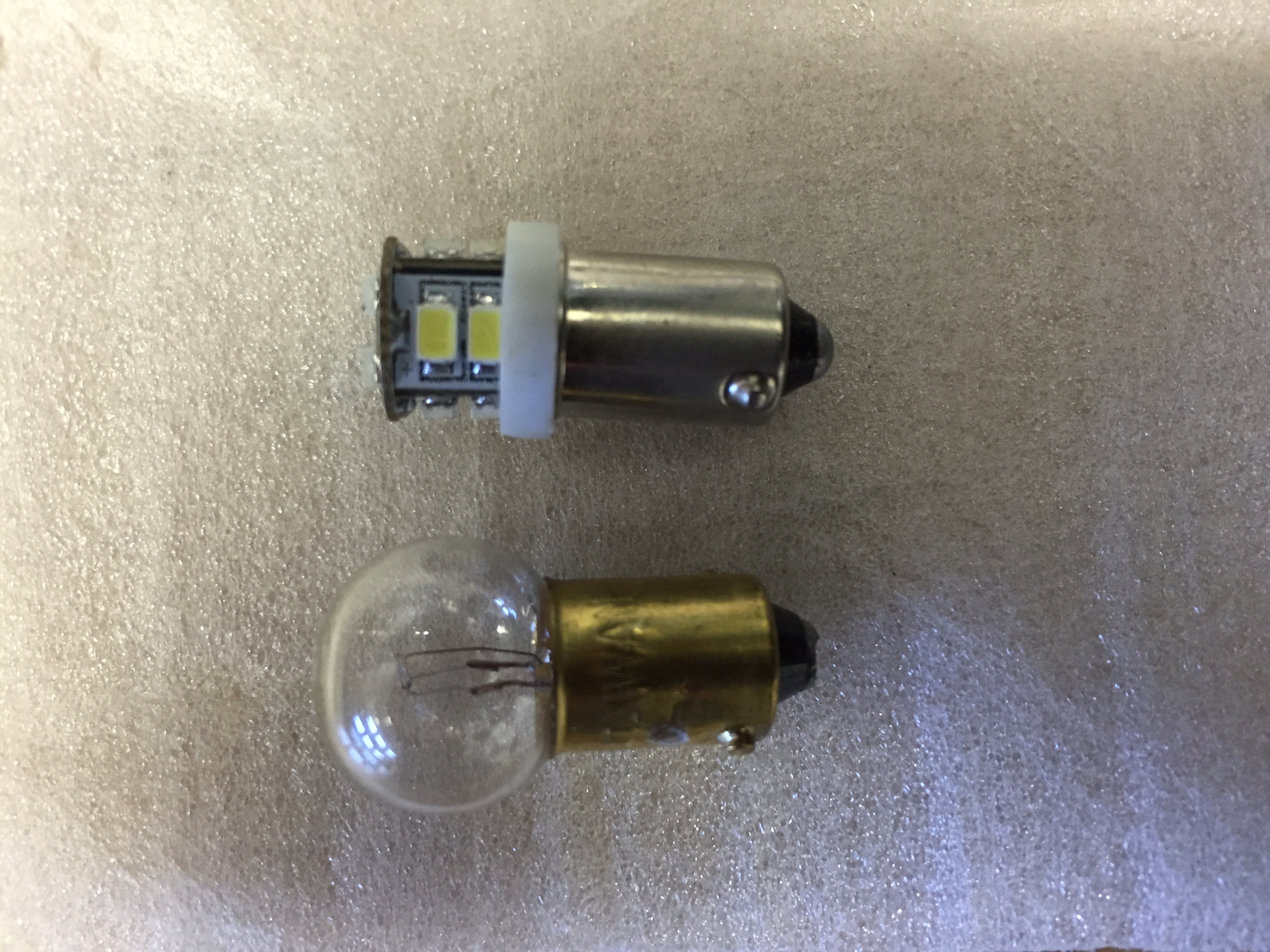
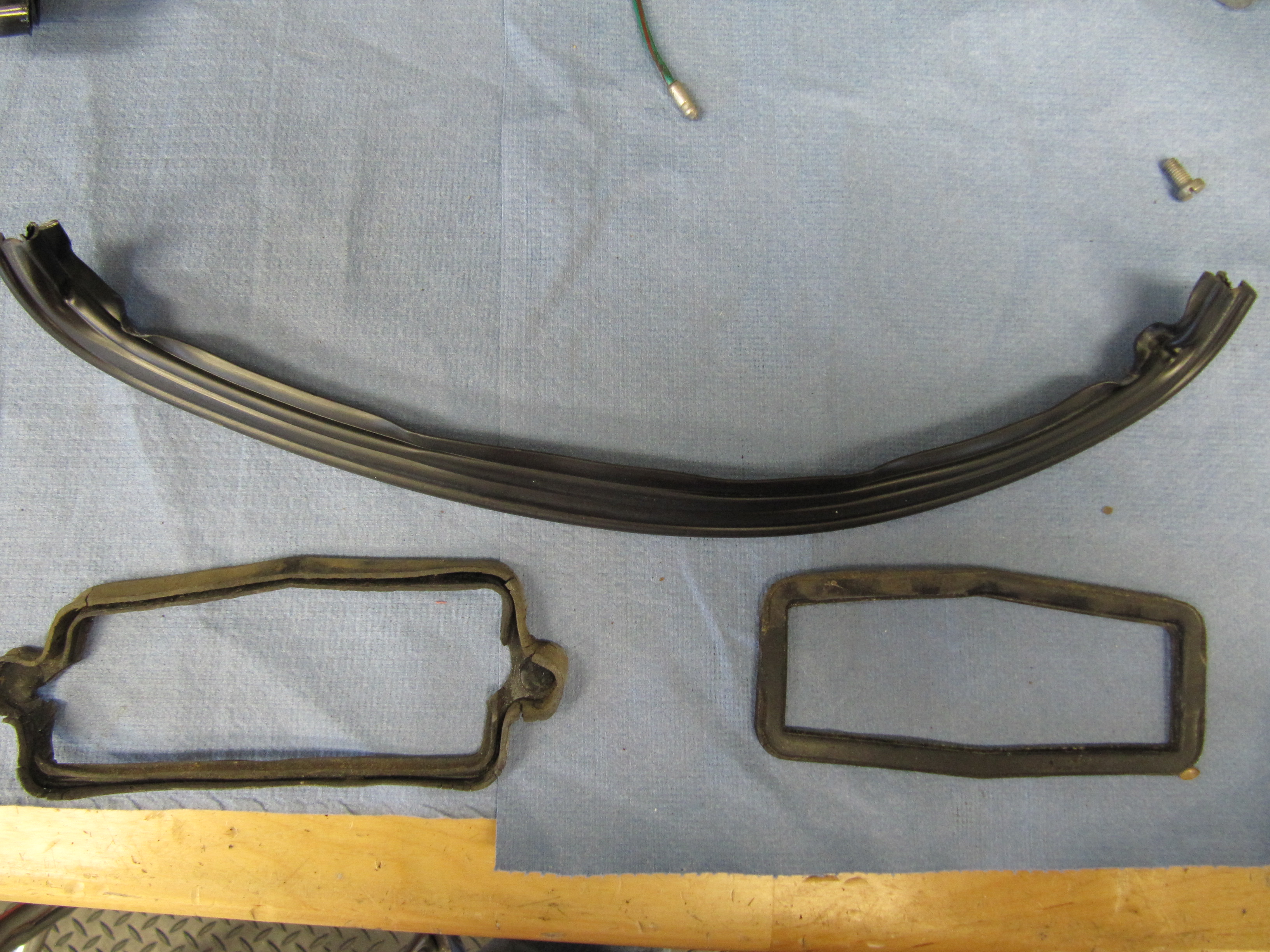
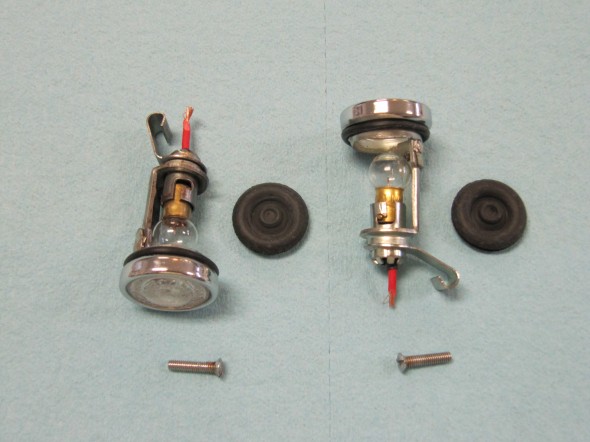
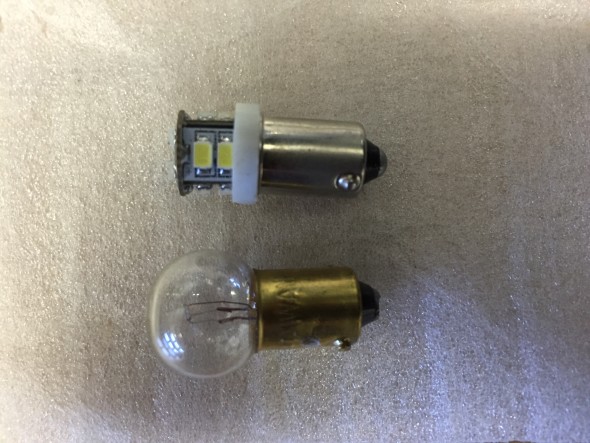
The lamps were in good working order so I just cleaned them, rewired them, replaced the incandescent bulbs with LEDs and new “O” Rings with new chrome mounting screws. The “O” rings that came with that were sourced from SNG Barratt were too thick for my installation. I ended up using metric rings that are 24mm – 2mm and I purchased them from McMaster-Carr. The screws are oval head #6-40 (I believe) x 3/4″.
Sidelamp

Sidelamp


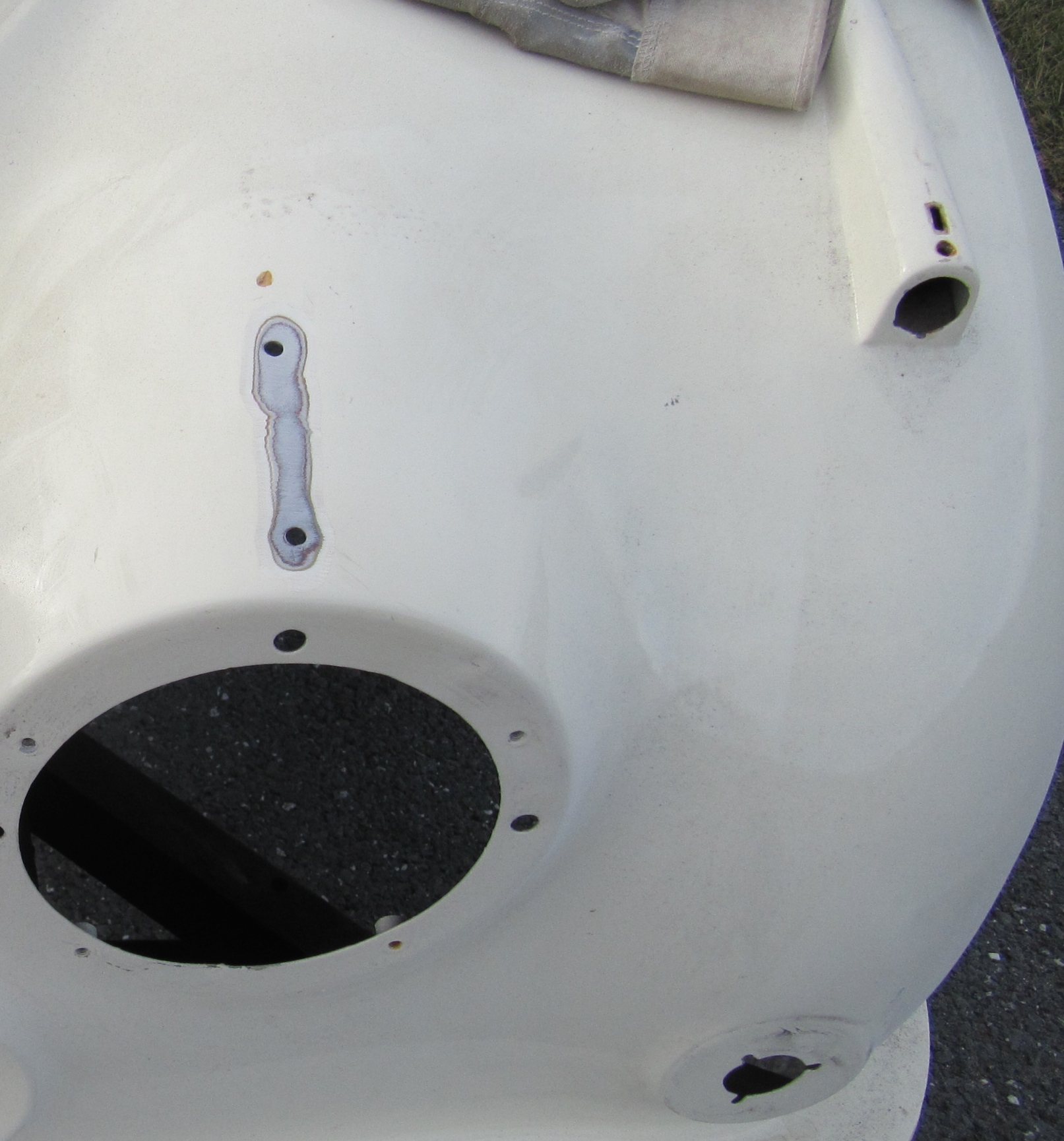
A small red indicator lens for side lamps mounts on the top of each body wing flare for the lights. I ordered new plastic indicators that are held in place by a metal slide clip.
Side Lamps
Side Lamps

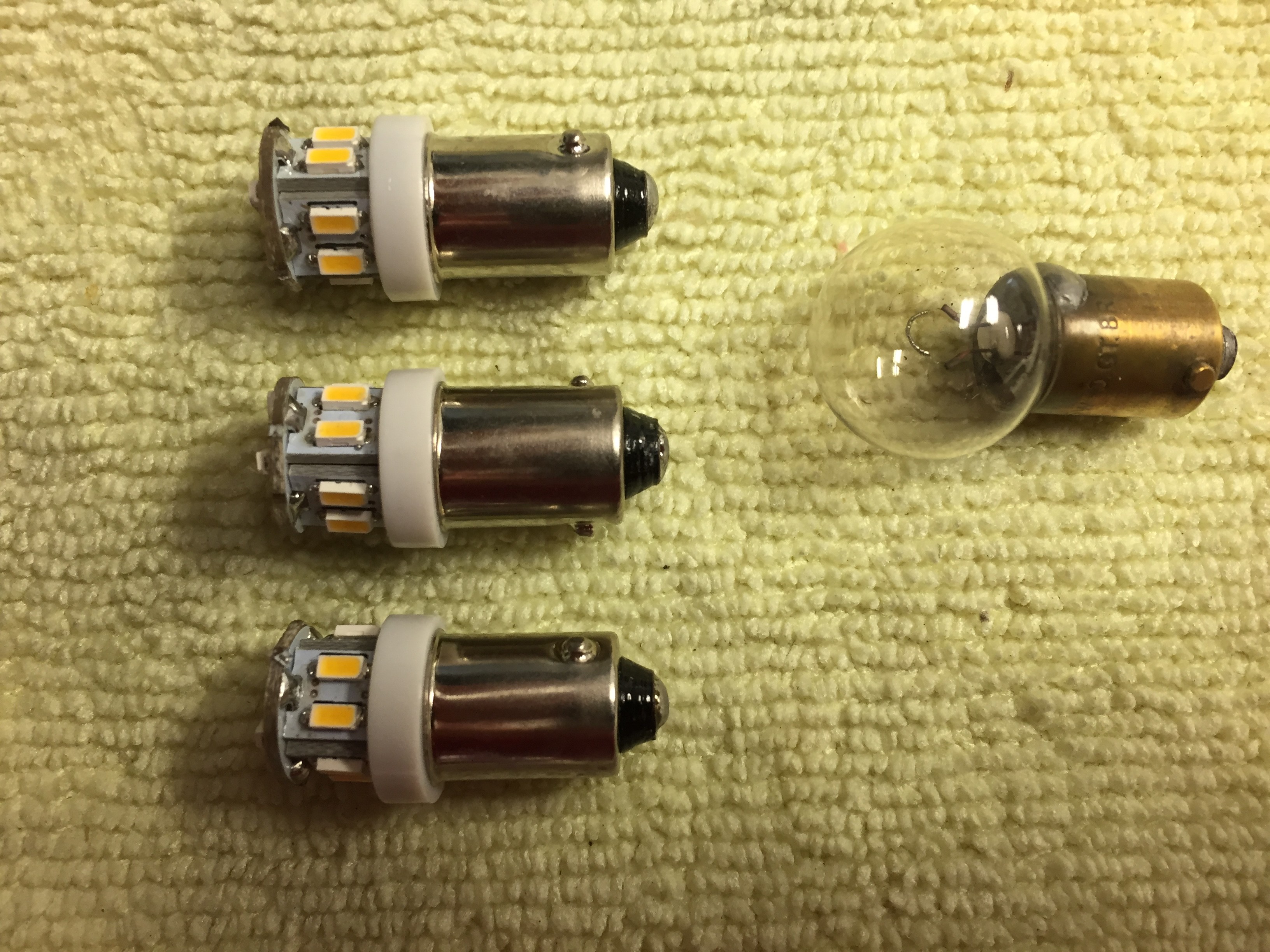
New LED Bayonet Bulbs

New LED Bayonet Bulbs

Side Lamp on Body

Side Lamp on Body

All new wiring and sleeving was added to the side lamps.
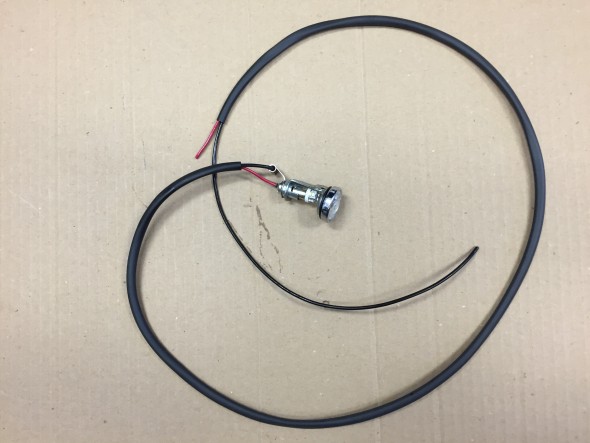
RH Side Lamp Wiring & Sleeving

RH Side Lamp Wiring & Sleeving

The side lamp is removed from the body by turning the rim clockwise and then withdrawing the lamp. A “bump” in the lamp body must align with a slot in the body.
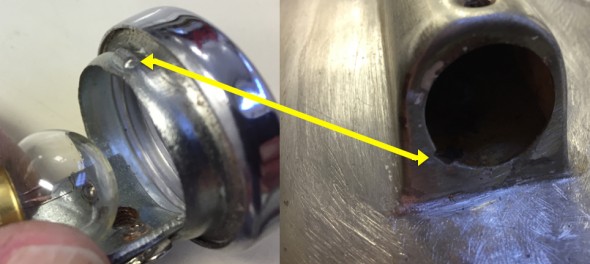
Sidelamp Fitting
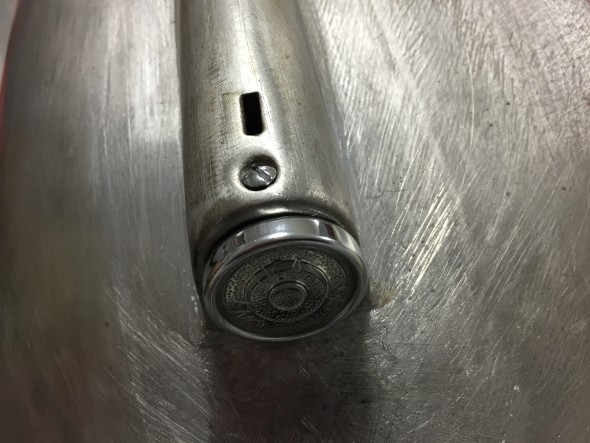
Sidelamp Fitting

Refurbished side lights installed

Refurbished side lamps installed

Number plate illumination and reverse lamp

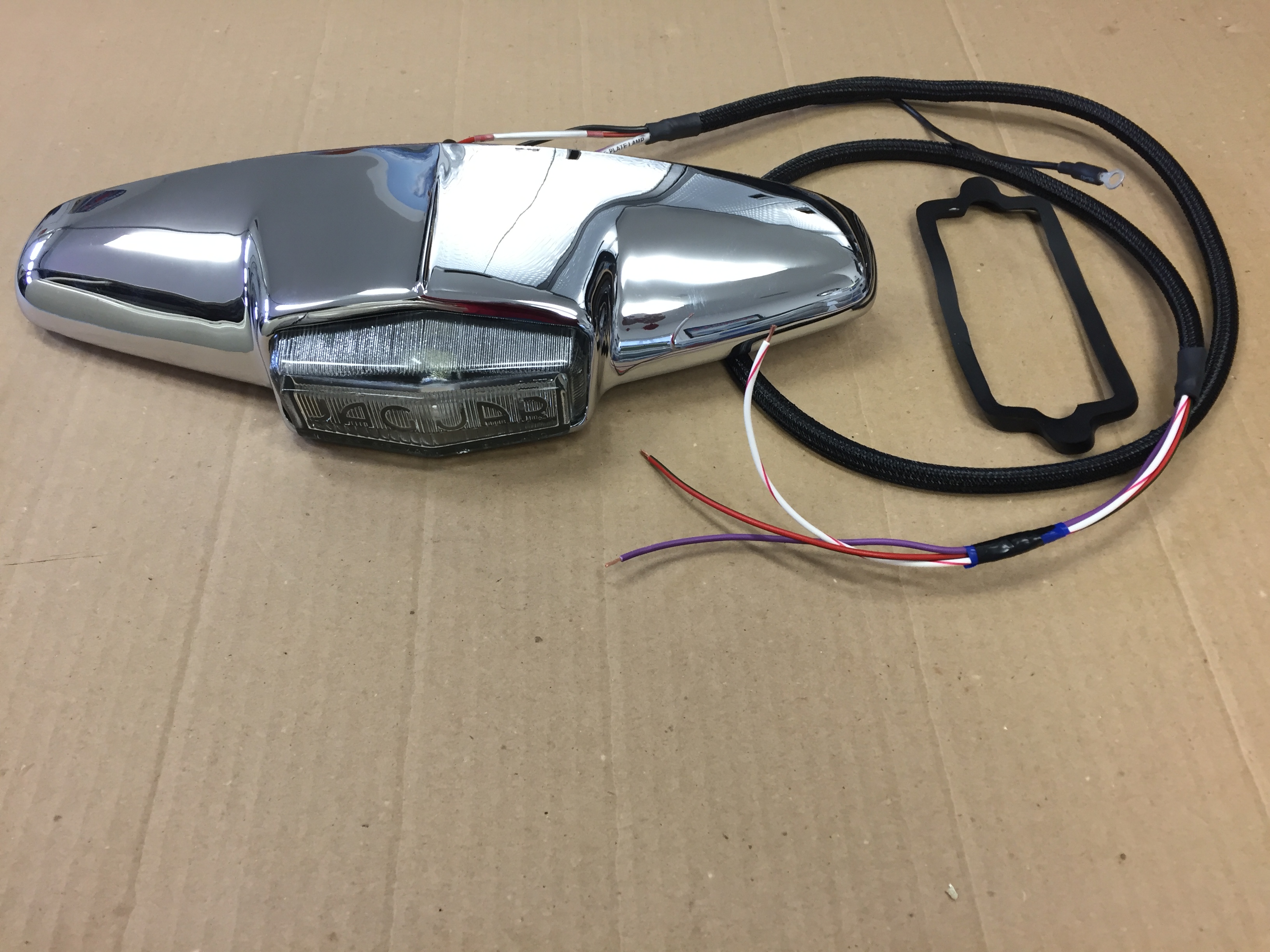
Number Plate Illumination & Reverse Lamp

Number Plate Illumination & Reverse Lamp

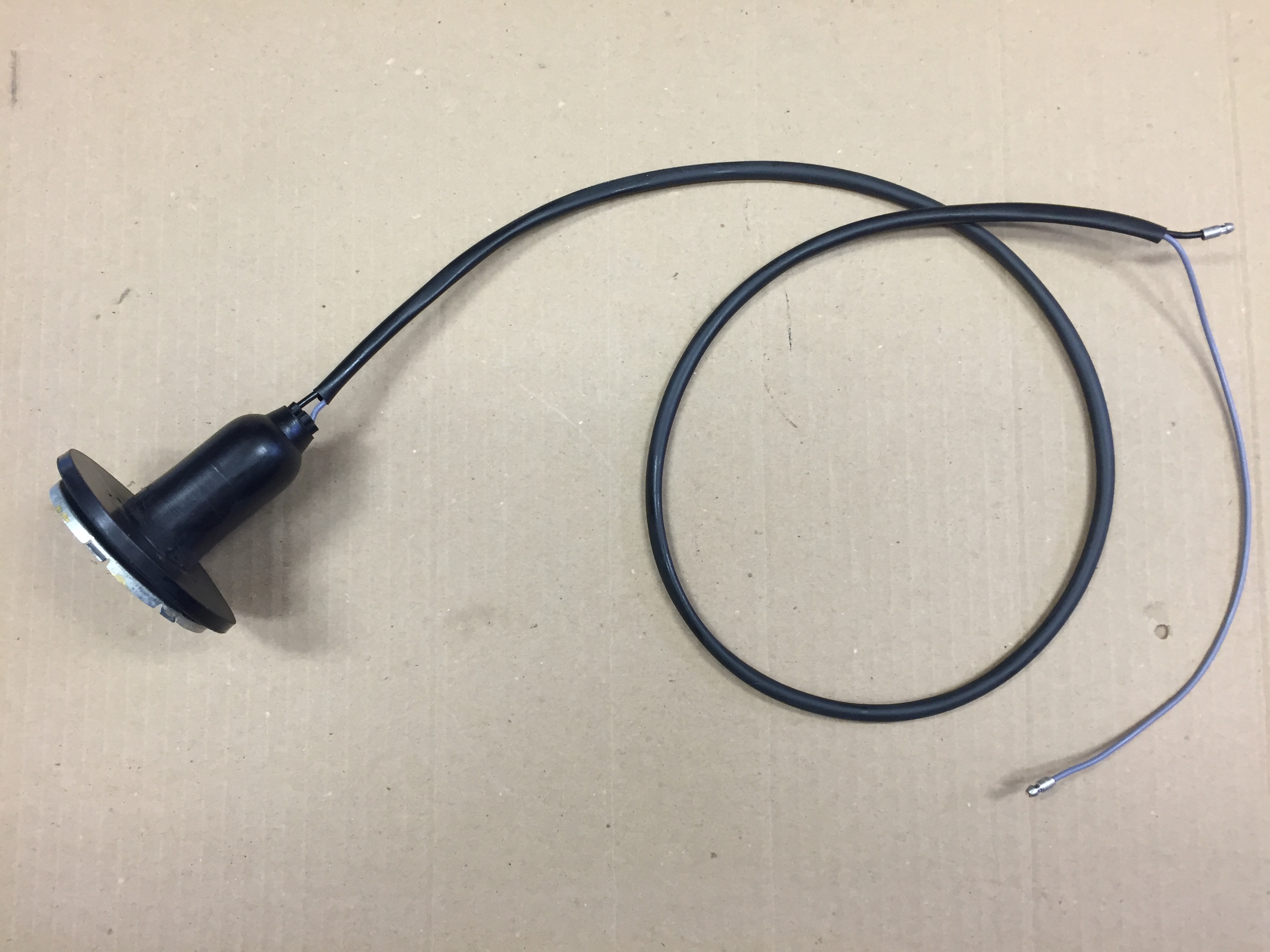
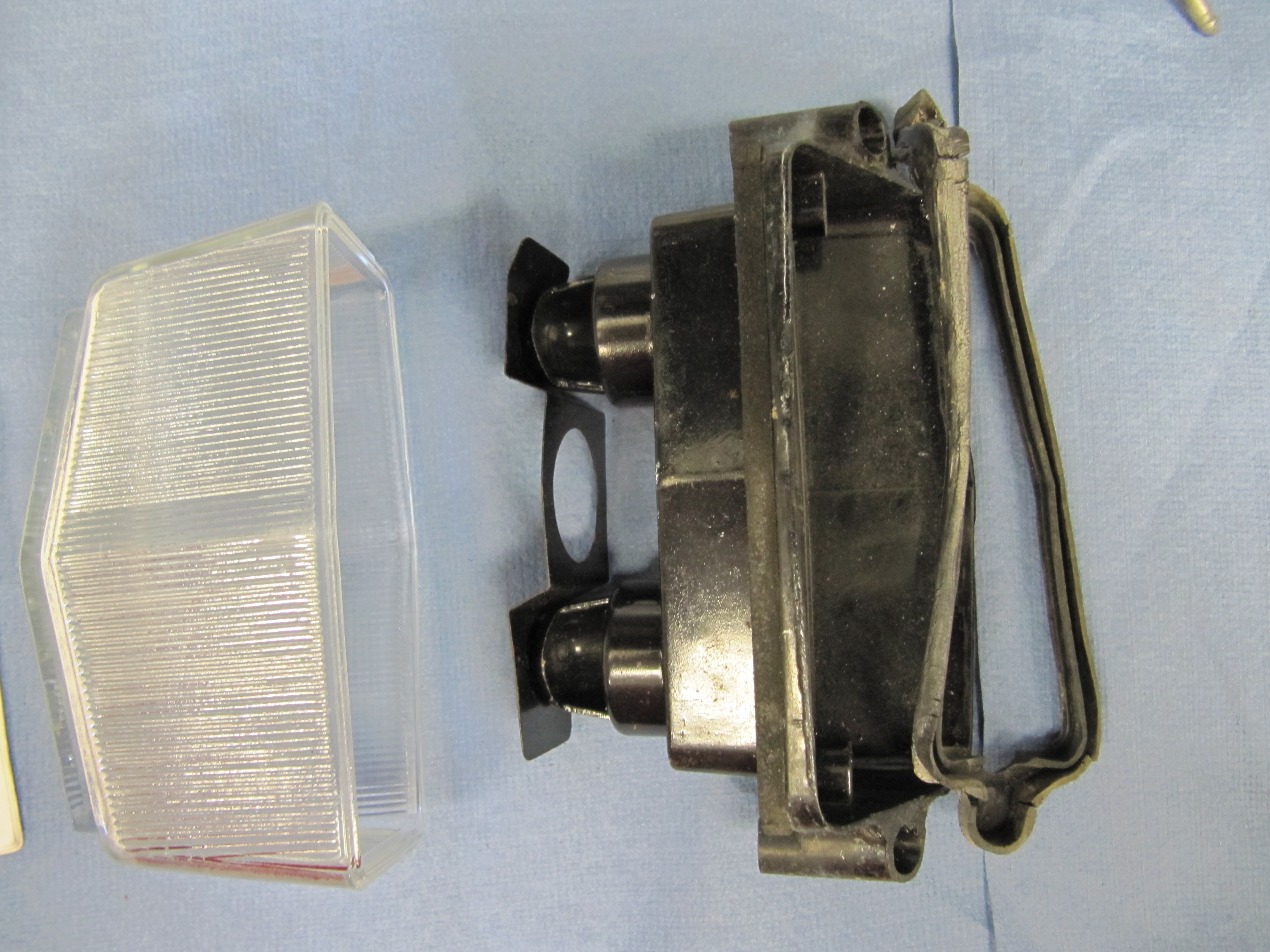
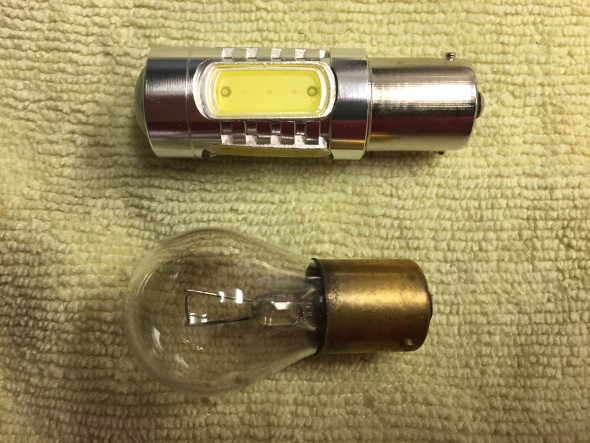
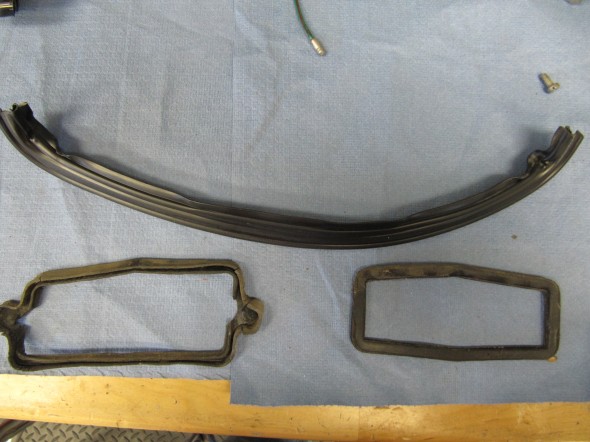
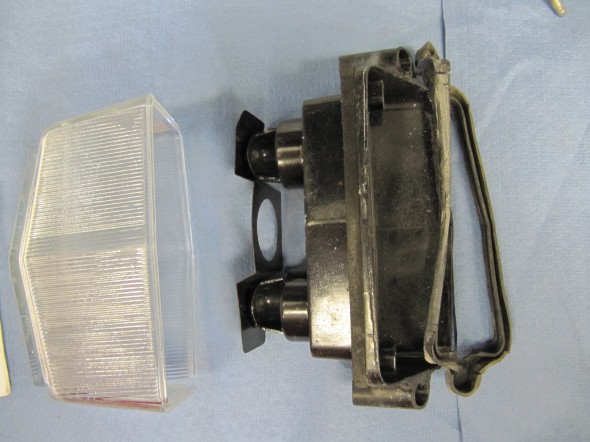
The chrome housing is mounted to the body with a plastic gasket between the two. Within the housing is a plastic shroud assembly and a metal bulb holder. There are three 6 watt bulbs (C.12249) to illuminate the number plate and luggage compartment, I replaced these with “233 Multi LEDs” sourced from 4Sight Automotive. The one 21 watt bulb (C.9126) for the reverse light was replaced with a “382 High Power LED. There is a bulb shield gasket and a gasket between the shroud and the clear glass lens.
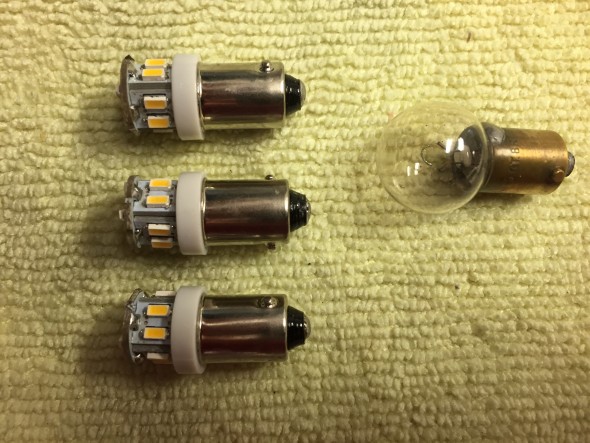
233 Multi LEDs to replace 12v 6w incandescent in boot lamp
233 Multi LEDs to replace 12v 6w incandescent in boot lamp

382 reversing LED in boot lamp

382 reversing LED in boot lamp

I was able to clean and reuse all of the components with the exception of the rubber gaskets within the lamp which were replaced with new items. The original seal between the lamp and the body was cleaned and renewed. The lamp was rechromed.

Although the wiring harness was in good condition, I replaced it with new wiring.
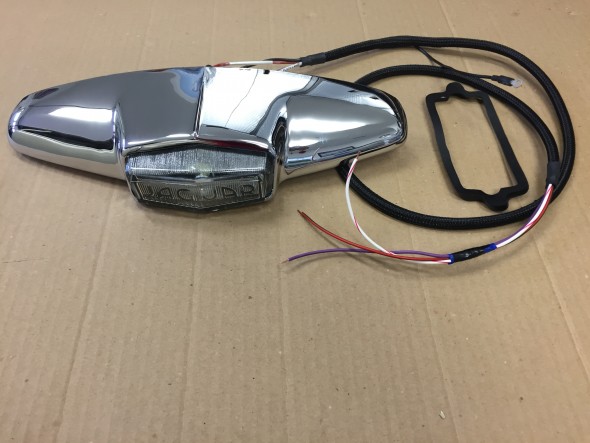
Boot Lamp with new wiring harness
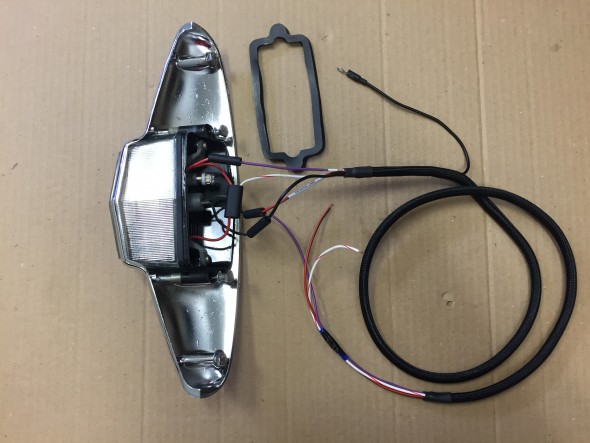
Boot Lamp with new wiring harness
Boot Lamp with new wiring harness

Boot Lamp with new wiring harness

Gaskets and Seals
Gaskets and Seals

Shroud and Lens

Shroud and Lens
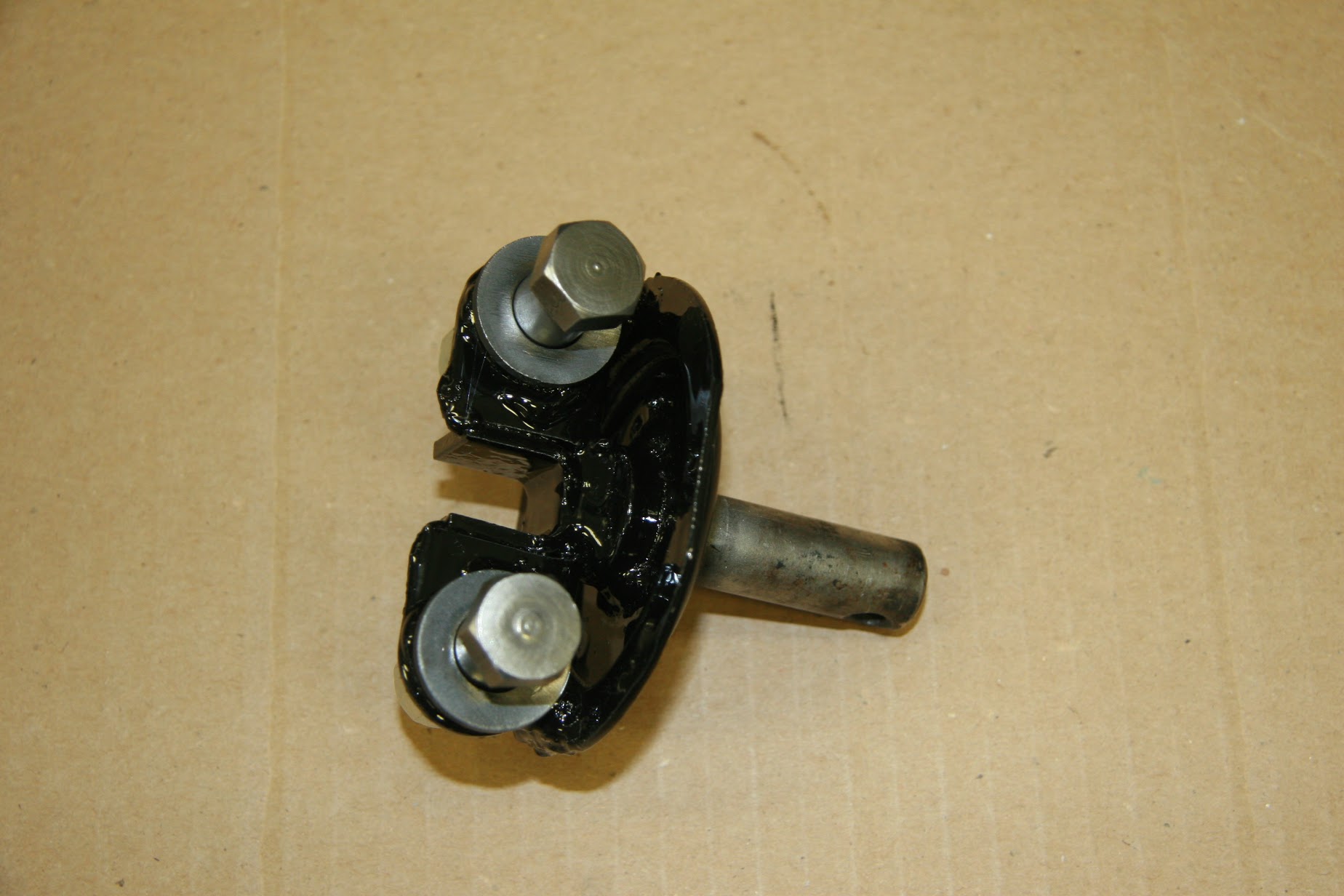


Bonnet Catch/Latch

Bonnet Catch/Latch

Control Wire, Complete, Operating Bonnet Lock

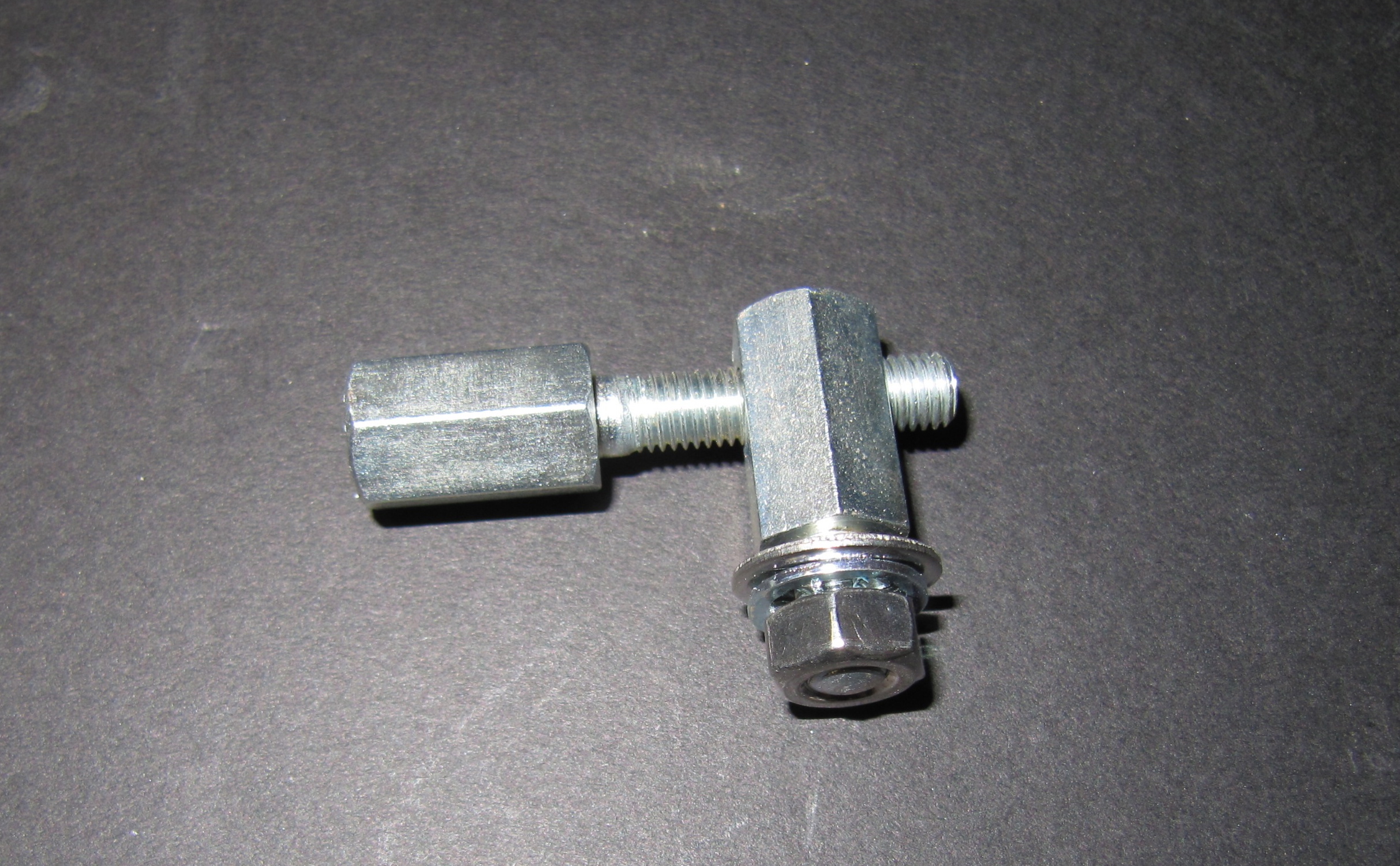
My original control wire plastic cable casing was in pretty bad shape so I replaced it with a new one from SNG Barratt. It is very close to the original although the cable casing did have to be trimmed a few inches.  I cleaned up the components including the adjuster, for bonnet lock control; the Abutment, for cable adjuster; the plain washer, the shakeproof washer under the nut, and the 1/4″ -28 nut. These items were then zinc plated. This is an image of the components after plating:

Bonnet Lock Control Wire Abutment and Adjuster

Bonnet Lock Control Wire Abutment and Adjuster

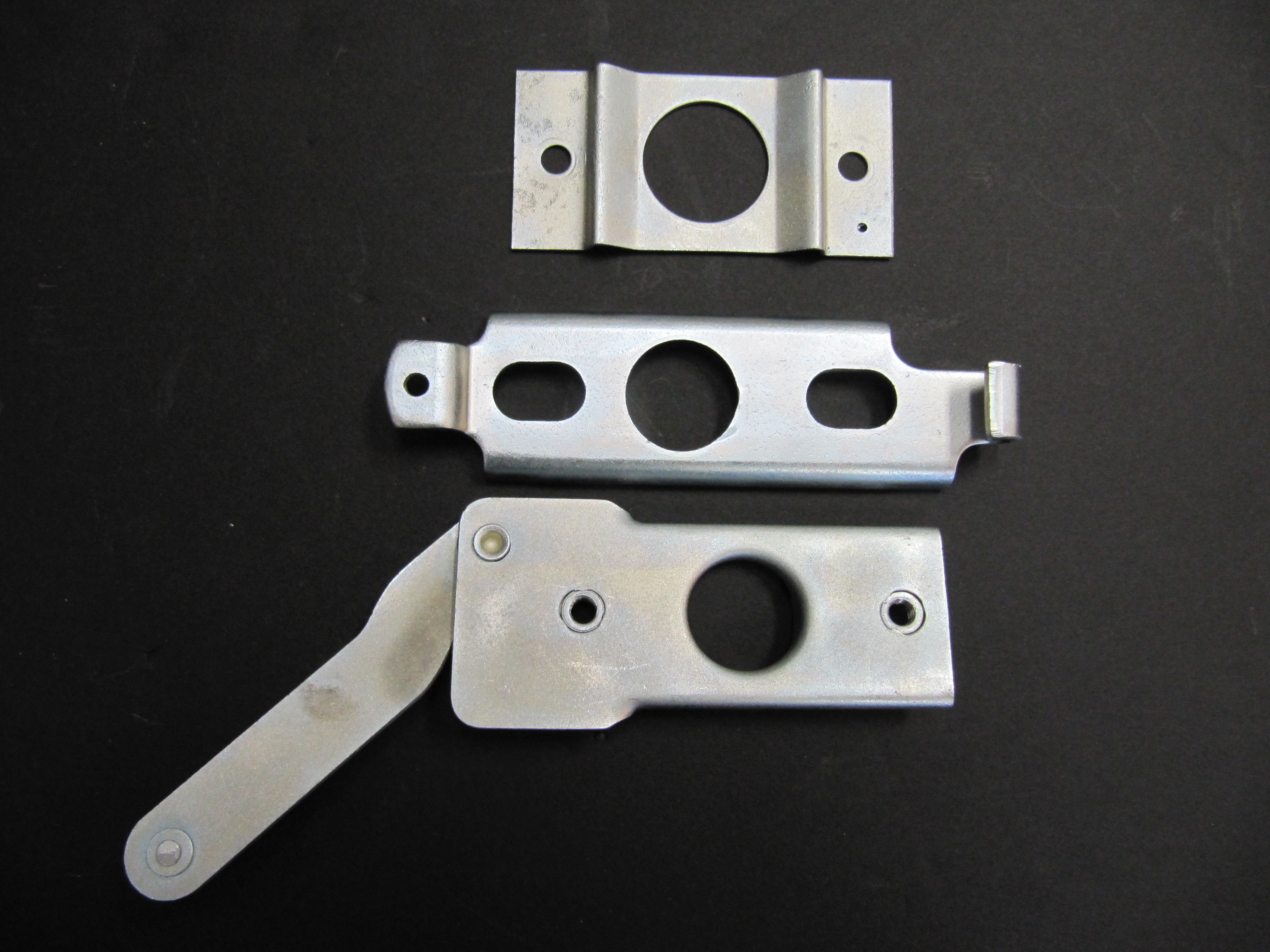
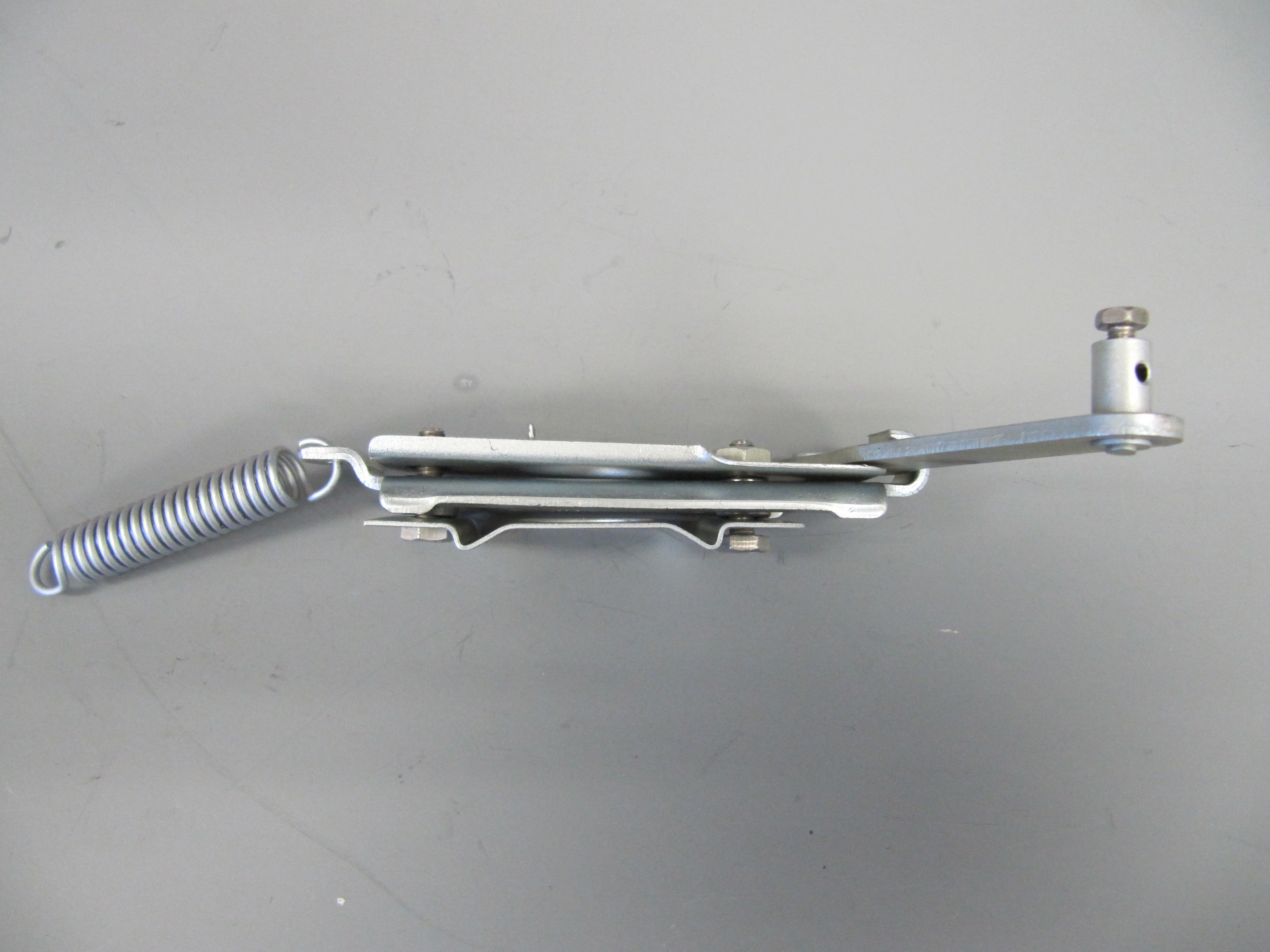
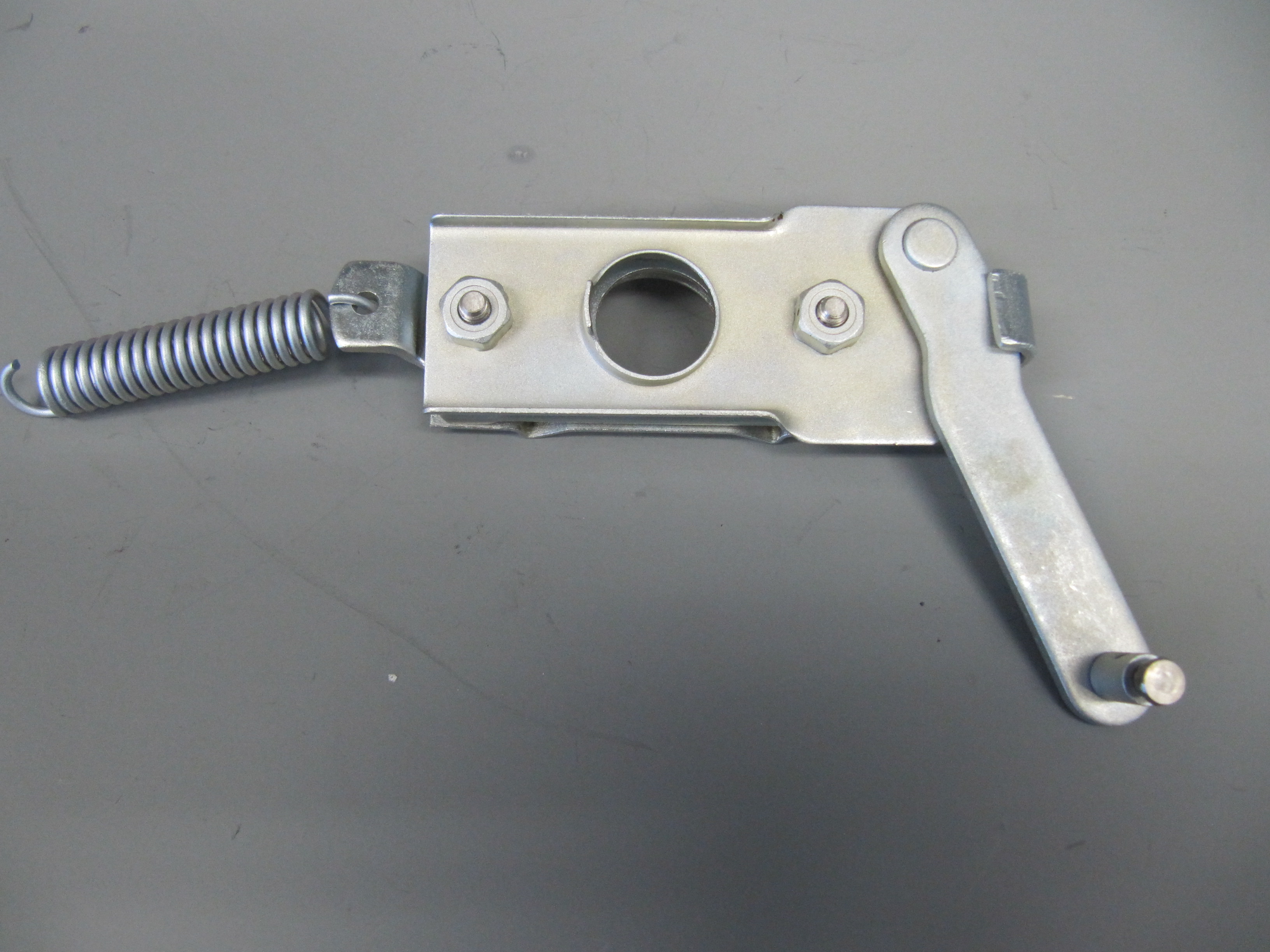
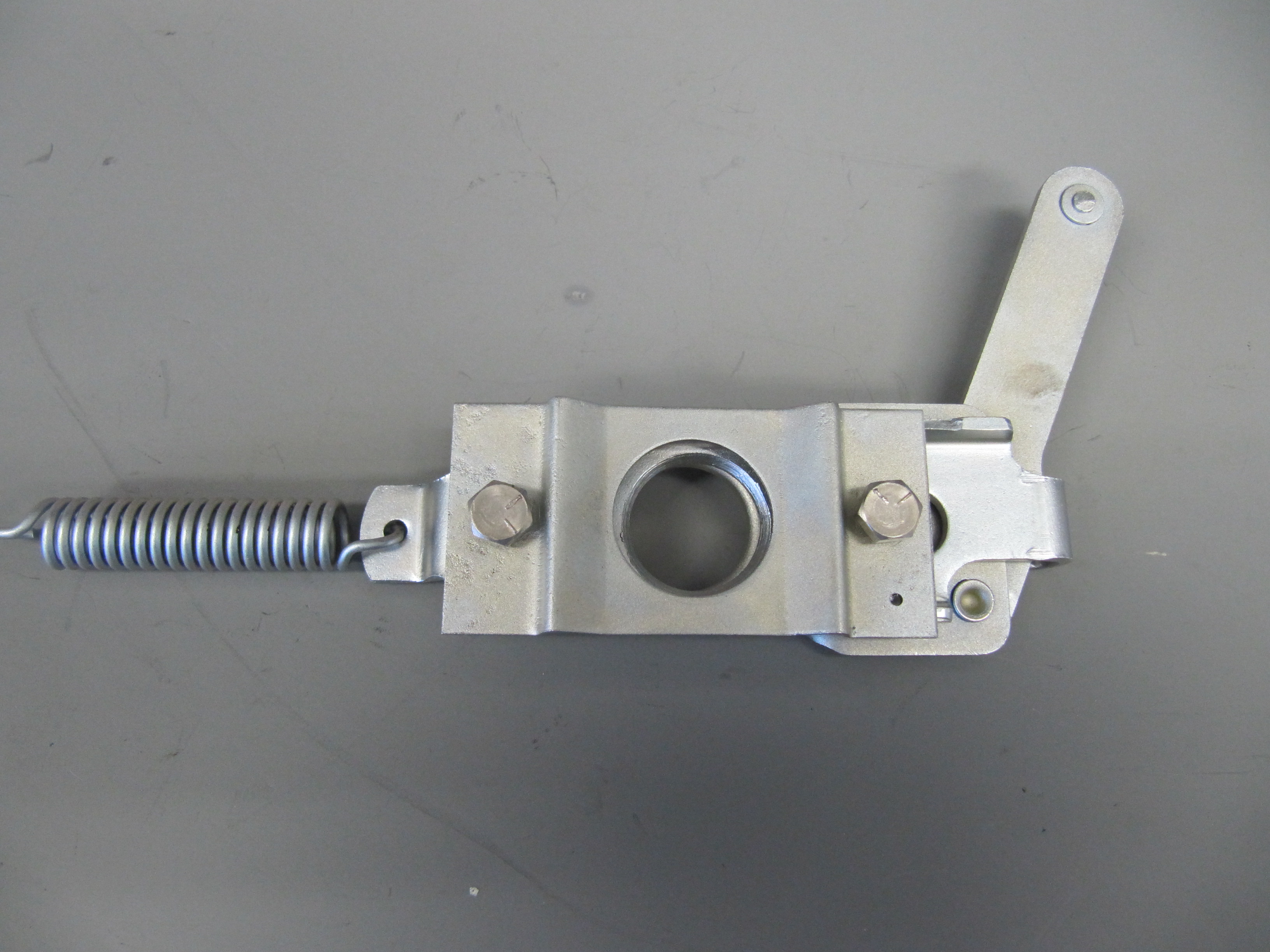
Bonnet Catch Plate, Striker Plate, Base Plate, Bonnet Latch and Return Spring

These components of the bonnet catch assembly were cleaned and zinc plated. Two spacing bushes fitted between the catch and latch were also cleaned.

New Zinc Finish Bonnet Catch Components

New Zinc Finish Bonnet Catch Components

These are the assembled components:

Assembled Bonnet Catch

Assembled Bonnet Catch

Bonnet Catch

Bonnet Catch

Bonnet Catch

Bonnet Catch

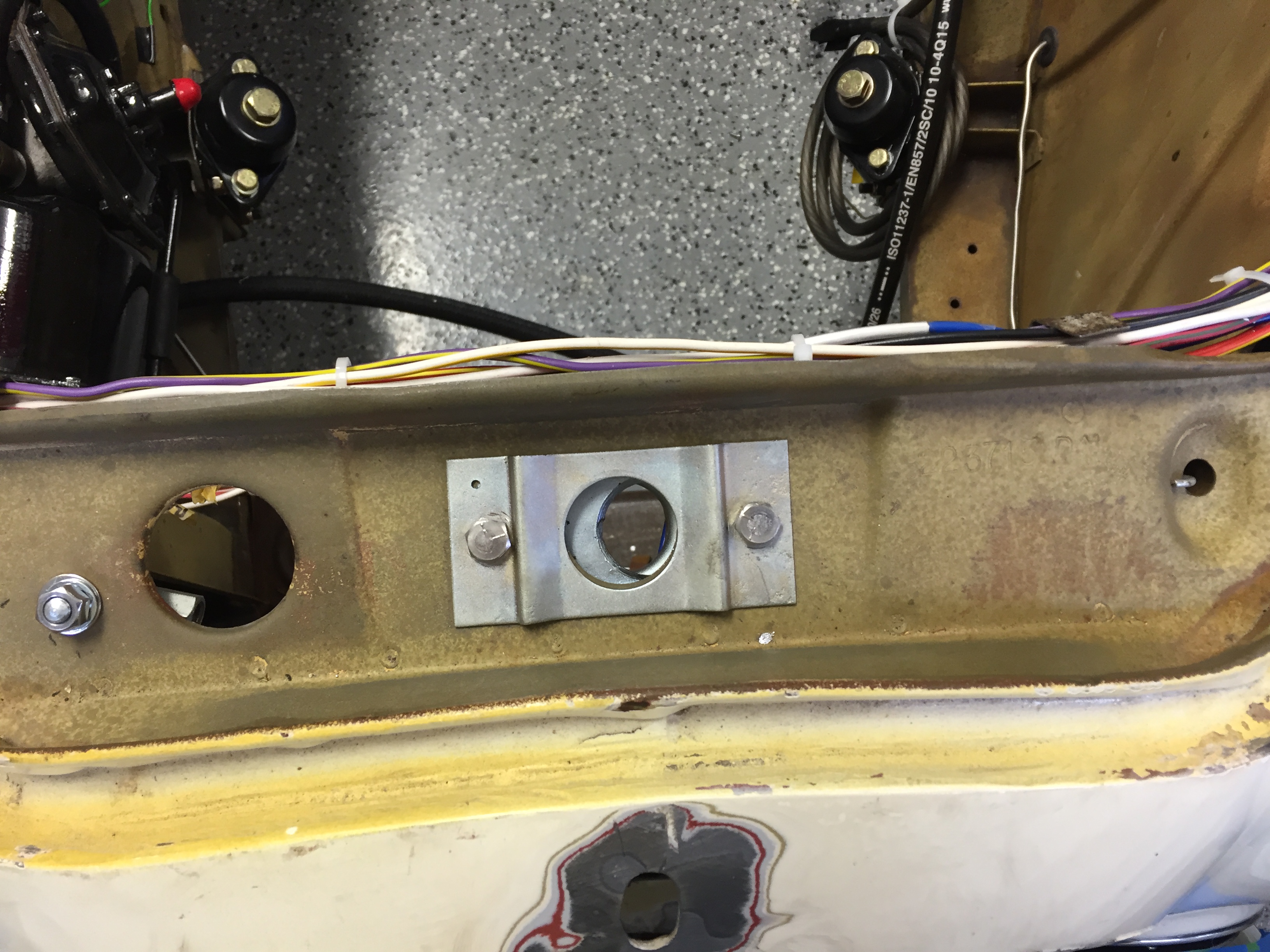
This is what the assembly looks like when mounted to the vehicle:

Bonnet Catch/Release Assembly

Bonnet Catch/Release Assembly

Bonnet Catch/Release Assembly

Bonnet Catch/Release Assembly

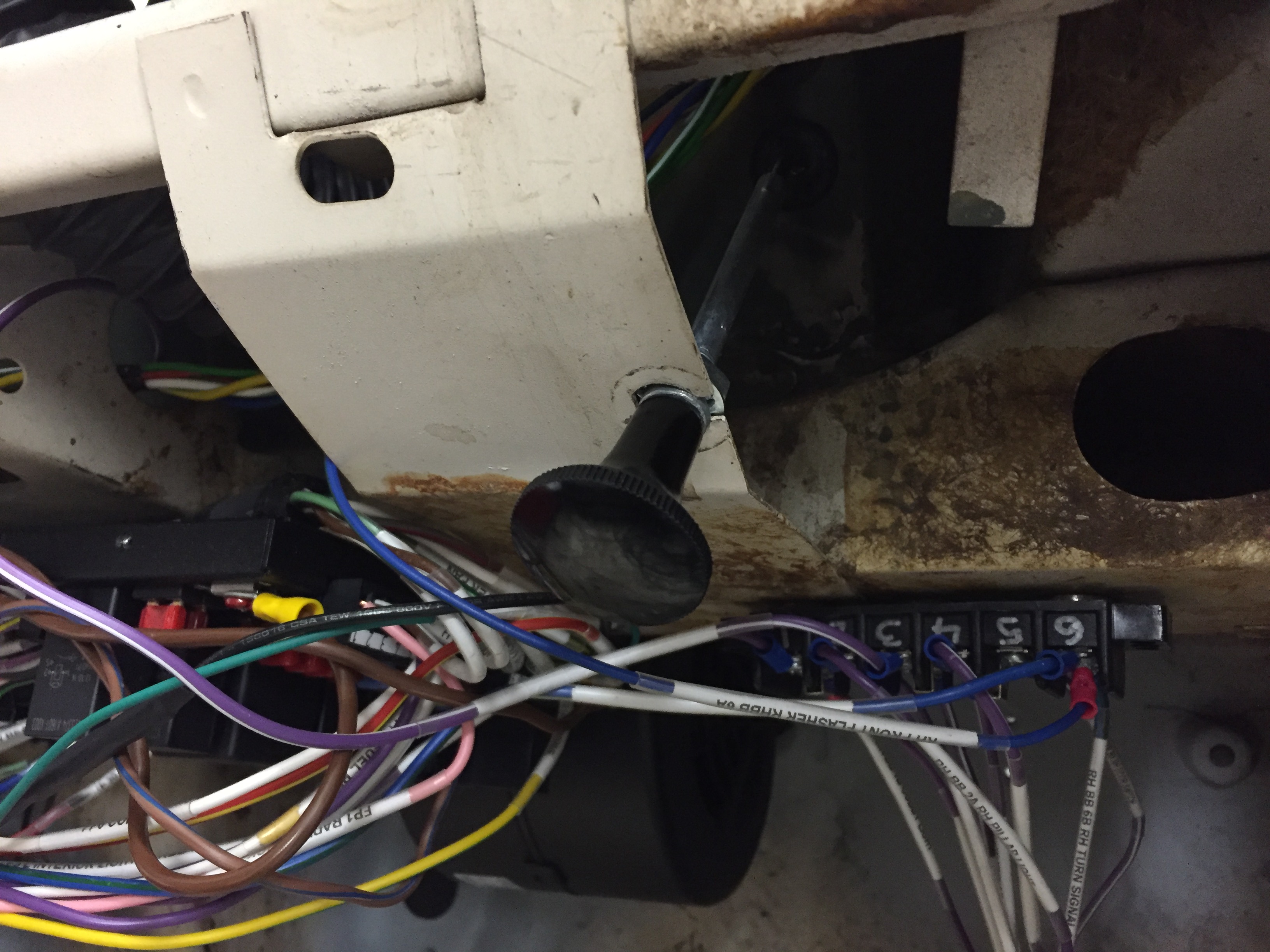
This image shows the bonnet release remote control cable pull knob mounted below the RH side of the dash. Not very convenient for the LH drive American market!

Remote Control Bonnet Release Cable Knob under dash

Remote Control Bonnet Release Cable Knob under dash

This view of the RH side of the engine bay valence shows the routing of the remote control cable to the front of the car.

Remote Control Bonnet Release Cable on Valance

Remote Control Bonnet Release Cable on Valance

I chromed the the safety latch that is attached to the Bonnet because the paint never seems to hold up on these items.Chromed Bonnet Safety Catch

The spring and rod that hold the safety latch to its mount were cleaned and zinc plated.

New Zinc Finish Bonnet Latch Components

New Zinc Finish Bonnet Latch Components


Classic Technologies Relay/Fuse Panel

Wiring System Upgrade

The Fuse/Relay Panel

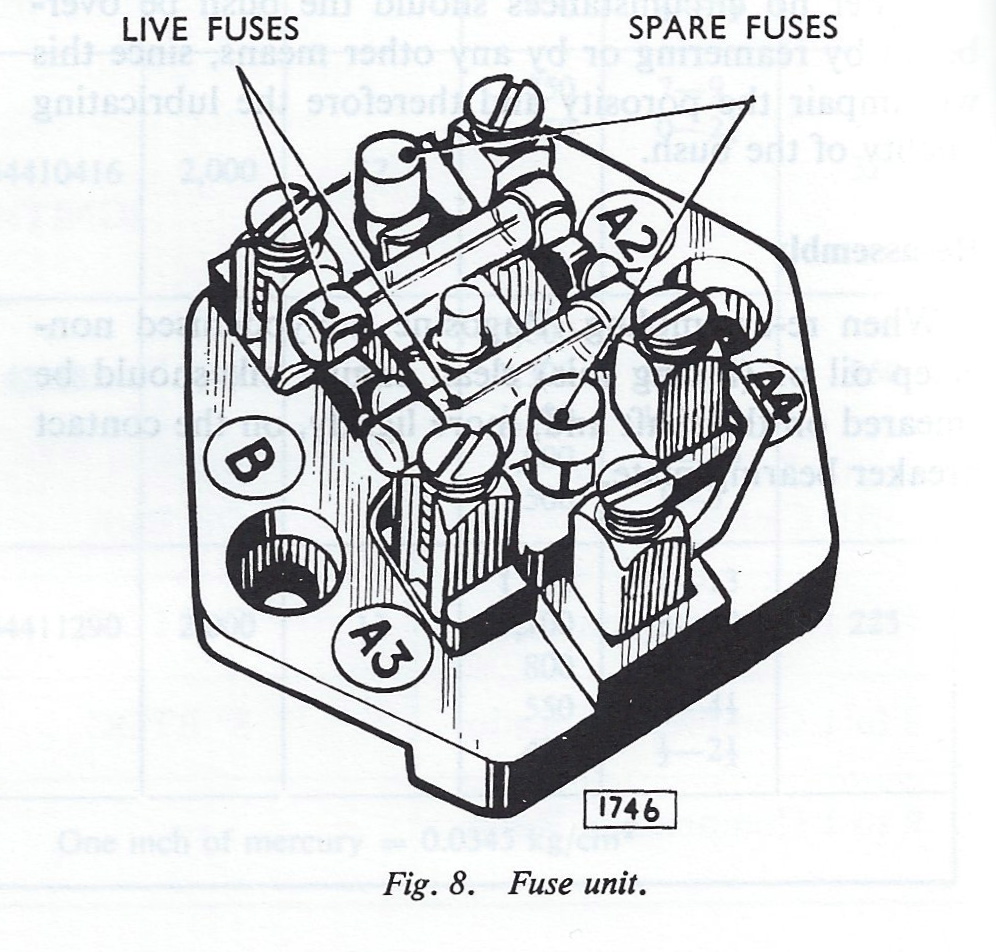
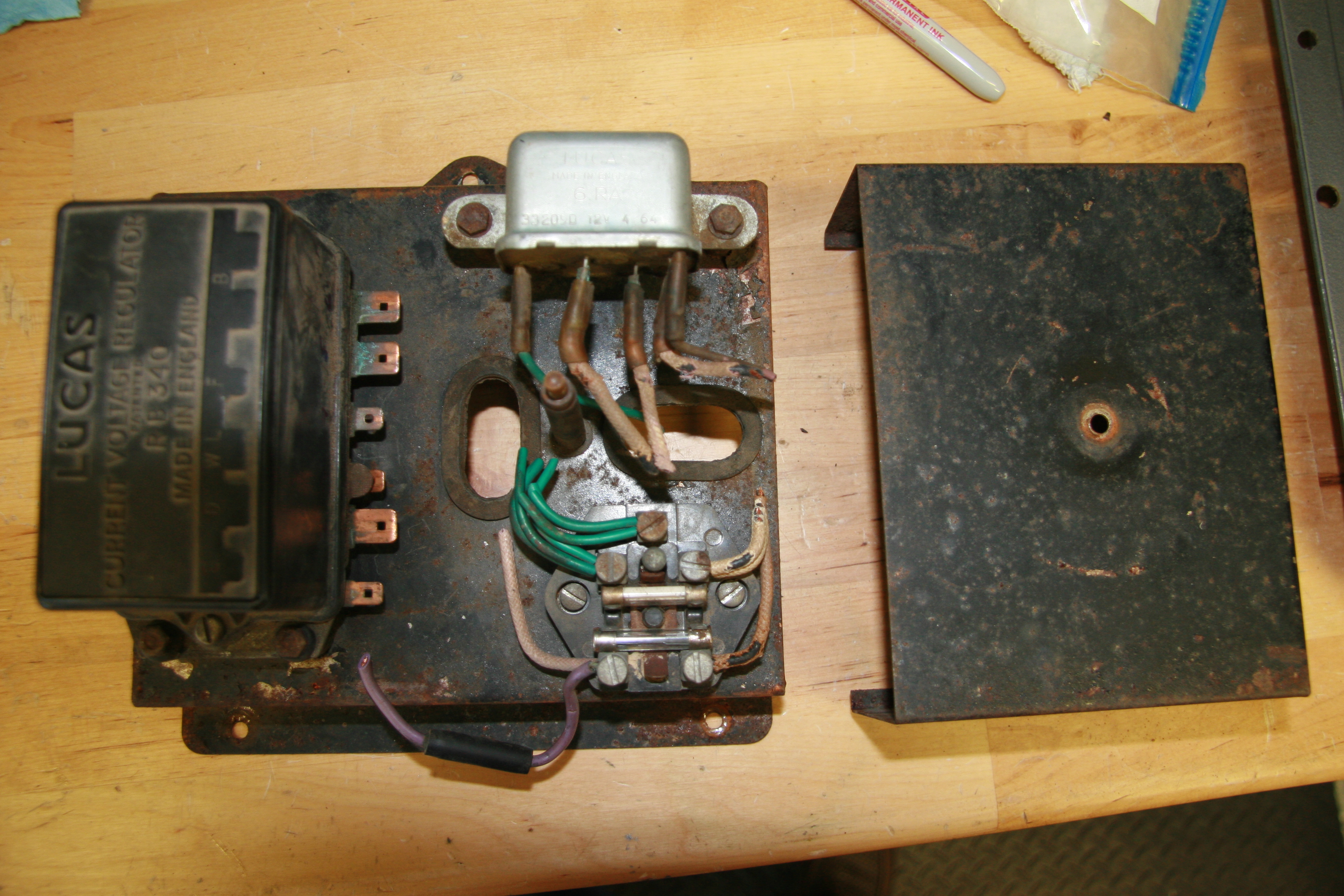
The heart of the original Jaguar MK2 electrical system was a fuse panel assembly located on the LH engine bay valance under the bonnet. The fuse panel bracket assembly houses the RB310 Voltage Control Box (Regulator), the Fuse Box unit, and the Horn Relay. It has a metal top protecting the internal components which is secured by a knurled chrome thumb screw or knob. My panel was pretty rusty but cleaned up nicely with media blasting and was then powder coated black.

Today it is hard to imagine that the fusing of the entire electrical system of the car was handled by two fuses!

Fuse Unit

Fuse Unit

I am upgrading the electrical system and will be using an alternator with an internal regulator to replace the dynamo or generator. This action will eliminate the need for the voltage control box. I will use a modern Bosch automotive relay for the horns which will eliminate the need for the original Lucas horn relay. Finally, I am upgrading from the original Model SF6 fuse unit with the two glass fuses of 35 amps and 50 amps to a modern fuse/relay panel supplied by Marc Goldblatt, owner of Classic Technologies. http://www.classic-technologies.com I will be able to utilize the base of the original fuse panel bracket assembly with Marc’s fuse/relay panel and will therefore keep the fuse connections at the same location as original to the car. Marc’s panel can be mounted horizontally or vertically and I will not make a final decision on the orientation until I have the engine in place for trial fitting.
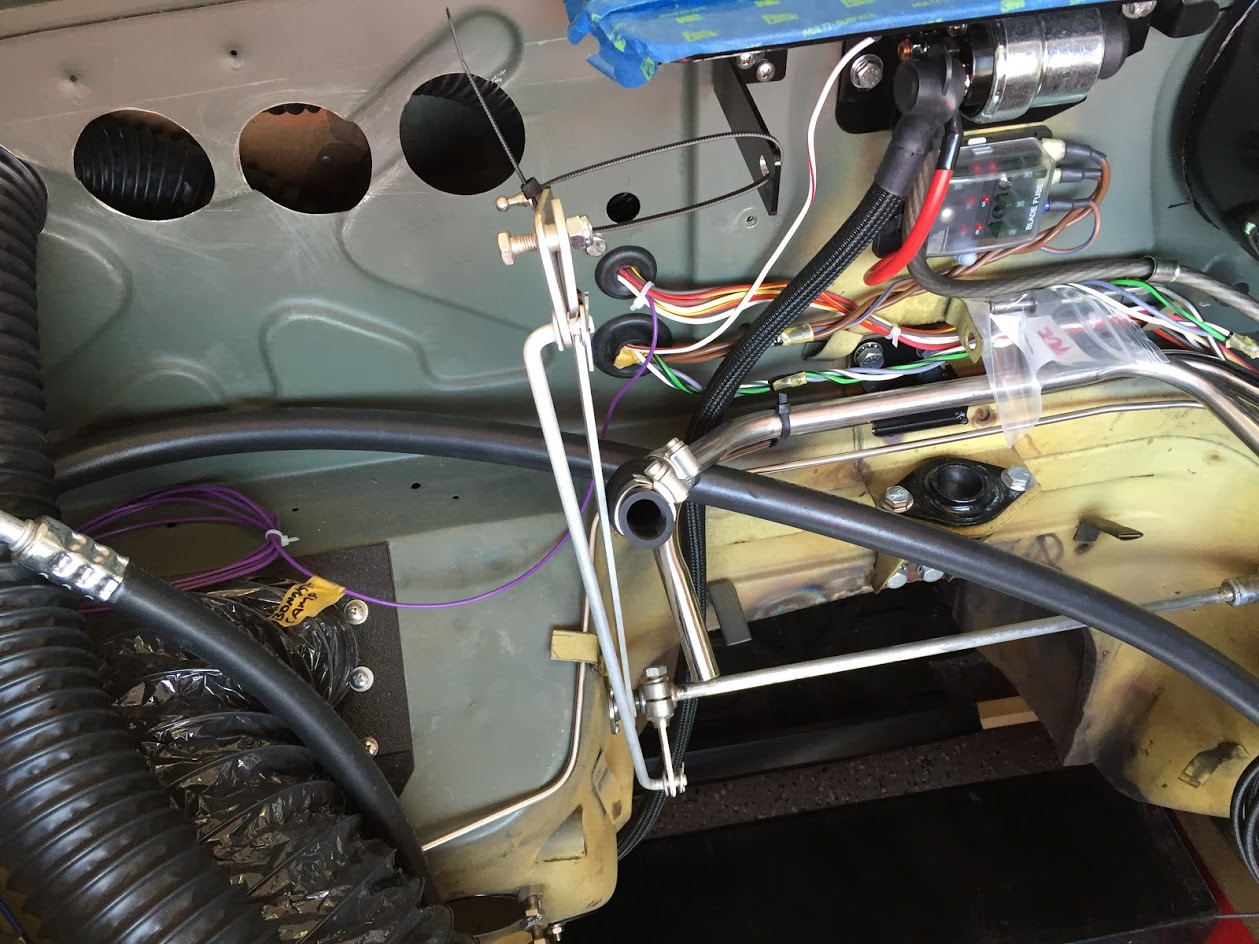
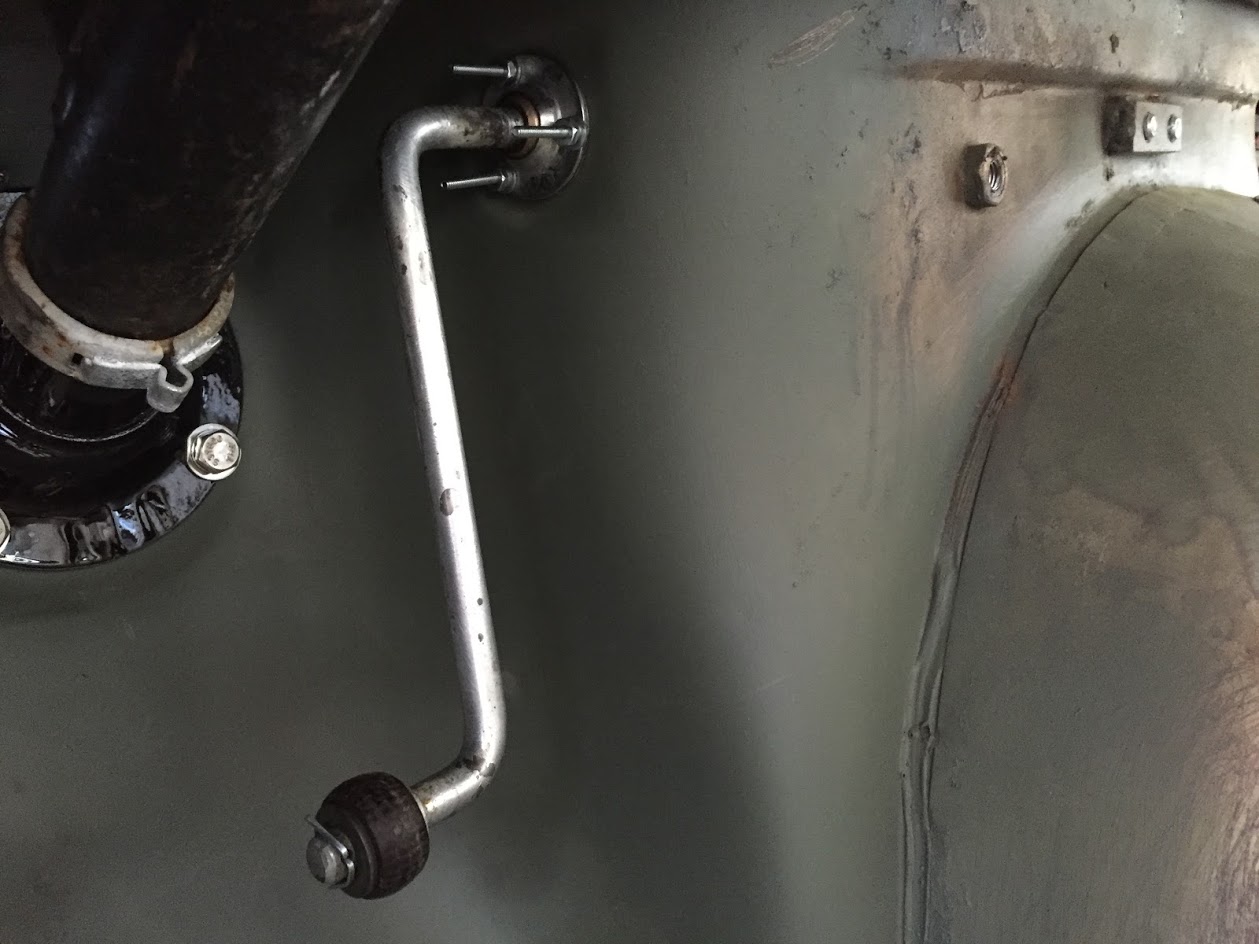
This is a link to a short video that Marc Goldblatt made about his product.


The Classic Technologies fuse/relay panel provides for 15 fused circuits with 34 pin connectors, 7 relays including horn, ignition power, fog lights, high beams and low beams headlights, starter and accessory power and 2 flashers for the turn signals and hazard lights. I selected the optional relays for LED lights.

Classic Technologies Relay Fuse Panel

Classic Technologies Relay Fuse Panel

The new harness is simplified and made up of discrete runs from the fuse box to the switch or accessory. The enclosure for the fuse box is 16 gauge steel with a powder coated finish that is silk screened for easy identification of the fuses, relays and terminations.  The Classic Technologies panel is only 6 3/4″ (171mm) long X 4 5/8″ (81mm) wide X 2 3/16″ (56mm) tall. The lug-less terminations into unpluggable connectors are another nice feature making the installation of the panel easy and convenient.

A poster size color schematic was provided along with a clear instruction manual to guide hobbyists like myself through the installation. Marc will provide additional support if needed.

This is the original assembly:

Bracket Assembly, Mounting Horn Realy, Fuse and Control Boxes

Bracket Assembly, Mounting Horn Realy, Fuse and Control Boxes


Although the Classic Technologies Box is more often seen mounted under the bonnet somewhere, I have elected to mount it under the dash on the RH side of the interior. This will require some modification of the fiberboard panel under the dash but that should be accomplished with little problem. My installation looks like this:

Mounting of the Classic Technologies Fuse Panel

Mounting of the Classic Technologies Fuse Panel


I will still use the base of the original fuse panel bracket assembly in its original location on the LH valance in the engine bay.  Three Barrier terminal blocks used to make connections for lights, horns and etc., will be mounted on the LH valance and the base of the fuse bracket will be used to cover and protect the terminal blocks and wiring. On the top of the base I will be mounting fuses and connectors associated with the alternator, and power steering. I will then fabricate a new cover for the base that will shield the entire base not just 2/3 of it as was done originally. This is the powder coated mounting bracket assembly:

Powder Coated Fuse Panel Bracket Assembly

Powder Coated Fuse Panel Bracket Assembly

Fuse/Relay Panel Design Theory

The 15 fuses are broken up into three groups:

1. Constant Power: Fuses F1 through F4, F8, and F15. These fuses are tied to the battery + terminal (B+). Examples: Dome Lights, Parking Lights, Hazard Flashers, and Horn. These features have power regardless of ignition switch position.

2. Ignition Power: Fuses F5, F6, and F7. These are items that are critical to starting the car that should have power while the car is being started. Examples: Coil, Alternator excitation, Fuel Pump, Gauges/Warning Lights, brake lights.

3. Accessory Power: Fuses F 9 through F14. These are items that are not critical to starting the car and should not have power while starting the car to maximize power to the starter. Additionally, in order to prevent battery drain, these items should not have power when the keys are removed from the ignition. Examples: wipers, heater motor, turn signals, overdrive, radiator fan, radio, reverse lights…

New Wiring System Requirements

In addition to the gauges, switches, and components typical of the MK2 that the Classic Technologies Fuse/Relay Panel would manage, the modifications to my car will necessitate individualizing the wiring schematic that Marc provides with his panel kit.

I will need to add circuitry for the following features:

Air Conditioning

My car was not air conditioned originally. I am installing an after-market kit produced and sold by Rock Browning of RetroAir, Inc. As I see it, the kit has the following electrical components that will need to be incorporated into the new wiring diagram.

SPAL 12” Electric Radiator Fan – 5.3 amps
Water temp sender to cut fan on/off Circuit breaker
Fan relay
Trinary switch
Compressor relay
SPAL 3 speed Blower Fan to circulate air – 16 amps max
Control panel switches – 3 speed fan switch, temperature switch

Power Steering Pump

My car did not have power steering originally although it was an option at the time. I have installed rack and pinion from a later Jaguar that uses an electric power steering pump. The vendor, M&C Wilkinson reported “The power steering pump uses approximately 40 amps at maximum draw which is slow speed/full lock.”The vendor also supplied an 80 amp fuse and a connector block.

Upgraded Wiper System

I am using a more recent Jaguar wiper motor and a modified wiper switch all purchased from Classic Motor Cars in England. I understand the amperage requirement to be 6 amps.

Power Front Seats

I am using seats from a later Jaguar (1990 Daimler XJ40). Although the seats have heaters, memory and a few other gadgets such as a seat belt alarm, I intend to only use the seat motion adjustments (four switches for each seat that will be mounted on the central console), and the lamps on the rear of the front seat headrests. The back of the seats have folding “picnic” tables.
Looks like the seats require 5 amps (7.5 max) each. Each seat needs a relay.

Sound System Amplification

Specifications for the amplifier have yet to be determined, but I anticipate perhaps a 300 watt amplifier requiring approximately 25 amps.

Accessory Power Outlets

Redundant Fuel Pump

Third Brake Light

Back-up Camera

Headlight Warning Chime

British Wiring Codes

I plan to stick with British Wiring Codes wherever possible in the rewiring of the MK2.

Mike McPhail, the president of the South Texas Austin-Healey Club, published an article in the July, 2010 issue of Regional Rumblings, the Club’s newsletter that provided an excellent color coded summary of Lucas wiring that will surely prove helpful with the Jaguar as well.

Lucas Wiring Color Codes