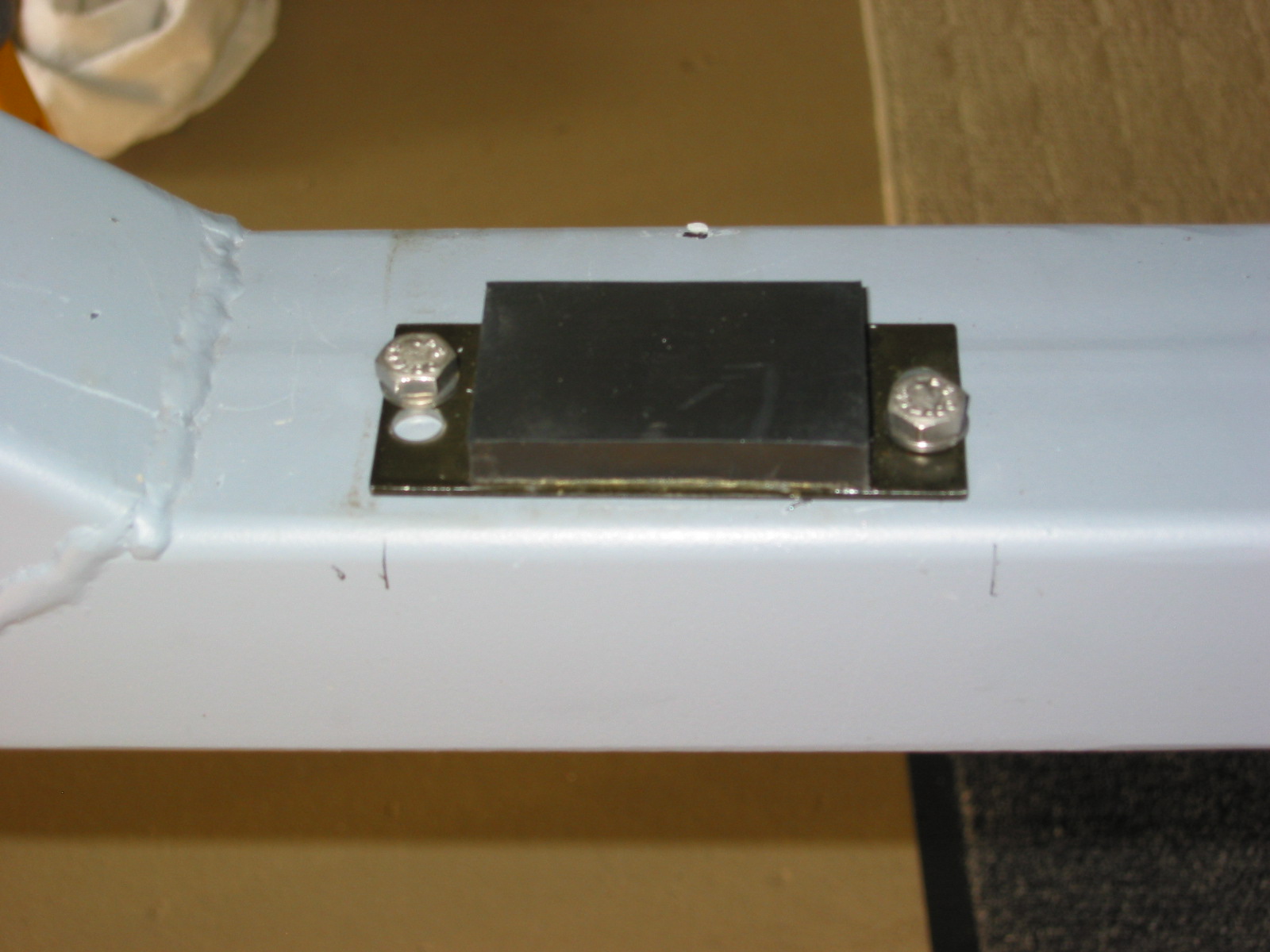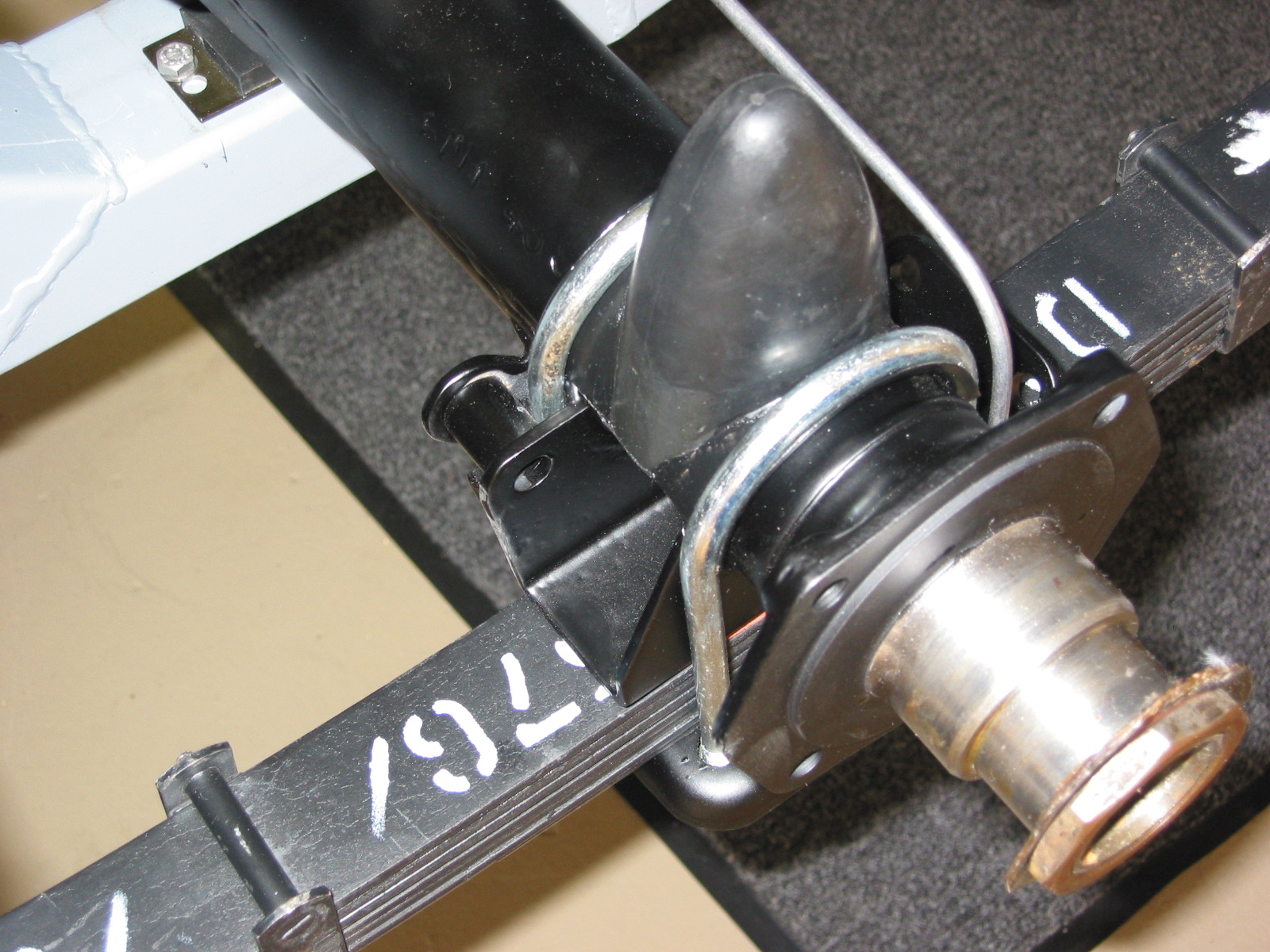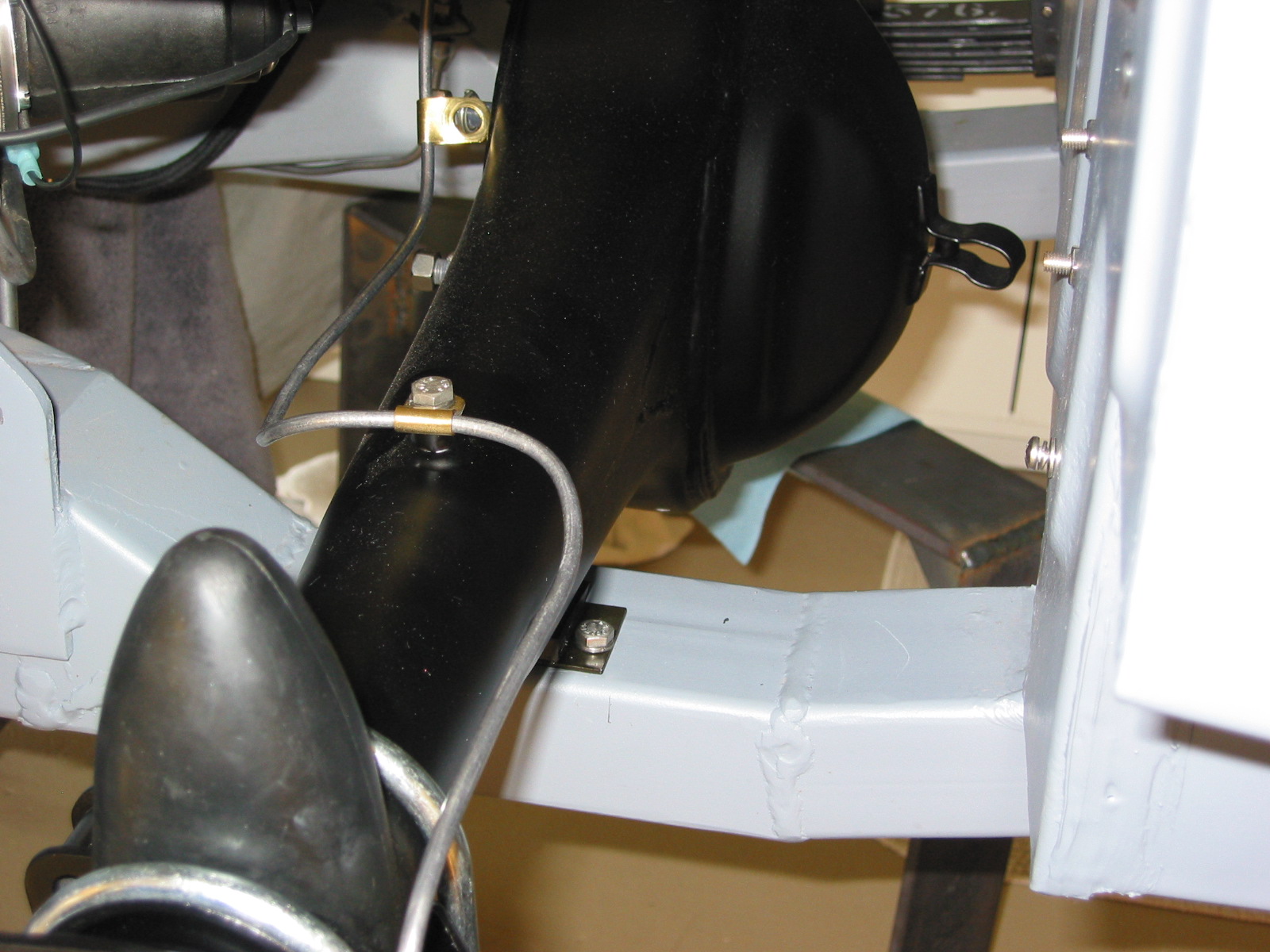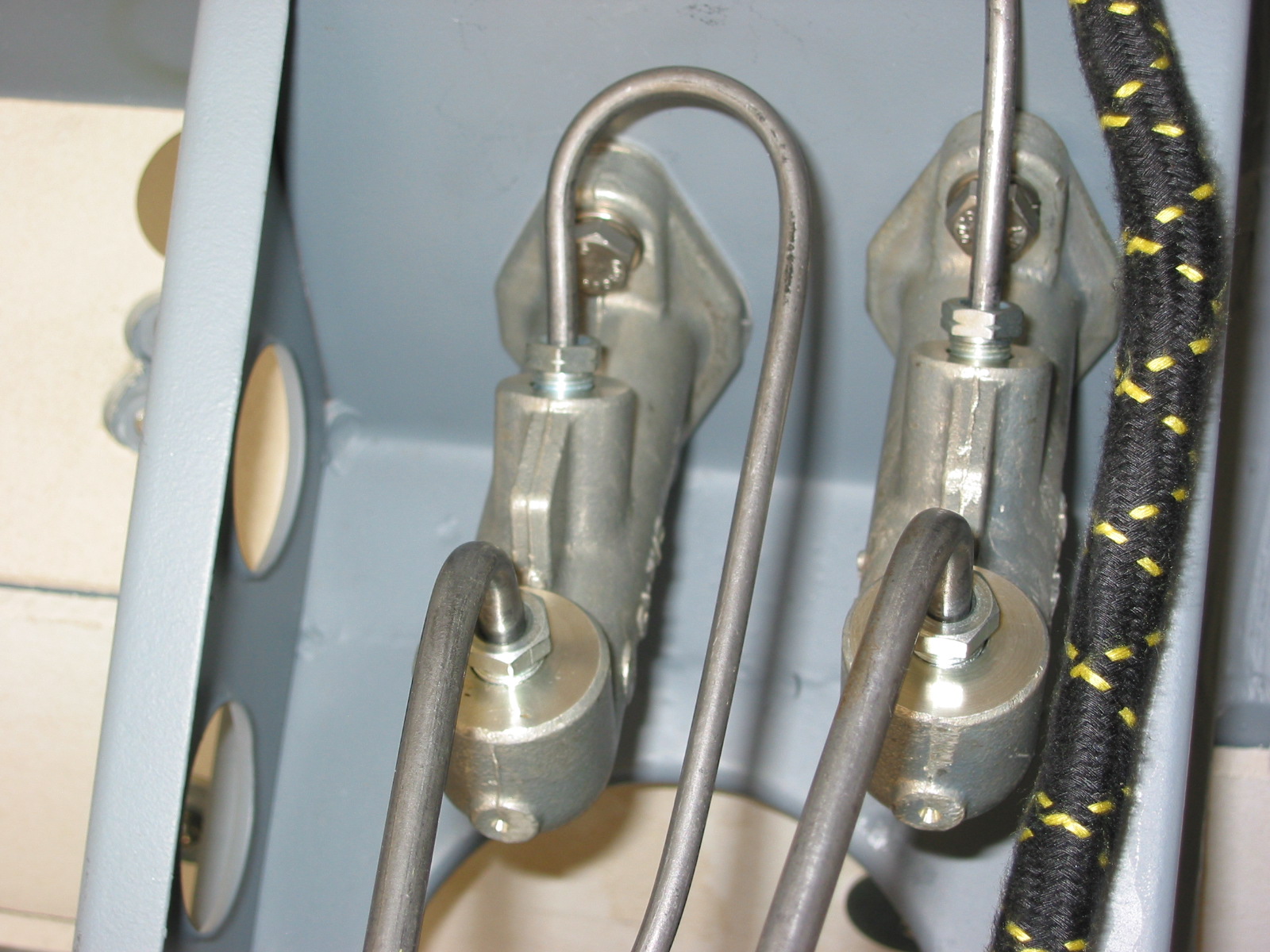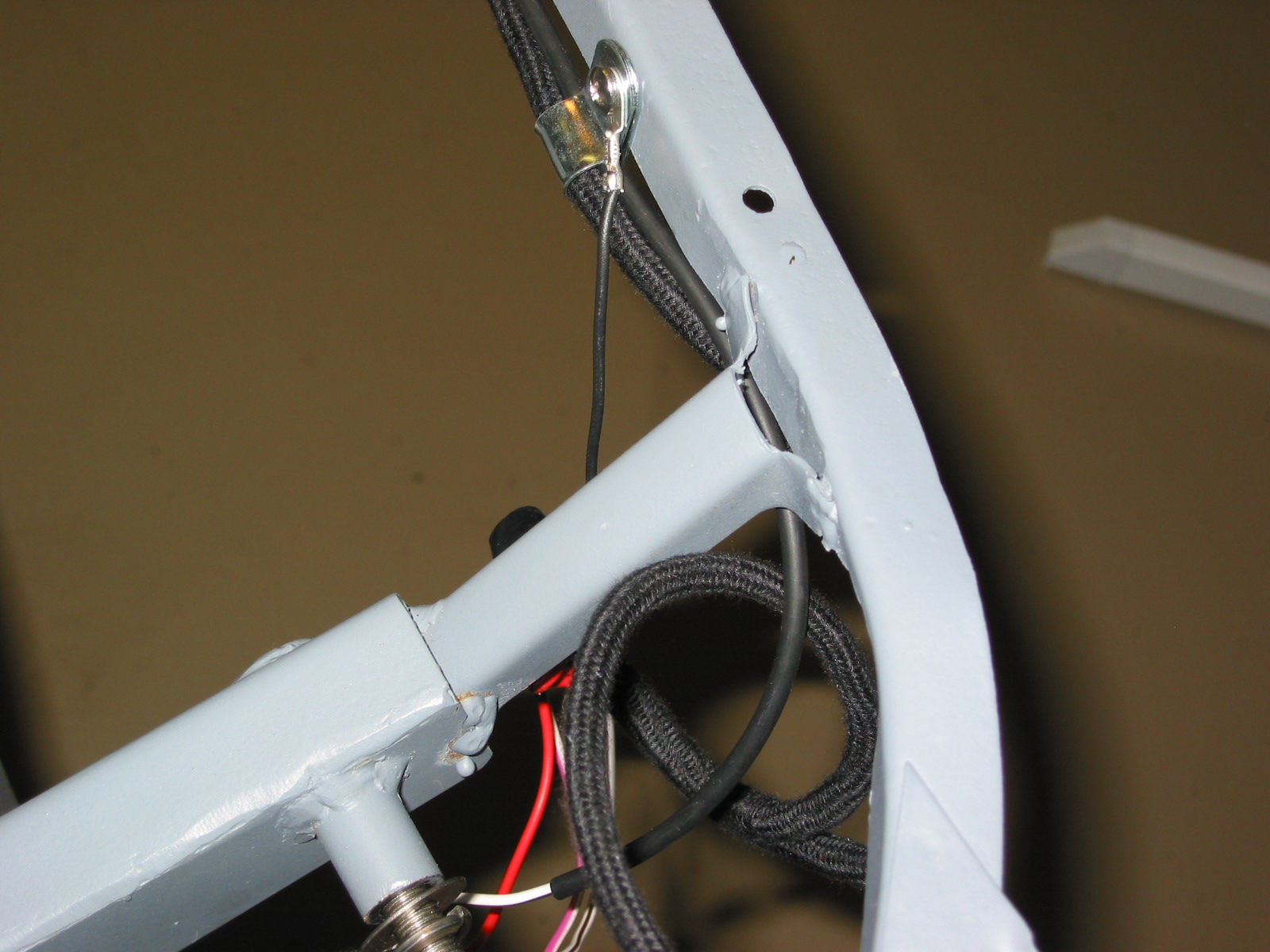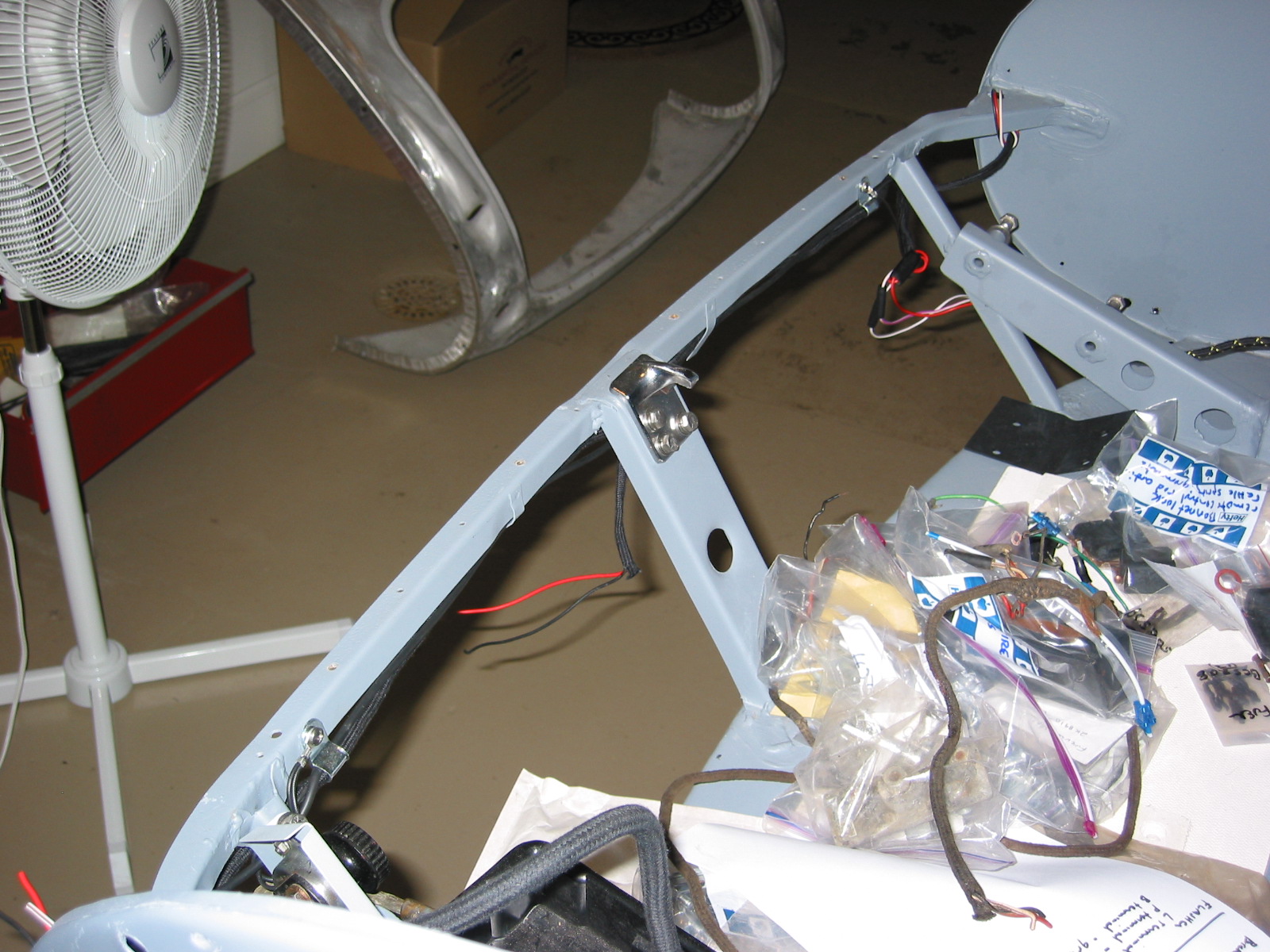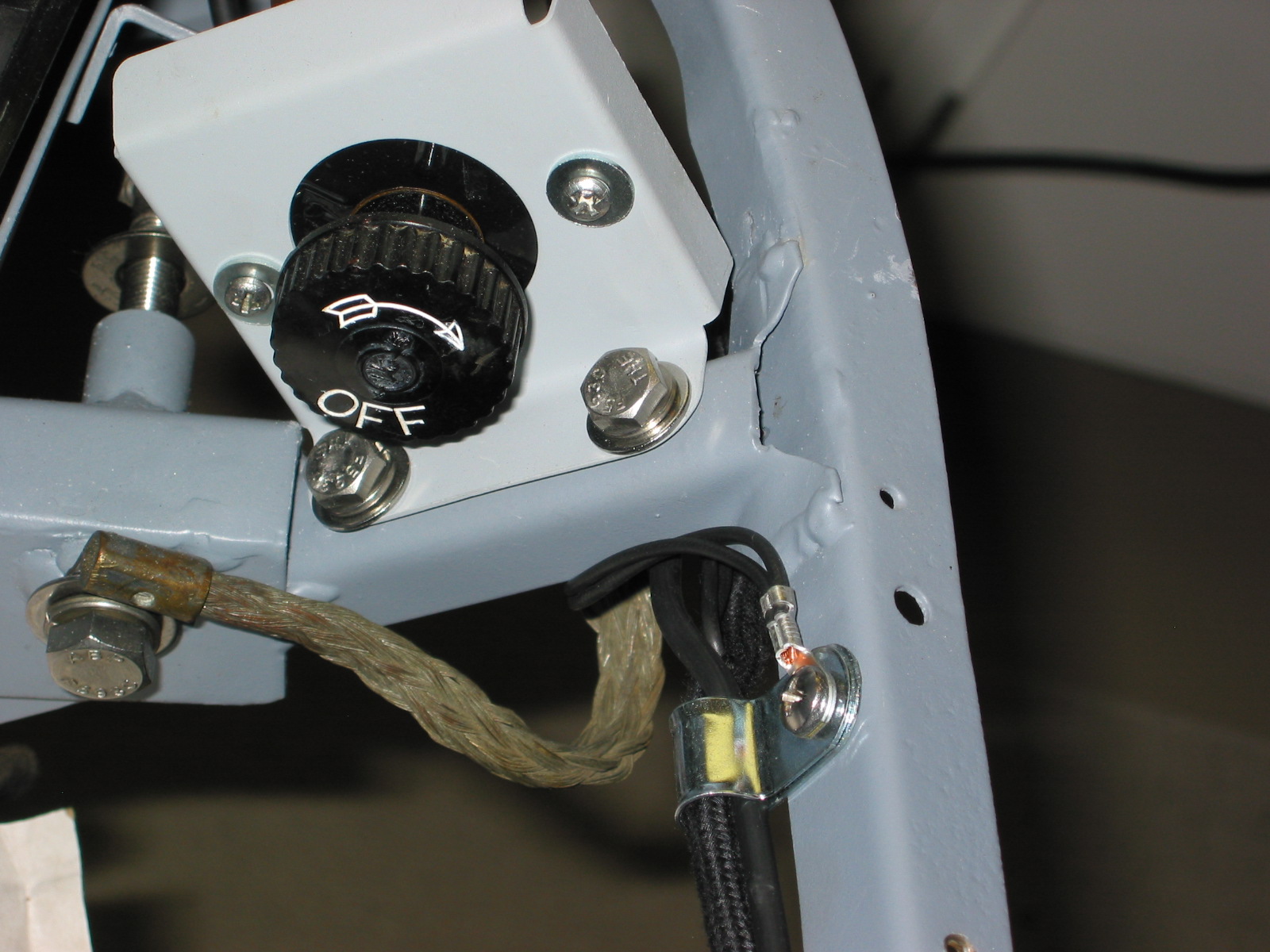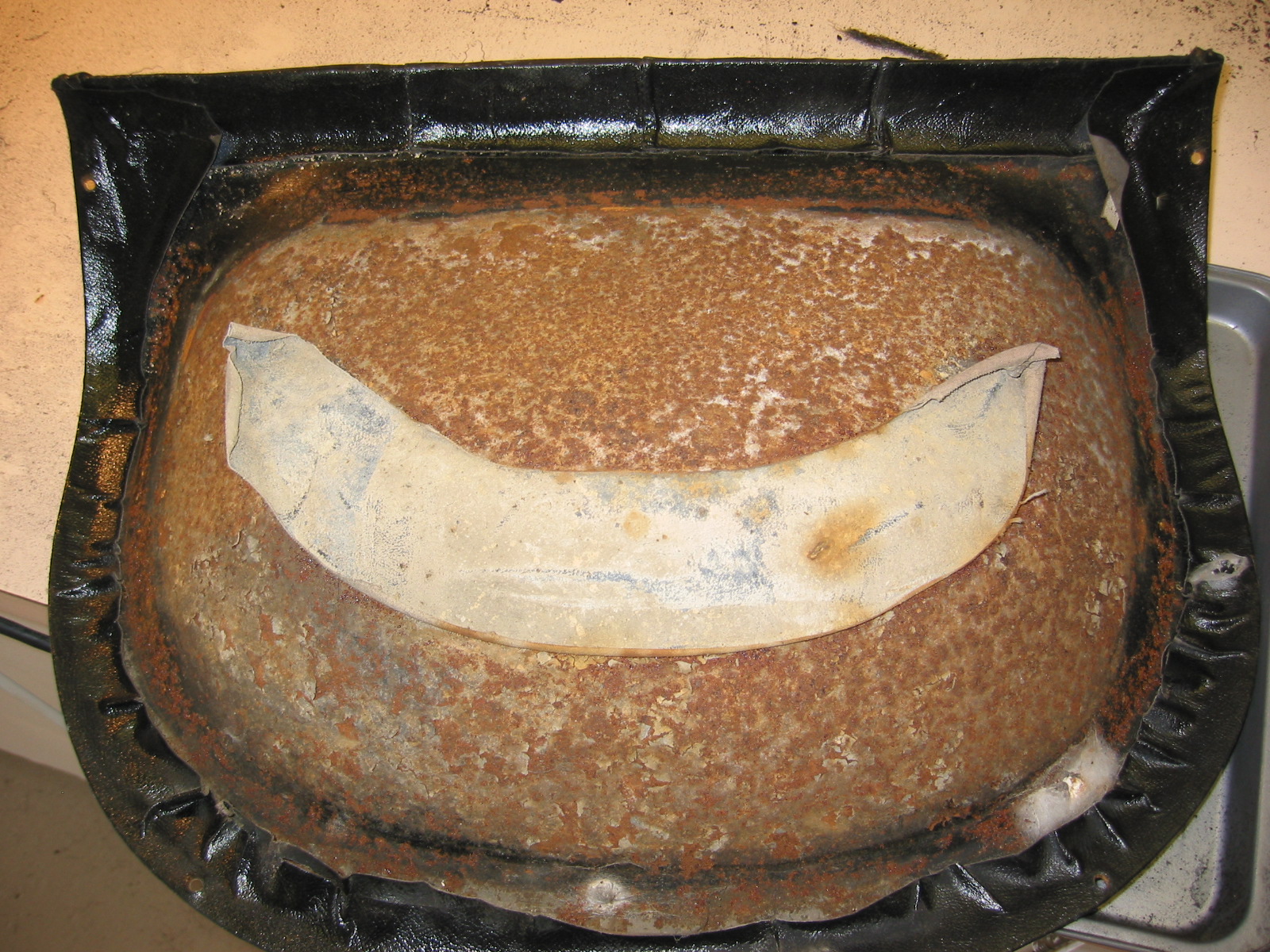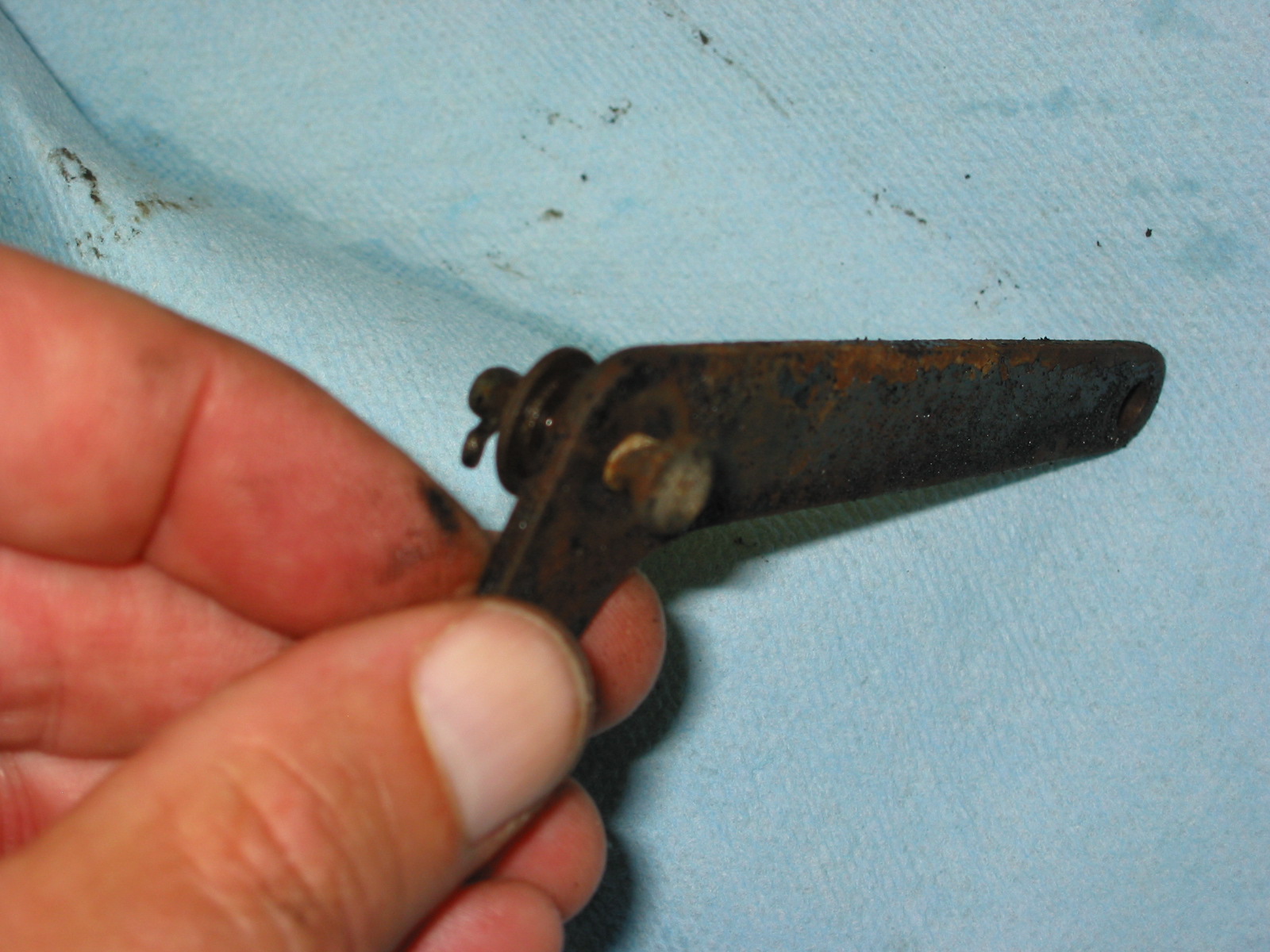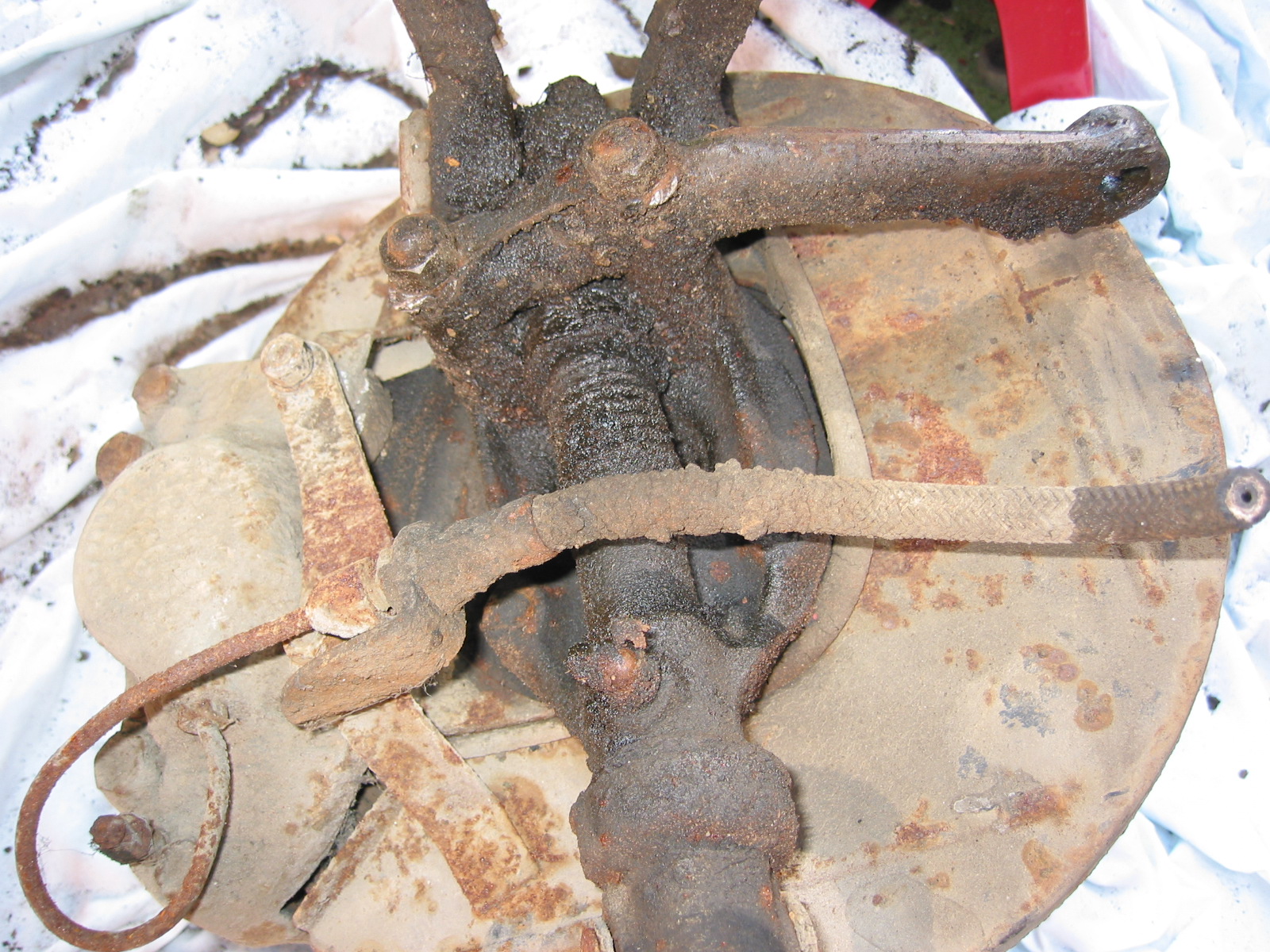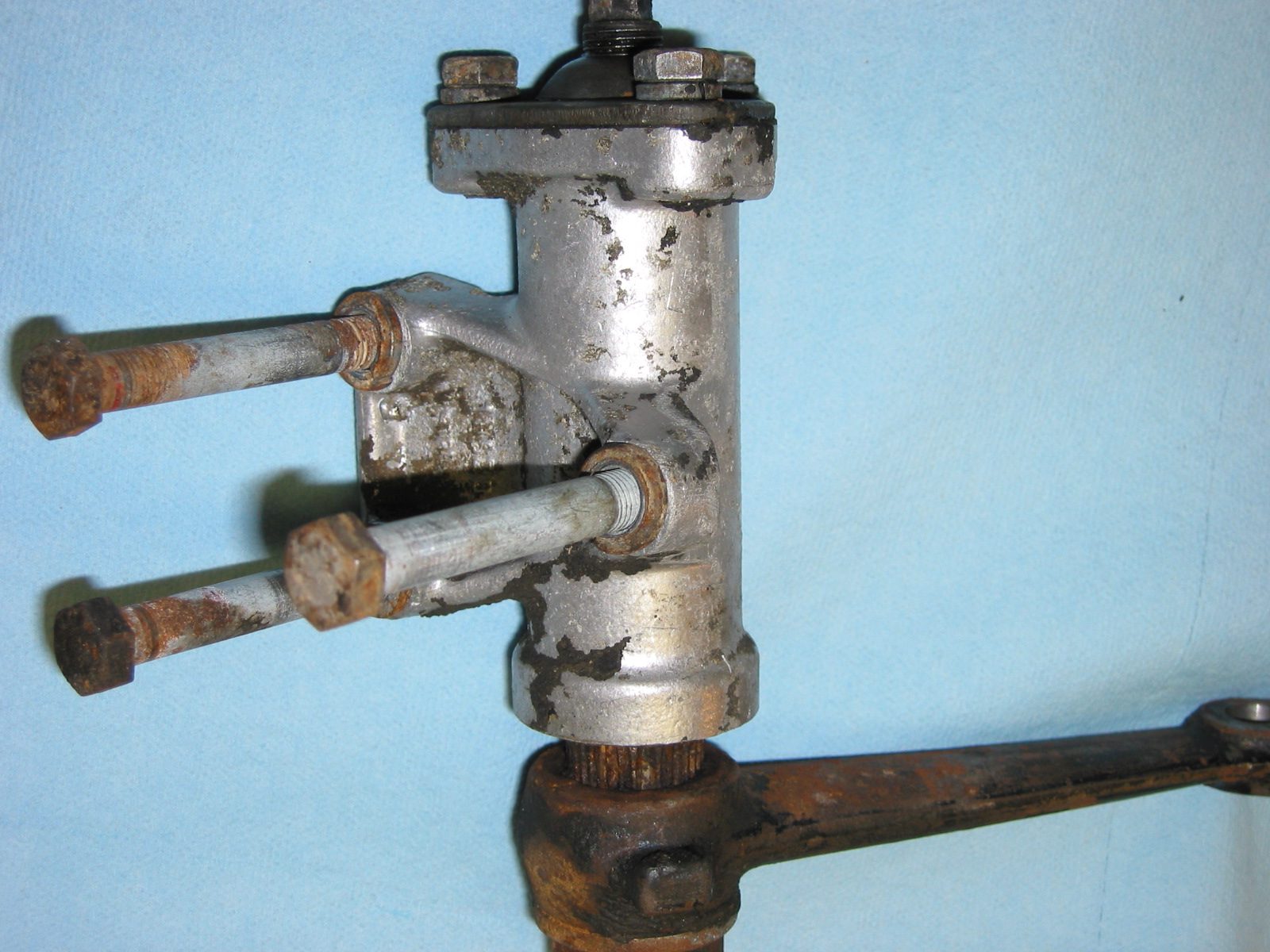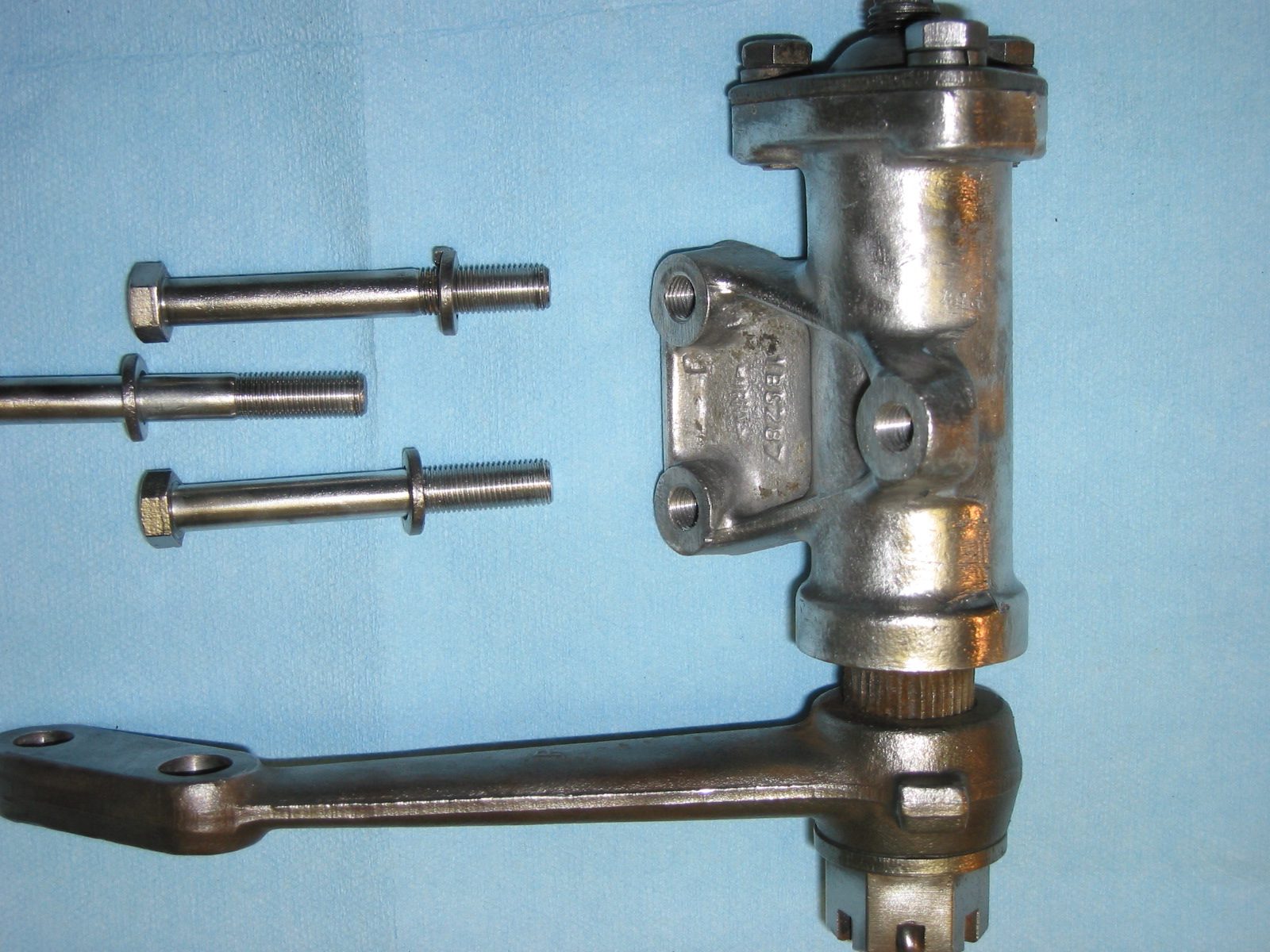
Chapter 19 – Cleaning and Trial Fitting


May 28, 2004

Front Splash Panels 

Splash Panels – Installed left and right splash panels. I needed to drill 4 new holes on each side of the car in the frame uprights. The left side was difficult and took some hammering and grinding but eventually got it to fit. Use 8 #10 1/2” pan screws to secure.
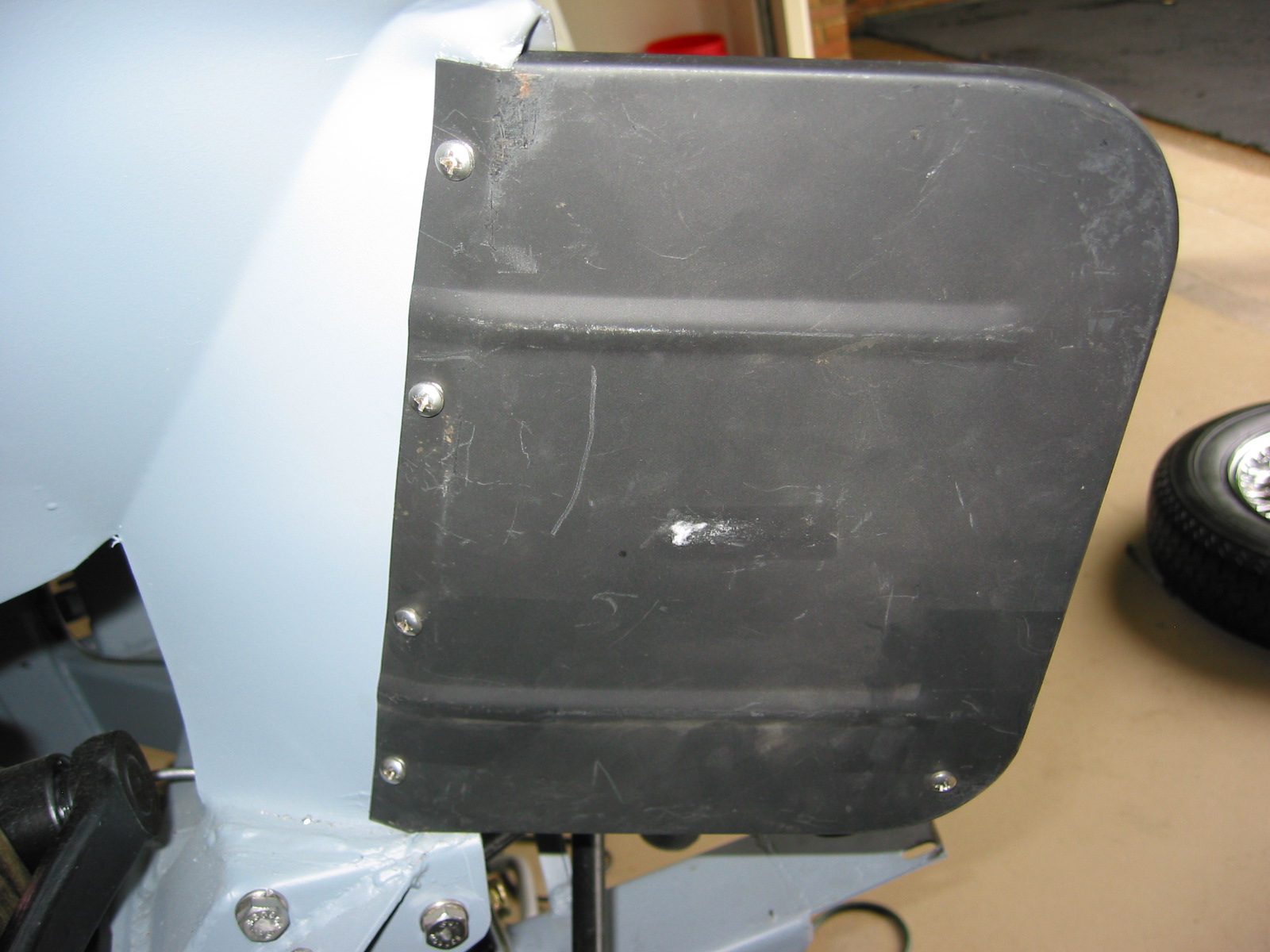
Right splash panel 1
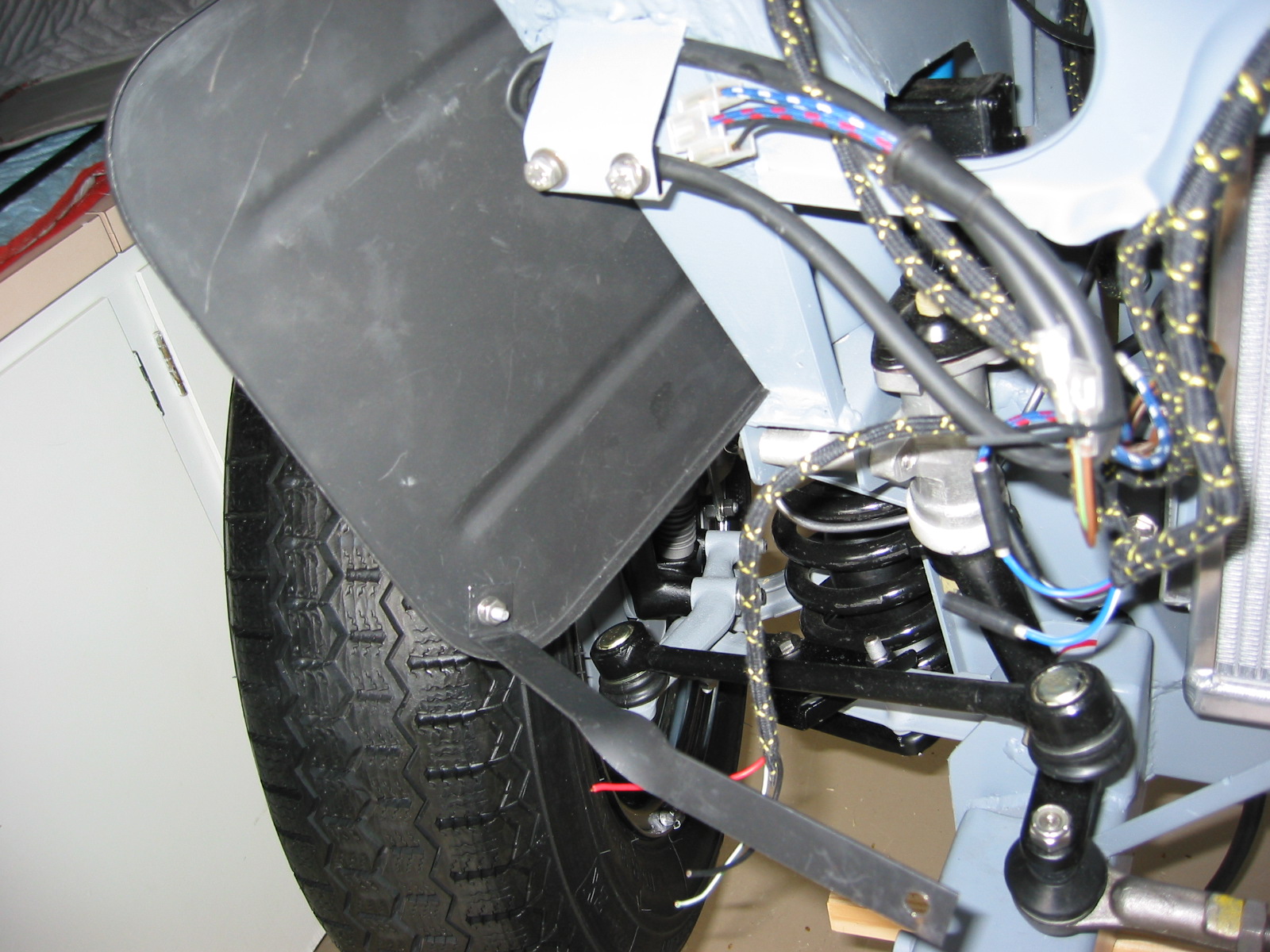
Right splash panel 2

Radiator Air Deflector – Installed radiator air deflector with two 5/16” x 5/8” bolts.
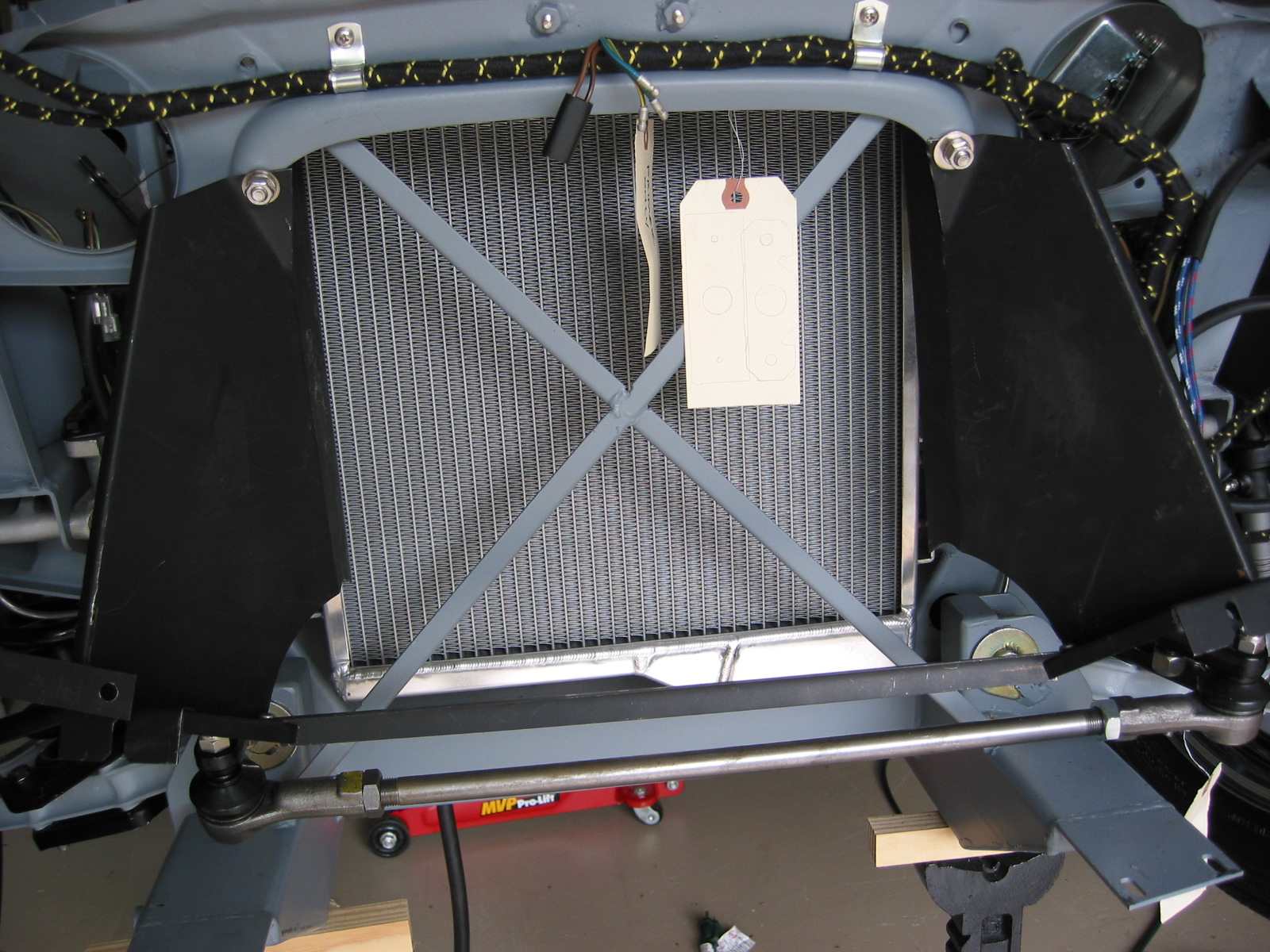
Air deflector 3
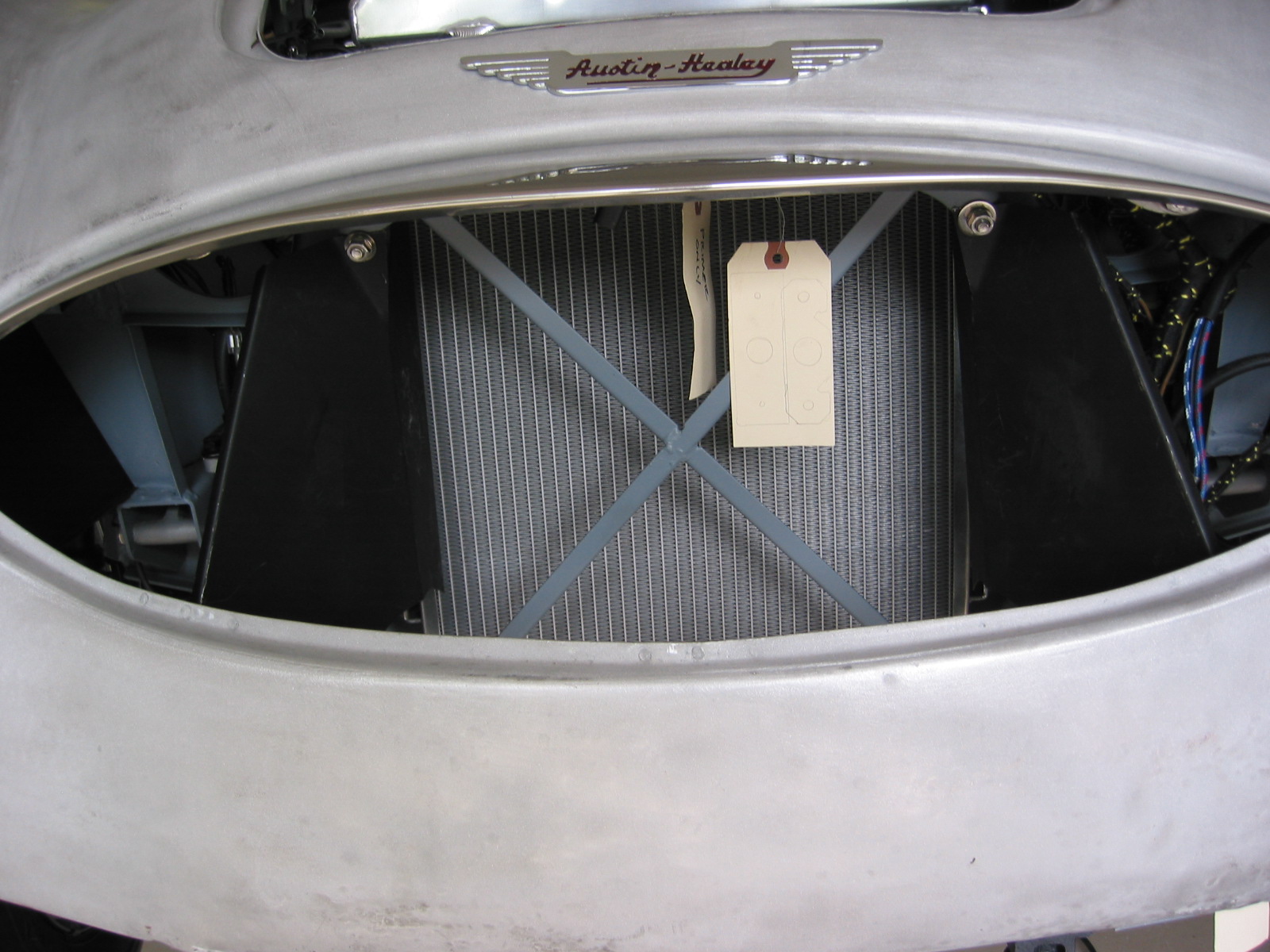
Air deflector 1

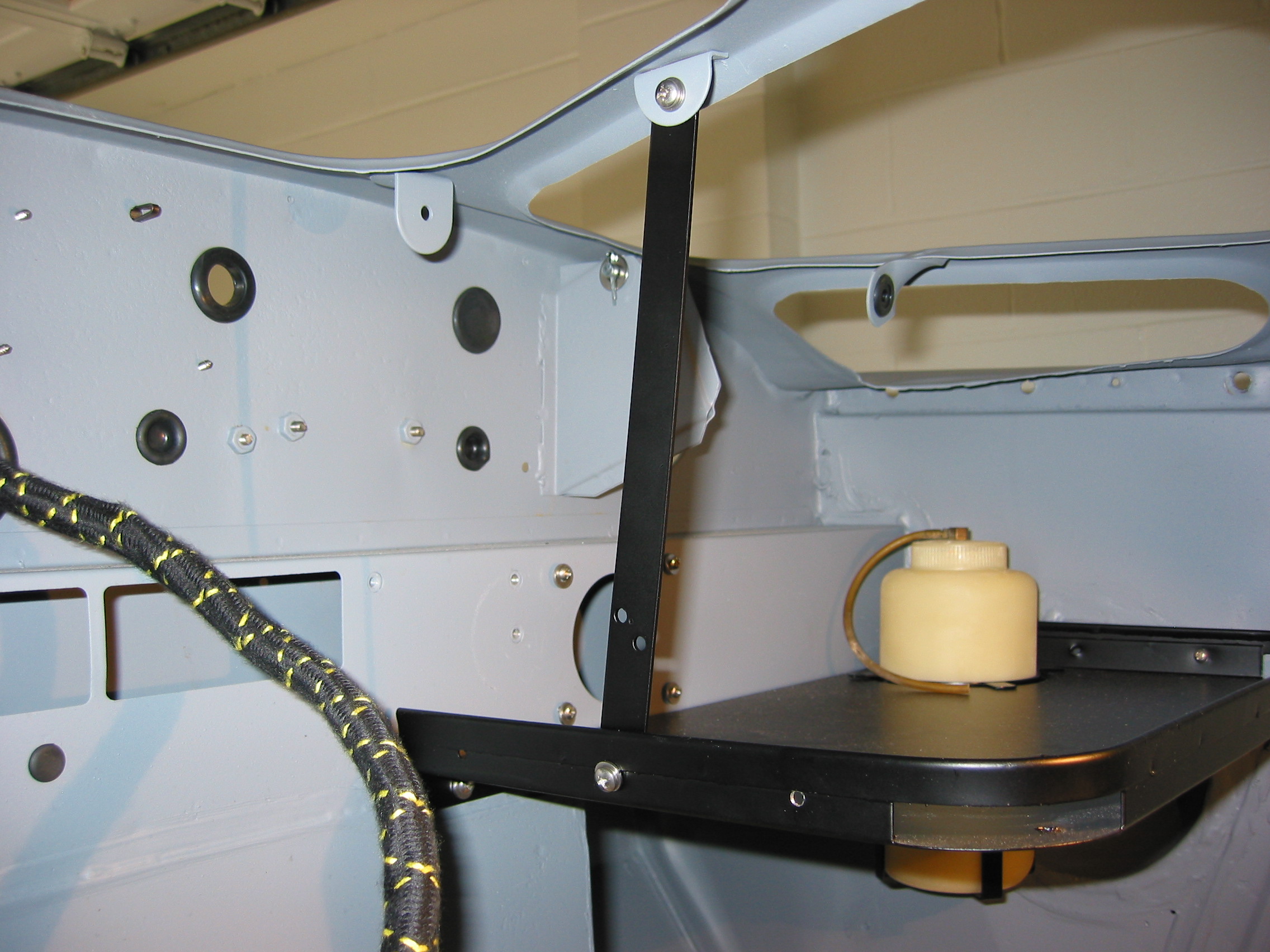
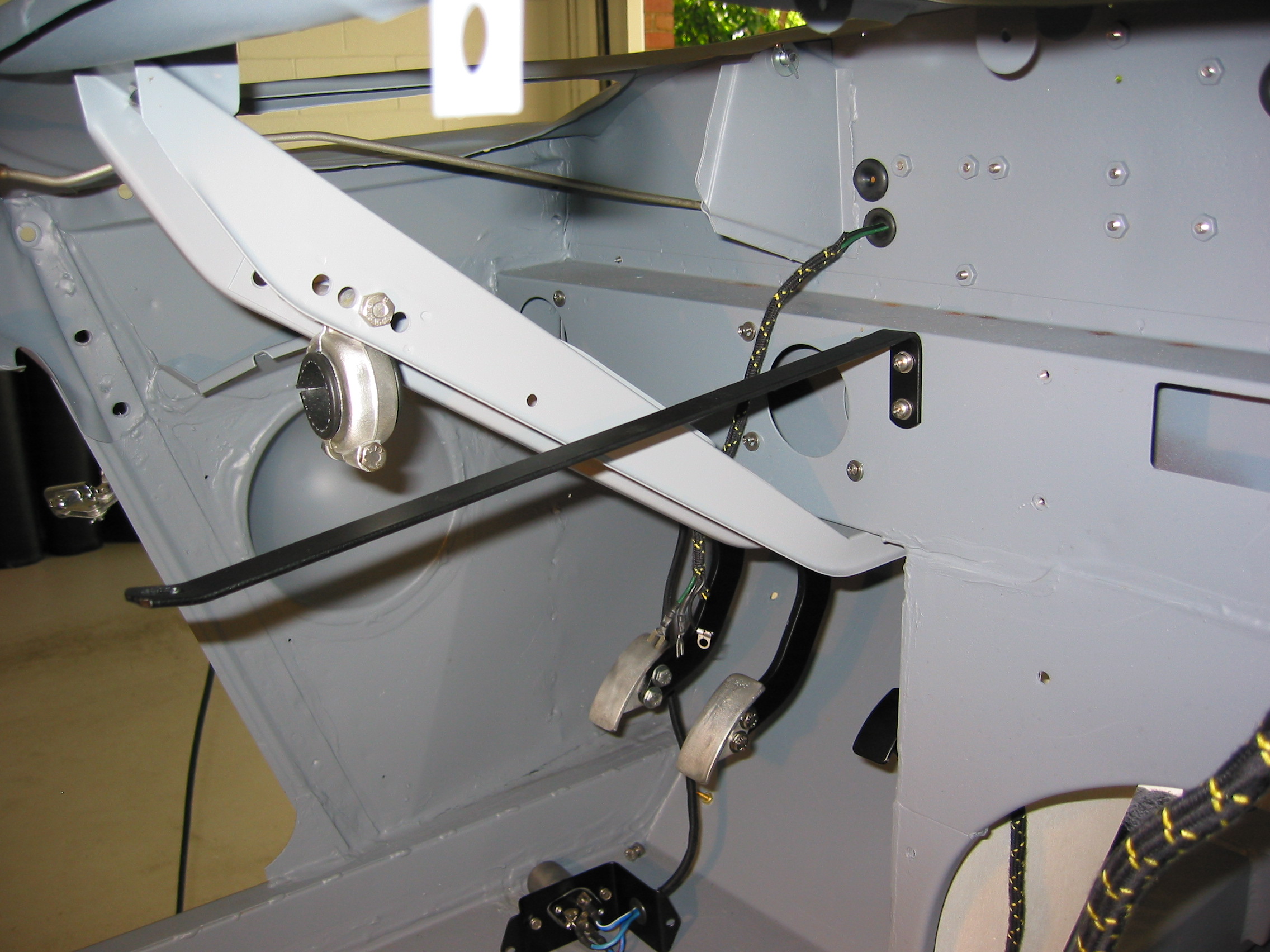
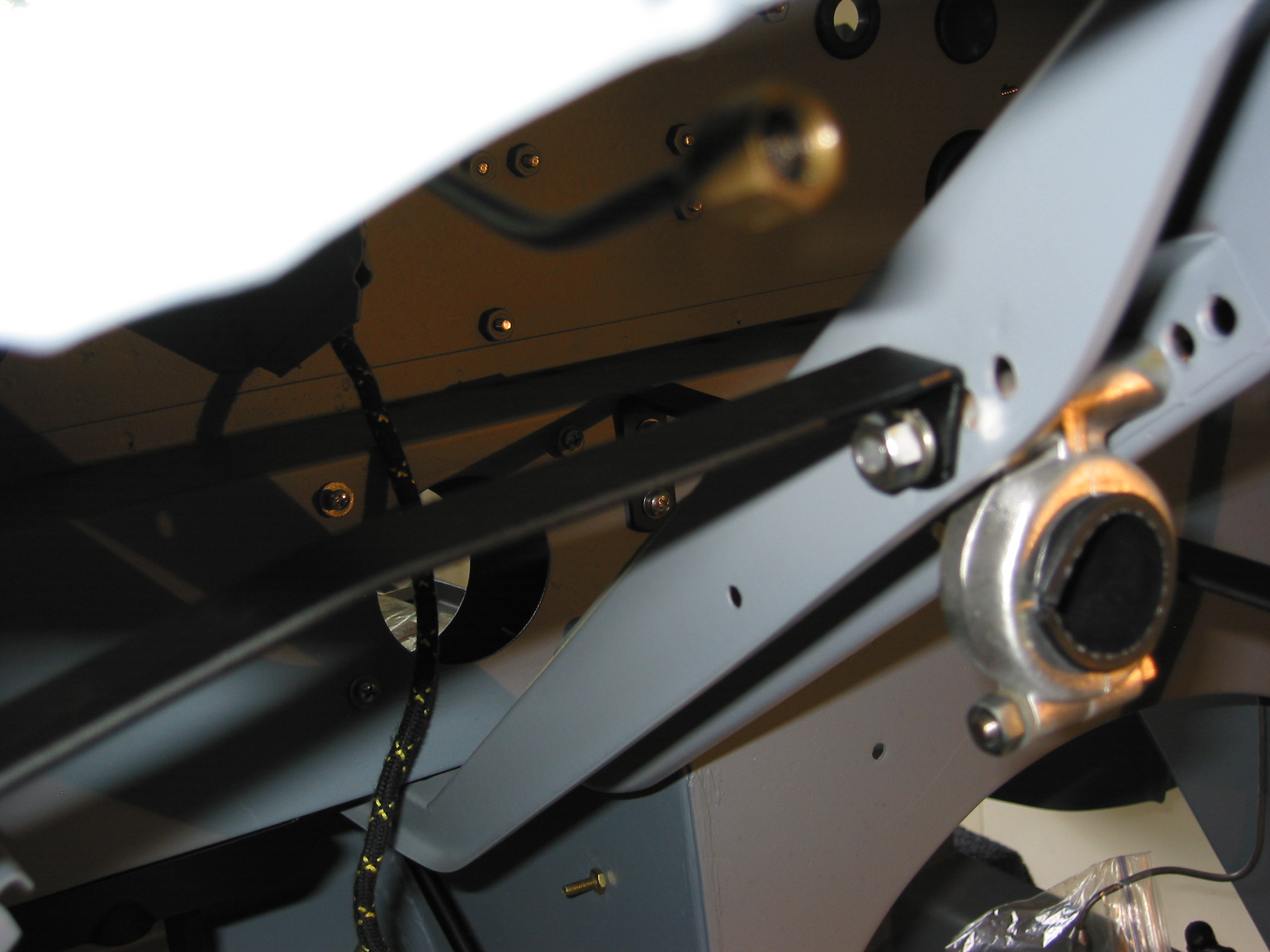
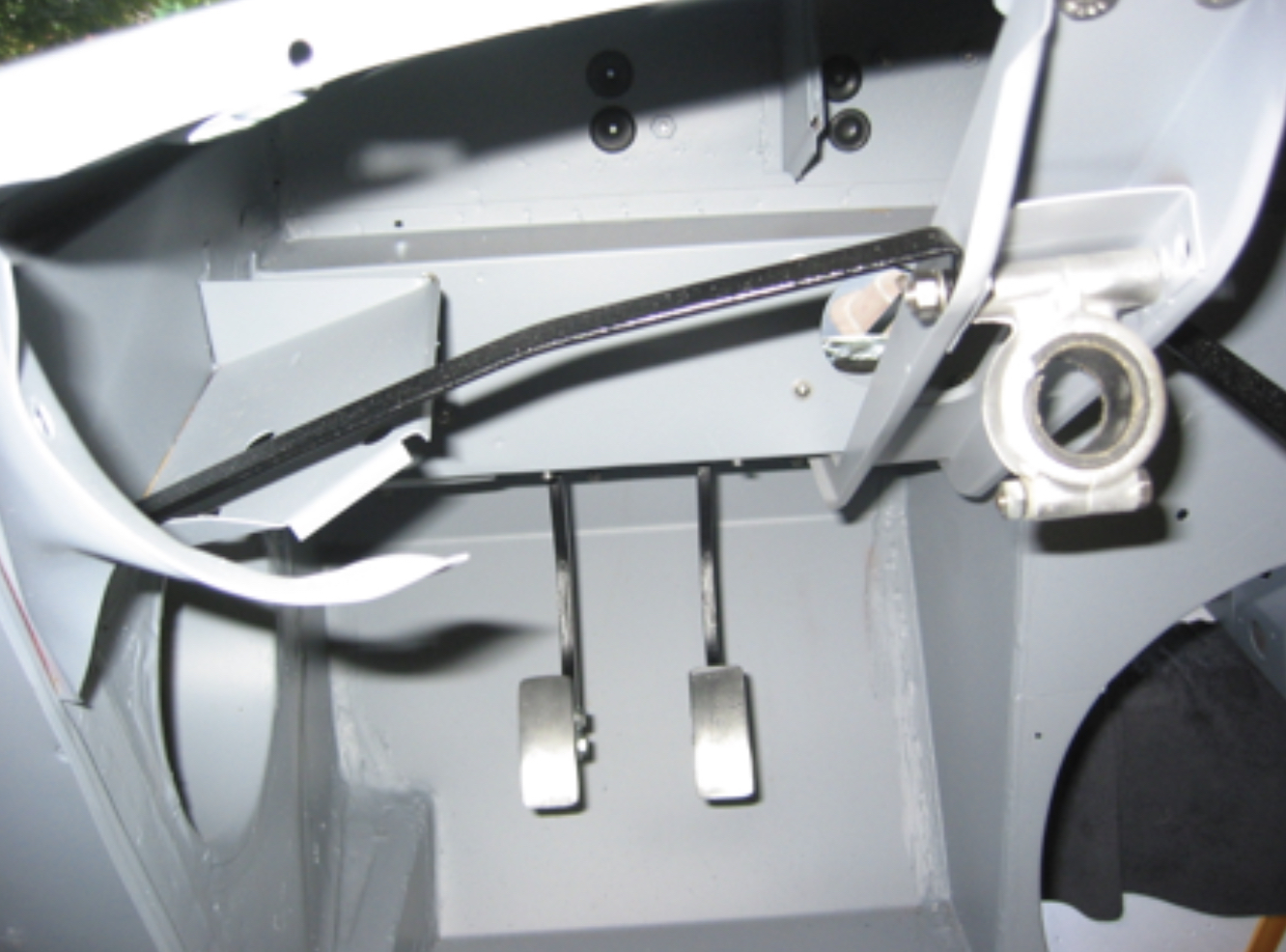
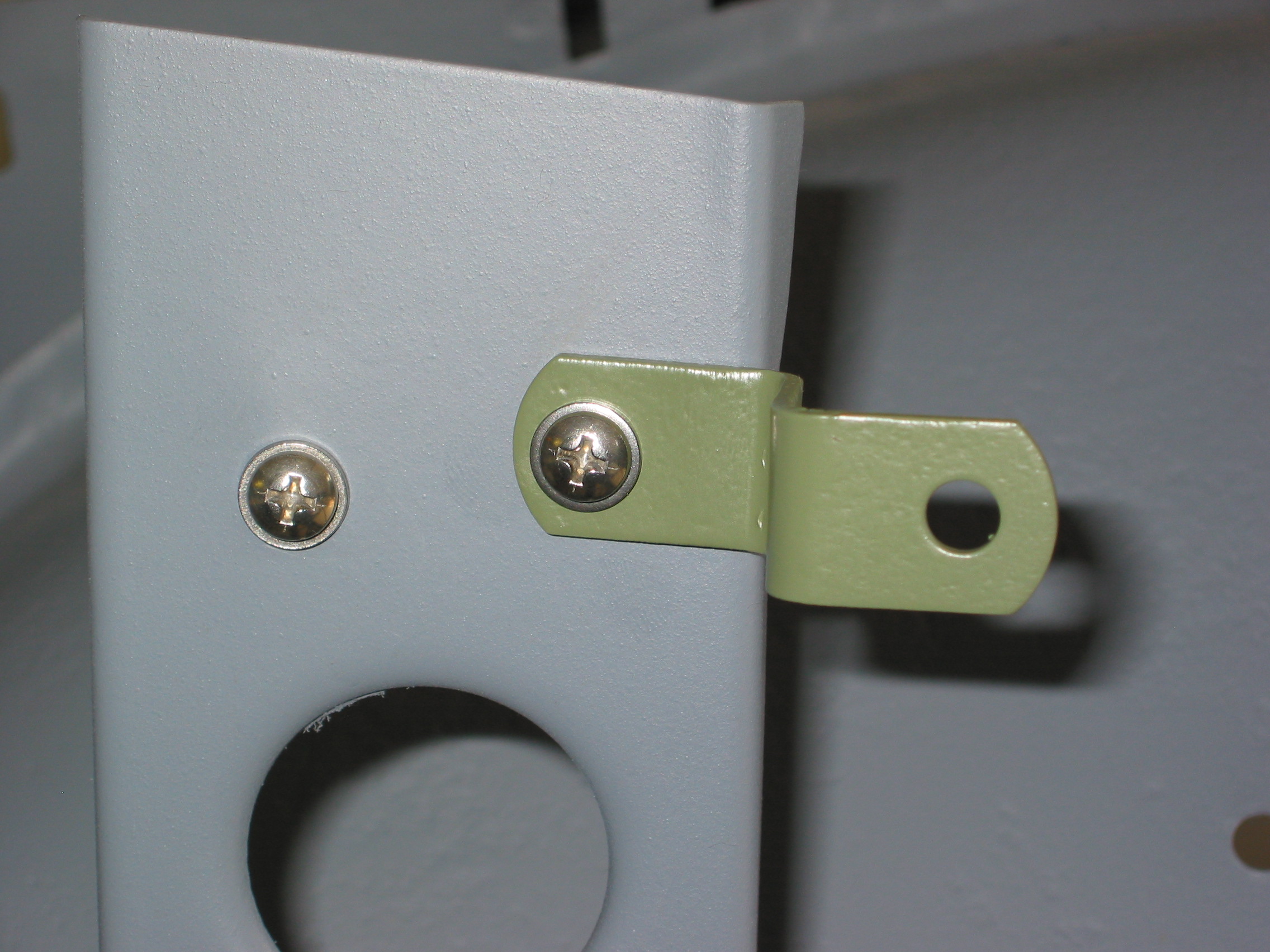
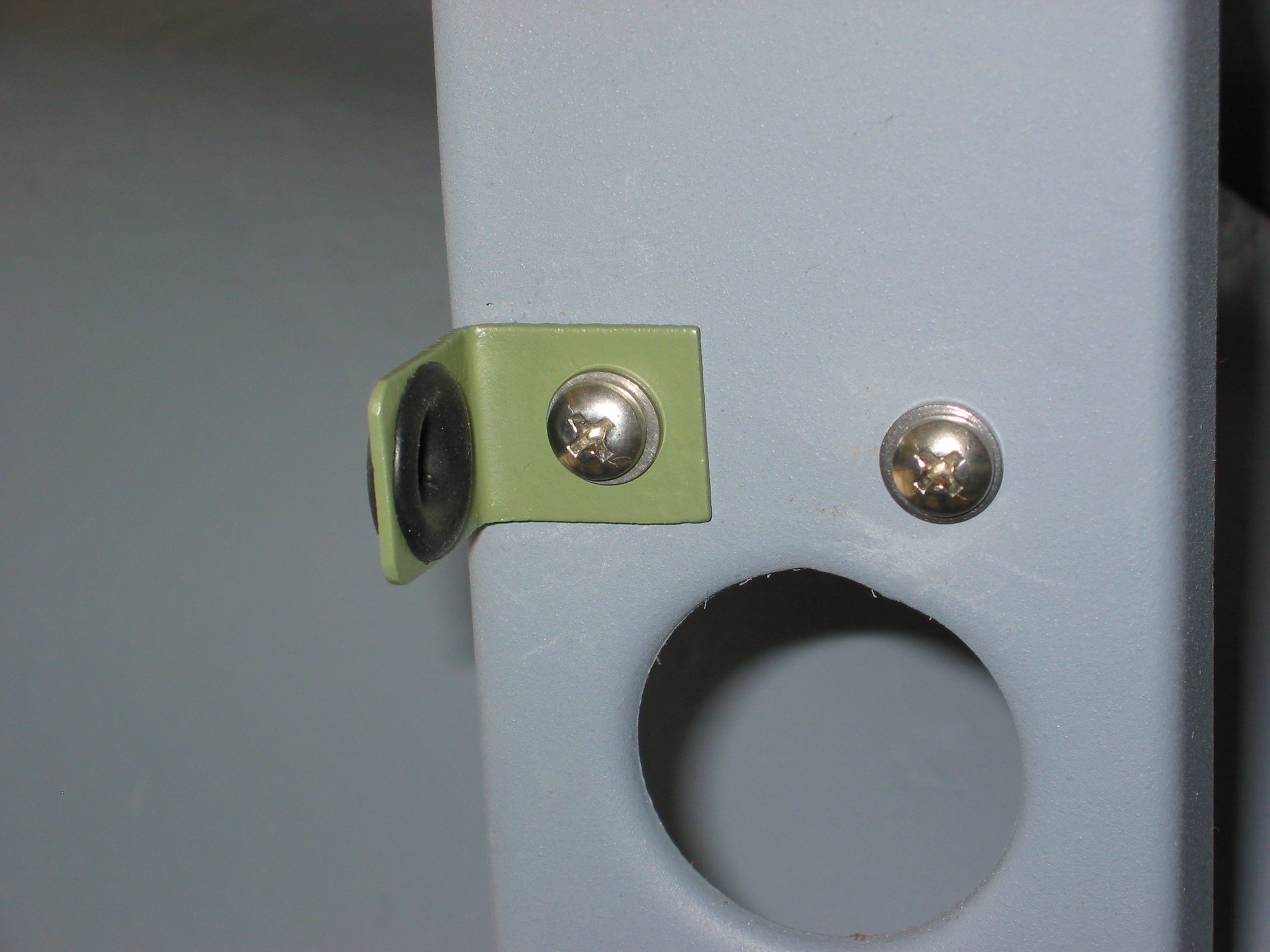
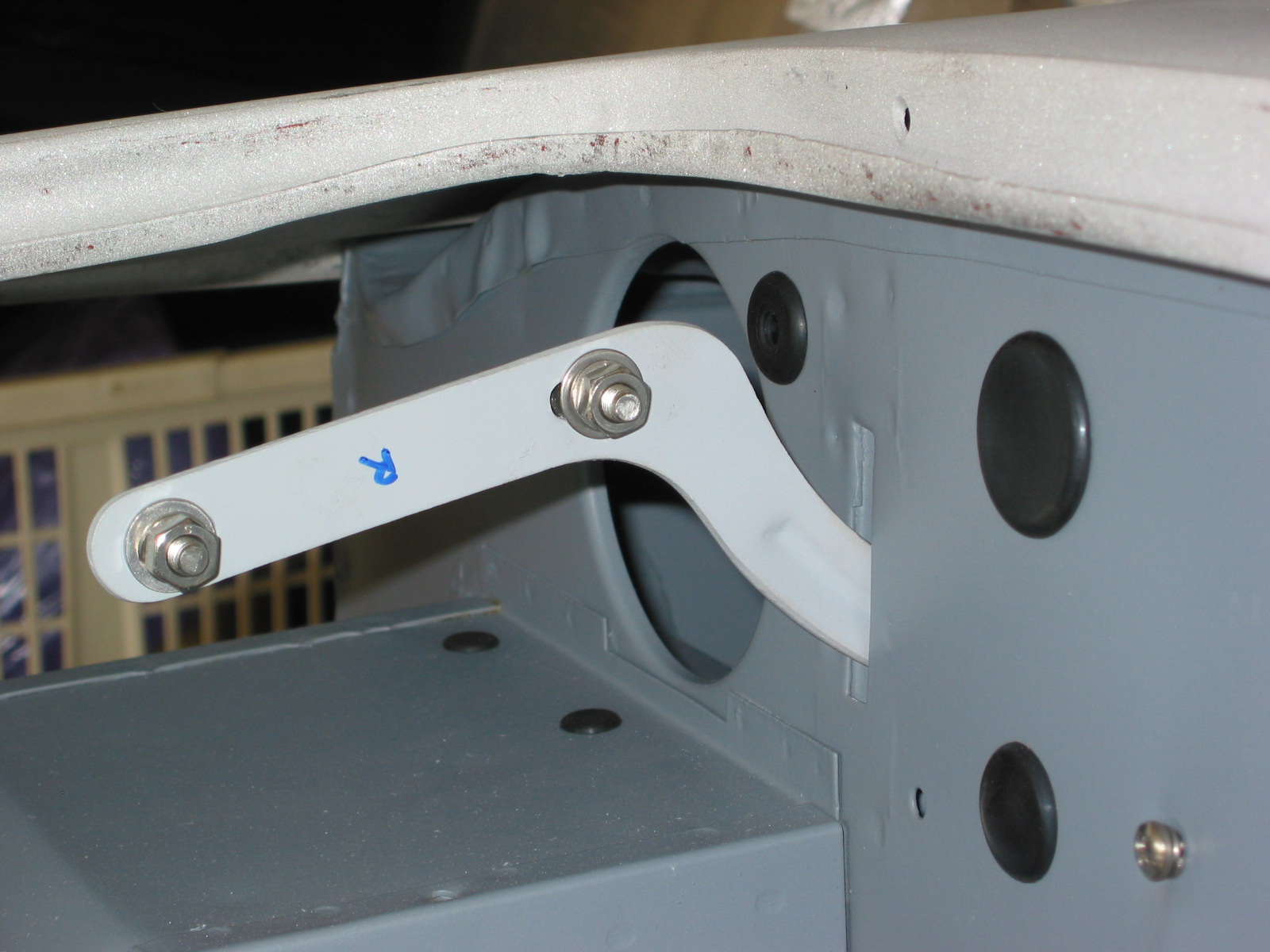
Bonnet Upright Brackets – Note the way they are mounted in the photos.
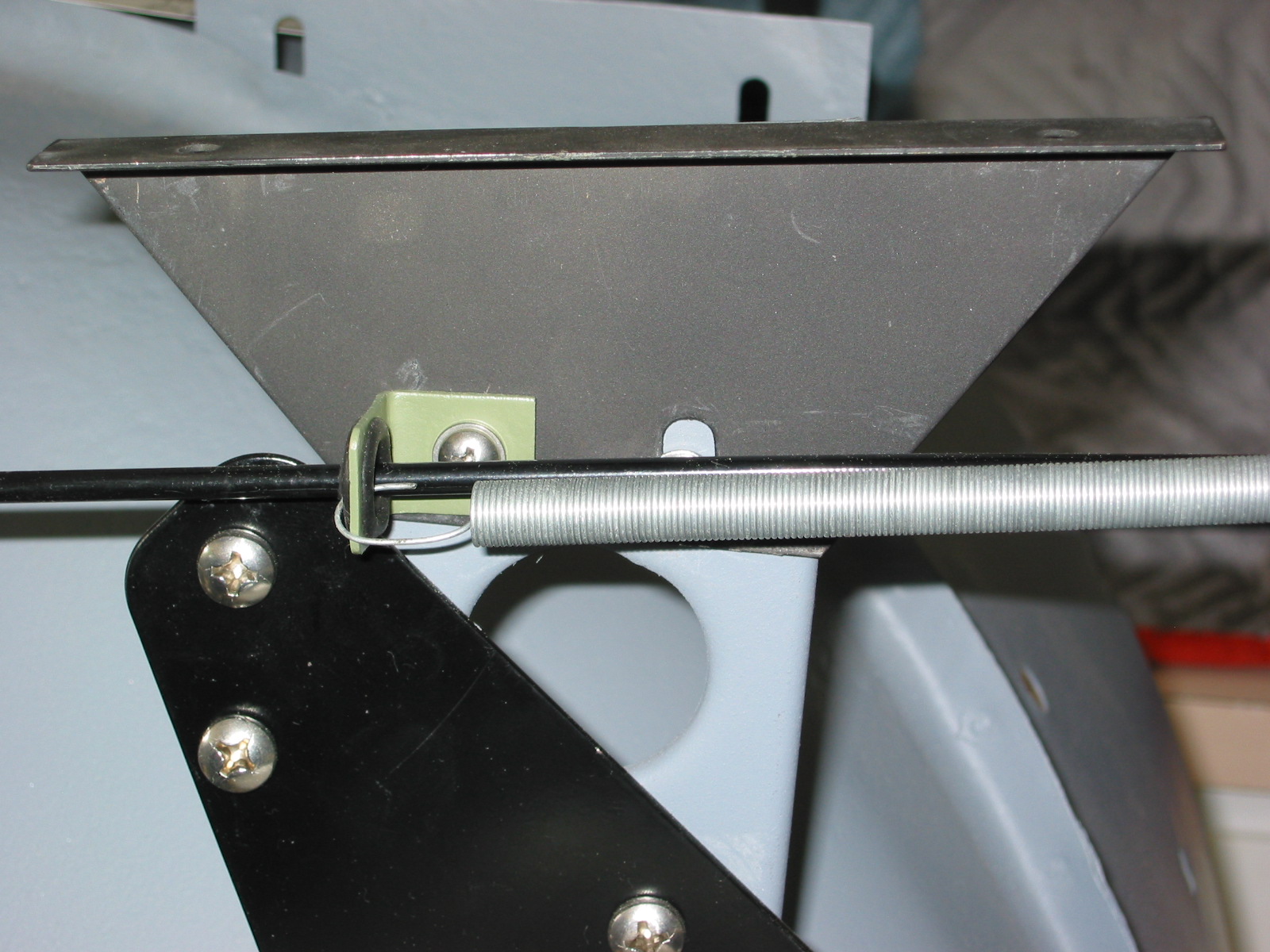
RH Bonnet opening brace 2
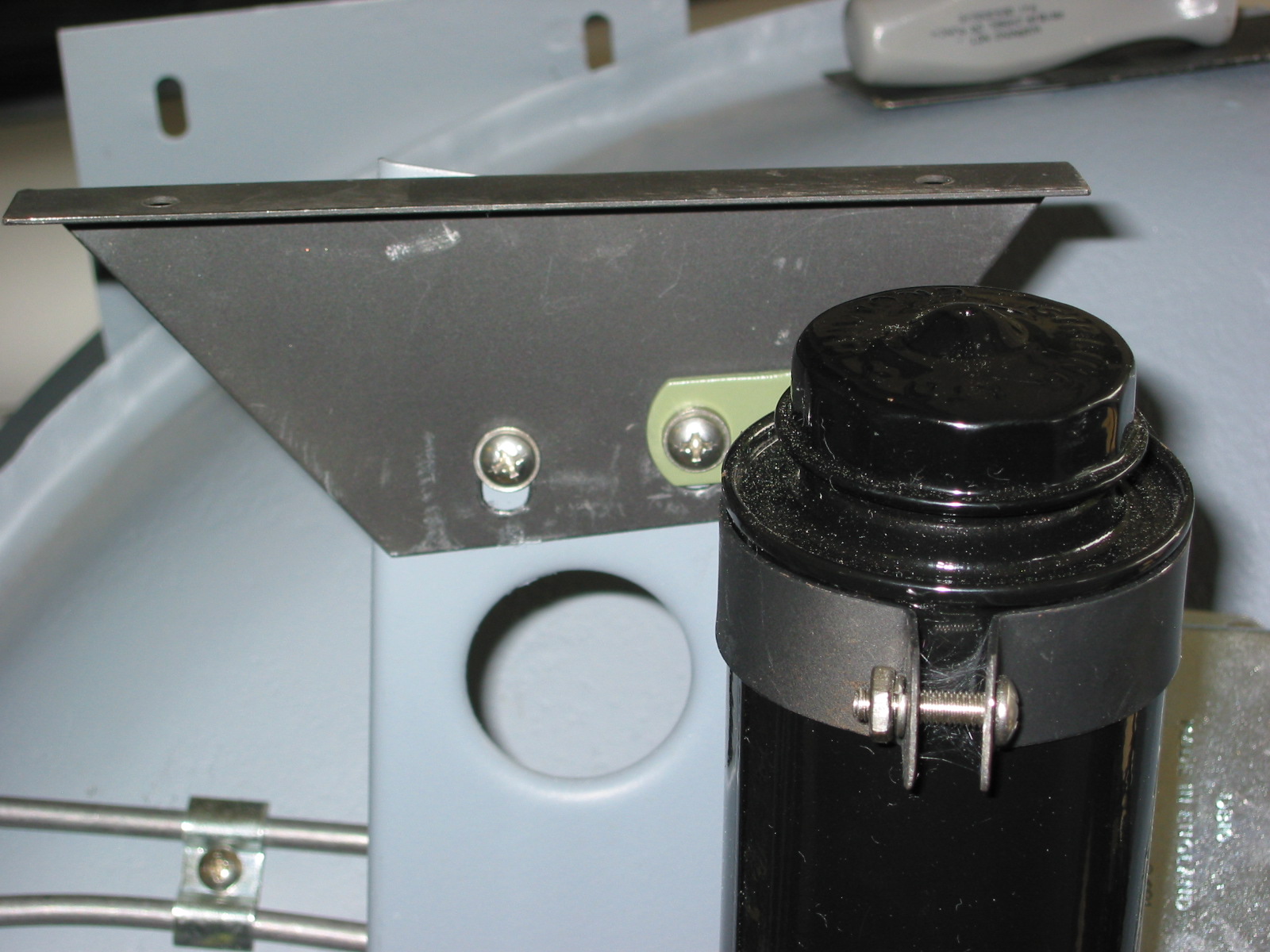
LH Bonnet opening brace 3

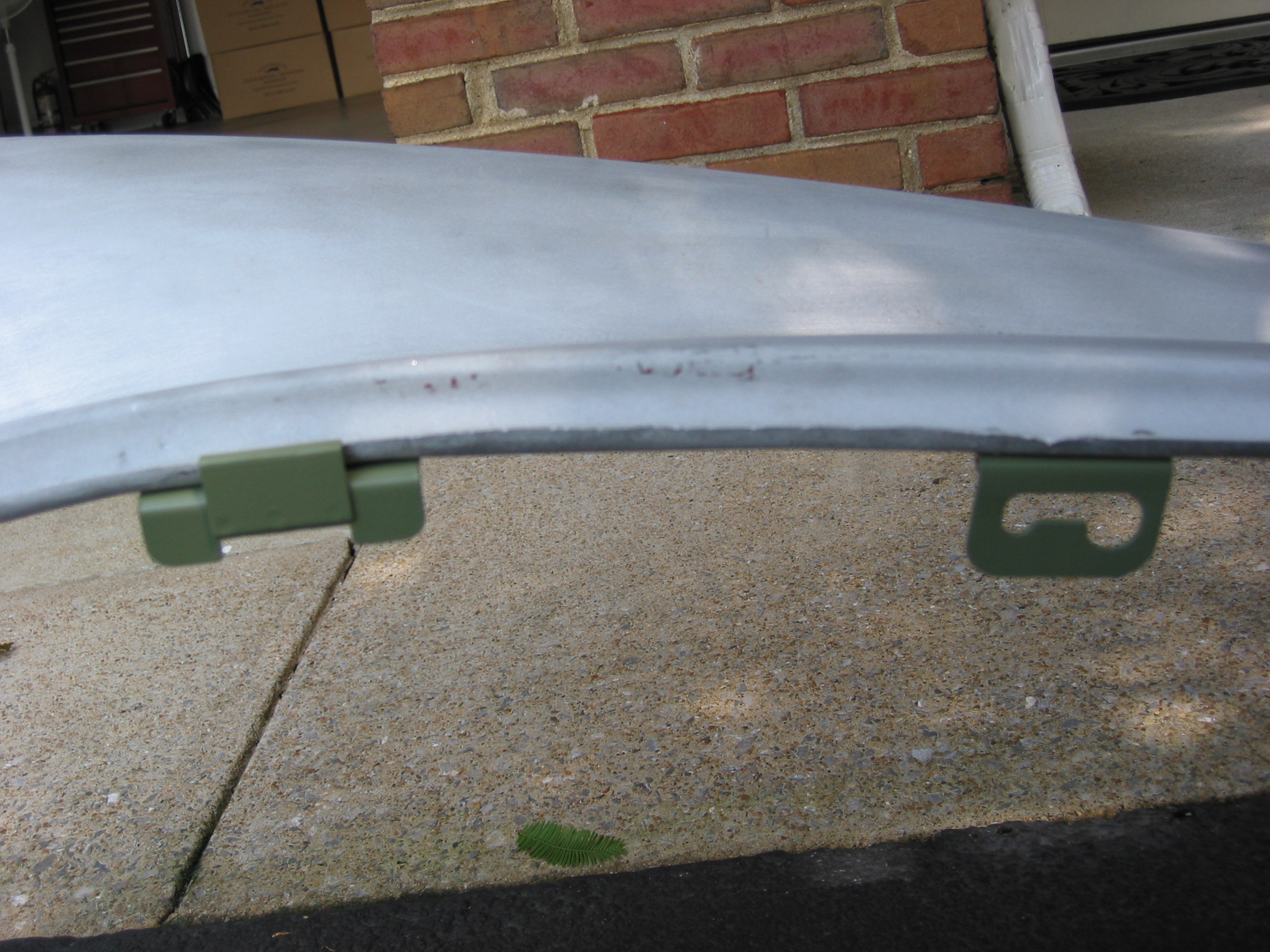
Front Wing Mounting Brackets – Installed left and right front wing support brackets using 4 1/4” x 3/4” hex head bolts.

RH Shroud bracket 1
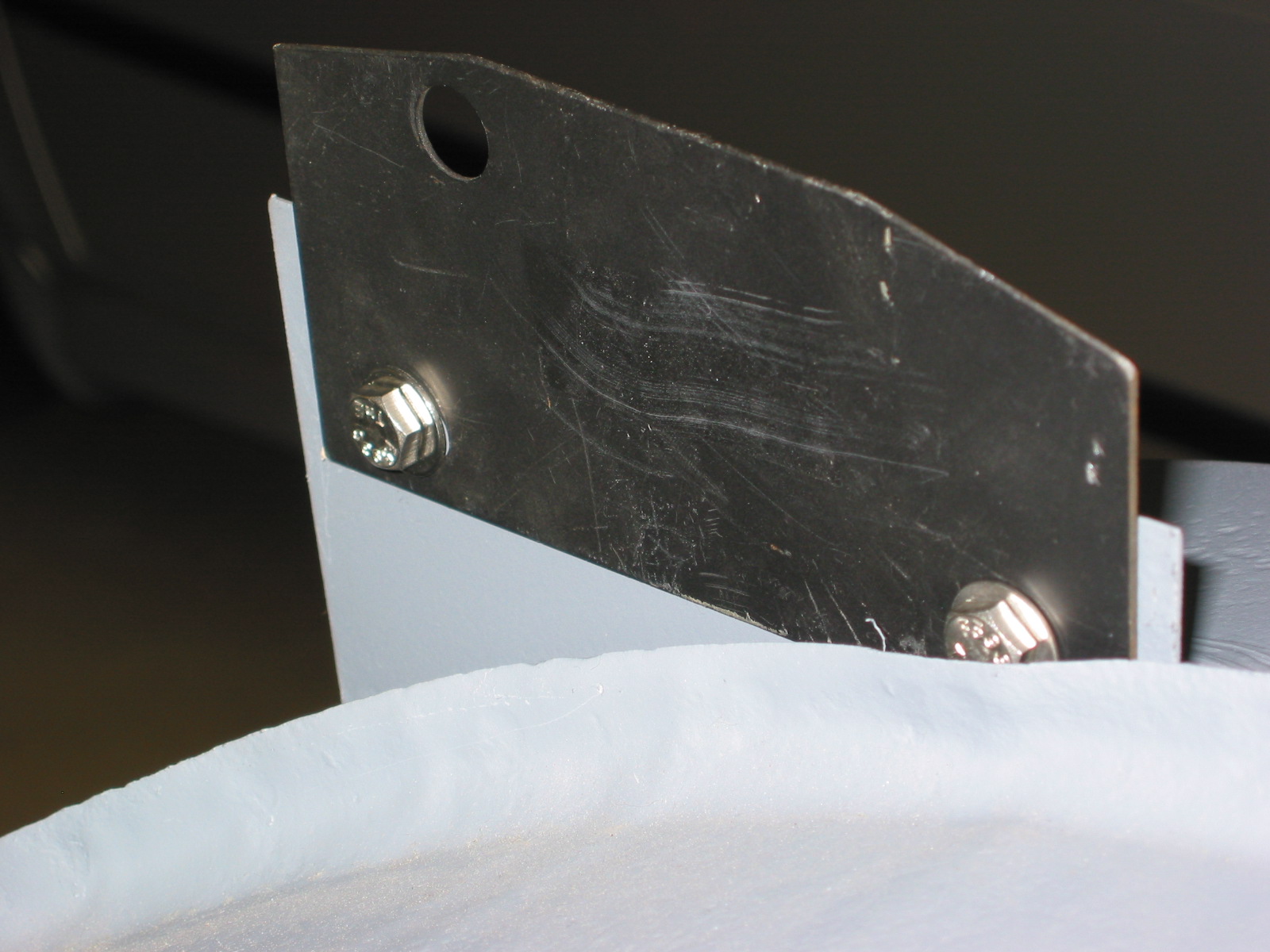
LH Shroud bracket 2

June 18, 2004

Rear Axle Revisited 

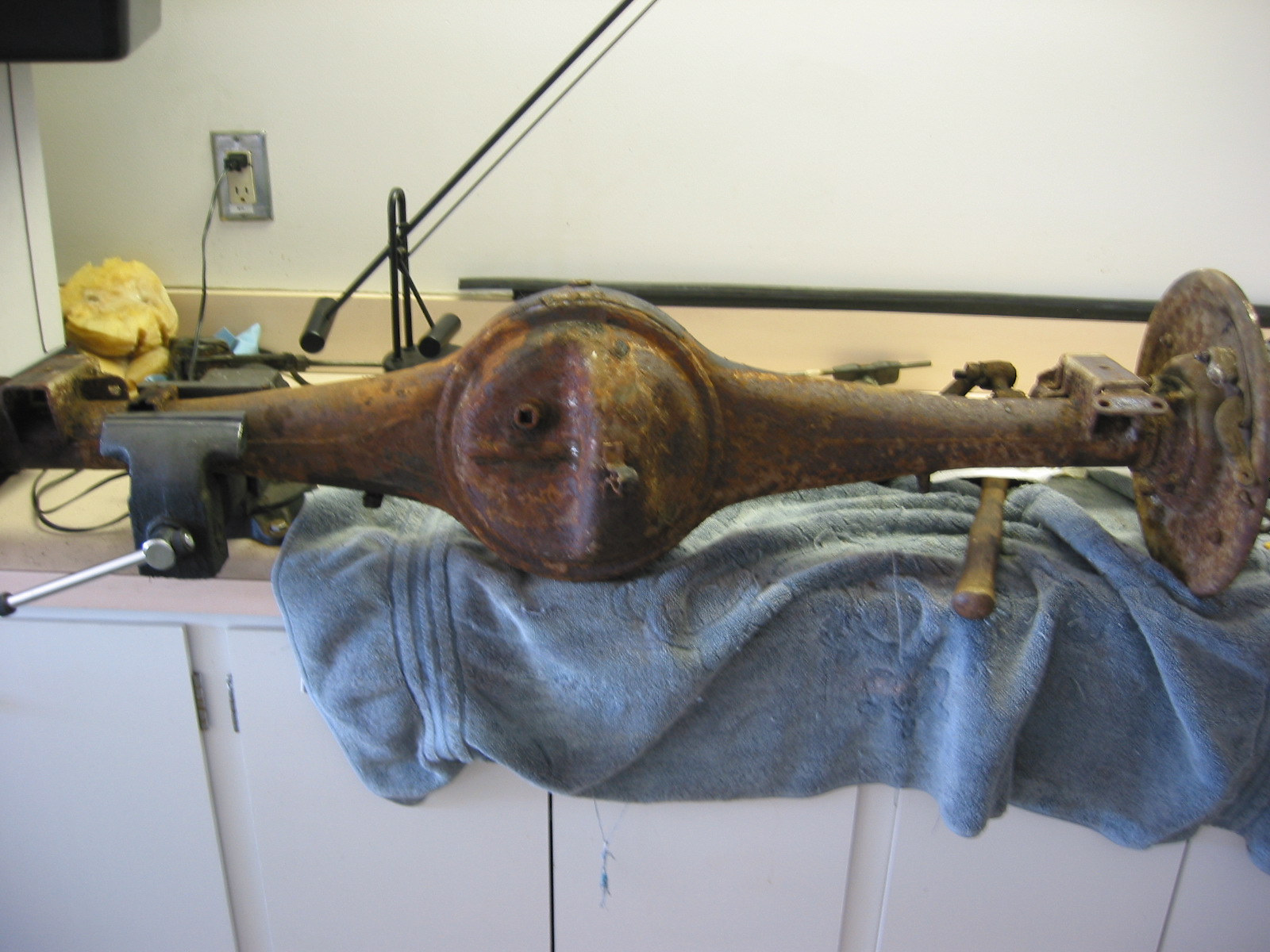
Differential – Installed the differential pumpkin and bearing caps in the differential casing. I will be installing the 3.44 crown and pinion in the car when it is drivable, but to get a rolling chassis I just put the old differential back in with no pinion gear. Fastened the differential to the axle and inserted the half shafts and tightened them down with the small locating flat head screws. Affixed the rear brake disc rotors and calipers fastened the hub extensions to the axle with the 5 locking hub nuts.

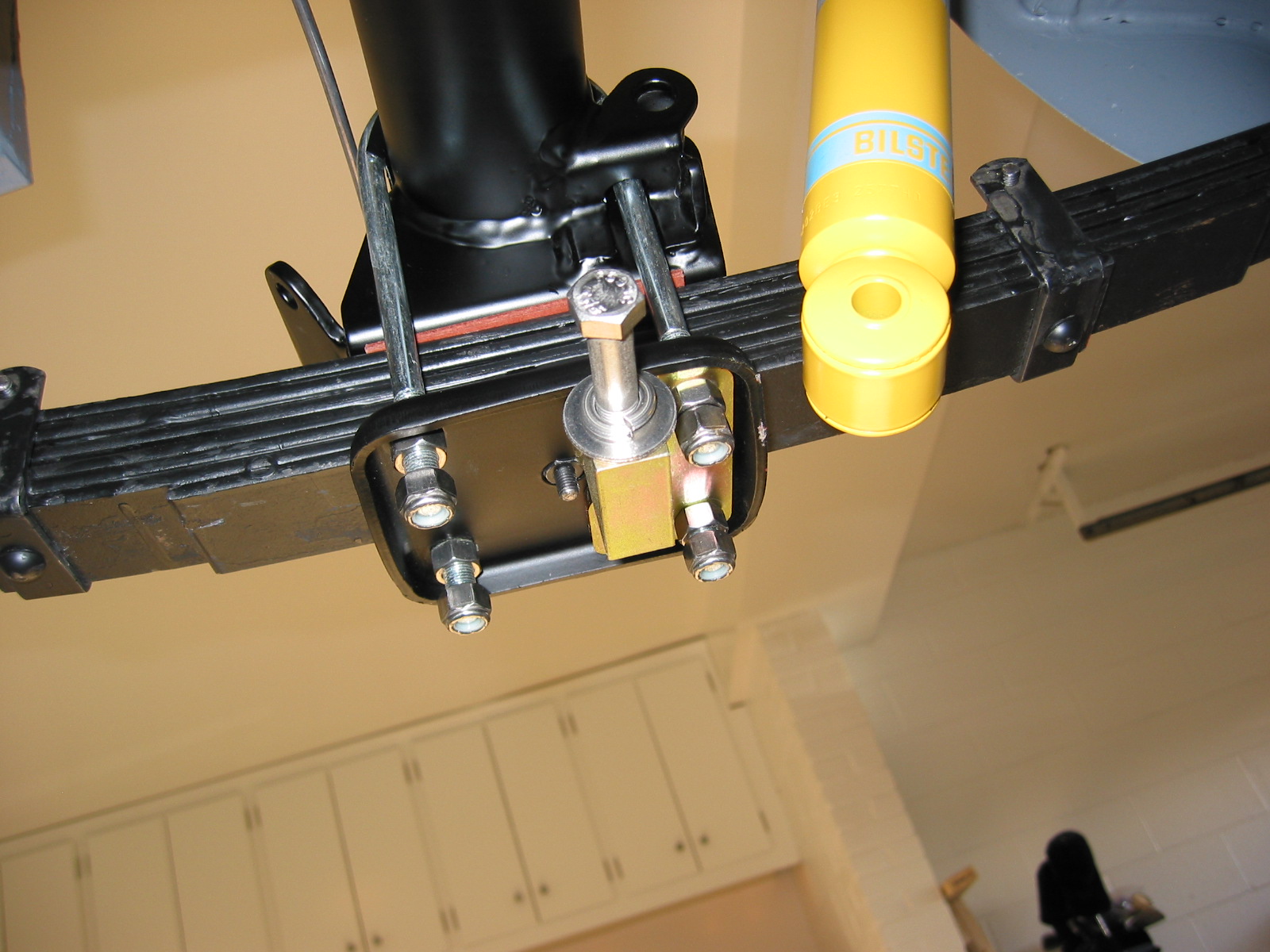
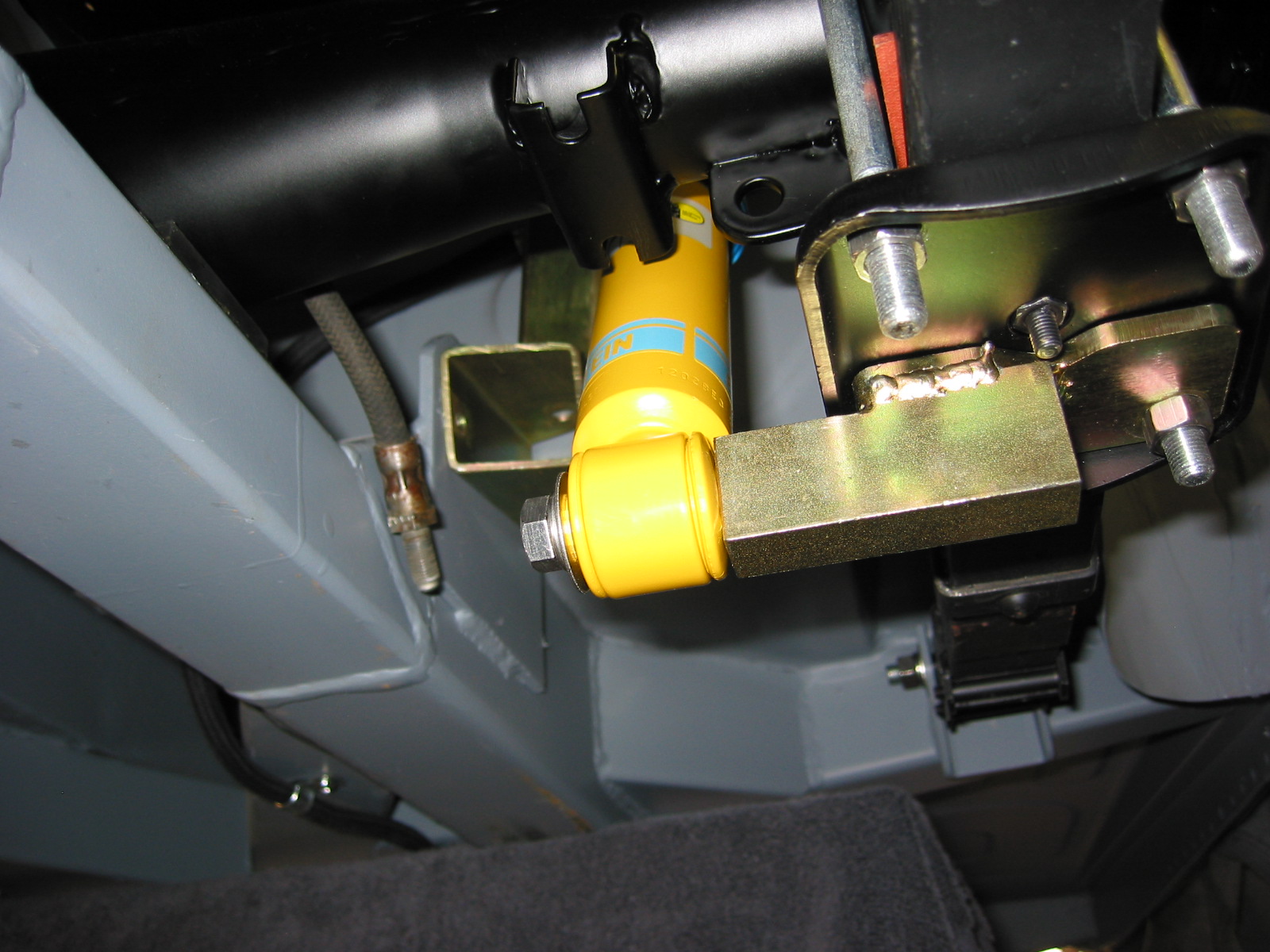
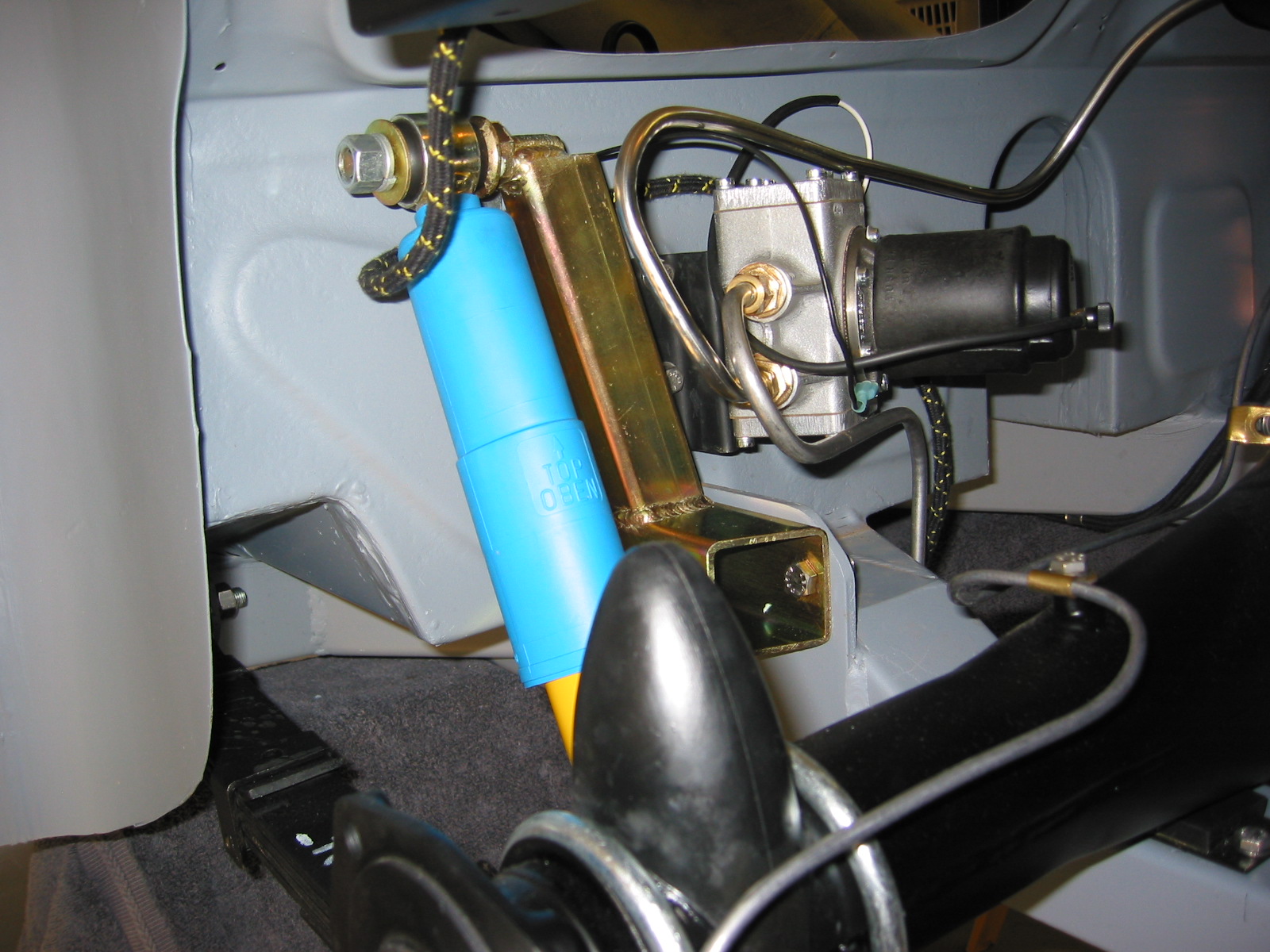
Installing the Rear Axle – After removing the fuel pump and the left bump box we “walked” the axle with the differential into the chassis and superstructure. I may have been able to leave the fuel pump had we had more access room on the right side of the car, but that wasn’t available. I then secured the axle with the Ubolts and the brackets for the tube shocks. The key here is to start each side loosely and then return to fully tighten each side. I never could get the tube shocks to align with the brackets and Udo Putzke thinks it may be because the Jule frame is slightly different than the original AH frame. To his credit he has agreed to make some longer shaft shocks at cost – great customer service!
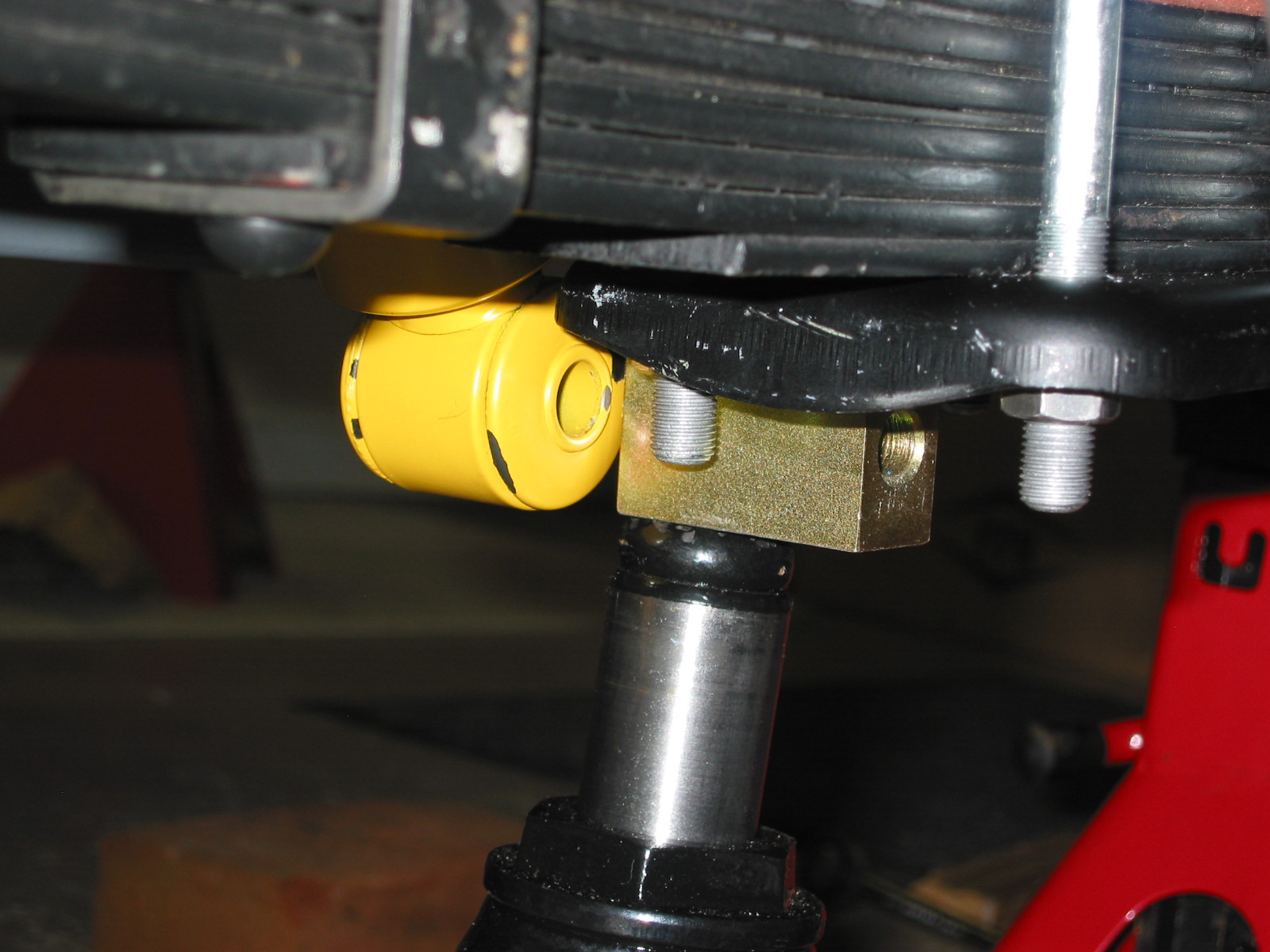
Bilsteins won’t align
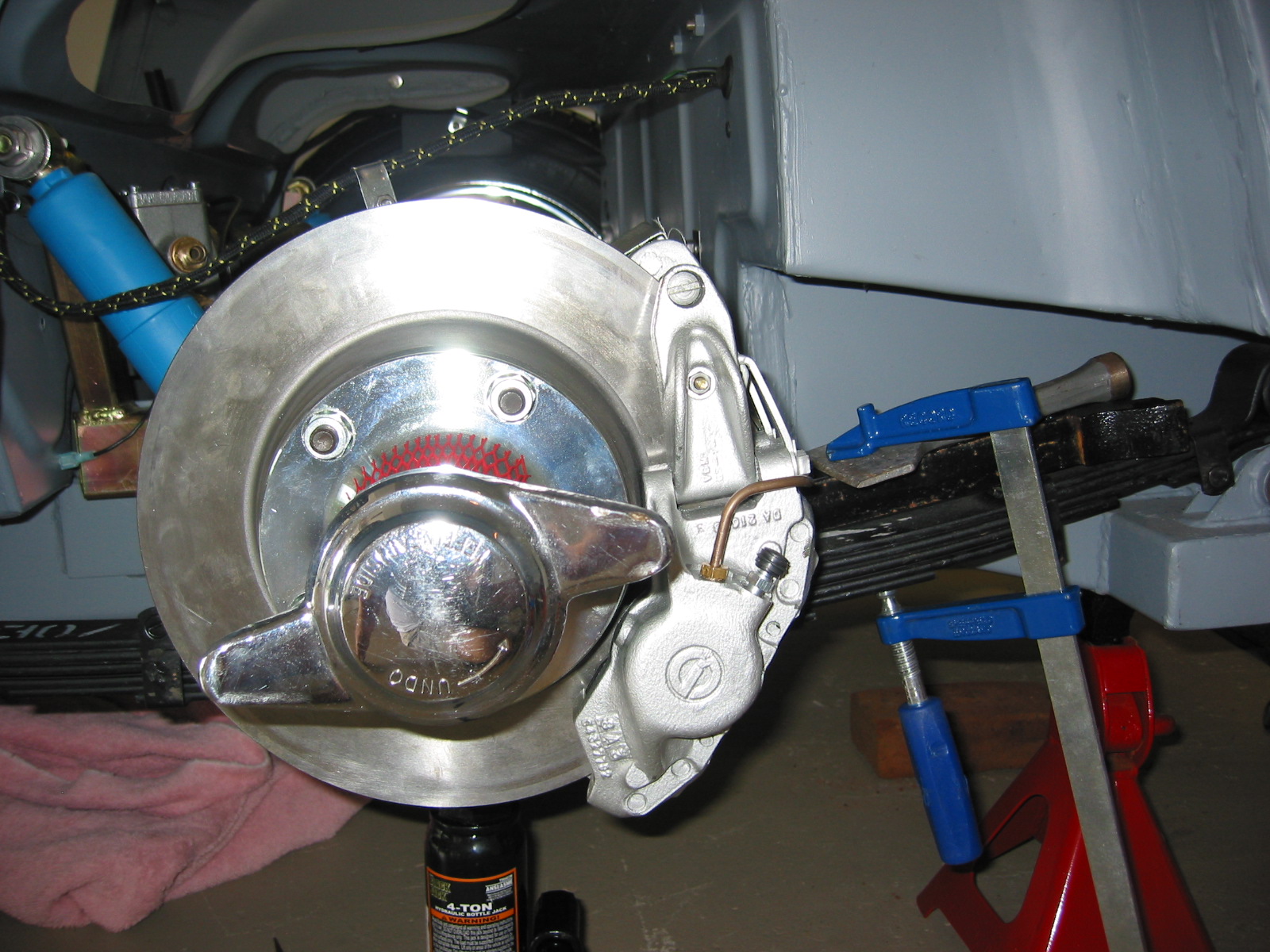
Spring Work

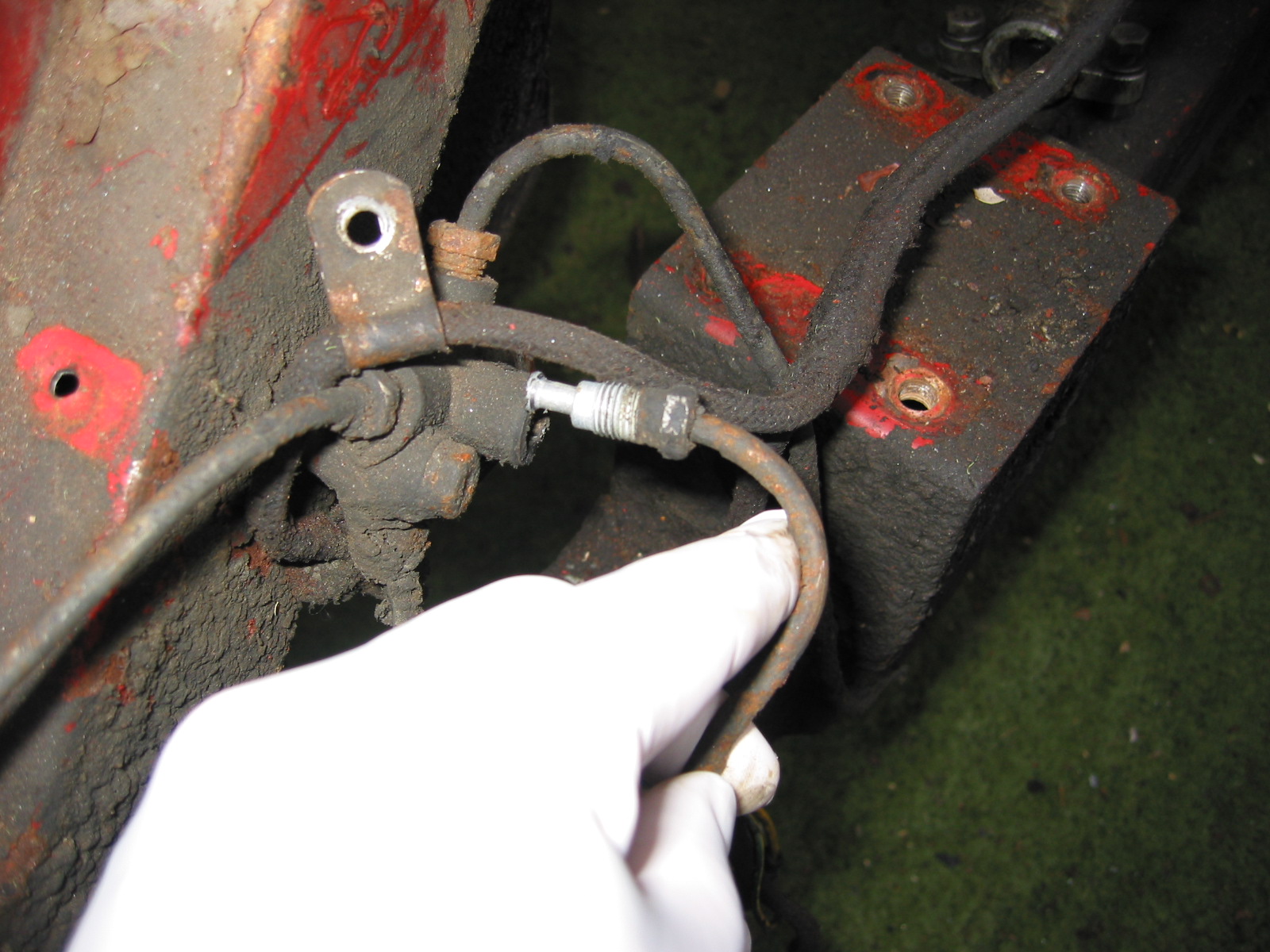
Rear Brake Hose – Added the new stainless braided brake hose between the brake line and the rear junction on the axle.
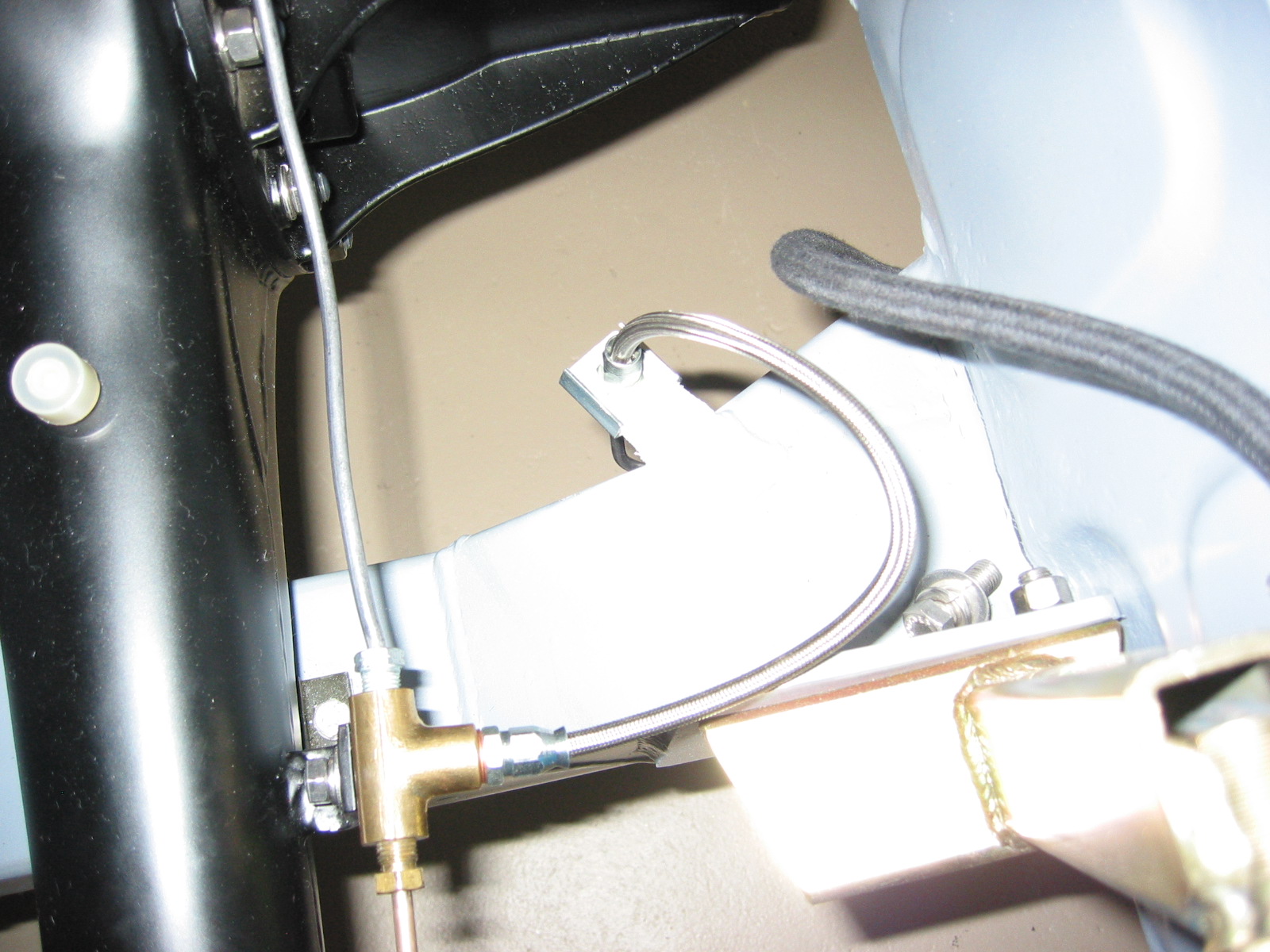
Stainless Rear Brake line

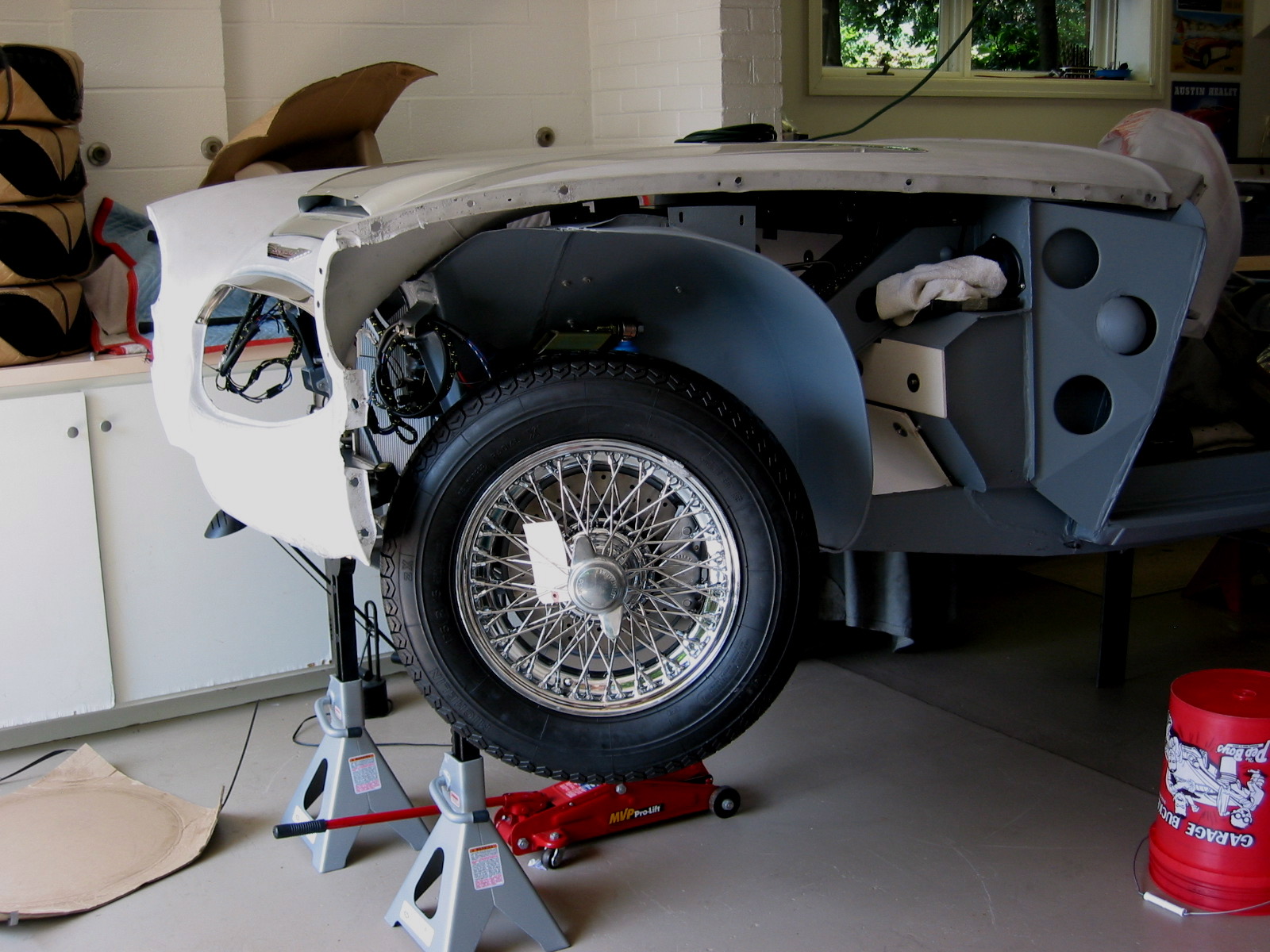
This work allowed me to put the car on the ground as a rolling chassis for the first time – a significant milestone. In honor of the occasion I stuck on two fenders and placed a seat in the interior for photos. All just for fun. It lasted ten minutes and then off came the wheels/tires and wings and then back up on jack stands for more work! The shiny bonnet is a sample paint color that I would ultimately not use.
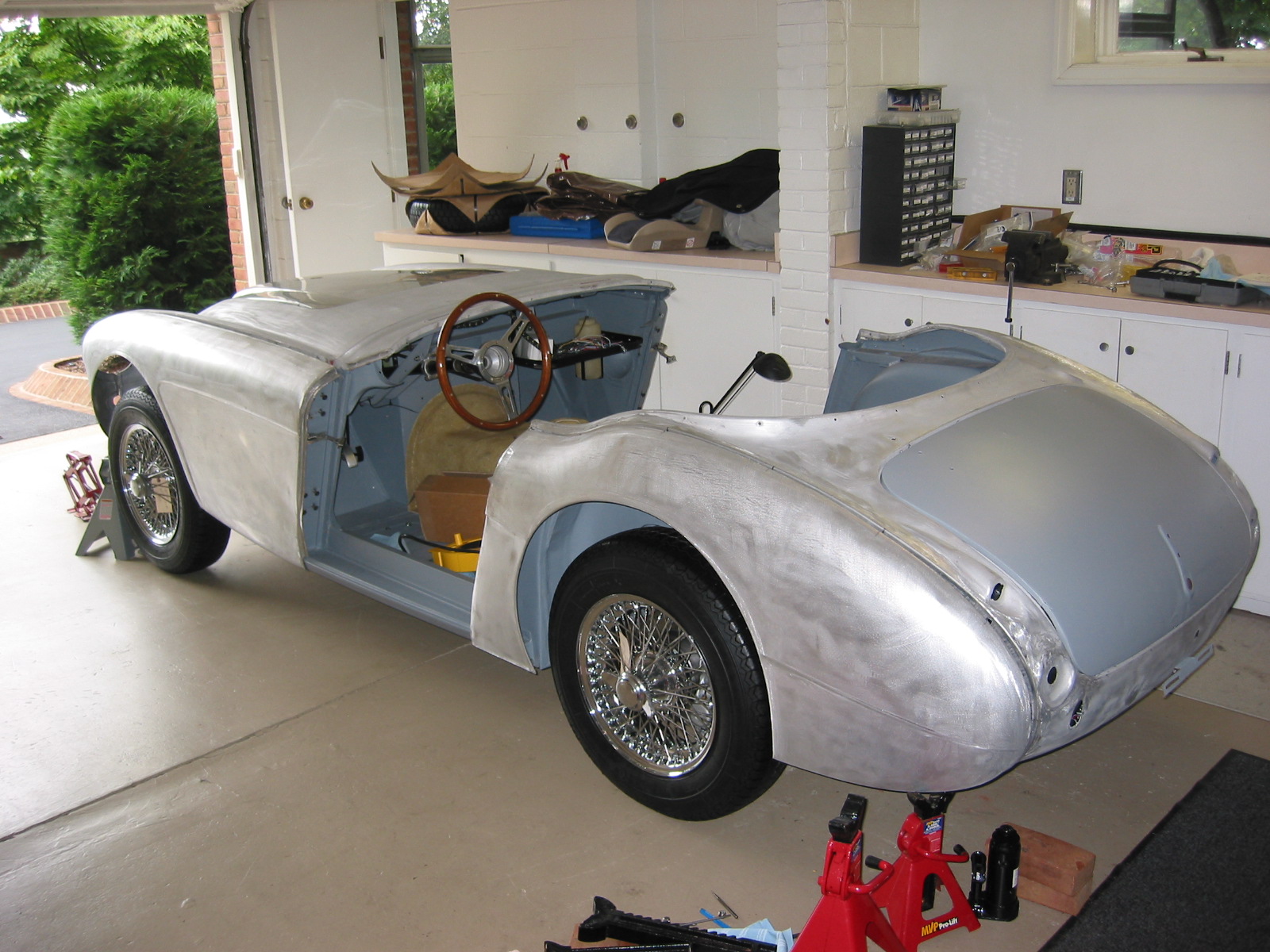
Four 0n the Floor 1
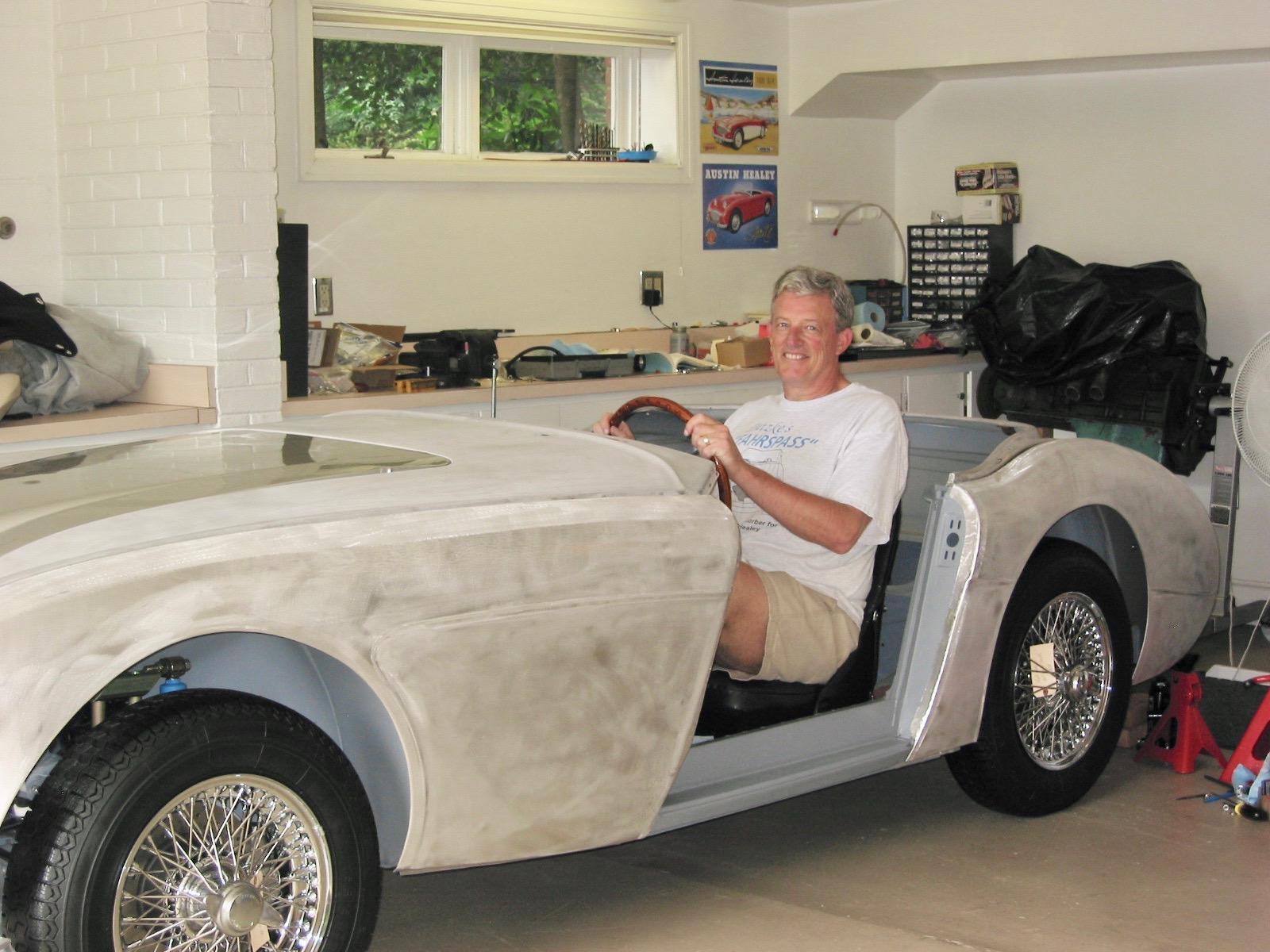
1st sitting
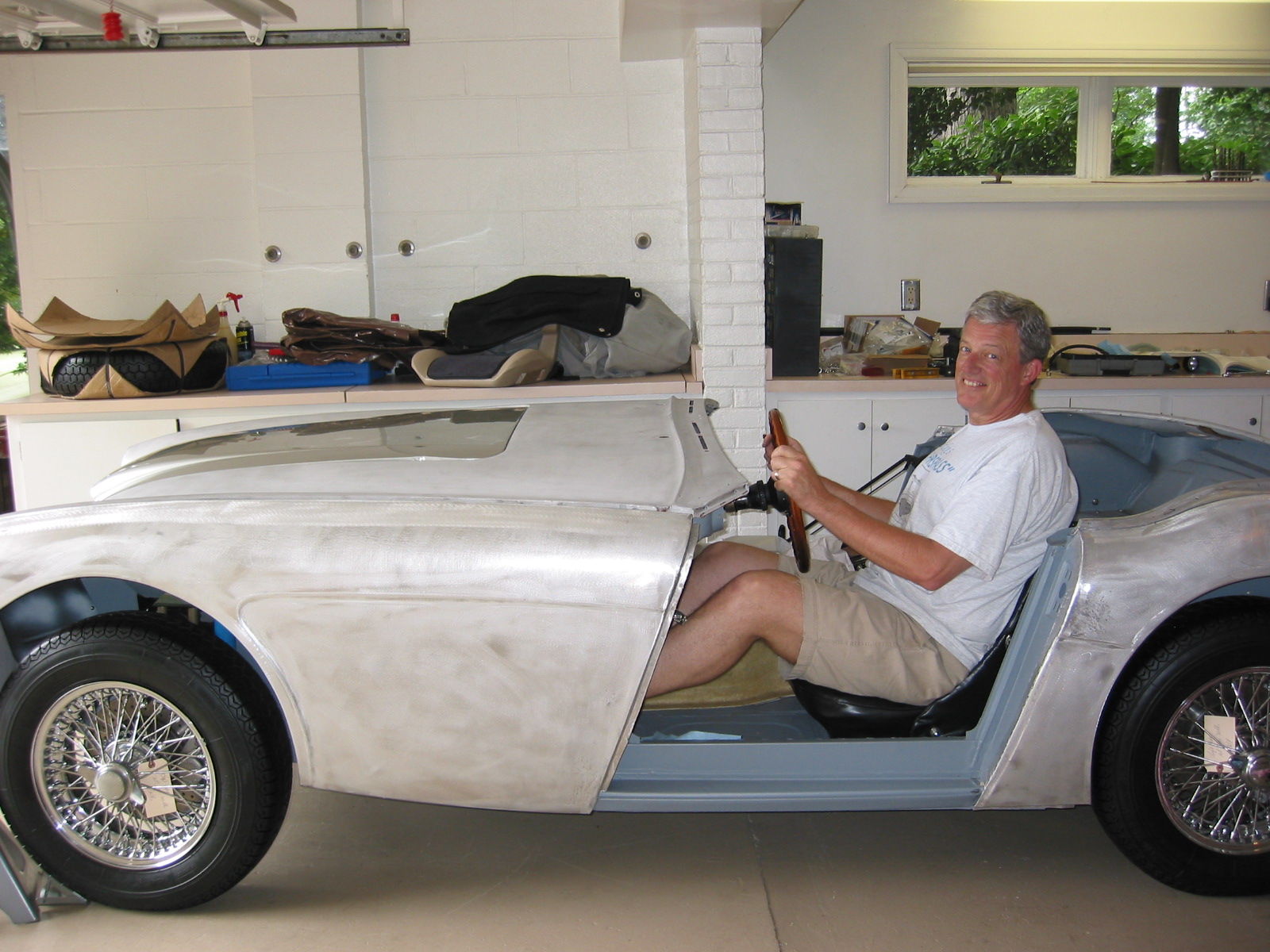
1st sitting 5

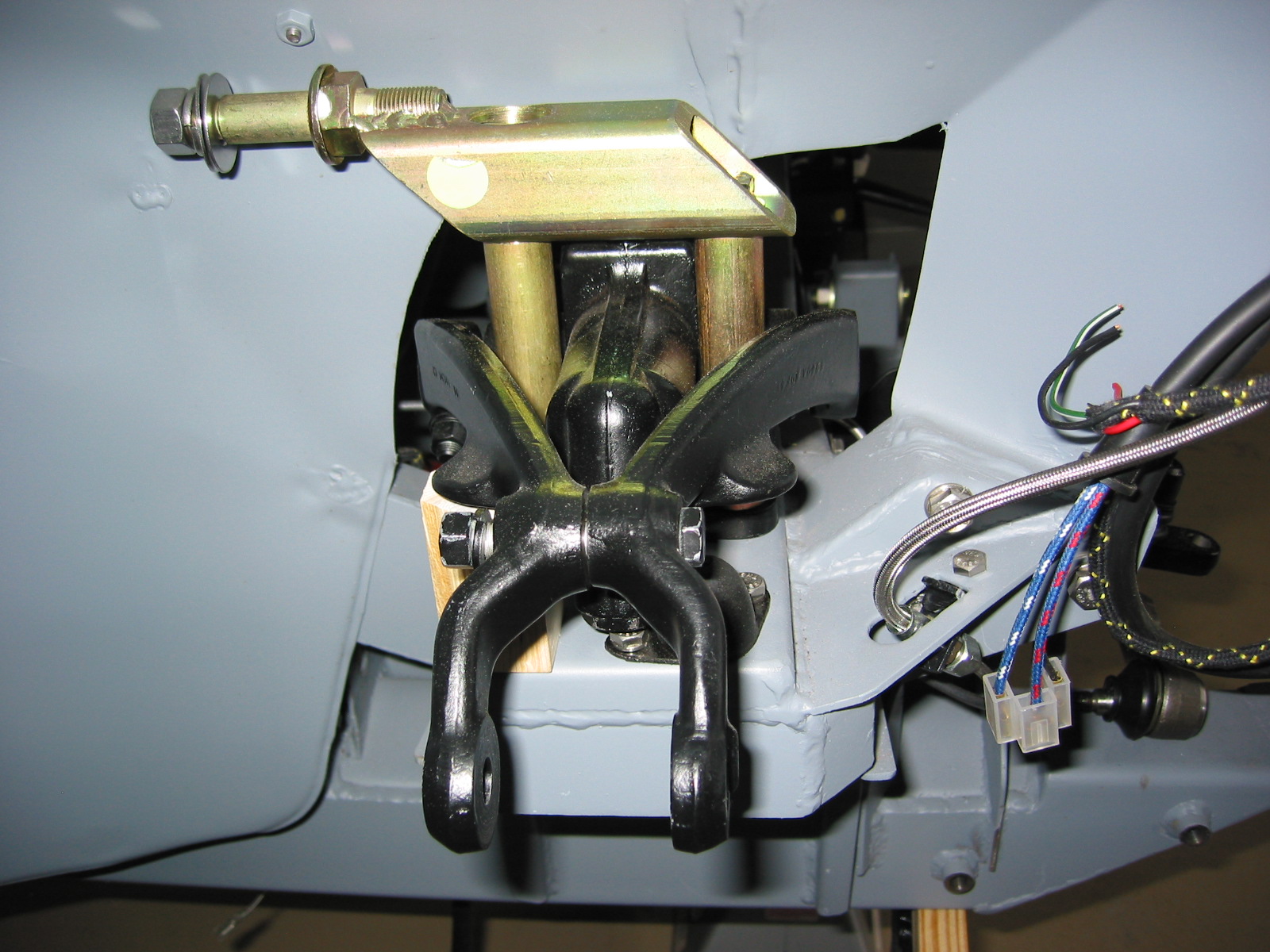
Driving Light and Tow Brackets – I received the front spotlight and tow hook brackets from Cape International and the rear bumperette (sprite) or Rally Car brackets and “bumpers.”  I discovered that Martin Jansen had not included the threaded tubes for the front bumper that go through the frame. Instead Martin’s are only on the outside of the frame rails which is fine for the bumper brackets, but the spotlight tow hook brackets also have one mounting hole on the inside of the frame rails. I located the holes on the inside of the rail with  3/8” drilled hole and will get Jeremy Turner to add threaded tubes later in the restoration. I also received Kilmartin panels for the frame rails that include the welded nuts for the anti-sway bar and I will give them to Jeremy as well.
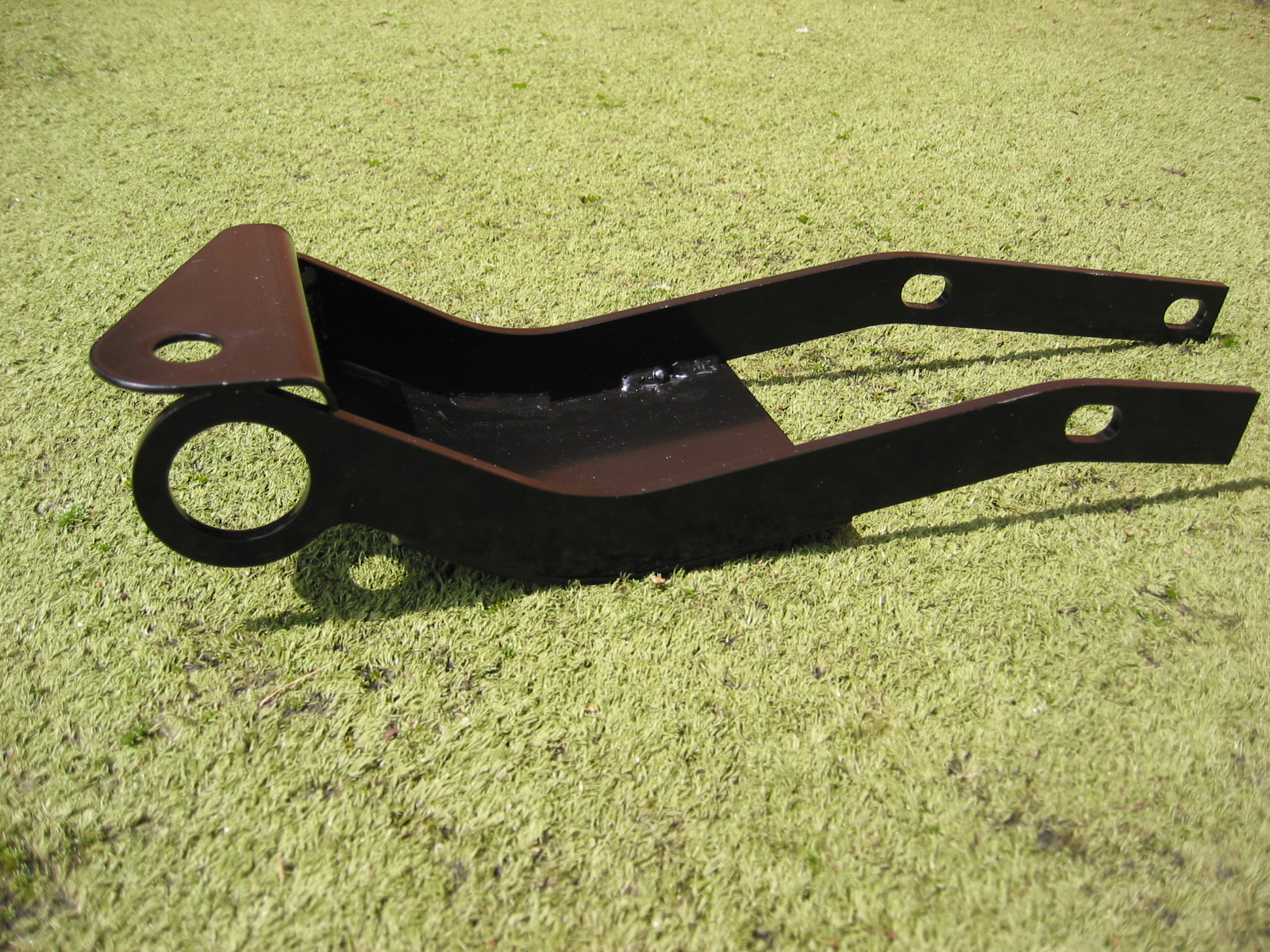
Driving light tow hook bracket
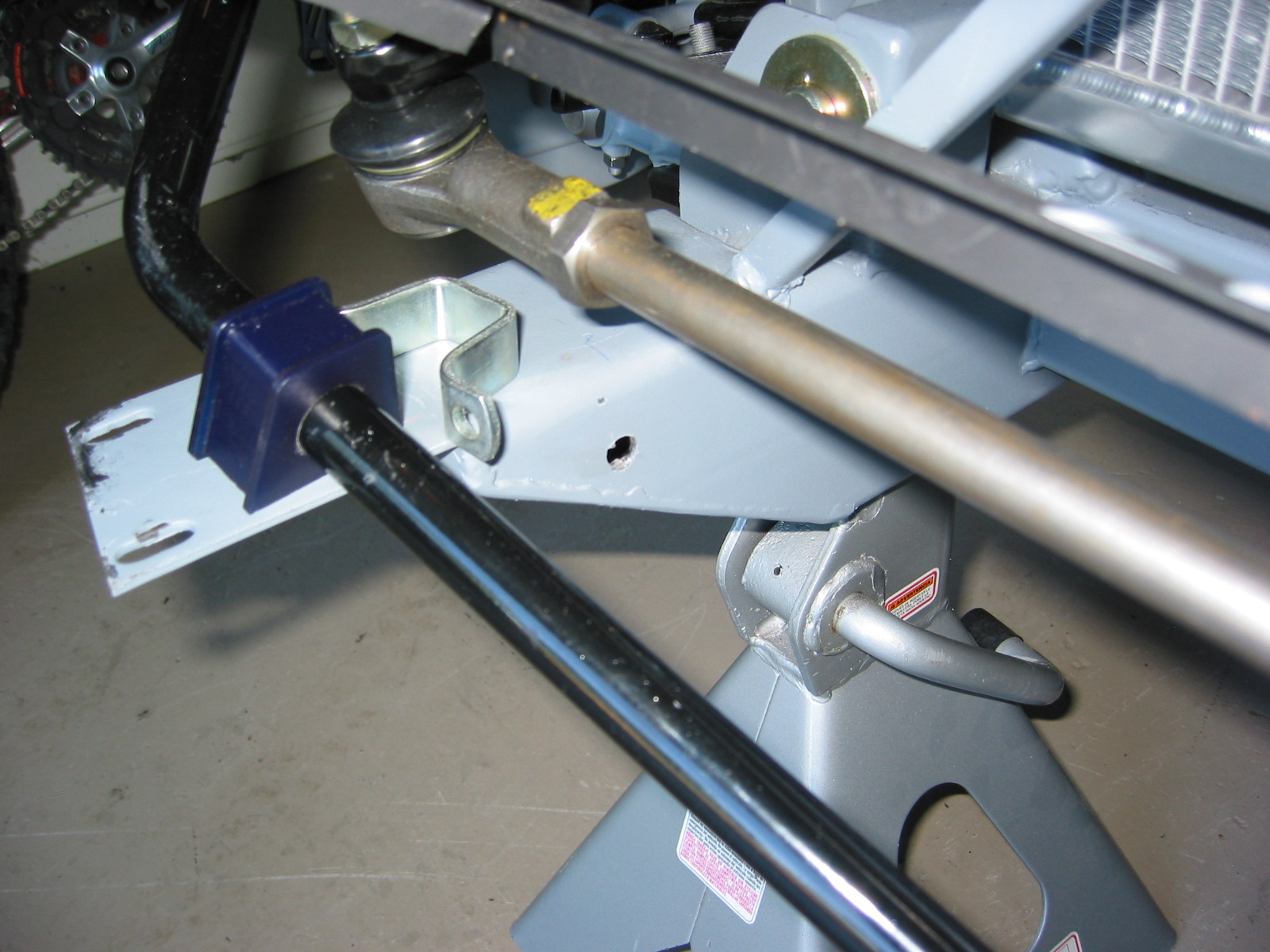
Driving Light frame Hole
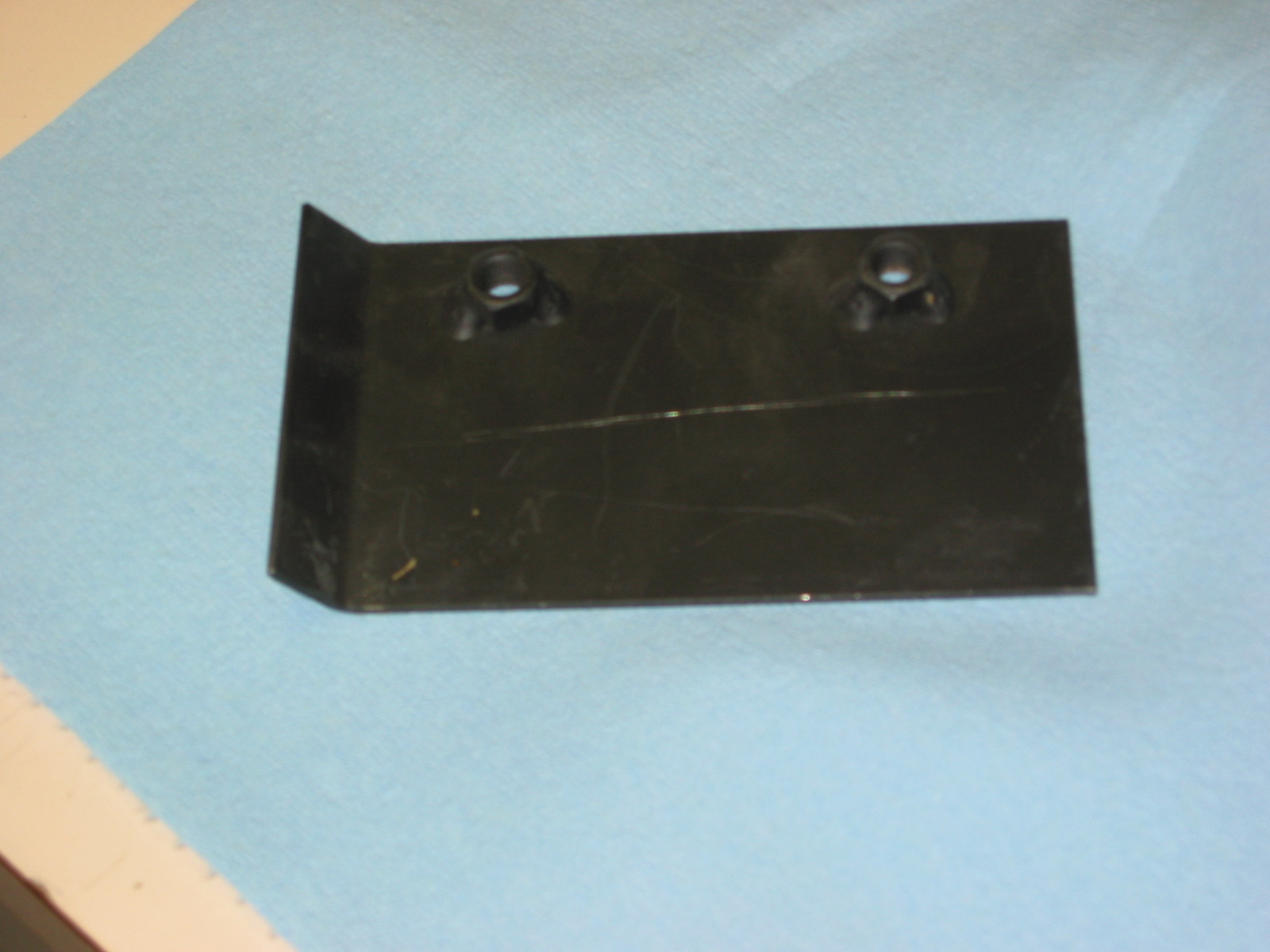
anti-sway bar frame bracket

Horns – Started on the horn installation. The original horns for the Mark I are no longer available so I used the later version. The older horns must have been a little smaller in diameter, because the horns rubbed against the splash panels when connected with the brackets I had. I modified the brackets by adding a mounting hole and grinding off a bit of the bracket to “shift” the horns toward the center of the car. All of this seemed to work flawlessly, but once again I encountered a job that probably should have taken 10 minutes that ended up taking two hours. The horn wiring harness extensions provided by British Wiring were not needed so I crimped some new connectors on the wire in place of the original bullet connectors and attached them to the horns. The new horns were interesting – both brand new – one gloss black and one satin. I will have Jeremy repaint them.
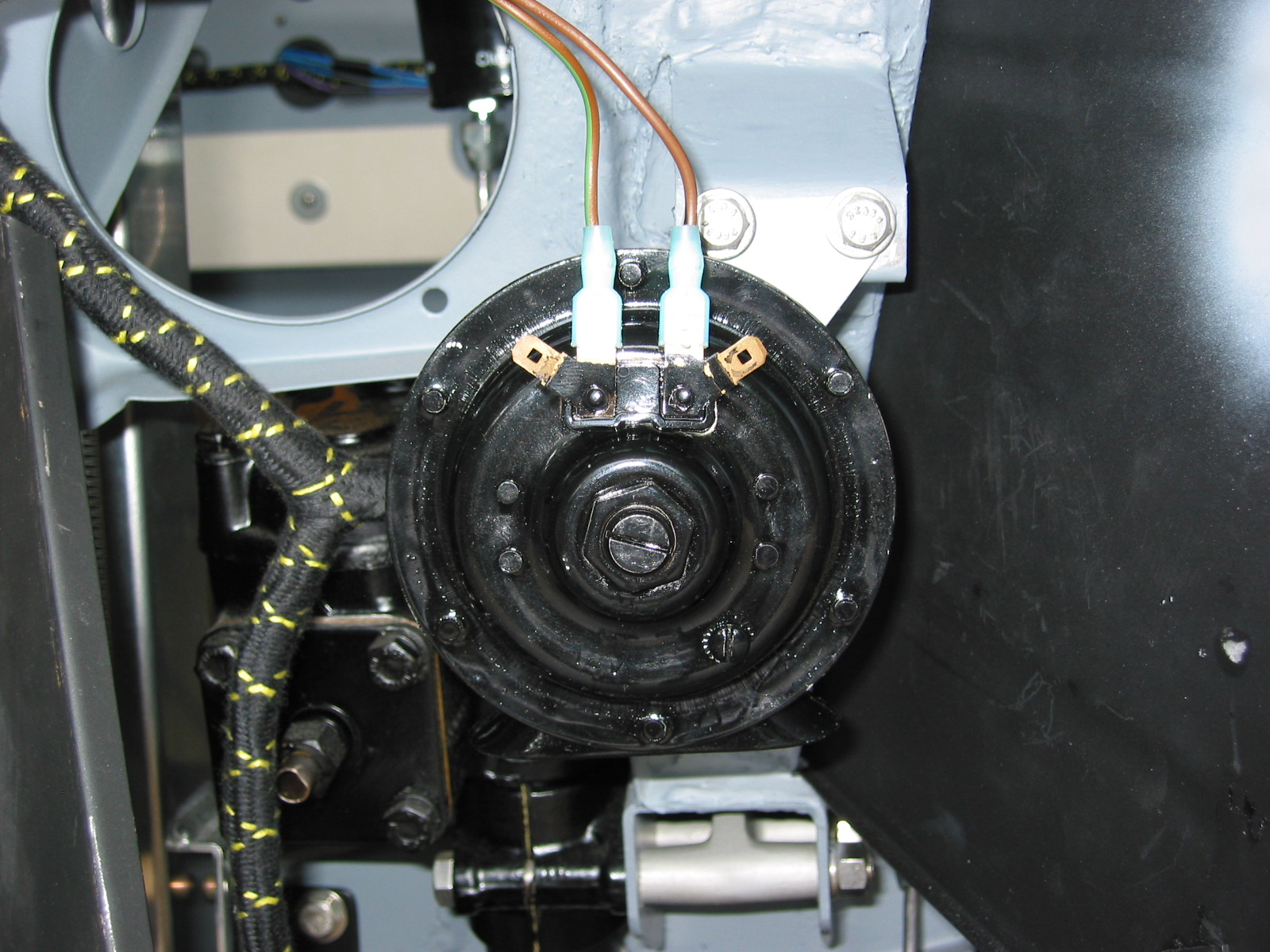
Horn install left

June 18, 2004

Fuel Sender Unit – Installed the fuel sender unit in the new aluminum fuel tank. The sender unit did not line up exactly as the original because the holes in the tank are not as they were in the steel tank. I sealed the sender unit with a new cork gasket and with Hylomar. Each of the small mounting screws received new copper washers.
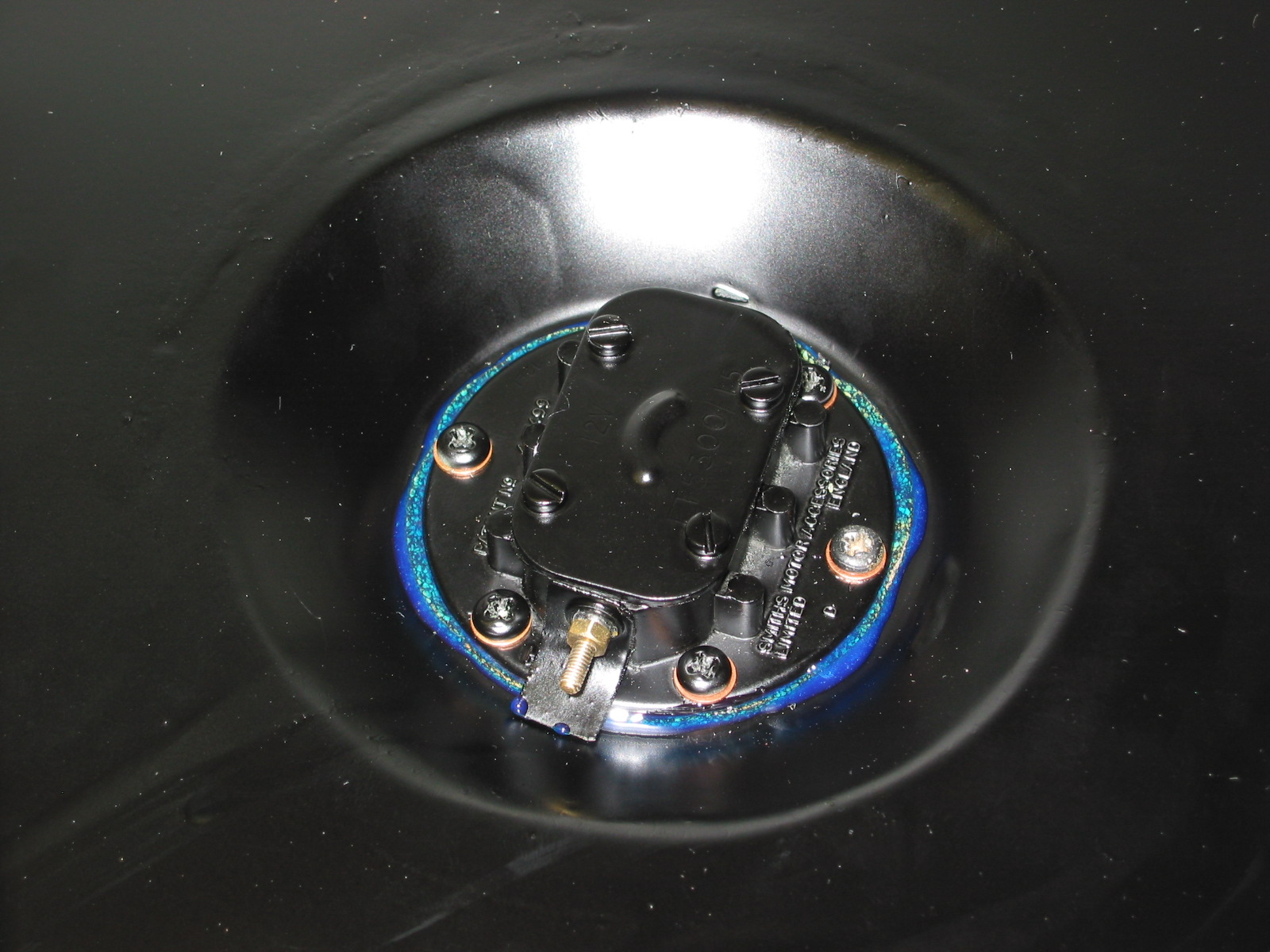
Fuel sender unit

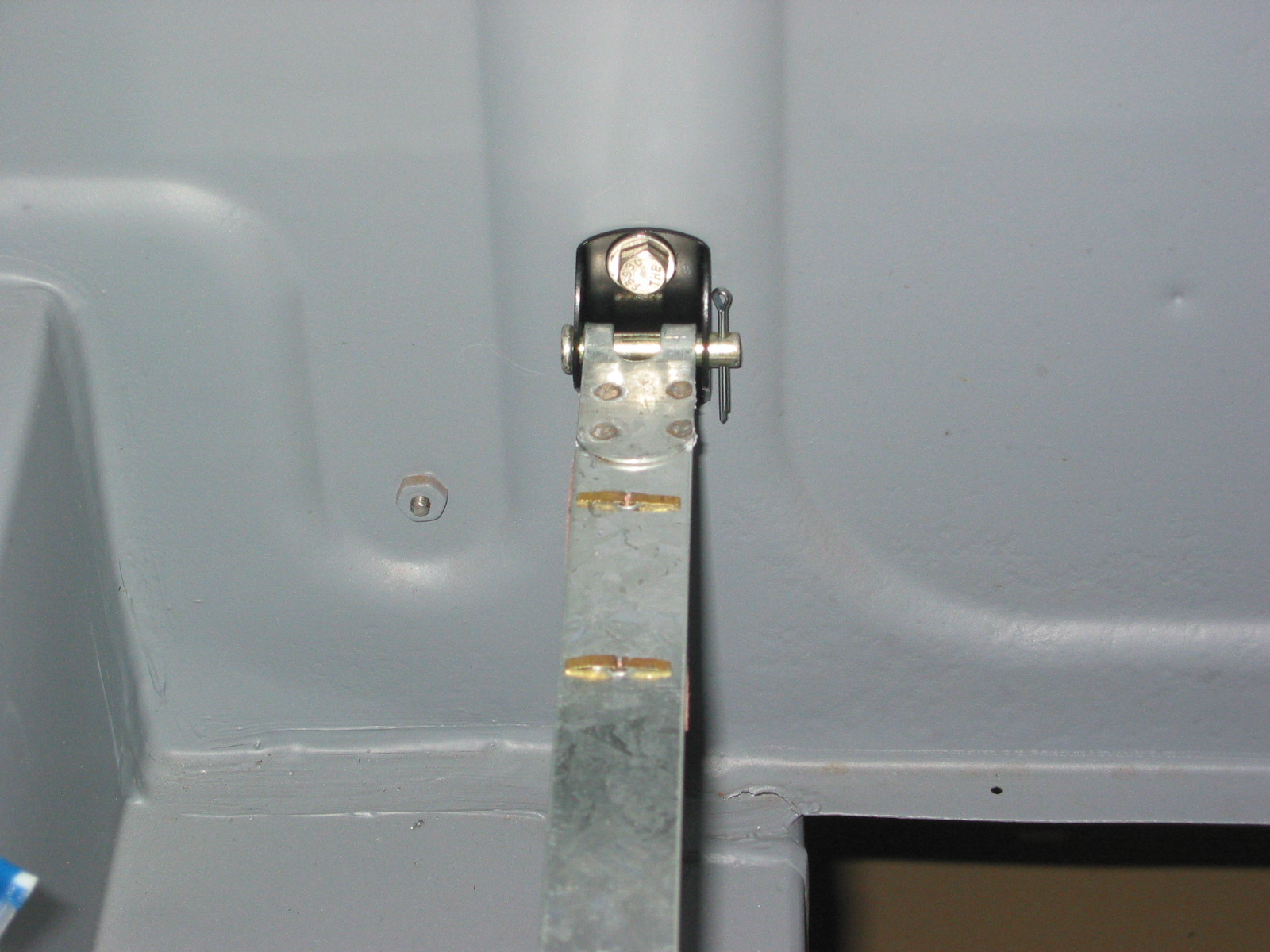
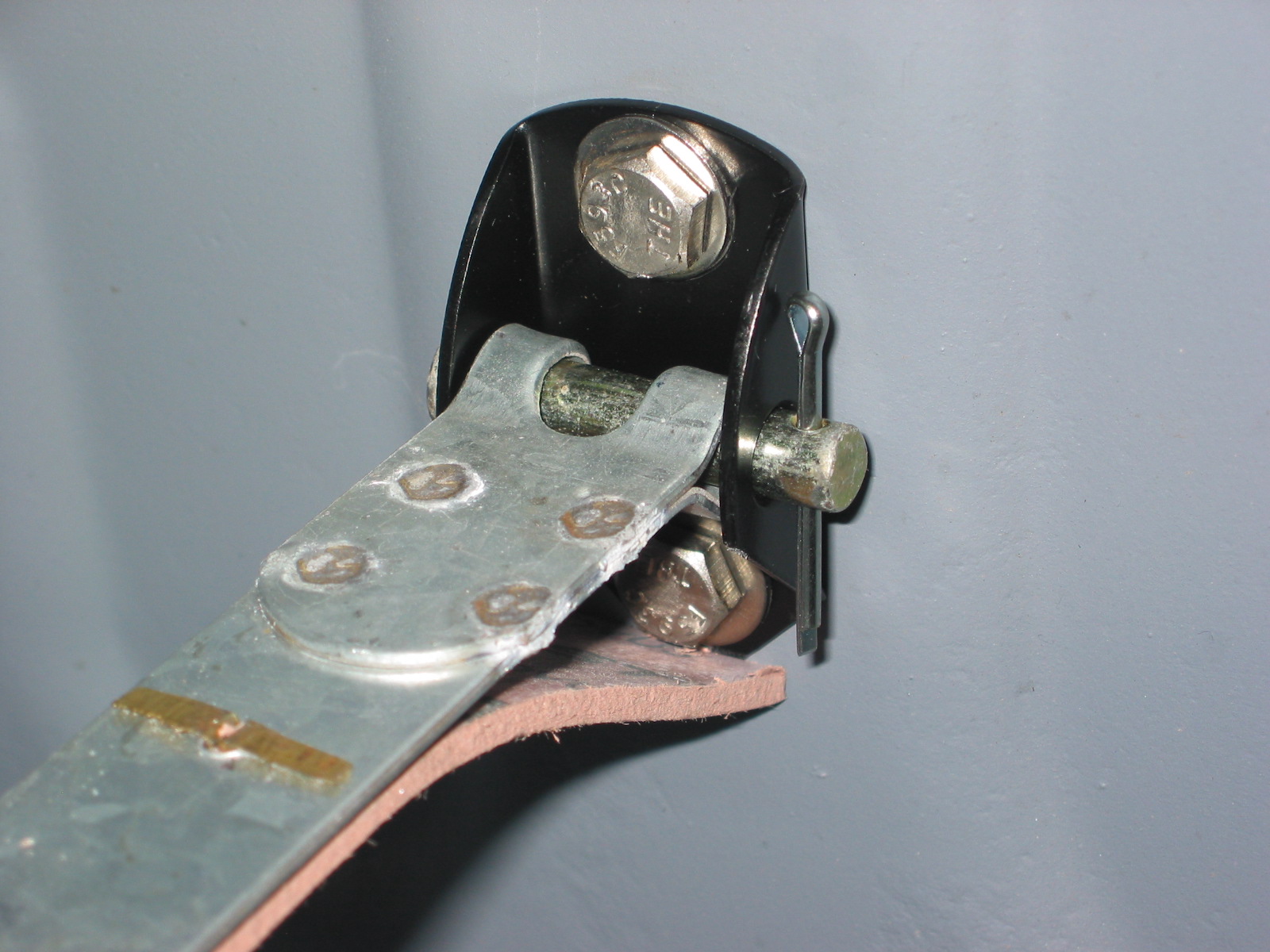
New Fuel Tank – Secured the new fuel tank with the two securing straps which I had slightly lengthened to make the fit better. The securing straps fastened to the rear boot wall with brackets and clevis pins.
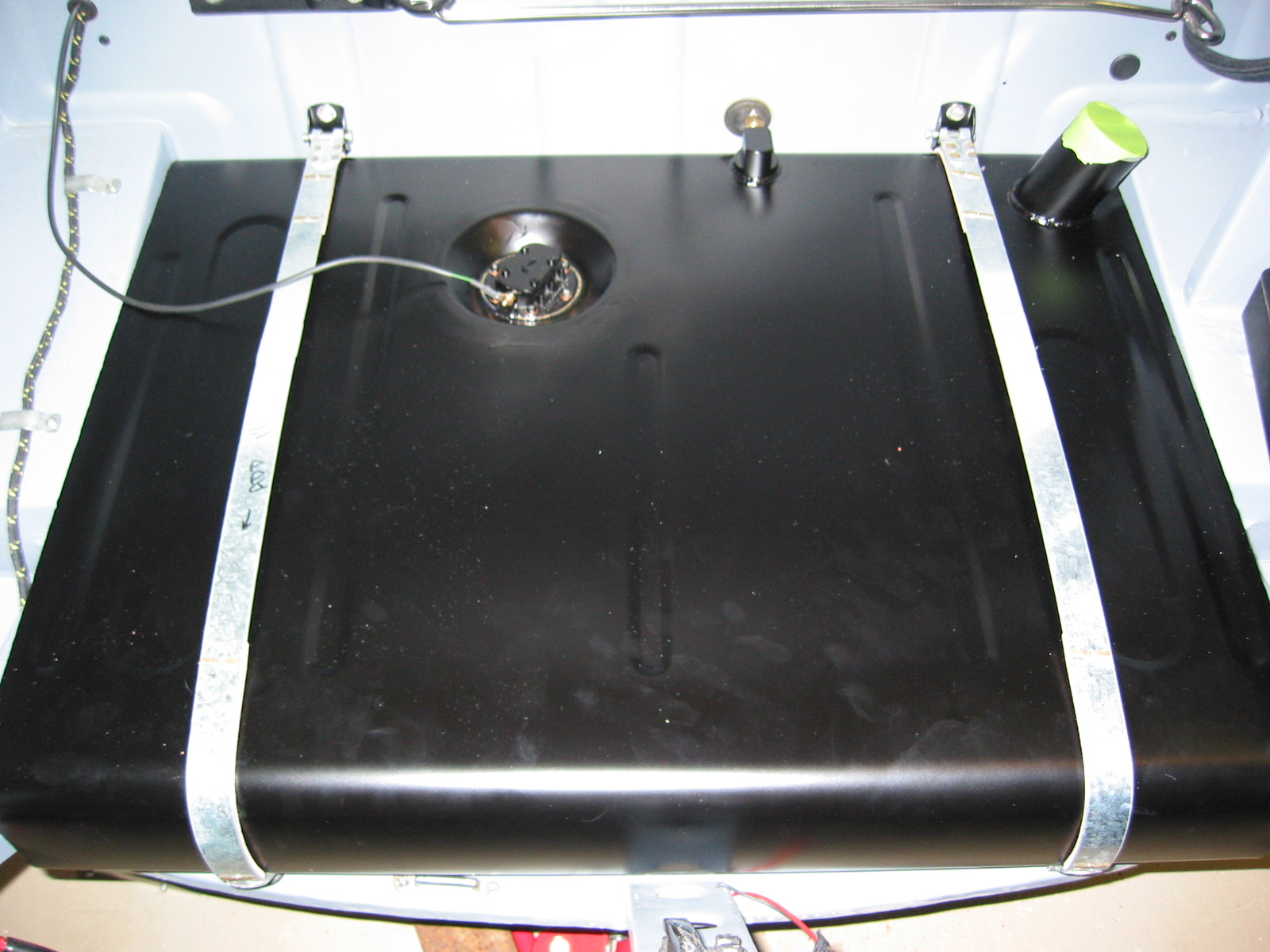
Aluminum Fuel Tank
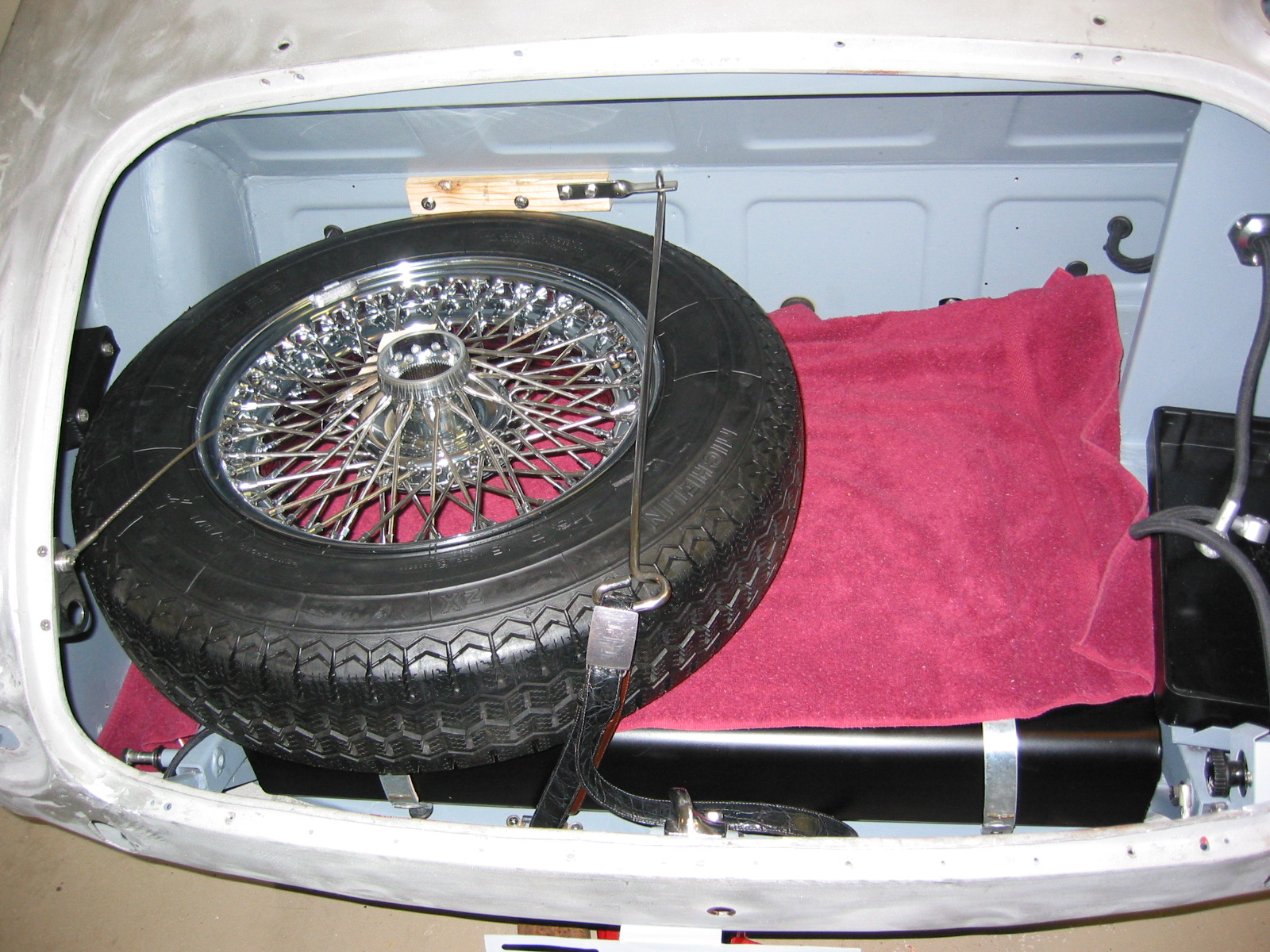
Spare tire fitment

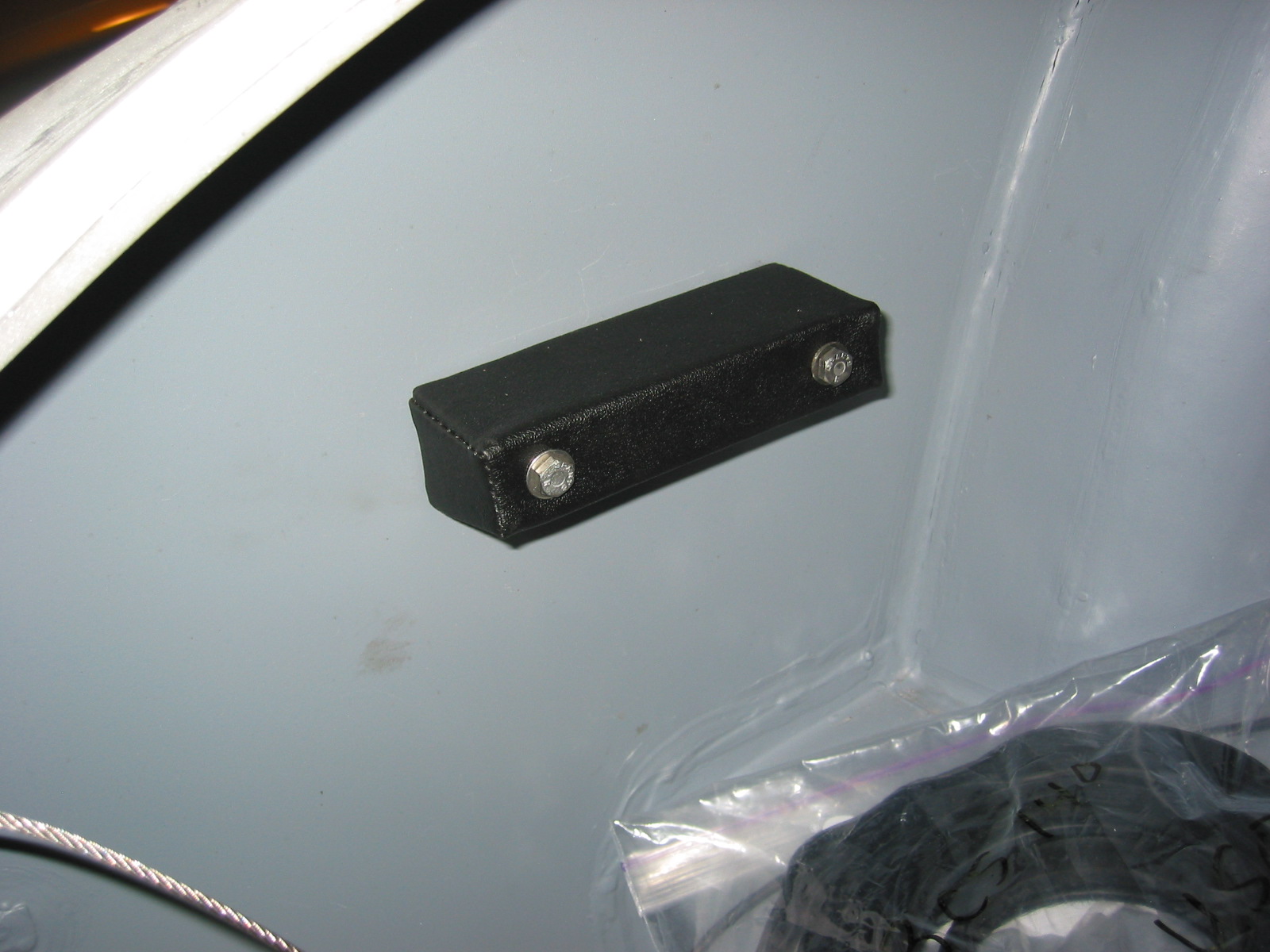
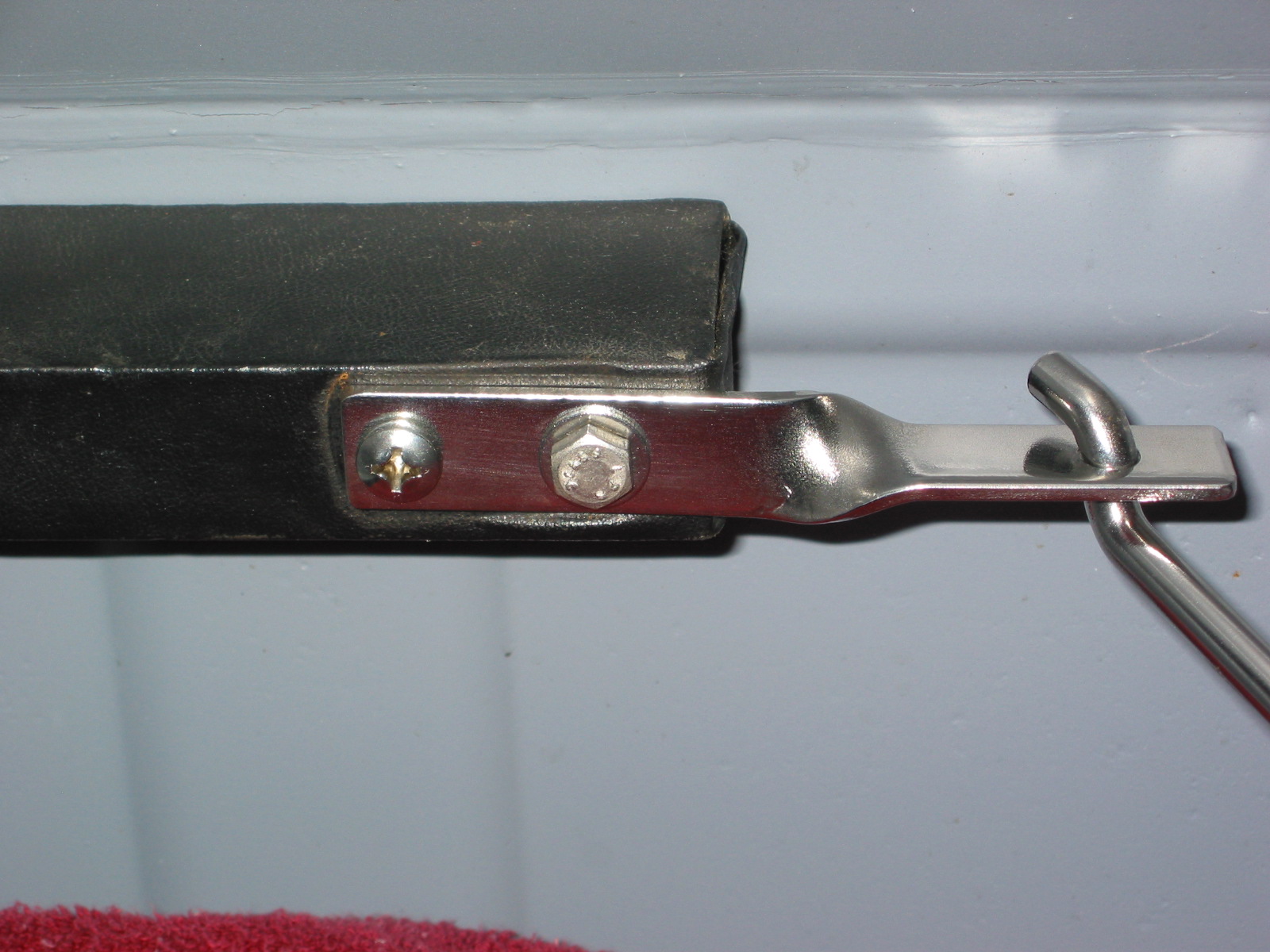
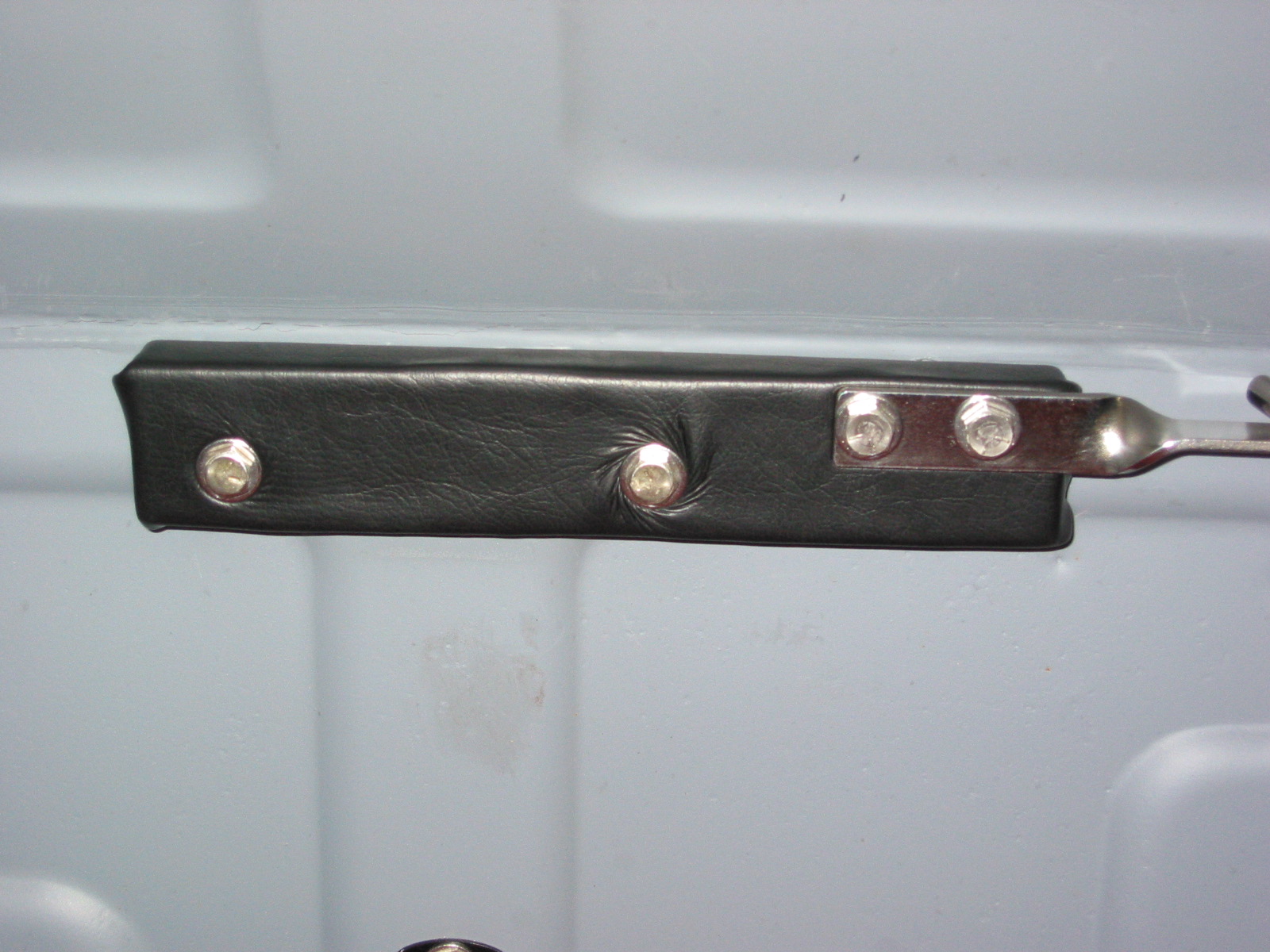
Spare Tire Block and Bracket – Installed the new stainless steel spare tire bracket and tie down bar. I had to make a new vinyl covered block to fit on the back boot wall to accommodate the higher spare tire and the slight rise that was “built in” by Martin Jansen. Turned out pretty well. I actually used old naugahyde from my original reupholstery work on the car 20+ years ago!
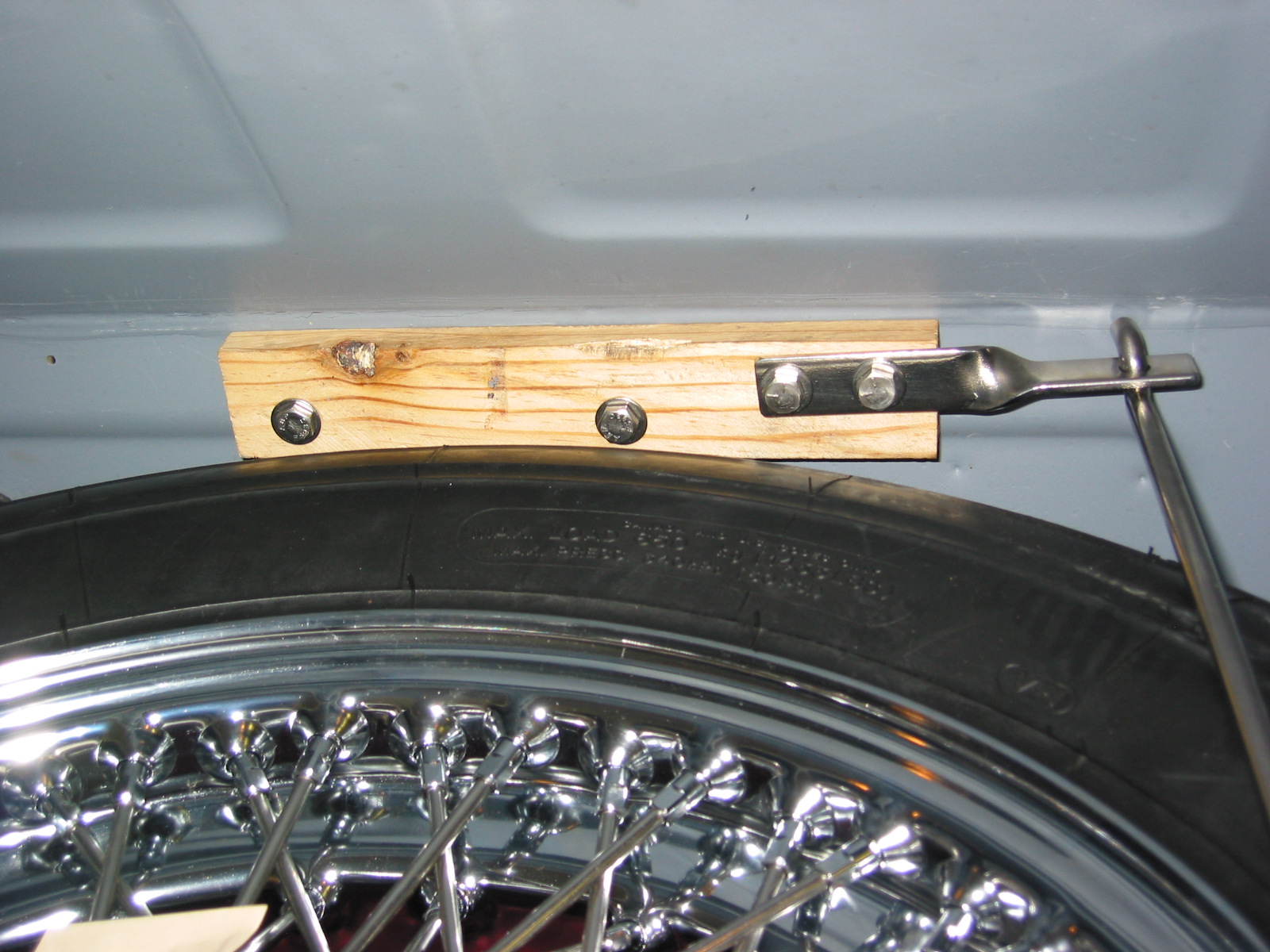
Spare tire bracket and block 1
spare tire bracket and block 2
Spare Tire Block covering

Fuel Filler Pipe – Installed the fuel pipe rubber gasket on the rear shroud. Lightly smeared Vaseline on the lower section of the fuel pipe and pushed it through the gasket into the boot. The  Aston Cap is secured to the fuel tube with a threaded brass collar. David Nock advised that I should fasten the collar to the tube by reversing the ends and brazing the collar to the tube’s unfinished end. Then I cut off the old cap end to put into the rubber sleeve to connect to the tank neck.
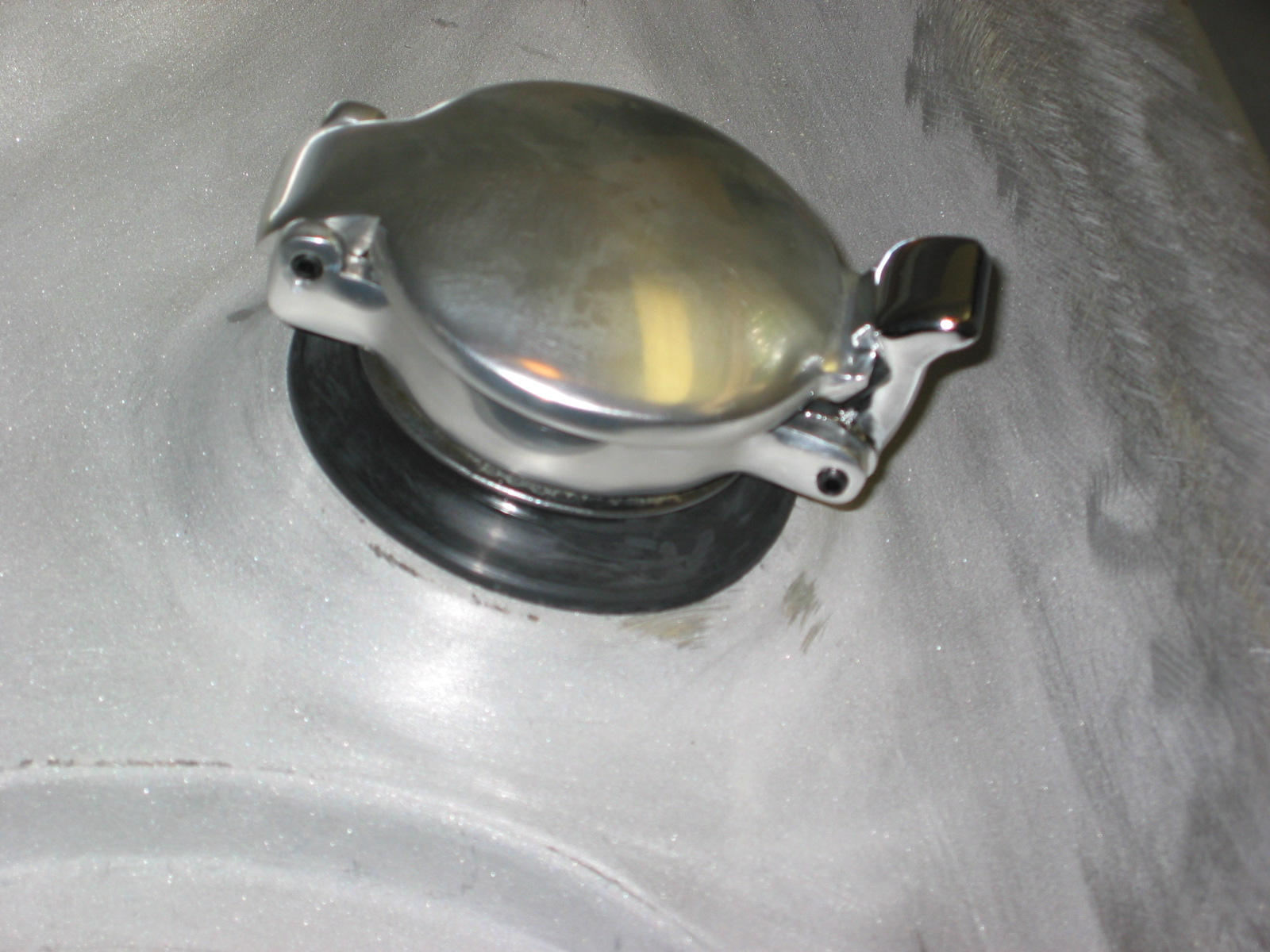
Aston filler Cap 1

Aston threaded collar

Fuel tube cut off
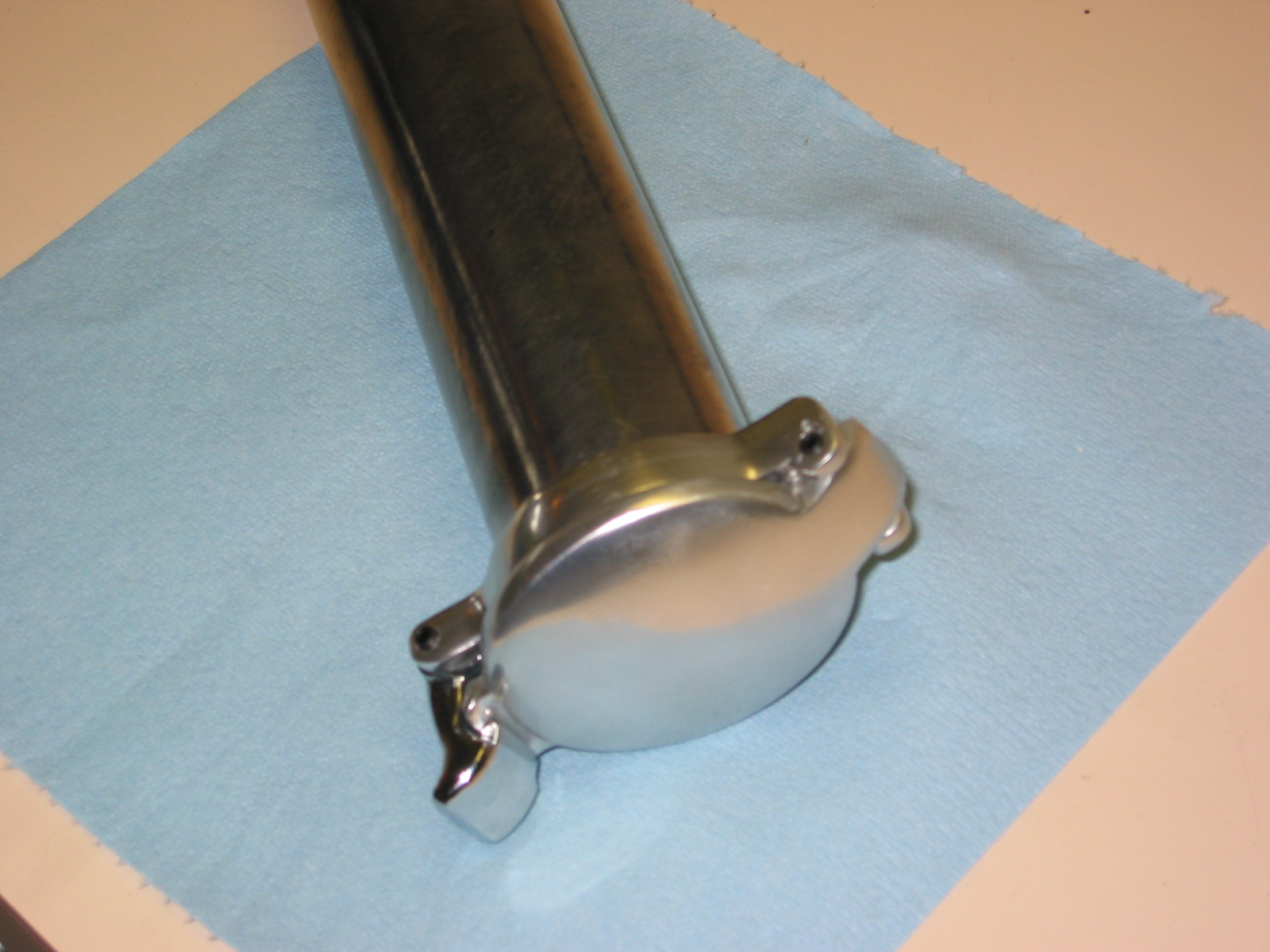
Aston fuel cap on pipe

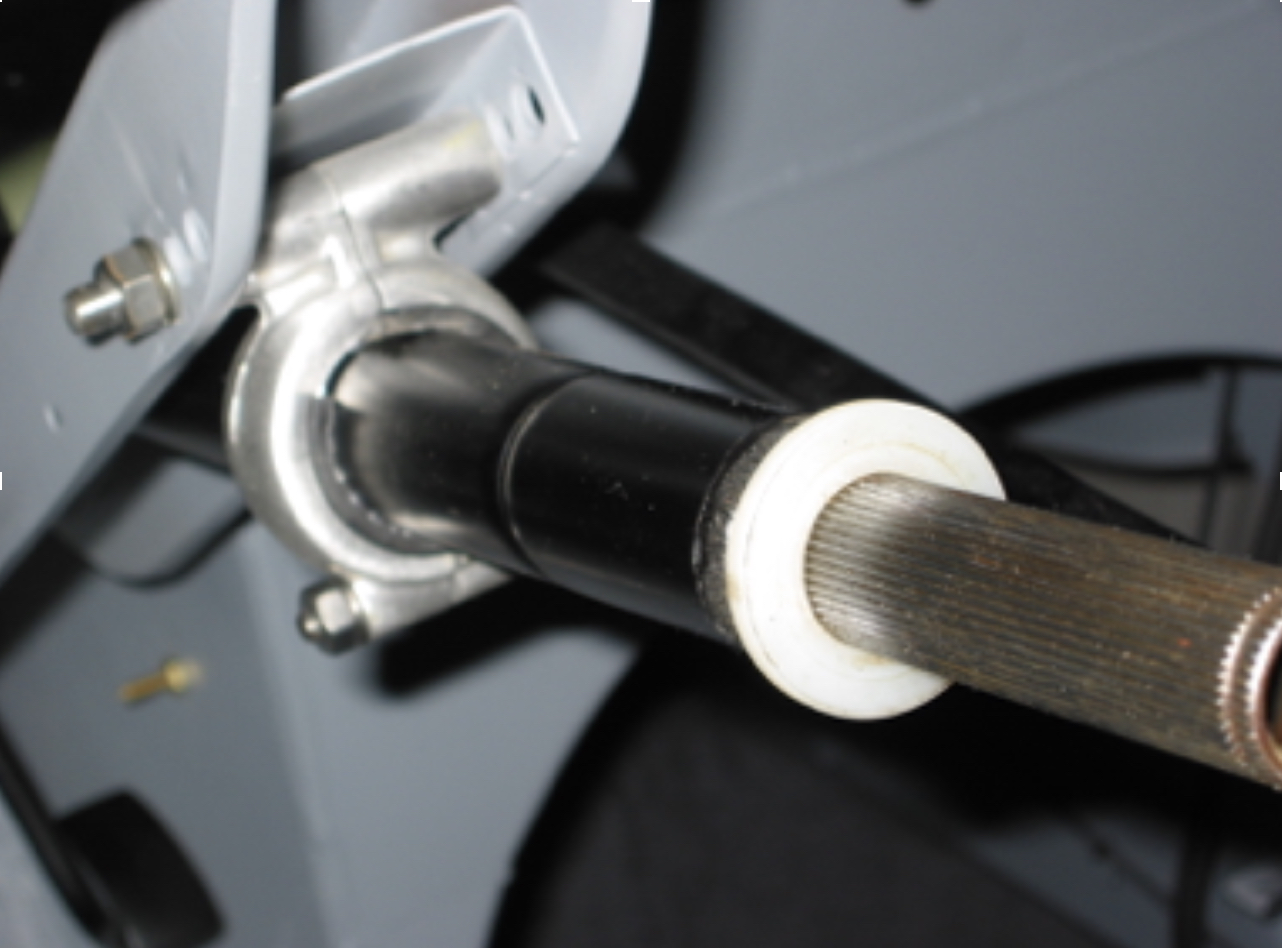
Steering Cross Bar – After discovering that the new cross bar for the steering was for a BJ8 I ordered new ends and installed the original cross rod. I probably could have used the BJ8 bar but it looked like the original provided a little more adjustment which I think I needed.
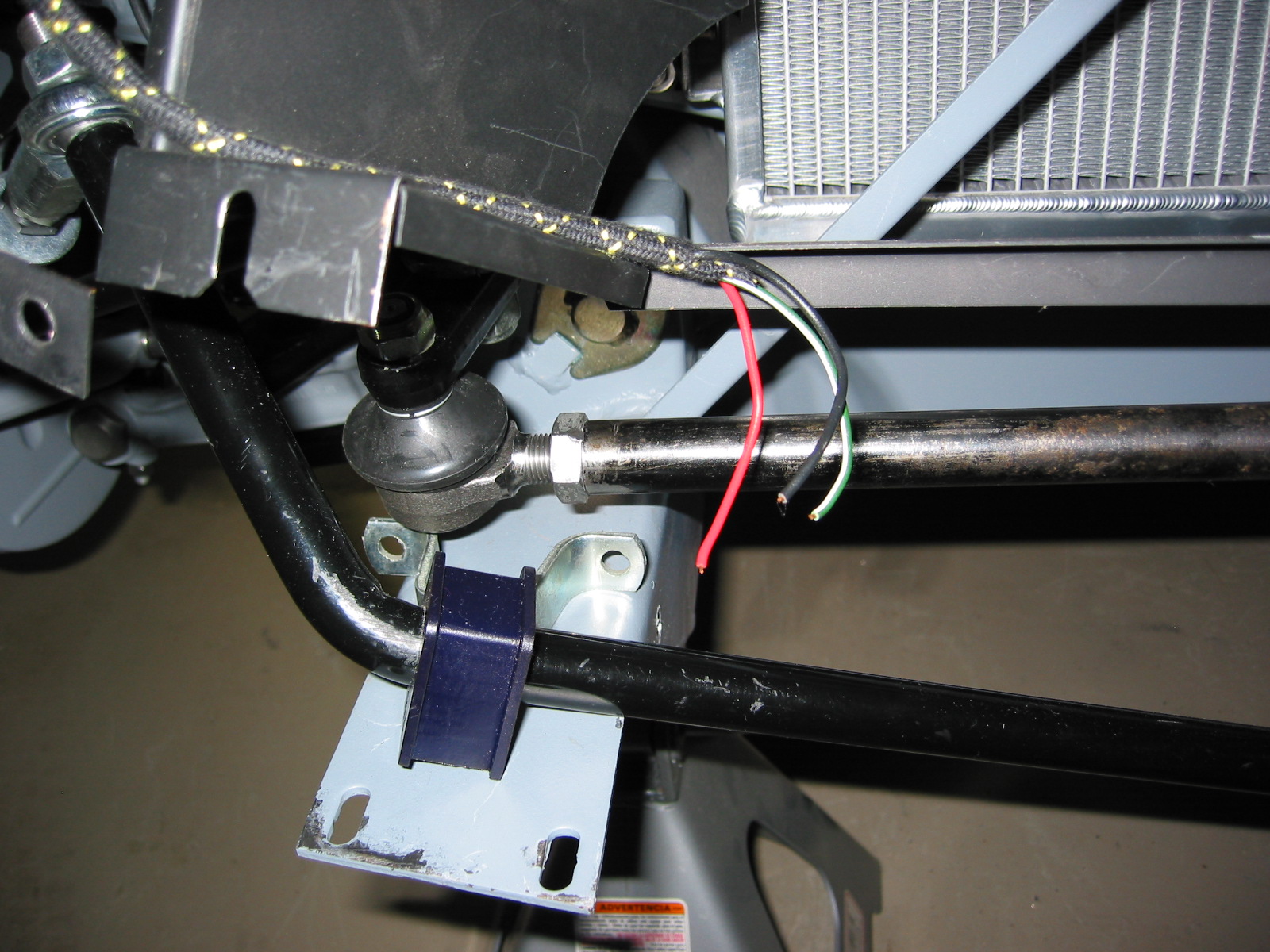
Cross rod right
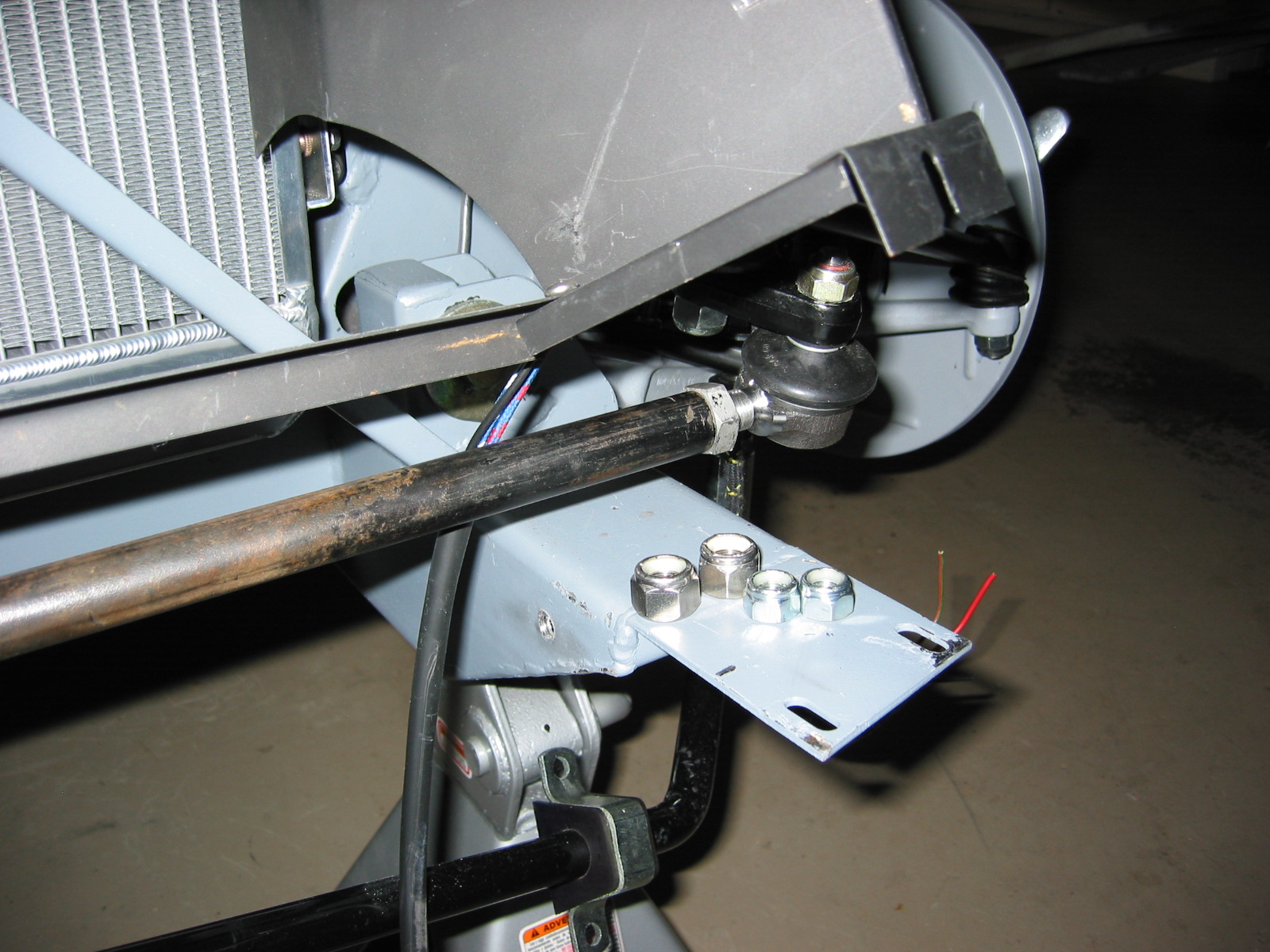
Cross rod left
 

Chapter 18 – Cleaning and Trial Fitting

April 18, 2004

Front Suspension Installation Continued 

I had the front swivel or king pins refurbished by Bruce Phillips at Healey Surgeons. I then followed the steps in the workshop manual:

Fit the new lower fulcrum pin into the lower trunnion being careful to center it, and then secure it with the two cotter pins. 

Placed the cork rings in their recesses on the lower trunnion and then fit the lower wishbone arms to the trunnion. Ensured that the half-moon cotters were correctly positioned and then greased and screwed the new steel bushes partially home.

Bolted the lower spring plate to the wishbone arms to establish proper positioning.

Threaded the steel bushes home evenly and then backed off a flat or two until .002” feeler gauge will fit between wishbone arm and the bush. Tighten cotters but was careful not to overtighten. The lower trunnion assembly should operate freely in the screwed bushes.

Place the cork washer on the top of the swivel pin and pushed it down to the bottom. Smeared swivel pin shaft with engine oil and placed the hub assembly on the swivel pin.

Fit a staybright washer followed by an oilite washer and then another staybright washer on top of the hub assembly on the pin. I soaked the oilite washer in oil overnight so that it would absorb the oil into its pores. 

Fit the upper trunnion and swivel nut. Nut should be tightened down (40 to 60lbs of torque) to allow a maximum of .002” lift. Pin should turn freely but snuggly.

Then released swivel pin nut.

Removed the spring plate from the wishbone arms to gain some flexibility in fitting the arms to the frame brackets.

Fit the two poly bushes to each lower wishbone link and pushed them into the frame brackets. 

Replaced the spring plate.

Inserted the fulcrum pins through the bushes and installed the second set of bushes through the frame bracket. Put the special washer with tab locator on the back of the bracket and lightly secured with a castel nut, not screwed home.

Fit the lever shock to the shock tower and insert mounting bolts. Fit the Putzke’s tube shock conversion bracket on the front of the lever shock with special long bolts and tightened lightly.

Front suspension left 6

Front suspension left 7

Placed the new upper trunnion bushes in place. I used poly bushes supplied from Udo Putzke.

Loosened the shock absorber arm mounting bolt.

Placed the upper trunnion with the bushes in position between the shock arms. Refit the fulcrum pin and tightened lightly after securing to the shock absorber.

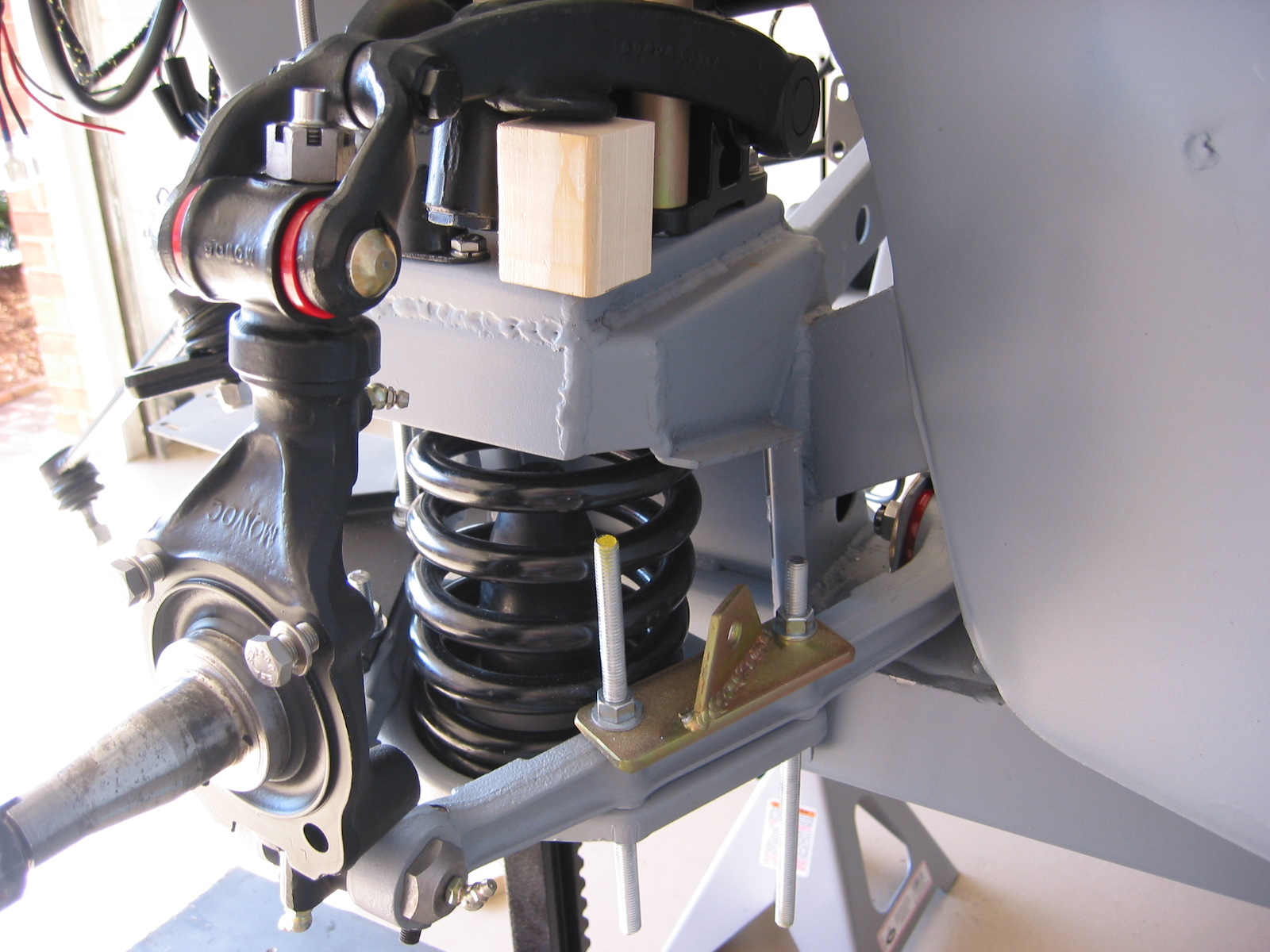
Then set the assembly under proper load position. Accomplished by placing a two inch block (distance piece) under the shock arm opposite the rubber buffer.

Front suspension left 4

Tightened the fulcrum pin castle nuts for the lower wishbone arms in the frame brackets and insert split pins.

Tightened the four shock bolts to the shock tower plate. 

Tightened the upper trunnion fulcrum pin nut and place split pin.

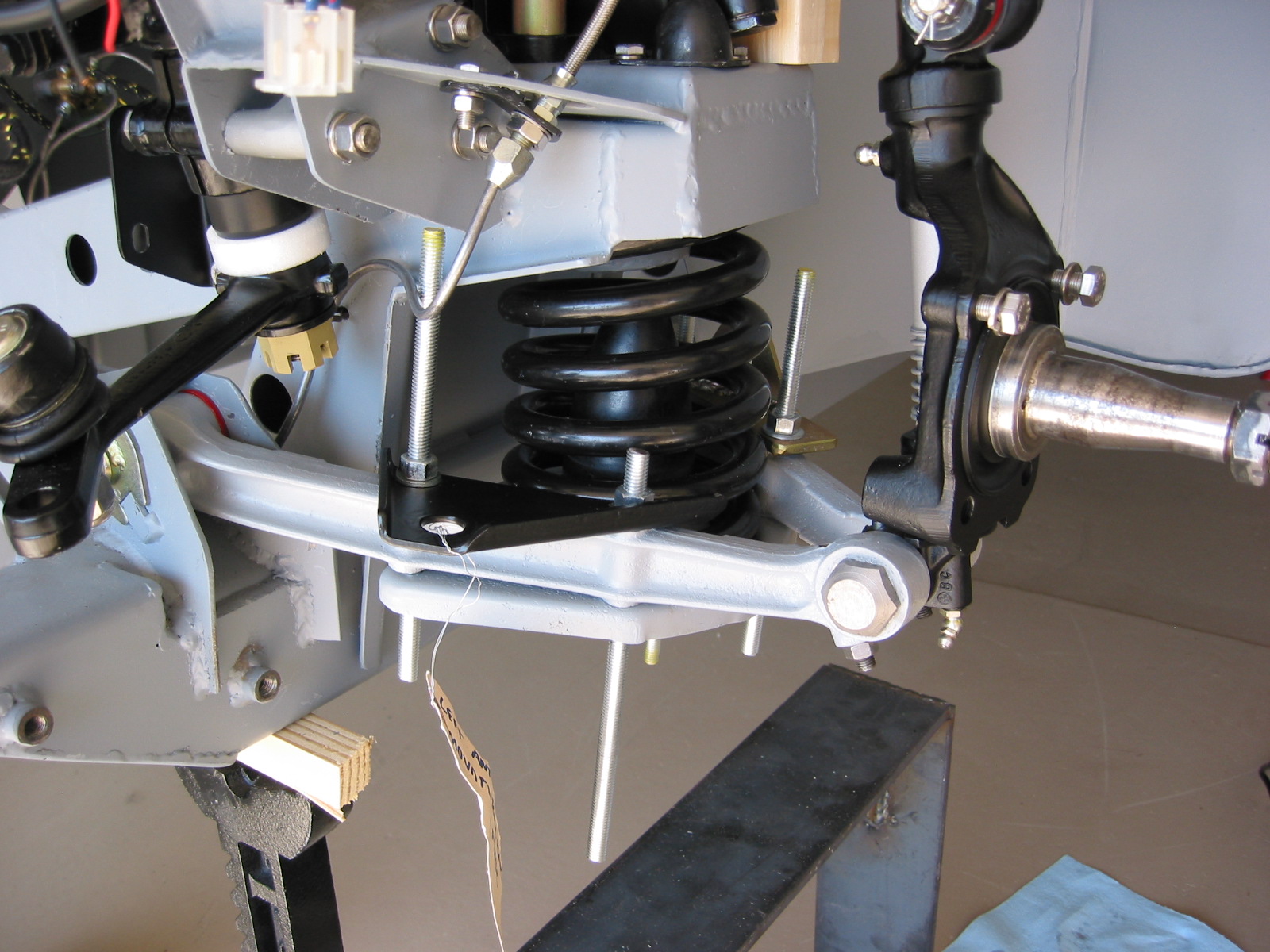
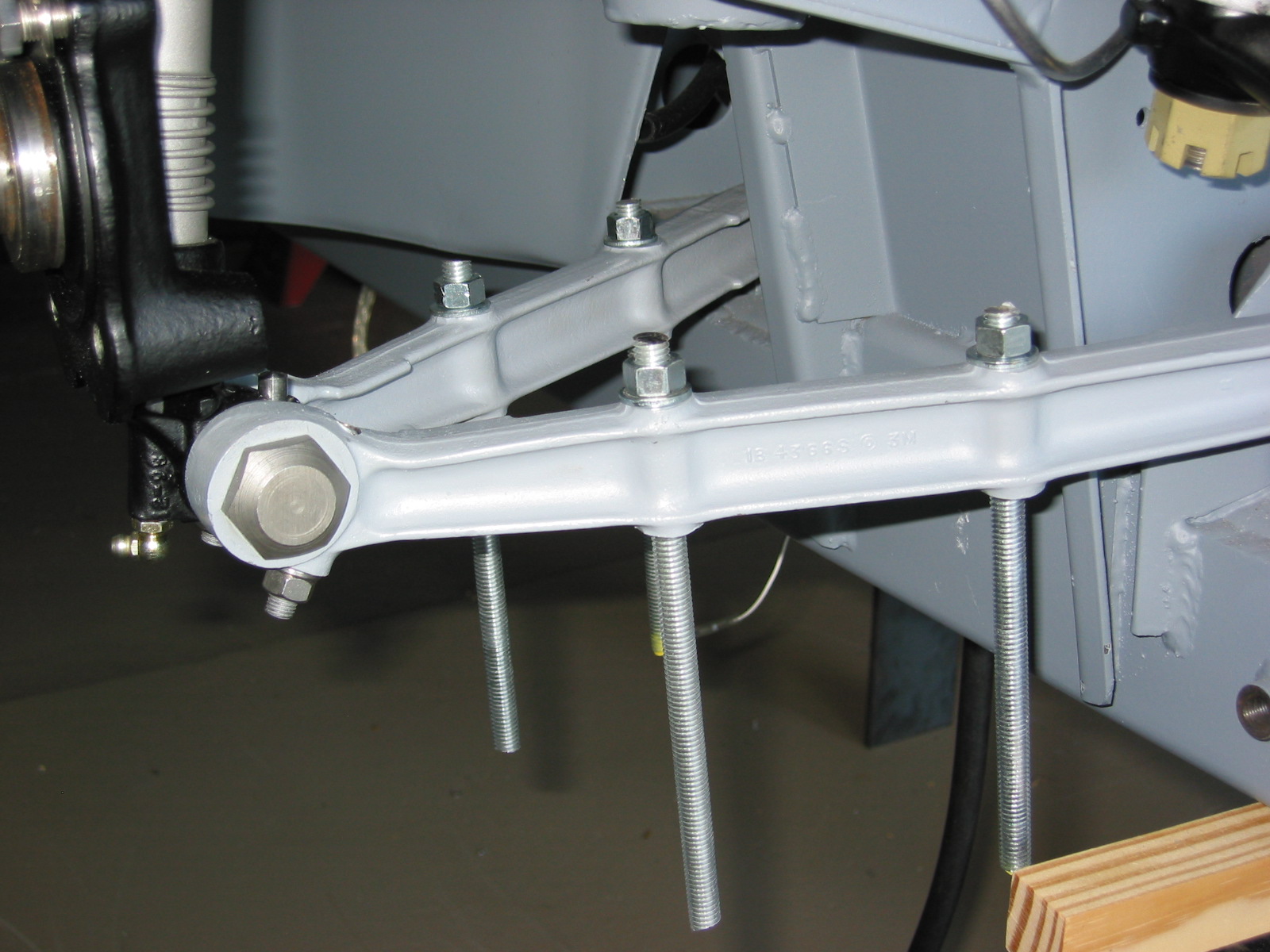
Removed the spring plate and then used 3/8” threaded rod in seven inch lengths to hold new coil spring and plate in place. The lower mounting bracket for the Putzke tube shock conversion was attached to the rear lower wishbone arm at this time.

Front suspension left 2

Gradually tightened the rods until fully in place. Then replaced rods with proper spring plate bolts and tightened.

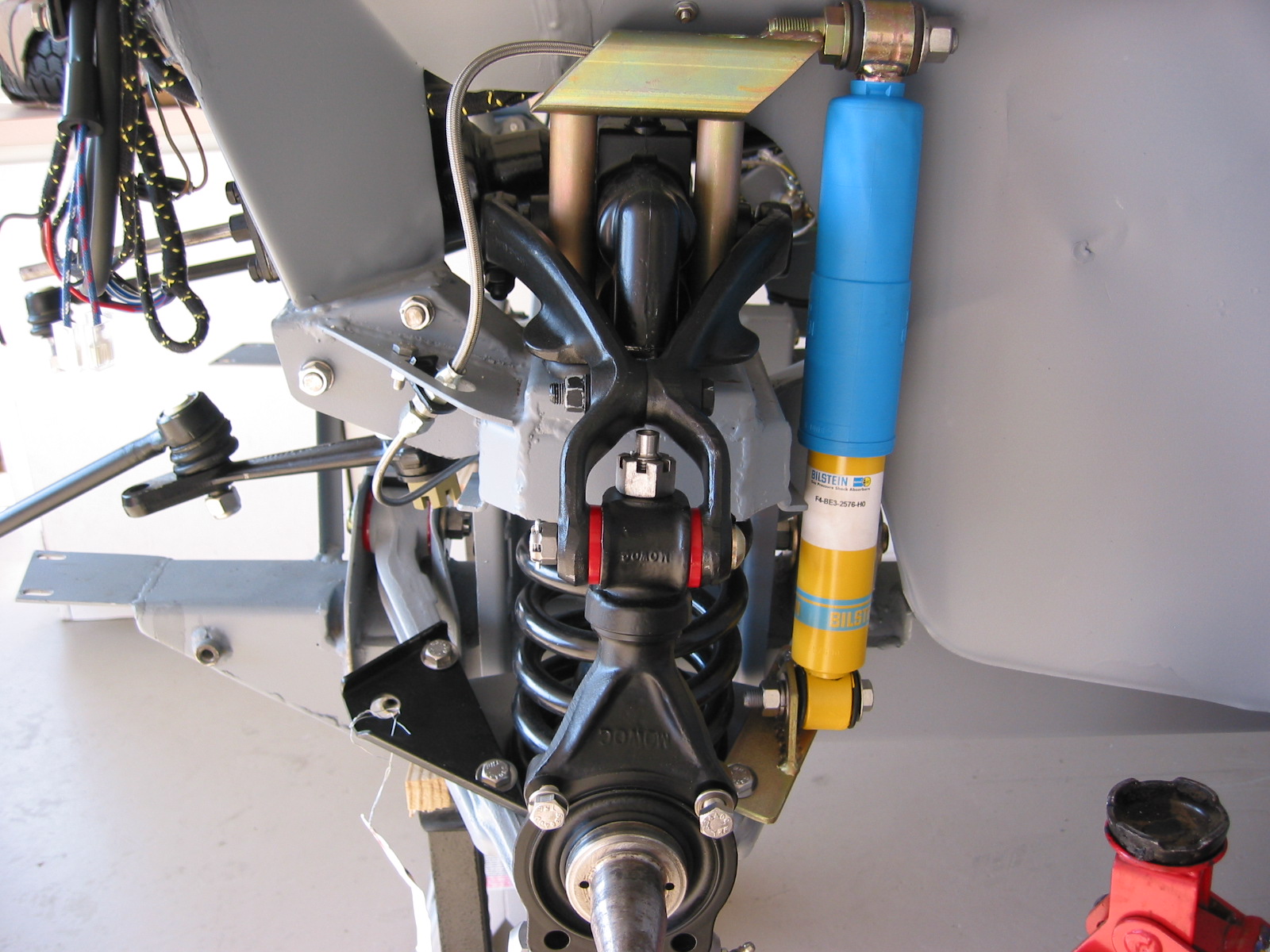
Installed new tube shock which required jacking up the shock tube slightly to align the mounting holes.

Front suspension left 5

April 24, 2004

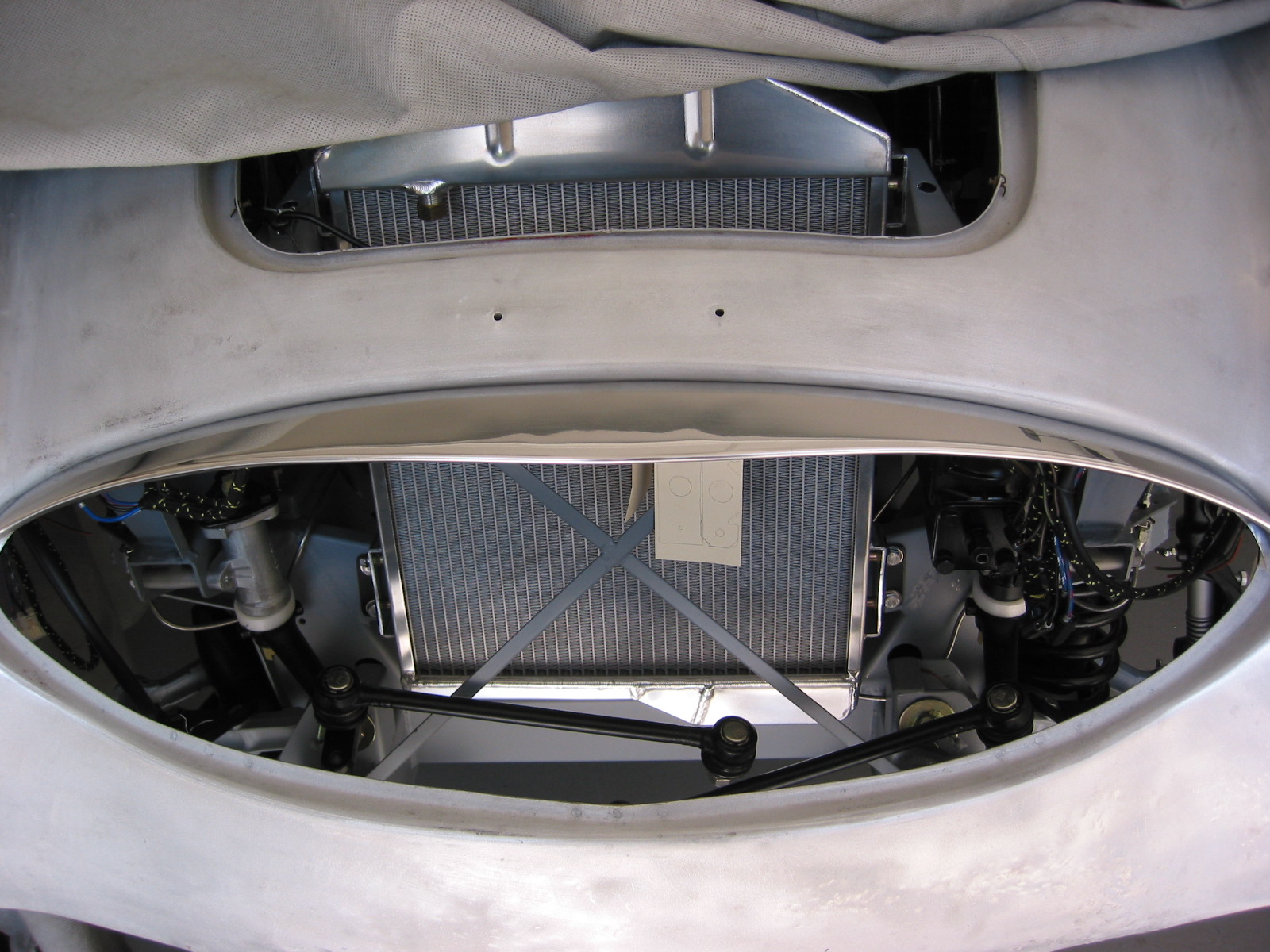
Front Shroud Grill 

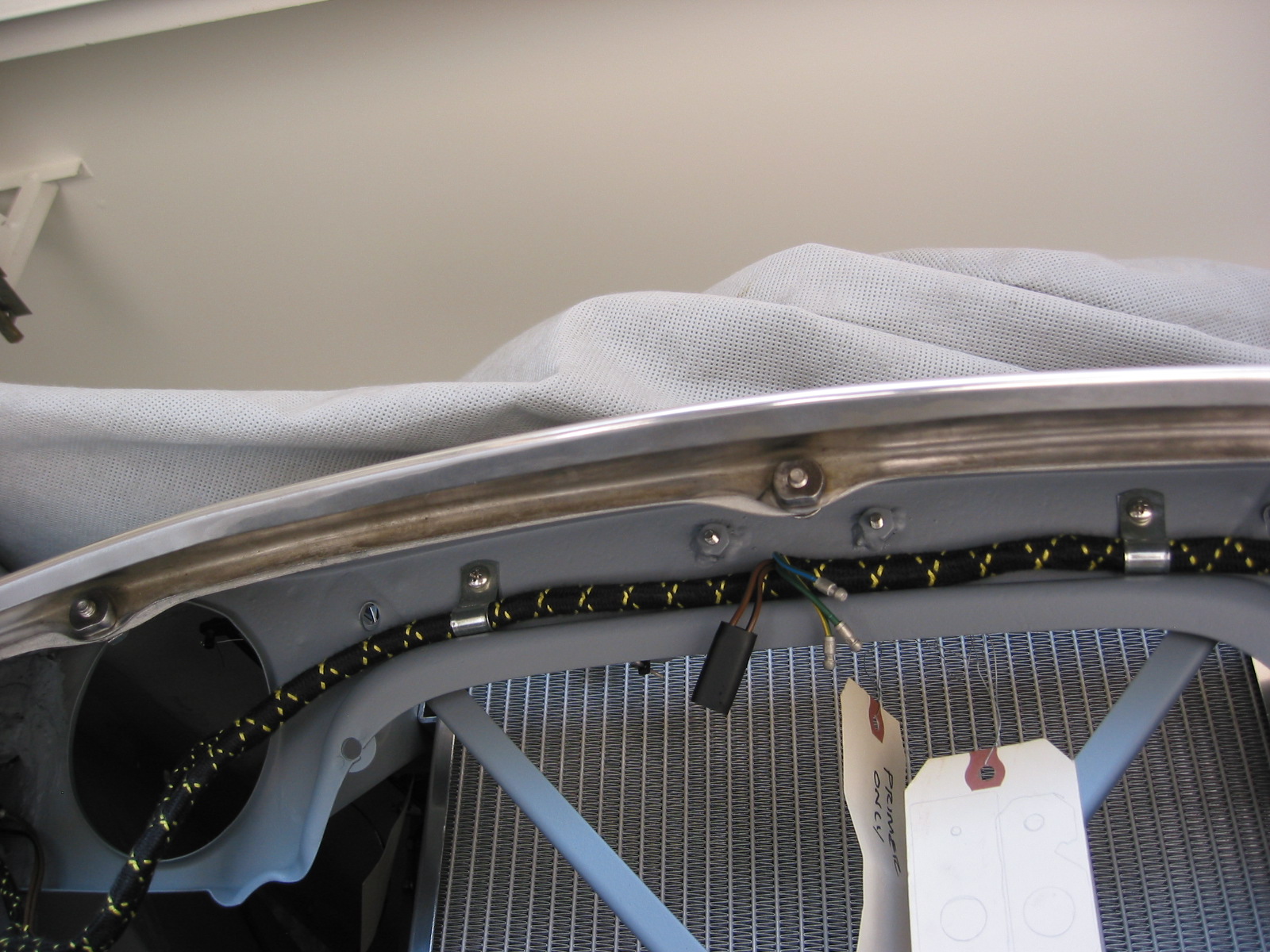
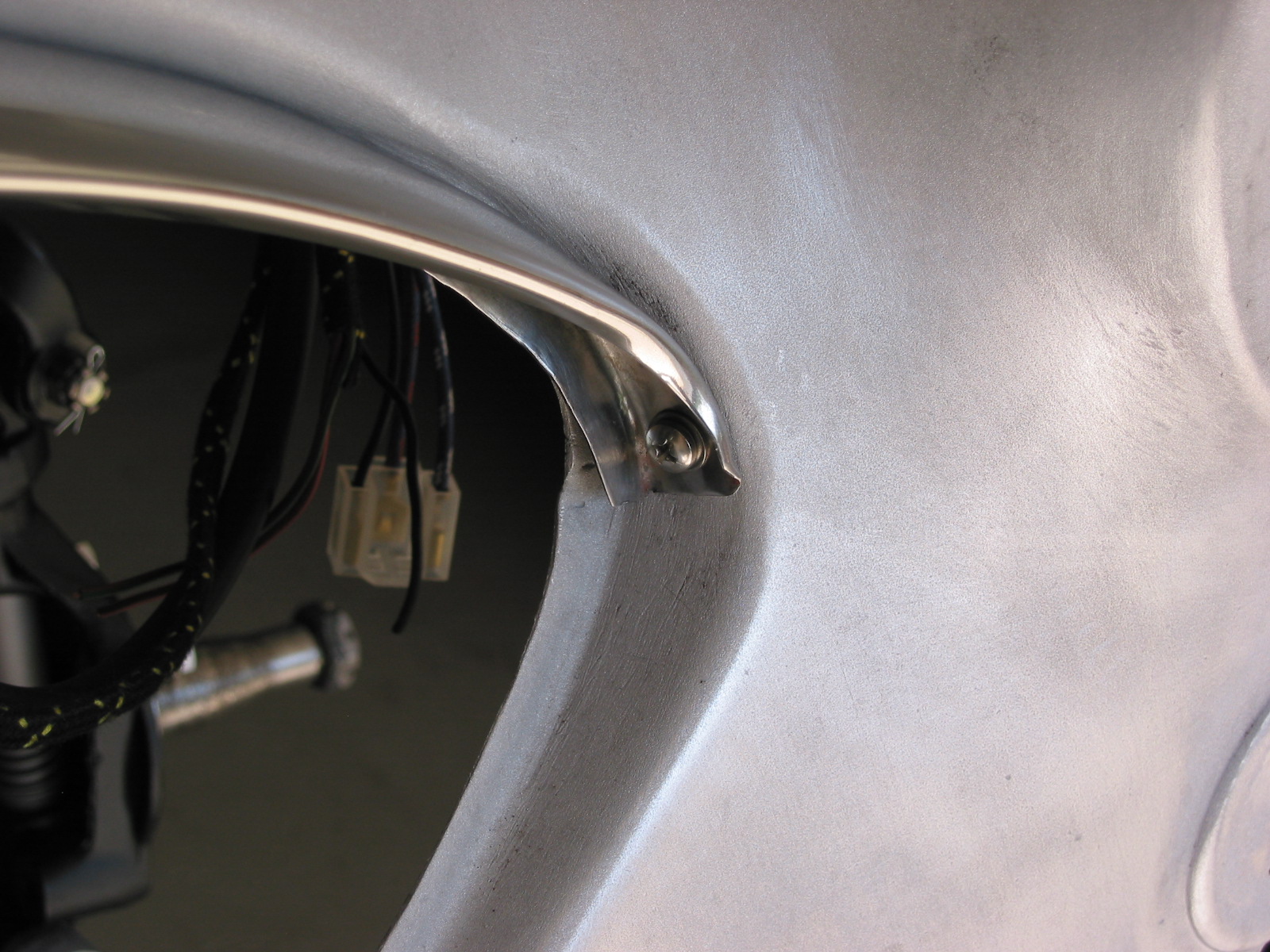
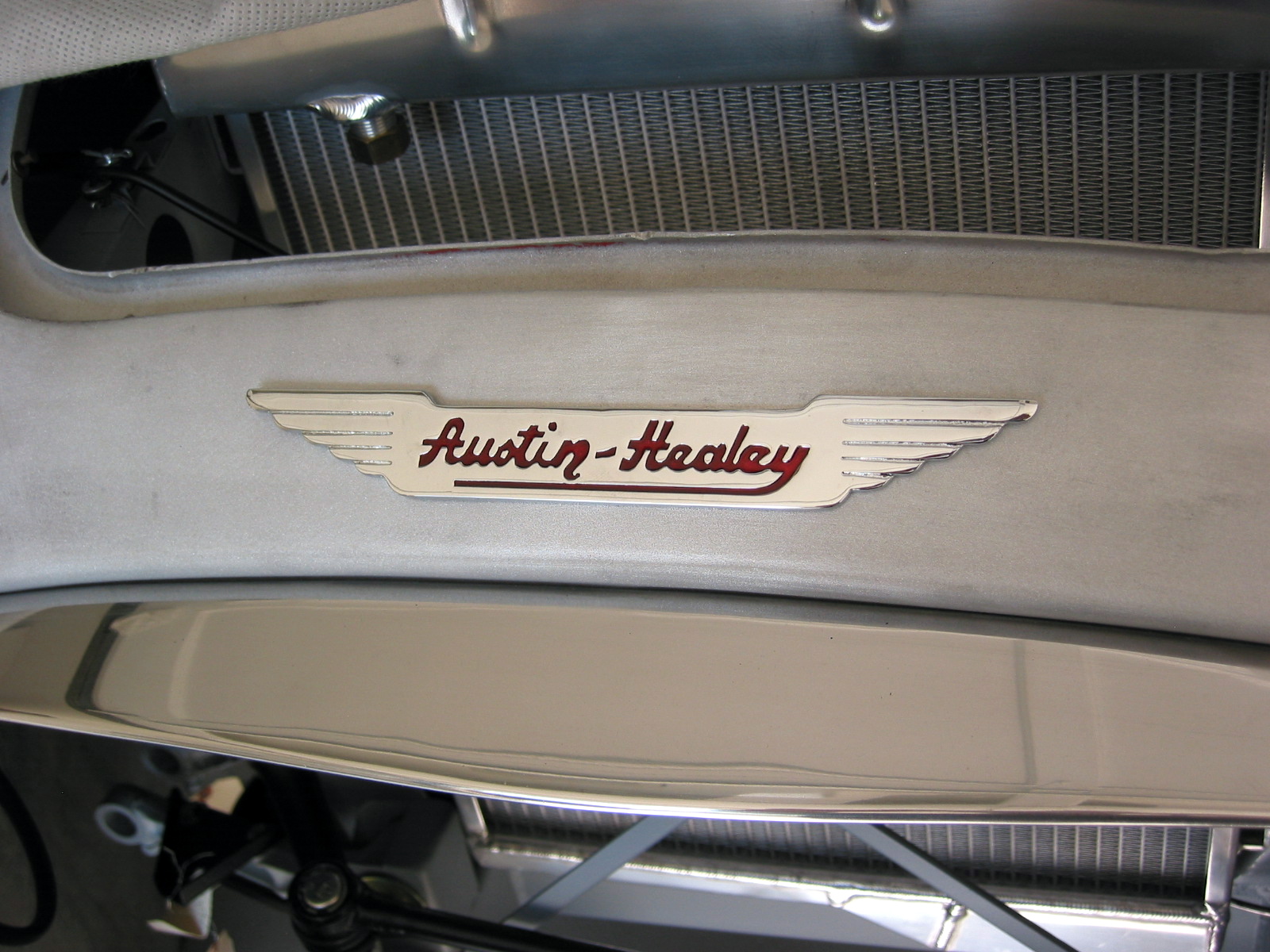
I couldn’t resist finding out how the grill would look in the shroud so I polished the original upper surround piece and installed it along with the Austin Healey motif on the shroud. The motif came from Hemphills and looked good. The upper surround uses 1/4” – 28 x 5/8” with two #10 – 32 x 1/2” screws on the left and right sides. The motif pieces has #8 posts.

Grill brow mounting

Grill brow

Grill exterior side mounting

Healey Shroud Motif

May 9, 2004

I borrowed Jeremy Turner’s cert nut pliers and installed cert nuts where the original fixed nuts were once located – light relay, insulation panels, dimmer switch, boot floor tie down staple and etc. Slow job but the nuts seem to work effectively. You drill a 9/32” hole for the #10 cert nuts and a 3/8” hole for the 1/4” cert nut. Then I installed the spare tire bump block on the left side of the boot wall. This block is supposed to use fixed nuts but I decided to use nuts with lock washers instead.

Spare Tire block

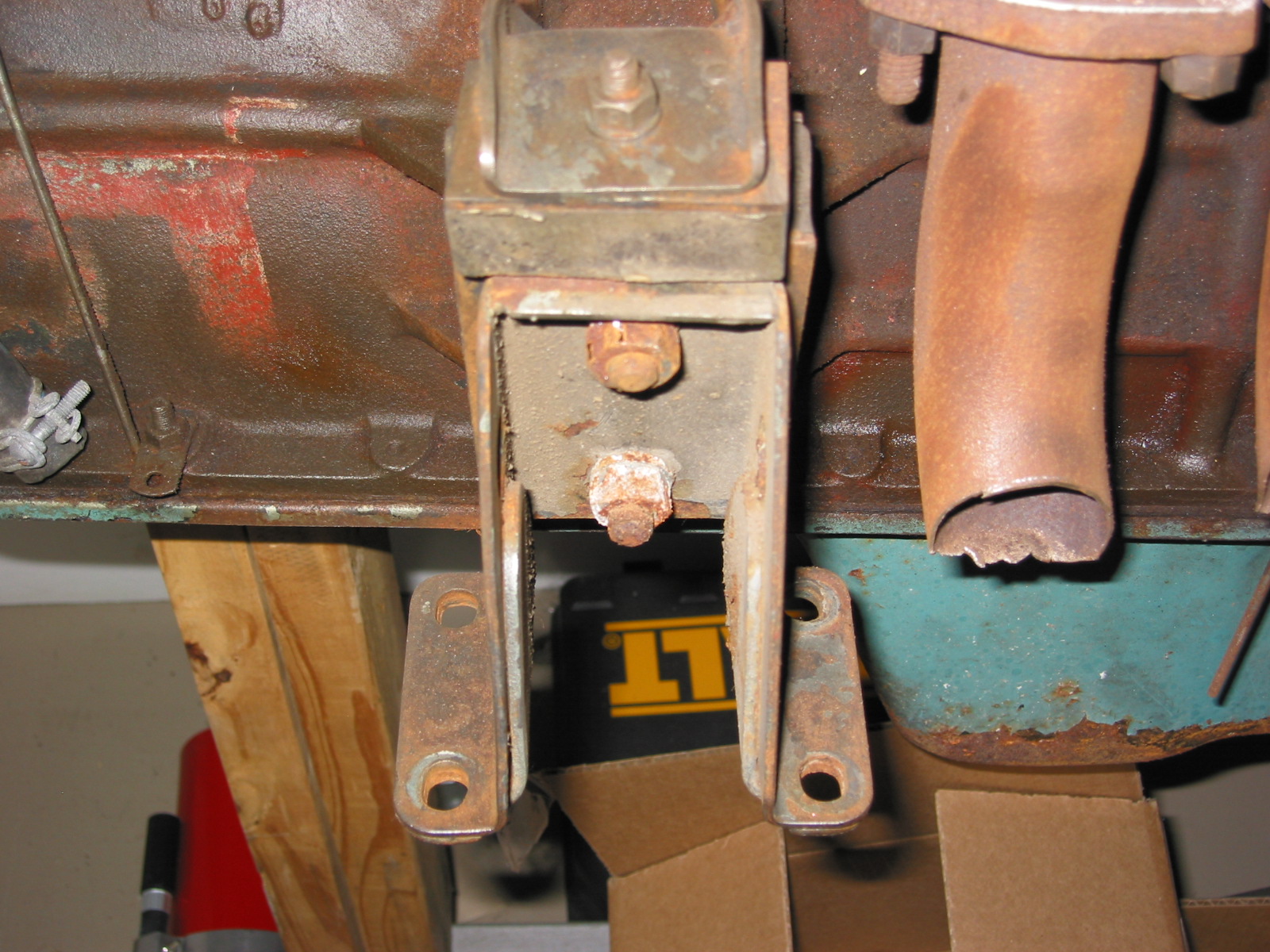
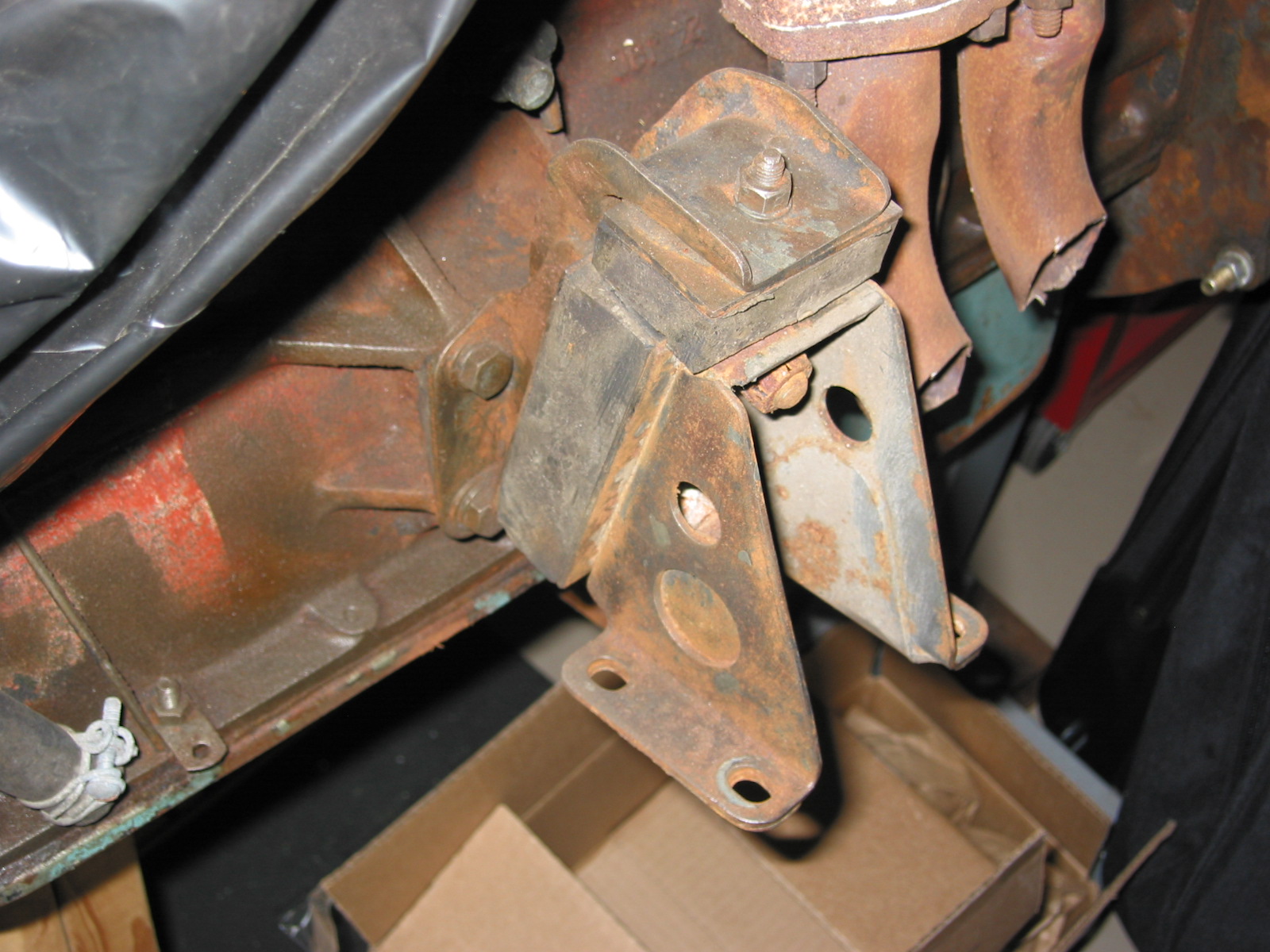
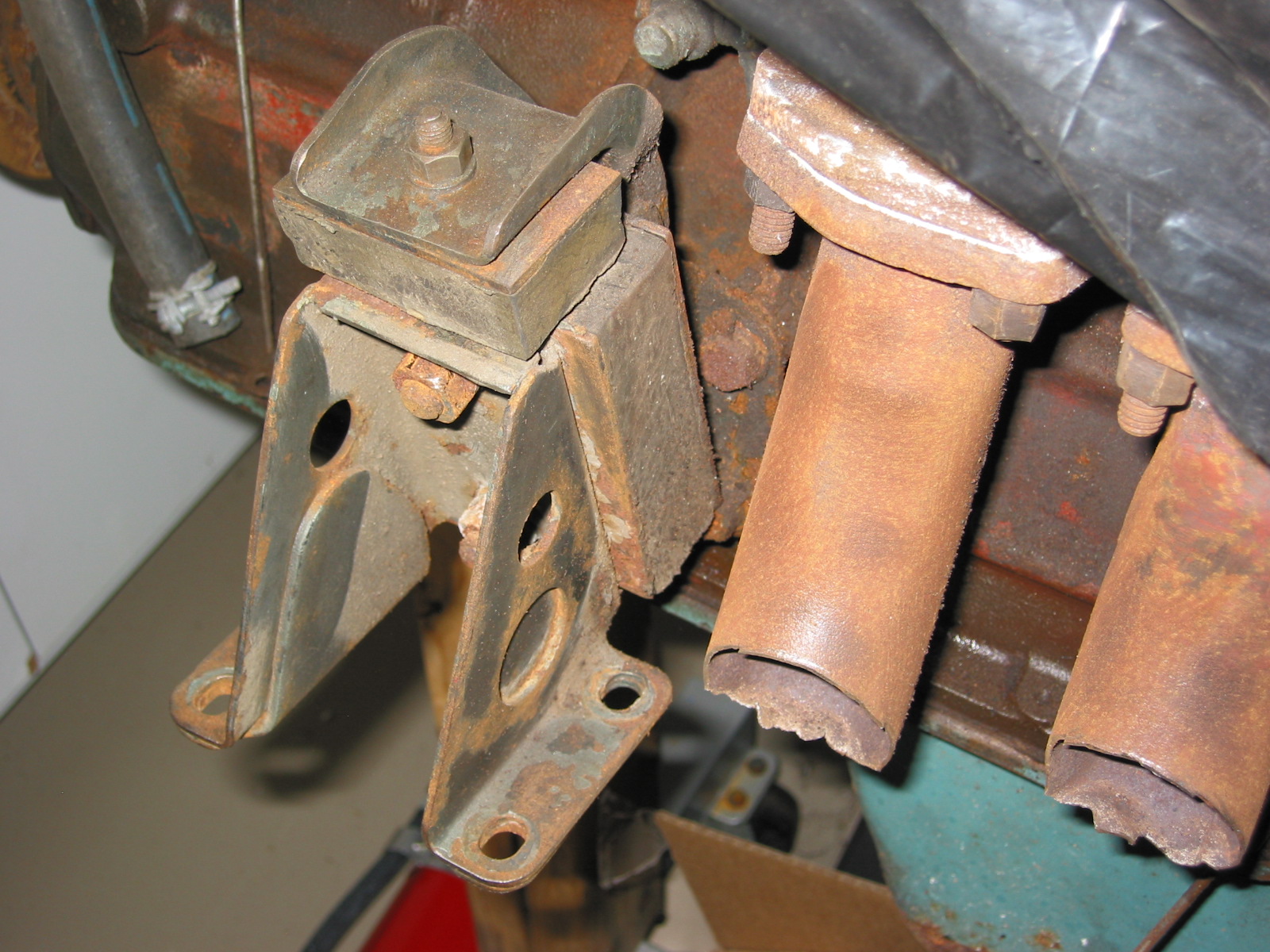
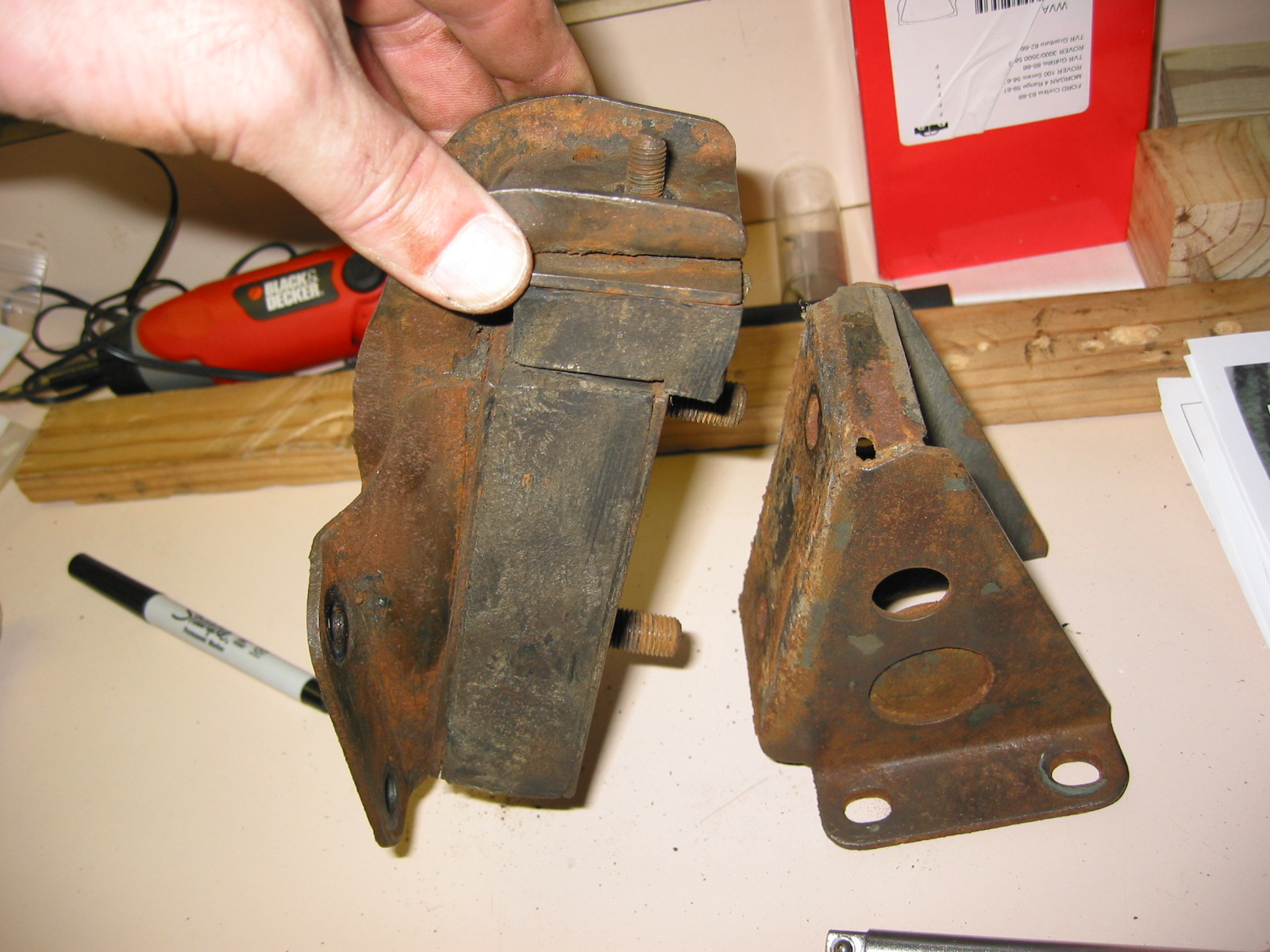
Motor Mounts – Removed the motor mounts from the motor to take to Jeremey’s for blasting and painting.

Motor Mount – Left 1

Motor Mount – Left 2

Motor Mount – Left 3

Motor Mount – Left 4

May 16, 2004

Front Suspension Again

Front Shocks – Installed right front lever shock. Left the rear bolts loose and fit the Putzke tube shock mounting bracket to the front two mounting holes. Inserted the two inch wood block spacer to set the height of the suspension. Loosened the shock absorber arm bolt and nut so that the shock will receive the trunnion.

Putzke shock adaptor – right front

suspension install – right

Control Arm Base Plate – Used 3/8” threaded rods to install coil spring with plate

coil spring install

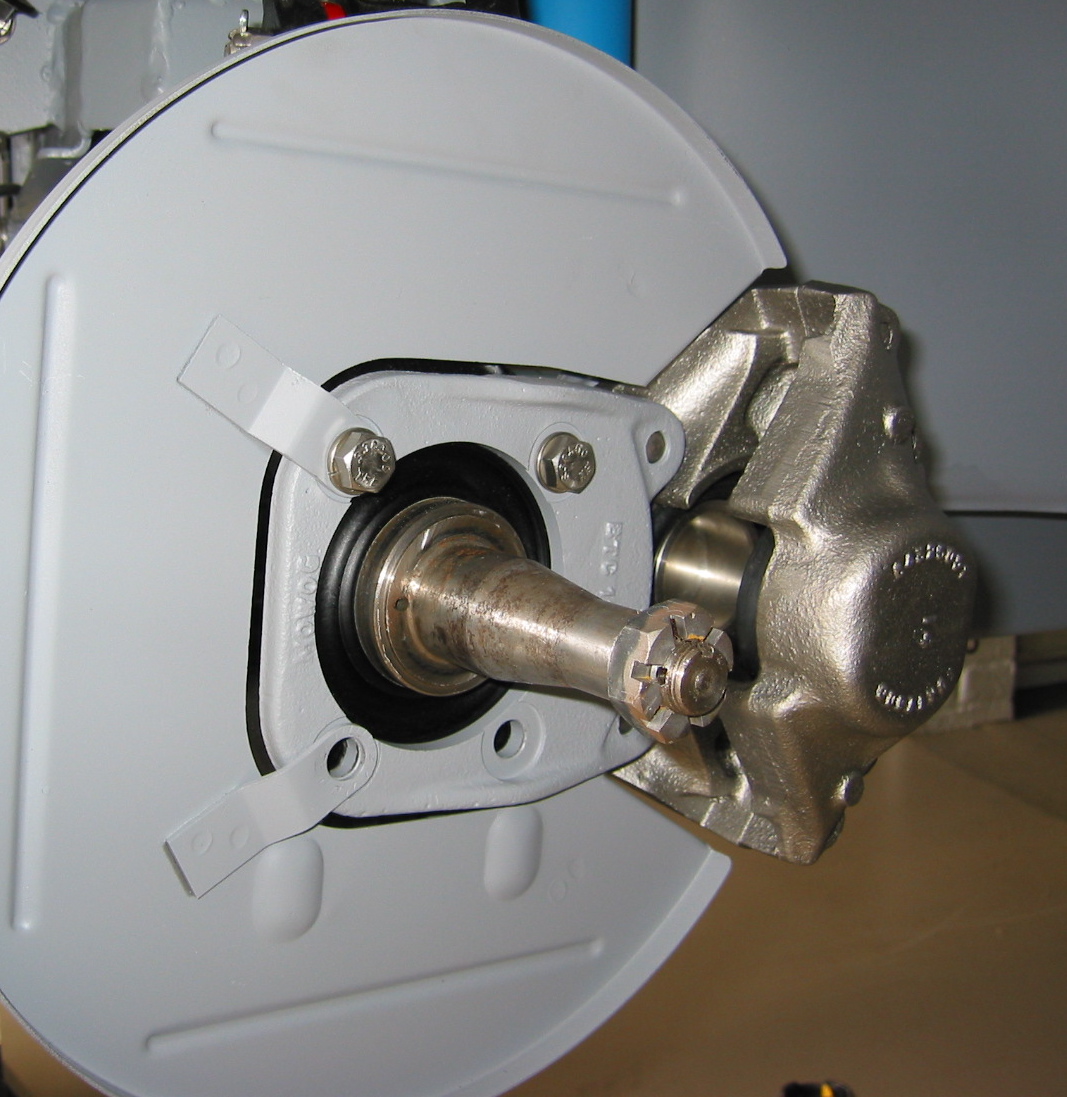
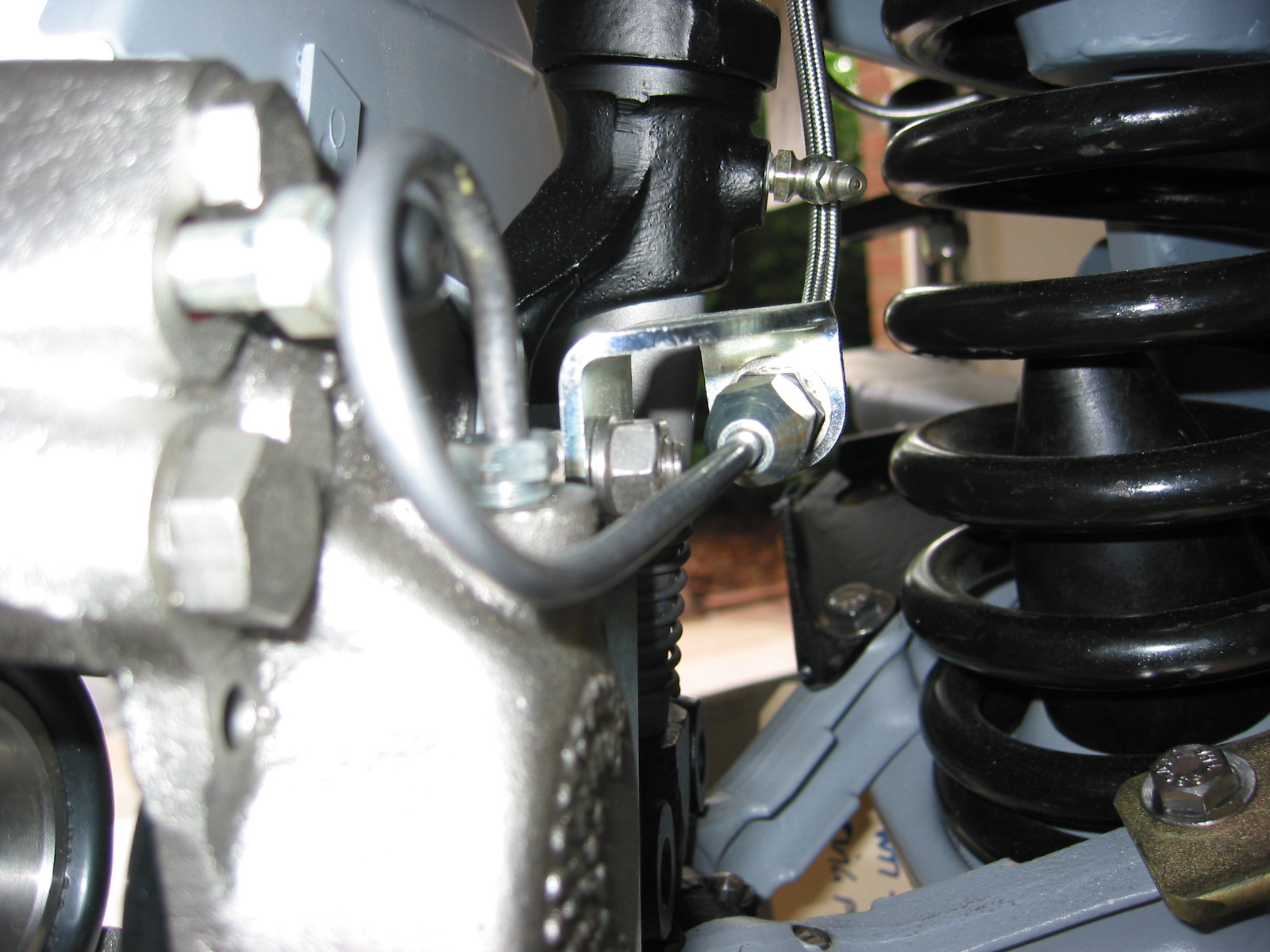
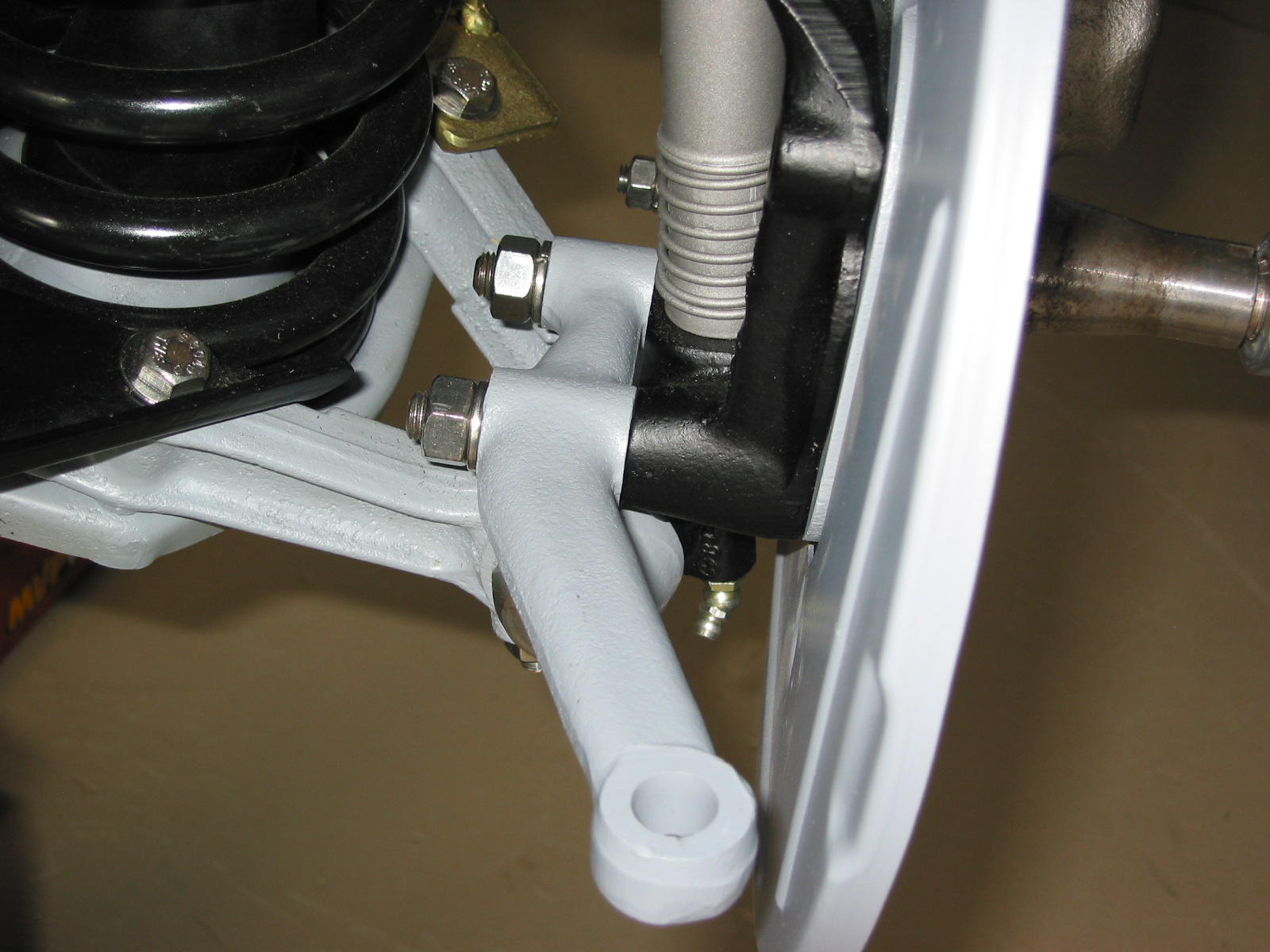
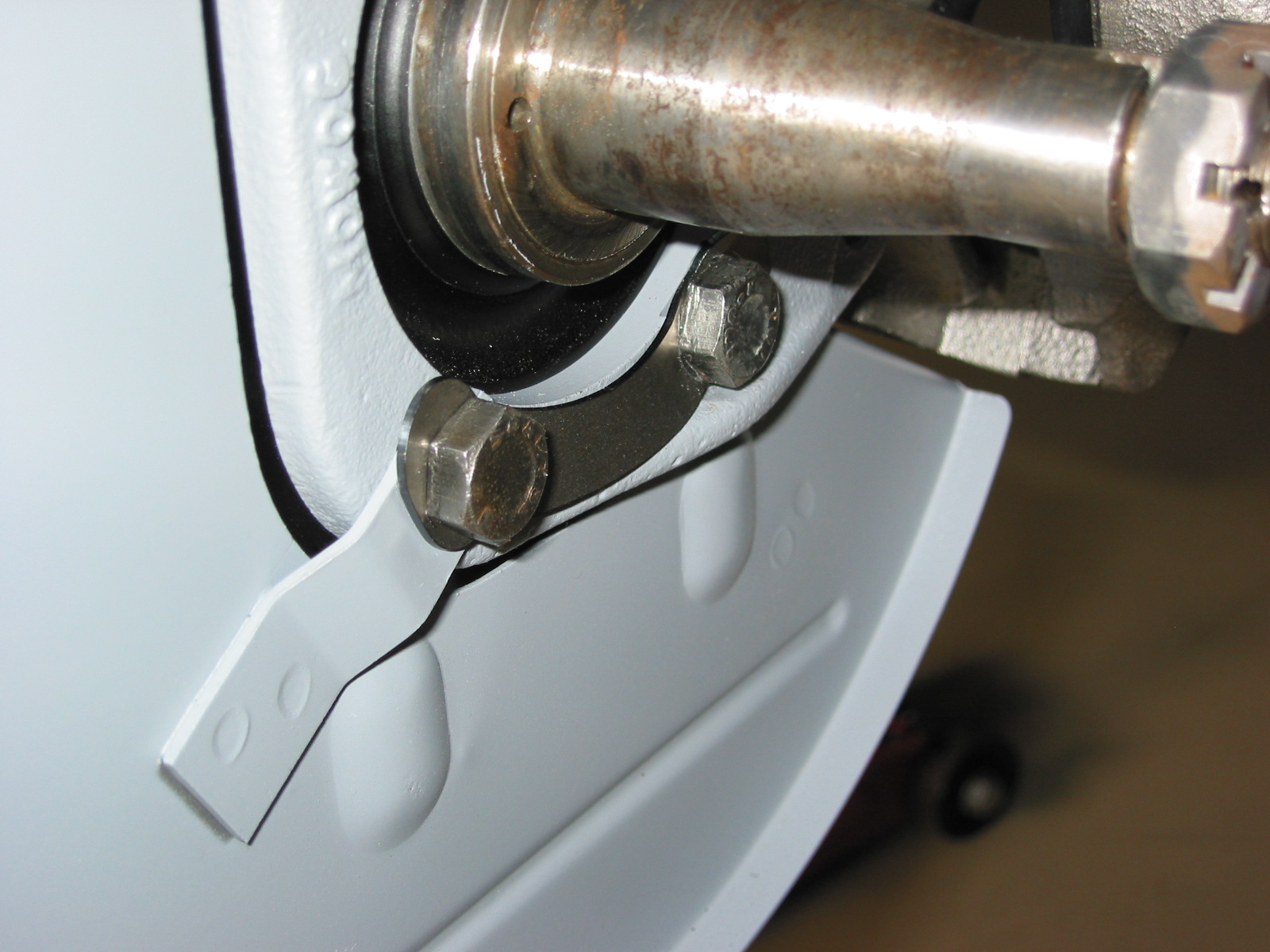
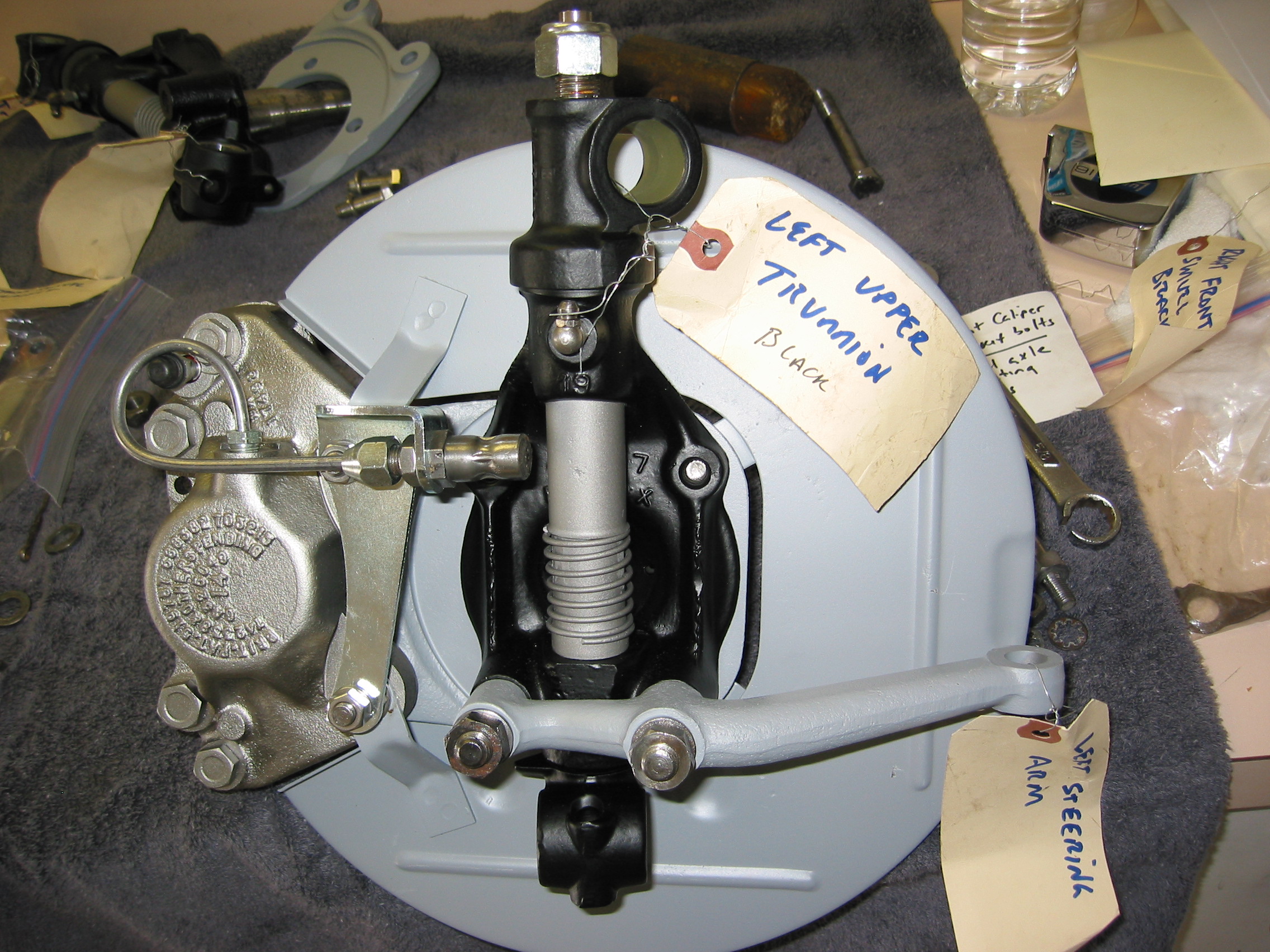
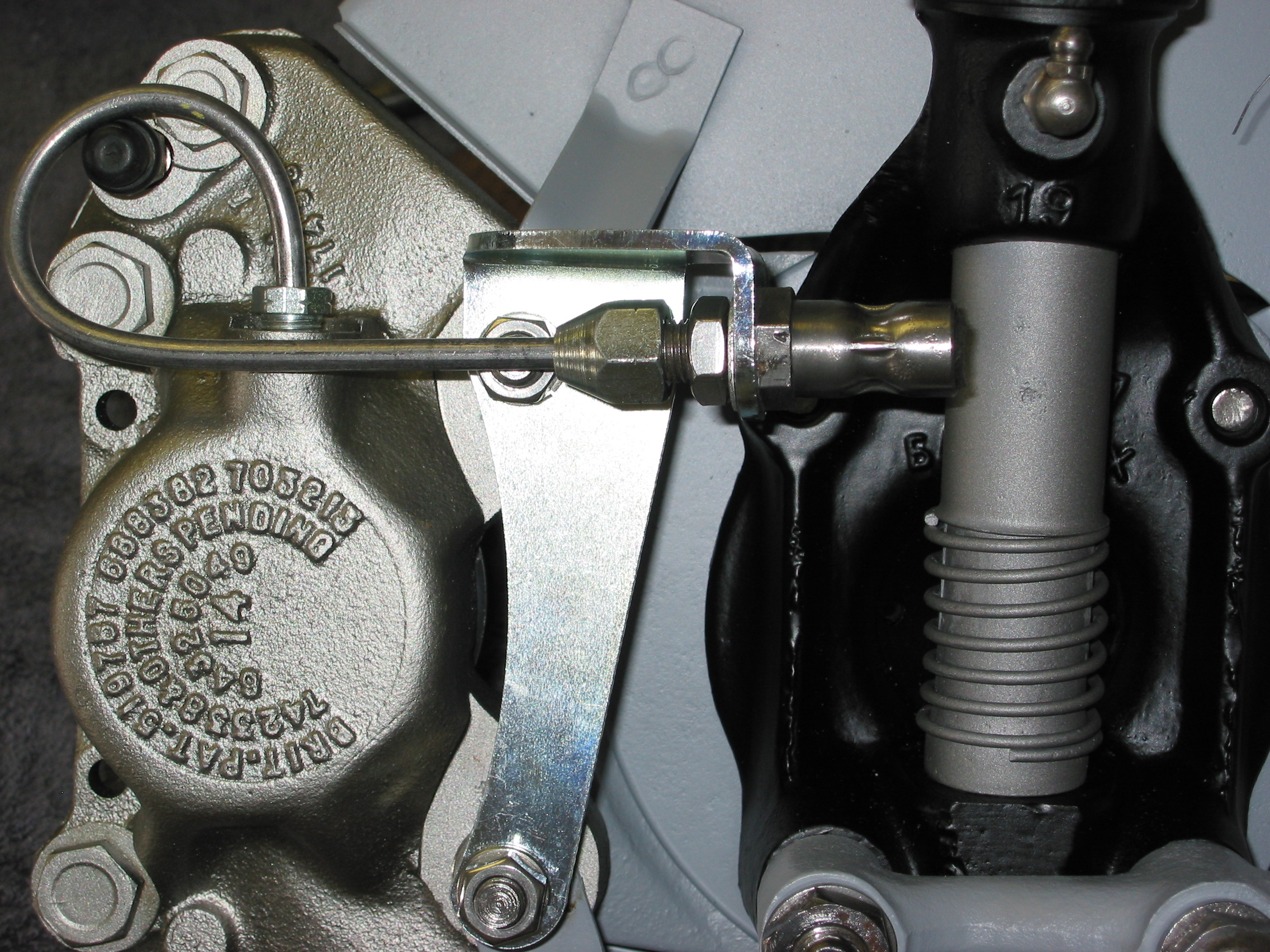
Disk Brake Dust Shield – Attached dust cover assembly to the front left spindle axle with two short bolts at top. I installed with the caliper attached but it will need to be removed before installing the rotor and hub. Attached new stainless steel brake hose from pipe to caliper bracket. Secured the left steering arm to the back of the swivel axle and used the tab washer to lock both bolts.

Dust shield – left

Brake hose connection left front

Steering arm – left installed

Tab washer on suspension

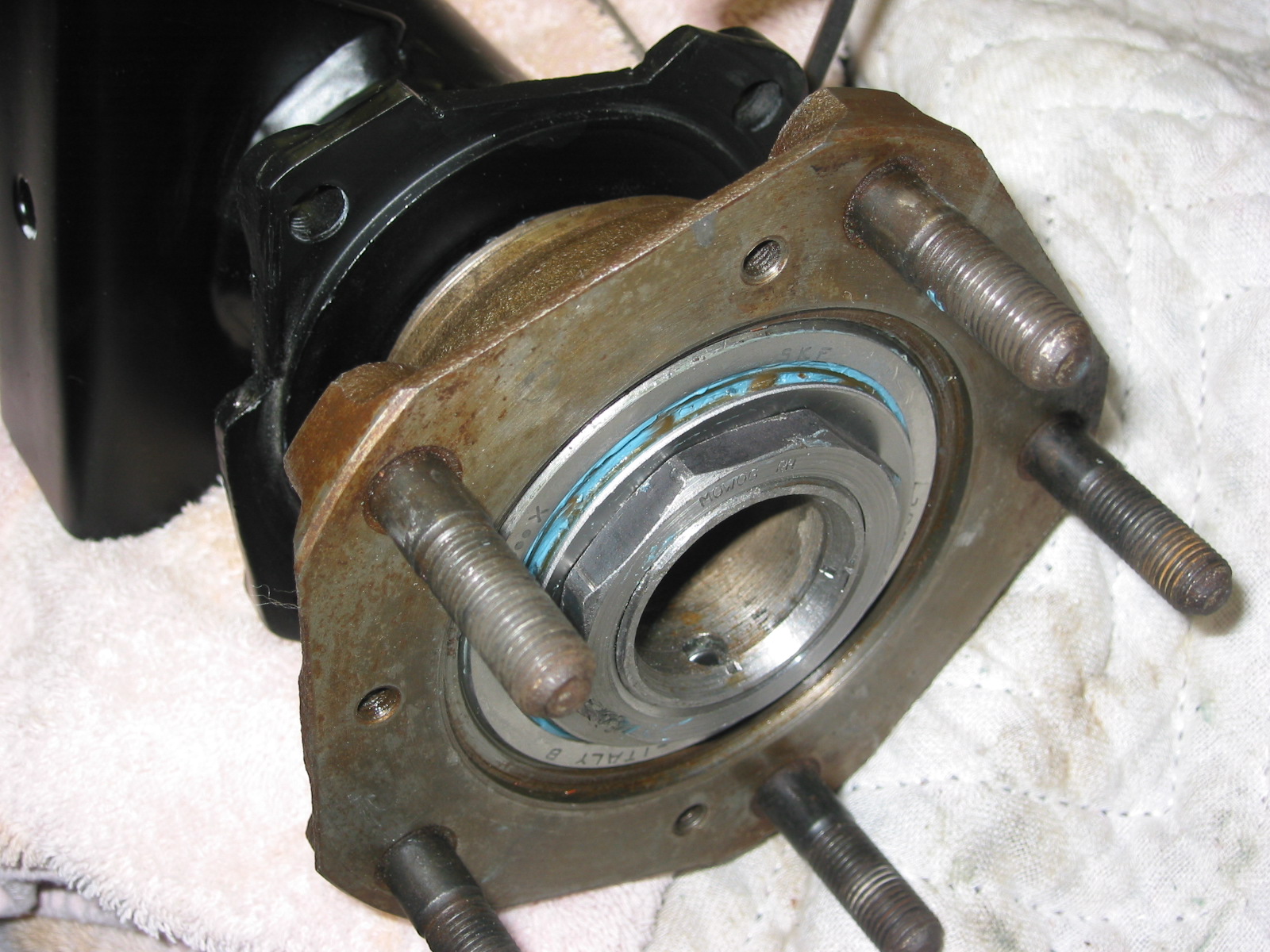
Front Brake Rotors and Hubs – Fastened rotor disk to the hub extension with 5 nylock nuts. Placed bearing races in the freezer so they would be easier to install in the front hub extensions. Then inserted inside bearing race with proper driver with application of a hammer!, being careful to keep the race/driver straight. Turned the hub over and did the same procedure with the outside bearing race.

Inside front bearing race install

Left front inside bearing – 126-000 GHB105

SET 6 LM67048 – LM67010

20031255

Left front outside bearing – 620-234 GHB182

07196

20030322

Left front bearing race- 620-231

07087

20030522

Right front inside bearing – 126-000 GHB105

SET 6 LM67048 – LM67010

20031255

Right front inside bearing – 620-234 GHB182

07087

20030522

Right front bearing race – 620-232

07196

20020422

Front Hub Bearings – I followed directions from Bruce at Healey Surgeons and put 90 weight oil on the inner bearing and offered it up to the spindle. The oil will provide protection from damage due to bearing running dry but at the same time, not give a false reading when trying to shim the bearings.

I then placed the spacer (cone) on the spindle followed by the hub extension. I then put an oil filled outer bearing on the axle followed by the tab washer and castle nut. The seal and shims were NOT added at this stage. The nut was tightened down to seat everything and then the works were disassembled. It can be difficult to get the outer bearing and the tab washer off – I used a magnet that worked quite well.

I then put the inner bearings, the spacer and selected shims on the axle. Starting with the thickest one .030, then .010, .050, .030, ( one of each ). I then put the hub extension on the axle followed by the outer bearing, tab washer and nut. I tightened to 40 lbs of torque and determined if one of the castle nut slots lined up with the hole in the axle for the split pin. Need to take care that the shims are all the way up on the shoulder of the spindle axle so that they do not get mangled when the nut is tightened. The final proper adjustment is correct when you can tighten on the nut and the wheel does not show any reduction in ease of turning with no play. 

If it drags when you tighten the castle nut, then you need to add shims. If it is to loose, you need to remove the shims, When it is correct, re-tighten to the correct specs. At this point, the hub should be turning freely, with no end float and no pre-load.

Once you are satisfied that you have the bearings set up correctly, then remove everything. Make sure you keep track of the shims! Now pack the wheel bearings with wheel bearing grease and install your front seal (don’t forget this step). You need to place the spacer in the hub extension and bearings in first, and then reassemble unit.

Place the split pin through the hole in the spindle axle, and then pull one tab of the pin forward and bend it back over the axle end. Then push the grease cap on to the axle ( do not fill it with grease). Reinstall brake caliper.

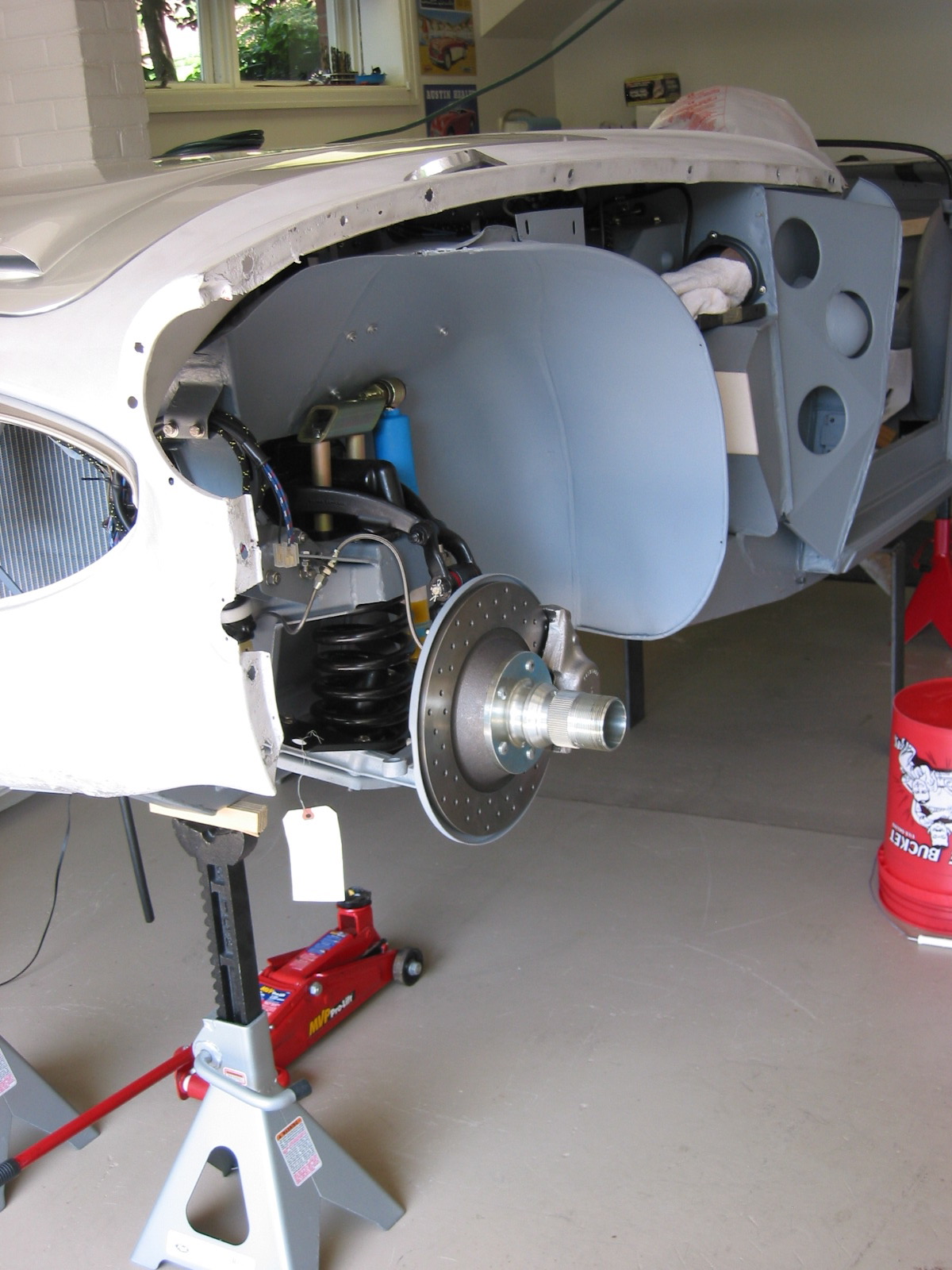
Front Suspension Installed

Front suspension installed 2


Chapter 17 – Cleaning and Trial Fitting

February 13 , 2004

Rear Disc Brake Conversion 

Decided to convert to disc brakes in the rear of the car and purchased the kit from Cape International. The kit consisted of two machined caliper mounting brackets, two Jaguar calipers including handbrake calipers, linkage for the handbrake, two disc rotors, templates for modifying the axle flanges and mounting hardware. The instructions provided assume the axle is on the car, but it appeared that the kit would be easier to install if the axle was removed from the car. I hope that the assembly can be inserted into the car from the right side once complete.  

First modified the axle flanges using a dremel tool. The templates were used as a guide to mark the axle for cutting. The axle was repainted following the cutting. The caliper mounting brackets (not handed) were mounted to the axle flange using four 3/8” UNF bolts and nylock nuts.

rear caliper bracket 1

rear hub removal

rear hub spacer,washer,nut

rear hub bearings

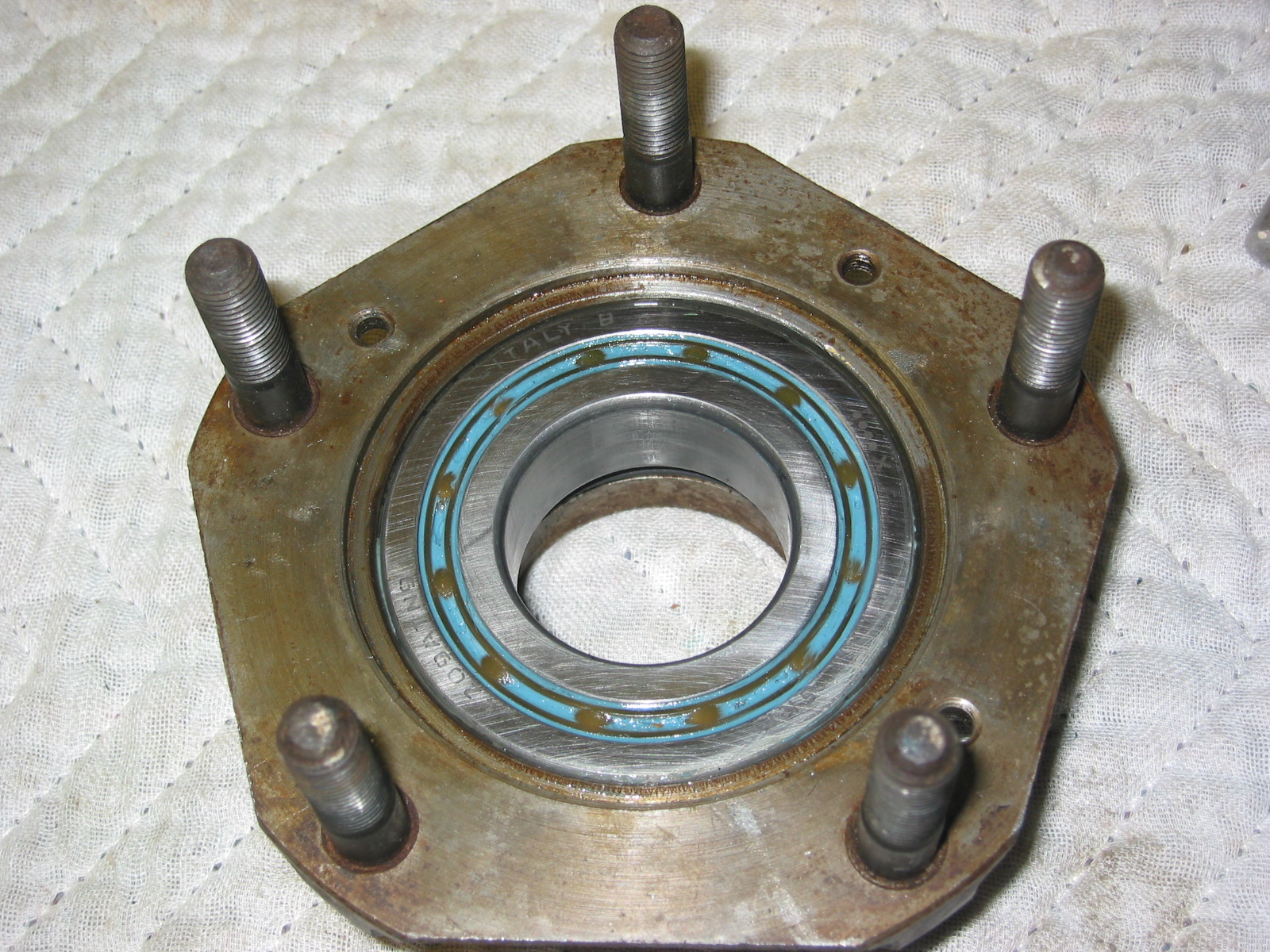
New rear bearings, and seals were pressed into the hubs. The bearing should protrude .001 to .004 from the surface of the hub after the outside washer and “O” ring seal are installed. Care must be taken to not drive the hub onto the axle too far or the bearing will be pushed too high. The tab washer and hub nut were then installed and tightened. The tab washer will not be bent down over the nut until absolute final assembly. The paper gasket was not affixed at this time since the half shafts will need to be pulled later for the installation of the differential. The half shafts were inserted and fastened to the hubs with one flat head tapered screw with a pozidrive head.

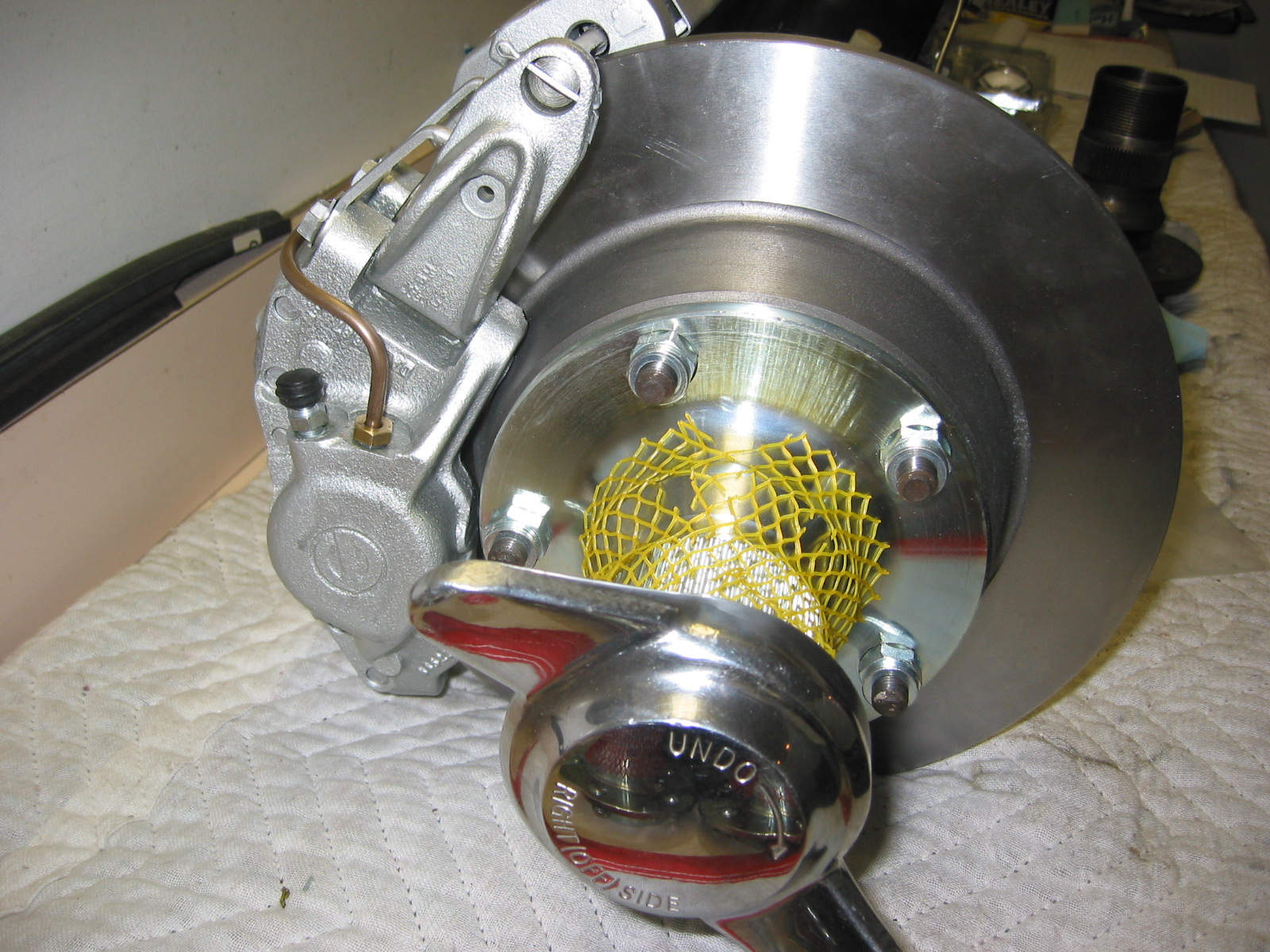
The new disc rotors were then attached with new hub extensions for the wire wheels. Care should be taken to put the proper hub extension on each side. Ten new conical lug nuts were provided in the kit. The calipers were then slotted over the disc rotors. 

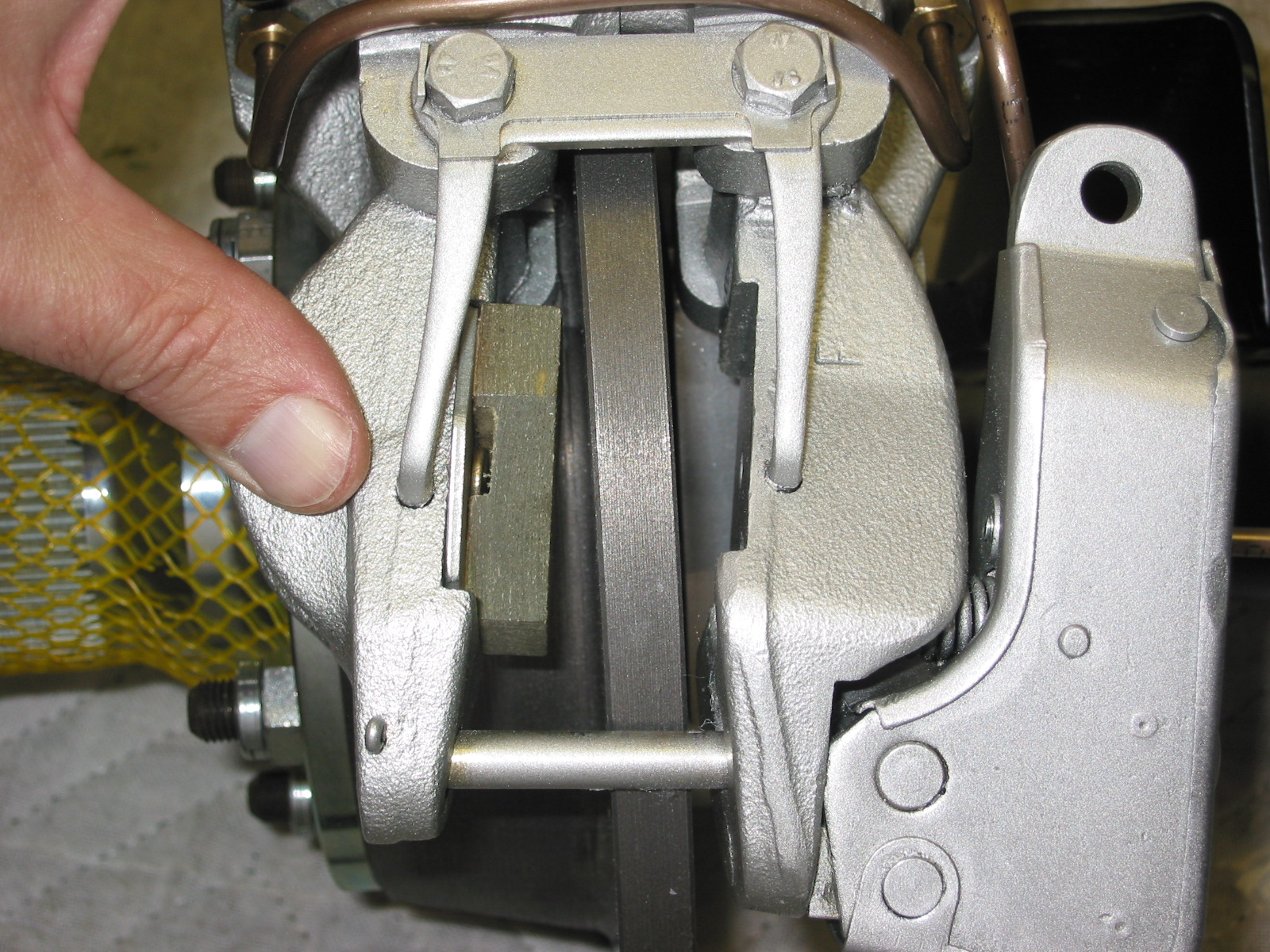
The first flaw in the Cape International kit was discovered at this point. The inside of the caliper rubbed against the rotor preventing free turning of the disc. A grinder was used to remove some material so prevent rubbing. It was then discovered that the outside of the disc also contacted the adjusting screw on handbrake caliper. The grinder was called to action again. Once these modifications were made, the caliper slotted over the caliper and mounted easily, aligning precisely over the mounting holes on the provided mounting brackets. Two 7/16”  UNF bolts were used for each caliper mounting. The bolt heads are drilled so that they may be “wired” to prevent loosening.

The calipers were painted Eastwood Silver wheel spray with a clear coat. The caliper units had a bronze anodized finish as delivered.

The second flaw in the kit was the lack of inclusion of the short brake lined used to connect the two sides of the same caliper. An email to Steve Norton resulted in the pipes being shipped right away. Once received the pipes were bent and installed without difficulty. The two brake pipes running along the axle were rebent to work with the new calipers.

rear caliper brake line

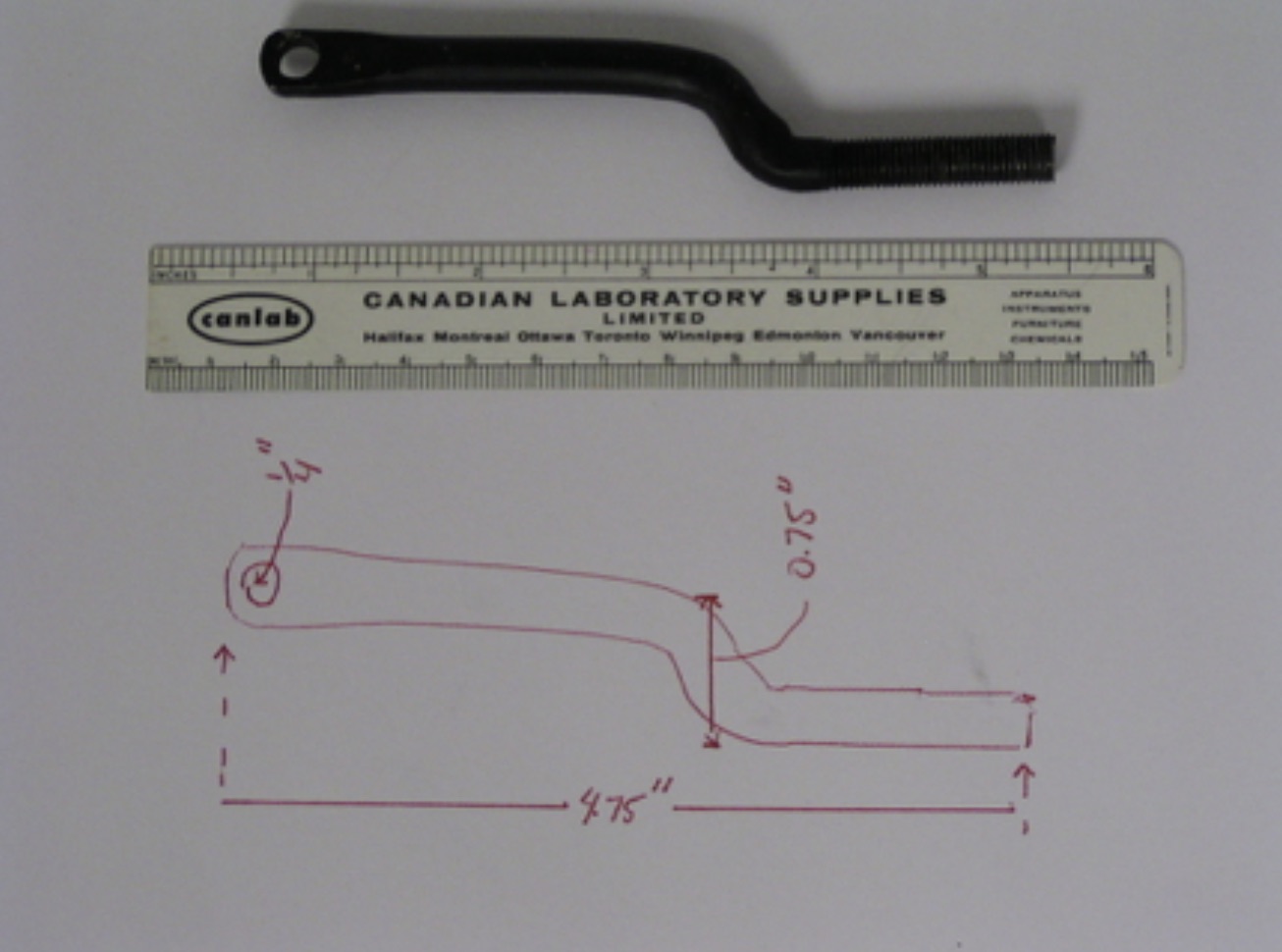
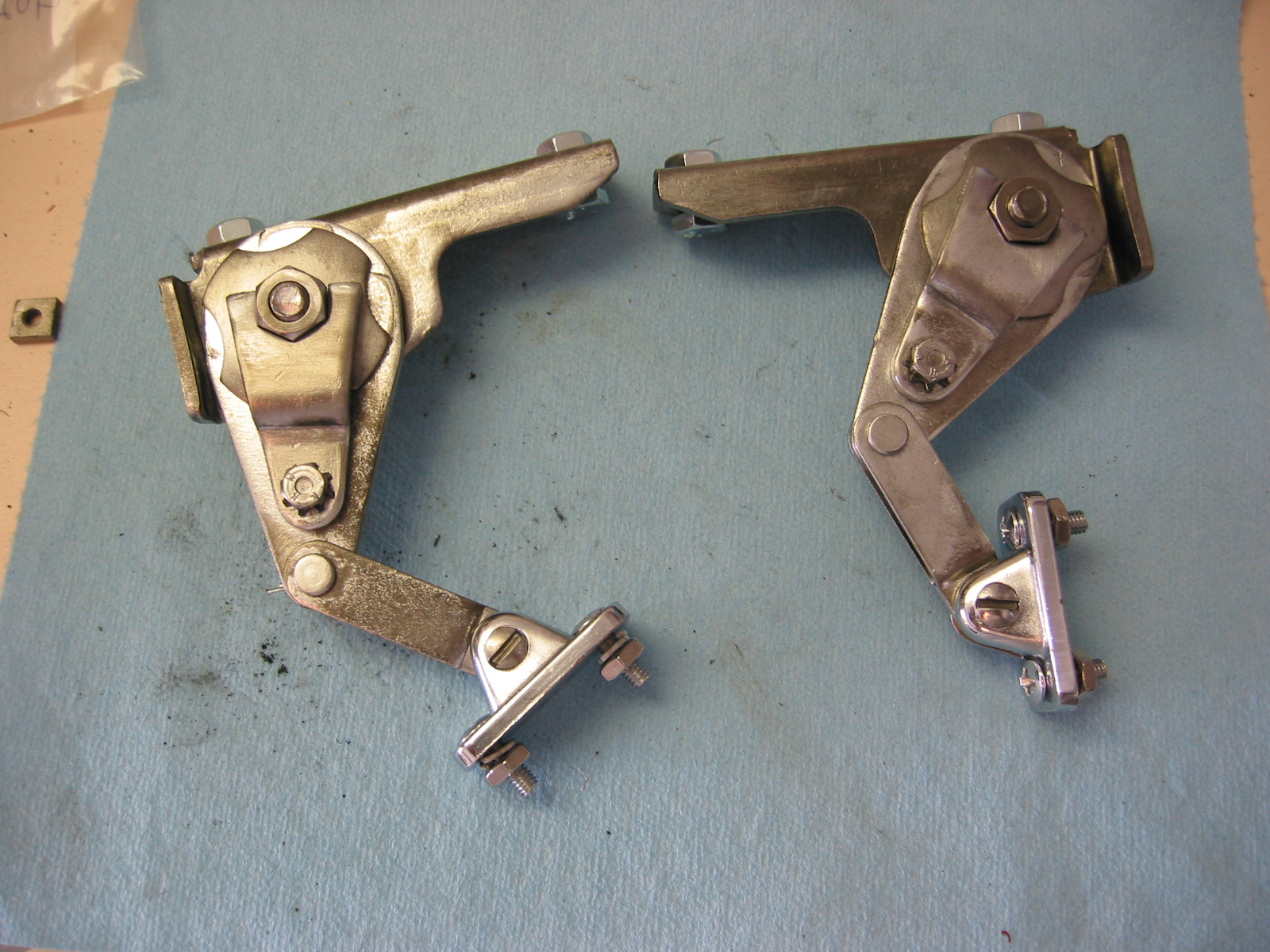
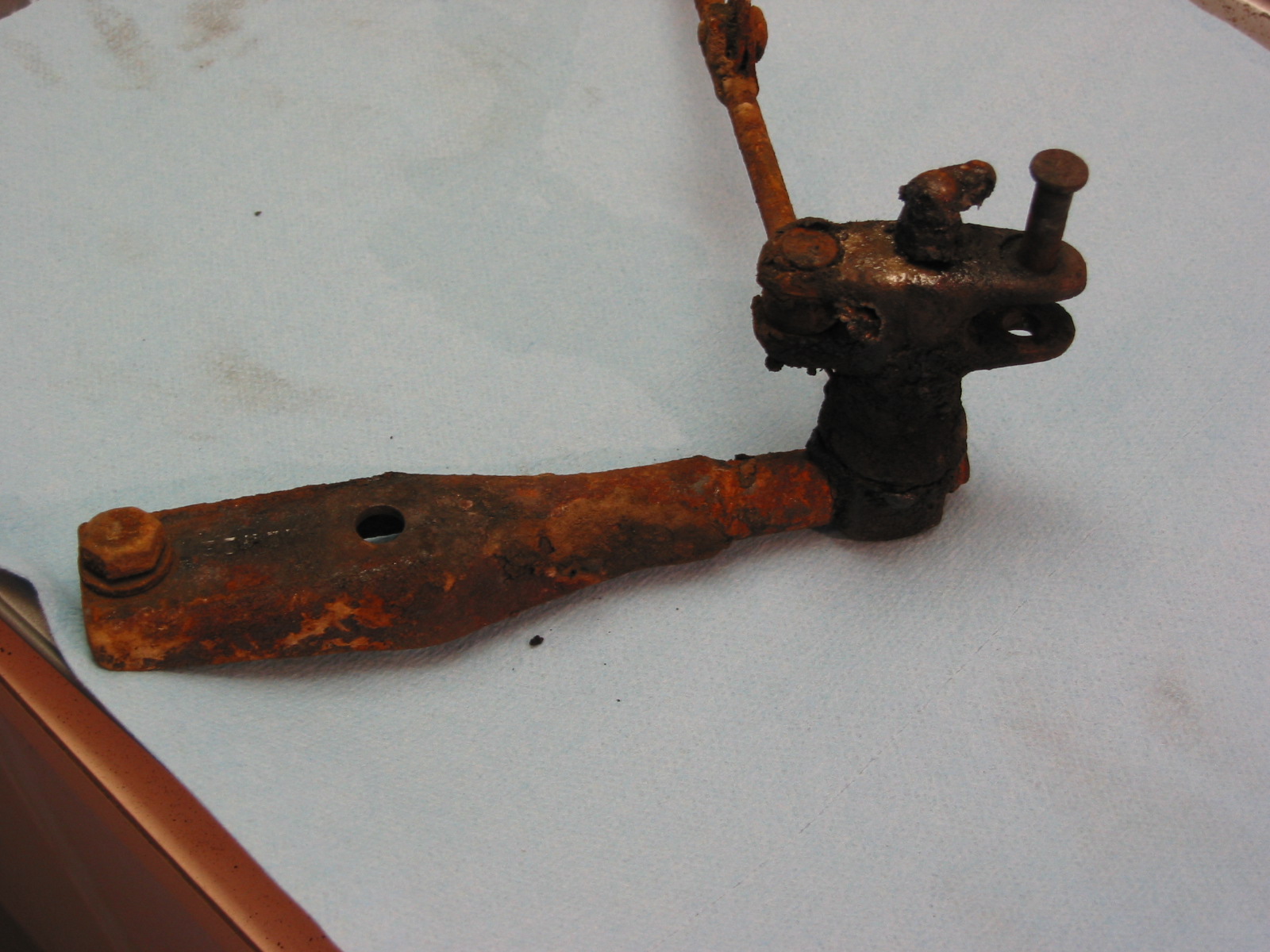
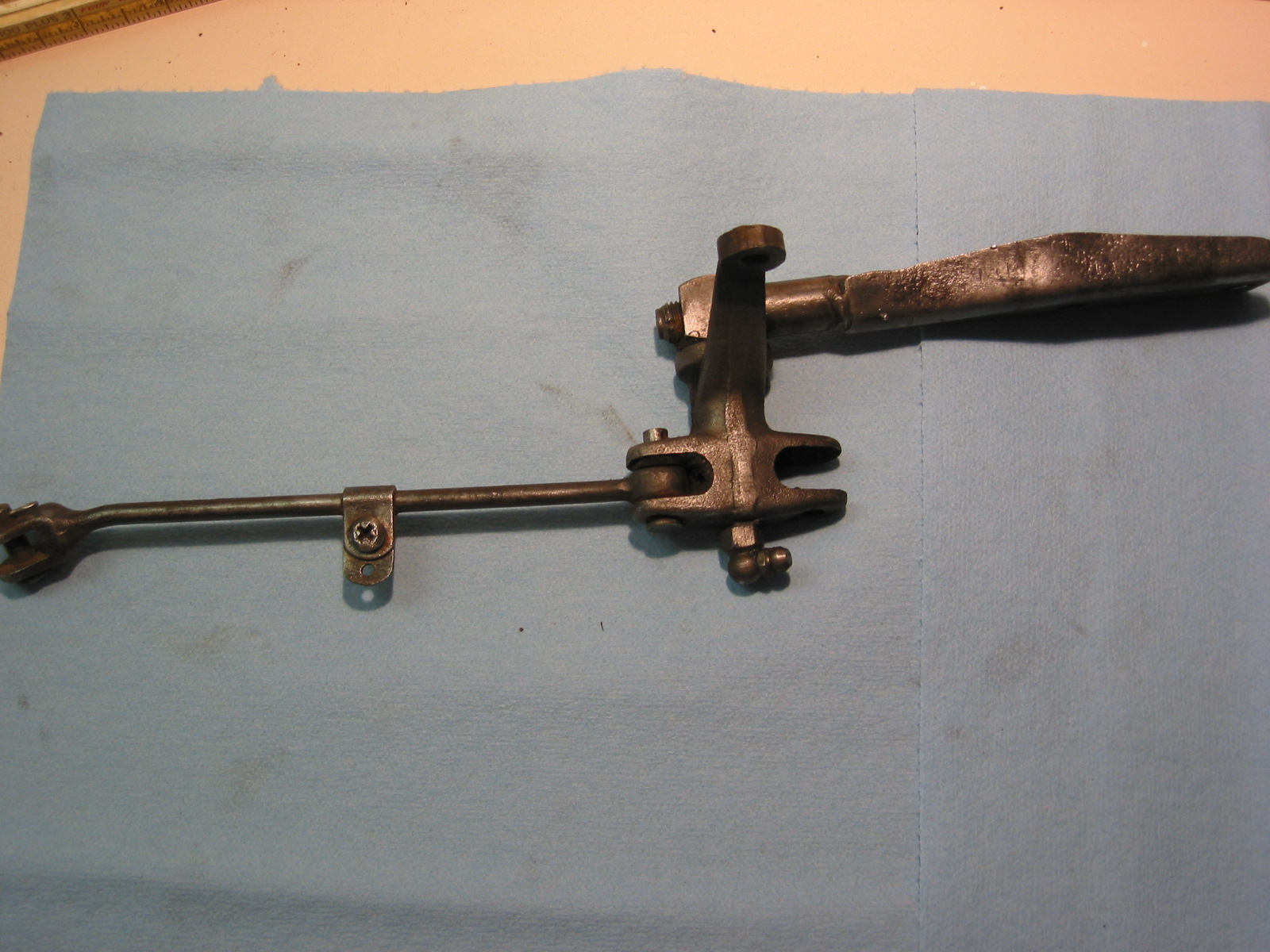
The third flaw was the discovery that the short rod provided for the link between the handbrake caliper on the right side of the car and the rotating handbrake lever did not come close to fitting. This is when I discovered quite by accident a web site created by Ed Driver in Canada. His web site contained a detailed explanation with photos of his installation of the Cape International disc conversion. He had run into the same difficulties and had fabricated a new short rod after receiving little satisfaction from Cape. He graciously sent me a photo and scale drawing of his new rod to use as a template for my application. Lifesaver!!

handbrake link rods 1

Disc Brake Custom Handbrake Connecting Rod

rear brake hub assembly

Handbrake caliper pad 4

March 24 , 2004

Return to Front Suspension Assembly

Shock Rebound – Installed the front shock rebound bushing on the shock tower.

Front Shock Rebound buffer

Caliper Brake Lines – Installed new stainless steel brake lines to the front calipers ordered from Cape International.

Stainless Brake hoses

Fresh Air Intake Clip – Installed the clip for the air hose to the front wheel arch.

Air hose wheelwell clip

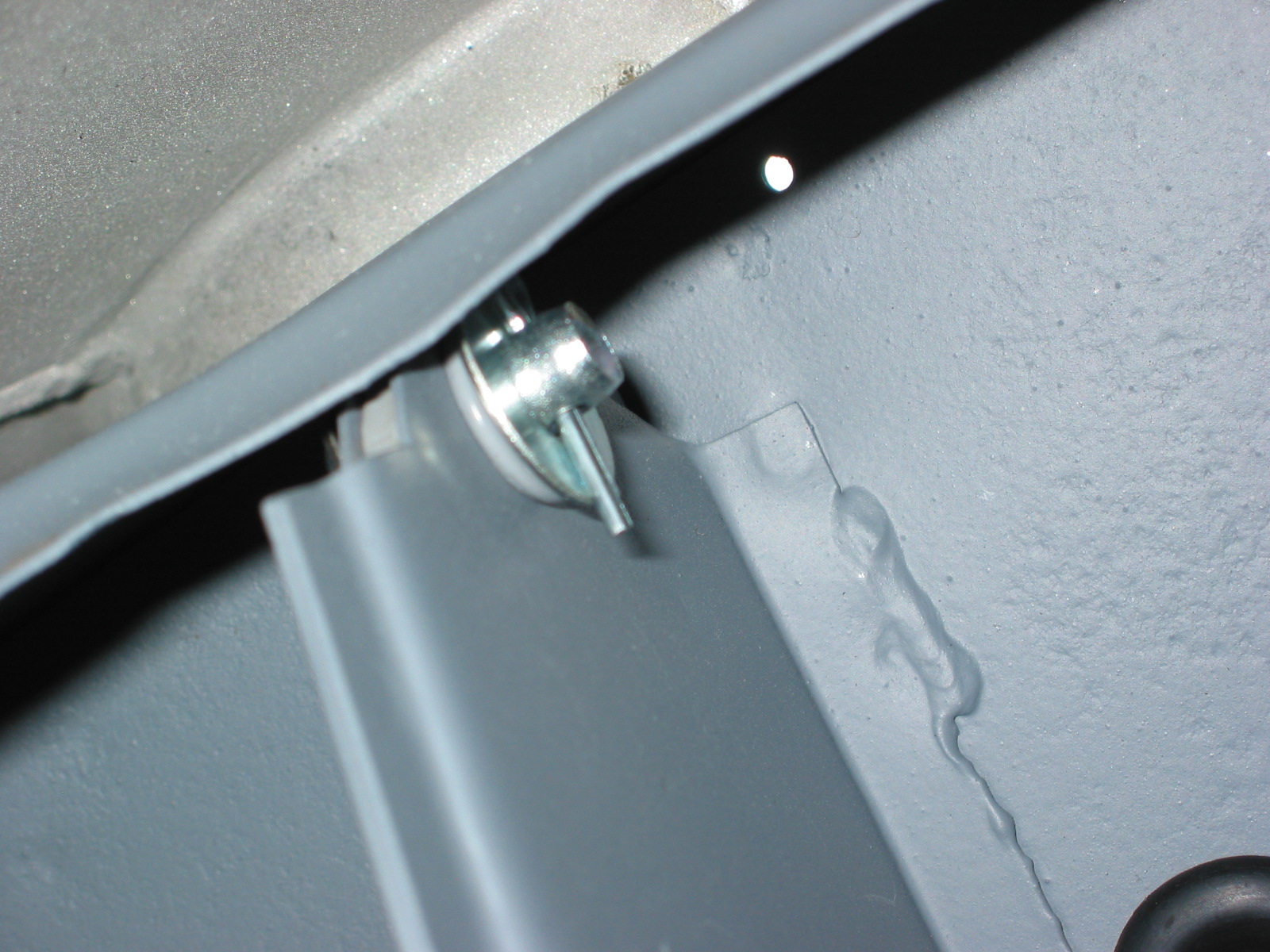
Fuel Tank Straps – Installed the two fuel tanks strap brackets to the rear boot panel. Each bracket has a backing plate on the other side of the boot panel. Note that the bracket curve Is on the top of the bracket.

Fuel tank strap bracket 4

Fuel tank strap bracket 3

Fuel tank strap bracket 2

March 24 , 2004

Cooling 

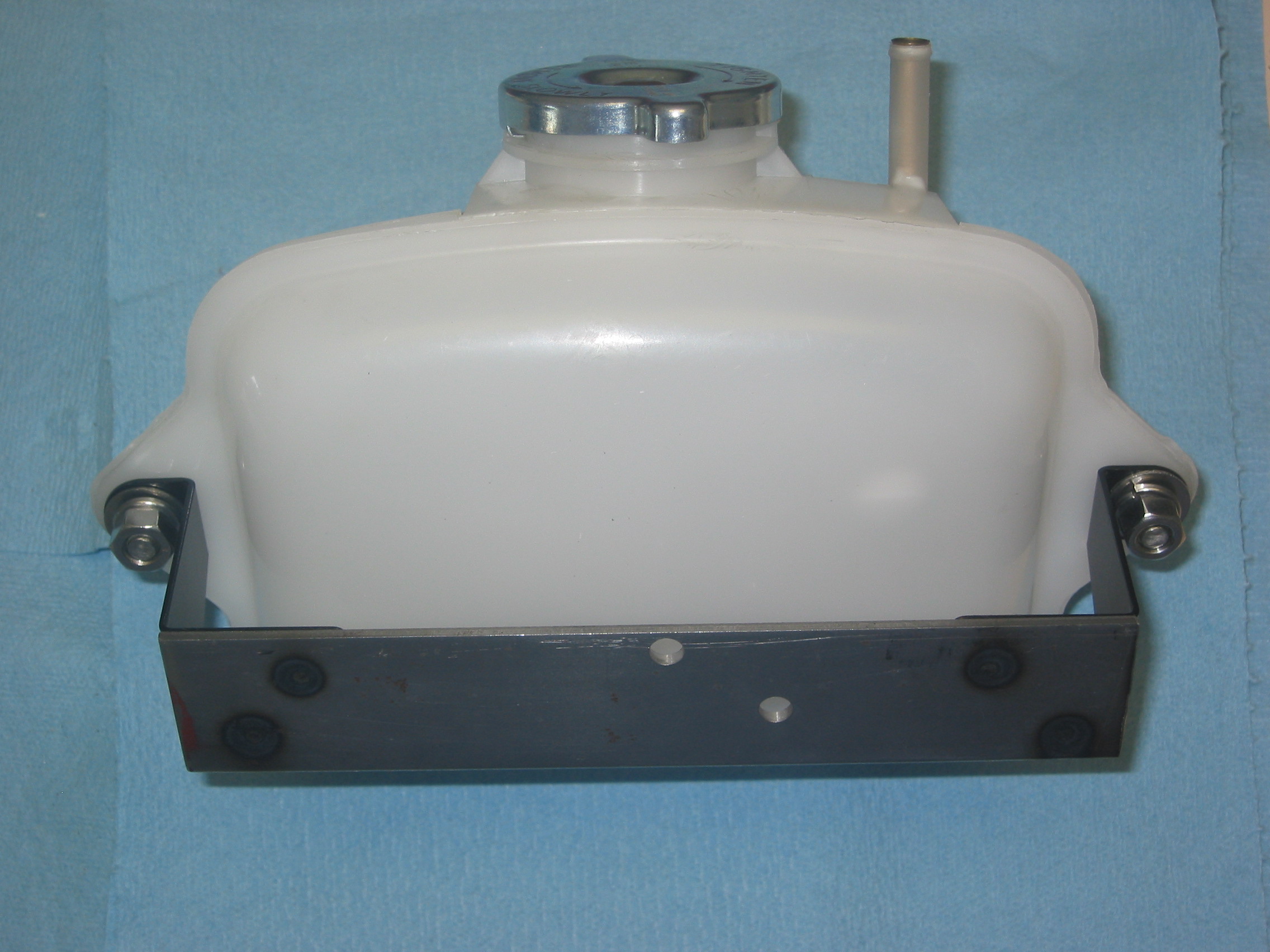
Cooling Recovery Tank – Began the installation of the radiator expansion tank from Cape International. However, I decided to wait to determine the final location until after the motor is installed. I don’t want to inhibit access to distributor or oil filter.

Coolant Recovery Tank with custom Bracket

Brakes 

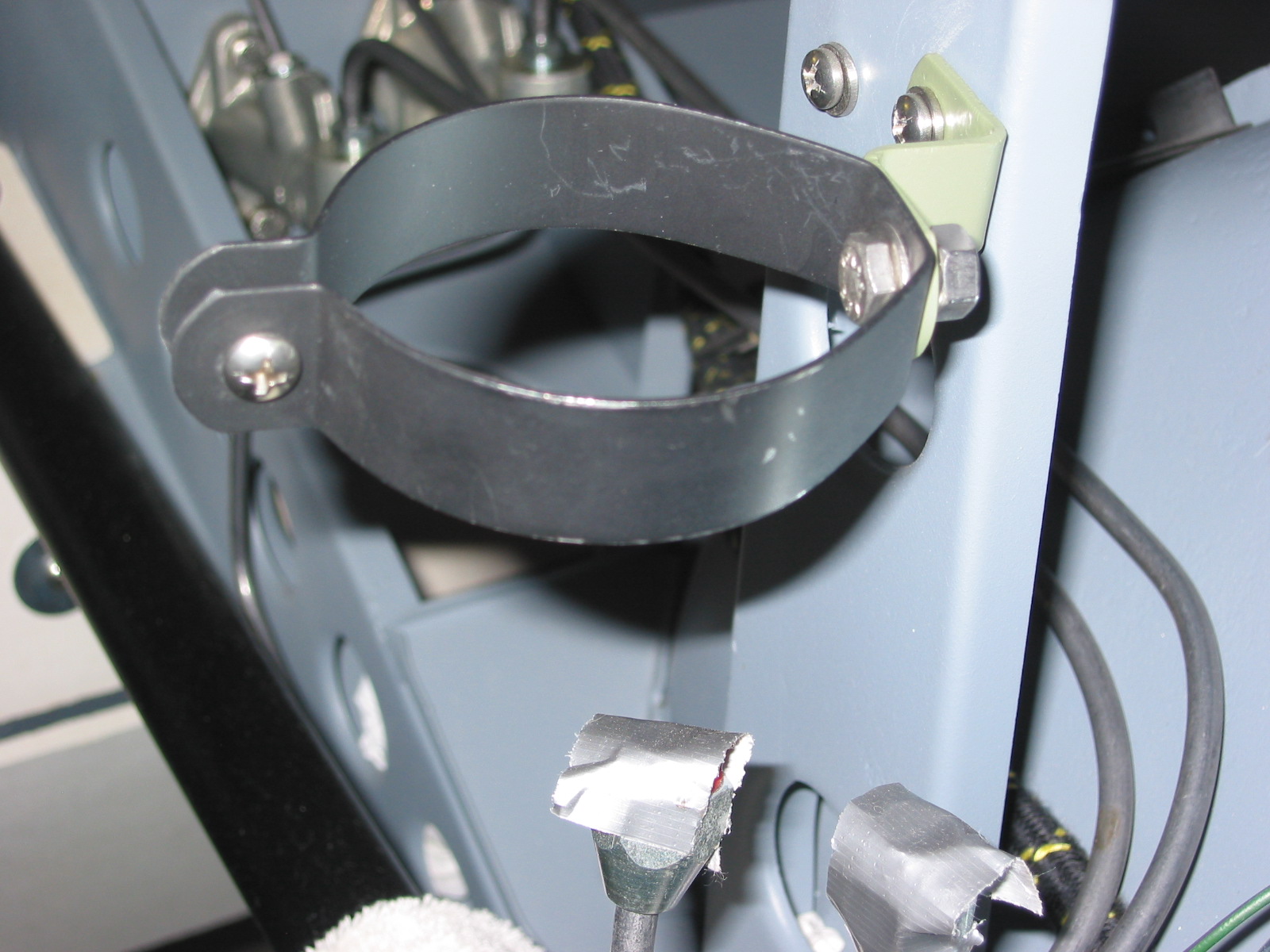
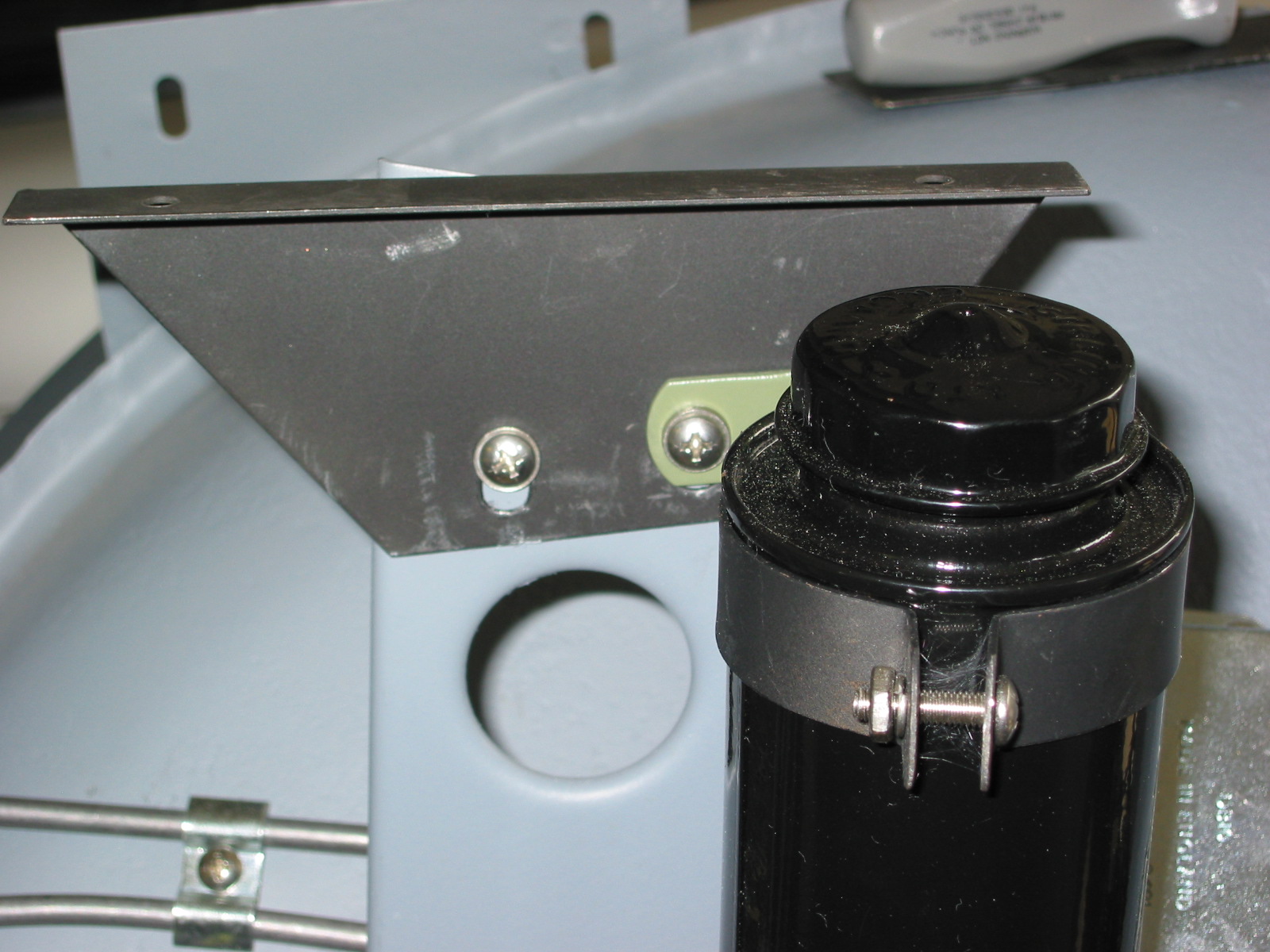
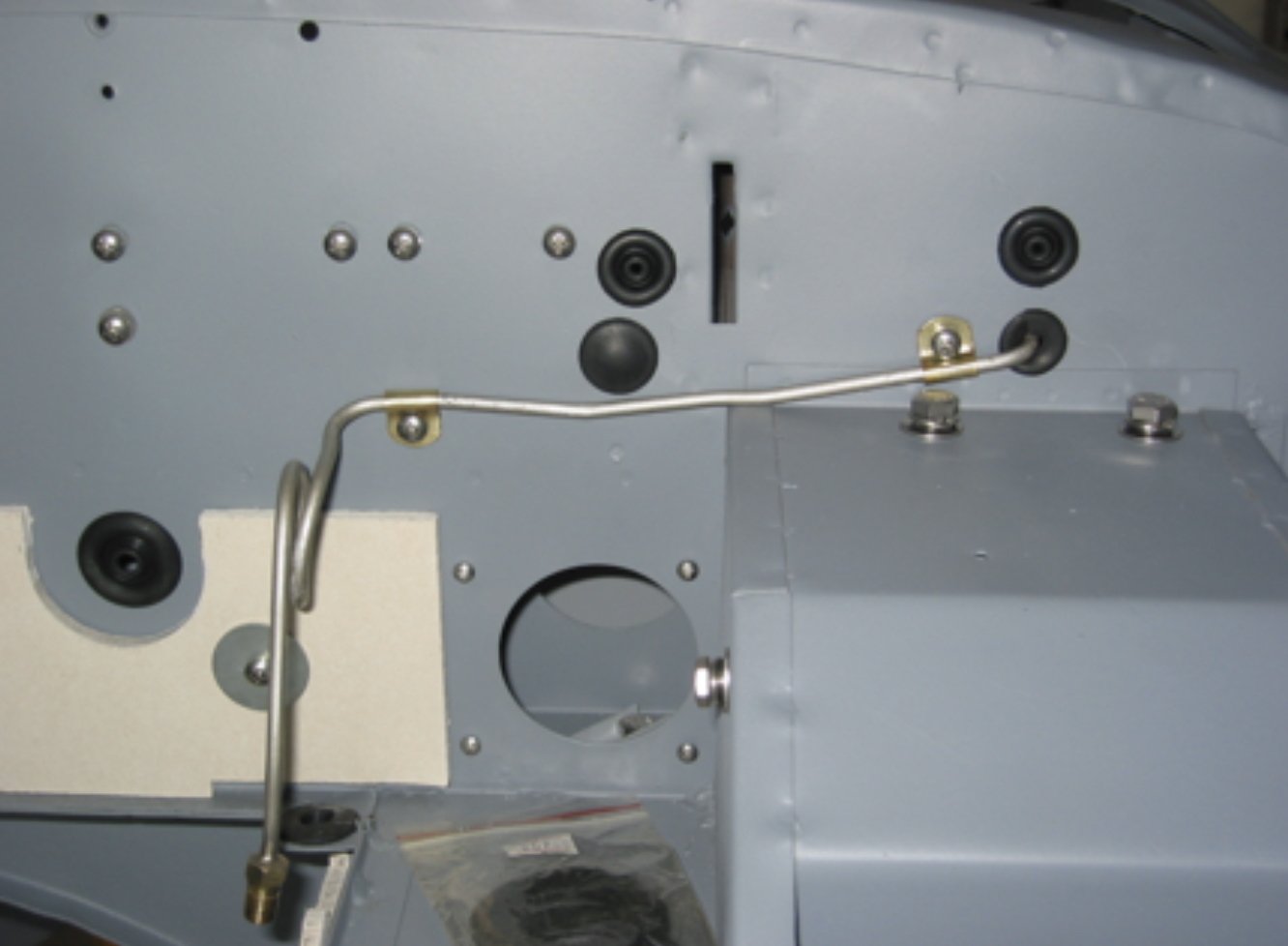
Brake Fluid Reservoir – Installed new brake fluid reservoir and will need to put thread sealer on fittings for final assembly.

Brake reservoir clip 2

Brake Reservoir Mounted

April 17 , 2004

Handbrake Restoration 

I decided to restore the original handbrake rather than purchasing a new one. This will require rechroming several pieces. Removed small split pin securing the rod to the lever. Then removed the small split pin and washer from the lever holding the pawl.

Handbrake Assembly 1

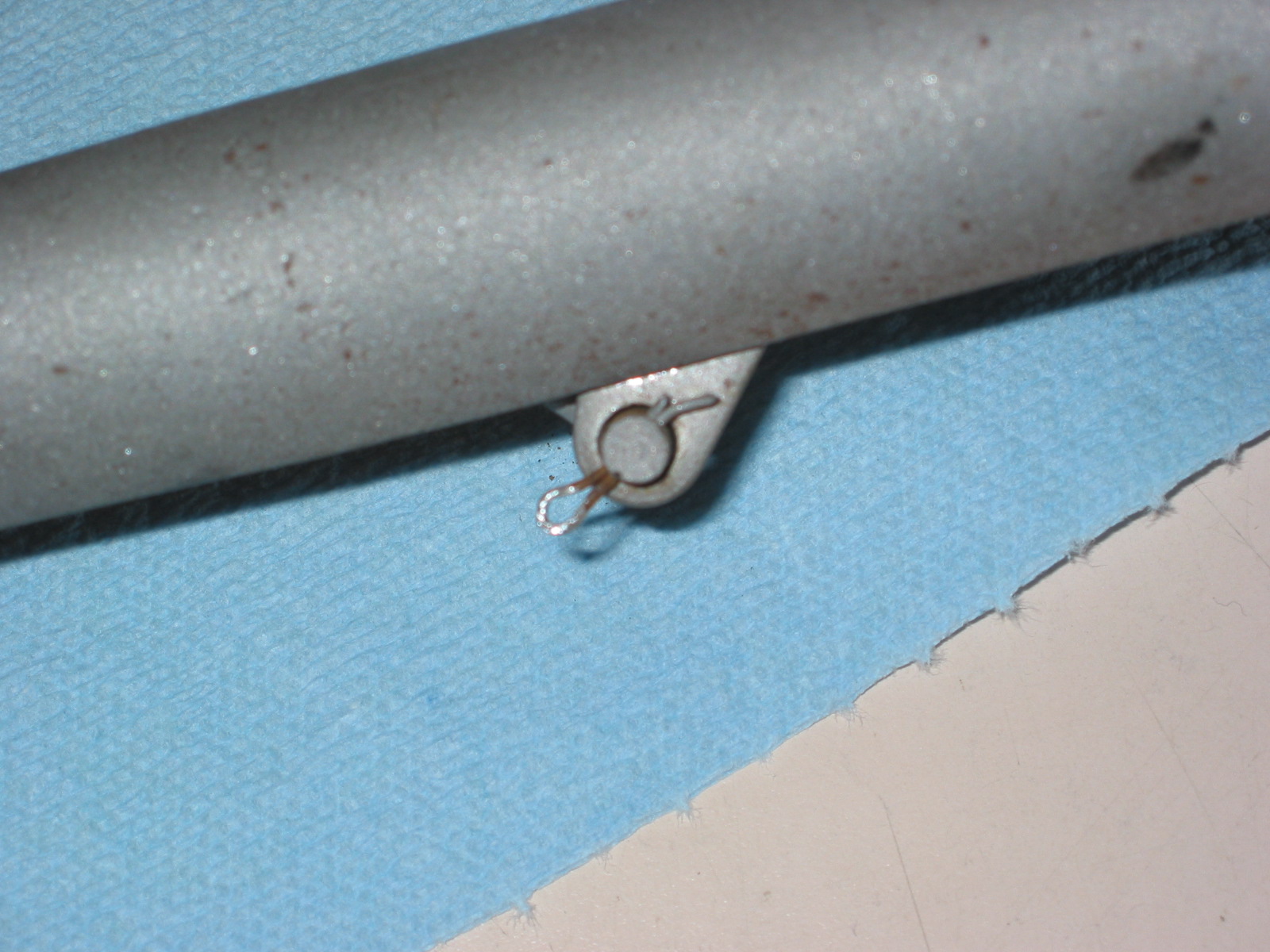
Handbrake Pawl split pin

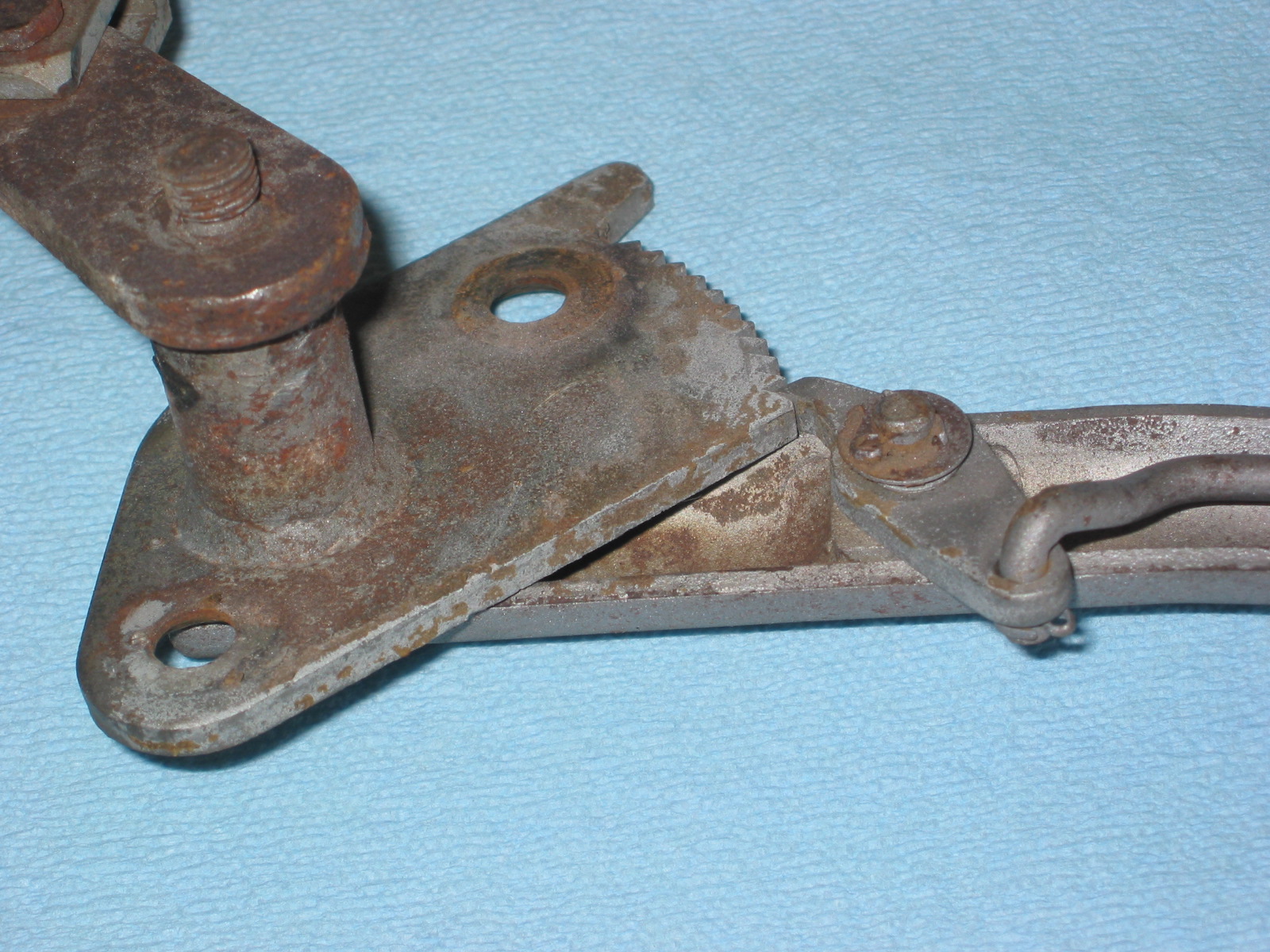
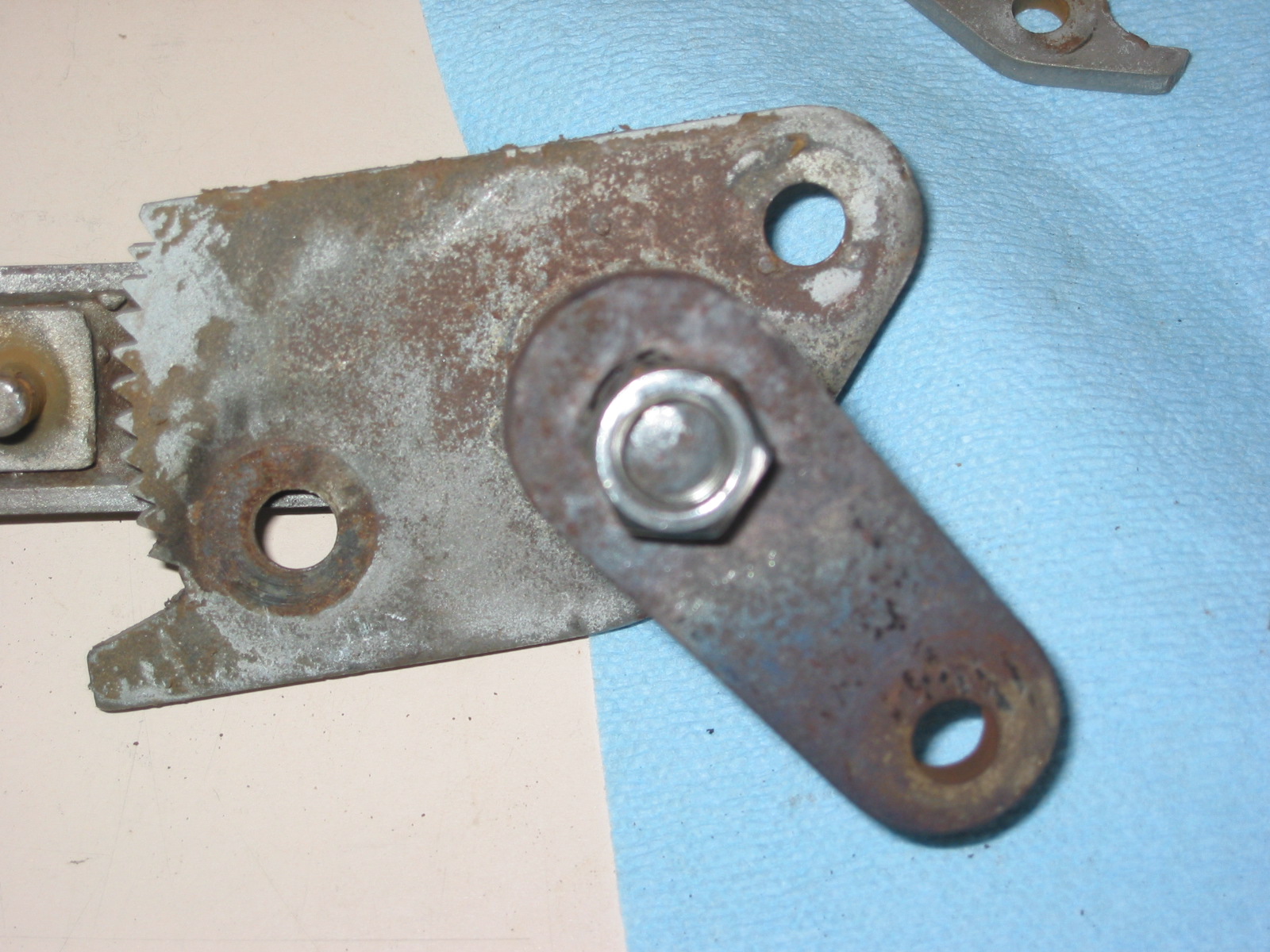
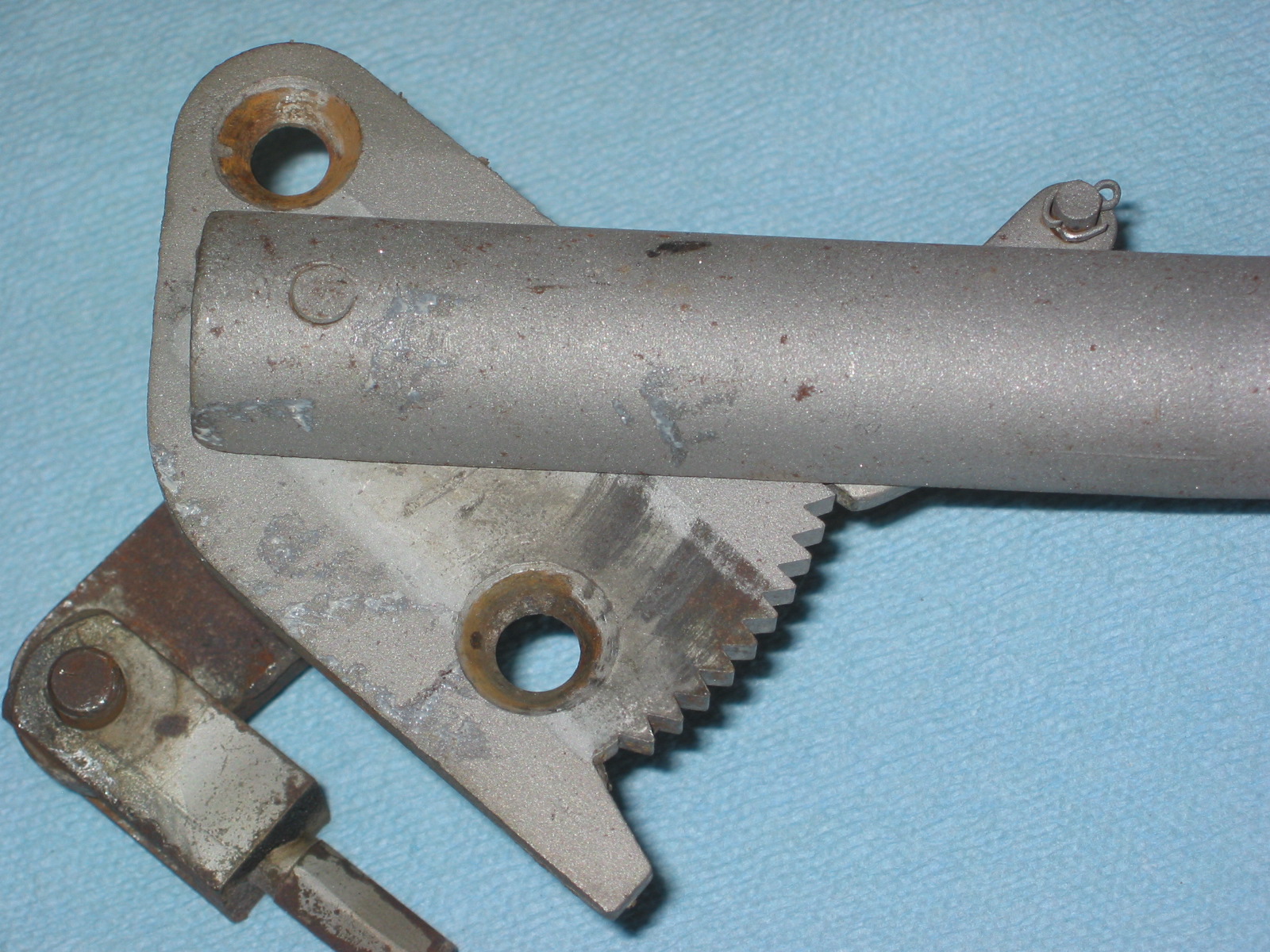
Disconnected the rod from the pawl and lifted the pawl off. Removed bracket with a hole and a rectangular opening for a key by heating with a torch and knocking out the piece. (Note orientation for reassembly). Hammered ratchet plate off of the mounting shaft to handle. There is a thin shim washer on the handle post before the ratchet plate is inserted on the shaft. The handle, pawl and ratchet plate will be chromed. The bracket and two spacers were painted black.

Handbrake connecting plate

Handbrake Assembly 1 2

Handbrake Assembly 2

Chapter 16 – Cleaning and Trial Fitting

November 16, 2003

Front Suspension 

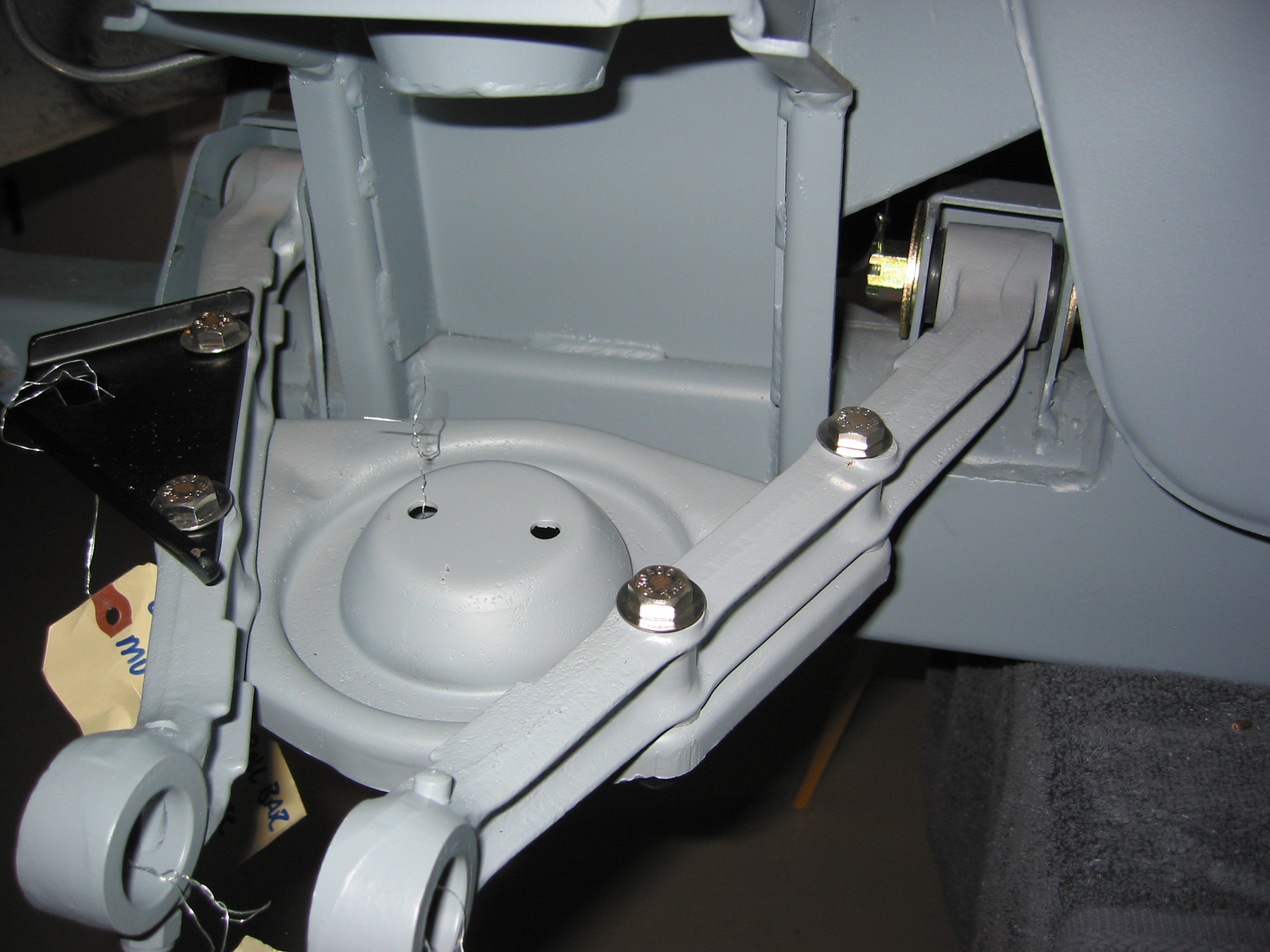
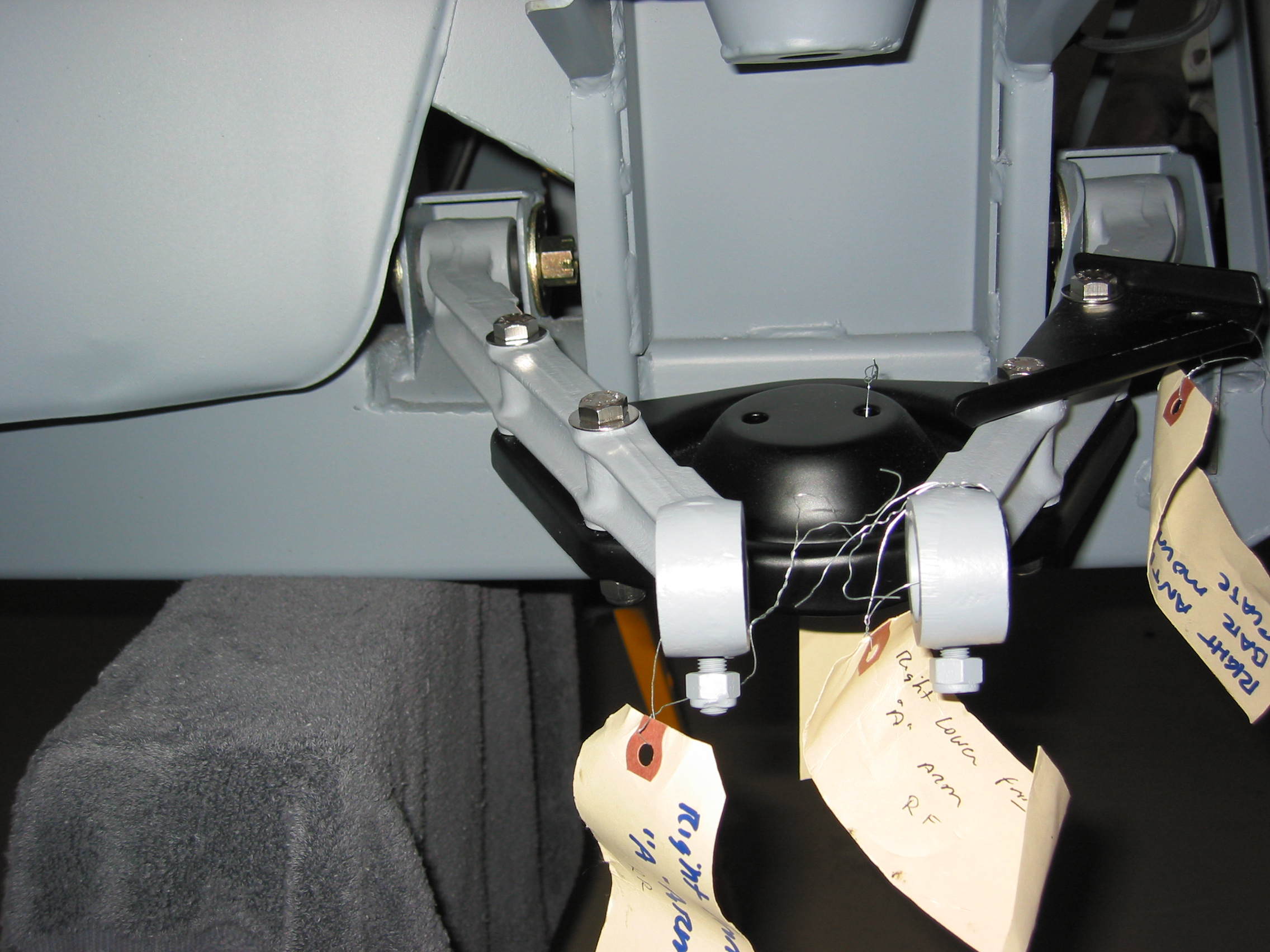
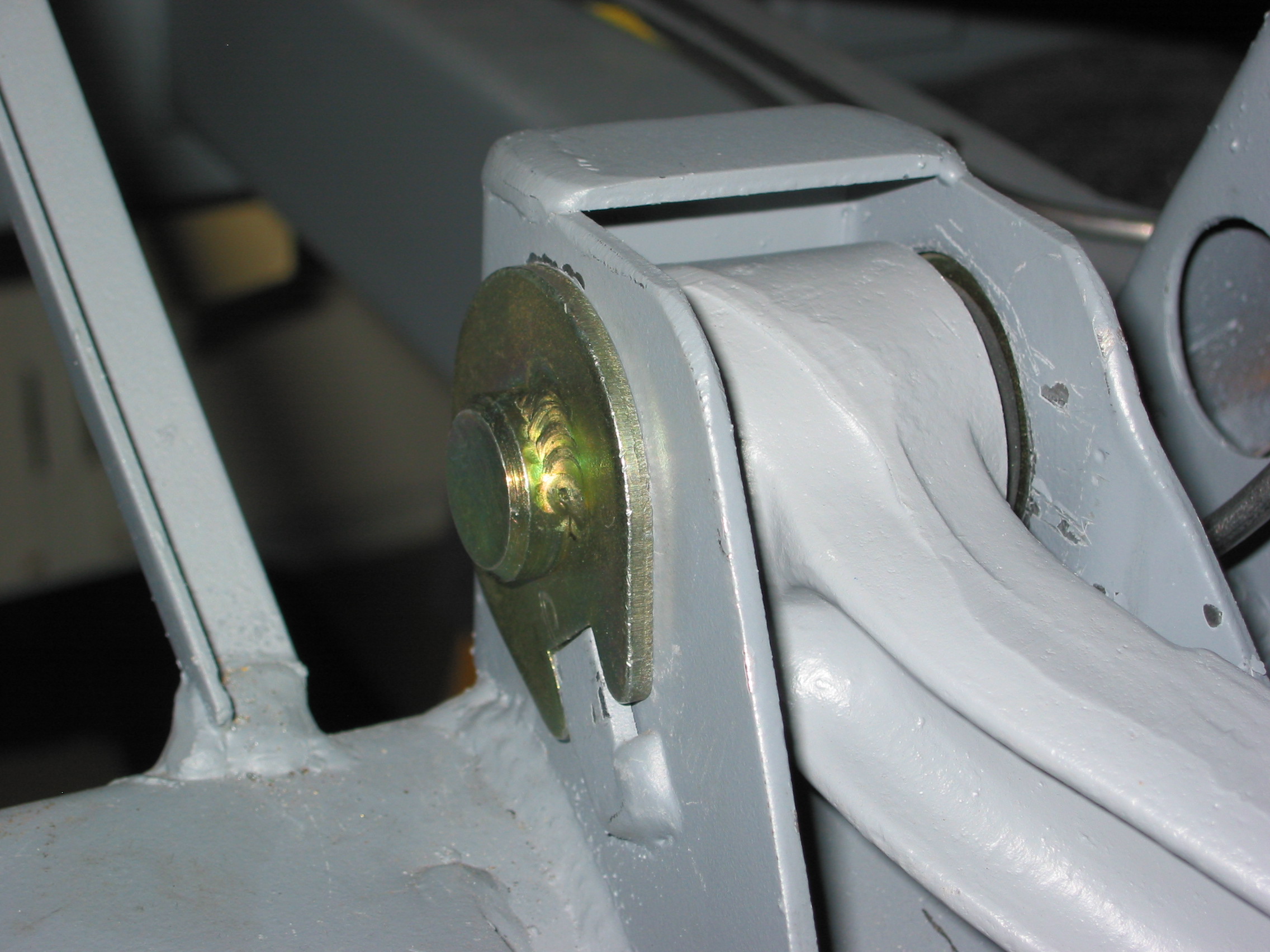
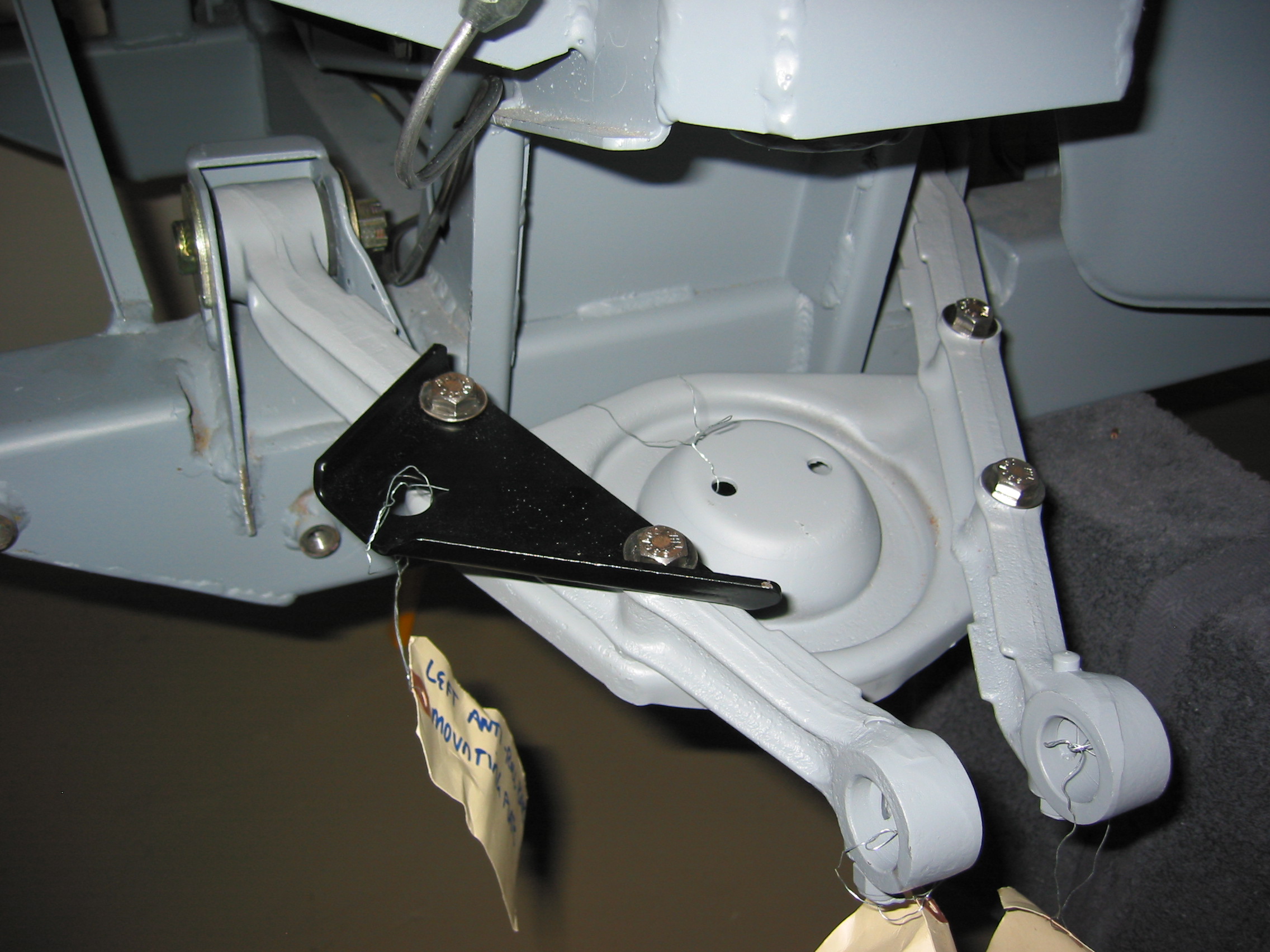
Control Arms and Bushings – Installed left and right lower control arms with rubber bushings and fulcrum pins.
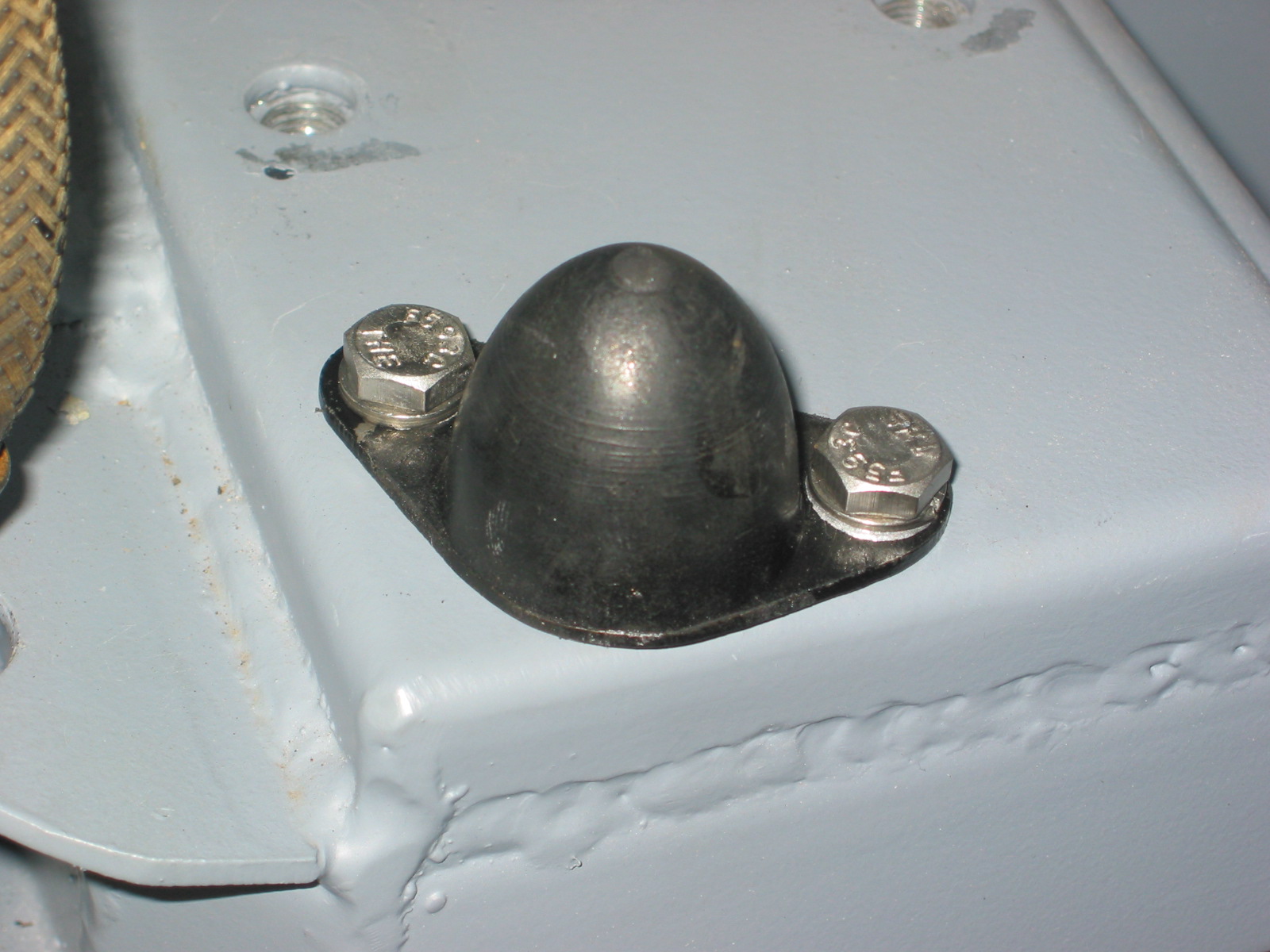
Left control arm 3

Right Control Arm 2

left control arm 1
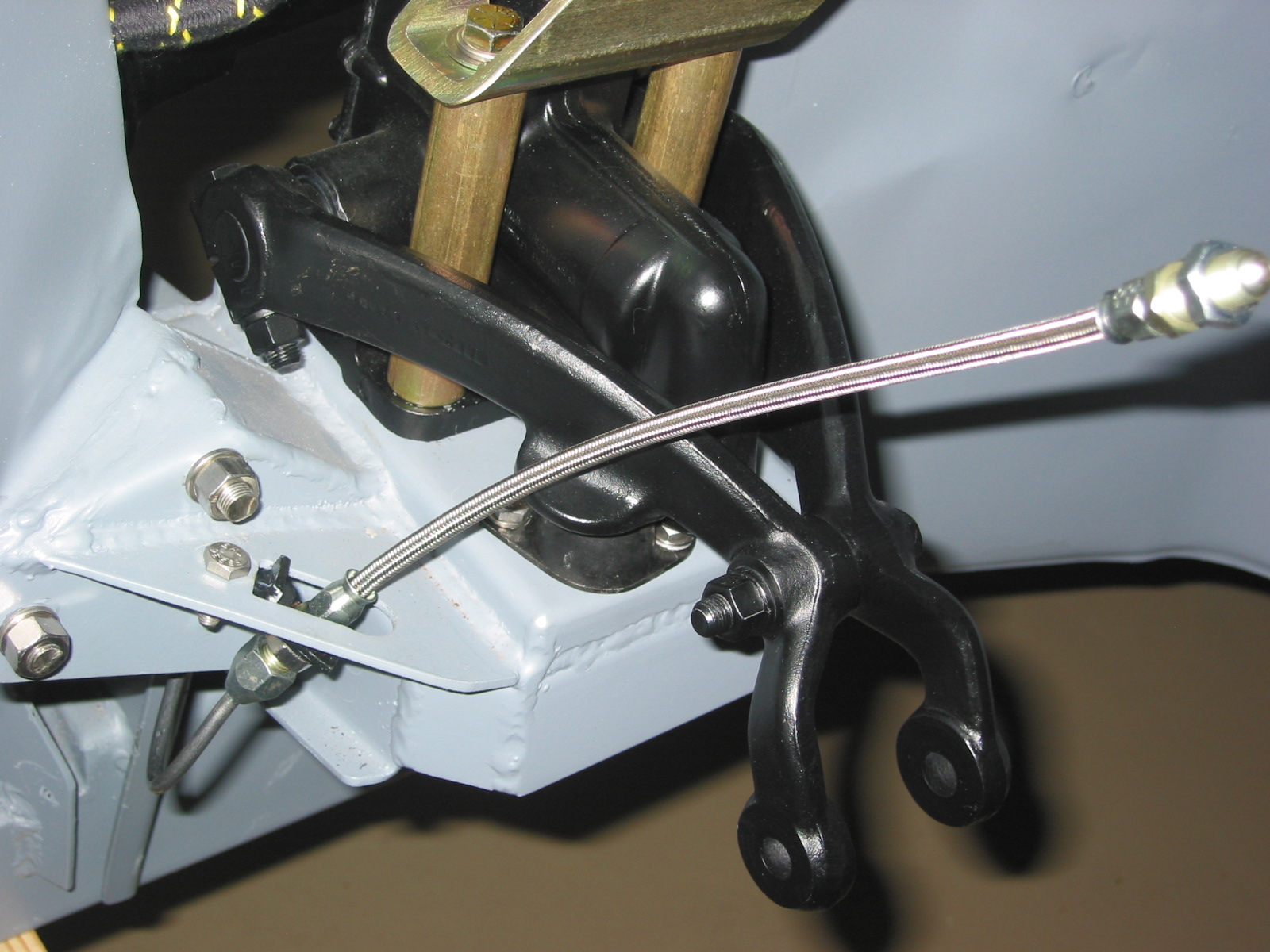
Left control arm 2

December 14, 2003

Steering

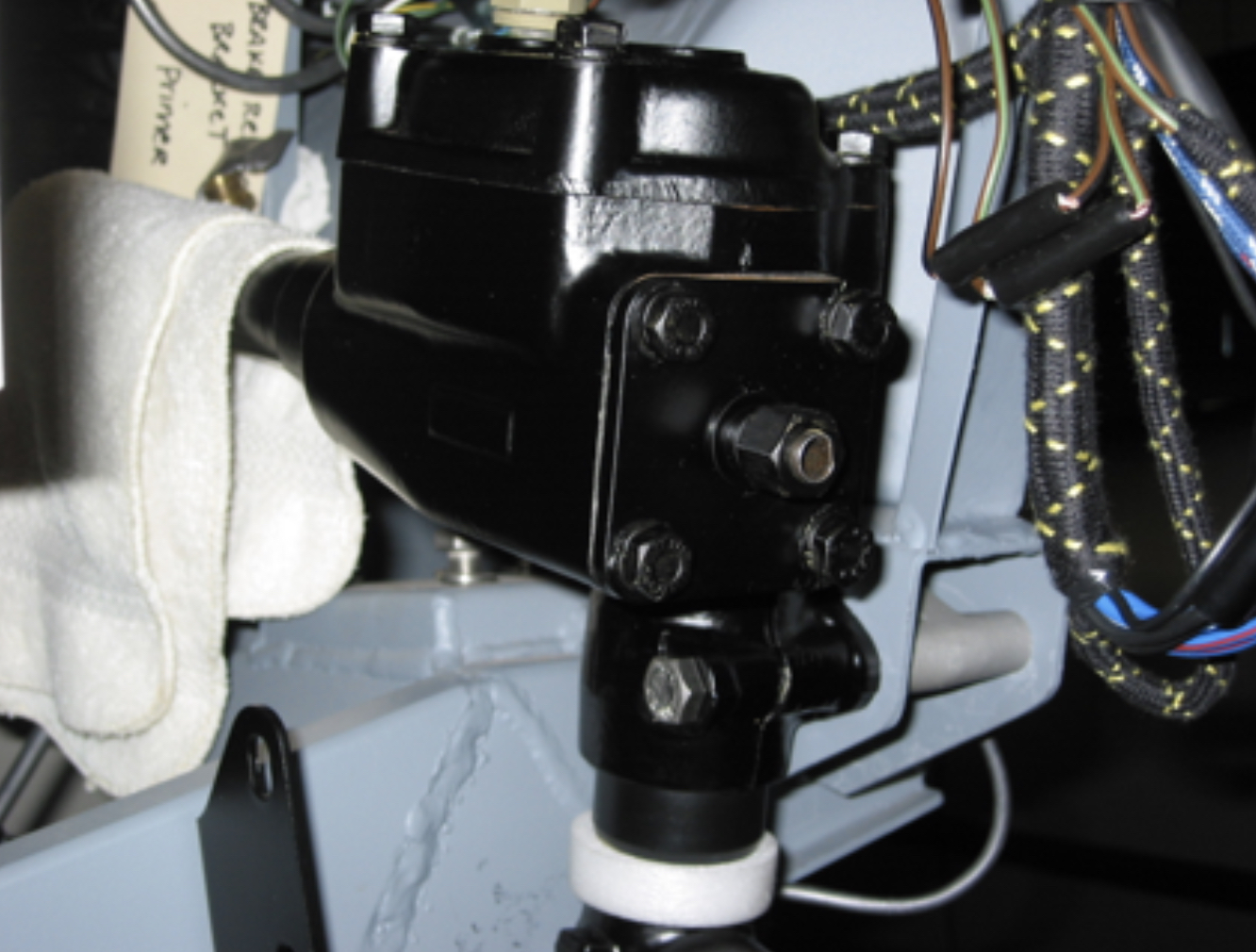
Steering Box and Idler – Picked up the painted steering box and steering idler from Jeremy Turner. Jack Harper disassembled the units and reassembled following painting. Jeremy did a great job on the steering wheel shaft as it was pitted near the box. Installed the Box and idler. Note for future – install box and idler before front brake hose bracket, as the bolts/nuts get in the way.

Steering Box Installed

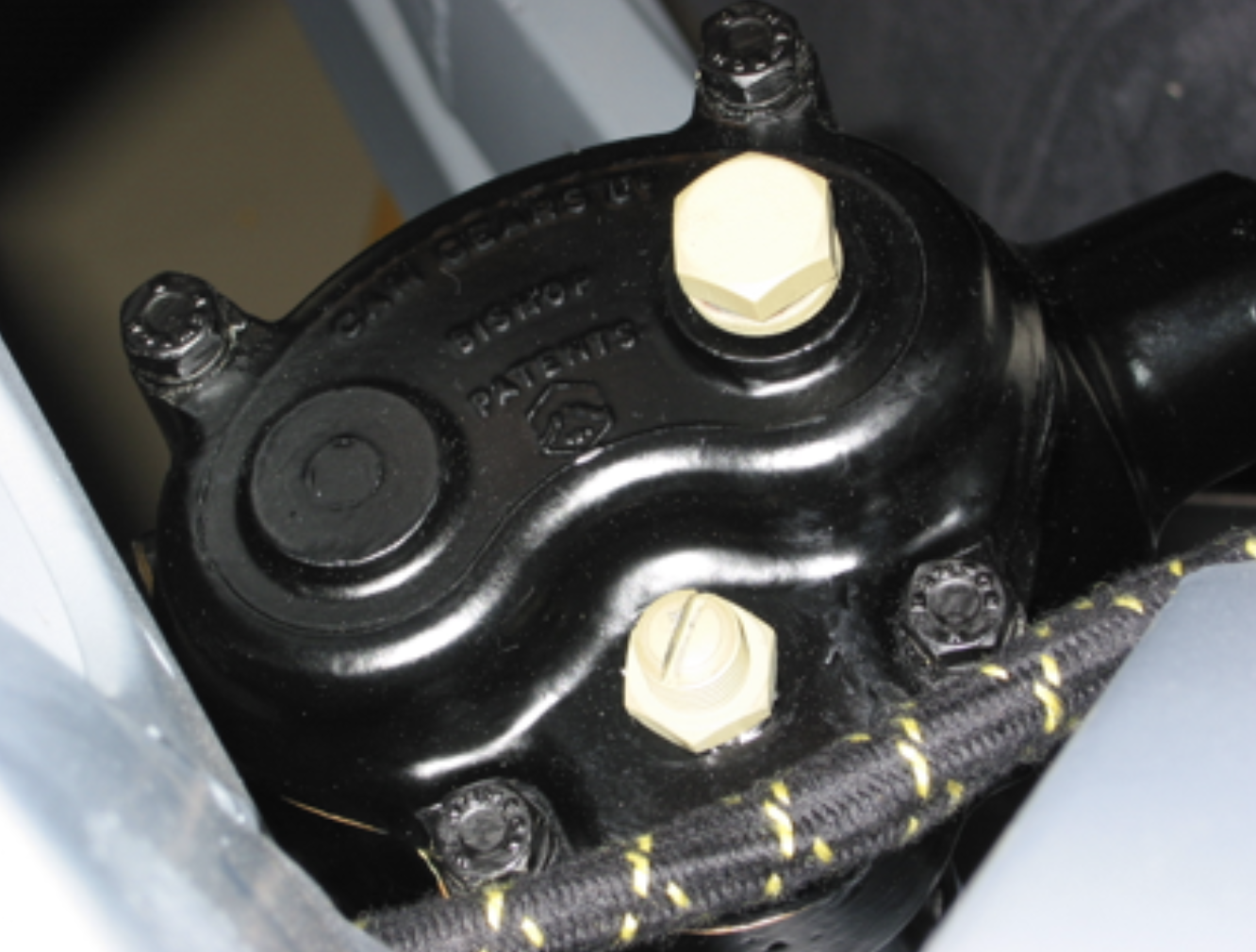
Steering Box In Place – Fill Plug & Adjuster

Steering Idler in Place

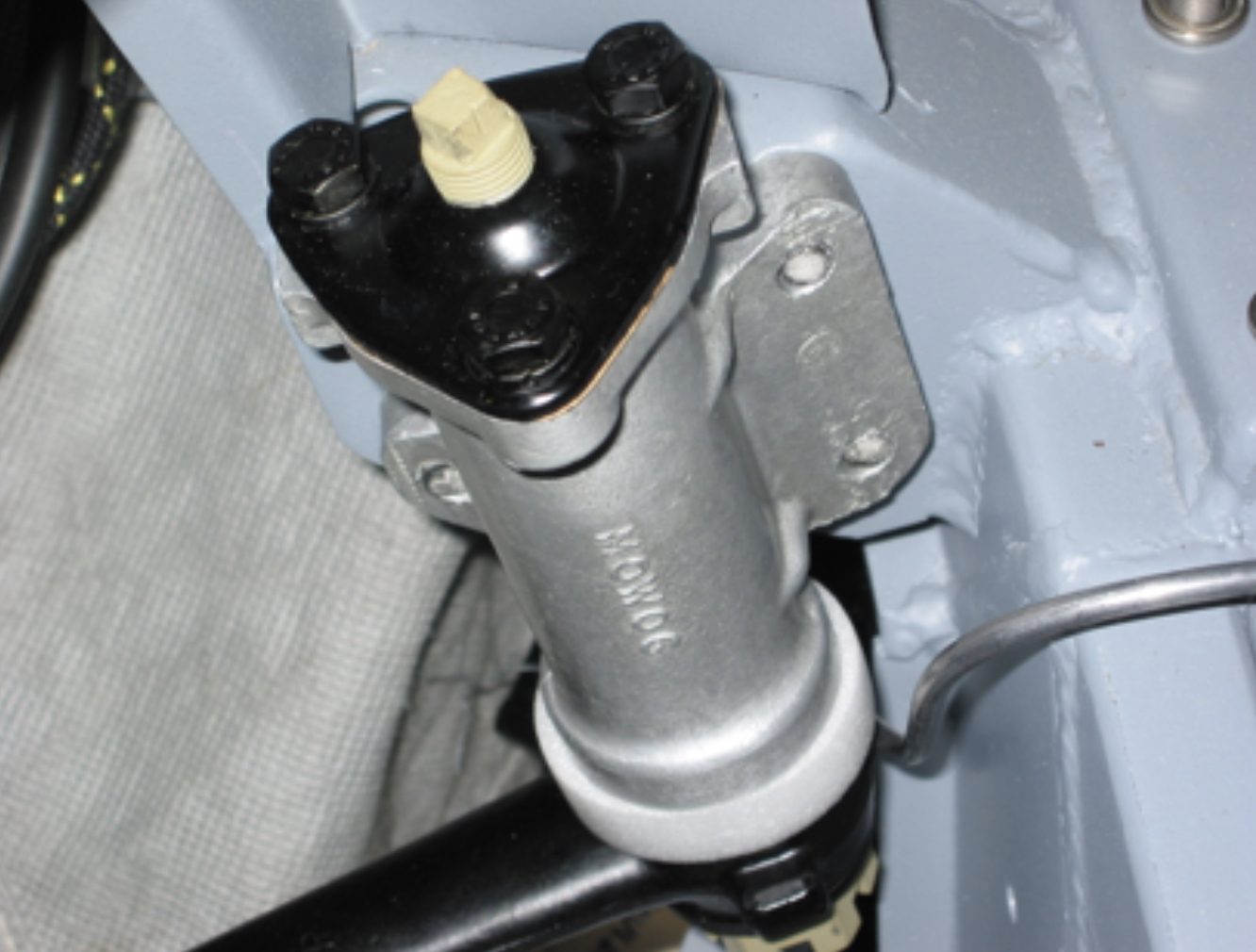
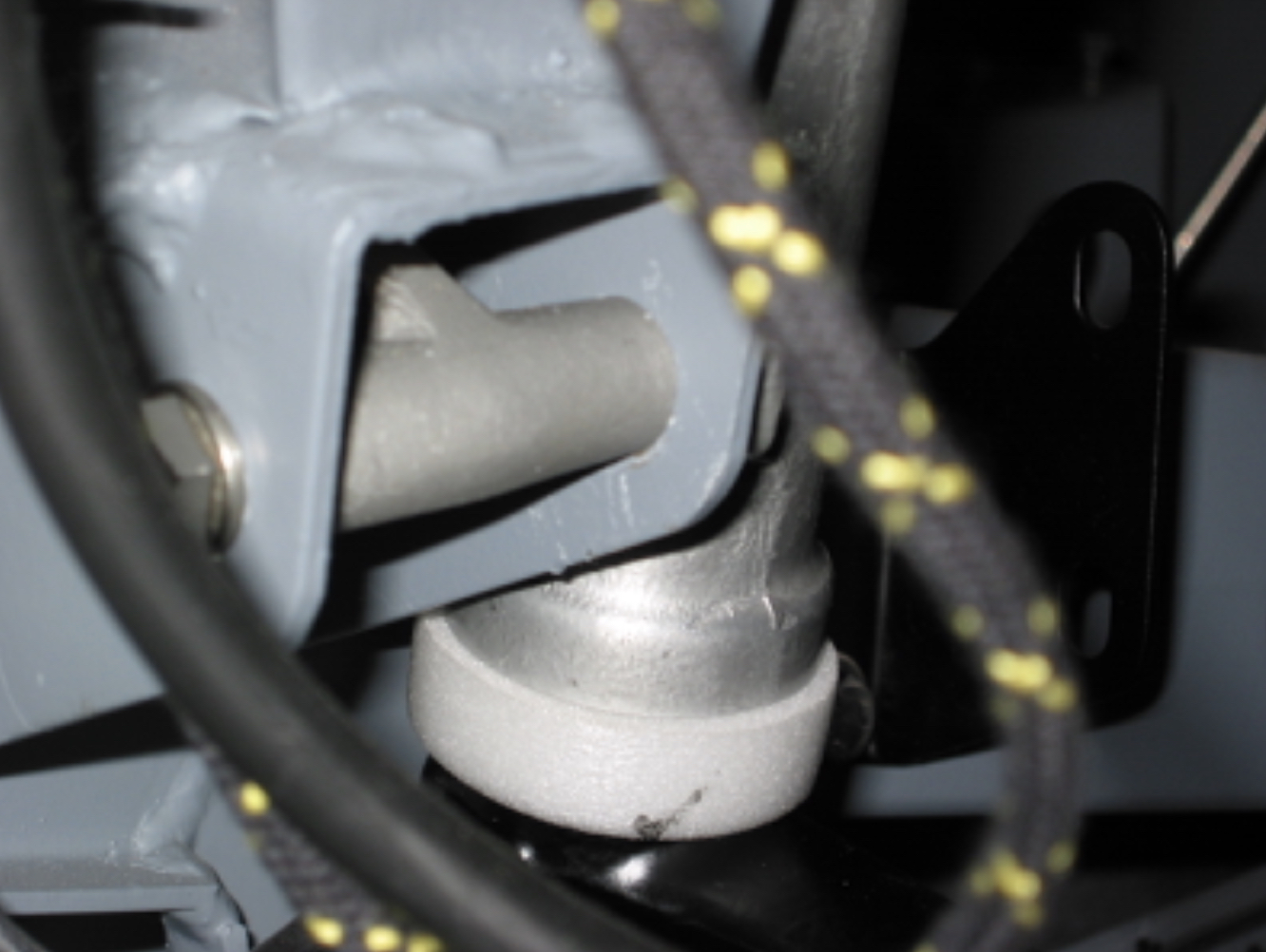
Steering Idler Installed with Aluminum Spacer

Steering Column with Brace

January 10, 2004

Blistein Tube Shock Conversion 

Rear Tube Shock Conversion

Installed Udo Putzke’s Blistein tube shock conversion kit in the rear suspension. Two fabricated brackets on each side of the rear of the car. Original lever shock is abandoned completely in the process. Couldn’t complete the final connections because when the leaf springs were jacked up to align the shock for fastening, the entire car raised since the engine is not in the car, thereby giving it sufficient weight. Will have to complete later in the assembly process. Rear tube shock is F4-BE3-2577-HO. The brackets will need to be painted for final assembly. They should be installed prior to the fuel pump.

Tube shocks rear 4

Tube shocks rear 6

Tube shocks rear 2

Front Tube Shock Conversion

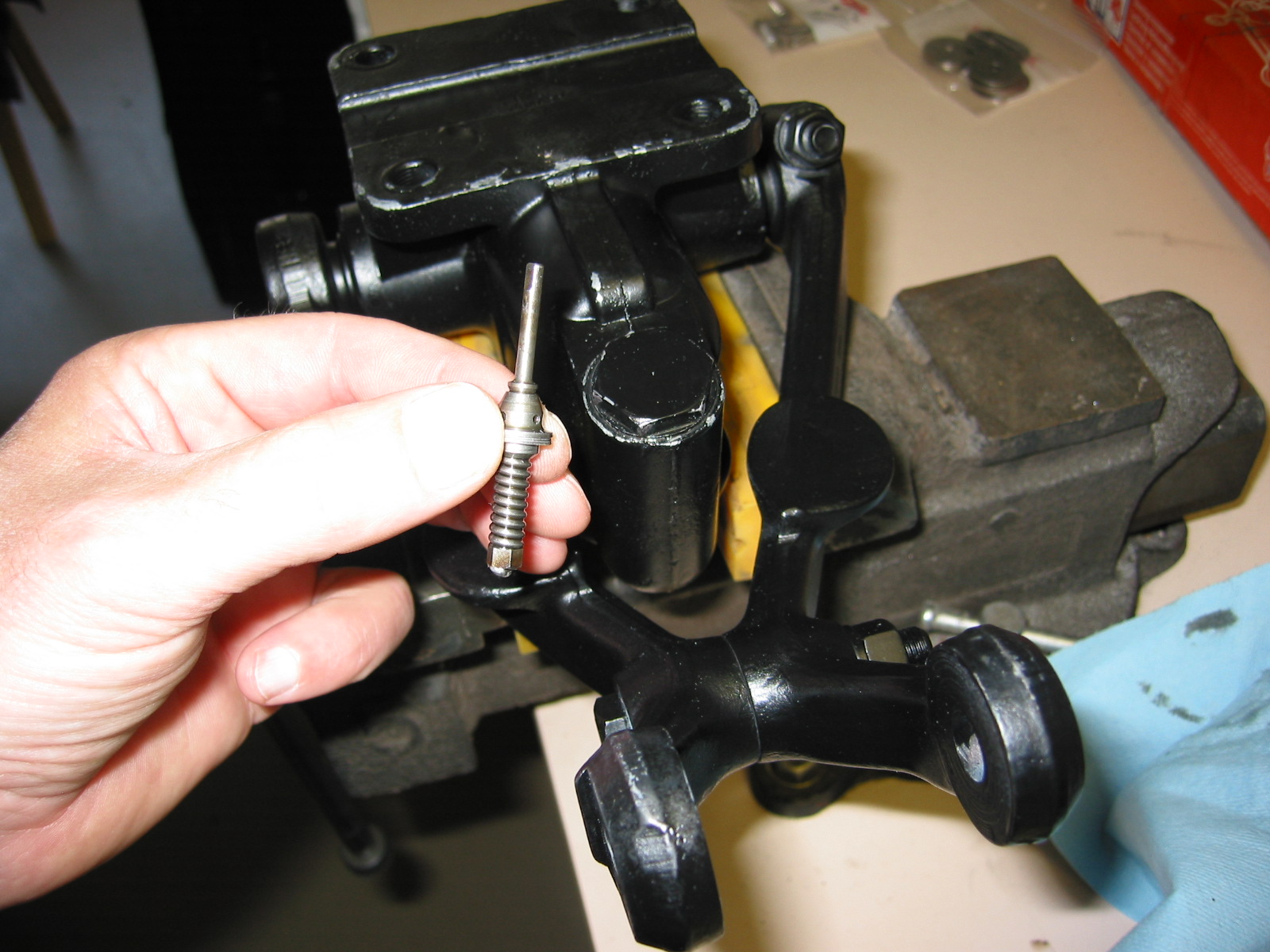
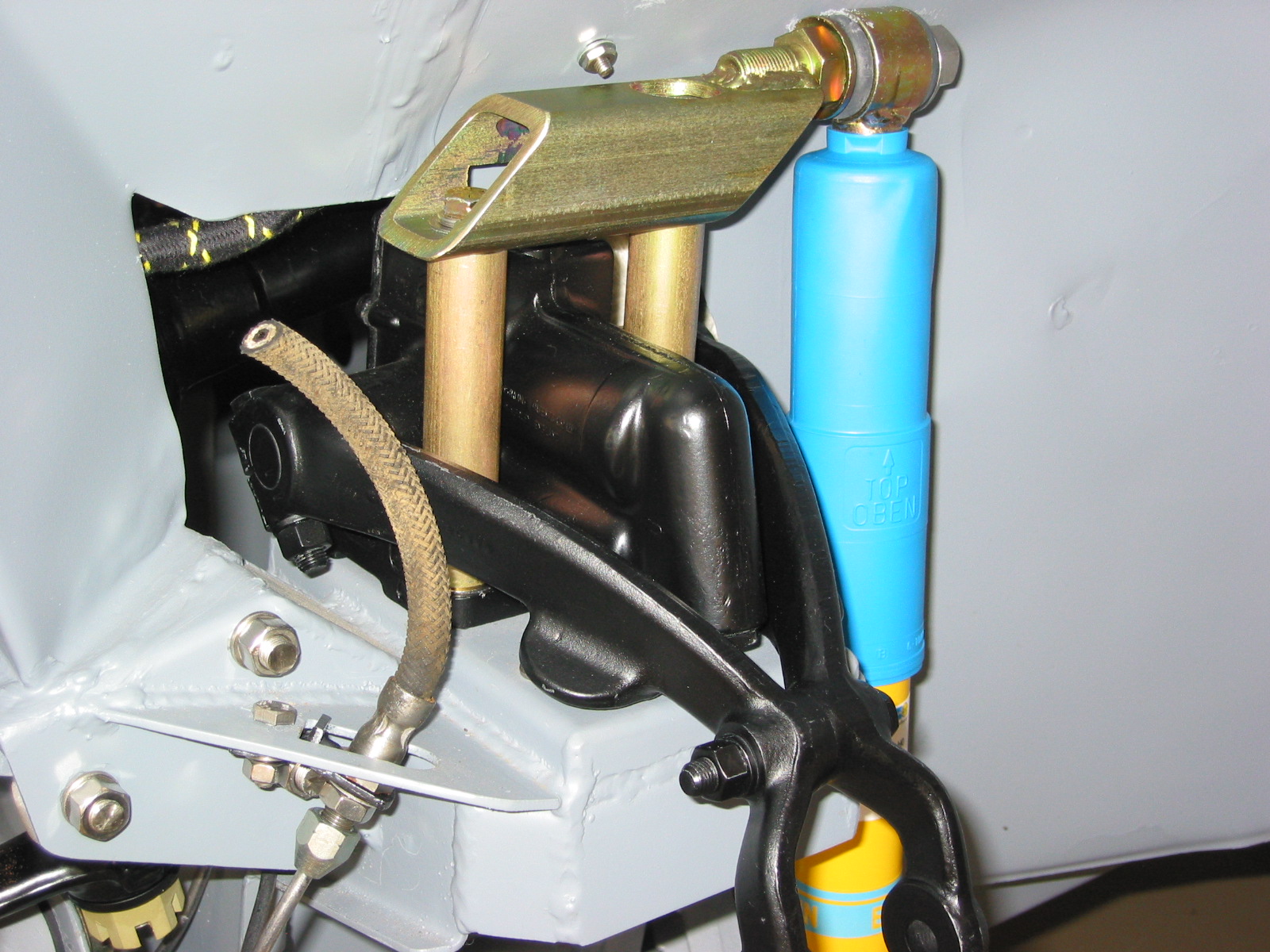
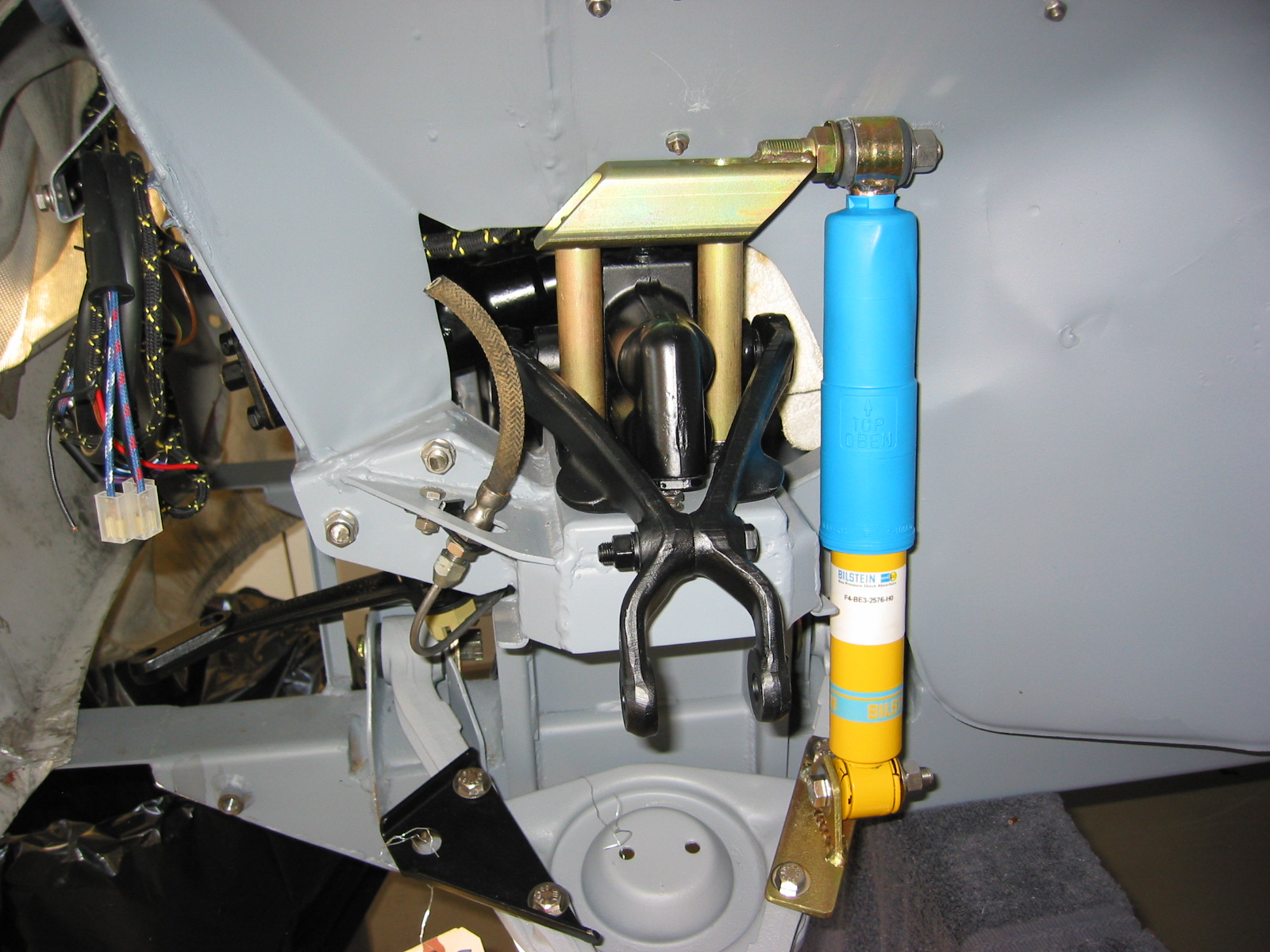
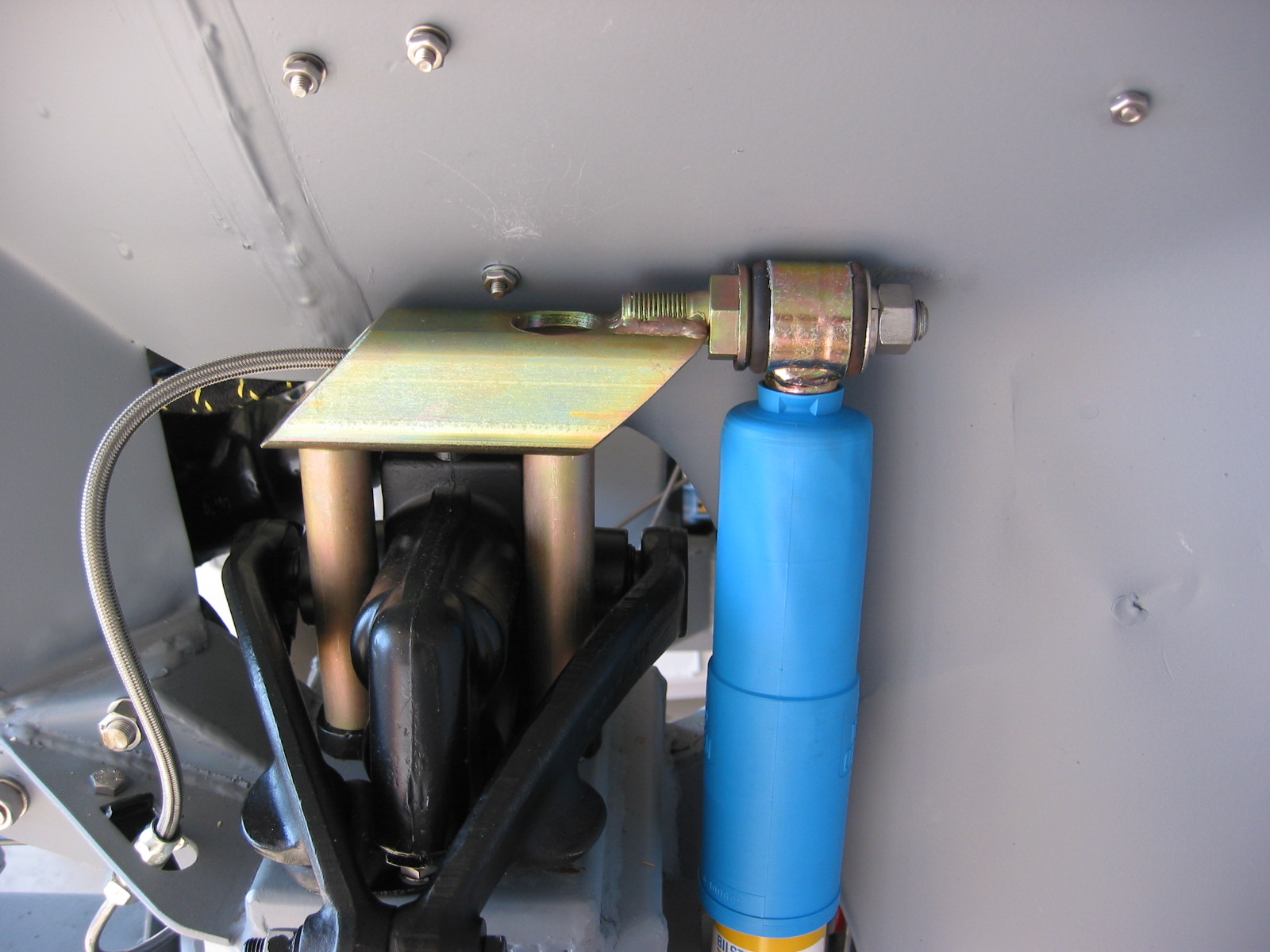
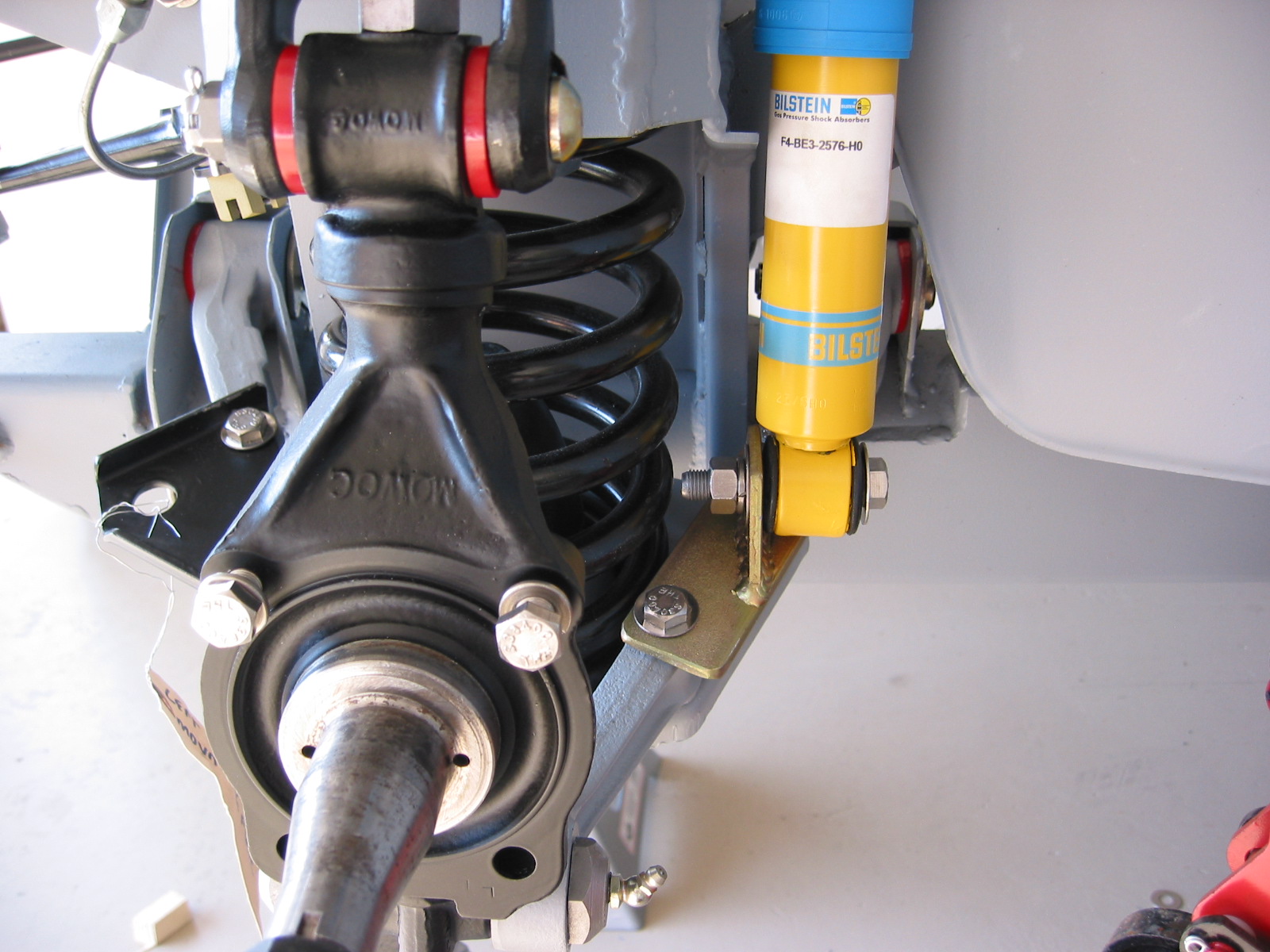
Installed Udo Putzke’s Blistein tube shock conversion kit in the front suspension. Two fabricated brackets on each side of the front of the car. Original lever shock is utilized in the process. To make sure the lever shocks would not leak fluid in the future, they were rebuilt by World Wide Imports in Madison, Wisc. The valves are removed from each damper. The standard bolts are used to secure the damper nearest the motor. Supplied long bolts and support rods are used for the outside two mounts. Front tube shock is F4-BE3-2576-HO. The brackets will need to be painted for final assembly. 

lever shock valving

front tube shock conversion 2

front tube shock conversion 1

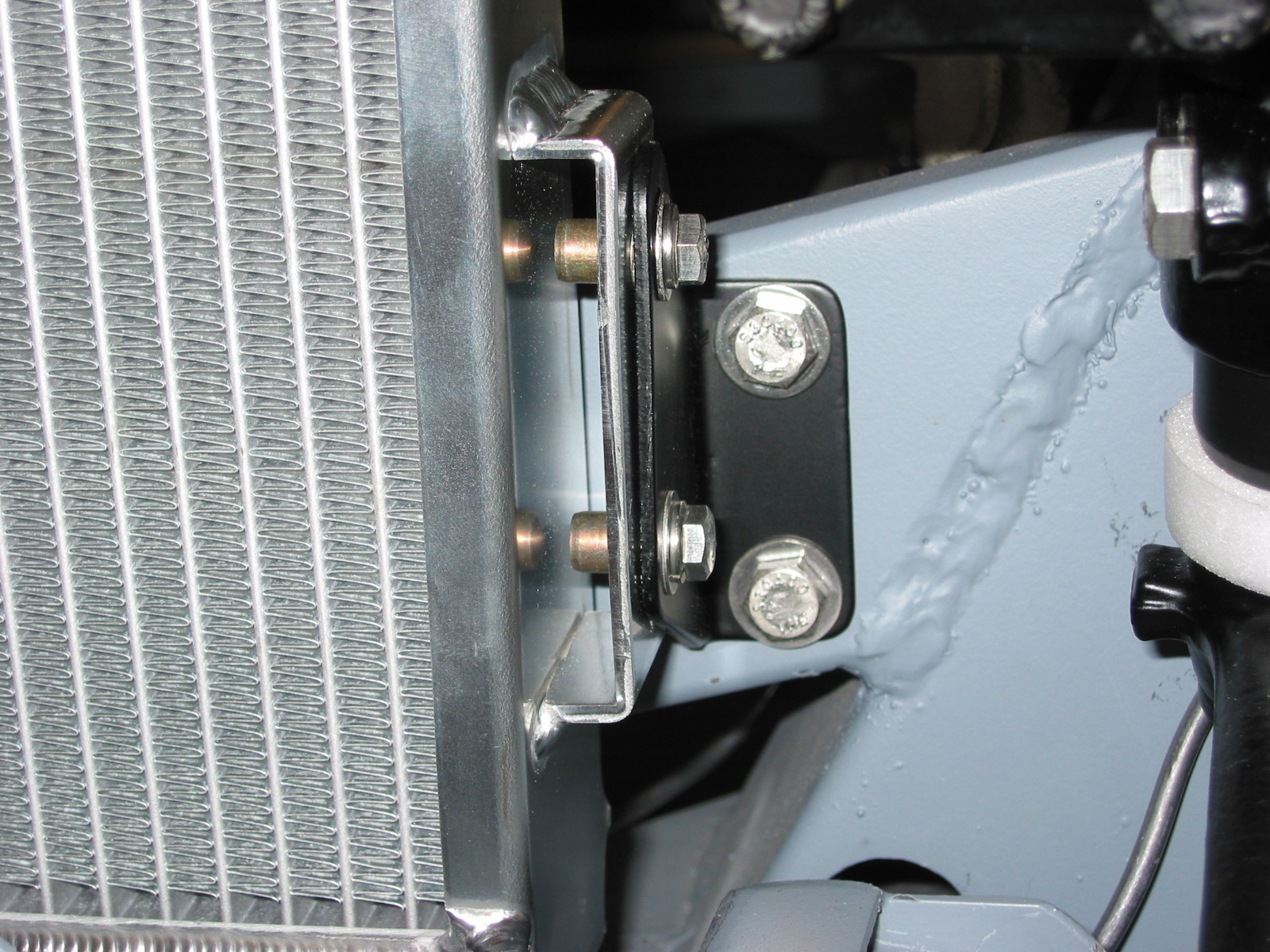
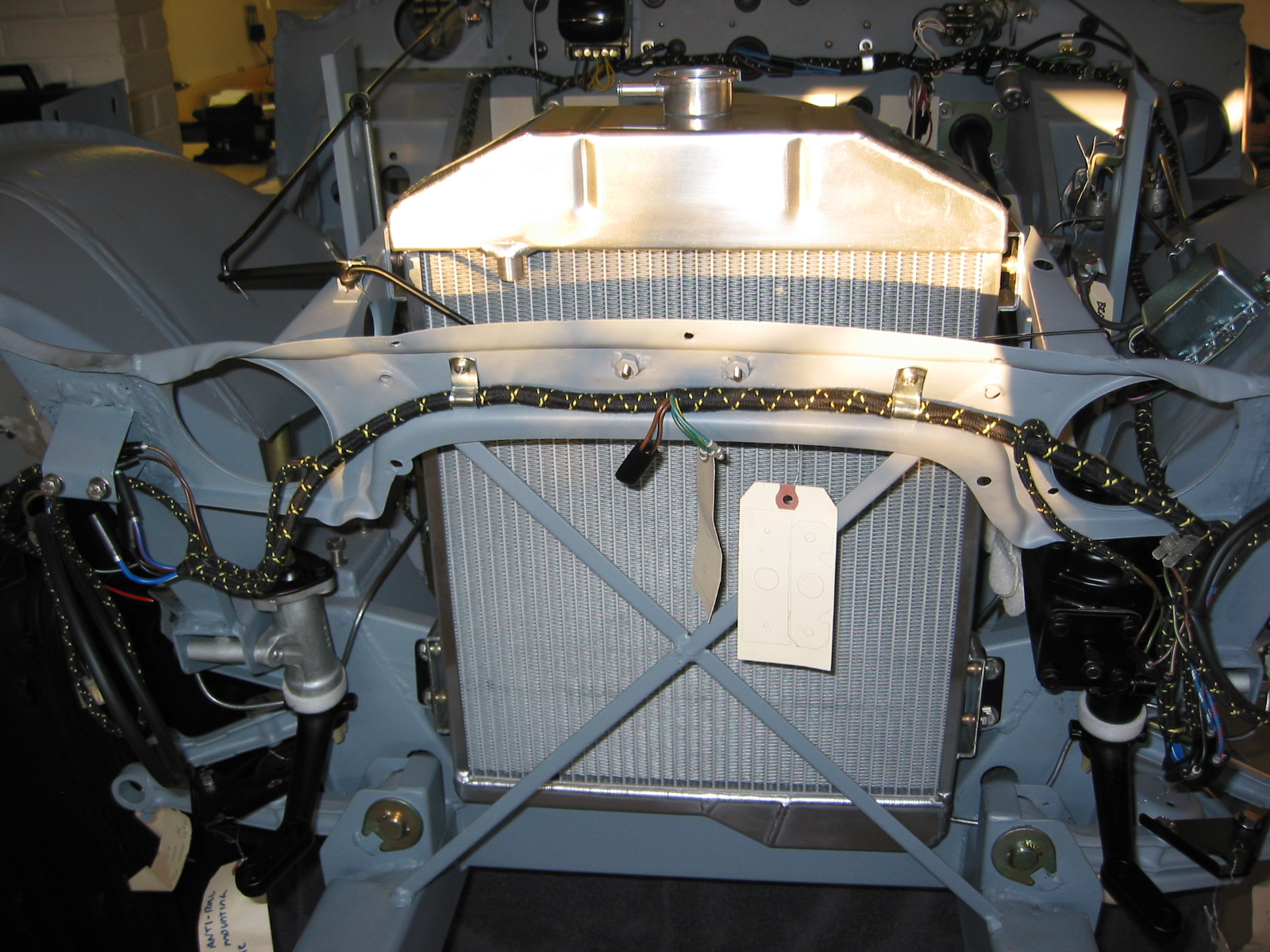
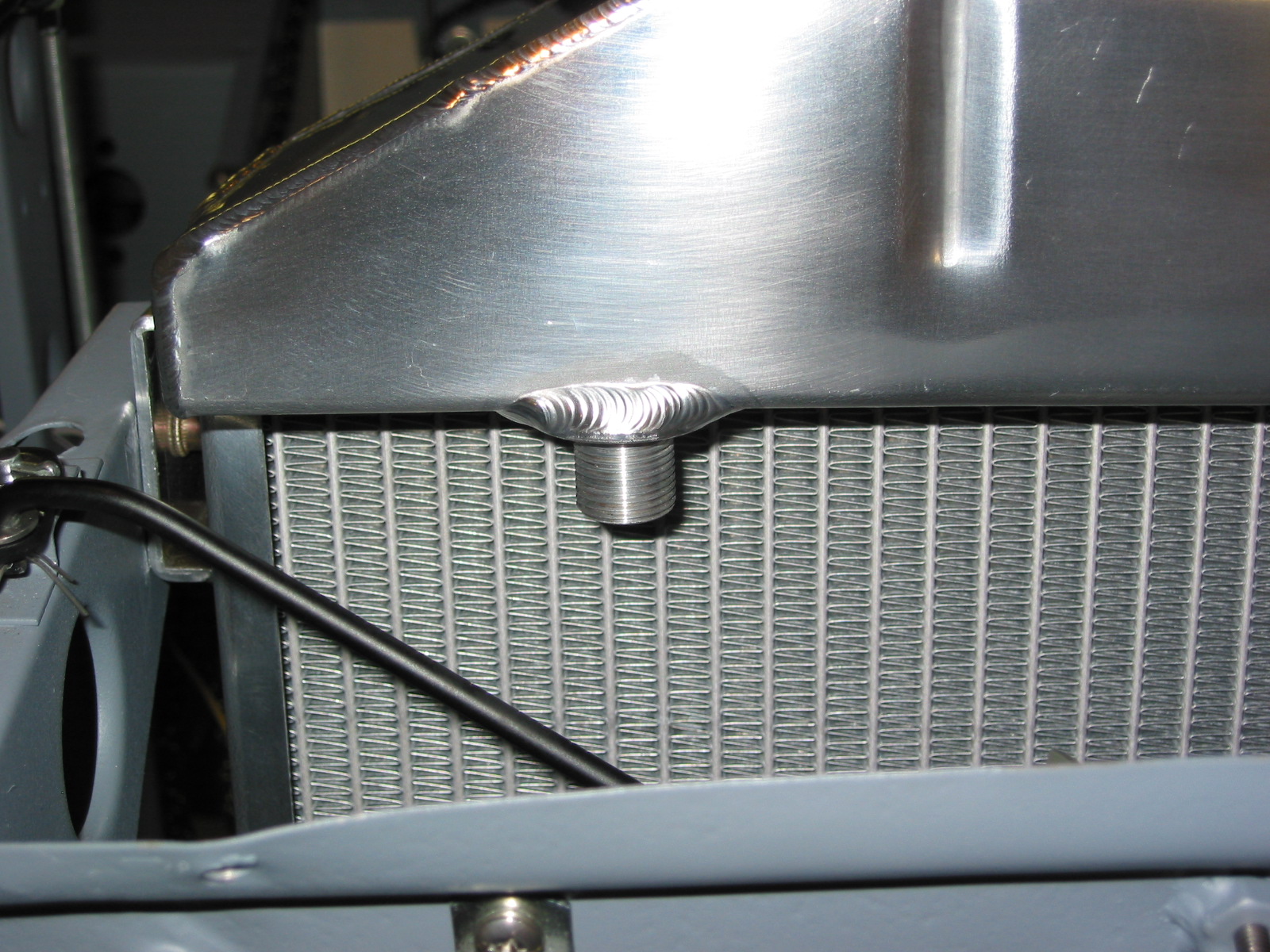
Aluminum Radiator  – Installed a new aluminum radiator from Cape International. Christmas gift from Jude. It is a piece of art, almost hate to put it in the car! Fit was perfect, although mounting fittings were metric. Easy installation is to loosen lower brackets on frame, secure top two bolts first, then secure lower bolts to radiator. Finally, tighten lower brackets to frame. Pull unit to front of car when tightening to get maximum clearance for fan.

Aluminum Radiator 3

Aluminum Radiator 2

Aluminum Radiator 1

Aluminum Radiator 4

Chapter 15 – Cleaning and Trial Fitting

September 27, 2003

Front Suspension 

It is so nice to begin assembling clean and freshly painted components. I decided to assemble the front suspension just to make sure I had all pieces, proper bolts and etc. Rebuilt brake calipers and swivel pins from Bruce at Healey Surgeons. Primed or painted bits courtesy of Jeremy at Maple Hill Restorations.

Left front suspension

Left front brake fittings

October 12, 2003

Fuel Pump and Other Bits

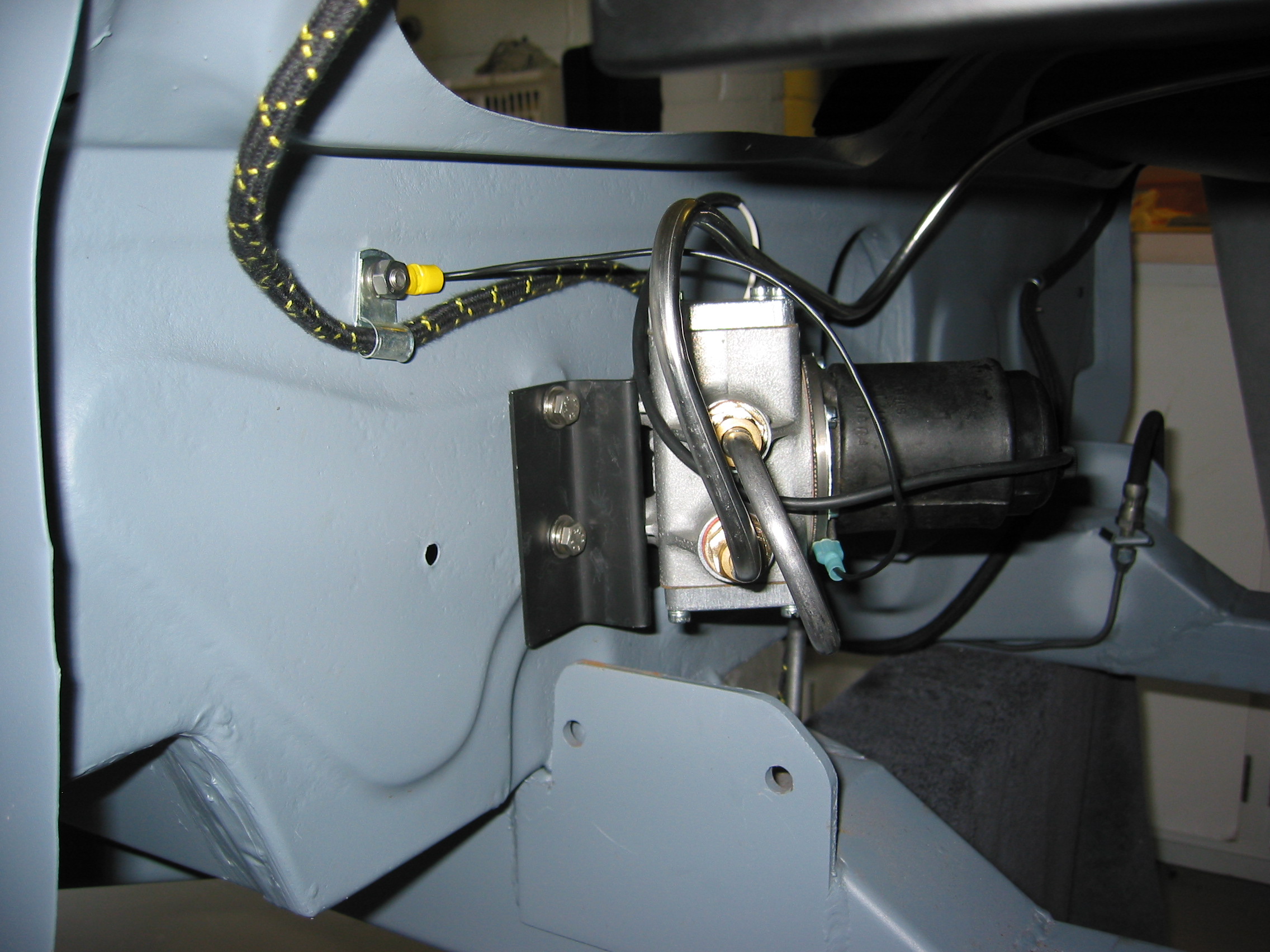
Fuel Pump – Installed new solid state SU fuel pump. Added ground wire was mounted to rear bulkhead. 

Fuel pump wiring

Fuel Pump – New

Rear bump box wiring & Clip

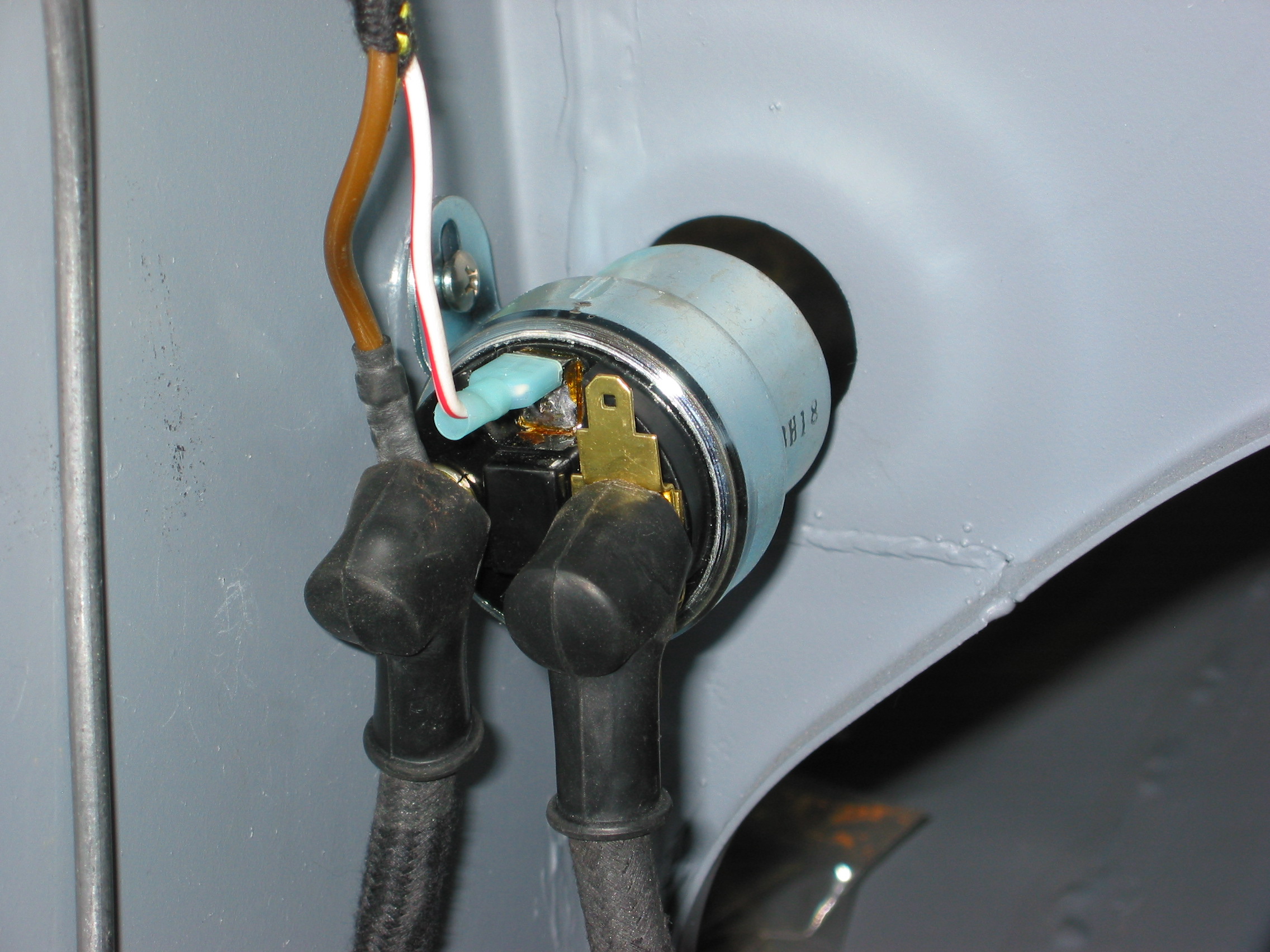
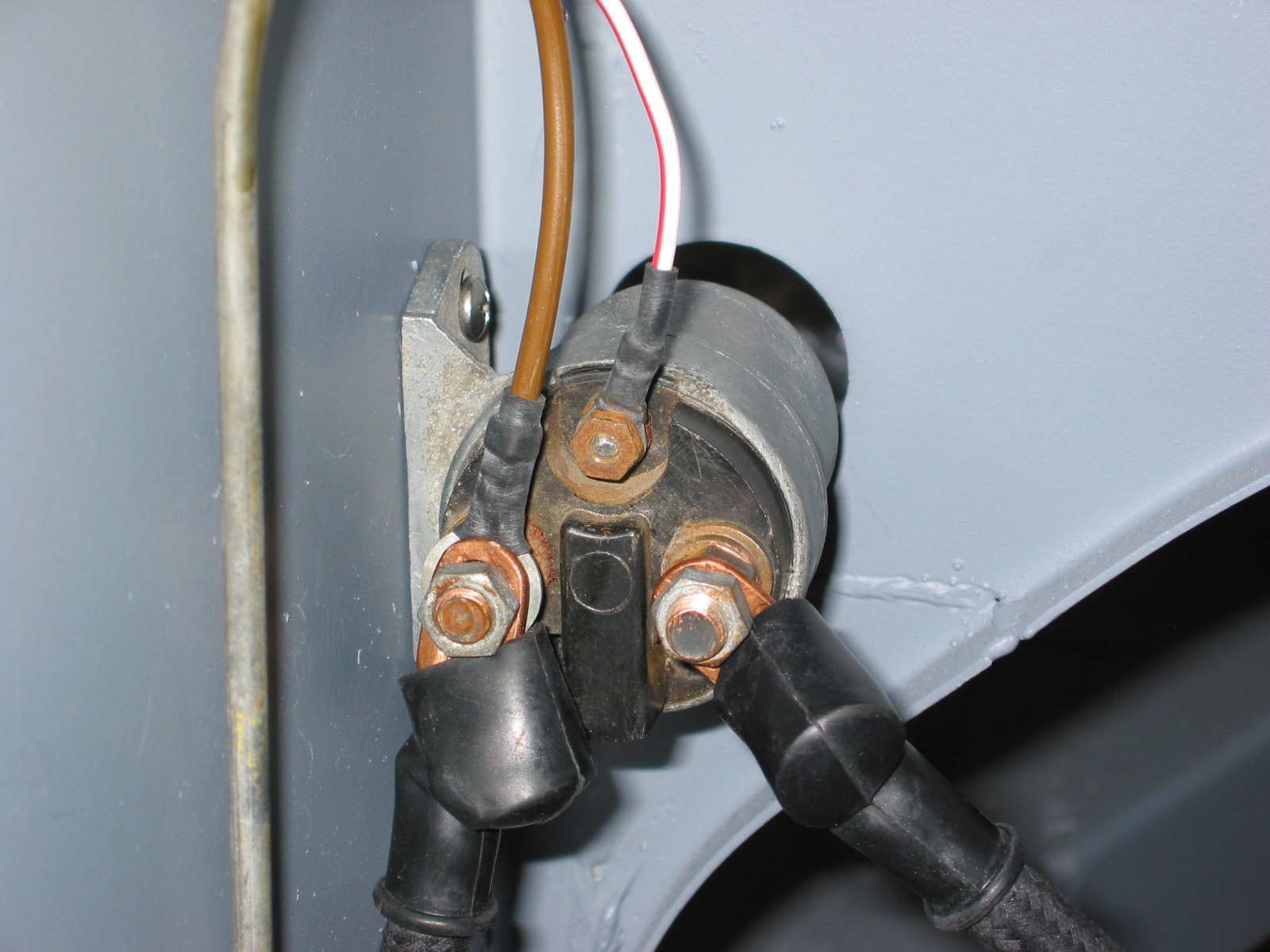
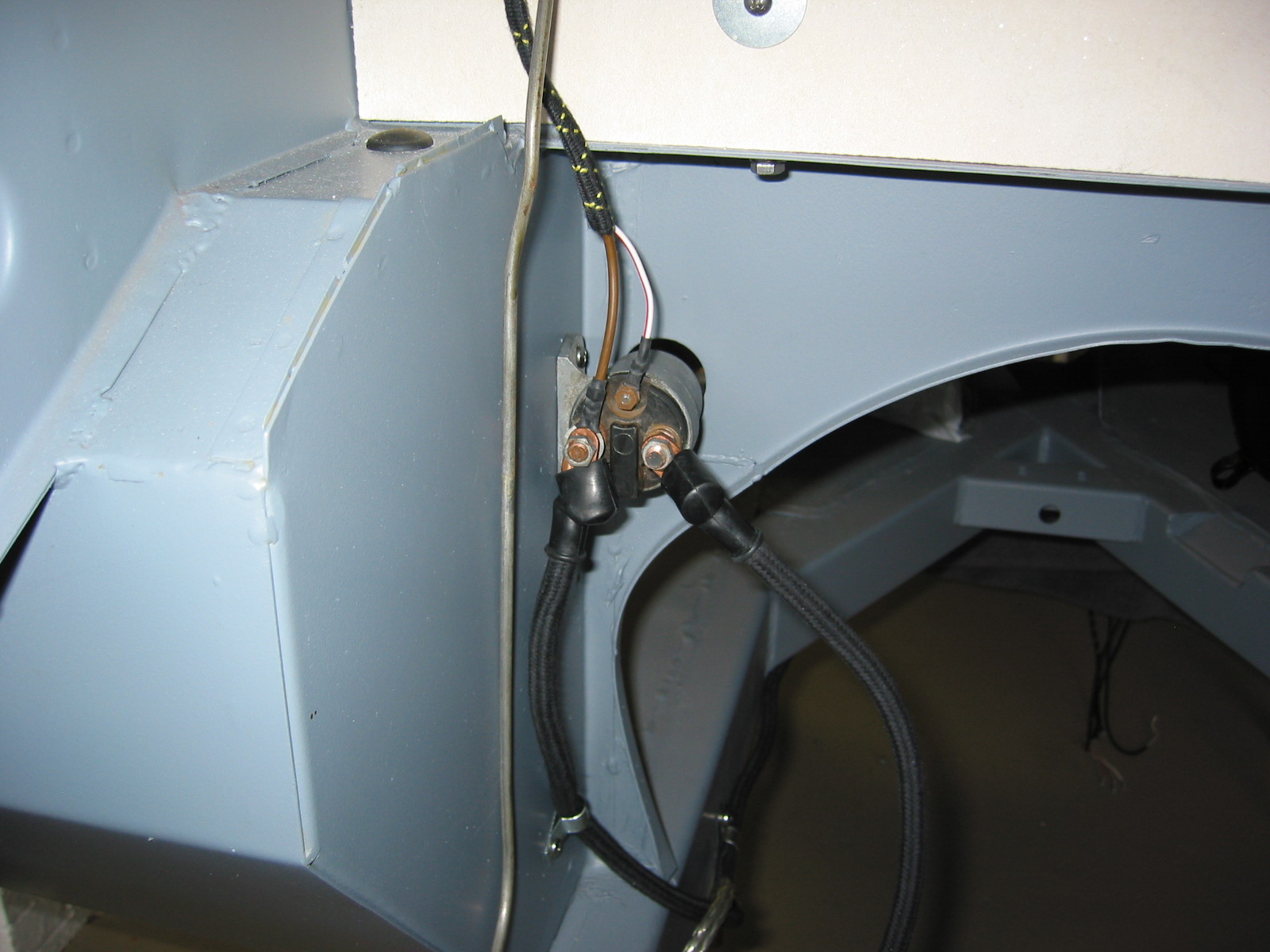
Starter Solenoid – Installed new starter solenoid. Affixed new light relay box.

Starter Solenoid – New

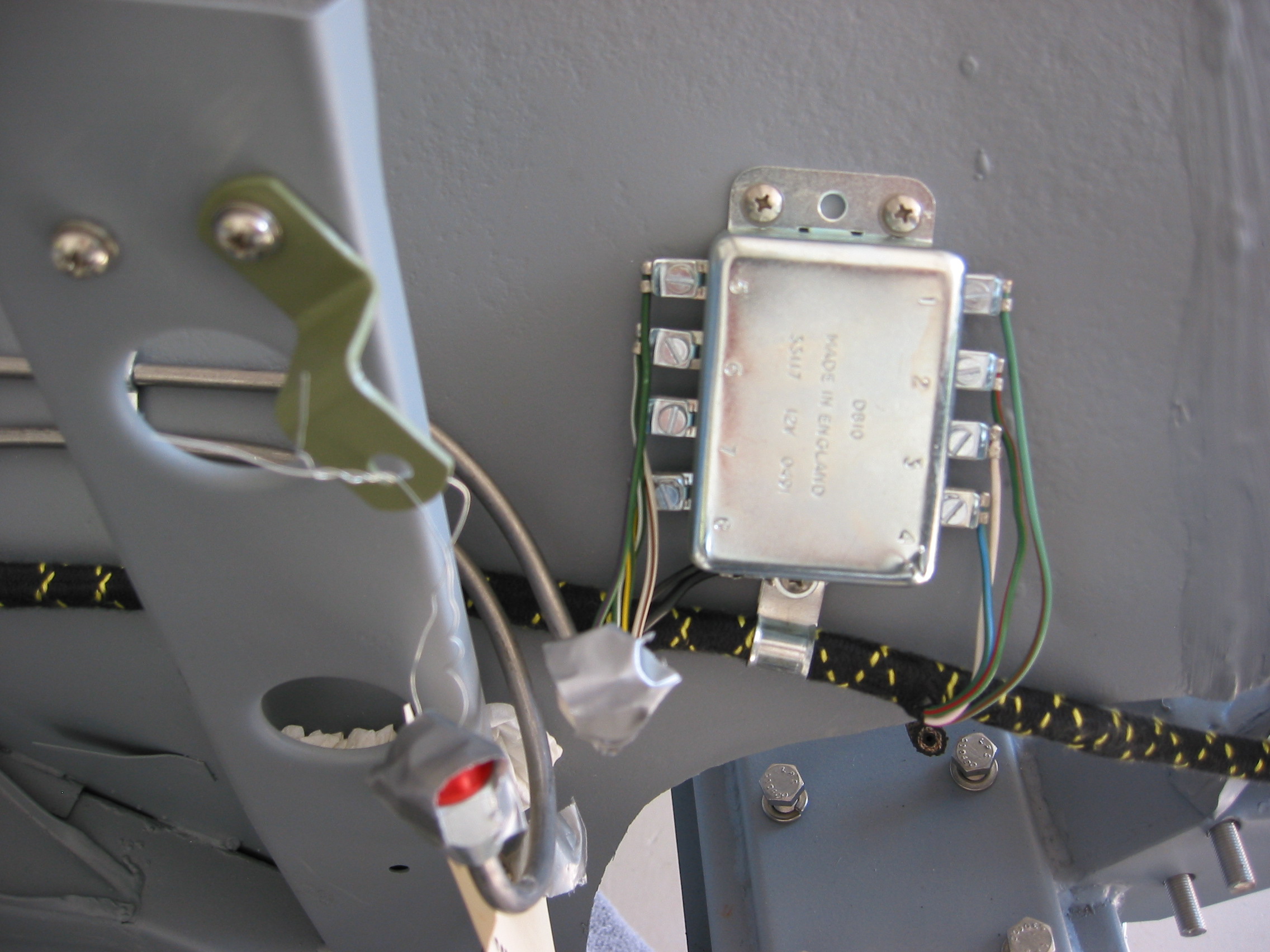
Flasher Relay – New

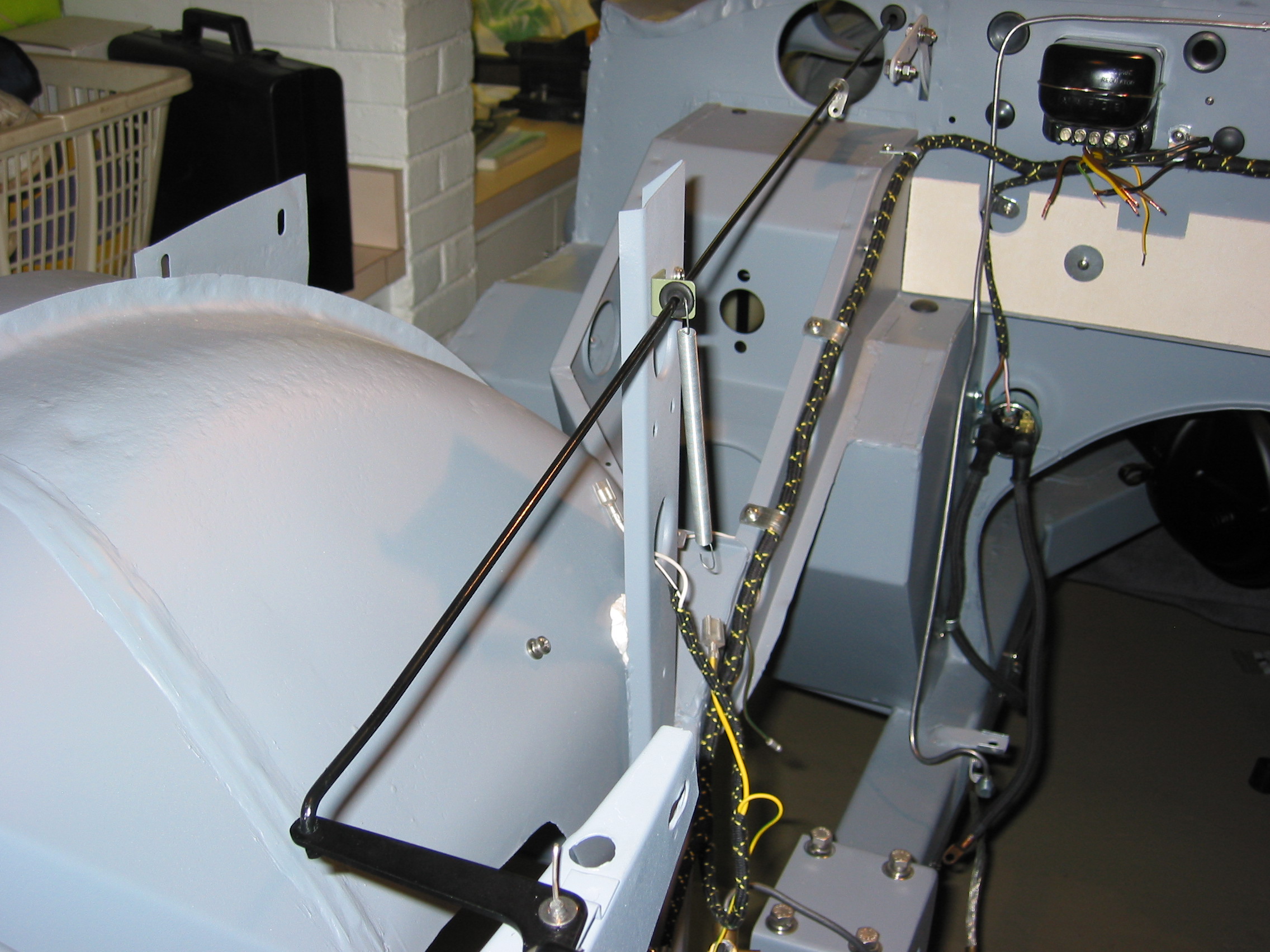
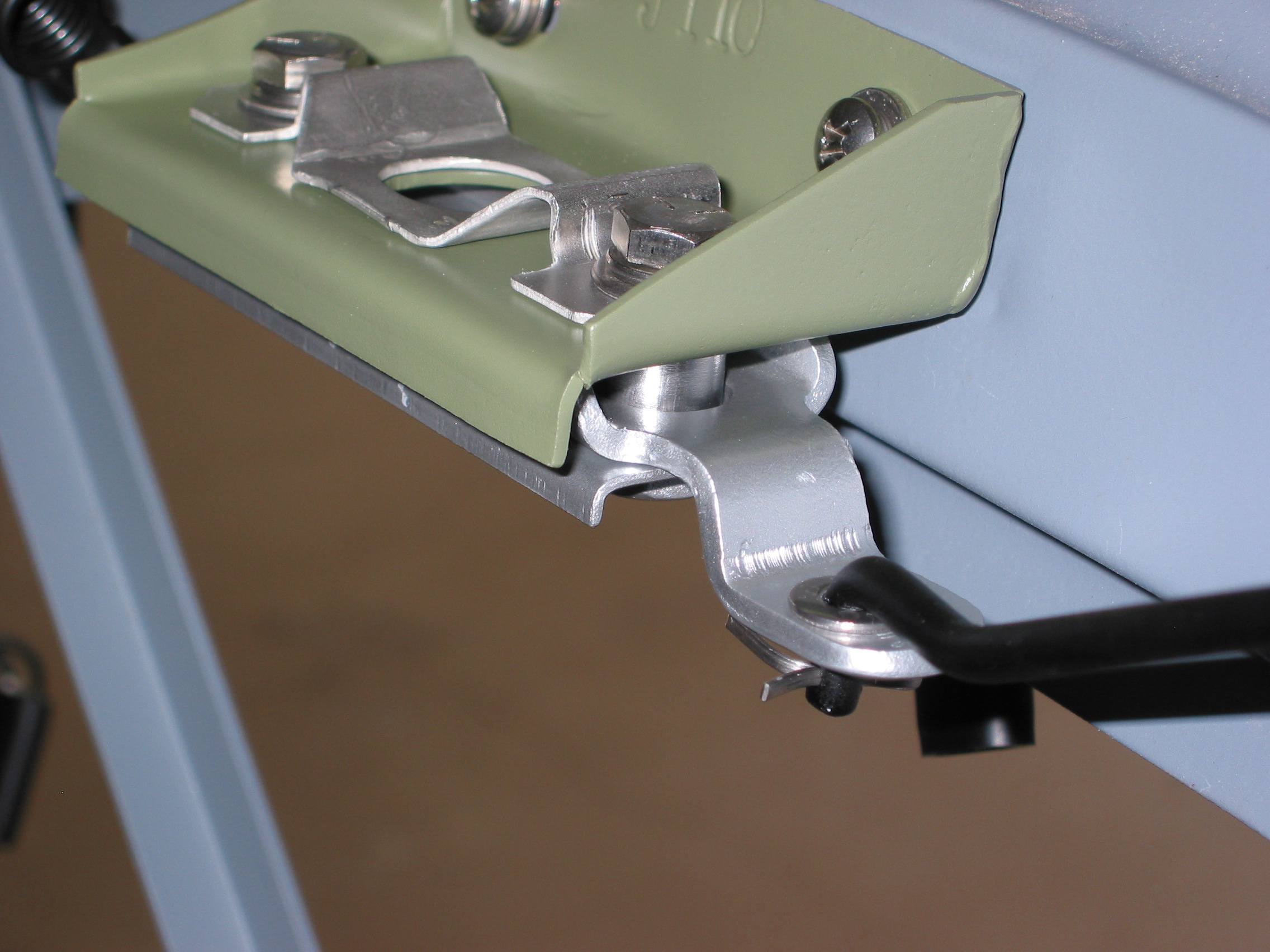
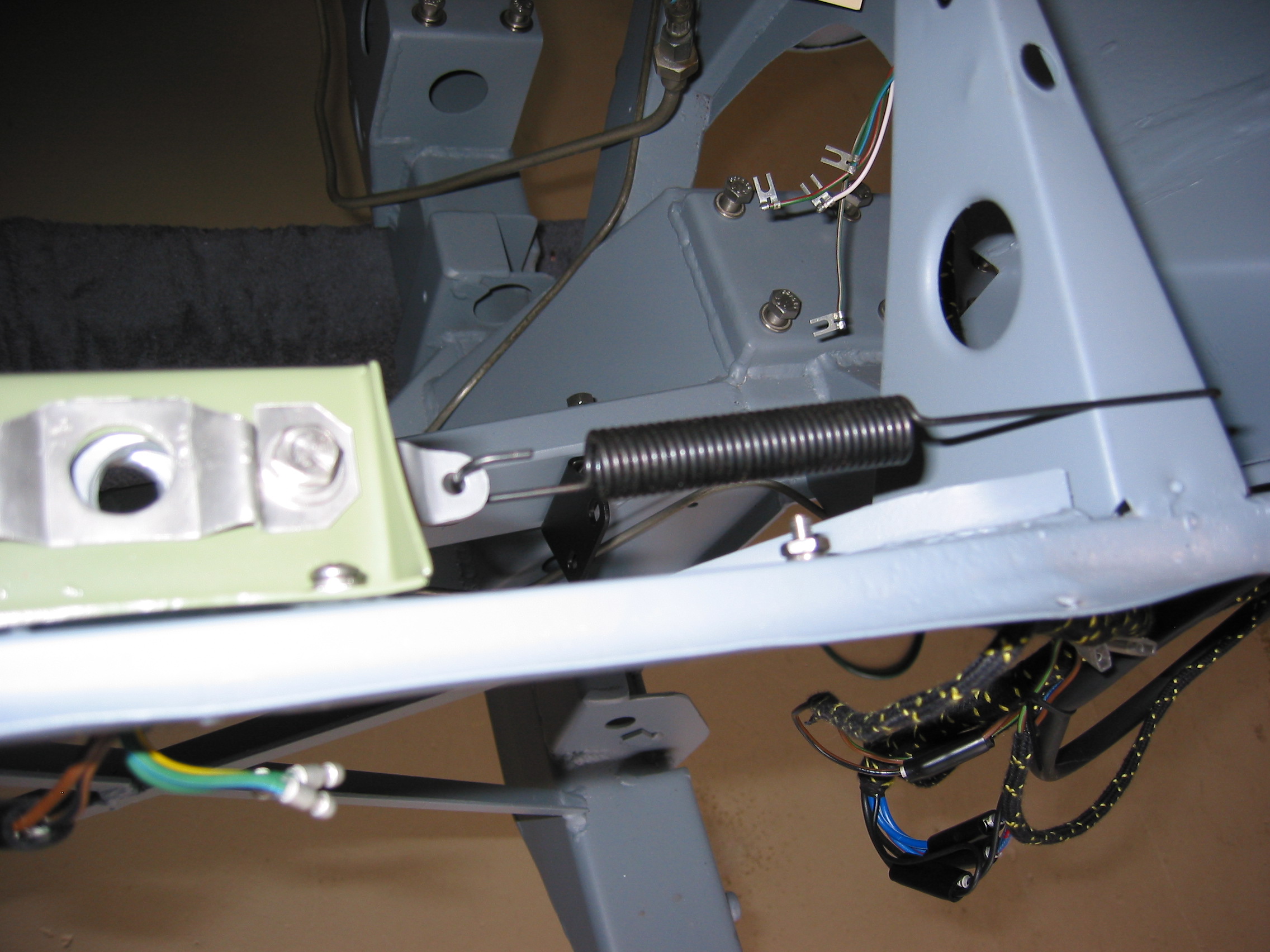
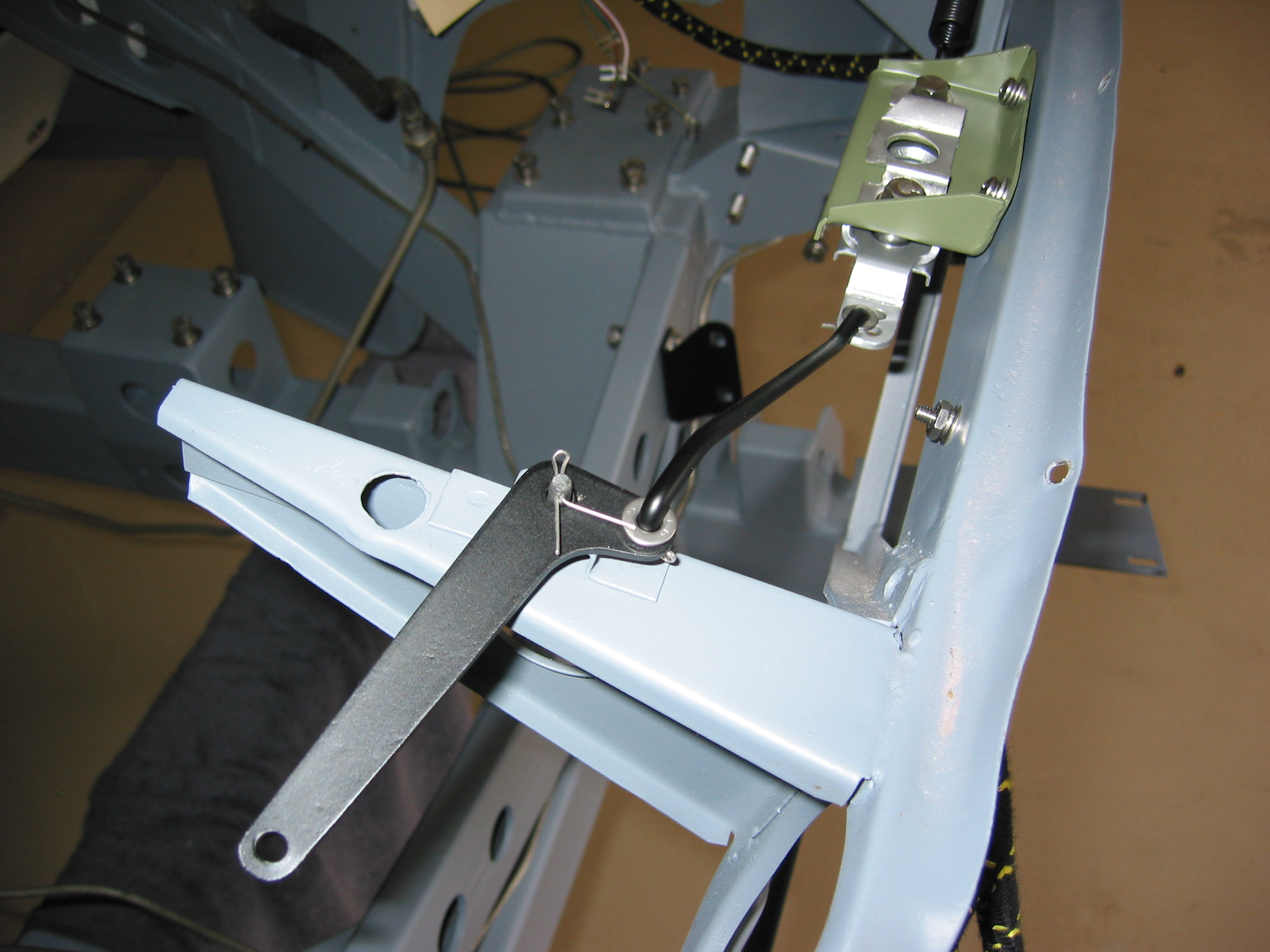
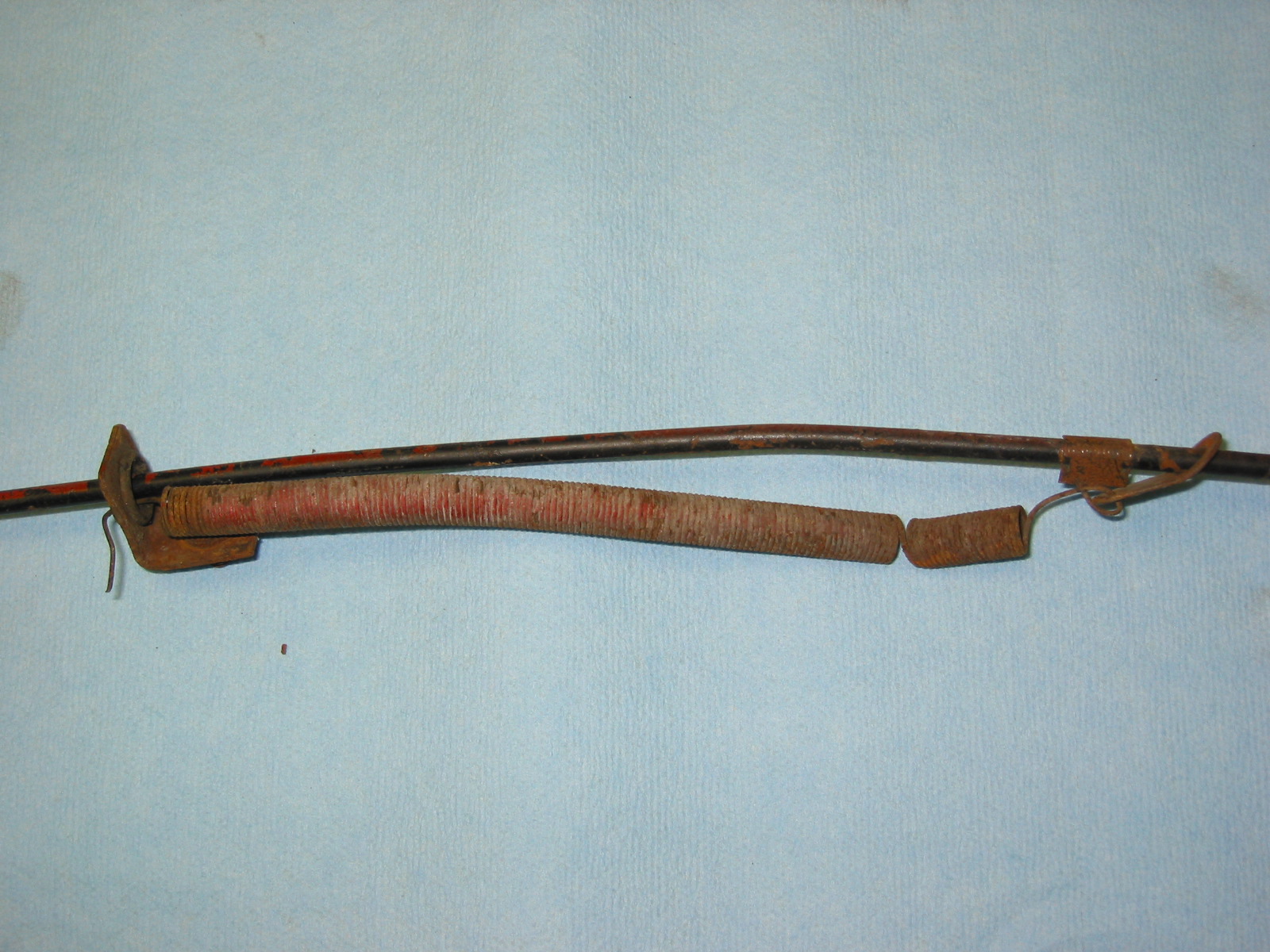
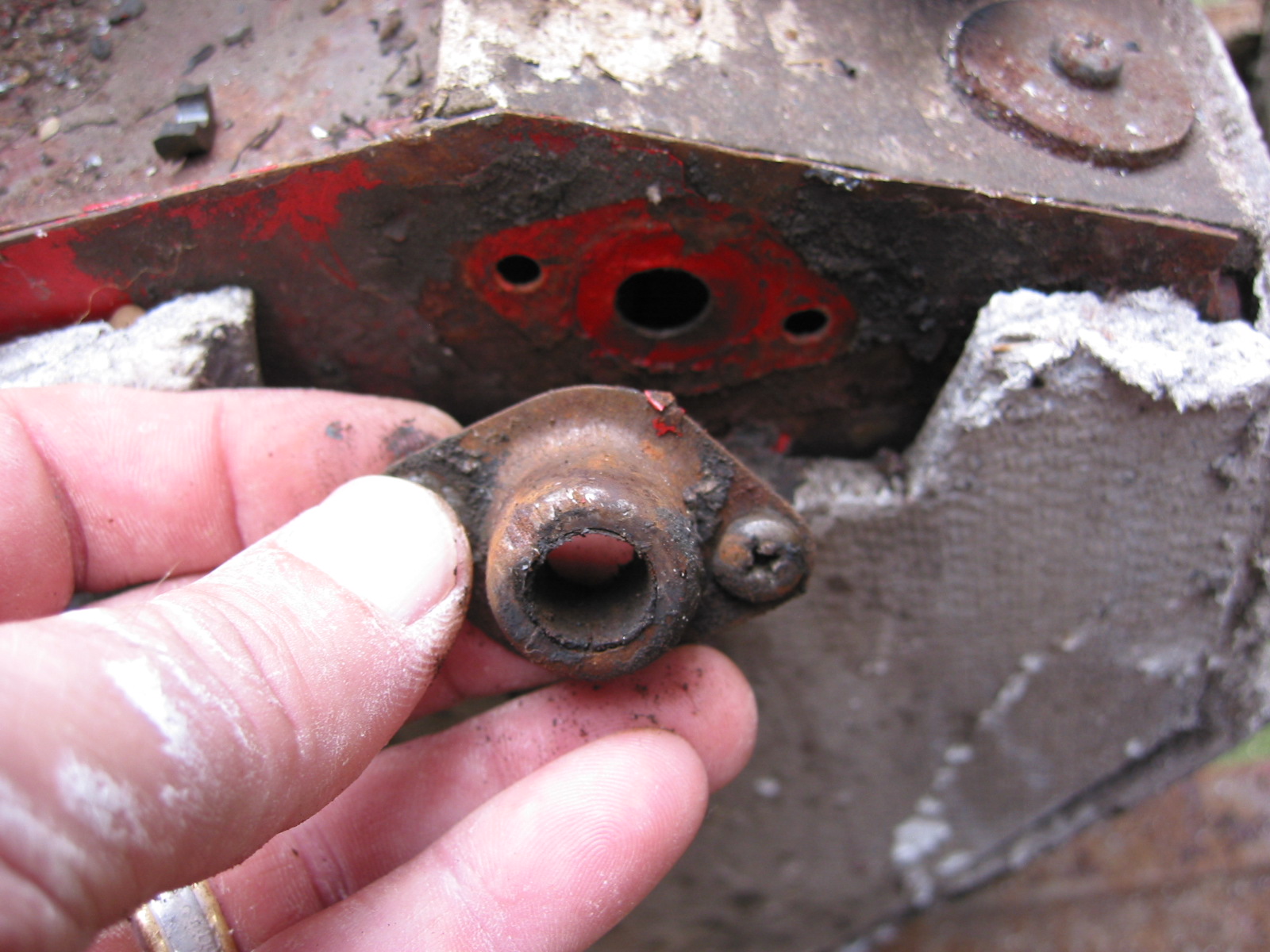
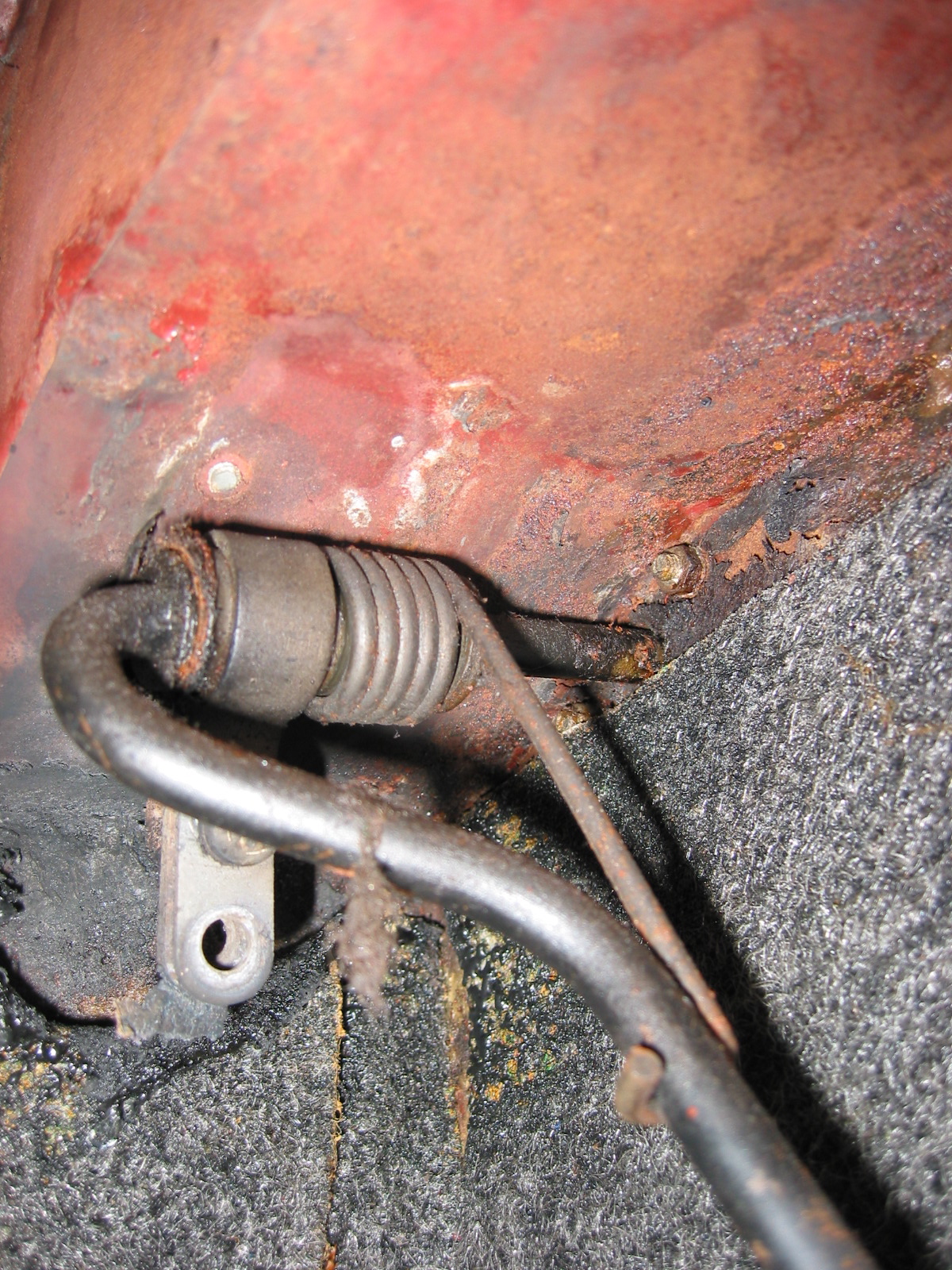
Bonnet Rod – Installed bonnet rod, spring and attachments.

Bonnet Rod New

Bonnet Rod Attached to Lever

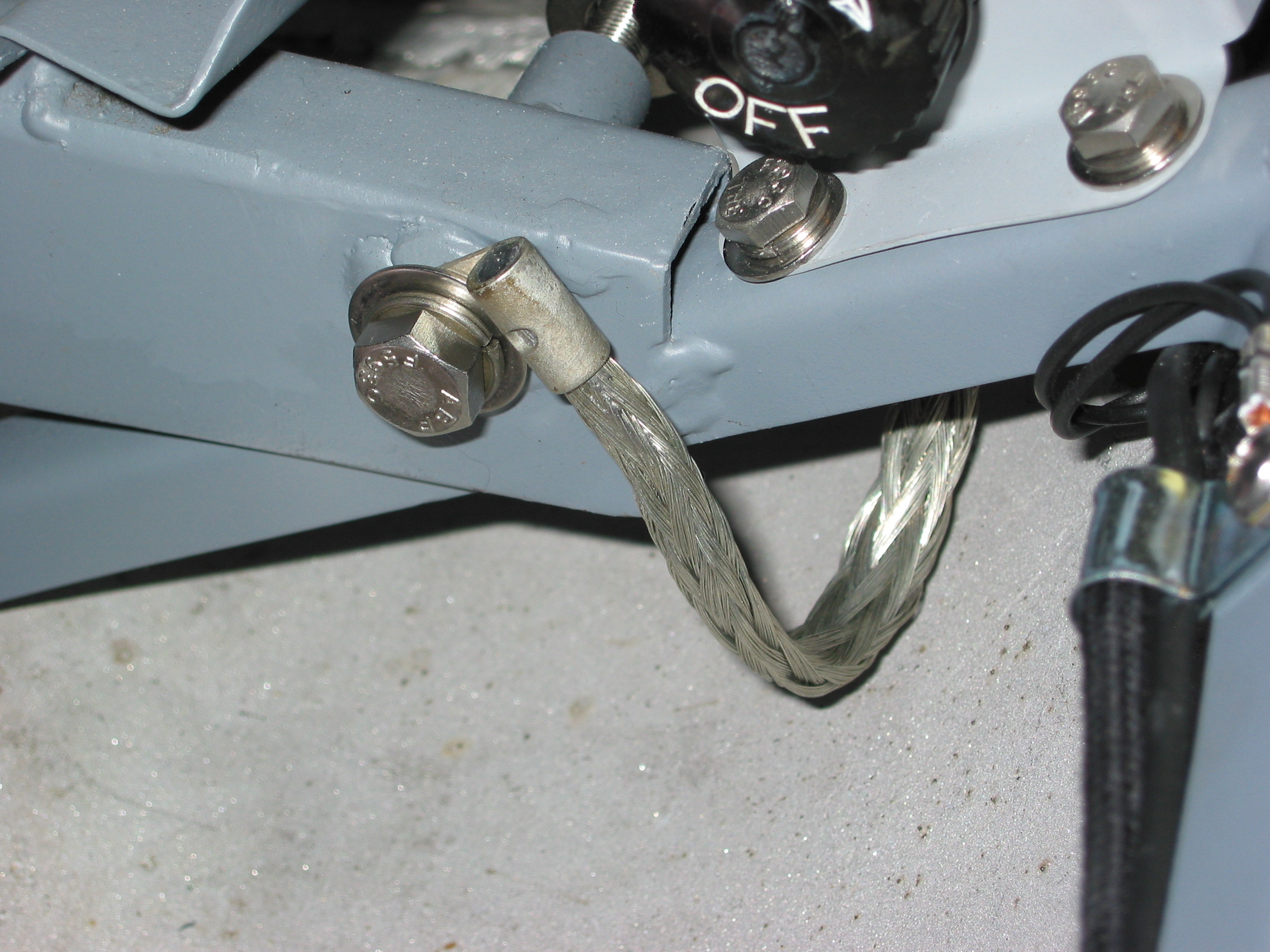
Ground Strap – Fastened electric ground strap in boot.

Boot Ground Strap

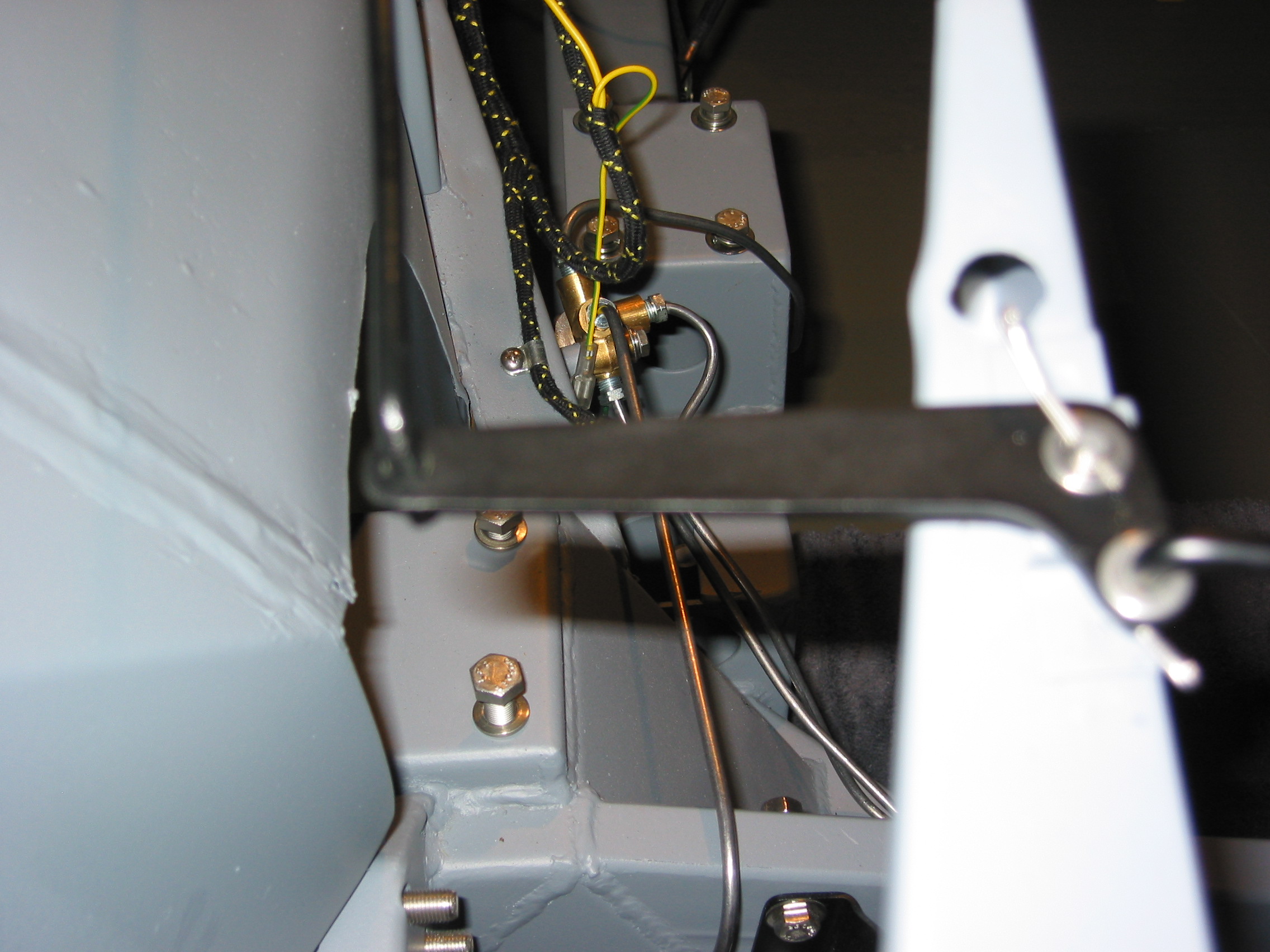
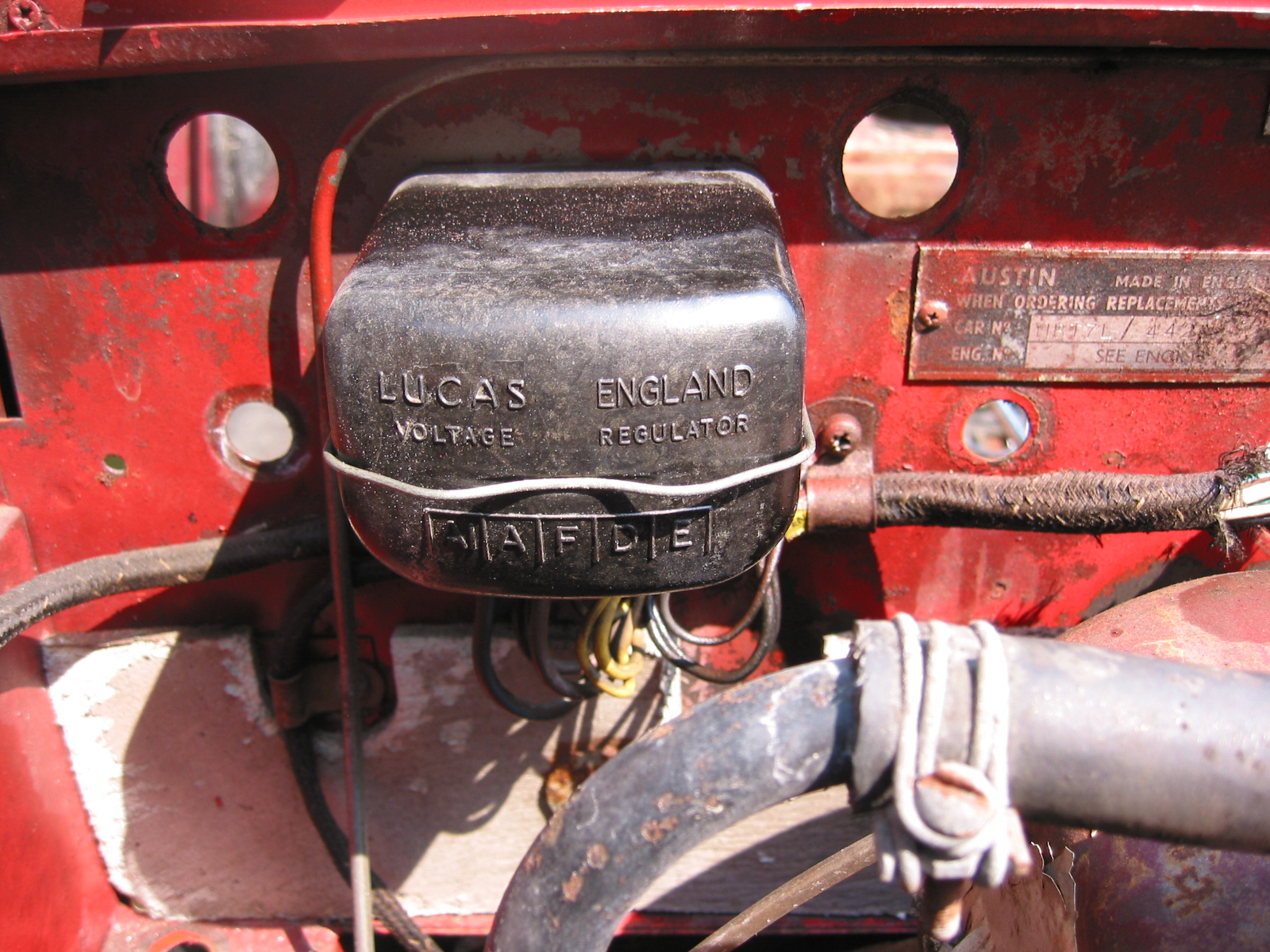
Voltage Box

A1 – Brown/Blue Wire to Light Switch on Dash

A – Two Brown Wires. One to the A1 terminal on the fuse box; One to the starter solenoid to the terminal with the battery connection.

F – Yellow/green Wire to the F terminal on the generator (alternator)

D – Two Yellow Wires. One to the no charge warning light: One to the D terminal on the generator (alternator)

E – Black Wire to Ground

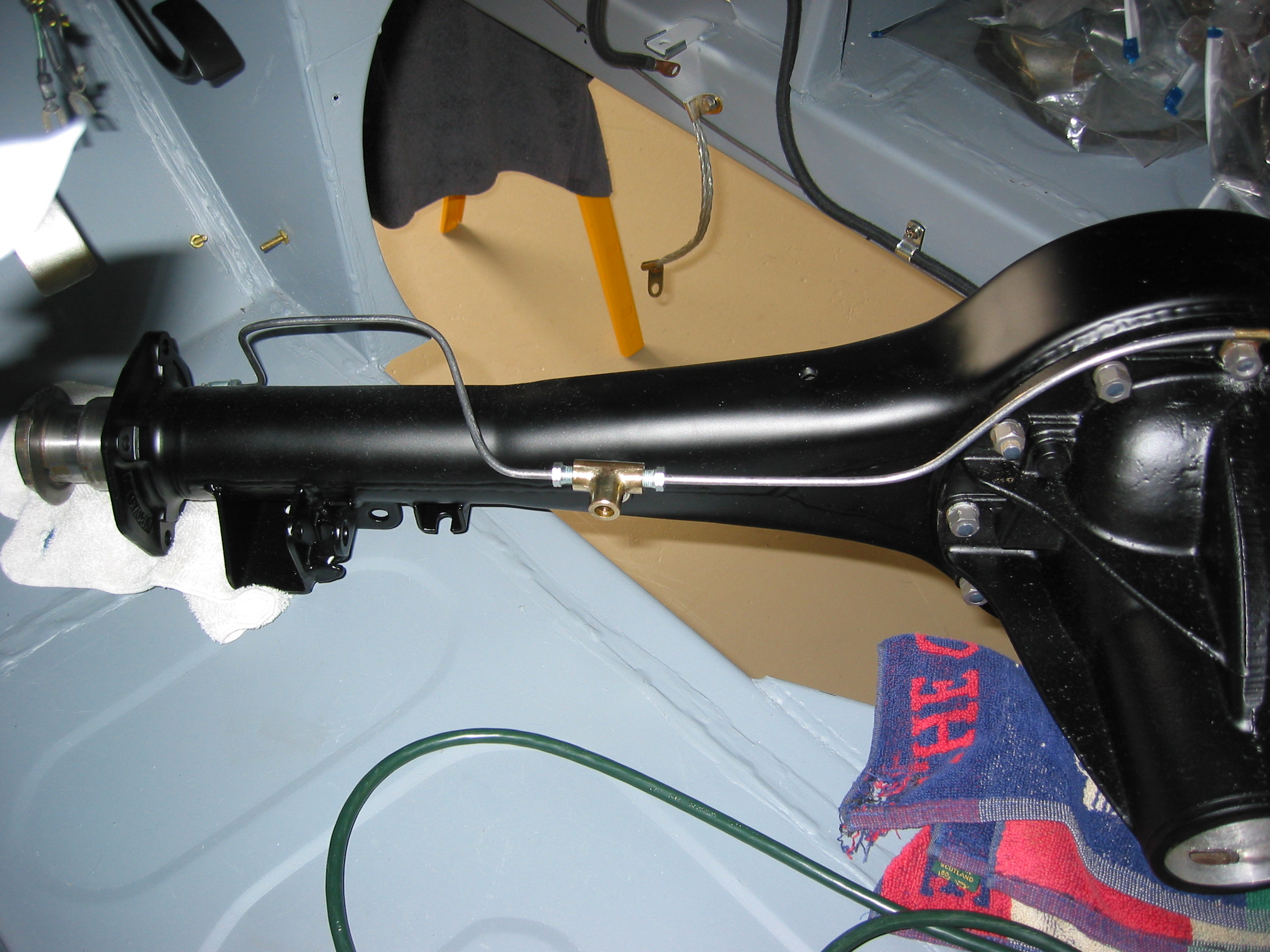
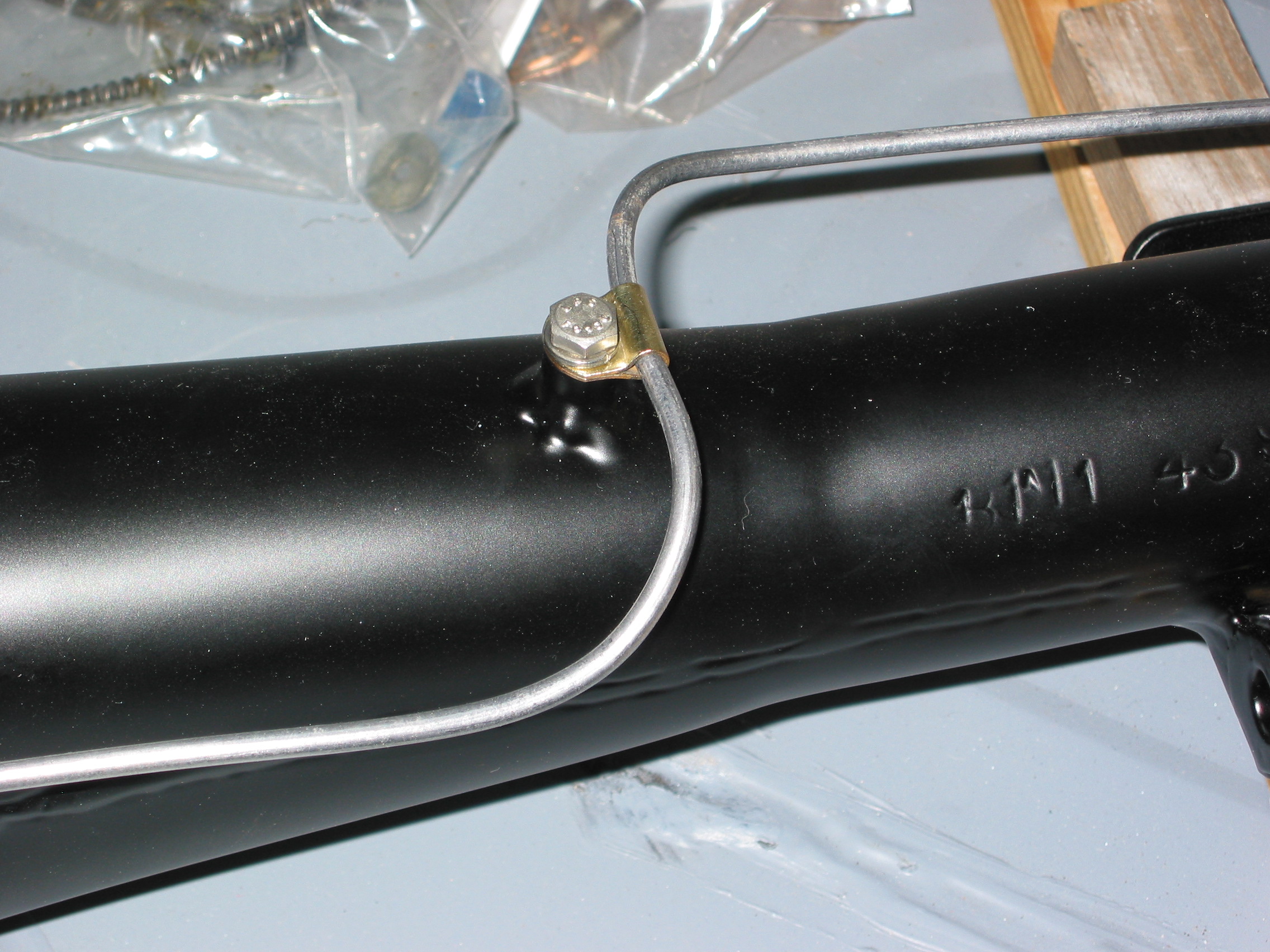
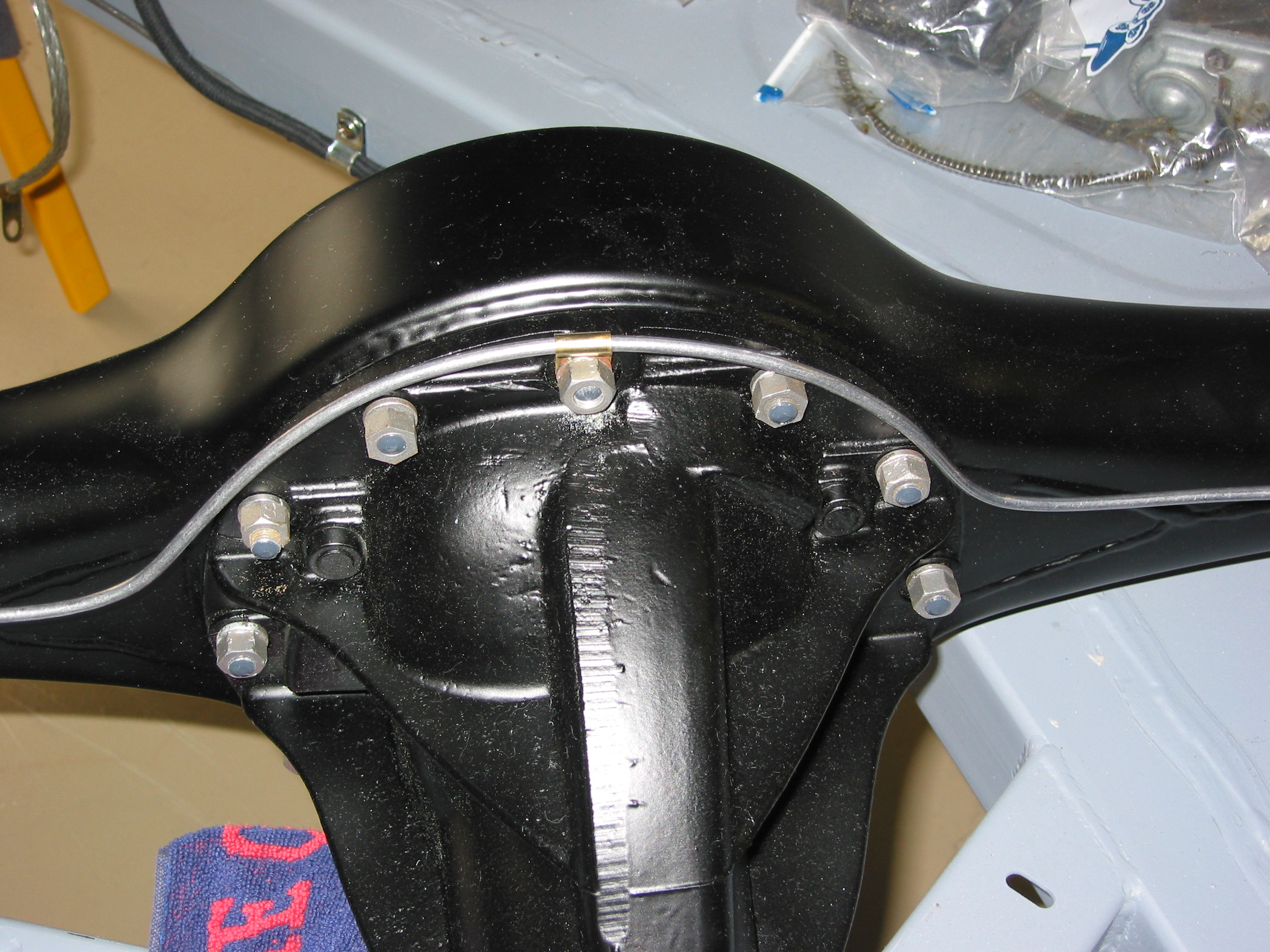
Rear Axle Assembly – Brake lines, fittings and differential added to the axle.

Rear Axle Brake line 1


Rear Axle Brake line 2

Rear Axle Brake line and differential

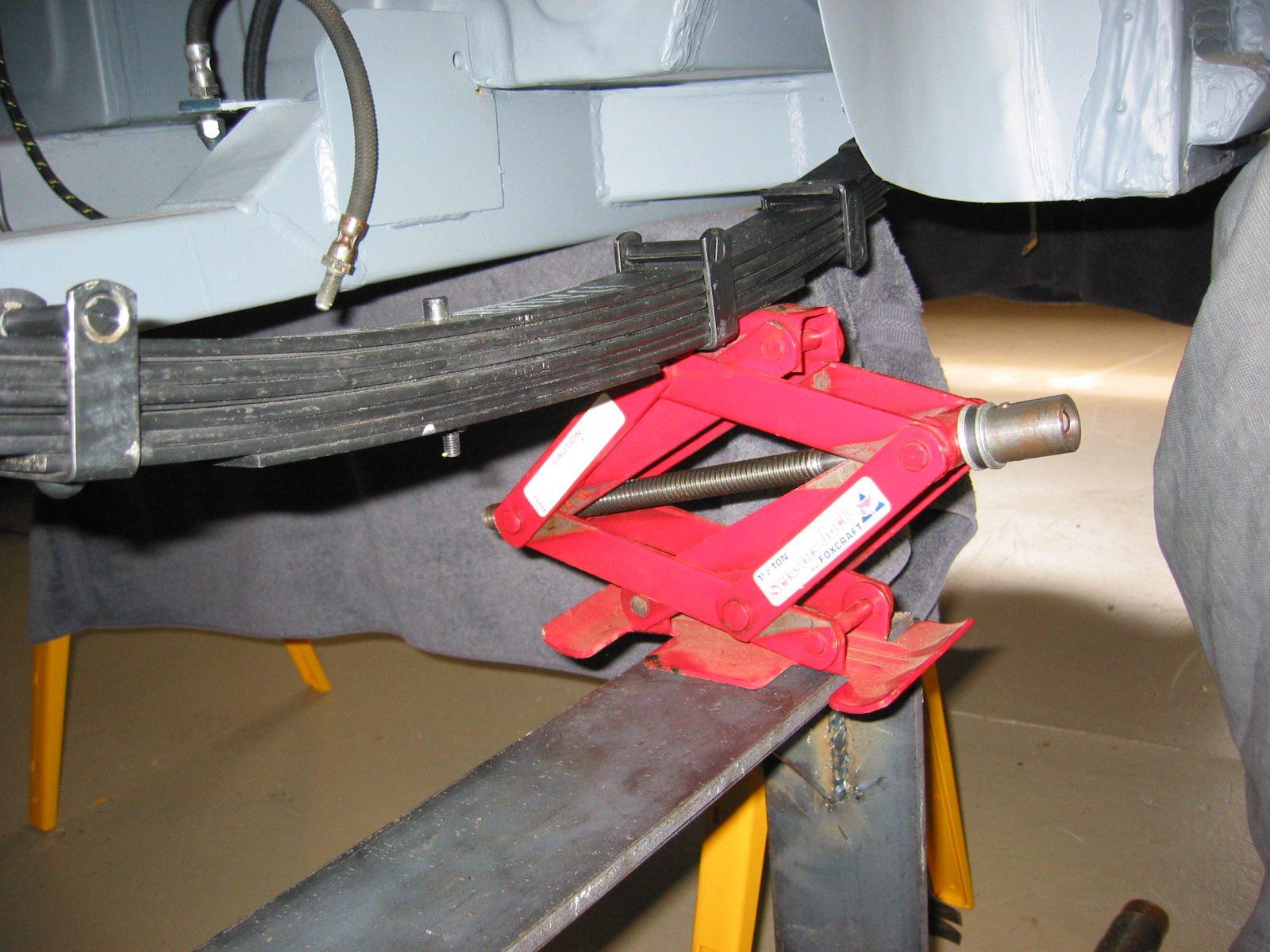
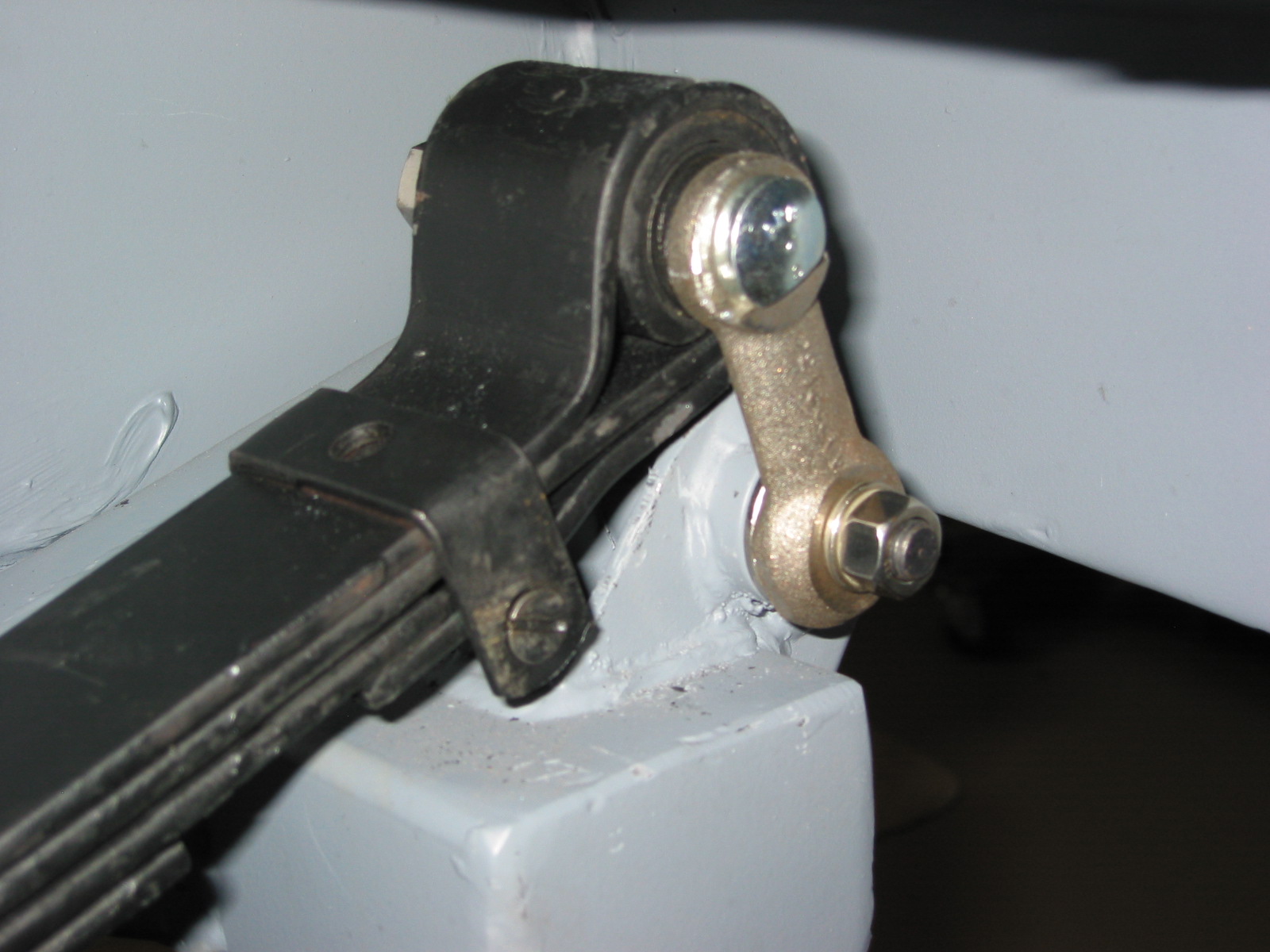
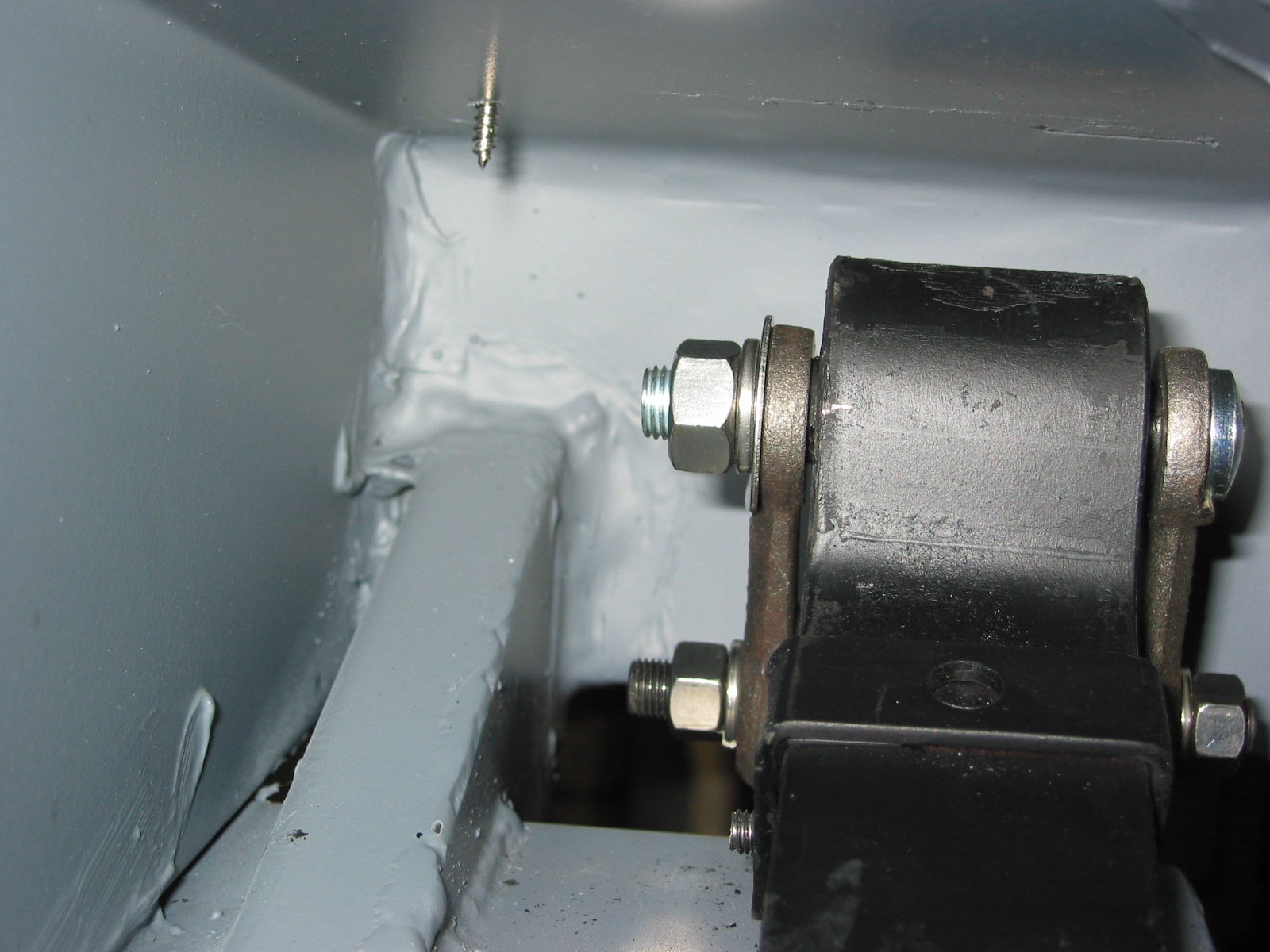
Rear Leaf Springs – Installed left and right rear springs. Used rotiserrie brace and scissor jack to lift spring. Lined up and inserted front pin which was not easy to accomplish.
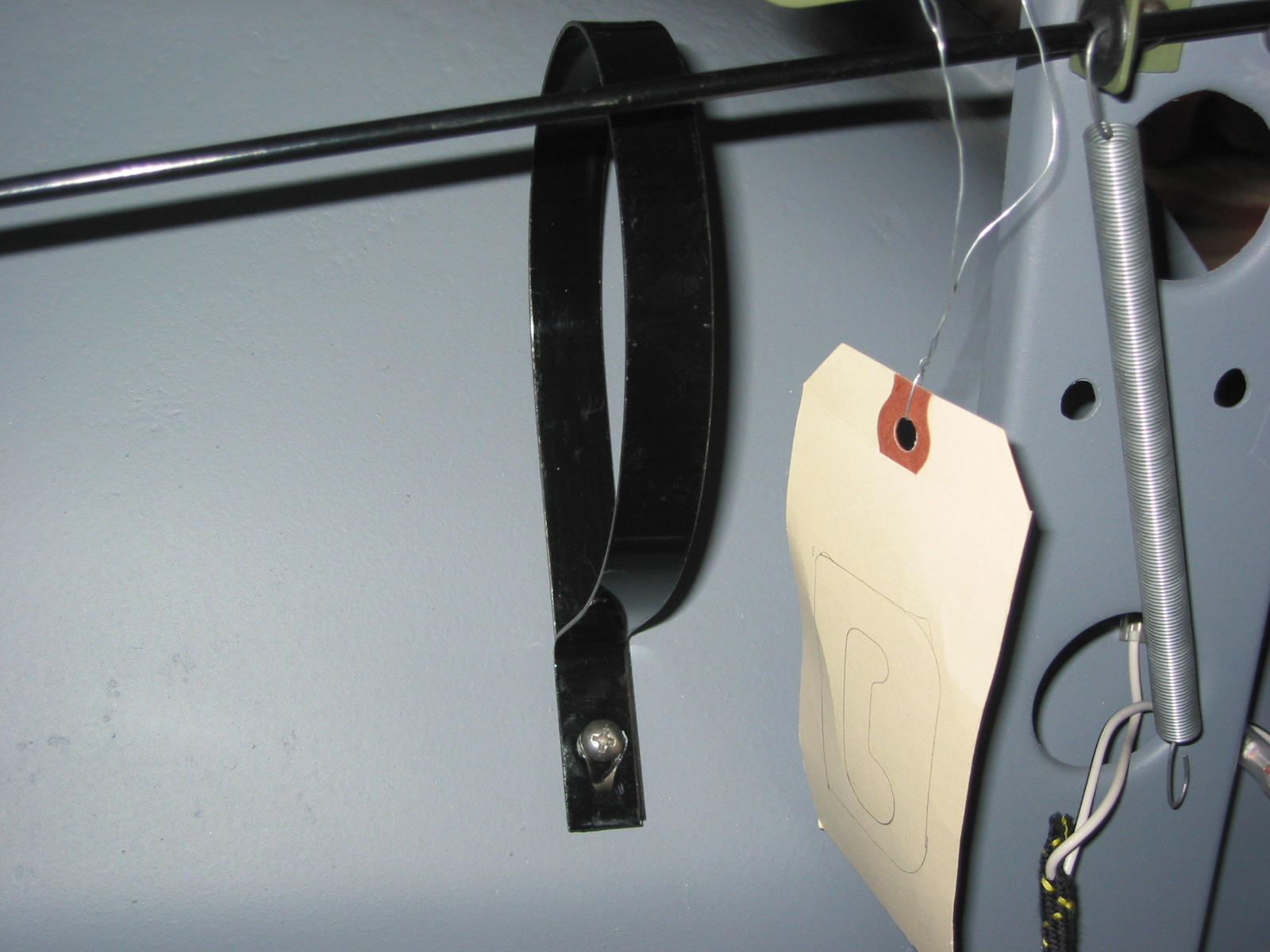
Rear Spring Install 1

Rear Spring Install 2

Rear Spring Install 3

Rear Spring Install 4

Rear Axle Rebound Pad

Rear Axle Install 2

Rear axle U Bolts 1

Rear Axle Installed 2

Blanking Plates – Installed all blanking plates and felts.

Master Cylinders – Installed brake and clutch master cylinders. Getting the pins into the pedal brackets is not easy! 

Master Cylinders

Chapter 14 – Cleaning and Trial Fitting

August 26, 2003

Wiring 

Wiring Harness – Received the new wiring harness from British Wiring Inc. We ordered the main harness, horn wiring that we probably won’t need, light pigtails and the stator tube wiring. Everything looked good. Also ordered a special pliers for pushing the wiring bullet connectors into the rubber joints which will prove to be a real time saver.

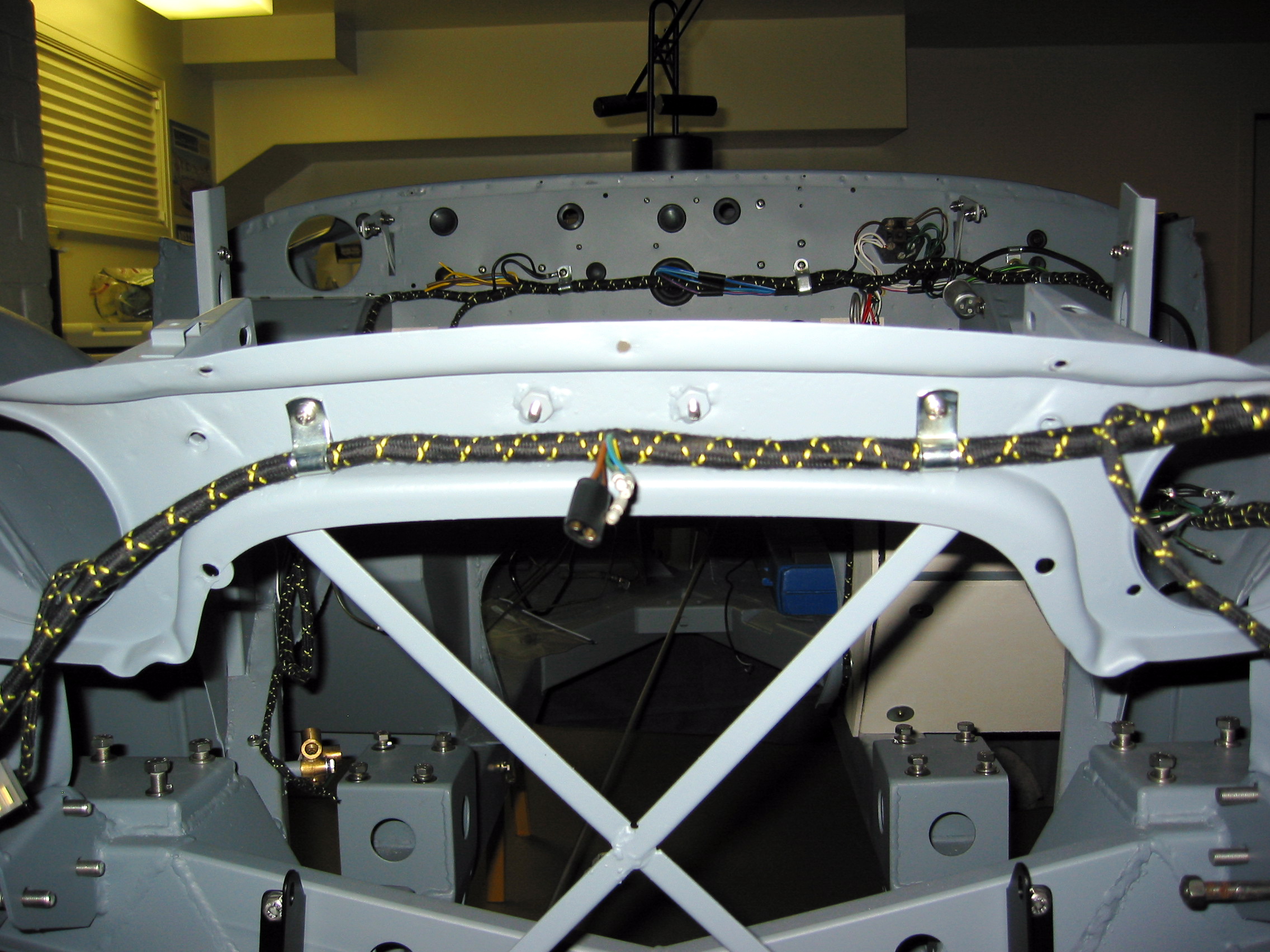
After taking the harness through the firewall, the major components were separated to go down the two sides of the car. 

Flasher – First connected the three wires to the flasher – green, light green, and green/brown. 

Wiper Harness – Then connected the wiper harness with connectors and fed it through the firewall – black, black/green, and green. 

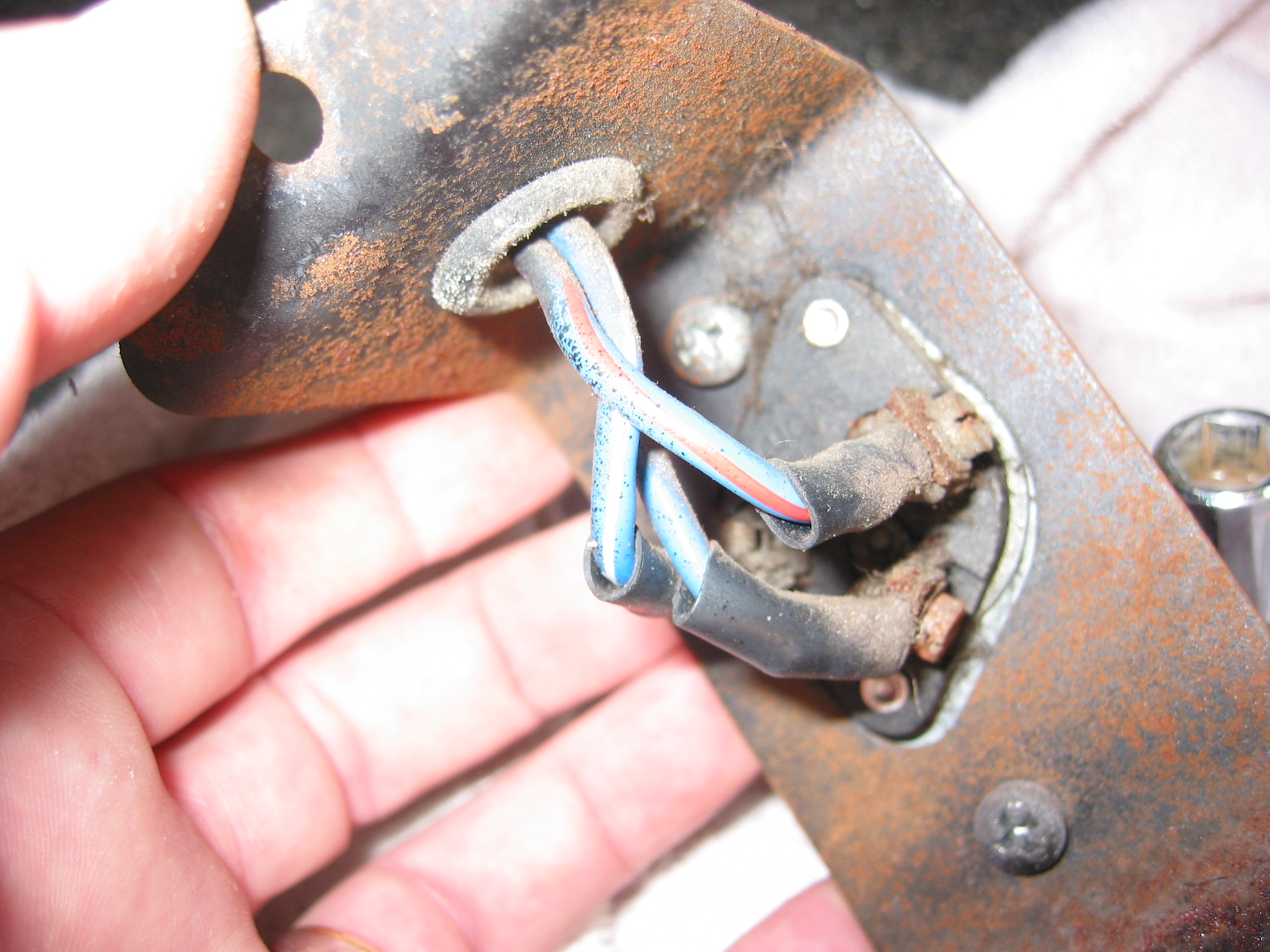
Dimmer Switch – The wires for the dimmer switch were then connected and fed through the top of the footbox and connected to the switch – blue/red, light blue, and blue/white.

Fuse Panel – Wiring was then connected from the harness to the fuse box. Three white wires to the lower left terminal; one heavy brown wire to the top left terminal; two brown/green wires to the upper right terminal; and five green wires to the lower right terminals.
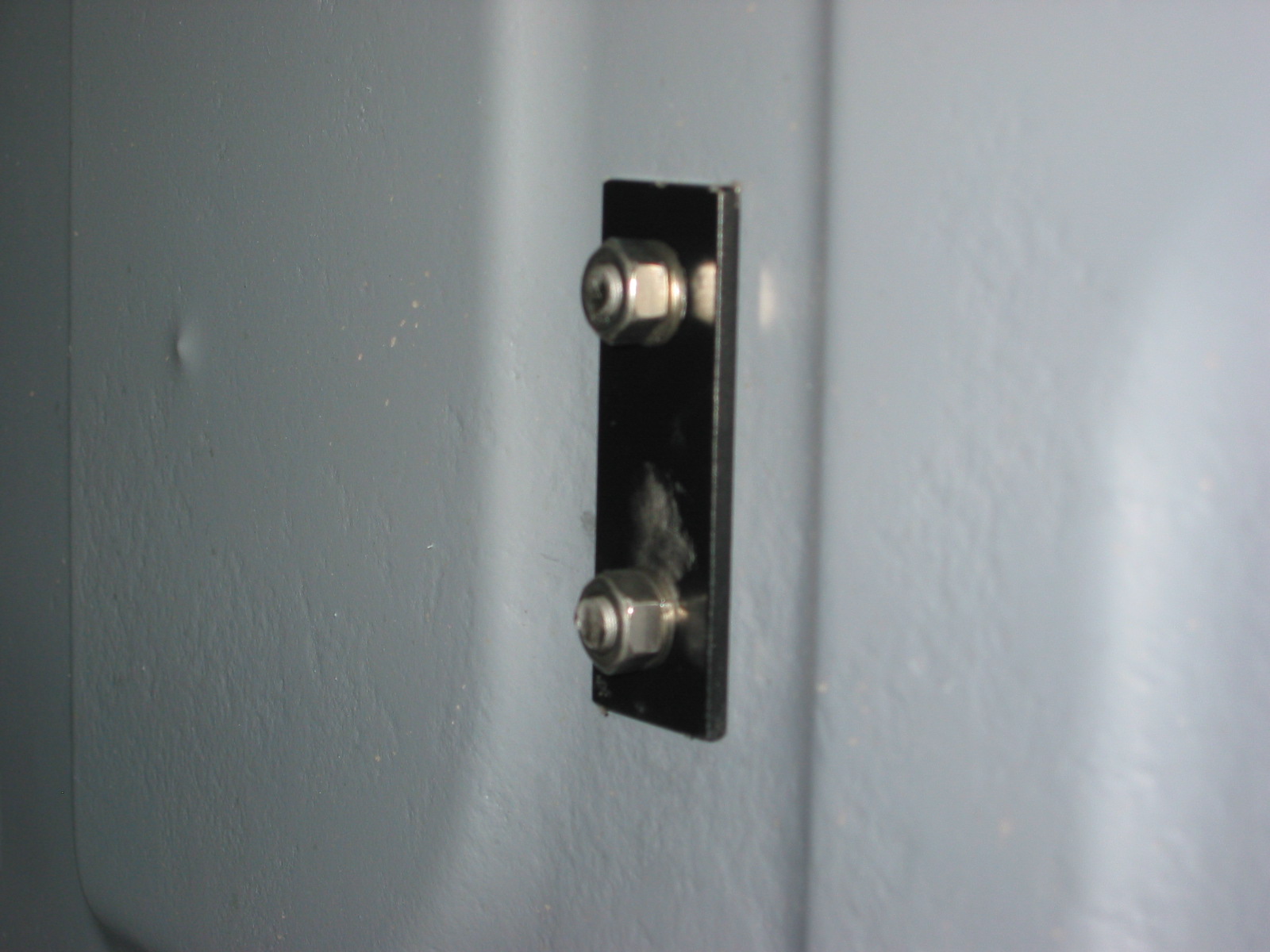
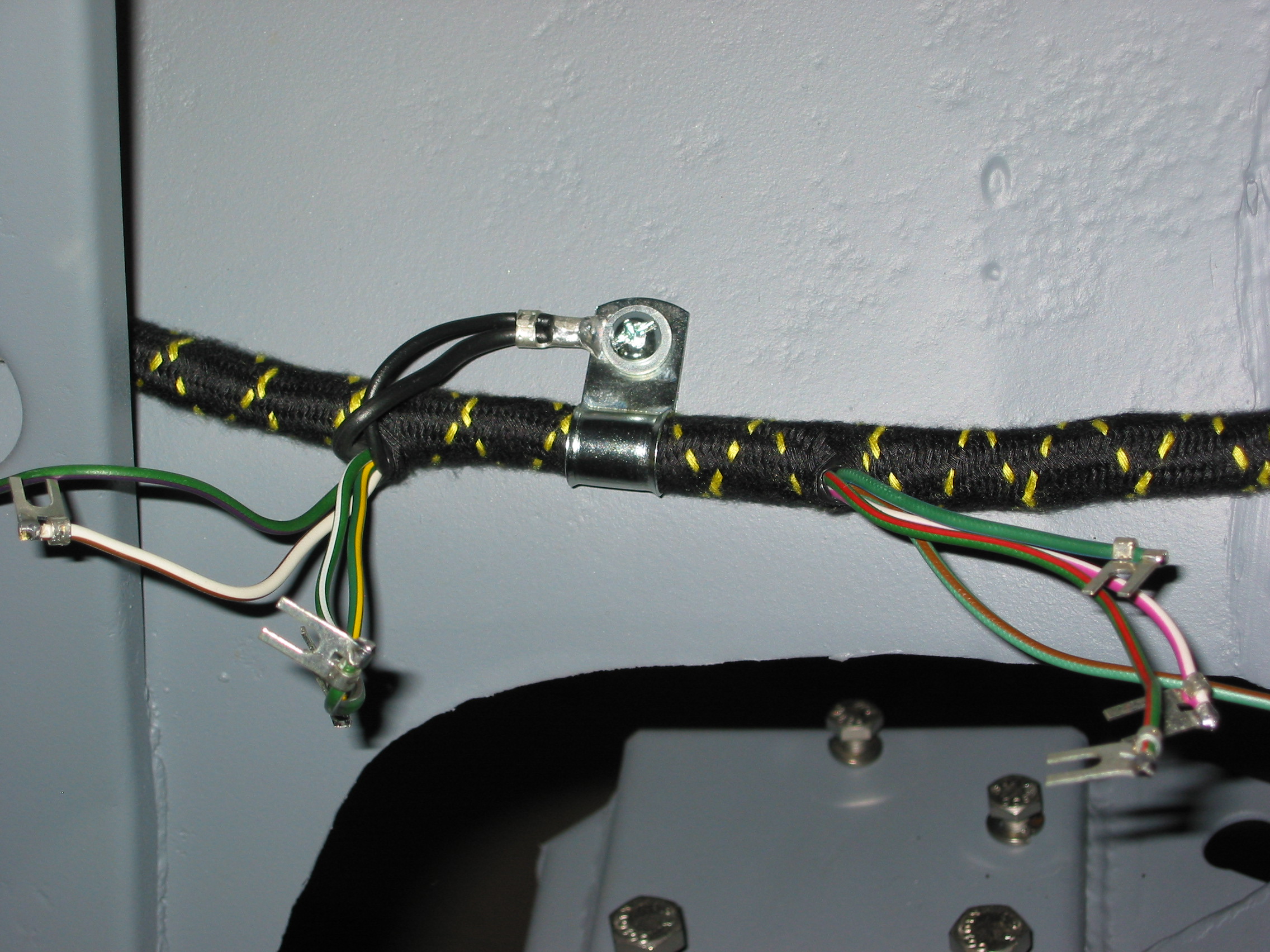
Throttle Switch – The white and white/purple wires intended for the throttle switch will not be used so rubber connectors were placed on the ends to avoid contact with metal. The wires were tucked below the fuse box.

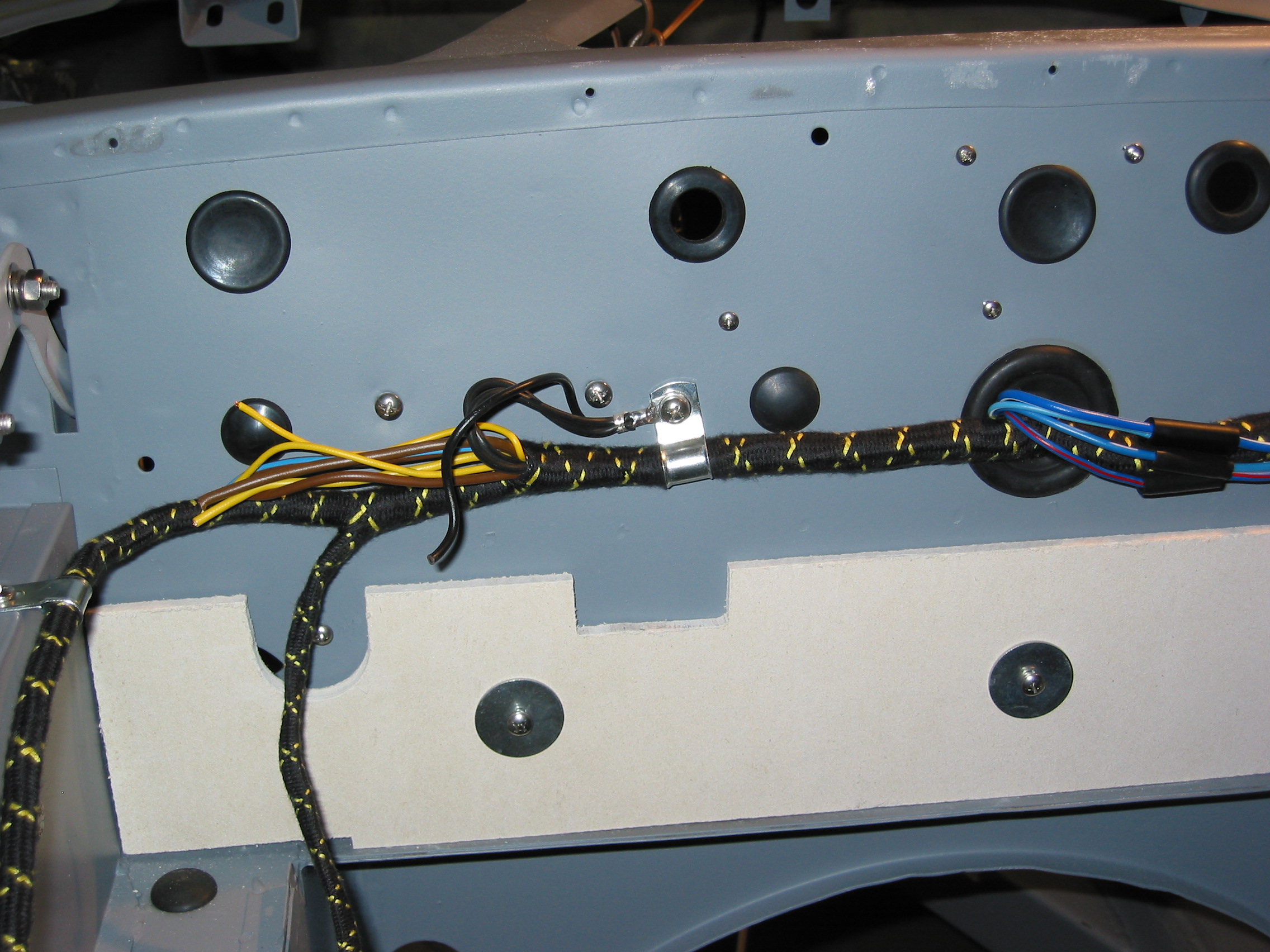
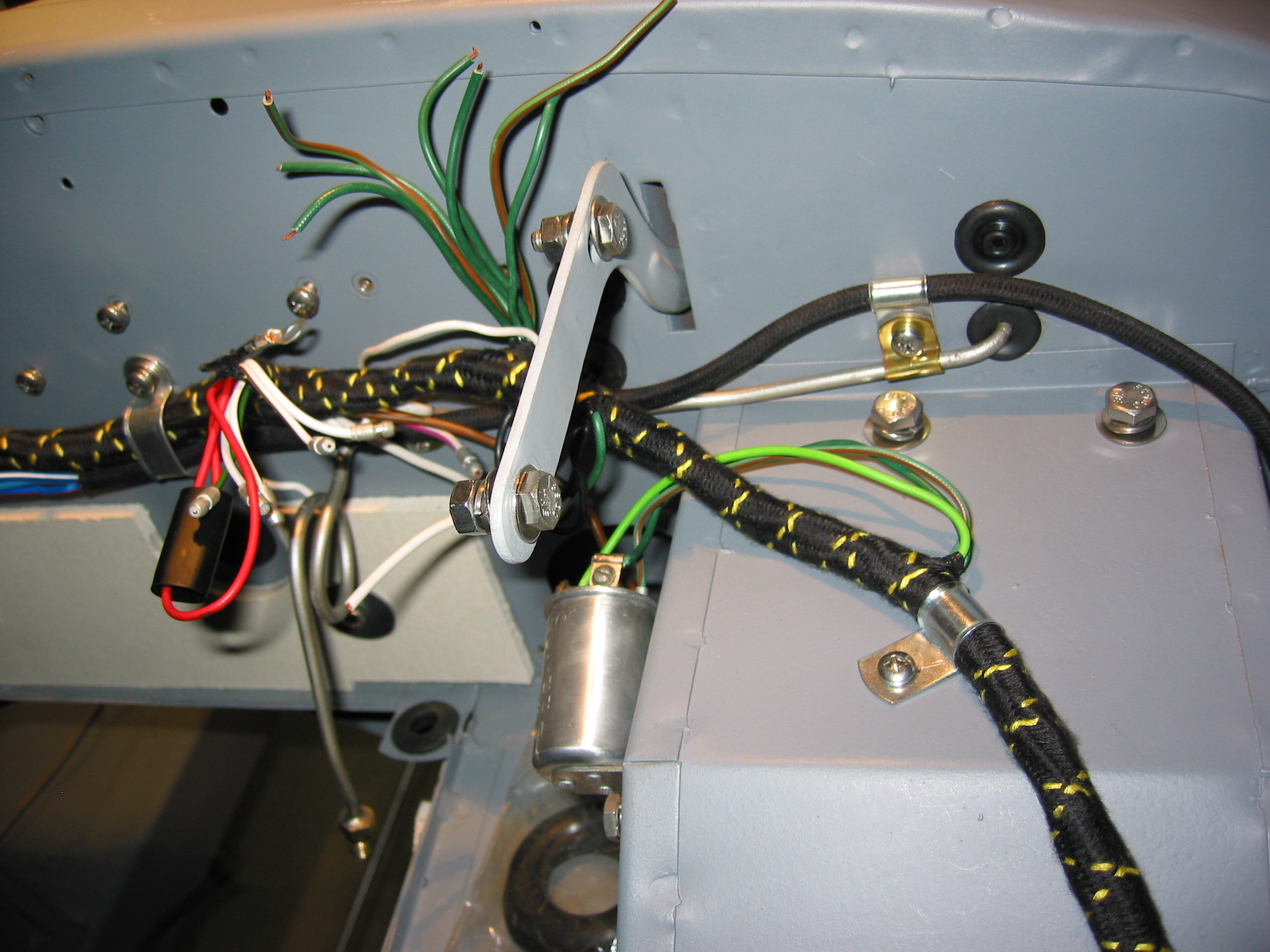
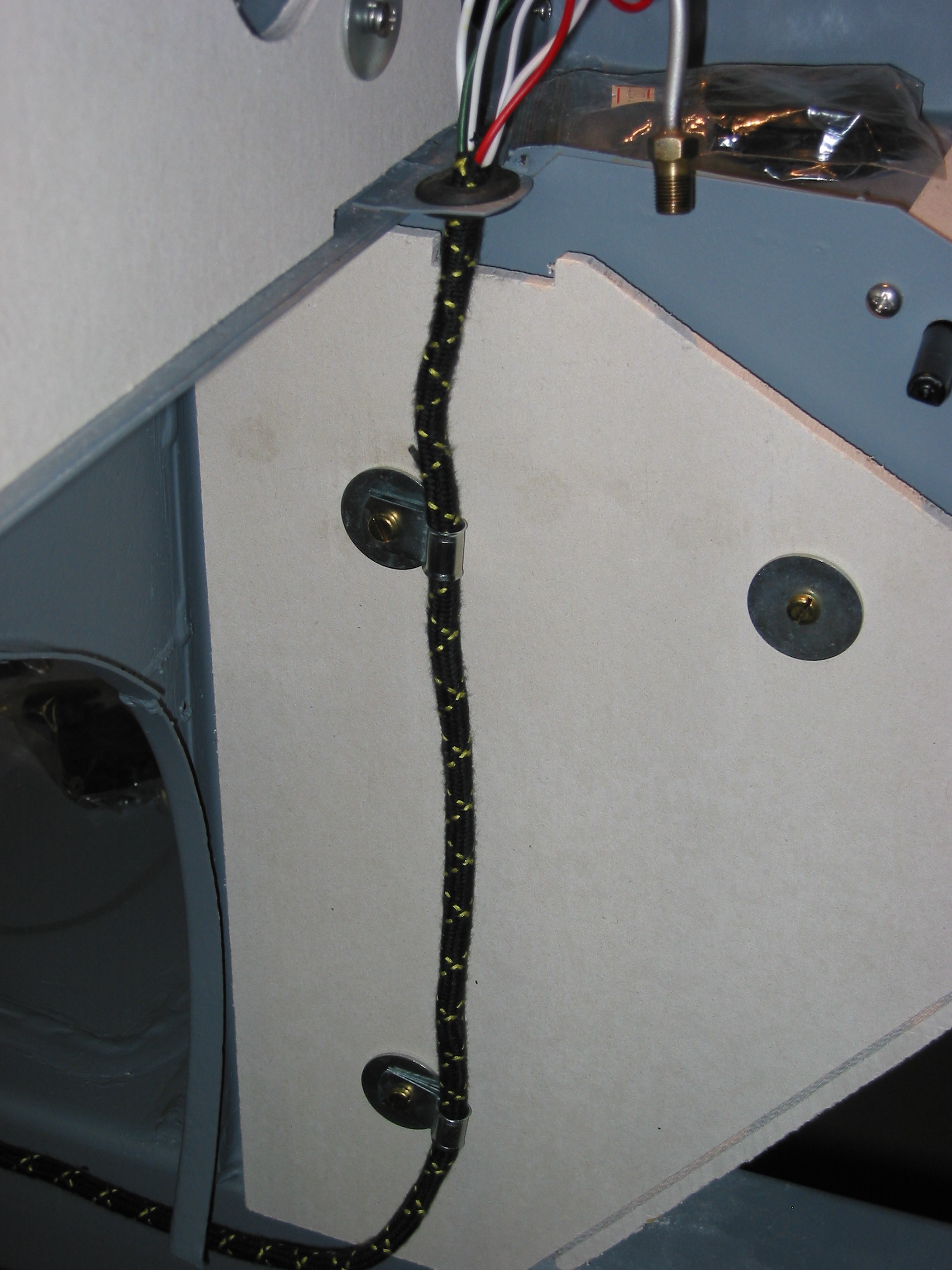
Boot Harness Extension – Six wires were then connected from the firewall harness to the harness that goes to the fuel pump and boot for the lights. The harness runs down the footbox insulation panel with two clips. The harness was clipped to the master cylinder box and then taken through the welded clip on the wheel well. 

Flasher Relay Box – Wires on the left side will then be connected to the flasher relay box including a black ground wire at the base of the box. 

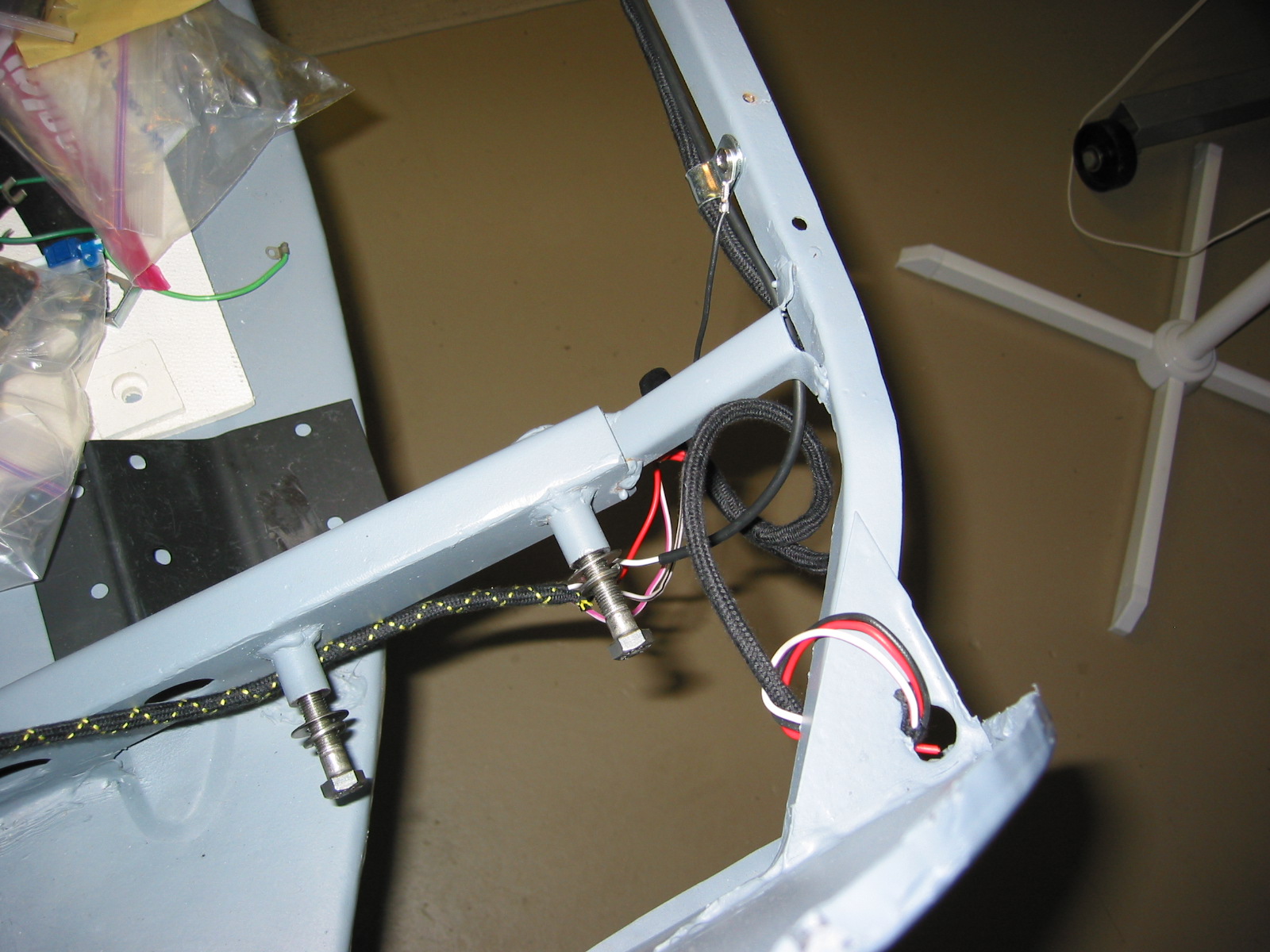
Lights and Horns – The wires were routed to the front of the superstructure for the lights and the horns.

Voltage Regulator Box and Brake Light Switch – The harness was also routed down the right side, by the voltage box and down the right side to the brake light switch.

Wiring 3

Wiring 1

Wiring Fuse Block 2

Wiring 6

Wiring 8

Wiring 9

Wiring 12

September 9, 2003

Heater Vent Doors – Installed the left and right heater outlet vent door assemblies.

Air Vents 1

Air Vents 2

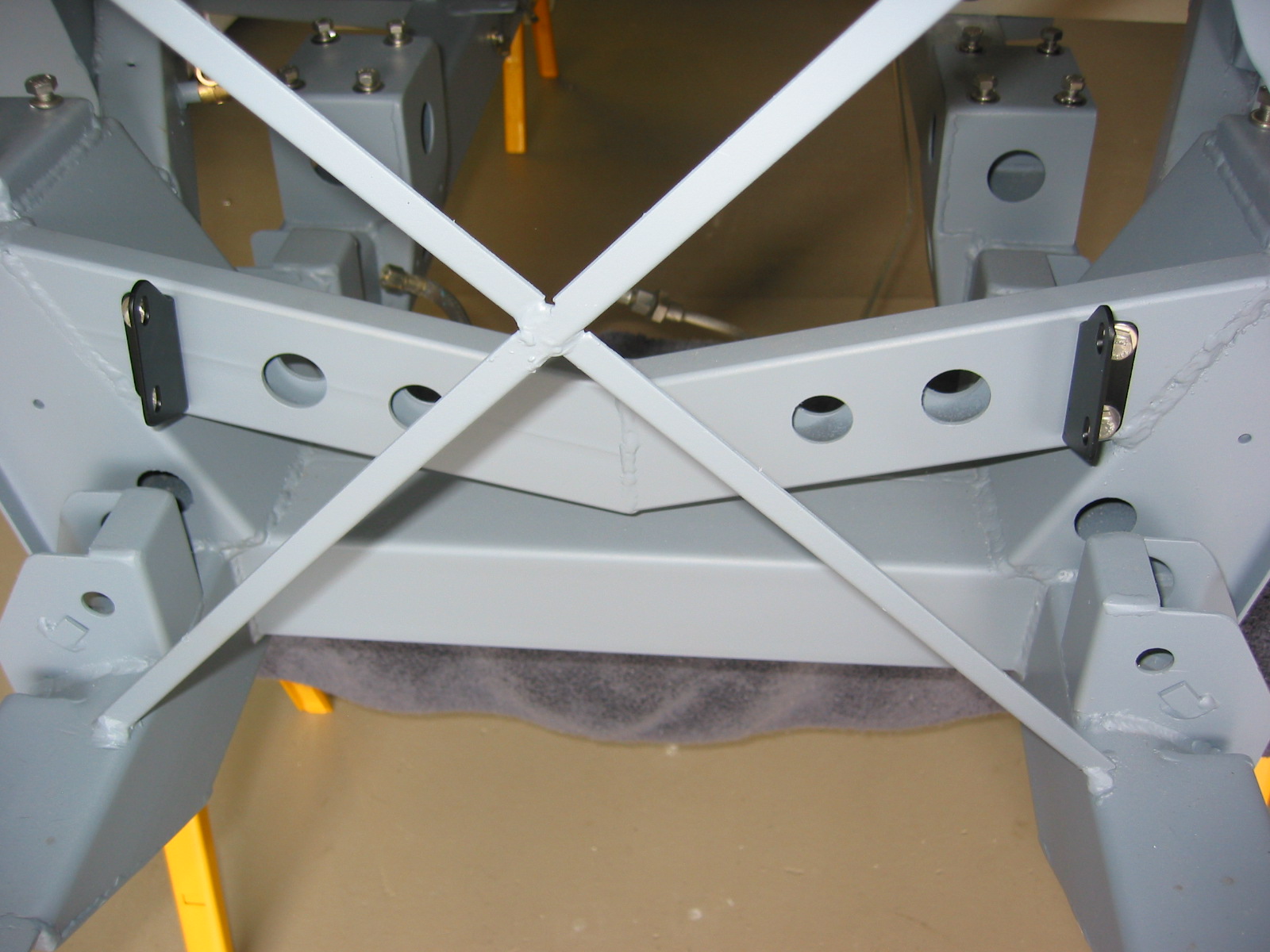
Bump Boxes – Installed painted bump boxes. Secured threaded horn mounting plates.

Bump Box Painted 1

Steering column bracket tapped plate

Parcel Tray and Fascia Brackets – Installed parcel tray support bracket and fascia support brace.

Parcel Tray Brace

Fascia Brace

Steering Column Steady Bracket – Installed steering column steady bracket, but unclear about which windscreen post hole it should mount to – will check it out later.

Steering support Brace

Steering Column Steady Bracket 2

Bonnet Prop Rod  and Brake Reservoir Brackets – Installed bonnet prop rod bracket, pivot, and the brake reservoir mounting bracket.

Brake Reservoir Bracket

Bonnet Rod Bracket

Bonnet safety catch and prop rod bracket

Bonnet Latch Bracket and Release Mechanism – Assembled and installed the bonnet latch/release mechanism.

Bonnet Catch painted 4

Bonnet Catch painted 3

Bonnet Catch painted 2

September 13, 2003

Wiring Continued

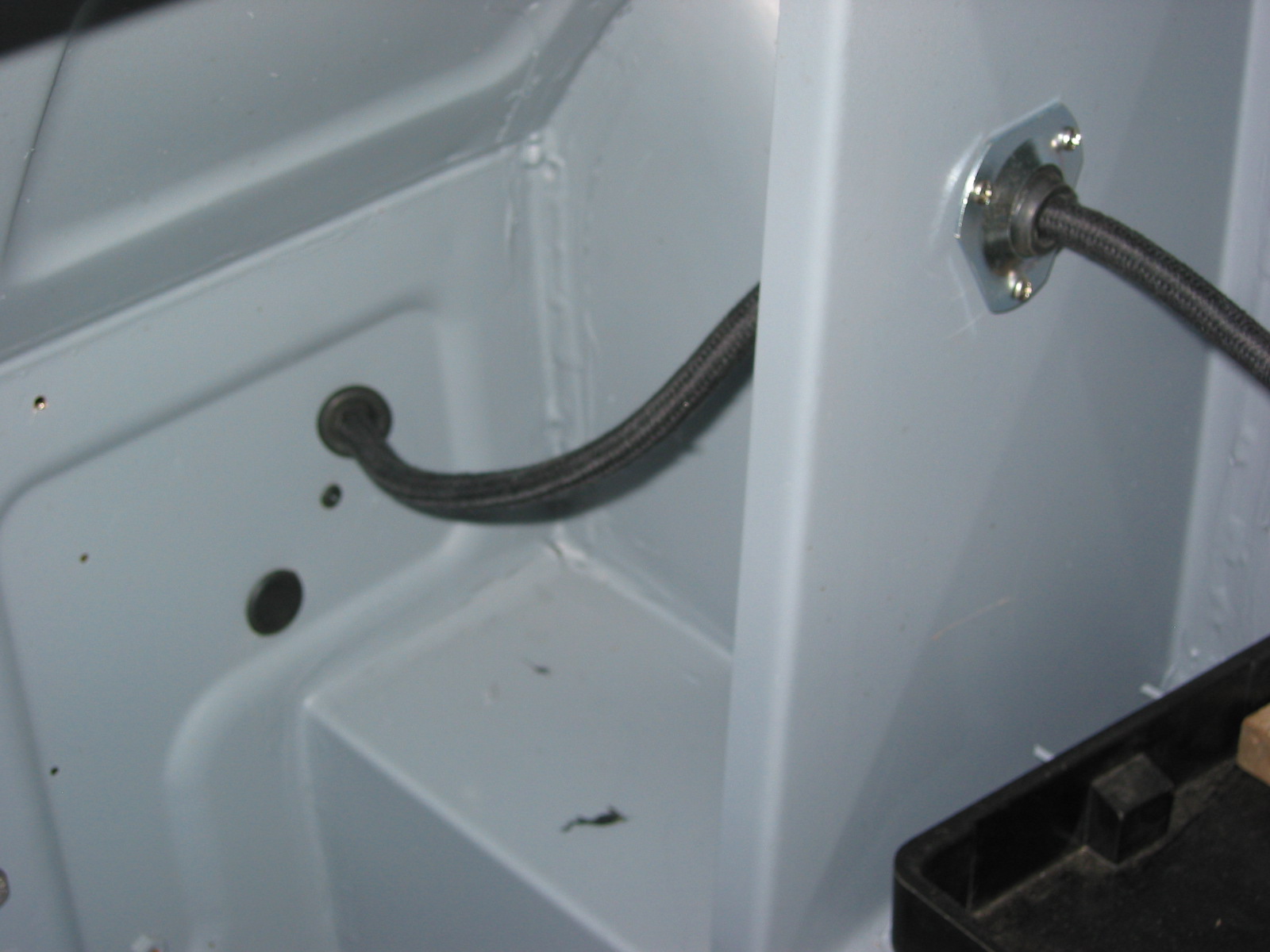
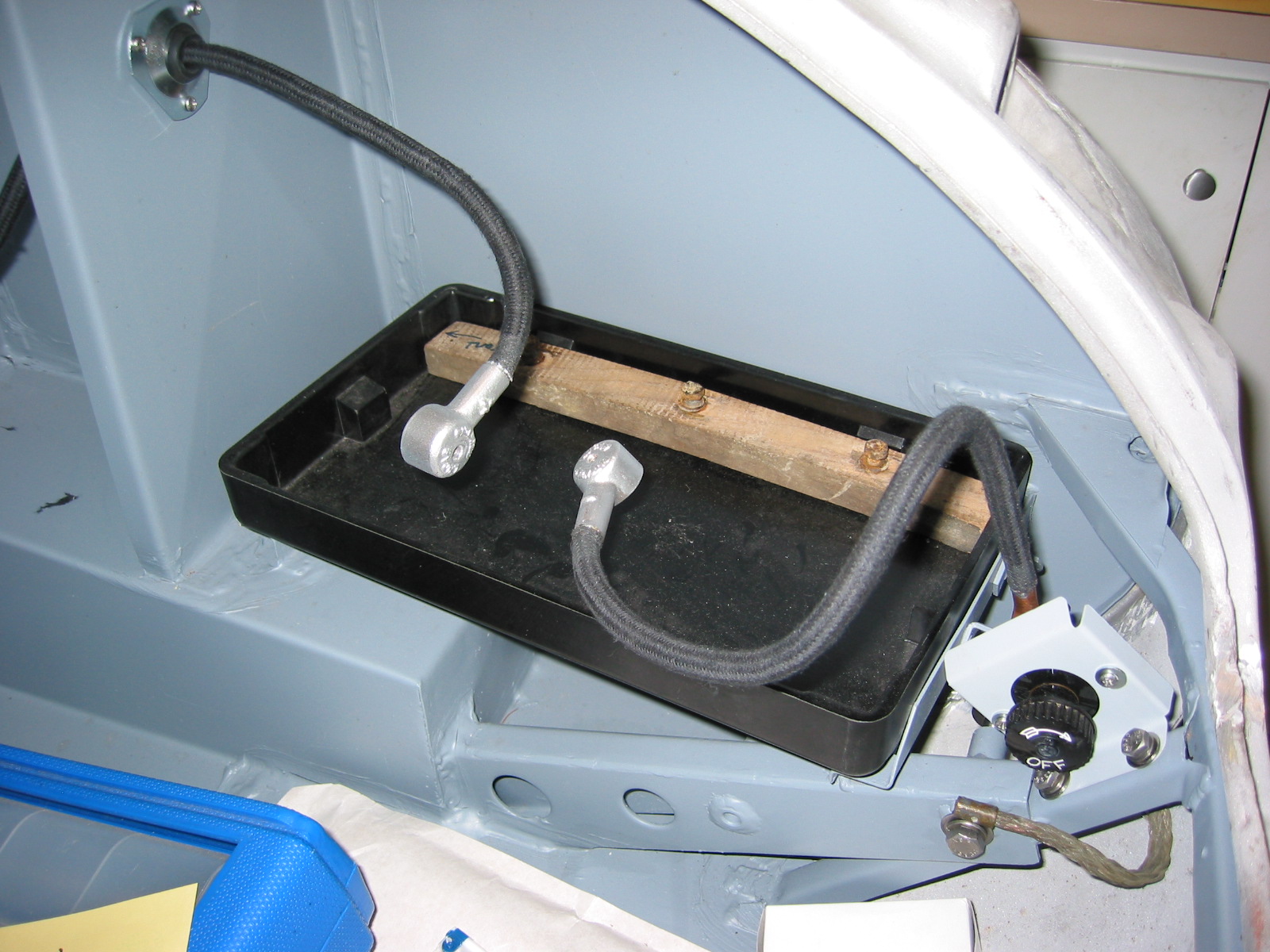
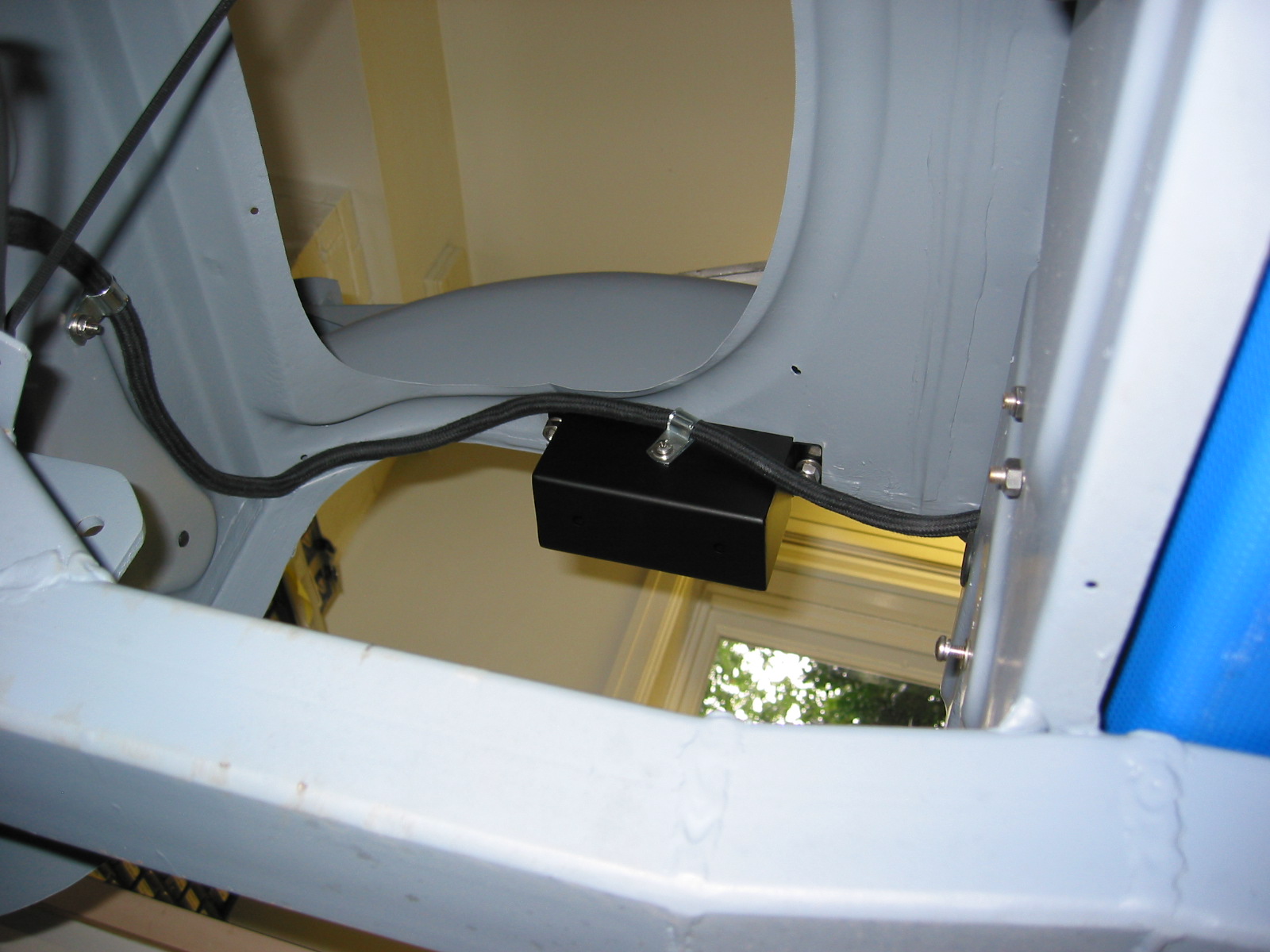
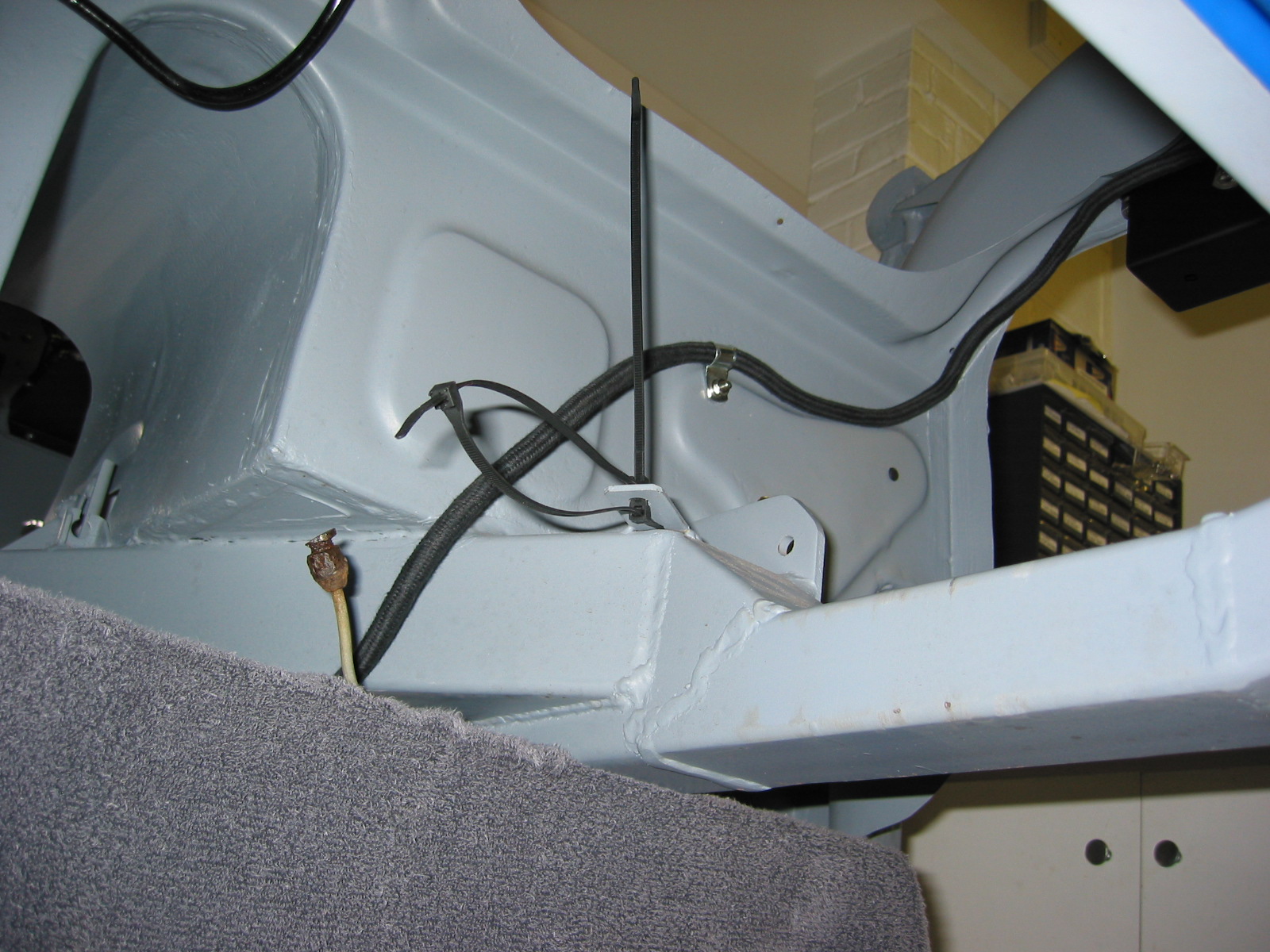
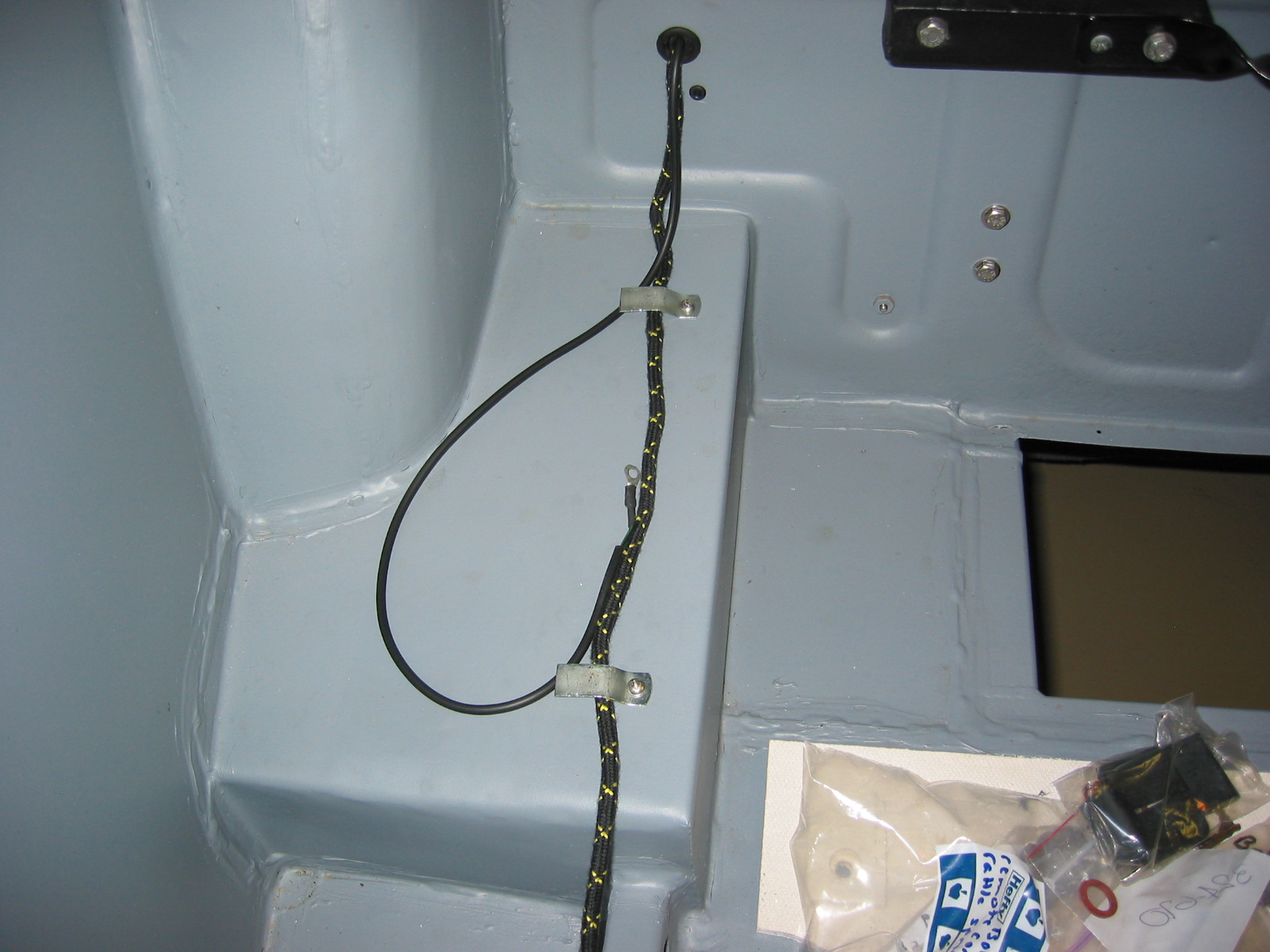
Battery Cable – Installed the battery cable ordered from British Car Specialists. The cable set was expensive, but of high quality. Installed rubber grommets in boot kick panel wall. Clip 1 was attached to the right bump box (Should install the cable on the box before it is mounted on the body.) Clip 2 was attached to the kick panel above the shock mounting bracket. The cable was then routed inside of the right frame rail.

Battery Cable 2

Battery Cable 1

Battery Cable 3

Battery Cable 4

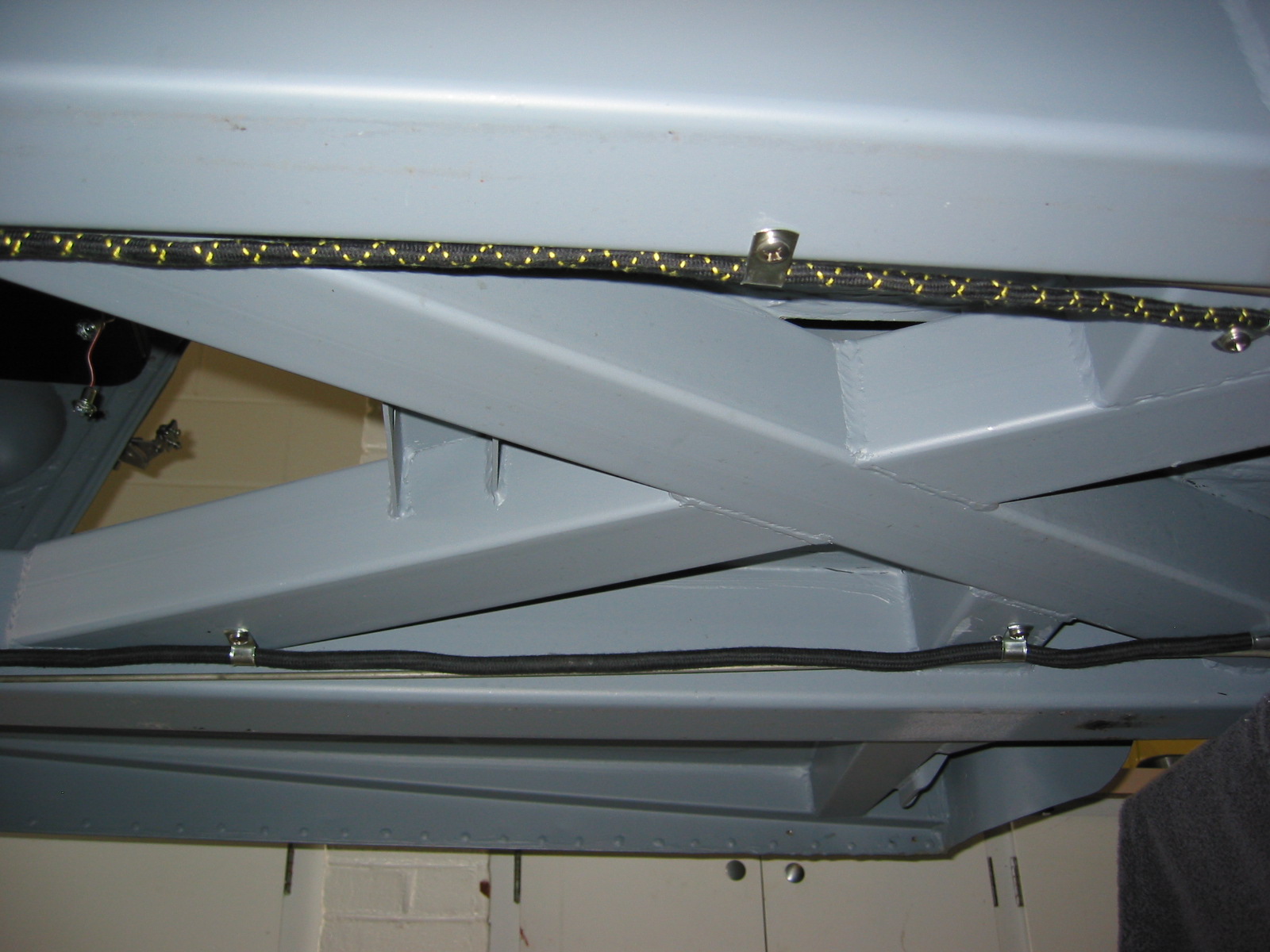
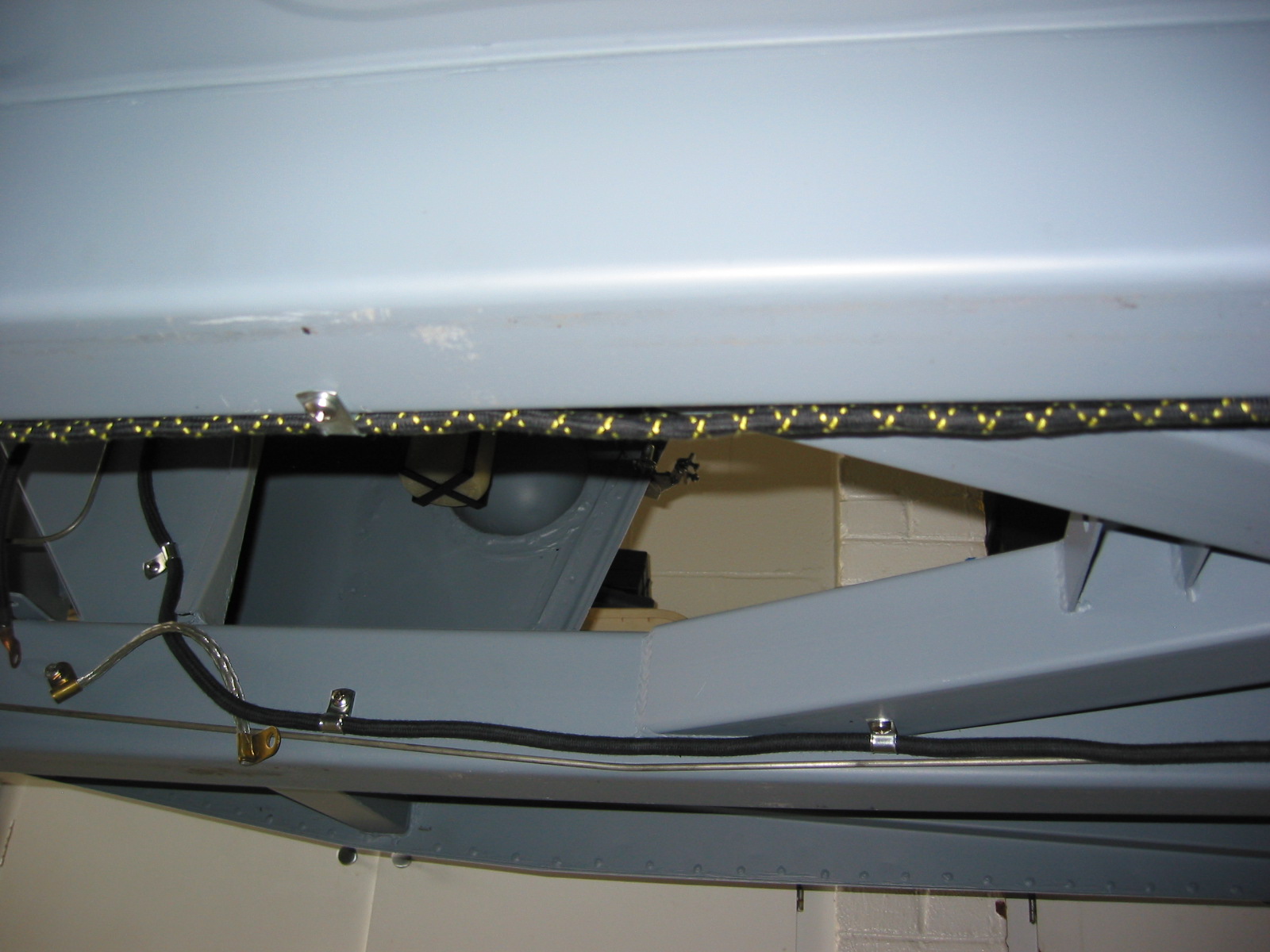
Clip 3 and clip 4 were located at the back of the cruciform. Clip 5 was located at the front of the cruciform near the gearbox mounting bracket. Clip 6 was located on the frame rail about 6” from the ground cable mounting. Clip 7 was mounted on the right footbox wall with the cable directed to the right terminal of the starter solenoid. The Cable from the starter to the left terminal on the solenoid was then secured. The white/red stripe wire fastened to the small terminal on the solenoid. Three “cert” nuts need to be installed – two for the solenoid and one for the clip on the footbox.

Battery Cable 5

Battery Cable 6

Battery Cable 8

Battery Cable 9

Next, the rear lights harness was installed. Clip 1 was secured at the right upper fuel pump bracket. Clip 2 was secured on the kick panel to the left of the pump. Clip 3 was attached to the left bump box and the wiring was threaded through the boot wall. The green wire will connect to the fuel gauge sending unit. Metal tabs were fabricated from clips and mounted on the floorboard of the boot.

Single bullet connectors were used to join the main harness to the rear light harness and link the white/black wire, and the white/purple wire. The red wires were connected using a double rubber connector. Clips 3 and 4 were mounted to the rear rail. The long separate white/black wire was also routed through and it connected to the single screw terminal on the battery on/off switch. Black ground wires were connected to the screw on each clip.

Boot Wiring 1

Boot Wiring 2

Boot Wiring 3

Boot Wiring 6

Boot Wiring 4

Boot Wiring 5


Chapter 13 – Cleaning and Trial Fitting

March 22, 2003

Rear Seats 

The rear seat pans were very rusty and pitted to some degree, but given that they are completely covered by upholstery we decided to reuse them. The bottom exposed side of the seats was painted with a rubberized undercoating paint. 

Rear Seats 1

Rear Seats 3

May 16, 2003

Canadian Delivery! 

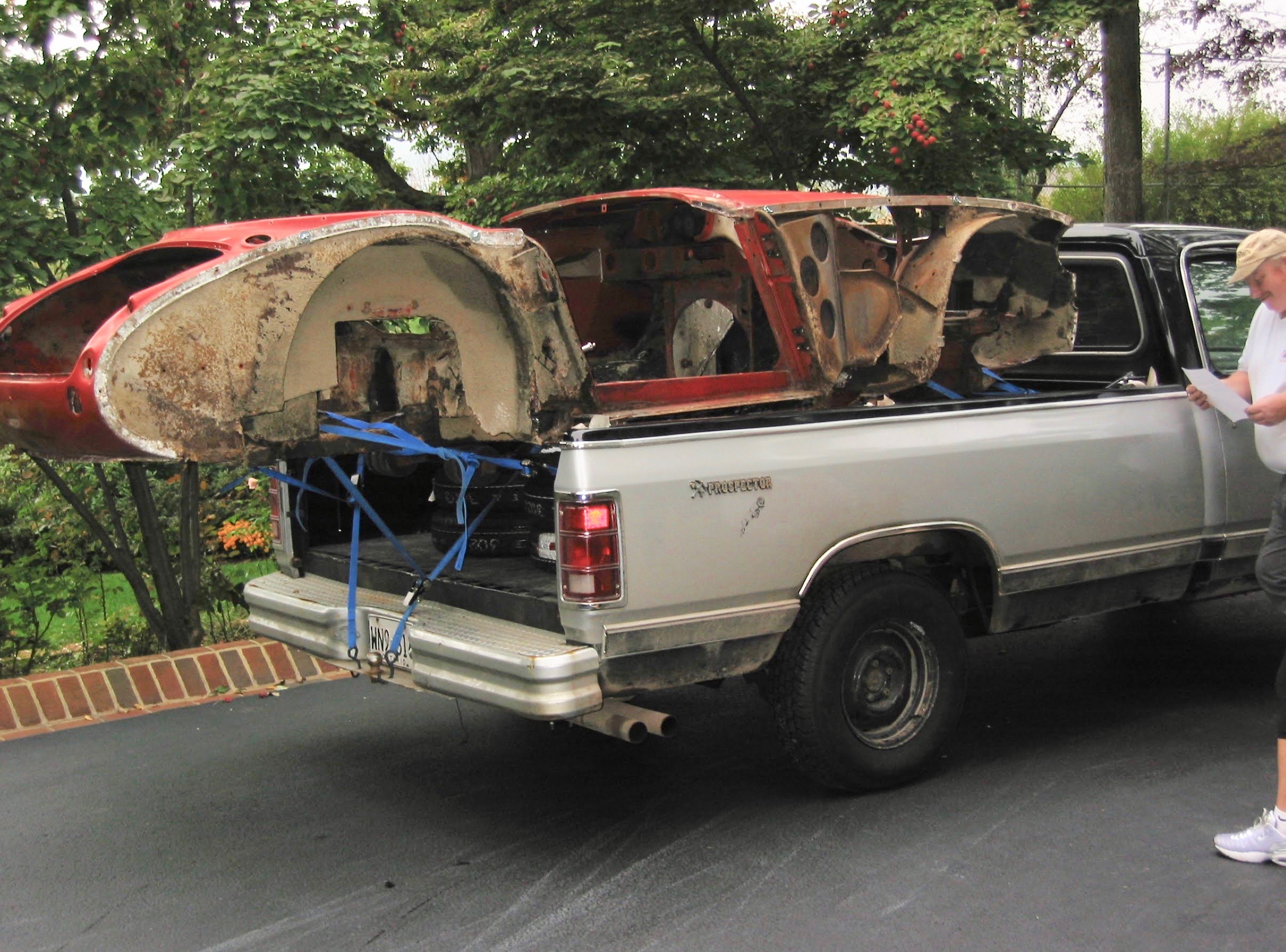
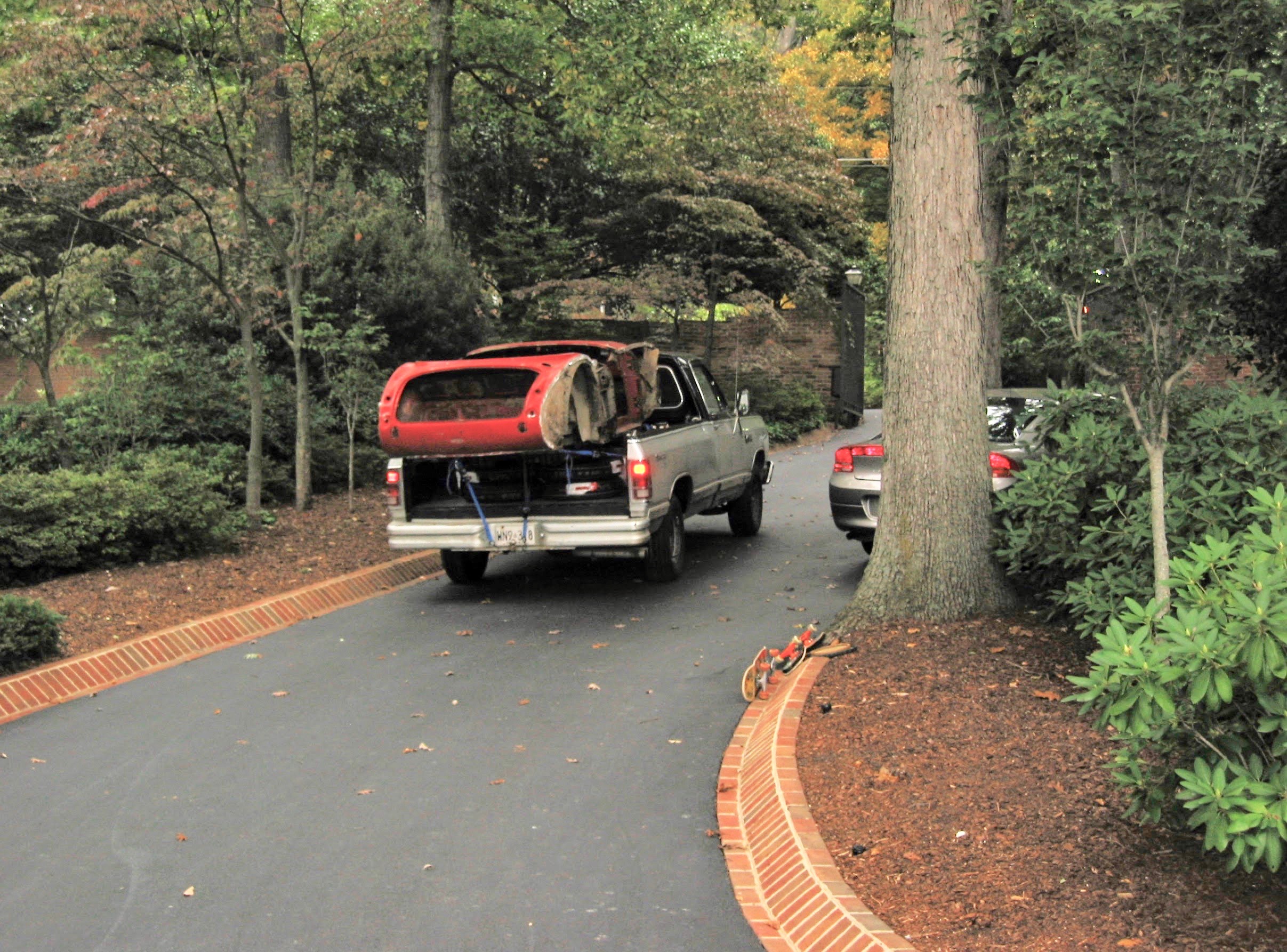
Martin Jansen delivered the healey from his shop in Canada on the back of his pickup truck! Big day!

May 16 Arrival Day from Martin 1

Rough Body 2

Rough Body

Rough Body 3

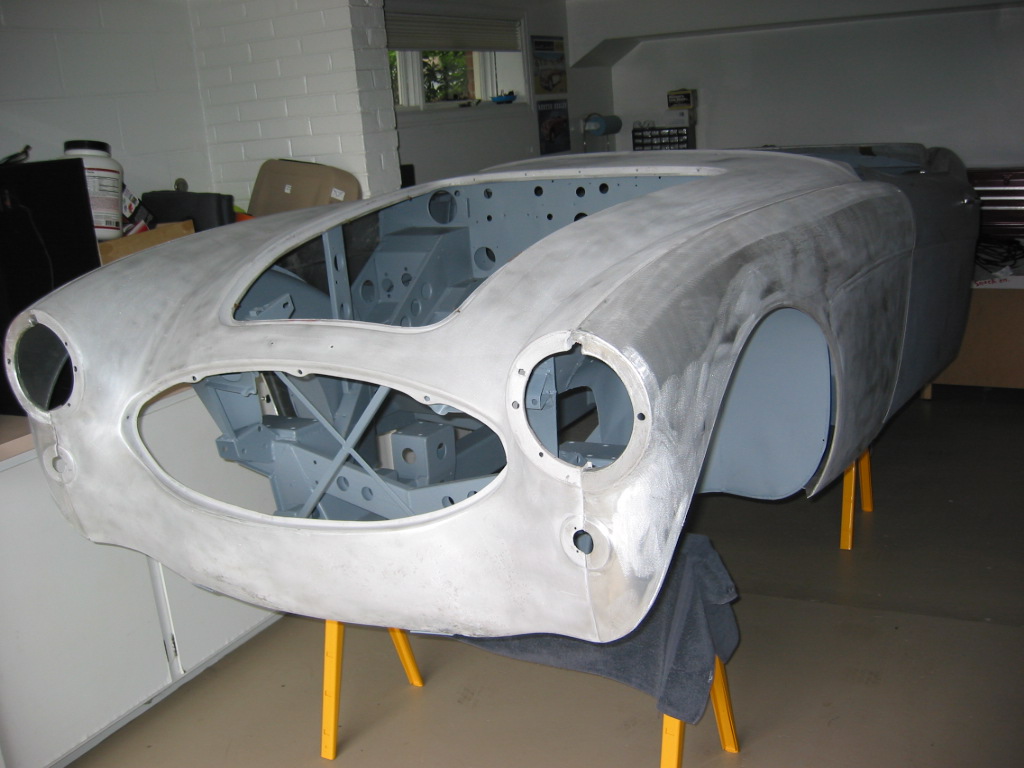
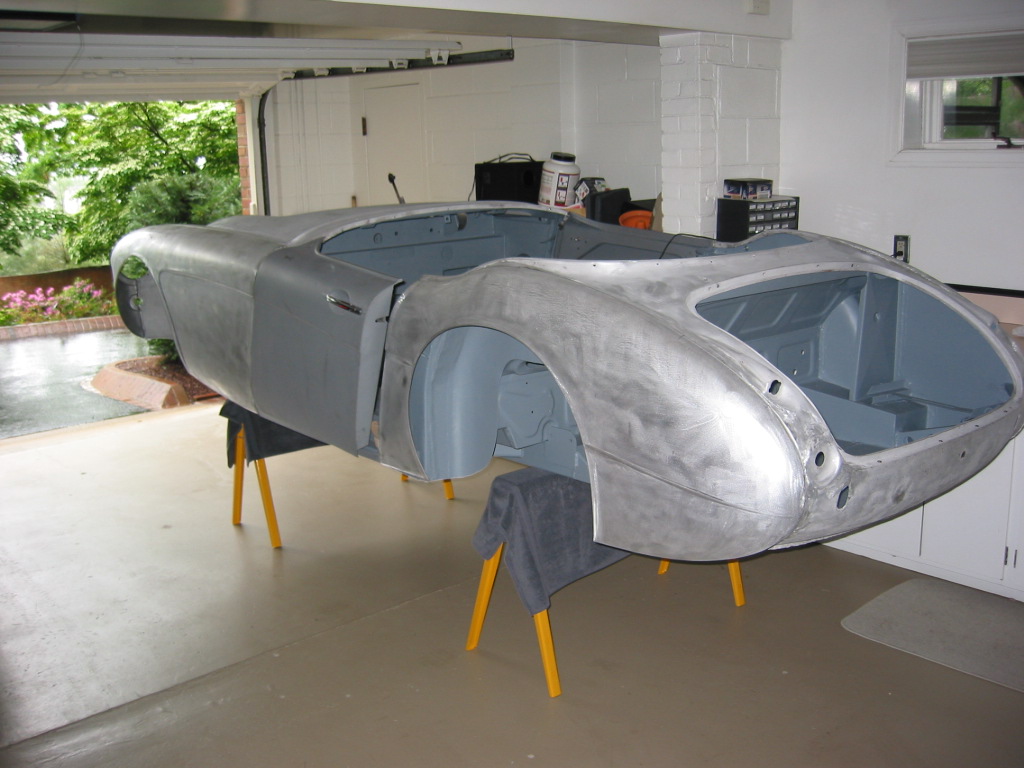
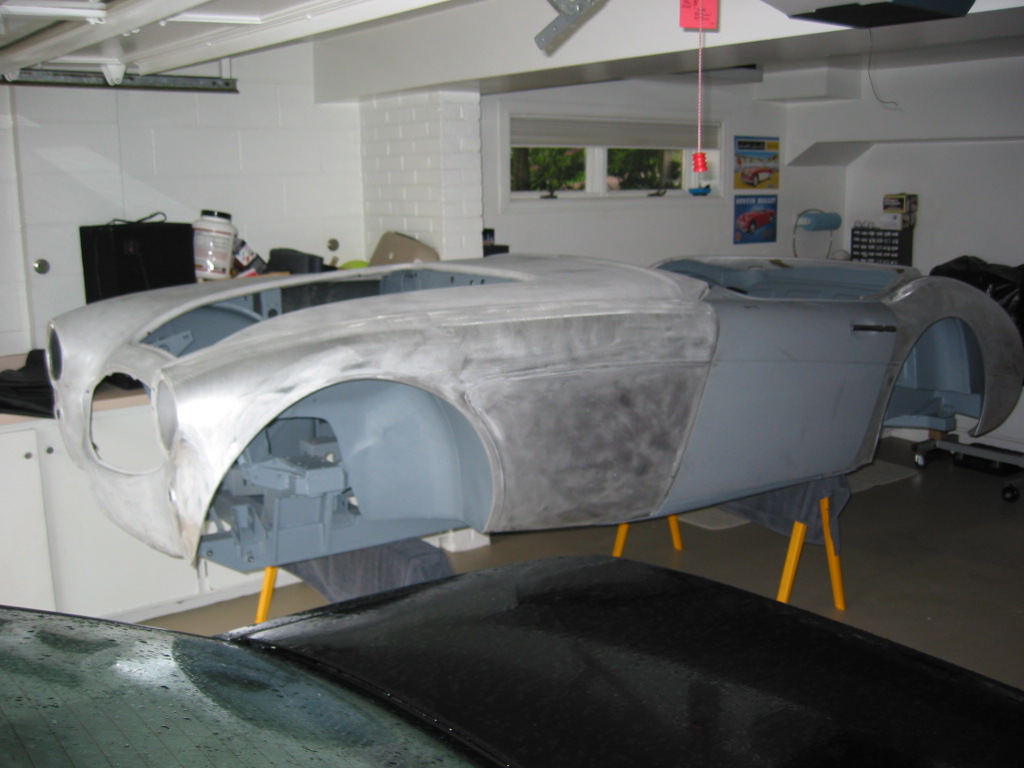
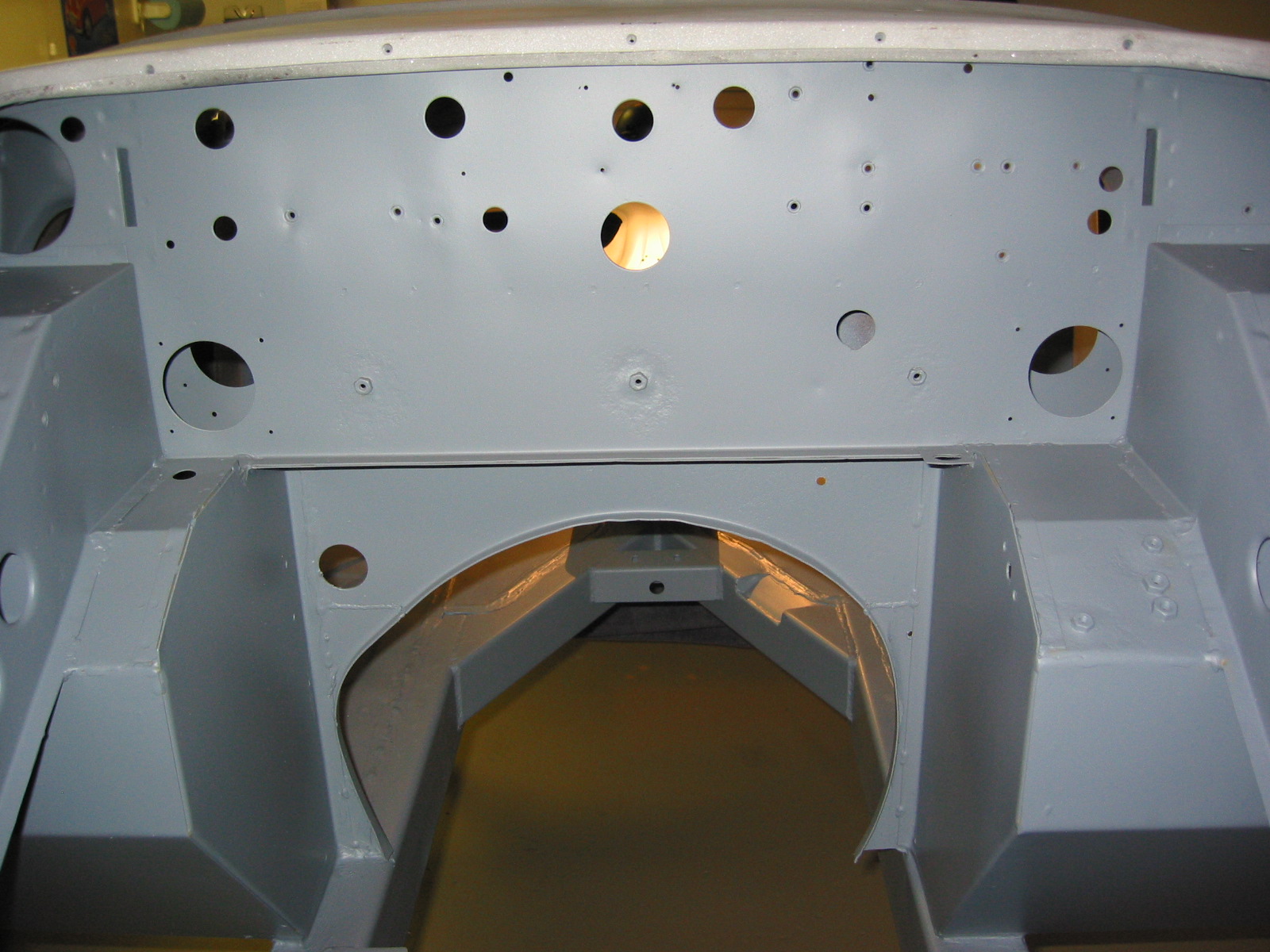
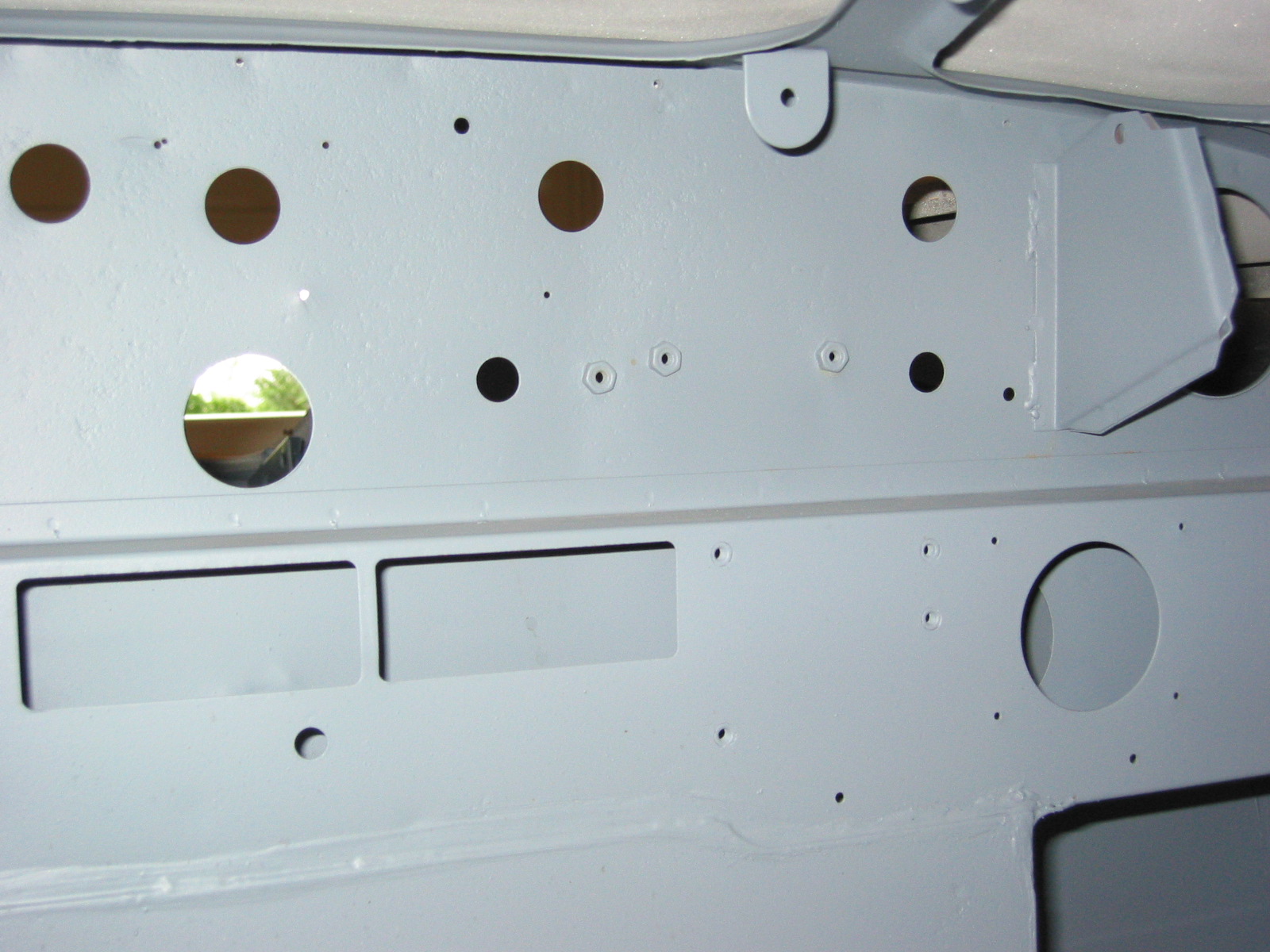
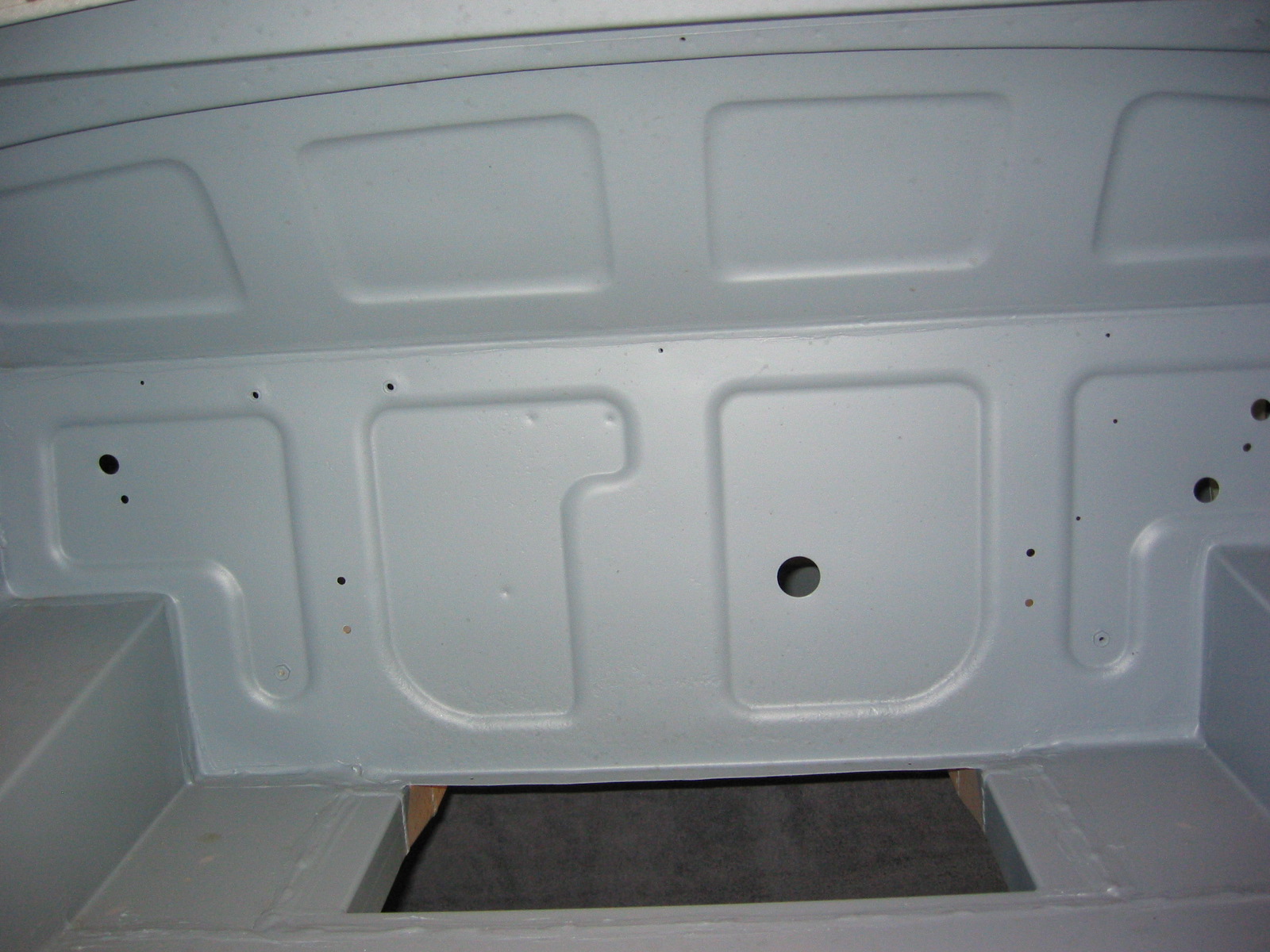
The frame and superstructure looked great. The fit of the wings will have to be improved upon. Door fit is pretty good, but will also need additional work. New edges were put on the rear shroud and rough repairs to the front shroud lower panel were made as well as around the rear shroud taillight area. Seeing the interior panels without rust is hard to believe, but they sure look good now! One disappointment is that mounting holes for a number of things are not located on new panels installed by Martin. Seat rails, exhaust mountings, insulation panels and etc will need to be aligned and drilled.

Firewall 3

Firewall 2

Boot 1

July 15, 2003

Maple Hill Restorations 

After consulting with Jeremy Turner from Maple Hill Restorations we have decided to completely assemble the car while in primer to be ensured that EVERYTHING fits properly. This will prolong the project, and will probably lead to some short term frustration, but should also minimize problems with assembly once body work and painting is complete.

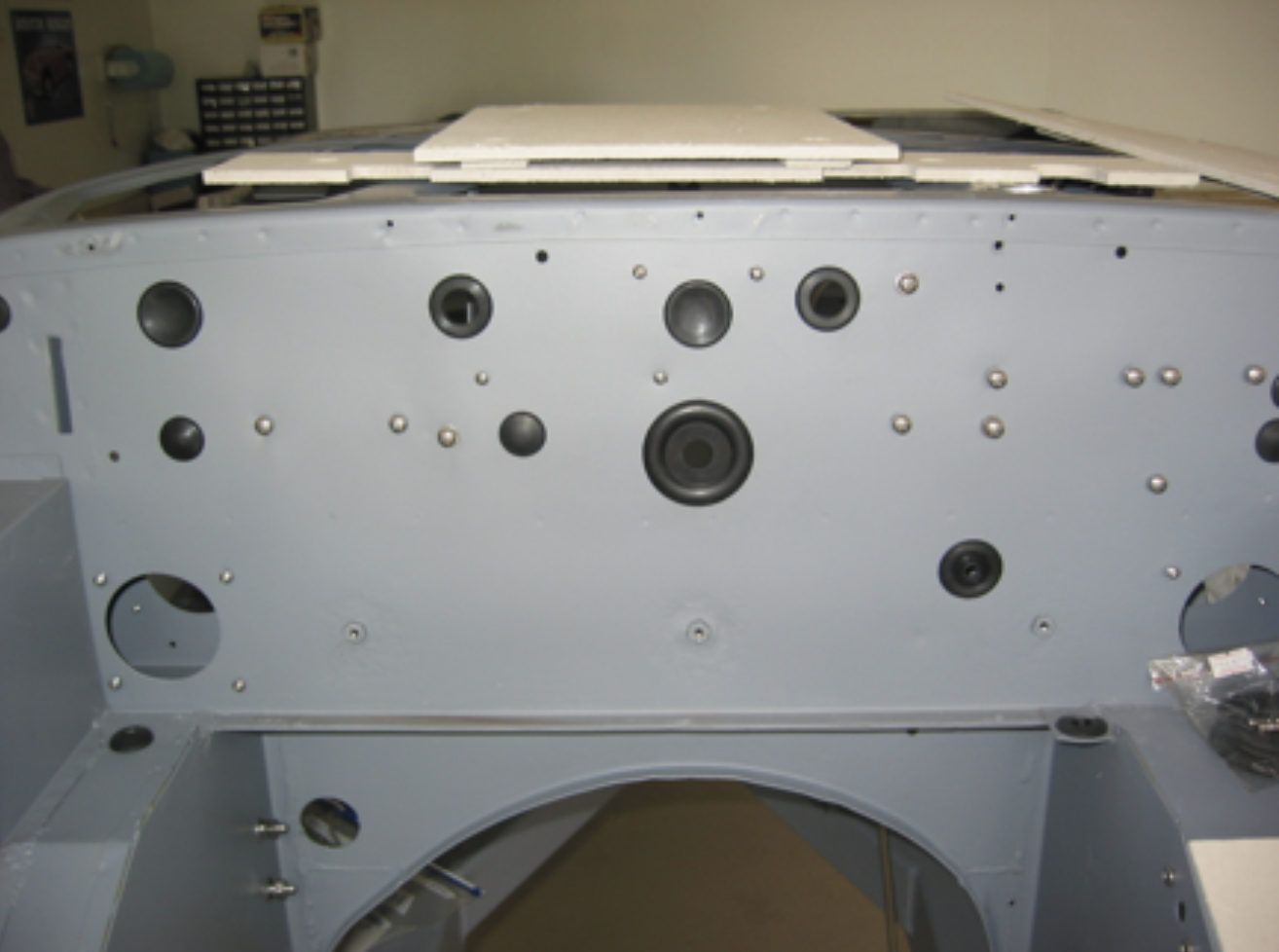
My first step is to determine proper fastener sizes and replace all original hardware with stainless steel, with the exception of higher load locations such as shock absorber and other suspension bolts. Those will be replaced with new grade 8 zinc plated hardware. Then we installed all of the rubber grommets in the firewall, footwell and other locations.

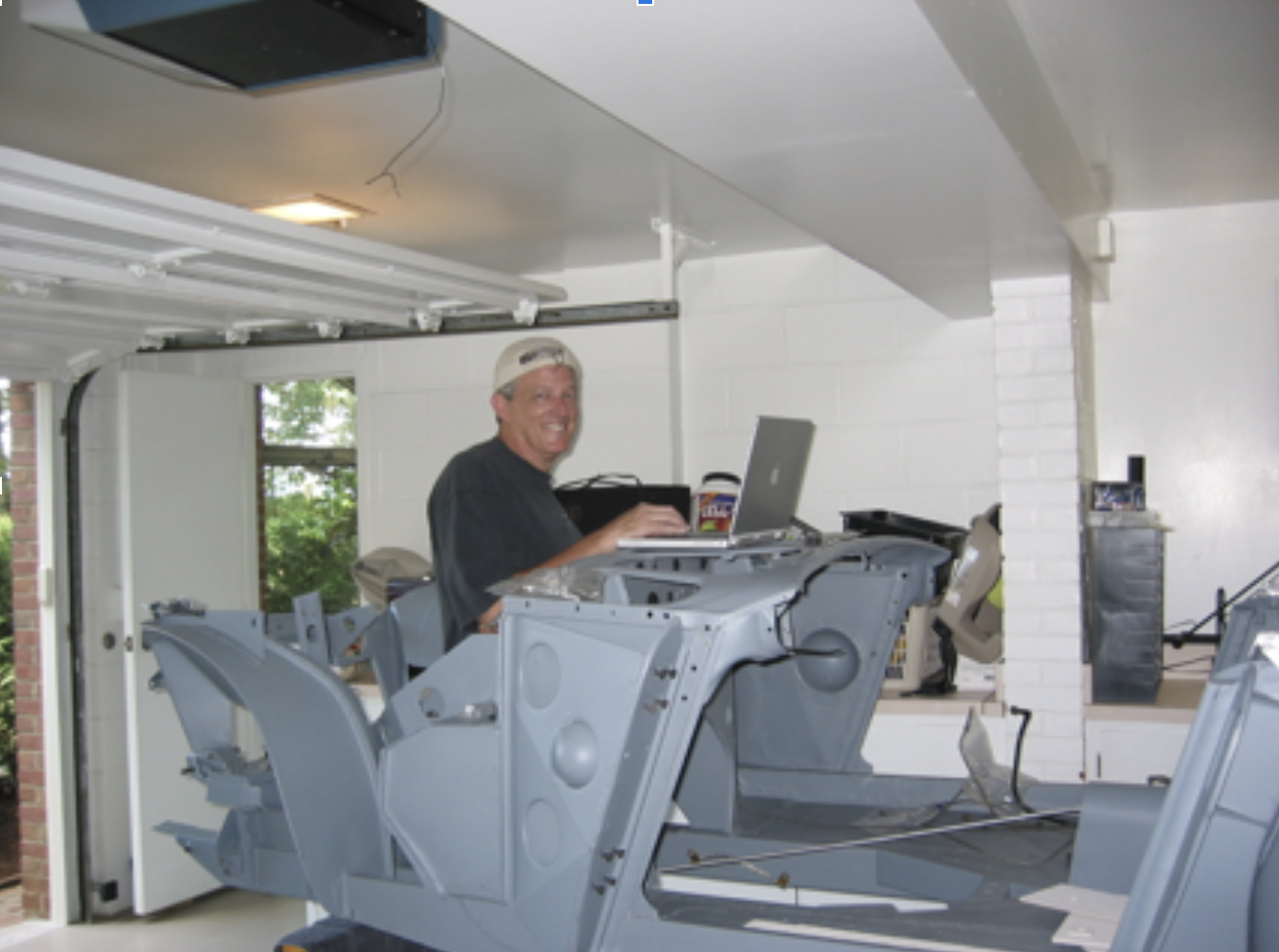
The Scientist at Work

Chased Threads and rubber grommets

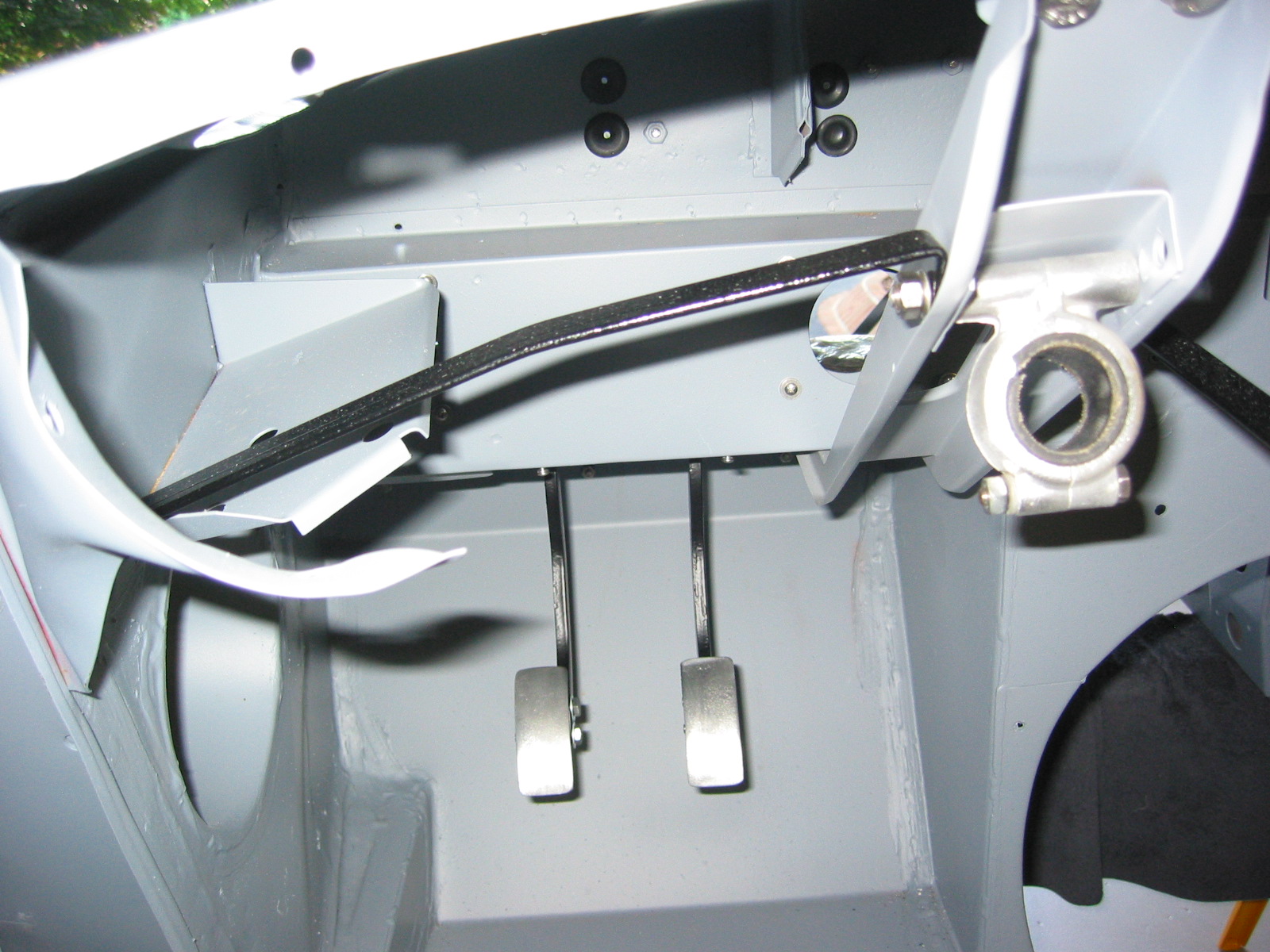
Installed pedal box

Steering Bracket and Brace

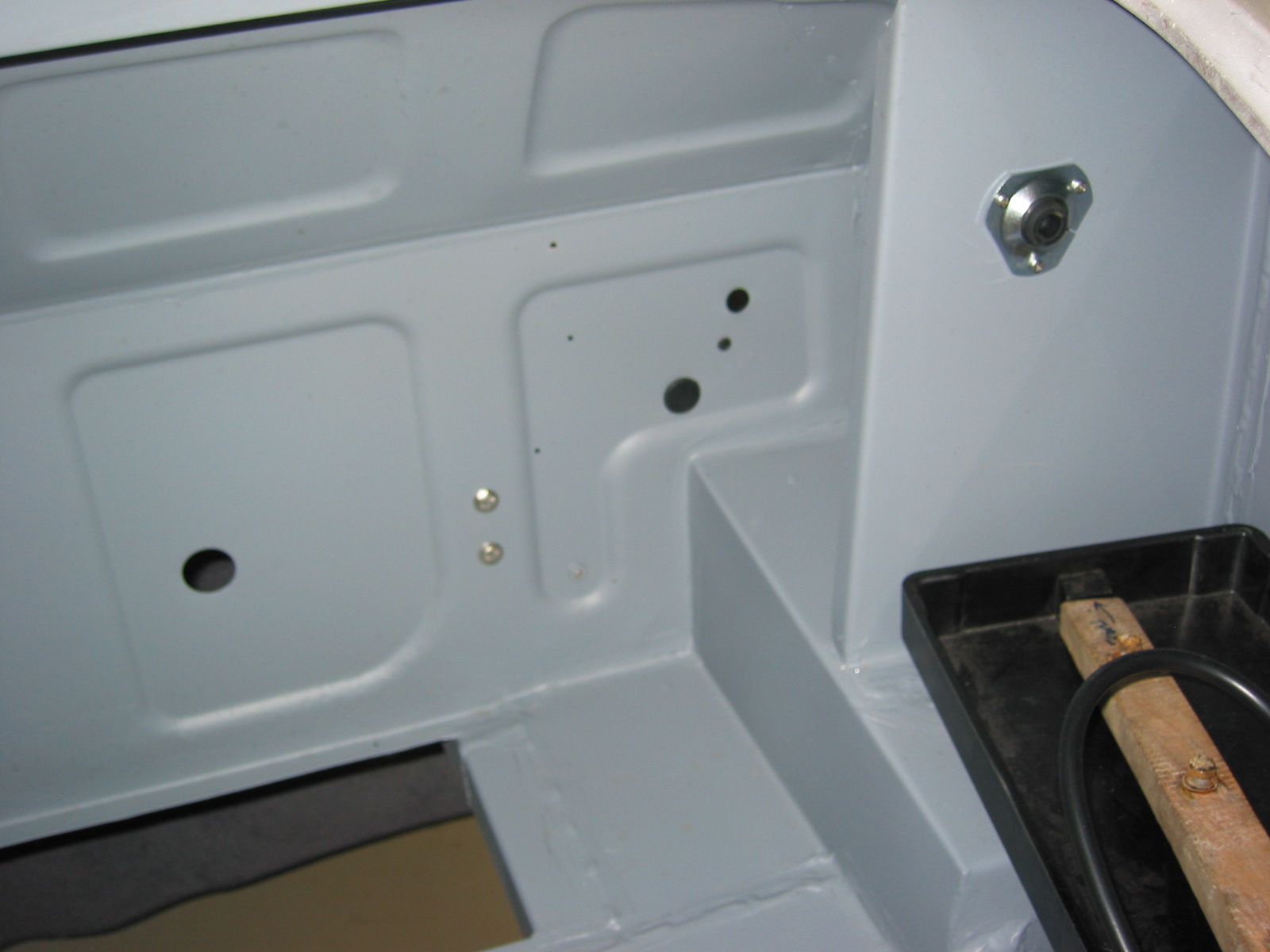
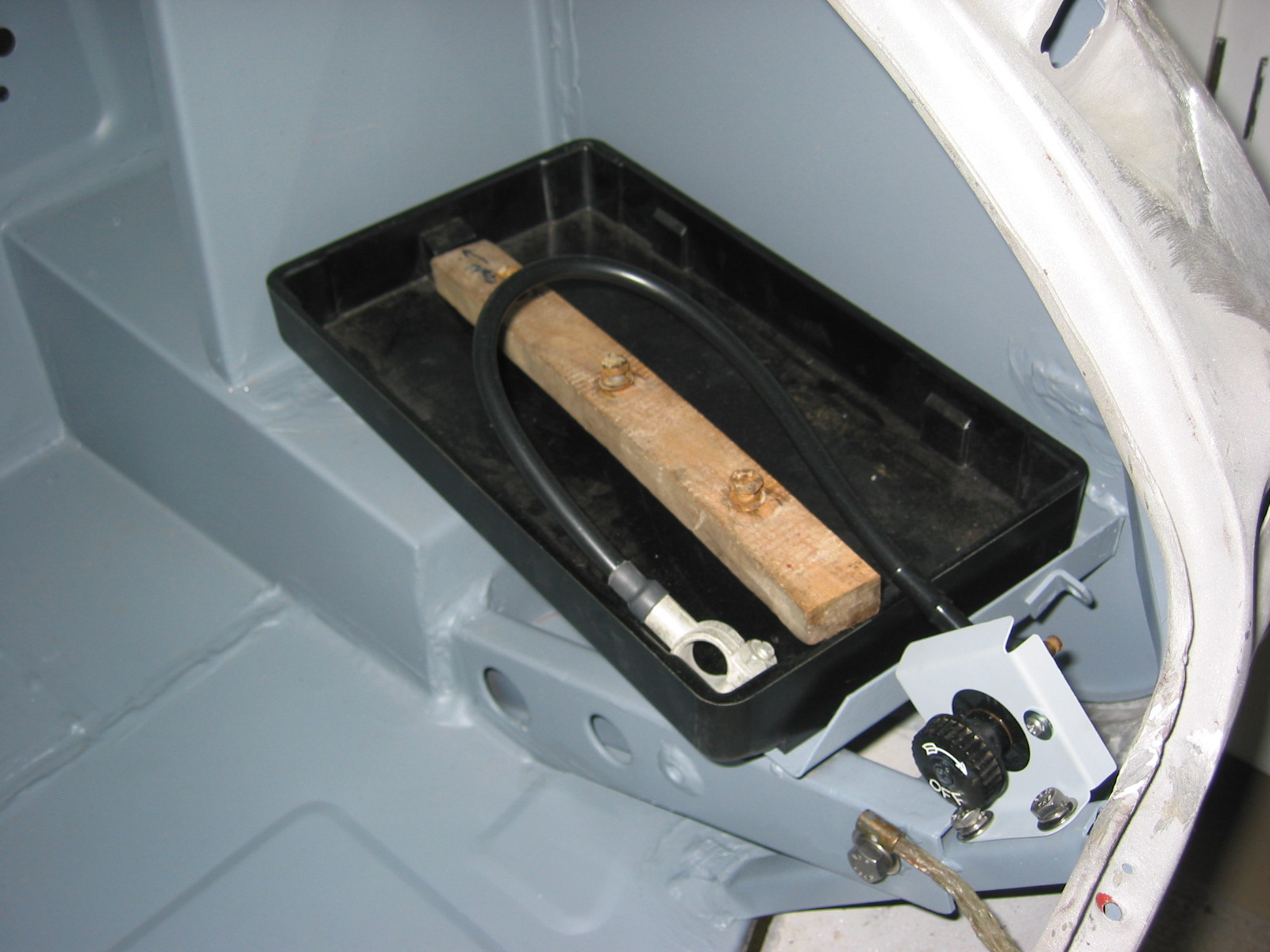
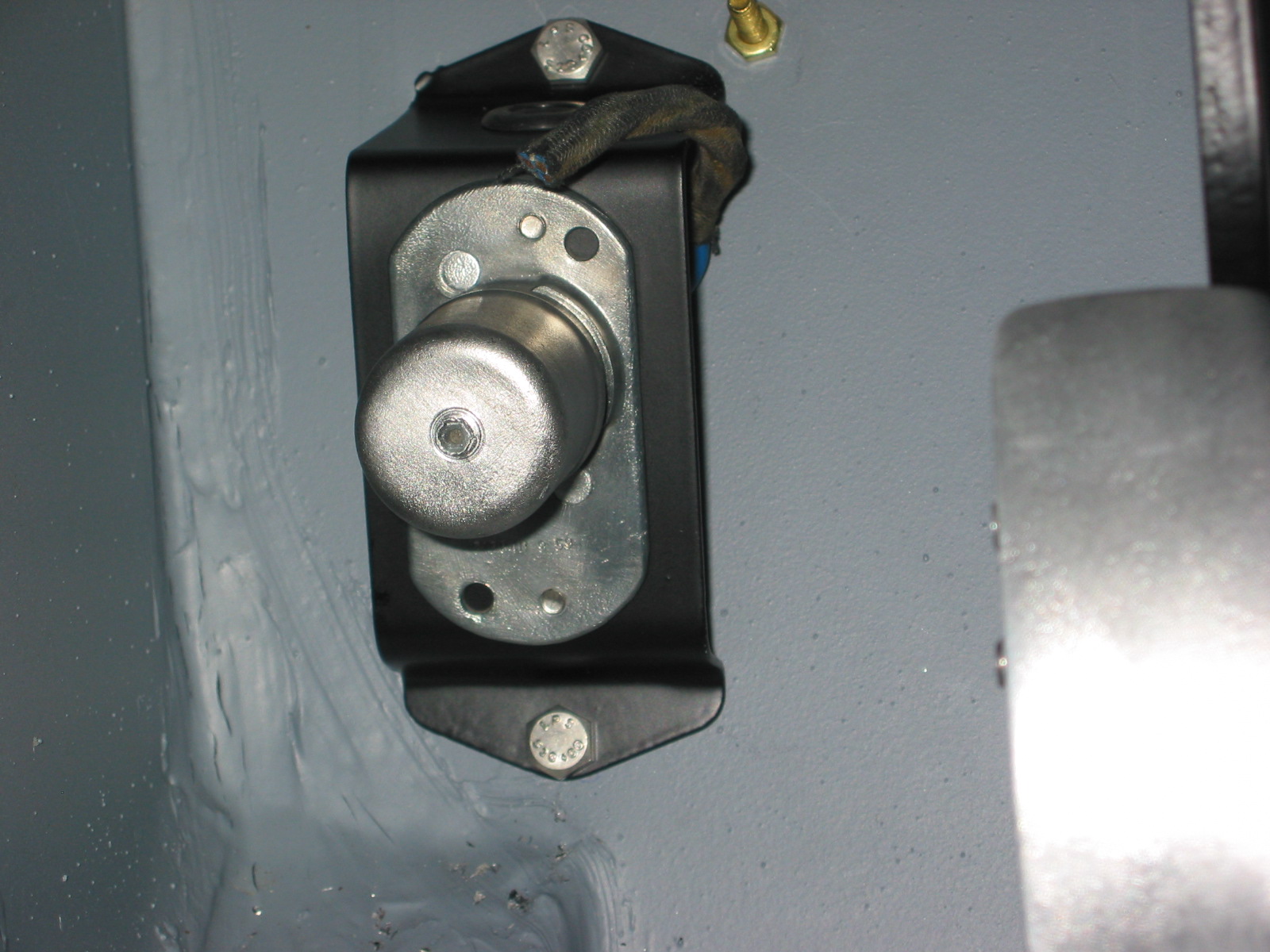
Boot Grommets – The grommet for the battery cable and other bulkhead grommets were installed in the boot. The anti-theft battery switch and bracket were also installed.

Boot grommets

Battery box and switch

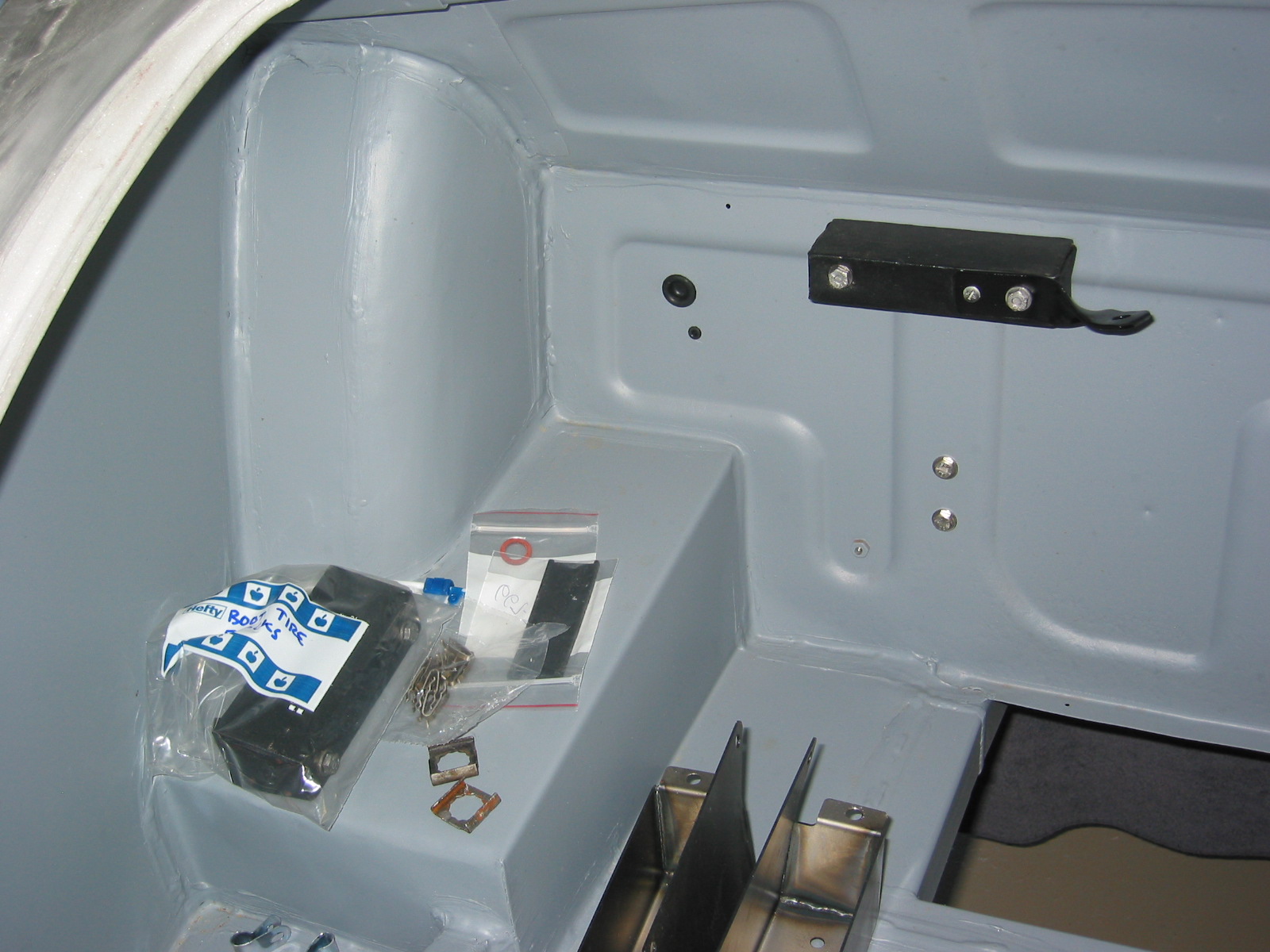
Bump Box

Boot Tire Buffer

Insulation Panels – Some of the mounting holes for the heat insulation panels on the firewall and footwell were also not drilled. We located the proper locations, drilled the holes and mounted the panels without difficulty.

Insulation 1

The Oil Pressure Line – The line was located and installed although new clips will be ordered.

Oil Line

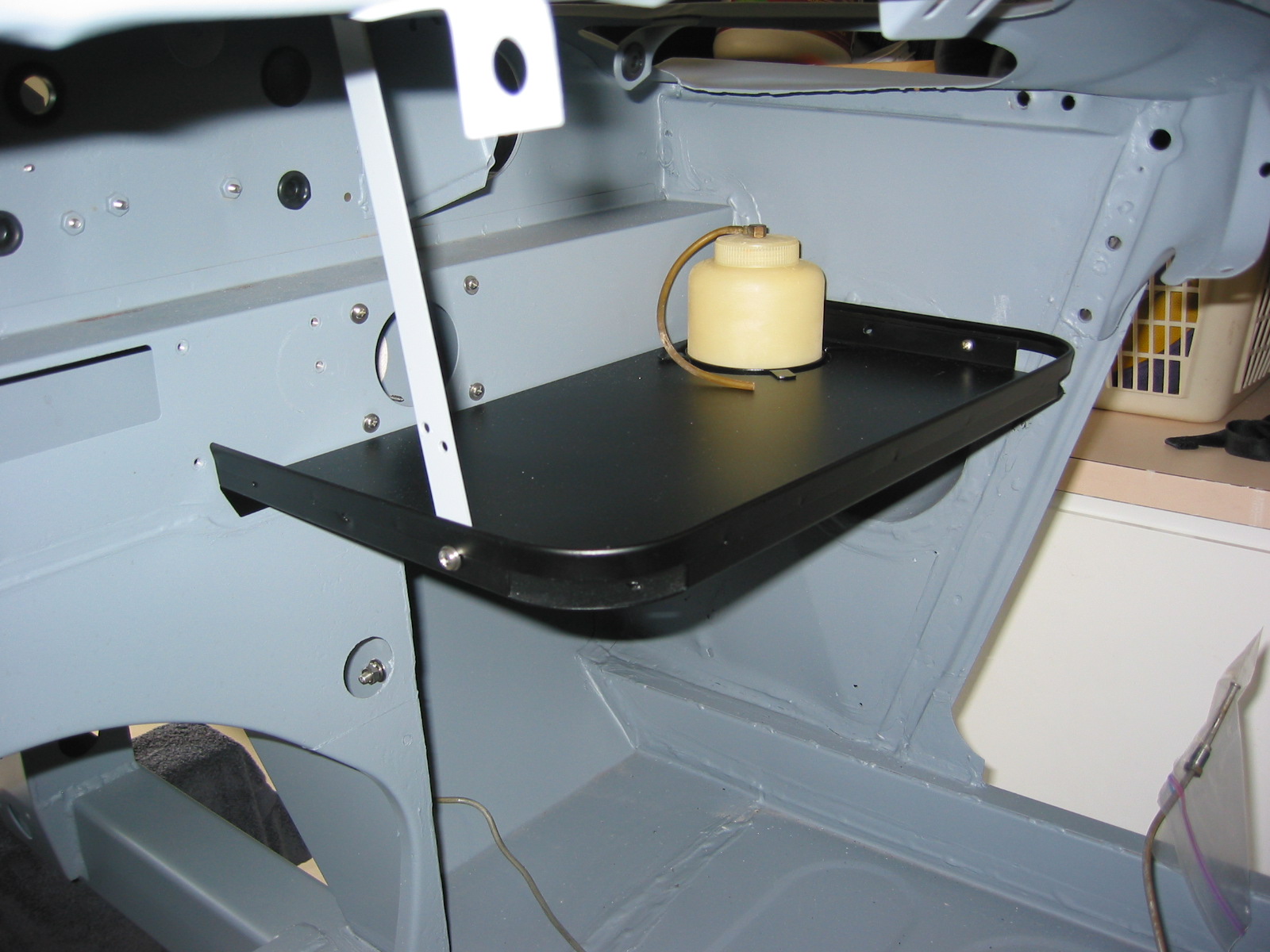
The Dip Switch and Parcel Tray – These components were also located and installed. Note the original water bottle.

Parcel Tray & Bottle

Installed dimmer switch

Radiator Brackets – The brackets were cleaned and painted and were installed on the crossmember, and the painted air intake flange.

Radiator Mount 2


July 23, 2003

Hardware Reassembly

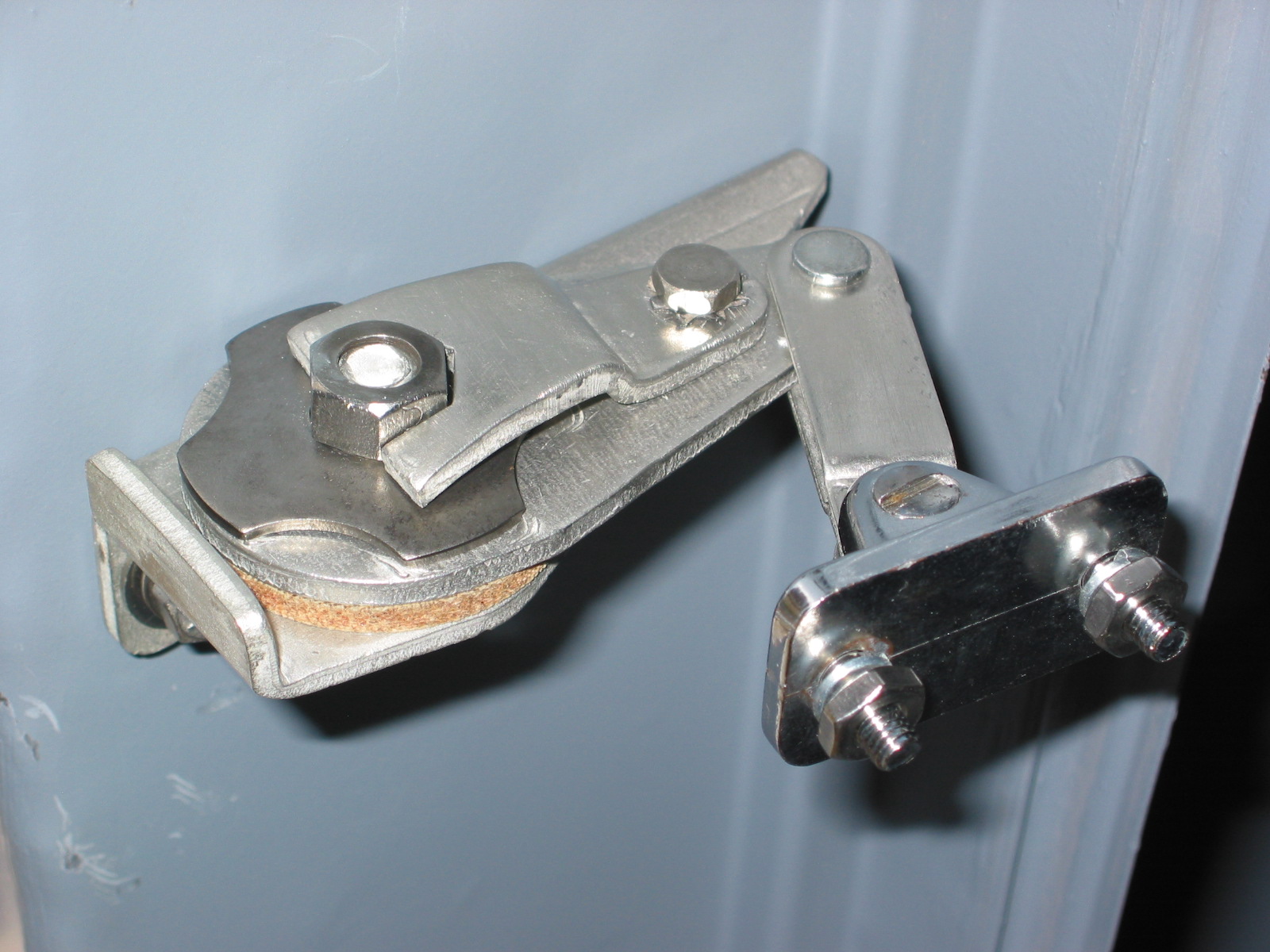
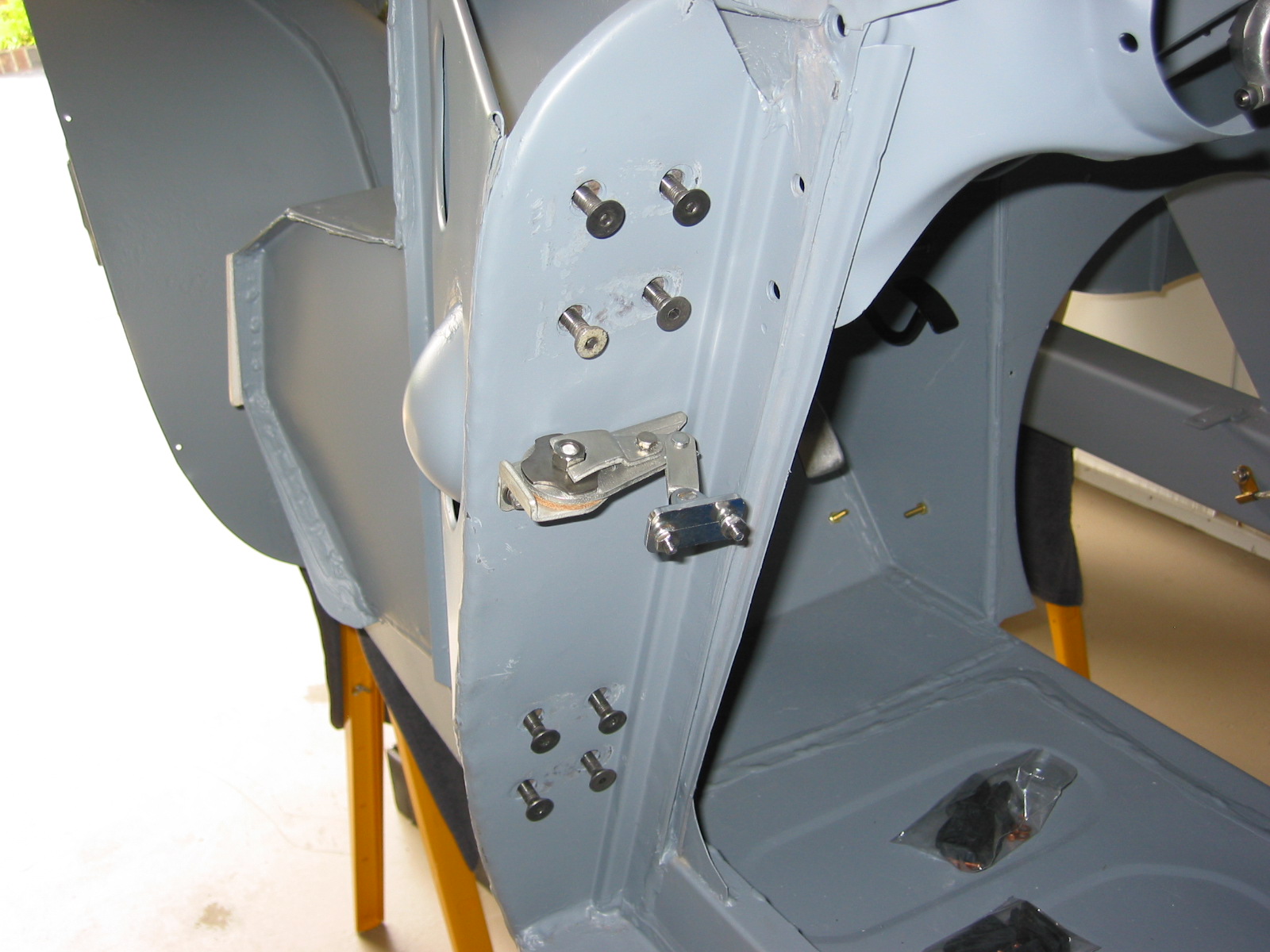
Door Staps – The original door straps (catches) were cleaned, re-zinced and installed on the door pillars.

Door Strap 1

Door Strap 2

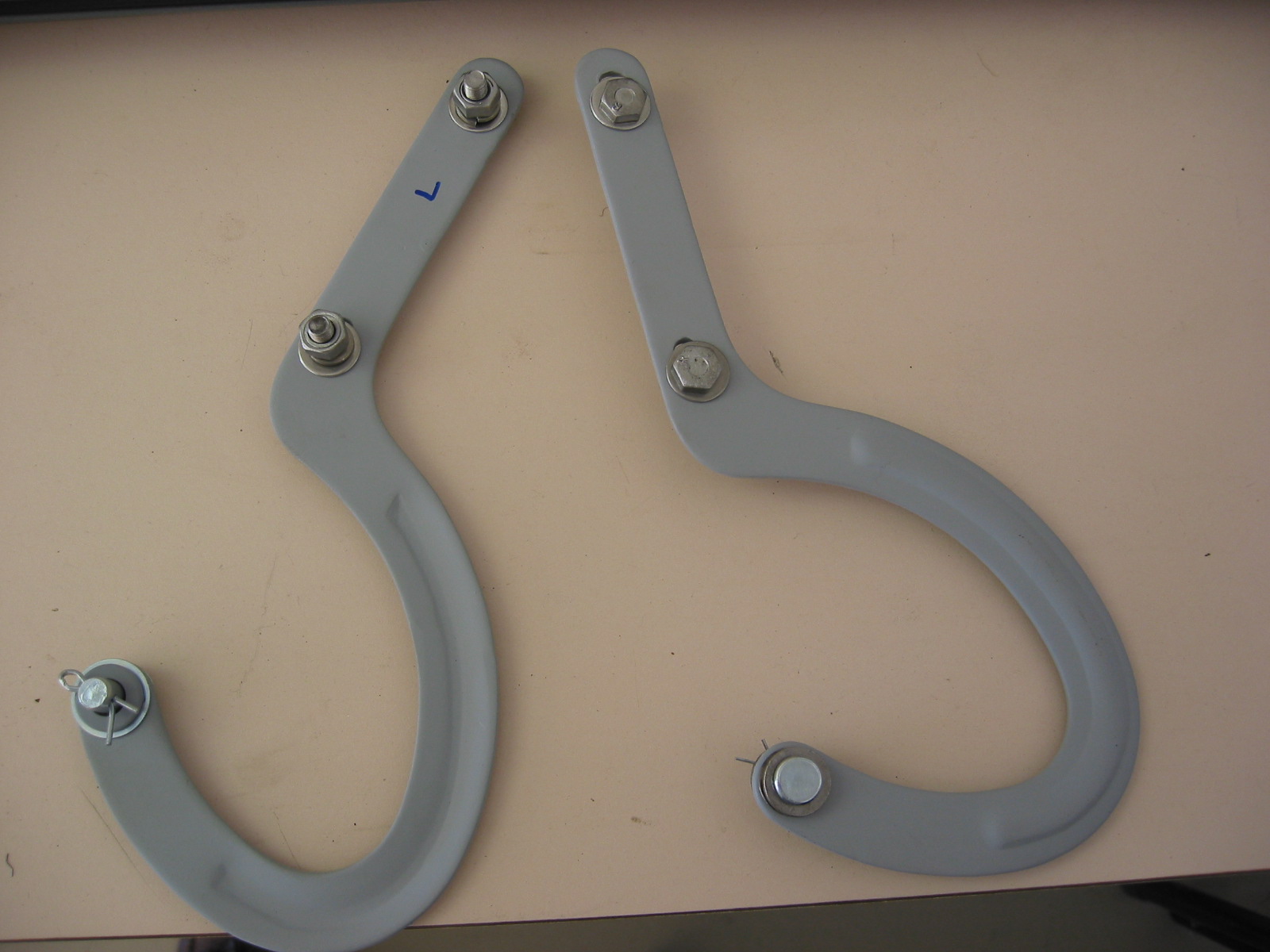
Bonnet Hinges – The bonnet hinges were cleaned, primed and new stainless hardware was installed, and then mounted to the car.

Bonnet Hinge 1

Bonnet Hinge 2

March 22, 2003

More Cleaning 

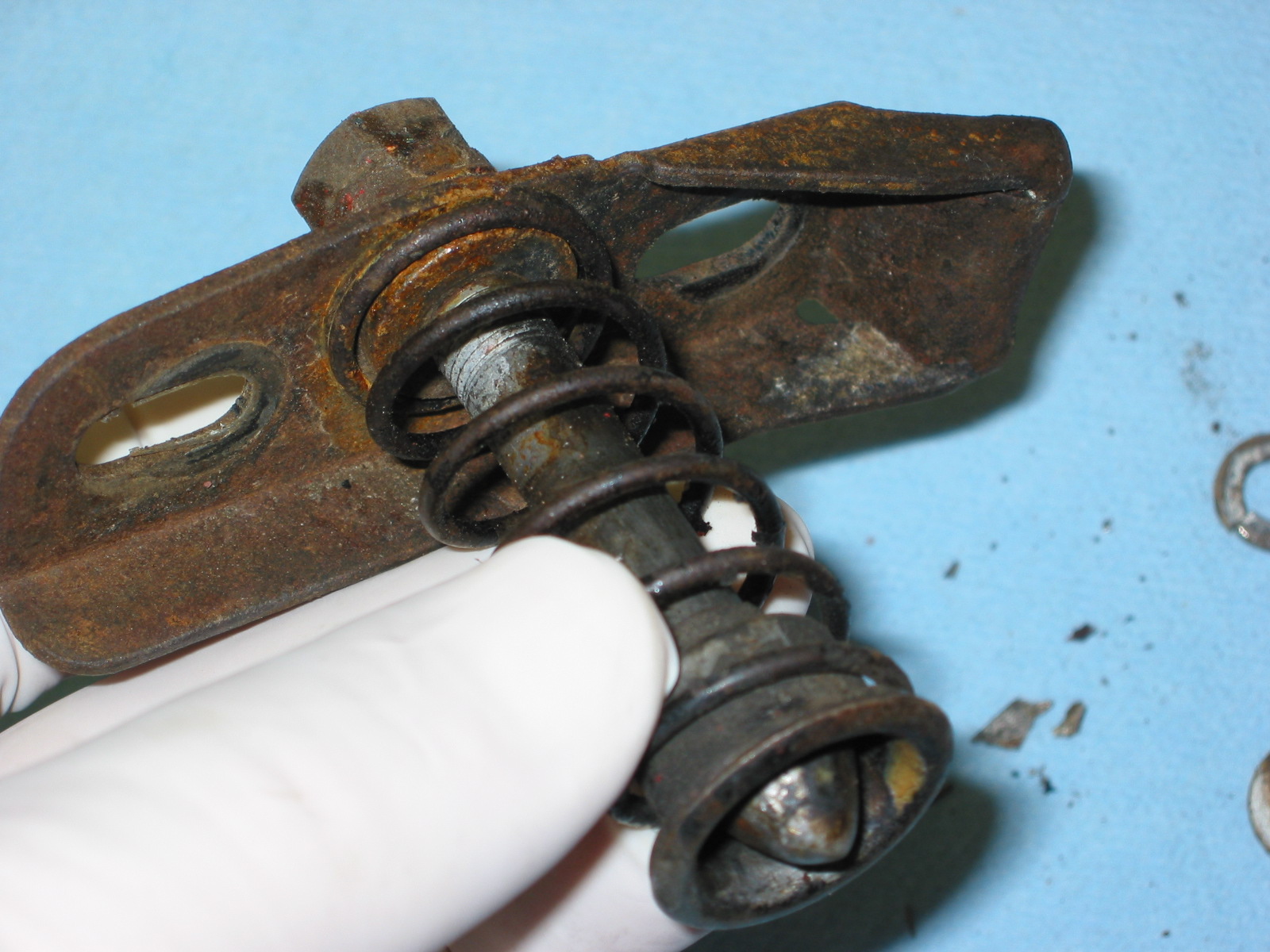
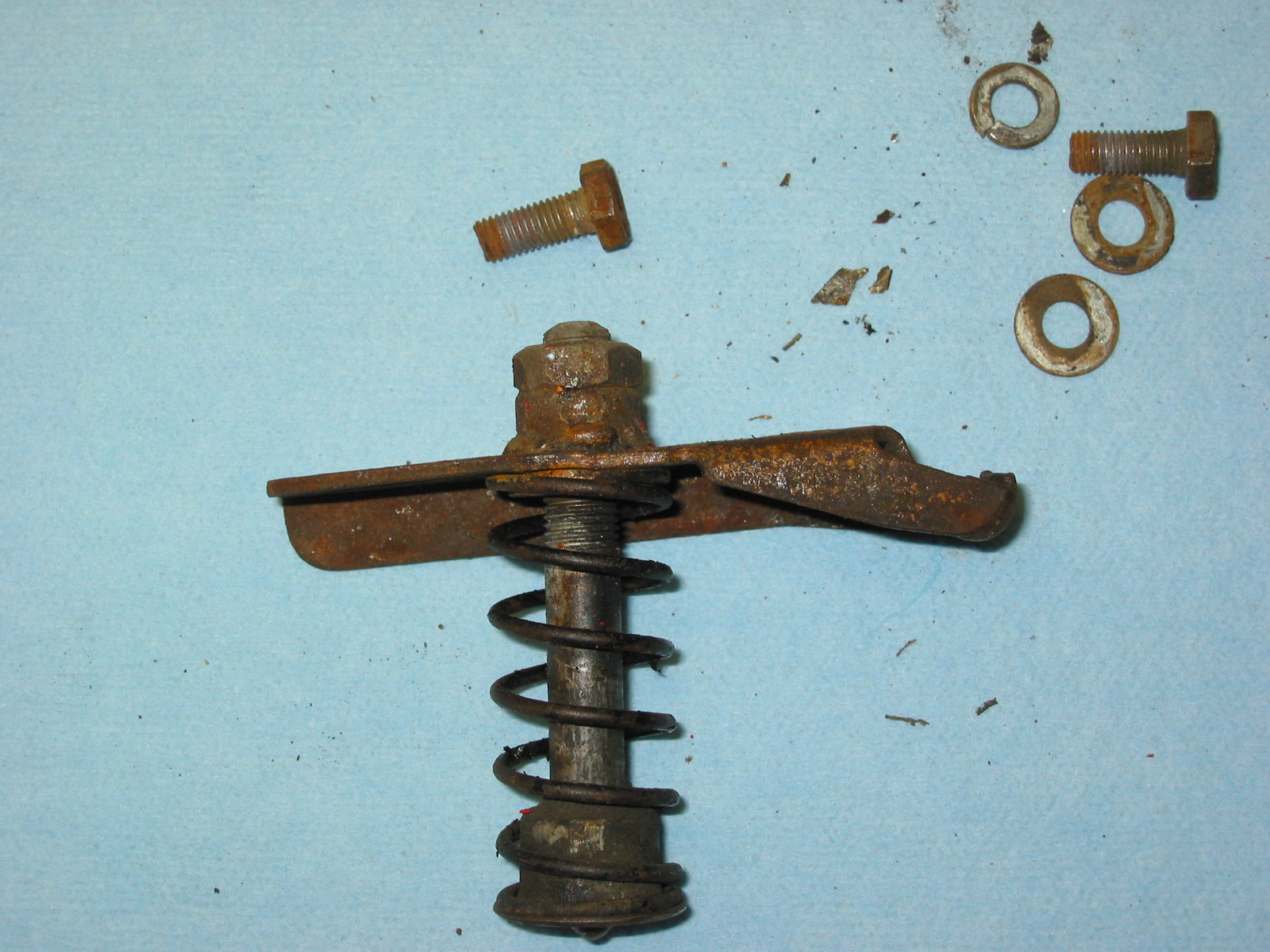
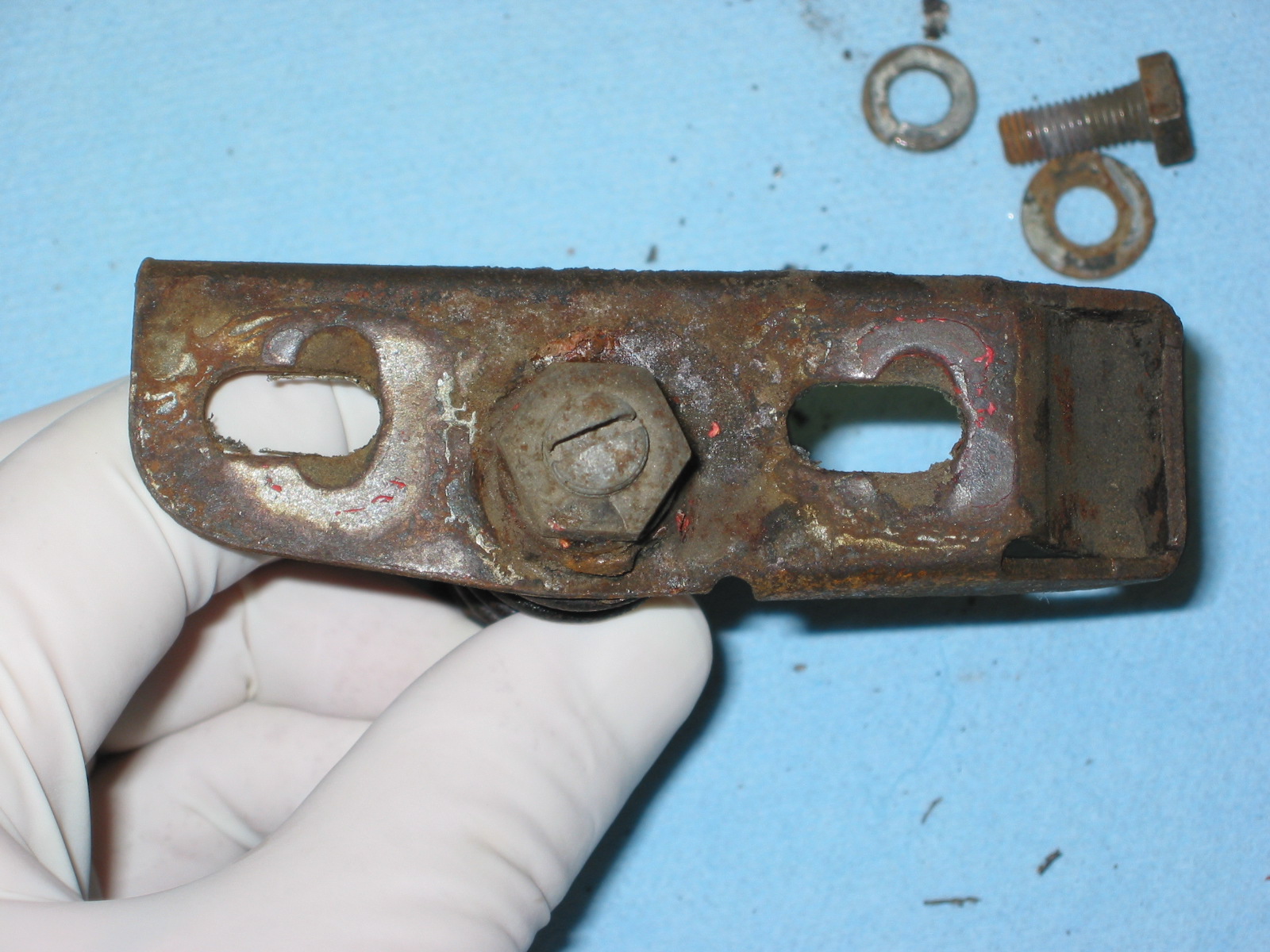
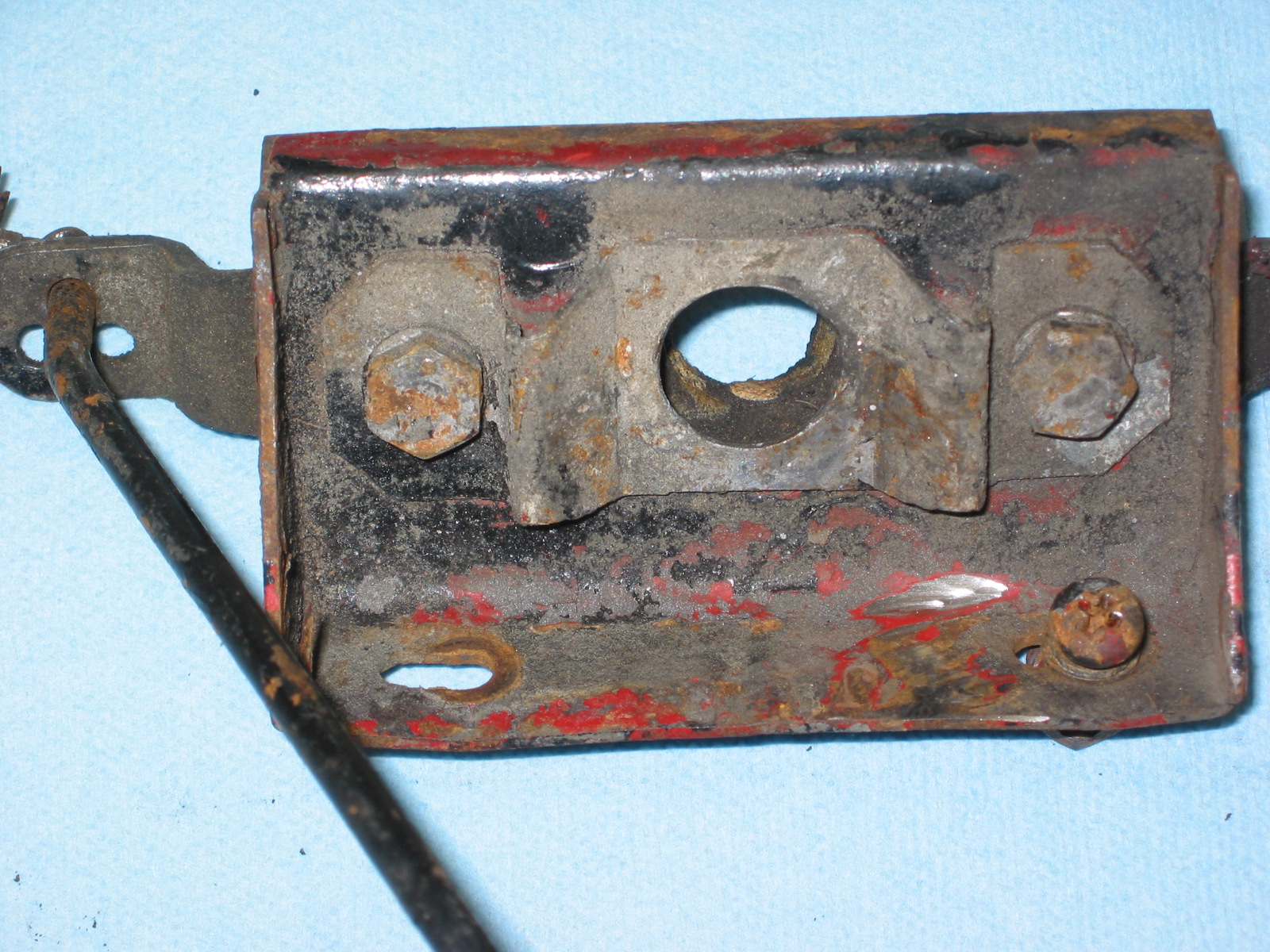
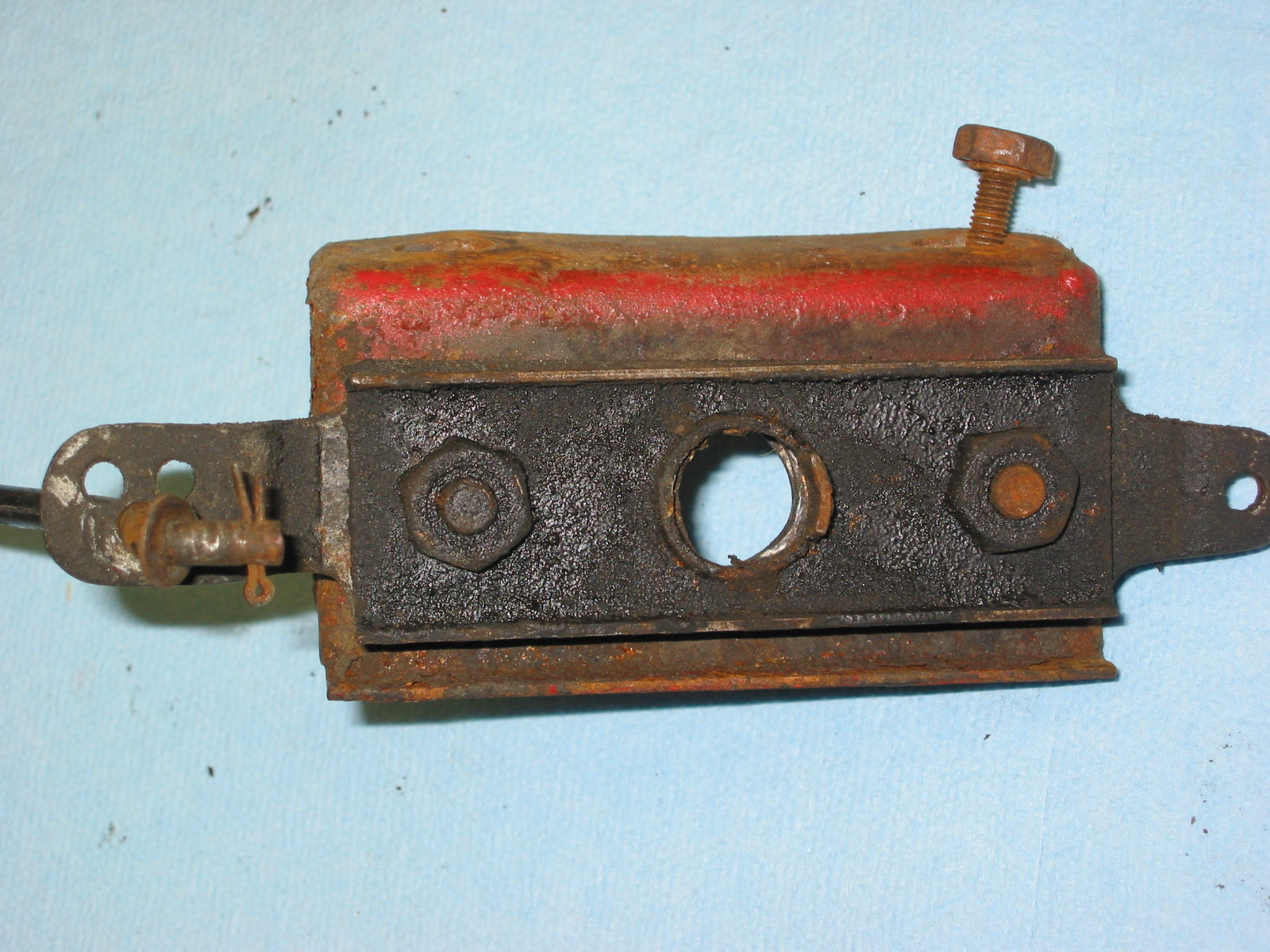
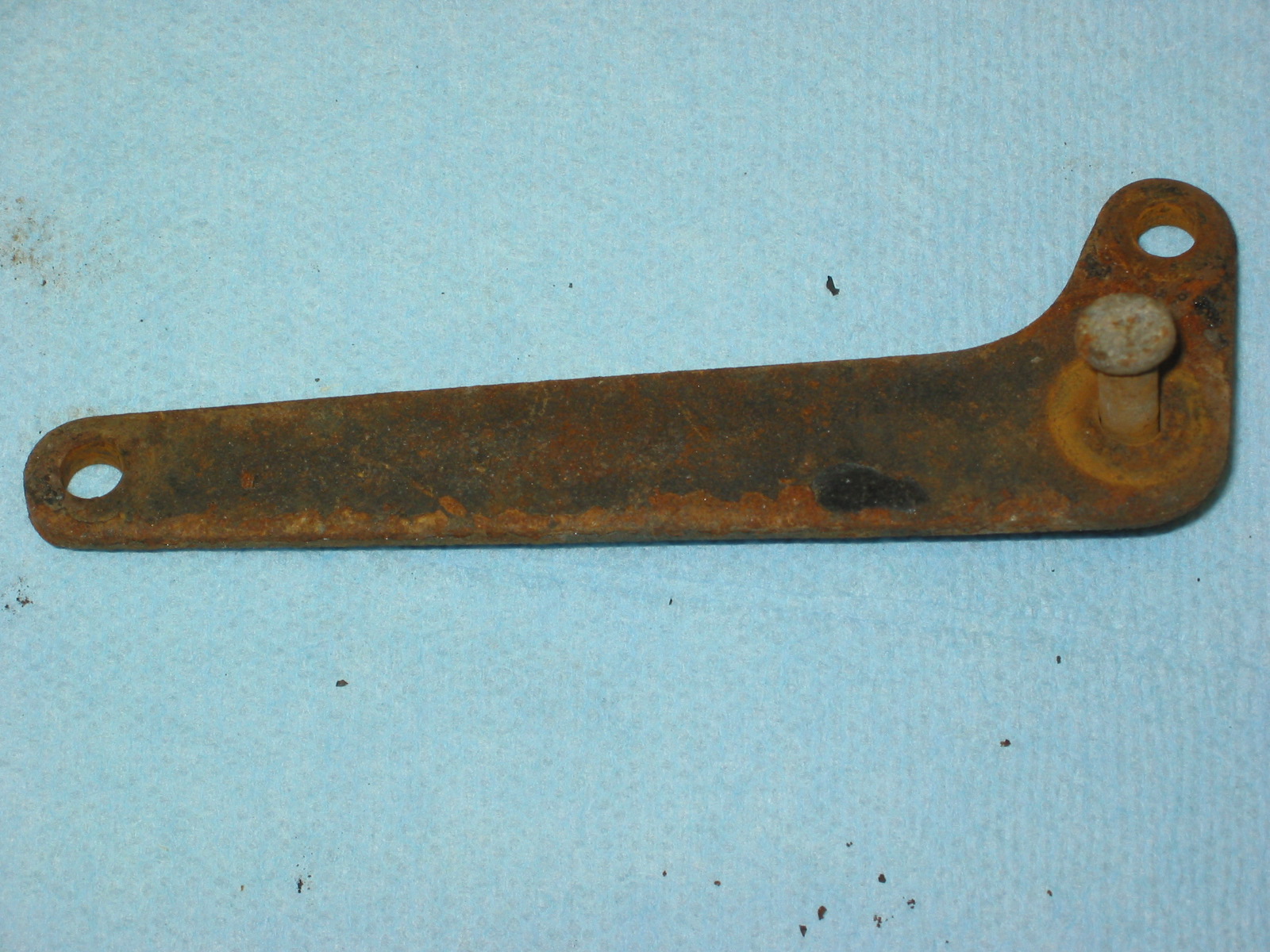
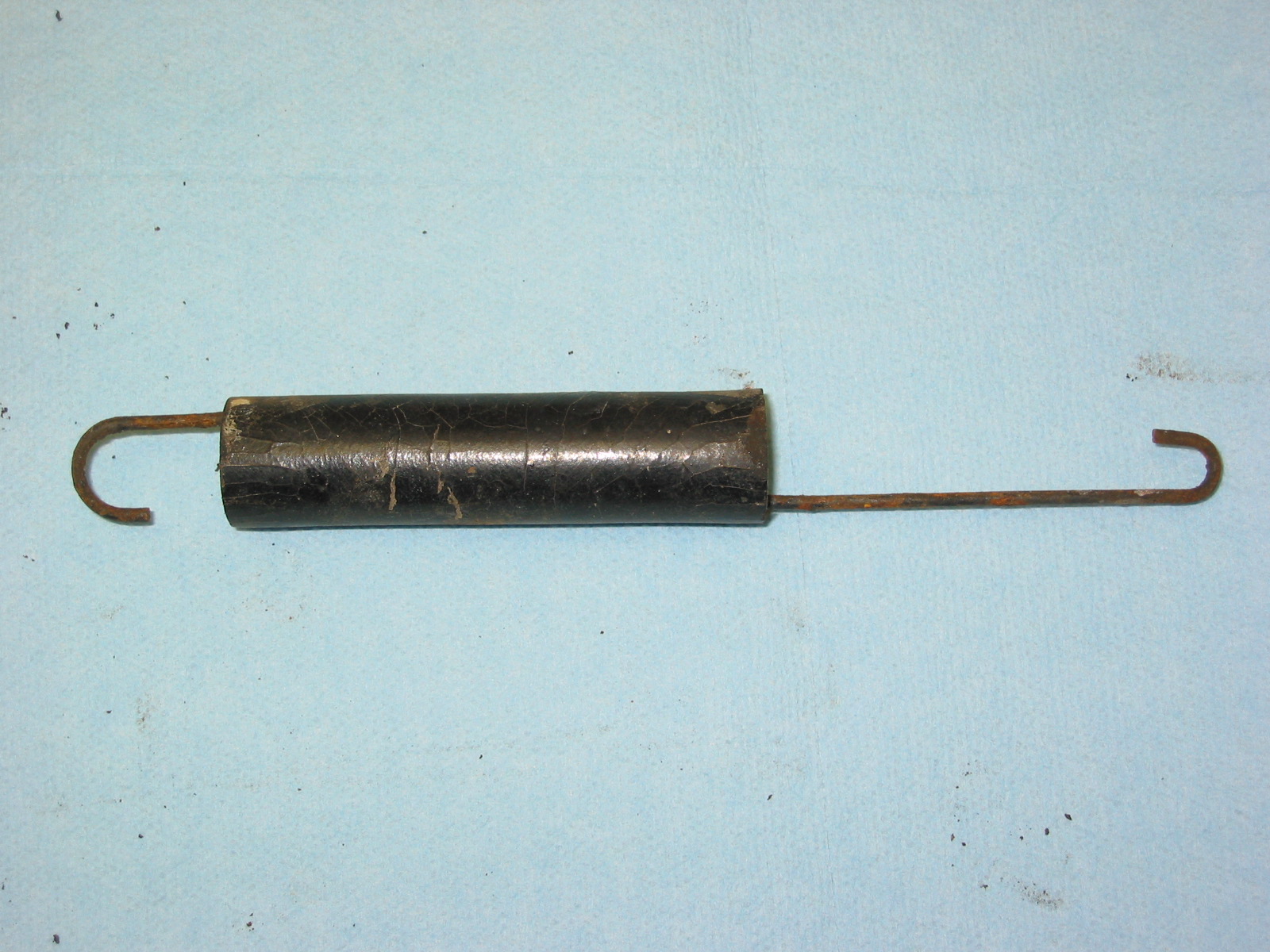
Bonnet Latch Hardware – Disassembled and cleaned the bonnet latch assembly and the bonnet opening rod assembly for Jeremy Turner to media blast and paint.

Bonnet Rod Spring

Bonnet Rod Bracket grommet

Bonnet Latch A

Bonnet Latch B

Bonnet Latch C

Also cleaned the bonnet rod clip, the catch bracket, two safety latches, the brake reservoir bracket and two shroud brackets.


Chapter 12 – Disassembly

February 2, 2003

Front Suspension Components. 

Removed the steering arm by loosening two 11/16” nuts with tab washer connector flattened. Note that the steering arm angles toward the dustshield – not the motor.

Stub Axle Carrier, King Pin, Caliper, Dust Shield

Stub Axle Carrier, King pin, Dust Shield

Brake Caliper – Removed by first unscrewing the brake pipe union. Remove two nuts securing the brake hose support bracket. Remove bracket. Unscrew two caliper retaining bolts.

Removed two rubber bushings from the upper trunnion.

Swivel Pin – Removed split pin at the swivel pin nut and tap swivel pin out with hammer.

Loosen cotter on the swivel pin and retract. Loosen two large nuts (bushings) on “A” arms and remove. Pull out pin and remove “A” arms.

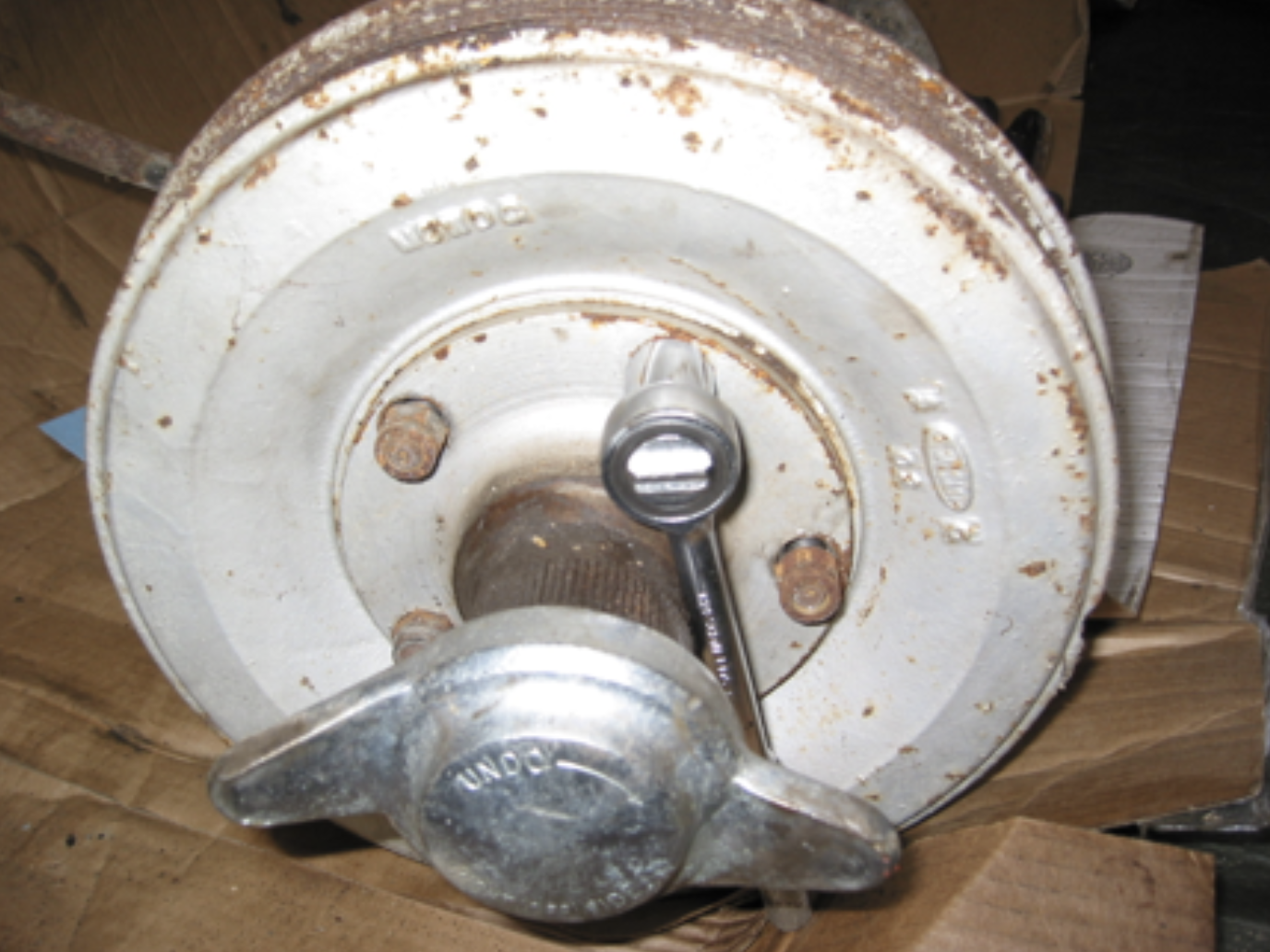
Grease Cup – Pulled out grease cup from hub – fabricated tool with long manifold nut and 5/16” x 3” bolt and the slide hammer.

Straighten and retract split pin on castle nut through the hole in the splines on the hub. Not easy to do!!

Remove castle nut. Brake rotor and hub then lift off of the dust shield and spindle.

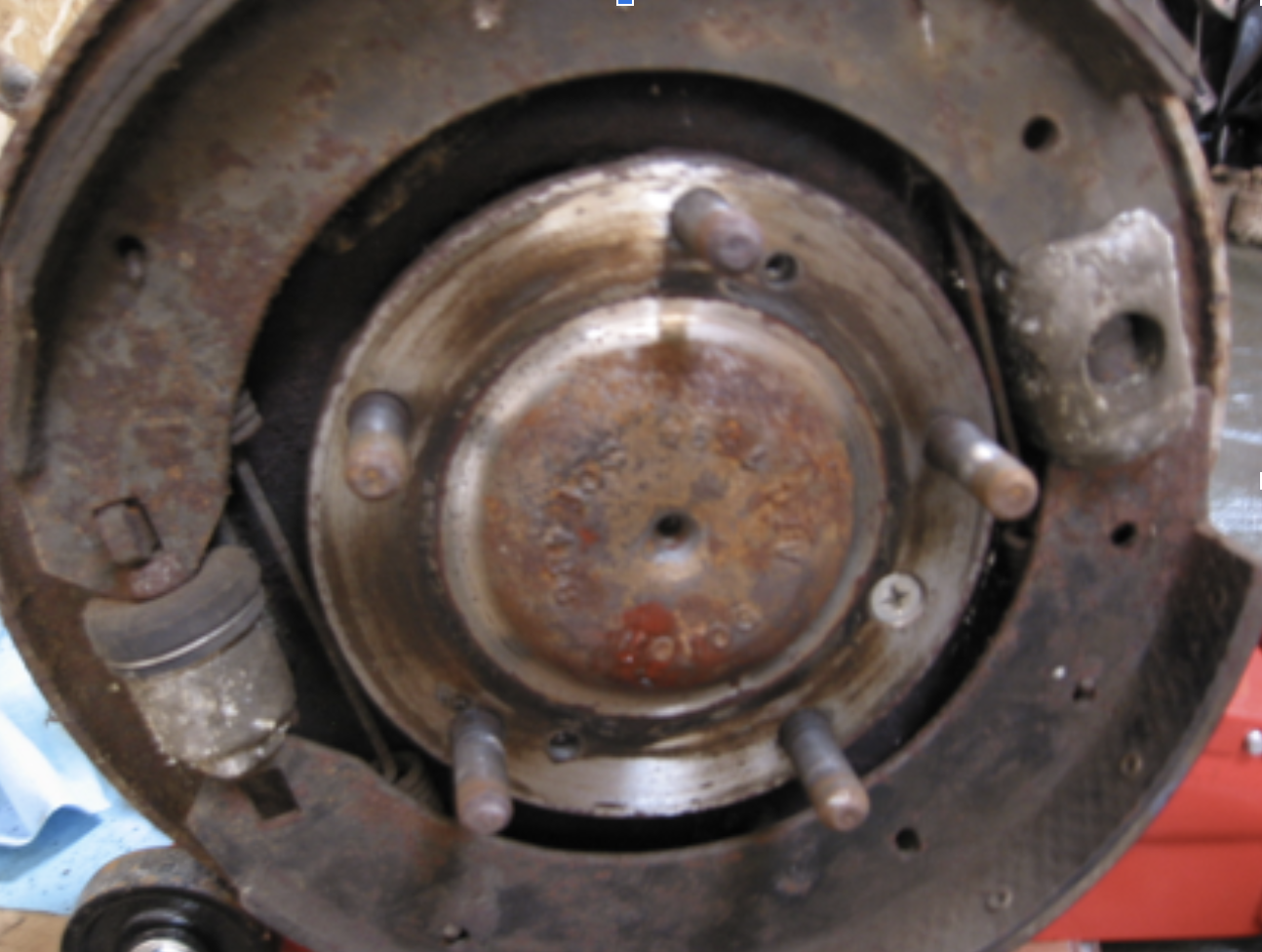
From the swivel axle spindle removed the dust cover spring and upper and lower dust covers. Separated the rotor from the hub. 4 bolts  – 2 long ones hold the brake caliper and bracket. 2 short bolts hold the plate to the swivel axle.

Removed rubber “U” seal from around the dust shield opening for the swivel axle.

March 12, 2003

Steering Idler and Steering Box

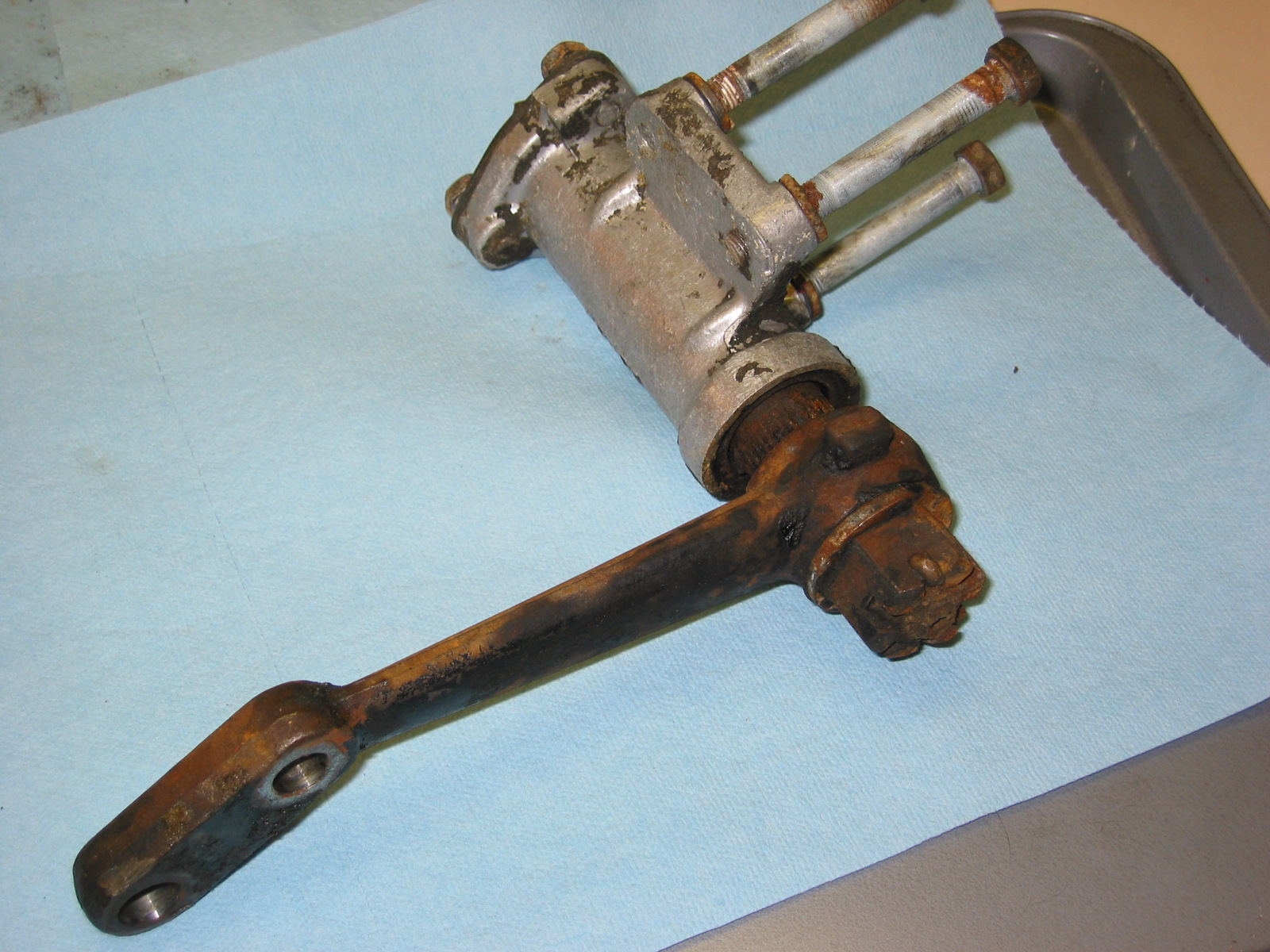
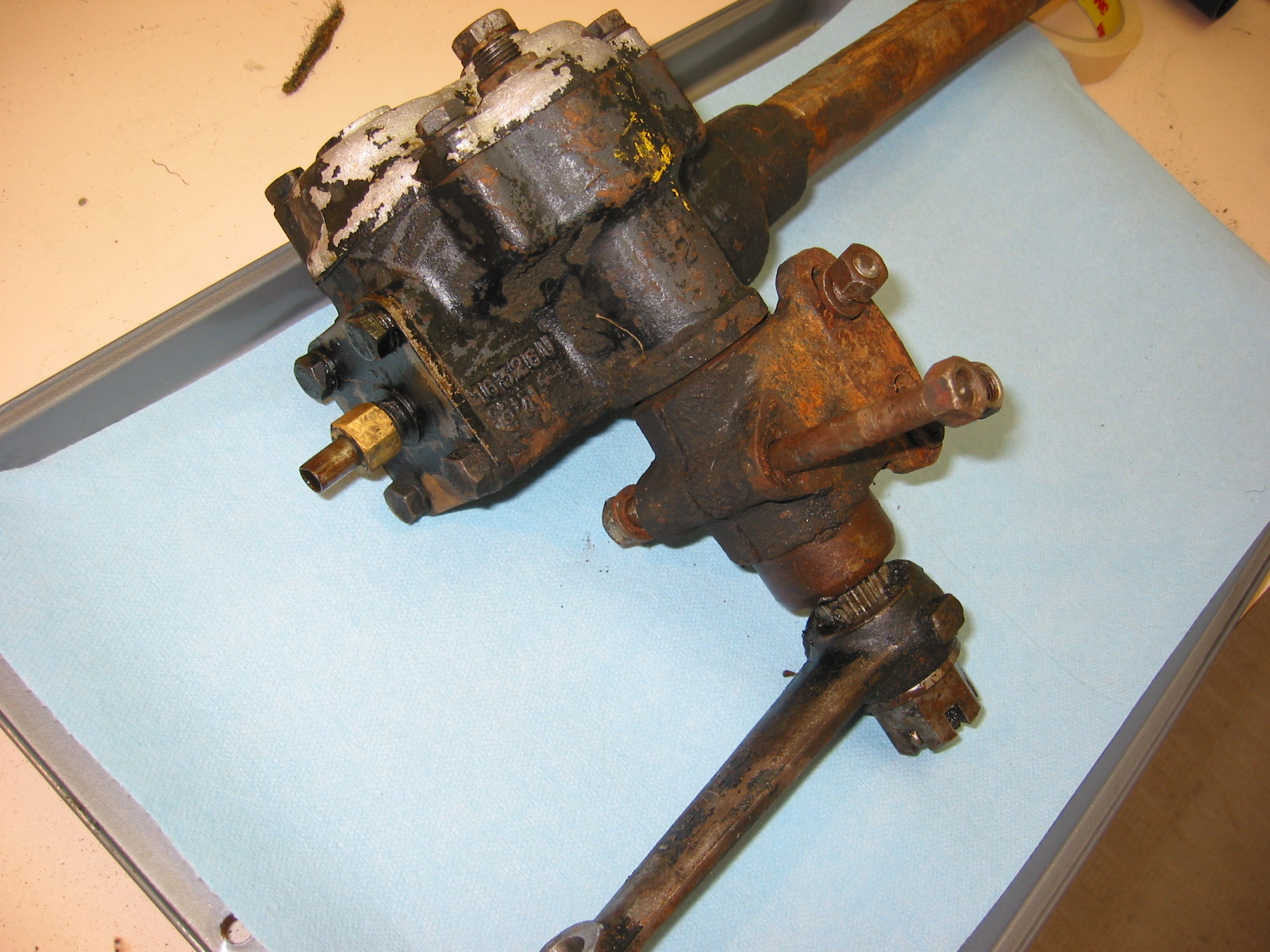
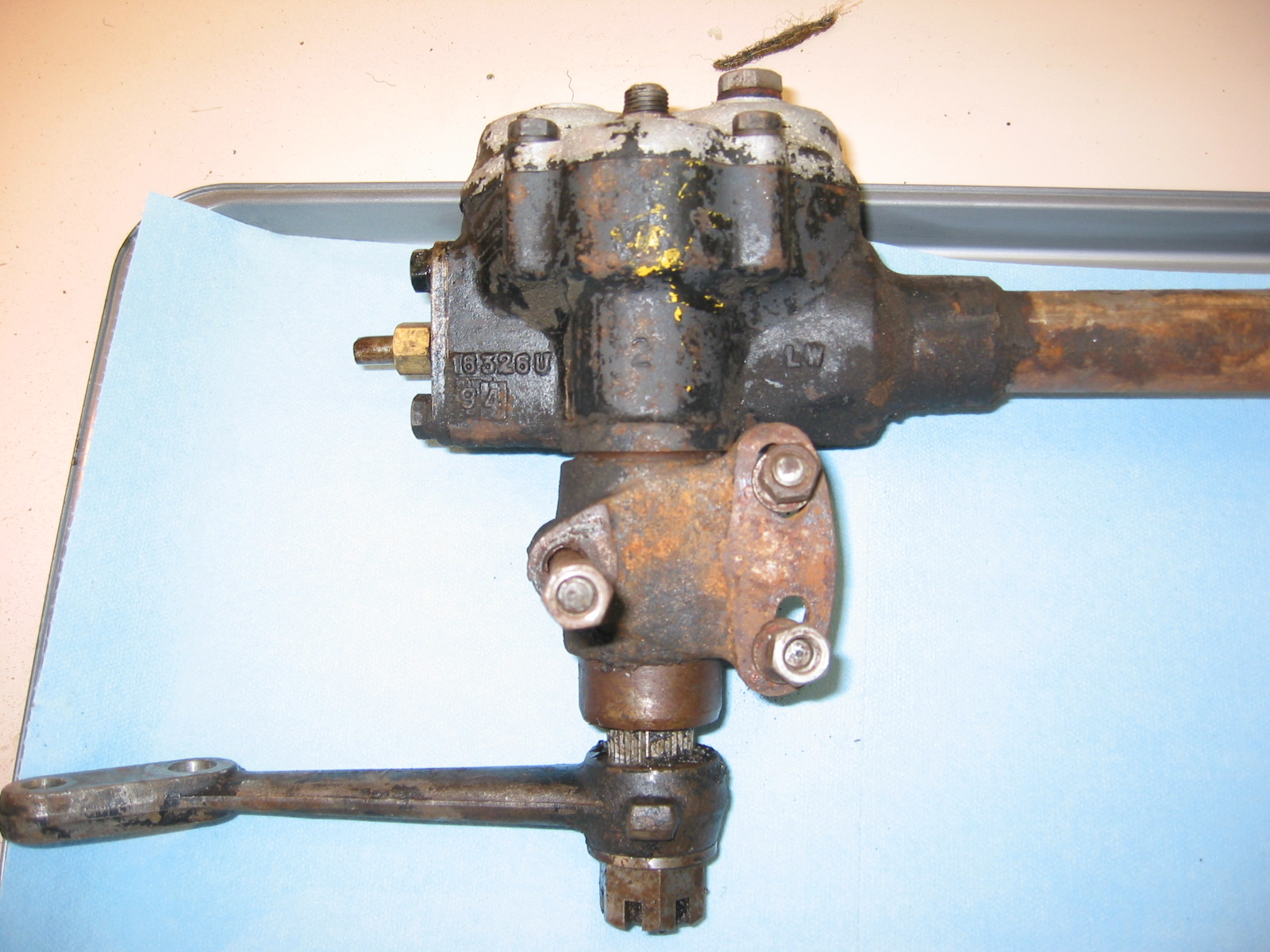
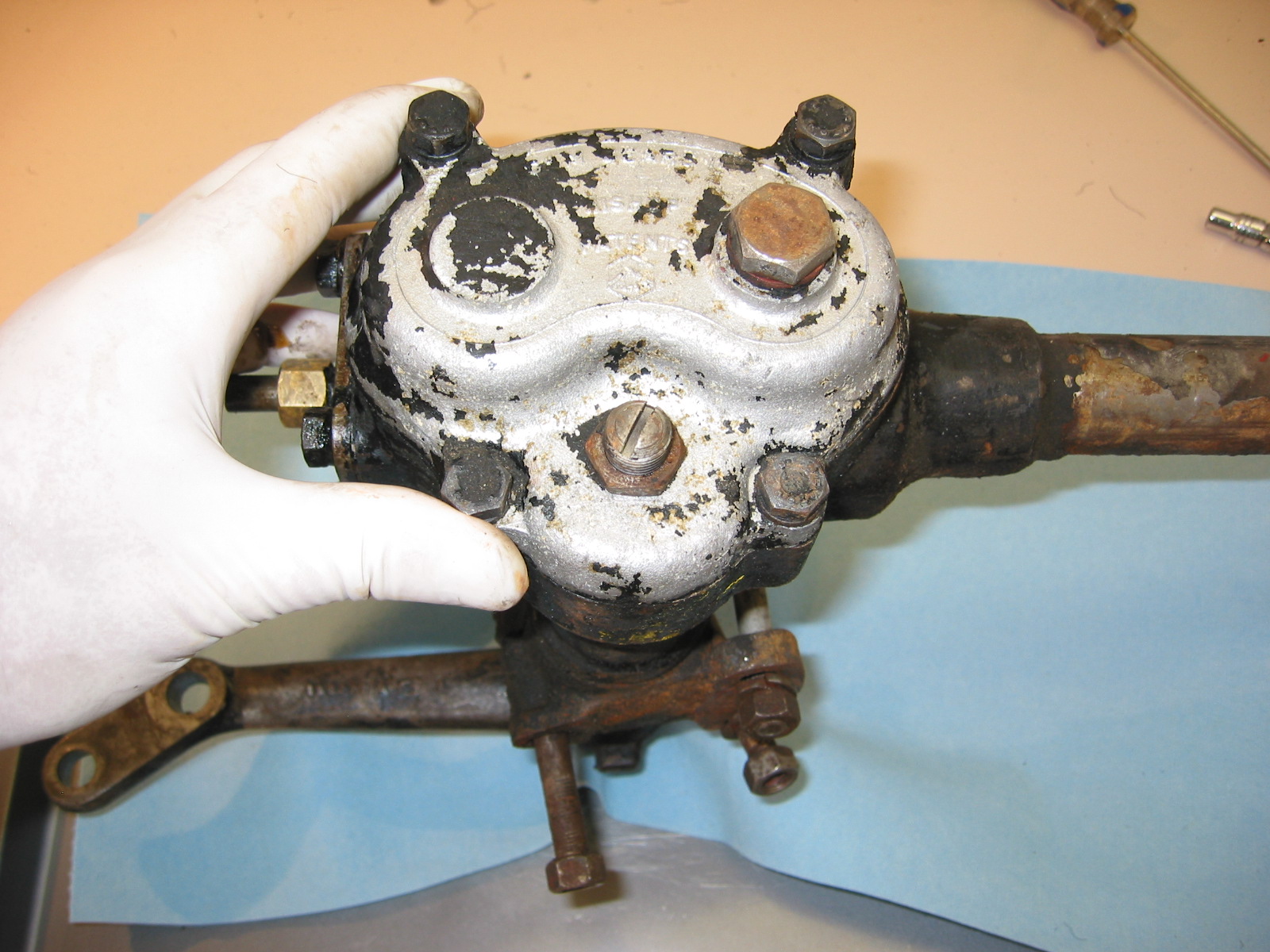
The steering idler and steering box are next for cleanup. I will have these  rebuilt by someone who knows what they are doing. Probably Bruce Phillips at Healey Surgeons.

Steering Idler 2

Steering Idler Clean

Steering idler 3

Steering Box 6

Steering Box 5

Steering Box 7

Distributor

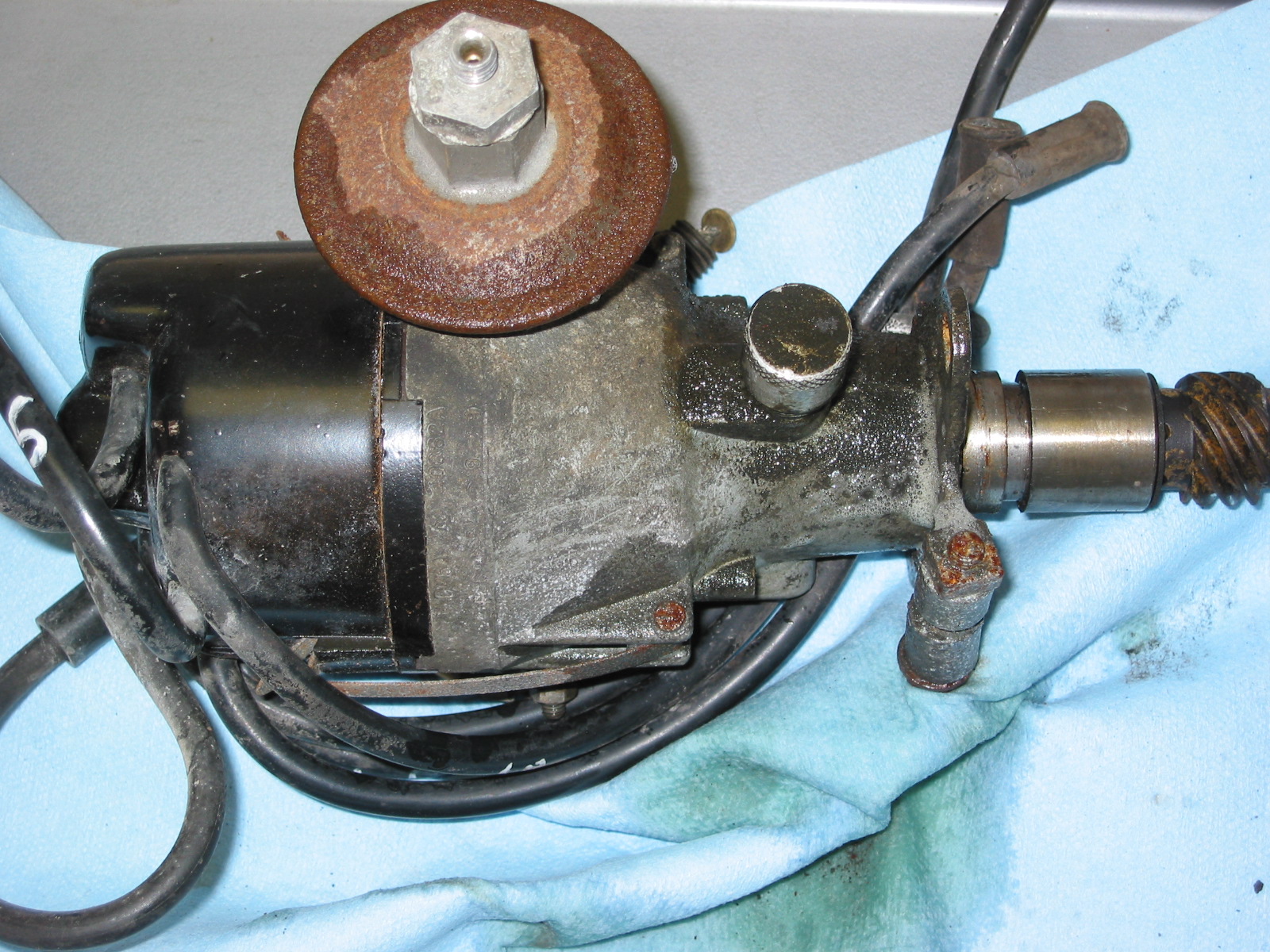
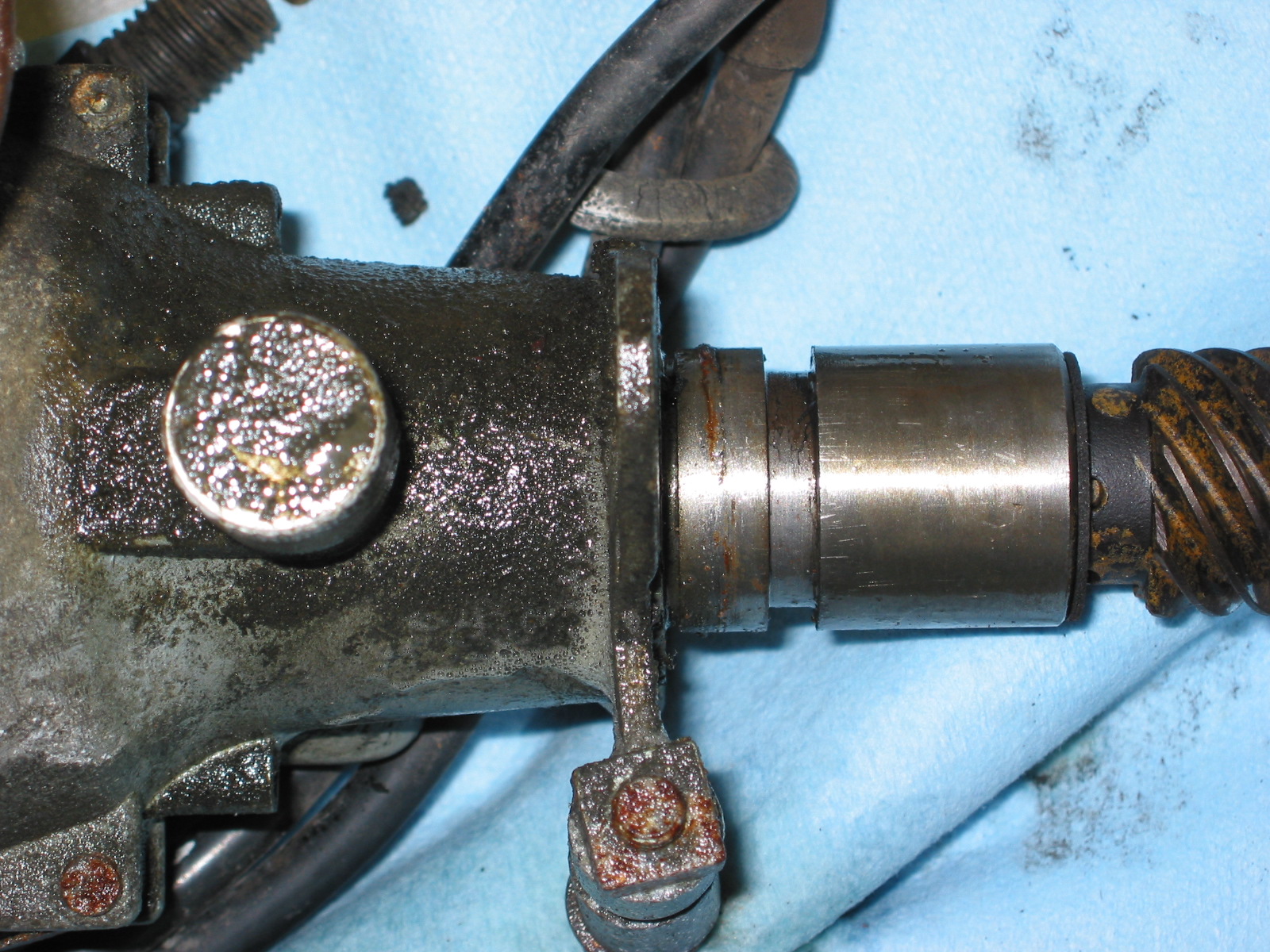
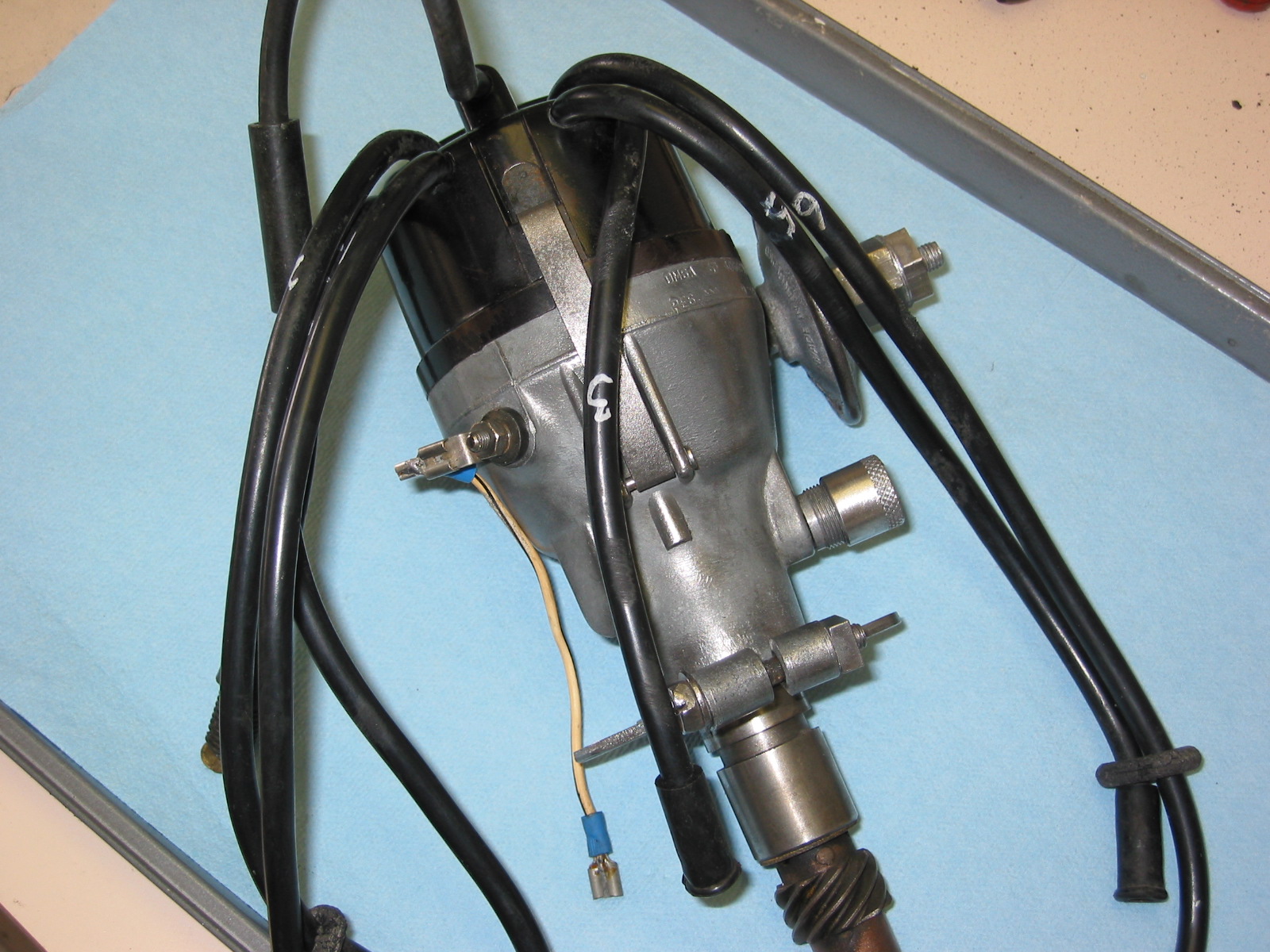
The distributor was also in good shape and easy to clean. We may still switch to an electronic unit, but cleaned up the Lucas just in case.

Distributor 7

Distributor 8

Distributor 9

Distributor Clean

Boot Latch and Lock Assembly

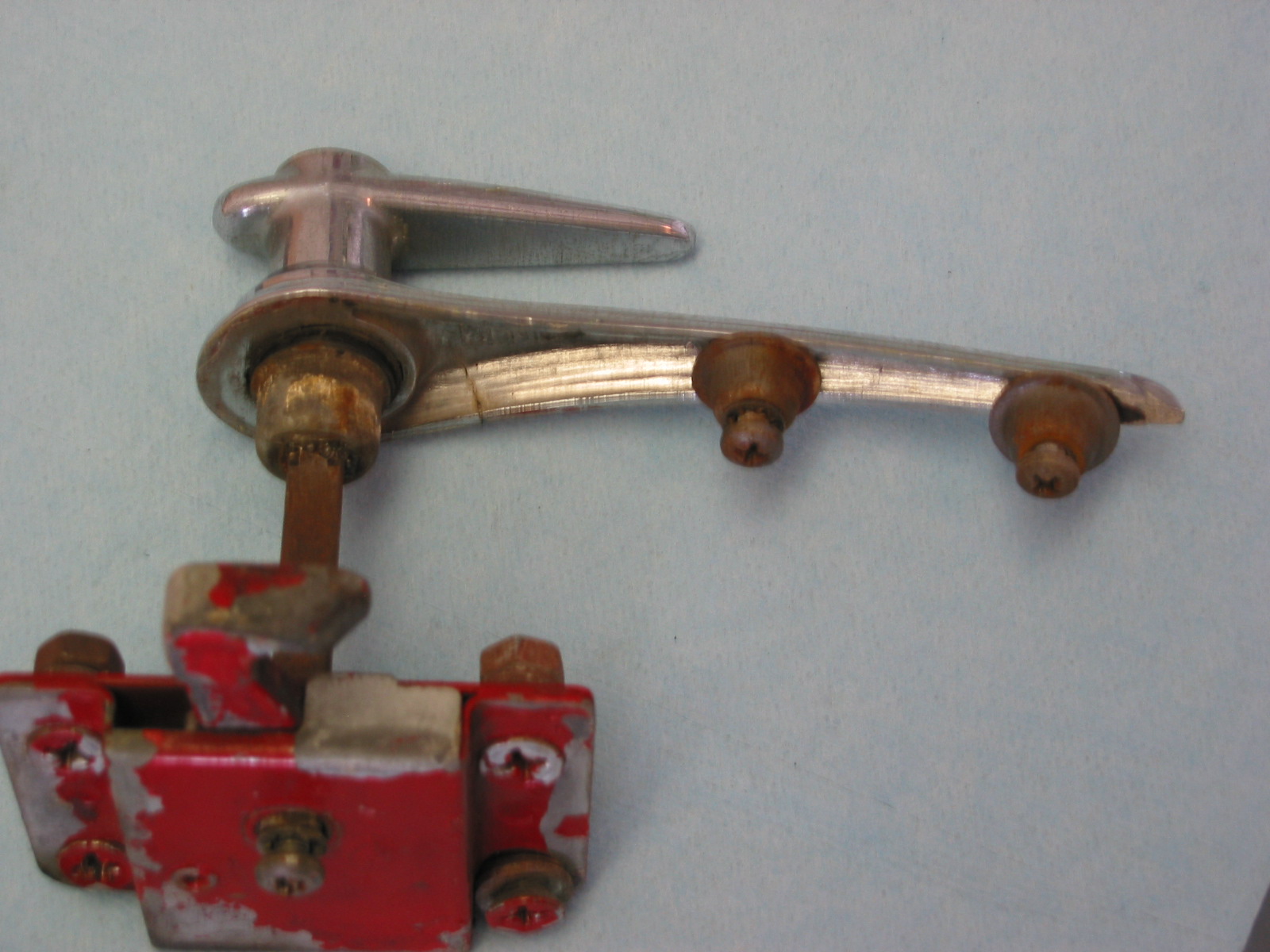
The boot latch and lock assembly was in reasonable shape but the chrome will have to be replaced as it is cracked rather badly.

Boot Lock

Boot Handle & Lock

Master and Slave Cylinders

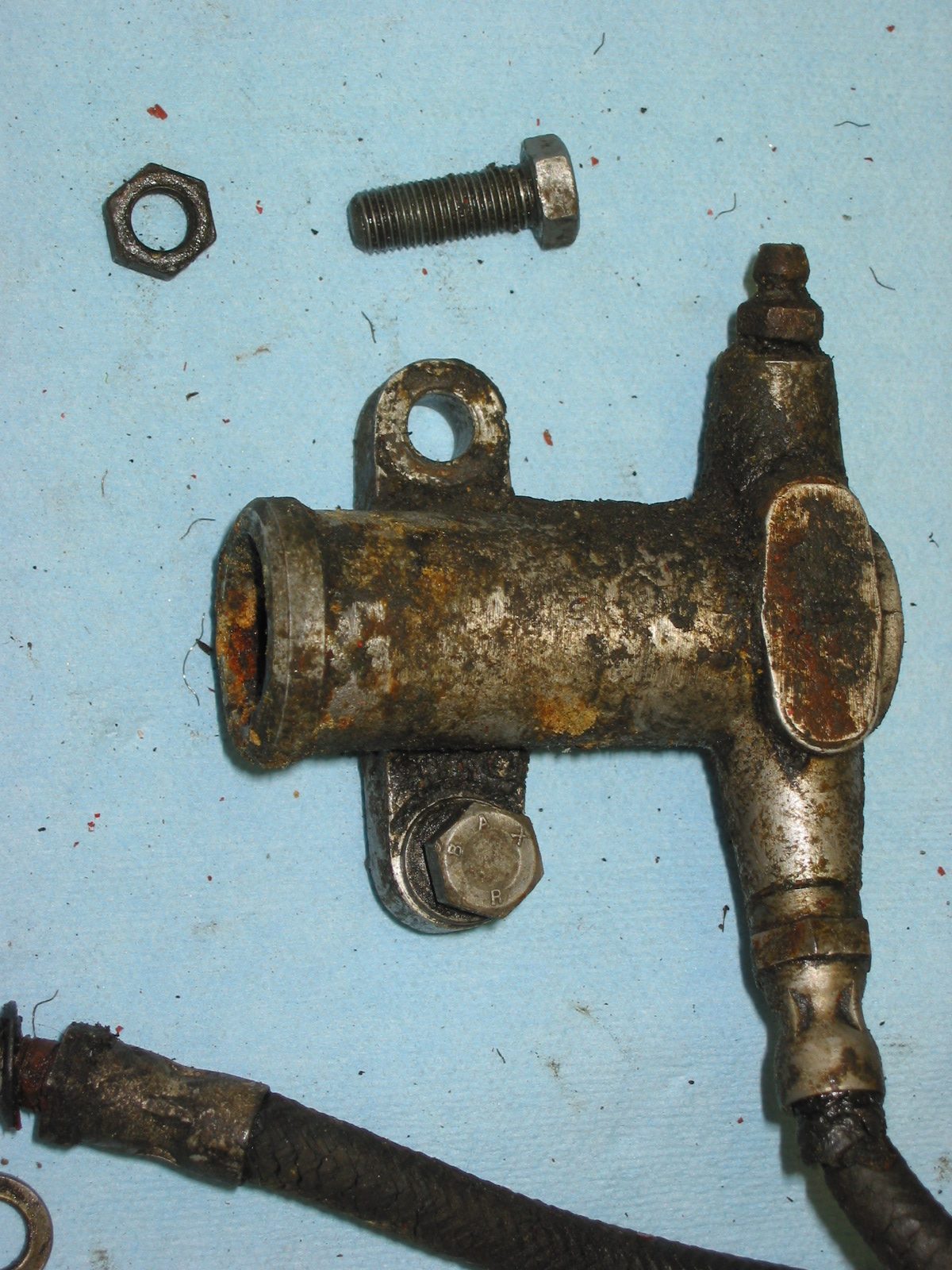
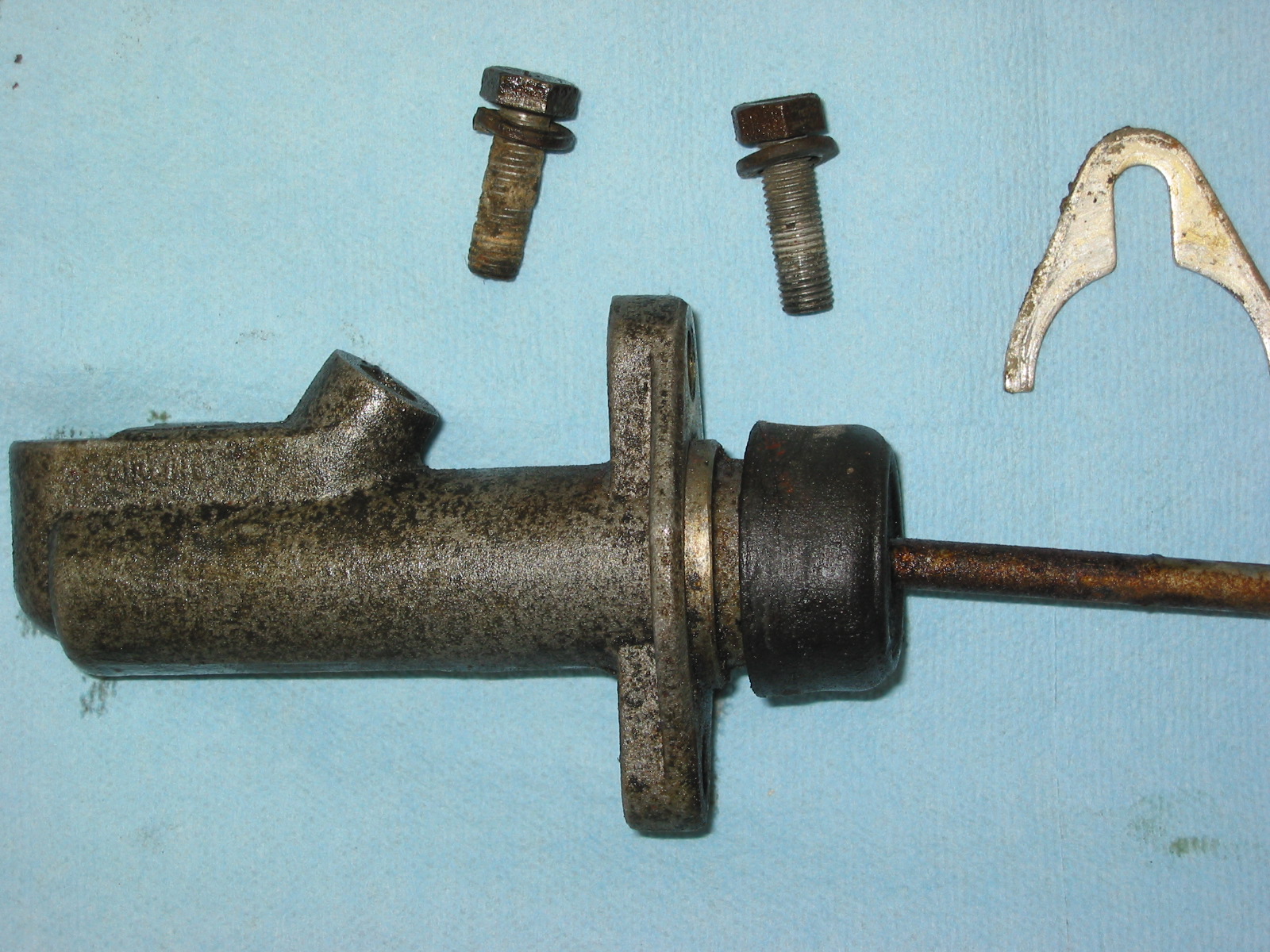
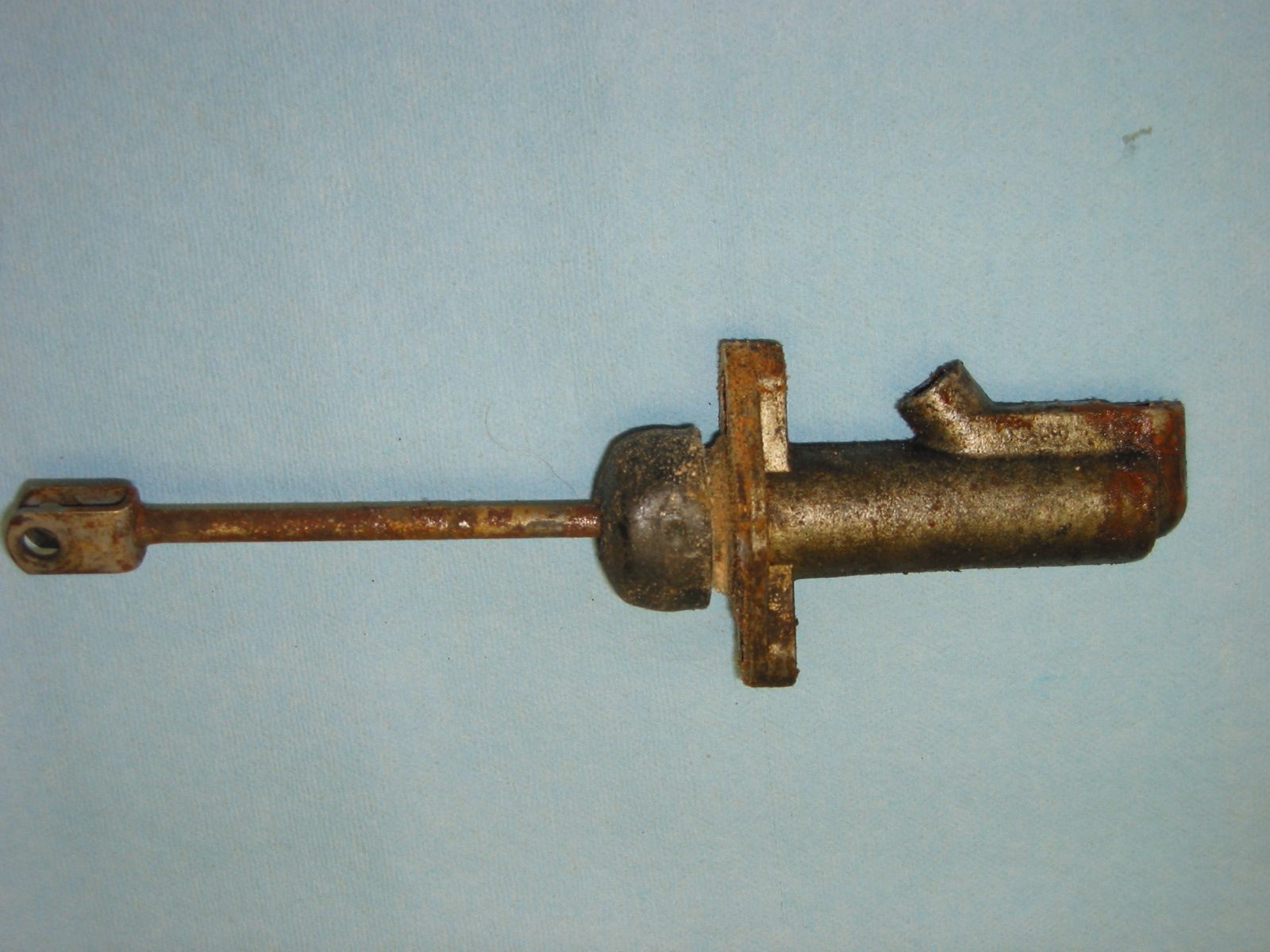
The clutch master and slave cylinder will both be replaced with new items.

Clutch Slave Cylinder

Clutch Master Cylinder with aluminum spacers

Master Cylinder Brake

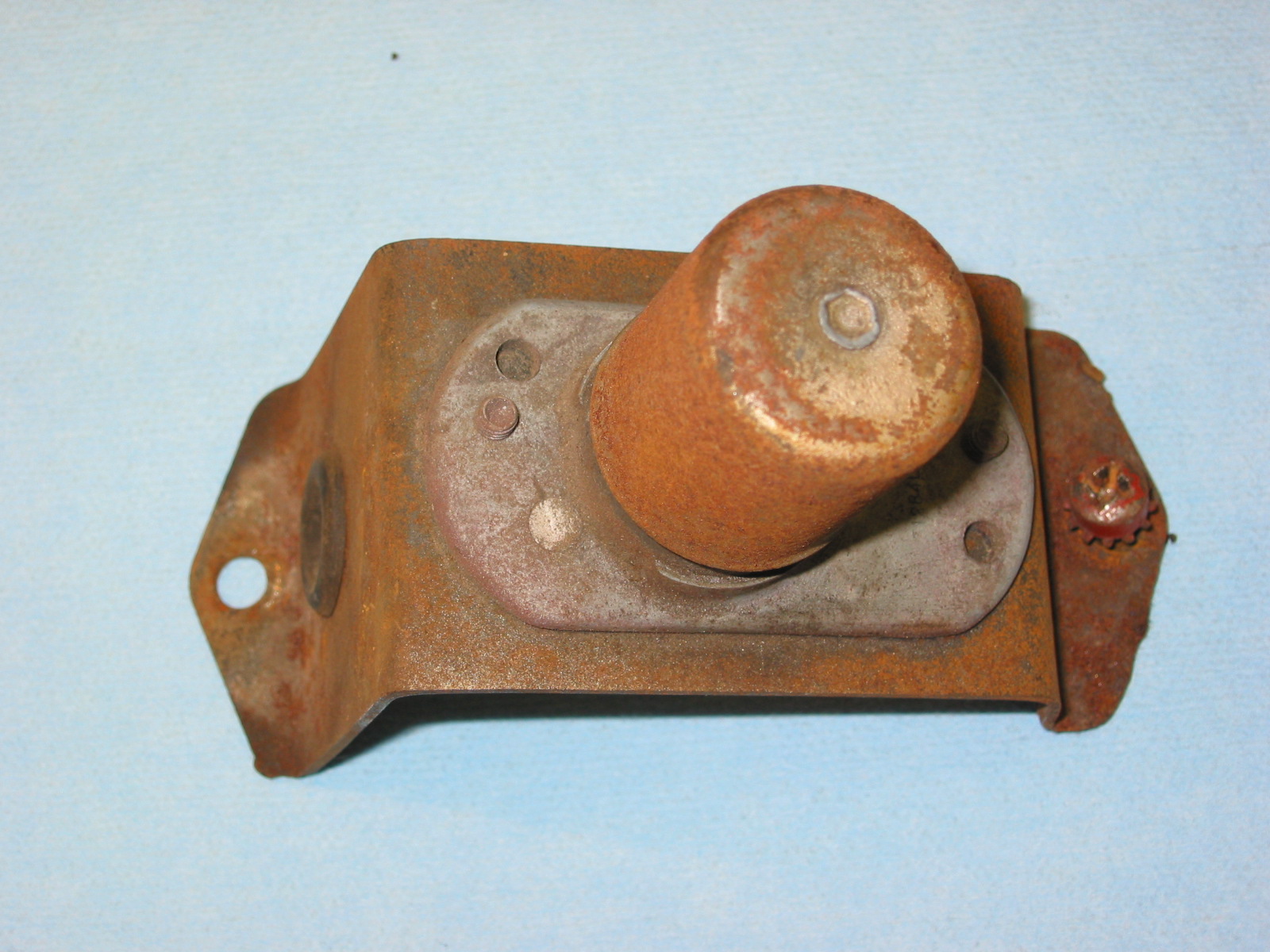
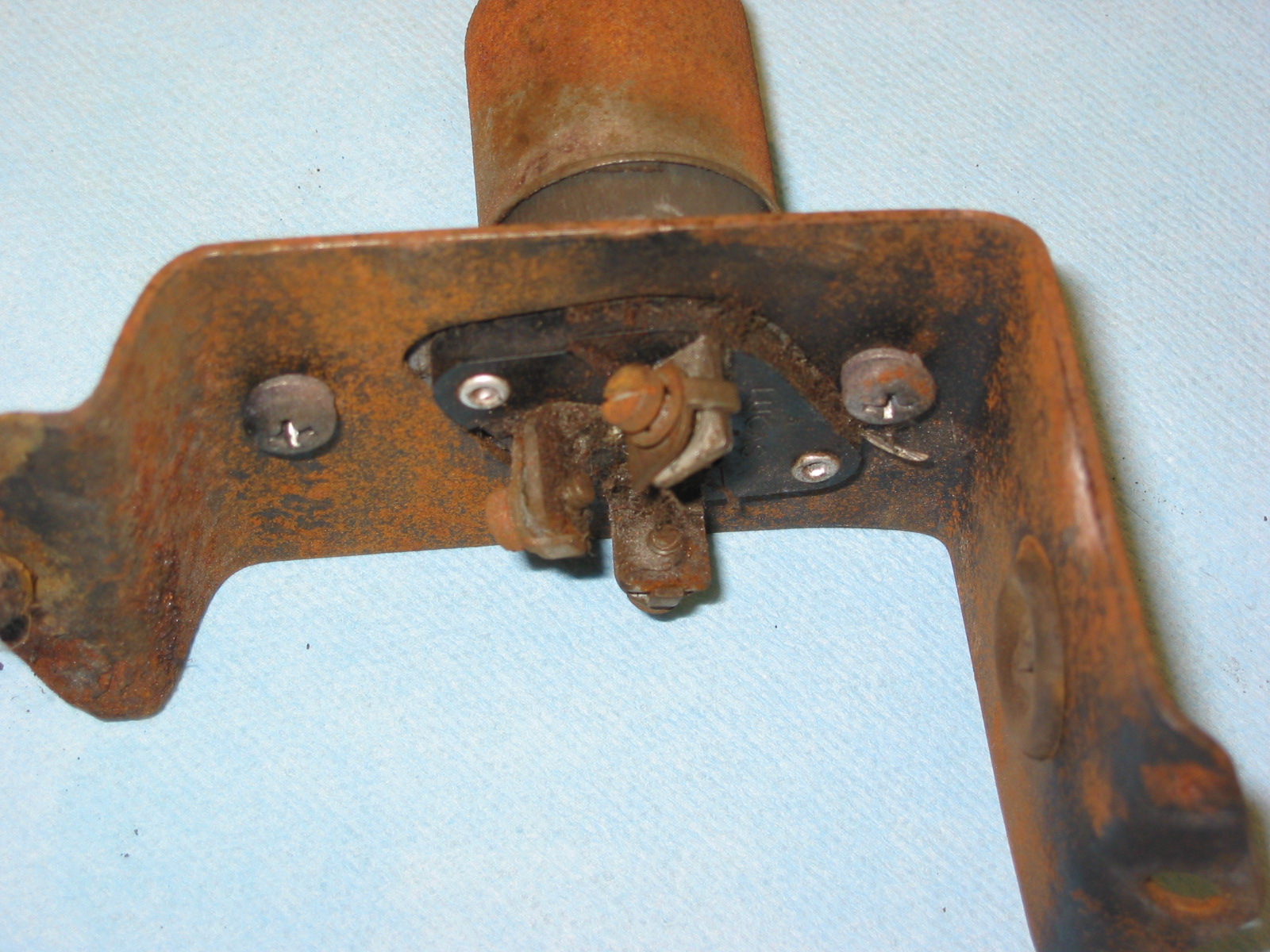
Headlamp Dip Switch

 The switch didn’t look too good, but it worked fine and would clean up.

Dipper Switch

Dipper switch 4

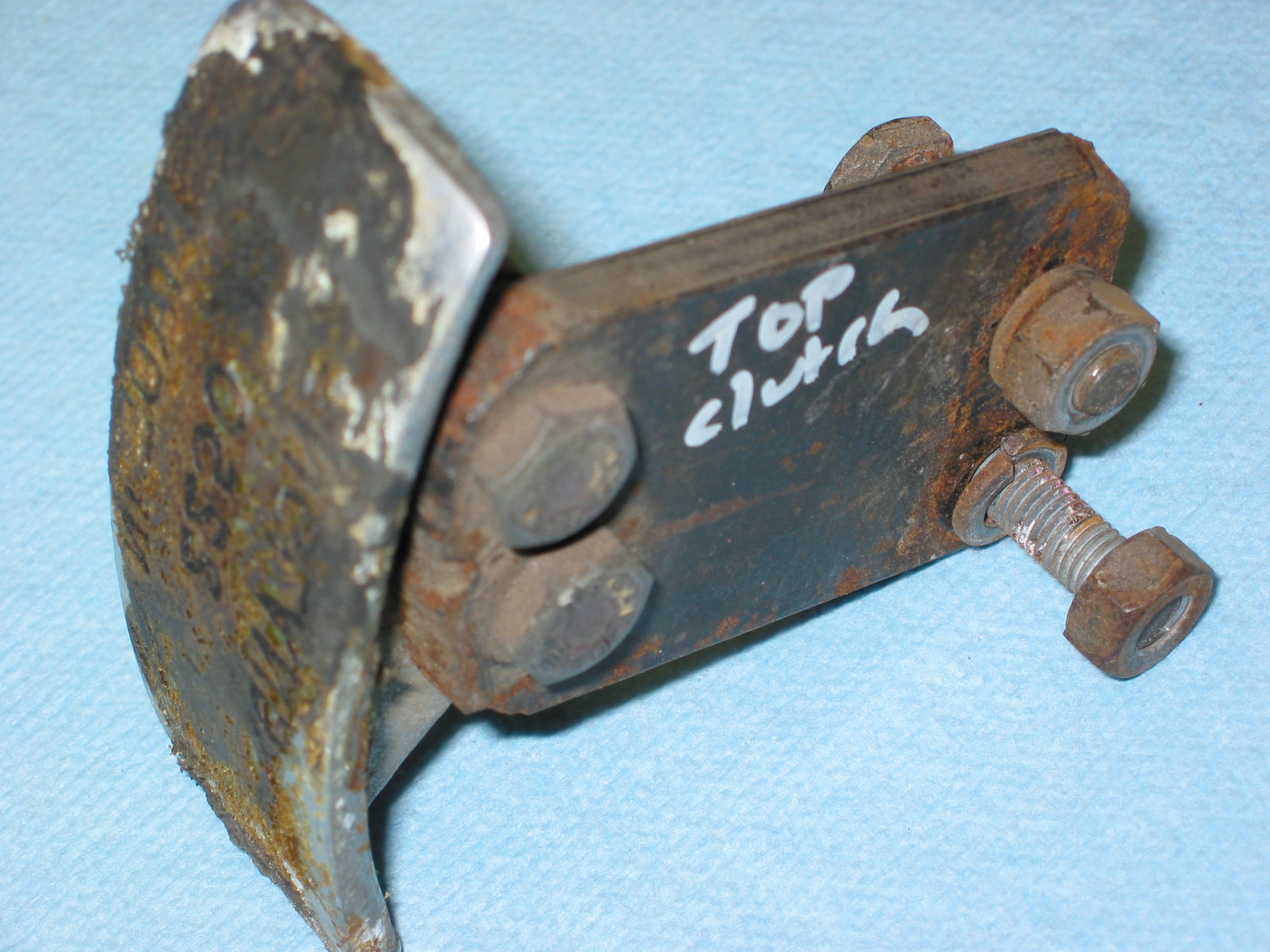
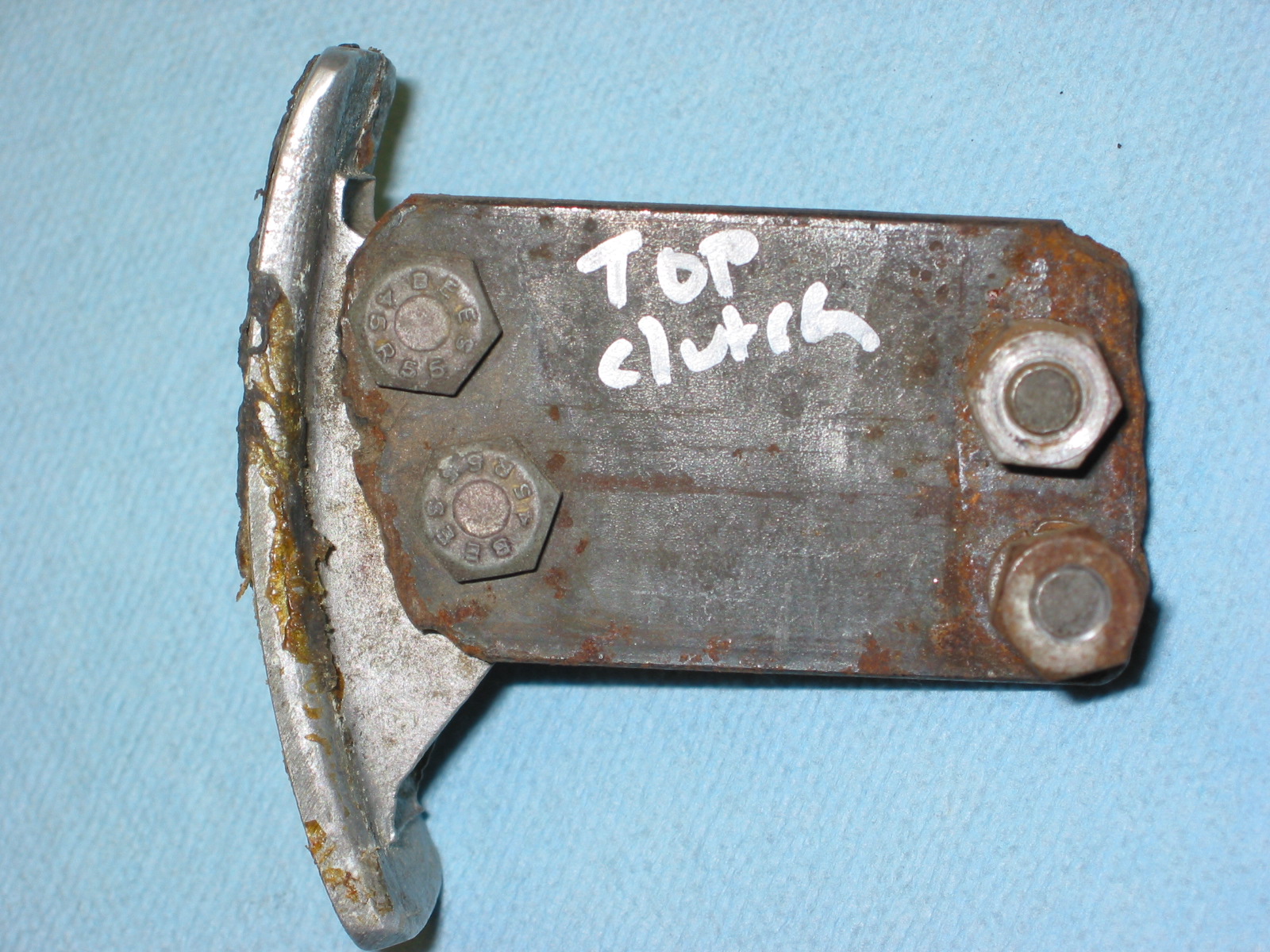
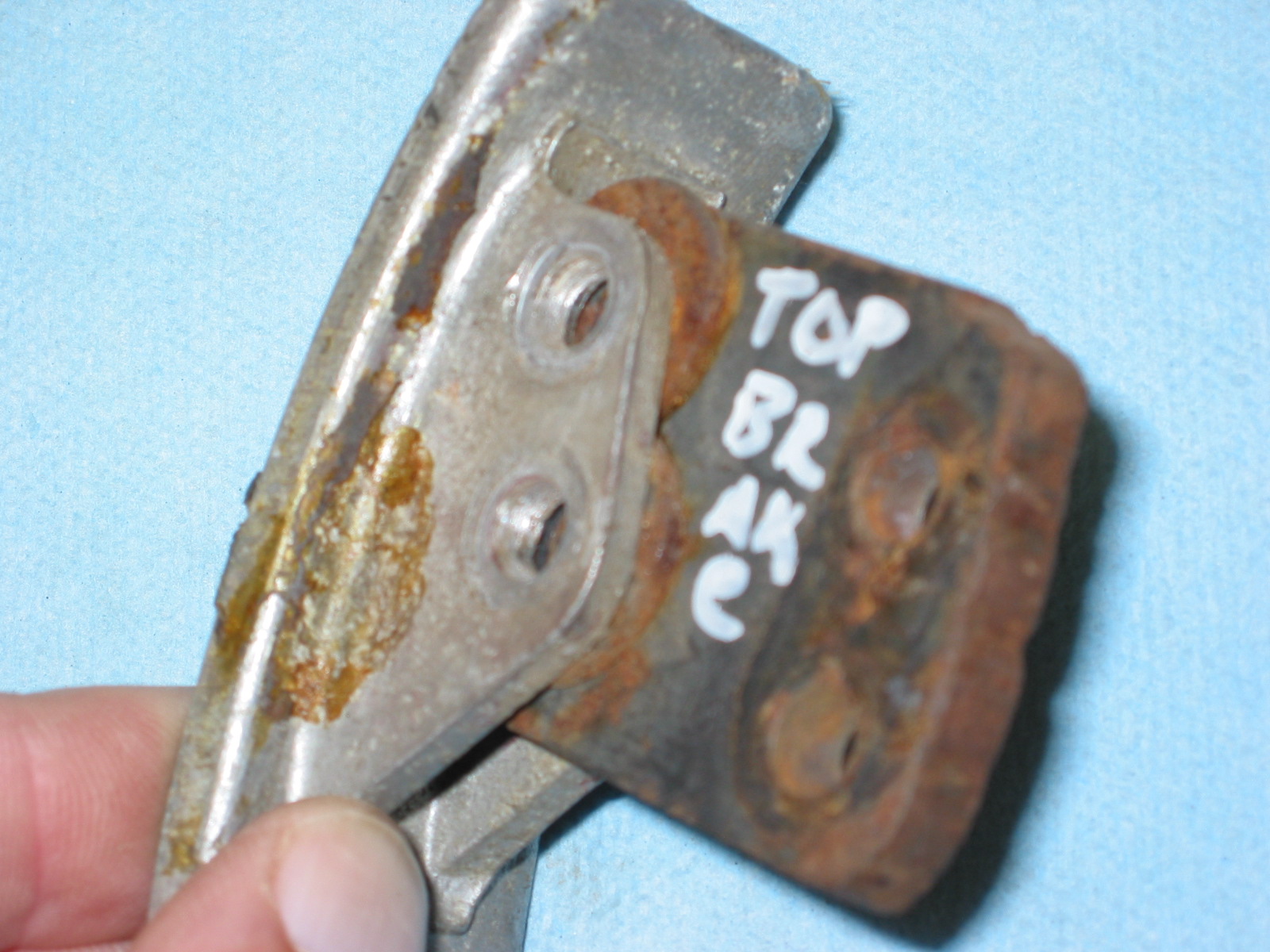
Brake and Clutch Pedals 

Curiously, one of the previous owners of the car added spacers on the brake and clutch pedals to minimize reach. We won’t use the spacers.

Clutch Pedal 1

Clutch Pedal 2

Clutch Pedal 3

Brake Pedal 4

Brake Pedal 5

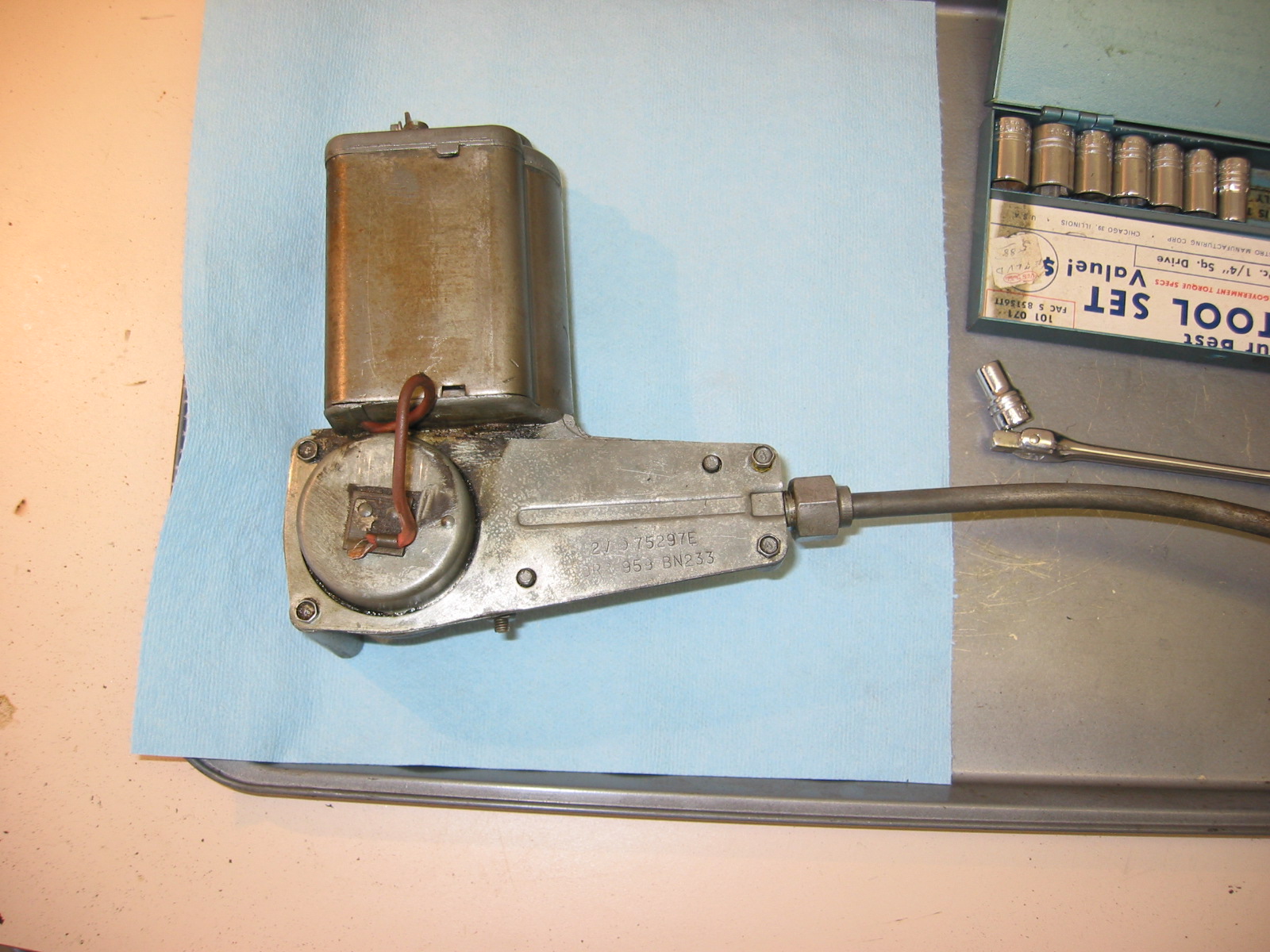
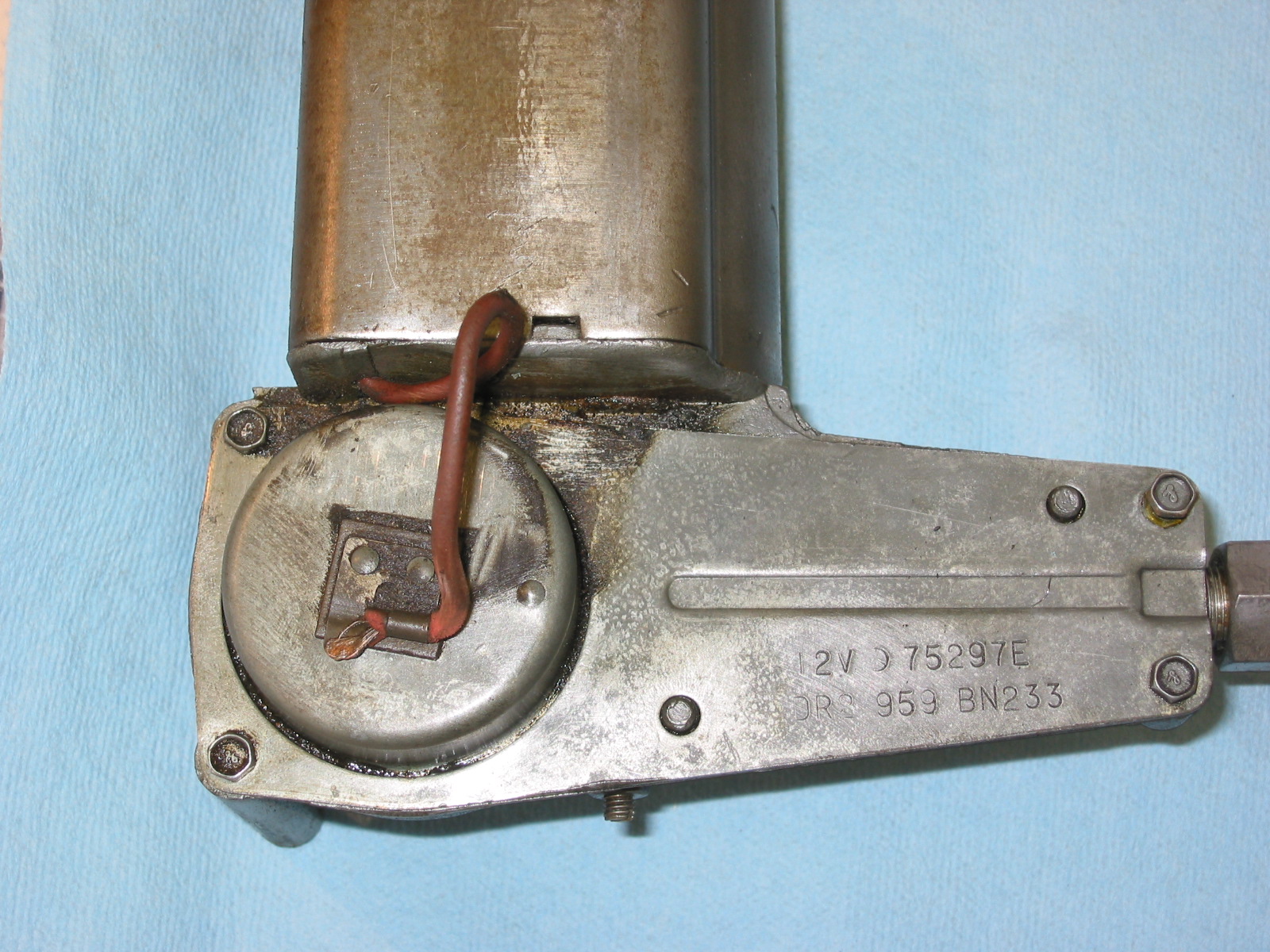
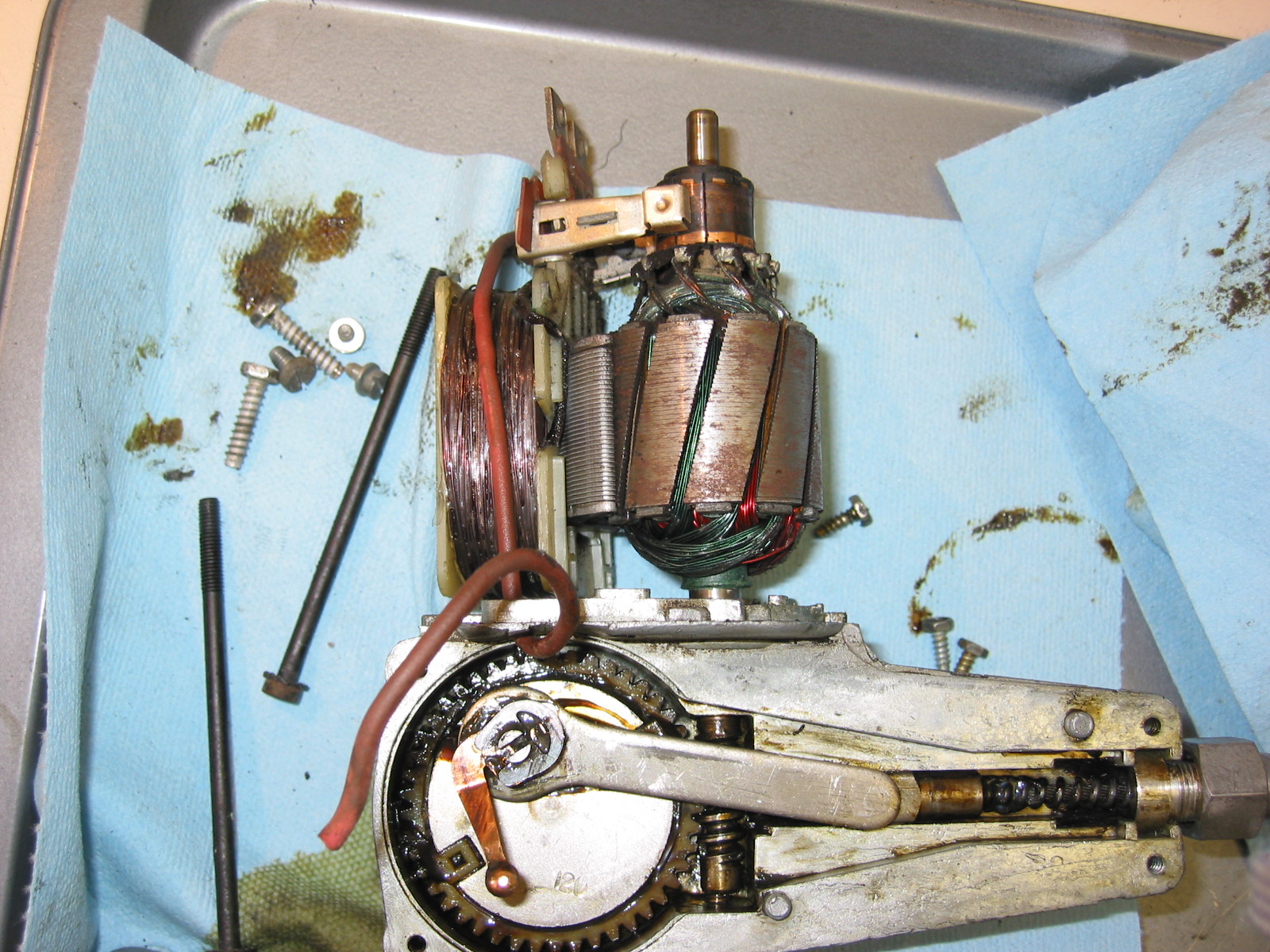
Windscreen Wiper Motor

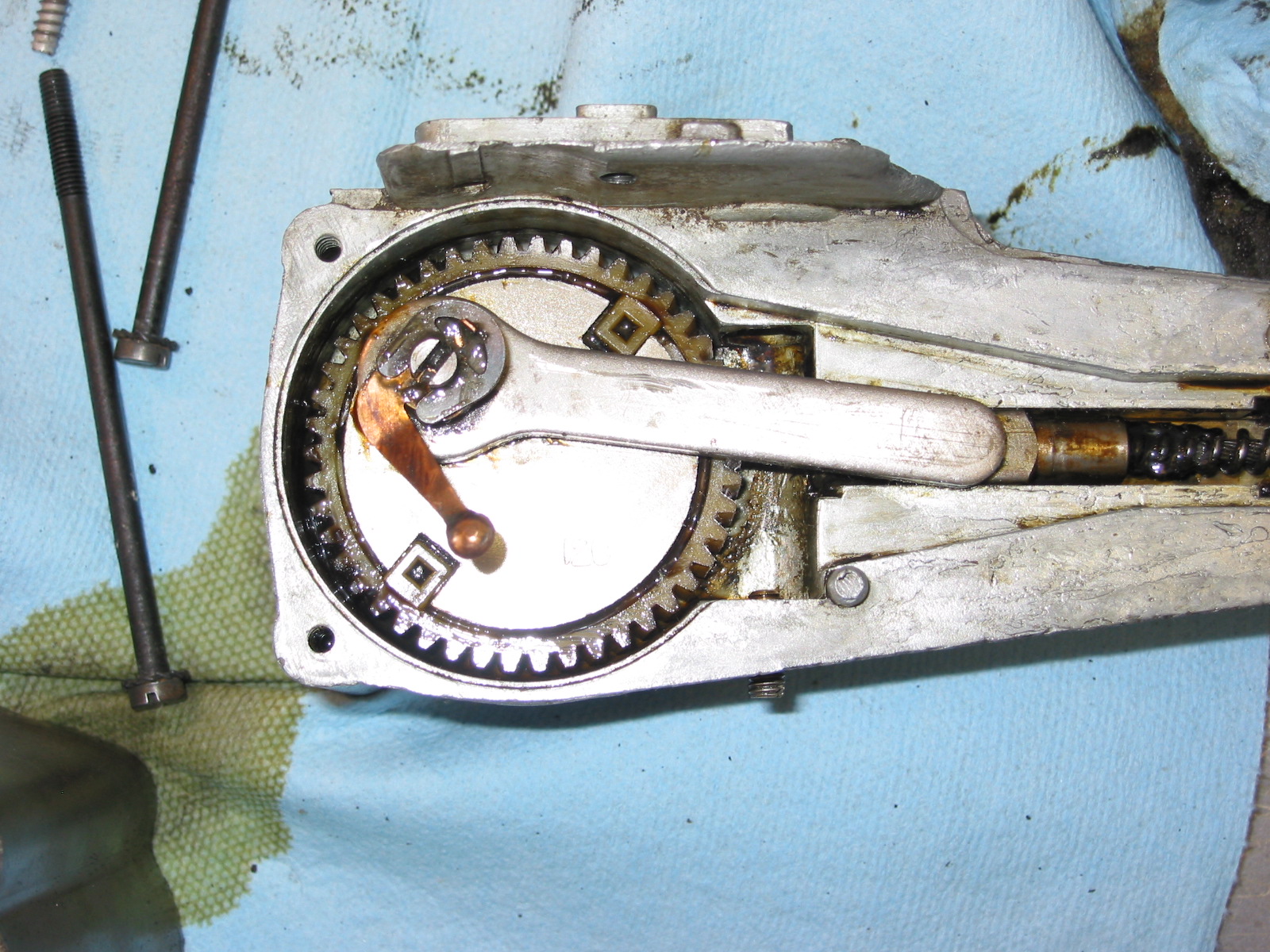
The next item to tackle was the windscreen wiper motor. It was disassembled, cleaned, lubricated, and painted. I tested the motor and it seemed to work fine.

Wiper Motor 3

Wiper Motor 4

Wiper Motor 6

Wiper Motor 7


Chapter 11 – Disassembly

The Battery Cable –  from engine to boot. Eight to nine clips attached with screws to frame.

October 20, 2002

Shipping to Jule Enterprises

Martin Jansen – from Jule Enterprises located just outside of Toronto picked up the car for the trip back to Canada for frame replacement and restoration. John, Scott and I had visited his shop in Canada earlier in the summer to “check it out.” We were pleased with what we found and I arranged for Martin to pick up 4422  for restoration work.

Martin Jansen Picking Up the Healey 10-20-2002

Martin Jansen Picking up the Healey 10-20-2002 2

Martin Jansen Picking up the Healey 10-20-2002 3

Martin returned to Canada with the primed doors and four new aluminum wings to be fitted before bringing the BT7 back to Harrisonburg. In addition to fitting the old tub to the new Jule frame, he will media blast the body, epoxy primer the car, add new aluminum flanges to the rear shroud, and do rough repairs to shroud damage on the front and left rear. We anticipate a return date around the first of February. Lots of parts to clean between now and then.
November 9, 2002

Bonnet Hinges – After a very busy work month, this weekend provided some time to return to parts clean-up and restoration. Cleaned a primed both bonnet hinges and added stainless hardware.

Cleaned and primed Bonnet Hinges

Door Check Strap Assembly – Both door strap catches were cleaned. The Moment-Anderson Restoration Book states that these straps have a zinc plated finish rather than paint. The straps will need to be refinished at a later date and new washers added.

Cleaned Door Catches

November 17, 2002

Rear Axle

Rear axle disassembly –  Removed five lug nuts and the rear splined hub. Then loosen two Phillips head screws securing the rear brake drum and remove the drum.

Brake Drum Hub Nuts

Rear Axle Half Shaft

Removed the brake shoe retaining springs and slipped off the lower shoe. Disconnected the handbrake tension spring to release pressure and slipped off the upper shoe.

Removed the shoe adjuster by loosening two 9/16” nuts and knocked out. Note shape of pistons. Remove axle by loosening one 3/8” flat head phillips screw. Note paper gasket. Pull out axle half shaft. The left and right shafts are marked with an engraved “R” or “L,” because they need to be replaced to the original locations.
Rear Hubs – Removed the octagonal nut retaining the hub. One of the nuts loosens clockwise and one counterclockwise. Remove the O Ring, flat washer and retaining band. Remove the back plate by loosening 4 nuts and bolts. The bolt heads face the outside of the car. I ordered a special socket from BCS for this purpose.

left rear hub – nut removed
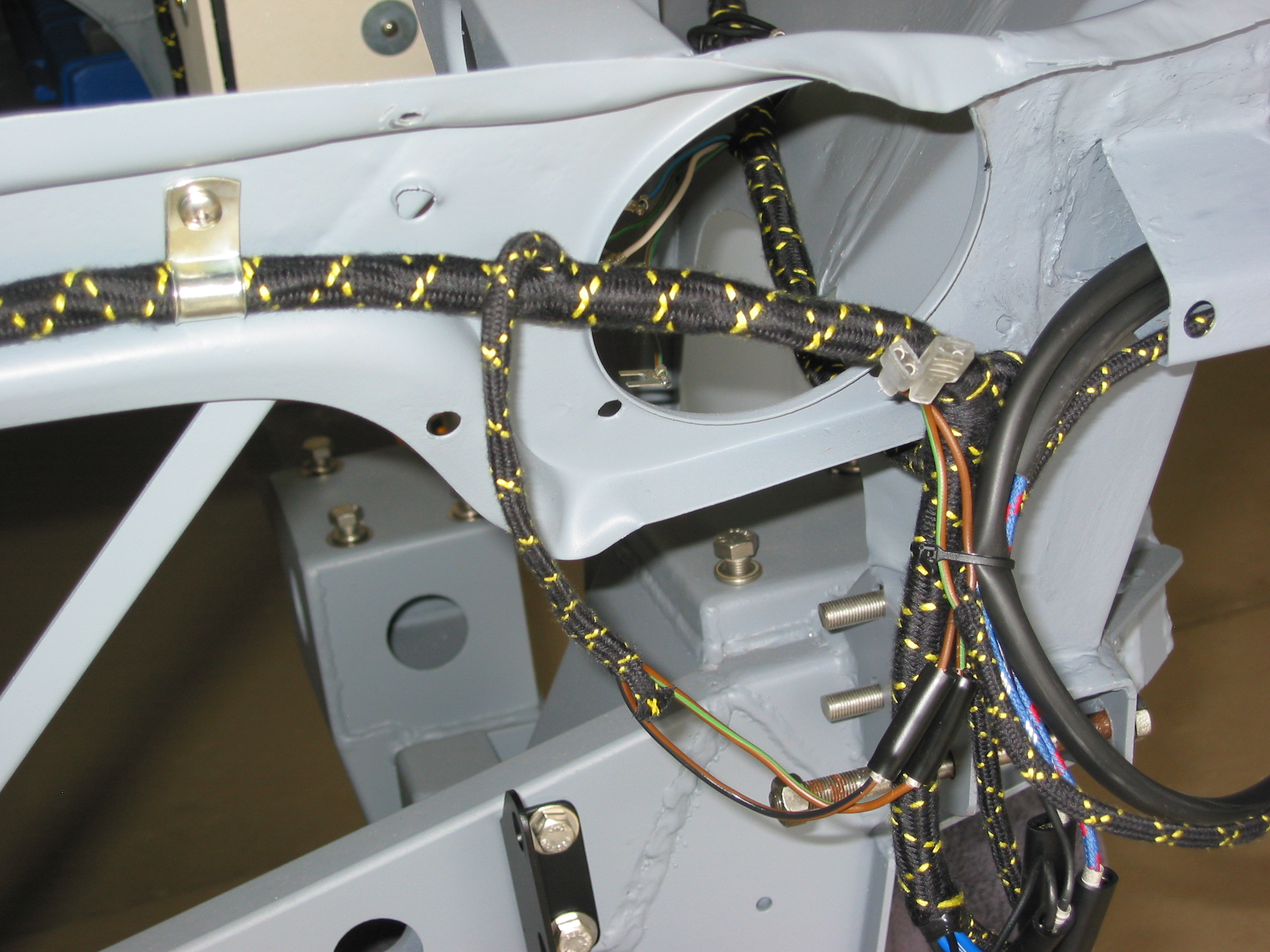
Shock Absorbers – Removed the rear shock absorbers by loosening 11/16” nut and kncked pin through the bushing and out of the bracket holding the shock.

Rear Differential – Removed rear differential from axle by loosening 12 nuts and lock washers. Top center bolt also retains the brake line clamp.

November 29, 2002

Rear Hubs

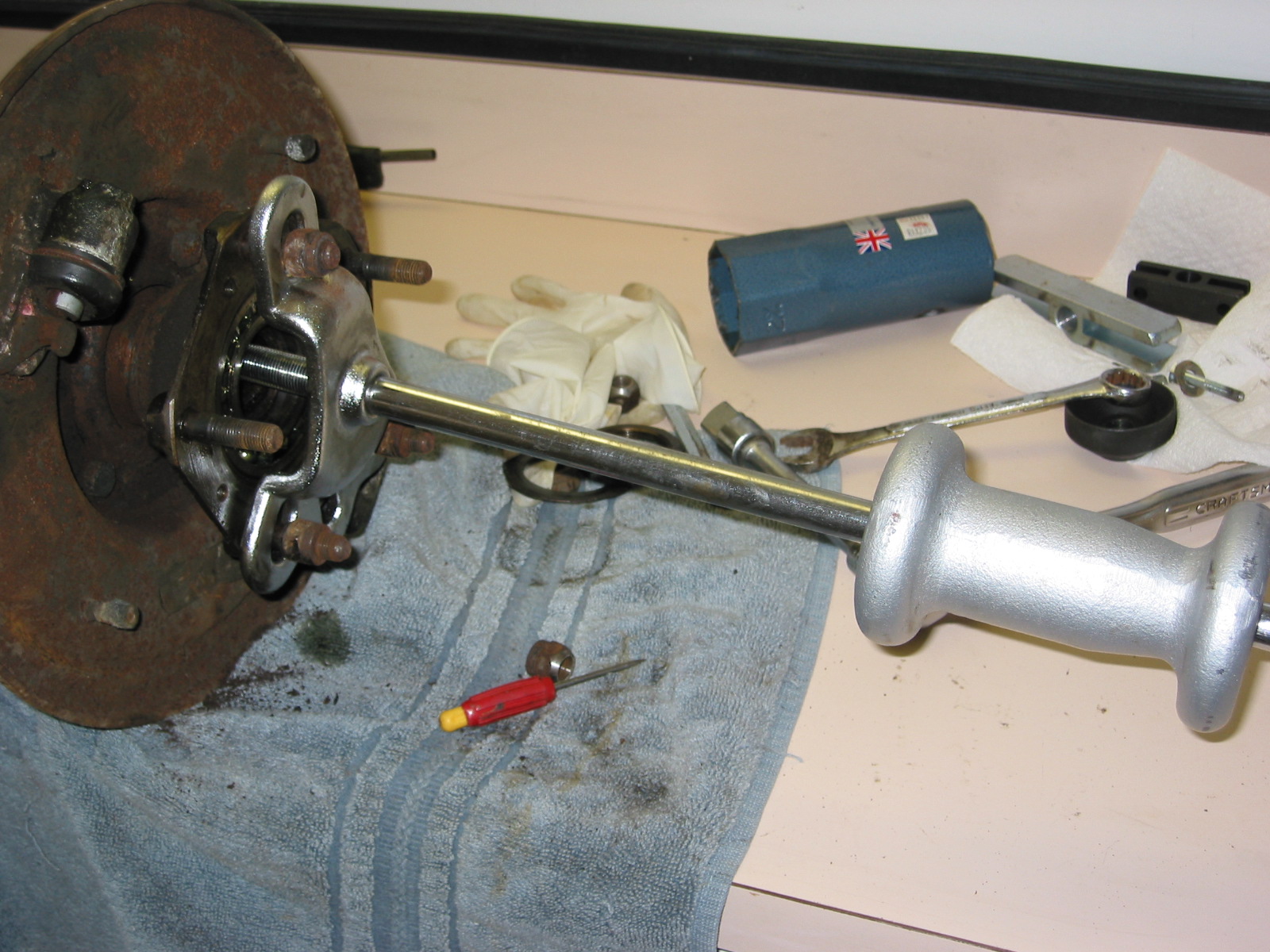
Left Rear Hub – Used a slide hammer to loosen and remove the hub from the axle.

Hub removal-too Slide Hammer

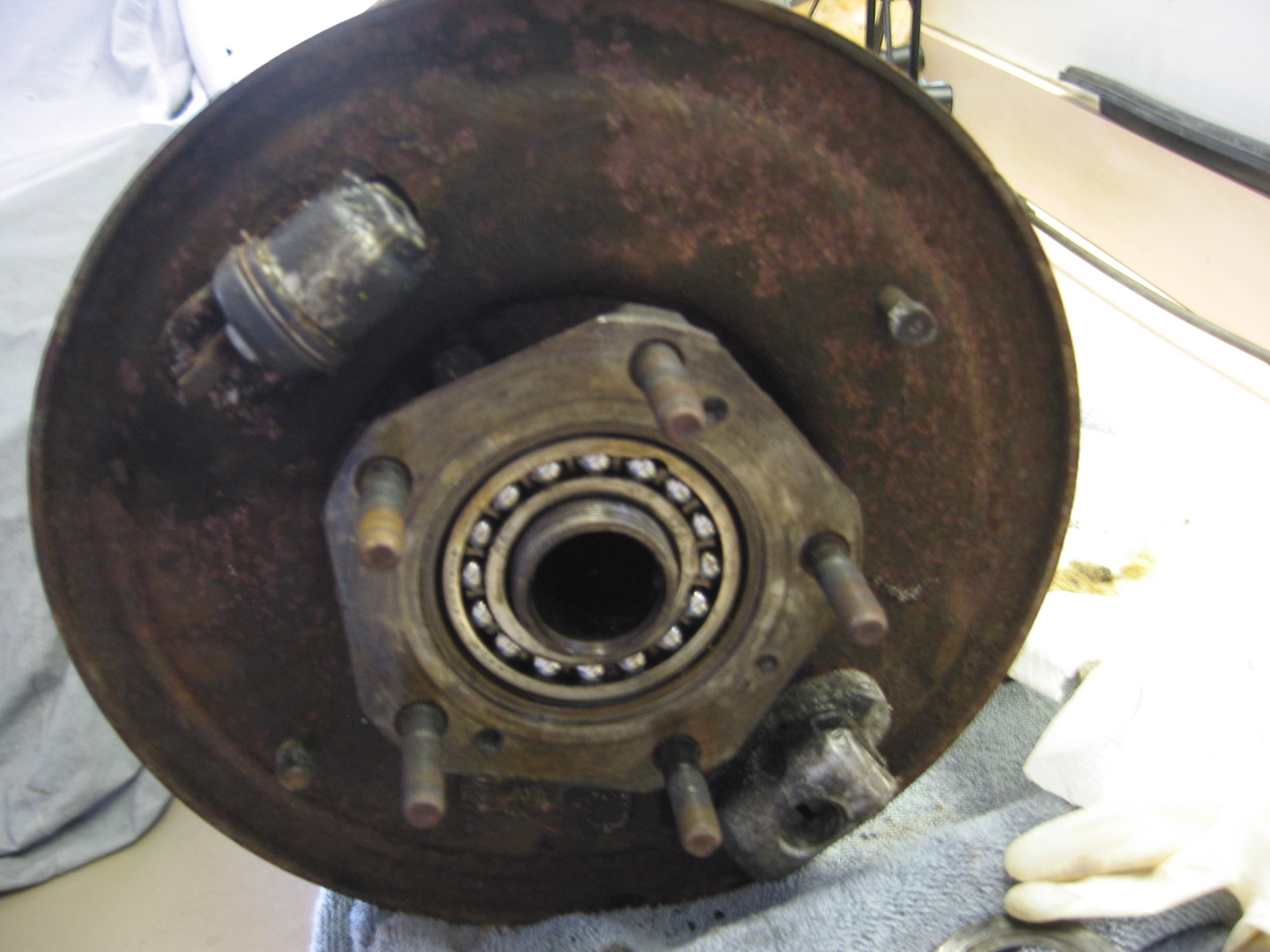
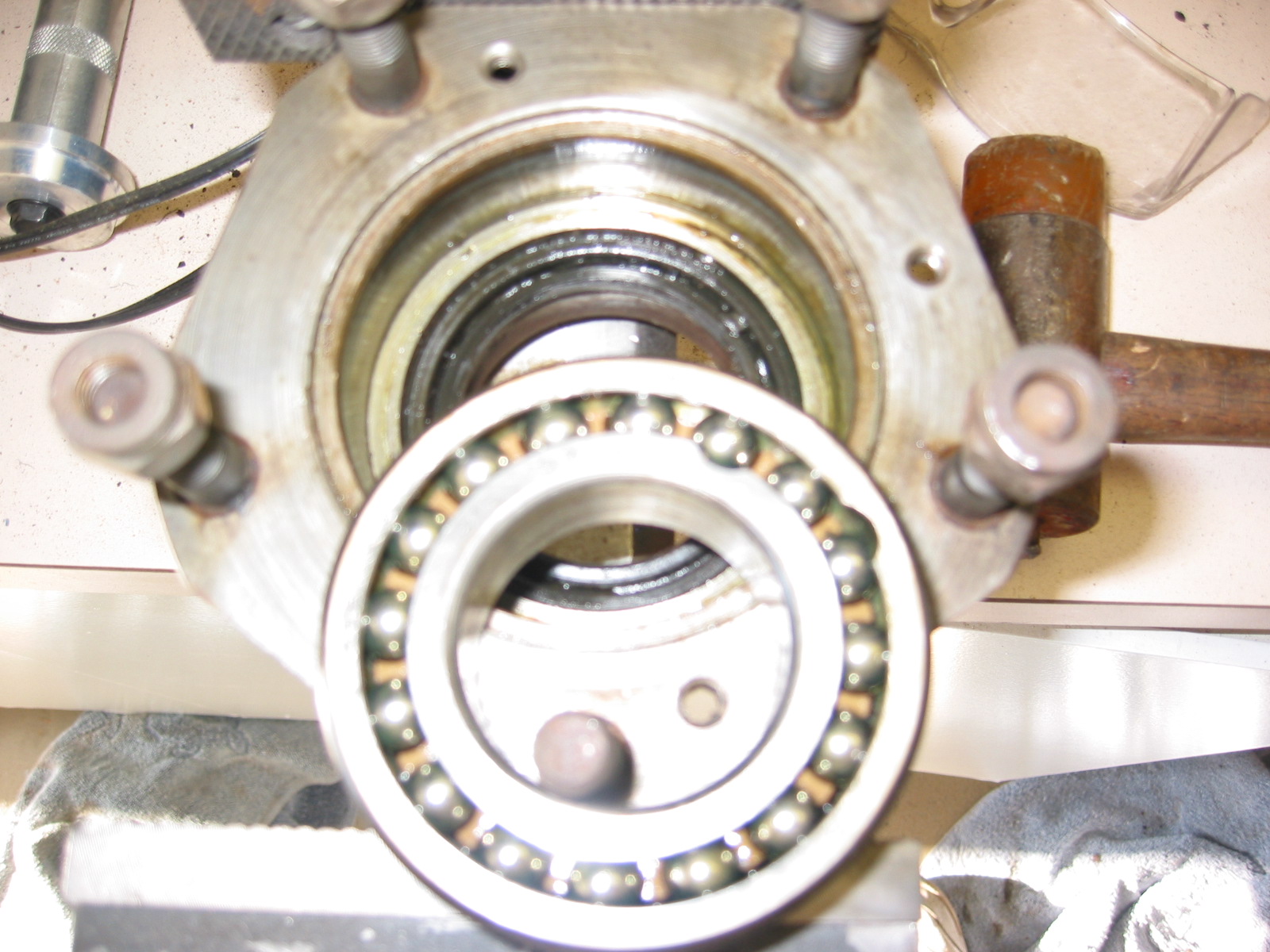
After the hub is removed the bearings can be knocked out with an appropriate tool.  The “made in England lettering is to the outside of the wheel. The paper gasket, and rubber “O” ring are removed as well. The hub also includes a rubber seal on the inside of the hub. I could not remove it, will have to learn the secret!  Later learned the secret is a screwdriver. The left hub nut loosens “clockwise” and the right “counterclockwise.”
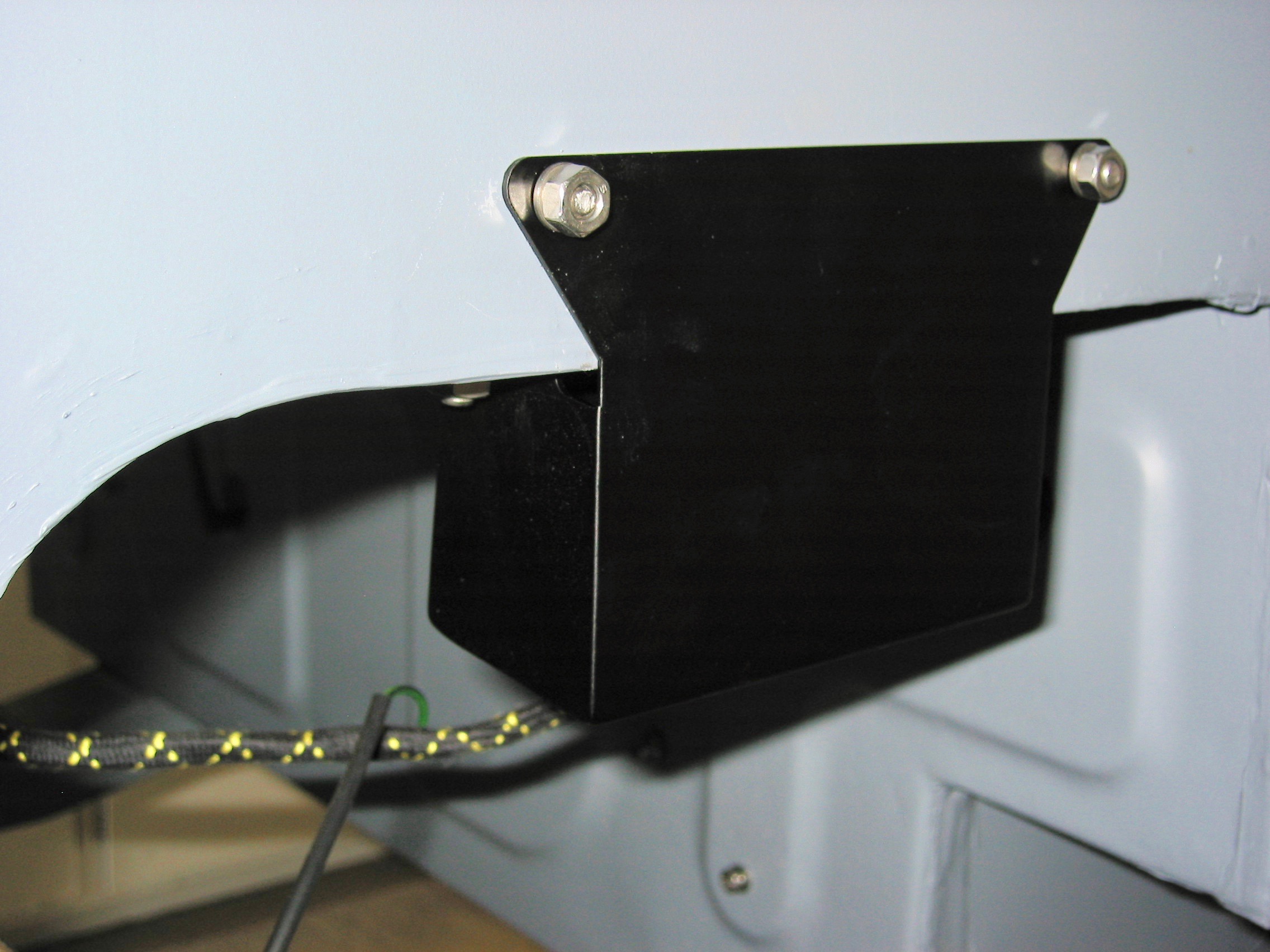
Rear bearings

Brake Cylinders – Pulled off the retaining circlip from the rubber boot on the wheel cylinder. Remove the rubber boot cover and the rubber gasket from around the cylinder assembly. Pry apart the sliding plates that lock against one another. The lockplate with the tabs “up” goes against the backplate and the one with the open slots on the top. After removing the lower plate slide out the handbrake lever. Then take off the inside lockplate and remove the cylinder.

brake cylinder retainer clips

Brake cylinder retainer clips 2

handbrake lever

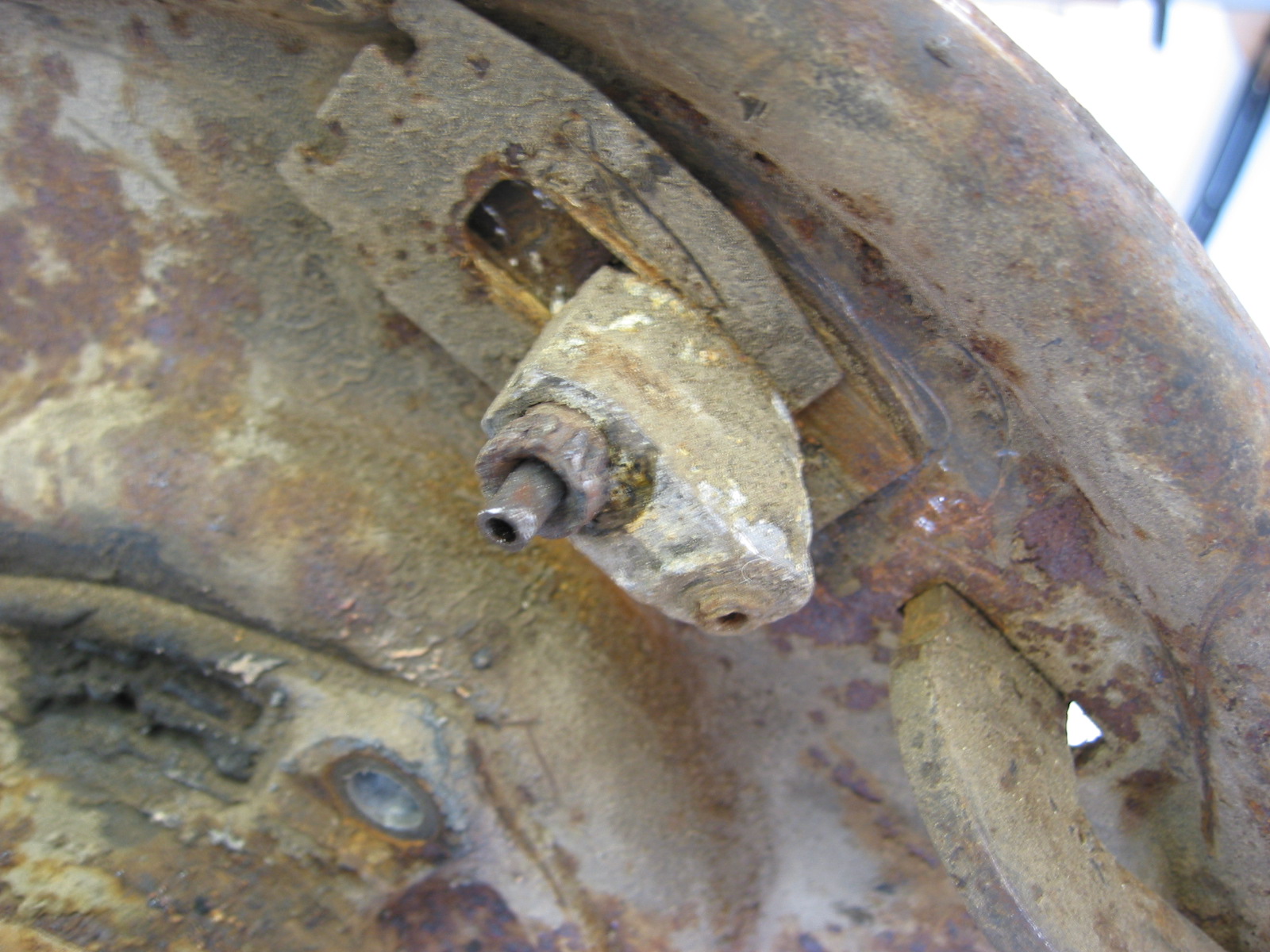
Shoe Adjuster – by loosening two nuts, note the position of the adjuster piston. Remove backplate by loosening the four retaining nuts and bolts. Finally, clean up the rear axle.

rear axle clean up

The handbrake lever assembly –  was removed, disassembled and cleaned. Note the replacement of the cloth/rubber “O” ring under the large nut, and felt washers at the connecting pins. The bracket itself can be removed by loosening two 5/16” – 24 x 3/4” bolts and nuts. The mounting clip for the return spring is located 2 1/4” from the post.

handbrake bracket 1

Handbrake Bracket 2

Handbrake spring location

Handbrake Bracket 4

January 25, 2003

This report is the first of my second year of working on the restoration of 4422! Lots of work remains in the disassembly and clean up stage before reassembly can begin. But progress has been made!

Rear Seat Back  

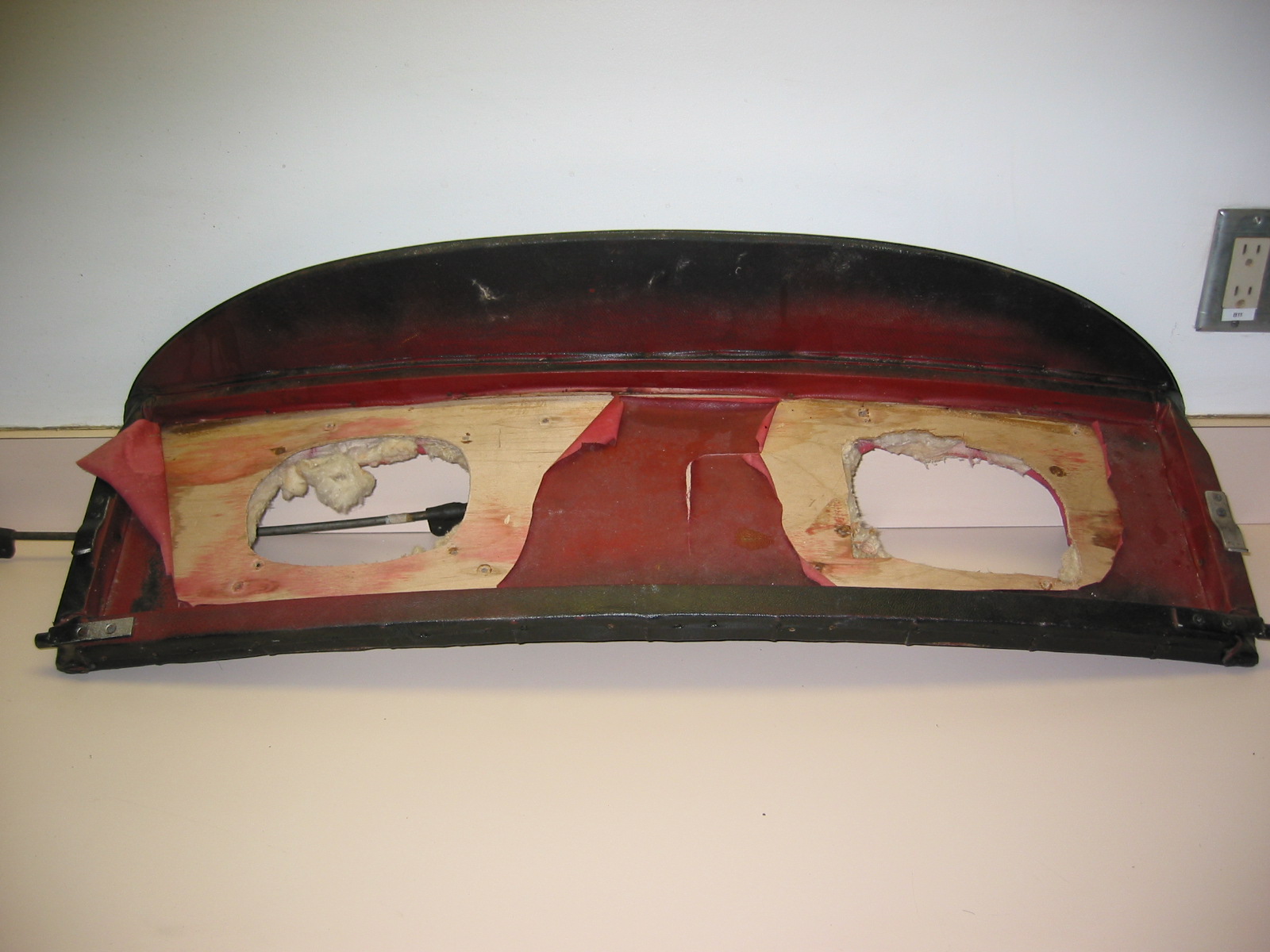
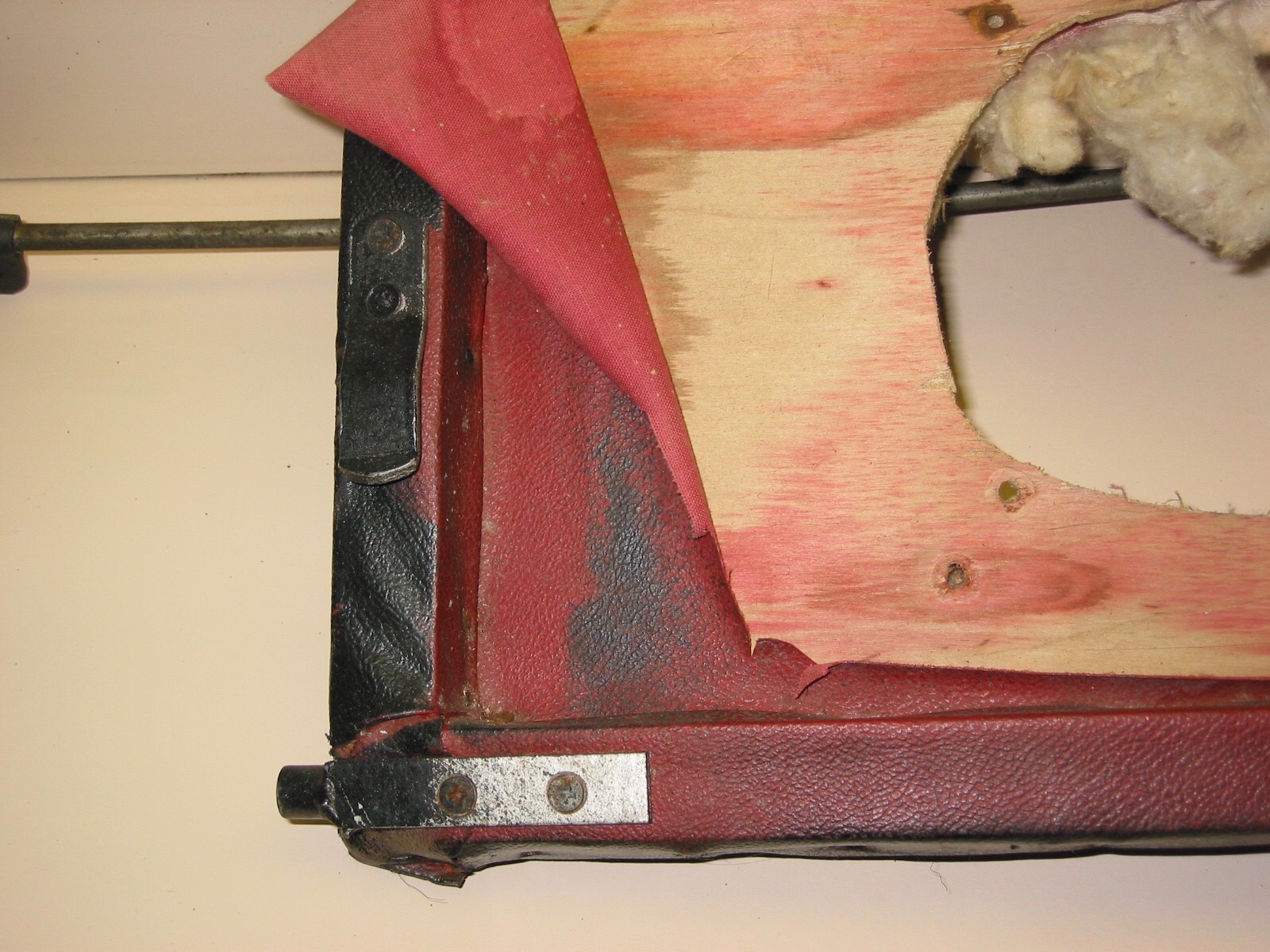
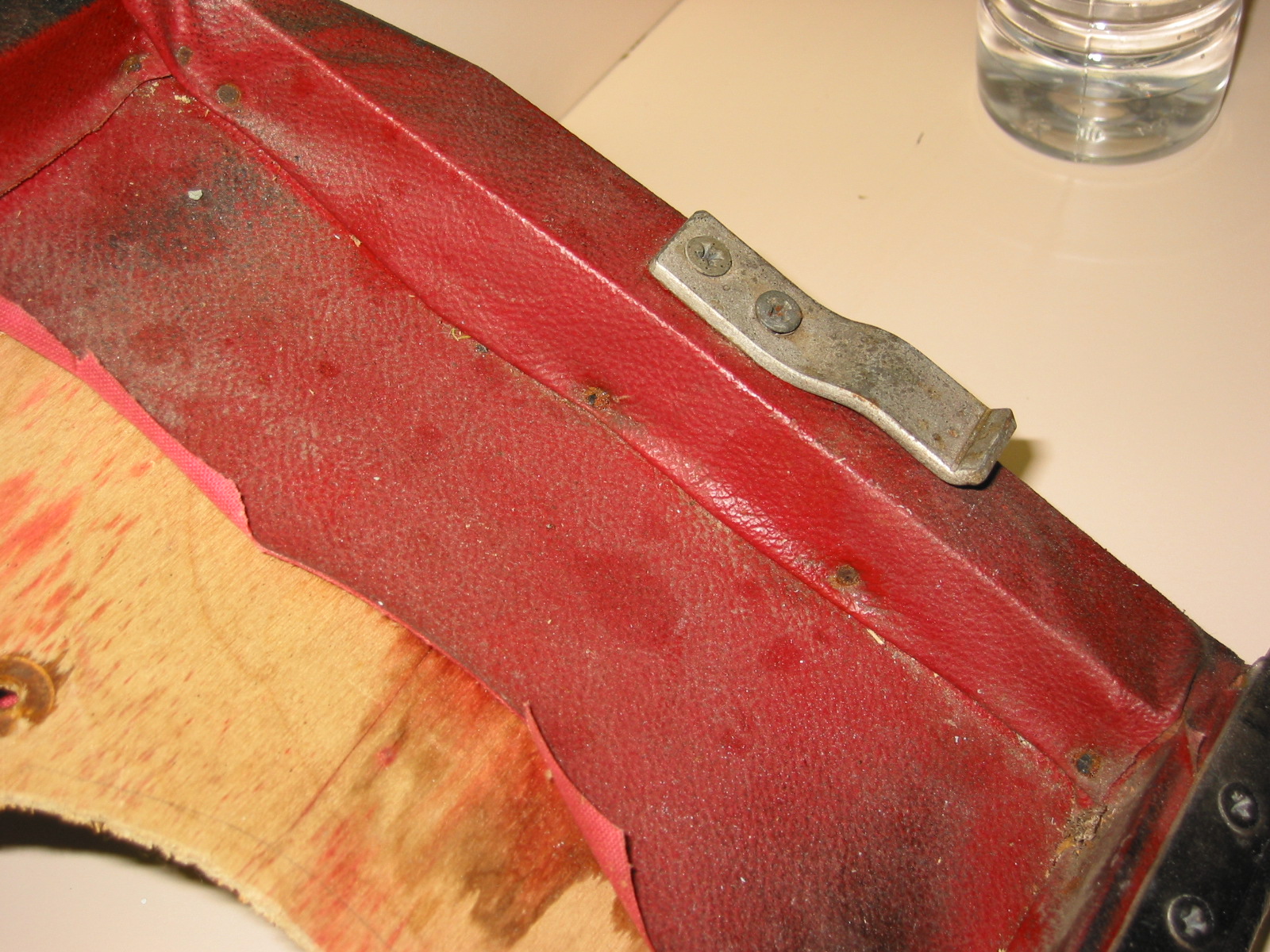
Unfortunately, I had installed speakers in the panel when in college. So I will need to buy a new squab or at least the plywood flat pieces before recovering.

Rear Seat Back Panel 1

Rear Seat Back Panel Clips

Rear Seat Back Panel 2

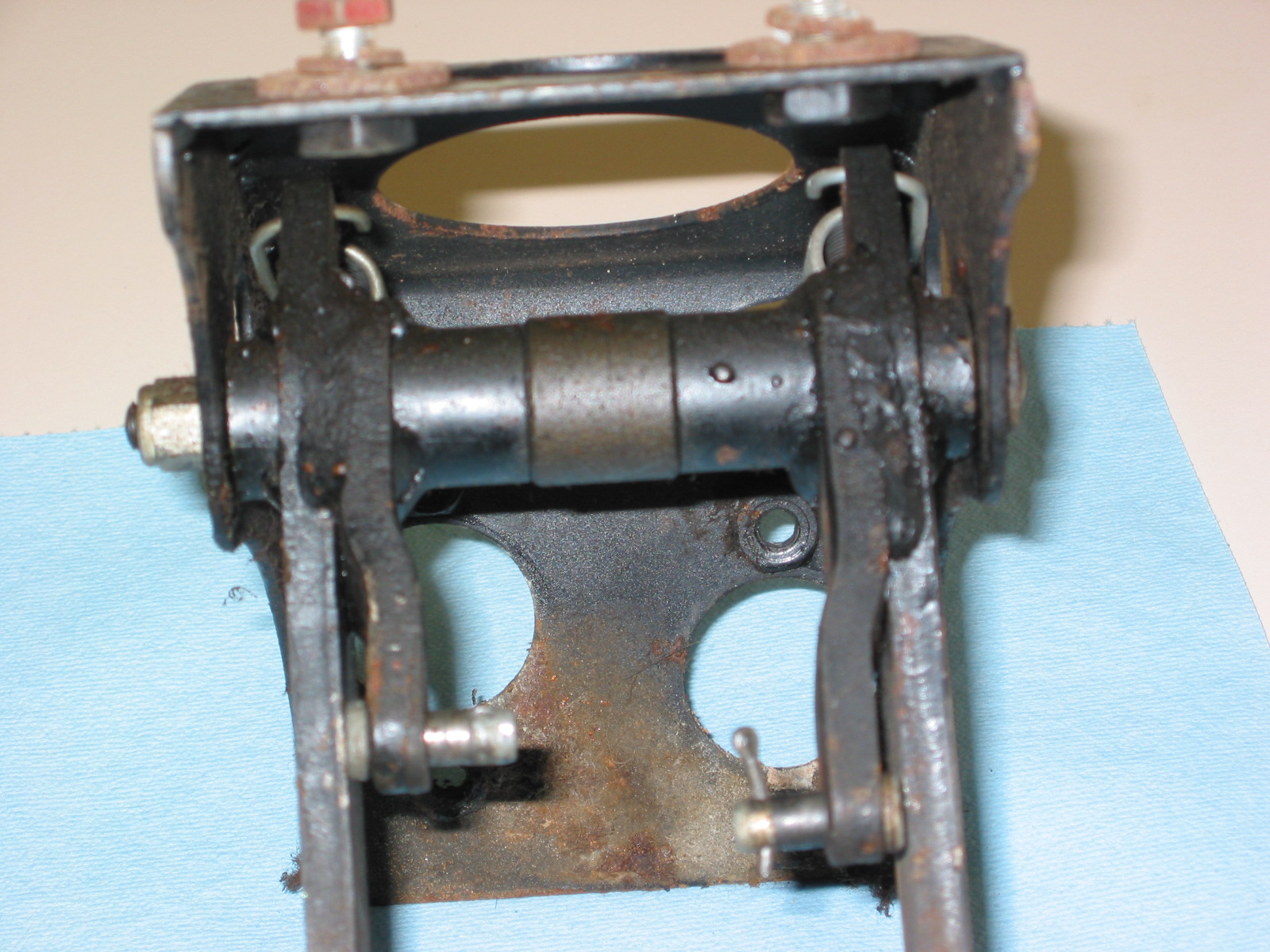
Clutch and Brake Pedal Bracket (Pedal box) -The box and parts were in very good shape. It was now time to disassemble and clean.

Pedal Box Assembly

Pedal Box Assembly 2

Striker pin assembly – The bonnet catch was a bit rusty, but restorable.

Bonnet Catch Striker Assembly 1

Bonnet Catch Striker Assembly 3

Bonnet Catch Striker Assembly 2

The Bonnet Latch Support Bracket – the mechanism was rusty also, but again, clean up made the parts usable.

Bonnet Latch 3

Bonnet Latch 4

Bonnet Latch Lever

Bonnet Latch Spring & Rubber Tube

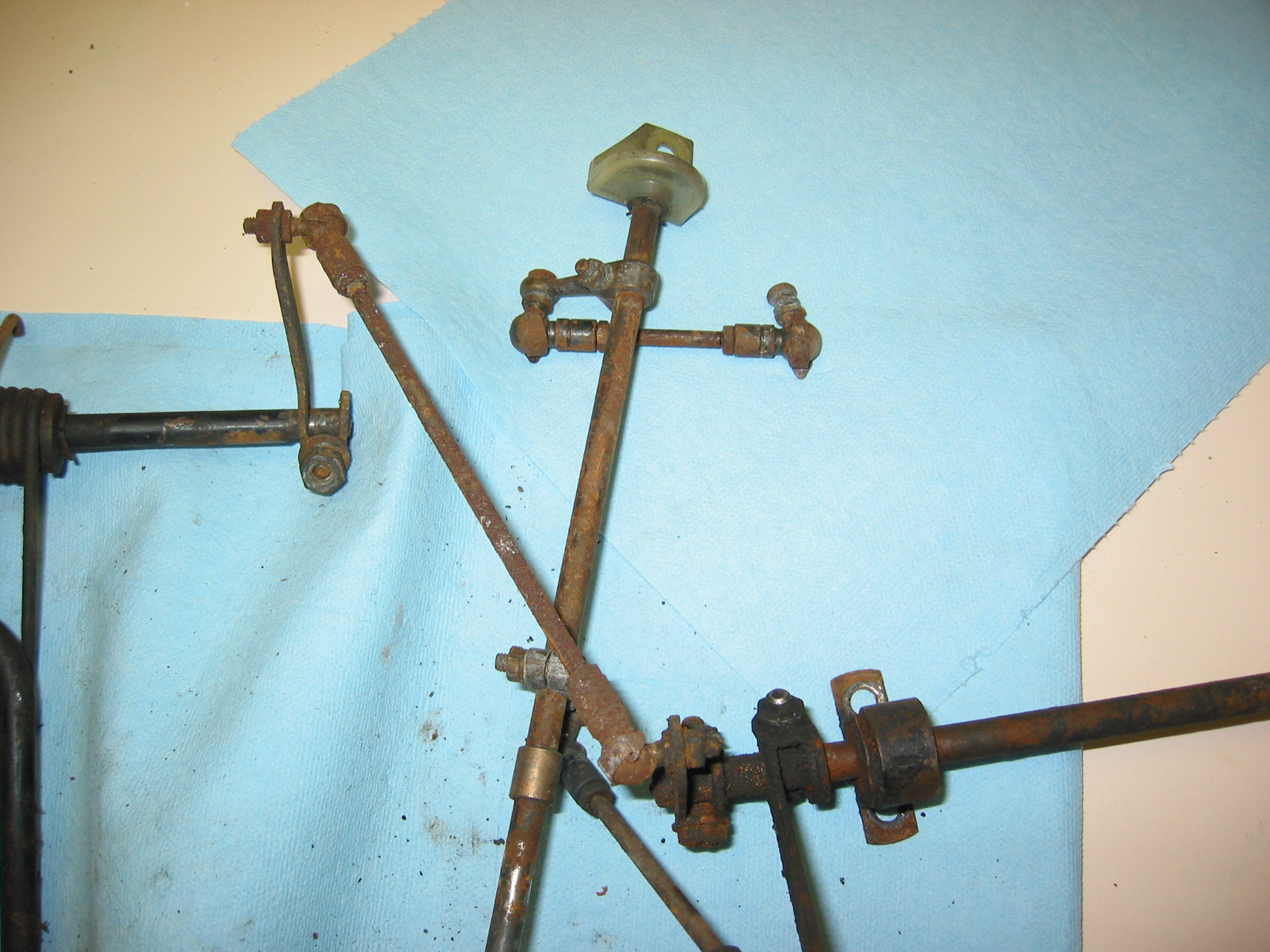
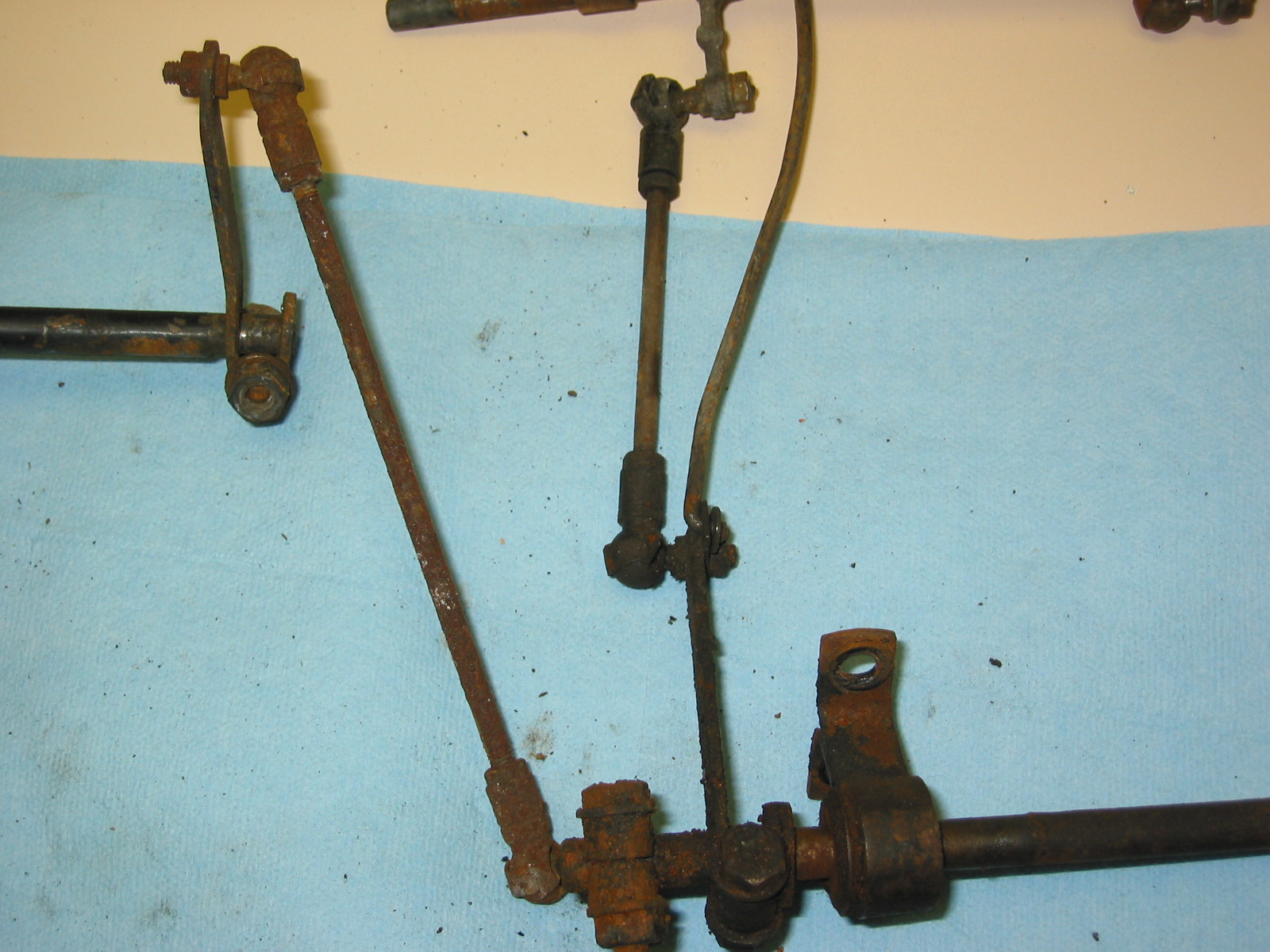
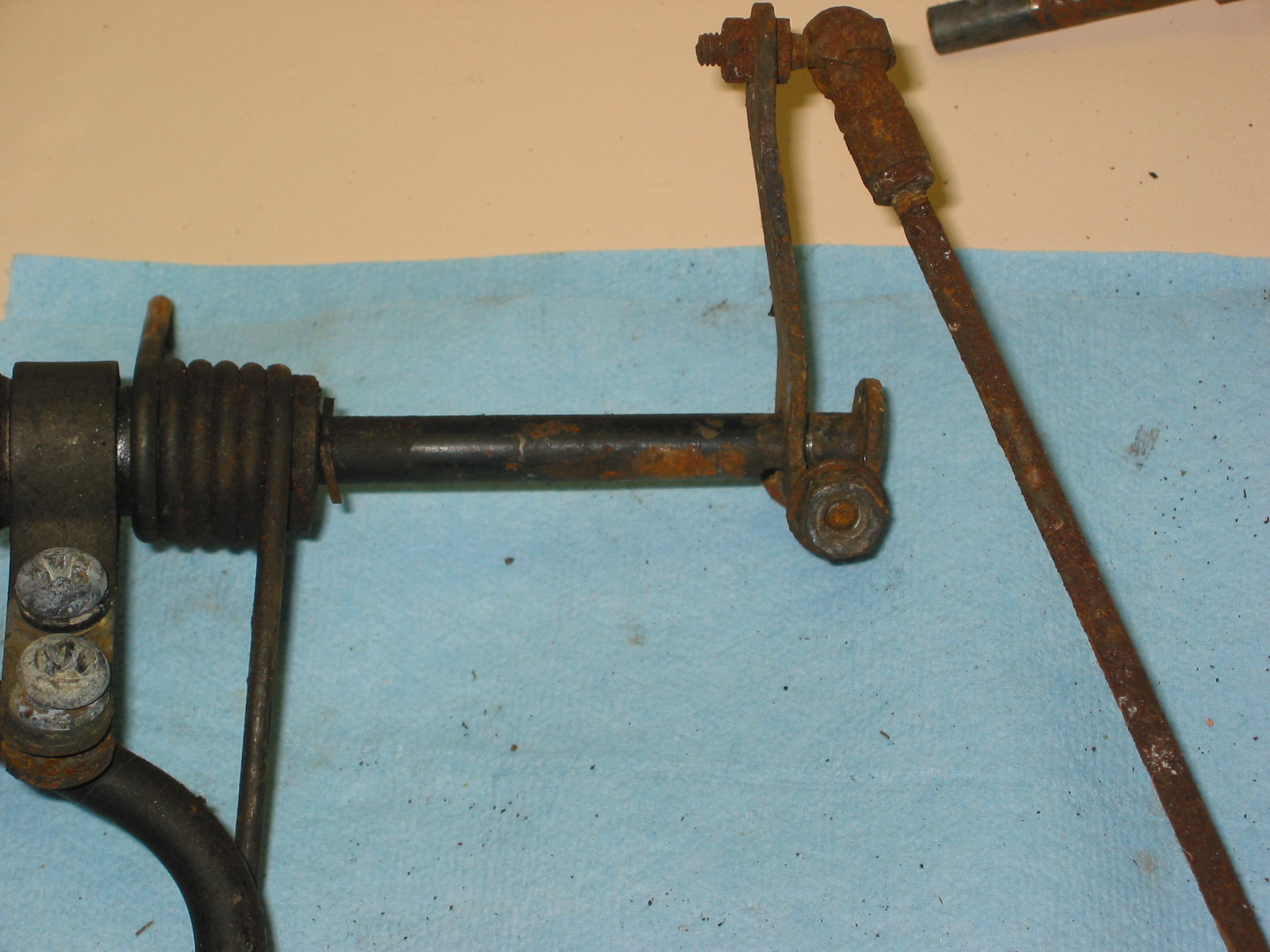
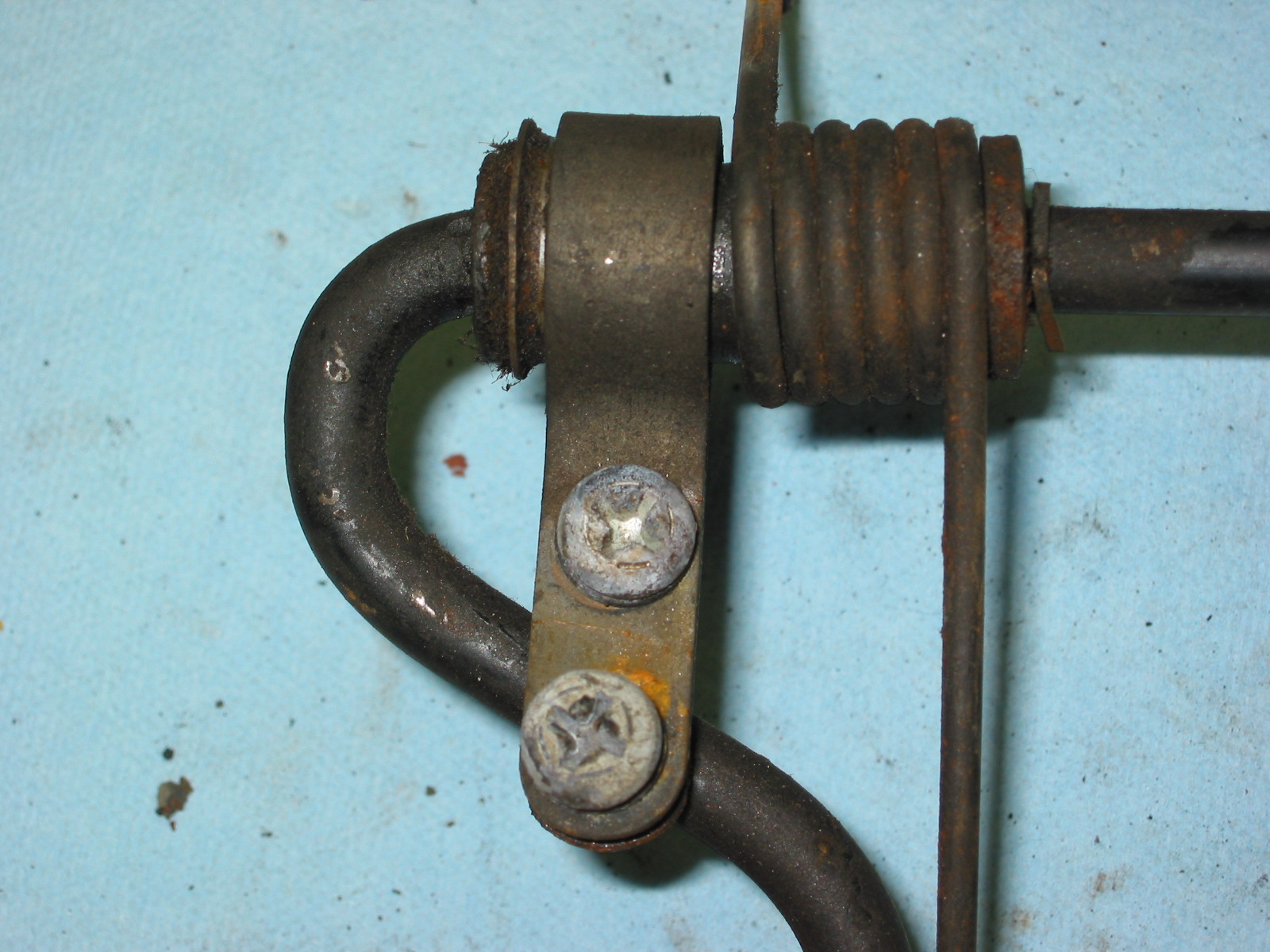
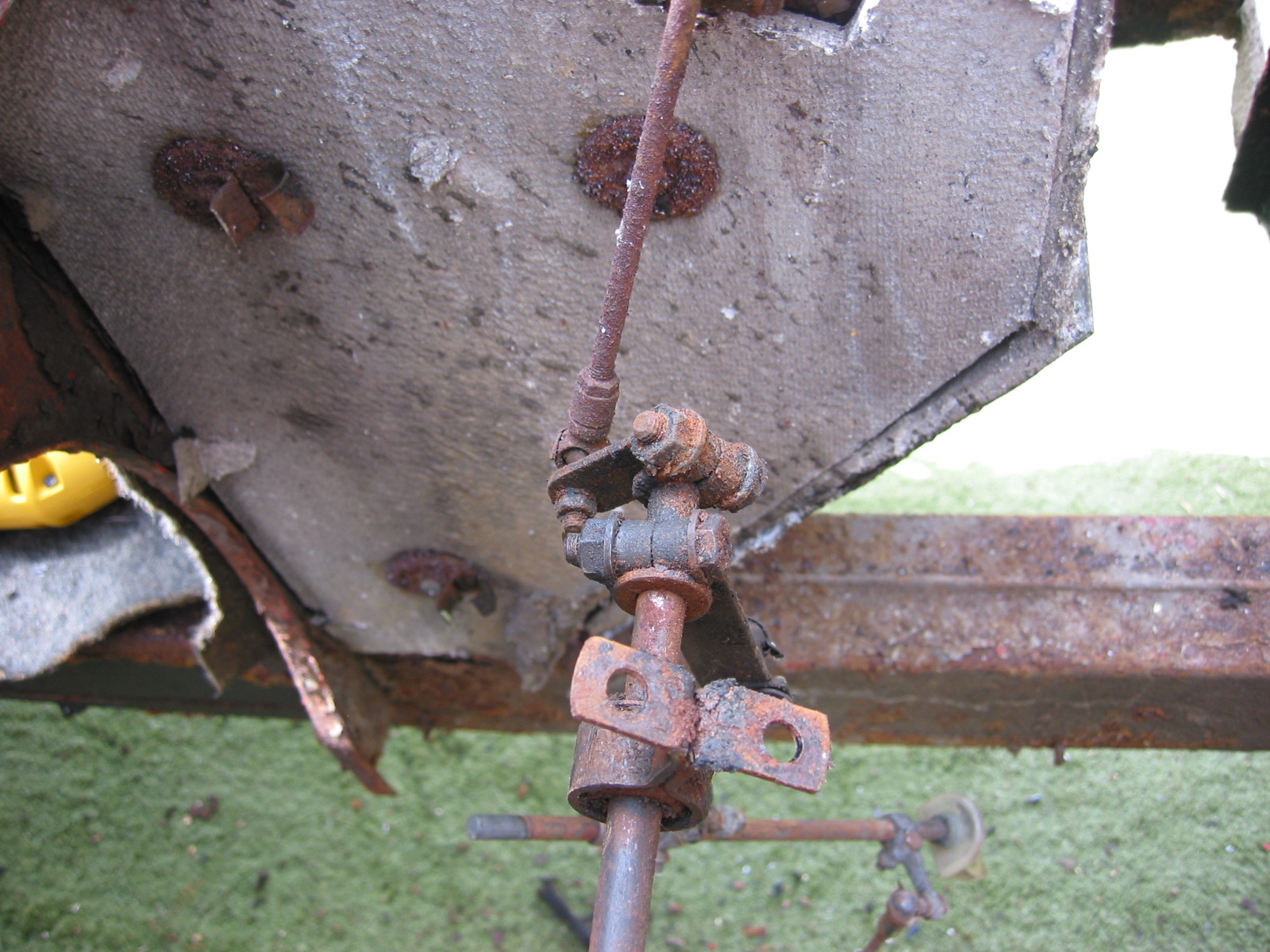
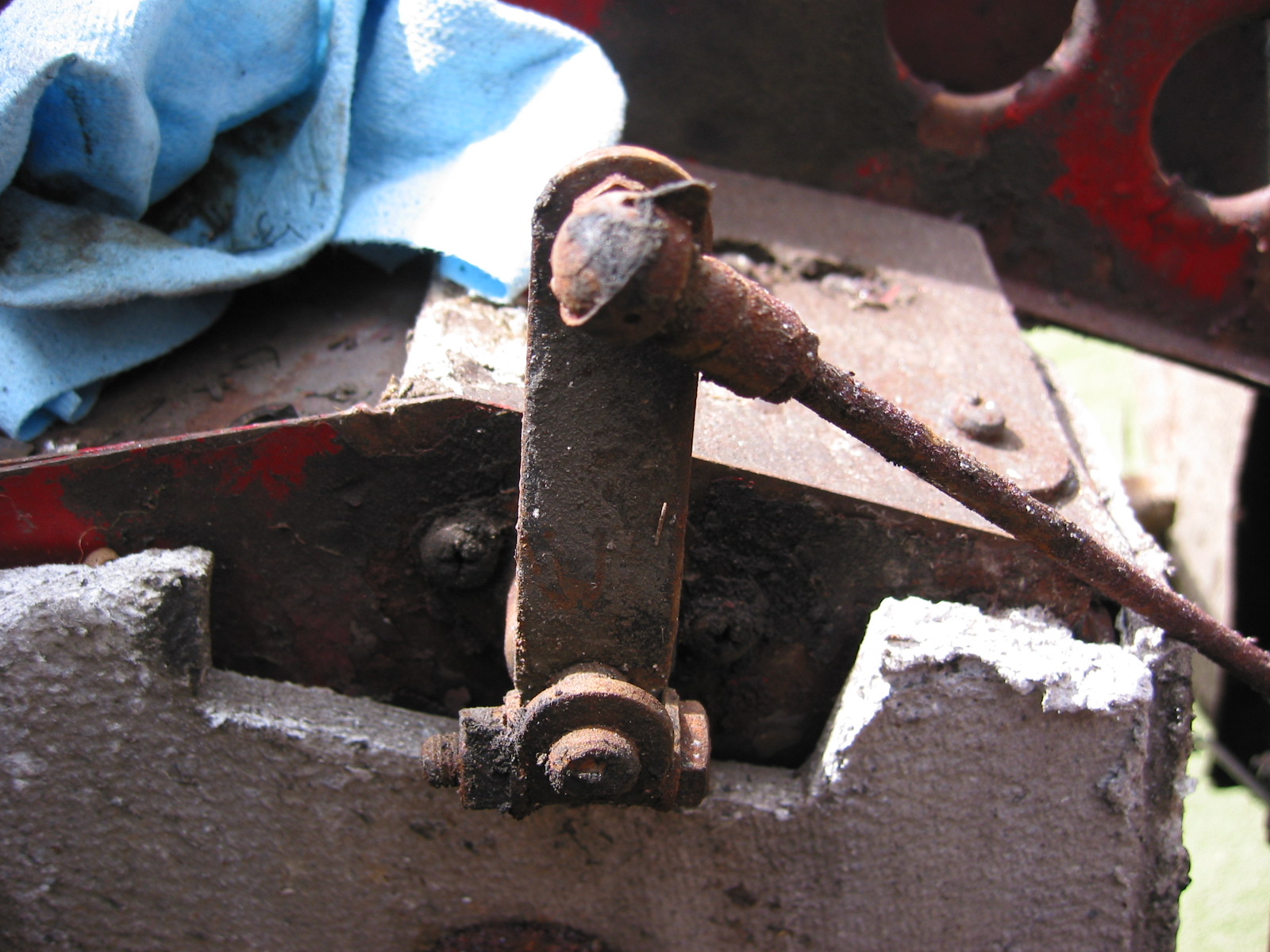
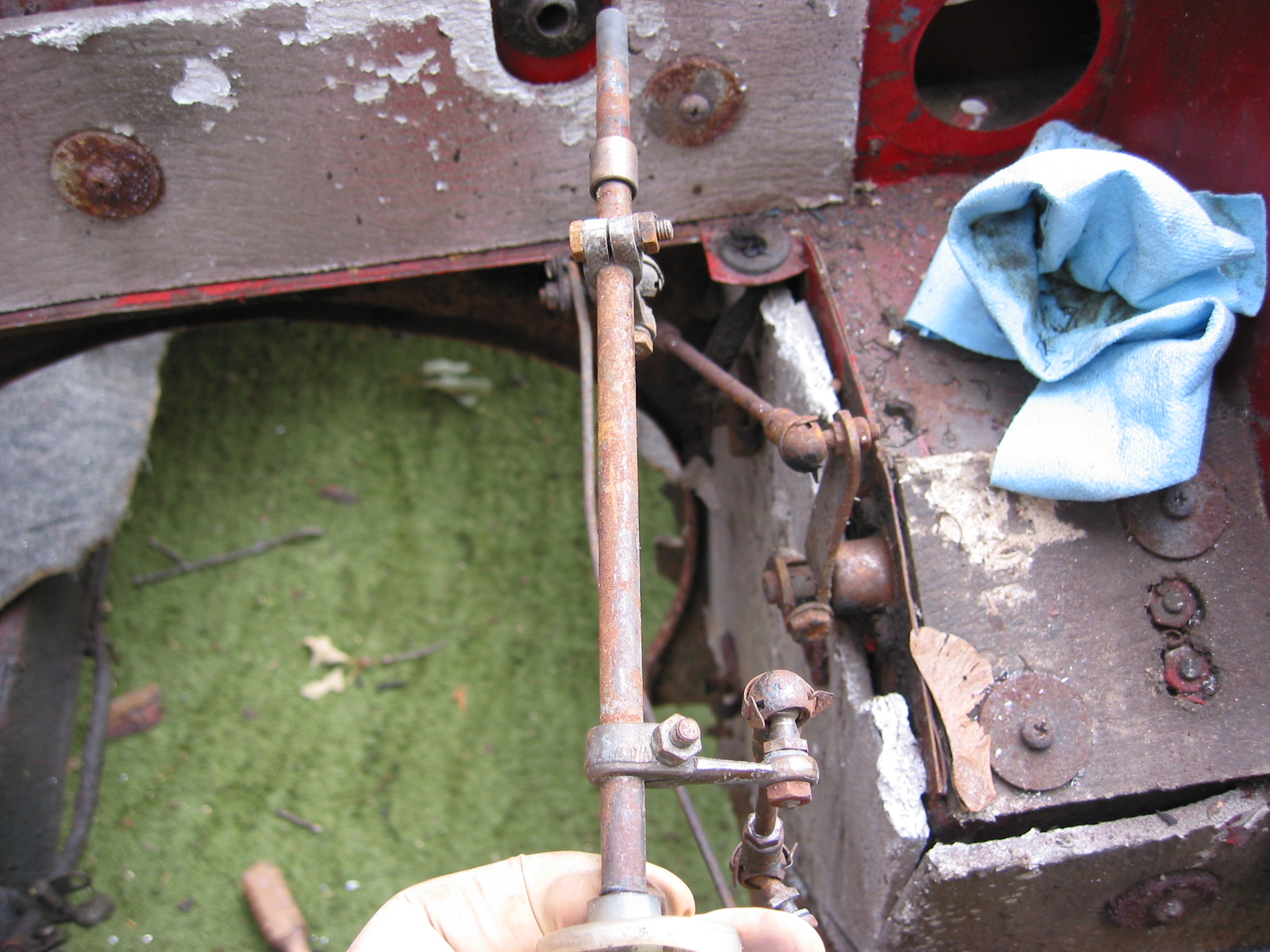
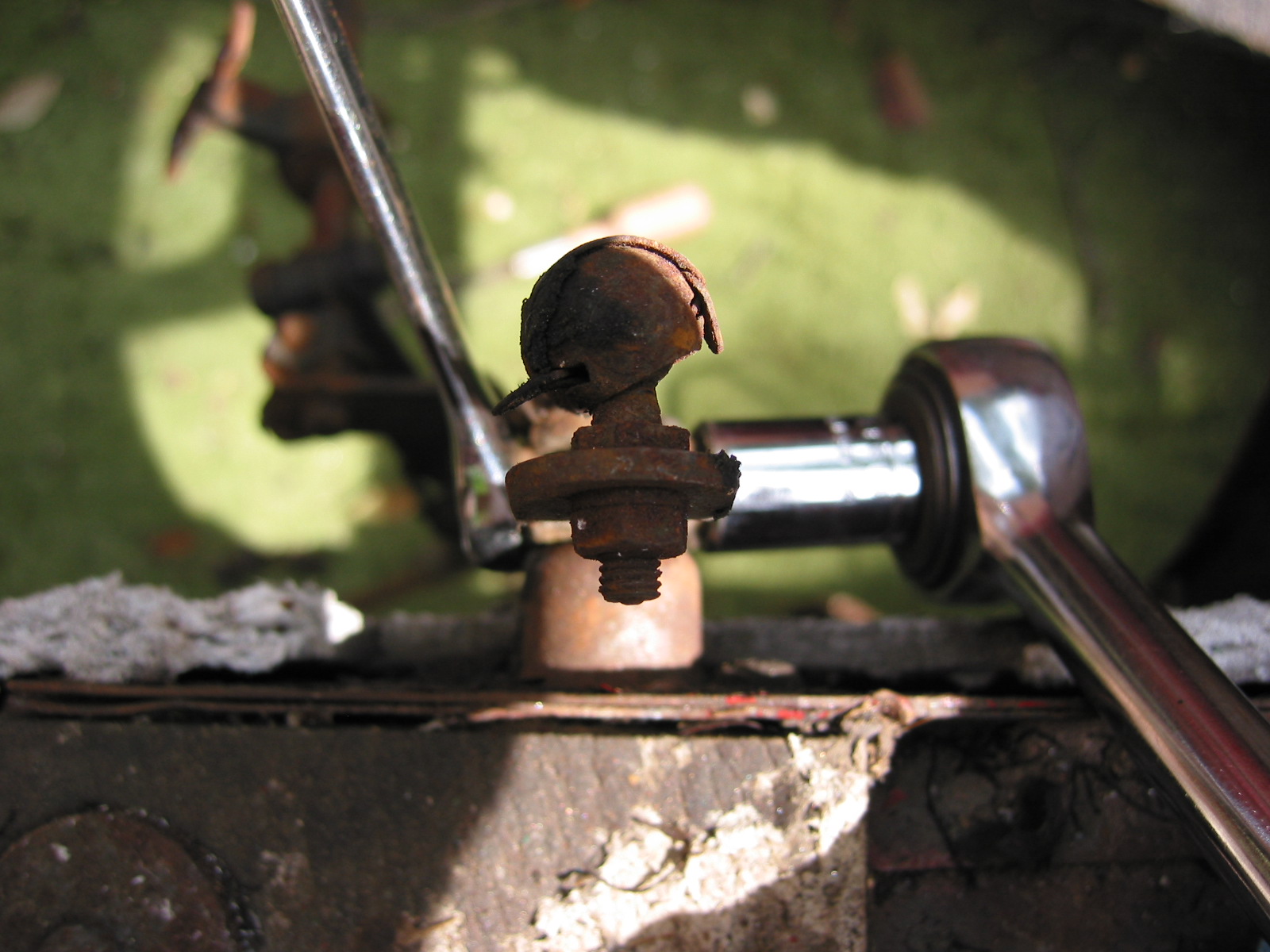
The Throttle Linkage – is also reusable after cleaning, but we will probably replace with new hardware or a contemporary cable system.

Throttle Linkage 5

Throttle Linkage 3A

The accelerator pedal – the pedal and bushing and springs looked great. A little clean up and paint and it will be like new.

Throttle Linkage 2

Accelerator Pedal

Chapter 10 – Disassembly

August 17, 2002

Brake and Clutch Master Cylinders –  Loosened lines from cylinders. The brake line from the master cylinder to the 4 way junction has 3 clips and fasteners to the union facing the master cylinder (left side of the car). The clutch line also has three clips: 1 by the solenoid, and 2 on the firewall (high). 

Loosen the 1/2” bolts securing the clutch master cylinder. Pull the cotter pin on the master cylinder shaft to the pedal. Remove the master cylinder. Same procedure for the brake master cylinder. There are aluminum spacers on the top of each master cylinder between the cylinder and the body.

Master Cylinders

Brake Pipe Junction 1

Pedal Box Connections

Pedal Box Bolts

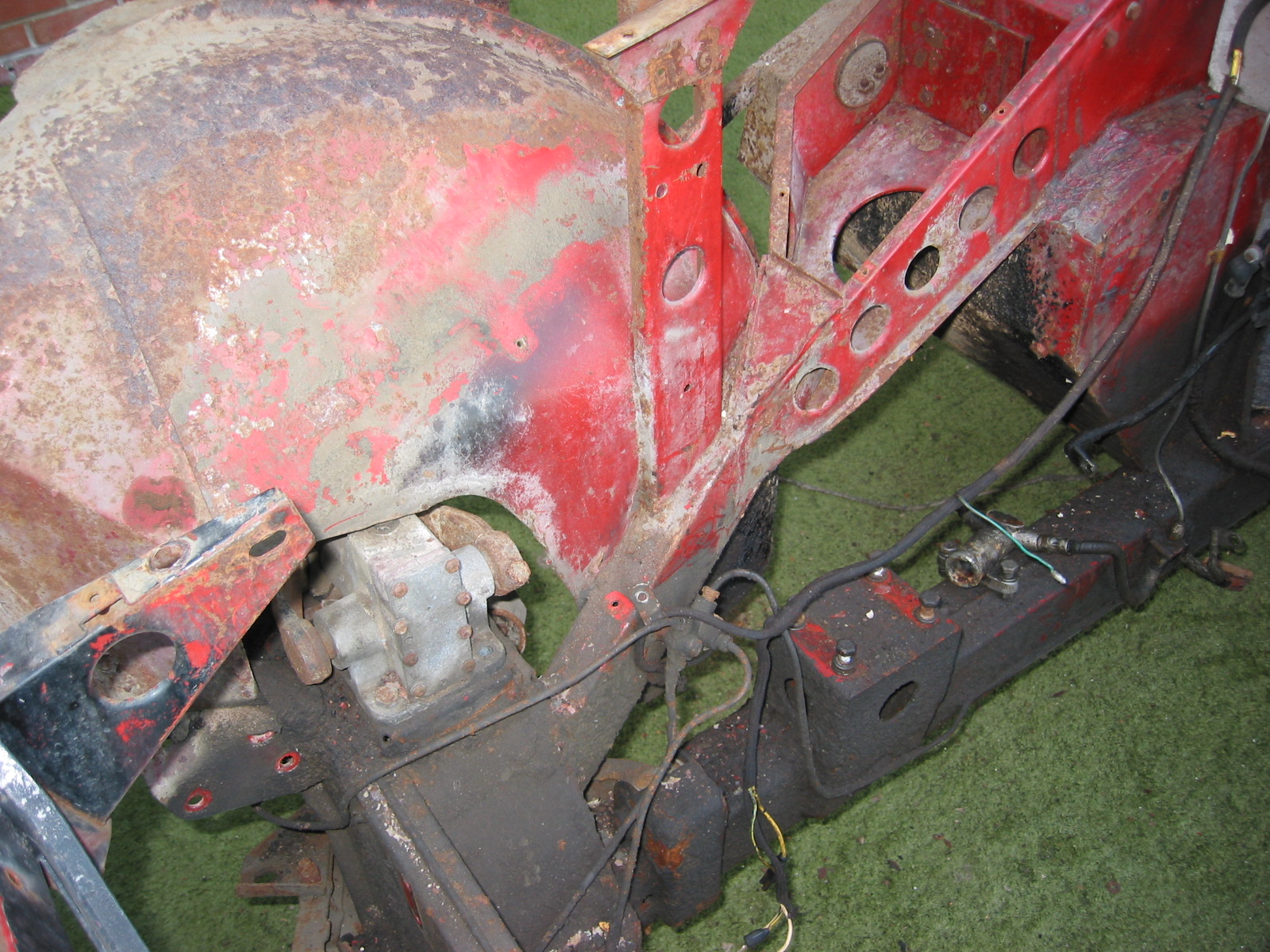
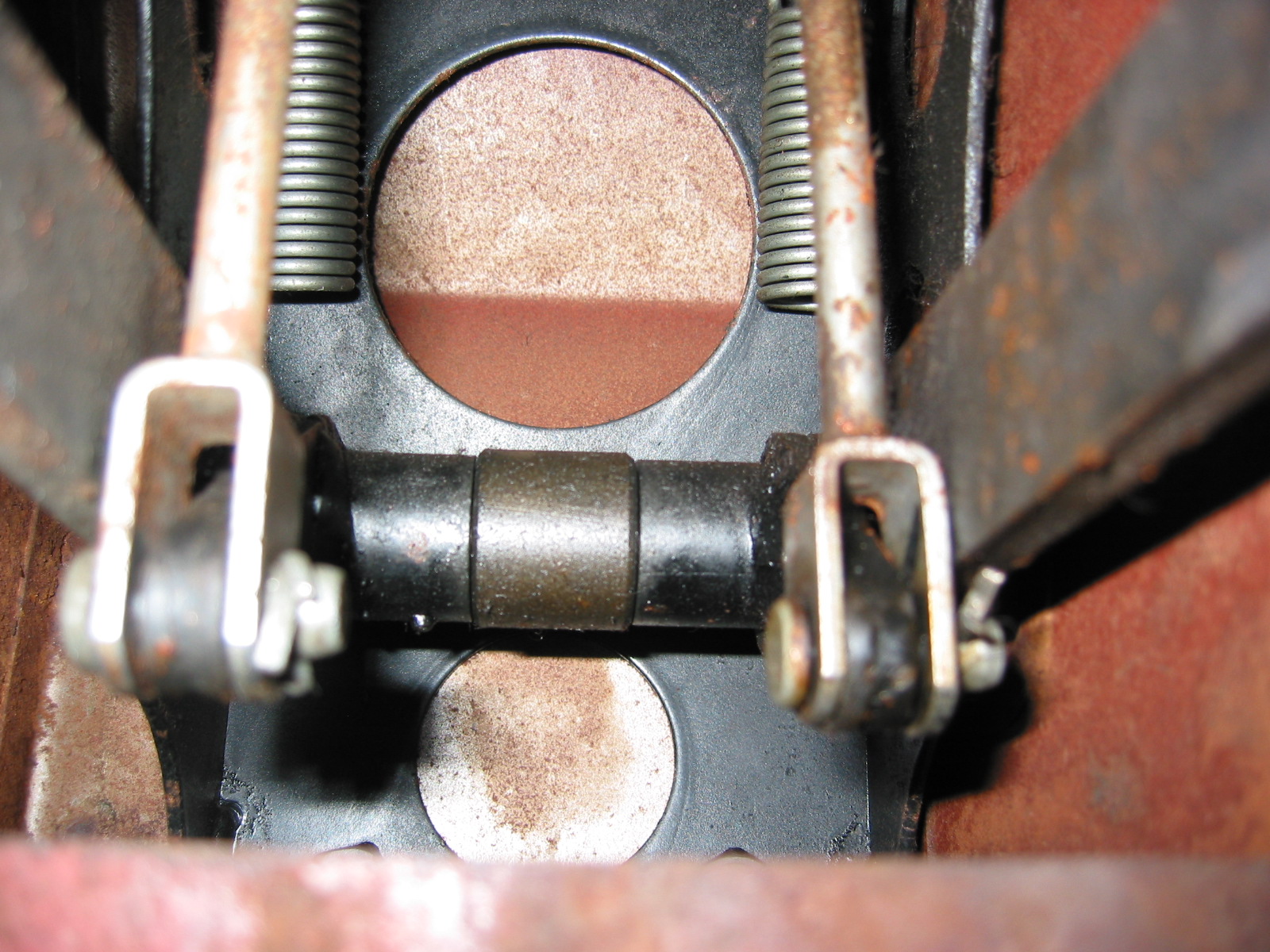
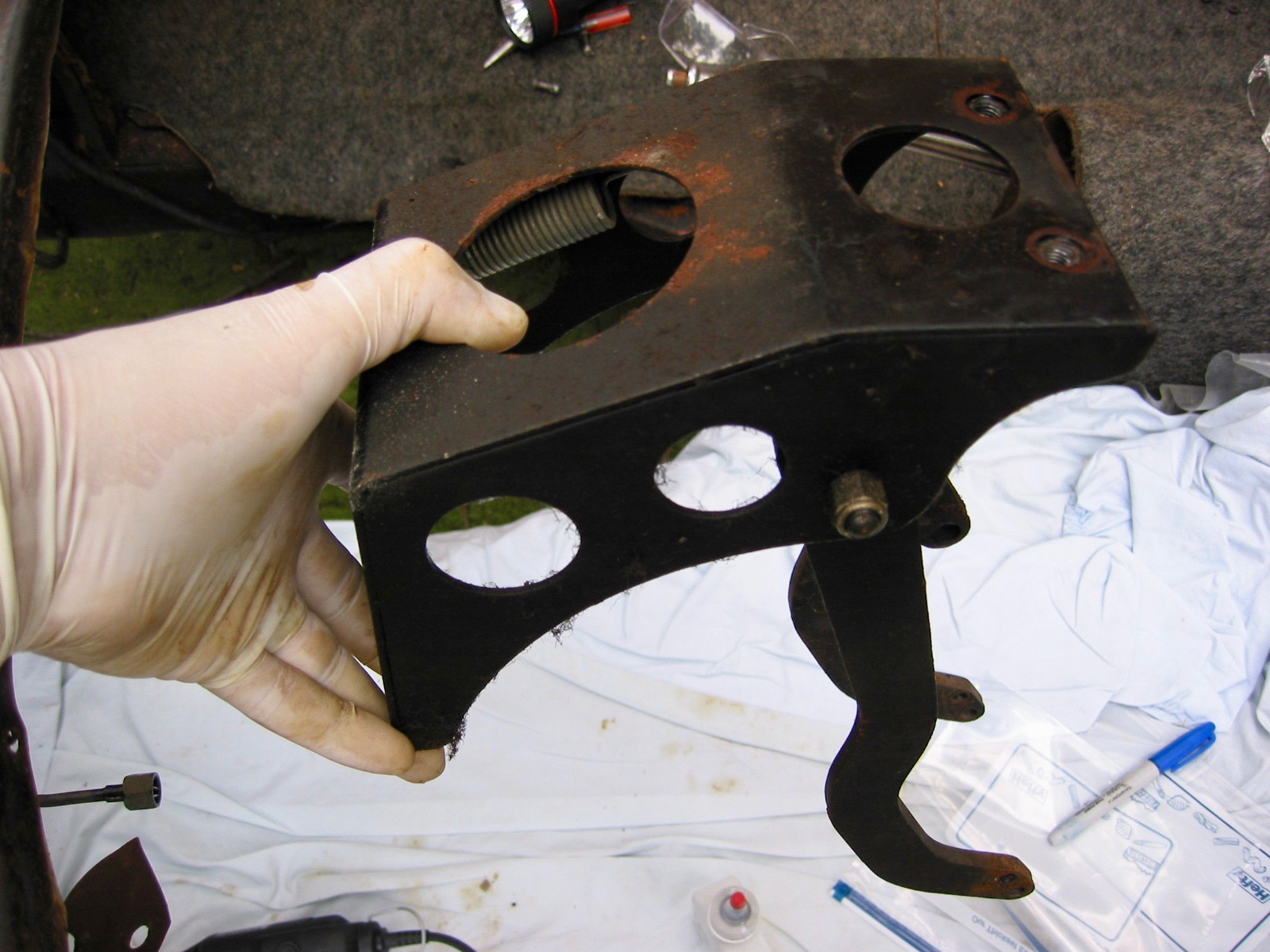
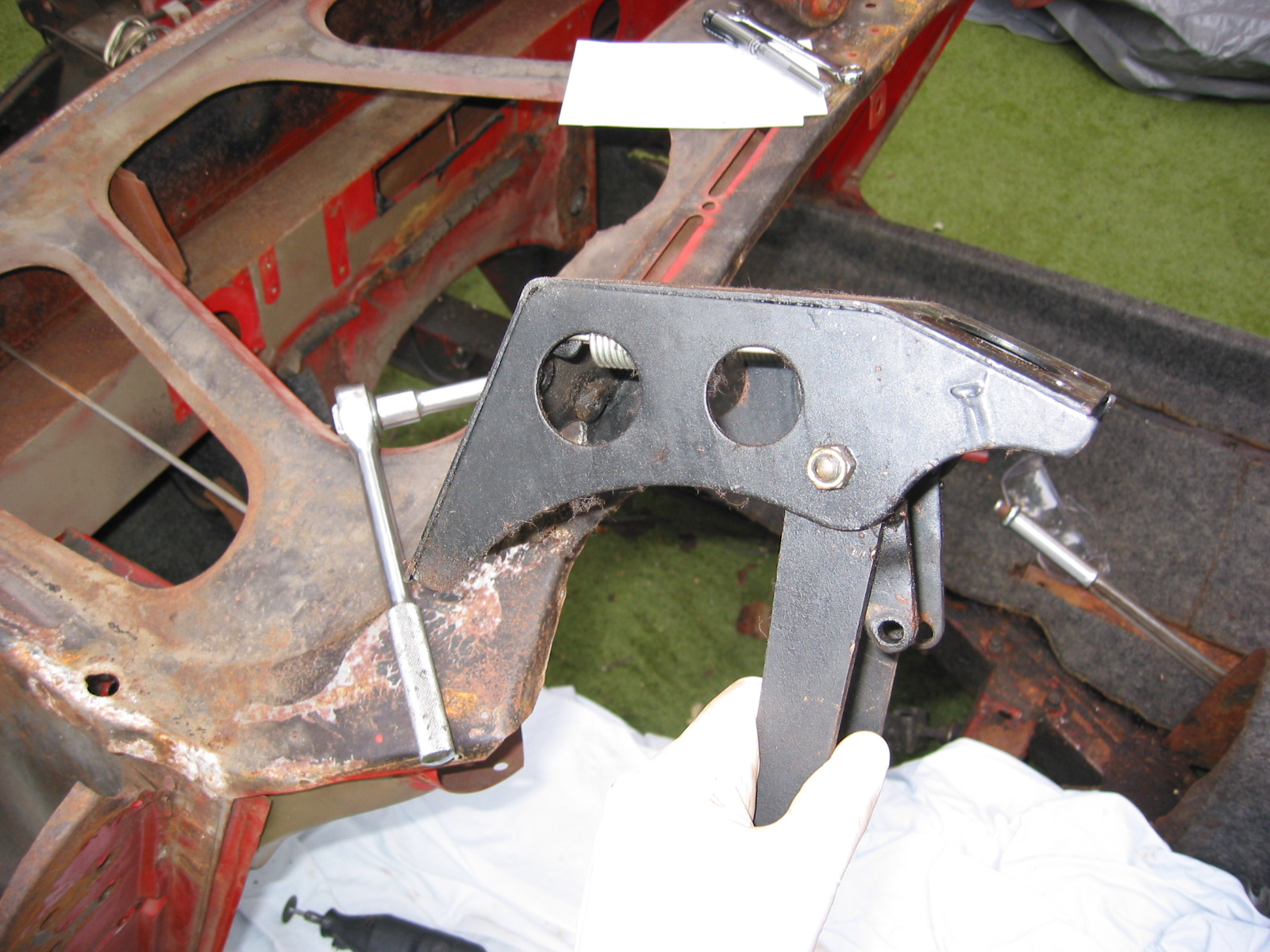
Pedal Box (Pedal Lever Bracket) 

Loosen two 1/2” bolts to remove pedal box mechanism. The box is painted black. Unit will then drop out.

Pedal Box 1

Pedal Box 2

Headlamp Dip Switch Wiring – Pulled the wiring through the pedal box with rubber grommet.

Dipper switch wiring

Dip Switch Wiring

Bulkhead Fresh Air Flange – Removed three phillips head screws securing the fresh air hose flange. Removed flange.

Air Tube Mounting

Brake Lines

The Brake Lines – fittings were loosened at the 4 way brake union to left front wheel – 2 clips at front cross bar to the front bottom union facing front of car at the junction.  Removed right front brake line from junction to right wheel – top union on junction facing front of the car.

LF Brake Lines

Front Center Brake Lines

Brake Junction

Brake Junction connections

Brake Junction Fitting

Brake Junction 3

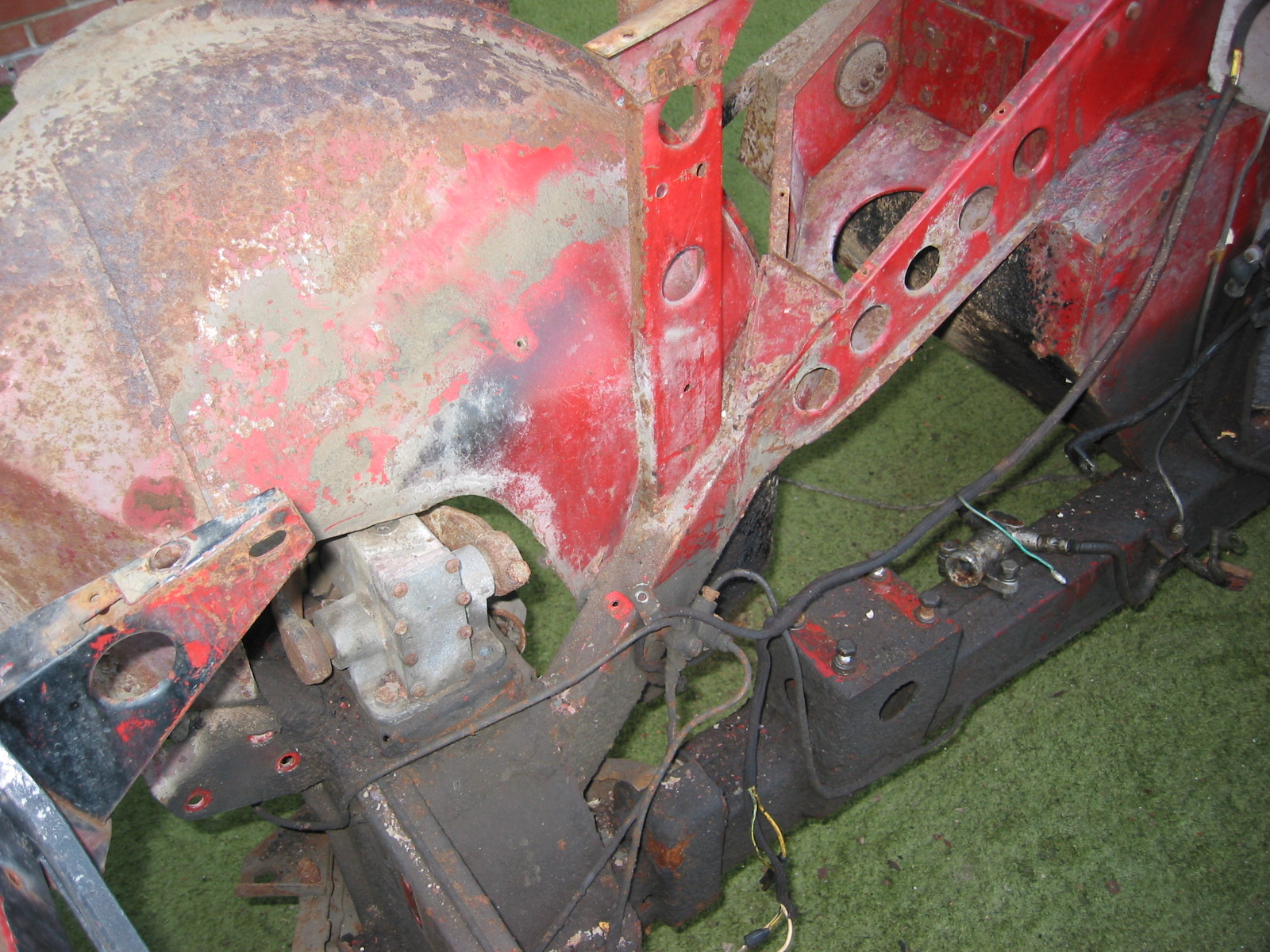
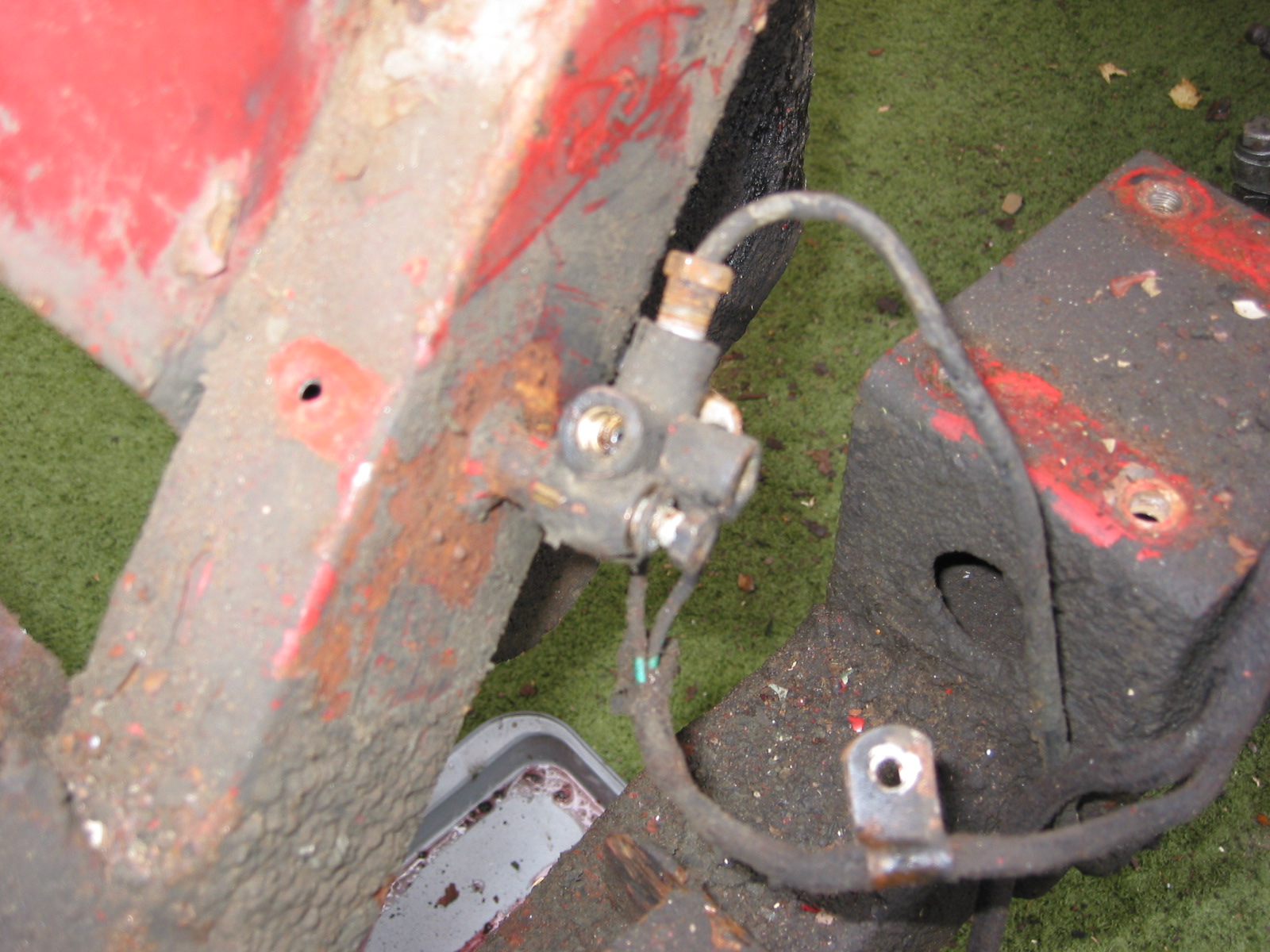
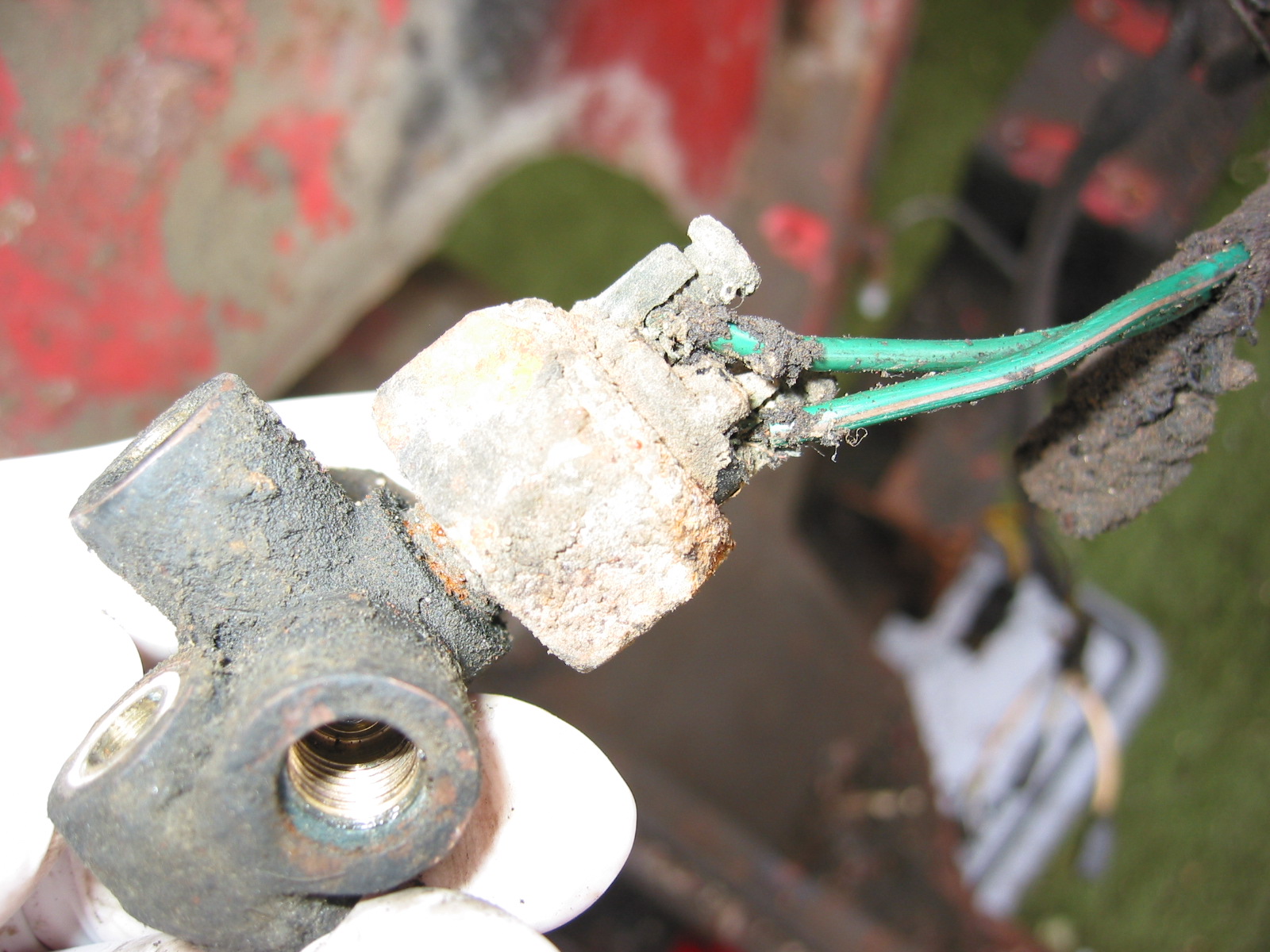
Brake 4 Way Union & Pressure Switch – Removed the Union by loosening one 7/16” bolt to frame. Two wires must be disconnected. Green goes to terminal closest to the engine. The green with pink stripe wire goes to the terminal closest to the frame. One clip holds wiring harness extension to the brake junction located just above the junction mounting post.

Brake Pressure Switch Wiring

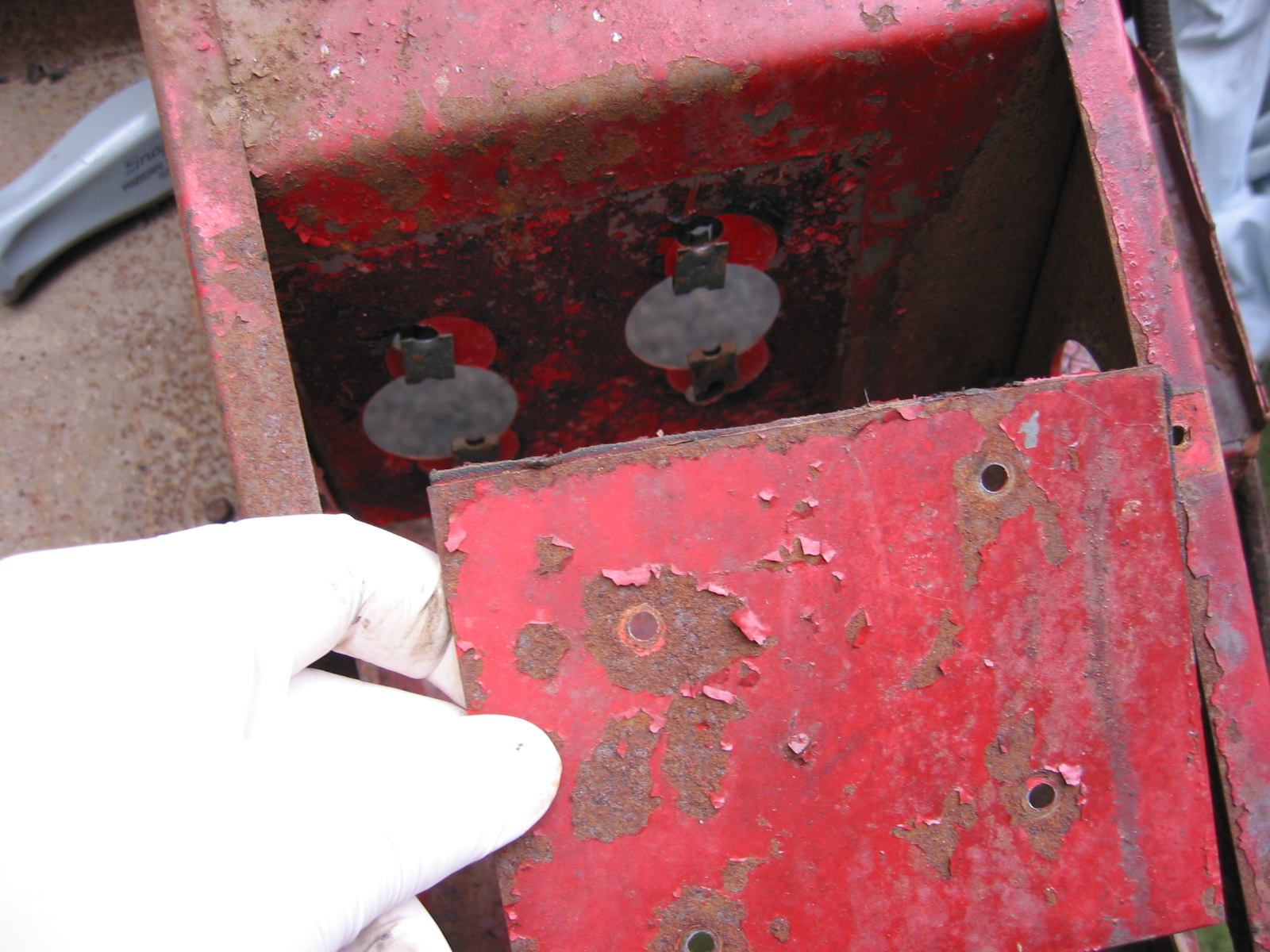
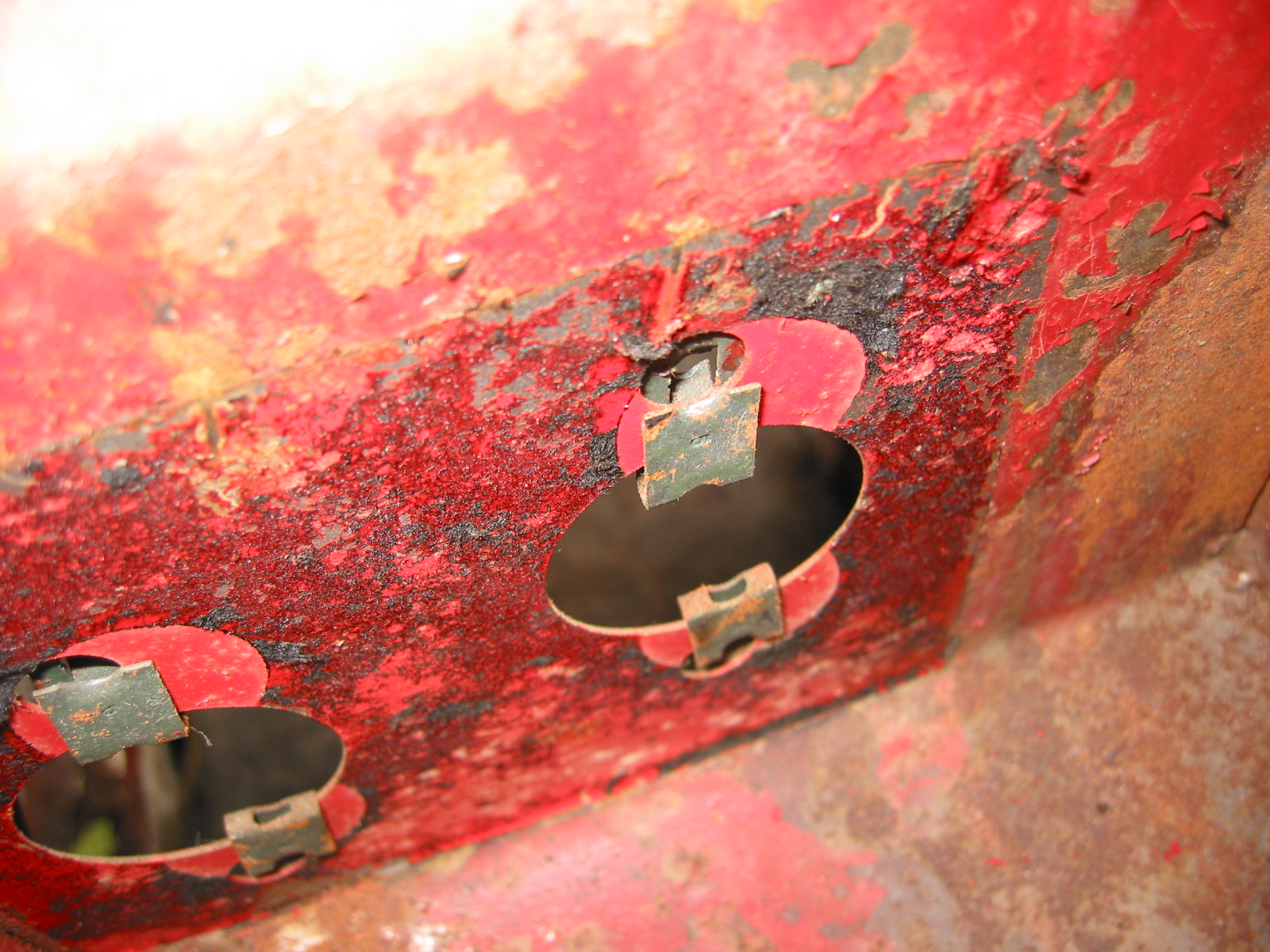
Master Cylinder Sealing Plate (blanking) –  Removed the Plate on the right side of the car. Four Phillips head sheet metal screws. The plate had tar paper on back to seal it. Four clip nuts are used to hold the screws.

Right Sealing Plate

Right Sealing Plate 3

Right Sealing Plate 2

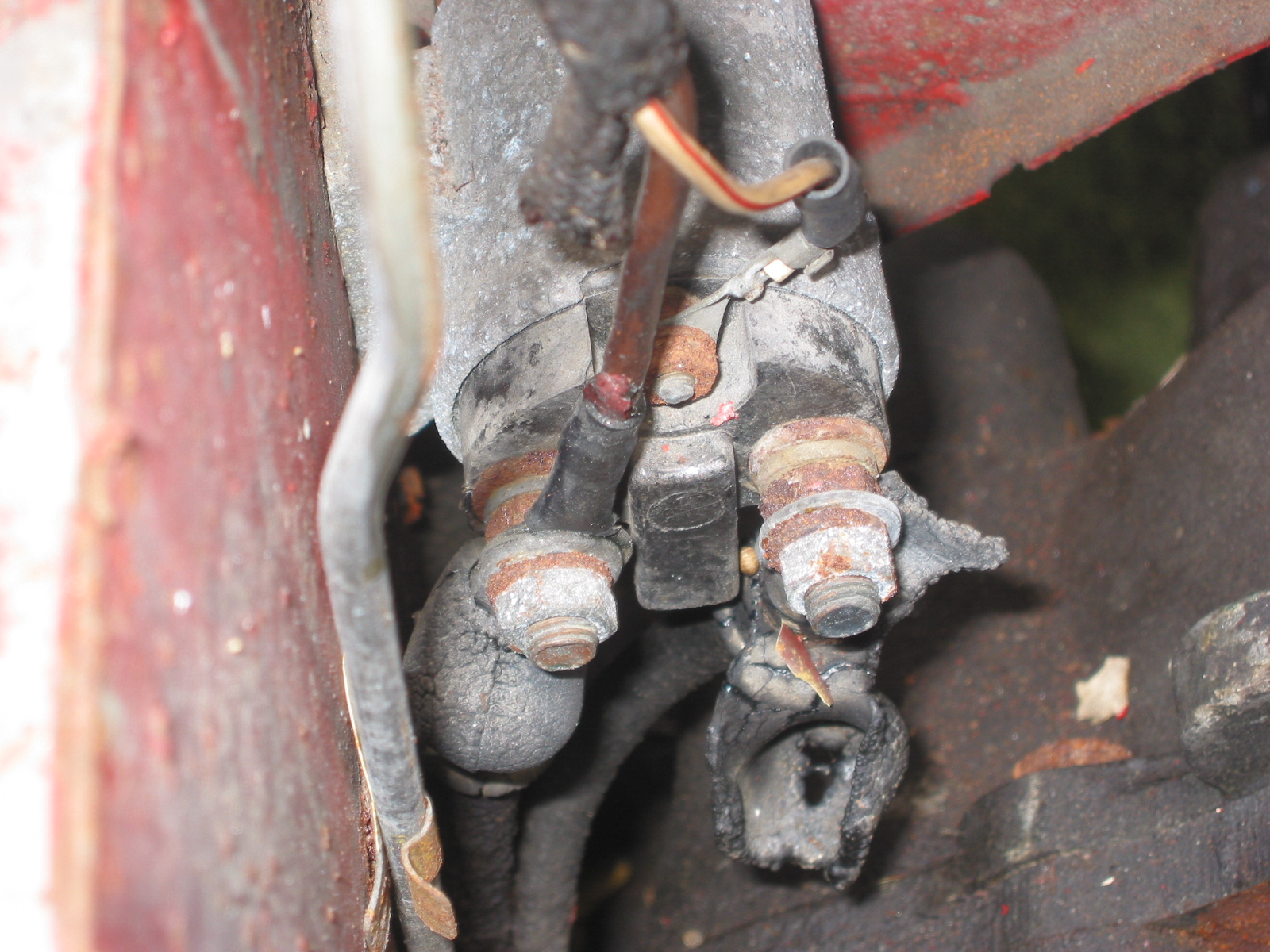
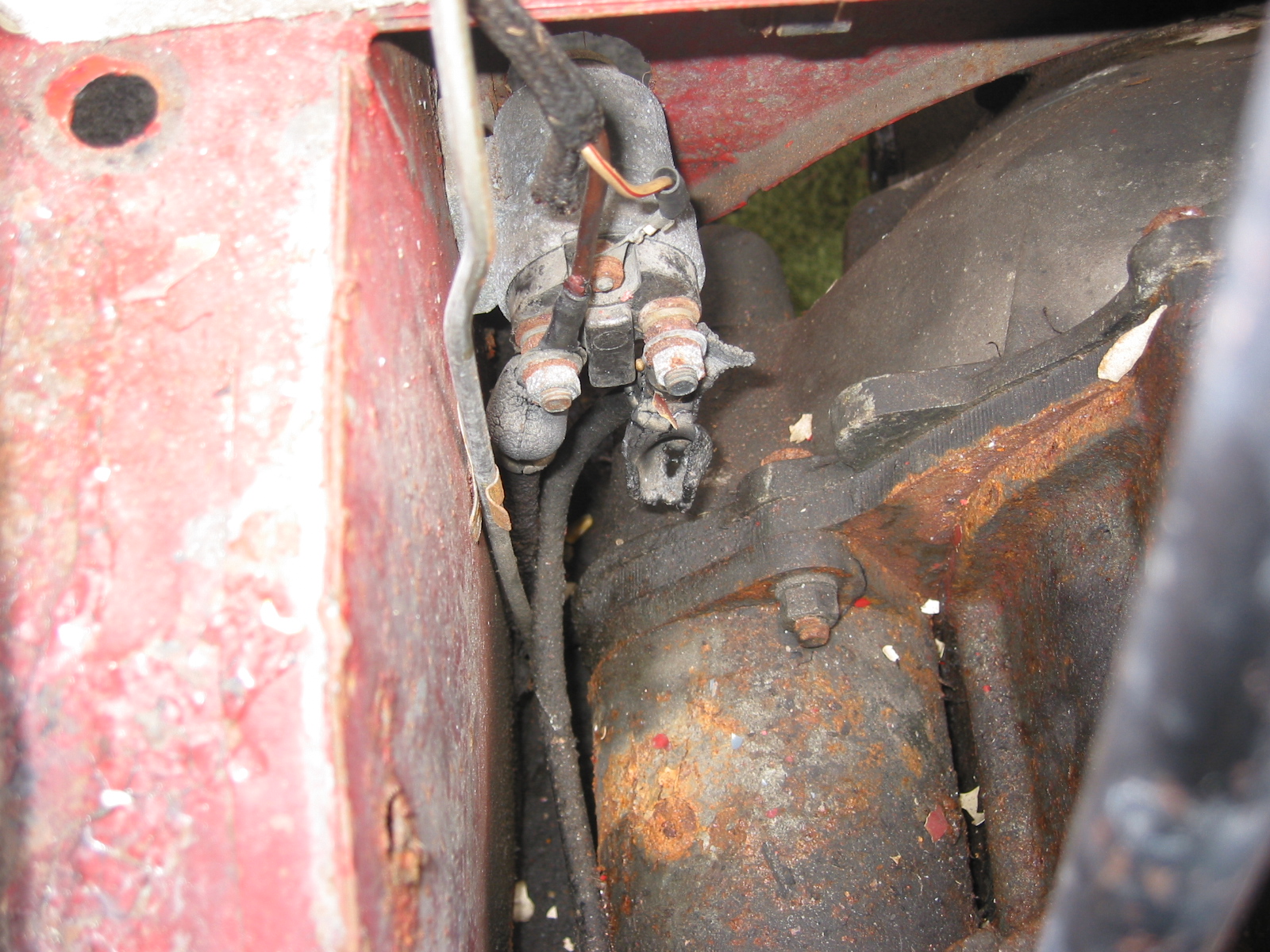
Starter Solenoid. 

Disconnected the wiring for the starter solenoid. The terminal closest to the engine is for the high tension line from the battery. The terminal closest to the body is or the cable to the starter and the brown ignition wire. The white wire with the red stripe goes to the terminal on top.

Starter Solenoid Wiring

Starter Solenoid 2

Starter Solenoid connections 2 & Clutch Pipe Clip

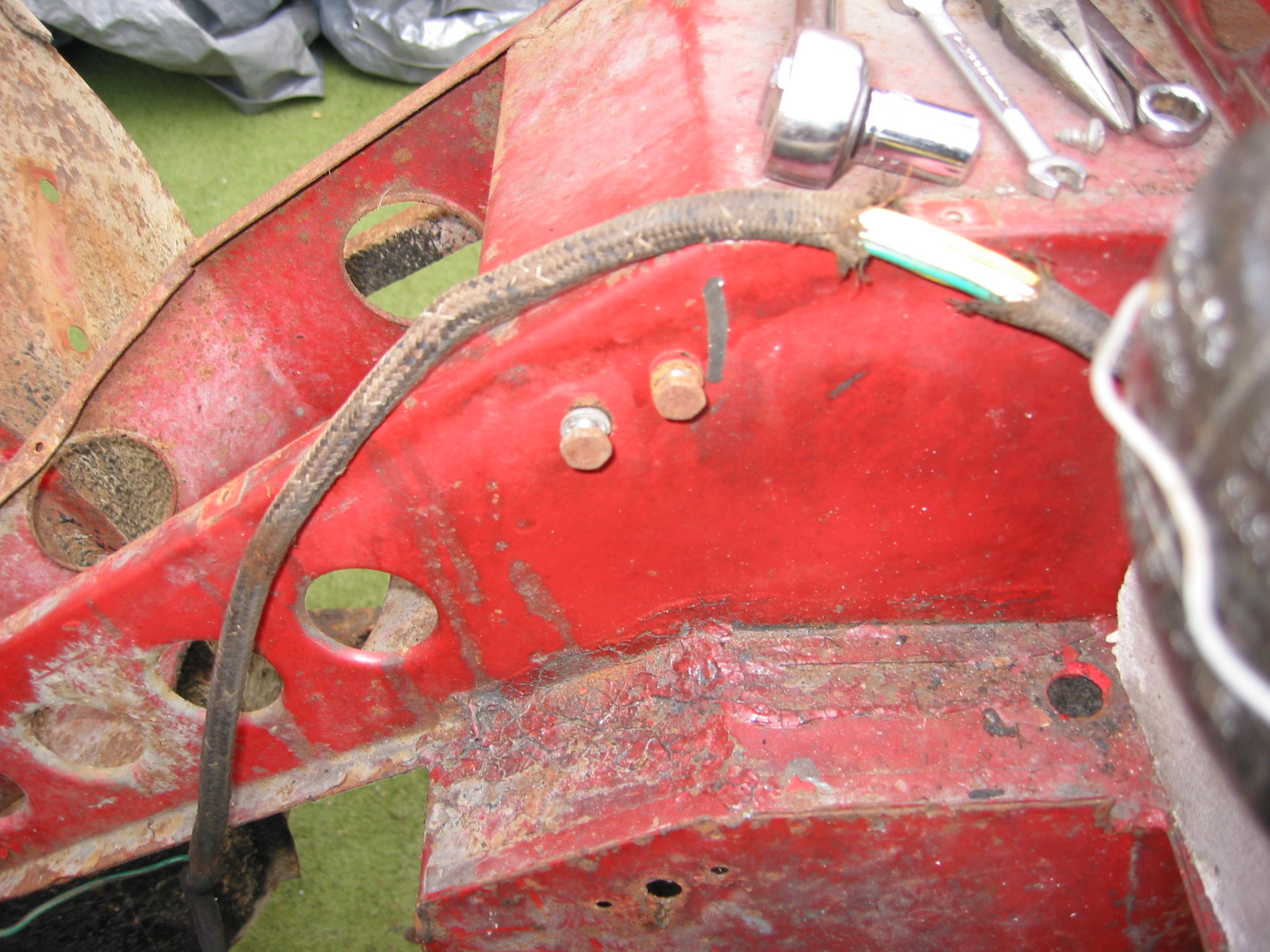
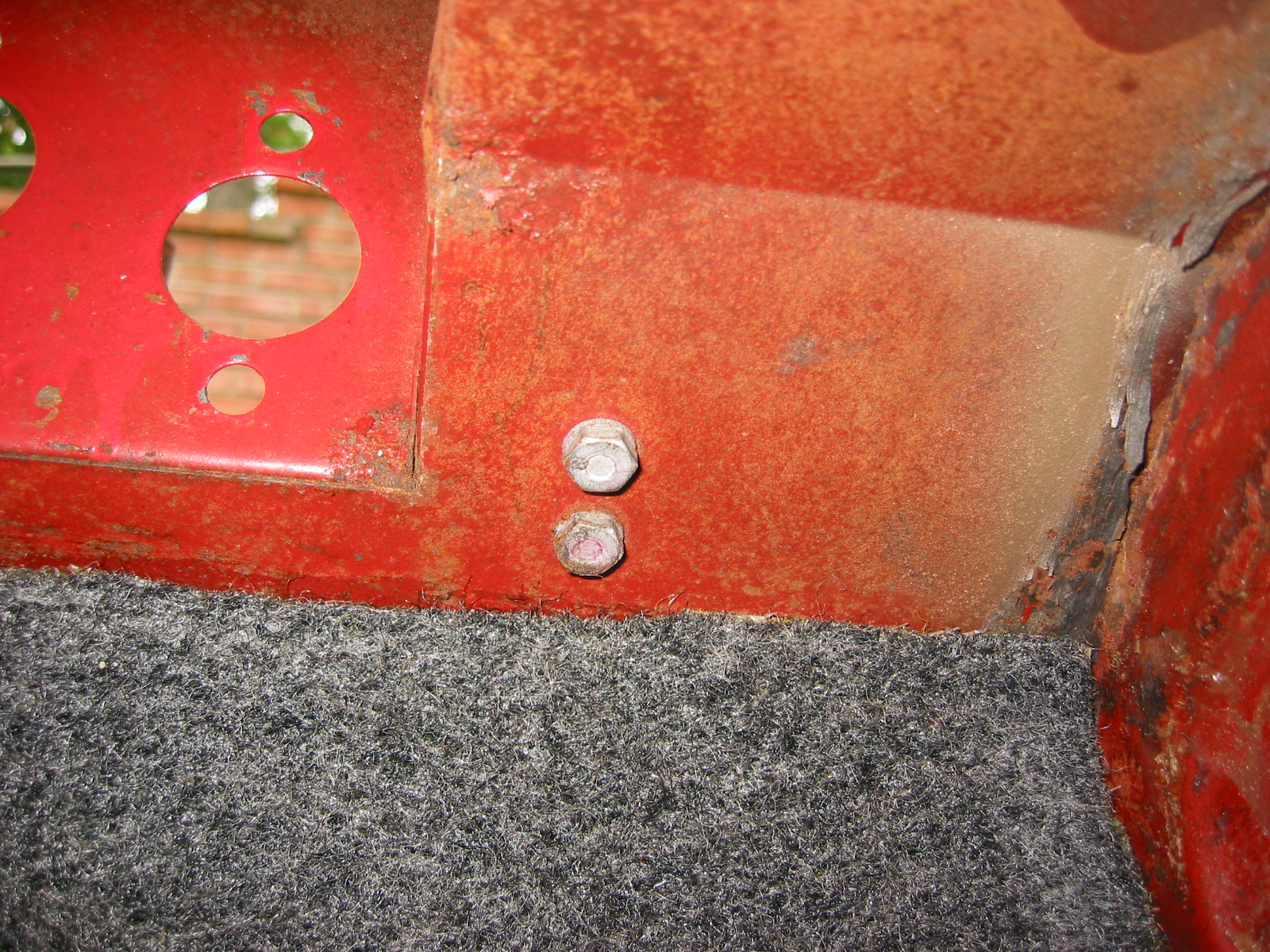
Blanking Bolts – Removed 2 blanking bolts in upper right footwell. Remove two blanking bolts in engine compartment to frame.

Right blanking bolts

Right footwell Blanking Bolts

Steering Wheel Blanking Plate – Removed the blanking plate on right side of car. Located behind the asbestos insulation. Four sheet metal screws.

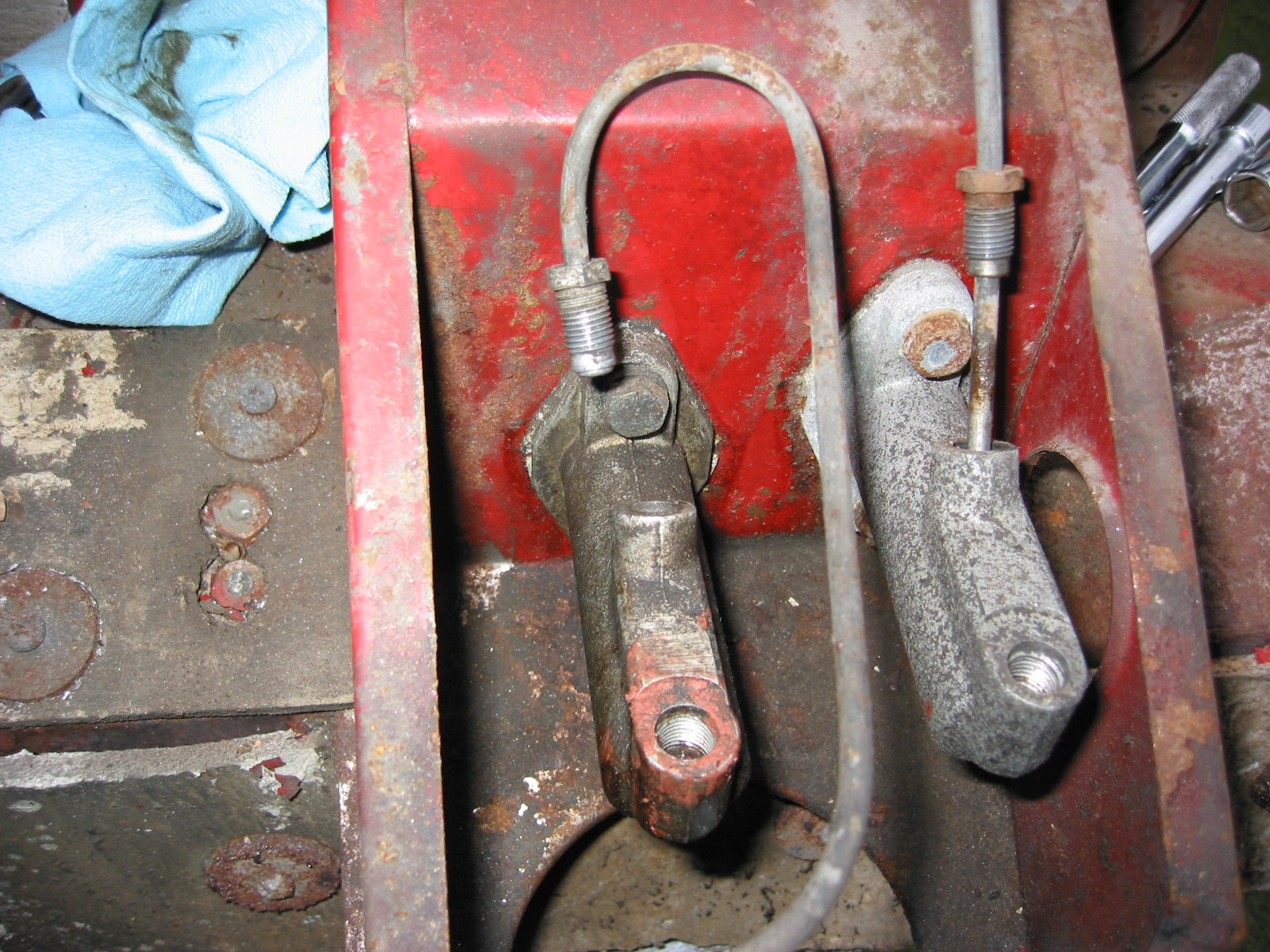
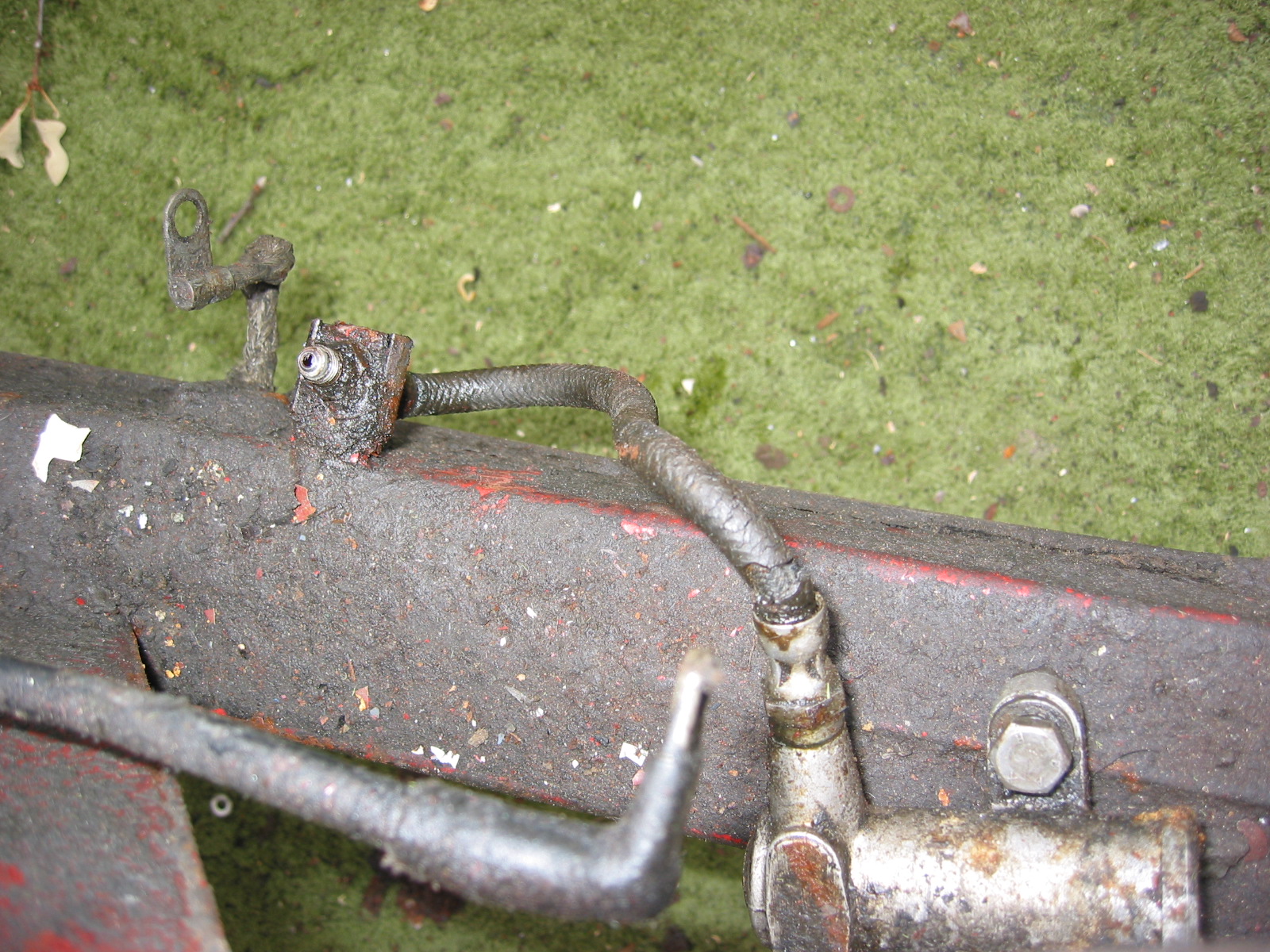
Slave Cylinder

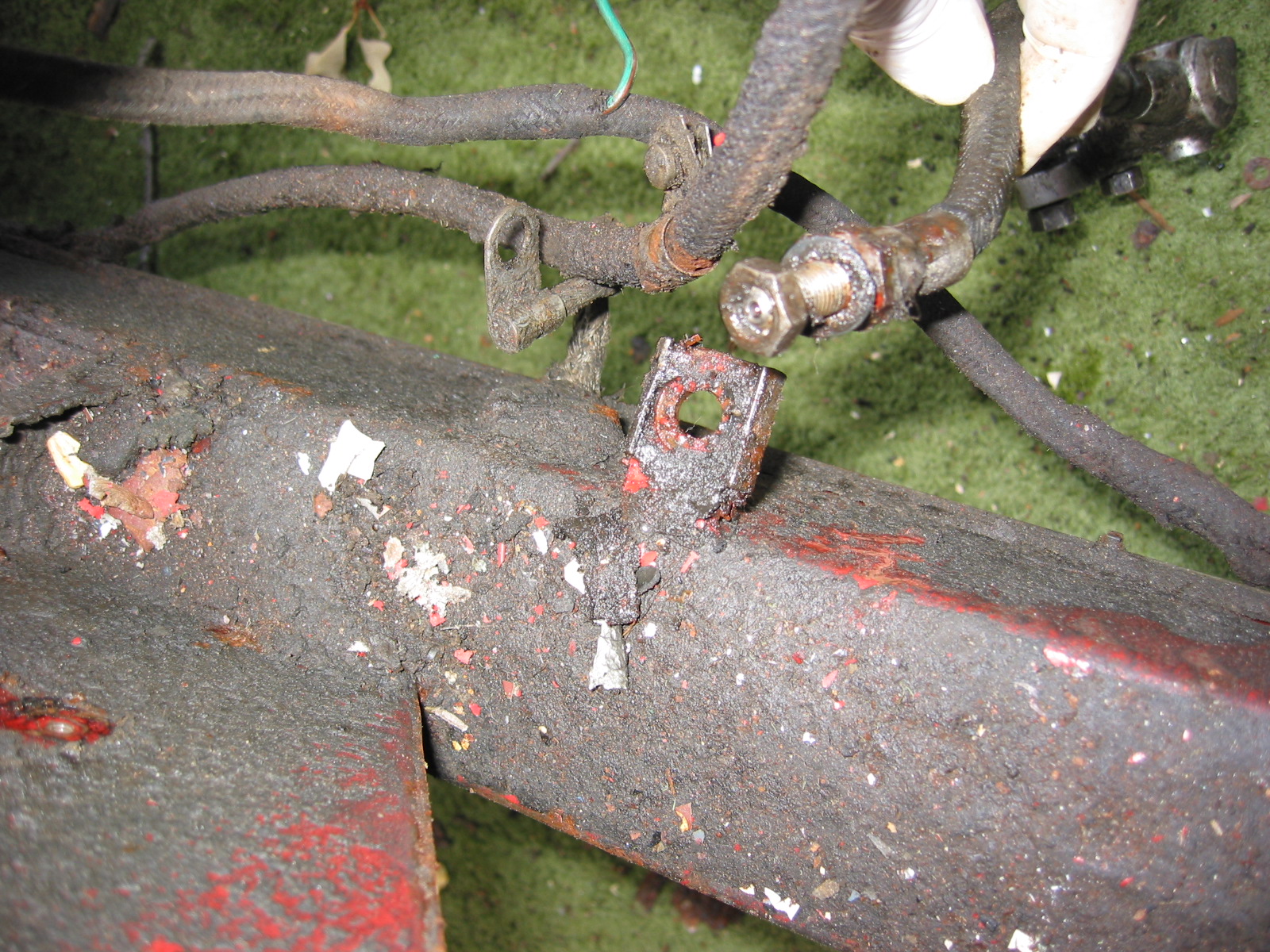
Loosened one nut where hydraulic hose joins frame.

Slave Cylinder connection to Frame Clip

Slave Cylinder Mounting with Clip and shake proof washer

Fuel Line – Loosened the fuel line from the carb feed line and the fuel pump. Three to four clips run along the frame rail from carbs to fuel pump.

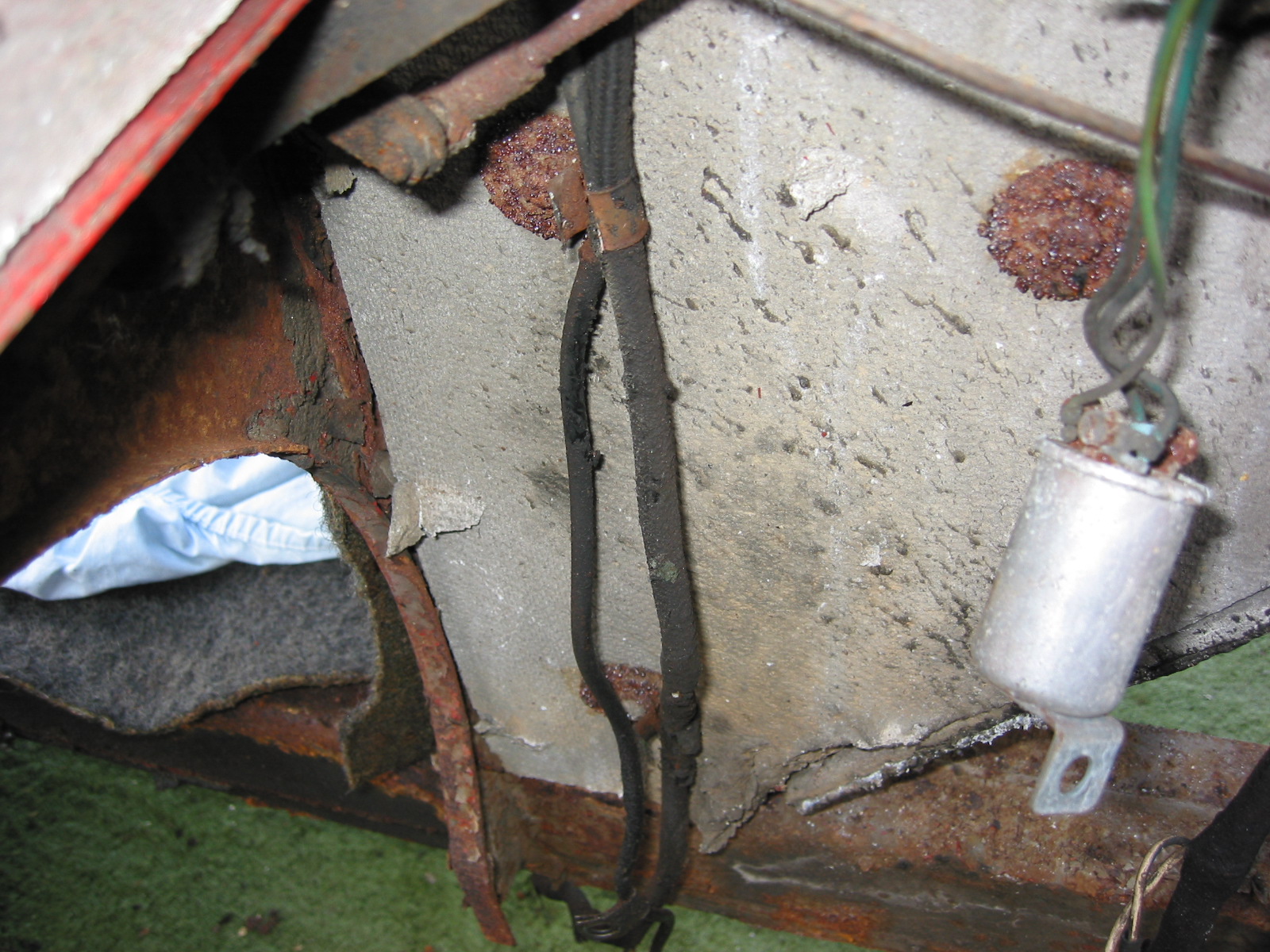
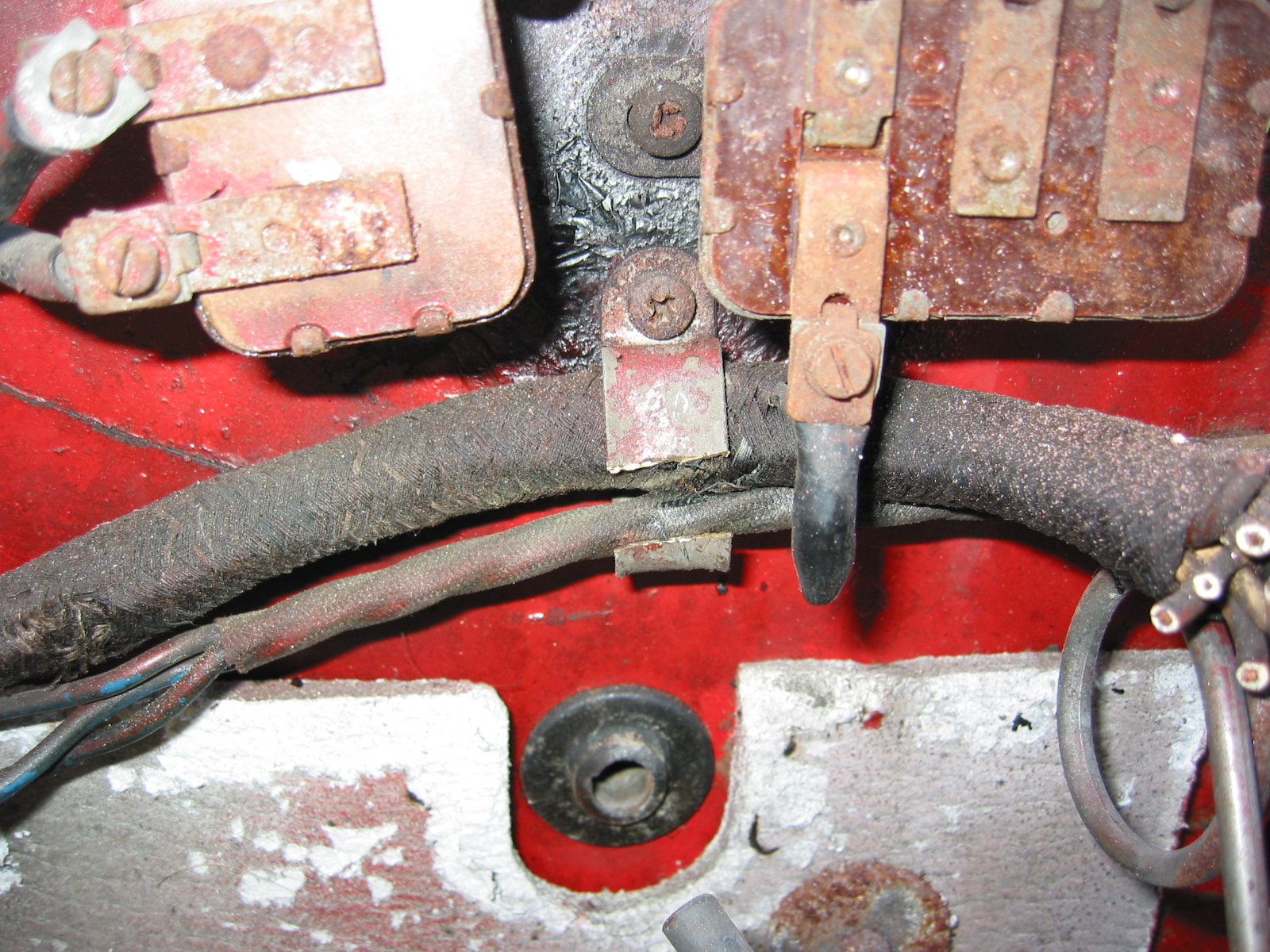
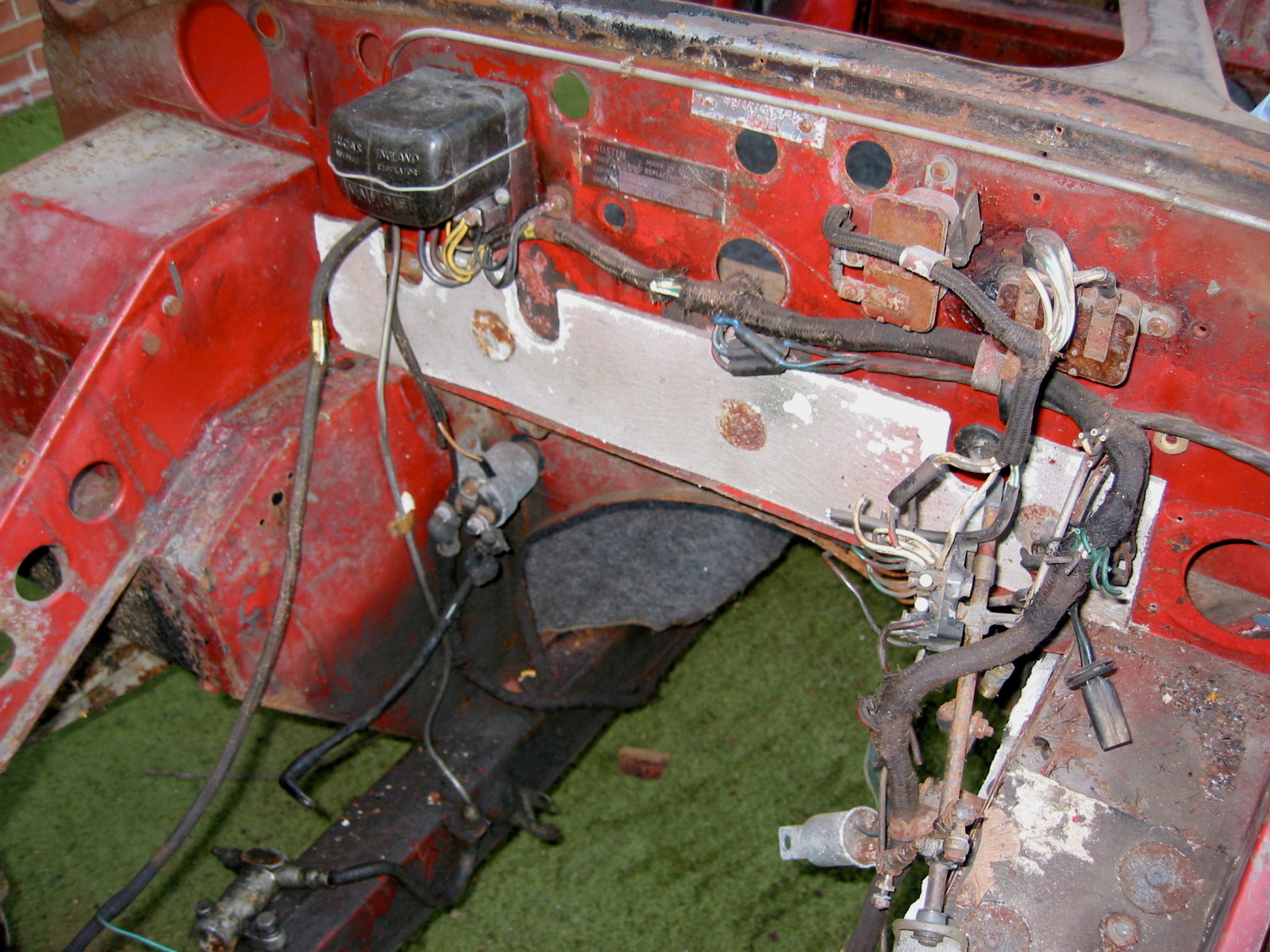
Wiring Harness – Carefully pulled the wiring harness from front firewall to the rear of the car. Approximately 10 screws through clips on frame. Also two screws and clips through asbestos insulation securing the harness.

Right wiring clamp

Voltage Box wiring

Wiring Clamps on Insulation 3

Firewall wiring clamp

Overdrive switch – Wiring connections: Left terminal – white/purple stripe. Middle terminal – 2 white/green stripe wires. Right terminal – 2 solid white wires. Bottom terminal – black wire from harness.

Firewall wiring harness

Overdrive relay

Relay wiring

Throttle Switch – Bottom terminal – white/ purple stripe wire. Top terminal – White/green stripe wire. See above.

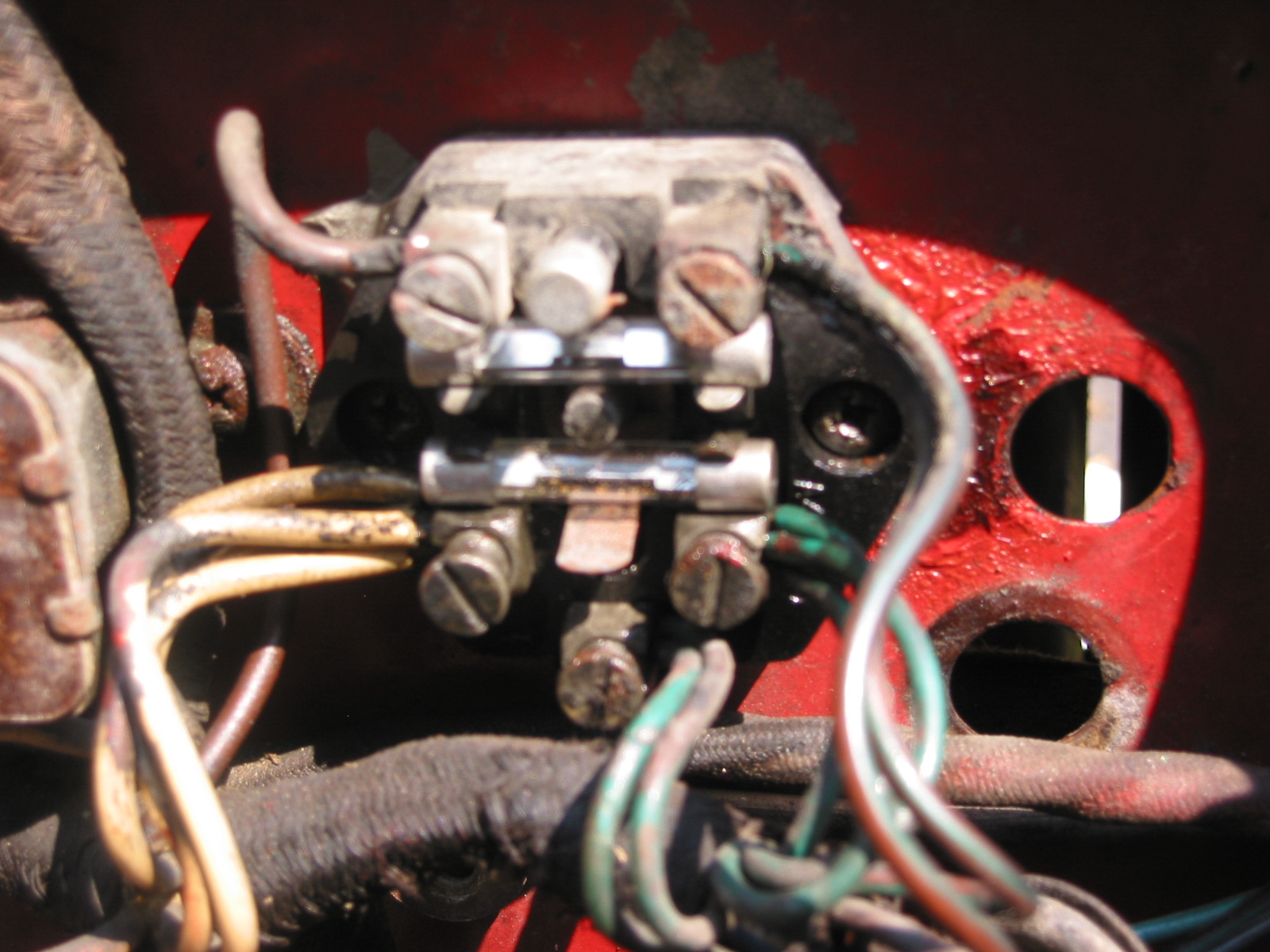
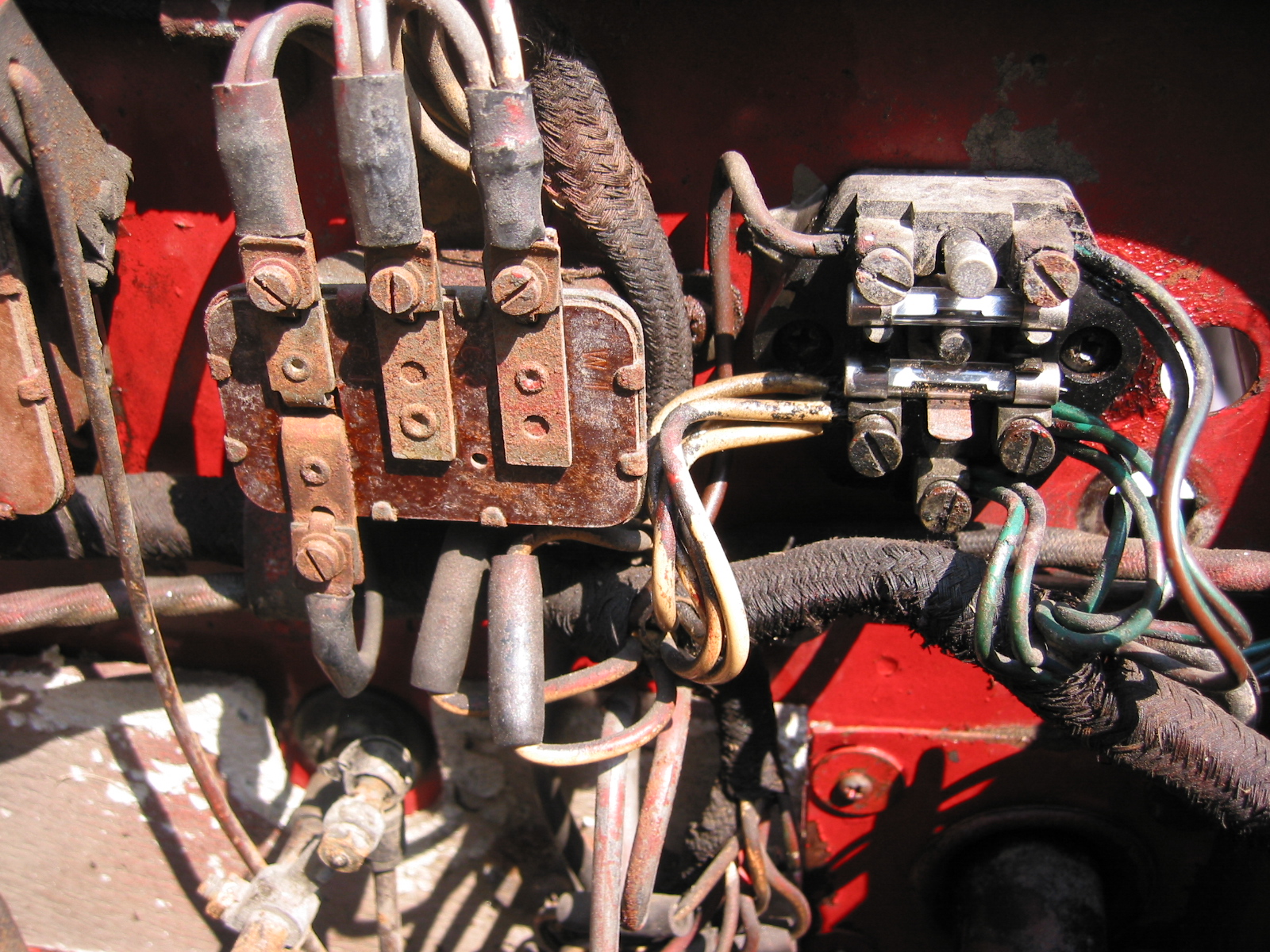
Fuse Block – After disconnecting the wiring to the block, two #10 machine screws were loosened to release the block from the firewall. 

Fuse Block wiring

Fuse Block and relay

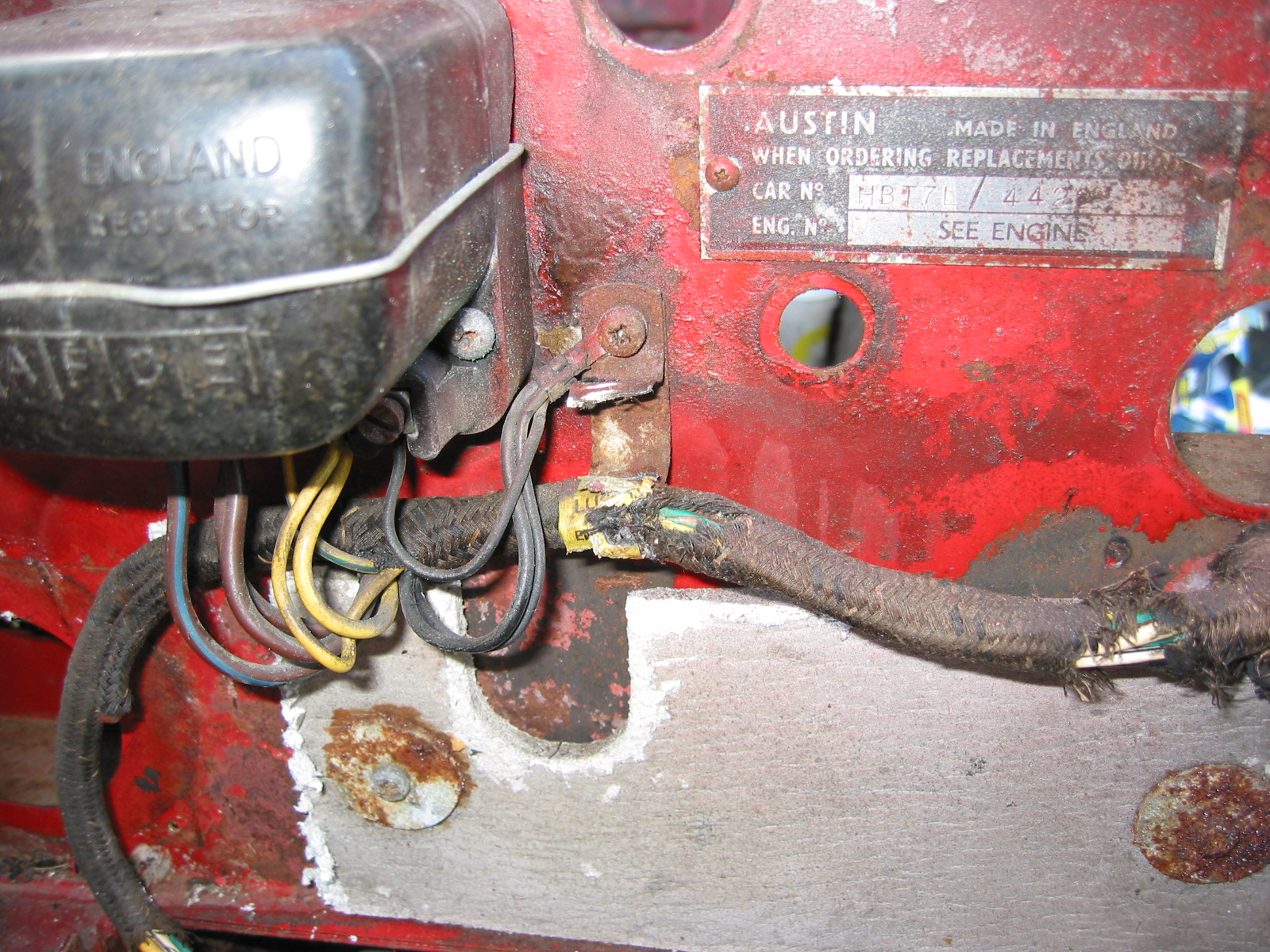
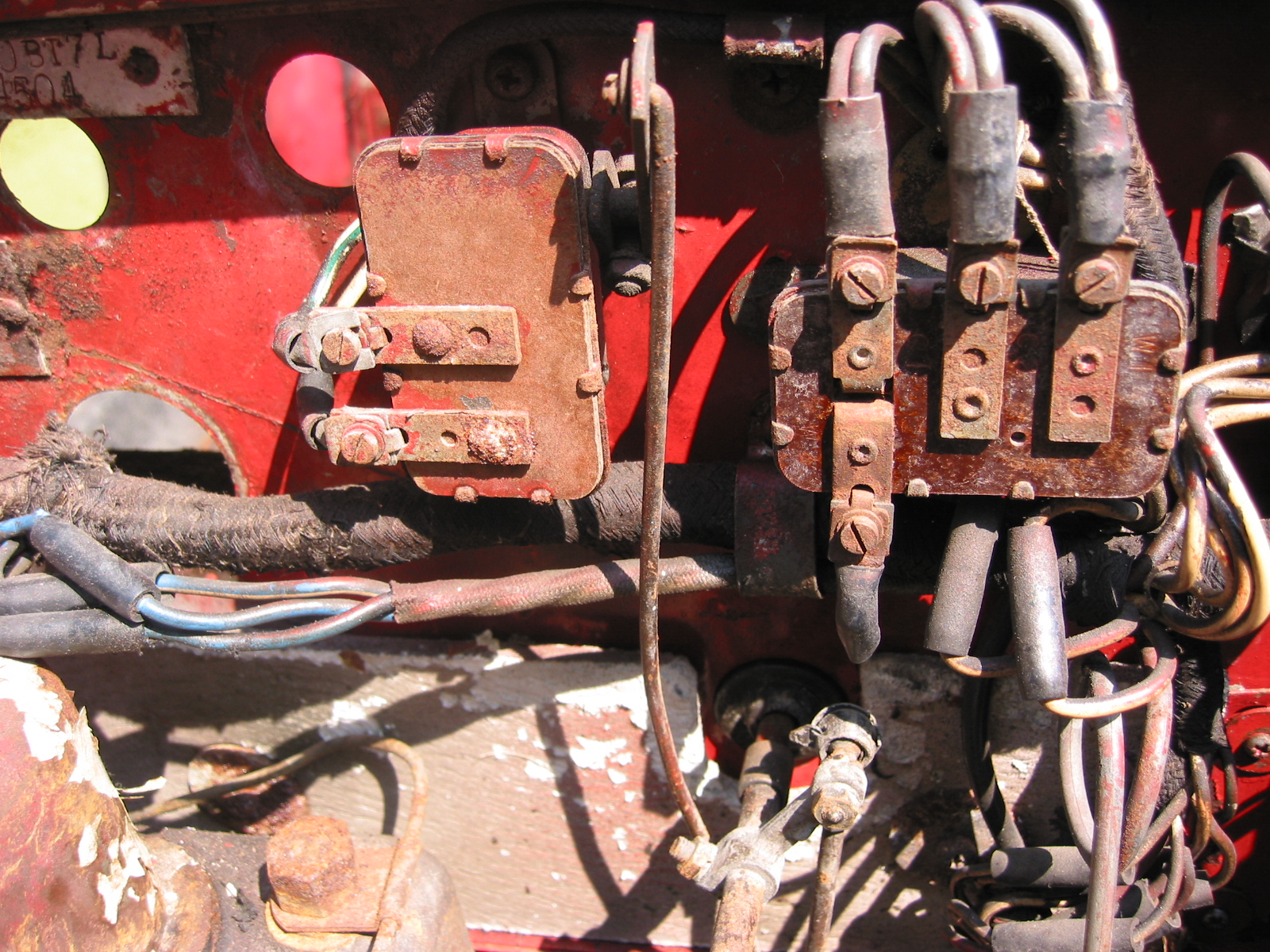
Voltage Regulator – Five terminals. Far left form driver’s perspective, labeled #1 with far left #5. 1 – black ground from adjacent screw. 2 – 2 solid yellow wires. 3 – 1 yellow/green stripe wire. 4 – 2 solid brown wires. 5 – 1 large brown/blue stripe wire. Note that there are three black ground wires to the adjacent firewall screw.

Voltage Box wiring

Voltage Box

Voltage Box (2)

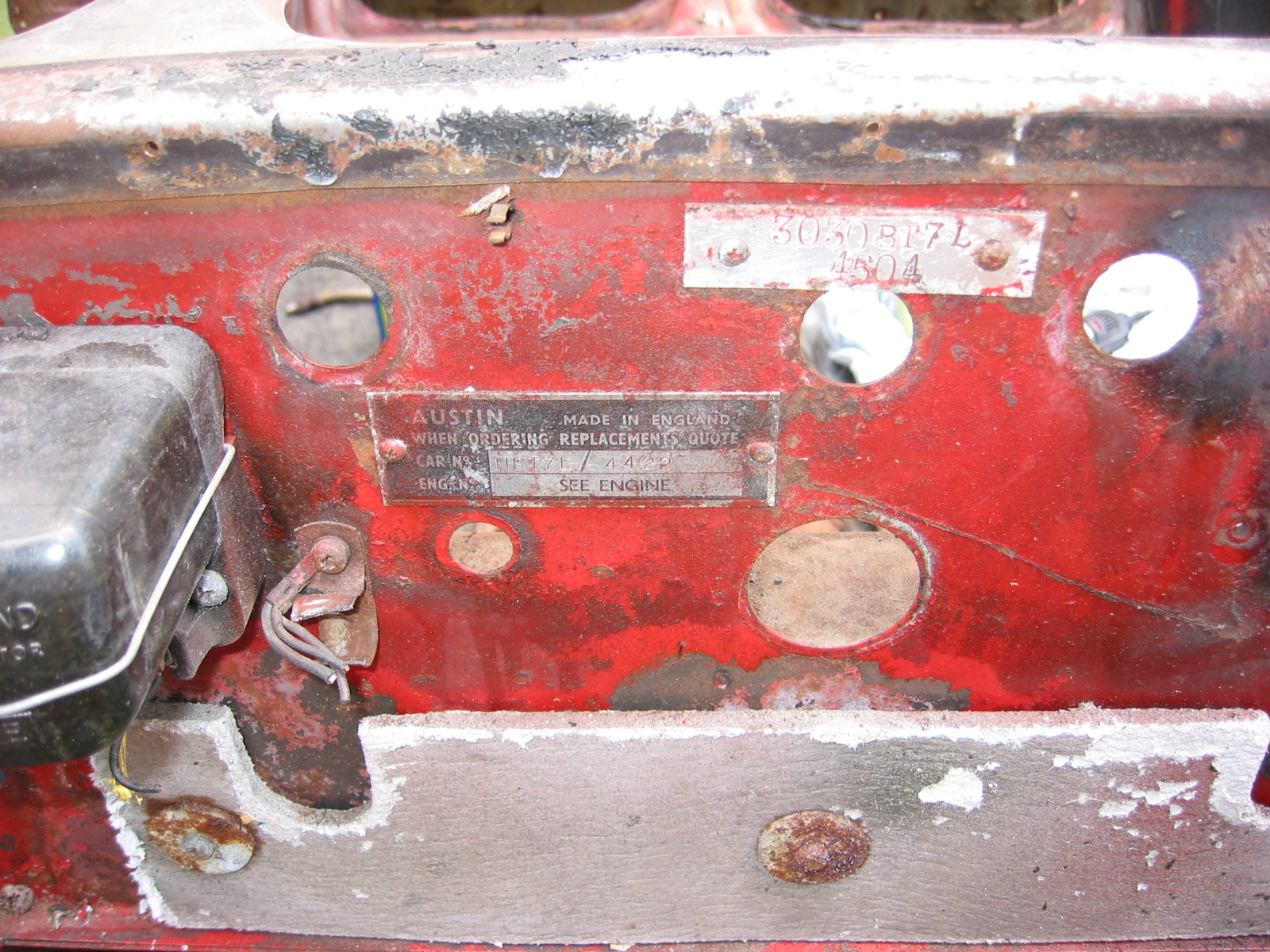
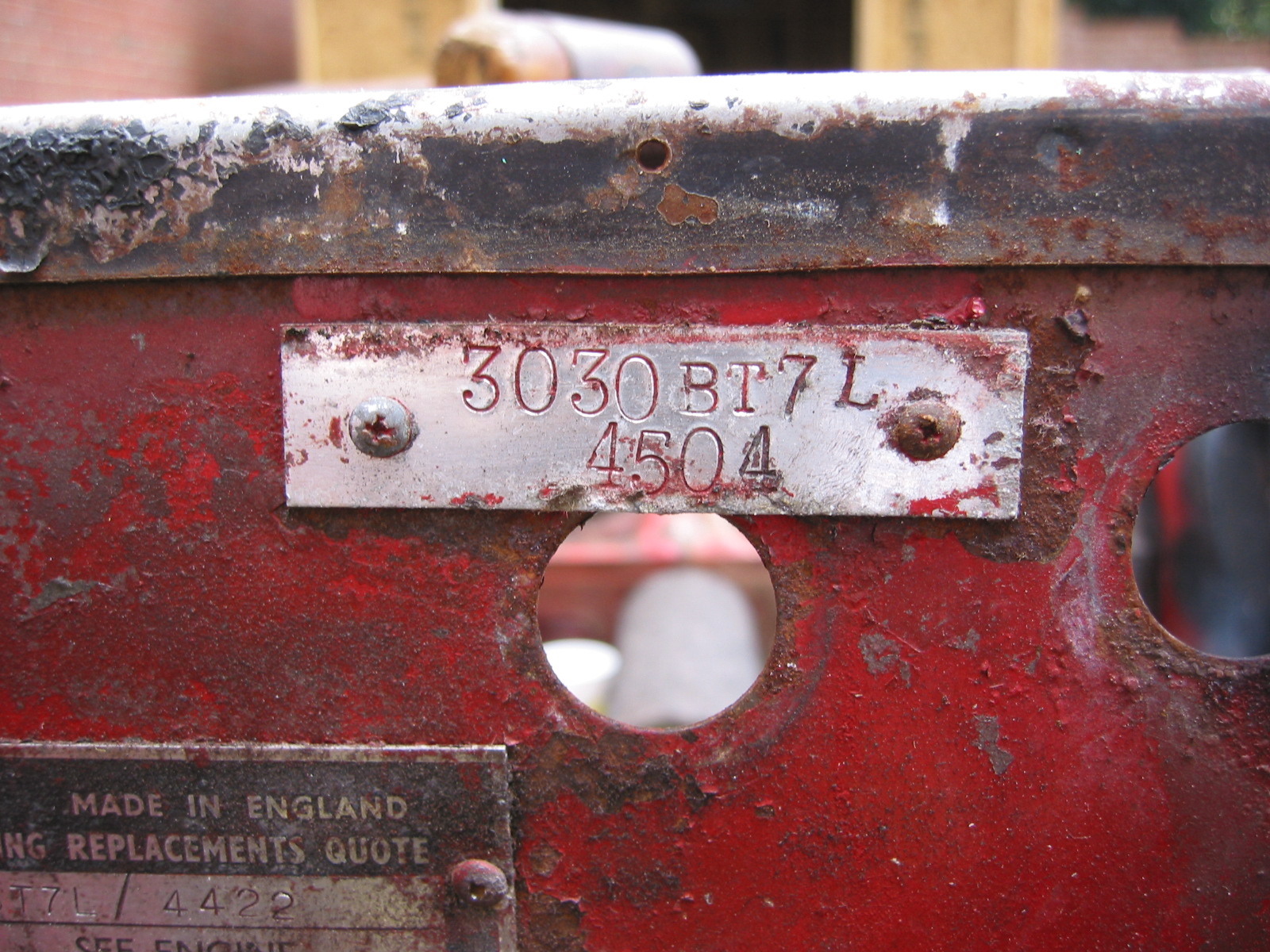
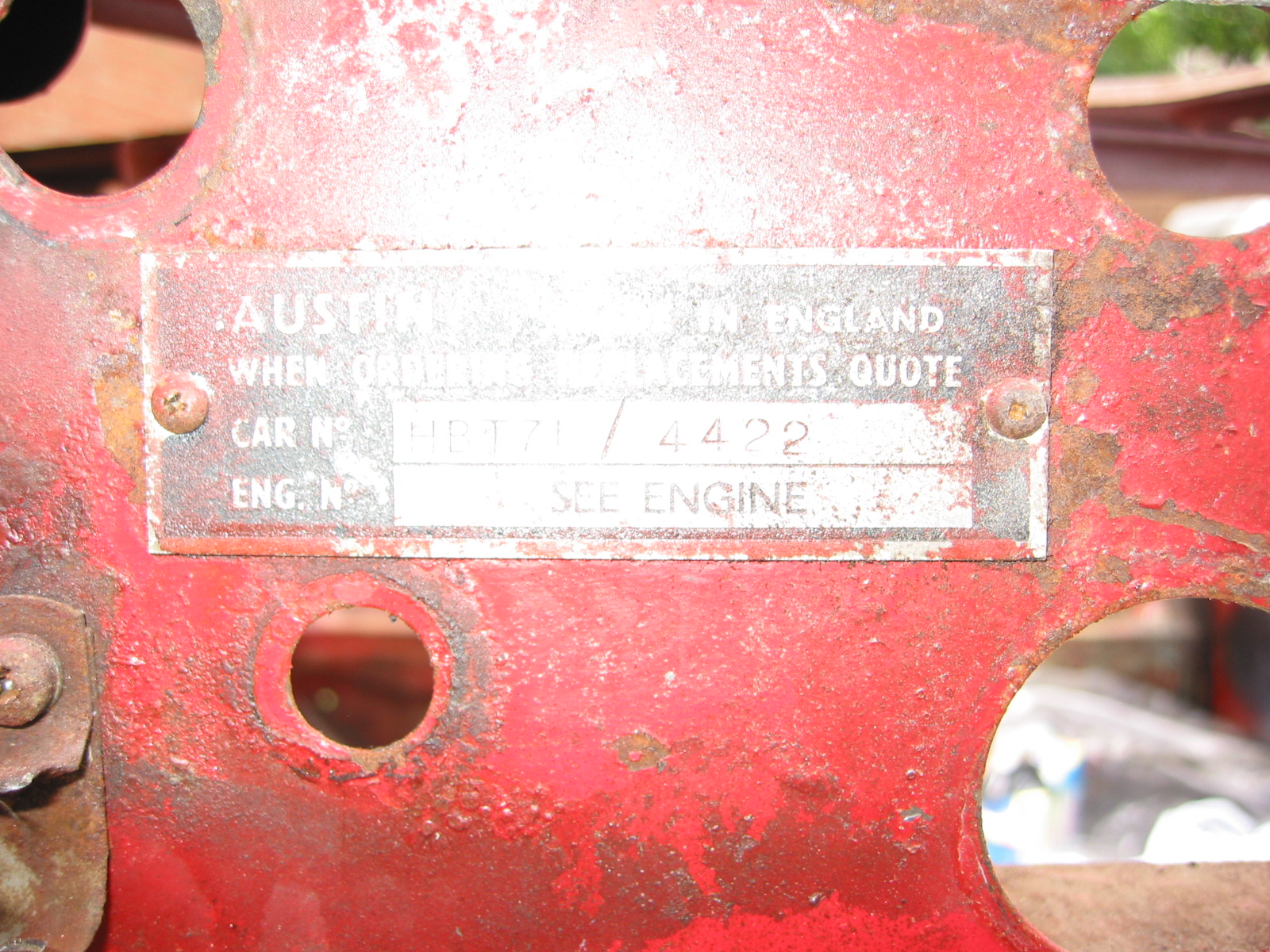
Number Identification Plates – from the firewall. Both are secured with small chrome sheet metal screws.

ID Plates 3

ID Plate 1

ID Plate 2

Throttle Linkage – Four 7/16” bolts holding shaft under tunnel. Very hard to get to. Disconnect at pedal linkage. Remove accelerator pedal – two large pozi-drive screws. Remove throttle shaft locator collar from engine compartment wall, two screws and nuts.

Throttle Linkage 1

Throttle Linkage 2

Throttle Linkage 3

Throttle Linkage 6

Throttle Linkage 5

Throttle Linkage 4

Throttle Linkage 7

Accelerator collar

Accelerator pedal to firewall